The Rise of the AI-Powered Workforce

The Rise of the AI-Powered Workforce isn’t about robots replacing humans—it’s about creating something better together. As someone deeply invested in ethical AI implementation, I’ve watched this transformation unfold across industries, and the reality is far more nuanced and exciting than the headlines suggest. We’re entering an era where artificial intelligence and human intelligence combine to create unprecedented value, but only when we approach this partnership with intention, understanding, and responsibility.
Think about how you work today. Maybe you’re drafting emails, analyzing data, scheduling meetings, or solving complex problems. Now imagine having an intelligent assistant that handles the repetitive parts while you focus on strategy, creativity, and human connection. That’s not a distant future—it’s happening right now, and understanding how to navigate this shift safely and effectively has never been more important.
What is an AI-Powered Workforce?
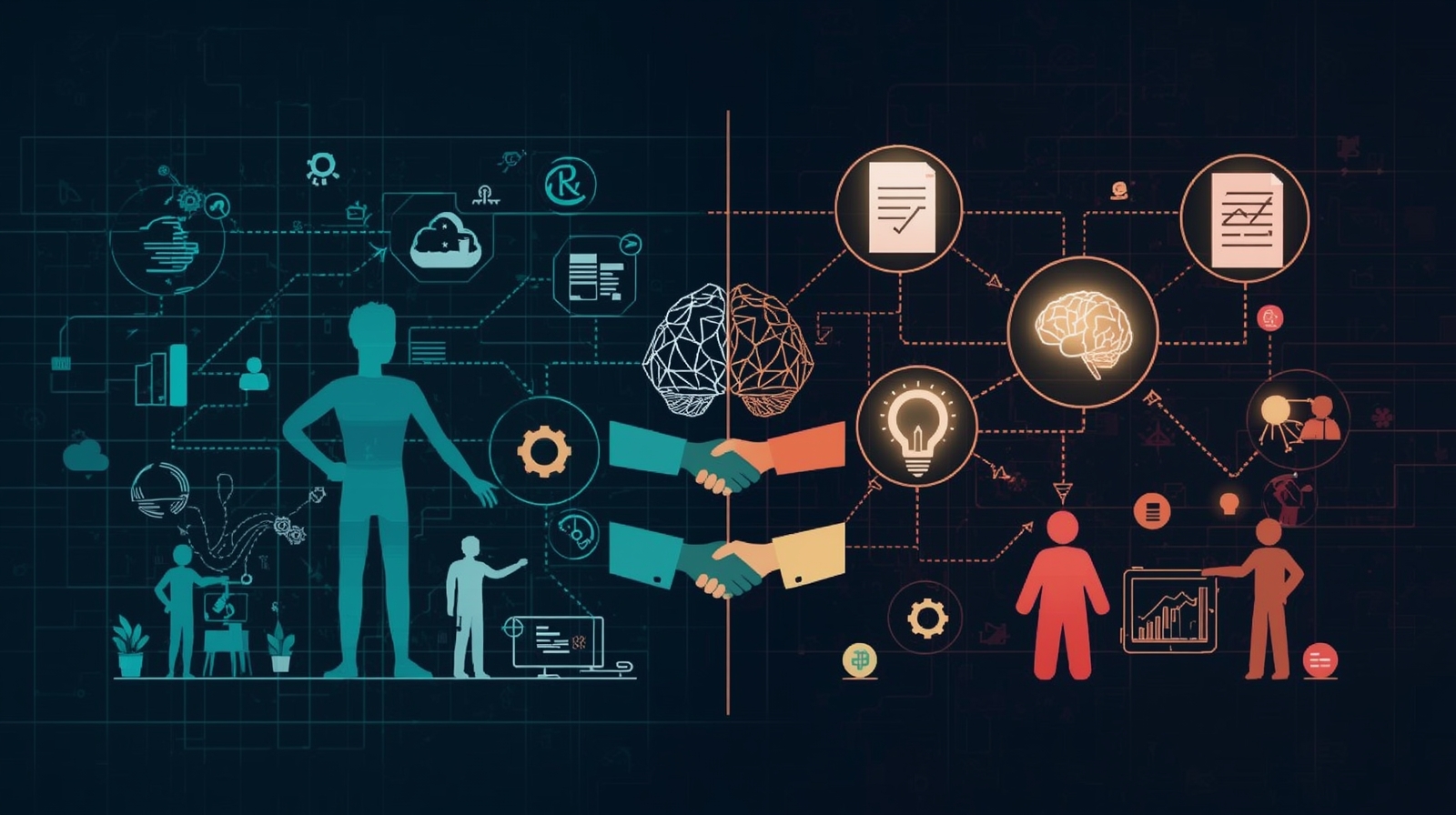
An AI-powered workforce represents the integration of artificial intelligence technologies into everyday work processes, creating collaborative environments where humans and machines complement each other’s strengths. Rather than viewing AI as a replacement, think of it as an augmentation—a powerful tool that enhances human capabilities while humans provide the creativity, empathy, ethical judgment, and contextual understanding that machines cannot replicate.
This collaboration takes many forms. Customer service representatives use AI chatbots to handle routine inquiries while they focus on complex, emotionally nuanced situations. Data analysts leverage machine learning algorithms to process vast datasets in seconds, then apply human insight to interpret findings and make strategic recommendations. Content creators use AI writing assistants for research and drafts, then infuse the work with an authentic human voice and perspective.
The distinction matters because it shapes how we prepare for this future. We’re not training workers to compete with machines—we’re helping them become more effective by understanding how to work alongside AI systems. This requires new skills, certainly, but it also creates opportunities for more meaningful, less tedious work.
The Evolution of Work Technology
Understanding where we are requires looking at where we’ve been. The automation journey didn’t start with AI. Manufacturing saw mechanization in the Industrial Revolution. Offices embraced computers and software in the digital revolution. Each transition sparked fears about job loss, yet each ultimately created more jobs than it displaced—different jobs, requiring different skills, but more opportunities overall.
What makes the AI era distinct is the speed and scope of change. Previous technological shifts primarily affected physical or computational tasks. AI touches cognitive work, creative processes, and decision-making itself. A factory robot could assemble parts; an AI system can draft legal contracts, diagnose diseases, compose music, and predict market trends. The implications are profound and demand thoughtful navigation.
How Human-AI Collaboration Actually Works
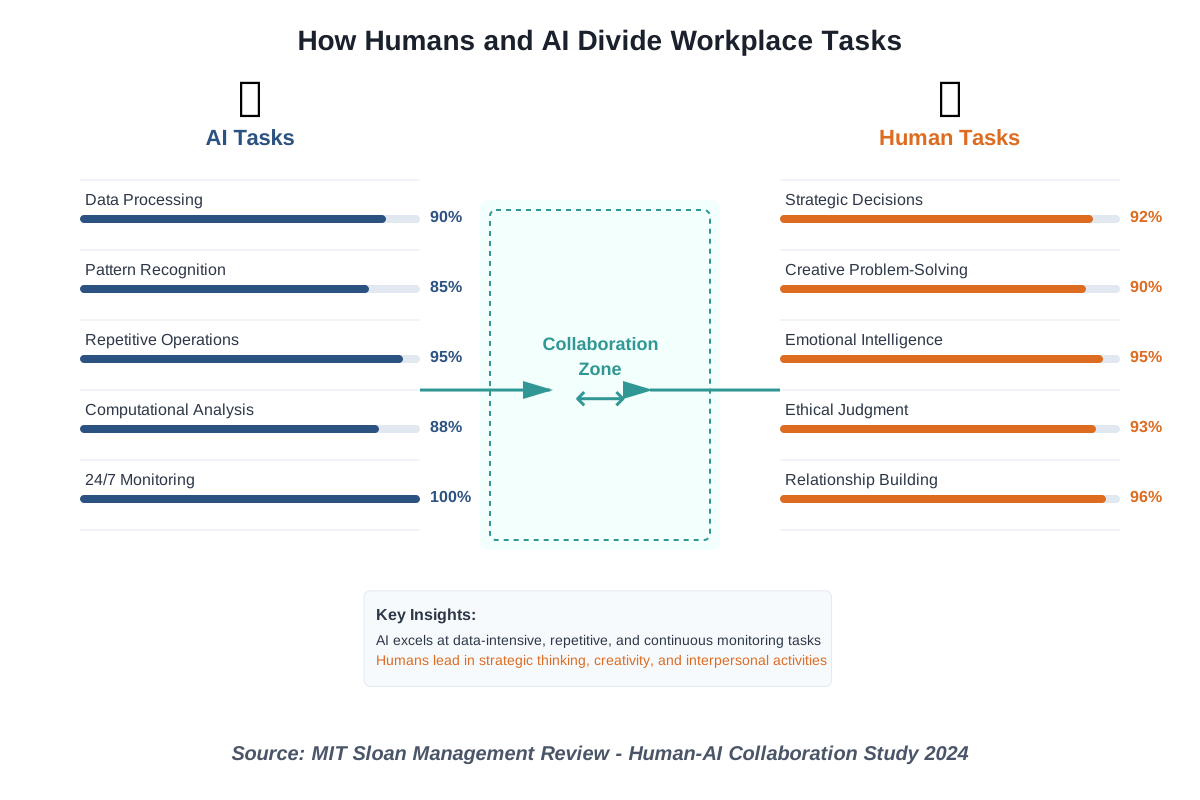
The most successful workplace AI implementations share a common architecture: clearly defined roles where AI handles data-intensive, repetitive, or computationally complex tasks while humans manage oversight, creative problem-solving, and relationship building. Let me walk you through how this partnership functions in practice.
The Division of Labor
AI excels at pattern recognition across enormous datasets. It can review thousands of resumes in minutes, identifying candidates who meet specific criteria. A human recruiter then interviews those candidates, assessing cultural fit, communication skills, and potential that can’t be quantified. The AI provides efficiency; the human provides judgment.
In healthcare, AI diagnostic tools can analyze medical images with remarkable accuracy, sometimes spotting patterns human eyes miss. But physicians interpret those findings within the context of patient history, current symptoms, and quality of life considerations. The AI offers data; the doctor makes the healing decision.
Financial advisors use AI to monitor markets, identify trends, and model scenarios. They then counsel clients through emotional decisions, understanding risk tolerance, family dynamics, and personal values. The AI delivers analysis; the advisor delivers wisdom.
This complementary relationship appears across industries because it reflects a fundamental truth: machines process; humans understand.
Real-World Implementation Models
Let’s examine three proven collaboration models that organizations are successfully deploying.
The Augmentation Model positions AI as a direct assistant to human workers. A graphic designer uses AI image generation tools to rapidly prototype concepts, then refines and customizes them with human artistic judgment. A writer uses AI for research and initial drafts, then rewrites with an authentic voice and nuanced understanding. The human remains in control; AI accelerates the process.
The Delegation Model assigns specific complete tasks to AI while humans oversee outcomes and handle exceptions. An e-commerce company might use AI to handle standard customer inquiries about order status or return policies, escalating complex or sensitive issues to human representatives. The AI manages routine work autonomously; humans intervene when judgment is required.
The Collaborative Decision Model involves both AI and humans contributing to significant decisions. A bank evaluating loan applications might use AI to assess credit risk and predict repayment probability, while human loan officers consider extenuating circumstances, evaluate business plans, and make final approval decisions. Neither operates alone; the decision emerges from their combined input.
Understanding these models helps organizations choose the right approach for different functions. Not every task suits every model, and matching collaboration style to work type dramatically impacts success.
Benefits of Human-AI Partnership in the Workplace
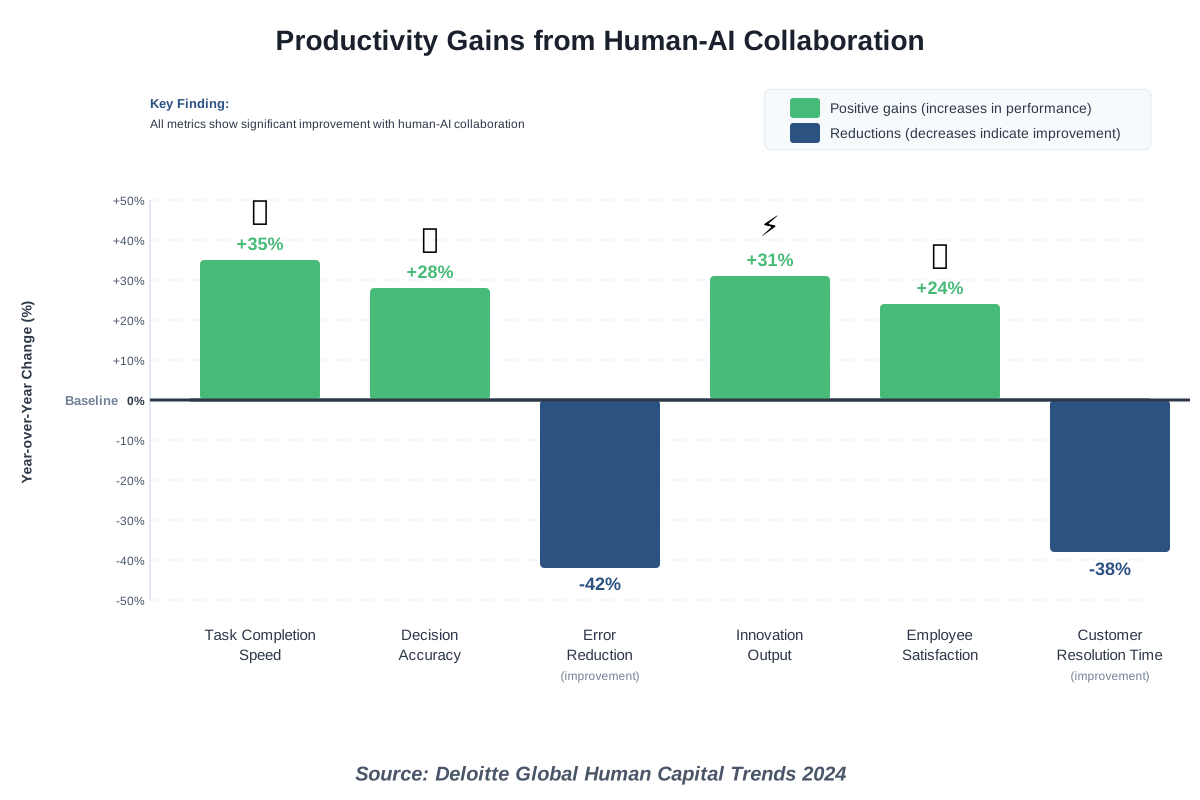
The promise of AI-powered workforce productivity extends far beyond simply working faster. The benefits cascade through multiple dimensions of work quality, employee satisfaction, and organizational capability.
Enhanced Productivity and Efficiency
When AI handles time-consuming repetitive tasks, humans gain capacity for higher-value work. A legal team that once spent hours reviewing contracts for standard clauses now uses AI for initial review, freeing attorneys to focus on negotiation strategy and relationship building. Productivity increases aren’t about working harder—they’re about working smarter.
Research consistently shows that human-AI collaboration outperforms working alone. A McKinsey study found that organizations combining human expertise with AI capabilities achieved 20-30% higher productivity than those relying solely on human effort or attempting full automation. The synergy creates something neither could accomplish independently.
Improved Decision Quality
Humans suffer from cognitive biases—we overvalue recent events, seek confirming information, and make emotional decisions. AI provides objective data analysis that counterbalances these tendencies. However, AI systems trained on historical data can perpetuate existing biases and lack contextual understanding. Together, they produce better decisions than either makes alone.
A hiring manager might unconsciously favor candidates from certain schools. AI reviewing resumes focuses on skills and experience without that bias. But AI might inadvertently discriminate based on zip codes correlating with demographics. The hiring manager catches that issue. Neither is perfect; both together approach fairness more closely.
Continuous Learning and Improvement
AI systems learn from data, identifying patterns and improving predictions over time. Humans learn from experience, developing intuition and adaptability. When these learning systems interact, both improve. Machine learning models become more accurate as humans provide feedback on edge cases. Humans develop better judgment as AI reveals patterns they might have missed.
This creates a virtuous cycle. A customer service team using AI for sentiment analysis gradually teaches the system to recognize nuanced expressions unique to their customer base. Simultaneously, representatives notice patterns in escalated issues that inform training and process improvements. The system gets smarter; the team gets more skilled.
Reducing Burnout and Improving Job Satisfaction
Perhaps surprisingly, thoughtfully implemented workplace AI often increases employee satisfaction. When AI removes tedious, repetitive tasks, workers report feeling more engaged and valued. They spend time on work that uses their distinctly human capabilities—creativity, empathy, and strategic thinking—rather than grinding through mechanical processes.
A radiologist who reviews hundreds of routine scans daily might experience fatigue and frustration. When AI pre-screens images, flagging only those requiring detailed human review, the radiologist focuses on cases where their expertise truly matters. The work becomes more intellectually stimulating, and the radiologist feels their training is better utilized.
However, this benefit requires careful implementation. When AI is imposed without training or input, or when it monitors and micromanages, satisfaction plummets. The technology itself isn’t the determining factor—how organizations introduce and integrate it makes all the difference.
Critical Considerations for Safe AI Implementation
As someone focused on AI ethics and digital safety, I need to emphasize that rushing toward an AI-powered future without addressing critical risks is irresponsible. The benefits are real, but so are the dangers. Let’s discuss what responsible implementation looks like.
Data Privacy and Security
AI systems require data—often vast amounts—to function effectively. This immediately raises questions: Whose data? Collected how? Stored where? Used for what purposes? Every organization implementing AI must answer these questions transparently and protect that data rigorously.
Employee monitoring presents particular concerns. AI can track productivity metrics, analyze communication patterns, and predict behavior. While these capabilities might improve efficiency, they can also create oppressive surveillance environments. Workers deserve privacy, autonomy, and trust. The line between helpful analytics and invasive monitoring requires constant vigilance.
Best practices include:
- Clear data usage policies that employees understand and consent to
- Minimal data collection—only what’s necessary for the specific function
- Robust security measures, including encryption and access controls
- Regular audits to ensure compliance with privacy regulations
- Transparent communication about what data is collected and why
Never implement AI systems without explicit attention to data protection. The potential for harm—from data breaches to discriminatory profiling—is simply too significant.
Algorithmic Bias and Fairness
AI systems learn from historical data, and if that data reflects existing biases, the AI perpetuates them. We’ve seen hiring algorithms discriminate against women because they were trained on successful employee data from male-dominated fields. We’ve witnessed credit scoring systems disadvantaging minority communities based on zip code correlations. We’ve observed recommendation engines creating filter bubbles that reinforce existing beliefs.
Addressing bias requires ongoing effort:
- Diverse teams designing and training AI systems
- Regular bias testing across different demographic groups
- Human oversight for high-stakes decisions
- Transparency about how algorithms make decisions
- Clear processes for challenging AI decisions
- Continuous monitoring and adjustment as new patterns emerge
Understand that eliminating bias entirely may be impossible, but that doesn’t excuse failing to minimize it. Every decision influenced by AI should be subject to regular fairness audits.
The Skills Gap and Worker Displacement
While AI collaboration creates new opportunities, it also disrupts existing roles. Some jobs will fundamentally change; others will disappear entirely. Organizations have ethical obligations to their workforce during this transition.
The skills gap is real. Workers need training in AI literacy—understanding how these systems work, their limitations, and how to work alongside them effectively. But training takes time, resources, and commitment. Companies that invest in reskilling their workforce see better outcomes than those that simply replace workers with technology.
Responsible transition strategies include:
- Early communication about planned AI implementations
- Comprehensive training programs before systems launch
- Opportunities for workers to move into new roles
- Support for those whose positions are eliminated
- Involvement of affected workers in implementation planning
The goal isn’t preserving every job exactly as it exists today—that’s neither possible nor necessarily desirable. The goal is ensuring people aren’t abandoned as technology evolves.
Maintaining Human Oversight and Control
AI should augment human decision-making, not replace it entirely, especially in high-stakes situations. Medical diagnoses, legal judgments, hiring decisions, and financial approvals should always involve meaningful human review. “Meaningful” is key—rubber-stamping AI recommendations without genuine consideration defeats the purpose of human oversight.
Organizations must establish clear escalation paths for situations requiring human judgment. They need to create cultures where questioning AI recommendations is encouraged, not seen as inefficiency. They should design systems with “explain” functions that help humans understand why AI reached particular conclusions.
Accountability matters profoundly. When an AI system makes a mistake, who’s responsible? The answer can’t be “the algorithm.” Humans design, train, deploy, and use these systems. Accountability must rest with people, and systems must be designed with that principle in mind.
Industry-Specific Applications
Let’s explore how AI-powered workforce models are transforming specific industries, demonstrating both the potential and the considerations unique to each sector.
Healthcare: Precision and Empathy Combined
Healthcare exemplifies the power of human-AI collaboration. AI diagnostic systems analyze medical images, lab results, and patient data with speed and consistency that humans can’t match. They catch subtle patterns and flag potential issues early.
But healthcare isn’t just diagnosis—it’s healing, which requires relationship, trust, and empathy. A doctor delivering difficult news, discussing treatment options, or supporting a patient through recovery provides something no AI can replicate. The best outcomes emerge when AI handles data analysis while healthcare providers focus on patient care.
Nursing offers another example. AI can monitor patient vitals continuously, alerting staff to concerning changes. This allows nurses to spend less time checking monitors and more time with patients, providing comfort, education, and skilled care. The technology creates space for human connection.
Finance: Analysis Meets Judgment
Financial services have embraced AI for risk assessment, fraud detection, algorithmic trading, and customer service. AI processes transactions, identifies suspicious patterns, and models market scenarios faster than human analysts ever could.
Yet financial decisions often involve more than numbers. A small business seeking a loan might have unusual circumstances—recovering from a natural disaster, pivoting to a new market, or dealing with family circumstances affecting the business. AI assessing only standard metrics might reject a viable opportunity that a human loan officer would approve based on broader understanding.
Wealth management particularly benefits from collaboration. AI handles portfolio optimization, tax efficiency calculations, and market monitoring. Human advisors handle client relationships, understanding life goals, navigating family dynamics, and providing reassurance during market volatility. Money is deeply emotional; successful advice requires both computational precision and human understanding.
Education: Personalized Learning at Scale
Education is being transformed by AI tutoring systems that adapt to individual student needs, pacing, and learning styles. These systems can provide immediate feedback, identify knowledge gaps, and adjust difficulty in ways impossible in traditional classrooms.
Teachers remain irreplaceable because education isn’t just information transfer—it’s mentorship, inspiration, and social development. Teachers notice when students struggle emotionally, facilitate peer collaboration, cultivate curiosity, and serve as role models. AI can help teachers teach better; it can’t replace the human aspects of education that matter most.
The best implementations free teachers from administrative burdens and routine assessment, giving them more time for the human aspects of teaching. When AI grades multiple-choice tests and tracks attendance, teachers can focus on discussion, mentorship, and creative projects.
Manufacturing: Safety and Innovation
Manufacturing has always embraced automation, and AI takes this further. Predictive maintenance systems monitor equipment, anticipating failures before they occur. Quality control AI spots defects human inspectors might miss. Scheduling algorithms optimize production flows.
Human workers contribute innovation, problem-solving, and oversight. When unexpected issues arise—materials that don’t behave as expected, equipment malfunctions, supply chain disruptions—human ingenuity creates solutions. AI optimizes known processes; humans handle the unknown.
Safety improves when AI manages dangerous or repetitive tasks. Robots can work in extreme temperatures, handle toxic materials, or perform precision operations requiring absolute consistency. Humans oversee these systems, make improvement decisions, and handle complex assembly requiring adaptability.
Preparing Your Organization for AI Integration
If you’re considering implementing AI workplace tools, thoughtful preparation makes the difference between success and expensive failure. Here’s how to approach this transition responsibly.
Assess Readiness and Define Goals
Before adopting any AI technology, understand what you’re trying to accomplish. “Because everyone else is doing it” isn’t a strategy. Start with specific problems or opportunities: reducing customer response times, improving quality control accuracy, streamlining document processing, and enhancing data analysis capabilities.
Evaluate your organization’s readiness. Do you have the data infrastructure AI systems require? Does your team have basic technological literacy? Is leadership committed to supporting workers through the transition? Are you prepared to invest in training and change management?
Set realistic expectations. AI isn’t magic, and it won’t instantly transform your organization. Early implementations often require significant adjustment. Plan for a learning curve, and measure success honestly.
Choose the Right Technology Partners
Not all AI solutions are created equal. Some are sophisticated and well-designed; others are poorly implemented or oversell their capabilities. Research vendors carefully, looking beyond marketing claims to actual performance data and customer references.
Prioritize vendors committed to ethical AI. Ask about bias testing, data security practices, and transparency. Request demonstrations with your actual use cases, not just polished examples. Understand what happens to your data—who owns it, where it’s stored, and how it’s used.
Consider starting small with pilot programs rather than organization-wide implementations. Test systems thoroughly, gather feedback from actual users, and adjust before scaling.
Invest in Employee Training and Change Management
Technology alone won’t create an AI-powered workforce—people will. Your employees need comprehensive training covering not just how to use new tools, but why they’re being implemented, how they’ll affect work processes, and what changes mean for individual roles.
Training should include:
- Basic AI literacy—how these systems work and their limitations
- Specific tool functionality and best practices
- When to trust AI recommendations and when to question them
- How to provide feedback that improves system performance
- Privacy and security considerations
- Paths for career development in the evolving organization
Involve employees in implementation planning. Those doing the work often have invaluable insights into what would actually help versus what sounds good theoretically. Worker buy-in dramatically improves outcomes.
Address fears honestly. Some roles will change significantly; others may be eliminated. Acknowledge this reality while emphasizing your commitment to supporting affected workers through training, reassignment, or fair transition assistance.
Establish Governance and Oversight
Create clear policies governing AI use, data handling, decision-making authority, and accountability. Designate oversight responsibilities—who monitors system performance, reviews decisions for bias, handles exceptions, and ensures ethical practices?
Implement feedback mechanisms allowing employees to report concerns, suggest improvements, or question AI decisions without fear of retaliation. Regular audits should assess both technical performance and human impact.
Documentation matters. Maintain clear records of how AI systems are trained, what data they use, how they make decisions, and what controls exist. This supports accountability, facilitates improvement, and demonstrates regulatory compliance.
Common Concerns and How to Address Them
Let’s tackle the questions and worries that emerge whenever AI workplace integration is discussed.
“Will AI Take My Job?”
The honest answer is that AI may take over some aspects of jobs, but it is unlikely to eliminate them entirely, and hopefully, it will create new opportunities in the process. Throughout history, technology has eliminated specific tasks and jobs while creating different ones. The Industrial Revolution displaced artisans but created factory workers, engineers, and designers. Computers replaced typewriters and filing systems but created entirely new industries.
AI will likely change your job more than eliminate it. Routine, repetitive tasks are most vulnerable to automation. Creative work, relationship-based roles, strategic decision-making, and anything requiring human judgment, empathy, or ethical reasoning remain firmly in the human domain.
The best protection isn’t resisting change—it’s embracing continuous learning. Develop skills AI can’t easily replicate: creativity, emotional intelligence, complex communication, ethical reasoning, and adaptability. Become proficient at working alongside AI rather than competing with it.
“How Do I Trust AI Decisions?”
You shouldn’t trust AI blindly—that’s precisely the point of human oversight. Trust should be earned through demonstrated reliability, transparency, and appropriate use.
Start by understanding how the AI system works. What data does it use? What patterns does it look for? What are its known limitations? Systems that can explain their reasoning are more trustworthy than “black boxes” that provide answers without justification.
Verify AI recommendations initially, especially for important decisions. Compare AI outputs to your own analysis. Look for patterns in when the AI performs well versus when it struggles. Build empirical understanding of its strengths and weaknesses.
Remember that trust doesn’t mean perfect accuracy—humans aren’t perfectly accurate either. Trust means understanding capabilities and limitations, knowing when AI is likely to perform well, and maintaining appropriate skepticism.
“What About Privacy?”
Privacy concerns are entirely valid. Organizations implementing AI must prioritize data protection and be transparent about data use.
As an employee, you have the right to know what data your employer collects, how AI systems use it, and what privacy protections exist. Don’t hesitate to ask these questions. Responsible organizations will answer clearly.
Understand that some data collection may be legitimate and necessary. Performance metrics, quality measurements, and productivity data often serve valid business purposes. The line between appropriate and invasive depends on scope, transparency, and how data is used.
Advocate for privacy protections. Support policies limiting surveillance, ensuring data security, and giving employees a voice in how systems are implemented. Privacy shouldn’t be traded for efficiency without careful consideration.
The Future of Work: What Comes Next
Looking ahead, the rise of the AI-powered workforce will likely accelerate, with increasingly sophisticated collaboration models emerging. Several trends seem particularly significant.
Hyper-Personalized AI Assistants
Future workplace AI will likely be less generic and more tailored to individual workers, learning their preferences, work styles, and needs. Your AI assistant might know you prefer detailed analysis before making decisions, while your colleague’s assistant provides high-level summaries. These systems could anticipate your needs based on context, time of day, and current projects.
This personalization creates both opportunities and risks. Done well, it makes AI more helpful and less intrusive. Done poorly, it enables manipulation or creates unhealthy dependencies.
Increased Emotional Intelligence
Current AI struggles with emotional nuance, but that’s changing. Systems are learning to recognize emotion in voice, text, and even video. Future AI collaboration tools may better support emotional aspects of work—noticing when team members seem stressed, suggesting optimal times for difficult conversations, or facilitating better communication across cultures.
This raises significant ethical questions. Do we want AI analyzing our emotional states? How might that information be misused? The same technology that could support well-being could also enable manipulation or surveillance.
Democratization of Expertise
AI might make expert knowledge more accessible. A small business owner could use AI to handle tasks typically requiring lawyers, accountants, or consultants. A student could access personalized tutoring previously available only to the wealthy. Healthcare AI could bring diagnostic capabilities to underserved areas.
However, democratization requires intentional effort. Without attention to equity, AI could actually deepen divides—available to large organizations but unaffordable for small ones, accessible to wealthy individuals but not working families. Ensuring broad access will require policy intervention, not just market forces.
Regulatory Frameworks
Governments are beginning to establish regulations governing AI use, particularly around employment decisions, data privacy, and algorithmic transparency. Europe’s AI Act, various U.S. state laws, and international guidelines are creating frameworks for responsible AI deployment.
These regulations will shape how organizations implement AI workplace systems, establishing standards for transparency, fairness, and accountability. Stay informed about emerging regulations relevant to your industry and location.
Actionable Steps to Start Your AI Collaboration Journey
Ready to begin exploring human-AI collaboration safely and effectively? Here’s your practical roadmap.
For Organizations
Step 1: Identify specific use cases where AI could genuinely help. Focus on problems you’re actually experiencing, not trendy applications. Look for tasks that are time-consuming, repetitive, or data-intensive.
Step 2: Start small with a pilot program. Choose one department or process, implement AI thoughtfully, gather extensive feedback, and learn before expanding.
Step 3: Invest in your people. Provide comprehensive training, involve employees in implementation decisions, address concerns honestly, and support career development in the evolving organization.
Step 4: Establish clear governance. Create policies for data use, decision-making authority, accountability, and oversight. Designate responsibility for monitoring ethical practices.
Step 5: Measure thoughtfully. Track not just efficiency metrics but also employee satisfaction, decision quality, error rates, and unintended consequences. Be willing to adjust based on what you learn.
For Individual Workers
Step 1: Develop AI literacy. You don’t need to become a data scientist, but understanding basic concepts—how AI learns, what it can and can’t do, and common limitations—helps you work alongside these systems effectively.
Step 2: Experiment with available tools. Many AI productivity tools offer free trials. Try AI writing assistants, research tools, scheduling systems, or data analysis platforms relevant to your work. Experience builds comfort.
Step 3: Cultivate distinctly human skills. Strengthen creativity, emotional intelligence, ethical reasoning, complex communication, and adaptability. These capabilities become more valuable as routine tasks are automated.
Step 4: Stay informed but not anxious. Follow developments in AI, but don’t obsess over every alarming headline. Change is happening, but it’s evolutionary, not an overnight replacement.
Step 5: Advocate for responsible implementation. When your organization introduces AI, ask questions about privacy, fairness, and impact on workers. Support policies that prioritize ethical practices and worker well-being.
For Students and Early-Career Professionals
You are embarking on a fascinating journey into the workforce. The careers you’ll have may not exist yet, and preparing requires flexibility.
Focus on foundational skills that apply across contexts: critical thinking, clear communication, collaborative problem-solving, and continuous learning capability. Develop comfort with technology without becoming overly specialized in specific tools that may soon be obsolete.
Seek opportunities to work with AI during your education. Many schools now incorporate AI tools into coursework. Experience using these systems as learning aids helps you understand both their potential and limitations.
Remember that human skills remain crucial. Empathy, creativity, leadership, and ethical judgment aren’t being automated anytime soon. Develop these alongside technical capabilities.
Frequently Asked Questions
Conclusion: Embracing Collaboration Responsibly
The rise of the AI-powered workforce represents one of the most significant workplace transformations in history, but its ultimate impact depends on the choices we make today. Technology itself is neither savior nor threat—it’s a tool that amplifies human intentions. Whether AI enhances work or exploits workers, democratizes opportunity or concentrates power, and supports well-being or enables surveillance depends on how we design, implement, and govern these systems.
The path forward requires balancing enthusiasm with caution. AI offers genuine benefits—greater efficiency, improved decision-making, reduced drudgery, and expanded capabilities. These benefits are worth pursuing. But they must be pursued thoughtfully, with constant attention to ethics, fairness, privacy, and human dignity.
Every stakeholder has a role to play. Organizations must implement AI responsibly, investing in their people alongside their technology. Workers must engage with change actively rather than passively, developing new skills while advocating for their interests. Policymakers must establish frameworks ensuring AI serves broad social benefit rather than narrow interests. Technologists must design systems with safety, transparency, and fairness as fundamental requirements, not afterthoughts.
The future of work isn’t humans versus machines—it’s humans with machines, combining the best capabilities of both. When we approach this partnership with wisdom, intention, and commitment to human flourishing, the possibilities are genuinely exciting. We can create workplaces where technology handles the tedious while humans focus on the meaningful, where productivity increases without sacrificing well-being, and where innovation accelerates while deepening human connection.
That future isn’t guaranteed—it requires building thoughtfully, questioning continuously, and prioritizing people throughout the transformation. But it is possible, and working toward it starts with each of us making informed, ethical choices about how we integrate AI into our work and lives.
The rise of the AI-powered workforce is happening. The question isn’t whether to participate, but how to do so in ways that honor human dignity, promote fairness, and create value for everyone. Start learning, start experimenting, start advocating, and most importantly, start imagining the workplace you want to help build.
References:
MIT Sloan Management Review—Human-AI Collaboration Research Series
McKinsey Global Institute—The Future of Work Report 2024
Deloitte Global Human Capital Trends 2024
World Economic Forum – Future of Jobs Report
European Commission – AI Act Official Documentation
Stanford HAI – AI Index Report 2024
About the Author
Nadia Chen is an expert in AI ethics and digital safety, dedicated to helping individuals and organizations adopt artificial intelligence responsibly. With a background spanning technology policy, data privacy, and workforce development, Nadia specializes in making complex AI concepts accessible to non-technical audiences while emphasizing safe, ethical implementation practices. She believes strongly that technological progress must serve human well-being, and her work focuses on ensuring AI enhances rather than exploits the workers and communities it touches. When she’s not writing or consulting, Nadia speaks at conferences about responsible AI adoption and volunteers with digital literacy programs, helping people navigate the evolving technological landscape with confidence and critical awareness.