AI Tutors: The Future of One-on-One Instruction?

AI Tutors are changing how students learn, and I’m excited to show you exactly how this technology can help you or someone you care about succeed in their studies. Picture having a patient teacher available any time you need help, someone who never gets frustrated when you ask the same question twice and who automatically adjusts to your learning pace. That’s what AI tutors offer, and you don’t need to be tech-savvy to use them.
I remember struggling with algebra in high school, wishing I had someone to explain concepts differently when I didn’t understand them the first time. Today’s students have access to something my generation didn’t: artificial intelligence tutors that provide personalized, one-on-one instruction whenever they need it. These digital learning assistants are becoming increasingly sophisticated, offering customized feedback and adapting their teaching methods to match each student’s unique learning style.
In this guide, I’ll walk you through everything you need to know about AI tutors—what they are, how they work, and most importantly, how you can start using them effectively. Whether you’re a student looking for extra help, a parent researching learning tools, or simply curious about educational technology, this article will give you practical, actionable information you can use right away.
What Are AI Tutors, and How Do They Work?
AI tutors are software programs powered by artificial intelligence that provide personalized educational support to learners. Think of them as digital teaching assistants that use machine learning algorithms to understand your knowledge gaps, adapt to your learning pace, and deliver customized instruction.
Unlike traditional video lessons or static textbooks, these intelligent systems respond to your specific needs in real-time. When you answer a question incorrectly, an AI tutor doesn’t just tell you you’re wrong—it analyzes why you might have made that mistake and adjusts its teaching approach accordingly.
The Technology Behind AI Tutors
At their core, AI-powered tutoring systems use several key technologies working together:
Natural Language Processing (NLP) allows the tutor to understand your questions written in plain English, just like texting a friend. You don’t need to use special commands or technical terms—simply ask your question naturally.
Machine learning algorithms track your performance over time, identifying patterns in what you understand well and where you struggle. This creates a personalized learning profile that gets more accurate the more you use it.
Adaptive learning technology adjusts the difficulty and presentation of material based on your responses. If you’re breezing through a topic, it speeds up. If you’re struggling, it slows down and provides additional explanation or alternative approaches.
I like to think of it as having a teacher who has a perfect memory of every interaction with you and uses that information to continuously improve how they teach you specifically.
Types of AI Tutors Available Today
The landscape of intelligent tutoring systems includes several different approaches:
Subject-specific tutors focus on particular disciplines like mathematics, science, or languages. These tend to be most effective because they’re designed around the specific challenges of that subject area.
General learning assistants help with homework across multiple subjects, answering questions and explaining concepts in various fields. These are great for students who need support in several areas.
Test preparation tutors specialize in helping students prepare for standardized tests like the SAT, ACT, or professional certification exams. They often include practice questions with detailed explanations.
Writing assistants provide feedback on essays, grammar, and composition. These can be particularly helpful for improving writing skills over time.
How AI Tutors Provide Personalized Learning
The real magic of AI-based education happens through personalization. Let me explain how this works in practice.
When you first start using an AI tutor, it typically asks you some assessment questions to understand your current knowledge level. This isn’t a test you need to stress about—it’s simply establishing a starting point.
As you work with the system, it continuously evaluates your responses. Here’s what makes this powerful: if you answer three algebra questions correctly but struggle with word problems, the AI tutor recognizes that pattern. It doesn’t just see that you “know algebra”—it understands specifically that you grasp the mathematical operations but need more practice translating real-world scenarios into equations.
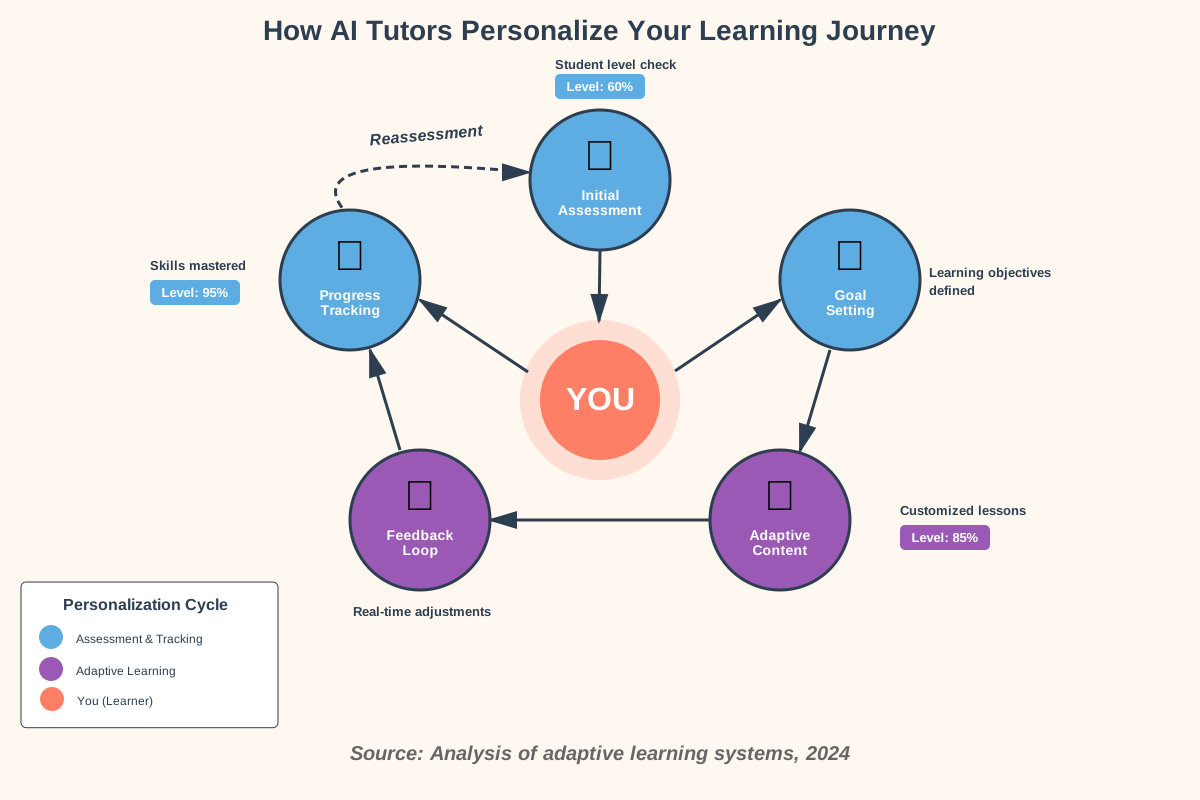
Based on this understanding, the AI tutor then:
Adjusts content difficulty to keep you challenged but not overwhelmed. Research shows students learn best when material is slightly beyond their current ability—what educators call the “zone of proximal development.”
Changes teaching methods if one approach isn’t working. Some students learn better through visual examples, others through step-by-step procedures. AI tutors can present the same concept multiple ways.
Provides targeted practice in areas where you need it most, rather than making you review material you’ve already mastered.
Offers encouragement at the right moments. Good AI tutors are programmed to recognize when you’re frustrated and provide motivational feedback or suggest taking a break.
Real-Time Feedback That Accelerates Learning
One of the biggest advantages of AI tutoring platforms is instant feedback. When you submit an answer, you don’t wait days for a teacher to grade it—you receive an immediate response.
But this isn’t just about speed. The quality of feedback matters enormously. A well-designed AI tutor doesn’t simply mark your answer right or wrong. It explains where your reasoning went astray, provides hints to guide you toward the correct solution, and often shows you the specific step where your approach diverged from the correct method.
For example, if you’re learning to solve quadratic equations and you make an error in combining like terms, the AI tutor recognizes that specific mistake. It doesn’t reteach the entire concept of quadratic equations—it targets that particular algebra skill you need to strengthen.
Step-by-Step: Getting Started With AI Tutors
Let me walk you through exactly how to begin using AI tutors effectively, even if you’ve never used anything like this before.
Step 1: Identify Your Learning Goals
Before diving into any AI tutoring platform, take a few minutes to clarify what you want to achieve. Be specific.
Instead of “I want to get better at math,” try “I need to improve my understanding of fractions and percentages for an upcoming test” or “I want to master Spanish verb conjugations.”
Why this matters: AI tutors work best when they have clear objectives to work toward. Specific goals help the system prioritize what to teach you and allow you to measure your progress effectively.
Common mistake to avoid: Don’t set too many goals at once. Focus on one or two areas initially. You can always expand later.
Step 2: Choose the Right AI Tutor for Your Needs
Not all AI tutors are created equal. Different platforms excel at different things. Here’s how to choose:
For mathematics, platforms like Khan Academy’s AI assistant, Photomath, or Carnegie Learning’s MATHia are excellent choices. They specialize in math education and have extensive problem libraries.
For language learning, consider AI tutors integrated into apps like Duolingo Max (which uses GPT-4) or language-specific platforms that focus on conversation practice.
For general homework help across multiple subjects, ChatGPT, Claude, or specialized educational platforms like Socratic by Google can be helpful.
For test preparation, look for AI tutors designed specifically for your exam (SAT, ACT, GRE, etc.), as they’ll be familiar with the test format and question types.
Pro tip: Many platforms offer free trials. Test a few before committing to a paid subscription. Pay attention to how naturally you can interact with the system and whether the explanations make sense to you.
Step 3: Complete the Initial Assessment
Once you’ve chosen a platform, most AI tutors will ask you to complete an initial assessment. Approach this honestly—don’t guess randomly, but also don’t look up answers.
The assessment isn’t grading you for a report card. It’s collecting data to help you learn more effectively. If you artificially inflate your abilities by looking up answers, the AI tutor will pitch lessons too advanced for your actual level, and you’ll end up frustrated.
Take your time with assessment questions. If you don’t know an answer, it’s perfectly fine to indicate that or make your best attempt. This information helps the system understand where to start.
What to expect: Initial assessments typically take 10-30 minutes, depending on the subject and platform. You’ll likely see questions ranging from easy to challenging as the system narrows down your skill level.
Step 4: Set Up Your Learning Schedule
Consistency beats intensity in learning. It’s better to practice with your AI tutor for 20 minutes daily than to cram for two hours once a week.
Most AI tutoring platforms include scheduling features or reminders. Use them. Treat your AI tutoring time like an appointment you can’t miss.
Practical scheduling tips:
Link your tutoring time to an existing habit. For example, “I’ll use my AI tutor for 15 minutes right after breakfast” or “I’ll complete one lesson while my coffee brews.”
Start small and build up. If you commit to 15 minutes daily and maintain it for a week, you can gradually increase to 30 minutes.
Choose times when you’re mentally fresh. Studying at 11 PM when you’re exhausted won’t be effective, even with the best AI tutor.
Why this matters: AI tutors can track your progress over time, but only if you engage with them regularly. Sporadic use prevents the system from building an accurate picture of your learning patterns.
Step 5: Learn How to Ask Questions Effectively
One of the most powerful features of conversational AI tutors is the ability to ask questions in natural language. However, the quality of your questions affects the quality of answers you receive.
Rather than saying, “I don’t understand this,” consider asking, “Could you explain why we multiply before adding in this equation?” The more specific your question, the more targeted the explanation.
Don’t be afraid to follow up. If the first explanation doesn’t click, say, “Can you illustrate that differently?” or “Could you show me an example?”
Use the phrase “Can you break that down into simpler steps?” when you’re feeling overwhelmed by complexity.
Example conversation:
- You: “I’m confused about photosynthesis.”
- AI Tutor: [Provides detailed explanation]
- You: “That’s too much information. Can we start with just what happens first?”
- AI Tutor: [Focuses on light absorption stage only]
- You: “Okay, I understand that part. What happens next?”
See how breaking down your confusion into specific questions leads to better learning?
Step 6: Engage With Practice Problems Actively
When your AI tutor presents practice problems, resist the temptation to immediately ask for the answer or look it up. The struggle is part of learning.
Try to solve the problem yourself first, even if you’re not confident. If you get stuck, ask the AI tutor for a hint rather than the full solution.
The hint progression method:
- Attempt the problem yourself
- If stuck, ask for a small hint
- Try again with the hint
- If still stuck, ask for a more substantial hint
- Only request the full solution if you’re completely stumped
This approach builds problem-solving skills, not just answer recognition.
After completing a problem correctly, try to explain your reasoning out loud or in writing. Some AI tutors let you type out your thought process, which helps reinforce learning.
Common mistake to avoid: Don’t just copy solutions and move on. Understanding why a solution works matters more than getting the right answer.
Step 7: Review Your Progress Regularly
Most AI tutoring platforms include progress dashboards showing what you’ve learned, where you’ve improved, and where you still need work.
Schedule a weekly review session—maybe Sunday evening—where you look at your progress data. This serves two purposes:
Motivation: Seeing concrete evidence of improvement encourages you to continue. Those graphs showing your math skills increasing from 65% to 78% over two weeks are powerful motivators.
Course correction: If you notice you’re not making progress in a particular area despite practice, that’s valuable information. You might need to adjust your approach, spend more time on fundamentals, or seek additional human support for that specific topic.
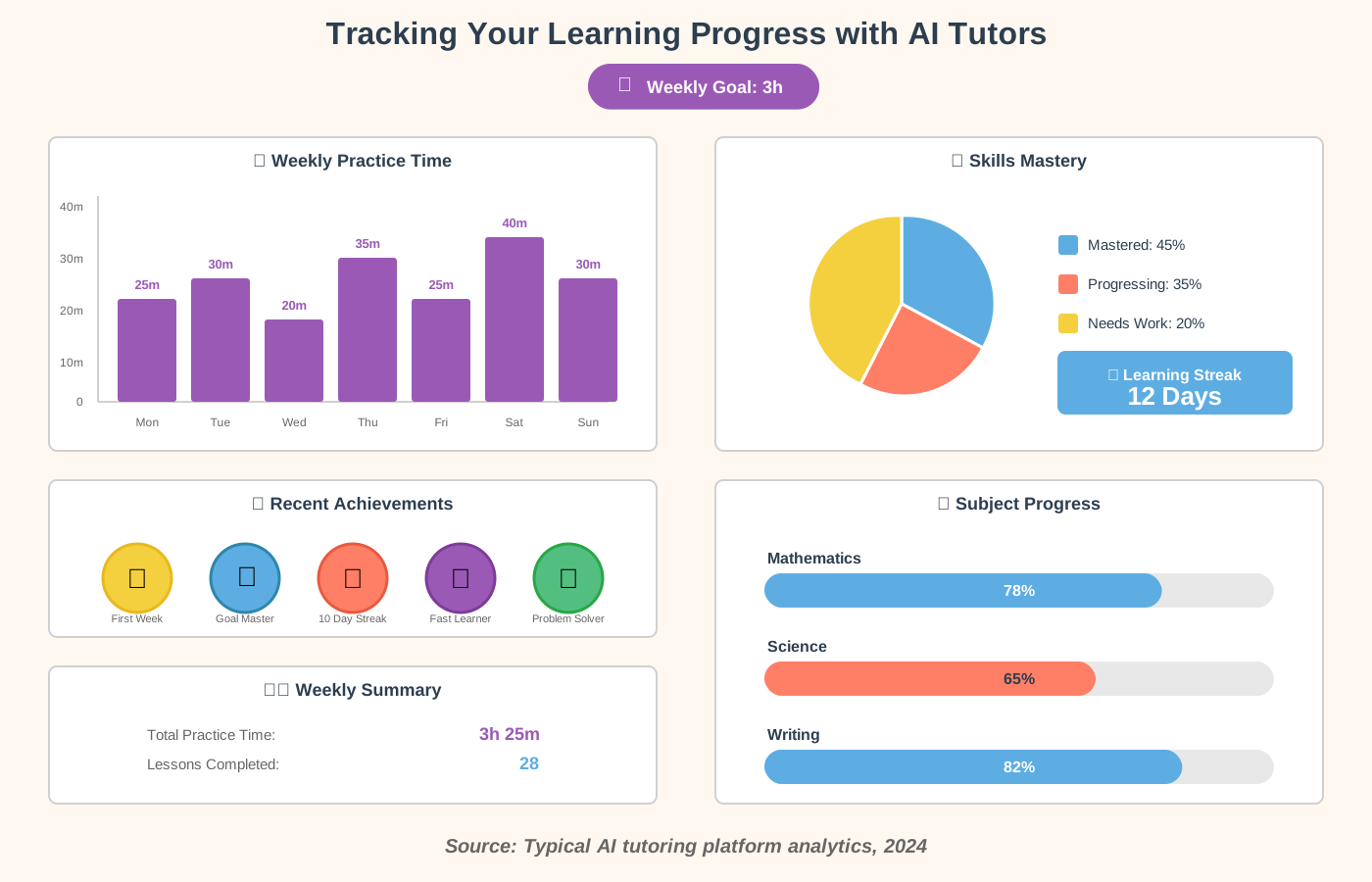
Ask yourself, “Am I practicing regularly? Am I spending time on the right topics? Do I feel more confident than I did last week?”
Step 8: Combine AI Tutoring With Other Learning Methods
Here’s something important: AI tutors work best as supplements, not replacements, for other learning methods.
Use your AI tutor alongside:
Traditional classroom learning: Let your AI tutor reinforce what your teacher covers in class. If you didn’t fully grasp a concept during the lesson, review it with your AI tutor the same evening.
Study groups: Discuss concepts with peers, then use your AI tutor to clarify points of confusion that came up during group study.
Real-world practice: If you’re learning a language, practice conversation with an AI tutor, but also try speaking with native speakers when possible.
Human teachers for complex questions: When you encounter a deeply confusing concept that the AI tutor can’t explain in a way that clicks for you, that’s when to bring in a human teacher who can read your body language and adjust their teaching dynamically.
Think of your AI tutor as an always-available assistant coach who’s great for daily practice, while your human teachers and mentors serve as head coaches for strategy and complex problem-solving.
Capabilities and Limitations of AI Tutors
Let’s be realistic about what AI-driven learning can and cannot do. Understanding both strengths and limitations helps you use these tools effectively.
What AI Tutors Excel At
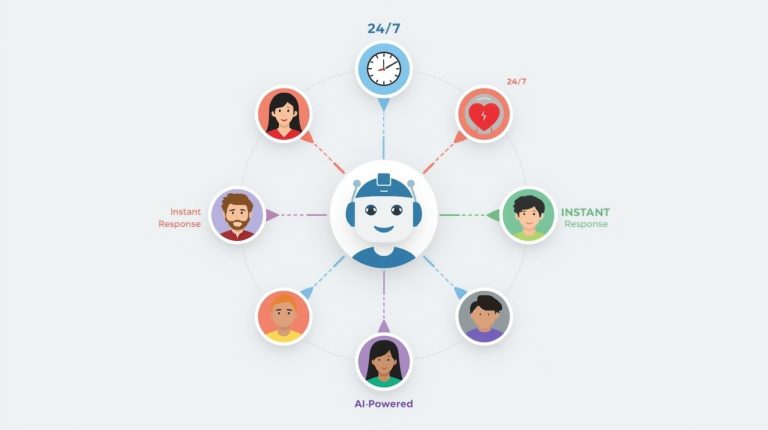
Immediate availability might be the most practical advantage. Whether you’re studying at 2 AM before a test or have a question on Saturday afternoon, your AI tutor is ready. No scheduling, no waiting for office hours.
Infinite patience means you can ask the same question seventeen different ways until it makes sense. The AI tutor never gets frustrated and never makes you feel stupid for not understanding something quickly.
Personalized pacing allows you to speed through material you grasp easily and slow down on challenging topics. In a traditional classroom, the pace is set for the average student, which means some are bored while others are lost.
Scalability and affordability make quality tutoring accessible. While private human tutors can cost $50-100 per hour, many AI tutoring tools are free or cost less than $20 monthly. This democratizes access to personalized instruction.
Data-driven insights help you understand your learning patterns. AI tutors track metrics human tutors might miss—like which time of day you learn most effectively or which types of problems consistently trip you up.
Multimedia explanations combine text, diagrams, videos, and interactive elements in ways that match how you learn best. The AI can instantly switch between visual and verbal explanations based on what’s working.
Where AI Tutors Fall Short
Emotional intelligence remains a human strength. If you’re stressed about an upcoming test, crying because you feel overwhelmed, or dealing with anxiety about school, an AI tutor can’t provide the kind of emotional support a caring teacher offers.
Complex problem diagnosis sometimes requires human insight. When a student consistently struggles with a concept, experienced human teachers can often identify underlying issues—maybe the student needs glasses and can’t see the board clearly, or they’re dealing with a learning difference that requires specialized support.
Creativity and open-ended thinking can be challenging for AI tutors. While they’re excellent at teaching structured subjects like math or grammar, they’re less effective at nurturing truly original creative thinking or helping students develop unique voices in writing or art.
Motivational coaching over the long term works better with humans. While AI tutors can provide encouragement, they can’t build the kind of mentoring relationship that inspires students to push through difficult periods or discover their passion for a subject.
Handling nuance and context in subjective subjects remains difficult. In subjects like literature interpretation, historical analysis, or ethical reasoning, human judgment and cultural understanding matter immensely.
Technical limitations exist around what AI can recognize. If you’re handwriting math problems or drawing diagrams to explain your thinking, not all AI tutors can process that visual information effectively yet.
How AI Tutors Supplement Traditional Classroom Learning
The question isn’t whether AI tutors will replace human teachers—they won’t. The more interesting question is how they work together to create better educational outcomes.
The Blended Learning Model
Think of the ideal learning environment as having three layers:
Foundation layer: Traditional classroom instruction provides structured curriculum, social learning with peers, hands-on activities, and the irreplaceable human connection between teacher and student.
Reinforcement layer: AI tutoring offers personalized practice, immediate feedback, alternative explanations when the classroom approach didn’t click, and fills gaps in understanding before they become bigger problems.
Support layer: Human help when needed gives targeted assistance for complex issues, emotional support, motivation, and connection to broader educational resources.
When these three layers work together, students get the best of all approaches.
Real-World Implementation Examples
Schools implementing hybrid learning models with AI tutors are seeing interesting results. Some practical patterns emerge:
Homework help evolution: Instead of students getting stuck on homework and giving up, they use AI tutors for hints and guidance. This means they arrive at the next class having actually completed the work and ready to discuss more advanced concepts.
Flipped classroom enhancement: Teachers assign AI tutor sessions to introduce new concepts at home. Class time then focuses on applying those concepts through projects, discussions, and collaborative work where human interaction adds the most value.
Differentiated instruction support: In a classroom of 30 students at varying skill levels, a teacher struggles to provide personalized attention. AI tutors handle the personalization of practice and review, freeing the teacher to focus on higher-level guidance and individual students who need human support most.
Test preparation assistance: Students preparing for standardized tests use AI tutors for practice and immediate feedback, while classroom time focuses on test-taking strategies, time management, and handling test anxiety—areas where human coaching excels.
For Self-Directed Learners
If you’re learning independently outside traditional school—whether you’re homeschooling, pursuing adult education, or just curious about a subject—AI tutors offer structure and accountability that self-study often lacks.
You can create your own blended learning approach:
Set your curriculum using online resources or textbooks Use AI tutors for daily practice and feedback Join online communities for peer discussion Schedule occasional sessions with human experts for guidance on your learning path
This combination gives you flexibility and personalization while maintaining the benefits of structure and feedback.
Practical Tips for Maximizing Your AI Tutor Experience
Let me share some specific strategies I’ve found helpful for getting the most from AI educational tools.
Communicate Your Confusion Clearly
The better you can describe what you don’t understand, the more helpful the AI tutor’s response will be.
Instead of “I don’t get it”, Try: “I understand steps 1 and 2, but step 3 doesn’t make sense because I don’t see how you got from the equation in step 2 to the equation in step 3”
Instead of: “Can you explain chemistry?” Try: “Can you explain how to balance chemical equations, specifically when there are multiple elements involved?”
The more precise your question, the more targeted and useful the answer.
Request Different Explanation Styles
If one explanation doesn’t work, explicitly ask for alternatives:
“Can you explain this using a real-world example?” “Can you show me this visually instead of with words?” “Can you give me an analogy to help me understand this concept?” “Can you break this down into even simpler steps?”
Most AI tutors can present information in multiple ways—take advantage of that flexibility.
Use the “Teach Me Back” Technique
After learning something, explain it back to the AI tutor in your own words. This technique, called the Feynman method, reveals whether you truly understand or are just mimicking what you’ve been told.
You: “Okay, let me see if I understand photosynthesis. Plants use sunlight, water, and carbon dioxide to create sugar and oxygen. The sunlight provides energy that breaks apart the water and carbon dioxide molecules, and then the plant rearranges those atoms to make sugar molecules. Is that right?”
If your explanation has errors, the AI tutor will correct them. If it’s accurate but incomplete, it will fill in gaps. This active testing of your understanding is much more effective than passive rereading.
Take Notes—Don’t Just Read
Typing or writing information helps cement it in memory. As your AI tutor explains concepts, take notes in your own words. This forces active processing rather than passive absorption.
Your notes don’t need to be pretty or formal. Scribbled understanding is more valuable than beautiful but mindless copying.
Practice Retrieval
After studying with your AI tutor, close the session and try to recall what you learned without looking. This retrieval practice—testing your memory—is one of the most effective learning techniques research has identified.
Then use your AI tutor to check: Did you remember correctly? What did you forget?
This cycle of learning, testing yourself, and reviewing gaps creates much stronger memory than simply rereading the same material multiple times.
Set Specific Session Goals
Before opening your AI tutoring app, decide what you want to accomplish in that session.
“Today I will master converting fractions to decimals” , “This session I will understand the causes of World War I” and “Right now I will practice conjugating irregular Spanish verbs in past tense”
Specific goals keep you focused and give you a clear sense of accomplishment when you finish.
Don’t Cherry-Pick Easy Topics
It’s tempting to keep practicing things you already understand because it feels good to get answers right. Resist this. Growth happens at the edge of your ability, in the subjects that challenge you.
Use your progress data to identify weak areas, and deliberately spend time there even though it’s uncomfortable. Your AI tutor is designed to help you through that difficulty—use it for that purpose.
Frequently Asked Questions About AI Tutors
The Future of AI Tutors in Education
Looking ahead, artificial intelligence in education will become increasingly sophisticated and integrated into learning environments.
Near-term developments likely include:
Better multimodal interaction where AI tutors can interpret handwritten work, understand diagrams you draw, and even analyze your tone of voice to detect frustration or confusion.
Emotional intelligence improvements will help AI tutors recognize when you’re struggling emotionally, not just academically, and respond more supportively.
Seamless integration between classroom learning management systems and AI tutors, so your AI tutor knows what your teacher covered today and can provide targeted reinforcement.
Virtual reality learning environments where AI tutors can guide you through immersive educational experiences—walking through historical events, exploring inside human cells, or practicing scientific experiments in safe virtual labs.
Collaborative AI tutors that facilitate group learning, helping teams of students work through projects together while providing individualized support to each team member.
The most exciting prospect isn’t the technology itself, but what it enables: truly personalized education that adapts to each learner’s needs, pace, and style. For generations, we’ve known that one-size-fits-all education doesn’t serve all students well, but we lacked the resources to provide individual attention at scale. AI tutors help bridge that gap.
Taking Your Next Steps With AI Tutors
You now understand what AI tutors are, how they work, and how to use them effectively. The question is, what will you do with this knowledge?
Start small. Don’t try to revolutionize your entire learning approach overnight. Pick one subject where you need help or one skill you want to develop. Choose an appropriate AI tutor—maybe start with a free option—and commit to using it for 15 minutes daily for one week.
Pay attention to what works. Do the explanations make sense to you? Does the interface feel intuitive? Are you actually learning, not just going through motions? After that first week, assess honestly and adjust your approach.
Remember that AI tutors are tools, and like any tool, they work best when used skillfully and purposefully. They won’t do the learning for you—they can’t. But they can provide the personalized support, immediate feedback, and patient explanation that help you learn more effectively than you might on your own.
The students who will thrive in coming decades are those who learn how to learn—who can acquire new skills, adapt to changing circumstances, and take charge of their own education. AI tutors are powerful instruments for developing exactly those capabilities.
Whether you’re a student struggling with a difficult subject, a parent looking for better ways to support your child’s learning, or an adult wanting to acquire new skills, AI tutors offer accessible, affordable, personalized instruction that was simply unavailable just a few years ago.
The technology exists. The question is whether you’ll use it to achieve your learning goals. My advice: try it. Give it an honest effort for a few weeks. See what happens. You might be surprised at how much more confident and capable you become when you have a patient, knowledgeable assistant available whenever you need it.
Learning has always been challenging work. AI tutors don’t make learning effortless—nothing can—but they make it more accessible, more personalized, and more responsive to your individual needs. That’s worth exploring.
References:
Research on adaptive learning systems and personalized instruction methodologies (2024)
Analysis of AI tutoring platform effectiveness in K-12 and higher education settings (2023-2024)
Studies on learning science principles including retrieval practice and spaced repetition
Educational technology integration frameworks from leading educational institutions
About the Author
Abir Benali is a technology writer specializing in making AI accessible to everyone, regardless of technical background. With a passion for education and a talent for clear explanation, Abir helps readers understand and use AI tools effectively in their daily lives. When not writing about technology, Abir volunteers teaching digital literacy skills to community members of all ages. Abir believes that technology should empower people and that understanding how AI works is increasingly critical to managing modern life successfully.