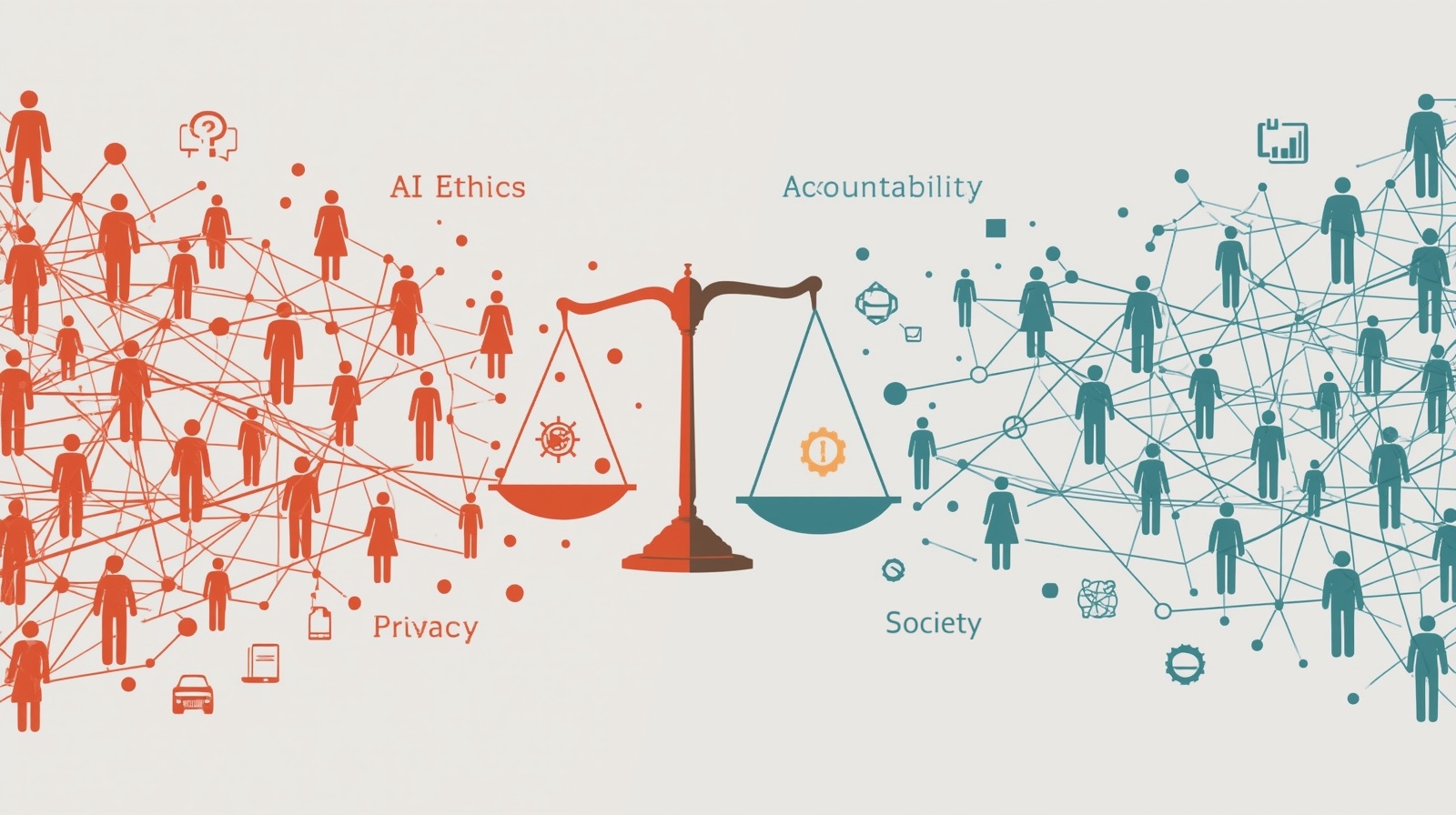
The Long-Term Societal Impact of AI: What We Need to Know

The Long-Term Societal Impact of AI is something I think about every single day—not as a distant concern, but as an immediate reality that’s already reshaping how we work, connect, and make decisions. As someone deeply invested in AI ethics and digital safety, I’ve witnessed firsthand how artificial intelligence is transforming our world at breathtaking speed. But here’s what keeps me up at night: Are we moving too fast without asking the right questions?
When I talk to people about AI, I often hear excitement mixed with uncertainty. They’re thrilled about AI assistants that help them write emails or apps that recommend the perfect movie. Yet beneath that enthusiasm lies genuine concern: What happens when these systems make mistakes? Who’s responsible when an algorithm denies someone a loan or a job opportunity? And perhaps most importantly, how do we ensure that the technology meant to improve our lives doesn’t end up deepening existing inequalities or eroding the values we hold dear?
This isn’t just a conversation for technologists or policymakers. The Long-Term Societal Impact of AI affects all of us—whether you’re a parent wondering about your child’s digital footprint, a professional concerned about job automation, or simply someone who wants to understand the invisible systems increasingly influencing daily life.
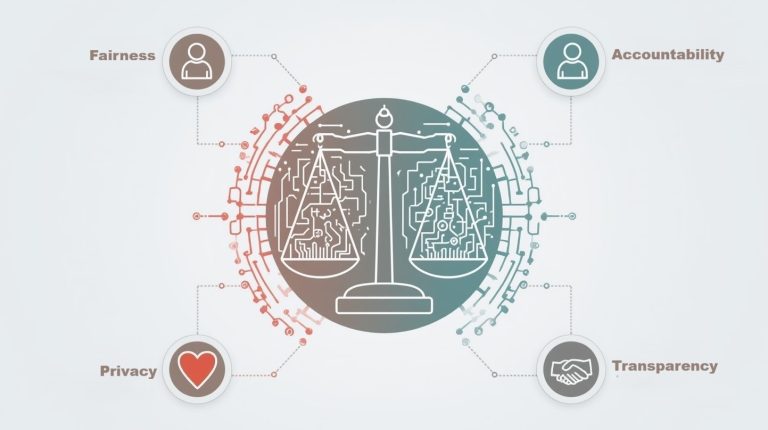
In this article, I’ll walk you through the most pressing ethical challenges we face as AI becomes woven into the fabric of society. We’ll explore algorithmic bias, privacy concerns, accountability gaps, and the broader societal transformations already underway. More importantly, I’ll share practical insights on how we can navigate these challenges thoughtfully and responsibly. Because understanding these issues isn’t optional anymore—it’s essential for anyone who wants to participate meaningfully in shaping our collective future.
Understanding AI’s Growing Role in Society
Let me start with something personal: Last year, I applied for a credit card, and within seconds, an algorithm decided my financial worthiness. No human reviewed my application. No one considered the context of my life circumstances. Just data points fed into a system that made a binary decision: approve or deny.
This experience, which millions of people encounter daily, perfectly illustrates how deeply artificial intelligence has penetrated our everyday lives. We’re not talking about science fiction anymore. AI systems already determine whether you get hired, how much you pay for insurance, what content you see on social media, and even the sentences handed down in some courtrooms.
Machine learning algorithms now power everything from healthcare diagnostics to traffic management systems. They analyze your shopping habits, predict your political preferences, and curate your news feed. In many ways, AI has become the invisible architecture of modern life—making countless decisions on our behalf, often without our explicit awareness or consent.
But here’s where things get complicated: Unlike traditional software that follows explicit rules, modern AI systems learn patterns from vast amounts of data. They make predictions and decisions based on correlations they discover, sometimes in ways even their creators don’t fully understand. This “black box” nature of AI creates unique ethical challenges that we’re only beginning to grapple with.
The Bias Problem: When AI Reflects Our Worst Qualities
I need to be honest with you about something that troubles me deeply: AI bias isn’t a bug—it’s often a feature of how these systems are designed and trained. Let me explain what I mean.
Algorithmic bias occurs when AI systems produce systematically unfair outcomes for certain groups of people. This happens because AI learns from historical data, and that data inevitably reflects existing human prejudices, structural inequalities, and societal blind spots.
Consider this real-world example: Several major tech companies have developed facial recognition systems that work brilliantly for white men but struggle to accurately identify women and people of color. Why? Because the training data predominantly featured white male faces. The AI didn’t set out to be discriminatory—it simply learned from biased data and perpetuated those biases at scale.
The implications are staggering. When these systems are used for security, hiring, or law enforcement, they can systematically disadvantage entire communities. A biased hiring algorithm might screen out qualified candidates based on patterns that correlate with gender or race. A flawed risk assessment tool might recommend harsher sentences for defendants from certain neighborhoods.
How Bias Enters AI Systems
Machine learning bias can creep in at multiple stages:
Training Data Bias: If historical data reflects discriminatory practices (and it often does), the AI will learn and replicate those patterns. For instance, if a company’s past hiring decisions favored men for technical roles, an AI trained on that data will likely continue that pattern.
Design Bias: The choices developers make about what to measure and optimize can embed bias. If a credit scoring system prioritizes traditional employment history, it might disadvantage gig workers or people who’ve taken career breaks for caregiving—disproportionately affecting women.
Interaction Bias: How users interact with AI systems can introduce new biases. If people consistently associate certain careers with specific genders in their queries, recommendation systems might reinforce those stereotypes.
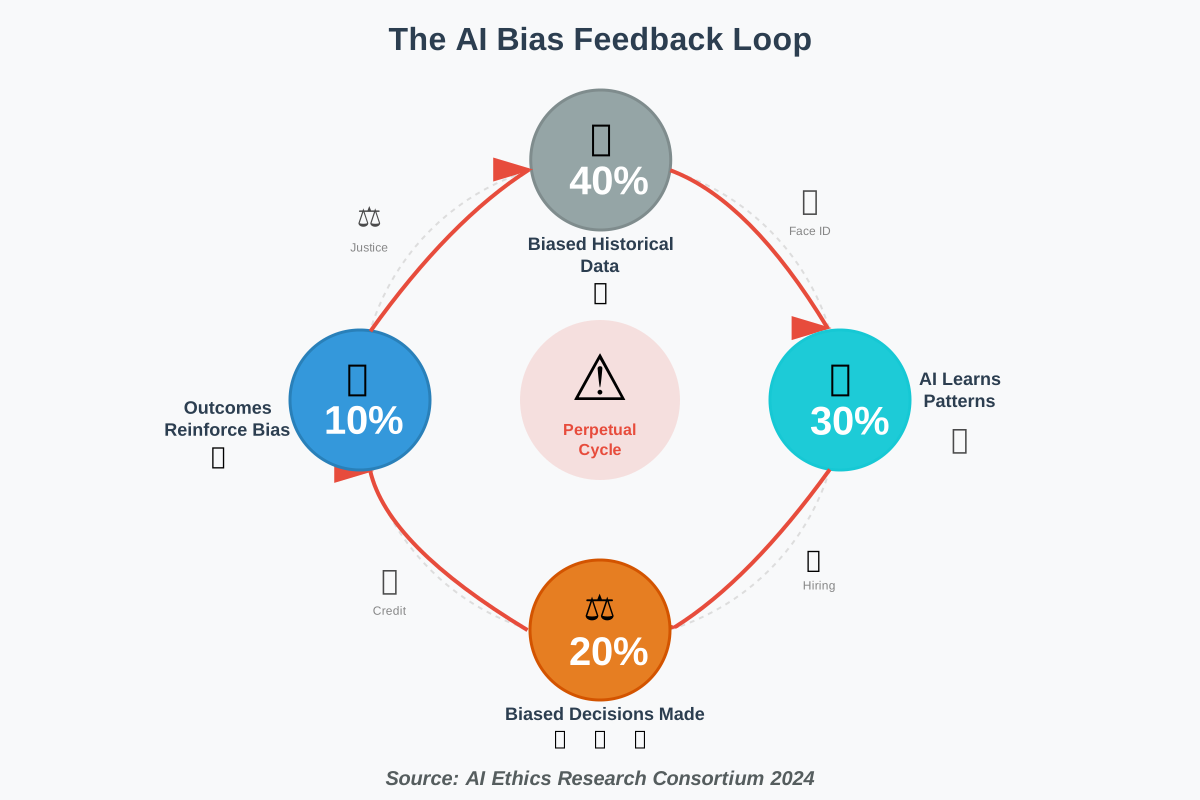
Feedback Loop Bias: Perhaps most insidiously, biased AI decisions can create self-fulfilling prophecies. If an algorithm denies loans to people in certain zip codes, those communities have fewer resources to improve their circumstances, reinforcing the pattern the AI detected.
What worries me most is how AI bias can operate invisibly at a massive scale. One biased person in charge could have an effect on dozens of people. A biased algorithm can affect millions before anyone notices the pattern.
Privacy in the Age of AI: Your Data Is Their Fuel
Here’s an uncomfortable truth I need you to understand: AI privacy concerns aren’t just about companies knowing too much about you—they’re about how that knowledge can be used in ways you never anticipated or consented to.
Every time you interact with an AI system, you’re typically feeding it data. Your searches, clicks, purchases, location history, voice commands, and even your typing patterns become training material. This data is incredibly valuable—it’s what makes AI smarter and more personalized. But it also creates profound privacy risks.
I often ask people:
“Do you know which companies have collected data about you?”
“What are they doing with it?”
“Who are they sharing it with?”
Most can’t answer these questions. And that’s precisely the problem.
The Scope of Data Collection
Modern AI systems are data-hungry by nature. They need massive datasets to learn effectively. Consider what a typical smartphone AI collects: your location history, contact lists, email content, photos (including facial recognition data), health and fitness information, browsing habits, app usage patterns, and even ambient audio to improve voice recognition.
This data doesn’t stay isolated. It gets combined, analyzed, and used to create detailed profiles predicting your behavior, preferences, political leanings, health conditions, and financial status. These predictions then inform decisions about what you see, what opportunities you’re offered, and how you’re treated by various systems.
The Surveillance Creep
What troubles me deeply is how AI-powered surveillance has normalized the constant monitoring of our lives. Security cameras with facial recognition track our movements through cities. Smart home devices listen for our commands (and sometimes more). Social media platforms analyze our posts, photos, and interactions to build psychological profiles.
In some countries, this has evolved into comprehensive social credit systems where AI monitors citizens’ behavior and assigns scores affecting their access to services, travel, and opportunities. Even in democracies, we’re seeing increasing use of AI surveillance in public spaces, workplaces, and schools—often without meaningful consent or oversight.
The question I keep coming back to is: At what point does convenience become surveillance? When does personalization become manipulation?
Re-identification and Data Anonymization Myths
Here’s something that might surprise you: Anonymizing data doesn’t work as well as most people think. Even when companies remove obvious identifiers like names and addresses, AI can often re-identify individuals by cross-referencing other data points.
Researchers have repeatedly demonstrated that supposedly anonymous datasets can be de-anonymized using publicly available information. Your age, zip code, and gender might seem innocuous, but combined with other factors, they can uniquely identify you. Add browsing patterns or location history, and anonymity becomes nearly impossible to maintain.
This means that even when companies promise to protect your privacy through anonymization, AI’s pattern-recognition capabilities can undermine those protections. Data you shared with one service under specific terms might be combined with other datasets in ways you never imagined or approved.
Accountability: Who’s Responsible When AI Makes Mistakes?
Let me share something that keeps me awake at night: We’re deploying increasingly powerful AI systems without clear frameworks for accountability when things go wrong. And things do go wrong—often with devastating consequences.
Imagine this scenario: An autonomous vehicle causes a fatal accident. Who’s responsible? The manufacturer? The software developer? The company operating the fleet? The AI itself? The person in the vehicle who might have been able to intervene? Our legal and ethical frameworks weren’t designed for these questions.
The Accountability Gap
The challenge with AI accountability stems from several factors. First, modern machine learning systems operate as “black boxes”—even their creators often can’t fully explain why they made specific decisions. This opacity makes it incredibly difficult to assign responsibility when errors occur.
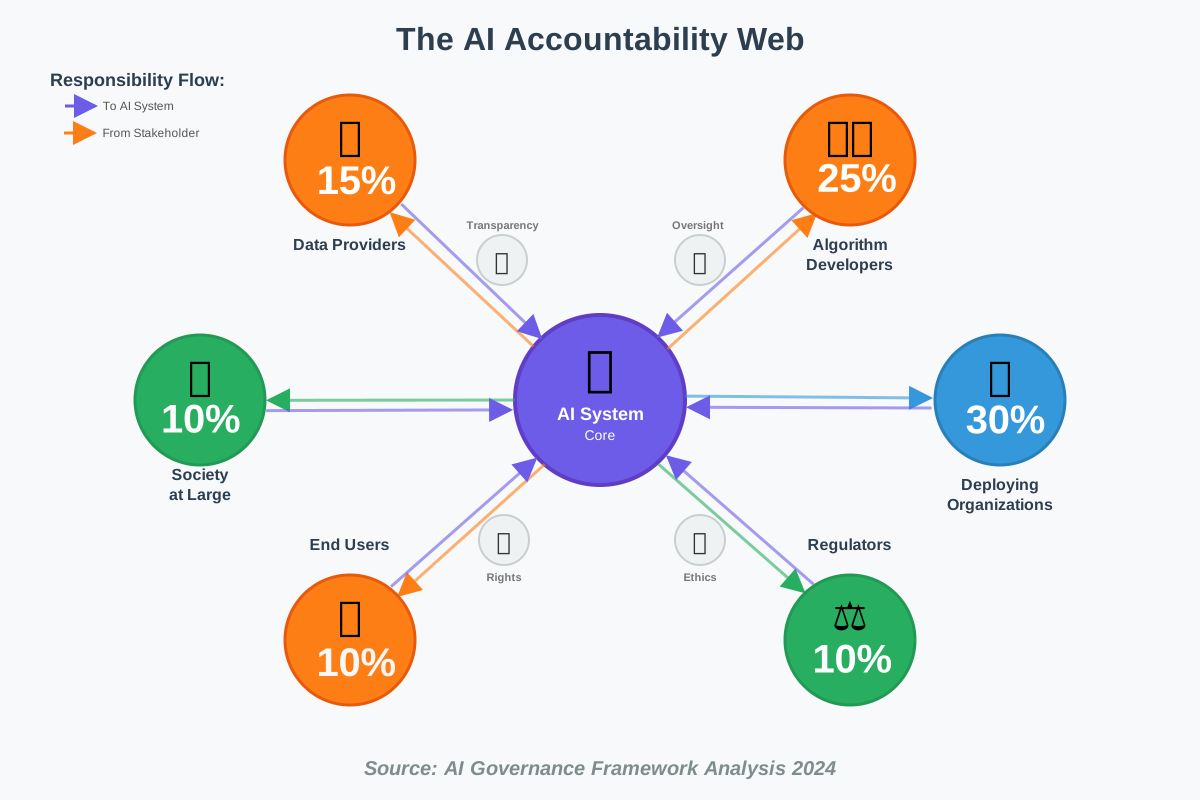
Second, AI systems involve multiple parties: data providers, algorithm developers, companies deploying the technology, and end users. When something goes wrong, each party can plausibly claim the problem originated elsewhere. This diffusion of responsibility creates an accountability gap where no one is truly answerable for AI-driven harms.
Third, AI decisions are often probabilistic rather than deterministic. The system might be “95% accurate,” but that remaining 5% represents real people facing real consequences. Who’s responsible for those false positives or negatives?
The Automation Excuse
I’ve noticed a troubling trend: Organizations increasingly use AI as a shield against accountability. “The algorithm decided” becomes a way to deflect responsibility and avoid scrutiny. This automation excuse is particularly problematic because it treats AI as an inevitable force of nature rather than a tool created by humans with specific design choices and priorities.
When a bank’s AI denies your loan application, you often can’t get a meaningful explanation. When a hiring algorithm screens out your résumé, there’s no one to appeal to. When a content moderation system removes your post, you face an opaque, automated appeals process. The human judgment and discretion that once provided flexibility and recourse are being replaced by systems that present themselves as objective and final.
The Need for Explainable AI
This is why I’m passionate about explainable AI—systems designed to provide clear, understandable reasons for their decisions. If an AI denies your insurance application, you should know exactly which factors influenced that decision and have meaningful opportunities to challenge or correct errors in the data or logic.
Several jurisdictions are moving toward “right to explanation” laws requiring companies to explain automated decisions. But implementation remains challenging. How do you explain a decision made by a neural network processing millions of parameters? How much detail is meaningful to non-technical users?
The Economic Impact: Jobs, Inequality, and Opportunity
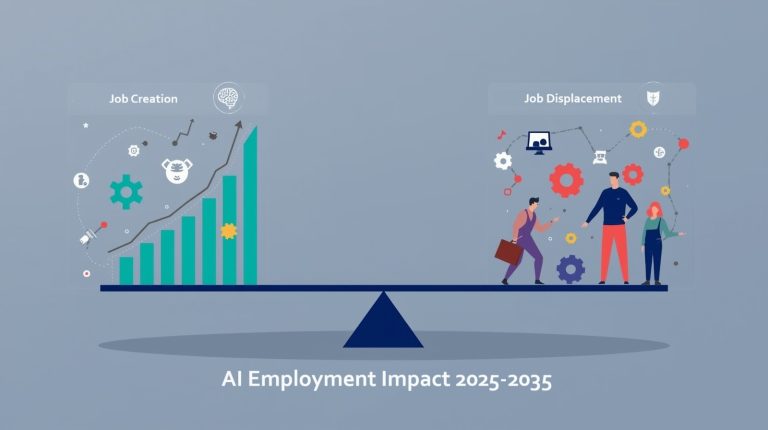
When I talk to people about the economic impact of AI, I encounter two opposing narratives. Some believe AI will create unprecedented prosperity, automating tedious work and freeing humans for more creative, meaningful pursuits. Others fear a jobless future dominated by unemployment and deepening inequality.
The truth, as usual, is more nuanced—and more concerning than the optimists suggest, but perhaps less apocalyptic than the pessimists fear.
The Automation Wave
AI automation is already transforming the workforce in profound ways. But it’s not happening the way most people expected. Early predictions focused on robots replacing factory workers and truck drivers. While that’s happening, AI is also disrupting white-collar professions that seemed immune to automation.
AI systems now write news articles, generate legal documents, diagnose medical conditions, analyze financial reports, and create marketing content. They’re not necessarily replacing humans entirely, but they’re changing what human work looks like and how many humans are needed for specific tasks.
Here’s what I’ve observed: AI tends to automate tasks, not entire jobs. This means most occupations will be transformed rather than eliminated. Radiologists, for instance, aren’t disappearing—but their work increasingly involves interpreting AI-generated analyses rather than examining every scan themselves. Accountants spend less time on data entry and more on strategic financial planning.
The challenge is that this transformation creates winners and losers. Workers who can effectively collaborate with AI become more productive and valuable. Those who can’t adapt risk being left behind. And the pace of change often exceeds our ability to retrain and adjust.
Deepening Economic Inequality
My greatest concern about the Long-Term Societal Impact of AI centers on inequality. AI is creating a bifurcated economy where highly skilled workers who command AI tools earn premium wages, while others face wage stagnation or job displacement.
This isn’t just about technical skills. It’s about access to education, resources, and opportunities to develop AI literacy. People from privileged backgrounds are better positioned to adapt to an AI-driven economy. Those already disadvantaged face additional barriers.
Moreover, the economic benefits of AI are concentrating in the hands of relatively few companies and individuals. The tech giants developing cutting-edge AI capture enormous value, while the workers whose data trained these systems, or whose jobs are being automated, see few of those gains.
AI wealth concentration raises fundamental questions about economic justice. If AI dramatically increases productivity, who benefits? Should there be mechanisms to distribute those gains more broadly? What happens to communities where AI-driven industries don’t take root?
The Skills Gap and Education Challenge
We’re facing an enormous AI skills gap. The education system, designed for an industrial-era economy, struggles to prepare students for an AI-augmented workforce. By the time curricula are updated to teach relevant skills, those skills have often evolved or been superseded.
This creates a particular challenge for older workers who need to retrain but face age discrimination and lack access to affordable education. It’s also problematic for young people entering a job market where the skills they need for tomorrow aren’t being taught today.
What troubles me is how this compounds existing inequalities. Well-funded schools in affluent areas can offer AI education and resources. Under-resourced schools in disadvantaged communities cannot. This digital divide threatens to become an AI divide, perpetuating and amplifying existing socioeconomic disparities.
Democratic Institutions and Social Cohesion
Perhaps the most underappreciated aspect of the Long-Term Societal Impact of AI is how it’s affecting our democratic institutions and social fabric. I see this playing out in several alarming ways.
AI-Powered Disinformation
Generative AI has made creating convincing fake content—text, images, audio, and video—trivially easy. Deepfakes can show politicians saying things they never said. AI-generated articles can flood social media with propaganda. Synthetic media can be weaponized to manipulate public opinion.
The technology has progressed faster than our ability to detect and counter it. While AI detection tools exist, they’re in an arms race with the generators. Meanwhile, most people lack the media literacy to distinguish real from fake content, especially when AI-generated material becomes more sophisticated.
This threatens the foundation of democratic discourse. How do we have informed debates when we can’t agree on basic facts? How do we hold leaders accountable when any compromising evidence can be dismissed as a deepfake? AI disinformation doesn’t just spread falsehoods—it erodes trust in all information, creating a nihilistic information environment where nothing can be believed.
Algorithmic Polarization
Social media platforms use AI to maximize engagement, and they’ve discovered that controversial, emotionally charged content keeps people scrolling. This creates algorithmic amplification of divisive content, pushing users toward increasingly extreme positions.
The AI doesn’t intend to polarize society—it’s simply optimizing for its programmed objectives. But the effect is profound. People increasingly inhabit filter bubbles, seeing content that confirms their existing beliefs and demonizes those who think differently. This AI-driven polarization makes compromise and shared understanding increasingly difficult.
What concerns me most is how this operates invisibly. Most users don’t realize their news feeds are algorithmically curated to maximize engagement. They think they’re seeing an objective view of the world when they’re actually experiencing a personalized reality designed to keep them engaged and, often, outraged.
Democratic Participation and Manipulation
AI enables unprecedented micro-targeting of political messages. Campaigns can craft individualized appeals based on detailed profiles of voters’ fears, hopes, and psychological vulnerabilities. While this might seem like more relevant communication, it actually undermines collective deliberation.
When every voter receives different messages, there’s no shared political conversation. Groups can be told contradictory things about candidates’ positions. Wedge issues can be amplified to specific demographics while downplayed to others. This fragmentation makes it harder for citizens to hold politicians accountable or engage in meaningful civic dialogue.
Moreover, AI-powered political manipulation can operate at scales and speeds that overwhelm traditional democratic safeguards. Bot armies can flood public consultations with fake comments. AI can identify and target swing voters with surgical precision. Foreign actors can use AI to interfere in elections with sophisticated campaigns that are difficult to trace or counter.
Environmental and Resource Considerations
I want to address something that often gets overlooked in discussions about AI ethics: the environmental impact of AI. The computational power required to train and run large AI models is staggering, and it comes with significant environmental costs.
Training a single large language model can emit as much carbon as several cars over their entire lifetimes. The data centers powering AI consume enormous amounts of electricity—and water for cooling. As AI deployment expands, so does its environmental footprint.
AI’s energy consumption raises ethical questions about priorities and sustainability. Is training increasingly large models worth the environmental cost? Who bears that cost—often communities near data centers or those most vulnerable to climate change? How do we balance AI’s potential benefits against its environmental impacts?
Moreover, the race to develop more powerful AI creates pressure to build ever-larger data centers, consuming more resources. This growth trajectory seems incompatible with climate goals unless we radically change how we approach AI development.
There’s also the digital waste issue—obsolete hardware from rapid technological turnover, electronic waste from constant upgrades, and the environmental burden of extracting rare earth materials for AI infrastructure. These impacts often fall on developing countries and marginalized communities, adding an environmental justice dimension to AI ethics.
Practical Steps Toward Responsible AI Use
After laying out all these challenges, you might feel overwhelmed. I get it—the Long-Term Societal Impact of AI can seem impossibly complex. But here’s what I’ve learned: While we can’t solve these problems individually, we can make meaningful choices that collectively push toward more ethical, responsible AI development and use.
For Individuals
Educate yourself about AI systems you encounter. When a company uses AI to make decisions affecting you—whether it’s credit, hiring, or content moderation—ask questions. What data do they collect? How do they use it? Can you access and correct your information?
Protect your privacy proactively. Review privacy settings on devices and services. Use privacy-focused alternatives when available. Be mindful about what data you share and with whom. Understand that free services often mean you’re paying with your data.
Advocate for transparency and accountability. Support companies and organizations that prioritize ethical AI practices. When you encounter problematic AI systems, speak up. File complaints. Share your experiences. Individual voices matter, especially when amplified collectively.
Develop AI literacy. You don’t need to understand the technical details, but grasping basic concepts about how AI works, its limitations, and potential biases helps you be a more informed user and citizen. Seek out educational resources—including articles like this one—that explain AI in accessible terms.
Question AI decisions. When an automated system makes a decision you don’t understand or disagree with, ask for explanations. Request human review. Exercise your rights under emerging AI regulations. Don’t accept “the algorithm decided” as a final answer.
For Organizations
If you work for a company developing or deploying AI, you have special responsibilities. Prioritize ethical considerations from the beginning of AI projects, not as an afterthought. Conduct bias audits. Ensure diverse teams are involved in AI development. Consider societal impacts, not just business benefits.
Be transparent about AI use. Tell people when they’re interacting with AI systems. Explain how automated decisions are made. Provide meaningful appeals processes. Don’t hide behind algorithmic opacity.
Invest in responsible AI practices. Allocate resources for ethics reviews, privacy protections, and bias testing. Make these priorities, not just checkbox exercises. Create accountability structures so someone is always responsible when AI causes harm.
Engage stakeholders who’ll be affected by your AI systems. Don’t just develop technology in isolation—involve communities, users, and experts in ethics, social justice, and relevant domains. Their perspectives are essential for responsible AI.
For Society
At a societal level, we need much stronger AI governance frameworks. This means comprehensive regulations that require transparency, protect privacy, prevent discrimination, and ensure accountability. We need laws with teeth—real penalties for violations.
We also need independent AI auditing and oversight. Just as we have health inspectors and financial auditors, we need experts who can assess AI systems for bias, privacy risks, and societal harms. These watchdogs should have the authority to investigate, publicize findings, and enforce standards.
Education systems must evolve to prepare people for an AI-augmented world. This means teaching AI literacy alongside traditional subjects, developing critical thinking about automated systems, and creating pathways for workers to adapt to changing job markets.
We need public investment in AI research focused on societal benefit rather than just commercial applications. This includes work on fairness, interpretability, privacy-preserving AI, and technologies that empower rather than replace human judgment.
Finally, we need ongoing public dialogue about what kind of AI-augmented society we want. These shouldn’t be decisions made solely by technologists or companies. Citizens must have meaningful input into how AI shapes our collective future.
Frequently Asked Questions About AI’s Societal Impact
Looking Forward: Building the AI Future We Want
As I think about the Long-Term Societal Impact of AI, I refuse to be either naively optimistic or hopelessly pessimistic. The truth is that AI’s impact on society is not predetermined—it’s being shaped right now by the choices we make, individually and collectively.
Artificial intelligence is a tool, and like any powerful tool, it can be used to build or destroy, to empower or oppress, to create opportunity or deepen inequality. The technology itself is neutral, but its development, deployment, and governance are profoundly human endeavors reflecting our values, priorities, and power structures.
The challenges I’ve outlined in this article—bias, privacy erosion, accountability gaps, economic disruption, democratic threats, and environmental costs—are serious and urgent. But they’re not insurmountable. They require us to be thoughtful, vigilant, and willing to make difficult choices about how we integrate AI into our society.
What gives me hope is seeing growing awareness of these issues. More people are asking hard questions about AI. More organizations are prioritizing ethical considerations. More policymakers are recognizing the need for robust governance frameworks. More researchers are working on technical solutions to bias, privacy, and transparency challenges.
But awareness isn’t enough. We need action—from individuals exercising their rights and making informed choices, from companies prioritizing societal benefit over short-term profits, from policymakers creating and enforcing meaningful regulations, and from civil society holding powerful actors accountable.
Your Role in Shaping AI’s Future
Here’s what I want you to understand: You have a role to play in determining the Long-Term Societal Impact of AI. It’s not just about tech executives or government officials—it’s about all of us.
Start by educating yourself. Understand the AI systems you interact with. Ask questions. Demand transparency and accountability. Support organizations and policies that promote responsible AI development. Use your voice as a citizen, consumer, and community member to advocate for the AI future you want to see.
Don’t accept harmful AI practices as inevitable or unstoppable. When you encounter bias, speak up. When your privacy is violated, push back. When algorithms make unjust decisions, challenge them. When companies prioritize profit over people, hold them accountable.
Support diverse voices in technology. The people building AI systems should reflect the diversity of people affected by them. Advocate for inclusive education, hiring, and leadership in tech. Amplify perspectives from communities often marginalized in technology discussions.
Think critically about AI applications. Just because something can be automated doesn’t mean it should be. Some decisions require human judgment, empathy, and moral reasoning. Resist the temptation to defer complex ethical choices to algorithms.
A Call for Collective Wisdom
We’re at a pivotal moment. The decisions we make in the next few years about AI governance, ethics, and development will shape society for decades to come. We need collective wisdom drawing on diverse perspectives, disciplines, and lived experiences.
This means bringing together not just technologists, but also ethicists, social scientists, community organizers, artists, educators, and people from all walks of life. The Long-Term Societal Impact of AI is too important to be decided by a narrow slice of society.
It also means being willing to slow down when necessary. The race to develop ever-more-powerful AI creates pressure to deploy systems before they’re ready, before we understand their implications, and before we’ve put safeguards in place. Sometimes the responsible choice is to pause and think carefully about whether and how to proceed.
We need to reframe the conversation from “What can AI do?” to “What should AI do?” and “How can AI serve human flourishing?” These are fundamentally ethical questions requiring ongoing deliberation, not technical puzzles with algorithmic solutions.
Hope Through Action
I’ll leave you with this: The future isn’t written. AI’s impact on society depends on choices we make every day—what we build, how we use it, what we regulate, what we resist, and what values we prioritize.
Be informed. Be critical. Be engaged. Be hopeful. The challenges are real, but so is our capacity to address them if we choose to act with wisdom, courage, and solidarity.
The AI future we want won’t happen automatically. We have to build it together, one thoughtful choice at a time. And that work starts now, with conversations like this one, and continues through the actions we take tomorrow and beyond.
Your voice matters. Your choices matter. The future of AI—and the society it shapes—is in all our hands.
About the Author
Nadia Chen is an expert in AI ethics and digital safety, dedicated to helping non-technical users understand and navigate the ethical implications of artificial intelligence. With a background spanning technology policy, data privacy, and human rights, Nadia translates complex AI concepts into accessible insights that empower people to make informed decisions about technology in their lives. She believes that everyone deserves to understand the systems shaping our world and has the right to participate in determining how technology serves humanity. Through her writing at howAIdo.com, Nadia bridges the gap between cutting-edge AI developments and everyday concerns, always prioritizing safety, responsibility, and human dignity in the age of automation.