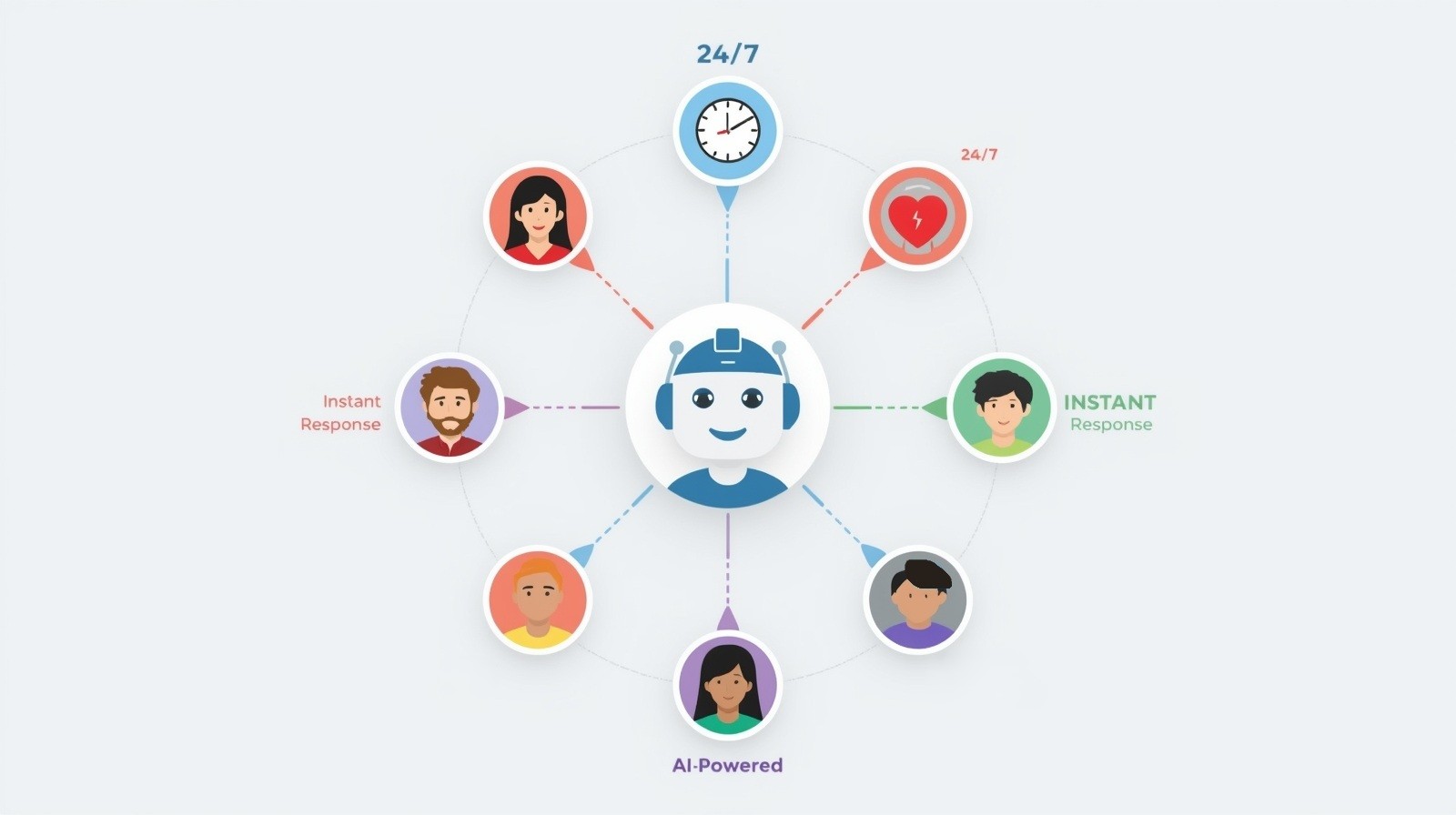
AI Chatbots: Transforming Customer Support Forever

AI Chatbots have fundamentally changed how businesses communicate with their customers. If you’ve ever received an instant response to a question on a website at 2 AM, you’ve likely interacted with one of these intelligent assistants. I remember the first time I used a chatbot to track my package delivery—within seconds, I had all the information I needed without waiting on hold or navigating through complicated menus. That moment made me realize how powerful this technology could be for everyday people like you and me.
In this guide, I’ll walk you through everything you need to know about AI chatbots, from understanding what they are to implementing them in your own business or learning how to interact with them more effectively as a customer. Whether you’re a small business owner looking to improve customer service or simply curious about this technology, this article will give you practical, actionable insights.
What Are AI Chatbots and Why Do They Matter?
Let’s start with the basics. AI chatbots are software applications that use artificial intelligence and natural language processing to simulate human conversation. Unlike traditional automated response systems that follow rigid scripts, modern AI chatbots can understand context, learn from interactions, and provide increasingly personalized responses.
Think of them as digital assistants that never sleep, never get frustrated, and can handle thousands of conversations simultaneously. For businesses, this means being able to serve customers instantly at any time of day. For customers, it means getting help exactly when you need it without the frustration of waiting in long phone queues.
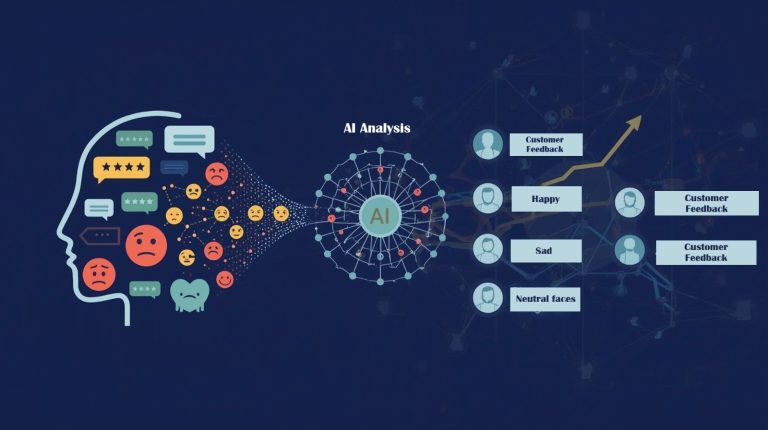
The technology behind these chatbots has evolved dramatically. Early versions could only respond to specific keywords, often leaving customers frustrated with robotic, unhelpful answers. Today’s AI-powered chatbots use machine learning to understand natural language, detect emotions, and even predict what you might need before you ask.
How AI Chatbots Are Transforming Customer Service
The impact of AI chatbots on customer service is remarkable. Here’s what’s changing:
Instant Response Times
One of the biggest frustrations in customer service has always been waiting. Whether it’s sitting on hold for 30 minutes or waiting days for an email response, the traditional model simply doesn’t meet modern expectations. AI chatbots solve this problem by providing instant responses, 24 hours a day, 7 days a week.
I recently helped a friend set up a chatbot for her online boutique. Within the first week, she noticed that customers who received instant responses were 3 times more likely to complete their purchases. That’s the power of immediate engagement.
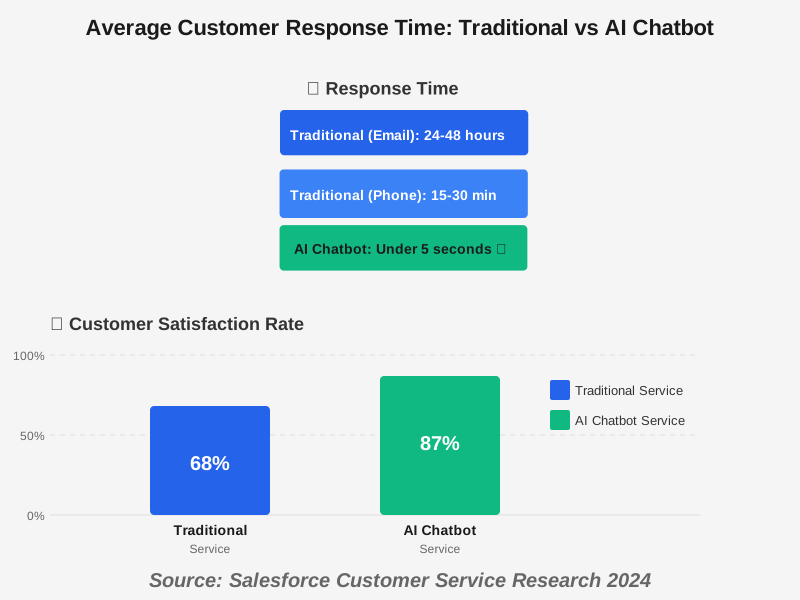
Cost Reduction Without Sacrificing Quality
Running a customer service department is expensive. You need trained staff, infrastructure, and the ability to scale during peak times. AI chatbots can handle 70-80% of common customer inquiries without human intervention, allowing businesses to dramatically reduce costs while actually improving service quality.
This doesn’t mean replacing human agents entirely. Instead, chatbots handle routine questions while human agents focus on complex issues that require empathy, judgment, or creative problem-solving. It’s a partnership that benefits everyone.
Personalized Customer Experiences
Modern AI chatbots don’t just respond—they remember. They can track your previous interactions, understand your preferences, and tailor responses accordingly. When a chatbot greets you by name and remembers that you ordered running shoes last month, it creates a more personal, engaging experience.
Step-by-Step Guide: How AI Chatbots Work
Understanding how these systems function helps you use them more effectively, whether you’re implementing one or interacting with them as a customer.
Step 1: Understanding Natural Language Processing
At the heart of every AI chatbot is natural language processing (NLP). This technology allows the chatbot to understand what you’re saying, even if you phrase it differently than expected. Instead of requiring specific commands, you can type naturally: “Where’s my order?” or “I need help tracking my package” both lead to the same result.
The chatbot breaks down your message into components, identifies your intent (you want order information), and determines what information it needs to help you (your order number or email address).
Step 2: Machine Learning and Continuous Improvement
Here’s where things get interesting. Every interaction teaches the chatbot something new. Through machine learning, the system analyzes successful conversations and learns patterns. If customers frequently ask about return policies in a certain way, the chatbot adapts to recognize and respond to that pattern more effectively.
This means the more people use the chatbot, the smarter it becomes. It’s like having a customer service representative who never forgets anything they’ve learned and constantly improves.
Step 3: Integration with Business Systems
AI chatbots don’t work in isolation. They connect to your business databases, order management systems, and customer relationship management (CRM) software. When you ask about an order, the chatbot instantly accesses real-time data from your company’s systems to provide accurate, up-to-date information.
This integration is what makes chatbots truly powerful. They’re not just answering from a script—they’re pulling live information from multiple sources to give you exactly what you need.
Step 4: Escalation to Human Agents
Smart chatbots know their limitations. When a conversation becomes too complex, emotional, or requires human judgment, the system seamlessly transfers you to a human agent—along with the full conversation history so you don’t have to repeat yourself.
I’ve seen this work beautifully. Last month, I was chatting with a retailer’s bot about a damaged product. The bot collected all my information, then smoothly connected me with a real person who had everything they needed to solve my problem quickly. No frustration, no repetition—just efficient problem-solving.
Real-World Examples of AI Chatbot Success
Let me share some inspiring examples of how businesses are using AI chatbots effectively:
E-Commerce Revolution
Online retailers like Sephora use chatbots to help customers find products, offer personalized recommendations based on purchase history, and even provide virtual makeup try-ons. Their chatbot handles over 5 million conversations monthly, answering questions about products, tracking shipments, and helping customers navigate their extensive catalog.
Banking and Financial Services
Bank of America’s chatbot, Erica, has helped over 32 million customers with tasks ranging from checking balances to providing financial advice. The bot can analyze spending patterns, suggest ways to save money, and even help dispute transactions—all through natural conversation.
Healthcare Support
Several healthcare providers now use chatbots for appointment scheduling, symptom checking, and medication reminders. These systems free up nurses and administrative staff to focus on direct patient care while ensuring patients can get basic information and support anytime they need it.
Travel and Hospitality
Hotels and airlines use chatbots to handle booking modifications, answer policy questions, and provide destination information. KLM Royal Dutch Airlines’ chatbot sends boarding passes and flight updates and can even help rebook canceled flights—serving customers in multiple languages around the clock.
Implementing AI Chatbots: A Practical Guide for Beginners
If you’re considering adding a chatbot to your business, here’s how to get started without feeling overwhelmed:
Choose the Right Platform
You don’t need to build a chatbot from scratch. Platforms like Chatfuel, ManyChat, and Drift offer user-friendly interfaces where you can create functional chatbots without coding knowledge. For more advanced needs, services like IBM Watson or Google Dialogflow provide powerful AI capabilities.
Start by evaluating what you need. Are you handling basic FAQs or complex customer service scenarios? Do you need integration with existing systems? Your answers will guide your platform choice.
Define Your Chatbot’s Purpose
Don’t try to do everything at once. Begin by identifying the most common customer questions or tasks your team handles. These are perfect for chatbot automation. Maybe it’s order tracking, store hours, return policies, or appointment scheduling.
Create a list of the top 10-15 questions your customers ask. If your chatbot can handle these well, you’ll already see significant benefits.
Design Conversational Flows
Think about how a helpful human would guide these conversations. Map out the natural flow from greeting to problem resolution. What questions does the bot need to ask? What information should it provide? When should it offer to connect with a human?
Keep it simple and natural. Avoid corporate jargon or overly formal language. Your chatbot should sound friendly and helpful, like talking to a knowledgeable colleague.
Test Thoroughly Before Launch
Before releasing your chatbot to customers, test it extensively. Try different phrasings of the same question. See how it handles unexpected inputs. Ask colleagues or friends to interact with it and provide feedback.
Common mistakes beginners make include:
- Creating flows that are too rigid or scripted
- Not providing clear options for escalation to humans
- Forgetting to test on mobile devices
- Neglecting to update the bot’s knowledge base regularly
Monitor and Improve Continuously
Launch is just the beginning. Review conversation logs regularly to see where the chatbot succeeds and where it struggles. Look for patterns in questions it can’t answer or conversations that frequently escalate to humans. Use these insights to improve your bot’s responses and add new capabilities.
Set up metrics to track performance: response accuracy, customer satisfaction ratings, resolution rates, and average conversation length. These numbers tell you if your chatbot is truly helping or frustrating customers.
Common Questions About AI Chatbots
The Future of AI Chatbots
The evolution of AI chatbots continues to accelerate. Voice-enabled chatbots are becoming more sophisticated, allowing natural spoken conversations. Emotional AI is improving, helping bots detect frustration or satisfaction and respond appropriately. Integration with augmented reality could soon let chatbots guide you visually through complex tasks.
Within the next few years, we’ll likely see chatbots that can handle increasingly complex scenarios, understand context across multiple conversations over time, and proactively reach out with helpful information before you even ask.
The key is that these advances aim to make technology more human, not less. The goal isn’t to replace human connection but to use AI to handle routine tasks so real people can focus on what humans do best: creative problem-solving, emotional support, and building genuine relationships.
Take Your First Step Today
Whether you’re a business owner considering implementing an AI chatbot or someone who wants to use these tools more effectively, I encourage you to start exploring. If you run a business, identify just one customer service task that could be automated and experiment with a simple chatbot solution. If you’re a customer, next time you interact with a chatbot, notice how it guides the conversation and what makes the experience helpful or frustrating.
The technology is more accessible than ever, and the benefits—faster service, lower costs, happier customers—are too significant to ignore. You don’t need to be a tech expert to get started. With the right approach and willingness to learn, anyone can harness the power of AI chatbots to transform how they serve and connect with customers.
Remember, every expert was once a beginner. The best time to start is now. Try it yourself, learn from the experience, and don’t be afraid to experiment. The world of AI-powered customer service is waiting for you.
About the Author
This article was written by Abir Benali, a friendly technology writer passionate about making AI tools accessible to everyone. With years of experience explaining complex technology in simple terms, Abir helps non-technical users understand and confidently use AI tools in their daily lives and businesses. Through clear, actionable guides and step-by-step instructions, Abir empowers readers to embrace technology without intimidation.