The Evolution of AI in Creative Advertising

The evolution of AI in creative advertising began long before you might think. When I first started exploring how technology changed marketing, I was surprised to discover that the roots of AI in advertising stretch back more than half a century. What started as simple data analysis has transformed into sophisticated systems that can write copy, design visuals, and predict consumer behavior with remarkable accuracy.
Today, AI touches nearly every aspect of creative advertising, but these developments didn’t happen overnight. The journey from basic computer-assisted design to intelligent creative tools is a fascinating story of innovation, experimentation, and occasional setbacks. Understanding this evolution helps us appreciate where we are now—and where we’re heading next.
What Is AI in Creative Advertising?
Before diving into history, let’s clarify what we mean by AI in creative advertising. At its core, artificial intelligence in advertising refers to computer systems that can perform tasks typically requiring human creativity and intelligence. These tasks include writing compelling headlines, designing eye-catching visuals, analyzing consumer preferences, and optimizing campaign performance.
Think of AI as a creative assistant that learns from millions of examples. Instead of simply following preset rules, modern AI can recognize patterns, generate original content, and adapt its approach based on results. Unlike traditional software that does exactly what you tell it, AI systems can make decisions and improve over time.
For non-technical users, the easiest way to understand AI in advertising is this: it’s technology that helps create, test, and improve marketing materials faster and more effectively than humans working alone. It’s not about replacing human creativity—it’s about enhancing it.
The Early Days: 1960s-1980s
The Foundation: Data Analysis and Demographics
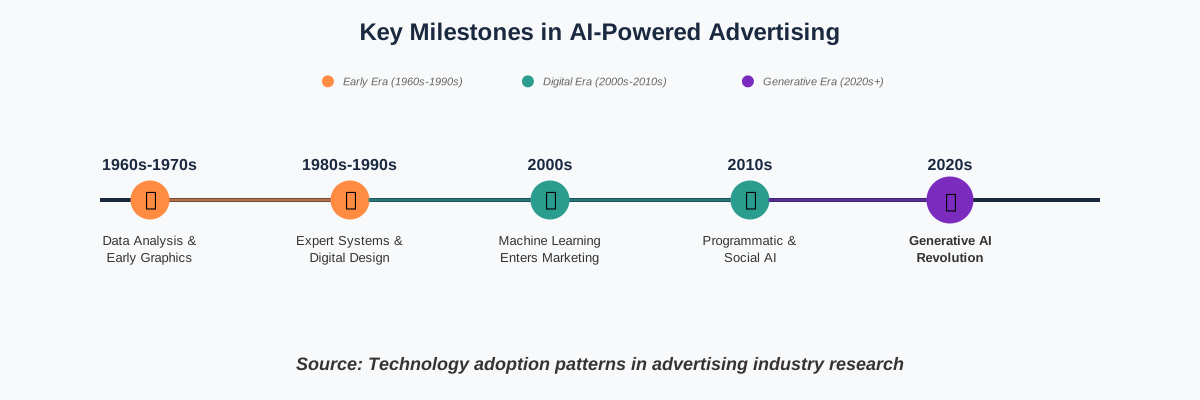
The story of AI in creative advertising begins in the 1960s, though the term “artificial intelligence” wasn’t commonly used in marketing contexts yet. During this era, advertisers started using early computers to analyze demographic data and purchasing patterns. These systems couldn’t create ads, but they could help decide where and when to place them.
I find it fascinating that agencies in the 1960s were already wrestling with questions we still ask today: Who is our audience? What do they want? How do we reach them effectively? The difference was that their “AI” relied on massive mainframe computers, which could barely process tasks that your smartphone can handle in seconds today.
The Birth of Computer Graphics
By the 1970s, something revolutionary happened: computers started creating visuals. Early computer graphics systems allowed designers to sketch basic shapes and text digitally. While primitive by today’s standards, this was the first time machines actively participated in the creative process rather than just analyzing data.
Companies like Xerox and IBM developed workstations that let creative teams experiment with digital layouts. The learning curve was steep, and the results often looked mechanical, but the seed was planted. Creative professionals began seeing computers as potential collaborators rather than just calculators.
Expert Systems: The First “Smart” Advertising Tools
The 1980s introduced expert systems—early AI programs designed to mimic human decision-making. In advertising, these systems helped media buyers determine optimal ad placement based on complex rules. You’d input information about your product, budget, and target audience, and the system would recommend which TV shows, magazines, or radio stations to buy.
These weren’t intelligent by modern standards—they followed rigid if-then rules programmed by experts. But they represented a crucial shift: for the first time, software could make strategic recommendations about creative campaigns. Agencies began trusting machines with decisions that previously required years of human expertise.
The Digital Revolution: 1990s-2000s
Desktop Publishing Changes Everything
The 1990s brought personal computers powerful enough to handle serious creative work. Software like Adobe Photoshop and QuarkXPress democratized design, allowing smaller agencies and even individuals to create professional-looking advertisements. While not strictly AI, these tools incorporated intelligent features like automatic color correction and layout suggestions.
What excites me most about this era is how it changed who could be an advertiser. You no longer needed access to expensive production studios or specialized equipment. A creative person with a computer could compete with established agencies—a preview of today’s creator economy.
Early Machine Learning Enters the Picture
By the late 1990s and early 2000s, machine learning began influencing advertising in subtle ways. Email marketing platforms used algorithms to determine the best time to send messages. Early web analytics tools predicted which website visitors were likely to convert into customers. Search engines started serving ads based on user behavior patterns.
These applications flew under the radar compared to today’s AI, but they established a crucial principle: machines could learn from data and improve their performance without explicit programming. Advertisers who embraced these early tools gained significant competitive advantages.
The Programmatic Era: 2010-2015
Real-Time Bidding and Automated Ad Buying
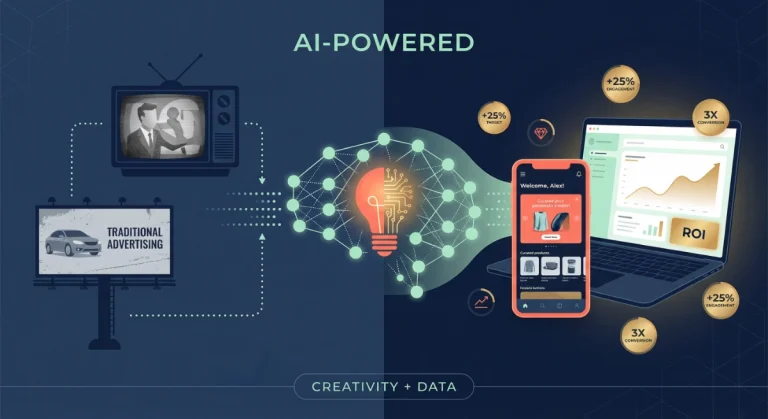
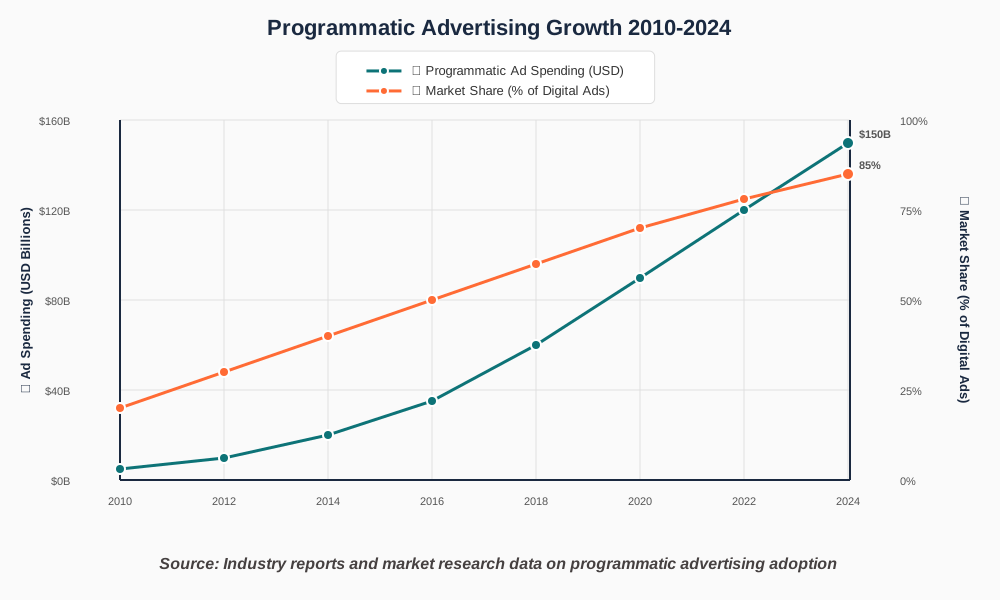
The early 2010s witnessed the explosion of programmatic advertising—using AI to buy and place digital ads automatically. Instead of humans negotiating ad placements, sophisticated algorithms analyzed millions of data points in milliseconds to determine which ads to show which users.
This technology fundamentally changed the advertising industry. Campaigns that once took weeks to plan could now adjust in real time based on performance. AI systems learned which images, headlines, and placements worked best, continuously optimizing campaigns without human intervention.
I remember when clients first encountered programmatic advertising—many were skeptical that machines could outperform experienced media buyers. However, the outcomes were undeniable. Campaigns became more efficient, reaching the right people at the right time with unprecedented precision.
Social Media AI Takes Off
Platforms like Facebook, Instagram, and Twitter developed sophisticated AI systems to serve relevant content and advertisements. These algorithms analyzed user behavior, interests, and connections to predict which ads would resonate with each individual.
The evolution of AI in creative advertising accelerated dramatically during this period. Advertisers could precisely target audiences such as new parents, outdoor enthusiasts, small business owners, and even those planning to purchase cars within the next 30 days. The AI behind these platforms processed billions of interactions to understand human behavior at scale.
The Creative AI Explosion: 2016-2020
Neural Networks Generate Content
Around 2016, something remarkable happened: AI systems began creating original content. Neural networks, particularly a type called Generative Adversarial Networks (GANs), could generate realistic images, write coherent text, and even compose music. Suddenly, AI wasn’t just analyzing or optimizing—it was creating.
Brands started experimenting with AI-generated visuals for campaigns. Some results were bizarre (remember those strange AI-generated faces?), but others were genuinely impressive. Tools emerged that could generate dozens of ad variations, allowing marketers to test different approaches quickly.
For the first time, AI moved beyond behind-the-scenes optimization into the actual creative process. This shift was both exciting and controversial. Many creative professionals worried about their roles, while others embraced AI as a powerful tool for exploration and iteration.
Chatbots and Conversational Marketing
AI-powered chatbots revolutionized customer interaction during this period. Brands deployed conversational agents that could answer questions, recommend products, and even handle complaints—all while learning from each interaction to improve future conversations.
These chatbots represented a new form of advertising: personalized, interactive, and always available. Instead of broadcasting messages to passive audiences, brands could now engage in two-way conversations at scale. The AI in creative advertising was becoming truly conversational.
Predictive Analytics Becomes Mainstream
By the late 2010s, AI-powered predictive analytics tools became accessible to businesses of all sizes. These systems could forecast campaign performance, identify trending topics before they exploded, and predict which creative elements would resonate with specific audiences.
I’ve watched small businesses use these tools to compete with much larger competitors. The playing field leveled significantly—you didn’t need a massive budget to access powerful AI insights anymore. Cloud-based platforms democratized access to sophisticated marketing intelligence.
The Generative AI Revolution: 2021-Present
Text Generation Transforms Copywriting
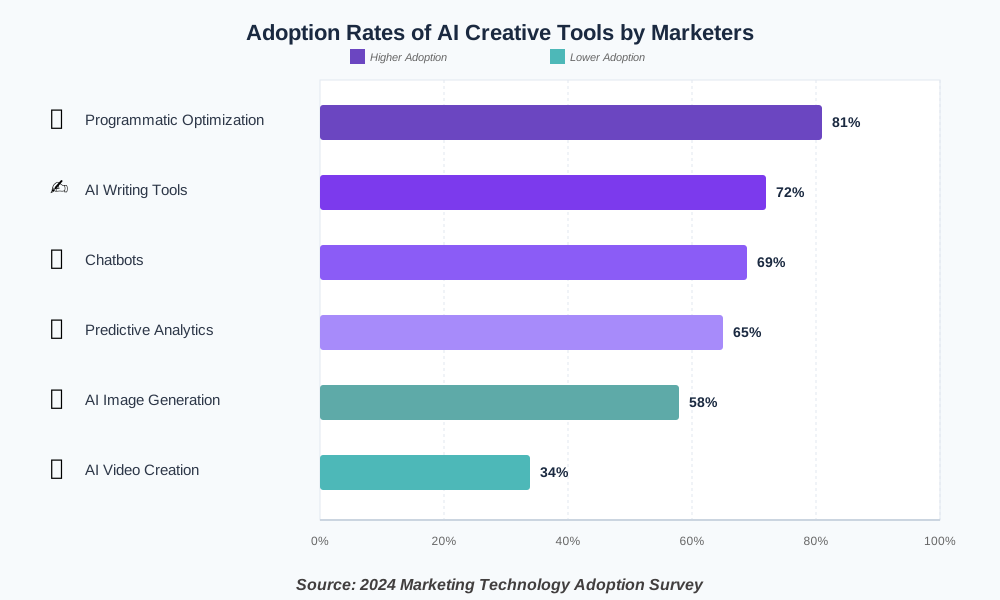
The release of advanced language models like GPT-3 in 2020 marked a watershed moment. Suddenly, AI could write advertising copy that sounded genuinely human. These models could generate headlines, product descriptions, email campaigns, and even full articles—all tailored to specific brand voices and audiences.
What makes this technology remarkable isn’t just that it writes—it understands context, tone, and persuasion. You can instruct it to write like a friendly advisor, an authoritative expert, or a humorous companion. The evolution of AI in creative advertising reached a point where the creative assistant became genuinely creative.
I started using AI writing tools in my own work around this time, and honestly, they transformed my process. Instead of staring at a blank page, I could collaborate with AI to explore ideas, overcome writer’s block, and produce more content faster. The technology isn’t perfect—it still needs human guidance and editing—but it’s undeniably powerful.
DALL-E, Midjourney, and Visual Creation
2021-2022 brought another breakthrough: AI systems that could create original images from text descriptions. Tools like DALL-E and Midjourney allowed advertisers to generate custom visuals in seconds. Need a photo of a polar bear drinking coffee in space? AI can create that in minutes.
This technology opened creative possibilities that were previously impossible or prohibitively expensive. Small businesses could produce professional-looking campaign visuals without hiring photographers or illustrators. Agencies could rapidly prototype concepts before investing in final production.
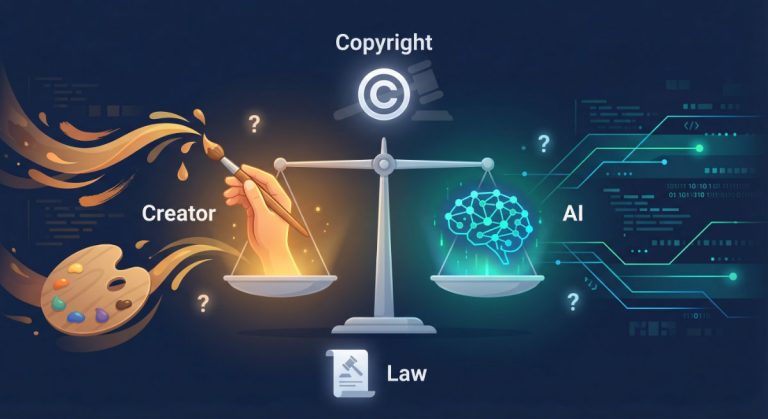
However, these tools also raised important questions about originality, copyright, and the role of human artists. The advertising industry continues grappling with these ethical considerations as the technology evolves.
AI Video Creation Emerges
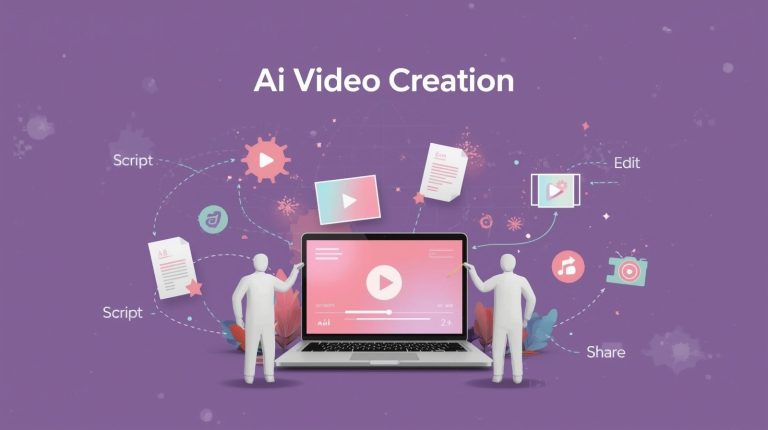
By 2023-2024, AI video generation had become increasingly sophisticated. Tools emerged that could create video advertisements from scripts, animate static images, and even generate realistic human avatars to serve as brand spokespersons. While not yet perfect, these technologies hint at a future where high-quality video production becomes dramatically more accessible.
Some platforms now offer end-to-end AI-powered video creation: you describe your product, target audience, and desired tone, and the system generates a complete video advertisement—including script, visuals, voiceover, and music. It’s an incredible democratization of a medium that traditionally required substantial budgets and technical expertise.
Real-World Applications Today
Personalization at Scale
Modern AI enables personalization that would have seemed like science fiction a decade ago. Netflix doesn’t just recommend shows based on what you watched—it creates custom artwork for each title based on what images you’re most likely to click. Spotify generates personalized playlists and advertising tailored to your musical taste. E-commerce sites show different homepage layouts to different visitors based on predicted preferences.
This level of personalization extends to advertising. A single campaign might have thousands of variations, with AI automatically selecting the right message, image, and offer for each individual viewer. The system learns continuously, improving its selections based on who responds to what.
Dynamic Creative Optimization (DCO)
Dynamic Creative Optimization represents the current pinnacle of AI-powered advertising. These systems automatically assemble ad components—headlines, images, calls to action, and colors—into countless variations, test them in real time, and optimize toward the best-performing combinations.
Think of DCO as having a tireless creative team that never stops testing and improving. While you sleep, the AI is running experiments, analyzing results, and refining your campaigns. This technology has made A/B testing look quaint by comparison—instead of testing two versions, you’re simultaneously testing thousands.
Sentiment Analysis and Trend Prediction
Today’s AI tools analyze social media conversations, news articles, and search trends to identify emerging topics and gauge public sentiment about brands. Advertisers can spot potential crises before they explode, identify unexpected opportunities, and understand how their messages resonate in real time.
I find this application particularly fascinating because it gives brands a form of cultural intelligence. Instead of guessing what people care about, you can measure it. You can test and confirm rather than hoping your message is received well. The evolution of AI in creative advertising has made marketing both more scientific and more responsive to human emotions.
How to Start Using AI in Your Creative Work
Begin with Accessible Tools
You don’t need a massive budget or technical expertise to start experimenting with AI in advertising. Here are some practical first steps:
For Writing: Try tools like ChatGPT, Claude, or Jasper to generate headline ideas, product descriptions, or email subject lines. Start by giving clear prompts about your brand voice and target audience. Use the AI’s output as a starting point, then edit and refine with your human judgment.
For Visuals: Experiment with Canva’s AI features for design assistance, or try DALL-E and Midjourney for custom image generation. Begin with simple projects—social media graphics, blog headers—before tackling major campaigns.
For Analytics: Most advertising platforms now include AI-powered insights. Google Ads, Facebook Ads Manager, and email marketing platforms all offer automated recommendations. Start by implementing their suggestions and measuring the results.
Learn by Doing
The best way to understand AI’s capabilities and limitations is through hands-on experimentation. Set aside time each week to try a new AI tool or feature. Keep notes on what works and what doesn’t. Share findings with your team or creative community.
I recommend starting with low-stakes projects where mistakes won’t have serious consequences. Generate multiple versions of social media posts, create test visuals for internal presentations, or draft email variations for small audience segments. As you build confidence, gradually apply AI to more important campaigns.
Combine AI with Human Creativity
Remember that AI is a tool, not a replacement for human insight. The most successful advertisers use AI to handle repetitive tasks, generate options, and process data—freeing themselves to focus on strategy, emotional connection, and big-picture creativity.
Think of AI as your creative assistant who can quickly produce drafts, suggest alternatives, and handle technical details. You remain the art director, making final decisions about which ideas to pursue, how to refine them, and whether they align with your brand values.
Frequently Asked Questions
The Future: What’s Next for AI in Advertising?
Multimodal AI Integration
The next frontier involves AI systems that seamlessly work across text, images, video, and audio simultaneously. Imagine describing a campaign concept in a conversation, and the AI generates coordinated content across all formats—social media posts, video ads, audio spots, and print materials—all maintaining consistent messaging and visual identity.
Early versions of these multimodal systems already exist, but they’ll become dramatically more sophisticated in the coming years. The evolution of AI in creative advertising continues accelerating, with each breakthrough building on previous innovations.
Emotion AI and Deeper Personalization
Emerging AI systems can recognize and respond to human emotions through facial expressions, voice tone, and behavior patterns. In advertising, this could enable real-time emotional resonance testing and campaigns that adapt based on viewer mood. While raising important privacy considerations, emotion AI might create advertising that feels genuinely empathetic rather than intrusive.
Autonomous Creative Campaigns
We’re moving toward AI systems that can manage entire campaigns with minimal human oversight—from initial concept through creation, distribution, optimization, and reporting. These autonomous systems won’t replace human strategists but will handle increasingly complex tasks, allowing creative professionals to focus on innovation and relationship-building.
Taking Action: Your Next Steps
Start Small and Specific
Don’t try to revolutionize your entire advertising approach overnight. Choose one area where AI could help: generating headline variations, optimizing ad placement, or analyzing campaign performance. Master that application before expanding to others.
Invest in Learning
The AI in the creative advertising landscape changes rapidly. Follow industry blogs, take online courses, and join communities where professionals share experiences with AI tools. Many platforms offer free trials—use them to explore without financial risk.
Build an AI-Enhanced Workflow
Identify which parts of your creative process consume the most time but don’t require your unique human insight. These are prime candidates for AI assistance. Gradually integrate AI tools into your workflow, measuring how they affect both productivity and output quality.
Stay Ethically Grounded
As you adopt AI, maintain ethical standards around transparency, privacy, and fairness. Be honest with audiences when content is AI-generated if that’s appropriate for your brand. Ensure your AI tools don’t perpetuate biases or manipulate vulnerable populations. Technology should serve human values, not override them.
Conclusion
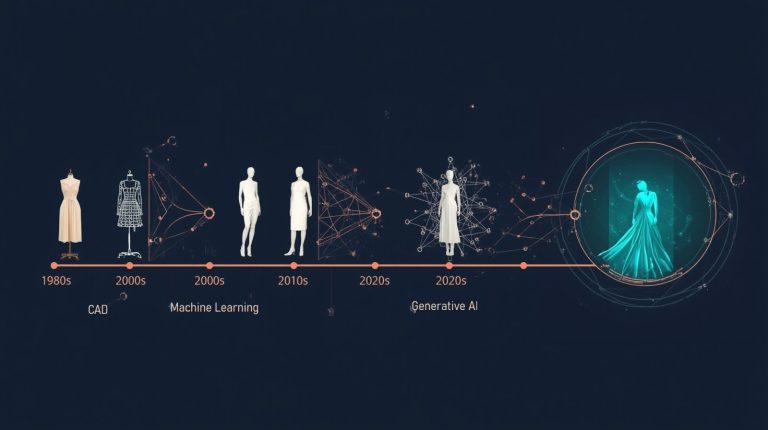
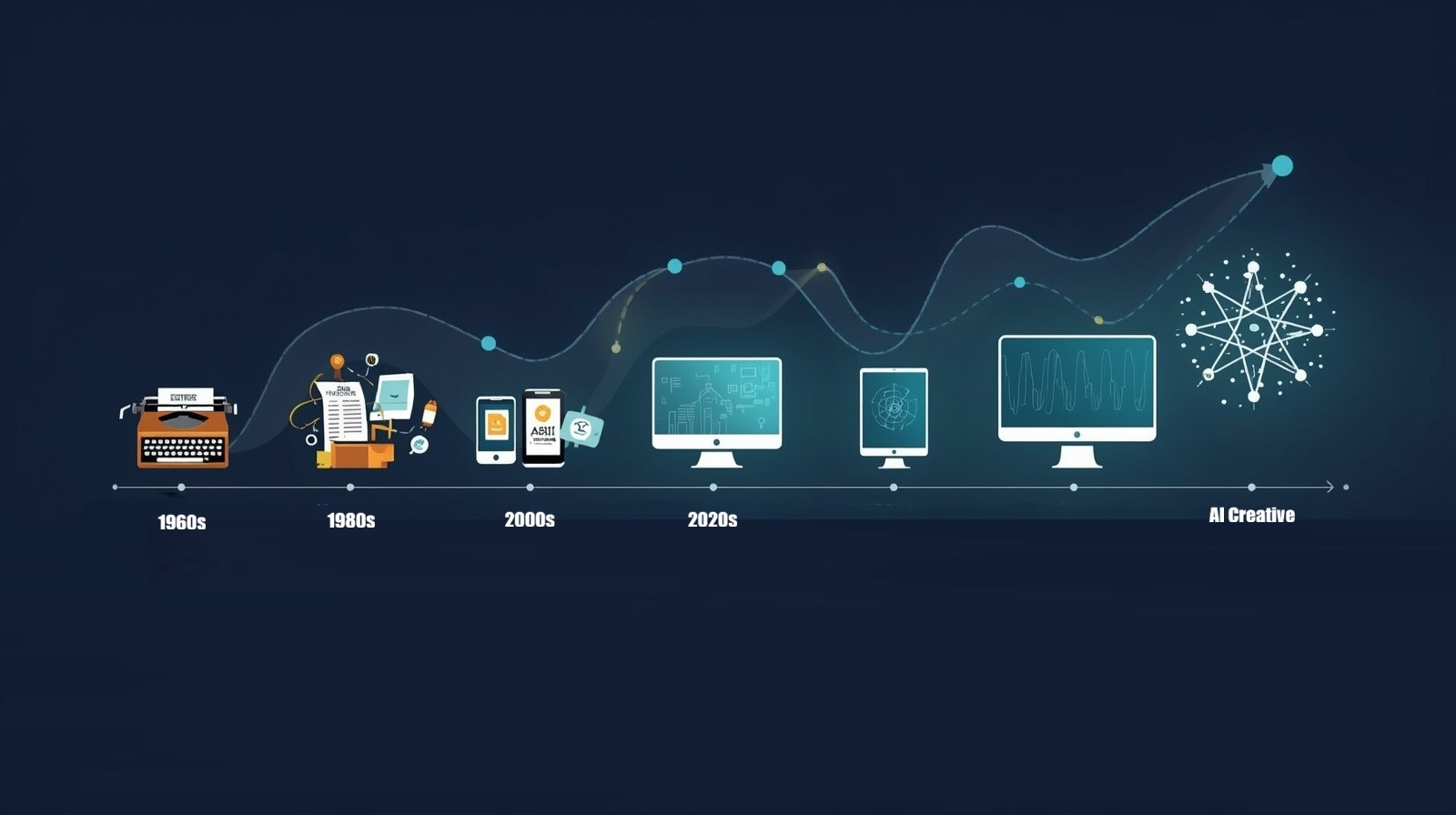
The evolution of AI in creative advertising spans more than six decades, from simple data analysis to sophisticated systems that generate original content and optimize campaigns in real time. This journey hasn’t been about replacing human creativity—it’s been about augmenting it, freeing creative professionals from tedious tasks and giving them superpowers they never had before.
Today, AI tools are accessible to anyone willing to experiment and learn. You don’t need to be a programmer or have a massive budget. You just need curiosity, willingness to try new approaches, and understanding that AI is a collaborator, not a competitor.
Looking back at how far we’ve come makes me excited about where we’re going. The tools available today would have seemed like magic to advertisers in the 1960s, and the capabilities coming in the next five years will likely amaze us just as much. The key is staying curious, adapting thoughtfully, and remembering that technology serves creativity—not the other way around.
Whether you’re just starting to explore AI or already using it daily, you’re part of this ongoing evolution. Every campaign you create, every tool you try, and every insight you share contributes to the collective understanding of how humans and AI can create together. That’s not just the future of advertising—it’s the future of creativity itself.
So start experimenting, stay curious, and remember: the best use of AI is the one that helps you do your most human work better.
References:
Advertising Research Foundation: Historical analyses of technology adoption in marketing
MIT Technology Review: Coverage of AI advancements and their commercial applications
Marketing AI Institute: Research on AI tool adoption rates and industry trends
Schema.org Standards: Structured data specifications for web content
Various industry reports on programmatic advertising growth and AI marketing technology surveys
About the Author
Abir Benali is a friendly technology writer who specializes in making AI accessible to non-technical users. With a background in both creative writing and digital marketing, Abir focuses on practical, clear explanations that help everyday people understand and use emerging technologies. Through step-by-step guides and real-world examples, Abir has helped thousands of readers confidently adopt AI tools in their personal and professional lives. When not demystifying technology, Abir enjoys exploring how AI can enhance creativity while maintaining the essential human touch that makes great work meaningful.