Copyright Law and AI Art: Who Owns the Creation?
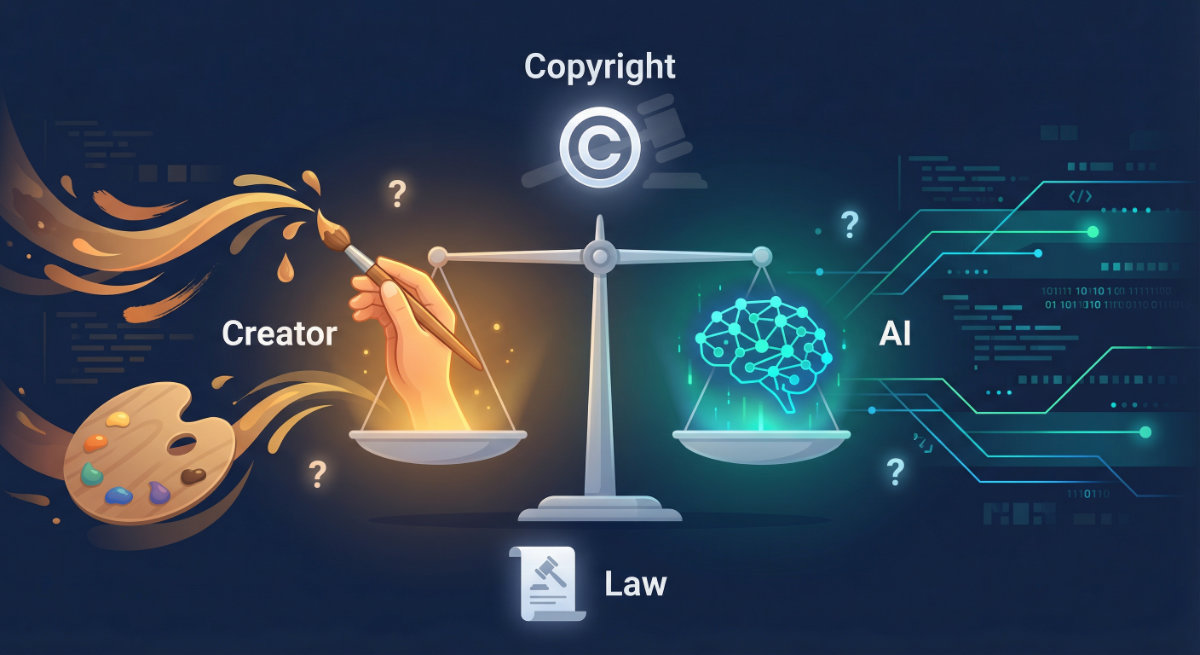
Copyright Law and AI Art ownership is one of the most debated legal questions of our time. When you use an AI tool to generate a stunning landscape, a portrait, or an abstract design, who actually owns that creation? Is it you, the person who wrote the prompt? The company that built the AI? The artists whose work trained the algorithm? Or does anyone own it at all?
I’ve watched this debate unfold over the past few years, and I can tell you: there are no simple answers yet. The legal landscape is still forming, court cases are setting new precedents, and creators everywhere are trying to figure out how to protect their work. Whether you’re an artist experimenting with AI tools, a business using AI-generated content, or simply curious about how technology is reshaping creativity, understanding these ownership questions matters more than ever.
In this guide, I’ll walk you through the current state of copyright law and AI art, explain the key legal battles happening right now, and give you practical advice on protecting your creative rights in this uncertain territory.
What Is Copyright, and Why Does It Matter for AI Art?
Let me start with the basics. Copyright is a legal protection that gives creators exclusive rights to their original work. When you paint a picture, write a song, or take a photograph, copyright law automatically protects your creation. You control how it’s used, who can copy it, and whether someone can profit from it.
But here’s where AI art gets complicated: copyright law was written for human creators. The U.S. Copyright Office, for example, explicitly states that copyright protection requires “human authorship.” This means the work must originate from a human mind, not a machine.
So when an AI system generates an image based on your text prompt, the traditional legal framework starts to crack. Did you create it because you wrote the prompt? Did the AI create it because it assembled the pixels? Did the training data artists create it because their work taught the AI? The law hasn’t caught up with the technology, and that’s creating real problems for creators.
The Core Legal Question: Who Owns AI-Generated Art?
The ownership question breaks down into several competing claims, and I want to walk you through each one clearly.
The Prompt Writer’s Claim
Many people assume that if they write a prompt and generate an image, they own the result. After all, they had the creative idea, chose the subject, refined the output, and made the final selection. This feels intuitive—it’s like commissioning an artist, right?
Not quite. Courts and copyright offices have been skeptical of this argument. Writing “a sunset over mountains in the style of impressionism” doesn’t meet the traditional threshold for creative authorship. You’re giving instructions, but you’re not making the millions of creative decisions that go into actually creating the artwork.
That said, some legal experts argue that highly detailed, iterative prompting—where you refine the output through dozens of attempts—might demonstrate enough creative control to claim some form of copyright. But this remains untested in court.
The AI Developer’s Position
Companies like OpenAI, Midjourney, and Stability AI have their own stake in this. Their terms of service typically grant users certain rights to the images they generate, but the legal foundation is shaky. If the AI-generated images don’t qualify for copyright protection at all, then there’s nothing to grant.
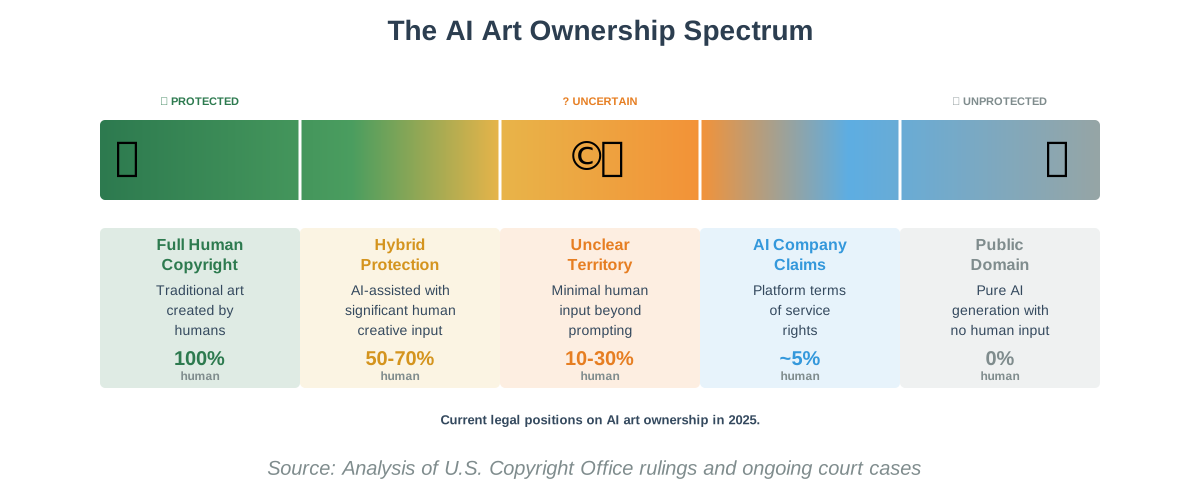
Most AI platforms currently take this position: they claim no ownership over user-generated outputs and give users broad rights to use, sell, and modify their creations. But they also include clauses protecting themselves from liability if users face copyright claims.
The Training Data Artists’ Case
Here’s where things get even more complex. AI art tools are trained on millions of images scraped from the internet, often without the original artists’ permission. These artists argue that their copyrighted work is being used to create a competing product—essentially, an AI that can replicate their style and undercut their livelihood.
Several major lawsuits are currently challenging this practice. Artists argue that AI companies are committing mass copyright infringement by using their work without consent or compensation. The AI companies counter that their use constitutes “fair use”—a legal doctrine that allows limited use of copyrighted material for purposes like education, criticism, or transformation.
The Public Domain Argument
Some legal scholars suggest that if AI-generated images lack human authorship, they should fall into the public domain—meaning anyone can use them freely. This creates an interesting paradox: you might generate an incredible piece of art using AI, but you might not be able to stop others from copying, selling, or modifying it.
Key Court Cases Shaping the Law
Let me walk you through the major legal battles that are defining copyright law and AI art right now.
Thaler v. Perlmutter (U.S. Copyright Office Decisions)
Dr. Stephen Thaler attempted to register a copyright for an artwork created entirely by his AI system, called “Creativity Machine.” He listed the AI as the author. The U.S. Copyright Office rejected the application, stating that copyright requires human authorship.
Thaler appealed, arguing that his ownership of the AI should grant him copyright over its outputs. In August 2023, a federal judge upheld the Copyright Office’s decision. The court reinforced the principle that “copyright law only extends to works of human creation.”
This case established a crucial precedent: AI-generated art without human creative input cannot be copyrighted in the United States.
Andersen v. Stability AI, Midjourney, and DeviantArt
In January 2023, a group of artists filed a class-action lawsuit against Stability AI (creators of Stable Diffusion), Midjourney, and DeviantArt. The artists alleged that these companies trained their AI models on billions of copyrighted images without permission, effectively creating “21st-century collage tools” that infringe on their rights.
The case raises fundamental questions: Is training an AI on copyrighted images fair use? Do AI-generated images that mimic an artist’s style constitute derivative works? Should artists be compensated when their work is used for training data?
As of 2025, this case is still progressing through the courts, and its outcome could reshape the entire AI art industry.
Getty Images v. Stability AI
Getty Images, one of the world’s largest stock photo agencies, sued Stability AI in 2023 for allegedly using over 12 million Getty images to train Stable Diffusion without licensing them. Getty provided evidence that some AI-generated images even included distorted versions of Getty’s watermark.
This case highlights the commercial stakes involved. If AI companies are required to license training data, the cost of developing these tools could skyrocket—or force them to use only public domain or properly licensed content.
How Different Countries Approach AI Art Copyright
Copyright law and AI art vary significantly around the world, and it’s important to understand these differences if you’re creating or using AI-generated content internationally.
United States
The U.S. requires human authorship for copyright protection. The Copyright Office has stated that AI-generated content with “more than de minimis human creative input” might qualify for protection, but the guidelines remain vague. If you significantly edit or combine AI outputs with human-created elements, you might have a stronger claim.
European Union
The EU’s approach is still developing, but the recently enacted AI Act includes provisions for transparency in AI systems. The EU Copyright Directive also protects creators’ rights more strongly than U.S. law. European courts may be more sympathetic to artists claiming their work was misused in training data, but they’re equally uncertain about who owns AI outputs.
United Kingdom
The UK has taken a slightly different stance. Under UK law, copyright for computer-generated works belongs to “the person by whom the arrangements necessary for the creation of the work are undertaken.” This could potentially grant copyright to the person who prompts the AI, though courts haven’t fully tested this interpretation.
China
China’s approach has been more permissive. In 2023, a Beijing court ruled that an AI-generated image could receive copyright protection if the person using the AI made sufficient creative choices in the process. This represents one of the first cases where a court has explicitly granted copyright to AI-assisted work.
Practical Steps to Protect Your AI-Generated Creations
While the legal landscape remains uncertain, there are concrete steps you can take to protect your work and minimize legal risk. Let me share what I recommend based on current best practices.
Document Your Creative Process
Keep detailed records of your prompting process, iterations, and modifications. Save your prompts, show your refinement steps, and document any manual editing you do afterward. If you ever need to prove creative involvement, this documentation becomes evidence.
I suggest creating a folder for each project where you save:
- Original prompts and all variations
- Multiple output versions showing iteration
- Screenshots of your editing process
- Notes about creative decisions you made
- Final edited versions with change logs
Add Substantial Human Elements
The more human creativity you add to an AI-generated image, the stronger your copyright claim. This might include:
- Manually editing the AI output in Photoshop or other tools
- Combining multiple AI generations into a composite work
- Adding original text, graphics, or design elements
- Using AI as one component in a larger creative project
Think of AI as a tool in your creative toolkit, not the sole creator. The more your human judgment and skill shape the final result, the more defensible your ownership becomes.
Understand Your Platform’s Terms of Service
Read the terms of service for any AI art platform you use. Different tools have different policies:
Midjourney grants users who subscribe a perpetual license to use, modify, and sell their creations, but images may not be copyrightable.
DALL-E (OpenAI) gives users full rights to use images commercially, including reproduction and sales, regardless of whether the images qualify for copyright.
Stable Diffusion releases its model as open-source, generally allowing users full control over outputs, but this doesn’t guarantee copyright protection.
Understanding these terms helps you know what rights you actually have—and what claims you’re making when you use or sell AI-generated work.
Consider Trademark Protection Instead
If copyright protection is uncertain, consider whether trademark law might protect your work instead. If you use AI-generated images as logos, brand identities, or product designs, you can trademark the specific use of those images in commerce.
Trademark protects how a design is used to identify your business, not the artwork itself. This offers an alternative path to legal protection that doesn’t depend on proving human authorship.
Be Transparent About AI Use
When selling or licensing AI-generated art, be honest about how it was created. Misrepresenting AI art as entirely human-created can lead to legal trouble and damage your reputation. Many platforms and clients now require disclosure of AI involvement.
I recommend including a simple note like “Created with AI assistance and human editing” or “Generated using [Tool Name] with extensive human refinement.” Transparency builds trust and protects you legally.
Register Your Work When Possible
If you’ve added substantial human creative elements to AI-generated content, consider registering it with the copyright office. While pure AI outputs won’t qualify, works that incorporate significant human authorship may receive protection.
The registration process forces you to clearly document what is human-created versus AI-generated, which clarifies your legal position. Even if partial protection is granted, it’s better than no protection at all.
The Training Data Problem: What You Need to Know
One aspect of copyright law and AI art that affects every user is the ethical and legal question of training data. Most AI art tools were trained on billions of images scraped from the internet—many without permission from the original creators.
Why This Matters to You
If you create art using these tools, you’re indirectly benefiting from work that may have been used without consent. While you personally didn’t scrape the images, some argue that using these tools makes you complicit in potential copyright infringement.
More practically, if courts rule that training AI on copyrighted work constitutes infringement, the entire AI art ecosystem could be forced to restructure. Tools might become more expensive, less capable, or restricted to public domain training data.
What Artists Are Fighting For
Artists argue for several protections:
- The right to opt out of having their work used for AI training
- Compensation when their work is used in training datasets
- Attribution when AI outputs closely mimic their style
- Legal recourse against AI tools that generate obvious copies
These aren’t unreasonable demands. Imagine spending years developing a unique artistic style, only to watch an AI tool replicate it in seconds and undercut your prices. The frustration is understandable.
The Fair Use Defense
AI companies argue their use of copyrighted images for training constitutes “fair use”—a legal doctrine that allows limited use of copyrighted material without permission for certain purposes. They claim:
- AI training is transformative, creating something new rather than copying
- Training data is used to learn patterns, not reproduce specific images
- AI tools don’t harm the market for original works (debatable)
- No reasonable alternative exists for training advanced AI systems
Courts haven’t definitively ruled on whether this defense holds up, and different jurisdictions may reach different conclusions.
The Future of Copyright Law and AI Art
Where is this all heading? While I can’t predict with certainty, I can share the trends I’m seeing and what legal experts anticipate.
Likely Legal Developments
I expect we’ll see new legislation specifically addressing AI-generated content within the next few years. Current copyright law simply wasn’t designed for this technology, and lawmakers are beginning to recognize the need for updated frameworks.
Possible changes include:
- Clearer definitions of what level of human involvement qualifies for copyright
- New protections for artists whose work is used in training data
- Mandatory disclosure requirements for AI-generated content
- Licensing frameworks that compensate training data creators
- International treaties harmonizing AI copyright rules
Industry Adaptation
AI companies are already responding to legal pressure. Some are developing tools trained exclusively on licensed or public domain images. Others are implementing opt-out systems for artists who don’t want their work included in training data.
Adobe, for example, trained its Firefly AI only on Adobe Stock images, content with expired copyrights, and public domain materials. This approach avoids the legal minefield of unauthorized training data, though it may limit the AI’s capabilities.
Creator Strategies
Smart creators are adapting by:
- Using AI as part of their workflow rather than the entire process
- Developing skills in prompt engineering and AI refinement
- Creating hybrid works that clearly demonstrate human authorship
- Building personal brands that emphasize human creativity
- Staying informed about legal developments
The artists who thrive won’t be those who reject AI entirely or those who rely on it completely. They’ll be the ones who thoughtfully integrate AI into a distinctly human creative process.
Common Mistakes to Avoid
Let me share the mistakes I see people making repeatedly with AI art and copyright issues.
Assuming You Own Everything You Generate
Don’t assume that pressing “generate” makes you the copyright owner. Pure AI outputs likely aren’t copyrightable at all under current U.S. law. If you plan to sell, license, or enforce rights over an AI-generated image, make sure you’ve added substantial human creative elements.
Selling AI Art as “Original”
When you sell AI-generated art without disclosure, you’re potentially misrepresenting the product. Buyers may expect they’re purchasing copyrighted work with exclusive rights. Be clear about what they’re actually getting.
Ignoring Training Data Ethics
Even if it’s technically legal to use AI tools trained on copyrighted work, consider the ethical implications. Many artists feel their livelihoods are threatened by this technology. Supporting platforms that respect creator rights—through licensing or opt-out systems—helps build a more sustainable creative ecosystem.
Not Reading Terms of Service
Each platform has different rules. Some restrict commercial use; others don’t. Some claim rights to your prompts; others don’t. Five minutes reading the terms can save you from legal headaches later.
Copying Specific Artists’ Styles Intentionally
Prompting an AI to create “in the style of [living artist’s name]” ventures into ethically questionable territory and could face legal challenges. While style itself isn’t copyrightable, creating work that could be confused with a specific artist’s output might expose you to lawsuits.
Failing to Document Your Process
If you ever need to prove human authorship, you’ll need evidence. Screenshots, saved prompts, and edit histories—these become your legal protection. Start documenting now, before you need it.
Frequently Asked Questions
Moving Forward: Your Action Plan
Understanding copyright law and AI art is just the beginning. Here’s what I recommend you do next to protect yourself and your creative work.
Educate yourself continuously. This legal landscape is changing rapidly. Follow developments in copyright law, subscribe to updates from the U.S. Copyright Office or your country’s equivalent, and watch major court cases. Knowledge is your best protection.
Choose your tools thoughtfully. Consider the ethical practices of AI platforms you use. Are they transparent about training data? Do they offer opt-out mechanisms for artists? Do they license content appropriately? Your choices shape the industry’s future.
Document everything. Start now, even if you’re just experimenting. Save prompts, screenshot iterations, and record your editing process. This documentation could become crucial evidence if you ever need to prove authorship.
Add human creativity generously. Don’t just generate and use—refine, edit, combine, and transform. The more human creativity you inject into the process, the stronger your legal position and the more distinctive your work become.
Be transparent. Honesty about AI involvement protects you legally and builds trust with your audience. Disclosure is becoming standard practice in professional creative work.
Support reasonable regulation. The creative community needs clear rules that protect both human artists and technological innovation. Support legislation that balances these interests fairly.
Conclusion
The question of who owns AI-generated art remains one of the most fascinating and unsettled legal debates of our era. There’s no simple answer yet, and different courts, countries, and contexts may ultimately reach different conclusions.
What I know for certain is this: the intersection of artificial intelligence and copyright law will reshape how we think about creativity, ownership, and authorship for generations to come. Whether you’re an artist, a business owner, or simply someone interested in using these powerful tools, it’s crucial to stay informed and act thoughtfully.
The technology isn’t going away. The legal questions won’t resolve overnight. But by understanding the current landscape, documenting your creative process, adding substantial human elements to your work, and staying transparent about your methods, you can navigate this uncertainty with confidence.
The future of creative work will be a collaboration between human imagination and artificial intelligence. Those who understand both the possibilities and the legal complexities will be best positioned to thrive in this new creative landscape.
Now it’s your turn. Take what you’ve learned here, apply it to your own creative projects, and help shape a more thoughtful, ethical, and legally sound future for AI art. You’ve got this.
References
- U.S. Copyright Office – “Copyright Registration Guidance: Works Containing Material Generated by Artificial Intelligence” (2023)
- Thaler v. Perlmutter, No. 1:22-cv-01564 (D.D.C. Aug. 18, 2023)
- Andersen v. Stability AI Ltd., No. 3:23-cv-00201 (N.D. Cal. filed Jan. 13, 2023)
- Getty Images (US), Inc. v. Stability AI, Inc., No. 1:23-cv-00135 (D. Del. filed Feb. 3, 2023)
About the Author
Abir Benali, a friendly technology writer who specializes in making AI accessible to non-technical users, wrote this article. Abir breaks down complex tech concepts into clear, practical guidance that anyone can follow. With a focus on real-world applications and beginner-friendly explanations, Abir helps readers navigate the evolving world of artificial intelligence with confidence. When not writing about technology, Abir enjoys exploring how AI tools can enhance everyday creativity and productivity.