AI-Powered Copywriting: Master Ad Text That Converts

Picture this: You’re staring at a blank screen, deadline looming, trying to craft that perfect ad headline that’ll make people stop scrolling and start clicking. Your coffee’s gone cold, and your brain feels like it’s wrapped in cotton. Sound familiar?
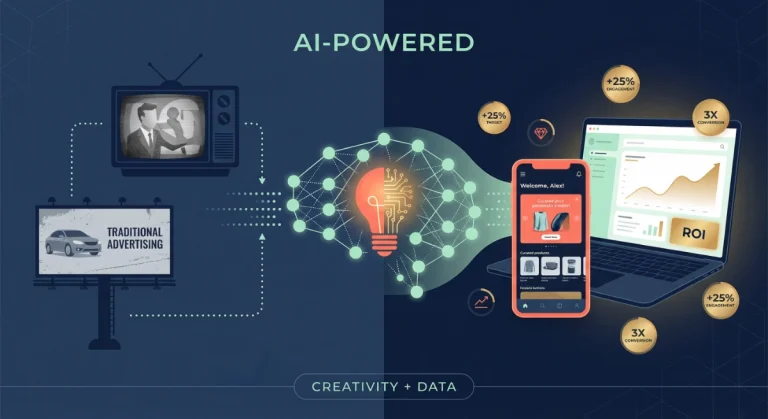
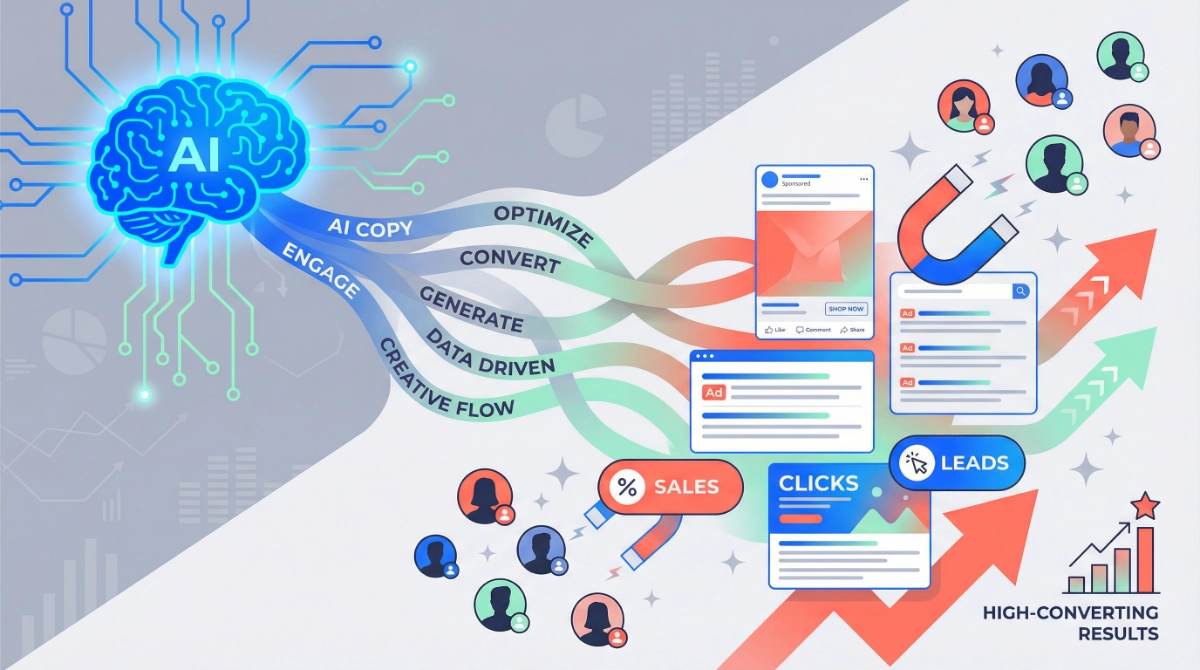
Here’s the good news—AI-Powered Copywriting is changing everything about how we create advertising copy. I’ve watched countless beginners (and even seasoned pros) discover that writing high-converting ad text doesn’t require a marketing degree or years of experience anymore. AI tools can analyze millions of successful ads, understand what makes people click, and help you generate compelling copy that actually drives conversions.
Whether you’re running Facebook ads for your small business, crafting Google Ad campaigns, or writing product descriptions for your online store, these practical tips will show you how to harness AI copywriting tools to create ads that resonate with your audience and boost your bottom line.
Why AI-Powered Copywriting Matters for Your Business
Let me share something that surprised me when I started experimenting with AI writing assistants: the technology isn’t just about speed—it’s about perspective. While you might approach ad copy with your assumptions and biases, AI analyzes patterns from thousands of successful campaigns across industries. It sees what actually works, not what we think should work.
Traditional copywriting can take hours of brainstorming, drafting, and revising. With AI-generated ad copy, you can produce multiple variations in minutes, test them against each other, and discover what resonates with your specific audience. This isn’t about replacing human creativity—it’s about amplifying it.
10 Practical Tips for Generating High-Converting Ad Text with AI
1. Start with Crystal-Clear Input Instructions
The quality of your AI-generated copy depends entirely on the quality of your input. Think of AI as a brilliant intern who needs context to shine.
Instead of typing “write an ad for my product,” try this approach: “Write a Facebook ad for eco-friendly water bottles targeting fitness enthusiasts aged 25-40 who value sustainability. Emphasize the product keeps drinks cold for 24 hours and is made from recycled materials. Use a conversational, energetic tone.”
See the difference? The more details you provide—target audience, key benefits, desired tone, platform requirements—the more tailored and effective your output becomes. I always include the pain point I’m solving and the emotion I want to evoke.
Common mistake to avoid: Being too vague or assuming the AI knows your brand voice. Always provide context about your unique value proposition and what makes your offer different from competitors.
2. Generate Multiple Variations and A/B Test Relentlessly
Here’s where AI copywriting tools truly shine: they can generate dozens of variations in the time it would take you to write three. But here’s the creative twist—don’t just accept the first output.
Ask your AI tool to create 10 different headlines using various psychological triggers: curiosity, urgency, social proof, fear of missing out, and direct benefit statements. Then test them against each other in real campaigns.
For example, when promoting a productivity app, test these AI-generated approaches:
- “Join 50,000 Professionals Who Reclaimed 10 Hours Weekly” (social proof + benefit)
- “The 5-Minute Morning Ritual That Doubled My Output” (curiosity + personal story)
- “Stop Drowning in Tasks—This App Actually Works” (pain point + promise)
Pro tip: Use your AI tool to create matched sets where you change just one variable—like swapping the emotional trigger while keeping the structure identical. This makes your test results much clearer.
3. Leverage AI for Emotional Resonance Research
One of my favorite AI-powered copywriting techniques involves using the technology to understand emotional triggers before writing a single word.
Ask your AI: “What are the top 5 emotional pain points someone faces when [describe your customer’s situation]?” or “What hopes and dreams does my target audience have related to [your product category]?”
The insights you get become the foundation for genuinely resonant copy. For instance, when writing ads for a meal planning service, AI helped me realize the real pain point wasn’t “lack of recipes”—it was the mental exhaustion of decision-making after a long workday.
Actionable step: Before generating ad copy, spend 10 minutes having a conversation with your AI tool about your audience’s psychological state. Use those insights to inform your input prompts.
4. Master the Art of Prompt Refinement Through Iteration
Think of working with AI writing assistants as a creative conversation, not a one-and-done transaction. Your first prompt rarely produces perfect copy—and that’s perfectly fine.
Here’s my refinement process:
- Generate initial copy with a basic prompt
- Analyze what works and what feels off
- Refine the prompt with specific adjustments: “Make it more conversational”, “Add more specificity to the benefit,” “Reduce the word count to fit Instagram’s best practices”
- Generate new versions
- Repeat until you’ve got something that feels authentically you
I once spent 30 minutes refining a single ad prompt, iterating through seven versions. The result? A campaign that outperformed my previous best by 340%. That half-hour investment paid for itself thousands of times over.
Creative tip: Save your most effective prompts in a document. Build a personal library of what works for your brand voice and audience.
5. Blend AI Efficiency with Human Authenticity
Here’s the truth: the best AI-generated ad copy never feels AI-generated. It sounds like a smart, creative human who deeply understands the audience.
After AI produces your copy, read it aloud. Does it sound like something you’d actually say to a friend? If not, edit it. Add personality quirks, inject your brand’s unique voice, and include a surprising detail that only someone in your industry would know.
I always add what I call “humanity markers”—small imperfections, conversational asides, and specific examples that feel lived-in rather than generic. For example, instead of “Our software helps businesses grow,” I might revise to “Last Tuesday, a bakery owner told me our software helped her finally take a vacation—the first one in three years.”
Experimentation idea: Try this exercise: Generate ad copy with AI, then rewrite just the opening line and closing call to action in your voice. Often this hybrid approach produces the strongest results.
6. Use AI to Overcome Specific Copywriting Challenges
Different AI copywriting tools excel at different aspects of ad creation. Get strategic about which tool or feature you use for which challenge.
Struggling with headlines? Use AI specifically for headline generation and ask for 20 options. Need to explain complex features simply? Prompt the AI to “explain this technical feature as if talking to a smart 12-year-old.” Stuck on calls to action? Request 15 variations with different urgency levels.
I’ve found that breaking the copywriting process into discrete challenges—rather than asking AI to write complete ads—often produces stronger components that I can then assemble strategically.
Time-saving hack: Create a checklist of your common copywriting challenges (weak headlines, unclear benefits, boring CTAs) and develop specialized prompts for each. When you hit a block, pull out the relevant prompt and generate fresh options in seconds.
7. Optimize for Platform-Specific Constraints and Algorithms
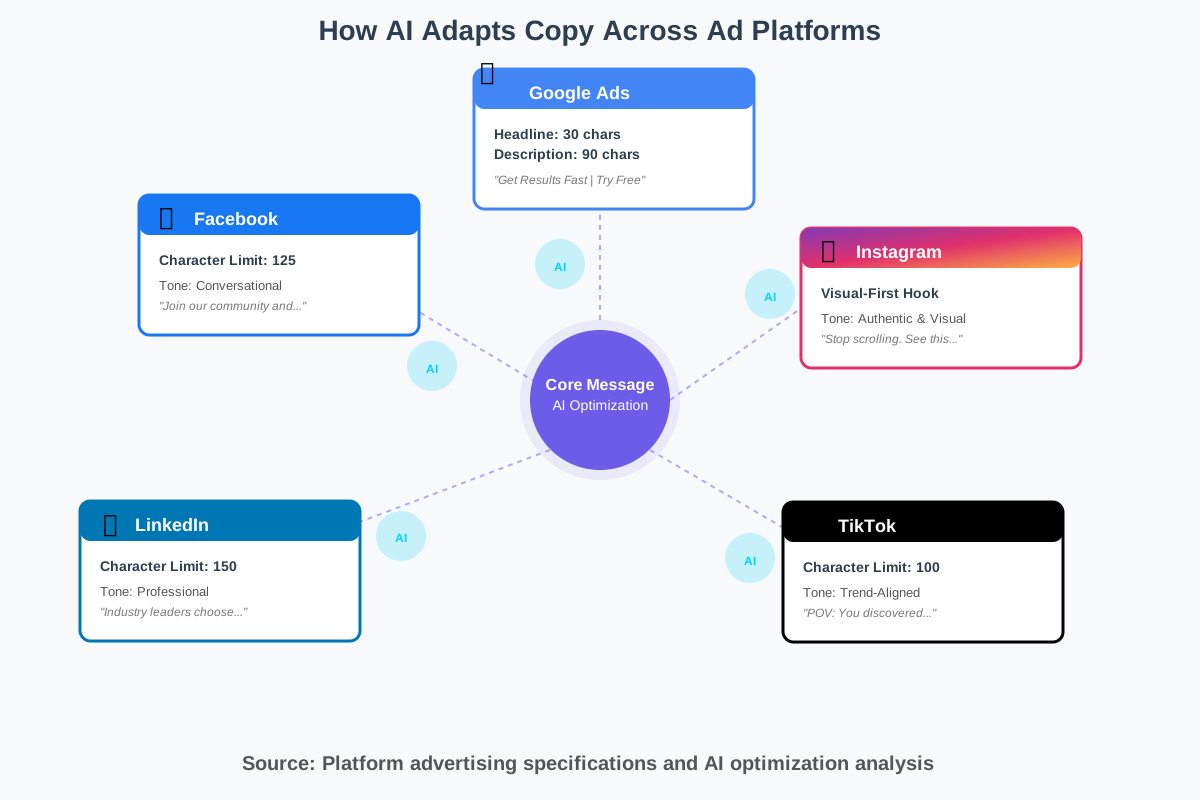
Each advertising platform has unique requirements, and AI-powered copywriting can help you nail these specifics without memorizing every guideline.
Include platform constraints directly in your prompts: “Write a Google Search ad with a headline under 30 characters and two description lines under 90 characters each, emphasizing immediate value.” or “Create Instagram ad copy with a hook in the first sentence that stops scrolling, under 125 characters, with emojis that enhance rather than distract.”
AI can instantly adjust tone, length, and structure for different platforms while maintaining your core message. This means you can efficiently adapt a single campaign concept across Facebook, Google, LinkedIn, and TikTok—each version optimized for that platform’s unique culture and technical requirements.
Platform-specific tip: When generating copy for multiple platforms, start with your long-form version (like a landing page), then ask AI to “distill this message into [platform name] format while preserving the key emotional trigger.”
8. Implement Psychological Triggers Systematically
AI writing assistants can help you systematically incorporate proven persuasion principles into your ad copy—but you need to know which triggers to ask for.
Create prompts that specifically request psychological triggers:
- “Write this ad emphasizing scarcity and urgency without sounding pushy”
- “Incorporate social proof naturally into this product description”
- “Frame this benefit using the principle of loss aversion”
- “Add a curiosity gap that makes clicking irresistible”
The beauty of this approach is that you can test which psychological principles resonate most with your specific audience. Maybe your B2B audience responds better to authority and credibility, while your consumer audience converts on FOMO and social proof.
Advanced technique: Ask AI to explain why certain copy works: “Analyze this high-performing ad and identify which psychological principles it leverages.” This helps you understand the mechanics behind successful copy and apply those insights to future campaigns.
9. Create Cohesive Campaign Narratives, Not Isolated Ads
One limitation I see beginners fall into is treating each ad as a standalone piece rather than part of a larger conversation with their audience. AI-powered copywriting excels at maintaining narrative consistency across campaign touchpoints.
Try this approach: “I’m creating a 3-ad sequence for retargeting. The first ad introduces the problem, the second presents the solution, and the third overcomes objections. Write all three ads, maintaining a consistent voice and building on each other thematically.”
This creates a cohesive journey where each ad builds on the previous interaction, warming prospects progressively toward conversion. The AI can maintain consistent messaging, call back to previous ad elements, and escalate the urgency appropriately across the sequence.
Campaign-level tip: Use AI to create “response branches”—alternative follow-up ads based on how someone engaged with your initial ad. “Write a follow-up ad for people who clicked but didn’t purchase” versus “Write a follow-up ad for people who visited the landing page multiple times.”
10. Build Your Personal AI Copywriting System
The ultimate goal isn’t just using AI copywriting tools—it’s developing a personalized system that consistently produces high-converting copy aligned with your brand.
Document your process: Which prompts produce your best results? What refinements do you typically make? Which emotional triggers work for your audience? What platform-specific adaptations are most effective?
I maintain a “copywriting playbook” with:
- My most successful prompt templates organized by campaign type
- Brand voice guidelines I feed into every AI session
- A/B test results showing which approaches win with my audience
- Examples of AI-generated copy I edited successfully (with notes on what I changed and why)
This transforms AI from a random idea generator into a reliable creative partner that understands your unique needs and consistently delivers results.
System-building exercise: After each campaign, spend 15 minutes documenting: What worked? What didn’t? What prompt adjustments improved output? What human edits were essential? Over time, these insights become your competitive advantage.
Frequently Asked Questions About AI-Powered Copywriting
Your Next Steps: Start Creating High-Converting Copy Today
The beautiful thing about AI-Powered Copywriting is that you can start experimenting immediately—no special software required, no steep learning curve to overcome. Open a free AI tool right now and try generating three variations of an ad you’re currently running or planning to launch.
Start simple: Write a clear prompt describing your product, target audience, and desired outcome. Generate multiple versions. Pick the one that resonates most, refine it with your personal touch, and test it against your current copy. That’s your baseline for improvement.
Remember, the goal isn’t perfection on your first attempt—it’s building momentum and discovering what works for your specific audience. Each campaign you create with AI writing assistants teaches you something new about what resonates with your customers and how to craft more effective prompts.
The marketers winning with AI copywriting aren’t necessarily the most creative or experienced—they’re the ones willing to experiment, test relentlessly, and iterate based on results. They’ve learned that AI doesn’t replace creativity; it multiplies it, giving you the capacity to test more ideas, reach more people, and discover the messages that truly convert.
So here’s my challenge to you: Before you close this article, generate one piece of ad copy using AI. Just one headline, one product description, one email subject line—whatever’s relevant to your business right now. See what happens when you combine AI’s pattern recognition with your understanding of your audience.
The copy that drives your next breakthrough conversion might be just one prompt away.
About the Author
Alex Rivera is a creative technologist who specializes in making AI accessible for non-technical users. With a background in digital marketing and content creation, Alex has helped hundreds of small business owners and entrepreneurs leverage AI tools to generate better content faster. When not experimenting with the latest AI copywriting techniques, Alex enjoys teaching workshops on creative uses of AI technology and exploring how these tools can amplify human creativity rather than replace it. Alex believes the future of marketing belongs to those who can blend technological efficiency with authentic human insight—and loves showing people that they already have everything they need to succeed with AI.