How to Create Post-Purchase Loyalty Programs Using AI

How to Create Post-Purchase Onboarding & Loyalty Programs Using AI starts with understanding a simple truth: the sale is just the beginning. We’ve both experienced that exciting moment when a customer clicks “buy”—but what happens next determines whether they’ll become a one-time buyer or a loyal advocate for your brand.
The post-purchase phase is where real relationships form. Yet so many businesses let this golden opportunity slip away with generic thank-you emails and forgotten follow-ups. That’s where AI-powered onboarding transforms everything. Instead of treating every customer the same, you can create personalized journeys that make each person feel seen, valued, and excited to stay connected.
In this guide, we’ll walk you through building an AI loyalty program that works on autopilot—identifying your VIPs, gathering meaningful feedback, fostering community, and keeping customers coming back. Whether you’re running a small online shop or managing a growing e-commerce brand, these strategies will help you turn buyers into believers.
Why AI Changes Everything for Post-Purchase Experience
Traditional loyalty programs are static. You earn points, you redeem points, and rinse and repeat. But modern customers expect more—they want experiences tailored to their preferences, timely rewards that feel relevant, and brands that actually listen.
AI-powered customer onboarding solves the issue by analyzing behavior patterns in real-time. It notices when someone is disengaged and sends a perfectly timed nudge. It identifies your highest-value customers before they’ve even made their third purchase. It automates the boring stuff while keeping the human touch where it matters most.
We love this approach because it frees us up to focus on creativity and strategy while the AI handles the heavy lifting of personalization at scale.
Understanding the Post-Purchase Journey
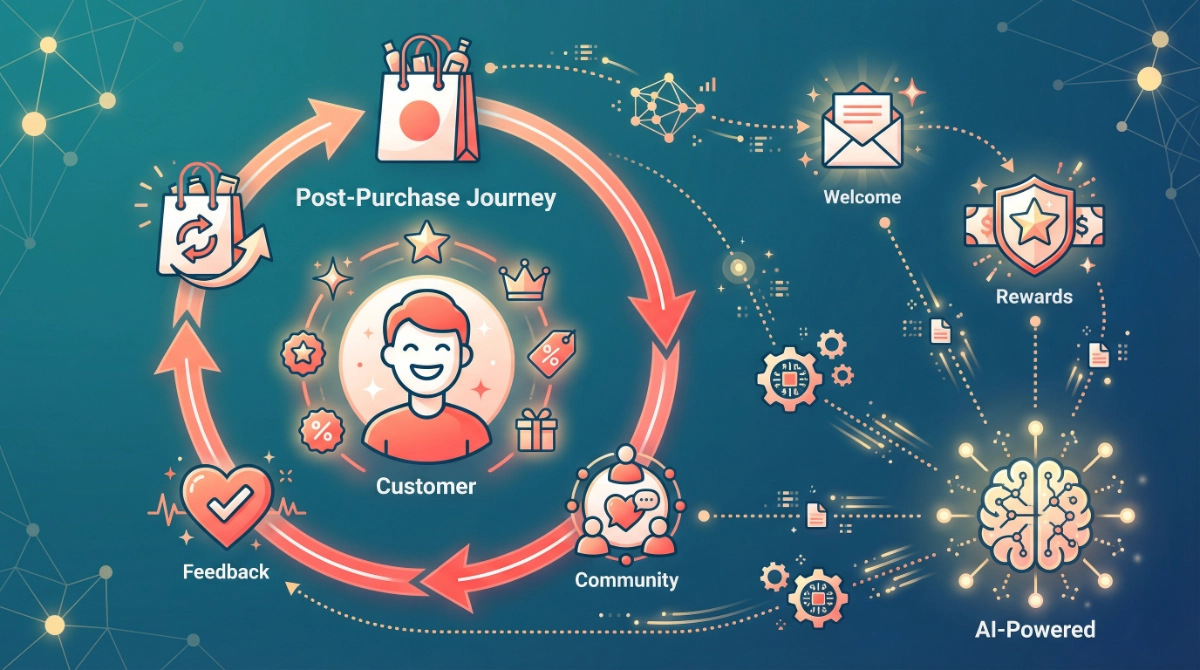
Before diving into the how-to, let’s map out what an effective post-purchase customer journey actually looks like:
Stage 1: Immediate Post-Purchase (0-24 hours) Right after checkout, customers are most excited. This is your window to deliver an outstanding first impression with order confirmation, shipping updates, and a warm welcome message that reinforces their smart buying decision.
Stage 2: Onboarding (Days 1-7) New customers need guidance. Whether it’s setting up a product, understanding features, or discovering complementary items, this week shapes their entire perception of your brand.
Stage 3: Early Engagement (Weeks 2-4) Now you’re building habits. Encourage product usage, share tips and tricks, introduce your community, and start gathering feedback. This is where AI customer engagement really shines by identifying the right moment for each interaction.
Stage 4: Loyalty Building (Month 2+) Transform satisfied customers into loyal advocates through personalized rewards, exclusive access, community recognition, and ongoing value. Your AI loyalty program should continuously evolve based on individual behavior.
Step-by-Step: Building Your AI-Powered Onboarding System
Step 1: Set Up Your Welcome Sequence with Smart Timing
Start by creating a multi-touch welcome series that adapts to customer behavior. Here’s how we approach it:
Create Your Base Sequence:
- Email 1: Order confirmation with personalization (0-15 minutes post-purchase)
- Email 2: Shipping notification with product tips (when shipped)
- Email 3: Delivery confirmation with a get-started guide (when delivered)
- Email 4: First check-in asking how it’s going (3-5 days after delivery)
Add AI Intelligence: Use AI to analyze open rates, click patterns, and purchase history to determine optimal send times for each customer. Someone who shops late at night probably doesn’t want morning emails. A frequent buyer might skip the basics and jump straight to advanced tips.
Practical Implementation: Tools like Klaviyo, ActiveCampaign, or HubSpot allow you to set up behavior-triggered flows. Connect them to AI platforms like Patterns.ai or use built-in machine learning features to optimize send times automatically.
Common Mistake to Avoid: Don’t blast everyone with the same 5-email sequence regardless of engagement. If someone isn’t opening emails, AI should adjust the cadence or try different subject lines rather than continuing to flood their inbox.
Step 2: Implement AI-Powered VIP Identification
You can’t treat all customers equally—nor should you. Some buyers will spend 10x more over their lifetime than others. The trick is identifying them early.
Set Up Predictive Scoring:
Configure your AI system to analyze multiple signals:
- Purchase frequency and recency
- Average order value compared to segment
- Product category preferences
- Email engagement rates
- Website browsing patterns
- Social media interactions
Create Tiered Recognition:
- Rising Stars: New customers showing VIP behavior patterns (high engagement, premium purchases)
- Established VIPs: Proven high-value customers with consistent purchase history
- At-Risk Champions: Previously engaged customers showing declining activity
Automate VIP Perks:
Once identified, AI should automatically:
- Upgrade shipping on next order
- Send personalized thank-you messages
- Offer early access to new products
- Provide exclusive discounts
- Assign dedicated support priority
Personal Insight:
We’ve seen this transform businesses. One client discovered that 8% of their customers generated 42% of revenue—but they weren’t treating them any differently. After implementing AI VIP identification, retention in that segment jumped because customers finally felt recognized.
Step 3: Build a Smart Feedback Collection System
Feedback is gold, but only if you actually get it. Traditional surveys have terrible response rates.
AI-powered feedback systems change the game by asking the right questions at the right moment.
Timing is Everything:
Use AI to determine optimal feedback moments:
- Post-delivery (when excitement is fresh)
- After first use (when experience is clear)
- Mid-lifecycle (for ongoing products)
- Before churn signals appear
Make It Conversational: Instead of lengthy surveys, use AI chatbots that feel like natural conversations. Ask one question at a time, follow up based on responses, and make it feel effortless.
Example Flow:
- “Hey! How’s your [product name] working out?” (Simple yes/no or 1-5 rating)
- If positive: “That’s awesome! Mind sharing what you love most?” (Open text)
- If negative: “Oh no! What’s not working?” followed by “Can we help fix that?”
Close the Loop: AI should automatically:
- Route negative feedback to support
- Thank customers for positive reviews
- Identify trends across feedback
- Trigger follow-up based on sentiment
Actionable Tip: Incentivize feedback with loyalty points, small discounts, or entries into exclusive giveaways.
But keep it genuine—customers can smell when you’re only asking because you want something from them.
Ready to turn these strategies into action? Our Customer Onboarding & Experience Checklist gives you a step-by-step roadmap for creating onboarding and post-purchase experiences that delight customers and build loyalty. It’s designed to help you implement these AI strategies without missing any crucial touchpoints.
Step 4: Create Dynamic, Personalized Rewards
Generic “10% off your next order” emails don’t cut it anymore. AI loyalty programs succeed because they offer rewards that actually matter to each individual customer.
Behavior-Based Rewards:
AI should track what each customer values:
- Some want discounts (price-sensitive shoppers)
- Others prefer free shipping (convenience-focused)
- VIPs love exclusive access (status-seekers)
- Engaged users want community recognition
Implement Progressive Tiers:
Design a system that grows with the customer:
- Starter Tier: Basic perks for first purchase (free shipping threshold, birthday reward)
- Growth Tier: Enhanced benefits after 2-3 purchases (early sale access, surprise gifts)
- VIP Tier: Premium experience for top customers (dedicated support, product previews)
Automate Surprise & Delight:
Program AI to recognize moments worth celebrating:
- Anniversary of the first purchase
- Reaching spending milestones
- Consistent engagement streaks
- Referring friends successfully
Make Points Meaningful:
Instead of “earn 1 point per dollar,” create experiential rewards:
- Exclusive community access
- Virtual events with founders
- Early product testing opportunities
- Charitable donations in their name
Creative Example:
One brand we work with uses AI to identify when customers are browsing but not buying. Instead of a generic discount, the AI offers a personalized reward based on their purchase history—maybe free expedited shipping since they always choose fast delivery, or a product bundle discount based on past category preferences.
Step 5: Foster AI-Enhanced Community Engagement
The strongest loyalty programs aren’t just transactional—they’re tribal. Customers stick around because they’ve found their people.
Build Community Infrastructure:
Choose your platform based on your audience:
- Facebook Groups (broad, accessible)
- Discord (tech-savvy, interactive)
- Slack (professional, organized)
- Circle or Mighty Networks (branded, feature-rich)
Use AI to Spark Connections:
Implement tools that:
- Welcome new members with personalized introductions
- Suggest connections based on interests or location
- Surface relevant discussions to each user
- Identify and reward top contributors
Gamify Participation:
Create AI-driven challenges and recognition:
- Weekly participation badges
- Member spotlights for valuable contributions
- Milestone celebrations
- Collaborative goals that benefit everyone
Moderate Smart:
Use AI moderation to:
- Flag inappropriate content automatically
- Identify trending topics for you to highlight
- Detect when members need support
- Suggest when to jump into conversations
Real-World Application:
Set up a Slack community with bots that welcome new customers, answer common questions, and celebrate milestones. Use AI to analyze which topics generate most engagement and create content around those themes.
Step 6: Implement Predictive Churn Prevention
The best time to save a customer is before they decide to leave. AI-powered retention identifies warning signs you’d never catch manually.
Monitor Engagement Signals:
Train AI to watch for:
- Declining purchase frequency
- Reduced email open rates
- Abandoned carts without completion
- Decreased website visits
- Negative feedback patterns
Create Intervention Triggers:
When AI detects risk, automatically:
- Alert your team for personal outreach
- Send win-back offers tailored to their preferences
- Request feedback to understand issues
- Offer alternative products if they’re disappointed
- Provide exceptional support to rebuild trust
Segment Your Approach:
Different customers need different saving strategies:
- High-Value At-Risk: Personal call from founder or manager
- Medium-Value Disengaged: Special reactivation offer
- Low-Value Dormant: General win-back campaign
Prevention is Cheaper:
AI helps you act proactively. A customer who feels ignored will leave quietly. One who receives perfectly timed attention often becomes more loyal than before.
Step 7: Leverage AI for Continuous Optimization
Your AI onboarding system should get smarter over time, learning from every customer interaction.
A/B Test Everything:
Use AI to continuously test:
- Subject lines and email timing
- Reward types and offers
- Onboarding sequence order
- Community engagement tactics
- Feedback question phrasing
Analyze Cohort Performance:
Compare customer groups to identify what works:
- Which onboarding sequences have highest retention?
- Which rewards drive most repeat purchases?
- Which touchpoints correlate with VIP conversion?
- Which feedback mechanisms get best response rates?
Adapt in Real-Time:
Modern AI tools can adjust campaigns mid-flight:
- Shift budget to highest-performing channels
- Modify offers based on response patterns
- Personalize journeys based on segment behavior
- Scale what works, kill what doesn’t
Document Your Learnings:
Create a knowledge base of insights:
- Best practices for your specific audience
- Seasonal patterns and trends
- Product-specific onboarding needs
- Segment preferences and behaviors
Step 8: Integrate Human Touch at Key Moments
AI handles scale beautifully, but humans create magic. The winning formula combines both.
When to Go Human:
Reserve personal attention for:
- VIP onboarding calls
- Resolving complex issues
- Celebrating major milestones
- Addressing negative feedback
- Building strategic partnerships
Empower Your Team:
Give team members AI insights to personalize interactions:
- Customer history and preferences
- Predicted needs and interests
- Lifetime value and potential
- Recent engagement patterns
Create Handoff Protocols:
Define when AI passes to humans:
- AI detects high-value opportunity → Alert sales
- Negative sentiment spike → Notify support
- VIP threshold reached → Trigger welcome call
- Complex question posed → Route to specialist
Maintain Authenticity:
Even automated messages should sound human. Review AI-generated content to ensure it reflects your brand voice. Customers appreciate efficiency but crave authenticity.
If you’re looking for ready-to-use frameworks to implement these strategies, check out our 100+ AI Marketing Prompts collection. It contains proven prompts and templates used by solo entrepreneurs and agencies to master AI content creation. You’ll find immediately implementable prompts for customer communication, onboarding sequences, and loyalty program optimization—saving hours of trial and error.
Tools and Platforms to Power Your AI Loyalty Program
Customer Data Platforms:
- Segment: Unifies customer data across all touchpoints
- mParticle: Real-time customer data infrastructure
- Rudderstack: Open-source customer data pipeline
AI-Powered Marketing Automation:
- Klaviyo: Ecommerce-focused with built-in AI features
- Braze: Cross-channel customer engagement
- Iterable: Growth marketing platform with AI optimization
Loyalty and Rewards:
- Smile.io: Easy-to-implement points and rewards
- LoyaltyLion: Behavioral loyalty platform
- Yotpo: Reviews and loyalty combined
AI Analysis and Optimization:
- Patterns.ai: No-code AI for data analysis
- Blueshift: AI-powered customer engagement
- Optimove: Predictive customer marketing
Community Platforms:
- Circle: All-in-one community platform
- Discord: Real-time chat and community
- Slack: Professional community space
Common Mistakes to Avoid
Over-Automating:
Don’t remove all human elements. Customers can tell when everything is robotic, and it feels cold.
Ignoring Data Quality:
AI is only as effective as the data you feed it. Clean, organized data is essential.
One-Size-Fits-All Rewards:
Just because you can automate doesn’t mean everyone should get the same experience.
Forgetting Mobile:
Most customers interact on phones. Test everything on mobile first.
Neglecting Privacy:
Be transparent about data usage and give customers control over their information.
Setting and Forgetting:
AI needs monitoring. Review performance weekly and adjust as needed.
Frequently Asked Questions
Your Next Steps: From Strategy to Action
You now have the complete framework for building an AI-powered post-purchase onboarding system that drives real loyalty. Here’s how to get started this week:
Day 1-2: Audit and Plan Review your current post-purchase experience honestly. Where are customers dropping off? What touchpoints are missing? Map out your ideal journey and identify your biggest gaps.
Day 3-4: Choose Your Tools Select platforms that fit your budget and technical comfort level. Start with one or two core tools rather than trying to implement everything at once. We recommend beginning with an email automation platform that has built-in AI features.
Day 5-7: Build Your First Flow Create a simple AI-enhanced welcome sequence. Set up basic behavioral triggers and personalization. Test it thoroughly before launching to all customers.
Week 2: Launch and Monitor Turn on your system for new customers. Watch the data closely. What’s working? What needs adjustment? AI tools provide real-time insights—use them.
Ongoing: Iterate and Expand Each week, add one new feature or optimization. Maybe it’s VIP identification in week three, feedback collection in week four, and community building in week five. Steady progress compounds.
The brands winning customer loyalty today aren’t the ones with the biggest budgets—they’re the ones using AI to create experiences that feel personal, timely, and genuinely valuable. You have all the tools you need to join them.
Start small, measure everything, and let AI help you scale what works. Your customers are waiting for experiences that recognize them as individuals, not transaction numbers. Give them that, and loyalty will follow naturally.
About the Authors
This article was written as a collaboration between Alex Rivera and Abir Benali for howAIdo.com.
Alex Rivera (Main Author) is a creative technologist passionate about helping non-technical users unlock the power of AI. With years of experience making complex technology accessible, Alex specializes in turning AI tools into practical, creative solutions that anyone can implement. When not writing guides or experimenting with new platforms, Alex enjoys teaching workshops on AI for entrepreneurs and small business owners.
Abir Benali (Co-Author) is a friendly technology writer dedicated to explaining AI tools in clear, jargon-free language. Abir’s mission is to demystify artificial intelligence and show everyday users how to leverage it for real-world results. With background in user experience and content strategy, Abir focuses on creating actionable, beginner-friendly resources that empower readers to take confident first steps with AI.
Together, we believe that AI should be accessible to everyone—not just developers and data scientists. Through howAIdo.com, we’re building a community where non-technical users can discover, learn, and implement AI solutions that make their work easier and their businesses more successful.