
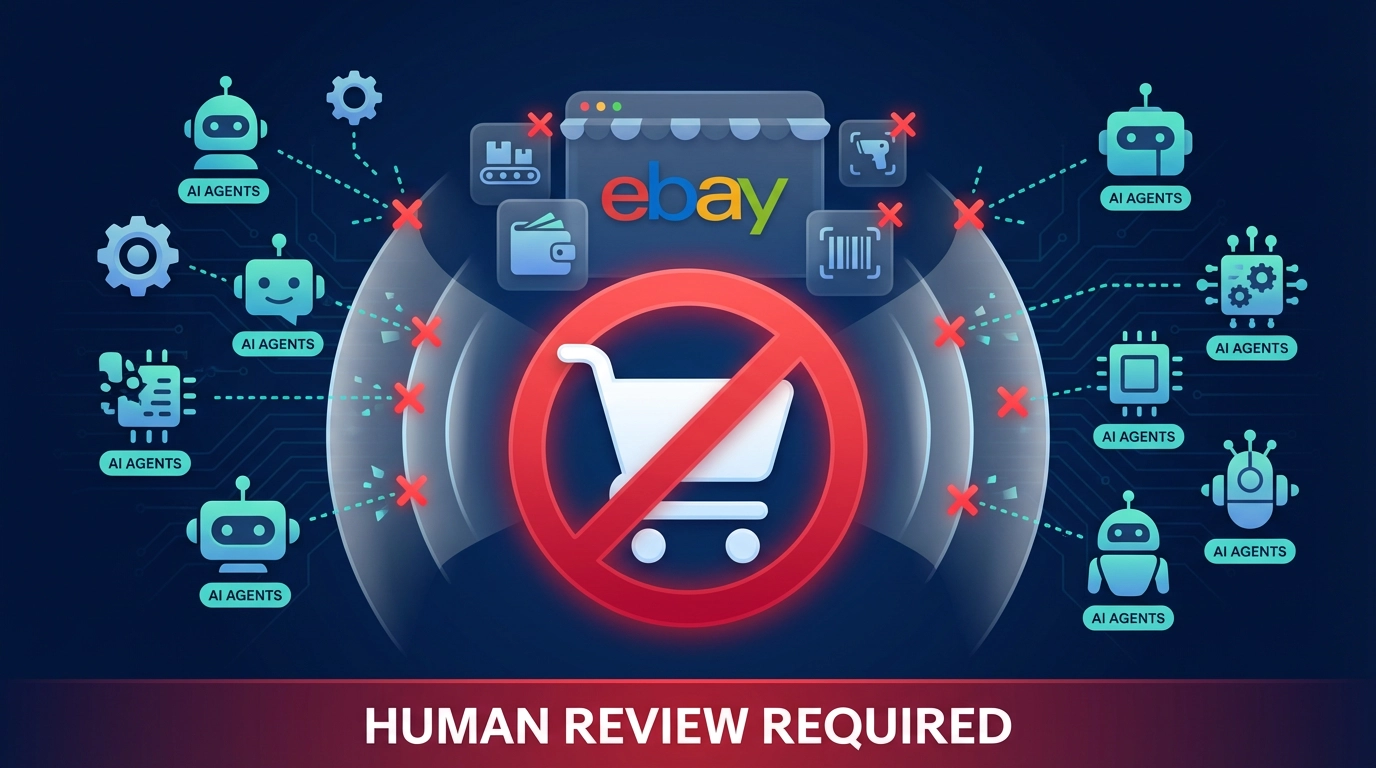
eBay Bans AI Shopping Agents in New User Agreement
Key Points
- eBay Explicitly Bans AI “Buy For Me” Agents and LLM-driven bots from placing automated orders without human oversight
- User Agreement changes take effect February 20, 2026, following announcement on January 20, 2026
- Updates include expanded arbitration clauses and clarified dispute resolution processes
- Move follows Amazon’s controversial “Buy For Me” feature that raised seller concerns
- eBay allows exceptions for authorized AI tools with prior express permission
Background
The rise of agentic commerce—AI systems that autonomously shop, negotiate, and purchase on behalf of users—has created new challenges for online marketplaces. Over the past year, major e-commerce platforms have grappled with how to handle these automated shopping agents. Amazon introduced its “Buy For Me” feature in April 2025, which scrapes third-party merchant websites to display products through Amazon’s app, even when brands don’t sell directly on the platform. The practice sparked significant backlash from small businesses concerned about consent, data usage, and pricing accuracy (ℹ️ Value Added Resource).
eBay had already taken preliminary steps last fall, quietly updating its robots.txt file to add restrictions on AI agents and scrapers. The file specifically blocked bots from companies including Perplexity, Anthropic, and Amazon, though it carved out an exception for Google’s shopping bot (ℹ️ Modern Retail).
What Happened
On January 20, 2026, eBay posted an updated User Agreement that formally codifies its stance on AI shopping agents. The platform sent email notifications to users announcing the changes, which become effective February 20, 2026.
The updated agreement explicitly prohibits “buy-for-me agents, LLM-driven bots, or any end-to-end flow that attempts to place orders without human review” unless users obtain prior express permission from eBay. This language expands upon the platform’s existing anti-scraping policies that already banned robots, spiders, and automated data gathering tools (ℹ️ Value Added Resource).
Beyond the AI agent restrictions, eBay also updated its arbitration and dispute resolution clauses. The changes clarify the scope of class action waivers, streamline the opt-out process for new users, and update the physical mailing address for legal correspondence. Notably, the revised arbitration language now explicitly excludes private attorney general actions and prevents users from recovering damages on behalf of third parties (ℹ️ The Register).
Why It Matters
This policy shift has significant implications for the future of online shopping and AI commerce. For eBay, the stakes are particularly high due to its revenue model. The platform generates income through variable “final value fees” that increase with item prices. Automated bots that swoop in to win auctions at the last second could drive prices down, directly impacting eBay’s bottom line.
From a seller perspective, the ban protects marketplace integrity. Automated agents could create unfair competitive advantages, with bots monitoring inventory 24/7 and executing purchases faster than human shoppers. This could lead to inventory hoarding, artificial scarcity, and pricing manipulation—issues that would undermine trust in the platform.
For everyday shoppers who value productivity and time-saving tools, the idea might seem like a step backward. After all, AI agents promise convenience: imagine telling a bot to find the best deal on a specific item and complete the purchase automatically. However, eBay’s approach prioritizes human oversight in the checkout process, ensuring buyers have final say before money changes hands.
The timing aligns with broader industry concerns. Multiple platforms are establishing boundaries around agentic commerce. Shopify introduced similar restrictions earlier this year, and Amazon sent cease-and-desist letters to companies like Perplexity AI over their shopping bot tools (ℹ️ EcommerceBytes).
What’s Next
eBay has indicated it’s developing its own AI tools that work within the bounds of human oversight. CEO Jamie Iannone mentioned in October 2025 that the company is “testing various agentic experiences in search and shopping,” including pilots with OpenAI’s Operator agent. In January 2026, eBay announced an expanded partnership with OpenAI to test authorized AI shopping assistants (ℹ️ Modern Retail).
The key distinction is control: eBay wants AI to suggest and streamline shopping experiences, not execute transactions independently. Think of it as having an efficient research assistant who presents options but always asks for your approval before proceeding.
For users who previously agreed to eBay’s terms, the new agreement takes effect February 20, 2026. New users must accept these terms when joining the platform. Users concerned about arbitration clauses should note that only new users can opt out of binding arbitration; existing users had until May 16, 2025 to exercise that option.
As AI continues evolving, expect more platforms to establish clear policies around automated shopping. The 2026 landscape is shaping up as a testing ground for whether consumers embrace AI commerce tools or prefer maintaining direct control over their purchasing decisions. eBay’s approach suggests the latter—at least for now.
Source: Value Added Resource—Published on January 21, 2026
Original article: https://www.valueaddedresource.net/ebay-bans-ai-agents-updates-arbitration-user-agreement-feb-2026/
About the Author
This article was written by James Carter, a productivity coach who helps people use AI to save time and boost efficiency. James specializes in breaking down complex technology changes into practical, actionable insights for everyday users navigating the evolving digital landscape.