
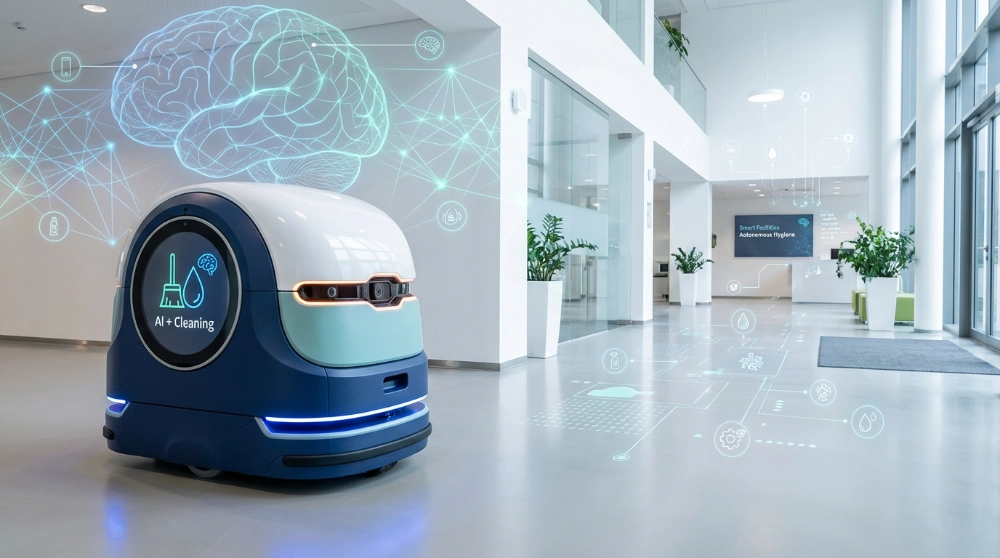
AI and Cleaning: The Future is Now
Key Points:
- AI and cleaning merge at CES 2026 with Primech AI’s Hytron restroom robot debut
- Autonomous cleaning systems achieve 99% bacterial reduction with chemical-free technology
- Global AI adoption in facilities management expected to surpass $12 billion by 2026
- Smart cleaning systems reduce labor costs 15-20% while improving hygiene standards
- Ethical deployment requires strong data privacy protocols and workforce training
Background
The commercial cleaning industry stands at a pivotal moment. Labor shortages, rising hygiene expectations, and sustainability demands have created the perfect environment for artificial intelligence integration. What was once science fiction—autonomous robots navigating restrooms, AI optimizing cleaning schedules, and smart sensors detecting contamination—has become operational reality in 2026.
What Happened
AI and cleaning technology reached a significant milestone when Primech Holdings Ltd. (Nasdaq: PMEC) unveiled Hytron at CES 2026 in Las Vegas. This autonomous restroom cleaning robot represents the most advanced solution purpose-built for commercial hygiene (ℹ️ Globe Newswire).
Hytron autonomously cleans toilets, urinals, sinks, mirrors, and surrounding surfaces—achieving verified disinfection performance exceeding 99% bacterial reduction. The system uses chemical-free cleaning with electrolyzed water technology, reducing both operating costs and environmental impact. Built on the NVIDIA Jetson Orin Super AI platform, Hytron delivers real-time navigation without requiring virtual reality training or fixed routes.
Beyond single-product launches, the broader AI and cleaning convergence accelerates across facilities management. Industry forecasts predict that the global adoption of AI in facilities management will exceed $12 billion by 2026, with an annual growth rate of more than 33% (ℹ️ Facilio).
Why It Matters
This technological shift addresses critical industry challenges while raising important ethical considerations I believe we must address proactively.
Operational Impact: AI-powered cleaning systems reduce labor dependency for repetitive tasks while optimizing resource allocation. Smart scheduling analyzes occupancy patterns and directs staff to spaces requiring attention, reducing cleaning costs by 15-20% while maintaining higher hygiene standards (ℹ️ Sensgreen).
Safety and Hygiene: In our post-pandemic world, consistent sanitization isn’t optional. Autonomous systems provide repeatable, verifiable cleaning performance. Computer vision and AI sensors detect contamination risks that human oversight might miss, creating safer environments for building occupants.
Workforce Transformation: Here’s where I urge caution. AI doesn’t eliminate jobs—it transforms them. Workers transition from manual cleaning to system supervision, requiring new skills. Organizations implementing AI must invest in comprehensive workforce training and change management. Resistance to automation often stems from fear, not the technology itself.
Privacy and Data Security: Smart cleaning systems collect extensive data—occupancy patterns, usage trends, and facility layouts. As someone focused on AI ethics, I emphasize this truth: organizations must implement strong security protocols protecting IoT networks and operational data from potential threats. Clear policies around data collection, storage, and usage help maintain regulatory compliance and build trust (ℹ️ Vanguard Ozarks).
What’s Next
The trajectory is clear. Autonomous cleaning robots will become standard in high-traffic facilities—airports, hospitals, shopping centers, and corporate campuses. Multi-function robots combining vacuuming, mopping, air purification, and UV sterilization will replace single-purpose machines.
AI-driven facility management platforms will integrate cleaning data with energy systems, security, and space utilization—creating truly intelligent buildings that self-optimize. The facilities management industry expects “digital twins” (virtual building replicas) to become sophisticated enough for testing cleaning protocols in virtual environments before real-world deployment (ℹ️ Facilities Dive).
Primech AI’s Robotics-as-a-Service model signals another trend: Organizations can deploy autonomous cleaning with predictable monthly costs rather than massive capital investments. This accessibility democratizes advanced cleaning technology for facilities of all sizes.
The responsible path forward requires balancing innovation with human considerations. We must ensure workers receive proper training for new roles. We must protect occupant privacy while gathering operational data. We must maintain human oversight even as systems become increasingly autonomous.
AI and cleaning technology isn’t about replacing human judgment—it’s about augmenting human capability with intelligent tools that create cleaner, safer, more efficient spaces for everyone.
Source: Multiple authoritative sources—Published February 9, 2026
Original sources:
About the Author
Nadia Chen is an expert in AI ethics and digital safety, dedicated to helping organizations and individuals use artificial intelligence responsibly. With a focus on privacy protection, workforce transformation, and ethical AI deployment, Nadia writes about emerging technologies through a lens of safety and social responsibility. She believes AI’s greatest value lies not in replacing humans but in amplifying human potential while protecting fundamental rights.