AI in Air Traffic Control: Enhancing Safety

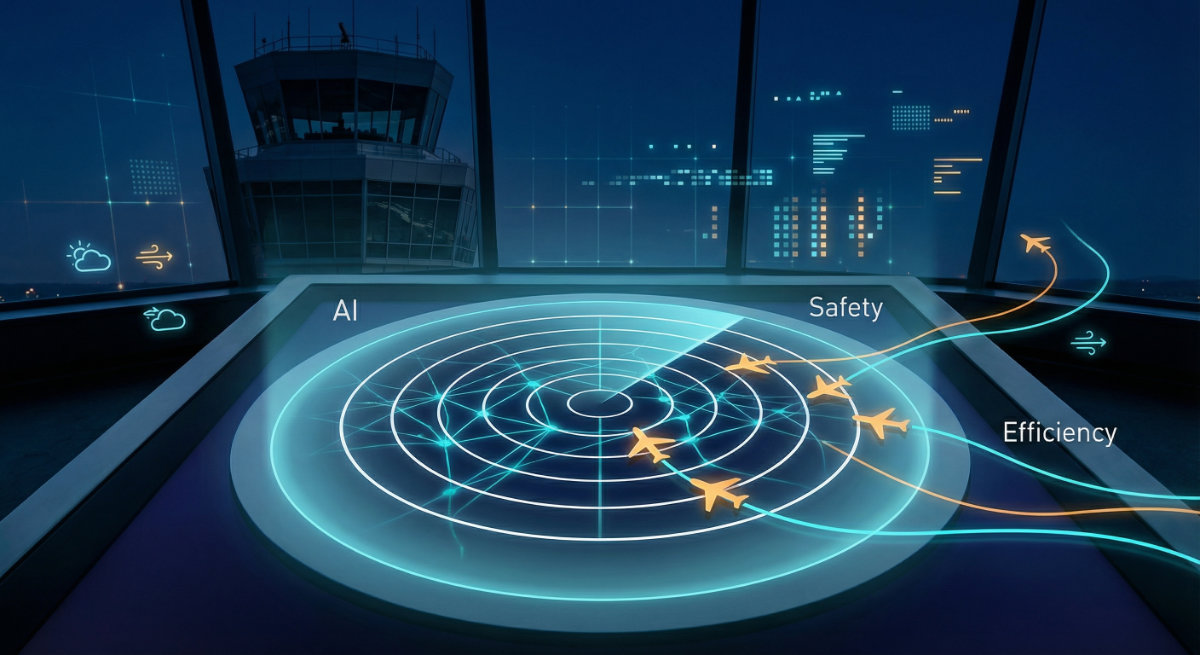
Every second, thousands of aircraft navigate our skies, creating an intricate dance that requires split-second decisions and flawless coordination. AI in Air Traffic Control is revolutionizing how we manage this complexity, making air travel safer and more efficient than ever before. If you’ve ever wondered how airports handle increasing traffic without compromising safety, or how your flight manages to arrive on time despite unpredictable weather, artificial intelligence is increasingly part of the answer. This technology isn’t just a futuristic concept—it’s actively reshaping aviation right now, and understanding how it works can give you confidence in the safety systems protecting you thousands of feet above the ground.
What Is AI in Air Traffic Control?
Air traffic control traditionally relies on human controllers monitoring radar screens, communicating with pilots, and making rapid decisions about flight paths, takeoffs, and landings. It’s demanding work that requires intense concentration and quick thinking. AI in Air Traffic Control introduces intelligent systems that support controllers by analyzing massive amounts of data, predicting potential conflicts, and suggesting optimal solutions in real time.
Think of it as having an incredibly fast, tireless assistant who can simultaneously track hundreds of flights, consider weather patterns, calculate fuel-efficient routes, and spot potential problems before they develop. The AI doesn’t replace human controllers—instead, it enhances their capabilities, allowing them to focus on critical decision-making while the system handles routine monitoring and provides data-driven recommendations.
This technology combines machine learning, predictive analytics, and automation to create smarter, more responsive air traffic management systems that adapt to changing conditions moment by moment.
How AI Transforms Air Traffic Management
Real-Time Conflict Detection and Resolution
One of the most critical applications of artificial intelligence in aviation is detecting potential conflicts between aircraft before they become dangerous. Modern AI systems continuously analyze flight paths, speeds, altitudes, and directions of all aircraft in a given airspace, identifying situations where planes might come too close to each other.
Recent developments showcase the power of this technology. NoamAI unveiled its AI Air Traffic Controller system at Airspace World 2025, designed to assist human controllers by monitoring flight paths and aircraft positions in real-time. The system deploys advanced machine learning algorithms and predictive modeling to analyze vast amounts of data, allowing for improved situational awareness and faster response times during peak operational periods.
What makes these systems remarkable is their ability to work several minutes ahead. While human controllers are managing current traffic, the AI is already calculating what might happen five, ten, or even fifteen minutes from now based on current trajectories. If two aircraft are on courses that will eventually intersect, the system alerts controllers immediately, suggesting alternative routes or altitude changes that maintain safe separation standards.
In Europe, EUROCONTROL has developed more than thirty AI-based applications supporting air traffic management, with several focusing specifically on conflict detection and resolution. These systems don’t just identify problems—they propose solutions, such as slight heading adjustments or altitude changes that resolve conflicts while minimizing delays and fuel consumption.
Predictive Weather Analysis and Route Optimization
Weather remains one of aviation’s greatest challenges, causing delays, diversions, and safety concerns. Predictive analytics powered by AI is changing how the industry handles these atmospheric uncertainties. Rather than simply reacting to current weather conditions, AI systems now forecast how weather will evolve and automatically suggest optimal responses.
The KAIROS project, part of the SESAR innovation program in Europe, is developing AI-based weather forecasting specifically for air traffic management. Traditional aviation weather products can predict hazardous weather but often lack the spatial and temporal detail needed for meaningful operational decisions. The KAIROS solution addresses the problem by providing higher-resolution forecasts that give air traffic controllers precise information about the timing and location of thunderstorms, enabling them to minimize impact on operations.
These systems don’t just predict weather—they integrate those predictions with flight planning. AI algorithms analyze weather forecasts alongside aircraft performance data, airspace constraints, and traffic demand to calculate optimal flight trajectories. If storms are developing along a planned route, the system identifies alternative paths that avoid the weather while minimizing delays and fuel consumption.
Route optimization extends beyond weather avoidance. AI considers factors like wind patterns at different altitudes, finding routes that take advantage of tailwinds or avoid headwinds. The technology can analyze millions of possible routing combinations in seconds, identifying solutions that human planners would never have time to evaluate. This optimization doesn’t just save time—it significantly reduces fuel consumption, cutting costs and environmental impact simultaneously.
Automated Traffic Flow Management
Managing the flow of air traffic across entire regions requires coordination between dozens of airports, hundreds of flights, and numerous air traffic sectors. Automated traffic flow management uses AI to orchestrate this complexity at a scale impossible for humans alone.
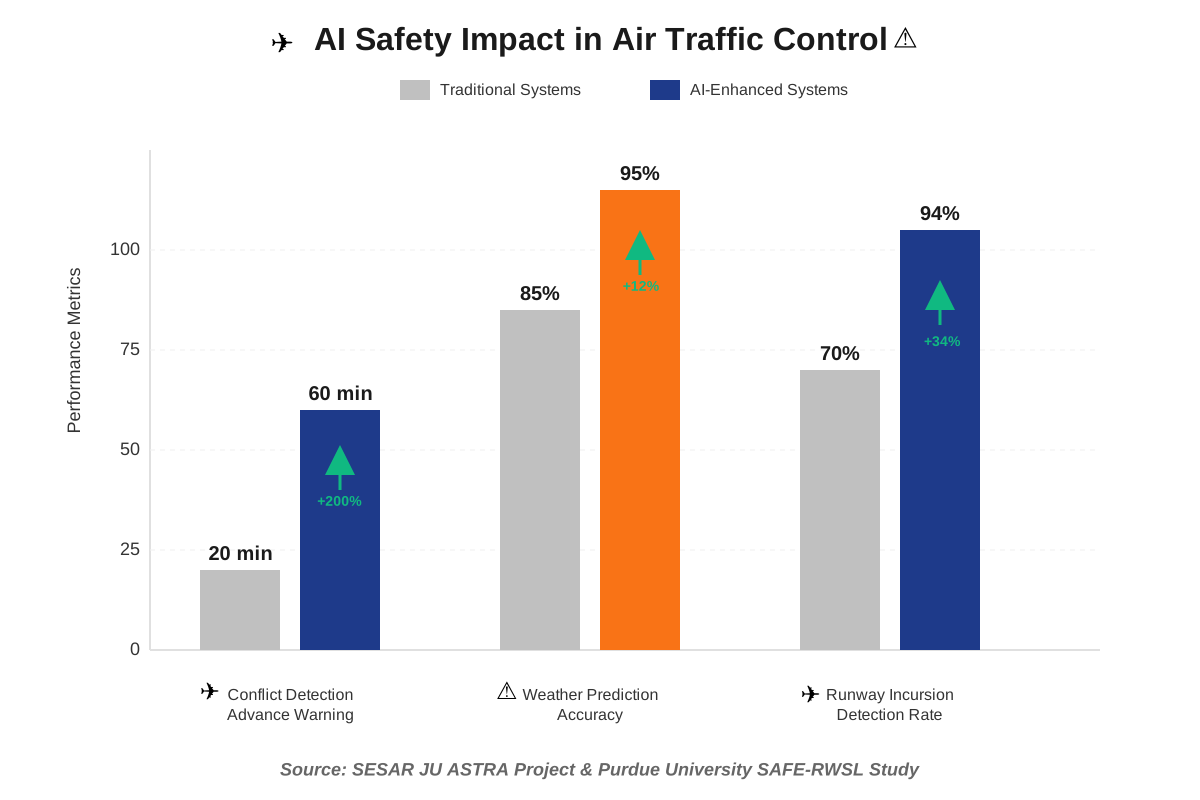
The ASTRA project, developed under the SESAR innovation program in Europe, represents cutting-edge work in this area. Current systems for managing traffic flow can predict and resolve airspace hotspots with only twenty minutes’ notice. ASTRA’s AI algorithms extend this prediction window to one hour, giving flow management positions substantially more time to implement solutions. The system trains on historical data from 2018 onward, learning patterns in traffic flow, weather disruptions, and cascade delays to forecast congestion before it develops.
What makes such work particularly valuable is that the system doesn’t just predict problems—it suggests optimal solutions considering multiple factors simultaneously. The AI evaluates operational efficiency, safety requirements, environmental impacts including fuel consumption, and delay minimization, presenting flow managers with actionable recommendations they can implement immediately.
EUROCONTROL has already deployed numerous AI applications supporting network management operations. These systems handle tasks like automating flight plan processing, improving traffic predictions, providing regulation outlook, and preventing curfew infringements. By managing these routine but critical functions, AI frees human operators to focus on complex situations requiring judgment and experience.
Real-World Impacts on Safety and Operations
Preventing Runway Incursions and Ground Conflicts
Some of the most critical moments in aviation occur on the ground. Runway incursions—when aircraft, vehicles, or pedestrians enter runways inappropriately—represent a persistent safety threat that AI is helping address. Computer vision systems and AI-powered surveillance now monitor airport surfaces continuously, detecting potential conflicts that human observers might miss.
The FAA is deploying Runway Incursion Devices (RID) at 74 airports through 2026, part of their Surface Safety Portfolio. These systems serve as intelligent memory aids for air traffic controllers, indicating when runways are occupied or closed. If controllers try to clear another plane for a runway that is already occupied, the system warns them with both visual and audible alerts. This stops possible collisions.
More sophisticated systems like ASDE-X (Airport Surface Detection Equipment, Model X) operating at major hubs use radar and multiple data sources to provide real-time, high-resolution displays of all aircraft and vehicle movements on airport surfaces. Research at Purdue University has developed the SAFE-RWSL system using ADS-B technology and computer vision to automatically detect aircraft and provide runway status information. Their testing showed the system accurately detected 94% of aircraft operations, including all those involving ADS-B-transmitting aircraft.
These technologies exemplify how AI enhances human controllers’ situational awareness. The systems don’t make decisions independently—they provide controllers with critical information and alerts, enabling better, faster human decision-making during high-pressure situations on busy airport surfaces.
Reducing Delays Through Predictive Maintenance
Beyond managing flights, AI also impacts the physical infrastructure supporting air traffic. Predictive maintenance systems analyze data from radar equipment, communication systems, and navigation aids to identify potential failures before they cause outages. This proactive approach minimizes disruptions to air traffic operations and prevents delays caused by unexpected equipment failures.
For aircraft themselves, AI systems monitor engine performance, structural components, and onboard systems using sensor data. By identifying patterns that precede failures, airlines can schedule maintenance during planned downtime rather than experiencing the unexpected grounding of aircraft. This predictability improves fleet reliability and reduces the cascading delays that occur when aircraft are suddenly unavailable for scheduled flights.
Getting Started: Understanding the Technology Behind Your Flight
How This Technology Affects Your Travel Experience
When you board a flight today, multiple AI systems are already working to ensure your safety and on-time arrival. Here’s what’s happening behind the scenes that you might not realize:
Before Takeoff: AI has analyzed weather forecasts, current traffic patterns, and historical data to help create your flight’s optimal route. The system has checked for potential conflicts with other flights and identified the best altitude considering winds and traffic.
During Flight: Continuously, AI monitors your aircraft’s position relative to thousands of others in the sky, recalculating trajectories and alerting controllers to any situation requiring attention. Weather systems are being monitored, and if conditions change, the AI can suggest route adjustments to avoid turbulence or storms while minimizing delays.
On Approach: As your plane nears its destination, AI systems coordinate with dozens of other arriving and departing flights, optimizing the sequence to minimize delays while maintaining safety. Ground systems monitor the runway and taxiways, ensuring your landing path is clear and your gate assignment is coordinated efficiently.
All of this happens seamlessly, with human controllers maintaining oversight and making final decisions but benefiting enormously from the AI’s ability to process vast amounts of information instantaneously.
What Air Travelers Should Know
Understanding how AI enhances air traffic safety can give you greater confidence when flying. Here are key points that demystify the technology:
AI doesn’t replace human judgment: Controllers remain fully in charge of all critical decisions. The AI serves as an incredibly capable assistant, providing information and recommendations that humans evaluate and act upon. Think of it as giving controllers superhuman perception and analytical capabilities while keeping human wisdom and intuition at the center.
The technology has rigorous safeguards: Aviation AI systems undergo extensive testing and certification before deployment. They’re designed with multiple redundancy layers, ensuring that if one system experiences issues, backup systems maintain safety. Traditional methods remain available as fallbacks if technology fails.
Privacy isn’t compromised: Air traffic control AI focuses on flight data—positions, speeds, altitudes, and routes. It doesn’t access passenger information or personal data. The systems are designed purely for operational efficiency and safety.
The human-machine partnership works: Studies indicate that controllers using AI assistance make better decisions, experience less workload stress, and can manage more complex traffic situations safely. The technology augments human capabilities rather than replacing them, creating a partnership where each contributes their strengths.
Looking Forward: The Future of AI-Enhanced Aviation
The trajectory of AI integration in air traffic control points toward even more sophisticated systems. Future developments will likely include:
Autonomous conflict resolution in routine situations: AI may handle standard separation tasks automatically while controllers focus on complex scenarios requiring human judgment and creativity.
Enhanced predictive capabilities: Systems will forecast traffic patterns, weather impacts, and potential issues even further in advance, allowing proactive rather than reactive management.
Integration with urban air mobility: As electric vertical takeoff and landing vehicles (eVTOLs) and drones become more common, AI will manage the dramatically increased complexity of low-altitude airspace.
Improved efficiency and sustainability: By optimizing routes more precisely, AI will reduce fuel consumption significantly, cutting both costs and environmental impact while maintaining or improving safety standards.
The aviation industry remains committed to its excellent safety record while embracing technological advancement. The goal isn’t to remove humans from the equation but to give them better tools, freeing them from routine monitoring tasks so they can focus their expertise where it matters most—handling complex, unpredictable situations that require experience, judgment, and creative problem-solving.
Conclusion: Safer Skies Through Intelligent Technology
AI in Air Traffic Control represents one of aviation’s most significant safety advances in decades. By processing massive data streams in real-time, predicting conflicts before they develop, optimizing routes around weather, and monitoring ground operations continuously, these systems are making air travel safer and more efficient every day.
The technology isn’t about replacing the skilled professionals who manage our skies—it’s about empowering them with tools that enhance their natural abilities. Human controllers bring judgment, experience, and adaptability that AI cannot replicate, while AI provides processing speed, tireless monitoring, and pattern recognition that humans cannot match. Together, this partnership creates a system greater than either could achieve alone.
Next time you fly, you can take confidence knowing that invisible layers of artificial intelligence are working alongside experienced human controllers, ensuring your flight is as safe, efficient, and punctual as possible. Today, we are building the future of aviation, one intelligent system at a time, always prioritizing safety.
If you’re interested in learning more about aviation technology or considering a career in air traffic control, explore the training programs and resources available through organizations like the FAA, EUROCONTROL, and professional aviation associations. The field is evolving rapidly, and there’s never been a more exciting time to be part of aviation’s technological transformation.
Frequently Asked Questions
References:
- Scientific American – “Can AI Replace Air Traffic Controllers to Reduce Airline Accidents?” https://www.scientificamerican.com/article/can-ai-replace-air-traffic-controllers-to-reduce-airline-accidents/
- SESAR Joint Undertaking – ASTRA Project: AI-enabled tactical FMP hotspot prediction and resolution https://www.sesarju.eu/news/air-traffic-flow-management-ai-solutions-prevent-air-space-congestion
- EUROCONTROL Artificial Intelligence Applications in Air Traffic Management https://www.eurocontrol.int/artificial-intelligence
- NoamAI Air Traffic Controller System – Airspace World 2025 https://www.airport-technology.com/news/noamai-com-air-traffic-management/
- Federal Aviation Administration Surface Safety Portfolio https://www.faa.gov/newsroom/faa-launches-final-initiative-runway-safety-portfolio
- Purdue University SAFE-RWSL Runway Incursion Detection System https://www.purdue.edu/newsroom/2024/Q4/purdue-safe-rwsl-surveillance-system-built-to-prevent-airport-runway-incursions/
About the Author
Abir Benali is a friendly technology writer who specializes in making complex AI concepts accessible to everyday users. With a passion for demystifying cutting-edge technology, Abir focuses on practical explanations that help readers understand how AI impacts their daily lives. Through clear, jargon-free writing, Abir empowers non-technical audiences to confidently engage with artificial intelligence tools and innovations, from aviation safety systems to consumer applications.