AI-Powered Brainstorming for Innovative Ideas

AI-Powered Brainstorming has revolutionized how we approach creative problem-solving. Whether you’re developing a new marketing campaign, designing a product, or simply trying to overcome a creative block, artificial intelligence can serve as your collaborative thinking partner. This guide walks you through practical, beginner-friendly techniques to harness AI tools for generating innovative ideas that you might never have considered on your own.
Why AI-Powered Brainstorming Changes Everything
Conventional brainstorming frequently encounters obstacles. You stare at a blank page, recycling the same exhausted concepts or falling into familiar thought patterns. AI-powered brainstorming breaks through these limitations by introducing perspectives you wouldn’t naturally consider.
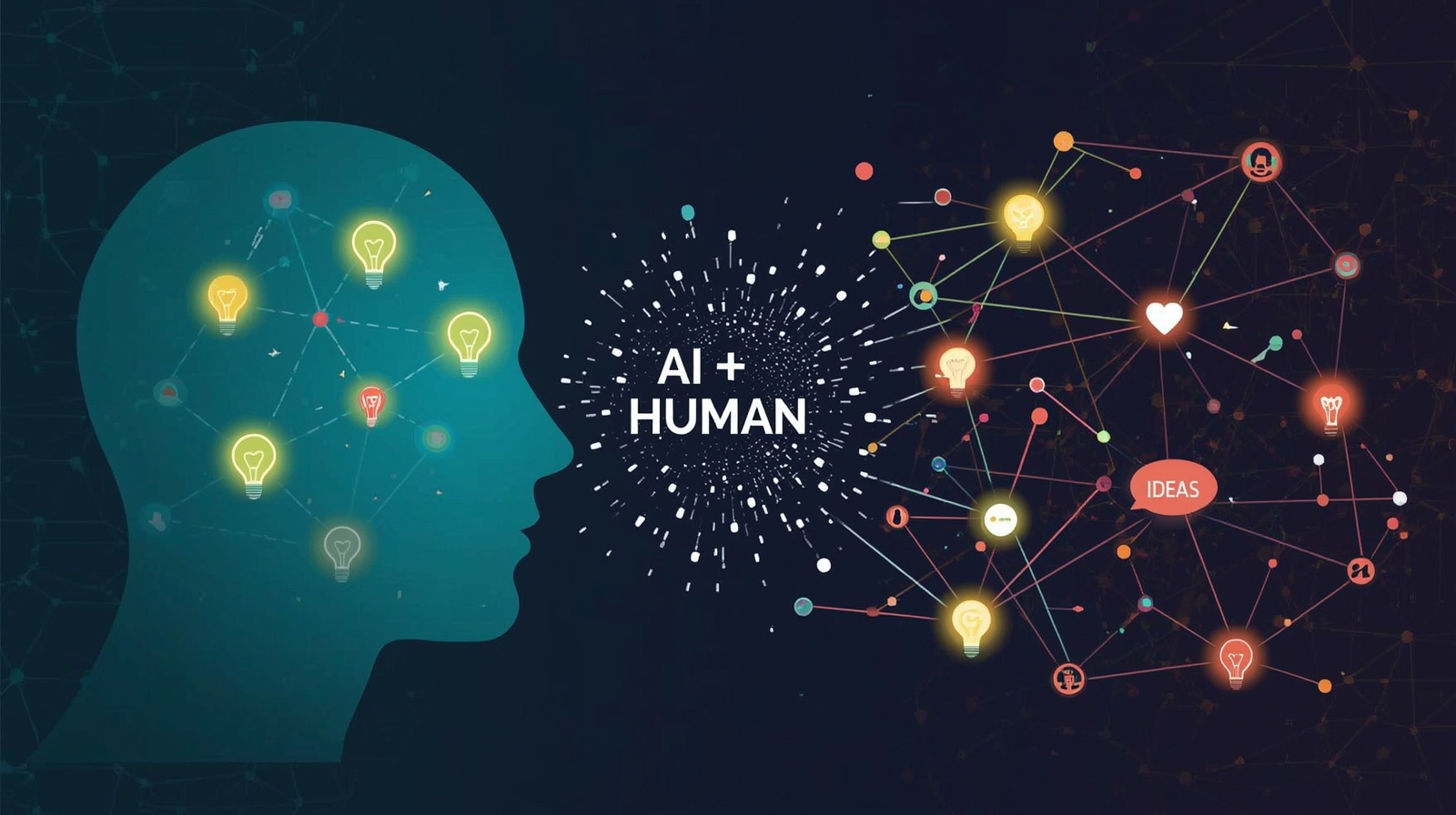
Think of AI as a creative collaborator with unlimited energy, no ego, and exposure to millions of concepts across every field imaginable. It doesn’t replace your creativity—it amplifies it. The best results happen when you combine your human intuition, domain knowledge, and judgment with AI’s pattern recognition and vast information synthesis capabilities.
I’ve used these techniques to develop content strategies, name products, and solve design challenges that initially seemed impossible. The key is understanding that AI brainstorming tools work best when you guide them strategically rather than expecting magic solutions from vague prompts.
How AI-Powered Brainstorming Actually Works
Before diving into specific techniques, understanding the mechanics helps you use AI more effectively. Modern AI language models analyze patterns from extensive training data, identifying connections between concepts that might seem unrelated at first glance.
When you provide a brainstorming prompt, the AI generates responses by predicting statistically likely combinations of ideas based on context. Research from the Wharton School at the University of Pennsylvania found that ChatGPT can produce 200 ideas in 15 minutes of interaction compared to a human, who can generate about 5 ideas in 15 minutes
Source: Wharton School Working Paper via Descript (2025): https://www.descript.com/blog/article/best-ai-brainstorming-prompt
This means the quality of your output directly correlates with the quality of your input. Specific, well-structured prompts yield focused, actionable ideas. Vague requests produce generic suggestions.
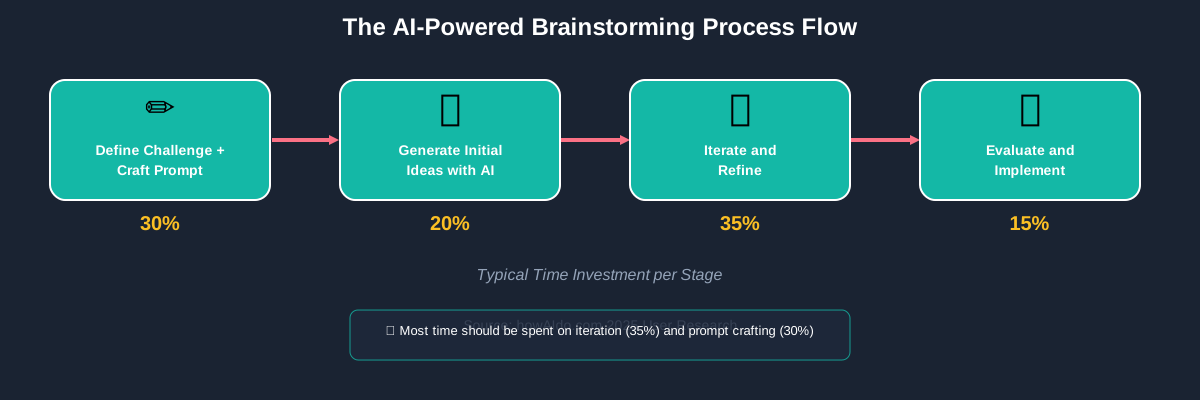
The real power emerges through iteration. Your first AI-generated ideas might feel obvious or slightly off-target. That’s normal and expected. Use those initial outputs as springboards, refining your prompts and building on intriguing fragments until breakthrough concepts emerge.
Step 1: Choose Your AI Brainstorming Tool
Several AI platforms excel at idea generation, each with unique strengths. For beginners, I recommend starting with accessible options that don’t require technical knowledge.
ChatGPT remains the most user-friendly starting point. Its conversational interface feels natural, making it easy to refine ideas through back-and-forth dialogue. Simply create a free account at OpenAI’s website and start a new conversation.
Claude excels at nuanced, context-aware brainstorming, particularly for complex projects requiring sustained focus across multiple related ideas. Its longer context window means you can develop elaborate concept maps in a single session.
Google Gemini integrates well if you’re already working within Google Workspace, allowing seamless connection between brainstorming and document creation.
For visual brainstorming, Midjourney or DALL-E generate images that can spark unexpected conceptual directions, especially useful for product design, branding, or spatial planning projects.
Start with one tool and master it before exploring others. Each platform has quirks and optimal prompting styles you’ll discover through practice.
Step 2: Craft an Effective Brainstorming Prompt
Your prompt quality determines everything. Weak prompts generate weak ideas. Powerful prompts unlock AI’s creative potential.
Structure your prompts with these essential elements:
Context: Provide background about your project, challenge, or goal. Instead of “Give me marketing ideas,” try “I’m launching an eco-friendly water bottle targeting college students who care about sustainability but have limited budgets.”
Specific Request: Clearly state what type of ideas you need. “Generate 10 unique marketing campaign concepts” works better than “Help me with marketing.”
Constraints: Include relevant limitations like budget, timeline, audience, or technical requirements. Constraints actually improve creativity by forcing novel solutions within boundaries.
Format Preferences: Specify how you want ideas presented—as lists, detailed descriptions, comparative tables, or step-by-step plans.
Here’s a complete example: “I’m developing a mobile app that helps busy parents plan healthy meals. My target users are working parents aged 30-45 with limited cooking time. Generate 15 creative feature ideas that would differentiate my app from existing meal planning tools, focusing on time-saving and family-friendly aspects. Present each idea with a catchy name and two-sentence description.”
Step 3: Use Iteration to Refine Ideas
Your first AI response rarely delivers the perfect solution. Iterative brainstorming transforms good suggestions into great ones.
After receiving initial ideas, identify elements that resonate—even partially. Ask the AI to expand specifically on those fragments. For example: “I like idea number 7 about gamification. Generate five variations of that concept with different gameplay mechanics suited for different age groups.”
Try these iteration techniques:
Combination Approach: “Merge ideas 3 and 8 into a single concept that incorporates the strengths of both.”
Perspective Shifting: “Reimagine idea 5 from the perspective of a teenager versus a senior citizen. How would the concept change?”
Constraint Testing: “Take idea 2 and redesign it for a budget of $500 instead of $5,000.”
Opposite Exploration: “Generate the inverse of idea 6—what would the complete opposite approach look like?”
Each iteration cycle brings you closer to genuinely innovative solutions. I typically go through 5-7 refinement rounds before arriving at implementable concepts that feel both original and practical.
Step 4: Overcome Creative Blocks with AI Techniques
When you’re completely stuck, specific AI prompting strategies can restart your creative engine.
Random Association Method: Ask the AI to connect your project with seemingly unrelated concepts. “How could principles from marine biology inspire my customer service process?” This method forces unexpected connections that ignite genuine innovation.
Historical Parallel Technique: Request ideas based on how past innovators approached similar challenges. “How would Leonardo da Vinci approach designing a modern productivity app?” This technique provides a fresh historical perspective on contemporary problems.
Constraint Removal Exercise: “Imagine unlimited budget, time, and technology. What would the ultimate solution look like?” This exercise removes mental limitations before scaling back to practical implementation.
Worst Idea Generator: Counterintuitively effective—ask for terrible ideas, then reverse engineer why they’re bad to identify what makes ideas actually good. “Give me 10 absolutely horrible ways to launch this product, then explain what would make each one successful instead.”
SCAMPER Framework: Use this classic creativity method enhanced by AI. Ask the AI to suggest ideas for substituting, combining, adapting, changing, putting to other uses, removing, or reversing elements of your existing concept.
These techniques work because they force your brain and the AI system into unusual thinking patterns that bypass conventional approaches.
Step 5: Organize and Evaluate AI-Generated Ideas
As ideas accumulate, systematic organization becomes essential. Don’t let brilliant concepts get lost in conversation history.
Create a simple spreadsheet or note document categorizing ideas by:
- Feasibility: Easy to implement versus requiring significant resources
- Impact Potential: Likely to create major results versus incremental improvements
- Novelty: Genuinely original versus variations on existing approaches
- Alignment: Perfect fit with goals versus interesting but off-target
Ask your AI assistant to help with evaluation: “Analyze these 20 ideas and rank them by implementation difficulty and potential user impact. Present as a 2×2 matrix.”
Remember that AI cannot replace human judgment about what will actually work in your specific context. Use AI-generated evaluations as one input, but apply your domain expertise and intuition as the final filter.
I’ve found the most valuable ideas often sit in the “surprisingly feasible yet highly impactful” category—concepts that initially seem ambitious but reveal practical pathways when examined closely.
Step 6: Combine AI Ideas with Human Insight
The magic happens when you blend AI-generated concepts with your unique knowledge and experience.
Take AI suggestions as raw material requiring your creative interpretation. An AI might suggest “gamification elements” generically, but you know your specific audience would respond better to collaborative challenges than competitive leaderboards.
Involve other humans in evaluating AI-generated ideas. Present the concepts without revealing their AI origin, then facilitate discussion about what resonates and why. This combination of artificial and human intelligence produces results neither could achieve alone.
Test AI ideas against real-world constraints the AI couldn’t know about—your company culture, regulatory requirements, existing technical infrastructure, or customer feedback patterns you’ve observed.
Transform AI starting points into fully realized concepts by adding layers of specificity only you can provide. An AI might suggest “personalized recommendations,” but you determine the exact data points to use, the algorithm approach, and how to present those recommendations in your unique interface.
Step 7: Create Hybrid Brainstorming Sessions
For team environments, AI-enhanced brainstorming sessions combine the best of human collaboration with AI capabilities.
Structure hybrid sessions this way:
Individual AI Pre-Work: Each team member spends 15 minutes generating ideas with AI before the meeting, bringing their top 3-5 concepts to share.
Collaborative Refinement: Present all ideas (both human and AI-originated) anonymously. Discuss, combine, and refine as a group without knowing which source generated what.
Real-Time AI Integration: Keep an AI tool open during live brainstorming. When discussion stalls, pose the current challenge to the AI and use its response to restart conversation.
Post-Session Expansion: After identifying promising directions, assign team members to explore different aspects more deeply with AI assistance, reporting back at the next meeting.
This approach maintains human connection and group dynamics while leveraging AI’s tireless idea generation capabilities. Teams consistently report generating 3–4 times more viable concepts compared to traditional brainstorming alone.
Common Mistakes to Avoid
Even with powerful AI brainstorming tools, certain pitfalls can undermine your results.
Accepting First Outputs: Never stop at the AI’s initial response. Generic ideas come first; breakthrough concepts emerge through persistence and refinement.
Vague Prompting: “Give me ideas” wastes your time. Invest effort in detailed, specific prompts that guide the AI toward useful territory.
Ignoring Your Expertise: Don’t defer entirely to AI judgment. You understand nuances of your situation that no AI can grasp. Trust your instincts about what will actually work.
Forgetting Ethical Boundaries: Some AI-generated ideas might seem clever but raise ethical concerns. Always evaluate suggestions against your values and professional standards.
Over-Relying on a Single Source: Different AI tools have different strengths and blind spots. Cross-reference important ideas across multiple platforms for more robust results.
Skipping Documentation: Capture promising concepts immediately. AI conversations are easy to lose, and brilliant ideas vanish if not recorded properly.
I learned these lessons through experience—like the time I spent an hour developing detailed concepts with an AI, closed the browser without saving, and lost everything. Don’t repeat my mistakes.
Research from Oregon State University confirms this risk: unsupported AI use results in a “flattening” effect, boosting creativity for lower-performing users while diminishing it for highly creative individuals
Source: Oregon State University Study, Bushnell & Harrison (April 2025): https://news.oregonstate.edu/news/ai-improves-creativity-student-writing-when-supported-instructor-guidance-study-finds
However, when proper guidance is provided, creativity increases across all skill levels.
Practical Examples of AI-Powered Brainstorming Success
Real scenarios demonstrate how these techniques work in practice.
Product Naming: A startup founder struggled to name a new meditation app. After traditional brainstorming produced only clichéd options like “ZenSpace” and “MindfulMoments,” she used AI with this prompt: “Generate 30 unique meditation app names that avoid common ‘zen,’ ‘calm,’ and ‘peace’ terminology. Focus on names suggesting transformation, discovery, and personal growth. Include names inspired by natural phenomena, musical concepts, and architectural terms.” The AI produced “Undertow” (suggesting gentle but powerful change), “Crescendo” (implying building practice), and “Threshold” (indicating transition moments). The founder selected “Threshold” and successfully launched with strong brand differentiation.
Content Strategy: A marketing manager needed fresh blog topics for a cybersecurity company. Standard industry topics felt stale. He prompted, “Generate 25 blog post topics about cybersecurity that avoid technical jargon and connect instead to universal human experiences like trust, fear, privacy, identity, and relationships. Frame each as a question someone might ask a friend, not a technical manual.” The resulting topics, like “How do I know who to trust with my data?” and “Why does being hacked feel like such a personal violation?” drove 340% higher engagement than previous technical content.
Workshop Design: An educator designing creativity workshops faced repetitive session formats. She asked an AI: “Design 5 entirely different workshop structures for teaching creative thinking to corporate teams. Make each structure fundamentally different in how participants interact—not just varying content but reimagining the entire experience. Include unconventional approaches that might seem risky but could be powerful.” One AI suggestion involved “reverse mentoring,” where junior staff taught senior leaders, which became her most successful workshop format.
These examples share common patterns: specific prompts, multiple iterations, and human judgment applied to AI-generated starting points.
Frequently Asked Questions About AI-Powered Brainstorming
Advanced Techniques for Experienced Users
Once you’ve mastered basic AI-powered brainstorming, these advanced approaches unlock even greater creative potential.
Multi-AI Collaboration: Run the same prompt through three different AI platforms simultaneously, then ask a fourth AI to synthesize the best elements from all responses. This meta-level approach combines different AI “personalities” and training biases for richer results.
Prompt Chaining: Create sequences where each AI response feeds into the next prompt. Start broad, progressively narrowing focus across 8-10 connected prompts that build toward increasingly specific, refined concepts.
Role-Playing Personas: Instruct the AI to generate ideas from specific expert perspectives: “Respond as a behavioral psychologist,” then separately “Respond as a software architect,” then “Respond as a 5-year-old.” The same challenge viewed through radically different lenses produces surprising insights.
Constraint Escalation: Start with reasonable constraints, then systematically tighten them. “Design this with a $10,000 budget,” then “$5,000,” then “$1,000,” then “$100.” Each constraint level forces increasingly creative problem-solving.
Temporal Shifting: Ask AI to generate ideas as if the project existed in different time periods: “How would this problem be solved in 1950? In 1990? In 2025? In 2040?” Historical and future perspectives often reveal overlooked approaches applicable today.
Chain-of-Thought Prompting: According to research from the Wharton School, Chain-of-Thought stimulation generates the widest variety of AI-generated ideas compared to other prompting methods
Source: Wharton School Working Paper via Descript (2025): https://www.descript.com/blog/article/best-ai-brainstorming-prompt
This technique involves first asking AI to generate a large batch of ideas (like 100), then instructing it to review and modify those ideas to make them bolder and more different from each other. The two-stage process helps overcome AI’s tendency to produce similar outputs.
Making AI Brainstorming a Sustainable Practice
The real power of AI-assisted creativity comes from building it into your regular workflow, not treating it as occasional emergency problem-solving.
Schedule recurring “AI brainstorming sessions” weekly or monthly—brief, focused times where you explore emerging challenges or opportunities with AI assistance. This prevents last-minute scrambling when facing urgent creative demands.
Build a personal library of effective prompts that work well for your typical project types. Maintain a simple document where you collect prompt templates, noting which situations they suit best. Over time, you’ll develop a refined toolkit, dramatically accelerating future brainstorming.
Share AI-generated insights with colleagues, even when you don’t implement the specific ideas. AI brainstorming often produces valuable perspectives beyond immediate project needs—concepts that might solve someone else’s challenge or spark unrelated innovations.
Stay current with AI tool developments. The field evolves rapidly, with new capabilities and platforms emerging regularly. Allocate time quarterly to explore new tools and experiment with features you haven’t tried.
Most importantly, maintain balance between AI assistance and human intuition. Technology enhances creativity but cannot replace the deep understanding, contextual awareness, and judgment that come from your lived experience and expertise.
Research validates the effectiveness of structured AI brainstorming approaches. A 2025 study by Adobe and Advanis found that 91% of educators observe enhanced learning when their students utilize creative AI
Source: Adobe & Advanis, “Creativity with AI in Education 2025 Report” (January 2025) https://blog.adobe.com/en/publish/2025/01/22/creativity-with-ai-new-report-imagines-the-future-of-student-success
This improvement stems from students engaging more deeply with content through creative thinking activities enabled by AI tools.
Taking Your Next Steps with AI-Powered Brainstorming
You now have everything needed to start generating breakthrough ideas with AI assistance. Don’t wait for the perfect moment or perfect project—begin today with whatever challenge currently sits on your desk.
Choose one AI platform and spend thirty minutes exploring it with a real problem you’re facing. Use the prompt structure from Step 2, apply the iteration techniques from Step 3, and see what emerges. Your first session might feel awkward or produce mediocre results. That’s completely normal and expected.
The key is starting and developing your skills through practice. Every brainstorming session teaches you something about effective prompting, about how AI thinks, and about discovering creative solutions you wouldn’t find alone.
Remember that AI-powered brainstorming works best as collaboration—your intelligence guiding artificial intelligence toward practical innovation. Neither works optimally alone, but together they form a powerful problem-solving partnership.
The ideas that will transform your project, business, or creative work are waiting to be discovered. AI gives you the tools to find them faster and more reliably than ever before. Now go create something remarkable.
References:
Wharton School, University of Pennsylvania – “Best AI Brainstorming Prompt (Research-Backed)” Working Paper (2025)
- Source: Descript Blog
- URL: https://www.descript.com/blog/article/best-ai-brainstorming-prompt
- Key Finding: Chain-of-Thought prompting generates the widest variety of AI-generated ideas, with ChatGPT producing 200 ideas in 15 minutes compared to humans’ 5 ideas
Oregon State University Study – “AI Improves Creativity in Student Writing When Supported by Instructor Guidance” (April 2025)
- Authors: J.T. Bushnell & Wayne Harrison, School of Writing, Literature & Film
- URL: https://news.oregonstate.edu/news/ai-improves-creativity-student-writing-when-supported-instructor-guidance-study-finds
- Key Finding: When students receive instruction on AI use, creativity increases significantly; unsupported AI use creates a “flattening effect.”
Frontiers in Computer Science – “Exploring Creativity in Human–AI Co-Creation: A Comparative Study Across Design Experience” (September 2025)
- Authors: Wang, N., Kim, H., Peng, J., & Wang, J.
- DOI: 10.3389/fcomp.2025.1672735
- URL: https://www.frontiersin.org/journals/computer-science/articles/10.3389/fcomp.2025.1672735/full
- Key Finding: Human-AI Co-Creative Design Process substantially improves creative performance, particularly for novice designers in idea generation
Science Advances – “Generative AI Enhances Individual Creativity but Reduces the Collective Diversity of Novel Content” (2025)
- URL: https://www.science.org/doi/10.1126/sciadv.adn5290
- Key Finding: Access to generative AI improves individual story creativity but makes outputs more similar to each other
Adobe & Advanis – “Creativity with AI in Education 2025 Report” (January 2025)
- URL: https://blog.adobe.com/en/publish/2025/01/22/creativity-with-ai-new-report-imagines-the-future-of-student-success
- Key Finding: 91% of educators observe enhanced learning when students utilize creative AI
Microsoft 365 Life Hacks – “How to Brainstorm New Ideas with AI: 5 Brainstorming Techniques to Try” (May 2025)
- URL: https://www.microsoft.com/en-us/microsoft-365-life-hacks/everyday-ai/creative-inspiration/brainstorming-techniques
- methods. Resource: Practical AI brainstorming methods, including mind mapping and role-playing techniques
PsyCh Journal (Wiley) – “Artificial Intelligence Reshapes Creativity: A Multidimensional Evaluation” (August 2025)
- Authors: Zhang et al.
- DOI: 10.1002/pchj.70042
- URL: https://onlinelibrary.wiley.com/doi/full/10.1002/pchj.70042
- Key Finding: AI reshapes creativity across concept, process, and evaluation dimensions
Research-Technology Management – “Artificial Creativity? AI’s Short- and Long-Term Impact on Creativity” (2025, Vol. 68, No. 2)
- URL: https://www.tandfonline.com/doi/full/10.1080/08956308.2025.2450756
- Key Finding: 39% of individuals have already used generative AI at work or home (based on US Census Bureau data)
About the Author
Abir Benali is a technology writer who specializes in making AI tools accessible for everyday users. With a background in creative industries and digital communication, Abir focuses on practical applications that help people work smarter without requiring technical expertise. When not writing about technology, Abir enjoys experimenting with new productivity tools and sharing discoveries with the howAIdo.com community.