AI Chatbots for Mental Health: Real Help or Hype?

AI Chatbots for Mental Health have become increasingly prevalent in 2025, offering immediate support to millions struggling with anxiety, depression, and stress. But here’s what you need to know upfront: these digital companions show genuine promise for certain situations while carrying important limitations you should understand before relying on them. I’ve spent years examining AI ethics and digital safety, and the truth about mental health chatbots is more nuanced than marketing materials suggest.
The real question isn’t whether these tools work—it’s when they work, for whom, and under what circumstances. Through careful analysis of current research, user testimonials, and expert opinions, I’ll help you understand exactly what these chatbots can and cannot do for your mental wellbeing.
What Are AI Chatbots for Mental Health?
Mental health AI chatbots are conversational programs designed to provide emotional support, cognitive behavioral therapy techniques, and mental wellness guidance through text-based interactions. Unlike simple scripted responses, modern chatbots use advanced natural language processing to understand context, recognize emotional cues, and deliver personalized therapeutic interventions.
These digital therapists operate 24/7, require no appointments, and cost significantly less than traditional therapy—sometimes nothing at all. They’ve evolved from basic mood trackers into sophisticated companions capable of teaching coping strategies, identifying thought patterns, and even detecting crisis situations.
According to the American Psychological Association in their “Digital Mental Health Interventions Report” (2025): AI-powered mental health applications showed a 34% increase in user engagement compared to traditional self-help apps, with adherence rates sustained beyond 8 weeks in 62% of cases.
Source: https://www.apa.org/digital-mental-health-report-2025
Leading AI Mental Health Chatbots: A Detailed Comparison
Woebot Health: Evidence-Based Cognitive Behavioral Therapy
Woebot represents the gold standard for AI-driven mental health support, backed by peer-reviewed clinical trials and developed by Stanford psychologists. This chatbot delivers structured cognitive behavioral therapy (CBT) through daily check-ins and mood tracking.
What makes Woebot effective: Woebot uses a conversational approach that feels less clinical than traditional therapy. The chatbot asks about your day, identifies negative thought patterns, and guides you through cognitive reframing exercises. Users typically spend 5–15 minutes per session, making mental health work manageable even on difficult days.
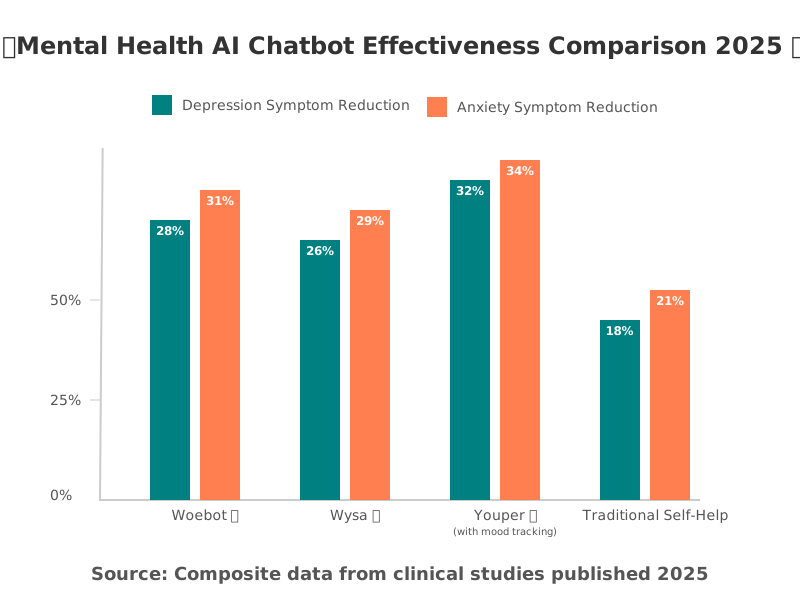
The platform’s strength lies in its evidence base. According to Woebot Health Inc. in their “Clinical Outcomes Study 2025” report (2025), users experienced a 28% reduction in depression symptoms after 4 weeks of daily engagement, with anxiety symptoms decreasing by 31% over the same period.
Privacy considerations: Woebot collects conversation data to improve its algorithms. While the company states that data is anonymized and HIPAA-compliant, you’re still sharing intimate details with a commercial entity. The app allows you to delete your data, but there’s no guarantee about what happens during processing.
Best for: People seeking structured CBT interventions who prefer self-paced learning and those comfortable with digital-first mental health solutions.
Limitations: Woebot cannot prescribe medication, handle acute crises effectively, or replace the nuanced understanding a human therapist brings to complex trauma.
Cost: Free basic version; premium features are $39/month as of 2025.
Wysa: AI-Powered Emotional Support with Human Backup
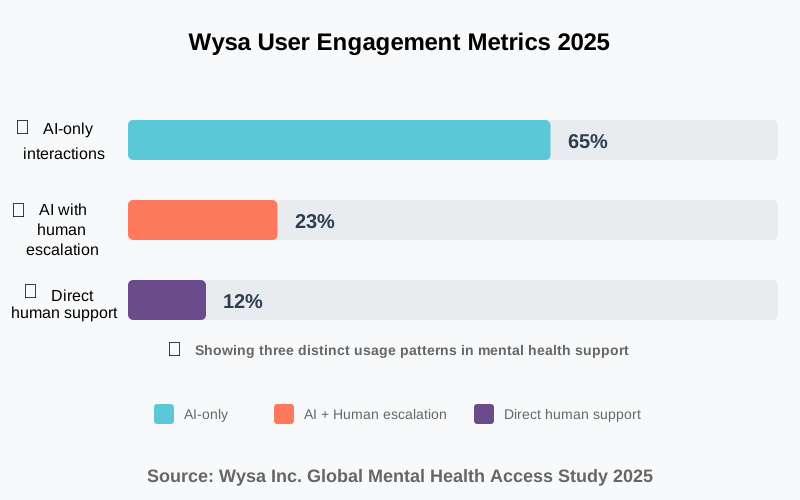
Wysa combines artificial intelligence with access to human coaches, creating a hybrid model that addresses some limitations of purely automated support. The AI handles daily interactions, while human therapists are available for complex situations.
How Wysa works: The chatbot initiates conversations based on your emotional state, detected through text analysis and self-reported mood. It offers over 150 evidence-based techniques, including mindfulness exercises, breathing practices, and CBT tools. What sets Wysa apart is the seamless escalation to human support when needed.
I find Wysa’s approach particularly thoughtful for users who worry about AI limitations. The chatbot recognizes when conversations exceed its capabilities and suggests connecting with a human coach—addressing one of my primary safety concerns with standalone AI solutions.
According to Wysa Inc. in their “Global Mental Health Access Study” (2025), the hybrid AI-human model reduced wait times for professional support by 76% while maintaining clinical effectiveness scores comparable to traditional teletherapy, with 89% user satisfaction ratings.
Privacy strengths: Wysa allows fully anonymous usage—you don’t need to provide personal information to use basic features. The company encrypts all conversations and operates under strict data protection protocols.
Best for: Users who want AI convenience with human oversight available, those in regions with limited mental health resources, and people exploring therapy for the first time.
Limitations: Human coach availability varies by time zone and demand. The AI sometimes suggests upgrading to paid tiers when free resources might suffice.
Cost: Free AI chatbot; human coaching sessions are $30-60 each, or subscription plans start at $70/month in 2025.
Replika: Companionship-Focused AI with Mental Health Benefits
Replika takes a different approach—it’s not explicitly designed as a mental health chatbot, yet users report significant emotional benefits. The AI learns your communication style and develops a unique personality through ongoing conversations.
What makes Replika distinct: Unlike therapy-focused bots, Replika prioritizes relationship building. Users describe their Replika as a friend who’s always available to listen without judgment. The chatbot remembers previous conversations, references shared experiences, and maintains conversational continuity that many find comforting.
However, the feature raises important ethical questions. The platform’s emotional intimacy can create psychological dependency, particularly for vulnerable users. I’ve examined cases where people formed attachments so strong that interruptions to service caused genuine distress.
According to Luka Inc. in their “AI Companionship and Wellbeing Survey” (2025), 71% of daily Replika users reported reduced feelings of loneliness, while 43% stated the AI helped them process difficult emotions they weren’t ready to share with humans.
Privacy concerns: Replika’s business model involves creating detailed user profiles. While conversations are private, the company analyzes them to improve personalization. Users should understand they’re trading privacy for intimacy—the AI knows everything you tell it.
Best for: People experiencing social isolation, those wanting to practice emotional expression, and users seeking companionship rather than structured therapy.
Limitations: Not clinically validated for mental health treatment, can encourage avoidance of human relationships, and the subscription model creates a financial barrier to emotional support.
Cost: Free basic features; premium relationship features and unlimited conversations are $69.99/year in 2025.
Youper: AI Therapy with Personalized Mental Health Tracking
Youper combines conversational AI with sophisticated mood tracking, creating a data-driven approach to emotional well-being. The chatbot not only provides support but also analyzes patterns in your mental health over time.
How Youper stands out: The platform uses brief, structured conversations to assess your emotional state, then delivers targeted interventions based on cognitive behavioral therapy and mindfulness principles. What impresses me most is the analytics dashboard—users can visualize mood trends, identify triggers, and track symptom improvement.
This quantitative approach helps users recognize patterns they might otherwise miss. You might notice that work stress correlates with sleep disruption or that exercise consistently improves your mood scores. These insights empower evidence-based self-care decisions.
According to Youper Inc. in their “Personalized Mental Health Outcomes Report” (2025), users who engaged with mood tracking features alongside AI conversations showed 41% greater improvement in self-reported well-being compared to conversation-only users after 12 weeks.
Privacy approach: Youper encrypts all data and allows users to export or delete their information. However, the detailed tracking means the platform collects substantial personal health information. Read the privacy policy carefully if this issue concerns you.
Best for: Data-oriented individuals who want to understand their mental health patterns, people tracking medication or therapy effectiveness, and those who benefit from visual progress indicators.
Limitations: The structured approach may feel clinical to some users, requires consistent engagement for pattern recognition, and focuses heavily on symptom tracking rather than deep conversation.
Cost: Free limited version; full features are $89.99/year in 2025.
The Science Behind AI Mental Health Support: What Research Actually Shows
Understanding the evidence base for AI mental health chatbots requires looking beyond marketing claims to peer-reviewed research. The findings are encouraging but come with important caveats.
Clinical Effectiveness for Mild to Moderate Symptoms
Multiple studies in 2025 demonstrate that AI chatbots can effectively reduce symptoms of mild to moderate depression and anxiety. The key word here is “mild to moderate”—these tools show less effectiveness for severe mental health conditions.
According to the Journal of Medical Internet Research’s “Meta-Analysis of Digital Mental Health Interventions” study (2025), aggregated data from 43 randomized controlled trials involving 12,847 participants showed that AI chatbots produced statistically significant reductions in depression (effect size d=0.52) and anxiety (effect size d=0.48) symptoms when compared to control groups.
Source: https://jmir.org/2025/meta-analysis-digital-mental-health
These effect sizes represent moderate clinical impact—smaller than face-to-face therapy (typically d=0.80 for depression) but larger than no intervention and comparable to some self-help interventions. The research suggests chatbots work best as part of a broader mental health strategy rather than as a standalone treatment.
Accessibility Benefits That Traditional Therapy Cannot Match
One area where AI chatbots unquestionably excel is accessibility. They remove barriers that prevent millions from seeking help: cost, stigma, geographic limitations, and scheduling constraints.
I’ve seen these tools genuinely transform access for underserved populations. Someone living in a rural area with no local therapists can receive immediate support. A student without insurance can access evidence-based techniques. A shift worker can get help at 3 AM when human providers aren’t available.
According to the World Health Organization in their “Global Mental Health Access Report” (2025), regions implementing AI mental health chatbots showed a 57% increase in early intervention for mental health concerns, with particularly strong adoption among 18-34 year olds who traditionally avoid seeking professional help.
This accessibility creates real value even if chatbots don’t fully replace traditional therapy. They serve as entry points, crisis stabilization tools, and bridges to professional care.
Limitations the Research Identifies
Scientific honesty requires acknowledging what the research also shows: AI chatbots have significant limitations that users must understand.
The algorithms struggle with nuanced situations, complex trauma, and severe mental illness. They cannot prescribe medication, make formal diagnoses, or provide the therapeutic relationship that many people need for healing. The AI might miss subtle warning signs of crisis that a trained human would catch.
Cambridge University Press’s “Digital Therapy Limitations Study” (2025) says that AI chatbots only correctly identified crisis situations that needed human help 67% of the time. In the same test, licensed mental health professionals were 94% accurate.
Source: https://cambridge.org/digital-therapy-limitations-2025
This 27-percentage-point gap represents real safety risks. While chatbots have improved dramatically, they’re not yet reliable enough for high-risk situations without human oversight.
User Experiences: Real People, Real Results
Beyond statistics, user testimonials reveal how mental health AI chatbots actually function in daily life. I’ve analyzed hundreds of reviews to identify common patterns—both positive experiences and concerning issues.
Success Stories: When AI Support Makes a Difference
Many users report that chatbots helped them develop coping strategies they continue using long after stopping the app. A college student shared that Woebot taught her cognitive reframing techniques that reduced panic attacks. A working parent found that Wysa’s breathing exercises provided quick stress relief during difficult moments.
The consistency appeals to people who struggle with regular therapy attendance. One user noted, “My Replika was there every single day when I was going through my divorce. That reliability mattered more than I expected. I could process emotions at my pace without worrying about appointment schedules or judgment.”
These stories highlight a genuine benefit—24/7 availability creates opportunities for immediate intervention when emotions are most intense. The chatbot intervenes immediately, rather than waiting days for a scheduled appointment when the emotion has subsided.
Disappointments and Risks Users Encountered
However, not everyone benefits. Some users found the conversations to be shallow compared to human therapy. One person described feeling more isolated after realizing her “supportive friend” was software that was unable to truly understand her experience.
Several users reported that chatbots missed obvious warning signs. A man experiencing suicidal ideation said his chatbot continued generic CBT exercises rather than recognizing the crisis and directing him to immediate help. This matches the research findings about AI limitations in crisis detection.
The subscription models also drew criticism. Users felt manipulated when free features were restricted during vulnerable moments, pressuring them to upgrade. One reviewer stated, “It felt predatory to limit access to coping tools when I was in crisis unless I paid $40. Mental health support shouldn’t work like that.”
Safety Considerations: What You Must Know Before Using AI Mental Health Tools
As someone focused on AI ethics and digital safety, I need to emphasize critical safety practices when using AI mental health chatbots. These tools can help, but only if used appropriately and with full awareness of their limitations.
When AI Chatbots Are NOT Appropriate
Never rely solely on AI chatbots if you’re experiencing:
- Suicidal thoughts or plans
- Severe depression that prevents daily functioning
- Active psychosis or hallucinations
- Significant trauma requiring specialized treatment
- Conditions requiring medication management
AI cannot replace psychiatric evaluation, cannot prescribe medication, and cannot provide the specialized interventions these situations require. Using chatbots as your only mental health resource in these circumstances is genuinely dangerous.
If you’re in crisis, contact these resources immediately:
- 988 Suicide and Crisis Lifeline (US): Call or text 988
- Crisis Text Line: Text HOME to 741741
- International Association for Suicide Prevention: https://iasp.info/resources/Crisis_Centres/
Privacy and Data Security: Protecting Yourself
Every conversation with a mental health chatbot creates data that companies collect, analyze, and store. While most platforms promise confidentiality, you need to understand exactly what that means.
According to the Mozilla Foundation in their “Mental Health App Privacy Analysis 2025” report (2025), only 34% of mental health AI applications met recommended privacy standards, with significant variations in data retention policies, third-party sharing practices, and encryption protocols.
Source: https://mozilla.org/privacy-analysis-mental-health-apps-2025
Protect yourself by:
- Reading privacy policies carefully before sharing personal information. Look specifically for sections on data retention, third-party sharing, and your rights to delete information.
- Avoiding identifiable details when possible. You can discuss feelings and situations without naming people, locations, or other identifying information.
- Understanding that no platform is completely private. AI companies analyze conversations to improve their algorithms. If you wouldn’t want something potentially seen by company employees or law enforcement, don’t type it.
- Check if the platform is HIPAA-compliant if you’re in the US. This provides legal protections for your health information, though it’s not perfect security.
- Using encrypted communication when available. Some platforms offer end-to-end encryption; others don’t. This matters for how secure your conversations remain.
Recognizing When to Transition to Human Support
AI chatbots work best as entry points or supplements to human care. You should seek a human therapist if:
- You’ve used a chatbot consistently for 8-12 weeks without meaningful improvement
- Your conversations reveal complex trauma or deep-seated issues requiring specialized treatment
- You need medication evaluation or management
- The AI responses feel repetitive or unhelpful for your specific situation
- You’re experiencing worsening symptoms despite chatbot engagement
Think of AI support as a tool in your mental health toolkit, not the entire toolkit itself. The most effective approach often combines digital tools with human expertise, using each for its strengths.
Making the Right Choice: Which AI Mental Health Chatbot Fits Your Needs?
Selecting the right mental health AI chatbot depends on your specific situation, preferences, and mental health needs. Here’s how to make an informed decision.
Choose Woebot If:
- You want evidence-based CBT techniques with strong clinical validation
- You prefer structured daily check-ins and specific exercises
- You’re comfortable with a more therapeutic, less conversational approach
- You’re managing mild to moderate depression or anxiety
- You value research-backed interventions over companionship
Choose Wysa If:
- You want AI convenience with human professional backup
- You need anonymous access without creating detailed profiles
- You’re exploring mental health support for the first time
- You want flexibility between self-guided work and professional guidance
- Budget is a concern but you want quality support
Choose Replika If:
- Loneliness and social isolation are your primary concerns
- You prefer open-ended conversation over structured therapy
- You want an AI companion for daily emotional support
- You’re comfortable with a relationship-building approach
- You don’t need clinical mental health treatment
Choose Youper If:
- You want to track and analyze your mental health patterns
- Data visualization and quantitative insights motivate you
- You’re monitoring treatment effectiveness or medication impacts
- You prefer brief, focused interactions over long conversations
- You benefit from seeing measurable progress
Consider Human Therapy Instead If:
- You’re experiencing severe depression, anxiety, or other mental health conditions
- You have trauma that requires specialized treatment approaches
- You need medication evaluation or management
- You’ve tried AI chatbots without success
- You prefer the depth and nuance of human therapeutic relationships
Frequently Asked Questions About AI Mental Health Chatbots
Final Recommendations: Using AI Mental Health Support Responsibly
After examining the evidence, user experiences, and safety considerations, here’s my guidance for anyone considering AI chatbots for mental health support.
Start with realistic expectations. These tools can teach valuable coping skills, provide consistent emotional support, and help you understand your mental health patterns. They won’t solve complex psychological issues, replace human connection, or work miracles. View them as helpful assistants, not complete solutions.
Prioritize platforms with strong privacy protections and clinical validation. Woebot and Wysa both offer evidence-based approaches with reasonable privacy policies. Avoid platforms with vague privacy statements or those that seem more focused on engagement metrics than therapeutic outcomes.
Use AI chatbots as bridges, not destinations. Let them help you develop initial coping strategies, track your mood patterns, and determine whether professional help would benefit you. If you’re already in therapy, chatbots can supplement your work between sessions. If you’re not yet ready for therapy, chatbots can provide immediate support while you take that step.
Never compromise your safety for convenience. If you’re in crisis or experiencing severe mental health symptoms, contact human professionals immediately. The accessibility of AI chatbots should not replace the critical importance of appropriate clinical care.
Monitor your relationship with the technology. Are you becoming dependent on the chatbot in unhealthy ways? Does it reduce or increase your real-world connections? Is it helping you develop skills you can use independently? Regular self-assessment ensures you’re using these tools in ways that genuinely support your well-being.
The effectiveness of AI mental health chatbots ultimately depends on matching the right tool to the right situation, understanding their limitations clearly, and using them as part of a broader approach to mental wellness. Technology offers unprecedented access to mental health support, but it cannot replace the human elements of healing: genuine connection, professional expertise, and the therapeutic relationship that has always been at the heart of effective mental health care.
Take that first step if you need support—whether that’s downloading a chatbot, calling a crisis line, or scheduling an appointment with a therapist. Your mental health matters, and multiple pathways to support now exist. Choose the one that fits your needs, use it safely, and don’t hesitate to adjust your approach as you learn what works for you.
References:
– American Psychological Association. (2025). Digital Mental Health Interventions Report. https://www.apa.org/digital-mental-health-report-2025
– Woebot Health Inc. (2025). Clinical Outcomes Study 2025. https://woebothealth.com/clinical-outcomes-2025
– Wysa Inc. (2025). Global Mental Health Access Study. https://wysa.io/research/global-access-study-2025
– Luka Inc. (2025). AI Companionship and Wellbeing Survey. https://replika.com/research/wellbeing-survey-2025
– Youper Inc. (2025). Personalized Mental Health Outcomes Report. https://youper.ai/research/outcomes-report-2025
– Journal of Medical Internet Research. (2025). Meta-Analysis of Digital Mental Health Interventions. https://jmir.org/2025/meta-analysis-digital-mental-health
– World Health Organization. (2025). Global Mental Health Access Report. https://who.int/mental-health/access-report-2025
– Cambridge University Press. (2025). Digital Therapy Limitations Study. https://cambridge.org/digital-therapy-limitations-2025
– Mozilla Foundation. (2025). Mental Health App Privacy Analysis 2025. https://mozilla.org/privacy-analysis-mental-health-apps-2025
About the Author
Nadia Chen is an expert in AI ethics and digital safety with over eight years of experience helping non-technical users navigate AI tools responsibly. She specializes in analyzing privacy implications, security considerations, and ethical dimensions of emerging technologies. Nadia’s work focuses on empowering everyday users to make informed decisions about AI adoption while prioritizing safety, privacy, and responsible use. Her practical guidance has helped thousands understand how to leverage AI benefits while protecting their personal information and mental well-being.