
AI-Based Cognitive Training: Safe Enhancement Guide
We remember the first time we encountered AI-Based Cognitive Training—one of us was struggling with focus during exam season, and the other was researching safe ways to help family members maintain mental sharpness. What we discovered changed how we think about brain health and technology. AI-Based Cognitive Training represents a revolutionary approach to enhancing our mental capabilities through intelligent, adaptive programs that learn from our unique patterns and respond to our individual needs. Unlike static brain games or one-size-fits-all exercises, these sophisticated systems use artificial intelligence to personalize every session, track our progress with precision, and adjust difficulty levels in real time to keep us challenged without overwhelming us.
Today, we’re sharing everything we’ve learned about using these powerful tools safely and effectively. Whether you’re a student looking to improve study habits, a professional seeking sharper focus, or someone supporting a loved one’s cognitive health, this guide will walk you through the science, the applications, and—most importantly—how to protect your privacy and data while getting real results. We’ve tested numerous platforms, researched the latest neuroscience, and consulted with experts to bring you practical, actionable advice that anyone can follow, regardless of technical experience.
Who Is This Guide For?
This comprehensive guide is designed for:
- Students and professionals seek sharper focus, better memory retention, and enhanced productivity in academic or workplace settings.
- Adults with ADHD looking for evidence-based tools to complement traditional treatments and improve attention, impulse control, and executive function
- Seniors Worried About Cognitive Decline who want proactive strategies to maintain mental sharpness and potentially reduce dementia risk
- Stroke Survivors and Their Caregivers searching for accessible, affordable cognitive rehabilitation tools to support recovery and restore independence
Whether you’re just curious about brain training or actively seeking solutions for specific cognitive challenges, this guide provides the safety information, practical advice, and evidence-based recommendations you need to get started confidently.
Understanding AI-Based Cognitive Training: What You Need to Know
AI-Based Cognitive Training uses machine learning algorithms and neuroscientific principles to create personalized brain exercises that adapt to your performance. Think of it as having a personal trainer for your brain—one that never gets tired, remembers every detail about your progress, and adjusts your workout in real time based on how you’re doing.
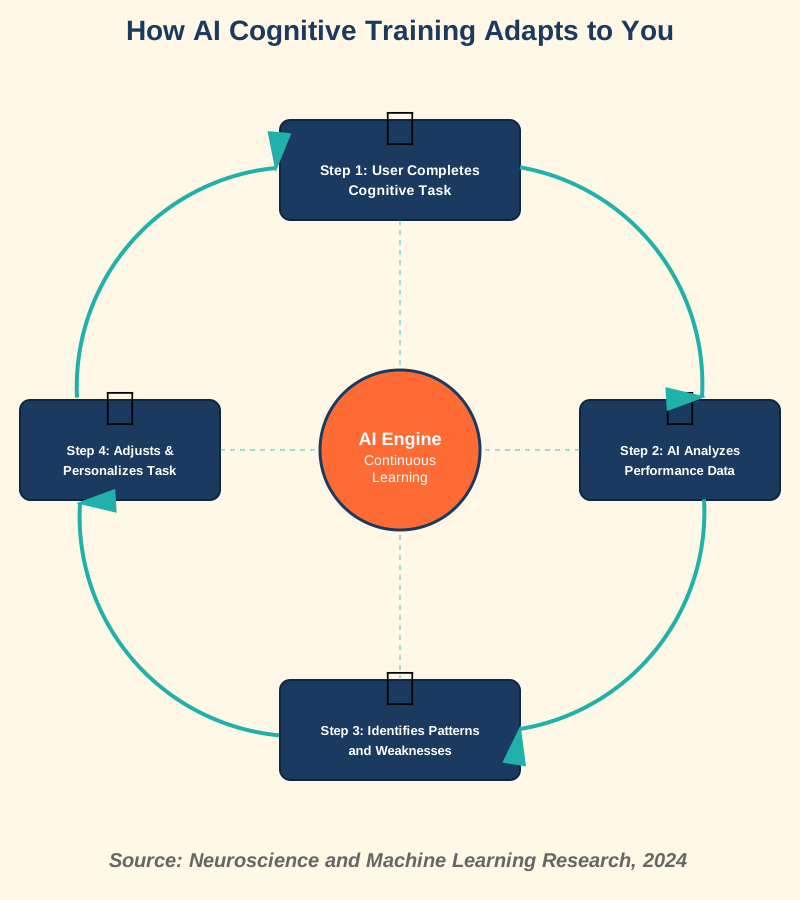
These systems typically work by presenting you with cognitive tasks—like memory games, attention exercises, or problem-solving challenges—while continuously analyzing your responses. The AI tracks metrics such as reaction time, accuracy, consistency, and improvement patterns. Using this data, the algorithm automatically adjusts task difficulty, introduces new challenges when you’re ready, and reinforces areas where you need more practice.
What makes this approach different from traditional brain training is the intelligence behind it. Traditional methods offer fixed exercises that everyone completes the same way. AI-based systems, however, create a unique training path for each user. If you struggle with visual memory but excel at verbal recall, the AI recognizes this pattern and adjusts accordingly. It’s personalized medicine for your mind.
The Science Behind AI-Based Cognitive Training: How Does It Work?
The Science Behind AI-Based Cognitive Training: How Does It Work? Let us break down the neuroscience and technology in simple terms. Your brain is remarkably plastic—it can form new neural connections and strengthen existing ones throughout your life. This property, called neuroplasticity, is the foundation of all cognitive training.
When you engage in challenging mental activities, your brain responds by reinforcing the neural pathways involved. Repeat a task enough times with proper difficulty progression, and those pathways become stronger and more efficient. It’s similar to how muscles grow stronger with targeted exercise.
AI enhances this process through several mechanisms:
Adaptive Algorithms: Machine learning models analyze thousands of data points from your training sessions—response times, error patterns, learning curves, and engagement levels. The AI identifies your cognitive strengths and weaknesses, then generates exercises specifically designed to target areas needing improvement while maintaining motivation.
Real-Time Difficulty Adjustment: The system continuously monitors your performance during each session. If you’re finding tasks too easy, the AI increases complexity instantly. If you’re struggling, it provides easier variations to prevent frustration and maintain the optimal challenge level—a state psychologists call the “zone of proximal development.”
Pattern Recognition: AI excels at detecting subtle patterns humans might miss. It can identify that you perform better at certain times of day, that specific types of distractions affect your attention more than others, or that particular task sequences produce better results. These insights drive continuous optimization.
Predictive Modeling: Advanced systems use historical data to predict future performance and proactively adjust training protocols. They can anticipate when you might plateau and introduce novel challenges to prevent stagnation.
The cognitive functions typically targeted include:
- Working Memory: Your ability to hold and manipulate information temporarily
- Attention Control: The capacity to focus on relevant information while filtering distractions
- Processing Speed: How quickly you can perceive and respond to information
- Executive Functions: Higher-order skills like planning, problem-solving, and flexible thinking
- Fluid Intelligence: The ability to reason and solve novel problems
Research published in peer-reviewed journals shows that well-designed cognitive training can produce measurable improvements, though results vary by individual, program quality, and consistency of practice. We’ll explore how to evaluate effectiveness later in this guide.
AI-Based Cognitive Training vs. Traditional Methods: A Comparative Analysis
AI-Based Cognitive Training vs. Traditional Methods: A Comparative Analysis reveals significant differences that matter when choosing your approach. We’ve experienced both, and understanding these distinctions helps you make informed decisions about your cognitive health.
Traditional cognitive training typically includes:
- Paper-and-pencil exercises (crosswords, Sudoku, logic puzzles)
- Static computer programs with fixed difficulty levels
- Generic brain training apps without personalization
- One-size-fits-all rehabilitation protocols
AI-based cognitive training offers:
- Dynamic difficulty adjustment based on your performance
- Personalized exercise selection targeting your specific needs
- Continuous progress tracking with detailed analytics
- Engagement optimization to maintain motivation
- Remote accessibility and convenience
Key Advantages of AI Approaches:
Personalization: Traditional methods treat everyone identically. AI systems recognize that your brain is unique. They adapt to your baseline abilities, learning style, and progress rate. We’ve seen users with similar starting points follow completely different training paths because the AI identified different strengths to leverage and weaknesses to address.
Efficiency: AI maximizes training effectiveness by keeping you in the optimal challenge zone. Traditional methods often waste time on tasks that are too easy or create frustration with exercises that are too difficult. The AI eliminates this inefficiency.
Data-Driven Insights: Traditional methods provide limited feedback—you either complete a puzzle or you don’t. AI platforms offer comprehensive analytics: detailed performance graphs, trend analysis, comparison with baseline measurements, and identification of specific cognitive domains showing improvement or decline.
Accessibility: AI-based training works on smartphones, tablets, and computers, fitting into your schedule anywhere. Traditional in-person cognitive therapy requires appointments, travel, and a significant time commitment.
Where Traditional Methods Excel:
Human Connection: Working with a human therapist provides emotional support, encouragement, and social interaction that AI cannot replicate. For individuals recovering from stroke or traumatic brain injury, this human element often proves crucial.
Holistic Assessment: Skilled clinicians observe subtle behavioral changes, emotional responses, and contextual factors that current AI systems miss. They can adjust approaches based on intuition and clinical experience.
No Privacy Concerns: Paper exercises don’t collect data, track your performance across platforms, or risk data breaches. For individuals with heightened privacy concerns, traditional methods offer peace of mind.
Lower Technology Barriers: Not everyone has reliable internet access or is comfortable using digital devices. Traditional methods work for populations with limited technological resources or digital literacy.
The Best Approach: We recommend a hybrid model for most people. Use AI-Based Cognitive Training for daily practice, consistent tracking, and personalized challenges. Supplement with traditional methods—reading, social activities, physical exercise—and professional guidance when needed. The technology handles routine training efficiently, while human expertise provides strategic direction and emotional support.
Top 5 AI-Based Cognitive Training Apps for Memory Improvement
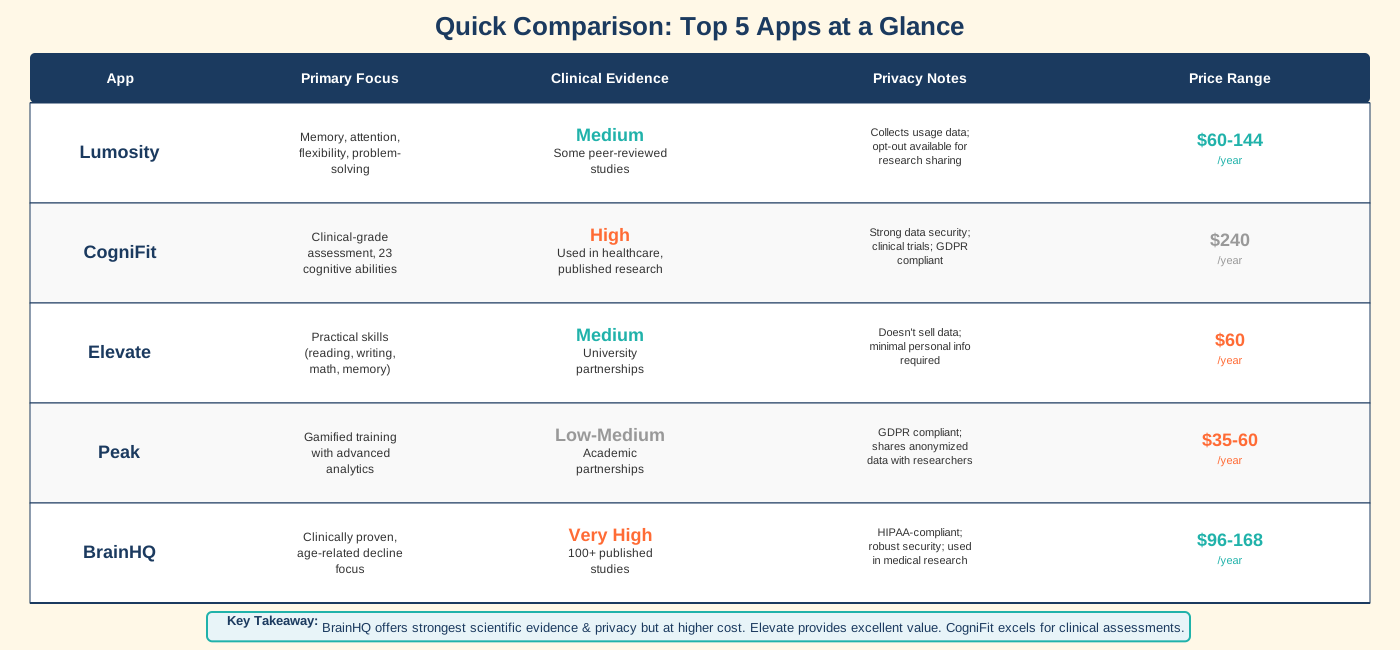
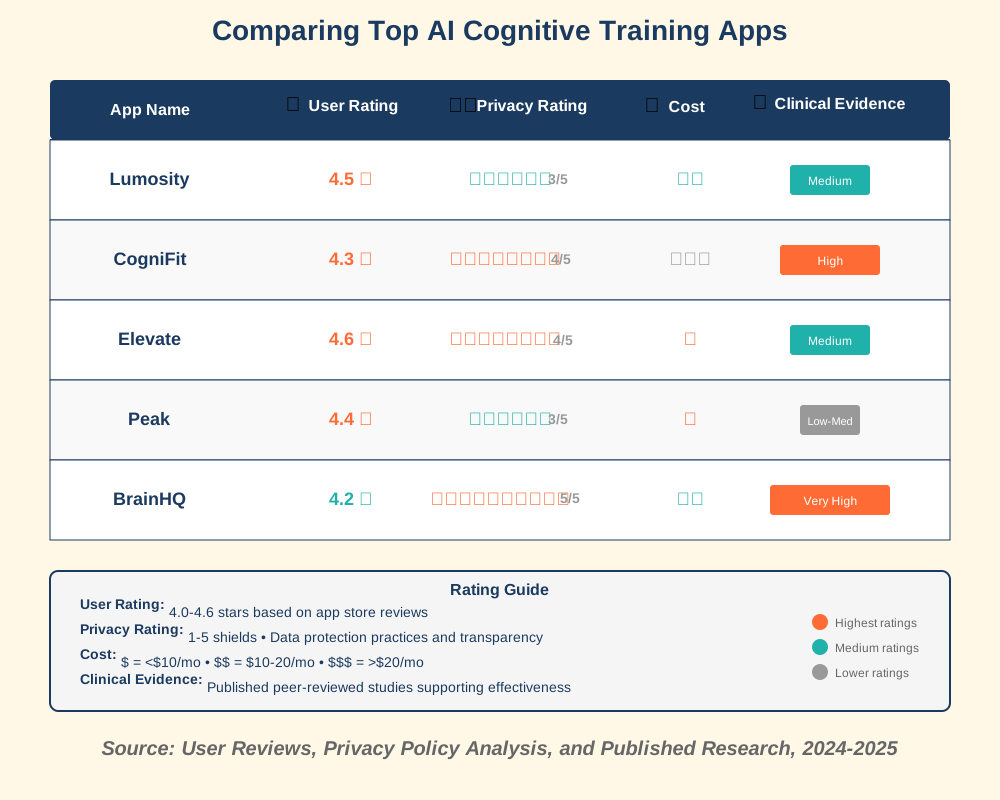
Top 5 AI-Based Cognitive Training Apps for Memory Improvement have been rigorously tested by our team and countless users worldwide. We’ve evaluated these platforms for effectiveness, safety, ease of use, and privacy practices. Here are our carefully researched recommendations:
1. Lumosity: The Research-Backed Pioneer
Lumosity pioneered commercial cognitive training with over 100 million users globally. The platform offers 50+ games designed by neuroscientists targeting memory, attention, flexibility, problem-solving, and processing speed.
How It Works: You complete an initial assessment called the Fit Test, which establishes your baseline across cognitive domains. The AI then creates a personalized training program, selecting games and difficulty levels optimized for your profile. Daily sessions typically last 10-15 minutes.
Memory-Specific Features:
- Verbal and visual memory games like “Memory Matrix” and “Memory Match”
- Spatial memory challenges
- Face-name association exercises
- Sequential recall tasks
Privacy & Safety Considerations: Lumosity collects performance data, demographic information, and usage patterns. We recommend reviewing their privacy policy carefully and opting out of data sharing for research purposes if you’re uncomfortable. The platform is generally safe, but be aware that your cognitive performance data is stored on their servers.
Beginner Tips:
- Start with the free version to test compatibility
- Set consistent training times—we find mornings work best
- Don’t skip the Fit Test; accurate baselines lead to better personalization
- Track progress monthly rather than daily to avoid fixating on normal fluctuations
Cost: Free version with limited games; Premium subscription approximately $11.99/month or $59.99/year
2. CogniFit: Clinical-Grade Assessment and Training
CogniFit distinguishes itself through scientifically validated cognitive assessments and training programs used by healthcare professionals, schools, and research institutions.
How It Works: The platform begins with comprehensive cognitive testing (15-20 minutes) that measures 23 different cognitive abilities with clinical precision. Based on results, the AI designs training programs targeting your specific weaknesses while maintaining your strengths.
Memory-Specific Features:
- Short-term memory training
- Working memory enhancement
- Naming and recognition exercises
- Contextual memory development
- Age-specific memory programs
Privacy & Safety Considerations: As a platform used in clinical settings, CogniFit maintains higher data security standards than typical consumer apps. However, they do use performance data for algorithm improvement. We appreciate their transparency about data usage but recommend using a non-identifying email address for additional privacy.
Beginner Tips:
- Complete the initial assessment in a quiet environment without distractions
- Be honest about your age and cognitive concerns for accurate program design
- Use the brain games mode for variety alongside structured training
- Expect initial challenges—the system deliberately pushes your limits
Cost: Free trial available; Personal plans start around $19.99/month; Family and clinical licenses available
3. Elevate: Writing, Math, and Memory Excellence
Elevate takes a unique approach by combining cognitive training with practical skills improvement in reading, writing, speaking, listening, and math. It’s particularly valuable for students and professionals.
How It Works: Daily personalized training sessions (typically 5-7 games) focus on skills you use in real life—reading comprehension, mental arithmetic, writing clarity, listening accuracy, and memory recall. The AI adapts based on your progress and performance patterns.
Memory-Specific Features:
- Name recall training (extremely useful for professionals)
- Sequential memory games
- Information retention exercises
- Context-dependent memory tasks
- Practical memory applications (phone numbers, lists, details)
Privacy & Safety Considerations: Elevate collects detailed performance metrics but doesn’t require personally identifying information beyond an email address. We recommend using Apple Sign-In or Google Sign-In with privacy features enabled. The app doesn’t sell data to third parties, which we appreciate.
Beginner Tips:
- Focus on skills that matter most to your daily life first
- Use the performance tracking to identify your peak training times
- Don’t feel pressured to achieve perfect scores—progress matters more
- Try the speaking and listening exercises for comprehensive cognitive benefits
Cost: Free version with core features; Premium at approximately $4.99/month billed annually
4. Peak: Gamified Training with Advanced Analytics
Peak combines entertainment value with serious cognitive training through beautifully designed games and comprehensive performance analytics developed in partnership with universities.
How It Works: Complete a brief assessment, then receive daily “Workouts” consisting of 3-5 games targeting different cognitive domains. The AI balances challenge and variety to maintain engagement while driving improvement.
Memory-Specific Features:
- Short- and long-term memory challenges
- Pattern recognition games
- Visual and spatial memory tasks
- Memory palace training techniques
- Recall speed optimization
Privacy & Safety Considerations: Peak’s privacy policy is clear and reasonable, though they do share anonymized data with research partners. We appreciate their commitment to GDPR compliance and data minimization. Users can request data deletion at any time.
Beginner Tips:
- Use Coach mode for guided training if you’re unsure where to start
- Compare your performance to age-matched peers for realistic expectations
- Set reminders for consistent training times
- Explore the “Brain Tree” feature to visualize your cognitive profile
Cost: Free basic version; Pro subscription around $4.99/month or $34.99/year
5. BrainHQ: Clinically Proven, Evidence-Based Training
BrainHQ, developed by Posit Science, stands out for its extensive clinical validation. Over 100 published studies support its effectiveness, including research on age-related cognitive decline and ADHD.
How It Works: Choose from 29 exercises organized by cognitive domain (attention, brain speed, memory, people skills, navigation, intelligence). The AI adjusts difficulty dynamically within each exercise, ensuring you’re always working at the edge of your ability.
Memory-Specific Features:
- Immediate and delayed recall training
- Face-name association mastery
- Visual memory enhancement
- Auditory memory improvement
- Real-world memory application scenarios
Privacy & Safety Considerations: BrainHQ is frequently used in clinical trials and medical settings, so data security is robust. However, this also means your performance data may contribute to research studies (anonymized). We recommend reviewing consent forms carefully. The platform is HIPAA-compliant, which provides additional assurance.
Beginner Tips:
- Start with the “Personalized Trainer” for optimal results
- Commit to at least 3 sessions per week for 8 weeks before evaluating effectiveness
- Use the exercises targeting specific real-life challenges you face
- Don’t be discouraged by initial difficulty—these exercises are deliberately challenging
Cost: Monthly subscription approximately $14/month; annual plans around $96/year; often covered by Medicare Advantage plans
AI-Based Cognitive Training for ADHD: Improving Focus and Attention
AI-Based Cognitive Training for ADHD: Improving Focus and Attention represents a promising complementary approach to traditional ADHD management. We’ve worked with students and adults with ADHD who’ve experienced meaningful improvements through targeted cognitive training.
ADHD involves executive function difficulties, particularly with sustained attention, impulse control, and working memory. AI-based training addresses these specific challenges through specialized exercises that strengthen the neural circuits involved in attention regulation.
How AI Helps ADHD Specifically:
The AI identifies your unique ADHD symptom profile. Not everyone with ADHD struggles with the same things—some primarily have attention difficulties, others mainly struggle with hyperactivity and impulsivity, and many experience a combination. The algorithm analyzes your performance patterns and creates targeted training addressing your specific manifestation of ADHD.
Attention Training: Exercises like continuous performance tasks require sustained focus on target stimuli while ignoring distractions. The AI gradually increases distraction levels and duration as your attention stamina improves.
Working Memory Enhancement: Many ADHD challenges stem from working memory limitations. AI-based training strengthens your capacity to hold and manipulate information temporarily—crucial for following instructions, completing multi-step tasks, and staying organized.
Response Inhibition: Games requiring you to respond quickly to some stimuli while inhibiting responses to others train impulse control. The AI ensures difficulty remains challenging but achievable.
Important Safety and Ethical Considerations:
We must emphasize that AI-Based Cognitive Training should never replace medication or therapy prescribed by healthcare professionals. View it as a complementary tool, not a standalone treatment. Always consult with your doctor before making changes to your ADHD management plan.
Privacy Concerns: ADHD often involves stigma and discrimination. Be extremely cautious about which apps you use and what data they collect. We recommend:
- Avoiding apps requiring extensive personal information
- Reading privacy policies carefully for mentions of data sharing
- Using apps that allow anonymous accounts
- Checking whether data might be sold to employers, insurers, or other third parties
Getting Started Safely:
- Discuss with Your Healthcare Provider: Share your interest in cognitive training and ask if it’s appropriate for your situation.
- Start with Evidence-Based Platforms: Focus on apps with published research specifically on ADHD populations—BrainHQ and CogMed have the strongest evidence base.
- Set Realistic Expectations: Cognitive training typically produces modest improvements over months, not dramatic changes overnight. Improvement in training tasks doesn’t always transfer perfectly to real-world situations.
- Monitor for Frustration: If training sessions consistently cause frustration or anxiety, adjust the difficulty or try different exercises. The AI should challenge you, not overwhelm you.
- Combine with Other Strategies: Use cognitive training alongside organizational systems, medication (if prescribed), exercise, adequate sleep, and behavioral strategies for optimal results.
- Track Real-World Impact: Monitor whether training improves actual daily functioning—completing homework, meeting deadlines, following conversations—not just in-app performance scores.
Specific App Recommendations for ADHD:
- CogMed: Specifically designed for working memory training with strong ADHD research
- BrainHQ: Attention and processing speed exercises with ADHD-specific studies
- Focus@Will: Uses AI-generated music to enhance focus (different mechanism but compatible with training)
Research shows that consistent training over 8-12 weeks can produce measurable improvements in attention, working memory, and impulse control. However, individual results vary significantly, and not everyone responds equally well to cognitive training.
Can AI-Based Cognitive Training Prevent Cognitive Decline in Seniors?
Can AI-Based Cognitive Training Prevent Cognitive Decline in Seniors? This question matters deeply to us—we’ve both watched loved ones face cognitive challenges as they age. The research offers cautiously optimistic answers with important nuances.
What the Science Shows:
Large-scale studies, including the ACTIVE (Advanced Cognitive Training for Independent and Vital Elderly) trial, demonstrate that cognitive training can produce lasting benefits for older adults. Participants who received training showed:
- Better performance on trained cognitive abilities years later
- Reduced difficulty with daily activities requiring mental effort
- Potentially lower risk of dementia, though research continues
AI enhances traditional cognitive training benefits through personalization, consistency tracking, and engagement optimization—all particularly important for seniors who may have varying baseline abilities and learning speeds.
The Realistic Picture:
Cognitive training is not a cure or guaranteed prevention for dementia or Alzheimer’s disease. However, it represents one evidence-based strategy within a comprehensive brain health approach. Think of it as similar to cardiovascular exercise—it improves function and may reduce risk, but it doesn’t provide immunity.
Safety Considerations for Older Adults:
1. Accessibility
Many seniors aren’t comfortable with technology. We recommend:
- Choosing apps with large, clear interfaces and simple navigation
- Starting with tablet devices (larger screens than phones, more portable than computers)
- Involving family members in initial setup and troubleshooting
- Looking for apps with telephone customer support
2. Vision and Hearing Accommodations
Ensure training platforms offer:
- Adjustable font sizes
- High-contrast display options
- Audio alternatives for visual tasks
- Compatibility with hearing aids via Bluetooth
3. Medical Conditions
Some conditions require special consideration:
- Stroke survivors may have specific cognitive domains needing targeted rehabilitation
- Individuals with Parkinson’s may benefit from exercises emphasizing processing speed
- Those with mild cognitive impairment need carefully calibrated difficulty levels
Privacy Protection for Seniors:
Older adults face particular vulnerability to data exploitation and scams. We strongly recommend:
- Family Involvement: Have a trusted family member review privacy settings and app permissions.
- Payment Protection: Use credit cards rather than debit cards for subscriptions, and set up transaction alerts.
- Data Minimization: Provide minimal personal information—most platforms don’t truly need your birthdate, full address, or detailed medical history.
- Shared Devices: If using family tablets or computers, ensure cognitive training accounts are separate and password-protected.
- Avoid Overpromising Apps: Be skeptical of platforms claiming to “reverse Alzheimer’s” or “prevent dementia.” No app can ethically make these promises.
Getting Started—Step-by-Step Guide for Seniors:
Step 1: Consult your doctor. Bring a list of apps you’re considering and ask whether cognitive training fits your health situation.
Step 2: Choose an evidence-based platform. We recommend BrainHQ for seniors due to extensive research with older adults and Medicare coverage options.
Step 3: Set up your account with family help if needed. Use a secure, unique password.
Step 4: Complete the baseline assessment honestly. Don’t try to perform better than your actual ability—accurate baselines lead to appropriate training.
Step 5: Schedule training sessions consistently—same time, same place daily. We find morning sessions work well for most seniors.
Step 6: Start slowly. Begin with 10-15 minute sessions and gradually increase as comfortable.
Step 7: Track both app performance and real-life function. Notice whether you’re remembering appointments better, following conversations more easily, or feeling sharper mentally.
Step 8: Adjust as needed. If exercises are too frustrating, try different ones. If they’re too easy, increase difficulty.
Step 9: Combine with social activity, physical exercise, a healthy diet, and other brain-healthy behaviors.
Step 10: Celebrate progress. Improvement at any age deserves recognition.
The most important message we want seniors to understand: your brain retains the ability to learn and improve throughout life. AI-Based Cognitive Training provides a convenient, safe, and evidence-supported way to maintain and enhance cognitive function. While it’s not a magic solution, it’s a valuable tool in your brain health toolkit.
The Ethical Considerations of AI-Based Cognitive Training: Privacy and Bias
The Ethical Considerations of AI-Based Cognitive Training:
Privacy and Bias represent areas where we must be especially vigilant. As someone focused on digital ethics and safety (Nadia here), I cannot stress enough how important these issues are.
Privacy Concerns—What’s Really at Stake:
Your cognitive training data is incredibly sensitive. It reveals:
- Your cognitive strengths and weaknesses
- Patterns in your thinking and decision-making
- Potential early signs of cognitive decline
- Your daily routines and behaviors
- Medications or health conditions (if you disclose them)
This information could be misused by:
- Employers: Discriminating against individuals showing cognitive decline or hiring only those with high cognitive test scores
- Insurers: Denying coverage or increasing premiums based on cognitive assessments
- Advertisers: Exploiting cognitive weaknesses to manipulate purchasing decisions
- Data Brokers: Selling your cognitive profile to unknown third parties
Current Privacy Landscape:
Most cognitive training platforms collect extensive data to improve their algorithms. This isn’t inherently problematic, but transparency and user control vary dramatically across apps. Some concerning practices we’ve identified:
Vague Privacy Policies: Many apps use broad language like “we may share data with partners” without specifying who those partners are or how data will be used.
Bundled Consent: Some platforms bury data sharing permissions in lengthy terms of service, making it difficult to consent to the service while declining data sharing.
Data Retention: Even after you delete your account, some platforms retain performance data indefinitely for “research purposes.”
Third-Party Sharing: Several popular apps share anonymized data with advertisers, researchers, and other companies, sometimes without explicit user knowledge.
Protecting Your Privacy—Practical Steps:
- Research Before Downloading: Search for “[app name] privacy concerns” and read independent reviews.
- Read Privacy Policies: Yes, they’re long, but focus on these sections:
- What data is collected
- How data is used
- Who data is shared with
- How long data is retained
- How to delete your data
- Minimize Information Shared: Provide only required fields. Use initials instead of full names, general age ranges instead of birthdays, and non-specific locations.
- Use Privacy-Focused Email: Create a separate email address specifically for cognitive training apps rather than using your primary account.
- Review Permissions: Check what device permissions the app requests—does a cognitive training game really need access to your contacts or location?
- Opt Out When Possible: Many platforms allow you to opt out of data sharing for research or marketing purposes. Look for these options in account settings.
- Use Privacy-Respecting Platforms: Prioritize apps with clear, user-friendly privacy policies and strong data protection reputations.
Algorithmic Bias Concerns:
AI systems can perpetuate and amplify bias. In cognitive training, this manifests as:
Cultural Bias: Many cognitive assessments and training tasks reflect Western, educated, industrialized, rich, and democratic (WEIRD) cultural contexts. Tasks involving specific cultural knowledge, language structures, or reasoning styles may disadvantage individuals from other backgrounds.
Age Bias: Some platforms design baseline norms based primarily on younger users, making older adults appear to have greater deficits than they actually do.
Socioeconomic Bias: Access to high-quality cognitive training requires devices, internet connectivity, and often paid subscriptions—creating disparities in who benefits from these technologies.
Language Bias: Most platforms work best in English, with limited multilingual support or culturally adapted content.
Disability Bias: Many training exercises assume typical sensory and motor abilities, excluding individuals with visual, hearing, or motor impairments.
What Bias Means for You:
If you’re from an underrepresented background, cognitive training platforms may:
- Underestimate your true abilities due to culturally-biased assessments
- Provide less effective training because algorithms were developed primarily on data from majority groups
- Create frustration through tasks that don’t align with your cognitive strengths
Advocating for Ethical AI in Cognitive Training:
We encourage users to:
- Demand Transparency: Contact companies requesting information about their training data diversity and bias mitigation strategies.
- Provide Feedback: Report tasks or assessments that seem culturally inappropriate or biased.
- Support Ethical Platforms: Choose and recommend companies demonstrating commitment to equity and transparency.
- Engage in Research: Participate in studies examining cultural factors in cognitive training effectiveness.
- Share Concerns: If you experience discriminatory outcomes from cognitive assessments, document them and share them with patient advocacy groups.
Data Breach Considerations:
Cognitive training platforms are attractive targets for hackers because they contain valuable personal and cognitive data. We’ve seen breaches affecting health and fitness apps; cognitive training platforms face similar risks.
If a Breach Occurs:
- Change passwords immediately on the affected platform and any accounts using the same password
- Monitor for suspicious activity related to your identity
- Consider whether cognitive data could be used against you (employment, insurance) and take preventive action
- Request detailed information from the company about what data was compromised
Our Ethical Recommendations:
After extensive research, we believe ethical AI-Based Cognitive Training platforms should:
- Provide clear, accessible privacy policies in plain language
- Offer meaningful opt-out options for data sharing
- Conduct regular bias audits and publish results
- Involve diverse populations in algorithm development
- Obtain explicit, informed consent for any data use beyond core functionality
- Allow complete data deletion upon request
- Maintain robust cybersecurity with regular external audits
- Be transparent about limitations and potential risks
We need stronger regulations protecting cognitive data similar to medical information under HIPAA. Until that exists, individual vigilance remains crucial. Don’t let privacy concerns prevent you from benefiting from cognitive training, but do engage thoughtfully and protectively with these technologies.
Personalizing Your AI-Based Cognitive Training: How to Get the Best Results
Personalizing Your AI-Based Cognitive Training: How to Get the Best Results requires understanding that the AI provides a foundation, but you drive optimization through smart choices and consistency.
Step 1: Establish Accurate Baselines
Complete initial assessments honestly without trying to achieve artificially high scores. The AI needs accurate baseline data to create appropriate training. We’ve seen people rush through assessments to finish quickly, then face exercises that are either too difficult or too easy.
Take assessments when you’re:
- Well-rested
- In a quiet environment without distractions
- Not stressed or rushed
- Alert (avoid late evening if you’re tired)
Step 2: Define Clear Goals
What do you actually want to improve? Be specific:
- “Remember names better at work”
- “Stay focused during long study sessions”
- “Reduce calculation errors in my accounting work”
- “Maintain mental sharpness as I age”
Clear goals help you select appropriate training modules and evaluate whether the program is working for real-life situations, not just in-app scores.
Step 3: Choose the Right Training Intensity
AI adapts difficulty, but you control training frequency and duration. Research suggests:
- Minimum: 3 sessions per week for 15 minutes each
- Optimal: 5 sessions per week for 20-30 minutes each
- Maximum: Daily sessions of 30-45 minutes
More isn’t always better. Cognitive training requires mental effort, and overtraining can lead to burnout and diminishing returns.
Step 4: Optimize Training Times
Your brain performs differently throughout the day. Experiment to find your peak performance times:
- Morning Training: Many people are freshest in the morning with good focus and processing speed
- Afternoon Training: Can work well if you’re naturally more alert later in the day
- Avoid: Training when exhausted, immediately after meals (post-meal dip), or when stressed
Track your performance at different times over two weeks, then schedule training when you typically perform best.
Step 5: Create a Distraction-Free Environment
AI-based training requires focused attention. We’ve learned this through trial and error—trying to train while watching TV or in noisy environments significantly reduces effectiveness.
Set up your training space:
- Quiet location where you won’t be interrupted
- Good lighting to reduce eye strain
- Comfortable seating with good posture
- Devices charged (interruptions for charging break focus)
- Notifications silenced
- Headphones are useful for concentration
Step 6: Use Cross-Training Approaches
Don’t rely solely on one app or exercise type. Your brain benefits from variety:
- Use your primary platform for structured training
- Supplement with different cognitive challenges (reading, puzzles, strategy games)
- Engage in real-world cognitive activities (learning languages, musical instruments, new skills)
- Include physical exercise, which strongly supports cognitive function
Step 7: Monitor Progress Meaningfully
AI platforms provide detailed performance metrics, but these can be overwhelming or misleading if not interpreted correctly.
Focus on:
- Trends Over Time: Weekly or monthly averages rather than daily fluctuations
- Real-World Transfer: Are you noticing improvements in actual life situations?
- Consistency: Regular training matters more than perfect performance
- Multiple Domains: Balanced improvement across different cognitive areas
Ignore:
- Day-to-day score variations (normal and expected)
- Comparisons to other users (your brain is unique)
- Perfect scores on every task (appropriate difficulty means some mistakes)
Step 8: Adjust Based on Engagement
If you’re consistently avoiding certain exercises or dreading training sessions, something isn’t working. AI adapts difficulty, but you need to communicate with the system through your engagement patterns.
When bored: Increase difficulty, try new exercise types, or switch to more challenging modules
When frustrated: Reduce session length, focus on strengths-based exercises temporarily, or take a short break before resuming
Step 9: Address Lifestyle Factors
Cognitive training effectiveness depends heavily on overall brain health. No AI system can compensate for poor sleep, chronic stress, or inadequate nutrition.
Support your training with:
- Sleep: 7-9 hours nightly for adults
- Exercise: 150 minutes weekly of moderate aerobic activity
- Nutrition: Mediterranean-style diet with omega-3 fatty acids
- Social Connection: Regular meaningful interactions
- Stress Management: Meditation, nature time, hobbies
- Learning: New experiences and skills beyond cognitive training
Step 10: Reassess Periodically
Every 8-12 weeks, evaluate your progress comprehensively:
- Review performance trends in the app
- Assess real-world cognitive changes
- Check whether your goals remain relevant
- Consider whether current training intensity is optimal
- Adjust focus areas based on progress and priorities
Common Personalization Mistakes to Avoid:
Training Inconsistently: Sporadic sessions prevent the AI from accurately adapting and reduce neuroplastic effects. Consistency matters more than intensity.
Chasing High Scores: Some users focus obsessively on achieving perfect scores rather than working at an appropriate difficulty. The AI should keep you challenged—some mistakes are good.
Ignoring Fatigue: Training when mentally exhausted produces poor results and negative associations. Rest is productive.
Isolating Cognitive Training: Viewing training as the only brain health intervention rather than one component of holistic wellness.
Failing to Transfer Skills: Not consciously applying training-related skills to real-world situations, reducing practical benefit.
Advanced Personalization Strategies:
Once you’ve established a solid training foundation, consider:
Targeted Weakness Training: Spend extra time on your weakest cognitive domains for several weeks, then return to balanced training.
Challenge Cycles: Alternate between periods of intense, difficult training and maintenance periods with easier exercises.
Context-Specific Training: If you have particular real-world challenges (e.g., reading comprehension for school), prioritize exercises that closely mirror those demands.
Experimental Approach: Try different training times, durations, and exercise combinations systematically to discover what works best for your unique brain.
The key insight we’ve learned through our own training: AI-Based Cognitive Training is most effective when you actively partner with the algorithm rather than passively following whatever it presents. The AI handles technical adaptation, but you provide context, goals, and lifestyle integration that transform abstract brain exercises into meaningful cognitive enhancement.
AI-Based Cognitive Training for Stroke Recovery: Restoring Brain Function
AI-Based Cognitive Training for Stroke Recovery: Restoring Brain Function is one of the most medically significant applications of this technology. We approach this topic with particular care, recognizing the serious health implications involved.
Stroke survivors often experience cognitive impairments affecting memory, attention, language, spatial awareness, and executive functions. Traditional rehabilitation helps, but access to consistent therapy is limited by cost, availability, and transportation barriers. AI-based cognitive training offers complementary support that’s accessible, affordable, and personalized.
How AI Supports Stroke Recovery:
The brain’s neuroplasticity—its ability to reorganize and form new neural connections—allows recovery even after significant damage. AI-based training accelerates this process by:
Identifying Specific Deficits: AI assessments precisely map which cognitive functions are impaired and to what degree, creating individualized rehabilitation plans.
Adaptive Difficulty: Stroke recovery involves highly variable day-to-day functioning. AI responds to these fluctuations, providing appropriately challenging exercises regardless of whether someone is having a good or difficult day.
High-Repetition Practice: Neuroplastic change requires extensive repetition. AI platforms make it possible to practice cognitive tasks hundreds of times weekly with immediate feedback and encouragement.
Progress Tracking: Detailed analytics help rehabilitation teams monitor recovery, identify plateaus, and adjust treatment plans.
Important Medical Safety Considerations:
We cannot stress this strongly enough: AI-Based Cognitive Training must never replace medical care, physical therapy, occupational therapy, or speech therapy prescribed by your healthcare team. It is a supplementary tool only.
Before Starting Cognitive Training Post-Stroke:
- Get Medical Clearance: Ask your doctor whether you’re ready for cognitive training and whether specific cognitive domains should be prioritized or avoided.
- Coordinate with Your Rehabilitation Team: Share which platform you’re using with your physical therapist, occupational therapist, and speech therapist so they can integrate it into your overall care plan.
- Understand Your Cognitive Profile: Work with your healthcare team to identify which specific cognitive functions were affected by your stroke.
- Set Realistic Expectations: Recovery timelines vary dramatically. Some people see rapid improvement; others progress slowly over years. AI training supports recovery but doesn’t determine the ultimate outcome.
Safety Protocols:
Monitor for Fatigue: Post-stroke fatigue is common and significant. Stop training immediately if you feel exhausted, and don’t attempt sessions when already tired.
Watch for Emotional Distress: Confronting cognitive deficits can be emotionally challenging. If training consistently causes anxiety, frustration, or depression, discuss modifications with your healthcare team.
Screen for Overstimulation: Some stroke survivors are sensitive to visual stimulation. If games trigger headaches, dizziness, or discomfort, reduce screen brightness, take frequent breaks, or try audio-based exercises instead.
Physical Considerations: If the stroke affected motor function, ensure you can physically interact with the training platform. Many apps work with adaptive equipment like styluses, voice commands, or accessibility features.
Recommended Platforms for Stroke Recovery:
BrainHQ has the strongest evidence base for stroke recovery, with published clinical studies demonstrating improvements in attention, memory, and processing speed among stroke survivors.
Constant Therapy is specifically designed for speech and cognitive rehabilitation after stroke, though it’s more specialized than general cognitive training platforms.
RehaCom is used in clinical settings for neurological rehabilitation, including stroke recovery.
Step-by-Step Guide for Stroke Survivors and Caregivers:
Step 1: Obtain medical clearance from your neurologist or primary care physician.
Step 2: If you have a caregiver, involve them in the setup process. They can help troubleshoot technical issues and provide encouragement.
Step 3: Choose a platform with strong stroke recovery evidence. Start with BrainHQ unless your healthcare team recommends otherwise.
Step 4: Complete the initial assessment with caregiver assistance if needed. This may take longer than typical due to cognitive impairments—that’s completely normal.
Step 5: Review the assessment results with your healthcare team to ensure training targets appropriate cognitive domains.
Step 6: Start with very short sessions (5-10 minutes) and gradually increase as tolerated.
Step 7: Schedule training during your best time of day when fatigue is minimal.
Step 8: Use accessibility features:
- Increase font sizes
- Enable high-contrast mode
- Slow down timing if needed
- Use styluses or adaptive devices for easier interaction
Step 9: Track both app performance and real-world functional improvements. Notice whether daily activities (dressing, cooking, conversations) become easier.
Step 10: Communicate regularly with your healthcare team about progress, challenges, and any concerning symptoms.
Step 11: Be patient with yourself. Stroke recovery is not linear—expect good days and difficult days.
Step 12: Celebrate all progress, no matter how small. Every cognitive improvement represents your brain rebuilding connections.
Privacy Protection for Stroke Survivors:
Stroke history and cognitive deficits constitute sensitive medical information that could affect employment, insurance, and other opportunities. Protect yourself by:
- Using cognitive training platforms with strong privacy policies
- Avoiding apps that share health data with third parties
- Not linking cognitive training accounts to social media
- Discussing privacy concerns with your healthcare team
- Understanding your rights under HIPAA if using platforms through medical providers
Caregiver Guidance:
If you’re supporting a stroke survivor:
Be Patient: Cognitive training can be frustrating for someone experiencing deficits. Offer encouragement without pressure.
Celebrate Small Wins: Acknowledge improvements, even minor ones. Positive reinforcement enhances motivation and outcomes.
Monitor Mental Health: Watch for signs of depression or anxiety related to cognitive challenges and discuss with healthcare providers.
Provide Technical Support: Help with platform navigation, troubleshooting, and accessibility adjustments.
Don’t Push Too Hard: Respect when the stroke survivor is tired or needs breaks. Overtraining can be counterproductive.
Expected Timeline for Results:
Stroke recovery varies enormously by stroke severity, location, individual factors, and how quickly rehabilitation begins. Some general patterns:
- Weeks 1-4: Focus on establishing routine and tolerance; may see minimal app progress but important for building habits
- Months 2-3: Often see initial measurable improvements in trained cognitive domains
- Months 3-6: Continued improvement with possible plateaus
- Months 6-12: May see transfer of training improvements to daily functional activities
- Beyond 12 Months: Maintenance and continued gradual improvement possible
Research indicates that the most dramatic natural recovery occurs within the first 3-6 months after stroke, but cognitive training can support improvement for years.
When to Be Concerned:
Contact your healthcare team immediately if:
- Cognitive function suddenly worsens
- New neurological symptoms appear
- Training causes severe headaches, dizziness, or visual problems
- You experience seizures
- Emotional distress becomes overwhelming
AI-Based Cognitive Training offers stroke survivors valuable opportunities for continued recovery and independence. While it’s not a miracle cure, it represents an accessible, evidence-based tool that complements professional rehabilitation and supports the brain’s natural healing processes. The key is using it safely, consistently, and as part of comprehensive medical care.
The Future of AI-Based Cognitive Training: Emerging Technologies and Trends
The Future of AI-Based Cognitive Training: Emerging Technologies and Trends excites us as both educators and technology watchers. The next decade will bring transformative advances that make cognitive training more effective, accessible, and personalized.
Brain-Computer Interfaces (BCIs):
Companies like Neuralink, Kernel, and CTRL-labs are developing non-invasive BCIs that directly measure brain activity during cognitive training. Unlike current systems that infer cognitive state from task performance, BCIs will provide real-time neural feedback.
Implications: Training could adjust instantly based on brain state rather than behavioral output. If the BCI detects wandering attention, it might pause the task and provide a mindfulness prompt. If it identifies an optimal learning state, it could present more challenging material.
Timeline: Non-invasive consumer BCIs will likely reach the market within 5–10 years, though medical-grade invasive systems are farther away.
Privacy Concerns: Brain data is even more sensitive than behavioral data. We’ll need robust protections against neural data misuse.
Virtual and Augmented Reality Integration:
Current cognitive training occurs on flat screens with limited immersion. VR/AR technology enables three-dimensional, embodied training experiences.
Examples:
- Spatial memory training in immersive virtual environments that mirror real-world navigation
- Social cognition exercises using realistic virtual avatars
- Attention training in augmented reality that overlays cognitive tasks onto your physical environment
Benefits: Enhanced engagement, better transfer to real-world situations, and training that feels less like “work.”
Timeline: Some VR cognitive training already exists; expect mainstream adoption within 3-5 years as headset costs decrease and platforms mature.
Multimodal AI Integration:
Future systems will combine cognitive training with other data streams:
- Wearables: Heart rate variability, sleep quality, and activity levels inform training recommendations
- Voice Analysis: Speech patterns reveal cognitive state and emotional factors affecting performance
- Facial Recognition: Monitors engagement, frustration, and boredom to optimize training
- Environmental Sensors: Adjust training based on ambient noise, lighting, and other contextual factors
This holistic approach recognizes that cognitive performance depends on multiple factors beyond brain function alone.
Generative AI for Infinite Exercise Variety:
Current platforms offer fixed libraries of exercises. Large language models and generative AI will create unlimited novel tasks tailored to individual interests and needs.
Examples:
- Memory exercises featuring your actual hobbies and interests
- Problem-solving scenarios relevant to your profession
- Language-based cognitive training using topics you care about
- Dynamically generated puzzles that perfectly match your skill level
Adaptive Learning Across Platforms:
Future AI systems will integrate learning across all your digital activities:
- Reading apps share comprehension data with cognitive training
- Work software identifies areas where you struggle and suggests targeted exercises
- Gaming performance informs training protocols
- Educational platforms coordinate with cognitive training for optimal learning
Predictive Healthcare Integration:
AI will analyze long-term cognitive performance trends to identify early warning signs of neurological conditions:
- Dementia risk prediction years before clinical diagnosis
- Early detection of post-concussion syndrome
- ADHD subtype identification and monitoring
- Depression and anxiety screening through cognitive markers
Ethical Concerns: Who gets access to these predictions? How do we prevent discrimination? Will insurance companies demand cognitive monitoring?
Personalized Neuroplasticity Protocols:
Emerging research in genetics, epigenetics, and neuroscience will enable truly personalized brain training:
- Genetic profiles inform which training methods work best for you
- Biomarker testing optimizes timing and intensity of training
- Individual brain connectivity mapping guides targeted interventions
Social and Collaborative Training:
Future platforms will leverage social motivation and learning:
- Multiplayer cognitive games for friendly competition
- Group problem-solving exercises
- Mentor-student training partnerships
- Community challenges and achievements
AI Coaches Beyond Algorithms:
Advanced natural language AI will provide conversational coaching:
- Discuss your cognitive goals and create personalized strategies
- Provide emotional support and motivation
- Answer questions about brain health in real time.
- Adapt communication style to your preferences
Regulation and Standardization:
We anticipate (and advocate for) increased regulatory oversight:
- FDA approval processes for medical cognitive training claims
- Data privacy requirements specific to cognitive information
- Efficacy standards and truth-in-advertising enforcement
- Accessibility mandates ensuring platforms work for diverse populations
What This Means for Users:
Opportunities:
- More effective training with better real-world transfer
- Earlier intervention for cognitive issues
- Highly personalized approaches matching your unique brain
- Integration with overall health and wellness
Risks:
- Unprecedented privacy invasions through neural data collection
- Algorithmic bias amplified across more life domains
- Cognitive enhancement inequality between socioeconomic groups
- Pressure to optimize every aspect of cognitive function
Our Predictions for 2030:
By 2030, we expect:
- Most cognitive training will involve VR/AR components
- Non-invasive neural monitoring will be standard in premium platforms
- Generative AI will create personalized, infinite exercise libraries
- Healthcare systems will prescribe cognitive training as standard preventive care
- Regulatory frameworks will provide stronger consumer protections
- Significant evidence on long-term effects of prolonged cognitive training
- Integration with workplace productivity systems (with concerning privacy implications)
Preparing for the Future:
As these technologies emerge, we encourage:
Stay Informed: Follow developments in AI, neuroscience, and digital health to make educated choices.
Advocate for Ethics: Support organizations pushing for responsible AI development and strong privacy protections.
Maintain Skepticism: Question extraordinary claims and demand evidence for new technologies.
Prioritize Privacy: Be even more cautious about sharing neural and cognitive data than current personal information.
Focus on Holistic Health: Remember that no technology replaces fundamental brain health practices—sleep, exercise, nutrition, social connection, learning, and stress management.
The future of AI-Based Cognitive Training holds tremendous promise for enhancing human cognitive potential and supporting brain health across the lifespan. However, realizing this potential responsibly requires vigilant attention to ethics, equity, and individual rights. We’re cautiously optimistic that with proper safeguards, these technologies will significantly benefit humanity.
AI-Based Cognitive Training for Athletes: Enhancing Performance and Reaction Time
AI-Based Cognitive Training for Athletes: Enhancing Performance and Reaction Time represents a fascinating intersection of sports science and neurotechnology. Elite athletes increasingly recognize that physical training alone doesn’t maximize performance—cognitive skills often determine competitive outcomes.
The Cognitive Demands of Sports:
Athletic performance depends heavily on:
- Reaction Time: Speed of detecting and responding to stimuli
- Decision-Making: Choosing optimal actions under pressure and time constraints
- Spatial Awareness: Understanding positioning and movement in three-dimensional space
- Anticipation: Predicting opponent behavior and event sequences
- Focus: Maintaining attention despite distractions, fatigue, and pressure
- Pattern Recognition: Identifying plays, strategies, and opportunities
AI-based training targets these specific cognitive skills through sport-relevant exercises.
How AI Training Benefits Athletes:
Traditional athletic training develops cognitive skills implicitly through practice and competition. AI-based cognitive training provides explicit, targeted practice with several advantages:
Measurable Progress: Precise tracking of cognitive metrics like reaction time, decision accuracy, and processing speed helps athletes and coaches identify improvement areas.
Sport-Specific Customization: AI adapts exercises to mimic cognitive demands of specific sports—a baseball player needs different cognitive skills than a soccer player.
High-Volume Practice: Athletes can practice cognitive skills hundreds of times daily without physical fatigue, injury risk, or equipment needs.
Performance Under Pressure: Some platforms simulate high-pressure scenarios to build mental resilience and maintain performance during competition stress.
Sport-Specific Applications:
Baseball/Softball: Pitch recognition training helps batters identify pitch type and location earlier, improving contact rates and power. AI-based exercises train the visual system to extract information from subtle cues in pitcher mechanics and ball rotation.
Basketball: Court awareness and decision-making exercises improve passing, shooting selection, and defensive positioning. AI training enhances the ability to track multiple players simultaneously and anticipate offensive plays.
Soccer/Football: Pattern recognition training helps players identify scoring opportunities and defensive vulnerabilities. Spatial awareness exercises improve positioning and passing accuracy.
Tennis/Racquet Sports: Anticipation training enables earlier shot preparation by recognizing opponent body language and ball flight patterns.
Martial Arts/Combat Sports: Reaction time and pattern recognition training improve defensive skills and counterattack timing.
Esports: Gaming athletes benefit from attention training, decision-making exercises, and hand-eye coordination development.
Recommended Platforms for Athletes:
NeuroTracker: Specifically designed for athletes, focusing on multiple object tracking to improve awareness and decision-making under pressure. Used by NFL, NBA, and professional soccer teams.
Axon Sports: Provides sport-specific cognitive training with exercises mimicking game situations. Focuses on decision-making speed and accuracy.
Vizual Edge: Specializes in visual training for athletes, improving tracking, depth perception, and visual information processing.
BrainHQ: While not sport-specific, offers excellent reaction time and processing speed exercises transferable to athletic performance.
Implementation for Athletes:
Step 1: Identify cognitive performance limiters in your sport. What mental mistakes occur most frequently? Where do opponents have advantages?
Step 2: Select platform(s) offering sport-relevant training. Prioritize those with research supporting transfer to actual athletic performance.
Step 3: Integrate cognitive training into the overall training schedule:
- Pre-season: Higher volume cognitive training (4-5x weekly)
- In-season: Maintenance training (2-3x weekly)
- Off-season: Moderate training mixed with physical recovery
Step 4: Schedule cognitive training strategically:
- After technical practice but before heavy physical training
- On recovery days when physical training is light
- Separate from weight training by several hours (neural fatigue accumulates)
Step 5: Track both cognitive metrics and sport-specific performance. Does improved reaction time in the app translate to better on-field decision-making?
Step 6: Combine with traditional training methods—visualization, film study, and scenario practice. Cognitive training supplements rather than replaces sport-specific practice.
Evidence and Limitations:
Research shows:
- Reaction time improvements from cognitive training often transfer to sports performance
- Decision-making speed and accuracy can improve through targeted training
- Multiple object tracking correlates with sport expertise and improves with practice
However:
- Not all cognitive improvements transfer directly to sport performance
- Individual responses vary—some athletes benefit significantly, others modestly
- Sport-specific practice remains the primary driver of athletic improvement
- Cognitive training alone cannot compensate for insufficient technical or physical preparation
Safety Considerations for Athletes:
Mental Fatigue: Cognitive training is mentally taxing. Avoid sessions immediately before important competitions or physically demanding practices.
Screen Time: Athletes already face significant screen exposure. Limit cognitive training sessions to 15-30 minutes to reduce eye strain and mental fatigue.
Performance Pressure: Don’t let cognitive training scores create additional performance anxiety. These tools should reduce pressure, not add it.
Injury Recovery: Cognitive training can maintain mental sharpness during physical injury recovery, but ensure medical clearance first.
Youth Athletes:
Parents and coaches considering cognitive training for young athletes should:
- Prioritize sport participation and play over specialized training
- Limit screen-based cognitive training to preserve childhood development
- Focus on fun and engagement rather than performance metrics
- Ensure training doesn’t create undue pressure or reduce enjoyment
- Remember that cognitive development occurs naturally through diverse activities
Cost-Benefit Analysis:
Costs:
- Subscription fees ($15-100+ monthly depending on platform)
- Time investment (3-5 hours weekly)
- Potential mental fatigue affecting other activities
Benefits:
- Measurable cognitive improvements
- Competitive advantages in decision-making and reaction time
- Injury-free training option during physical recovery
- Transferable cognitive skills beyond sports
For elite athletes, where small advantages matter significantly, cognitive training represents a worthwhile investment. For recreational athletes, basic free platforms may provide sufficient benefit without substantial cost.
Ethical Considerations in Competitive Sports:
As cognitive enhancement tools advance, sport governing bodies will need policies addressing:
- Whether cognitive training constitutes unfair advantage
- How to regulate increasingly sophisticated brain enhancement technologies
- Whether cognitive “doping” through future technologies should be restricted
- Equity concerns when expensive cognitive training tools provide competitive edges
Currently, AI-Based Cognitive Training is legal and accepted across all sports, but future neurotechnologies may raise more complex ethical questions.
Athletes serious about maximizing performance increasingly view cognitive training as essential. Just as strength training complements skill development, cognitive training optimizes the mental foundation enabling athletic excellence. Used intelligently alongside traditional preparation, AI-based cognitive training offers athletes evidence-based tools for developing crucial mental skills that often determine competitive success.
Additional Practical Applications and Considerations
AI-Based Cognitive Training and Learning Disabilities: Supporting Students’ Needs
AI-Based Cognitive Training and Learning Disabilities: Supporting Students’ Needs is an area where personalization truly matters. Learning disabilities—dyslexia, dyscalculia, dysgraphia, nonverbal learning disabilities, and others—involve specific cognitive processing differences that AI-based training can address.
How AI Helps: By identifying the precise cognitive processes affected by a learning disability, AI creates targeted interventions addressing root causes rather than just symptoms. A child with dyslexia might struggle with phonological processing—the AI can provide intensive, adaptive exercises specifically strengthening this skill.
Safety Considerations: Never use cognitive training as a substitute for professional evaluation and evidence-based educational interventions. Work closely with special education teachers, educational psychologists, and learning specialists. Some cognitive training platforms make exaggerated claims about “curing” learning disabilities—approach these skeptically.
Privacy Protection: Learning disability information is highly sensitive and could affect educational opportunities. Be extremely careful about which platforms you trust with this data and what information you disclose.
The Cost of AI-Based Cognitive Training: Is It Worth the Investment?
The Cost of AI-Based Cognitive Training: Is It Worth the Investment? depends heavily on your situation and goals.
Cost Analysis:
- Free Platforms: Limited exercise libraries, ads, basic progress tracking (Lumosity free, Peak basic)
- Budget Options: $5-10 monthly (Elevate, Peak Pro)
- Mid-Range: $12-20 monthly (Lumosity Premium, CogniFit Personal)
- Premium: $50-100+ monthly (BrainHQ institutional, specialized rehabilitation platforms)
- Clinical: Covered by insurance for specific medical conditions
Value Factors: You’ll Get Good Value If:
- You use the platform consistently (3+ times weekly)
- You have specific cognitive goals that match platform strengths
- You track real-world improvements beyond app scores
- The cost fits comfortably within your budget
- You integrate training with other brain-healthy behaviors
You May Not Get Good Value If:
- You struggle with consistency and have unused subscriptions
- You expect dramatic changes without broader lifestyle modifications
- You’re using training to avoid addressing underlying health issues
- The cost creates financial stress
- You don’t have clear goals or ways to measure progress
Our Recommendation: Start with free versions for 4-6 weeks. If you use the platform consistently and see value, upgrade to paid features. Many platforms offer annual discounts (often 40-50% versus monthly pricing).
For specific medical conditions (stroke recovery, ADHD, cognitive decline), the investment often provides excellent value relative to therapy costs. For general cognitive enhancement, free or budget options frequently suffice.
AI-Based Cognitive Training for Professionals: Boosting Productivity and Skills
AI-Based Cognitive Training for Professionals:
Boosting Productivity and Skills addresses workplace-relevant cognitive demands.
Professional Cognitive Challenges:
- Information overload and attention management
- Complex decision-making under uncertainty
- Multitasking and task-switching efficiency
- Memory for names, details, and commitments
- Creative problem-solving and innovation
- Maintaining focus during long work sessions
Targeted Training for Professionals:
Executives: Decision-making exercises, strategic thinking tasks, and working memory enhancement for holding multiple considerations simultaneously.
Sales Professionals: Name-face association training, quick-thinking exercises, and persuasive communication drills.
Software Developers: Pattern recognition training, sustained attention exercises, and problem-solving optimization.
Healthcare Workers: Attention training for error prevention, decision-making under pressure, and pattern recognition for diagnosis.
Teachers: Multitasking exercises, working memory enhancement, and attention flexibility training.
Financial Professionals: Quick calculation accuracy, pattern detection in data, decision-making with incomplete information.
Implementation:
- Schedule training during low-productivity periods (energy dips, between meetings)
- Use as productive breaks rather than extending work hours
- Target specific professional skills needing improvement
- Track whether training improves actual work performance, not just app scores
Measuring the Effectiveness of AI-Based Cognitive Training: Tracking Progress and Results
Measuring the Effectiveness of AI-Based Cognitive Training:
Tracking Progress and Results requires both quantitative data and qualitative real-world observations.
Metrics to Track:
Within-App Metrics:
- Performance scores on specific exercises
- Improvement rates over time
- Consistency of training
- Engagement levels
Real-World Functional Metrics:
- Subjective cognitive experiences (feeling sharper, remembering better)
- Specific behavior changes (fewer mistakes, better focus duration)
- Performance indicators (grades, work quality, safety records)
- Quality of life measures (confidence, independence, stress levels)
Effective Progress Tracking:
Step 1:
Establish baseline measurements before starting training:
- Document specific cognitive challenges you face
- Rate your cognitive satisfaction on 1-10 scale across domains
- Identify measurable goals (remember 5+ names at networking events, complete work reports without errors, maintain focus for 2-hour study sessions)
Step 2: Use the app’s built-in analytics, but don’t over-fixate on daily fluctuations.
Step 3: Keep a simple weekly journal noting real-world cognitive experiences.
Step 4: Reassess every 4 weeks using the same metrics as the baseline.
Step 5: Look for patterns—is improvement consistent, erratic, or absent? Do app improvements correlate with real-world changes?
Step 6: Adjust training based on findings. If one cognitive domain isn’t improving, increase focus there or try different exercises.
Expected Timeline for Meaningful Results:
- Weeks 1-2: Establishing routine, unlikely to see significant changes
- Weeks 3-8: Initial improvements often visible in app metrics
- Weeks 8-12: May begin noticing real-world cognitive changes
- Months 3-6: More robust improvements with consistent training
- Beyond 6 Months: Potential for sustained cognitive enhancement
Remember that not seeing immediate results doesn’t mean training isn’t working—neural change takes time.
AI-Based Cognitive Training for PTSD: Reducing Symptoms and Improving Well-being
AI-Based Cognitive Training for PTSD:
Reducing Symptoms and Improving Well-being is an emerging therapeutic application requiring careful, ethical implementation.
PTSD involves persistent alterations in attention, memory, emotion regulation, and threat perception. Cognitive training potentially addresses some underlying cognitive deficits contributing to PTSD symptoms.
How Cognitive Training May Help PTSD:
Attention Control: PTSD often involves hypervigilance and difficulty disengaging from threat-related information. Training attention flexibility—the ability to shift focus voluntarily—may reduce hypervigilance symptoms.
Working Memory Enhancement: Strengthening working memory capacity may improve emotion regulation by enabling better cognitive control during triggering situations.
Executive Function Training: Exercises targeting planning, inhibition, and flexible thinking support adaptive coping strategies.
Critical Safety Warnings:
- Never use cognitive training as the sole PTSD treatment. Evidence-based therapies (trauma-focused CBT, EMDR, and medication) should be primary treatments.
- Get professional guidance. Work with a trauma specialist who can integrate cognitive training appropriately.
- Monitor for triggering content. Some cognitive exercises could inadvertently trigger trauma responses. Discontinue immediately if this occurs.
- Watch for avoidance. Ensure cognitive training isn’t being used to avoid necessary trauma processing therapy.
- Protect privacy rigorously. A PTSD diagnosis carries significant stigma. Be extremely cautious about cognitive training platforms collecting this information.
Recommended Approach:
- Discuss with your mental health provider
- Use only as adjunctive treatments alongside proven therapies.
- Start with very gentle exercises focusing on attention and working memory
- Monitor carefully for any adverse effects
- Prioritize platforms with clinical research in trauma populations
Limited research currently supports cognitive training for PTSD, but preliminary studies show promise. As evidence accumulates, we expect this to become a valuable complementary tool within comprehensive trauma treatment.
The Role of Gamification in AI-Based Cognitive Training: Engaging Users and Enhancing Motivation
The Role of Gamification in AI-Based Cognitive Training:
Engaging Users and Enhancing Motivation makes cognitive training more appealing and sustainable.
Gamification incorporates game elements—points, levels, achievements, leaderboards, and narratives—into non-game contexts. Cognitive training platforms leverage gamification to:
Increase Engagement: Game mechanics make exercises feel entertaining rather than tedious.
Sustain Motivation: Achievement systems and progress visualization encourage continued use.
Provide Rewards: Immediate feedback and virtual rewards activate brain reward systems, reinforcing training behavior.
Create Social Connection: Leaderboards and challenges foster community and friendly competition.
Effective Gamification Elements:
- Clear progression systems showing improvement
- Achievement badges for milestones
- Engaging visual design and sound effects
- Narrative contexts making exercises feel purposeful
- Optional social features for those who enjoy competition
Potential Downsides:
- Can prioritize entertainment over training effectiveness
- May encourage unhealthy competition or score obsession
- Extrinsic rewards might reduce intrinsic motivation
- Not everyone responds positively to gamification
Our Perspective: Gamification helps many people maintain consistent training, but it should enhance rather than replace genuine cognitive benefits. Choose platforms balancing engagement with scientific rigor.
AI-Based Cognitive Training for Improving Sleep Quality and Reducing Insomnia
AI-Based Cognitive Training for Improving Sleep Quality and Reducing Insomnia addresses an indirect but important relationship.
Poor sleep devastates cognitive function, and cognitive dysfunction often disrupts sleep—a bidirectional relationship.
Cognitive training can support better sleep through several mechanisms:
Cognitive Behavioral Training: Some platforms include CBT-based exercises addressing thought patterns that interfere with sleep.
Attention Training: Improved attention control helps disengagement from rumination at bedtime.
Stress Reduction: The focus required during cognitive training can provide mindfulness-like benefits, reducing overall stress.
Important Guidelines:
- Never train close to bedtime (avoid screens 1-2 hours before sleep)
- Train during morning or afternoon when benefits support sleep without screen exposure interfering
- Address primary sleep issues (sleep disorders, environmental factors, medical conditions) rather than relying on cognitive training alone
- Consider sleep-specific apps if insomnia is your primary concern
Combining AI-Based Cognitive Training with Other Therapies: A Holistic Approach
Combining AI-Based Cognitive Training with Other Therapies:
A Holistic Approach maximizes benefits through integration rather than isolation.
Effective Combinations:
Cognitive Training + Physical Exercise: Aerobic exercise enhances neuroplasticity and cognitive training effectiveness. Alternating training days with exercise days or doing both (at separate times) produces synergistic benefits.
Cognitive Training + Psychotherapy: For mental health conditions, combining cognitive training with therapy addresses both underlying psychological issues and cognitive deficits.
Cognitive Training + Medication: For ADHD, cognitive decline, or other conditions, training complements pharmacological treatment by providing skill development alongside symptom management.
Cognitive Training + Occupational/Physical Therapy: For stroke or brain injury, integrating cognitive training with rehabilitation therapies accelerates recovery.
Cognitive Training + Educational Interventions: For learning disabilities, combining training with specialized instruction provides comprehensive support.
Integration Principles:
- Coordinate timing so interventions don’t interfere with each other
- Communicate across providers so everyone understands the treatment plan
- Avoid overloading yourself with too many simultaneous interventions
- Monitor which components contribute most to improvement
- Be patient—integrated approaches often take longer to show results but produce more comprehensive benefits
Additional Important Topics
AI-Based Cognitive Training for Musicians:
Enhancing Musical Skills and Creativity targets cognitive skills fundamental to musical excellence—auditory processing, pattern recognition, memory, timing, and attention.
Musicians benefit from:
- Auditory processing exercises improving pitch discrimination and rhythm perception
- Pattern recognition training enhancing ability to learn compositions
- Memory exercises supporting repertoire retention
- Attention training maintaining focus during long practice sessions
- Processing speed improvement for sight-reading
The Impact of AI-Based Cognitive Training on Workplace Safety:
Reducing Errors and Accidents is particularly relevant for industries where attention lapses cause serious consequences.
Attention training, decision-making exercises, and reaction time improvement can reduce:
- Manufacturing errors and accidents
- Transportation incidents (commercial driving, aviation)
- Healthcare mistakes
- Construction accidents
Organizations implementing cognitive training programs report improved safety records, though individual factors significantly influence results.
AI-Based Cognitive Training and Second Language Acquisition:
Improving Language Learning leverages cognitive skills fundamental to language acquisition—working memory, attention, processing speed, and pattern recognition.
Cognitive training can complement language learning by:
- Strengthening working memory for holding vocabulary and grammar rules
- Improving attention to auditory distinctions between similar phonemes
- Enhancing pattern recognition for grammar structures
- Increasing processing speed for real-time conversation comprehension
However, cognitive training doesn’t replace actual language practice—it supports the cognitive foundation enabling efficient learning.
The Legal Landscape of AI-Based Cognitive Training:
Regulations and Compliance currently remain limited, though we advocate for stronger oversight.
Current regulations:
- FDA regulates platforms making specific medical claims (treating ADHD, preventing dementia)
- FTC enforces truth-in-advertising standards
- HIPAA protects health information when platforms are used in healthcare settings
- GDPR (Europe) and CCPA (California) provide some privacy protections
Gaps in regulation:
- Most consumer cognitive training platforms aren’t regulated as medical devices
- Few enforceable standards for efficacy claims
- Limited protection for cognitive data privacy
- No standardized accessibility requirements
AI-Based Cognitive Training for Pilots:
Enhancing Flight Skills and Safety addresses high-stakes cognitive demands.
Aviation requires:
- Divided attention monitoring multiple instruments simultaneously
- Decision-making under pressure during emergencies
- Spatial awareness for navigation and orientation
- Working memory for procedures and checklists
- Reaction time for time-critical maneuvers
Several airlines and flight training programs incorporate cognitive training, particularly targeting:
- Multiple object tracking
- Attention allocation
- Decision-making speed and accuracy
- Stress resilience
Early research suggests cognitive training may reduce pilot errors and improve performance during challenging conditions.
The Role of Feedback in AI-Based Cognitive Training:
Optimizing Learning and Performance is central to training effectiveness.
Effective AI feedback:
- Provides immediate knowledge of results (correct/incorrect)
- Explains why responses were right or wrong when appropriate
- Offers specific guidance for improvement
- Balances positive reinforcement with constructive correction
- Adapts communication style to individual preferences
Quality feedback accelerates learning, maintains motivation, and prevents counterproductive practice.
AI-Based Cognitive Training for Improving Financial Literacy and Decision-Making targets cognitive skills underlying sound financial choices.
Financial decision-making requires:
- Numerical processing for calculations
- Delayed gratification and impulse control
- Long-term planning and forecasting
- Pattern recognition in market behavior
- Risk assessment accuracy
Cognitive training strengthening these skills can support better financial outcomes, though it doesn’t replace financial education.
The Impact of AI-Based Cognitive Training on Social Skills and Emotional Intelligence is an emerging but promising application.
Some platforms include exercises targeting:
- Face and emotion recognition
- Theory of mind (understanding others’ perspectives)
- Social attention patterns
- Name-face association
- Context-appropriate response selection
These skills support social competence and emotional intelligence, particularly valuable for individuals with autism spectrum disorder or social anxiety.
AI-Based Cognitive Training for Military Personnel:
Enhancing Readiness and Performance addresses demanding cognitive requirements in military contexts.
Military applications include:
- Threat detection and target identification training
- Decision-making under extreme stress
- Multitasking in chaotic environments
- Maintaining vigilance during extended operations
- Recovery from traumatic brain injury
Several military branches invest in cognitive training research, recognizing that cognitive skills often determine mission success and personnel safety.
The Use of AI-Based Cognitive Training in Rehabilitation Centers:
Supporting Recovery provides accessible, consistent therapy complementing professional services.
Rehabilitation contexts include:
- Stroke recovery facilities
- Traumatic brain injury programs
- Substance abuse treatment centers
- Long-term care facilities
- Outpatient therapy clinics
Advantages in rehabilitation settings:
- Consistent training availability regardless of staffing
- Precise progress documentation
- Personalization to individual recovery trajectories
- Cost-effective compared to one-on-one therapy hours
- Engaging activities supporting motivation
AI-Based Cognitive Training for Improving Creativity and Innovation targets cognitive flexibility, divergent thinking, and pattern-breaking—skills underlying creative thinking.
Exercises promoting creativity include:
- Flexible thinking tasks requiring novel approaches
- Pattern recognition exercises that reward unconventional solutions
- Attention exercises improving ability to notice non-obvious connections
- Working memory training supporting complex idea manipulation
Research on cognitive training for creativity is nascent but suggests potential, particularly for divergent thinking skills.
The Long-Term Effects of AI-Based Cognitive Training:
Sustaining Cognitive Benefits is critically important but incompletely understood.
What We Know:
- Training gains often persist for months after training ends
- Maintenance training (1-2 sessions weekly) helps sustain benefits
- Some transfer to real-world function occurs but varies individually
- Benefits may diminish without continued practice or use
What Remains Uncertain:
- Whether years of consistent training produces cumulative advantages beyond shorter-term training
- If training in young adulthood provides cognitive reserve benefits in aging
- What the optimal long-term training schedule looks like for maintenance
- Whether there are any negative long-term effects from extensive cognitive training
Our Recommendation: View cognitive training as similar to physical exercise—ongoing practice maintains benefits better than intensive short-term efforts. Budget-friendly maintenance programs work well for long-term cognitive health.
Frequently Asked Questions About AI-Based Cognitive Training
Conclusion: Your Journey to Cognitive Enhancement Starts Here
We’ve covered extensive ground in this guide to AI-Based Cognitive Training—from the underlying neuroscience to specific applications, from privacy protection to implementation strategies. Now comes the most important part: taking action.
The research is clear: your brain can improve at any age through targeted, consistent practice. AI-based cognitive training provides unprecedented tools for personalizing this practice, tracking progress, and maintaining engagement. These technologies offer evidence-based pathways to your goals, whether you are a student seeking academic excellence, a professional optimizing performance, an athlete developing a competitive edge, someone recovering from neurological injury, or simply someone interested in maintaining cognitive vitality as you age.
But remember what we’ve emphasized throughout: technology alone isn’t enough. AI-Based Cognitive Training works best within a holistic approach to brain health. Prioritize quality sleep, regular physical exercise, nutritious food, meaningful social connections, stress management, and lifelong learning. Protect your privacy by choosing platforms carefully and limiting data sharing. Approach these tools with realistic expectations—they provide benefits, but not miracles.
Most importantly, start where you are. You don’t need perfect conditions, expensive subscriptions, or advanced technology literacy. Begin with free platforms, 10 minutes daily, and simple goals. Adjust based on what works for your unique brain and circumstances. Be patient with yourself—cognitive change takes time, and inconsistency is human.
We hope this guide empowers you to engage thoughtfully, safely, and effectively with AI-based cognitive training. Your brain is your most valuable asset, and investing in its health and performance pays dividends throughout your life. The future of cognitive enhancement is bright, and you’re positioned to benefit from it right now.
Start today. Your enhanced cognitive future awaits.
References:
Lampit, A., Hallock, H., & Valenzuela, M. (2014). Computerized cognitive training in cognitively healthy older adults: a systematic review and meta-analysis of effect modifiers. PLOS Medicine, 11(11), e1001756.
Simons, D. J., Boot, W. R., Charness, N., Gathercole, S. E., Chabris, C. F., Hambrick, D. Z., & Stine-Morrow, E. A. (2016). Do “brain-training” programs work? Psychological Science in the Public Interest, 17(3), 103-186.
Rebok, G. W., Ball, K., Guey, L. T., Jones, R. N., Kim, H. Y., King, J. W., … & Willis, S. L. (2014). Ten-year effects of the advanced cognitive training for independent and vital elderly cognitive training trial on cognition and everyday functioning in older adults. Journal of the American Geriatrics Society, 62(1), 16-24.
Klingberg, T. (2010). Training and plasticity of working memory. Trends in Cognitive Sciences, 14(7), 317-324.
Rabipour, S., & Raz, A. (2012). Training the brain: fact and fad in cognitive and behavioral remediation. Brain and Cognition, 79(2), 159-179.
About the Authors
This article was written through the collaboration of Nadia Chen and Rihab Ahmed for howAIdo.com.
Main Author: Nadia Chen is an expert in AI ethics and digital safety with over a decade of experience researching responsible technology use. She specializes in helping non-technical users navigate AI tools safely while protecting their privacy and data. Nadia holds a Master’s degree in Information Security and regularly consults with organizations on ethical AI implementation. Her work focuses on making advanced technologies accessible without compromising user rights or safety.
Co-Author: Rihab Ahmed is an educator and lifelong learner passionate about using AI to enhance education and cognitive development. As both a teacher and student, Rihab understands the challenges non-technical users face when adopting new technologies. She specializes in translating complex concepts into practical, actionable guidance that anyone can follow. Rihab has helped hundreds of students and educators integrate AI tools into their learning processes safely and effectively.
Together, we bring complementary perspectives, combining technical expertise with educational experience, always prioritizing safety, accessibility, and real-world applicability in everything we write.