
Boosting SEO with AI-Powered Content Creation Tools

Boosting SEO with AI-Powered Content Creation Tools isn’t just a trending phrase—it’s become the productivity secret that’s transforming how marketers, bloggers, and business owners compete online. I’ve spent years helping people reclaim their time while improving their search rankings, and I can tell you firsthand: AI isn’t replacing your creativity; it’s amplifying it. These tools handle the tedious research, keyword analysis, and optimization work that used to consume hours of your day, leaving you free to focus on strategy and growth.
The beauty of modern AI-powered content creation tools lies in their ability to understand search intent, analyze competitor strategies, and generate SEO-optimized content that actually ranks. Whether you’re struggling to maintain a consistent publishing schedule or simply want better results from your content efforts, these tools offer practical solutions that save time without sacrificing quality. Let me walk you through the most effective tools that can revolutionize your SEO performance starting today.
Why AI Content Tools Are Essential for Modern SEO
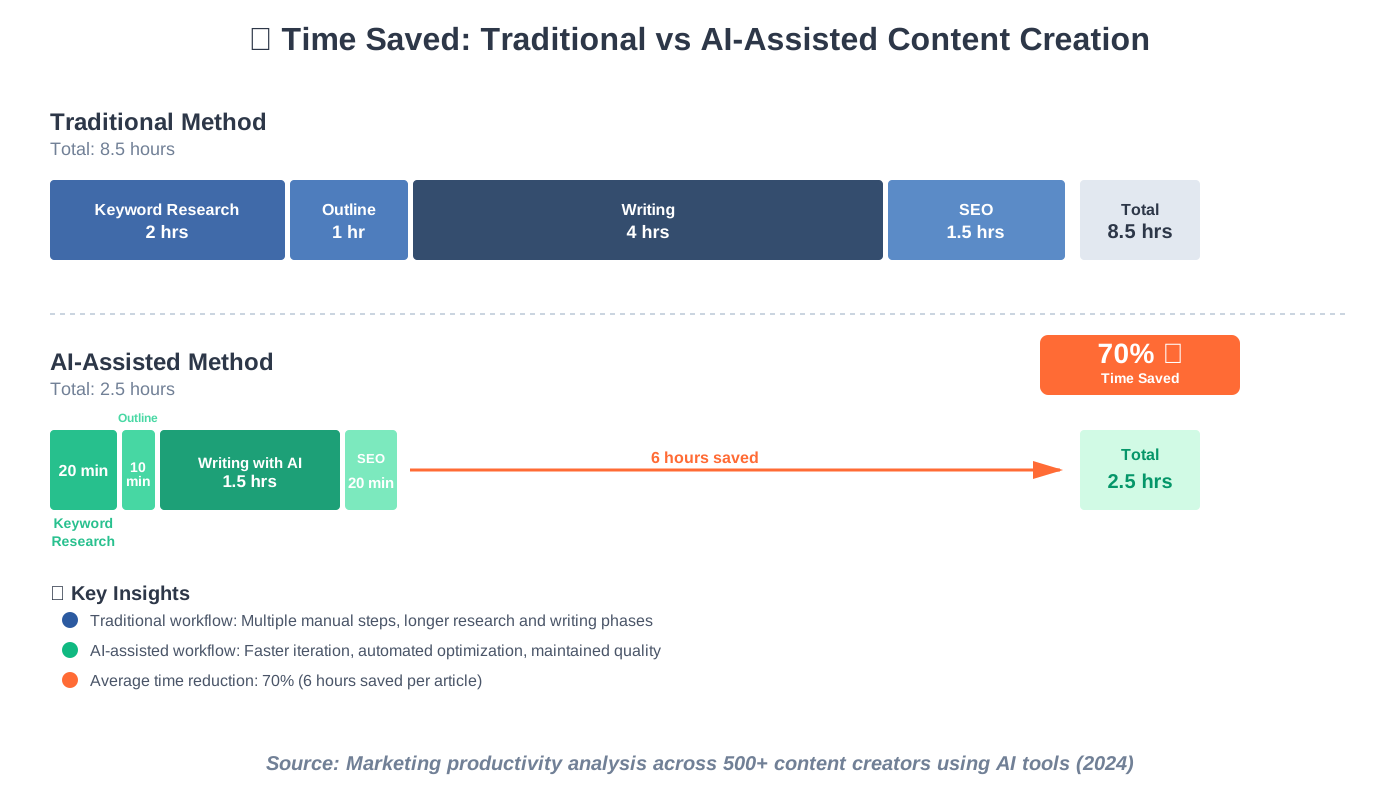
Traditional content creation meant spending hours on keyword research, manually analyzing SERPs, crafting outlines, writing drafts, and then optimizing everything for search engines. That process could easily consume an entire workday for a single article. Today’s AI content optimization tools compress that timeline dramatically while often delivering better results.
These tools don’t just generate text—they analyze what’s already ranking, identify content gaps, understand semantic relationships between keywords, and structure content in ways that both search engines and humans appreciate. For busy professionals, this means you can maintain a robust content calendar without burning out or hiring a large team. You’re essentially getting an SEO analyst, content strategist, and writer working together in a single platform.
The real game-changer? These tools learn from millions of high-performing pages, giving you insights that would take years to develop on your own. They help you target the right keywords, structure content effectively, and optimize for featured snippets and voice search—all critical factors in modern SEO strategy.
Top AI-Powered Content Creation Tools for SEO Success
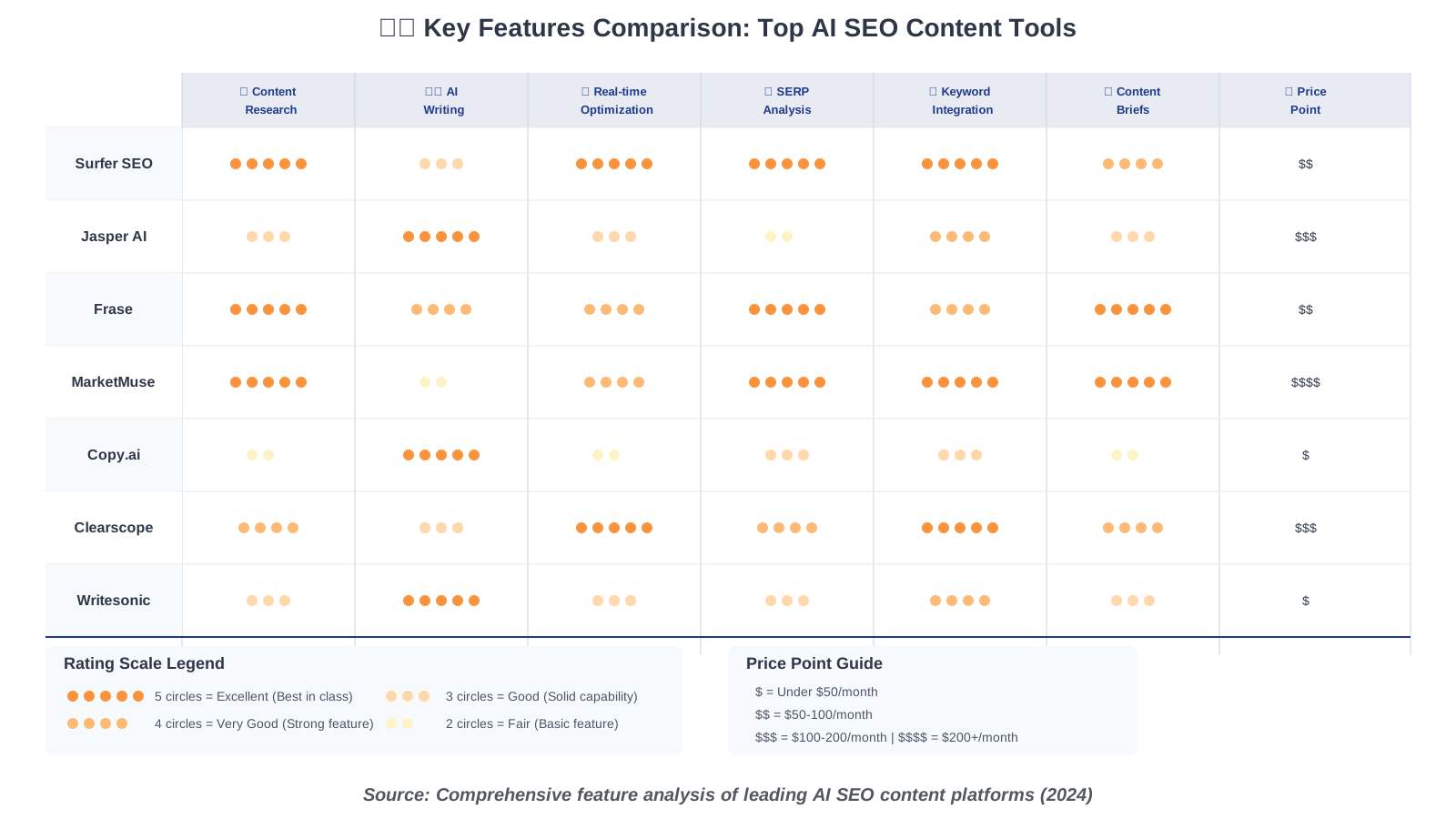
1. Surfer SEO
Surfer SEO stands out as the comprehensive solution for data-driven content optimization. This tool analyzes top-ranking pages for your target keywords and provides detailed guidelines on content structure, keyword density, headings, and even image optimization. What I love about Surfer is its Content Editor, which gives you real-time feedback as you write, showing exactly how your content compares to competitors.
Practical Use Case: Imagine you’re writing about “remote work productivity tips.” Surfer analyzes the top 50 ranking pages and tells you precisely which subtopics to cover, how long your article should be, and which related terms to include. It even suggests heading structures that match user search intent.
Beginner Tips: Start with the Content Editor for your most important pages. Don’t obsess over hitting a perfect score—aim for 70-80, which usually represents well-optimized content without keyword stuffing. Use the Outline Builder to structure your content before writing, and pay special attention to the NLP terms it suggests. These semantic keywords help search engines understand your content’s relevance without repetitive keyword usage.
2. Jasper AI
Jasper AI (formerly Jarvis) has evolved into a powerhouse for creating SEO-optimized content at scale. This AI writing assistant understands context, maintains brand voice, and generates content that feels authentically human. Jasper’s SEO mode integrates keyword research and optimization directly into the writing process, making it incredibly efficient for content teams.
Practical Use Case: You need to create 10 blog posts for your SaaS product this month. Jasper can generate first drafts for all of them in a fraction of the time it would take manually. You provide the keywords, tone, and outline, and it creates comprehensive content that you can then refine and personalize.
Beginner Tips: Use Jasper’s templates to get started—they’re specifically designed for different content types like blog posts, product descriptions, and social media. The “Boss Mode” gives you more control over output. Always run generated content through Jasper’s built-in plagiarism checker, and add your own insights and examples to make it truly unique. Think of Jasper as your first-draft generator, not your final writer.
3. Frase
Frase bridges the gap between research and writing by combining AI-powered content briefs with intuitive writing tools. It’s particularly powerful for content optimization because it analyzes search results and automatically generates research-based outlines that address exactly what users are searching for.
Practical Use Case: You’re entering a competitive niche and need to understand what content is already ranking. Frase pulls data from top-performing pages, identifies common questions, and creates an outline covering all the essential topics. This ensures your content is comprehensive and addresses user intent from every angle.
Beginner Tips: Start by creating a content brief for your target keyword—Frase will do the heavy lifting of competitor analysis. Utilize the question feature to discern what people are genuinely inquiring about regarding your topic; these serve as excellent H2 and H3 headings. The AI writer works best when you use it section by section rather than trying to generate an entire article at once. This gives you more control over quality and lets you inject your expertise naturally.
4. MarketMuse
MarketMuse takes a sophisticated approach to content strategy by analyzing your entire website and identifying content gaps, optimization opportunities, and topical authority development. This tool is particularly valuable if you’re serious about building domain authority and want a data-driven content plan.
Practical Use Case: You run a marketing blog but notice your organic traffic has plateaued. MarketMuse audits your site, identifies topics where you lack depth, and shows you exactly what content to create to build topical authority. It might reveal that while you’ve covered “email marketing” basics, you’re missing advanced topics that could position you as a comprehensive resource.
Beginner Tips: Start with a content audit to see where you stand. Focus on the “Quick Wins” that MarketMuse identifies—these are pages that need minor optimization to rank better. When creating new content, use the Research tab to understand topic depth requirements. Don’t try to be the most comprehensive resource immediately; MarketMuse helps you prioritize which topics deserve depth based on your competitive landscape and business goals.
5. Copy.ai
Copy.ai specializes in generating short-form and long-form content quickly, with a particular strength in creating variations that help you test different angles and approaches. While it’s known for marketing copy, its blog post and SEO content tools have become increasingly sophisticated and helpful for content marketing.
Practical Use Case: You need to create multiple landing pages for different audience segments, each optimized for specific keywords. Copy.ai can generate variations of your core message tailored to each segment’s language and concerns, complete with SEO-friendly headlines, meta descriptions, and body content.
Beginner Tips: Use the “Blog Post Outline” tool first to structure your content, then generate sections individually rather than the entire article at once. The tool works best when you provide detailed context—tell it your audience, tone, and key points. Take advantage of the “More Like This” feature to generate variations until you find the angle that resonates. Always edit the output to add specific data, examples, and your unique perspective.
6. Clearscope
Clearscope focuses exclusively on content optimization with a clean, straightforward approach. It provides grade-based feedback on your content’s SEO potential and suggests exactly which terms and concepts to include for better keyword targeting. What makes Clearscope special is its simplicity—it doesn’t overwhelm you with features, just clear guidance on making content rank.
Practical Use Case: You’ve written a fantastic article based on your expertise, but it’s not ranking as well as you’d hoped. Clearscope analyzes your content against top performers and identifies missing topics, relevant terms, and structural improvements that could boost your rankings without requiring a complete rewrite.
Beginner Tips: Use Clearscope as your final optimization pass after writing. Don’t let the grade stress you out—focus on incorporating suggested terms naturally where they genuinely add value. Pay attention to the reading level indicator; overly complex writing can hurt engagement even if it’s well-optimized. The “Related Terms” section is gold for identifying semantic keywords that strengthen your topic coverage without keyword stuffing.
7. Writesonic
Writesonic offers an affordable entry point into AI content creation with a solid balance of features and ease of use. It’s particularly effective for creating SEO-optimized blog posts, landing pages, and product descriptions with a minimal learning curve. The platform has recently added advanced features like AI article writing that can produce longer, more comprehensive content.
Practical Use Case: You’re managing content for multiple clients with limited budgets. Writesonic allows you to quickly generate first drafts for various content types—blog posts, ad copy, and social posts—all optimized for SEO, then customize them for each client’s brand voice and specific requirements.
Beginner Tips: Start with the AI Article Writer for long-form content—just input your keyword and let it generate an outline, then edit and regenerate sections as needed. Use the Sonic Editor for real-time improvements and SEO suggestions as you refine the content. The tool has a “quality” slider; higher quality uses more credits but produces better output, so adjust based on content importance. Don’t skip the editing phase—add statistics, examples, and personal insights to differentiate your content.
Integrating AI Tools into Your SEO Workflow
The secret to maximizing these tools isn’t using them in isolation—it’s integrating them into a cohesive workflow that amplifies your productivity. Here’s how I recommend approaching it: use MarketMuse or similar tools for strategy and identifying what content to create. Then use Frase or Surfer SEO to create comprehensive content briefs. Next, leverage Jasper AI, Writesonic, or Copy.ai to generate first drafts quickly. Finally, optimize with Clearscope or Surfer SEO’s content editor before publishing.
This workflow transforms content creation from an overwhelming marathon into a systematic sprint. You’re not starting from a blank page; you’re starting with a data-driven strategy, research-backed outlines, AI-generated drafts, and clear optimization targets. Your role shifts from doing everything manually to being the strategist and editor who ensures quality and injects authentic expertise.
Many of my clients initially worry that using AI means sacrificing quality or authenticity. The opposite is actually true. By offloading research, outlining, and first-draft creation to AI, you have more mental energy to focus on what truly makes content valuable: unique insights, specific examples, compelling storytelling, and genuine expertise. The AI handles the structure and optimization; you provide the soul.
Maximizing Results While Avoiding Common Pitfalls
AI content tools are powerful, but they’re not magic wands. The biggest mistake I see is treating them as complete solutions rather than productivity accelerators. Here’s what works: always edit AI-generated content to add your voice, verify facts, and include specific examples. Search engines are increasingly sophisticated at detecting purely AI-generated content, but they can’t tell the difference when AI is used as a drafting tool with human refinement.
Another critical point: don’t chase perfect optimization scores at the expense of readability. A Surfer score of 100 means nothing if your content is stuffed with awkward keywords that make readers bounce. Aim for that 70-80 range I mentioned earlier—it represents well-optimized content that still reads naturally. Your human judgment about what serves readers should always override what tools suggest.
Furthermore, remember that these tools analyze what’s currently ranking, which means they’re inherently backward-looking. True SEO breakthroughs often come from covering angles that competitors have missed or presenting information in more helpful formats. Use AI tools to match baseline optimization, then differentiate through unique insights, better examples, or more comprehensive coverage.
Frequently Asked Questions About AI SEO Tools
Taking Action: Your Next Steps with AI-Powered SEO
The most important thing you can do right now is simply start. Pick one tool from this list—I’d suggest beginning with Jasper AI or Writesonic if you’re new to AI content generation—and commit to creating your next three pieces of content using it. You’ll quickly discover which features save you the most time and where you need to supplement with other tools.
Set realistic expectations for your first month. You won’t immediately master these tools, and your first few pieces might take almost as long as traditional creation while you learn the interface and develop effective prompts. That’s completely normal. By your fifth or sixth piece of content, you’ll notice significant time savings. By your tenth, you’ll wonder how you ever managed without these tools.
Remember that boosting SEO with AI-powered content creation tools is about amplification, not replacement. These tools handle the grunt work—the research, the structure, the optimization checklists—so you can focus on what makes content truly valuable: your expertise, insights, and ability to connect with readers. The combination of AI efficiency and human creativity is what produces truly outstanding content that ranks and converts.
The content landscape is evolving rapidly, and those who learn to effectively combine AI capabilities with human expertise will dominate their niches. You don’t need to be a technical expert or SEO genius anymore—you just need to be willing to embrace tools that make professional-quality content optimization accessible to everyone. Start today, stay consistent, and watch your organic traffic transform over the next few months. The investment in learning these tools now will pay dividends in saved time and improved rankings for years to come.
About the Author
James Carter is a productivity coach specializing in helping professionals and businesses leverage AI tools to save time and boost efficiency. With over a decade of experience in digital marketing and content strategy, James has helped hundreds of marketers, bloggers, and business owners transform their workflows through smart automation and AI-powered solutions. His practical, no-nonsense approach focuses on real results—reduced workload, improved performance, and sustainable systems that actually work in daily practice. James believes AI should amplify human creativity and expertise, not replace it, and his coaching emphasizes finding the perfect balance between efficiency and authenticity. When he’s not optimizing content workflows, you can find James experimenting with the latest productivity tools or helping clients reclaim their time while growing their online presence.