
AI Content Creation Tools for Social Media: Your Free Guide

AI Content Creation Tools for Social Media have revolutionized how marketers approach platform-specific content strategies in 2025. If you’re juggling X posts, Instagram reels, LinkedIn articles, and TikTok videos—all while trying to maintain authentic engagement—you’re not alone. According to Social Media Examiner in their “2025 AI Marketing Industry Report” (2025), 60% of marketers now use AI tools daily, up from 37% in 2024, and 90% use AI for text-based tasks, including idea generation, draft creation, and headline writing. ℹ️Source
The game has changed. You can’t just copy-paste the same content across platforms anymore. Each social network has its own rhythm, language, and secret sauce for making content stick. That’s where specialized AI tools come in—not to replace your creativity, but to amplify it across multiple platforms simultaneously without burning out.
I’ve spent the last six months testing dozens of these tools, and I’m going to show you exactly which ones deliver real results for each platform. We’re comparing tools that understand the difference between a LinkedIn thought leader and a TikTok creator, between X’s conversational threads and Instagram’s visual storytelling.
Why Platform-Specific AI Content Strategy Matters
Let me be blunt: generic social media tools are costing you engagement.
The social media landscape in 2025 isn’t just crowded—it’s fragmented. According to research from Metricool in “The State of AI in Social Media 2025 Report” (2025), 96% of social media professionals now use AI for their tasks, with 73% relying on it daily.ℹ️Source
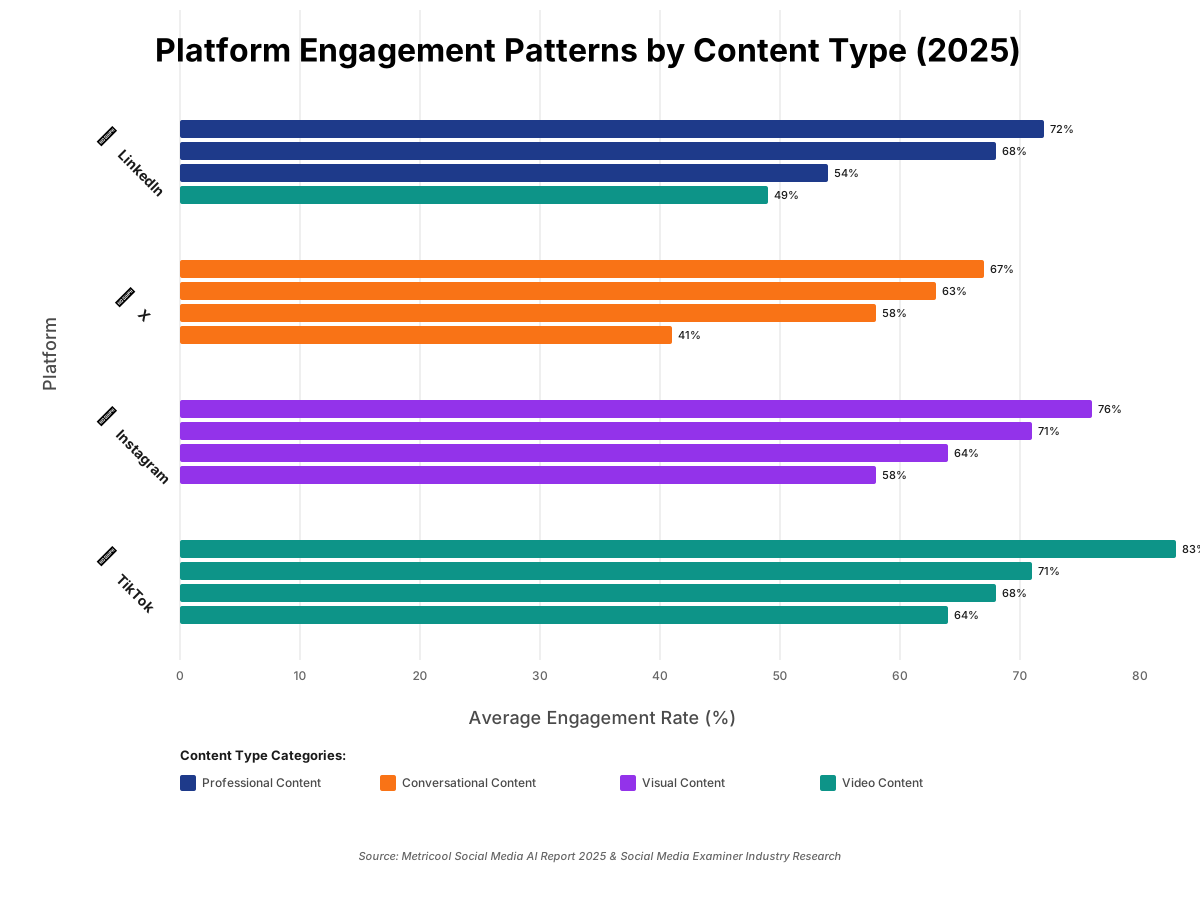
Each platform has evolved its ecosystem, algorithms, and user expectations. What works on LinkedIn—long-form thought leadership with professional insights—falls flat on TikTok, where 15-second hooks and trending sounds drive visibility. An Instagram carousel that performs brilliantly might translate poorly to X’s text-first environment.
Here’s what I’ve learned from managing content across all four platforms: the tools that try to be everything for everyone end up being mediocre at everything. Platform-specific AI tools understand these nuances because they’re trained on millions of posts from that specific platform.
The Real Cost of Generic Content
When you use the same tool to create content for all platforms, you’re essentially asking one assistant to be fluent in four different languages. Sure, they might know the basics, but they miss the subtle cultural references and the timing and tone that separate viral content from invisible content.
According to Digital Silk’s research in “55 Social Media Statistics For 2025” (2025), businesses using AI for social media content generation report a 15–25% increase in engagement rates when the content is properly optimized for platform-specific audiences. ℹ️Source
LinkedIn: AI Tools for Professional Thought Leadership
LinkedIn isn’t just another social network—it’s where your professional reputation lives. The content that succeeds here requires depth, credibility, and a specific tone that balances authority with accessibility.
Taplio: The LinkedIn Specialist
Taplio has emerged as the dominant player for LinkedIn content creation, and after testing it extensively, I understand why. This tool doesn’t just generate LinkedIn posts—it thinks like a LinkedIn creator.
Trained on over 500 million LinkedIn posts, Taplio’s AI understands the platform’s unique ecosystem. It knows that LinkedIn users engage differently than other platforms: they’re looking for insights, not entertainment; professional value, not viral moments.
Key Features:
- AI content generation with tone and format customization
- Carousel creator for LinkedIn’s highest-engagement format
- Hook generator specifically for LinkedIn’s truncation patterns
- Analytics dashboard tracking impressions, engagement, and follower growth
- Content scheduling optimized for LinkedIn’s activity patterns
What Makes It Work:
The real power of Taplio isn’t just generating content—it’s understanding LinkedIn’s algorithm. The platform shows you which content formats are performing (carousels typically outperform text posts), suggests optimal posting times based on your audience, and helps you build engagement lists of key contacts.
Pricing Reality: Starting at $39/month for basic features, $52/month for AI credits and team collaboration, scaling to $149/month for advanced features.
Best For: B2B marketers, thought leaders, sales professionals, and anyone building professional brand authority on LinkedIn.
Limitations: The AI-generated content sometimes feels generic without editing. You’ll need to add your personal voice and specific examples to make it truly authentic. Also, it only works for LinkedIn—you’ll need additional tools for other platforms.
Alternative: LinkedIn-Focused Features in Buffer
Buffer offers solid LinkedIn support within its multi-platform approach. While not as specialized as Taplio, Buffer’s AI Assistant adapts output based on which platform you’re targeting. When you select LinkedIn, it automatically adjusts for longer-form content, a professional tone, and industry-relevant language.
The advantage here is consolidation—if you’re managing multiple platforms, Buffer lets you create LinkedIn content alongside your other social efforts. The trade-off is depth: it won’t match Taplio’s specialized LinkedIn features like carousel generation or contact database access.
X (Twitter): Tools for Conversational Content
X demands a completely different approach. This platform rewards quick wit, timely commentary, and threading skills. The character limit isn’t a constraint—it’s part of the art form.
Tweet Hunter: Built for X’s Unique Environment
Tweet Hunter understands something crucial about X: it’s not about perfection; it’s about consistency and conversation. The platform specializes in helping you maintain a steady flow of engaging tweets without spending hours glued to your screen.
Core Capabilities:
- AI tweet generation based on viral patterns
- Thread builder with auto-scheduling
- Evergreen content recycling to resurface top performers
- Engagement boosters identifying high-value conversations
- Analytics focused on X-specific metrics (retweets, quote tweets, thread performance)
The tool analyzes which tweet styles work best for your audience—questions, statements, hot takes, or story threads—and helps you create more of what actually drives engagement.
Pricing: Starts around $49/month with various tiers based on features and tweet volume.
Best For: Brand accounts maintaining an active X presence, thought leaders building a following through consistent engagement, and marketers running X-first campaigns.
Reality Check: Like any AI tool, Tweet Hunter’s suggestions need human oversight. The best results come when you use it as an idea generator and engagement assistant, not a complete automation solution. The platform works best for users who already understand X’s culture and can quickly edit AI suggestions to match their voice.
SocialBee: Multi-Platform with Strong X Support
SocialBee takes a different approach by offering specialized templates for X while supporting other platforms. Its content categorization system helps you maintain different content themes (promotional, educational, conversational) and rotate them intelligently.
The AI CoPilot asks questions about your business goals and generates a posting strategy specifically for X, including optimal times, content format mix, and engagement tactics. This strategic layer differentiates it from pure content generators.
Instagram: Visual-First AI Tools
Instagram is where visual storytelling dominates. The platform’s emphasis on aesthetics, reels, carousels, and Stories requires tools that think visually first, text second.
Predis.ai: Visual Content Generation Engine
Predis.ai excels at creating Instagram content because it generates both copy and visuals together. You’re not just getting caption suggestions—you’re getting complete post designs optimized for Instagram’s visual-first environment.
Standout Features:
- AI-generated carousels with brand-consistent design
- Reel script generation aligned with trending formats
- Hashtag research based on Instagram’s discovery algorithms
- Competitor analysis specifically for Instagram and Facebook
- Visual templates adapting to Instagram’s latest format preferences
The platform’s competitor analysis is particularly valuable. It shows you which content types are performing best in your niche, what posting frequency works, and which hashtag combinations drive discovery.
Investment: Credit-based system with plans ranging from approximately $29/month for basic usage to enterprise pricing for agencies.
Ideal Users: E-commerce brands showcasing products, lifestyle creators building visual brands, and agencies managing multiple Instagram clients.
The Catch: While Predis generates impressive visuals quickly, maintaining brand authenticity requires careful oversight. The AI-generated designs can look polished but generic without customization to your specific brand guidelines.
Canva with AI Magic Studio: Design-Centric Approach
Canva’s Magic Studio suite has evolved into a powerhouse for Instagram content creation. With features like Magic Design (text-to-image generation) and Magic Write (caption creation), it’s particularly effective for visually heavy Instagram posts.
The platform offers 100+ Instagram-specific layouts and templates optimized for posts, Stories, and Reels. The AI integration means you can describe what you want, and Canva generates options—then you can quickly customize colors, fonts, and elements to match your brand.
What gives Canva an edge for Instagram is the ability to create and schedule content without leaving the platform. The Content Planner integrates directly with Instagram, streamlining your workflow from design to publishing.
TikTok: Short-Form Video Content AI
TikTok’s algorithm favors different content patterns than any other platform. It’s trend-driven, sound-focused, and requires understanding of what makes videos hook viewers in the first three seconds.
CapCut: The TikTok Native Solution
CapCut, owned by TikTok’s parent company ByteDance, has an inherent advantage for TikTok content creation. The tool understands TikTok’s trending formats, popular transitions, and algorithm preferences because it’s built by the same team.
Key Strengths:
- AI-powered auto-captions perfectly timed for TikTok pacing
- Beat synchronization aligning cuts to trending audio
- Template library updated with current TikTok trends
- Background removal and effects matching TikTok aesthetics
- One-tap export settings optimized for TikTok’s specifications
The mobile-to-desktop workflow is seamless, allowing you to capture ideas on your phone and refine them on desktop without losing creative momentum.
Cost: Free with premium features available, making it accessible for creators at any level.
Perfect For: TikTok-first creators, brands testing short-form video, and marketers capitalizing on trending moments without significant video editing experience.
Important Note: While CapCut excels at editing and production, it doesn’t generate content ideas or scripts. Pair it with AI writing tools for complete TikTok content workflow.
Opus Clip and Repurposing Tools
For brands creating longer content elsewhere, Opus Clip specializes in identifying viral-worthy moments from long videos and reformatting them for TikTok. It analyzes your content, identifies high-engagement segments, adds captions, and optimizes for vertical video format.
This approach works brilliantly if you’re already creating podcast content, YouTube videos, or webinars and want to amplify reach through TikTok without creating native content from scratch.
Multi-Platform Powerhouses: When You Need Everything
Some tools attempt to serve all platforms competently rather than excelling at one. For teams managing comprehensive social strategies across all major networks, these consolidated solutions offer efficiency benefits despite platform-specific trade-offs.
Sprout Social: Enterprise-Grade Multi-Platform
Sprout Social positions itself as the complete social media management ecosystem. It’s not the most specialized for any single platform, but it handles all of them professionally with AI features woven throughout.
The platform’s AI capabilities include content generation, optimal posting time recommendations, sentiment analysis across platforms, and unified analytics showing cross-platform performance patterns.
Major Advantages:
- Single inbox for all platform conversations
- Cross-platform content calendar visualization
- Team collaboration tools with approval workflows
- Comprehensive analytics comparing performance across networks
- AI assistance adapting to each platform’s requirements
Investment Level: Enterprise pricing starting around $249/month per user, with custom pricing for larger teams.
Best Fit: Marketing teams managing brand presence across all major platforms, agencies handling multiple client accounts, and businesses requiring robust reporting and team workflows.
The platform makes sense when coordination and oversight matter more than deep platform-specific optimization. You’re trading specialized features for operational efficiency.
Buffer: The Middle-Ground Solution
a professional Buffer strikes a balance between platform specialization and multi-platform management. Its AI Assistant detects which platform you’re posting to and adjusts suggestions accordingly—LinkedIn gets a professional tone, X gets concise wit, and Instagram gets a visual focus.
The idea tracking tool helps you capture content inspiration whenever it strikes, then use AI to develop those ideas into platform-appropriate posts when you’re ready to schedule.
Practical Pricing: Plans start at $6/month per connected account, making it accessible for solopreneurs and small teams.
Ideal For: Solo entrepreneurs managing their own social presence, small businesses with limited marketing budgets, and content creators maintaining consistent presence without large teams.
Comparing Tool Performance: What Actually Matters
After six months of testing, I’ve identified the metrics that truly indicate whether an AI content creation tool delivers value or just generates noise.
Engagement Rate Impact
The fundamental question: does AI-generated content perform as well as human-created content? According to Drainpipe.io in “AI in Social Media: Going Viral in 2025” (2025), 73% of marketers using AI-assisted content experienced tangible lifts in interaction rates, with engagement boosts ranging from 15% to 25% when content is properly customized for each platform. ℹ️Source
But here’s the critical detail: those results come from AI-assisted content, not AI-generated content published without human editing. The tools that perform best are those helping you scale your authentic voice, not replacing it entirely.
Time Savings vs. Quality Trade-Off
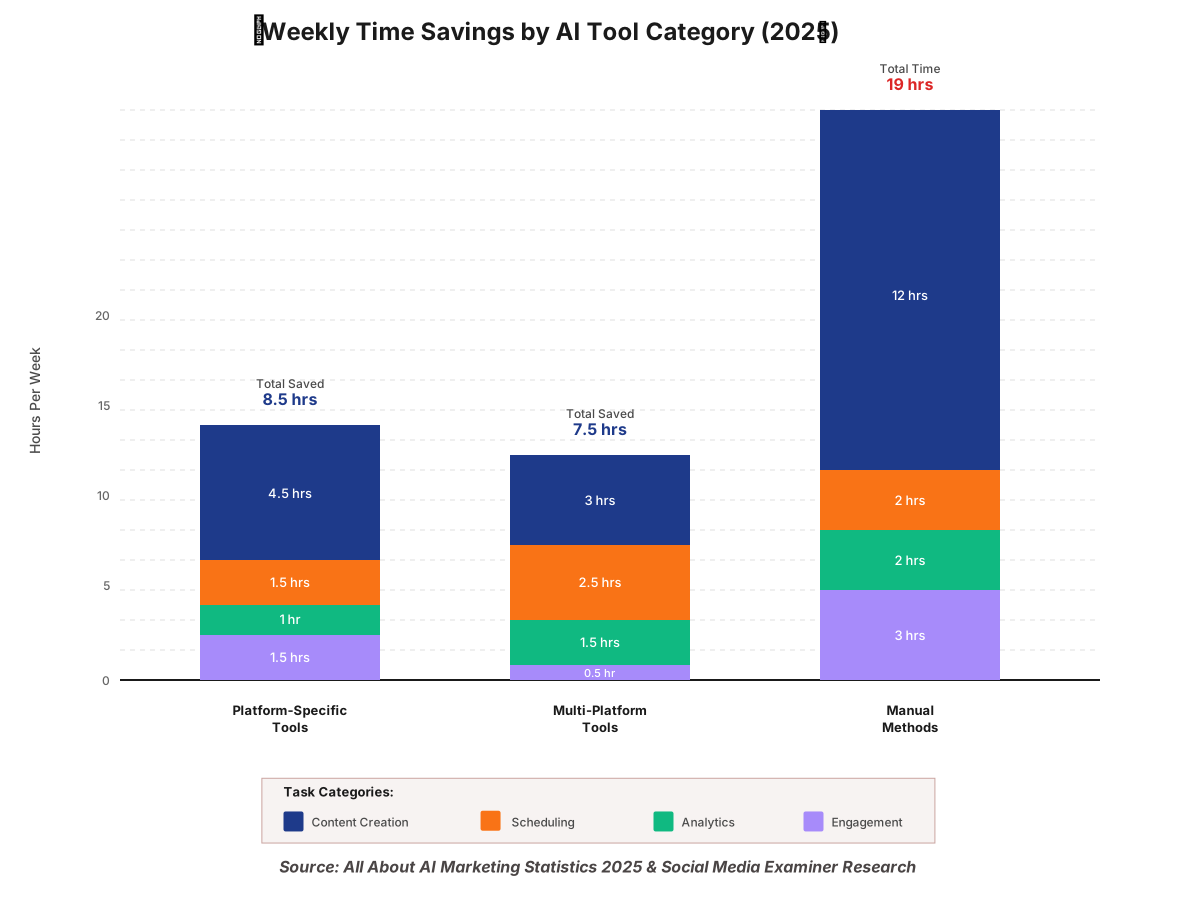
According to All About AI’s research in “AI Marketing Statistics for 2025” (2025), AI tools streamline social media management by saving marketers 6-8 hours per week on content creation, scheduling, and analytics tasks. ℹ️Source
But not all time savings are equal. Taplio might save you 5 hours on LinkedIn content, but if you still need separate tools for X, Instagram, and TikTok, your actual workflow complexity increases. Multi-platform tools save setup time but may require more editing time per post.
Platform Algorithm Alignment
The most overlooked performance factor is how well the AI understands each platform’s algorithm preferences. CapCut’s beat synchronization works brilliantly for TikTok because it aligns with TikTok’s algorithm priorities. Generic video editors miss these nuances.
Similarly, Taplio’s carousel format recommendations perform well on LinkedIn because the tool knows carousels get higher engagement and longer dwell time—metrics LinkedIn’s algorithm rewards.
Building Your Platform-Specific AI Stack
Here’s the strategic framework I use when helping clients choose their AI content creation tools based on platform priorities and budget realities.
For LinkedIn-First Strategies
If LinkedIn is your primary platform for lead generation, thought leadership, or professional brand building, invest in Taplio. The specialized features justify the cost when LinkedIn directly impacts your business outcomes.
Stack it with a basic scheduling tool like Buffer or Hootsuite for your secondary platforms (X, Facebook, Instagram) where you maintain presence but don’t need advanced optimization.
Monthly Investment: $39-52 for Taplio + $6-29 for Buffer = $45-81 total
Best For: B2B consultants, professional services firms, executive coaches, sales professionals, recruitment agencies.
For Visual-First Brands (Instagram + TikTok Focus)
When visual content drives your business—e-commerce, lifestyle brands, food and beverage, fashion—your primary investment should flow to visual creation tools.
Combine Predis.ai for Instagram design and copywriting with CapCut for TikTok video editing. Add Buffer for scheduling and basic X/LinkedIn maintenance.
Monthly Investment: $29-59 for Predis.ai + $0 for CapCut free + $6-12 for Buffer = $35-71 total
Best For: E-commerce brands, food and beverage businesses, fashion retailers, lifestyle influencers, and local businesses with strong visual identities.
For Conversation-Driven Brands (X + LinkedIn)
If your strategy centers on thought leadership, real-time commentary, and building community through conversation, prioritize tools optimized for text-based engagement.
Use Tweet Hunter for X engagement and Taplio for LinkedIn professional content. This combination covers both conversational (X) and authoritative (LinkedIn) content needs.
Monthly Investment: $49 for Tweet Hunter + $39 for Taplio = $88 total
Best For: Media companies, journalists, political organizations, tech thought leaders, industry analysts, and podcast hosts amplifying discussions.
For Full Multi-Platform Presence
When you need comprehensive coverage across all major platforms with team collaboration, enterprise-grade tools make sense despite higher costs.
Sprout Social or comprehensive Buffer plans provide unified management. The efficiency gains from single-platform operation—one content calendar, one analytics dashboard, one team workflow—justify the premium for larger teams.
Monthly Investment: $249+ for Sprout Social or $120+ for Buffer Teams
Best For: Marketing agencies, enterprise brands, product launches requiring coordinated messaging, companies with dedicated social media teams.
Making AI Content Feel Authentic
The biggest criticism of AI-generated content is the “AI voice”—that slightly generic, overly enthusiastic tone that screams “robot wrote this.” Here’s how I avoid it with platform-specific strategies.
The 70/30 Editing Rule
Use AI to generate the first draft, but plan to edit 70% of the output. The AI provides structure, saves you from blank-page paralysis, and offers ideas you might not have considered. But your voice, your specific examples, your industry insights—those must come from you.
For LinkedIn: Add specific client stories, industry statistics, and personal observations from your experience.
For X: Insert timely references, your unique perspective, and conversational asides that sound like you talking.
For Instagram: Personalize captions with behind-the-scenes context, emotional connection, and specific calls-to-action relevant to your audience.
For TikTok: Record your voiceover even if AI generates the script. Authentic voice matters more than polished production on TikTok.
Train the AI on Your Voice
Most advanced tools allow you to input example content to train the AI on your writing style. Invest 30 minutes uploading your top-performing posts. The AI learns your sentence structure, vocabulary preferences, and content patterns.
Taplio, for instance, analyzes your previous LinkedIn posts to understand your voice. Tweet Hunter lets you save favorite phrases and patterns. The more you feed these tools authentic examples of your content, the better they match your style.
Platform-Specific Authenticity Markers
Each platform has authenticity signals that audiences recognize:
LinkedIn: Personal experience > generic advice. Specific outcomes > vague promises. Vulnerability > perfection.
X: Hot takes > safe opinions. Quick reactions > delayed commentary. Conversational > formal.
Instagram: Behind-the-scenes > polished perfection. Story-driven > product-focused. Community engagement > broadcasting.
TikTok: Raw authenticity > production quality. Trend participation > original concepts. Relatability > expertise.
Your AI tools should support these authenticity markers, not work against them.
Common Pitfalls and How to Avoid Them
After watching countless businesses implement AI content tools, I’ve identified recurring mistakes that tank results.
Mistake 1: Using One Tool for Everything
The “Swiss Army knife” approach fails because each platform requires different optimization. A LinkedIn carousel generator won’t help your TikTok strategy. X threading tools don’t create Instagram carousels.
Solution: Accept that effective social media management in 2025 requires platform-specific tools. Budget for two to three specialized tools rather than one generic solution.
Mistake 2: Publishing Unedited AI Content
Tools like ChatGPT and Claude generate impressive content, but publishing it raw is a red flag to audiences. According to Sonary’s “Social Media Statistics for 2025” (2025), 26% of consumers find AI-generated website copy impersonal, and 20% consider AI-generated social media posts untrustworthy, with over 30% viewing AI chatbots as impersonal.ℹ️Source
Solution: Treat AI output as a first draft. Add personal anecdotes, specific examples, and unique insights that only you can provide.
Mistake 3: Ignoring Platform Culture
AI tools can generate technically correct content that completely misses platform culture. A formal press release tone works on LinkedIn; it bombs on TikTok. Conversational X threads don’t translate to LinkedIn authority.
Solution: Choose tools trained on platform-specific content. CapCut understands TikTok culture because it’s built by TikTok’s parent company. Taplio knows LinkedIn norms because it’s trained exclusively on LinkedIn data.
Mistake 4: Over-Automating Engagement
Some tools automate likes, comments, and follows. While tempting, these features risk account restrictions and damage authentic relationship-building.
Solution: Use AI for content creation and scheduling. Keep engagement human. Respond personally to comments, build genuine connections, and participate authentically in conversations.
Mistake 5: Choosing Tools Based on Features, Not Outcomes
The tool with the longest feature list isn’t necessarily the best choice. What matters is whether it helps you achieve specific business outcomes on certain platforms.
Solution: Define your goals first (LinkedIn lead generation, Instagram brand awareness, X thought leadership, and TikTok discovery), then choose tools designed for those outcomes.
Measuring ROI: What Success Actually Looks Like
How do you know if your AI content creation tools are actually working? Here are the metrics I track and why they matter.
Engagement Rate by Platform
Track likes, comments, shares, and saves relative to follower count. AI tools should improve these metrics, not just increase posting frequency.
Benchmark Goals:
- LinkedIn: 2-5% engagement rate on posts, 5-8% on carousels
- X: 1-3% engagement rate on individual tweets, 5-10% on quality threads
- Instagram: 3-6% engagement on posts, 8-12% on Reels
- TikTok: 5-10% on standard content, 15% + on trend-aligned videos
If your AI-assisted content underperforms these benchmarks, either the tool isn’t right for your needs or your editing process needs work.
Time-to-Publish Efficiency
Track how long it takes from idea to published post. Effective AI tools should cut this time by 50-70% while maintaining quality.
Before AI: 45-60 minutes per LinkedIn post, including research, writing, editing, design With Taplio: 15-20 minutes including AI generation and editing
Before AI: 30-45 minutes per X thread, including structure, writing, refinement With Tweet Hunter: 10-15 minutes including AI suggestions and personalization
Conversion Metrics
Ultimately, social media should drive business outcomes. Track:
- LinkedIn: Profile views, connection requests, website clicks, lead form submissions
- X: Link clicks, email signups, inquiry DMs
- Instagram: Website visits, product page clicks, DM conversations
- TikTok: Follower growth, profile visits, link-in-bio clicks
The right AI tools help you maintain a consistent presence that compounds these results over time.
Content Quality Score
I use a simple 1-10 self-assessment asking, “If this AI tool stopped working tomorrow, would I be proud of the content I published this month?”
This subjective measure keeps quality standards high. If you’re scoring below 7, you’re likely over-relying on AI without sufficient editing.
Frequently Asked Questions About AI Social Media Tools
Your Next Steps: Implementing Platform-Specific AI Strategy
The shift from generic social media management to platform-optimized AI strategies isn’t optional anymore—it’s a competitive necessity. Here’s your action plan for the next 30 days.
Week 1: Audit Your Current Performance
Identify which platform drives the most business value for you. Look beyond vanity metrics to conversion data: Which platform generates leads? Where do customers discover you? Which network drives website traffic?
Document your current time investment per platform. Track actual hours spent on content creation, scheduling, engagement, and analytics. This baseline shows where AI tools can deliver maximum impact.
Week 2: Choose Your Primary Platform Focus
Based on Week 1 data, commit to excellence on your most valuable platform before expanding. Select the specialized tool for that platform:
- LinkedIn → Taplio
- X → Tweet Hunter
- Instagram → Predis.ai
- TikTok → CapCut
Start the free trial, invest 2–3 hours in learning the interface, and create your first week of content.
Week 3: Develop Your Authentic AI Workflow
Create your content process combining AI efficiency with human authenticity:
- Use AI to generate 3-5 content ideas
- Select the strongest, edit heavily to match your voice
- Add specific examples and personal insights
- Schedule strategically based on platform data
- Engage authentically with responses
Document what works and what doesn’t. Adjust your editing process based on engagement feedback.
Week 4: Measure and Expand
Compare engagement metrics to your pre-AI baseline. Are you seeing the 15-25% engagement lift that research suggests is possible? Are you claiming 6–8 hours a week?
If yes, consider adding a second platform-specific tool. If results are disappointing, refine your editing process before expanding—the issue is likely over-reliance on AI rather than tool selection.
Final Thoughts: AI as Productivity Partner, Not Replacement
After six months of testing these tools across multiple client accounts, my conclusion is clear: AI content creation tools for social media work best when they amplify your existing strategy rather than replacing it entirely.
The tools I’ve recommended—Taplio for LinkedIn, Tweet Hunter for X, Predis.ai for Instagram, CapCut for TikTok—excel because they understand their respective platforms deeply. They’re specialists, not generalists.
But here’s what matters most: these tools don’t make strategy decisions. They don’t build authentic relationships. They don’t understand your customers the way you do. They multiply your effectiveness when combined with strategic thinking and authentic engagement.
The marketers winning with AI in 2025 aren’t the ones who’ve automated everything. They’re the ones who’ve automated the routine work so they can invest more time in strategy, creativity, and genuine connection.
Start with one platform. Master one tool. Build confidence in your AI-assisted workflow. Then expand systematically. The compound effect of consistent, quality content across multiple platforms builds authority and an audience that drives long-term business growth.
Your competition is already using these tools. The question isn’t whether to adopt AI for social media—it’s whether you’ll use it strategically or watch others gain the advantage.
About the Author
James Carter is a productivity coach who helps professionals and businesses use AI to save time and boost efficiency in their marketing workflows. With over eight years of experience in social media strategy and six months of intensive AI tool testing, James specializes in helping marketers implement practical AI solutions that deliver measurable results without sacrificing authentic engagement. His approach focuses on using AI as a productivity multiplier—not a replacement for human creativity and strategic thinking. James writes regularly about AI productivity tools, time-saving workflows, and practical strategies for integrating automation into daily routines. Connect with James on LinkedIn to learn more about optimizing your social media strategy with AI.