
AI-Assisted Creative Writing: Safe Path to Better Stories
AI-Assisted Creative Writing has transformed how we approach storytelling, but as someone deeply invested in digital safety and ethical AI use, I want to share both the exciting possibilities and the responsible practices you need to know. Whether you’re writing your first short story or working on your tenth novel, understanding how to use AI safely and ethically will protect your voice, your ideas, and your creative integrity.
As writers navigating this new landscape, we face unique challenges: How do we maintain originality? What happens to our privacy when we feed our stories into AI systems? How can we use these powerful tools without losing our authentic voice? Throughout this guide, I’ll walk you through every aspect of AI-Assisted Creative Writing, ensuring you understand not just the “how” but also the “why” behind each safe practice.
The beauty of AI-Assisted Creative Writing lies in its potential to enhance—not replace—human creativity. Think of AI as a collaborative partner that helps you brainstorm when you’re stuck, suggests alternatives when you’re unsure, and handles tedious editing tasks so you can focus on the art of storytelling. But like any powerful tool, it requires responsible use, clear boundaries, and thoughtful implementation.
Understanding AI-Assisted Creative Writing: What It Really Means
Before we dive into techniques and tools, let’s establish exactly what AI-Assisted Creative Writing involves and why understanding these foundations matters for your safety and success as a writer.
AI-Assisted Creative Writing refers to using artificial intelligence technologies to support, enhance, and streamline various aspects of the creative writing process. This doesn’t mean AI writes your stories for you—rather, it acts as a sophisticated assistant that can help with brainstorming, editing, research, organization, and refinement.
At their core, AI writing tools use machine learning models trained on vast amounts of text to understand language patterns, story structures, and writing conventions. When you interact with these tools, they analyze your input and generate suggestions, alternatives, or content based on patterns they’ve learned. Knowing this process is vital to making informed choices about what you share with AI systems and how you use their outputs.
How AI Writing Tools Actually Work
The technology behind AI-Assisted Creative Writing tools involves neural networks that have been trained on millions of text samples. These systems learn to predict what word or phrase might come next in a sequence, understand context, and recognize patterns in storytelling, grammar, and style.
However—and this point is critical—these systems don’t “understand” your story the way a human reader would. They recognize patterns and generate statistically probable continuations. This limitation actually becomes your protection: AI can’t truly copy your unique voice or perspective because it lacks the lived experiences, emotions, and personal insights that make your writing distinctively yours.
When you input text into an AI writing assistant, the system processes your words, identifies patterns, and generates responses based on its training. Different tools handle this data differently, which is why understanding privacy policies before using any AI writing tool is absolutely essential. Some tools store your data to improve their systems, while others process your text without retention. Always check before sharing sensitive or original content.
AI-Assisted Creative Writing: A Beginner’s Guide
Starting your journey with AI-Assisted Creative Writing: A Beginner’s Guide requires understanding both the practical steps and the safety measures that protect your work and privacy.
Step 1: Choose Your AI Writing Tool Wisely
Your first decision involves selecting an AI writing assistant that aligns with your needs and respects your privacy. Research different options carefully, considering:
- Privacy policies: Does the tool store your writing? Can others access it? How is your data used?
- Terms of service: Who owns the content you create using the tool? What are your rights?
- Security measures: Does the platform use encryption? Are there data protection standards in place?
- Reputation: What do other writers say about the tool’s reliability and ethical practices?
Popular options include general-purpose AI assistants, specialized creative writing tools, and grammar/editing platforms. Each has different strengths and privacy considerations. Take time to compare before committing your creative work to any platform.
Why this matters: Once you upload your writing to a platform, you may lose control over how that content is used or stored. Starting with the right tool prevents future privacy headaches and protects your intellectual property.
Step 2: Set Up a Safe Workspace
Create a dedicated environment for your AI-Assisted Creative Writing work:
- Use a separate email for AI tool accounts to compartmentalize your creative work
- Enable two-factor authentication on all platforms you choose
- Keep local backups of everything you create, never relying solely on cloud storage
- Review privacy settings regularly as platforms update their policies
- Consider using pseudonyms for initial experimentation, especially with personal or sensitive content
This organizational step takes only minutes but creates layers of protection for your work. Think of it as building a secure studio for your creativity.
Why this matters: Protecting your creative work from the start establishes positive habits that safeguard your intellectual property long-term.
Step 3: Start Small and Experiment Safely
Begin your AI-Assisted Creative Writing journey with low-stakes projects:
- Try generating prompts for practice stories
- Experiment with character name suggestions
- Use AI to brainstorm setting details for fictional worlds
- Ask for alternative phrasings of sentences you’ve already written
- Request feedback on structure or pacing in short passages
Avoid immediately feeding your most precious, original work into AI systems. Instead, build familiarity with how different tools respond, what they do well, and where they fall short.
Why this matters: Starting small lets you understand each tool’s capabilities and limitations without risking your most valuable creative content. You’ll develop intuition about when AI helps and when human creativity should lead.
Step 4: Learn to Prompt Effectively
The quality of AI assistance depends heavily on how you communicate with these tools. Effective prompting involves being specific, providing context, and asking clear questions.
Instead of “Help me write a story” Try: “I’m writing a mystery set in 1920s New Orleans. Can you suggest three intriguing character backgrounds for a jazz musician who witnesses a crime?”
This specificity helps AI provide useful, targeted assistance rather than generic suggestions that might not fit your unique story.
Why this matters: Clear prompts get better results and reduce the number of interactions with AI systems, minimizing data exposure while maximizing usefulness.
Step 5: Maintain Your Authentic Voice
As you incorporate AI-Assisted Creative Writing into your process, regularly check that your voice remains authentic:
- Read your AI-assisted work aloud—does it sound like you?
- Compare AI-suggested revisions with your original instincts
- Keep a “voice journal” where you write without any AI assistance to maintain your baseline style
- Trust your creative instincts when AI suggestions feel off-target
Remember: AI should enhance your existing voice, not replace it. You’re still the author, the creative force, the storyteller. AI is just a tool in your hands.
Why this matters: Your unique perspective and voice are what make your writing valuable. Preserving these elements ensures your work remains genuinely yours, legally and creatively.
Overcoming Writer’s Block with AI: Techniques and Tools
Overcoming Writer’s Block with AI: Techniques and Tools offers practical solutions for one of writing’s most frustrating challenges, but implementing these techniques safely requires a thoughtful approach.
Writer’s block can feel paralyzing—staring at a blank page or stuck mid-scene with no clear path forward. AI can help break through these barriers by offering fresh perspectives, unexpected connections, and creative prompts that jog your imagination.
Technique 1: The Question Method
When stuck, ask AI specific questions about your story rather than requesting it to write passages for you:
- “What might motivate a character who seems to have everything to risk it all?”
- “What are five unusual settings for a confrontation between these two characters?”
- “What historical events in 1840s London might affect my character’s daily life?”
This approach keeps you in the driver’s seat while using AI as a knowledgeable research assistant and brainstorming partner.
Privacy tip: Frame questions generically when possible, avoiding unique plot details or character names from your unpublished work. Ask, “What motivates people to betray trusted friends?” rather than detailing your specific character’s planned betrayal.
Technique 2: The Perspective Shift
Use AI to explore different narrative perspectives or character viewpoints:
Ask AI to describe a scene from various character perspectives, helping you understand which viewpoint serves your story best. This technique works particularly well for complex scenes with multiple characters where you’re unsure whose eyes should guide readers.
Why this is safe: You’re using AI to generate exploratory drafts or examples, not your final prose. These exercises help you think through options while your actual story remains separately developed.
Technique 3: The Constraint Challenge
Request specific creative constraints from AI to spark innovation:
- “Give me three rules I must follow while writing this next scene”
- “Suggest an object that must appear symbolically in the next chapter”
- “Propose a writing style challenge I could attempt”
Paradoxically, constraints can enhance creativity by narrowing your options. AI excels at generating intriguing constraints that might not occur to you naturally.
Best practice: Use AI-generated constraints as jumping-off points, but modify them to fit your story’s needs. You’re borrowing the spark, not the solution.
AI for Poetry: Generating Verse and Exploring Poetic Styles
AI for Poetry: Generating Verse and Exploring Poetic Styles opens fascinating creative possibilities, but poets must be especially careful about originality and voice since poetry is so deeply personal and distinctive.
Poetry, with its emphasis on compressed language, metaphor, and unique voice, presents special considerations for AI assistance. The highly personal nature of poetry means protecting your authentic expression becomes even more critical.
Using AI Responsibly in Poetry Writing
When exploring AI for Poetry, maintain clear boundaries between AI-generated inspiration and your own creative work:
For learning: Ask AI to explain different poetic forms (sonnets, haikus, and villanelles) and show examples. This educational use is safe and valuable for expanding your technical knowledge.
For experimentation: Request AI generate example poems in styles you are keen to learn, then study these to understand the form before creating your own original work. Think of these as textbook examples, not templates to copy.
For wordplay: Use AI to suggest rhymes, alliterations, or word associations when you’re stuck, but always evaluate whether suggestions fit your poem’s more profound meaning and emotional truth.
What to avoid: Never publish AI-generated poetry as your own. The ethical issues here are significant—poetry is deeply connected to human experience, emotion, and perspective. AI-generated verses lack the lived truth that makes poetry meaningful.
Exploring Poetic Styles Safely
Different poetic traditions have distinct characteristics—meter, rhyme schemes, cultural contexts, and historical significance. AI can help you understand these traditions without appropriating them inappropriately:
- Research cultural background before experimenting with forms from traditions not your own
- Use AI as an educational tool to understand, not as a shortcut to cultural authenticity
- Focus on forms and styles you have personal connection to or take time to genuinely study
- Credit inspirations and influences honestly in your author notes
Why this matters: Respecting cultural traditions and maintaining authenticity protects both you and the communities whose poetic forms you explore. AI should deepen your understanding, not enable cultural appropriation or superficial copying.
AI-Assisted Creative Writing: Enhancing Your Storytelling Skills
AI-Assisted Creative Writing: Enhancing Your Storytelling Skills focuses on using AI as a developmental tool that strengthens your craft rather than replacing the learning process.
The best use of AI in storytelling development treats these tools as coaches or tutors that help you identify weaknesses, recognize patterns, and understand storytelling principles more deeply.
Skill Enhancement Technique 1: Pattern Recognition
Ask AI to analyze story structures you admire:
“What narrative structure does this plot summary follow?” or “Identify the story beats in this outline.” This helps you understand craft elements that work, improving your ability to implement them consciously in your writing.
Safety note: When analyzing published works, ensure you’re working with content you have legal access to. Please refrain from inputting copyrighted text in full; instead, consider using summaries or your own descriptions.
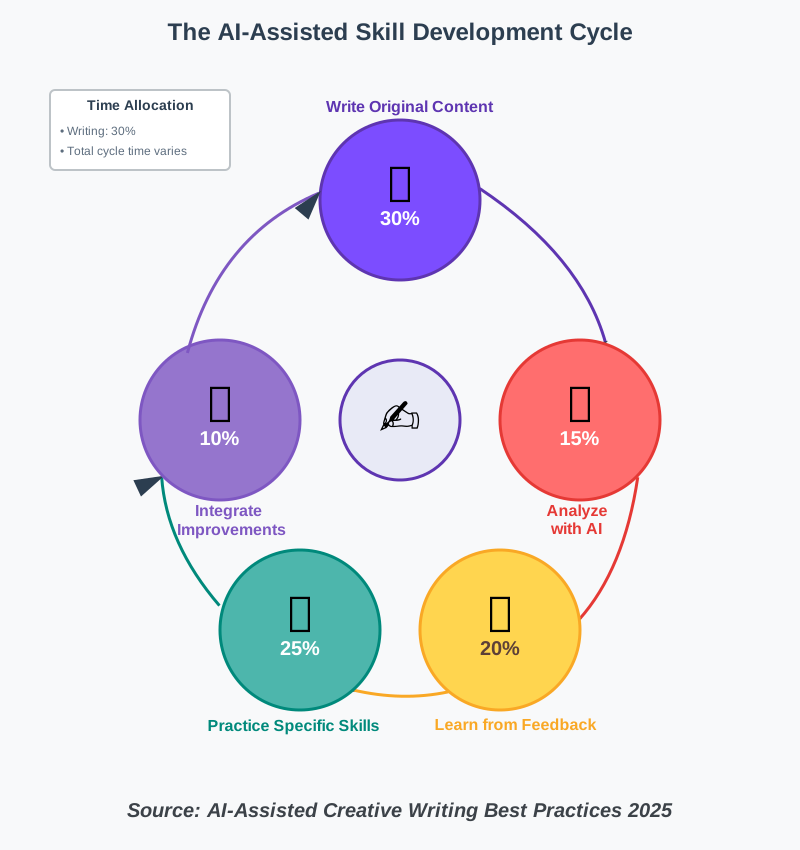
Skill Enhancement Technique 2: Targeted Improvement
If you struggle with specific craft elements—dialogue, pacing, description—use AI to practice these skills:
- Write dialogue exchanges, then ask AI to evaluate whether different characters have distinct voices
- Draft descriptions, then request feedback on sensory details or pacing
- Create plot outlines and ask AI to identify potential pacing issues
This targeted practice, when combined with traditional craft books and writing communities, accelerates your learning.
Why this helps: You receive immediate feedback on specific elements, letting you iterate and improve faster than waiting for beta readers or workshop sessions (though those remain valuable for other reasons).
Skill Enhancement Technique 3: Style Analysis
Have AI analyze your writing style by submitting samples and asking for observations:
“What are the characteristics of this writing sample?” Or, “How would you describe the tone and style here?” This outside perspective sometimes reveals patterns you couldn’t see yourself.
Important limitation: Remember, AI doesn’t truly understand nuance or artistry—it recognizes patterns. Use its feedback as one data point, not a definitive assessment. Your writing community, beta readers, and personal judgment remain more trustworthy.
The Future of Creative Writing: Collaboration Between Humans and AI
The Future of Creative Writing: Collaboration Between Humans and AI is unfolding now, and understanding this evolution helps us navigate it responsibly and make informed choices about our creative practices.
We’re witnessing a fundamental shift in creative workflows, but this shift doesn’t diminish the importance of human creativity—if anything, it amplifies the value of authentic human perspective, emotional truth, and lived experience. AI can generate text, but it cannot live a life, feel genuine emotion, or develop the wisdom that comes from human experience.
What Collaboration Really Means
Healthy collaboration between humans and AI in creative writing involves:
Clear role definition: You remain the author, the creative visionary, and the decision-maker. AI serves as an assistant, researcher, and technical helper.
Transparent processes: When you use AI assistance in your creative work, understanding exactly how and where you’ve used it helps you maintain ethical clarity.
Preserved authorship: The core creative decisions—theme, message, emotional truth, character development, and plot direction—remain human-driven.
Emerging Safe Practices
As AI-Assisted Creative Writing tools evolve, new best practices emerge:
- Version control: Keep clear records of which drafts involved AI assistance and which didn’t
- Attribution standards: Industry conversations about how to acknowledge AI assistance are developing—stay informed
- Contract awareness: Publishing contracts increasingly address AI use— read carefully and ask questions
- Community standards: Writing communities are establishing norms around AI use—participate in these conversations
Why staying informed matters: The landscape changes rapidly. What’s acceptable today might shift tomorrow. Active participation in these discussions protects your interests and helps shape ethical standards.
AI-Powered Grammar and Style Checkers: A Comprehensive Review
AI-Powered Grammar and Style Checkers: A Comprehensive Review helps writers understand which tools offer genuine assistance while respecting privacy and maintaining control over creative choices.
Grammar and style checkers represent some of the earliest and most widely adopted AI-Assisted Creative Writing tools. These applications have matured significantly, offering sophisticated suggestions beyond simple spell-checking.
Evaluating Grammar Checkers Safely
When selecting AI-powered grammar and style tools, consider:
Privacy first: Does the tool analyze your text locally on your device or send it to external servers? Local processing offers better privacy protection for sensitive content.
Suggestion quality: Run sample texts through different tools to compare accuracy and usefulness. Some tools excel at technical correctness, while others better understand stylistic nuance.
Customization options: Can you train the tool to recognize your voice and style preferences? Better tools learn your patterns and reduce false positives over time.
Integration: Does the tool work within your existing writing software, or do you need to copy-paste between applications? Seamless integration reduces security vulnerabilities from data transfer.
Major Grammar and Style Checkers: What to Know
Different tools serve different needs. Here’s what matters most for safe, effective use:
For basic grammar and spelling: Free, well-established tools work fine for most writers. These typically send data externally, so avoid using them for highly sensitive content before publication.
For style and tone: More advanced tools analyze emotional tone, readability, and stylistic consistency. These features help significantly with revision but require sharing more extensive text samples, raising privacy considerations.
For specific genres: Some tools specialize in academic, business, or creative writing. Specialized tools often provide more relevant suggestions but may have smaller user bases and less-proven privacy practices.
Best practice: Use multiple tools for different purposes rather than relying on one system for everything. This diversification reduces risk while maximizing benefits.
Generating Ideas with AI: Brainstorming Techniques for Writers
Generating Ideas with AI: Brainstorming Techniques for Writers transforms how we approach the earliest, most vulnerable stage of creative work—but protecting your nascent ideas requires extra care.
The ideation phase, when concepts are fragile and half-formed, can benefit enormously from AI assistance, yet this is also when your work is most vulnerable to unintentional sharing or loss of originality.
Brainstorming Technique 1: Conceptual Combinations
Ask AI to combine seemingly unrelated concepts to spark unexpected story ideas:
“Combine the concept of time travel with small-town gossip” or “Mix mythological creatures with contemporary social media culture.”
These combinations create starting points you can develop in entirely personal directions.
Why this is safe: You’re using AI to generate thought-starters, not plot details or character specifics. The creative work—developing these combinations into meaningful stories—remains entirely yours.
Brainstorming Technique 2: What-If Scenarios
Use AI to rapidly generate what-if scenarios that launch story exploration:
“What if people could only speak truths?” or “What if everyone’s dreams became visible?” Then take the most interesting scenario and develop it through your own creative lens.
Privacy protection: Keep brainstorming sessions generic and separate from your actual story development. Once you’ve identified promising ideas, switch to private writing without AI to develop them fully.
Brainstorming Technique 3: Theme Exploration
Ask AI about themes, archetypes, or storytelling traditions to deepen your conceptual understanding:
“What are common themes in redemption narratives?” or “How do different cultures approach storytelling about transformation?”
This research-oriented approach builds your knowledge base safely while respecting cultural and intellectual traditions.
Educational approach: Treat AI as a reference librarian pointing you toward concepts to explore further through traditional research and personal reflection.
AI for Scriptwriting: Developing Screenplays and Stage Plays
AI for Scriptwriting: Developing Screenplays and Stage Plays brings unique considerations since scripts involve collaborative production, specific formatting requirements, and industry standards around authorship.
Scriptwriters face distinctive challenges and opportunities with AI-Assisted Creative Writing because scripts serve as blueprints for collaborative artistic realization rather than final artistic products themselves.
Script-Specific AI Applications
Dialogue polishing: AI can help identify where dialogue sounds wooden or expository, though it cannot capture authentic voice or cultural specificity without your guidance.
Format checking: AI excels at identifying formatting errors in screenplay or stage play formatting, saving time during revision.
Structure analysis: Request AI evaluate whether your script follows standard act structures, helping ensure industry-standard pacing.
Scene headings: Ask AI to check consistency in scene headings, character names, and technical formatting—tedious details that distract from creative work.
Unique Scriptwriting Safety Concerns
Collaboration documentation: If you use AI assistance during script development, understand how this might affect collaboration agreements with producers, directors, or co-writers.
Guild considerations: Professional screenwriters’ and playwrights’ guilds have specific policies about AI use and crediting. Familiarize yourself with these standards if you work professionally.
Production sensitivity: Scripts often circulate among production teams before public release. Using AI tools with strong privacy protection becomes especially important to prevent unauthorized leaks.
Best practices for screenwriters: Maintain offline copies, use AI primarily for technical and structural feedback rather than creative generation, and clearly document your creative process for potential future disputes about authorship.
AI-Assisted Creative Writing: Avoiding Plagiarism and Maintaining Originality
AI-Assisted Creative Writing: Avoiding Plagiarism and Maintaining Originality addresses perhaps the most critical ethical concern facing writers using AI tools: ensuring your work remains genuinely yours.
Plagiarism in the context of AI assistance involves multiple considerations beyond traditional copying—it includes understanding how AI generates content, recognizing when AI suggestions might inadvertently reproduce existing works, and maintaining clear boundaries between assistance and authorship.
Understanding AI and Originality
AI generates text based on patterns learned from training data. While AI doesn’t copy specific passages (in most cases), it might produce suggestions that closely resemble existing published works, especially for common phrases, tropes, or story structures.
Protecting Originality: Step-by-Step
Step 1: Verify AI suggestions
Never assume AI-generated content is original. Run significant AI-suggested passages through plagiarism checkers before incorporating them into your work.
Why this matters: AI training data includes published works, and similar prompts might produce similar results across users. What feels original to you might already exist elsewhere.
Step 2: Transform, don’t transplant
When AI suggests ideas or phrasing, transform these suggestions substantially rather than using them verbatim. Add your unique perspective, personal details, and distinct voice.
Step 3: Document your process
Keep notes about where and how you used AI assistance. This documentation protects you if questions about originality arise later and helps you understand your own creative process better.
Step 4: Trust your instincts
If an AI suggestion feels too perfect, too polished, or too different from your natural style, investigate further. Your creative instincts often detect problems before conscious analysis does.
The 80/20 Rule for Originality
A safe guideline: At least 80% of your creative work—core concepts, character development, emotional truth, distinctive voice, and thematic exploration—should come from you, with AI providing at most 20% assistance in execution, technical refinement, or exploration of alternatives.
This ratio ensures your work remains fundamentally yours while still benefiting from AI support.
Ethical Considerations in AI-Assisted Creative Writing
Ethical Considerations in AI-Assisted Creative Writing extends beyond avoiding plagiarism to encompass broader questions about transparency, attribution, environmental impact, and social responsibility.
As writers embracing AI tools, we carry responsibility not just for our individual practices but for shaping industry norms and cultural expectations around AI use in creative fields.
Key Ethical Questions to Consider
Disclosure: When should writers disclose AI use to readers, publishers, or contests? While consensus hasn’t fully formed, erring toward transparency generally serves you better long-term.
Fair compensation: If AI assists with writing, does this change fair payment for creative work? How do we ensure writers receive appropriate compensation when tools reduce time investment?
Access and equity: Expensive AI tools create potential disparities between writers who can afford premium assistance and those who cannot. How do we address this equity concern?
Training data: AI learns from existing creative works. Are the original creators of training data compensated fairly? Should they be?
Environmental impact: Large AI models require significant computational resources with environmental costs. How do we balance benefits against environmental responsibility?
Developing Your Personal Ethics
Create your own ethical framework for AI-Assisted Creative Writing:
Define your boundaries: Decide which writing tasks feel appropriate for AI assistance and which you’ll always do independently.
Commit to transparency: Determine how and when you’ll acknowledge AI use in your work.
Support fair practices: Choose AI tools from companies with ethical training data practices and fair compensation models where possible.
Participate in conversations: Engage with other writers, industry professionals, and ethicists developing standards for AI use in creative writing.
Review regularly: Your ethical framework should evolve as technology changes and industry norms develop.
Why personal ethics matter: Individual choices collectively shape industry practices. Your thoughtful approach contributes to developing healthy norms for AI-Assisted Creative Writing.
AI-Powered Character Development: Creating Believable Characters
AI-Powered Character Development: Creating Believable Characters explores how AI can support one of fiction’s most challenging aspects while preserving the authenticity that makes characters memorable.
Characters represent the heart of most fiction—readers connect with stories through relationships with characters whose journeys feel meaningful and true. AI can assist with technical aspects of character development without replacing the empathy and insight that creates truly believable characters.
Safe Character Development Techniques
Technique 1: Character consistency checking
As you write, occasionally ask AI to analyze whether a character’s actions align with their established personality and background. This helps catch inconsistencies before they confuse readers.
Example: “Based on this character description [provide description], would these actions [describe actions] feel consistent with their personality?”
Why this is safe: You’re using AI as a consistency checker for decisions you’ve already made, not asking it to create character traits or motivations.
Technique 2: Cultural research assistance
When creating characters from backgrounds different from your own, use AI to identify research areas you should explore to portray these characters respectfully and accurately.
Example: “What aspects should I research to authentically portray a character who [specific background detail]?”
Critical caveat: AI provides starting points for research, not authority on cultural experiences. Always verify information through primary sources and sensitivity readers.
Technique 3: Character interview practice
Use AI to role-play interviewing your characters, helping you understand their voices and perspectives more deeply.
You provide character details, then conduct an interview where AI responds as that character based on information you’ve given. This exploratory technique helps develop understanding without requiring AI to create the character itself.
Best practice: Remember these interviews are practice tools. The genuine character voice in your actual story comes from you, informed by but not copied from these exercises.
AI Tools for Worldbuilding: Constructing Immersive Fictional Universes
AI Tools for Worldbuilding: Constructing Immersive Fictional Universes helps writers create richly detailed settings without getting overwhelmed by complexity or losing creative control.
Worldbuilding—developing the physical, cultural, political, and social aspects of fictional settings—benefits significantly from AI assistance because it involves managing extensive interconnected details while maintaining internal consistency.
Worldbuilding Application 1: Logical Consistency Checking
Ask AI to identify potential logical inconsistencies in your world’s rules or systems:
“If magic works this way [describe], what implications would that have for [specific aspect of society]?” This helps ensure internal consistency without requiring you to personally trace every logical connection.
Safety consideration: Keep worldbuilding documents separate from main manuscript files. If a platform breach occurred, losing worldbuilding notes hurts less than losing your actual story.
Worldbuilding Application 2: Cultural Development Support
Use AI to brainstorm cultural elements—customs, traditions, and values—by asking about how different factors might influence social development:
“How might geography influence cultural values in a desert civilization?” or “What economic systems might develop in a society with these resources?”
Cultural sensitivity: When drawing inspiration from real cultures, use AI to identify topics requiring more profound research, but never rely on AI as the sole authority about cultural practices or beliefs.
Worldbuilding Application 3: Detail Generation
Let AI help generate minor details that add richness without requiring extensive creative energy:
- Street names in fictional cities
- Menu items at local restaurants
- Background characters’ occupations
- Flora and fauna descriptions
- Historical event dates and timelines
Why this works: These supporting details add immersion but don’t carry thematic weight. Using AI for minor details preserves your creative energy for story-critical elements.
Organizing Worldbuilding with AI
AI-Assisted Creative Writing tools can help organize the complex information involved in worldbuilding:
- Create timelines tracking historical events
- Develop family trees for dynastic stories
- Track character relationships and connections
- Maintain consistency in magical systems or technology
- Document linguistic patterns for invented languages
Security tip: Use dedicated worldbuilding software with strong privacy protection rather than general AI chat interfaces for storing sensitive world details.
AI-Assisted Creative Writing: Improving Your Writing Style
AI-Assisted Creative Writing: Improving Your Writing Style focuses on refinement and polishing—areas where AI provides substantial value without threatening creative authenticity.
Style encompasses sentence structure, word choice, rhythm, tone, and the distinctive patterns that make your writing recognizable. AI can help identify areas for improvement while you maintain ultimate creative control.
Style Improvement Strategy 1: Sentence Variety Analysis
Submit writing samples to AI and ask for analysis of sentence structure variety:
“Analyze the sentence structure in this passage. Are sentences too similar in length or structure?” This identifies monotonous patterns you might not notice independently.
Implementation: After AI identifies patterns, you decide how to address them. Perhaps consistent short sentences create intentional tension, or maybe they signal rushed writing needing revision.
Style Improvement Strategy 2: Word Choice Refinement
Use AI to suggest alternative word choices when you feel something sounds off but can’t identify the problem:
“Suggest alternatives for [word] in this context that convey [specific nuance].”
Important boundary: Accept AI suggestions only when they genuinely improve your intended meaning. Don’t let AI push your style toward generic “good writing” that erases your distinctive voice.
Style Improvement Strategy 3: Tone Consistency
Ask AI to evaluate whether tone remains consistent throughout longer works:
“Does the tone shift unexpectedly between these two passages?” This helps catch inadvertent changes that might confuse or jar readers.
Why this helps: Maintaining consistent tone across thousands of words challenges even experienced writers. AI’s pattern recognition can spot inconsistencies that might take multiple beta readers to identify.
AI for Editing and Proofreading: Streamlining Your Writing Process
AI for Editing and Proofreading: Streamlining Your Writing Process demonstrates where AI assistance proves most valuable—handling technical, detail-oriented tasks that consume time without requiring creative judgment.
Editing and proofreading involve multiple passes through manuscript text, identifying errors, inconsistencies, and areas for improvement. AI excels at systematic analysis, catching things human eyes miss during repeated reads.
The Three-Tier Editing Approach
Tier 1: Mechanical proofreading
Use AI to catch typos, grammatical errors, punctuation mistakes, and spelling problems. This represents AI’s strongest capability—identifying objective errors against established rules.
Process: Run completed drafts through AI proofreading tools, then review all suggestions before accepting any. Some “errors” might be intentional stylistic choices.
Tier 2: Consistency checking
Ask AI to identify inconsistencies in character names, location names, timeline details, physical descriptions, or established facts.
Example: “Check whether the protagonist’s eye color remains consistent throughout this manuscript.”
Why this matters: Consistency errors break reader immersion. AI’s perfect recall catches these details that human editors often miss.
Tier 3: Readability optimization
Request AI analyze reading level, sentence complexity, and paragraph length to ensure your writing matches intended audience expectations.
Limitation awareness: AI evaluates technical readability metrics but cannot judge whether complexity serves artistic purpose. You decide whether to simplify based on your goals.
Editing Best Practices with AI
Never bulk-accept suggestions: Review each AI recommendation individually. Accept suggestions that genuinely improve your work while rejecting changes that alter meaning or weaken your voice.
Preserve original versions: Keep unedited versions before applying AI suggestions. This lets you revert changes if you later realize suggestions weakened the work.
Understand why suggestions appear: When AI flags something, understand the underlying issue even if you reject the specific suggestion. This knowledge improves your writing long-term.
Combine AI and human editing: AI catches technical errors efficiently, but human editors provide irreplaceable insight into character development, emotional resonance, and storytelling effectiveness.
AI-Generated Story Prompts: Sparking Your Imagination
AI-Generated Story Prompts: Sparking Your Imagination offers writers an endless source of creative starting points—provided you use these prompts as springboards rather than blueprints.
Story prompts serve as creative catalysts, presenting situations, conflicts, or concepts that launch imaginative exploration. AI generates novel prompt combinations that might never occur to you naturally.
Using Prompts Safely and Effectively
Request specificity: Generic prompts lead to generic stories. Ask AI for prompts involving specific elements you want to explore:
“Generate a story prompt involving time travel, family secrets, and a small coastal town” produces more focused, useful starting points than “Give me a story prompt.”
Combine multiple prompts: Take two or three AI-generated prompts and challenge yourself to combine them into one story. This transformation ensures originality since you’re creating something new from multiple sources.
Add personal elements: Immediately infuse AI prompts with personal experience, emotion, or perspective. The prompt provides structure; your unique viewpoint provides heart.
Prompt Transformation Exercise
When AI suggests a prompt, transform it substantially before writing:
Original AI prompt: “A detective discovers their partner has been hiding a dangerous secret.”
Your transformation: Draw on personal experience with secrets, relationships that felt fragile, or moments of discovering hidden truths. Change the setting to something meaningful to you. Adjust the conflict to explore themes you care about. By the time you begin writing, the story is yours, merely sparked by AI’s initial suggestion.
Why transformation matters: Thousands of writers might receive similar AI prompts. Your distinctive transformation ensures your story remains uniquely yours.
AI-Assisted Creative Writing: For Non-Fiction
AI-Assisted Creative Writing: For Non-Fiction extends AI assistance beyond fiction into essays, memoirs, journalism, and other reality-based writing that requires different ethical considerations.
Non-fiction writing—where accuracy, factual truth, and personal perspective merge—brings additional responsibilities when using AI assistance. The techniques differ somewhat from fiction writing because you’re accountable for factual accuracy in ways fiction doesn’t require.
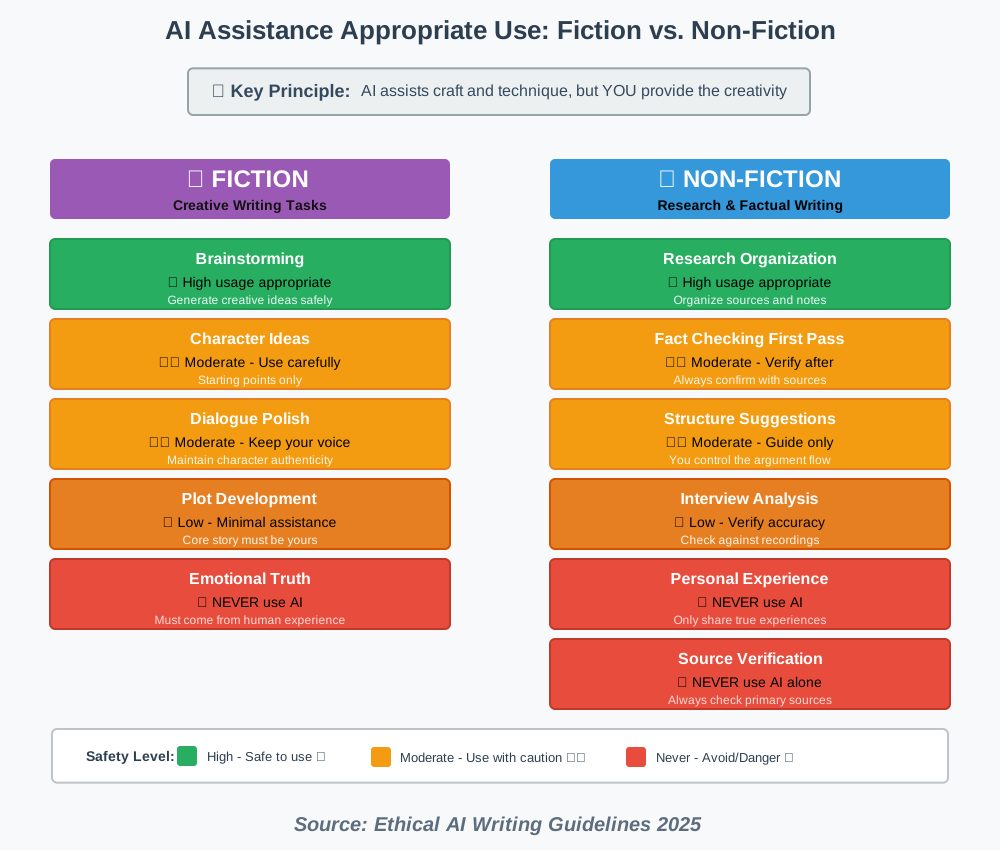
Non-Fiction AI Assistance Applications
Research organization: Use AI to help organize research notes, identify themes across sources, and track citation information. This organizational support prevents information overload during complex research projects.
Fact verification: Ask AI about factual claims as a first check, but always verify through authoritative primary sources. AI makes mistakes and cannot access the most current information without additional tools.
Structure development: Request AI to suggest organizational structures for essays or articles based on your main arguments and supporting evidence.
Interview transcription analysis: If you transcribe interviews, AI can help identify key themes and quotes, though you must verify accuracy against original recordings.
Non-Fiction-Specific Ethical Concerns
Accuracy verification: AI-generated information might sound authoritative but contain errors. Every fact must be verified through reliable sources before publication.
Attribution requirements: Non-fiction requires crediting sources carefully. AI can’t be listed as a source since it has no authority. Research and cite primary sources instead.
Personal voice in memoir: Memoir demands authentic personal voice and true experience. AI assistance should never extend to fabricating events or emotional responses.
Best practice for nonfiction: Use AI primarily for organizational and structural support. The research, fact-checking, analysis, and personal perspective must come from you.
AI-Powered Translation for Creative Writers: Reaching a Global Audience
AI-Powered Translation for Creative Writers: Reaching a Global Audience opens international opportunities while requiring careful attention to cultural nuance and meaning preservation.
Translation represents one area where AI assistance provides genuine value—enabling writers to reach audiences speaking different languages without requiring multilingual fluency or expensive professional translation services.
Translation Considerations and Limitations
Strength of AI translation: Technical accuracy in translating straightforward prose has improved dramatically. AI handles grammar, vocabulary, and basic meaning well for many language pairs.
Weakness of AI translation: Idioms, cultural references, wordplay, humor, poetry, and subtle emotional nuances often translate poorly. AI misses context-dependent meanings that native speakers understand instinctively.
Safe Translation Practices
Step 1: Verify with native speakers
Never publish AI-translated work without review by native speakers of the target language. Cultural consultants catch problems AI cannot recognize.
Why this matters: Mistranslation can offend readers or completely change your intended meaning. Professional review protects both your reputation and your readers’ experience.
Step 2: Simplify source text before translation
Before translating, revise your original text to reduce idioms, culturally specific references, and complex sentence structures. Clearer source text translates more accurately.
Step 3: Back-translate to check accuracy
Have AI translate your work to another language, then translate that version back to your original language. Compare the back-translation to your original to identify where meaning got lost.
Step 4: Consider professional editing
For commercially published work, invest in professional editing for AI translations. The cost is substantially less than full human translation while ensuring quality and accuracy.
Cultural Adaptation Beyond Translation
True internationalization requires more than word-for-word translation:
- Cultural references might need adaptation to remain meaningful
- Examples and metaphors should resonate with target culture
- Humor often requires complete reimagining rather than translation
- Sensitivity to cultural values and social norms affects character portrayal
Best approach: Use AI for the initial translation draft, then work with cultural consultants to adapt content appropriately for target audiences.
Personalizing Your Writing with AI: Tailoring Content to Your Audience
Personalizing Your Writing with AI: Tailoring Content to Your Audience helps writers adapt tone, complexity, and content to connect effectively with specific reader groups.
Understanding your audience—their knowledge level, interests, concerns, and preferences—improves connection and engagement. AI can help analyze and adjust writing to better match audience needs without losing your authentic voice.
Audience Analysis Technique
Before writing, ask AI to help you understand your target audience:
“What concerns would a [specific audience description] have about [your topic]?” or “What language level is appropriate for [audience description]?”
This research helps you make informed decisions about tone, complexity, and emphasis.
Adaptation Strategy 1: Reading Level Adjustment
Use AI to evaluate whether your writing complexity matches your intended audience:
For general audiences, aim for clear, accessible language. For specialized audiences, technical terminology might be appropriate and expected.
How to implement: Write naturally first, then ask AI to evaluate reading level and suggest simplifications if needed for your target audience.
Adaptation Strategy 2: Tone Calibration
Different audiences respond to different tones—professional, casual, humorous, serious, and inspirational. AI can help identify whether your tone matches audience expectations:
“Does this passage’s tone feel appropriate for [audience description]?”
Your judgment remains primary: AI identifies mismatches, but you decide whether changing tone serves your goals or whether your intended tone should remain despite potential mismatch.
Adaptation Strategy 3: Cultural Relevance
When writing for audiences from cultures different than your own, use AI to identify potential cultural blind spots:
“What cultural factors should I consider when writing about [topic] for [cultural audience]?”
Critical reminder: AI provides starting points for research, not definitive cultural guidance. Consult with members of the target culture before publication.
AI-Assisted Creative Writing: Overcoming Language Barriers
AI-Assisted Creative Writing: Overcoming Language Barriers empowers writers working in non-native languages to express themselves more confidently and clearly.
For writers composing in languages they’ve learned rather than spoken from birth, AI assistance reduces stress, improves accuracy, and builds confidence without replacing the learning process.
Language Learning Support Strategy
Use AI as a language tutor: Ask questions about grammar, word choice, and idiom usage as you write. This real-time feedback accelerates language learning while supporting your immediate creative work.
Example: “Is this phrase idiomatic in English?” or “Which preposition fits better here?”
Build vocabulary naturally: When you can’t think of the right word, describe what you mean to AI and ask for suggestions. This builds vocabulary in context rather than through memorization.
Understand corrections: When AI suggests changes, ask why. Understanding the reasoning behind corrections improves your language skills long-term.
Maintaining Your Voice Across Languages
The challenge: Writing in non-native languages can make your voice feel constrained or artificial as you focus on correctness over expression.
The solution: Write first in your native language to capture authentic voice and emotion, then work with AI to translate while preserving essential character and feeling. This two-step process maintains authenticity while leveraging AI’s language skills.
Cultural bridge: Use AI to help you understand how concepts from your cultural background might be expressed effectively for readers from different backgrounds.
Building Confidence
Practice with AI feedback: Use AI for low-stakes practice writing where you experiment with expression without worrying about permanent publication. This safe practice builds confidence.
Celebrate progress: Track improvement over time by occasionally revisiting earlier work. Recognize how AI assistance has helped you grow as a writer in your adopted language.
Connect with community: Join writing groups for multilingual writers where AI assistance use is normalized and supported. Shared experience reduces isolation and provides practical tips.
AI for Dialogue Generation: Crafting Realistic Conversations
AI for Dialogue Generation: Crafting Realistic Conversations addresses one of fiction’s most challenging aspects—creating dialogue that sounds natural while advancing the story and revealing character.
Dialogue serves multiple purposes simultaneously: revealing character, advancing plot, providing information, creating tension, and establishing relationships. AI can help refine dialogue without replacing the authentic human understanding of conversation.
Dialogue Testing Technique
After drafting dialogue, use AI to evaluate whether different characters have distinct voices:
“Do these three characters sound different from each other based on their dialogue?” If AI identifies where voices blur together, revise to strengthen distinction.
Why this works: AI’s pattern recognition identifies where dialogue becomes generic or where characters sound too similar, helping you maintain distinct character voices.
Dialogue Refinement Process
Step 1: Write dialogue from character knowledge
First drafts of dialogue should come entirely from your understanding of characters, their backgrounds, relationships, and goals. Don’t ask AI to generate dialogue in initial drafts.
Step 2: Read aloud
Before using AI assistance, read dialogue aloud. Your ear catches many problems—unnatural phrasing, missing subtext, unclear speakers—without AI.
Step 3: Ask specific questions
Use AI to address specific dialogue concerns: “Does this exchange feel too expository?” or “Is there enough subtext in this conversation?”
Step 4: Test alternative phrasings
When dialogue feels off but you can’t identify why, ask AI to suggest alternatives. Consider these suggestions as possibilities, not improvements—sometimes your original instinct was correct.
Dialogue Don’ts with AI
Don’t ask AI to write character dialogue from scratch: You know your characters’ voices, backgrounds, and motivations. AI doesn’t, despite any information you provide.
Don’t accept generic suggestions: If AI suggests dialogue that sounds writerly but not character-specific, reject it. Real dialogue contains imperfections, interruptions, and idiosyncrasies that make it believable.
Don’t eliminate all exposition: Some dialogue naturally conveys information. Not every exchange needs to be pure subtext. AI sometimes overcorrects toward writerly ideals that don’t serve storytelling.
AI-Assisted Creative Writing: Analyzing the Tone and Sentiment of Your Work
AI-Assisted Creative Writing: Analyzing the Tone and Sentiment of Your Work helps writers understand how their prose might land emotionally with readers, providing valuable perspective during revision.
Tone and sentiment—the emotional quality of your writing—significantly impact reader experience. During writing, especially for long projects, maintaining a consistent, appropriate tone challenges even experienced writers.
Sentiment Analysis Applications
Overall tone checking: Submit passages or chapters to AI and ask for tone analysis: “What emotional tone does this passage convey?”
This outside perspective helps identify whether your intended emotional impact matches the actual textual effect.
Consistency verification: Check whether tone shifts appropriately throughout your work. Unexpected tonal shifts can jar readers or signal pacing problems.
Intensity calibration: Ask AI whether emotional intensity matches the scene’s importance: “Does the intensity of this passage match its significance in the story?”
Using Tone Analysis Safely
Remember limitations: AI identifies textual patterns but doesn’t experience emotion. Its analysis represents pattern matching, not a genuine emotional response.
Prioritize human beta readers: For true emotional impact assessment, human readers provide irreplaceable insight. Use AI tone analysis as preliminary feedback, not a replacement for human response.
Consider cultural factors: Emotional expression varies across cultures. AI trained primarily on one cultural context might misread tone in works rooted in different traditions.
Trust your artistic judgment: If AI identifies a tone it considers problematic but you intend that tone for artistic reasons, maintain your choice. Not all writing should be emotionally comfortable.
AI for Plot Development: Structuring Your Stories Effectively
AI for Plot Development: Structuring Your Stories Effectively explores how AI assists with narrative architecture while writers maintain creative control over story events and thematic meaning.
Plot development involves balancing setup and payoff, maintaining momentum, structuring acts effectively, and ensuring events flow logically while surprising readers. AI helps identify structural weaknesses without determining story content.
Plot Structure Analysis
Identify pacing issues: Ask AI to analyze the plot summary for pacing concerns: “Does this plot outline have pacing problems?”
AI might identify sagging middles, rushed endings, or uneven scene distribution that you missed while focused on specific story moments.
Check setup and payoff: Request AI verify important story elements get properly established and resolved: “Are all these introduced elements resolved by the story’s end?”
Test cause and effect: Ask whether plot events flow logically: “Do these events follow logically from each other?”
Plot Development Best Practices
Outline first independently: Develop your basic plot structure without AI assistance. The core story—theme, character arcs, major events—should originate from your creative vision.
Use AI for problem-solving: When the plot feels stuck or illogical, describe the problem to AI and request suggestions for resolution. Consider these as possibilities to adapt, not solutions to adopt directly.
Maintain thematic control: AI can’t understand your story’s deeper thematic significance. When AI suggests plot changes, ensure revisions support rather than undermine your thematic goals.
Document major decisions: Keep notes about significant plot choices and reasoning. This documentation helps maintain creative clarity as you revise, preventing AI suggestions from leading you away from core story intentions.
AI-Assisted Creative Writing: Experimenting with Different Writing Styles
AI-Assisted Creative Writing: Experimenting with Different Writing Styles encourages writers to expand their range and capabilities through safe style exploration with AI guidance.
Developing stylistic flexibility strengthens writing generally—even if you ultimately maintain one primary style, understanding alternatives improves craft awareness and helps you make intentional choices.
Style Experimentation Exercise 1: Historical Period Styles
Ask AI to analyze your writing sample and suggest how it might be adapted to reflect different historical period styles—Victorian prose, modernist minimalism, and postmodern fragmentation.
Learning goal: Understanding how sentence structure, word choice, and rhythm create period-specific effects.
Implementation: Experiment with these styles in practice writing, not finished work. Notice which elements appeal to you and might enhance your natural style.
Style Experimentation Exercise 2: Genre Conventions
Request AI identify genre-specific stylistic conventions: “What stylistic patterns characterize noir detective fiction?” or “How does literary fiction typically handle time?”
Learning goal: Recognizing how genre expectations shape stylistic choices.
Application: Decide which conventions serve your story and which you’ll deliberately subvert for artistic effect.
Style Experimentation Exercise 3: Voice Variation
Use AI to help you explore different narrative voices—first person, third person limited, third person omniscient, second person, and multiple perspectives.
Write the same scene in different voices, then ask AI to analyze how voice changes affect emotional impact, reader distance, and information revelation.
Why this matters: Understanding voice options helps you choose the most effective perspective for each project.
Maintaining Authenticity During Experimentation
Don’t lose yourself: Style experimentation should expand your capabilities, not erase your distinctive voice. Regularly return to writing without any AI assistance to maintain connection with your authentic style.
Steal like an artist: When you discover stylistic techniques you admire through AI-assisted exploration, don’t copy directly—transform these techniques to fit your unique voice and vision.
Know why you choose: Every stylistic choice should serve your story’s needs. Understanding why certain styles work for certain stories prevents arbitrary or trendy choices that don’t serve your creative goals.
AI-Powered Research Tools for Creative Writers
AI-Powered Research Tools for Creative Writers streamlines the research process that supports believable fiction and accurate non-fiction without replacing careful verification.
Research grounds creative work in reality, whether you’re writing historical fiction requiring period accuracy, science fiction demanding technical plausibility, or contemporary fiction depicting unfamiliar professions, locations, or experiences.
Research Application 1: Initial Information Gathering
Use AI as a starting point for research on unfamiliar topics:
“What should I know about 18th-century sailing vessels?” or “What are key aspects of forensic accounting?”
AI provides an overview, helping you identify specific areas requiring more profound research through authoritative sources.
Critical limitation: AI information represents patterns from training data, not verified current knowledge. Every fact must be confirmed through reliable primary or secondary sources before inclusion in your work.
Research Application 2: Expert Interview Preparation
When you interview experts for research, use AI to help prepare informed questions:
“What questions should I ask a trauma surgeon about emergency room procedures?” This preparation shows respect for experts’ time and yields more useful information.
Research Application 3: Consistency in Invented Details
For science fiction or fantasy requiring invented science or magic systems, use AI to help maintain internal logical consistency:
“If teleportation works this way [describe], what scientific principles might be involved?” or “What logical limitations would this magical system have?”
Remember: You’re using AI to pressure-test your invented systems for consistency, not to create these systems. The creative worldbuilding comes from you.
Research Safety and Ethics
Verify everything: Never trust AI-provided information without verification. Mistakes in AI output can damage your work’s credibility.
Credit sources properly: If research leads you to specific sources, credit these sources in your work’s acknowledgments or endnotes as appropriate for your genre and format.
Respect expertise: When researching lived experiences different from your own—whether cultural, professional, medical, or otherwise—seek sensitivity readers and expert consultants beyond AI assistance.
Protect interview subjects: If you interview real people for research, respect their privacy and obtain appropriate permissions before including identifying information in published work.
AI-Assisted Creative Writing: Creating Compelling Titles and Headlines
AI-Assisted Creative Writing: Creating Compelling Titles and Headlines helps writers develop titles that attract readers while accurately representing content—a skill valuable across all writing formats.
Titles serve multiple purposes: attracting attention, conveying content, setting tone, and sometimes contributing to the work’s artistic impact. AI can generate numerous title options quickly, helping you identify effective approaches.
Title Generation Process
Step 1: Identify core elements
Before requesting AI assistance, clarify your work’s central elements—theme, tone, key conflict, main character, or central metaphor. This clarity helps you evaluate which AI suggestions actually fit your work.
Step 2: Generate multiple options
Ask AI for numerous title suggestions: “Suggest 20 possible titles for a story about [brief description].”
Quantity matters here—AI might generate mostly mediocre suggestions, but reviewing many options can trigger your own better ideas.
Step 3: Evaluate and refine
Review AI suggestions not as final titles but as starting points. Combine elements from multiple suggestions, modify phrasing, or let suggestions inspire completely different directions.
Step 4: Test with target audience
Before finalizing, test top title contenders with beta readers or critique partners from your target audience. Their responses matter more than AI suggestions.
Title Types and Techniques
Descriptive titles: convey content—useful for nonfiction and genre fiction where reader expectations matter.
Symbolic titles: Reference metaphors or themes—effective for literary fiction where the title adds an interpretive layer.
Question titles: Engage curiosity—work well for articles, essays, and some fiction.
Character or location titles: Ground stories in specific people or places—create immediate connection.
AI advantage: AI can quickly generate examples of different title approaches, helping you see which type best serves your particular work.
AI for Creating Interactive Fiction: Engaging Your Audience
AI for Creating Interactive Fiction: Engaging Your Audience explores an emerging creative format where AI’s capabilities align especially well with the medium’s technical demands.
Interactive fiction—where readers make choices affecting story outcome—combines traditional storytelling with game design elements. Creating branching narratives requires managing exponentially multiplying possibilities, making organization and consistency particularly challenging.
Interactive Fiction Development with AI
Path mapping: Use AI to help visualize and organize branching story paths. “If the story branches at these three points, how many possible endings result?”
This mathematical assistance helps you plan a manageable scope without getting overwhelmed by complexity.
Consistency checking across branches: Ask AI to verify consistency across different story branches. “If the reader chooses this path, would these later events still make sense?”
Variable tracking: Interactive fiction involves tracking numerous variables affecting story progression. AI can help ensure variables update appropriately as stories branch.
Creative Control in Interactive Fiction
You design the story structure: AI helps organize and verify, but you create the meaningful choices, develop characters, write actual prose, and determine which story paths exist.
You craft the prose: Each scene, regardless of branching, requires your creative voice and storytelling skill. AI assists with organization, not fundamental creation.
You understand player experience: Player agency and meaningful choice require human understanding of psychology and narrative satisfaction. AI cannot design truly satisfying interactive experiences independently.
Technical Implementation
Many interactive fiction platforms offer AI integrations for certain technical tasks—tracking variables, managing conditional text display, or organizing complex branching structures.
Safety consideration: Understand each platform’s privacy policies before committing to interactive fiction projects. Some platforms may claim ownership rights over works created using their tools.
AI-Assisted Creative Writing: For Fan Fiction Authors
AI-Assisted Creative Writing: For Fan Fiction Authors addresses unique considerations facing writers who create transformative works based on existing intellectual properties.
Fan fiction occupies a complex legal and ethical space. While transformative use provides some protection, fan fiction authors must navigate copyright concerns, community norms, and special ethical considerations when using AI assistance.
Special Considerations for Fan Fiction
Copyright complexity: Fan fiction involves working with copyrighted characters, worlds, and stories. Using AI that was trained on these properties creates additional legal ambiguity.
Community standards: Fan fiction communities have strong norms about originality, attribution, and acceptable creative practices. Many communities are developing specific guidelines about AI use in fan works.
Platform policies: Fan fiction platforms increasingly establish policies about AI-generated content. Some prohibit it entirely; others require disclosure. Always check platform rules before posting AI-assisted work.
Safe AI Use in Fan Fiction
Use AI for technique, not content generation: Let AI help with technical craft—grammar checking, pacing analysis, and structure feedback—rather than generating actual story content involving copyrighted characters.
Disclose AI use: If your fan fiction community allows AI assistance and you’ve used it, disclose this clearly. Transparency maintains community trust.
Respect original creators: Some creators explicitly oppose AI use with their intellectual property. Respect these boundaries even when legal questions remain ambiguous.
Focus on your transformative vision: The value of fan fiction lies in your unique perspective on existing characters and worlds. AI can’t provide this transformative creativity—only you can.
Fan Fiction Ethics
Respect canon authors: Whether or not they’ve spoken about AI, maintain respect for original creators whose work inspires yours.
Credit community traditions: Fan fiction communities have rich traditions and conventions. If you use AI to understand these traditions, acknowledge the community members who developed them.
Participate in community discussions: As AI policies evolve, contribute thoughtfully to community conversations about appropriate use in fan spaces.
AI Tools for Generating Character Arcs: Developing Complex Characters
AI Tools for Generating Character Arcs: Developing Complex Characters helps writers create meaningful character development through AI-assisted structural planning while maintaining emotional authenticity.
Character arcs—the internal changes characters undergo throughout stories—represent the emotional heart of most fiction. While AI can help structure arcs, the emotional truth driving meaningful change must come from human understanding.
Character Arc Planning with AI
Identify arc type: Ask AI to help you understand different character arc patterns: “What are common positive change arcs?” or “How do flat character arcs function?”
This knowledge helps you choose arc types serving your story’s thematic goals.
Plot emotional beats: Request AI help you plan emotional progression: “What emotional stages might a character pass through when [specific situation]?”
Use these suggestions as a starting framework, but imbue each stage with details from your character’s unique background and personality.
Check arc consistency: Ask AI whether the character’s actions align with their arc stage: “Does this behavior fit someone at this point in a redemption arc?”
Maintaining Emotional Authenticity
Ground arcs in character psychology: AI can suggest arc structures, but you must understand why your specific character changes. Psychology, background, relationships, and experiences create believable motivation for change.
Draw from human experience: Meaningful character arcs resonate because they reflect real human struggles, growth, and transformation. Your understanding of human nature—from life experience, empathy, and observation—creates this resonance, not AI suggestions.
Test emotional truth: If AI suggests arc progression that feels forced or false, trust your instincts. Real human change is messy, nonlinear, and deeply personal. Formulaic progression, even if technically correct, might lack emotional authenticity.
AI-Assisted Creative Writing: Identifying and Correcting Weaknesses in Your Writing
AI-Assisted Creative Writing: Identifying and Correcting Weaknesses in Your Writing helps writers develop self-awareness about craft limitations while maintaining confidence and forward momentum.
Every writer has weaknesses—areas where craft needs development, blind spots that affect work quality, or persistent habits that undermine storytelling. AI can help identify these patterns if used thoughtfully as a diagnostic tool rather than a harsh critic.
Diagnostic Approach to Weakness Identification
Pattern recognition: Ask AI to analyze multiple writing samples and identify recurring issues. “What patterns or problems do you see across these excerpts?”
AI’s pattern recognition sometimes spots problems you’ve unconsciously worked around without addressing directly.
Specific concern targeting: If you suspect weakness in specific areas, request focused analysis: “Evaluate the dialogue in these passages—do characters sound distinct?” or “Analyze description—is there enough sensory detail?”
Comparison to goals: Describe your writing goals, then ask AI whether your samples achieve these goals: “I want writing that feels urgent and immediate—does this passage accomplish that?”
Converting Weaknesses to Development Goals
Prioritize strategically: Don’t try addressing every weakness simultaneously. Choose one or two areas for focused improvement.
Practice deliberately: Once you’ve identified specific weaknesses, use AI for targeted practice exercises focusing on these areas.
Example: If dialogue lacks distinction between characters, practice writing conversations between very different character types, requesting AI feedback specifically on voice distinction.
Track improvement: Periodically resubmit earlier work for analysis to recognize progress. This documentation builds confidence and motivates continued development.
Maintaining Confidence During Critique
Balance weakness focus with strength recognition: For every weakness identified, also request AI identify writing strengths. Balanced feedback maintains motivation.
Remember context: Your weaknesses exist within overall capable writing. AI tends to focus on problems without maintaining the perspective that your work also has significant strengths.
Use a growth mindset: View weaknesses as current limitations, not permanent deficiencies. Every successful writer developed through addressing weaknesses systematically over time.
AI for Generating Different Narrative Perspectives: Expanding Your Storytelling
AI for Generating Different Narrative Perspectives: Expanding Your Storytelling helps writers explore viewpoint possibilities and understand how perspective shapes reader experience and story meaning.
Narrative perspective—the lens through which readers experience a story—profoundly affects emotional impact, information revelation, and reader identification with characters. Understanding perspective options expands storytelling capability significantly.
Perspective Exploration Exercise
Take a key scene from your story and ask AI to help you rewrite it from different narrative perspectives:
First person: Written from “I” perspective of one character Third person limited: Focused through one character’s perception using “he/she/they” Third person omniscient: Narrator knows and shares thoughts of multiple characters Second person: Addresses reader directly as “you”
Analysis: After generating different versions, evaluate how perspective changes affect emotional impact, pacing, suspense, and reader connection to characters.
Choosing Appropriate Perspective
Consider story needs: Different perspectives serve different story goals. Intimate character studies often benefit from first person or close third. Multiple-plot narratives might need an omniscient perspective.
Test before committing: If uncertain about the best perspective for your project, write several chapters in different viewpoints before choosing. AI can help generate these test versions quickly.
Stay consistent: Unless perspective shifts serve a clear artistic purpose, maintain consistency throughout. AI can help verify you haven’t unintentionally slipped between perspectives.
Advanced Perspective Techniques
Multiple perspectives: Some stories benefit from multiple character viewpoints. AI can help track which character’s perspective appears in each chapter and ensure balanced representation.
Unreliable narration: Creating narrators whose perceptions readers shouldn’t trust requires careful craft. AI can help identify where unreliability needs reinforcement or where you’ve accidentally revealed too much.
Experimental perspectives: Some stories use unusual narrative approaches—collective first person plural (“we”), direct address, or other unconventional choices. AI can help maintain consistency when executing experimental perspectives.
Frequently Asked Questions About AI-Assisted Creative Writing
Conclusion: Your Creative Journey with AI Assistance
We’ve explored the expansive landscape of AI-Assisted Creative Writing together—from understanding the technology’s capabilities and limitations to implementing safe, ethical practices that protect your voice, your work, and your creative integrity. The tools and techniques we’ve discussed represent powerful resources for writers at all levels, but they remain just that: resources. Tools to enhance, support, and streamline your creative process, never to replace the unique human creativity that makes your stories worth telling.
As you move forward with AI-Assisted Creative Writing, remember that the technology serves you, not the other way around. Your authentic voice, lived experiences, emotional truths, and creative vision remain irreplaceable. AI cannot dream your dreams, feel your feelings, or see the world through your unique perspective. It cannot draw from your cultural heritage, personal relationships, or the thousands of small moments that shape who you are as a writer and as a person.
The most successful integration of AI into your creative practice will be the one that enhances your existing strengths while addressing specific challenges you face. Maybe AI helps you break through writer’s block by generating prompts that spark ideas only you could fully develop. Perhaps it catches consistency errors in your sprawling fantasy world, freeing you to focus on character development. Or it might assist with language confidence if you’re writing in a non-native tongue, helping you express ideas that are authentically yours even as you navigate unfamiliar linguistic territory.
As we’ve emphasized throughout this guide, safe and ethical AI use requires thoughtfulness, transparency, and ongoing engagement with evolving best practices. The landscape changes quickly—new tools emerge, industry standards develop, legal frameworks adjust, and community norms shift. Stay informed, participate in conversations about AI in creative fields, and advocate for practices that protect writers’ rights, respect intellectual property, and maintain the human heart of storytelling.
Your next steps might include:
Experimenting carefully: Choose one or two AI applications we’ve discussed that address your specific needs. Start small, practice with low-stakes projects, and build familiarity before applying AI assistance to your most important work.
Building community: Connect with other writers navigating AI integration. Share experiences, discuss challenges, and develop collective wisdom about effective, ethical practices.
Maintaining boundaries: Establish clear personal guidelines about which creative tasks you’ll always handle independently and where AI assistance feels appropriate. Revisit these boundaries regularly as your skills develop and technology evolves.
Protecting your work: Implement strong privacy practices, understand platform policies, keep thorough backups, and document your creative process.
Growing your craft: Use AI as a learning tool that accelerates craft development, but balance AI assistance with traditional methods—reading widely, studying craft books, participating in workshops, and seeking human feedback.
The future of creative writing will undoubtedly involve AI in various capacities, but this future remains ours to shape. By using these tools thoughtfully, ethically, and strategically, we can harness their benefits while preserving the essentially human nature of storytelling. Your stories matter—the perspectives, truths, and insights only you can share. AI can help you refine how you share these stories, but it cannot create what makes them worth sharing in the first place.
Trust your voice. Protect your creativity. Use AI wisely. And keep writing—the world needs your stories.
About the Authors
This article is the result of collaborative expertise from Nadia Chen and Rihab Ahmed, combining our complementary perspectives on safe, effective AI use in creative writing.
Main Author: Nadia Chen is an expert in AI ethics and digital safety who helps writers navigate AI tools responsibly. With a background in technology policy and creative rights protection, Nadia advocates for transparent, ethical AI practices that empower creators while safeguarding their work and privacy. Her approach emphasizes understanding the technology behind AI writing tools, establishing clear boundaries, and developing personal ethics frameworks that protect creative integrity.
Co-Author: Rihab Ahmed is an educator and lifelong learner who specializes in making complex technologies accessible to students and emerging writers. Rihab brings a student-focused perspective to AI writing tools, emphasizing how these technologies can support learning, skill development, and creative growth when used thoughtfully. Her expertise lies in breaking down technical concepts into clear, actionable steps that anyone can follow, regardless of their technical background or experience level.
Together, we’ve combined Nadia’s focus on safety and ethics with Rihab’s educational approach to create a comprehensive guide that empowers you to use AI-Assisted Creative Writing tools confidently, responsibly, and effectively. Our shared commitment is helping you harness AI’s benefits while maintaining the authentic creative voice and ethical practices that make your writing valuable and uniquely yours.