
AI in Education: Transform Learning for Every Student
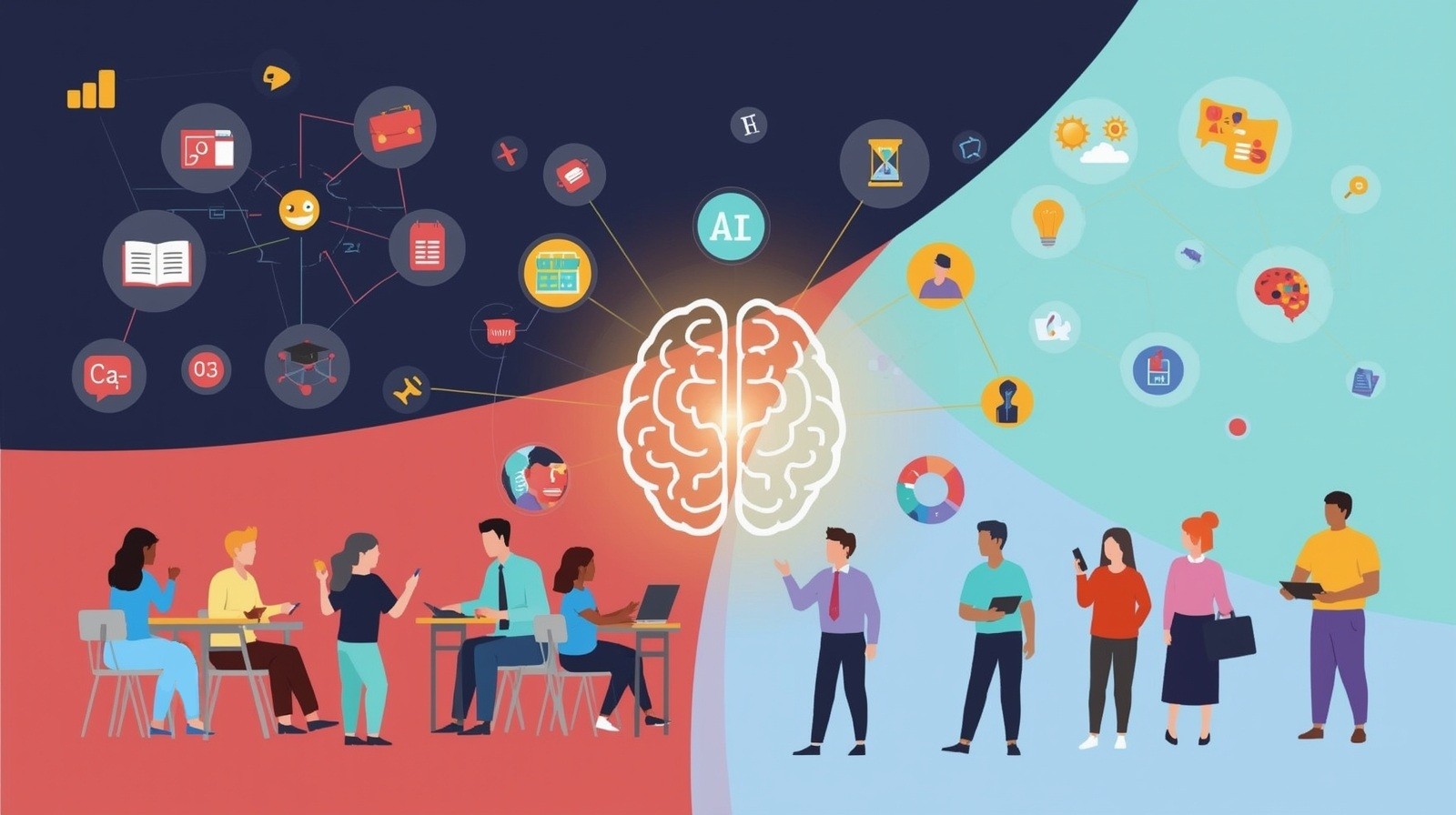
AI in Education and Learning is reshaping how we teach, learn, and grow in ways that seemed impossible just a few years ago. Imagine walking into a classroom where every student receives exactly the instruction they need, at precisely the moment they need it. Picture a world where language barriers dissolve, where students with learning differences thrive alongside their peers, and where teachers have more time to inspire rather than grade papers. This isn’t science fiction—it’s happening right now in schools, universities, and training centers worldwide.
We’ve watched educational technology evolve from chalkboards to smartboards, but artificial intelligence represents something fundamentally different. It’s not just another tool; it’s a responsive partner in the learning process. As educators and technology enthusiasts who’ve spent years helping people understand and use AI effectively, we’re excited to guide you through this transformation. Whether you’re a teacher wondering how AI can lighten your workload, a parent curious about your child’s educational future, or a lifelong learner exploring new possibilities, this guide will show you practical, real-world ways AI is making education more personalized, accessible, and effective for everyone.
AI-Powered Personalized Learning: Tailoring Education to Individual Needs
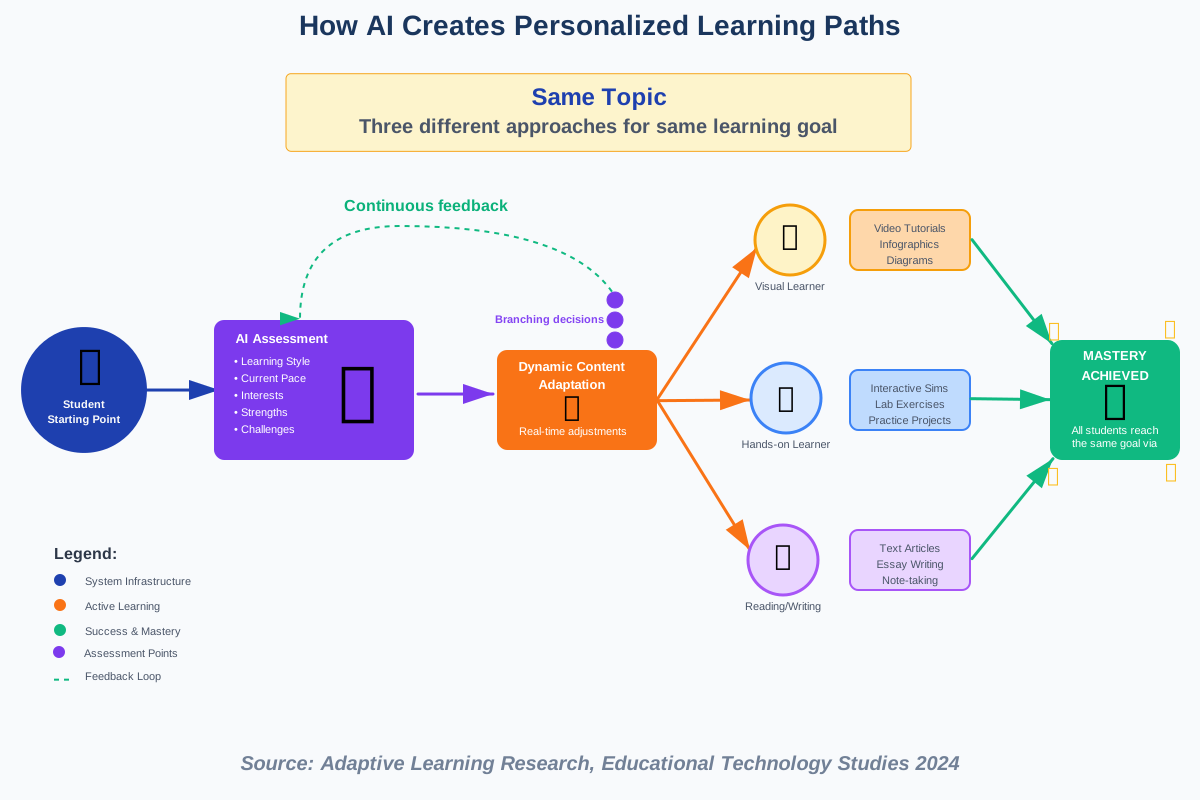
AI-Powered Personalized Learning means every student gets their own customized educational experience, like having a learning path designed specifically for them. Traditional classrooms follow a one-size-fits-all approach, but AI changes that completely.
Here’s how it works in real life: When a student struggles with fractions in math, an AI system immediately notices and adjusts. It might offer three different video explanations, each using a different teaching method. Maybe one uses pizza slices, another uses building blocks, and a third uses money examples. The system watches which explanation clicks for that particular student, then uses similar approaches for future topics.
Platforms like Khan Academy and DreamBox Learning already use this technology. They track every click, every pause, and every correct and incorrect answer. But here’s what makes it powerful—the AI isn’t judging. It’s learning about how that specific student learns best. Does Jamie need visual examples? Does Marcus learn better with hands-on activities? Does Sarah grasp concepts faster with real-world applications? The AI figures this out and adapts continuously.
The beauty of personalized learning is that struggling students get extra support without feeling singled out, while advanced learners can race ahead without waiting for classmates. Everyone moves at their optimal pace. We’ve seen students who previously hated math suddenly become engaged because the material finally makes sense to them in their own learning language.
AI Tutors: The Future of One-on-One Instruction?
AI Tutors provide students with instant, judgment-free help whenever they need it—imagine having a patient teacher available 24/7 who never gets tired or frustrated. These digital tutors are transforming what’s possible in education.
Let’s talk about what makes AI tutors special. They don’t replace human teachers; they complement them beautifully. When it’s 10 PM and your child is stuck on homework, an AI tutor like Carnegie Learning’s MATHia or Squirrel AI can step in. These systems ask questions, provide hints, and guide students toward answers rather than simply giving them away.
What we love about AI tutors is their infinite patience. A student can ask the same question fifteen different ways, and the tutor will answer fifteen times with fresh enthusiasm. There’s no embarrassment, no judgment, and no feeling of holding anyone back. This psychological safety is invaluable for learning.
AI tutors also speak multiple languages and can translate concepts between them seamlessly. A student learning English can receive explanations in their native language while gradually transitioning to English instruction. The tutor adjusts vocabulary complexity, sentence structure, and cultural references based on the student’s background.
The technology uses natural language processing to understand not just what students ask, but what they’re really struggling with. If a student asks, “Why doesn’t this work?” about a math problem, the AI analyzes their work history, identifies the specific misconception, and addresses that root issue rather than just explaining the surface problem.
AI in Education: Automating Administrative Tasks for Educators
AI in Education: Automating Administrative Tasks for Educators frees teachers from paperwork so they can focus on what they do best—inspiring and connecting with students. We’ve spoken to countless educators exhausted by grading, attendance tracking, and report generation, and AI is giving them their time back.
Here’s a practical example: Grading essays used to consume entire weekends for teachers. Now, AI-powered tools like Gradescope and Turnitin Feedback Studio can provide initial assessments in seconds. These systems evaluate grammar, structure, argument coherence, and even check citations. Teachers then review the AI’s feedback, add personal comments, and finalize grades in a fraction of the time.
Attendance and participation tracking happens automatically through learning management systems with AI integration. The system notices patterns—which students are struggling, who’s falling behind, who might need intervention—and alerts teachers proactively. Instead of discovering problems during parent-teacher conferences, educators can address issues immediately.
Scheduling is another time sink that AI handles elegantly. Systems like ClassDojo and Schoology use AI to optimize class schedules, coordinate parent communications, and even suggest ideal times for meetings based on everyone’s availability. What took hours of back-and-forth emails now takes minutes.
We encourage teachers to think of AI as their administrative assistant. It handles the repetitive tasks while they focus on creativity, mentorship, and those meaningful one-on-one moments that truly shape students’ lives. The goal isn’t to replace teachers but to amplify their impact by removing barriers that prevent them from doing their best work.
AI-Driven Curriculum Development: Creating Engaging and Effective Learning Materials
AI-Driven Curriculum Development helps educators design learning materials that are more engaging, relevant, and effective than ever before. Instead of spending months creating course content from scratch, teachers can collaborate with AI to build comprehensive curricula in days.
The process is fascinating. AI systems analyze successful learning outcomes from thousands of classrooms, identifying which teaching sequences, examples, and activities work best for different topics. They consider learning standards, student age ranges, cultural contexts, and even local current events to make content relevant and timely.
For instance, when creating a unit on climate change, AI can suggest real-time data from local weather stations, recent news articles from reputable sources, and interactive simulations that make abstract concepts tangible. It can generate discussion questions that promote critical thinking and suggest project ideas that connect to students’ communities.
AI also helps maintain curriculum diversity. It can scan proposed materials for unconscious bias, ensure diverse representation in examples and case studies, and suggest additional perspectives that might be missing. This creates more inclusive learning experiences that resonate with all students.
Tools like Quizizz and Nearpod use AI to help teachers create interactive lessons with embedded assessments, multimedia elements, and adaptive pathways. The AI suggests modifications based on how previous students engaged with similar content, creating a continuous improvement cycle.
AI and Accessibility in Education: Breaking Down Barriers for Students with Disabilities
AI and Accessibility in Education is removing barriers that have limited students with disabilities for generations. This technology is truly life-changing, and we’ve witnessed its impact firsthand.
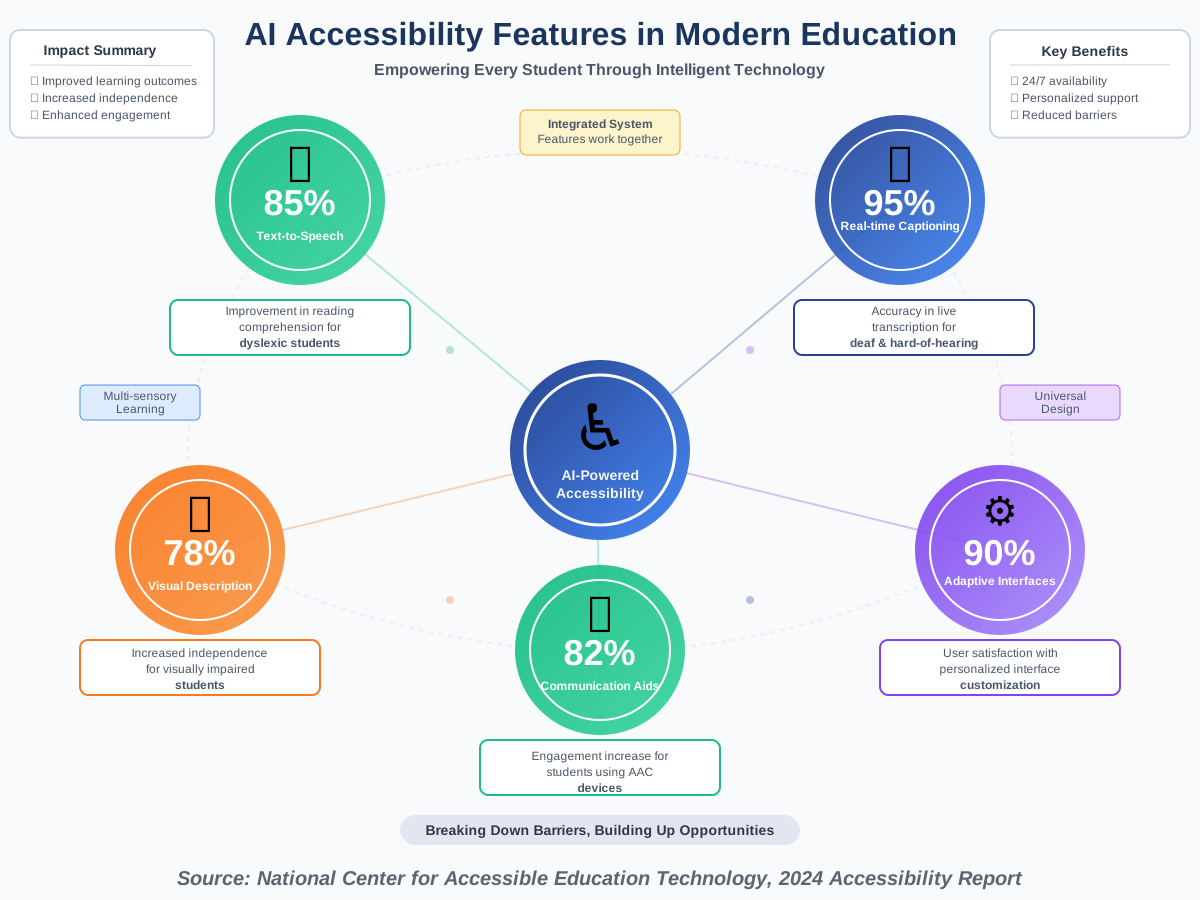
Consider text-to-speech and speech-to-text technologies powered by AI. Students with dyslexia can listen to textbooks read aloud with natural-sounding voices that adjust speed and emphasis. Students with physical disabilities can dictate essays using advanced voice recognition that understands natural speech patterns, including accents and unique speech characteristics.
For deaf and hard-of-hearing students, AI provides real-time captioning with remarkable accuracy. Systems like Otter.ai and Microsoft’s Azure Speech Services transcribe lectures as they happen, allowing students to follow along and review later. Some platforms even translate sign language into text and vice versa, bridging communication gaps.
Visual impairment support has advanced incredibly. AI-powered screen readers don’t just read text—they describe images, interpret graphs, and explain visual layouts. Tools like Seeing AI can identify objects, read handwriting, and describe scenes, giving visually impaired students independence in navigating educational materials.
Students with autism spectrum disorder benefit from AI tutors that provide consistent, predictable interactions and can adjust social cues and communication styles based on individual needs. The technology removes unpredictability that can cause anxiety while still providing effective instruction.
What excites us most is that these accessibility features benefit everyone. Clear captions help students in noisy environments. Text-to-speech helps when reading while commuting. The universal design principles enabled by AI make education more flexible and accommodating for all learners.
AI-Enhanced Language Learning: Personalized Practice and Real-Time Feedback
AI-Enhanced Language Learning makes mastering a new language faster, more engaging, and more accessible than traditional methods ever could. Apps like Duolingo, Babbel, and Rosetta Stone use sophisticated AI to create experiences that adapt to each learner’s progress.
The magic happens in the personalization. When you’re learning Spanish and consistently struggle with verb conjugations but excel at vocabulary, the AI notices. It provides extra conjugation practice wrapped in contexts you enjoy—maybe soccer if you love sports, or cooking if you’re a foodie. The lessons feel natural, not forced.
Real-time pronunciation feedback is revolutionary. You speak into your device, and AI-powered speech recognition instantly analyzes your accent, intonation, and pronunciation. It doesn’t just say “wrong”—it shows you exactly how your pronunciation differs from native speakers and provides specific exercises to improve. Imagine having a patient native speaker available for unlimited practice sessions.
Conversation simulation is another powerful feature. AI chatbots engage learners in realistic dialogues, adjusting complexity based on proficiency level. You can practice ordering food at a restaurant, asking for directions, or discussing your hobbies without the pressure of speaking to a real person. The AI responds naturally, introduces new vocabulary contextually, and gently corrects mistakes.
Translation has evolved beyond word-for-word conversion. Modern AI considers context, idioms, and cultural nuances. It explains why certain phrases work in one language but not another, teaching learners to think in the target language rather than simply translating from their native tongue.
The Ethical Considerations of AI in Education: Bias, Privacy, and Data Security
The Ethical Considerations of AI in Education deserve serious attention because these systems shape young minds and handle sensitive information. We believe transparency and responsibility must guide every implementation of educational AI.
Let’s address algorithmic bias first. AI systems learn from historical data, which sometimes reflects societal biases. If an AI tutoring system was trained primarily on data from affluent schools, it might not serve students from different backgrounds effectively. Worse, it could perpetuate stereotypes or make unfair assumptions about student capabilities based on demographics.
Educational institutions must actively audit their AI systems for bias. This means testing with diverse student populations, examining outcomes across different groups, and making adjustments when disparities appear. Transparency is crucial—students and parents deserve to know how AI makes decisions affecting education.
Privacy concerns are paramount. Educational AI collects massive amounts of data: learning patterns, struggle points, time spent on tasks, and even emotional states through facial recognition or keystroke analysis. Who owns this data? How long is it stored? Can it be sold to third parties? These questions need clear, student-first answers.
We recommend that schools adopt strict data governance policies. Student data should be encrypted, access should be limited, and parents should have control over what information is collected and how it’s used. The goal is leveraging data to improve learning without compromising student privacy.
Data security is another critical concern. Educational databases are tempting targets for cybercriminals because they contain valuable personal information. Schools implementing AI must invest in robust security measures, regular security audits, and incident response plans.
Finally, there’s the question of algorithmic accountability. When an AI system makes a mistake—recommends inappropriate content, misidentifies a struggling student, or reinforces a misconception—who’s responsible? Clear accountability structures must exist, with human oversight remaining paramount.
AI in Education: Gamification and Motivation in the Classroom
AI in Education: Gamification and Motivation in the Classroom transforms learning into an engaging adventure that keeps students excited and invested in their progress. By applying game design principles to education, AI creates experiences that feel less like work and more like play.
Here’s how it works practically. Platforms like Classcraft and Kahoot use AI to create adaptive game experiences where students earn points, unlock achievements, and level up as they master concepts. The AI ensures challenges remain in that sweet spot—not too easy to be boring, not too hard to be frustrating.
The psychology behind this is solid. Games provide immediate feedback, clear goals, and visible progress—all powerful motivators. When a student completes a difficult problem, they don’t just get a checkmark; they might unlock a new avatar outfit, climb a leaderboard, or earn virtual currency to customize their learning environment.
AI takes gamification deeper by personalizing rewards. Some students are motivated by competition and leaderboards. Others prefer collaborative challenges where the whole class works together toward a goal. Still others respond best to personal achievement tracking. The AI learns individual motivation profiles and adjusts game elements accordingly.
We’ve seen reluctant learners transform when gamification clicks for them. A middle schooler who hated math suddenly logs in voluntarily because they’re three points away from the next level. A shy student participates more because earning discussion points in a game feels safer than traditional class participation.
The key is maintaining educational integrity while making learning fun. AI-powered gamification systems ensure that advancement requires actual mastery, not just time spent or repetitive clicking. The games teach, challenge, and reward genuine learning progress.
AI-Powered Assessment: More Accurate and Efficient Evaluation of Student Learning
AI-Powered Assessment revolutionizes how we measure student understanding, moving beyond simple right-or-wrong answers to capture the full complexity of learning. Traditional tests often miss nuances, but AI-based assessment provides richer, more actionable insights.
Modern AI assessment tools analyze far more than final answers. They examine solution pathways, identify misconceptions, track problem-solving strategies, and even detect when students are guessing versus demonstrating genuine understanding. This depth of analysis was impossible with traditional grading.
For example, when assessing a math problem, AI doesn’t just check if the final answer is correct. It evaluates each step, understands different valid approaches, and provides specific feedback on where thinking went wrong. If ten students make the same mistake, the AI flags it for the teacher as a concept that needs reteaching.
Writing assessment has advanced remarkably. AI can evaluate essay organization, argument strength, evidence quality, and writing mechanics while understanding context and intent. Tools like Grammarly and ETS’s e-rater provide instant feedback that helps students improve before submitting final work.
What we appreciate most is continuous assessment. Instead of high-stakes tests determining everything, AI enables ongoing evaluation through regular low-pressure checks. This reduces test anxiety and provides a more accurate picture of student progress over time.
AI also makes assessment more equitable. It can identify and account for factors like test anxiety, language barriers, or different learning styles that might affect performance. The goal is measuring what students actually know, not how well they take tests.
AI and the Future of Testing: Adapting to Student Performance in Real-Time
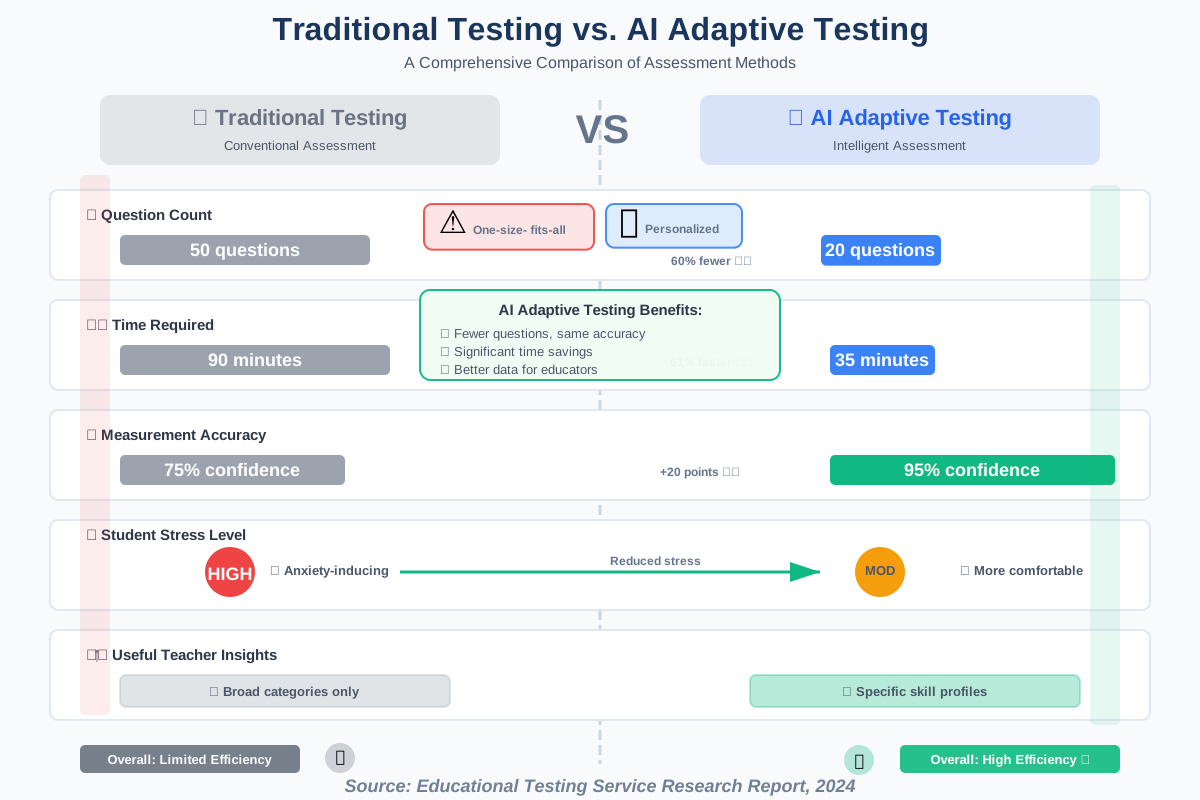
AI and the Future of Testing means exams that adjust difficulty based on student responses, providing more accurate measurements of ability while reducing frustration and anxiety. This approach, called adaptive testing, represents a major evolution in educational assessment.
Here’s the concept: Instead of every student receiving identical tests, AI-powered adaptive tests change questions based on previous answers. If you answer correctly, the next question is slightly harder. If you struggle, the test offers an easier question. This continues until the system accurately gauges your ability level.
The GRE and GMAT already use this technology successfully. What makes it powerful is efficiency—you can measure student ability with fewer questions because each one provides maximum information. A traditional 50-question test might be replaced by a 20-question adaptive test that’s more accurate.
For students, this means less time testing and more time learning. It also reduces frustration. Struggling students aren’t forced through questions far beyond their level, while advanced students aren’t bored by overly simple problems. Everyone gets appropriately challenging material.
The AI continuously calculates ability estimates throughout the test, stopping when it reaches a confidence threshold. This precision helps teachers understand exactly where students are and what they’re ready to learn next. Instead of broad categories like “below grade level,” teachers get specific skill profiles.
Adaptive testing also helps identify learning gaps quickly. If a student performs well overall but consistently struggles with specific subtopics, the AI pinpoints these weaknesses immediately. Teachers can intervene promptly rather than waiting for major assessments to reveal problems.
AI-Driven Early Intervention: Identifying and Supporting Students at Risk
AI-Driven Early Intervention helps educators identify struggling students before they fall too far behind, enabling timely support that can change educational trajectories. Early detection makes all the difference in student success.
AI systems monitor multiple indicators simultaneously—attendance patterns, assignment completion, test scores, participation rates, and even engagement levels during online learning. When patterns suggest a student is struggling, the system alerts teachers immediately with specific recommendations for intervention.
Consider this real scenario: An AI system notices that Sarah, typically an engaged student, has missed three assignments, logged in late to virtual classes twice, and scored lower on recent quizzes. Individually, these might not raise flags, but together they indicate a problem. The system alerts her teacher with suggested interventions: a check-in conversation, modified assignment deadlines, or connection to support services.
What makes this powerful is early action. Instead of discovering Sarah’s struggles at semester’s end when it’s too late, her teacher can intervene within days. Maybe Sarah’s family situation changed, or she’s dealing with anxiety, or the material suddenly became too challenging. Early support prevents small issues from becoming major problems.
AI can also predict which students are at risk of dropping out based on historical patterns. Schools using early warning systems from companies like Civitas Learning see dropout rates decrease significantly because they can provide targeted support to at-risk students.
The technology identifies not just academic struggles but social-emotional challenges too. Changes in language use, social interaction patterns, or engagement levels can indicate bullying, mental health concerns, or family problems. While AI identifies patterns, trained human counselors and teachers provide the actual support—technology informs, people care.
AI in STEM Education: Enhancing Learning in Science, Technology, Engineering, and Mathematics
AI in STEM Education brings abstract concepts to life through simulations, visualizations, and hands-on experiences that make complex topics accessible and exciting. STEM subjects often intimidate students, but AI-powered tools transform confusion into curiosity.
Virtual laboratories are game-changers. Students can conduct chemistry experiments that would be dangerous or expensive in real labs. They can manipulate variables, observe results, and repeat experiments unlimited times without wasting materials. Platforms like Labster offer hundreds of simulations covering everything from DNA sequencing to quantum physics.
For mathematics, AI-powered tools like Photomath and Wolfram Alpha don’t just solve problems—they show step-by-step solutions with explanations. Students see multiple solution methods, understand why each step matters, and can explore “what if” scenarios by changing variables and observing outcomes.
Engineering education benefits from AI-powered design tools that let students test structures, circuits, or mechanical systems virtually before building anything physical. They learn through failure in low-stakes environments, developing problem-solving skills that transfer to real-world engineering.
Science visualization tools powered by AI help students see the invisible. They can explore molecular structures in 3D, watch geological processes unfold over millions of years compressed into minutes, or observe how weather systems develop. These visualizations make abstract concepts tangible.
What excites us most is how AI personalizes STEM learning. If you’re struggling with algebraic equations but excel at geometry, the system might explain algebra through geometric visualizations. It finds the bridge between what you understand and what you’re learning, making connections that traditional instruction might miss.
AI and Creative Learning: Fostering Innovation and Imagination in Students
AI and Creative Learning empowers students to explore artistic and creative pursuits in ways that enhance rather than replace human creativity. Contrary to concerns that AI might stifle creativity, it actually opens new avenues for artistic expression and innovation.
In music education, AI tools analyze student compositions and provide feedback on melody, harmony, and structure while respecting artistic choices. Apps like Soundtrap and BandLab use AI to suggest chord progressions, generate backing tracks, and even help students understand music theory through their own compositions.
Visual arts benefit from AI tools that help students experiment with different styles, techniques, and mediums digitally before committing to physical materials. Programs like Adobe Sensei assist with color selection, composition balance, and technique suggestions while students maintain complete creative control.
Creative writing gets a boost from AI writing assistants that offer vocabulary suggestions, identify repetitive phrases, and help with story structure—without writing the story for students. These tools act as collaborative partners, suggesting possibilities while students make all creative decisions.
What we love about AI in creative education is how it lowers barriers to entry. Students who feel intimidated by blank canvases or music composition can start with AI-generated ideas and then modify, expand, and personalize them. The technology provides scaffolding that builds confidence.
AI also introduces students to new creative technologies like generative art, algorithmic music composition, and interactive storytelling. These emerging art forms blend technical and creative skills, preparing students for careers in fields that barely existed a decade ago.
AI-Powered Research Tools for Students: Enhancing Information Gathering and Analysis
AI-Powered Research Tools for Students streamline the research process, helping learners find reliable information, analyze sources, and synthesize knowledge more efficiently than ever before. Research skills are fundamental to education, and AI makes developing them easier and more effective.
Smart search engines like Google Scholar and Semantic Scholar use AI to understand research intent beyond keywords. When students search for “climate change effects on agriculture,” the AI understands they probably want peer-reviewed studies, recent data, and varied geographical perspectives—not just pages containing those words.
Citation management has become almost effortless. Tools like Zotero and Mendeley automatically extract citation information from papers, format references in any required style, and even suggest related research based on what students are reading. This saves hours previously spent on formatting bibliographies.
AI-powered plagiarism checkers like Turnitin don’t just catch copied text—they help students understand proper paraphrasing, citation practices, and academic integrity. They’re educational tools, not just enforcement mechanisms.
Literature review assistance is particularly valuable for advanced students. AI can scan hundreds of papers, identify key themes, map relationships between studies, and suggest gaps in current research. This accelerates the research process while maintaining thoroughness.
What we emphasize to students is using these tools as learning aids, not shortcuts. AI can find sources and organize information, but students must read, think critically, and form their own conclusions. The technology handles tedious tasks so students can focus on higher-level thinking and original analysis.
The Role of AI in Teacher Training and Professional Development
The Role of AI in Teacher Training and Professional Development ensures educators stay current with best practices and develop new skills throughout their careers. Teaching is complex and constantly evolving, and AI provides personalized professional learning that adapts to each educator’s needs.
AI-powered professional development platforms analyze individual teacher needs based on their subject area, experience level, student demographics, and identified growth areas. Instead of generic workshops, teachers receive customized learning paths focusing on what will most benefit their specific teaching context.
Virtual coaching systems observe teaching practices through video analysis and provide constructive feedback. The AI might notice a teacher consistently calls on the same students or that wait times after questions are too short for deep thinking. These objective observations, delivered without judgment, help teachers refine their craft.
Practice simulations let teachers try new approaches in safe environments. They can practice difficult conversations with virtual parents, experiment with classroom management techniques with simulated students, or test new instructional strategies before implementing them with real classes.
Collaborative learning gets enhanced through AI matching. Teachers working on similar challenges or teaching similar content get connected for peer support and idea sharing. The AI facilitates professional learning communities based on need and interest rather than just geography.
We encourage educators to embrace AI as a professional development partner. It provides instant access to research-based best practices, helps track growth over time, and offers resources exactly when needed. The goal is continuous improvement supported by technology that learns alongside teachers.
AI in Education: Bridging the Digital Divide and Promoting Equity
AI in Education: Bridging the Digital Divide and Promoting Equity has the potential to democratize access to quality education, though we must acknowledge this works only when implemented thoughtfully with equity as a primary goal.
In underserved communities, AI-powered educational platforms provide access to resources that might otherwise be unavailable. Students in rural schools can access the same quality educational content and personalized learning as students in wealthy urban districts. One internet connection opens doors to world-class instruction.
Language barriers diminish significantly with AI translation. Immigrant students can access educational content in their native languages while learning English. Parents can engage with their children’s education even if they don’t speak the school’s primary language. This inclusion strengthens families and communities.
Cost barriers decrease as AI makes quality educational resources available at scale. Platforms like Khan Academy offer completely free AI-powered tutoring and coursework covering everything from elementary math to college-level physics. Financial circumstances no longer determine access to quality supplemental education.
However, equity concerns remain. Schools must ensure all students have devices and internet access—AI can’t help students who can’t access it. Digital literacy training is essential so both students and families can utilize these powerful tools effectively.
We advocate for intentional equity-focused implementation of educational AI. This means prioritizing underserved schools in rollouts, providing necessary infrastructure, training educators thoroughly, and continuously evaluating whether technology is truly closing gaps rather than widening them.
AI-Driven Learning Analytics: Understanding Student Behavior and Improving Instruction
AI-Driven Learning Analytics transforms educational data into actionable insights that help teachers understand how students learn and how to teach more effectively. Data alone isn’t valuable—the intelligence derived from analyzing it changes education.
Learning analytics platforms track everything: how long students spend on tasks, which resources they access, when they’re most engaged, where they consistently struggle, and what learning strategies work best for them. The AI identifies patterns humans might miss in these massive datasets.
For teachers, this provides clarity. Instead of guessing why students aren’t mastering content, they see specific data: 70% of students struggle with step three in solving equations, engagement drops after 15 minutes of direct instruction, and visual learners in this class outperform others on certain topics. These insights drive instructional decisions.
Predictive analytics help anticipate needs before they become urgent. If data suggests a student will struggle with upcoming content based on performance patterns, teachers can provide preventive support. It’s moving from reactive to proactive education.
At the school or district level, learning analytics inform resource allocation, curriculum decisions, and professional development priorities. Administrators can identify which programs work, which need improvement, and where to invest resources for maximum impact.
The key is making analytics accessible and actionable. The best systems translate complex data into clear visualizations and specific recommendations that teachers can implement immediately. Data should empower educators, not overwhelm them.
AI in Education: Preparing Students for the Future of Work
AI in Education: Preparing Students for the Future of Work means equipping learners with skills for careers that will increasingly involve working alongside artificial intelligence. The job market is transforming rapidly, and education must evolve accordingly.
Students need AI literacy—understanding what AI can do, its limitations, ethical implications, and how to use it effectively. This doesn’t mean everyone becomes a programmer, but everyone should understand AI’s role in modern work and society. Courses on AI basics, data literacy, and technology ethics are becoming as fundamental as traditional subjects.
Critical thinking becomes even more important in an AI-enabled world. When AI can provide information instantly, the valuable skills are evaluating information quality, synthesizing multiple perspectives, asking good questions, and solving novel problems. Education must emphasize these higher-order thinking skills.
Collaboration skills matter tremendously. Future workers will collaborate with both humans and AI systems. Learning to work effectively in teams, communicate clearly across differences, and leverage technology to enhance rather than replace human capabilities prepares students for real-world work environments.
Adaptability and continuous learning become essential competencies. Technology evolves constantly, and career paths change throughout working lives. AI-enhanced education that teaches students how to learn independently prepares them for lifelong adaptation.
We encourage educators to integrate real-world AI tools into learning experiences. Use AI writing assistants in composition classes while teaching proper attribution. Incorporate data analysis tools in science. Show how professionals across fields leverage AI to enhance their work. Students who graduate comfortable working with AI have significant advantages.
AI and Special Education: Supporting Students with Unique Learning Needs
AI and Special Education provides unprecedented support for students with diverse learning needs, enabling truly individualized education plans that adapt in real time. Special education has always embraced personalization, and AI supercharges these efforts.
For students with learning disabilities, AI tutoring systems provide infinite patience and repetition without frustration. Concepts can be explained dozens of different ways until one clicks. The pace adapts completely to individual needs without pressure or judgment.
Behavior tracking and support is another powerful application. AI can identify patterns that predict challenging behaviors before they occur, allowing preventive interventions. For students with autism spectrum disorder or ADHD, this proactive approach significantly improves outcomes.
Communication support has advanced remarkably. Students with speech difficulties can use AI-powered augmentative communication devices that predict words and phrases based on context, making communication faster and more natural. These systems learn individual communication patterns and preferences over time.
Organization and executive function support helps students who struggle with planning and time management. AI assistants can break large assignments into manageable steps, provide reminders, suggest schedules, and help students track progress—essentially providing external executive function support that builds independence.
What we find most promising is how AI enables students with special needs to demonstrate knowledge in ways that work for them. If traditional writing is challenging, students might complete assignments through voice dictation, visual presentations, or other formats—AI makes this flexibility practical and scalable.
AI-Powered Chatbots in Education: Providing Instant Support and Guidance
AI-Powered Chatbots in Education offer students 24/7 access to support, answers, and guidance whenever they need it. These virtual assistants handle routine questions, provide study help, and connect students to human support when necessary.
Educational chatbots answer common questions instantly: When is the assignment due? Where do I find course materials? What are office hours? This frees human staff to focus on complex needs requiring personal attention. Students get immediate answers rather than waiting hours or days for email responses.
Study support chatbots help with homework questions, exam preparation, and concept review. They don’t provide answers but guide students toward solutions through Socratic questioning. “What did you try already?” “What happens if you apply this principle?” These prompts encourage deeper thinking.
Administrative chatbots streamline enrollment, schedule changes, transcript requests, and other bureaucratic processes. Students complete tasks through conversational interfaces rather than navigating complex forms and systems. This reduces administrative burden on both students and staff.
Mental health support chatbots provide initial screenings and resources while connecting students to human counselors when needed. They can’t replace therapists but offer 24/7 access to coping strategies, mindfulness exercises, and crisis resources. In emergencies, they immediately escalate to human support.
The key is transparency. Students should know they’re interacting with AI and understand what the chatbot can and cannot do. Chatbots work best handling routine matters while seamlessly transitioning to humans for complex or sensitive issues.
AI in Education: Transforming Higher Education and Lifelong Learning
AI in Education: Transforming Higher Education and Lifelong Learning extends beyond K-12 to revolutionize universities and continuous adult education. Learning no longer ends with degrees—AI makes lifelong learning practical and personalized.
In universities, AI personalizes degree paths based on career goals, learning preferences, and prior knowledge. Systems recommend courses, suggest complementary skills to develop, and identify opportunities that align with individual interests. Students craft truly customized educational experiences rather than following rigid degree plans.
Micro-credentials and skill-based learning benefit enormously from AI. Adults seeking to upskill or change careers can use AI-powered platforms to identify skill gaps, design learning paths, and demonstrate competencies through project-based assessments rather than traditional degrees.
Massive Open Online Courses (MOOCs) leverage AI to provide personalized experiences despite enrollments in the thousands. Each learner receives customized feedback, adapted pacing, and recommendations based on their unique journey through the material. Quality education scales globally.
Corporate training programs use AI to keep employees current with rapidly evolving skill requirements. The system identifies which employees need training in what areas, delivers personalized instruction, and measures effectiveness—all while employees continue working.
Lifelong learning powered by AI means individuals can continuously update skills, explore new interests, and adapt to changing career landscapes without returning to traditional classroom settings. Education becomes truly lifelong and always accessible.
AI-Driven Feedback Systems: Improving Writing and Communication Skills
AI-Driven Feedback Systems help students develop strong writing and communication skills through instant, detailed, and constructive feedback on every piece of work. Writing improves through practice and feedback—AI provides both at scale.
Grammar and mechanics checking has evolved far beyond simple spell-check. Modern AI understands context, suggests style improvements, identifies unclear phrasing, and explains why changes might improve writing. Tools like Grammarly and ProWritingAid act as writing coaches available during every draft.
Structure and organization feedback helps students develop coherent arguments and narratives. AI analyzes thesis statements, topic sentences, transitions, and conclusions, providing specific suggestions for improving logical flow. This teaches organizational skills that transfer across all writing.
Citation and source integration support ensures students properly attribute ideas and integrate evidence effectively. The AI doesn’t just catch plagiarism—it teaches proper quotation, paraphrasing, and synthesis skills through constructive feedback.
Voice and tone analysis helps students write for different audiences and purposes. The AI might note that a formal research paper uses too much casual language or that a creative piece needs more descriptive detail. This develops rhetorical awareness.
What makes AI feedback valuable is immediacy and volume. Students can submit drafts unlimited times, receiving instant feedback and iterating rapidly. This practice-feedback loop accelerates skill development far beyond what’s possible with only teacher feedback on final drafts.
AI in Education: Personalized College and Career Counseling
AI in Education: Personalized College and Career Counseling helps students navigate complex decisions about their futures with data-driven insights and personalized guidance. Choosing educational paths and careers is challenging—AI provides clarity and support throughout the process.
College matching systems analyze student profiles—academic performance, interests, learning preferences, financial considerations, geographic preferences—and recommend institutions likely to be good fits. This goes beyond simple statistics to consider factors like campus culture and program strengths.
Career exploration tools powered by AI help students discover occupations matching their skills, interests, and values. They provide information about job outlooks, required education, typical salaries, and daily responsibilities. Students explore careers they might never have considered otherwise.
Application assistance streamlines the complex college application process. AI can review essays for common mistakes, ensure all requirements are met, help track deadlines, and even suggest how to strengthen applications based on successful examples.
Financial aid navigation becomes manageable with AI assistance. Systems can identify scholarships students are eligible for, predict financial aid packages at different schools, and help families understand actual costs beyond sticker prices.
Career planning throughout college helps students make strategic decisions about majors, minors, internships, and skill development. AI analyzes labor market trends and individual strengths to suggest pathways likely to lead to fulfilling, viable careers.
The Impact of AI on Educational Equity: Addressing Disparities and Promoting Inclusion
The Impact of AI on Educational Equity presents both tremendous opportunities and serious risks for educational fairness. We must implement AI thoughtfully to ensure it reduces rather than amplifies existing disparities.
The opportunity is clear: AI can democratize access to quality education regardless of zip code, family income, or school resources. Students everywhere can access personalized tutoring, comprehensive curriculum, and adaptive learning that previously required expensive private schools or tutors.
However, risks exist. If some schools have advanced AI tools while others lack basic internet connectivity, technology widens gaps rather than closing them. If AI systems are trained primarily on data from privileged populations, they may serve those students best while underserving others.
Addressing these concerns requires intentional equity-focused design and implementation. AI systems must be tested across diverse populations. Algorithms must be regularly audited for bias. Implementation must prioritize underserved communities rather than treating them as afterthoughts.
Cultural responsiveness matters tremendously. AI systems must recognize and respect diverse cultural backgrounds, learning traditions, and linguistic diversity. A one-size-fits-all approach fails students from underrepresented groups.
We advocate for equity-centered AI implementation: universal access to technology and connectivity, culturally responsive content and algorithms, continuous bias monitoring, and meaningful involvement of affected communities in design and deployment decisions.
AI-Based Plagiarism Detection: Maintaining Academic Integrity in the Digital Age
AI-Based Plagiarism Detection helps maintain academic integrity while teaching students proper attribution and original thinking. These systems have evolved from simple text-matching to sophisticated analysis of writing patterns and source usage.
Modern plagiarism detection goes beyond catching copied text. Tools like Turnitin and Copyscape analyze writing style consistency and citation patterns and even detect when AI-generated text has been submitted as student work. They identify various forms of academic dishonesty, from direct copying to patchwriting to contract cheating.
The educational value comes from how these tools are used. Rather than just catching cheaters, they teach students about proper citation, paraphrasing techniques, and building on others’ ideas appropriately. When students receive feedback explaining why something is flagged, they learn to do better next time.
Originality reports show students exactly which portions of their work match other sources and help them understand whether they’ve properly attributed ideas. This transparency makes the writing process more educational and less punitive.
With the rise of AI writing assistants, detection has become more complex. Systems now identify AI-generated content, but the focus is shifting from detection to teaching appropriate AI use. Just as calculators are tools for math, AI writing assistants can be tools for writing—when used transparently and appropriately.
We encourage educators to frame plagiarism detection as supporting academic integrity rather than merely policing dishonesty. The goal is helping students develop their own voices and ideas while properly acknowledging influences and sources.
AI in Education: Adaptive Learning Platforms for Corporate Training
AI in Education: Adaptive Learning Platforms for Corporate Training extend educational AI benefits into workplace learning, helping employees develop skills efficiently while organizations maximize training effectiveness. Corporate training is increasingly AI-powered.
Adaptive corporate learning platforms assess employee knowledge gaps, design personalized training paths, and adjust content based on performance—just like K-12 adaptive learning but tailored for professional development. Employees learn exactly what they need without wasting time on material they’ve already mastered.
Just-in-time learning delivers training exactly when employees need it. If someone is about to use a new software system, the AI provides targeted training on relevant features. If someone is struggling with a particular task, remedial training appears automatically. Learning integrates seamlessly with work.
Skills gap analysis helps organizations identify training needs at scale. AI analyzes job requirements, employee capabilities, and business goals to recommend strategic training investments. Companies develop workforce capabilities aligned with strategic objectives.
Simulation-based training uses AI to create realistic practice environments where employees can develop skills without real-world consequences. Customer service representatives practice difficult conversations, managers practice providing feedback, and technicians practice repairs—all in safe virtual spaces.
Measuring training effectiveness becomes more precise with AI analytics. Organizations see not just completion rates but actual skill improvement, knowledge retention, and on-the-job application. This data helps refine training programs continuously.
AI and the Future of Educational Content Creation: Automated Textbook Generation
AI and the Future of Educational Content Creation includes automated generation of textbooks and learning materials that stay current, adapt to different learners, and reduce costs dramatically. While human expertise remains essential, AI accelerates and enhances content development.
AI-generated textbooks can update continuously as knowledge evolves. When new discoveries occur in science, when historical perspectives shift, when mathematical applications emerge, educational materials can reflect these changes immediately rather than waiting years for new editions.
Customization becomes practical at scale. The same textbook can adapt reading level for different students, include different examples based on interests, emphasize concepts aligned with specific learning standards, and even translate into multiple languages—all automatically.
Interactive elements get integrated seamlessly. AI-generated educational content includes embedded assessments, interactive simulations, video explanations, and practice problems that adapt to student performance. Learning materials become active rather than passive.
Cost savings could revolutionize educational access. When AI assists with content creation, high-quality educational materials become affordable or even free. This particularly benefits under-resourced schools and students in developing regions.
However, human oversight remains crucial. AI-generated content requires expert review for accuracy, appropriate pedagogy, and cultural sensitivity. The technology handles scale and routine work while humans provide expertise, creativity, and judgment.
AI in Education: Virtual Reality and Augmented Reality Learning Experiences
AI in Education: Virtual Reality and Augmented Reality Learning Experiences combine immersive technologies with intelligent systems to create learning experiences that were previously impossible. VR and AR powered by AI transport students to different times, places, and scales of existence.
Virtual field trips take students anywhere: Ancient Rome, the International Space Station, inside the human heart, and to the bottom of the ocean. AI makes these experiences responsive and educational rather than just entertaining. Virtual guides adapt explanations based on student questions and interest levels.
Science experiments become safe and infinitely repeatable in VR. Students can mix dangerous chemicals, explore nuclear reactions, or manipulate subatomic particles without risk or expensive equipment. AI ensures these simulations accurately reflect real-world physics and chemistry.
Historical reenactments powered by AI let students experience history rather than just reading about it. They can navigate historical events, understand different perspectives, and see how individual decisions shaped outcomes. History becomes visceral and memorable.
Language learning is transformed through immersive VR environments where students practice conversations in simulated real-world settings—ordering at a restaurant in Paris, asking directions in Tokyo, and negotiating business in Sao Paulo. AI characters respond naturally and provide instant feedback.
Augmented reality overlays digital information onto physical environments, creating hybrid learning spaces. Students might point phones at plants to see their internal structures, at historical landmarks to see what they looked like centuries ago, or at mechanical systems to understand how they function.
AI-Enhanced Tutoring Systems for Standardized Test Preparation
AI-Enhanced Tutoring Systems for Standardized Test Preparation help students prepare efficiently for high-stakes exams through personalized practice, strategic guidance, and detailed performance analytics. Test prep has evolved from generic practice tests to sophisticated AI-powered coaching.
Diagnostic assessments identify specific strengths and weaknesses across all test sections. Rather than studying everything equally, students focus on areas needing improvement. If you excel at reading comprehension but struggle with geometry, the AI ensures you spend time appropriately.
Adaptive practice provides questions at the right difficulty level. Too easy wastes time; too hard causes frustration. AI-powered systems keep students in that productive challenge zone where learning happens most effectively.
Test-taking strategy instruction goes beyond content knowledge. AI analyzes how students approach problems—do they rush through and make careless mistakes? Do they spend too long on difficult questions? The system provides personalized strategies addressing individual test-taking patterns.
Realistic simulation tests replicate actual testing conditions, including timing pressures and question formats. AI scores these comprehensively and provides detailed feedback on not just what was wrong but why and how to improve.
Progress tracking shows improvement over time, predicts likely scores, and adjusts study plans as test dates approach. Students see their readiness increasing, which builds confidence and motivation.
AI in Education: The Evolution of Smart Classrooms and Intelligent Learning Environments
AI in Education: The Evolution of Smart Classrooms and Intelligent Learning Environments represents the physical transformation of learning spaces into responsive, adaptive environments that support both teachers and students. These aren’t just classrooms with technology—they’re spaces that actively enhance learning.
Smart classrooms use AI to optimize physical conditions automatically. Lighting adjusts based on time of day and activity—brighter for active learning, dimmer for video presentations. Temperature regulates for optimal concentration. Acoustics adapt for different activities—lectures, discussions, and group work.
Interactive displays respond to student input naturally through touch, voice, and gesture. Multiple students can interact simultaneously, collaborating on shared digital workspaces. The AI organizes contributions, highlights connections between ideas, and saves work automatically.
Attention monitoring helps teachers understand engagement in real-time without being intrusive. The system might indicate that students are losing focus, suggesting a transition to more active learning. Or it might show particular concepts causing confusion, prompting immediate clarification.
Seamless technology integration means students and teachers focus on learning rather than managing devices. Materials display automatically when class begins. Student devices sync effortlessly. Technical problems get resolved without disrupting instruction.
Flexible space configuration supported by AI helps optimize classroom layout for different activities. The system might suggest arrangements for group work, individual study, presentations, or whole-class instruction based on lesson plans and learning objectives.
Frequently Asked Questions About AI in Education
Taking Your Next Steps with AI in Education
We’ve covered extensive ground exploring how AI in Education and Learning is transforming classrooms, supporting teachers, personalizing student experiences, and making quality education more accessible than ever before. From intelligent tutoring systems that provide 24/7 support to adaptive assessments that reduce testing stress, from accessibility features that remove barriers to analytics that inform better instruction—AI is reshaping every aspect of education.
What excites us most isn’t the technology itself but what it enables: more time for teachers to mentor, more personalized attention for every student, more equitable access to quality education, and more engaging learning experiences that prepare students for futures we can barely imagine. The transformation is real; it’s happening now, and you can be part of it.
Whether you’re an educator ready to lighten your administrative burden, a parent wanting to support your child’s learning, or a student curious about new ways to study more effectively, the time to explore AI in education is now. Start small—try one tool that addresses a specific need. Maybe that’s an AI writing assistant to improve your essays, a personalized math tutor to strengthen weak areas, or an automated grading tool to reclaim your weekends.
Remember that AI is a tool, not a replacement for human intelligence, creativity, or connection. Use it to enhance your natural abilities, not substitute for them. Ask questions, experiment without fear of mistakes, and approach these technologies with both enthusiasm and healthy skepticism. The future of education is a partnership between human wisdom and artificial intelligence, and you’re invited to help shape what that looks like.
We believe that education has never been more exciting or full of possibility than it is right now. The barriers that once limited learning—geography, economics, physical ability, and learning differences—are crumbling. Every student can receive instruction tailored to their needs. Every teacher can access tools that amplify their impact. Every school can offer world-class educational experiences.
The revolution is here. Let’s make sure it benefits everyone.
References:
Khan Academy – Free adaptive learning platform
National Center for Accessible Education Technology – Accessibility research and resources
Educational Testing Service – Adaptive testing research
Civitas Learning – Early intervention systems research
Labster – Virtual laboratory simulations
Carnegie Learning – AI tutoring systems
Turnitin – Academic integrity and writing feedback tools
About the Authors
Main Author: James Carter is a productivity coach specializing in helping educators and students leverage AI to save time and enhance learning outcomes. With years of experience in educational technology, James focuses on practical, actionable strategies that make AI accessible to everyone, regardless of technical background. His approach emphasizes efficiency without sacrificing the human elements that make education meaningful.
Co-Author: Abir Benali is a technology writer dedicated to making AI tools understandable for non-technical users. Abir’s clear, friendly explanations have helped thousands of educators and students confidently adopt new technologies. With a background in both education and technology communication, Abir bridges the gap between complex innovations and everyday classroom application.
This article represents our collaborative effort to provide you with comprehensive, practical, and encouraging guidance on integrating AI into education. We wrote this together because we believe that combining perspectives on productivity and accessibility creates the most helpful resource for real people navigating educational transformation.