
AI Ethics and Governance: A Complete Guide
AI Ethics and Governance have become critical priorities as artificial intelligence transforms every aspect of our lives. I’ve spent years working with organizations trying to navigate the complex landscape of AI Ethics and Governance, and I’ve witnessed firsthand how the decisions we make today will shape the technological future for generations to come. This comprehensive guide will walk you through the essential principles, frameworks, and practical strategies you need to understand and implement responsible AI practices, whether you’re a business leader, policymaker, educator, or simply someone who wants to ensure technology serves humanity’s best interests.
The conversation around AI Ethics and Governance isn’t just theoretical anymore. Every day, AI systems make decisions that affect real people—determining who gets hired, who receives medical treatment, who qualifies for loans, and even who might be considered a security risk. These aren’t distant concerns; they’re happening right now, and the choices we make about how to govern these systems will determine whether AI becomes a force for equity and progress or perpetuates and amplifies existing inequalities.
What makes this moment particularly urgent is that AI technology is advancing faster than our ability to understand its full implications. We’re deploying systems that can recognize faces, predict behavior, generate convincing text and images, and make complex decisions—often without fully understanding how they arrive at their conclusions or what unintended consequences might emerge. This is why establishing robust ethical frameworks and governance structures isn’t optional; it’s essential for building a future where AI technology enhances rather than diminishes human dignity and rights.
Introduction to AI Ethics: Core Principles and Values
Introduction to AI Ethics: Core Principles and Values begins with understanding that ethical AI isn’t about restricting innovation—it’s about channeling it responsibly. When we talk about AI ethics, we’re addressing fundamental questions about how intelligent systems should be designed, deployed, and overseen to align with human values and societal well-being.
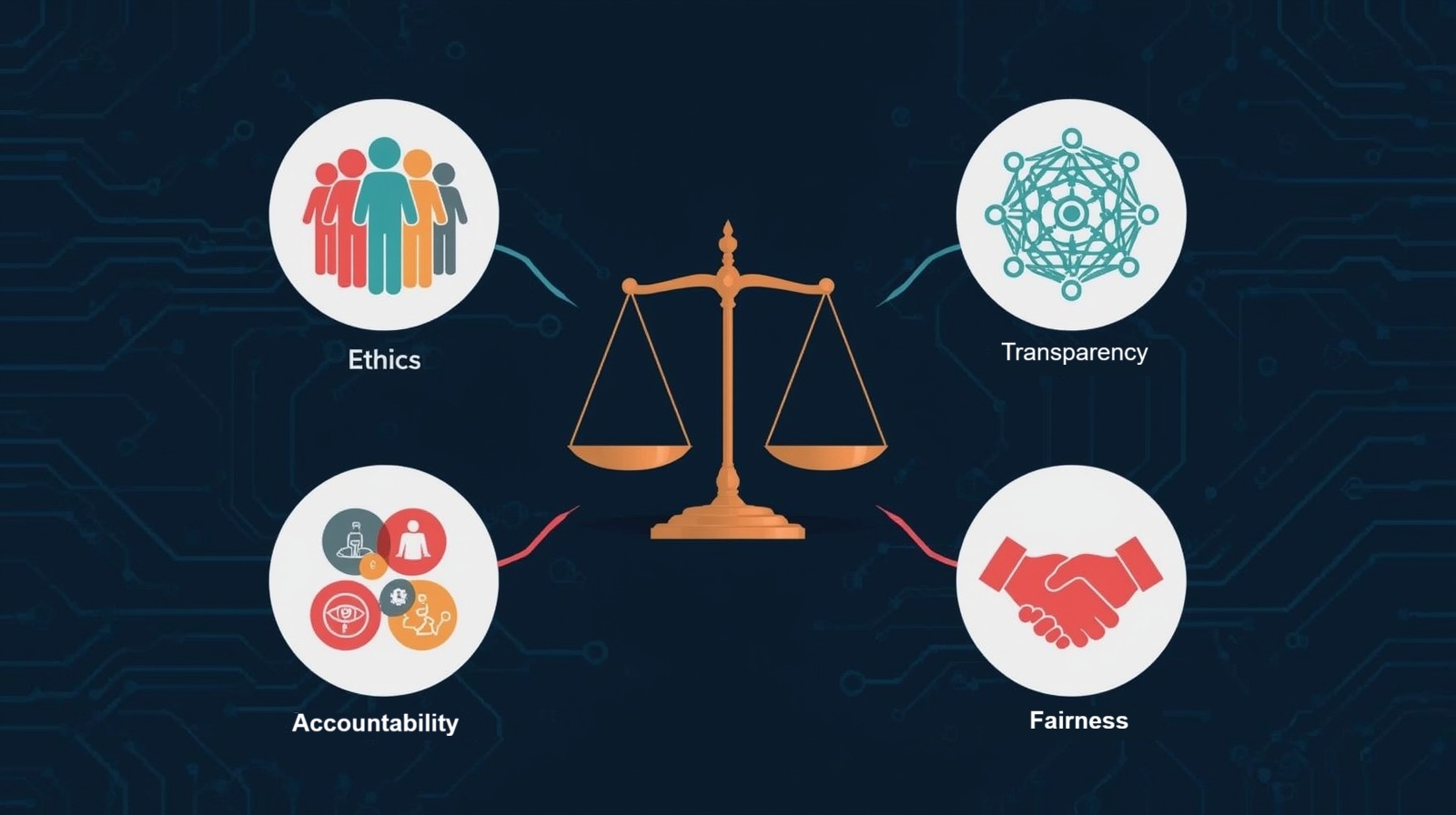
The core principles that guide ethical AI development rest on several foundational pillars. First, there’s fairness—ensuring AI systems don’t discriminate against individuals or groups based on protected characteristics like race, gender, age, or disability. Second, transparency demands that AI systems operate in ways that can be understood and scrutinized, not as inscrutable black boxes. Third, accountability establishes clear responsibility chains, so when AI systems cause harm, there’s someone answerable for those outcomes.
Beyond these foundational three, additional principles include privacy protection, ensuring AI systems respect individual data rights; safety and security, building systems that are robust against manipulation and misuse; beneficence, actively designing AI to benefit humanity; and respect for human autonomy, ensuring AI augments rather than replaces human decision-making in critical areas.
I’ve learned that implementing these principles requires moving beyond abstract philosophy to concrete practices. It means asking tough questions during development: Who might be harmed by this system? What data biases might affect outcomes? How can we make the decision-making process more transparent? What safeguards prevent misuse?
The challenge is that these principles sometimes conflict. For instance, maximizing transparency might compromise privacy, or ensuring complete fairness could reduce system efficiency. Navigating these tensions requires careful deliberation, stakeholder input, and a willingness to make difficult tradeoffs that prioritize human welfare over technical optimization.
The Role of AI Governance Frameworks: A Comprehensive Guide
The Role of AI Governance Frameworks: A Comprehensive Guide addresses how organizations can systematically implement ethical principles through structured policies, procedures, and oversight mechanisms. Governance frameworks provide the scaffolding that transforms abstract ethical commitments into operational reality.
Effective AI governance frameworks typically include several key components. First, they establish clear policies that define acceptable and unacceptable uses of AI technology within an organization. Second, they create oversight structures such as AI ethics boards or committees that review high-risk AI deployments before they go live. Third, they implement risk assessment processes that evaluate potential harms before systems are deployed. Fourth, they establish monitoring mechanisms that track AI system performance and detect ethical issues in real-world operation.
We’ve developed governance frameworks across various organizations, and what works depends heavily on context. A healthcare provider needs different governance structures than a financial institution or a social media company. However, certain elements prove universally valuable: executive-level commitment, cross-functional collaboration, clear escalation pathways for ethical concerns, and regular audits that assess compliance and effectiveness.
One crucial aspect often overlooked is the dynamic nature of AI governance. These aren’t set-it-and-forget-it frameworks; they must evolve as technology advances, new risks emerge, and societal expectations shift. We build in regular review cycles, stay informed about emerging best practices, and maintain flexibility to adapt quickly when issues arise.
The most effective governance frameworks we’ve implemented balance structure with agility. They provide clear guidelines while allowing room for innovation, establish accountability without creating bureaucratic paralysis, and foster a culture where ethical considerations are integral to technical development rather than afterthoughts or obstacles.
Bias in AI Algorithms: Identification, Mitigation, and Prevention
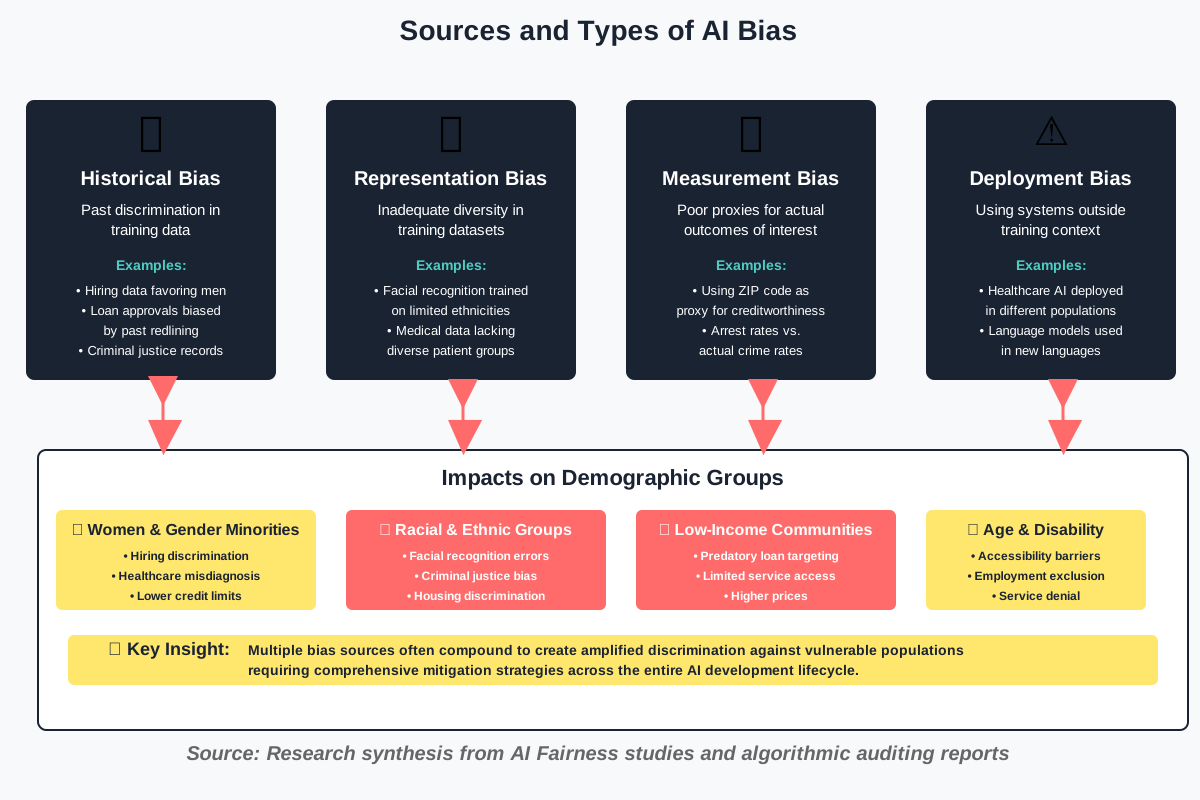
Bias in AI Algorithms: Identification, Mitigation, and Prevention represents one of the most pressing challenges in ethical AI development. AI systems learn from data, and when that data reflects historical discrimination or societal inequities, algorithms can perpetuate and even amplify those biases at scale.
Understanding algorithmic bias starts with recognizing its sources. Historical bias emerges when training data reflects past discrimination—for instance, if historical hiring data shows companies predominantly hired men for technical roles, an AI system might learn to favor male candidates. Representation bias occurs when training data doesn’t adequately represent all groups affected by the system. Measurement bias happens when the features used to train AI systems are poor proxies for what we actually care about.
I’ve encountered numerous real-world examples that illustrate these concepts. A facial recognition system that performs poorly on darker skin tones because it was trained primarily on lighter-skinned faces. A credit scoring algorithm that disadvantages applicants from certain neighborhoods because it conflates geographic location with creditworthiness. A healthcare AI that provides suboptimal treatment recommendations for women because clinical trial data overrepresented men.
Identifying bias requires systematic testing across different demographic groups, examining whether system performance varies in ways that align with protected characteristics. This involves disaggregating performance metrics, conducting fairness audits, and actively looking for disparate impacts even when they’re not immediately obvious.
Mitigation strategies include diversifying training data to better represent affected populations, preprocessing techniques that identify and adjust for biased patterns, algorithmic adjustments that explicitly optimize for fairness metrics, and post-processing corrections that adjust outputs to ensure equitable outcomes. However, these technical fixes must be combined with organizational practices: diverse development teams, stakeholder engagement, and ongoing monitoring.
Prevention is ultimately about designing for fairness from the start. This means establishing clear fairness requirements before development begins, considering how systems might impact different groups throughout the design process, and building in safeguards that prevent bias from emerging or being amplified.
AI Ethics and Data Privacy: Balancing Innovation and Protection
AI Ethics and Data Privacy: Balancing Innovation and Protection addresses the tension between AI systems’ hunger for data and individuals’ fundamental rights to privacy and control over personal information. AI models, particularly deep learning systems, often require massive datasets to function effectively, creating inevitable conflicts with privacy principles.
The privacy challenges posed by AI are multifaceted. AI systems can infer sensitive information from seemingly innocuous data—predicting health conditions from social media posts, determining sexual orientation from facial images, or deducing financial status from online behavior. They can de-anonymize supposedly protected datasets by combining multiple data sources. They can perpetuate surveillance by processing video feeds, tracking movement patterns, or monitoring communications at an unprecedented scale.
We’ve worked with organizations implementing privacy-preserving AI techniques that maintain model performance while protecting individual privacy. Differential privacy adds statistical noise to datasets or model outputs, making it impossible to identify individual contributions while preserving overall patterns. Federated learning trains models across decentralized devices without centralizing sensitive data. Homomorphic encryption allows computation on encrypted data, meaning sensitive information never needs to be exposed.
However, technical solutions alone aren’t sufficient. Organizations must implement comprehensive privacy frameworks that include data minimization (collecting only necessary information), purpose limitation (using data only for stated purposes), transparency (clearly communicating data practices), and user control (providing meaningful choices about data use).
The regulatory landscape has evolved significantly, with frameworks like GDPR in Europe and CCPA in California establishing new standards for data protection. These regulations grant individuals rights to access their data, correct inaccuracies, request deletion, and object to automated decision-making. Complying with these requirements while maintaining AI system functionality requires careful technical and organizational planning.
I’ve learned that the most sustainable approach balances innovation with protection by building privacy into AI design from the start. This means conducting privacy impact assessments early, implementing privacy-by-design principles, establishing clear data governance policies, and creating cultures where privacy is valued alongside performance metrics.
The Impact of AI on Employment: Ethical Considerations and Solutions
The Impact of AI on Employment: Ethical Considerations and Solutions confronts one of the most socially significant consequences of AI advancement: the transformation of work and potential displacement of workers. While AI creates new opportunities and efficiencies, it also automates tasks previously performed by humans, raising profound questions about economic justice and social responsibility.
The employment impact of AI manifests in several ways. Task automation replaces specific job functions, from data entry to basic customer service to routine analysis. Job displacement occurs when entire occupations become obsolete or require significantly fewer workers. Skill shifts change what capabilities employers value, leaving workers with outdated skills struggling to compete. Wage pressure emerges as automation alternatives make human labor less valuable in certain domains.
However, the narrative isn’t purely dystopian. AI also creates employment through new job categories (AI trainers, ethicists, and system auditors), productivity enhancement that allows workers to focus on higher-value activities, business expansion that employs more people as AI-driven efficiencies reduce costs, and entrepreneurial opportunities as AI tools democratize access to capabilities previously available only to large organizations.
The ethical challenge lies in managing this transition responsibly. Organizations deploying AI systems have obligations beyond maximizing efficiency. We advocate for just transition practices that include providing displaced workers with retraining opportunities, offering severance packages that acknowledge years of service, gradually phasing in automation to allow workforce adjustment, and prioritizing internal mobility before external hiring.
At the societal level, we need policy frameworks that address AI’s employment impact through education reform preparing students for AI-augmented work, social safety nets supporting workers during transitions, incentives for responsible automation practices, and investments in sectors where human capabilities remain essential.
I’ve seen organizations handle automation ethically by treating it as a human capital development opportunity rather than purely a cost-cutting measure. They assess which tasks AI should automate and which should remain human, involve workers in automation decisions, provide training for new AI-adjacent roles, and ensure that productivity gains from AI are shared appropriately across stakeholders rather than accruing only to shareholders.
AI Ethics in Healthcare: Opportunities and Challenges
AI Ethics in Healthcare: Opportunities and Challenges explores how AI is revolutionizing medical practice while raising critical ethical questions about patient safety, equity of access, privacy, and the fundamental nature of care. Healthcare AI applications span diagnosis, treatment planning, drug discovery, administrative optimization, and patient monitoring—each presenting distinct ethical considerations.
The opportunities are compelling. AI systems can detect diseases earlier by identifying subtle patterns in medical imaging that human practitioners might miss. They can personalize treatment by analyzing individual patient characteristics and predicting which interventions will work best. They can expand access by enabling remote diagnosis and care in underserved areas. They can reduce errors by providing decision support that catches potential mistakes before they harm patients.
Yet the challenges are equally significant. Diagnostic errors can occur when AI systems are trained on unrepresentative data or deployed in contexts different from training environments. Privacy breaches risk exposing sensitive health information if data security isn’t robust. Equity issues emerge when AI tools are primarily available in wealthy healthcare systems, widening existing health disparities. Accountability questions arise when determining who’s responsible for AI-assisted medical decisions that lead to adverse outcomes.
We’ve developed frameworks for responsible healthcare AI that prioritize patient welfare. This includes rigorous validation across diverse patient populations before clinical deployment, transparent disclosure when AI informs medical decisions, maintaining meaningful human oversight for critical diagnoses and treatment choices, establishing clear protocols for when AI recommendations should be overridden, and implementing robust monitoring to detect performance degradation or unexpected outcomes.
One particularly thorny issue involves clinical trial data diversity. Many AI diagnostic systems are trained primarily on data from specific demographic groups, leading to reduced accuracy for underrepresented populations. Addressing this requires intentional efforts to collect diverse training data, validate systems across demographic groups, and avoid deploying systems where evidence of equitable performance is lacking.
The informed consent challenges are also complex. How do we ensure patients understand when AI informs their care? What choices should patients have about whether AI is used in their treatment? How do we balance individual preferences with clinical best practices? We’ve found that clear communication, patient education materials, and opt-out options for non-critical AI applications help address these concerns.
I believe the future of ethical healthcare AI lies in human-AI collaboration where AI augments rather than replaces clinical judgment, combining computational pattern recognition with human empathy, contextual understanding, and ethical reasoning. The goal isn’t autonomous AI doctors but rather AI tools that make human healthcare professionals more effective and accessible.
AI Ethics in Finance: Transparency and Accountability
AI Ethics in Finance: Transparency and Accountability addresses how financial institutions increasingly rely on AI for credit decisions, fraud detection, trading, risk assessment, and customer service—applications that directly impact economic opportunity and financial security. The opacity of many AI systems creates tension with regulatory requirements and fundamental fairness principles in financial services.
Financial AI systems present unique ethical challenges due to their high-stakes nature. A biased credit algorithm doesn’t just inconvenience someone; it can prevent them from buying a home, starting a business, or recovering from financial setbacks. Opaque trading algorithms can destabilize markets. Discriminatory insurance pricing can make essential coverage unaffordable for vulnerable populations.
Transparency in financial AI means different things to different stakeholders. For regulators, it means being able to audit decisions and verify compliance with anti-discrimination laws. For consumers, it means understanding why they were denied credit or offered specific terms. For financial institutions, it means having sufficient explainability to trust and manage AI systems. These varied needs require multifaceted transparency approaches.
We’ve implemented explainable AI (XAI) techniques in financial contexts that provide different levels of insight depending on the audience. For consumers, we generate plain-language explanations highlighting the key factors affecting their application. For compliance officers, we provide detailed feature importance analyses and counterfactual explanations showing what changes would alter outcomes. For auditors, we maintain comprehensive documentation of model development, validation, and monitoring.
Accountability structures in financial AI must address multiple dimensions. Technical accountability involves ensuring models function as intended and meet performance standards. Legal accountability establishes who is liable when AI systems violate regulations or cause harm. Ethical accountability ensures systems align with institutional values and societal expectations beyond legal minimums.
The regulatory landscape increasingly demands accountability. Fair lending laws prohibit credit discrimination based on protected characteristics. Regulations require adverse action notices explaining why credit applications were denied. Consumer protection laws mandate that automated decisions can be challenged and reviewed by humans. Meeting these requirements with complex AI systems requires careful design and comprehensive documentation.
I’ve learned that the most successful financial institutions treat AI ethics as a competitive advantage rather than a compliance burden. They recognize that trustworthy AI systems attract customers, reduce regulatory risk, avoid reputational damage, and contribute to long-term sustainability. This perspective shifts ethics from an external constraint to an internal driver of excellence.
AI and Criminal Justice: Ethical Dilemmas and Best Practices
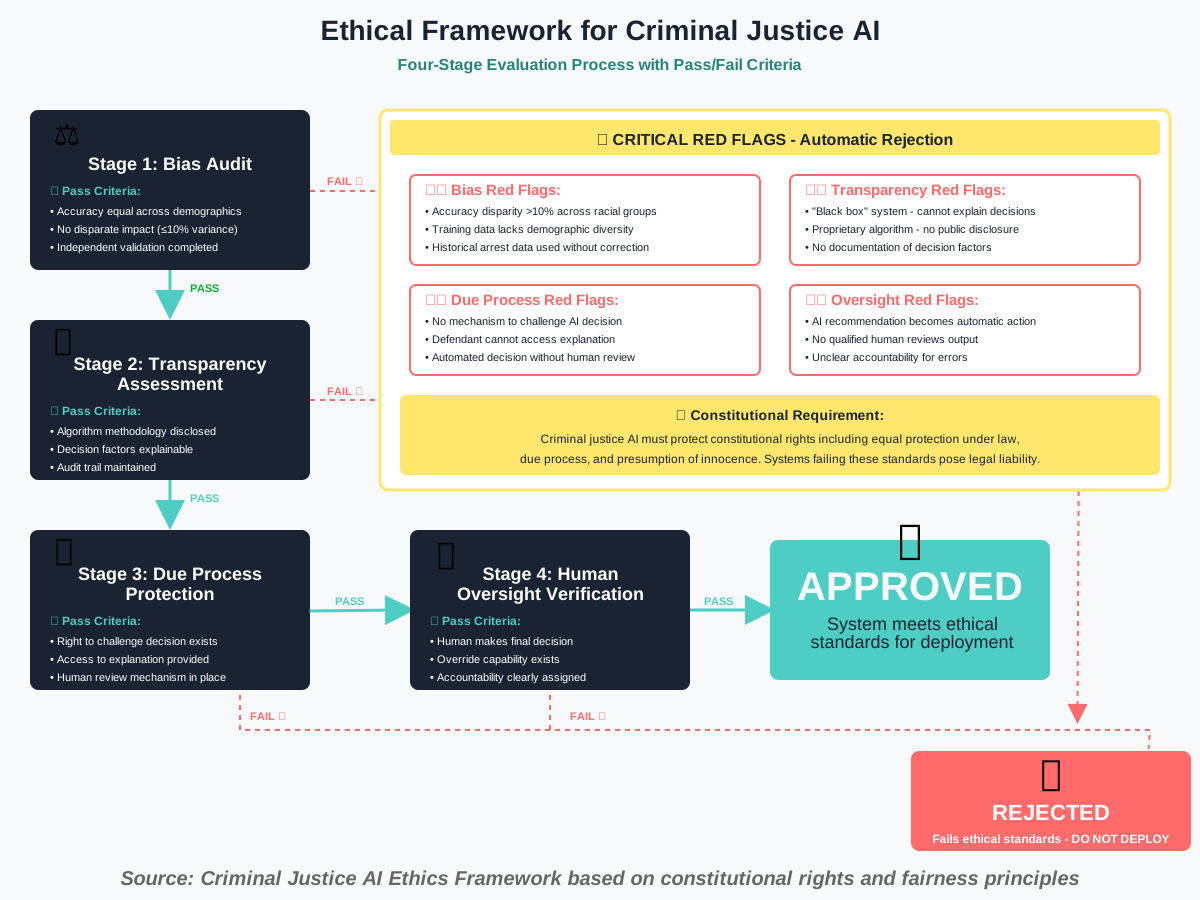
AI and Criminal Justice: Ethical Dilemmas and Best Practices examines one of the most controversial AI applications: using predictive algorithms in policing, bail decisions, sentencing, and parole determinations. These high-stakes contexts amplify all the ethical challenges of AI while implicating fundamental rights to due process, equal protection, and human dignity.
Criminal justice AI applications include predictive policing systems that forecast where crimes are likely to occur, risk assessment tools that predict whether defendants will reoffend or fail to appear in court, facial recognition for suspect identification, and pattern analysis for detecting criminal networks. Each raises distinct ethical concerns that we must address carefully.
The core dilemma involves bias amplification. Criminal justice data reflects historical discrimination in policing and sentencing. When AI systems learn from this biased data, they risk perpetuating and legitimizing historical injustices. For instance, if minority neighborhoods were historically over-policed, predictive policing systems trained on arrest data will direct more police to those neighborhoods, generating more arrests, creating a self-reinforcing cycle of discriminatory enforcement.
Transparency challenges are acute in criminal justice contexts. Defendants have constitutional rights to understand and challenge evidence against them, yet many criminal justice AI systems are proprietary black boxes whose inner workings aren’t disclosed. This creates due process violations when defendants can’t effectively contest algorithmic assessments that influence their liberty.
We advocate for strict standards when AI is used in criminal justice: independent validation by researchers without commercial interests, public transparency about how systems work and what data they use, bias audits examining whether systems produce disparate outcomes across racial and socioeconomic groups, human override capabilities ensuring algorithmic recommendations never become automatic decisions, and ongoing monitoring to detect performance issues or unintended consequences.
Some applications raise questions about whether AI should be used at all. Facial recognition in public spaces creates surveillance infrastructure that can chill free association and protest. Behavioral prediction based on past associations or neighborhood residence risks guilt by association. Automated decision-making in bail or sentencing may violate due process principles requiring individualized assessment.
I believe criminal justice AI requires the highest ethical standards because the stakes—human freedom—are so profound. This means prioritizing accuracy and fairness even at the cost of efficiency, maintaining human accountability for all consequential decisions, protecting due process rights rigorously, and being willing to forego AI applications when ethical use cannot be assured. The convenience of automation never justifies compromising fundamental justice principles.
The Ethics of Autonomous Vehicles: Safety, Responsibility, and Decision-Making
The Ethics of Autonomous Vehicles: Safety, Responsibility, and Decision-Making explores how self-driving cars force us to confront philosophical dilemmas that were previously theoretical, now requiring concrete programming decisions. Autonomous vehicles promise significant safety improvements by eliminating human error, which causes the vast majority of traffic accidents, but they also introduce new ethical challenges around liability, decision-making in unavoidable crash scenarios, and the pace of technological deployment.
The most famous ethical puzzle involves trolley problem scenarios: if an autonomous vehicle must choose between two harmful outcomes—say, swerving to avoid pedestrians but risking passenger injury, or staying course to protect passengers but striking pedestrians—how should it decide? While these extreme scenarios are rare, they highlight the broader challenge of encoding ethical values into vehicle control systems.
Safety standards for autonomous vehicles present difficult tradeoffs. Should we require self-driving cars to be safer than human drivers before allowing deployment? If so, how much safer? Requiring perfection might delay technology that could save thousands of lives annually. Allowing premature deployment risks preventable deaths from immature technology. We’ve grappled with finding the appropriate balance between innovation and precaution.
Liability frameworks must evolve to address autonomous vehicle accidents. Traditional frameworks assign responsibility to drivers, but who’s liable when there is no human driver? Is it the vehicle owner, the software developer, the vehicle manufacturer, or the AI system itself? Clear liability rules are essential for both compensating victims and creating proper incentives for safety investment.
We advocate for transparent decision-making algorithms in autonomous vehicles, where the ethical principles guiding crash decisions are publicly disclosed and debated rather than hidden in proprietary code. This includes questions like whether vehicles should prioritize passenger safety over pedestrian safety, whether they should consider the number of people affected, whether age or other factors should influence decisions, and how to balance individual rights against utilitarian calculations.
Testing and validation of autonomous vehicles must be rigorous and comprehensive. This means not just logging millions of miles in favorable conditions but actively testing in challenging scenarios: bad weather, unusual road conditions, unpredictable pedestrian behavior, and equipment failures. We need to verify that systems handle edge cases safely before exposing the public to risks.
The deployment timeline raises ethical questions about imposing risks and benefits on different populations. Early autonomous vehicle testing often occurs in affluent areas with well-maintained roads and predictable conditions, while broader deployment may expose vulnerable populations to risks before the technology fully matures. Equitable distribution of both benefits and risks should guide deployment strategies.
I believe autonomous vehicles will ultimately save lives and improve mobility, but getting there ethically requires prioritizing safety over speed, maintaining transparency about capabilities and limitations, establishing clear accountability frameworks, involving diverse stakeholders in ethical decisions, and remaining willing to slow or stop deployment when safety concerns emerge.
AI Ethics and the Military: Autonomous Weapons and the Future of Warfare
AI Ethics and the Military: Autonomous Weapons and the Future of Warfare confronts perhaps the most consequential and controversial AI application: weapons systems that can select and engage targets without meaningful human control. This raises fundamental questions about the ethics of delegating life-and-death decisions to machines and the future of warfare itself.
The debate centers on lethal autonomous weapons systems (LAWS)—weapons that can independently identify, track, and engage targets based on sensor inputs and pre-programmed parameters. Proponents argue these systems could be more precise than humans, reducing civilian casualties, and protect soldiers by keeping them out of harm’s way. Critics counter that machines lack the moral judgment necessary for warfare decisions and that autonomous weapons would lower barriers to armed conflict.
International humanitarian law requires combatants to distinguish between military targets and civilians, use force proportionally to military objectives, and take precautions to minimize civilian harm. The question is whether AI systems can reliably make these legally and ethically complex determinations across the chaotic, ambiguous contexts of actual warfare.
We’ve identified several fundamental concerns about autonomous weapons. Accountability gaps emerge when no human makes the decision to kill, raising questions about who bears responsibility for unlawful strikes. Meaningful human control may be impossible when weapon systems operate at machine speed in complex environments. Verification challenges make it difficult to ensure systems comply with legal requirements. Proliferation risks could spread autonomous weapons to non-state actors or authoritarian regimes that disregard civilian protection.
The dignity concerns are profound. Many ethicists and advocacy groups argue that delegating life-and-death decisions to machines is inherently wrong, violating human dignity regardless of whether autonomous weapons could theoretically be more accurate than human soldiers. This deontological perspective holds that some decisions must remain human even if machines could execute them more efficiently.
From a governance perspective, we need international agreements establishing clear standards for autonomous weapons development and use. This includes requirements for meaningful human control over lethal force decisions, prohibitions on fully autonomous weapons targeting people, restrictions on AI systems making civilian/combatant distinctions, and verification mechanisms ensuring compliance.
Military AI ethics extends beyond weapons to logistics, surveillance, intelligence analysis, and command decision support. Each application raises distinct ethical questions. Should AI predict where insurgents might gather, potentially leading to preemptive strikes? Should AI analyze communications to identify suspected terrorists? Should AI recommend military strategies that commanders might follow without full understanding?
I believe military AI demands the most stringent ethical constraints because the stakes—human life in warfare—are ultimate. This means maintaining meaningful human control over lethal force decisions, establishing clear accountability for AI-assisted military actions, prioritizing civilian protection over operational efficiency, preventing autonomous weapons proliferation, and engaging in transparent international dialogue about appropriate limits on military AI.
Explainable AI (XAI): The Importance of Understanding AI Decisions
Explainable AI (XAI): The Importance of Understanding AI Decisions addresses the critical challenge that many powerful AI systems, particularly deep neural networks, operate as black boxes whose decision-making processes are opaque even to their creators. This lack of transparency creates problems for trust, accountability, bias detection, and meaningful human oversight.
The interpretability challenge stems from AI systems’ complexity. A deep learning model might have millions or billions of parameters interacting in nonlinear ways to produce outputs. Understanding why a particular input produces a specific output requires tracing influence through these enormously complex networks—a task that often exceeds human cognitive capacity.
Why does explainability matter? Trust requires understanding—users are more likely to rely on AI systems when they can verify decisions make sense. Debugging demands insight—improving AI systems requires understanding what goes wrong and why. Accountability needs transparency—assigning responsibility for AI decisions requires knowing how those decisions were made. Bias detection depends on visibility—identifying discriminatory patterns requires examining decision factors.
We’ve worked with various XAI techniques that provide different types of insight. Feature importance methods identify which input variables most influenced a decision. Counterfactual explanations show what changes to inputs would alter the output. Example-based explanations identify similar cases from training data. Rule extraction approximates complex models with simpler, interpretable rules. Attention mechanisms highlight which parts of inputs the model focused on.
However, explainability involves tradeoffs. Accuracy versus interpretability often conflicts—the most accurate models tend to be less interpretable, while simpler interpretable models may sacrifice performance. Completeness versus comprehensibility tensions mean that technically complete explanations might be too complex for users to understand, while comprehensible explanations might oversimplify.
Different stakeholders need different types of explanations. End users need simple, actionable information about what influenced decisions affecting them. Domain experts need detailed insights that connect to their professional knowledge. Developers need technical explanations that support debugging and improvement. Regulators need verifiable explanations demonstrating compliance with legal requirements. Researchers need comprehensive explanations supporting scientific understanding.
I’ve learned that effective XAI implementation requires designing for explainability from the start rather than attempting to interpret opaque models after development. This means choosing model architectures that balance accuracy with interpretability, building in explanation capabilities during development, testing explanations with actual users to ensure they’re meaningful, and maintaining human expertise to contextualize and validate AI explanations.
The future of trustworthy AI depends on advancing explainability. This means investing in XAI research, establishing explainability standards for high-stakes applications, training AI practitioners in interpretability techniques, and fostering cultures that value understanding alongside performance metrics.
AI Ethics Audits: Ensuring Compliance and Ethical AI Development
AI Ethics Audits: Ensuring Compliance and Ethical AI Development provides systematic processes for evaluating whether AI systems meet ethical standards and regulatory requirements. Audits serve as crucial accountability mechanisms, identifying issues before they cause harm and providing assurance to stakeholders that AI systems operate responsibly.
Comprehensive AI ethics audits examine multiple dimensions. Technical audits assess model performance, examining accuracy across demographic groups, testing for bias, evaluating robustness against adversarial inputs, and verifying security protections. Process audits review development practices, examining whether appropriate safeguards were implemented, stakeholders were consulted, risks were assessed, and documentation is adequate. Impact audits analyze real-world effects, examining whether systems produce intended benefits without unacceptable harms.
We’ve developed audit frameworks that systematically evaluate AI systems against established ethical principles. This includes fairness audits that test for disparate impacts across protected groups, transparency audits that assess whether decisions can be explained and understood, accountability audits that verify clear responsibility chains exist, privacy audits that evaluate data protection measures, and safety audits that test system robustness and security.
Audit timing matters significantly. Pre-deployment audits catch issues before systems go live, when corrections are easier and harm can be prevented. Ongoing monitoring detects performance degradation or emerging issues during operation. Post-incident reviews investigate what went wrong when problems occur and identify preventive measures. Periodic reassessments ensure systems remain compliant as technology, regulations, and societal expectations evolve.
The auditor independence question is crucial. Internal audits by development teams provide useful technical insights but may lack objectivity. External audits by independent parties offer credibility but may lack context about system specifics. We recommend combining both: internal audits for continuous improvement and external audits for periodic objective assessment.
Audit standards are still evolving but increasingly codified. Industry groups, standards organizations, and regulatory bodies are developing frameworks specifying what audits should examine, what evidence demonstrates compliance, and how audit results should be documented. Familiarizing yourself with relevant standards in your domain is essential for effective auditing.
I’ve found that the most valuable audits go beyond checkbox compliance to genuinely assess ethical performance. This means not just verifying that required processes were followed but examining whether those processes effectively achieve ethical objectives. It means looking beyond aggregate metrics to understand system impacts on specific vulnerable populations. It means being willing to recommend significant changes, including reconsidering deployment, when audits reveal serious concerns.
Organizations committed to ethical AI establish cultures that welcome audits as opportunities for improvement rather than viewing them as threats or burdens. This means providing auditors with necessary access and cooperation, taking findings seriously, implementing recommended changes promptly, and transparently communicating audit results to stakeholders.
The Role of AI Ethics Boards and Committees: Fostering Ethical AI Practices
The Role of AI Ethics Boards and Committees: Fostering Ethical AI Practices explores how organizations can institutionalize ethical oversight through dedicated governance bodies that review AI projects, establish ethical standards, and provide guidance on challenging cases. These structures ensure ethical considerations receive systematic attention throughout the AI lifecycle.
Effective AI ethics boards typically include diverse membership bringing varied perspectives: technical experts who understand AI capabilities and limitations, ethicists who can identify moral dimensions, domain specialists with deep knowledge of application contexts, legal counsel familiar with regulatory requirements, and community representatives who understand stakeholder concerns. This diversity ensures blind spots are minimized and decisions consider multiple viewpoints.
Board responsibilities vary but typically include reviewing high-risk AI projects before deployment, establishing organizational AI ethics policies, providing guidance on ambiguous cases, investigating ethical concerns that arise, recommending improvements to AI governance processes, staying informed about emerging best practices, and communicating with leadership about AI ethics priorities. The specific scope should be clearly defined and appropriate for the organizational context.
We’ve learned that boards need real authority to be effective. This means having the power to delay or halt problematic projects, access to necessary information about AI systems under review, direct communication channels to executive leadership, adequate resources to conduct thorough assessments, and organizational support for implementing recommendations. Without genuine authority, ethics boards risk becoming rubber stamps rather than meaningful oversight mechanisms.
Decision-making processes should be transparent and consistent. This includes establishing clear criteria for what triggers review, defining standards projects must meet, specifying what information should be provided, creating structured evaluation frameworks, and documenting decisions and rationales. Consistency ensures similar cases receive similar treatment and builds confidence in the process.
The relationship between ethics boards and development teams requires careful management. Boards shouldn’t micromanage technical details or impede innovation but should ensure ethical considerations receive appropriate weight in decision-making. Framing ethics review as collaborative problem-solving rather than adversarial gatekeeping helps maintain productive relationships.
I’ve observed that successful ethics boards integrate ethics into development workflows rather than operating as separate, external review bodies. This means engaging early in project planning when ethical issues are easiest to address, providing ongoing consultation as projects evolve, offering practical guidance rather than just identifying problems, and celebrating ethical excellence rather than only focusing on deficiencies.
Accountability mechanisms ensure ethics boards fulfill their responsibilities. This includes regular reporting to leadership about activities and findings, periodic evaluation of board effectiveness, updating practices based on lessons learned, and maintaining independence from commercial pressures that might compromise ethical standards.
AI Ethics Education and Training: Building a Responsible AI Workforce
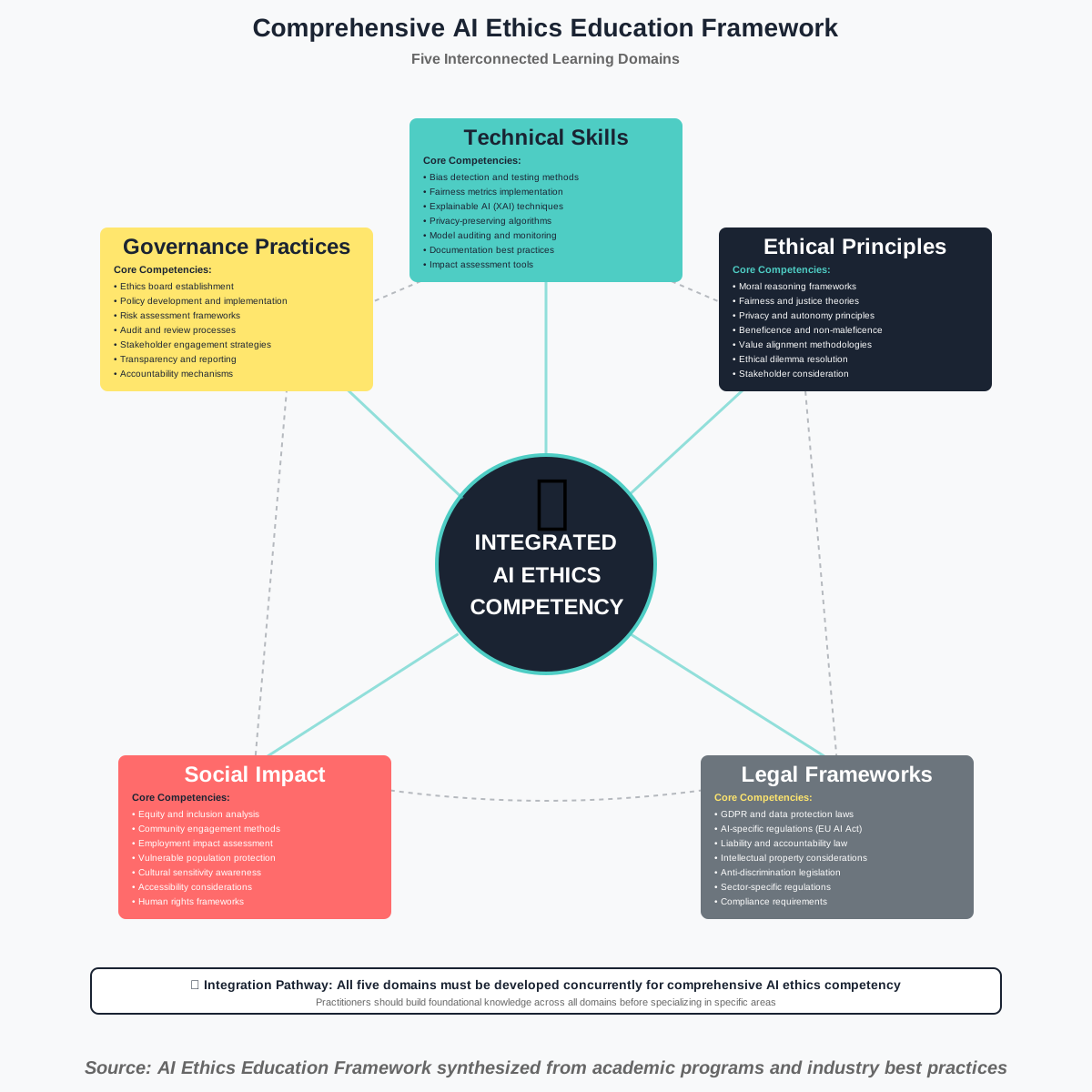
AI Ethics Education and Training: Building a Responsible AI Workforce addresses how organizations and educational institutions can develop the knowledge and skills necessary for responsible AI development and deployment. Creating ethical AI systems requires not just technical expertise but also understanding of ethical principles, social impacts, and governance practices.
Comprehensive AI ethics education should cover foundational concepts including core ethical principles, common sources of bias, privacy considerations, fairness metrics, transparency requirements, and accountability frameworks. This foundation enables practitioners to recognize ethical dimensions of their work and apply appropriate responses.
Technical skills training equips practitioners with concrete capabilities for ethical AI development. This includes techniques for bias testing and mitigation, methods for creating explainable models, approaches to privacy-preserving AI, processes for impact assessment, and tools for ongoing monitoring. Technical knowledge transforms ethical commitments into practical implementations.
Case study analysis develops ethical reasoning by examining real-world scenarios where AI raised ethical concerns. What went wrong? What could have been done differently? What tradeoffs were involved? Working through complex, ambiguous cases builds judgment that practitioners can apply to novel situations they’ll encounter.
We’ve developed training programs for different roles, recognizing that AI practitioners have varied responsibilities and need different knowledge. Developers need deep technical skills for building ethical systems. Product managers need to understand the ethical implications of design decisions. Executives need to grasp governance requirements and organizational responsibilities. Sales teams need to represent capabilities and limitations accurately. Each role requires tailored education addressing their specific ethical responsibilities.
Interdisciplinary education is crucial because ethical AI isn’t purely technical. AI developers should learn about social science research on bias and discrimination. They should understand legal frameworks governing their domains. They should appreciate philosophical traditions addressing moral reasoning. They should know how their technologies affect different communities. This broader knowledge base enables more sophisticated ethical thinking.
I believe ethics education should be continuous rather than one-time training. Technology evolves rapidly, new ethical challenges emerge, regulations change, and societal expectations shift. Organizations should provide regular updates, create communities of practice where practitioners share ethical insights, encourage attendance at ethics-focused conferences and workshops, and foster cultures of continuous learning.
Assessment and accountability ensure ethics education translates into practice. This might include evaluating projects for ethical quality, rewarding ethical excellence in performance reviews, making ethics competency a promotion criterion, and holding practitioners accountable when they violate ethical standards. Education without accountability risks becoming box-checking rather than meaningful culture change.
Ultimately, building a responsible AI workforce requires normalizing ethics as core to technical excellence rather than treating it as separate or secondary. The best AI practitioners understand that ethical development isn’t about constraints limiting innovation but about building systems that genuinely serve humanity’s interests and withstand scrutiny.
The Future of AI Ethics: Emerging Trends and Challenges
The Future of AI Ethics: Emerging Trends and Challenges looks ahead to how AI ethics will evolve as technology advances, societal understanding deepens, and governance frameworks mature. Several key trends will shape the AI ethics landscape in coming years, each presenting both opportunities and challenges.
Generative AI ethics represents a frontier with unique challenges. Systems that create text, images, audio, and video raise questions about authenticity, misinformation, intellectual property, and the nature of creativity itself. As these systems become more capable, we’ll need frameworks addressing when generated content should be disclosed, how to prevent malicious uses like deepfakes, how to attribute creative works, and how to preserve human agency in creative domains.
AI and climate change create complex tradeoffs. AI can optimize energy systems, improve climate modeling, and enhance environmental monitoring, potentially helping address climate change. However, training large AI models consumes enormous energy, contributing to carbon emissions. The future requires balancing AI’s potential climate benefits against its environmental costs and prioritizing efficient AI approaches that minimize resource consumption.
Quantum AI promises computational capabilities that could revolutionize AI but also raises new ethical questions. Quantum systems might break current encryption, threatening privacy. They might enable surveillance at unprecedented scales. They could accelerate AI development faster than our ability to understand implications. Preparing for quantum AI requires anticipating these challenges and developing appropriate safeguards.
AI consciousness and rights may seem like science fiction but could become real ethical issues. As AI systems become more sophisticated, questions about machine consciousness, moral status, and rights might shift from philosophical speculation to practical policy questions. Even if we’re unsure whether AI systems are conscious, we’ll need frameworks for how to treat them ethically.
Global AI governance will increasingly require international coordination. AI development and deployment cross borders, creating regulatory arbitrage risks where companies avoid strict jurisdictions. Effective governance requires international agreements establishing minimum standards, harmonizing approaches across jurisdictions, and creating enforcement mechanisms. However, achieving international consensus amid geopolitical competition and divergent values presents enormous challenges.
I anticipate ethics specialization where different domains develop tailored ethical frameworks reflecting their specific contexts and values. Healthcare AI ethics will evolve differently than financial AI ethics or educational AI ethics. This specialization will make ethics more practically useful but will require ensuring core principles remain consistent across domains.
The democratization of AI through accessible tools and platforms raises new ethical challenges. When powerful AI capabilities become available to anyone, how do we prevent misuse while preserving beneficial access? How do we ensure diverse populations can shape AI development rather than just consuming what large corporations produce? Balancing accessibility with safety represents a central challenge.
Neurotechnology convergence, where AI interfaces directly with human brains, creates profound ethical questions about autonomy, identity, privacy, and enhancement. As brain-computer interfaces advance, we’ll need frameworks addressing consent for neural data collection, cognitive privacy, equitable access to enhancement technologies, and preservation of human agency when AI mediates thought processes.
The future of AI ethics will require adaptive governance that can evolve as technology advances. Rigid frameworks will quickly become obsolete, while purely reactive approaches will lag behind developments. We need governance structures that monitor emerging technologies, anticipate challenges, adjust policies promptly, and balance stability with flexibility.
AI Governance in Practice: Case Studies of Successful Implementations
AI Governance in Practice: Case Studies of Successful Implementations examines real-world examples of organizations effectively implementing ethical AI governance, providing concrete lessons that others can learn from and adapt to their contexts. These case studies demonstrate that ethical AI governance is not just theoretical but achievable with appropriate commitment and structures.
One financial services company we worked with established a comprehensive AI governance framework after recognizing that their credit algorithms might perpetuate historical biases. They created a cross-functional AI ethics board including technical leaders, legal counsel, compliance officers, and community representatives. This board reviews all AI systems with potential disparate impacts before deployment, using structured evaluation criteria assessing fairness, transparency, and compliance.
The framework requires developers to document training data sources, conduct bias testing across demographic groups, provide explanations for adverse decisions, and implement ongoing monitoring for performance degradation. When bias testing revealed their credit model disadvantaged certain geographic areas correlating with minority populations, they revised the model to exclude biased features and adjusted their data collection to better represent affected communities.
A healthcare system implemented staged AI deployment for a diagnostic imaging system, prioritizing safety and validation. Rather than immediately deploying across all facilities, they began with a limited pilot in a single department, closely monitoring performance and gathering clinician feedback. They discovered the system struggled with certain edge cases not represented in training data, prompting additional validation before broader rollout.
They established protocols requiring radiologists to review all AI-flagged cases, maintaining human accountability for diagnostic decisions. They created feedback mechanisms allowing clinicians to report concerns about AI recommendations, which triggered reviews by the ethics board. This cautious approach built trust, identified issues early when they were easier to address, and ensured patient safety remained paramount throughout deployment.
A technology company developing facial recognition systems implemented comprehensive bias testing after public criticism of accuracy disparities across demographic groups. They assembled diverse test datasets representing various ethnicities, ages, genders, and lighting conditions. They established accuracy thresholds that must be met across all demographic groups, not just in aggregate, refusing to deploy systems showing significant disparate impacts.
When testing revealed accuracy gaps for darker skin tones, they invested in collecting additional training data, adjusted their algorithms, and conducted iterative testing until equitable performance was achieved. They also implemented use-case restrictions, declining to sell facial recognition for certain applications like mass surveillance or law enforcement without strong safeguards, demonstrating a willingness to sacrifice revenue for ethical principles.
An e-commerce platform tackled recommendation algorithm transparency by providing users with insights into why products were recommended. They developed interfaces showing which of their past behaviors influenced suggestions, allowing users to understand and control recommendation factors. They implemented options allowing users to exclude certain data from recommendations, providing meaningful control over algorithmic personalization.
These interventions improved user trust and satisfaction while maintaining recommendation quality. Users appreciated transparency and control, feeling less manipulated by hidden algorithms. The company found that ethical design enhanced business performance rather than constraining it, demonstrating that ethics and success can align.
I’ve learned from these cases that successful AI governance requires genuine leadership commitment, where executives allocate resources, empower ethics oversight bodies, and support decisions that prioritize ethics over short-term gains. It requires practical frameworks that provide clear guidance without creating excessive bureaucracy. It requires cross-functional collaboration, ensuring technical, legal, ethical, and business perspectives all inform decisions. And it requires continuous improvement, learning from experience, and adapting as understanding evolves.
The AI Ethics Dilemma: Balancing Innovation and Regulation
The AI Ethics Dilemma: Balancing Innovation and Regulation addresses one of the central tensions in AI governance: how to foster beneficial innovation while preventing harms through appropriate oversight. Too little regulation risks allowing harmful AI applications, while excessive regulation might stifle innovation and prevent beneficial uses from emerging.
The innovation argument emphasizes that AI offers enormous potential benefits—improving healthcare, enhancing education, addressing climate change, increasing productivity, and solving complex problems beyond human capability alone. Premature or excessive regulation might prevent these benefits from being realized, especially if regulations favor incumbents, create barriers for startups, or impose costs that only large organizations can bear.
The regulation argument counters that AI’s transformative power creates risks that markets won’t adequately address. Companies face competitive pressures to deploy AI quickly, potentially cutting corners on safety and ethics. The harms from irresponsible AI—discrimination, privacy violations, safety failures—often fall on vulnerable populations with limited recourse. Regulation ensures minimum standards protecting public interests that companies might otherwise neglect.
Finding the appropriate balance requires nuanced approaches that vary by context. High-stakes applications with significant harm potential—medical diagnosis, credit decisions, criminal justice—warrant stringent oversight ensuring safety and fairness before deployment. Lower-stakes applications with limited harm potential might justify lighter-touch regulation allowing experimentation.
Regulatory approaches span a spectrum. Self-regulation relies on industry to establish and enforce standards, offering flexibility but risking inadequacy when commercial incentives conflict with public interests. Co-regulation combines industry standards with government oversight, potentially achieving both flexibility and accountability. Direct regulation establishes mandatory requirements enforced by government agencies, providing strong protection but potentially reducing adaptability.
We advocate for principle-based regulation that establishes clear objectives—fairness, transparency, accountability, and safety—while allowing flexibility in how organizations achieve them. This contrasts with prescriptive rules specifying exact technical requirements, which quickly become obsolete as technology evolves. Principle-based approaches maintain regulatory relevance while accommodating innovation.
Regulatory sandboxes offer valuable mechanisms for balancing innovation and protection. These controlled environments allow testing of novel AI applications under regulatory supervision with appropriate safeguards. If innovations prove beneficial and safe, they can be approved for broader deployment. If serious issues emerge, they’re caught before widespread harm occurs. Sandboxes provide learning opportunities for both innovators and regulators.
The timing question is crucial: when should regulation be imposed? Regulating too early risks addressing problems that might not materialize or constraining beneficial developments. Regulating too late allows harms to occur before protections are established. We generally favor adaptive regulation that monitors emerging technologies, engages stakeholders in ongoing dialogue, implements lighter-touch oversight initially, and increases stringency as risks become clearer and technology matures.
I believe the innovation versus regulation framing is somewhat misleading. Well-designed regulation can foster innovation by building public trust that encourages adoption, establishing clear rules that reduce uncertainty, preventing race-to-the-bottom dynamics where ethics are sacrificed for competitive advantage, and ensuring beneficial innovations aren’t undermined by harmful applications that trigger backlash. Conversely, innovation thrives when developers can trust that following ethical principles won’t disadvantage them competitively.
The goal shouldn’t be choosing between innovation and regulation but rather designing governance frameworks that enable responsible innovation—allowing beneficial AI to flourish while preventing harms through appropriate oversight.
AI Ethics and Human Rights: Protecting Fundamental Freedoms in the Age of AI
AI Ethics and Human Rights: Protecting Fundamental Freedoms in the Age of AI examines how AI technologies implicate fundamental human rights—privacy, freedom of expression, equal protection, due process, and human dignity—and what safeguards are needed to ensure AI enhances rather than undermines these rights.
Privacy rights face particular pressure from AI systems’ data hunger. AI-powered surveillance can track individuals’ movements, monitor communications, and infer sensitive information about health, beliefs, and associations. Facial recognition enables persistent identification in public spaces. Predictive analytics profiles individuals based on their data trails. Protecting privacy requires not just data protection laws but fundamental rethinking of how AI systems are designed and deployed.
Freedom of expression is threatened by AI-powered content moderation that might chill speech through over-removal, AI-generated misinformation that pollutes information environments, algorithmic amplification that shapes public discourse opaquely, and predictive policing that might target individuals for their associations or expressed views. Safeguarding free expression requires balancing content moderation needs against speech rights and ensuring AI doesn’t enable oppressive surveillance.
Equal protection principles are violated when AI systems discriminate based on protected characteristics. Whether it’s biased credit algorithms, discriminatory hiring systems, or inaccurate facial recognition, AI can perpetuate and amplify historical inequities. Human rights frameworks demand that AI systems treat all people with equal dignity and provide equal opportunities regardless of race, gender, religion, or other protected attributes.
Due process rights require that individuals facing consequential decisions can understand the basis for those decisions and have meaningful opportunities to challenge them. Opaque AI systems making credit, employment, or criminal justice decisions without explanation violate these fundamental rights. Ensuring due process requires transparency, explainability, and human review capabilities.
Human dignity concerns arise when AI systems reduce people to data points, make deeply personal decisions without human judgment, or deploy capabilities like AI-generated intimate images that violate bodily autonomy. Some argue that certain AI applications—such as fully autonomous weapons or social credit systems—are inherently incompatible with human dignity regardless of technical safeguards.
We’ve developed a human rights impact assessment framework that evaluates AI systems against international human rights standards. This systematic analysis examines which rights might be affected, assesses the severity and likelihood of impacts, evaluates whether impacts are necessary and proportionate to legitimate objectives, identifies vulnerable populations facing heightened risks, and recommends safeguards to prevent or mitigate rights violations.
Rights-based AI design proactively incorporates human rights considerations throughout development. This means consulting affected communities about AI systems that will impact them, conducting impact assessments before deployment, implementing technical safeguards that protect rights, establishing accountability mechanisms for rights violations, and remaining willing to forego AI applications when rights-respecting implementation isn’t feasible.
I believe human rights provide a powerful framework for AI ethics because they’re well-established in international law, they enjoy broad legitimacy across diverse cultures and contexts, they focus attention on vulnerable populations most at risk from AI harms, and they provide concrete standards against which AI systems can be evaluated. Anchoring AI ethics in human rights helps prevent ethics from becoming abstract philosophizing disconnected from real-world impacts on real people.
Organizations and governments should explicitly commit to human rights in their AI principles, conduct rights impact assessments of AI systems, provide remedies when AI violates rights, engage civil society organizations advocating for rights protection, and support international efforts to establish AI governance frameworks grounded in human rights. Technology should serve humanity’s highest values, not undermine them.
The Role of Stakeholders in AI Ethics: Collaboration and Responsibility
The Role of Stakeholders in AI Ethics: Collaboration and Responsibility recognizes that creating ethical AI requires input and action from diverse parties—AI developers, deploying organizations, affected communities, governments, civil society, researchers, and the public. Each stakeholder group has distinct responsibilities and perspectives that must be incorporated into ethical AI governance.
AI developers bear primary responsibility for building ethical systems. This means understanding ethical principles and how they apply to their work, implementing technical safeguards against bias and other harms, being willing to raise concerns when asked to build problematic systems, documenting their work transparently, and continuously learning about emerging best practices. Developers shouldn’t hide behind “just following orders” when asked to implement unethical AI.
Organizations deploying AI have responsibilities beyond technical development. They must establish governance frameworks ensuring ethical oversight, allocate resources for proper testing and validation, train personnel in responsible AI use, monitor deployed systems for emerging issues, provide transparency to affected individuals, offer meaningful recourse when AI causes harm, and maintain cultures that value ethics alongside performance.
Affected communities should participate in decisions about AI systems that impact them. This means consulting communities during AI design about their concerns and priorities, involving community representatives in governance oversight, conducting impact assessments that meaningfully engage affected populations, respecting community decisions to reject AI applications when risks outweigh benefits, and ensuring that AI benefits are shared equitably rather than accruing only to powerful parties.
Governments play crucial roles in establishing regulatory frameworks, enforcing compliance, funding research on ethical AI, convening multi-stakeholder dialogues, representing public interests, protecting vulnerable populations, providing education about AI, and coordinating internationally on governance challenges that transcend borders. Government engagement should balance protecting public welfare with enabling beneficial innovation.
Civil society organizations serve as watchdogs identifying problematic AI applications, advocates for affected communities and underrepresented interests, educators raising public awareness, researchers documenting AI impacts, and conveners bringing diverse stakeholders together. Civil society ensures perspectives beyond commercial and government interests inform AI governance.
Researchers advance understanding of AI ethics through empirical studies documenting AI impacts, technical research developing fairer and more transparent algorithms, theoretical work clarifying ethical principles and their application, and interdisciplinary collaboration connecting AI to social science, law, philosophy, and domain expertise. Research provides the knowledge base informing ethical AI practices.
The public has responsibilities too: educating themselves about AI and its implications, engaging in democratic processes shaping AI policy, making informed choices about AI products and services, speaking up when they encounter problematic AI, and holding organizations and governments accountable for their AI decisions.
We’ve found that multi-stakeholder processes produce better AI governance outcomes than any single party acting alone. Developers understand technical possibilities and limitations. Affected communities understand real-world impacts and priorities. Civil society provides critical perspectives. Governments represent public interests and enforcement capability. Researchers offer evidence and analysis. Bringing these perspectives together enables more comprehensive identification of issues and more robust solutions.
However, multi-stakeholder collaboration faces challenges: power imbalances where some voices dominate, resource constraints preventing meaningful participation by smaller organizations, coordination difficulties across diverse parties, timeline pressures that favor quick decisions over inclusive processes, and genuine disagreements about values and priorities that can’t always be resolved through dialogue.
I believe effective stakeholder engagement requires intentional process design that ensures diverse voices are heard, provides resources enabling meaningful participation, establishes clear decision-making procedures, maintains transparency about how input influences decisions, and acknowledges when consensus isn’t possible while explaining the rationale for final choices. Everyone shares responsibility for ethical AI, and governance structures should reflect this collective obligation.
AI Ethics and Corporate Social Responsibility (CSR): Integrating Ethics into Business Practices
AI Ethics and Corporate Social Responsibility (CSR): Integrating Ethics into Business Practices explores how organizations can embed ethical AI considerations into broader corporate responsibility frameworks, aligning AI development and deployment with commitments to stakeholder welfare, social impact, and sustainable business practices.
Traditional CSR addresses environmental sustainability, labor practices, community engagement, and ethical business conduct. AI ethics represents a natural extension, recognizing that AI technologies significantly impact stakeholders and society. Organizations claiming CSR commitments must ensure their AI practices align with stated values rather than creating contradictions where sustainability rhetoric masks harmful AI applications.
ESG (Environmental, Social, and Governance) frameworks increasingly incorporate AI considerations. Environmental aspects address AI’s energy consumption and carbon footprint. Social dimensions examine AI’s impacts on employment, equity, and community well-being. Governance elements assess AI oversight structures, risk management, and accountability mechanisms. Investors and stakeholders increasingly evaluate companies’ AI ethics performance as part of overall ESG assessments.
We’ve helped organizations integrate AI ethics into CSR through several mechanisms. Policy integration ensures AI governance policies align with broader corporate values and are enforced through the same accountability structures. Stakeholder engagement incorporates AI impacts into materiality assessments, identifying which issues matter most to stakeholders. Impact measurement tracks AI-related CSR metrics like fairness outcomes, complaint resolution, and community benefit. Transparency reporting includes AI ethics in sustainability reports and corporate communications.
Board oversight of AI ethics parallels corporate governance of other CSR issues. This means boards receive regular briefings on AI ethics risks and performance, ethics considerations inform strategic decisions about AI investments, board committees oversee AI governance frameworks, and directors understand their fiduciary responsibilities regarding AI risks. Elevating AI ethics to the board level ensures executive accountability.
The business case for ethical AI strengthens CSR integration. Ethical AI reduces legal and regulatory risks, builds customer trust and loyalty, attracts and retains ethically motivated employees, maintains license to operate in sensitive domains, protects brand reputation, and contributes to long-term sustainability. Framing AI ethics as good business rather than a compliance burden helps secure organizational commitment.
However, tensions inevitably arise between profit maximization and ethical constraints. AI systems optimized purely for commercial objectives might sacrifice fairness for accuracy, deploy in harmful applications that generate revenue, or cut corners on safety to speed time-to-market. CSR frameworks should explicitly acknowledge these tensions and establish principles for resolving them that prioritize stakeholder welfare over short-term profits when necessary.
I’ve observed that organizations genuinely committed to CSR treat AI ethics as a strategic priority rather than a marketing exercise. This means allocating substantial resources to ethical AI development, empowering ethics oversight to delay or halt problematic projects, transparently reporting both successes and challenges, engaging with critics and affected communities, and continuously improving practices based on learning. Authentic CSR integration transforms organizational culture, not just public messaging.
Looking forward, I expect increasing pressure for AI ethics accountability through stakeholder activism, regulatory requirements, investor demands, and competitive differentiation. Organizations that proactively integrate AI ethics into CSR will be better positioned than those treating it as an afterthought or compliance burden when pressure intensifies.
AI Governance and Risk Management: Identifying and Mitigating Ethical Risks
AI Governance and Risk Management: Identifying and Mitigating Ethical Risks applies risk management frameworks to AI ethics, systematically identifying potential harms, assessing their likelihood and severity, and implementing controls to prevent or mitigate them. This structured approach ensures ethical considerations receive the same disciplined attention as financial, operational, or cybersecurity risks.
Risk identification for AI ethics involves examining multiple dimensions. Technical risks include model bias, security vulnerabilities, performance failures, and robustness issues. Operational risks involve inadequate testing, insufficient monitoring, poor incident response, and lack of expertise. Legal and regulatory risks encompass non-compliance with laws, contractual violations, and regulatory sanctions. Reputational risks involve public backlash, media criticism, stakeholder trust erosion, and competitive disadvantage. Social risks include harm to individuals or communities, contribution to societal problems, and violation of human rights.
We’ve developed AI risk assessment frameworks that systematically evaluate these dimensions for each AI system. Assessment considers the application context (high-stakes decisions like credit or healthcare warrant greater scrutiny than low-stakes applications like music recommendations), affected populations (systems impacting vulnerable groups require enhanced safeguards), data characteristics (sensitive personal data demands stronger protections), transparency requirements (regulated domains often mandate explainability), and deployment scale (widespread deployment amplifies risks compared to limited pilots).
Risk quantification attempts to estimate both the likelihood and impact of potential harms. While perfect quantification is impossible, even rough estimates help prioritize risk mitigation efforts. We evaluate how probable different failure modes are based on similar systems’ track records, assess potential severity based on types and numbers of people affected, and calculate expected impact considering both likelihood and severity. This analytical approach helps focus resources on highest-priority risks.
Risk mitigation strategies vary by risk type and context. Prevention controls stop risks from occurring through measures like diverse training data, fairness-aware algorithms, security protections, and robust testing. Detection controls identify risks that do occur through monitoring systems, bias audits, security scanning, and complaint mechanisms. Response controls limit damage when risks materialize through incident procedures, remediation processes, stakeholder communication, and system rollback capabilities.
The risk appetite question is crucial: how much risk is acceptable? This should be explicitly decided rather than emerging by default. High-stakes applications in regulated domains should have low risk tolerance, requiring extensive validation before deployment and ongoing monitoring afterward. Lower-stakes applications might accept higher risk levels, allowing faster innovation. Organizational leadership should establish risk appetite frameworks providing clear guidance.
I advocate for continuous risk management throughout the AI lifecycle rather than a one-time assessment at deployment. Risks evolve as systems are used in new contexts, as data distributions shift, as adversaries discover vulnerabilities, as regulations change, and as societal expectations evolve. Regular risk reassessment ensures controls remain adequate as circumstances change.
Risk documentation provides accountability and institutional learning. This includes maintaining risk registers tracking identified risks and mitigation measures, documenting assessment methodologies and findings, recording decisions about risk acceptance, analyzing incidents to understand what went wrong, and sharing lessons across the organization. Documentation transforms individual knowledge into organizational capability.
Ultimately, AI risk management isn’t about eliminating all risks—innovation inherently involves uncertainty. Rather, it’s about understanding risks, making informed decisions about which risks to accept and which to mitigate, implementing appropriate controls, maintaining transparency about risks with stakeholders, and continuously learning and improving as experience accumulates.
AI Ethics in Education: Preparing Students for an AI-Driven World
AI Ethics in Education: Preparing Students for an AI-Driven World examines both how AI is being used in educational settings and how education must evolve to prepare students for a future where AI is ubiquitous. Both dimensions raise important ethical questions about equity, privacy, student agency, and the fundamental purposes of education.
AI applications in education include intelligent tutoring systems providing personalized instruction, automated grading reducing teacher workload, learning analytics identifying struggling students early, administrative automation streamlining operations, and chatbots answering student questions. Each offers potential benefits but also raises ethical concerns about data privacy, algorithmic bias, over-reliance on automation, and fundamental questions about the teacher-student relationship.
The equity implications are profound. When AI-powered educational tools are primarily available in well-resourced schools, they risk widening existing achievement gaps between advantaged and disadvantaged students. Adaptive learning systems trained on privileged populations might serve diverse learners poorly. Automated admissions decisions might perpetuate historical biases in educational access. Ensuring equitable AI deployment requires intentional investment in under-resourced communities and careful validation across diverse student populations.
Student privacy faces particular pressure in educational AI. Learning platforms collect detailed data about student performance, behavior, learning styles, and struggles. This data could benefit students through personalization but also risks privacy violations if misused, security breaches if inadequately protected, or future discrimination if accessed by employers or insurers. Educational institutions must implement robust data governance, protecting student privacy while enabling beneficial uses.
The student agency question addresses how much control students should have over AI’s role in their education. Should students be able to opt out of AI tutoring systems? Should they control what data is collected about their learning? Should they understand how AI personalizes their educational experiences? Respecting student autonomy requires providing meaningful choices about AI use in their education.
AI literacy education must become a core component of the curriculum, preparing students for an AI-permeated future. Students need to understand what AI can and cannot do, recognize when they’re interacting with AI systems, critically evaluate AI-generated information, understand ethical implications of AI, and develop capabilities for working alongside AI. This education should be age-appropriate, practically focused, and integrated across subject areas rather than siloed in technical courses.
We’ve developed ethical AI frameworks for education that prioritize student welfare, ensure educational access equity, protect student privacy, maintain human relationships at the center of learning, develop critical thinking about AI, and prepare students for responsible AI use. These frameworks guide both AI deployment decisions and curriculum development, ensuring students are empowered rather than undermined by educational AI.
Teacher roles will evolve but remain central. Rather than being replaced by AI, teachers will increasingly focus on aspects of education where human judgment, empathy, creativity, and relationships are essential. They’ll need training to effectively use AI tools, understanding their capabilities and limitations. They’ll need to help students develop critical perspectives on AI. And they’ll need to advocate for their students’ interests as AI increasingly shapes educational experiences.
I believe educational AI should augment rather than automate the most meaningful aspects of learning. AI can help with routine tasks, provide personalized practice, identify students needing extra support, and free teachers to focus on mentoring, inspiration, and addressing individual student needs. However, we must not sacrifice the human dimensions of education—intellectual curiosity, ethical development, social learning, and creative expression—in favor of efficiency.
Preparing students for an AI-driven future means not just teaching them to use AI tools but helping them think critically about AI’s role in society, understand its limitations and risks, develop uniquely human capabilities AI cannot replicate, and become thoughtful citizens who can shape AI’s development toward beneficial ends.
AI Ethics and Algorithmic Transparency: Making AI Decisions More Understandable
AI Ethics and Algorithmic Transparency: Making AI Decisions More Understandable addresses how organizations can make AI decision-making processes visible and comprehensible to affected individuals, regulators, and other stakeholders. Transparency is foundational to accountability, trust, fairness, and meaningful human oversight of AI systems.
The transparency challenge stems from multiple sources. Technical complexity makes AI systems difficult to understand even for experts. Proprietary concerns lead companies to resist disclosing algorithms they consider competitive advantages. Trade-offs exist between transparency and other values like privacy or security. Practical limitations mean completely transparent systems might still be incomprehensible due to their complexity.
Different types of transparency serve different purposes. Algorithmic transparency discloses how AI systems work, what data they use, and how decisions are made. Outcome transparency reports what decisions AI systems actually make and their impacts on different groups. Governance transparency reveals who oversees AI systems, what standards they must meet, and how compliance is verified. Incident transparency discloses when AI systems fail or cause harm and how issues are addressed.
We’ve implemented transparency at multiple levels, recognizing different stakeholders need different information. Individual users need understandable explanations of decisions affecting them and information about their rights. The public needs a general understanding of how AI is used and what impacts result. Regulators need technical details verifying legal compliance. Researchers need information supporting independent evaluation. Each level requires tailored disclosure approaches.
Transparency mechanisms include publishing high-level descriptions of AI systems and their uses, providing explanations for individual decisions, maintaining documentation of development and testing processes, conducting regular audits with published results, establishing reporting channels for questions and concerns, and participating in transparency initiatives like model cards or datasheets that systematically document AI systems.
However, transparency alone isn’t sufficient for accountability. Meaningful transparency must be coupled with other elements: the information disclosed must be understandable to intended audiences, disclosed information must be actionable, enabling stakeholders to use it, disclosed information must be timely, allowing appropriate responses, and there must be consequences when disclosed information reveals problems. Transparency without these elements becomes performative rather than substantive.
The trade-off debates are important. Some argue that disclosing algorithmic details enables gaming systems or compromises security. We generally favor strategic transparency that protects legitimate proprietary interests and security concerns while still providing sufficient information for accountability. This might mean disclosing general algorithmic approaches and validation results without exposing proprietary implementation details, providing explanations of individual decisions without revealing the complete model, or giving trusted auditors access to systems under confidentiality agreements.
I’ve learned that transparency works best when designed into systems from the start rather than added afterward. This means building logging and documentation into development processes, creating explanation capabilities alongside prediction capabilities, testing transparency mechanisms with actual users to ensure comprehensibility, and establishing organizational cultures that value openness rather than viewing transparency requests as threats.
Looking forward, I expect increasing transparency requirements through regulation, stakeholder pressure, and competitive dynamics. Organizations that proactively implement meaningful transparency will be better positioned than those forced into grudging disclosure when requirements are imposed. Transparency should be embraced as an opportunity to build trust and accountability rather than viewed as a burden to be minimized.
The Impact of AI on Democracy: Ethical Considerations for Political Campaigns and Governance
The Impact of AI on Democracy: Ethical Considerations for Political Campaigns and Governance examines how AI technologies affect democratic processes, from elections to governance to civic discourse. AI’s capacity to influence information flows, analyze populations, and automate decisions creates both opportunities for democratic enhancement and serious threats to democratic integrity.
Electoral impacts are multifaceted. AI enables micro-targeting, where campaigns deliver different messages to different voters based on predicted susceptibilities. AI powers social media manipulation through bot networks, coordinated inauthentic behavior, and algorithmic amplification of divisive content. AI facilitates deepfakes and synthetic media that could deceive voters about candidate statements or actions. AI enables voter suppression through optimized disinformation campaigns or manipulation of election administration systems.
However, AI also offers potential democratic benefits. It can improve voter engagement through personalized political information, enhance government services through intelligent automation, enable participatory processes at scale through AI-moderated deliberation, and detect election interference through security monitoring. The question is how to enable beneficial uses while preventing harmful applications.
Transparency in political AI is particularly crucial. Voters should know when they’re being micro-targeted, what data is being used to target them, who is funding AI-powered campaigns, and whether content they see is AI-generated. Some jurisdictions are implementing requirements for political AI disclosure, but enforcement remains challenging given the borderless nature of online platforms and the ease of evading disclosure requirements.
Social media platforms play outsized roles given their AI-driven content curation shapes what political information people see. Platform algorithms that optimize for engagement tend to amplify emotionally provocative and divisive content, potentially polarizing societies and undermining democratic discourse. Platforms face difficult questions about whether and how to moderate political content, whether algorithmic amplification of political content should be limited, and how to balance free expression with preventing manipulation.
We’ve advocated for several safeguards for democratic AI. This includes prohibiting or severely limiting deepfakes in political contexts, requiring disclosure of AI use in political communications, regulating micro-targeting practices to prevent manipulation, enhancing transparency of social media algorithms affecting political content, protecting election infrastructure from AI-enabled attacks, and supporting AI literacy so voters can critically evaluate AI-mediated political information.
Government use of AI for governance also raises democratic concerns. AI-powered surveillance could chill political dissent and association. Automated decision-making in public services might lack accountability or disparately impact marginalized communities. Predictive policing based on political activities could suppress opposition. Ensuring democratic governance with AI requires maintaining transparency, accountability, and human oversight of governmental AI systems.
The global dimension is critical because online political AI often crosses borders. Foreign actors can use AI to interfere in other nations’ elections through disinformation campaigns, social media manipulation, or cyberattacks. Defending democracy requires international cooperation on standards for acceptable political AI use, attribution of hostile AI operations, and consequences for interference.
I believe protecting democracy from AI threats while enabling AI benefits requires multi-stakeholder effort. Governments must establish appropriate regulations and enforcement. Platforms must implement responsible AI design that doesn’t amplify manipulation. Civil society must monitor for AI-enabled election interference. Researchers must study AI impacts on democratic processes. And citizens must develop critical media literacy, enabling them to navigate AI-mediated political information.
Democracy depends on informed publics, fair processes, and accountable government. AI systems that undermine these foundations threaten democracy itself and warrant strong safeguards regardless of the costs to innovation or commercial interests.
AI Ethics and the Environment: Sustainable AI Development and Deployment
AI Ethics and the Environment: Sustainable AI Development and Deployment addresses the environmental impacts of AI systems and how sustainability considerations should inform AI development and use. While AI offers potential environmental benefits, AI itself has significant environmental costs that must be acknowledged and minimized.
The environmental costs of AI are substantial. Training large AI models requires enormous computational resources, consuming vast amounts of electricity. Data centers housing AI systems generate significant carbon emissions, particularly when powered by fossil fuels. AI hardware manufacturing requires rare earth minerals whose extraction causes environmental damage. E-waste from outdated AI hardware contributes to pollution. Water cooling for data centers stresses water resources in some regions.
Recent research revealed that training a single large language model can emit as much carbon as five cars over their entire lifetimes. As AI systems grow larger and training happens more frequently, these environmental impacts multiply. The carbon footprint of AI development and deployment is no longer negligible and must be addressed seriously.
However, AI also offers environmental benefits. AI optimizes energy grids, reducing waste; improves climate modeling, supporting better policy decisions; enhances environmental monitoring, detecting problems early; enables smart agriculture, using resources more efficiently; accelerates materials science, discovering sustainable alternatives; and optimizes supply chains, reducing emissions. Whether AI’s net environmental impact is positive or negative depends on choices we make about development and deployment.
Sustainable AI practices include using renewable energy to power AI systems and data centers, improving algorithmic efficiency to reduce computational requirements, considering environmental costs when deciding whether to develop or deploy AI systems, reusing and sharing trained models rather than training from scratch unnecessarily, designing hardware for longevity and recyclability, and measuring and reporting AI carbon footprints transparently.
We’ve developed carbon accounting frameworks for AI that estimate the full environmental cost, including electricity for training and inference, hardware manufacturing and disposal, data center cooling, and network transmission. Making these costs visible enables informed decisions about when AI use is justified environmentally and motivates efficiency improvements.
The efficiency versus scale tension is significant. While individual AI systems become more efficient, the number and scale of their deployments grow rapidly, potentially overwhelming efficiency gains through sheer volume. Ensuring net environmental benefit requires not just more efficient AI but also thoughtful decisions about where and when AI deployment is truly beneficial versus merely convenient.
Green AI research focuses on developing AI approaches that require less computation, investigating alternative AI paradigms that might be more efficient, creating tools that make carbon costs visible during development, and establishing benchmarks for energy efficiency alongside accuracy. Normalizing environmental performance as a core metric could shift AI research culture toward sustainability.
I believe environmental responsibility demands questioning whether AI is necessary before deploying it. Not every problem requires an AI solution. Sometimes simpler approaches are more environmentally sustainable. When AI offers substantial benefits, we should pursue the most efficient approaches. When benefits are marginal, we should consider whether environmental costs justify deployment. This utilitarian calculus should inform AI development decisions alongside technical and commercial considerations.
Looking forward, I expect increasing pressure for sustainable AI through regulatory requirements, investor demands, public awareness, and competitive positioning. Organizations that proactively minimize AI environmental impacts will be better prepared than those waiting until sustainability pressures become acute. Environmental sustainability isn’t separate from AI ethics—it’s a core ethical obligation.
AI Governance: Building Trust and Accountability
AI Governance: Building Trust and Accountability synthesizes core themes around how organizations and societies can govern AI to build stakeholder trust and ensure systems are accountable when they fail or cause harm. Trust and accountability are foundational to sustainable AI deployment and must be intentionally designed rather than assumed.
Trust in AI depends on several factors: reliability (systems work as intended), safety (systems don’t cause harm), fairness (systems treat people equitably), transparency (people understand how systems work), privacy (systems respect data rights), and accountability (someone is responsible when things go wrong). Building trust requires addressing all these dimensions, not just technical performance.
We’ve observed that trust is fragile and asymmetric—it develops slowly through positive experiences but can be destroyed quickly by single high-profile failures. Organizations investing years in responsible AI can see trust evaporate after one serious incident. This asymmetry means AI governance must prioritize preventing trust-destroying incidents, not just optimizing average performance.
Accountability mechanisms establish who is responsible when AI systems cause harm and ensure appropriate consequences. This includes legal accountability through liability frameworks and regulatory enforcement, financial accountability through penalties and compensation requirements, reputational accountability through public disclosure and media scrutiny, and professional accountability through standards and certification. Multiple accountability layers create resilient systems where responsibility cannot be easily evaded.
The distributed responsibility challenge in AI is that many parties contribute to AI outcomes—data providers, model developers, deploying organizations, end users, and infrastructure providers. When harm occurs, each party might claim others are responsible. Effective accountability requires clearly defined responsibility chains establishing who bears primary accountability for different types of failures and preventing gaps where no party is accountable.
Governance structures that build trust and accountability include ethics boards with genuine authority, systematic risk assessment processes, regular independent audits, transparent reporting of AI performance and incidents, meaningful stakeholder engagement, clear complaint and redress mechanisms, executive accountability for AI ethics, and board-level oversight. These structures signal organizational commitment beyond rhetoric.
We advocate for designing systems with trust and accountability in mind from the outset, rather than adding them superficially later. This means establishing trust requirements early in development, selecting approaches that support accountability, building in monitoring and explanation capabilities, documenting decisions and tradeoffs, testing with diverse stakeholders, and creating feedback mechanisms enabling continuous improvement.
Cultural factors significantly influence whether governance structures achieve meaningful accountability or become box-checking exercises. Organizations genuinely committed to trustworthy AI reward ethical excellence, protect whistleblowers raising concerns, learn from failures rather than hiding them, empower ethics oversight to delay problematic projects, and demonstrate through actions that trust and accountability are valued alongside innovation and profit.
The regulatory role in accountability is crucial because market forces alone don’t ensure adequate accountability, particularly when harms are diffuse or fall on vulnerable populations. Regulations establish minimum standards, provide enforcement capabilities, create level playing fields preventing races to the bottom, and demonstrate societal expectations. However, regulation should complement rather than substitute for organizational responsibility.
I’ve learned that trust and accountability are mutually reinforcing. When stakeholders trust that organizations are accountable, they’re more willing to accept AI deployment. When clear accountability exists, trust develops through demonstrated responsibility. Conversely, lack of accountability undermines trust, and absence of trust makes people skeptical of accountability claims. Building both together creates virtuous cycles supporting sustainable AI adoption.
Looking forward, organizations that prioritize trustworthy AI through robust governance will succeed, while those treating trust and accountability as marketing exercises will face increasing resistance from skeptical stakeholders, regulators, and publics. Trust is becoming a competitive necessity, not just an ethical aspiration.
The Ethical Implications of Generative AI: Deepfakes and Misinformation
The Ethical Implications of Generative AI: Deepfakes and Misinformation examines how AI systems that create synthetic text, images, audio, and video raise unique ethical challenges around authenticity, truth, consent, and potential for manipulation. Generative AI’s capacity to produce convincing but fabricated content creates risks that require urgent ethical attention and governance responses.
Deepfakes—AI-generated synthetic media showing people doing or saying things they never did—threaten individual reputation, enable harassment, undermine evidence reliability, and could destabilize public discourse if people can’t distinguish authentic from fabricated content. Deepfakes have been used for non-consensual pornography victimizing primarily women, political disinformation attempting to influence elections, fraud schemes impersonating trusted individuals, and entertainment raising consent and compensation questions.
Text-based misinformation becomes easier to produce at scale with large language models that generate convincing but false content. AI can create fake news articles, social media posts amplifying division, fraudulent product reviews, or impersonated communications. While humans have always produced misinformation, AI dramatically reduces the cost and skill required, potentially overwhelming the internet with synthetic content.
The attribution and authenticity challenges are fundamental. When AI can generate text, images, and video indistinguishable from human-created content, how do we know what’s real? This threatens core epistemic foundations—our ability to know what happened, who said what, and what’s true. Some propose technical solutions like watermarking AI-generated content or authentication systems verifying content origin, but determined bad actors will likely evade these safeguards.
Consent issues arise when generative AI creates content using someone’s likeness, voice, or creative work without permission. AI models trained on copyrighted images can generate derivative works without compensating creators. AI voice cloning enables impersonation without consent. AI can generate pornographic images of real people without their knowledge. Existing intellectual property and privacy laws weren’t designed for these scenarios and provide inadequate protection.
We advocate for multi-layered responses to generative AI risks. Technical safeguards include watermarking AI-generated content, developing detection tools identifying synthetic media, implementing identity verification for high-risk applications, and restricting certain dangerous capabilities. Legal frameworks should criminalize non-consensual deepfake pornography, require disclosure of AI-generated political content, establish liability for harmful synthetic media, and update intellectual property law for AI-generated works.
Platform policies must address how generative AI is used on their services: prohibiting certain harmful applications, labeling AI-generated content, removing deceptive synthetic media, preventing AI models from being abused through their platforms, and cooperating with law enforcement on harmful uses. Platforms enabling generative AI have responsibilities for preventing abuse.
Media literacy becomes even more crucial when synthetic content proliferates. People need skills to critically evaluate content authenticity, awareness that convincing media might be fabricated, understanding of how AI-generated content works, and skepticism toward unverified claims. However, placing all burden on individual critical thinking is inadequate when sophisticated fakes can deceive experts.
The benefits of generative AI must be acknowledged too: creative tools democratizing content creation, accessibility features like text-to-speech for disabled users, educational applications, entertainment, and productivity enhancements. The goal isn’t preventing generative AI but ensuring beneficial uses while preventing harmful applications.
I believe the authenticity crisis posed by generative AI is among the most serious challenges facing AI ethics. When reality becomes indistinguishable from fabrication, social trust collapses, democratic discourse deteriorates, and knowledge itself becomes contested. This requires urgent, coordinated responses from technologists, policymakers, platforms, and civil society. The convenience of generative AI doesn’t justify tolerating the harms it enables.
AI Ethics in Marketing: Responsible Advertising and Customer Engagement
AI Ethics in Marketing: Responsible Advertising and Customer Engagement explores how AI is transforming marketing through personalization, targeting, and automation—and what ethical principles should guide these applications. AI-powered marketing raises questions about manipulation, privacy, fairness, and the appropriate boundaries of persuasion.
AI marketing applications include personalized product recommendations, targeted advertising based on behavioral prediction, dynamic pricing that adjusts for individual customers, chatbots handling customer service, content generation for marketing materials, and sentiment analysis monitoring brand perception. Each offers commercial benefits but also raises ethical concerns requiring careful management.
The manipulation concern is central. AI enables unprecedented precision in influencing consumer behavior by identifying psychological vulnerabilities, optimizing persuasive messages, timing interventions when people are most susceptible, and deploying dark patterns that trick users into choices against their interests. The line between legitimate persuasion and unethical manipulation is sometimes unclear but must be thoughtfully drawn.
Personalization creates tensions between value and creepiness. Customers appreciate relevant recommendations and content but become uncomfortable when personalization reveals intimate knowledge of their lives, predicts sensitive information they didn’t disclose, or persists across contexts in ways that feel surveillant. Finding appropriate personalization boundaries requires understanding customer expectations and providing control over data use.
Vulnerable populations warrant special protection in AI-powered marketing. This includes children who lack the capacity to recognize persuasive intent, people with addictions who might be exploited through targeted marketing, individuals facing financial stress who might be steered toward predatory products, and elderly people who might be more susceptible to sophisticated manipulation. Responsible marketing restricts AI use with vulnerable groups beyond legal minimums.
We’ve developed ethical marketing frameworks that establish several principles. Transparency requires disclosing when AI influences product recommendations or content. Autonomy protects customer choice rather than manipulating decisions. Privacy minimizes data collection and protects personal information. Fairness prevents discriminatory targeting or differential treatment. Honesty ensures claims are truthful regardless of optimization for persuasion. Respect treats customers as autonomous individuals, not merely targets for exploitation.
Regulatory compliance in marketing AI must address advertising standards, consumer protection laws, data privacy regulations, and sector-specific rules. However, legal compliance alone isn’t sufficient for ethical marketing. Organizations should establish ethical standards exceeding legal minimums, recognizing that legal and ethical aren’t synonymous and that pushing legal boundaries risks consumer backlash and regulatory tightening.
Algorithmic pricing raises particular ethical questions. Should prices vary based on predicted willingness to pay? Is it ethical to charge more to customers predicted as less price-sensitive? When does personalized pricing become unfair discrimination? We generally oppose pricing algorithms that exploit customer vulnerabilities or create unjustifiable differential treatment, even when legal and profitable.
The trust dimension is crucial for sustainable marketing. Short-term manipulation might increase immediate conversions but erodes long-term customer relationships and brand reputation. Organizations focused on sustainable success recognize that trustworthy marketing is good business, not just good ethics. This means prioritizing honest value propositions over manipulative persuasion.
I believe responsible marketing AI should empower rather than manipulate customers. AI can help customers find products meeting their genuine needs, understand product features, make informed comparisons, and exercise meaningful choice. When AI marketing respects customer autonomy and serves their interests, it creates value for both customers and businesses. When it exploits vulnerabilities and prioritizes conversion over customer welfare, it might generate short-term profits but ultimately undermines both brand value and customer well-being.
AI Ethics and the Metaverse: Navigating Ethical Challenges in Virtual Worlds
AI Ethics and the Metaverse: Navigating Ethical Challenges in Virtual Worlds examines how AI technologies powering immersive virtual environments create novel ethical challenges around identity, behavior, content moderation, and the boundaries between virtual and physical harm. The convergence of AI and virtual worlds amplifies many existing AI ethics issues while introducing entirely new concerns.
AI in metaverse applications includes generating virtual environments and content, creating and animating non-player characters, personalizing user experiences, moderating behavior and content, enabling avatar animation and interaction, providing virtual assistants and guides, and facilitating commerce and transactions. These applications raise questions about autonomy, privacy, safety, and fairness in virtual contexts.
Identity and representation issues are particularly acute in virtual worlds. AI-powered avatars might represent users in ways that don’t match their physical appearance or identity. Generative AI might create virtual beings indistinguishable from human users. Deepfake technology could enable impersonation within virtual spaces. These capabilities raise questions about authenticity, consent, and appropriate boundaries for identity play versus deception.
Behavior moderation in immersive environments is more complex than traditional platforms. When AI-moderated virtual worlds include embodied presence and spatial interaction, what constitutes harassment or harmful behavior? How should AI systems respond to concerning behavior in real time? What privacy tradeoffs are acceptable to ensure virtual safety? The immersive nature of metaverse experiences may make harmful behavior more impactful while also making effective moderation more challenging.
Virtual harm creates questions about moral status. Should we care ethically about what happens to AI-generated virtual beings? What about persistent virtual possessions or identities? The boundaries between virtual and physical harm blur when emotional and psychological impacts are real even if the environment is virtual. Dismissing virtual harm as “not real” ignores legitimate suffering people experience.
We advocate for ethical metaverse principles that extend physical-world ethics into virtual contexts while acknowledging unique features of digital environments. Consent remains fundamental whether in physical or virtual contexts. Privacy protections should extend to virtual activities and data. Safety requires protecting users from harassment and abuse across both digital and physical forms. Fairness demands equitable access and treatment in virtual spaces. Transparency about AI’s role in shaping experiences is essential.
Surveillance and data collection risks intensify in metaverse environments where AI can track gaze direction, body language, emotional responses, social interactions, and behavior patterns, revealing intimate details about users. This data enables unprecedented personalization but also creates profound privacy risks. Metaverse platforms must implement strong data protections and give users meaningful control over data collection and use.
The addiction and mental health dimensions warrant attention. AI-optimized virtual experiences designed to maximize engagement might exploit psychological vulnerabilities, creating addictive patterns particularly problematic for vulnerable users. Immersive virtual worlds enabling escape from difficult physical realities might exacerbate mental health challenges rather than addressing them. Responsible metaverse development requires considering psychological impacts and implementing safeguards against exploitation.
Economic fairness questions arise when AI shapes virtual economies. Should AI be allowed to own virtual property? How should value created by AI be distributed? What protections prevent AI-enabled fraud or manipulation in virtual marketplaces? As virtual and physical economies increasingly converge, these questions gain practical importance.
I believe metaverse ethics requires proactive governance establishing norms before problematic patterns become entrenched. This means developing ethical standards for AI use in virtual environments, implementing robust safety and privacy protections, creating accountability mechanisms for virtual harm, ensuring equitable access to beneficial metaverse applications, and maintaining space for experimentation and creativity that virtual worlds uniquely enable. The metaverse shouldn’t replicate or amplify existing inequities and harms but should realize virtuous possibilities that physical constraints prevented.
AI Ethics Resources: A Curated List of Essential Reading and Tools
AI Ethics Resources: A Curated List of Essential Reading and Tools provides practical guidance for readers wanting to deepen their understanding of AI ethics and implement responsible practices. This curated collection includes foundational texts, practical frameworks, technical tools, organizational resources, and communities supporting AI ethics work.
Foundational readings that shaped AI ethics discourse include Stuart Russell’s “Human Compatible”, examining AI alignment; Cathy O’Neil’s “Weapons of Math Destruction” documenting algorithmic harms; Virginia Eubanks’ “Automating Inequality” analyzing AI impacts on vulnerable populations; and the IEEE’s “Ethically Aligned Design” providing comprehensive guidance. These texts ground ethical understanding in real-world impacts and philosophical foundations.
Practical frameworks supporting ethical AI implementation include the OECD AI Principles establishing international standards, the EU’s Ethics Guidelines for Trustworthy AI providing detailed requirements, Microsoft’s Responsible AI Standard offering organizational implementation guidance, and Google’s AI Principles articulating company-level commitments. These frameworks translate abstract principles into concrete practices.
Technical tools enabling ethical AI development include Fairlearn for bias mitigation, IBM’s AI Fairness 360 providing comprehensive fairness metrics and algorithms, Google’s What-If Tool for model understanding, Lime and SHAP for explainability, TensorFlow Privacy for privacy-preserving machine learning, and Adversarial Robustness Toolbox for security testing. These tools make ethical practices technically feasible.
Assessment frameworks for evaluating AI ethics include Deon’s AI ethics checklist, the Algorithm Audit framework for systematic evaluation, the Montreal Declaration for Responsible AI, and various AI impact assessment tools developed by organizations like the Ada Lovelace Institute. These frameworks provide structured approaches to ethical evaluation.
Educational resources supporting AI ethics learning include Stanford’s Human-Centered AI program, MIT’s AI Ethics education materials, the AI Ethics Lab’s training programs, Coursera courses on AI ethics, and Harvard’s course on Ethics and Governance of AI. These educational offerings make AI ethics knowledge accessible to varied audiences.
Communities of practice where AI ethics practitioners collaborate include the Partnership on AI bringing together stakeholders across sectors; the Data & Society Research Institute, analyzing social implications of technology; the AI Now Institute, conducting policy research; and various professional communities through platforms like LinkedIn and Slack. These communities enable knowledge sharing and collective advancement.
Policy and regulatory resources tracking AI governance developments include the Future of Privacy Forum’s AI governance database, the OECD’s AI Policy Observatory, AlgorithmWatch monitoring automated decision-making, and various government AI strategy documents. Staying informed about policy developments is essential for compliance and advocacy.
We recommend starting with accessible overviews before diving into technical details. Understanding the human impacts of AI and core ethical principles provides essential context for technical approaches. Then, depending on your role, prioritize practical frameworks and tools most relevant to your work. Engineers might focus on technical resources, while policy professionals might emphasize governance frameworks and regulatory updates.
Staying current in AI ethics requires ongoing learning since the field evolves rapidly. This means following key researchers and organizations on social media, subscribing to newsletters covering AI ethics developments, attending webinars and conferences, participating in professional communities, and regularly reviewing emerging best practices. The resources listed here provide starting points for continuous engagement with AI ethics.
I encourage readers to contribute to AI ethics rather than only consuming others’ work. Share insights from your practice, document approaches that work well, identify gaps in existing frameworks, advocate for underrepresented perspectives, and participate in communities advancing ethical AI. Collective effort from diverse contributors drives progress.
Frequently Asked Questions about AI Ethics and Governance
Conclusion: Building a Future Where AI Serves Humanity’s Highest Values
As we’ve explored throughout this comprehensive guide, AI Ethics and Governance isn’t just about managing technological risks—it’s about actively shaping AI’s development toward outcomes that reflect our deepest values and serve humanity’s collective interests. The decisions we make today about how to govern AI will reverberate for generations, determining whether these powerful technologies amplify human flourishing or exacerbate inequalities and injustices.
We’ve seen how ethical challenges manifest across domains, from healthcare to criminal justice, from employment to education, and from financial services to democratic governance. While contexts vary, common themes emerge: the imperative for fairness and equity, the necessity of transparency and accountability, the importance of human oversight and agency, the requirement for robust safety protections, and the fundamental commitment to human dignity and rights.
The path forward requires sustained effort from all stakeholders. Technologists must build ethical considerations into AI systems from inception rather than treating them as afterthoughts. Organizations must establish governance frameworks that ensure genuine oversight rather than performative compliance. Policymakers must craft regulations that protect public welfare while enabling beneficial innovation. Researchers must advance understanding of AI impacts and develop tools supporting ethical practices. Civil society must advocate for underrepresented interests and hold powerful actors accountable. And individuals must engage thoughtfully with AI technologies and participate in democratic processes shaping AI governance.
I believe deeply that the future of AI depends not on technical capabilities alone but on our collective commitment to ensuring these capabilities serve human values. We have the knowledge, frameworks, and tools necessary for ethical AI development and deployment. What’s required now is the moral courage to prioritize ethics alongside performance, the institutional commitment to implement governance frameworks meaningfully, and the sustained attention necessary to continuously improve as technology evolves and our understanding deepens.
The stakes couldn’t be higher. AI technologies will increasingly mediate critical decisions affecting individuals’ life opportunities, shape information environments determining what societies know and believe, influence democratic processes determining who governs and how, and potentially transform the fundamental nature of work, creativity, and human relationships. Getting AI ethics and governance right isn’t optional—it’s essential for a future where technology enhances rather than diminishes what it means to be human.
As you move forward from this guide, we encourage you to take concrete action within your sphere of influence. Educate yourself continuously about AI ethics developments. Implement responsible practices in your AI work. Advocate for ethical standards in your organization. Support policies protecting public interests. Engage with communities affected by AI systems. And contribute your insights to collective efforts advancing ethical AI.
The journey toward trustworthy, beneficial AI is ongoing and requires participation from everyone. Together, through sustained commitment to ethical principles and robust governance practices, we can build a future where AI technologies serve humanity’s highest aspirations rather than its worst tendencies. The work begins now, and your contribution matters.
References:
Partnership on AI. “AI Principles.” https://www.partnershiponai.org
IEEE. “Ethically Aligned Design: A Vision for Prioritizing Human Well-being with Autonomous and Intelligent Systems.” https://standards.ieee.org
OECD. “OECD AI Principles.” https://oecd.ai/en/ai-principles
European Commission. “Ethics Guidelines for Trustworthy AI.” https://digital-strategy.ec.europa.eu
Russell, Stuart. “Human Compatible: Artificial Intelligence and the Problem of Control.” Viking, 2019.
O’Neil, Cathy. “Weapons of Math Destruction: How Big Data Increases Inequality and Threatens Democracy.” Crown, 2016.
Eubanks, Virginia. “Automating Inequality: How High-Tech Tools Profile, Police, and Punish the Poor.” St. Martin’s Press, 2018.
AI Now Institute. Annual Reports on AI Ethics and Policy. https://ainowinstitute.org
Data & Society Research Institute. “Algorithmic Accountability: A Primer.” https://datasociety.net
MIT Media Lab. “AI Ethics Education Resources.” https://www.media.mit.edu
Stanford Human-Centered AI Institute. “AI Ethics Research and Resources.” https://hai.stanford.edu
Future of Privacy Forum. “AI Governance Database.” https://fpf.org
AlgorithmWatch. “Automating Society Report.” https://algorithmwatch.org
Ada Lovelace Institute. “Examining the Black Box: Tools for Assessing Algorithmic Systems.” https://www.adalovelaceinstitute.org
About the Authors
This detailed guide on AI Ethics and Governance was created together by Nadia Chen and James Carter, who bring their knowledge in AI ethics, digital safety, and improving productivity to offer clear principles and practical advice.
Nadia Chen is our lead author, bringing deep expertise in AI ethics and digital safety. As an expert in ethical AI development and implementation, Nadia specializes in helping non-technical audiences understand complex ethical considerations and implement responsible AI practices. Her work focuses on privacy protection, bias mitigation, and ensuring AI systems respect human rights and dignity. Nadia’s clear, trustworthy approach makes ethical AI accessible to everyone, emphasizing that responsible innovation doesn’t require sacrificing either safety or progress.
James Carter serves as co-author, contributing his productivity coaching expertise to ensure the guidance provided is not just ethically sound but practically implementable. James specializes in assisting individuals and organizations to responsibly integrate AI into their workflows without succumbing to complexity. His focus on actionable steps, time-saving approaches, and realistic implementation strategies ensures that ethical AI principles translate into everyday practice. James’s motivational approach emphasizes that ethical AI development is achievable for organizations of all sizes with appropriate commitment and structured approaches.
Together, we’ve crafted this guide to be both comprehensive and accessible, grounding abstract ethical principles in concrete practices that real people and organizations can implement. Our collaboration reflects our shared conviction that AI ethics shouldn’t be confined to academic discourse or corporate policy documents but should actively shape how AI technologies are developed, deployed, and governed in ways that genuinely serve human welfare.
We’re committed to ongoing learning and improvement in AI ethics, recognizing that this rapidly evolving field requires continuous engagement, adaptation, and willingness to question assumptions. As we collectively work toward more ethical and beneficial AI futures, we welcome feedback, questions, and dialogue from readers.