
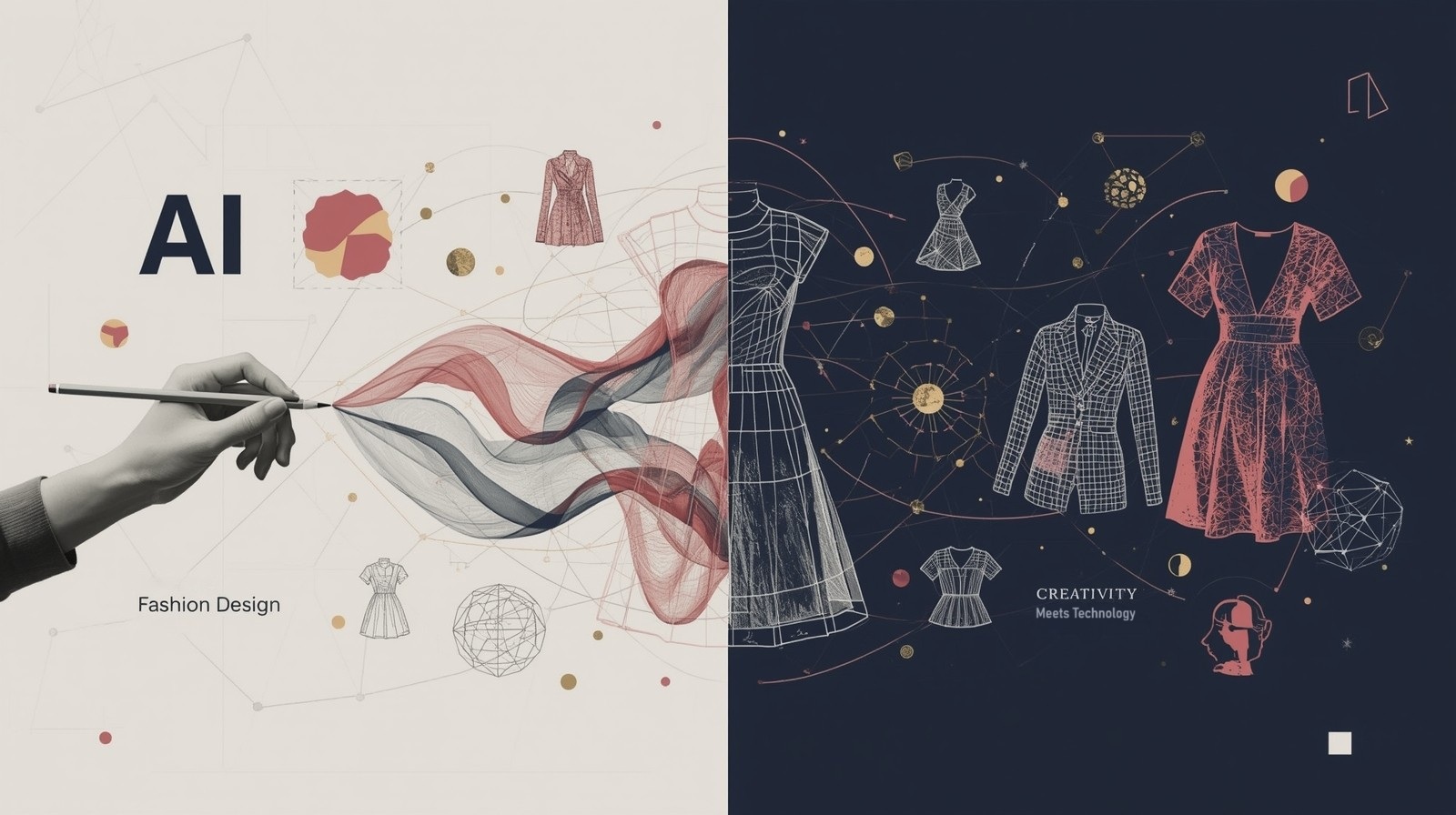
AI in Fashion Design: Your Complete Creative Guide
AI in Fashion Design is revolutionizing how we create, customize, and consume fashion. Whether you’re an aspiring designer sketching your first collection or a fashion enthusiast curious about the tech reshaping runways worldwide, artificial intelligence is no longer just a buzzword—it’s a creative partner. We’re Alex Rivera and Abir Benali, and together, we’ve explored how AI in Fashion Design empowers independent creators, streamlines workflows, and unlocks entirely new possibilities in style. This guide walks you through everything from trend forecasting to ethical considerations, all in language that makes sense whether you’re tech-savvy or entirely new to AI.
The Evolution of AI in Fashion Design: A Historical Perspective
The journey of AI in Fashion Design didn’t begin with today’s sophisticated neural networks—it started decades ago with simple algorithms that could barely predict color trends. In the 1980s, fashion houses experimented with basic computer-aided design systems that helped streamline pattern making. Fast forward to the early 2000s, and retailers like Zara were using data analytics to understand buying patterns, though calling it “AI” would’ve been generous.
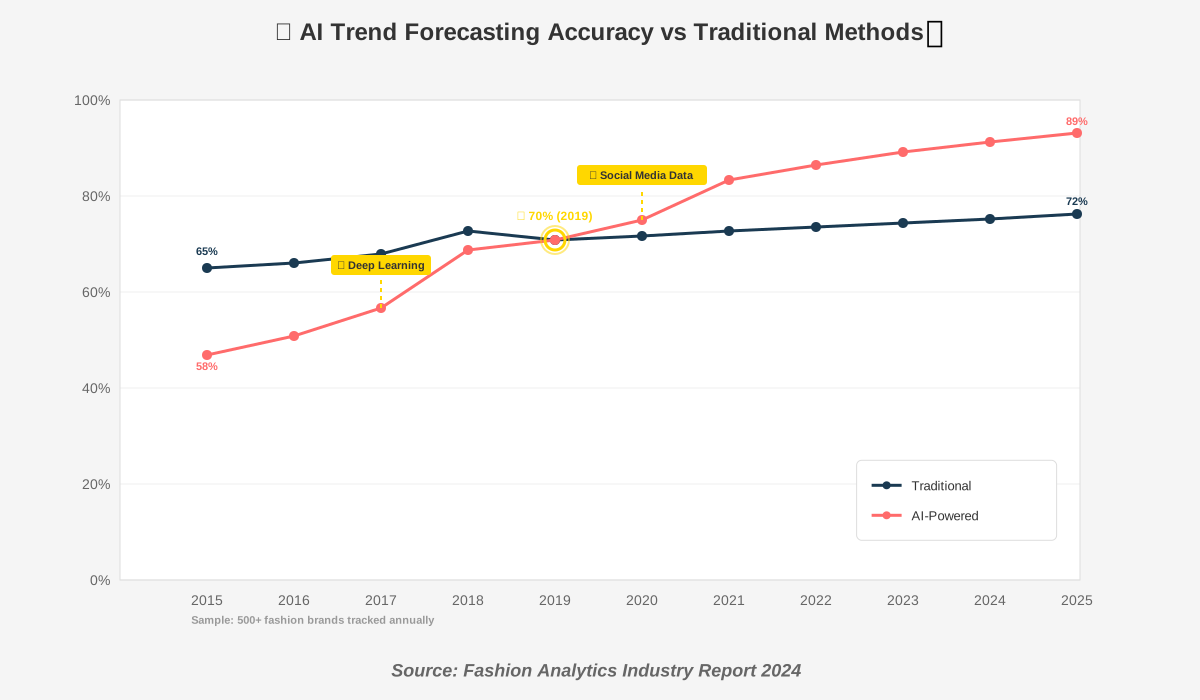
The real transformation arrived around 2016 when deep learning algorithms became accessible. Suddenly, machines could analyze thousands of runway images, Instagram posts, and sales data to identify emerging patterns. We remember when Google’s DeepDream accidentally created surreal, almost wearable art—it wasn’t practical, but it showed us that machines could “see” fashion differently.
By 2020, brands like Tommy Hilfiger partnered with IBM Watson to co-design collections, while Stitch Fix built entire styling recommendation engines powered by machine learning. Today, AI in Fashion Design encompasses everything from generating original sketches to predicting which hemlines will dominate next season. The technology has evolved from a curiosity to an essential tool, and that evolution continues accelerating every month.
AI-Powered Trend Forecasting: Predicting the Next Big Thing in Fashion
Imagine having a crystal ball that analyzes millions of social media posts, runway shows, street style photos, and retail data to tell you what colors, silhouettes, and textures will dominate six months from now. That’s essentially what AI-powered trend forecasting does, and it’s transforming how designers plan collections.
Traditional trend forecasting relied on industry experts attending fashion weeks, analyzing cultural movements, and making educated guesses. While human intuition remains valuable, AI systems can process data at scales humans simply cannot. Platforms like Heuritech scan billions of images across Instagram, Pinterest, and fashion blogs, identifying emerging patterns before they hit mainstream consciousness.
Here’s what makes AI forecasting powerful: it spots micro-trends that might otherwise go unnoticed. When a particular shade of green starts appearing 300% more frequently in street style photos from Seoul, Tokyo, and London simultaneously, the algorithm flags it. When oversized blazers paired with athletic shorts show increasing engagement rates, designers receive alerts.
We’ve seen independent designers use tools like WGSN Instock and Trendalytics to compete with major fashion houses. These platforms make professional-grade trend analysis accessible to creators working from small studios. The technology doesn’t replace creative vision—it informs it, giving you data-backed confidence when choosing fabrics, colors, and silhouettes for your next collection.
Generative AI for Fashion: Creating Original Designs from Scratch
Generative AI for Fashion represents one of the most exciting frontiers we’ve explored. These systems don’t just analyze existing designs—they create entirely new ones based on learned patterns, style parameters, and creative constraints you provide.
Tools like DALL-E, Midjourney, and fashion-specific platforms like Resleeve. AI allows you to type text prompts describing a garment and receive original design concepts within seconds. Want a “sustainable evening gown inspired by Art Deco geometry with flowing organic elements”? The AI generates multiple interpretations, each unique.
What fascinates us most is how generative AI handles the creative process. Traditional design software requires you to manually draw every line and adjust every curve. Generative AI works more like a creative partner: you describe your vision, the system proposes designs, and you refine through iteration. It’s particularly powerful during the conceptual phase when you’re exploring possibilities.
However, we always emphasize that AI-generated designs are starting points, not finished products. The outputs often need human refinement to be technically feasible—seam placements, structural support, and manufacturing considerations still require human expertise. Think of generative AI as an idea generator that dramatically accelerates your creative exploration.
We’ve used Midjourney to create mood boards for collections, feeding the AI keywords like “cyberpunk meets cottagecore” or “minimalist luxury with bold geometric accents.” The resulting images spark ideas we might never have considered independently, pushing our creativity in unexpected directions.
AI in Fashion Design: Personalization and Customization
AI in Fashion Design: Personalization and Customization has transformed how consumers interact with fashion. Instead of one-size-fits-all collections, AI enables brands to offer individually tailored experiences at scale—something previously possible only for haute couture clients with personal designers.
The technology works through multiple layers. First, AI analyzes your purchase history, browsing behavior, body measurements, and style preferences. Algorithms identify patterns: you prefer earth tones, mid-rise cuts, natural fabrics, and minimal embellishments. Then, when new inventory arrives, the system automatically curates selections matching your aesthetic.
But personalization goes deeper. Platforms like Nike By You and Adidas’s miadidas use AI to guide custom design processes, suggesting color combinations and material pairings that work aesthetically and technically. The AI prevents combinations that might look appealing on screen but fail in production—like certain fabric dyes that don’t bond properly or color contrasts that lose definition.
For independent designers, tools like PatternLab.AI and Tailornova allow you to create customized patterns based on individual client measurements. Input someone’s precise dimensions, choose a style template, and the AI generates a pattern adjusted for their unique proportions. This democratizes custom clothing creation, making it accessible without years of pattern-drafting training.
We’ve witnessed how personalization technology helps reduce returns—a massive sustainability issue in fashion. When garments fit better and match personal style more closely, customers keep them. One study showed AI-powered personalization reduced return rates by up to 30%, benefiting both businesses and the environment.
Virtual Try-On Technology: The Role of AI in Enhancing the Shopping Experience
Virtual try-on technology eliminates fashion e-commerce’s biggest friction point: uncertainty about fit and appearance. We’ve all experienced the disappointment of online purchases that look nothing like we imagined when they arrive. AI-powered virtual try-ons solve this by showing you how garments will actually look on your body before purchasing.
The technology uses computer vision and machine learning to map clothing onto live video or uploaded photos of you. Sophisticated systems like Zeekit (acquired by Walmart) and DressX create realistic renderings that account for fabric drape, body contours, and movement. The AI doesn’t just paste a flat image—it simulates how the garment would naturally conform to your shape.
Advanced implementations incorporate augmented reality (AR), allowing you to see yourself wearing virtual clothing through your smartphone camera in real-time. You can walk around, twist, and observe how the outfit moves with you. Some systems even simulate different lighting conditions, showing how colors appear in various environments.
For designers, virtual try-on technology offers invaluable feedback during development. Before manufacturing samples, you can visualize designs on diverse body types, adjusting fit and proportions digitally. This accelerates iteration cycles and reduces waste from physical sampling.
We recommend trying apps like Wannaby or Veesual if you’re curious about this technology. Upload a photo or use your camera, select garments from participating retailers, and instantly see yourself styled in different outfits. The accuracy isn’t perfect yet—some fabrics render better than others—but the technology improves constantly.
AI-Driven Fabric Design: Exploring New Textures and Materials
AI-driven fabric design pushes boundaries in textile innovation, creating patterns and textures impossible to conceive manually. This application of AI in Fashion Design combines generative algorithms with material science, producing designs that range from intricate geometric patterns to organic, nature-inspired motifs.
Tools like Adobe’s Substance Designer and Spline.Design use AI to generate complex textile patterns based on parameters you define. Want a fabric pattern that transitions gradually from angular shapes to fluid curves? The AI generates countless variations, each mathematically precise yet artistically unique.
What excites us most is AI’s role in sustainable fabric development. Researchers use machine learning to analyze molecular structures of materials, predicting properties of new bio-based fabrics before physical production. This accelerates the discovery of sustainable alternatives to petroleum-based textiles, potentially identifying combinations of natural fibers with desirable characteristics like durability, breathability, and biodegradability.
Companies like Colorifix use AI to develop biological pigments that dramatically reduce water usage and chemical pollution in dyeing processes. The AI identifies microorganisms capable of producing specific colors naturally, then optimizes production processes. Similarly, Spiber’s Brewed Protein uses AI-assisted design to create synthetic spider silk alternatives with customizable properties.
For independent textile designers, platforms like Patternbank integrate AI pattern generation tools, helping you create unique prints without advanced technical skills. You can define style parameters, color schemes, and complexity levels, then let the AI generate options. We’ve created entire fabric collections using these tools, later submitting the digital designs to print-on-demand services for small-batch production.
Sustainable Fashion and AI: Reducing Waste and Promoting Ethical Practices
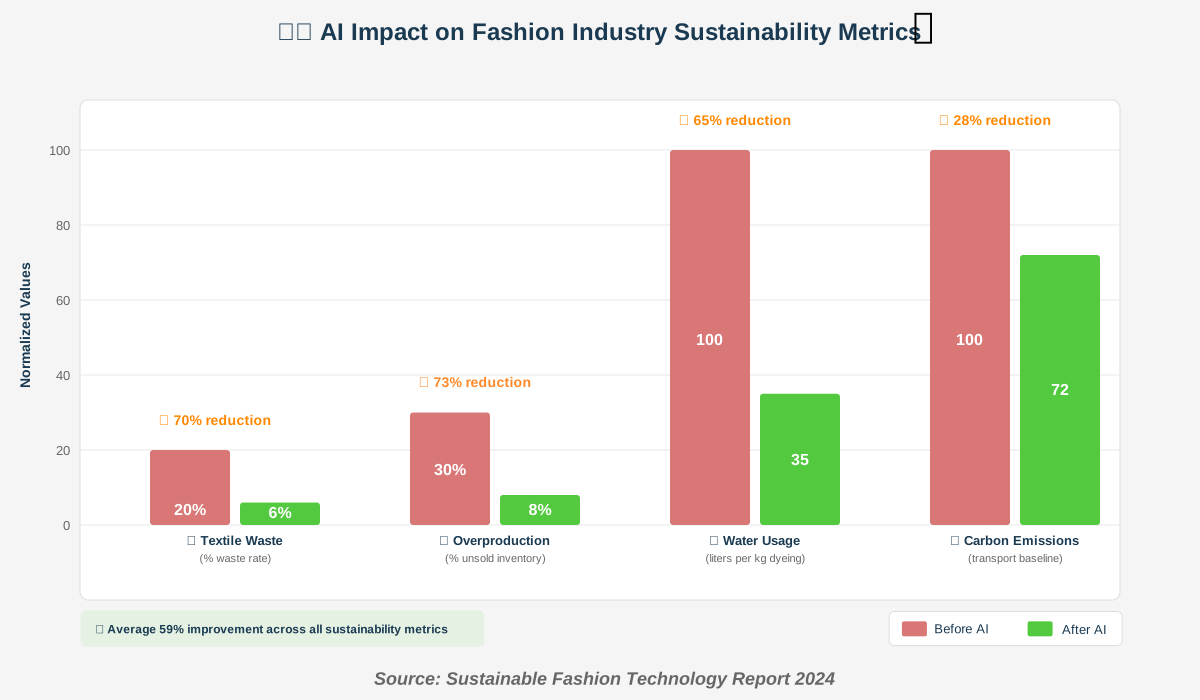
Sustainable Fashion and AI represent one of the most impactful applications we’ve encountered. The fashion industry generates massive waste—approximately 92 million tons of textile waste annually—and AI offers powerful tools to address this crisis.
AI optimizes production planning by accurately forecasting demand, preventing overproduction. Traditional fashion operates on seasonal predictions that often miss the mark, resulting in unsold inventory eventually destined for landfills or incineration. Machine learning models analyze real-time sales data, social media sentiment, weather patterns, and economic indicators to predict demand with unprecedented accuracy.
We’ve seen brands like H&M and Zara implement AI-driven inventory systems that adjust production quantities dynamically. When an item shows unexpected popularity in certain regions, algorithms automatically increase allocation there while reducing it elsewhere, minimizing waste from overstocking.
AI in Fashion Design also enhances circular fashion initiatives. Computer vision systems can sort textile waste by fiber type, enabling better recycling processes. Startups like Refiberd use AI to identify fabric compositions instantly, separating materials that previously went to landfills because manual sorting was impractical.
Material optimization represents another sustainability frontier. AI algorithms can design patterns that minimize fabric waste during cutting. Traditional pattern layouts waste 15-20% of fabric; AI-optimized layouts reduce this to under 5%. For large manufacturers, this translates to thousands of tons of saved material annually.
Additionally, blockchain-integrated AI systems track garments through their lifecycle, ensuring transparency in ethical sourcing. Consumers can scan QR codes to verify that materials were sourced responsibly, workers received fair wages, and production met environmental standards—all verified by AI analysis of supply chain data.
AI-Powered Supply Chain Management in Fashion: Optimizing Efficiency and Reducing Costs
AI-powered supply chain management in fashion addresses one of the industry’s most complex challenges: coordinating hundreds of suppliers, manufacturers, distributors, and retailers across global networks. Traditional supply chains operate with limited visibility and slow communication, resulting in delays, inefficiencies, and unnecessary costs.
Machine learning algorithms now track every supply chain stage in real-time, predicting potential disruptions before they cascade into major problems. If a fabric supplier in Vietnam experiences weather delays, the AI system automatically identifies alternative suppliers, reroutes orders, and adjusts production schedules to minimize impact.
Demand forecasting integrates with supply chain management to optimize inventory positioning. Instead of storing massive quantities in central warehouses, AI determines optimal distribution across regional facilities based on predicted local demand. This reduces shipping times and costs while maintaining availability.
We’ve explored platforms like Inspectorio and RFID-based tracking systems that use AI to monitor factory conditions, ensuring compliance with labor standards and quality requirements. Computer vision systems can inspect garment quality at production line speeds, identifying defects that human inspectors might miss during long shifts.
Logistics optimization represents another significant benefit. AI algorithms calculate the most efficient shipping routes considering fuel costs, delivery deadlines, carbon emissions, and real-time variables like traffic or weather. Some systems achieve 20-30% cost reductions in transportation while simultaneously reducing carbon footprint.
For independent designers working with manufacturers, even basic AI-enhanced supply chain tools provide transparency previously accessible only to major brands. You can track your order’s production status, receive proactive alerts about potential delays, and make informed decisions about rush fees versus schedule adjustments.
The Ethical Considerations of AI in Fashion Design: Bias, Copyright, and Job Displacement
The ethical considerations of AI in Fashion Design demand serious attention as the technology becomes more prevalent. We’ve observed concerning trends alongside the exciting possibilities, and addressing these issues transparently is crucial.
Algorithmic bias represents a significant challenge. AI systems learn from existing data, which often reflects historical biases. If an AI is trained primarily on Western fashion imagery featuring predominantly thin, white models, it may generate designs that don’t consider diverse body types or cultural aesthetics. We’ve seen generative AI systems struggle to create appropriate designs for different cultural contexts, sometimes producing combinations that would be considered insensitive or inappropriate.
The solution requires intentional efforts to diversify training data and implement bias-checking mechanisms. Fashion brands should audit their AI systems regularly, testing outputs across diverse scenarios and demographics.
Copyright and intellectual property issues create legal gray areas. When an AI generates a design after training on thousands of copyrighted images, who owns the output? If the AI closely replicates elements from existing designs, is that infringement? Current laws weren’t written with generative AI in mind, and legal frameworks are evolving.
We recommend treating AI-generated designs as drafts requiring substantial human modification. Document your creative process, showing how you’ve transformed AI outputs into original work. Never directly copy AI-generated designs without significant personal contribution.
Job displacement concerns many fashion professionals. Will AI replace designers, pattern makers, and stylists? Our perspective is nuanced: AI will undoubtedly change these roles, but we believe it augments rather than replaces human creativity. The designer’s job shifts from mechanical execution to creative direction, concept development, and contextual understanding—skills AI cannot replicate.
However, this transition requires support. Fashion education must evolve to teach AI literacy alongside traditional skills. Industry veterans need accessible retraining opportunities. Companies implementing AI should invest in workforce development, helping employees adapt to new tools rather than simply replacing them.
Data privacy also matters, especially with body scanning and personalization technologies. Consumers share intimate data about their bodies and preferences. This information requires robust protection, transparent usage policies, and user control over data sharing and deletion.
AI in Fashion Marketing: Targeted Advertising and Customer Engagement
AI in Fashion Marketing has revolutionized how brands connect with consumers, enabling hyper-targeted campaigns and personalized engagement at an unprecedented scale. The technology analyzes consumer behavior patterns, predicting which products resonate with specific audiences and optimizing marketing spend.
Social media platforms use AI to determine which fashion ads you see. The algorithms analyze your interactions—posts you like, profiles you follow, items you browse—then serve relevant fashion content. This targeting can be remarkably precise: someone interested in sustainable fashion, vintage aesthetics, and outdoor activities receives very different fashion ads than someone following luxury brands, streetwear influencers, and beauty tutorials.
Dynamic creative optimization takes this further. AI systems automatically generate multiple ad variations, testing different images, copy, and calls to action. The algorithms identify which combinations perform best with specific audience segments, then allocate budget accordingly. We’ve seen campaigns achieve 300-400% improved ROI through this optimization.
Chatbots and virtual assistants powered by natural language processing handle customer inquiries, provide styling advice, and guide purchases. Advanced systems like those used by Tommy Hilfiger and H&M can understand context, remember previous conversations, and make personalized recommendations. Unlike basic scripted chatbots, these AI assistants adapt their communication style and suggestions based on individual preferences.
Influencer identification represents another application. AI platforms analyze millions of social media accounts, identifying micro-influencers whose audiences align perfectly with your brand values and target demographic. This democratizes influencer marketing, making it accessible to independent designers who can’t afford celebrity endorsements.
We’ve experimented with AI-generated marketing copy using tools like Jasper and Copy.ai. While the output requires human editing, these tools accelerate content creation, generating product descriptions, social media captions, and email newsletters based on product information and brand guidelines. The key is treating AI as a first-draft generator, not a replacement for human creativity and brand understanding.
AI-Assisted Pattern Making: Streamlining the Design Process
AI-assisted pattern making removes one of fashion design’s most technically challenging barriers. Traditional pattern making requires years of training to master the mathematics and spatial reasoning involved in translating 2D fabric patterns into 3D garments that fit properly.
Modern AI platforms like CLO 3D, Browzwear, and Optitex use machine learning to automate much of this complexity. You input a design sketch or describe the desired garment, specify measurements, and the AI generates the pattern pieces. The system accounts for fabric properties—how much stretch or drape the material has—adjusting patterns accordingly.
What impressed us most is how these tools handle fit adjustments. Need to size a pattern up or down? Instead of manually redrafting every piece, the AI scales proportionally while maintaining proper proportions and construction principles. Want to adjust only the sleeve length or bodice ease? The system modifies just those elements while keeping everything else intact.
The technology also enables rapid prototyping. You can visualize how the garment will look and fit in 3D simulation before cutting physical fabric. The AI detects potential construction issues—like seams that don’t align properly or patterns that create unwanted pulling—alerting you to problems that might only become apparent during physical construction.
For beginners, AI-assisted pattern making offers educational value. As you work, the systems often explain why certain adjustments are needed, teaching pattern-making principles through practical application. We’ve used these tools to learn advanced techniques that would have taken months to master through traditional instruction alone.
Independent designers particularly benefit from the cost savings. Instead of outsourcing pattern making to specialists or spending hundreds of hours learning the skill manually, you can achieve professional results relatively quickly. The patterns export in standard formats compatible with both home printing and industrial manufacturing.
The Future of AI in Fashion Design: Emerging Technologies and Predictions
The future of AI in Fashion Design promises capabilities that sound almost science-fictional but are actively developing in research labs and innovative fashion houses. We’re watching several emerging technologies that will likely transform the industry within the next 3-5 years.
Emotional AI aims to design clothing that adapts to your emotional state. Imagine garments embedded with biosensors that detect your mood through skin temperature, heart rate, and movement patterns. The AI could suggest outfit changes or even trigger color-changing fabrics to match your emotional needs—calming blues when you’re stressed, energizing reds when you need confidence.
Quantum computing will dramatically accelerate the molecular simulations required for new material development. Current AI systems might take weeks to predict properties of novel fabric combinations; quantum-enhanced AI could accomplish this in hours, rapidly expanding sustainable material options.
Neuromorphic AI mimics human brain structure, potentially enabling more intuitive collaboration between humans and AI in creative processes. Instead of describing what you want textually, you might think about design concepts while wearing an EEG headset, and the AI interprets and visualizes your thoughts.
Distributed manufacturing powered by AI could enable truly local, on-demand production. You design a garment using AI tools, send the digital file to a nearby automated micro-factory, and pick up your custom-made clothing the same day—eliminating shipping, reducing waste, and enabling unprecedented personalization.
We anticipate AI systems becoming better at understanding cultural context and emotional significance in design. Current AI generates patterns without understanding why certain color combinations matter in specific cultures or how garment structures convey social meaning. Future systems will integrate anthropological and sociological knowledge, creating designs that respect and celebrate cultural diversity.
The convergence of AI, blockchain, and IoT will create connected fashion ecosystems. Your smart wardrobe could track wear patterns, automatically reorder basics when they’re wearing out, suggest outfit combinations based on your schedule and weather, and even rent out rarely worn items to others when you’re not using them—all coordinated by AI managing your digital fashion identity.
AI-Enhanced Fashion Design Software: A Comparison of Top Tools
AI-enhanced fashion design software varies significantly in capabilities, learning curves, and costs. We’ve tested numerous platforms to help you understand which tools suit different needs and skill levels.
CLO 3D leads in realistic 3D garment simulation. The AI-powered physics engine accurately simulates fabric behavior, showing how materials drape, fold, and move. It’s industry-standard for technical design and pattern development, used by brands from small indies to Nike. However, the learning curve is steep, and subscription costs ($50-330/month depending on version) position it as a professional tool.
Browzwear offers similar capabilities with a stronger focus on production efficiency. Its AI handles grading (sizing patterns up and down) more intuitively than most competitors. Pricing is enterprise-level ($300+/month), making it more suitable for established brands or design teams.
Resleeve.AI represents the new generation of AI-first platforms. You can generate design concepts from text descriptions, transform existing designs into new variations, and create entire collections from style guidelines. The interface is remarkably beginner-friendly, though outputs still require refinement. Pricing starts around $29/month for individual designers.
Optitex specializes in pattern making and marker optimization (arranging patterns on fabric to minimize waste). Its AI excels at technical accuracy and manufacturing readiness. Used by many large manufacturers, it’s comprehensive but expensive ($250+/month).
TG3D Studio (formerly Tailornova) targets independent designers and small brands. It combines pattern making, 3D simulation, and e-commerce integration at accessible pricing ($15-50/month). The AI assistance is less sophisticated than premium tools but sufficient for many applications.
For pure creativity and ideation, Midjourney and DALL-E aren’t fashion-specific but are incredibly useful for generating mood boards, design concepts, and visual inspiration. Midjourney costs $10-60/month; DALL-E operates on credit-based pricing.
Adobe Illustrator with AI plugins (like Astute Graphics) offers a middle ground between traditional design tools and AI assistance. It provides vector precision with AI features for pattern generation, color harmonization, and design variation. Costs $20-55/month depending on Adobe Creative Cloud subscription.
Our recommendation? Start with free trials. Most platforms offer 14-30 day trials, letting you experiment before committing. For absolute beginners on tight budgets, combine free tools like Blender (with fashion plugins) for 3D and Midjourney’s basic tier for concept generation.
Case Studies: Successful Implementations of AI in Fashion Design
Case studies: successful implementations of AI in Fashion Design demonstrate real-world impact better than theoretical discussions. We’ve researched several companies that achieved remarkable results through strategic AI integration.
Tommy Hilfiger x IBM Watson created the “FashionSyte” collaboration, where Watson analyzed decades of brand archives, fashion show images, and sales data to identify successful design elements. Designers used Watson’s recommendations as starting points for new collections. The AI-influenced line achieved 20% higher sell-through rates compared to traditionally designed collections, demonstrating how AI insights complement human creativity.
Stitch Fix built its entire business model around AI-driven personalization. The company employs over 100 data scientists developing algorithms that predict client preferences with remarkable accuracy. Stylists receive AI recommendations, which they refine using human judgment. The hybrid approach has proven successful: Stitch Fix maintains 90%+ customer retention and achieved profitability faster than most retail startups. Their success proves that AI augmenting human expertise outperforms either operating alone.
Adidas implemented an AI system called “Brain” that analyzes social media conversations, search trends, and sales data to identify emerging sneaker trends. When the system detected growing interest in sustainable athletic footwear, Adidas accelerated development of their Futurecraft line made from ocean plastic. The collection sold out within days of launch, validating the AI’s trend prediction.
Zalando uses AI for demand forecasting and inventory optimization across their European operations. The system reduced overstock by 35% while maintaining product availability. Environmental impact decreased significantly—less overproduction means less waste—while profitability improved through reduced markdown costs.
A smaller example: AISPI, an indie label by designer Maggie Hewitt, uses generative AI to create unique textile prints. Each print is AI-generated based on natural phenomena like weather patterns or geological formations, then refined and produced in limited quantities. The brand successfully positions AI as a collaborative creative tool, with customers valuing the unique, data-inspired aesthetics. Despite its small scale, AISPI has achieved sustainable growth through differentiated, AI-enhanced design.
These case studies share common themes: AI works best when augmenting rather than replacing human judgment, successful implementation requires experimentation and refinement, and the technology provides competitive advantages across various business scales—from global corporations to independent designers.
AI-Driven Quality Control in Fashion Manufacturing: Ensuring High Standards
AI-driven quality control in fashion manufacturing addresses persistent challenges in maintaining consistent quality across large production runs. Traditional quality inspection relies on human workers examining garments manually—a process that’s slow, expensive, and prone to inconsistency due to fatigue and subjective judgment.
Computer vision systems powered by deep learning now inspect garments at production line speeds, identifying defects with greater consistency than human inspectors. The technology detects issues like stitching irregularities, fabric flaws, color inconsistencies, pattern misalignment, and sizing errors.
How it works: High-resolution cameras capture images of garments at multiple production stages. AI algorithms trained on millions of images compare each garment against quality standards, flagging anything that deviates from specifications. The system operates continuously without breaks, maintaining consistent standards throughout shifts.
We’ve observed implementations achieving 98-99% defect detection rates compared to 85-90% for traditional manual inspection. Speed improvements are equally impressive: AI systems inspect garments 10-20 times faster than human workers, dramatically increasing throughput.
For manufacturers, this technology reduces costs associated with defects reaching consumers—returns, refunds, and reputation damage. Catching problems earlier in production also reduces waste, as issues are corrected before investing additional labor and materials.
The technology has democratized quality control for smaller manufacturers. Previously, comprehensive quality systems were economically viable only at a large scale. Now, affordable computer vision systems (some under $10,000) make professional-grade quality control accessible to mid-size operations.
Benetton implemented AI quality control across Italian factories, reducing defect rates by 40% while simultaneously speeding up production. The system identified patterns in defect types, helping the company trace issues back to specific machinery or processes needing adjustment—providing diagnostic value beyond simple pass/fail inspection.
For independent designers working with manufacturers, you can specify AI quality inspection as a requirement, ensuring your standards are maintained even when you can’t personally oversee production.
AI and Body Scanning: Revolutionizing Fit and Sizing in Fashion
AI and body scanning tackle fashion’s most persistent frustration: poor fit. Traditional sizing systems group bodies into crude categories (S, M, L, etc.) that ignore vast individual variation. Even numerical sizing varies wildly between brands, making online shopping feel like gambling.
3D body scanning creates detailed digital maps of your body—measurements more precise than any tailor with a tape measure could achieve. Modern systems extract hundreds of data points, capturing not just obvious measurements but also subtle proportions affecting fit.
Smartphone-based solutions like TrueFit and MySizeID use your phone’s camera with AI algorithms to create body models from photos. You take a few pictures in form-fitting clothing, the AI constructs a 3D model, and suddenly online shopping becomes reliable. The systems compare your body model against garment specifications, predicting fit accuracy for specific items.
In-store body scanning pods, like those developed by Styku and Size Stream, provide even greater precision. You step into the scanner, it captures your body from multiple angles within seconds, and the AI generates your complete measurement profile. Some retailers store these profiles, automatically recommending sizes across their inventory.
Custom clothing platforms like MTailor and Alanic use body scanning to create made-to-measure garments at near off-the-rack prices. The AI generates custom patterns based on your scan, then sends specifications to manufacturing partners. Production costs only slightly exceed standard garments, but fit quality approaches traditional tailoring.
We’ve used several body scanning apps and found them remarkably accurate for upper body measurements. Lower body accuracy varies more due to posture and leg position affecting results. The technology continues improving—recent systems guide you through optimal positioning to maximize accuracy.
For designers, body scanning data provides invaluable insights about target customers’ actual proportions. Instead of designing for theoretical “average” bodies that barely exist, you can create garments optimized for real body diversity. Some brands now use AI analysis of body scan databases to design size ranges that actually fit their customer demographics.
The inclusivity implications are significant. Traditional sizing systematically fails many body types—particularly fuller-figured individuals, very tall or short people, and those with proportions that don’t match industry standards. Body scanning plus AI pattern generation enables genuinely inclusive sizing at scale.
AI-Powered Fashion Styling: Creating Outfits and Providing Style Advice
AI-powered fashion styling democratizes personal styling services once accessible only to wealthy clientele. These systems analyze your wardrobe, understand your style preferences, and suggest outfit combinations you might never have considered.
Apps like Whering and ClosetSpace catalog your existing clothing photographically. The AI identifies each item, categorizing by type, color, style, and occasion appropriateness. Then it generates outfit suggestions by combining pieces in ways that balance colors, mix patterns appropriately, and suit specified occasions.
The sophistication varies. Basic systems operate on rule-based logic: don’t mix certain patterns, balance bold items with neutrals, etc. Advanced systems use neural networks trained on millions of styled outfits from fashion editorials, social media, and retail catalogs. These AI stylists understand nuanced trends—like how oversized blazers pair unexpectedly well with athletic shorts in current streetwear, or how to mix luxury and budget pieces effectively.
StitchFix and Trunk Club employ human stylists supported by AI recommendations. The technology suggests items matching client preferences, but humans make final selections and provide personalized notes. This hybrid approach combines AI’s analytical power with human understanding of individual circumstances and emotional needs.
Virtual styling sessions via AI chatbots have become increasingly sophisticated. You can describe an event (“summer wedding in Italy”), your style preferences (“bohemian but polished”), and constraints (“budget under $300”), and the AI suggests complete outfits with purchase links. Tools like Shop the Look from various retailers use AI to match celebrity or influencer outfits with shoppable alternatives at your price point.
We’ve experimented with Style DNA technology from several platforms. After analyzing your style through a quiz and image preferences, the AI creates a “style profile” capturing your aesthetic in data form. This profile helps the system understand that when you say you like “edgy,” you mean leather jackets and combat boots, not punk accessories.
For aspiring stylists, AI tools provide learning opportunities. By comparing your outfit suggestions against AI recommendations and outcomes, you can identify pattern combinations and proportion principles you might have overlooked, accelerating your skill development.
The Impact of AI on Fashion Designers’ Roles: Collaboration and Adaptation
The impact of AI on fashion designers’ roles is profound but often misunderstood. The narrative of AI “replacing” designers oversimplifies a complex evolution where roles are transforming rather than disappearing.
Technical execution tasks—drafting patterns manually, creating repetitive variations, sizing grading, and color separation for prints—increasingly get automated by AI. This shifts designer focus toward higher-level creative direction: conceptual development, emotional storytelling, cultural context, and brand vision. These distinctly human capabilities remain beyond AI’s reach.
We’ve observed designers who embrace AI becoming more productive and creatively ambitious. Instead of spending days manually drafting pattern variations, they generate dozens of AI-assisted options in hours, then invest saved time in concept refinement and material experimentation. The role evolves from craftsperson to creative director, orchestrating AI tools alongside traditional skills.
Collaboration becomes key. The most successful designers treat AI as a junior assistant requiring clear direction and quality review. You wouldn’t accept everything a human assistant produced without feedback; the same applies to AI. The designer’s expertise lies in knowing what to ask for, recognizing promising outputs, and refining results into cohesive collections.
However, adaptation challenges are real. Designers trained in traditional methods may feel threatened or overwhelmed by technology. The industry needs robust retraining programs helping professionals integrate AI into existing workflows. Fashion schools increasingly teach AI literacy alongside sketching and draping, preparing graduates for hybrid practice.
Emerging designer specializations include “AI fashion engineer”—professionals who understand both design principles and AI capabilities, serving as bridges between creative teams and technology. These hybrid roles command premium compensation as demand outpaces supply.
Independent designers gain particularly notable advantages. Tasks previously requiring teams—pattern making, grading, rendering, marketing content creation—become manageable solo or with small teams when AI assistance is leveraged effectively. This democratization enables more diverse voices in fashion, as entry barriers lower.
We believe the future belongs to designers who combine aesthetic vision, cultural intelligence, and technical comfort with AI tools—using technology to amplify rather than replace human creativity.
AI in Fashion Education: Preparing the Next Generation of Designers
AI in Fashion Education is transforming how we teach and learn fashion design, preparing students for an industry where AI literacy is becoming as essential as sketching skills.
Leading fashion schools now integrate AI tools throughout curricula. Parsons School of Design offers courses on generative AI for fashion, teaching students to use text-to-image systems, 3D simulation software, and trend forecasting platforms. London College of Fashion established an AI research lab exploring applications from sustainable material development to inclusive sizing.
The pedagogical shift is significant. Traditional fashion education emphasized manual skills—hand-drafting patterns, draping fabric on dress forms, and sketching with markers. These skills remain valuable, but curricula now balance them with digital competencies. Students learn pattern making both manually and using AI-assisted software, understanding principles before automating execution.
Online education democratizes AI fashion training. Platforms like Coursera, Skillshare, and Domestika offer affordable courses teaching AI tools for fashion. We’ve taken several of these courses ourselves—finding them remarkably effective for gaining practical skills quickly, though they can’t fully replace comprehensive design education.
Project-based learning works particularly well for AI fashion education. Students receive design briefs and then choose appropriate tools—sometimes traditional, sometimes AI-assisted, and often hybrid. This approach develops judgment about when to use what tools, avoiding both technophobia and over-reliance on automation.
Some institutions use AI as teaching assistants. Chatbots answer common student questions about techniques, historical styles, or fabric properties, freeing instructors to focus on personalized feedback. AI systems can provide instant feedback on technical aspects like pattern construction errors, though aesthetic critique remains human-dependent.
Ethical education proves crucial. Students need to understand bias in AI systems, copyright implications, sustainability considerations, and job market evolution. Fashion programs increasingly include modules on technology ethics, preparing designers who will make responsible decisions about AI implementation.
Community colleges and vocational programs now offer AI fashion certificates—shorter, focused programs for professionals seeking upskilling. These make AI education accessible to workers concerned about automation, giving them tools to adapt rather than be displaced.
For self-taught designers, YouTube tutorials and tool documentation provide entry points. We learned many AI fashion techniques through free resources before investing in paid software. The key is starting with free or low-cost tools, building confidence and understanding before committing to expensive platforms.
AI and Fashion Photography: Generating Realistic and Engaging Imagery
AI and fashion photography might seem contradictory—isn’t photography about capturing reality? Yet generative AI now creates product images and editorial photography virtually indistinguishable from traditional shoots, transforming content creation economics.
Tools like Midjourney, DALL-E, and fashion-specific platforms like Botika can generate model images wearing your designs without physical photoshoots. You upload a garment image, specify model characteristics and settings, and the AI composites realistic photographs. For e-commerce, this dramatically reduces costs—no need for models, photographers, studios, or location fees.
The technology has progressed remarkably. Early AI-generated fashion images looked obviously synthetic—weird proportions, uncanny faces, and incorrect fabric behavior. Current systems produce images where even professionals struggle to identify them as AI-generated. Fabric draping appears natural, lighting looks professionally done, and models pose convincingly.
Product photography particularly benefits. Generating multiple angles, lighting conditions, and lifestyle contexts for each garment becomes trivial. An independent designer can create editorial-quality imagery matching luxury brand production values, competing more effectively online where visual presentation determines perceived quality.
However, authenticity concerns are real. Consumers increasingly value transparency about AI-generated content. Some jurisdictions are considering labeling requirements for synthetic images. We recommend disclosure when using AI-generated photography, framing it positively as sustainable (no physical waste from sample production) and creative rather than attempting to hide it.
Creative applications excite us most. AI enables surreal, impossible scenarios in fashion editorials—models in fantastical environments, garments with physics-defying properties, scale manipulations, and stylized aesthetics difficult or impossible to achieve with traditional photography. This expands creative possibilities beyond physical constraints.
Some photographers collaborate with AI, using it for specific effects rather than complete image generation. They might shoot traditionally but use AI for background replacement, lighting adjustment, or creative effects. This hybrid approach maintains photographic authenticity while leveraging AI enhancement.
For small brands, budget-friendly smartphone photography combined with AI enhancement provides professional results. Apps like Pixlr and Photoshop’s AI features can improve lighting, remove backgrounds, and enhance colors from basic photos, making acceptable product photography accessible without expensive equipment.
We expect future developments in real-time virtual fashion photography—where physical garments can be photographed once, then digitally “re-shot” in unlimited scenarios through AI manipulation. This could revolutionize fashion imagery workflow while maintaining the authenticity of actual garments.
AI-Driven Inventory Management: Reducing Waste and Optimizing Stock Levels
AI-driven inventory management solves complex optimization problems that dramatically affect profitability and sustainability. Fashion inventory management is notoriously difficult—balancing having enough stock to meet demand without overproducing items that languish unsold.
Traditional approaches use basic forecasting: last year’s sales plus trend adjustments. This crude method often fails because fashion is influenced by countless variables—weather, economic conditions, social media trends, competitor actions, celebrity endorsements—that simple models cannot capture.
Machine learning systems analyze dozens or hundreds of variables simultaneously, identifying complex patterns humans would miss. An AI might notice that specific color combinations sell better during economic uncertainty or that certain silhouettes perform differently across regions even when controlling for climate.
Dynamic inventory allocation optimizes stock placement across retail locations and warehouses. Instead of distributing inventory evenly, AI determines which specific items will likely sell best at which locations based on local demographics, historical purchasing patterns, and current trends. This regional optimization reduces the markdowns needed to clear slow-moving inventory.
Real-time demand signals enable inventory adjustments during a season. If an item unexpectedly trends on social media, the system automatically increases orders for that item while reducing allocation for similar but less popular products. This agility prevents both stockouts of popular items and overstock of unwanted ones.
For independent designers, basic AI inventory tools are increasingly affordable. Shopify and similar e-commerce platforms now include AI-powered inventory forecasting in standard plans. These systems may not match enterprise sophistication but provide significant improvements over manual tracking.
Waste reduction impacts are substantial. Apparel overproduction contributes massively to fashion’s environmental footprint. AI inventory systems typically reduce unsold inventory by 20-40%, directly decreasing waste. Additionally, better inventory management reduces the need for deep discounting, improving profitability that can be reinvested in sustainable practices.
We’ve experimented with inventory prediction tools and found them remarkably accurate for stable product categories. Trendy, fashion-forward items remain more challenging to predict, but even modest accuracy improvements yield significant benefits. The key is continuously training the AI with your specific data—the system improves as it learns your customers’ unique patterns.
AI in Fashion Design: Overcoming Creative Blocks and Inspiring Innovation
AI in Fashion Design: Overcoming Creative Blocks and Inspiring Innovation addresses a challenge every creative faces: those frustrating periods when inspiration evaporates and every idea feels stale or derivative.
AI serves as a creative catalyst, generating unexpected combinations and perspectives that break mental patterns. When we’re stuck designing within familiar territories—repeatedly returning to the same silhouettes, color palettes, or aesthetic references—AI pushes us toward unexplored possibilities.
Practical techniques we use: feeding generative AI intentionally contradictory prompts like “minimalist maximalism” or “industrial romance.” These oxymoronic combinations force the AI to find novel synthesis points, producing designs we’d never consciously ideate. The results aren’t always wearable, but they spark ideas we can refine.
Random inspiration generation through AI image creation has proven valuable. Generate 50 designs based on abstract concepts—”the feeling of velocity,” “architectural shadows,” “microbial structures magnified”—then identify which outputs resonate emotionally. This process bypasses overthinking, connecting subconsciously with images before rationally analyzing them.
Style transfer technology offers another approach. Upload a garment you’ve designed, then apply style characteristics from art movements, natural phenomena, or architectural forms. The AI generates variations showing how your design might look with Art Nouveau curves, brutalist angularity, or organic coral reef structures. These experiments suggest directions for evolution.
We’ve found AI particularly helpful for color exploration. When stuck in comfortable color combinations, AI palette generators suggest unexpected harmonies. Input mood descriptors or reference images, and systems like Coolors or Adobe Color’s AI features propose palettes you might not independently consider—complementary schemes that feel fresh rather than obvious.
Collaborative ideation works well in design teams. Members independently generate AI concepts based on the same brief, and then the group discusses what resonates. This process multiplies creative exploration exponentially compared to sequential individual work, with AI accelerating the exploration phase.
For students or emerging designers, AI provides exposure to a vast design vocabulary. By generating and analyzing hundreds of design variations across styles, you internalize aesthetic principles and expand your visual library, building creative fluency that informs future work.
The key is maintaining the right relationship with AI-generated inspiration: it’s a prompt for your creativity, not a replacement. The breakthrough moment comes when AI output triggers your own idea—something you would create—rather than simply using what AI produced.
The Cost-Effectiveness of AI in Fashion Design: A Financial Analysis
The cost-effectiveness of AI in Fashion Design varies dramatically based on implementation scale and context. We’ve analyzed the economics from multiple perspectives to provide realistic expectations.
For large fashion brands, AI investments typically achieve ROI within 12-24 months. A comprehensive AI system costs $500,000-$2 million for implementation (software licenses, integration, and training), plus $100,000-$500,000 annually for maintenance and updates. However, benefits accrue quickly: 20-30% reduction in overproduction, 15-25% faster design-to-market cycles, and 10-15% reduced labor costs in specific functions. For companies with $50+ million in revenue, these savings justify investments.
Mid-size brands ($5-50 million revenue) face different equations. Enterprise AI systems are prohibitively expensive, but SaaS platforms offer accessible alternatives. Monthly subscriptions to tools like CLO 3D, trend forecasting services, and AI marketing platforms typically run $500-$2,000 combined. If these tools increase productivity by even 15-20%, the investment pays for itself through faster output or reduced freelancer costs.
Independent designers benefit most from AI’s democratizing effect. Tools that previously required specialists—pattern making, professional photography, trend analysis—become DIY-capable. Monthly costs can stay under $100 for a basic toolset (Midjourney $30, pattern-making software $25, basic marketing AI $20). If AI enables you to produce one additional collection annually or improve sales by 10% through better marketing, ROI is strongly positive.
Cost avoidance represents significant value. Physical sampling costs $50-500 per garment depending on complexity. AI 3D simulation eliminates many sample iterations. For a small collection development, this might save $2,000-$10,000. Reduced inventory waste from better demand forecasting can save thousands to millions depending on scale.
However, hidden costs exist. Learning curves mean productivity dips initially—budget time for training. Software switching costs arise if you change platforms. Integration challenges occur when connecting AI tools with existing workflows or systems. These factors delay ROI realization.
Opportunity costs matter too. Money and time invested in AI could alternatively fund traditional approaches—hiring skilled designers and consultants or increasing marketing spend. Evaluate whether AI provides better value than alternatives for your specific situation.
Our analysis: for established brands producing multiple collections annually, AI investments deliver clear positive returns. For independent designers on tight budgets, carefully selected affordable tools provide excellent value. The middle ground—small brands with limited revenue—faces more complex decisions requiring careful analysis of specific use cases.
Start small with low-cost or free tools, validate value, then expand investment based on demonstrated benefits rather than comprehensive immediate implementation.
AI and the Democratization of Fashion Design: Empowering Independent Creators
AI and the democratization of fashion design are perhaps the most socially transformative aspects we’ve observed. For decades, fashion design required significant capital—education costs, equipment, specialized software, manufacturing connections, and marketing budgets that favored established players and wealthy entrants.
AI dramatically lowers these barriers. Skills that required years of formal training become accessible through affordable tools. Pattern making, once necessitating expensive education or hiring specialists, is now achievable through AI-assisted software costing under $50 monthly. Professional-quality marketing imagery, previously requiring photographers and models, can be generated for mere dollars.
Global accessibility expands opportunity beyond traditional fashion centers. Designers in regions without established fashion industries can access the same tools as those in Paris, Milan, or New York. An entrepreneur in Lagos, Cairo, or Manila now has technology previously available only to major fashion houses.
We’ve witnessed independent designers build successful brands using primarily AI tools. Their workflows often include Midjourney for design ideation, Resleeve.AI for technical sketches, AI-assisted pattern making, manufacturer coordination through AI translation tools, AI-generated product photography, and social media marketing optimized through AI analytics. Total monthly tool costs might be $100-200—a fraction of traditional approaches.
The creator economy in fashion accelerates through AI. Micro-brands with passionate niche audiences can sustain themselves at scales previously nonviable. When you can design, produce, market, and fulfill orders with minimal infrastructure, you need far fewer sales to achieve profitability. AI enables sustainable businesses serving specific communities—plus-size activewear, modest fashion, adaptive clothing for disabilities, and culturally specific designs—that major brands often ignore.
Skill democratization extends beyond entrepreneurs to hobbyists and students. Fashion education costs tens of thousands at traditional institutions. Self-taught designers now access much of this knowledge through affordable online courses complemented by AI tools that teach through practical application. You learn faster by doing with AI assistance than by studying theory alone.
However, democratization brings challenges. Market saturation increases as entry barriers fall—more designers mean more competition for attention. Quality variation widens when anyone can produce designs regardless of taste or technical understanding. Established designers sometimes resent competition from AI-enabled newcomers who “haven’t paid their dues.”
We believe these challenges don’t outweigh benefits. Greater diversity in fashion voices enriches the industry. Yes, more noise exists, but also more signal—previously excluded perspectives now contribute. The democratization isn’t just economic; it’s cultural, enabling fashion that reflects humanity’s true diversity rather than narrow elite perspectives.
For independent creators: embrace these tools without shame. AI assistance doesn’t diminish your creativity—it amplifies it, letting you compete on vision rather than just resources. Your unique perspective combined with accessible technology is your competitive advantage.
AI-Powered Visual Search for Fashion: Finding the Perfect Item Quickly
AI-powered visual search for fashion solves a common frustration: seeing an item you love but having no idea where to find it or what to call it when searching. Traditional text-based search requires knowing proper fashion terminology—good luck describing that specific style of sleeve or neckline without fashion vocabulary.
Visual search reverses the process: upload a photo of what you want, and AI finds similar items across retailers. The technology uses computer vision to analyze images, identifying garment characteristics like silhouette, color, pattern, fabric texture, and style details, then matching against massive product databases.
Google Lens pioneered accessible visual search. Point your phone at any garment—in a magazine, on someone walking by, in a TV show—and the AI identifies similar purchasable items. The accuracy has improved dramatically; the system now distinguishes subtle style differences like a-line versus fit-and-flare skirts or various collar types.
Pinterest Lens offers similar capabilities with fashion-specific optimization. When browsing Pinterest for outfit inspiration, you can tap any item in a photo to find where to buy it or discover similar alternatives. The AI learned fashion aesthetics from billions of fashion pins, making its recommendations stylistically coherent.
Retail-specific implementations like ASOS’s visual search or Zara’s app-integrated search let you upload photos and find matches within that retailer’s inventory. These narrower databases allow more precise matching. You can photograph an item on yourself, and the system suggests similar options in your size from current stock.
For designers researching trends, visual search provides powerful competitive intelligence. You can track when specific design elements appear across brands, monitor how competitors interpret trends, and identify market gaps where consumer interest exists but supply is limited.
We’ve used visual search extensively for sourcing materials. Photograph an interesting fabric texture encountered anywhere, then search for suppliers offering similar materials. This accelerates sourcing significantly compared to verbally describing what you want to textile wholesalers.
Reverse image search for fashion has copyright implications. You can verify whether your designs too closely resemble existing products or check if manufacturers are producing knockoffs. Conversely, be aware that your original designs can be easily found and copied—a double-edged aspect of this technology.
Accuracy limitations remain. AI sometimes struggles with unusual angles, poor lighting, or very stylized images. Highly detailed or ornate garments may overwhelm the system, which focuses on overall silhouette and obvious features. Results improve when providing clear, well-lit photos from standard angles.
The technology improves personal shopping efficiency. When you discover a style you love, visual search instantly surfaces alternatives across price points, helping you find versions within your budget or from preferred brands. This transforms window shopping—digital or physical—into actionable purchase opportunities.
AI and Fashion Blogging: Automating Content Creation and Engagement
AI and fashion blogging have converged in ways that simultaneously excite and concern us. The technology can generate fashion articles, social media captions, trend analyses, and styling advice at unprecedented speed, but quality and authenticity questions arise.
AI writing tools like Jasper, Copy.ai, and ChatGPT can produce fashion blog posts from simple prompts. Specify your topic, desired tone, and key points, and these systems generate complete articles in minutes. For fashion bloggers managing multiple platforms—blog, Instagram, TikTok, newsletter—AI dramatically accelerates content production.
Content ideation benefits particularly from AI assistance. Ask systems to suggest blog post topics around specific themes or products, and receive dozens of ideas instantly. Many bloggers use this to overcome writer’s block or identify trending topics they hadn’t considered covering.
Social media caption generation has become common practice. AI tools analyze successful captions in your niche, learning what language and hashtags drive engagement, and then generate options for your content. While these require human review and editing, they provide solid starting points, especially when juggling multiple daily posts.
However, authenticity concerns are serious. Fashion blogging traditionally succeeds through personality, personal style, and genuine voice. AI-generated content risks sounding generic, lacking the quirky observations and personal anecdotes that build reader connection. We strongly advise using AI as a draft generator while heavily editing to inject your personality.
Image analysis helps bloggers understand what visual content performs best. AI tools analyze your archive, identifying which image types, color palettes, and composition styles generate the most engagement. This data informs future content creation without guessing what your audience prefers.
Comment moderation benefits from AI filters that detect spam, inappropriate content, or off-topic discussions, freeing blogger time for genuine community engagement. Systems can even suggest replies to common questions, though we recommend personalizing these rather than posting AI responses directly.
SEO optimization through AI helps fashion bloggers compete in search rankings. Tools analyze competitor content, suggest keywords, and recommend structure changes to improve discoverability. For niche fashion bloggers, this levels the playing field against larger publications with dedicated SEO teams.
Ethical concerns include disclosure—should bloggers reveal when using AI assistance? We lean toward transparency. Many readers accept AI-aided content creation as long as authentic human perspective remains central and disclosure exists. Pretending purely AI-generated content is entirely human-written damages trust if discovered.
For fashion brands using AI for blog content, quality control is essential. Review everything AI produces; errors, nonsensical claims, or dated references occur regularly. The technology assists but doesn’t replace human editorial judgment.
The Legal Landscape of AI in Fashion Design: Intellectual Property and Data Privacy
The legal landscape of AI in Fashion Design remains evolving and complex, with laws struggling to keep pace with technological advancement. Understanding current issues helps you navigate legally and ethically.
Intellectual property presents immediate questions. If AI trains on copyrighted designs, does the generated output infringe those copyrights? Courts haven’t definitively answered. Some legal scholars argue AI output represents transformative use—sufficiently different from training data to constitute original work. Others contend unauthorized use of copyrighted training material violates creator rights regardless of output differences.
Practical guidance: Use AI platforms that license training data properly or train on public domain/licensed content. Adobe’s Firefly, trained only on Adobe Stock images and public domain content, represents this approach. Document your creative process, showing substantial human input transforming AI outputs. Don’t directly copy AI generations without significant modification.
Copyright ownership of AI-generated designs is murky. U.S. The Copyright Office currently holds that works created entirely by AI without human authorship cannot be copyrighted. However, works where AI assists human creation may be copyrightable—the key is demonstrating meaningful human creative contribution.
For fashion designers: treat AI as a tool like Photoshop or a sketch assistant. Your creative direction, selection decisions, and refinements constitute human authorship, making final designs copyrightable. Maintain records showing your creative input.
Data privacy becomes critical with personalization and body scanning technologies. Regulations like GDPR (Europe) and CCPA (California) impose strict requirements on collecting and using personal data. If you’re collecting body measurements, style preferences, or purchase history to power AI recommendations, you must:
- Obtain explicit informed consent
- Clearly explain what data you collect and why
- Allow users to access, correct, and delete their data
- Secure data against breaches
- Limit data sharing with third parties
Trade secret protection for AI systems themselves presents another consideration. If you develop proprietary AI tools or algorithms providing a competitive advantage, treat them as trade secrets. Implement security measures, use non-disclosure agreements with anyone accessing the technology, and avoid publicly disclosing technical details.
Liability questions arise when AI makes mistakes with consequences. If an AI-powered sizing system recommends wrong sizes leading to mass returns, who bears responsibility? If generative AI creates a design unintentionally similar to copyrighted work, causing infringement claims, is the AI provider or user liable? Insurance for AI-related risks is an emerging field worth investigating.
International complexity matters for fashion businesses operating globally. Different jurisdictions have different AI regulations. The EU’s AI Act proposes strict requirements for high-risk AI systems. China has specific regulations about AI-generated content disclosure. Navigating this patchwork requires legal guidance when operating internationally.
We recommend consulting intellectual property attorneys familiar with AI issues when implementing significant AI systems in your fashion business. Laws are evolving rapidly—what’s acceptable today might be prohibited tomorrow—making ongoing legal awareness essential.
AI-Driven Color Palette Generation for Fashion: Creating Harmonious Designs
AI-driven color palette generation for fashion addresses one of design’s most challenging aspects: choosing colors that work harmoniously together while conveying the right emotional tone and staying relevant to trends.
Traditional color theory provides rules—complementary colors, analogous schemes, and triadic combinations—but applying these rules creatively while considering fashion context, seasonal trends, and brand identity requires profound experience. AI tools now assist this process, analyzing successful color combinations across millions of fashion images to suggest palettes likely to resonate.
Adobe Color and Coolors use AI to generate harmonious palettes from seed colors or uploaded images. Their algorithms consider not just color wheel relationships but also human perception studies showing which combinations people find appealing. You can specify mood descriptors—”energetic,” “sophisticated,” “earthy”—and the AI adjusts recommendations accordingly.
Fashion-specific platforms like Colormind train on fashion imagery, learning industry-specific color preferences. The system recognizes that fashion color combinations often break traditional rules in intentional ways—clashing colors that create dynamic tension and unexpected neutrals that ground bold accents. These nuances make fashion-specific tools more useful than generic design color generators.
Trend-aligned palette generation represents particularly valuable functionality. Tools like WGSN Coloro analyze emerging color trends across runway shows, street style, and retail, predicting which colors will dominate upcoming seasons. The AI can generate palettes specifically aligned with forecasted trends, helping your designs feel current without guessing.
We’ve used color extraction AI to analyze successful competitor collections, identifying their palette strategies. Upload images from a competitor’s latest line, and the AI extracts the dominant colors, showing you the palette structure underlying their aesthetic. This competitive intelligence informs your own color decisions without copying directly.
Cultural context matters in color selection—meanings and associations vary across cultures. Some AI systems now incorporate cultural color symbolism, warning when palette choices might have unintended cultural meanings. This helps prevent embarrassing mistakes when designing for global markets.
For textile designers, AI tools can apply color palettes to patterns, showing how a design looks in various colorways instantly. Instead of manually recoloring patterns dozens of times, you upload one version, and the AI generates variations across your palette options. This dramatically accelerates colorway development.
Accessibility considerations are increasingly integrated into AI color tools. Systems can verify that color combinations maintain sufficient contrast for visual impairment, ensuring your designs remain legible and usable across vision ranges. This inclusive design approach matters both ethically and commercially—accessible fashion serves larger markets.
Practical workflow we use: start with AI-generated palette suggestions based on your collection’s mood and trend research. Refine these through personal aesthetic judgment. Test digital designs in your chosen colors. Generate multiple colorway options. Select finals based on both AI analytics (predicted appeal) and human judgment (brand fit).
AI in Fashion Design: Addressing Accessibility and Inclusivity
AI in Fashion Design: Addressing Accessibility and Inclusivity represents both opportunity and challenge. The technology can dramatically improve fashion accessibility for people with disabilities and body types historically underserved by the industry, but only if intentionally developed and deployed with inclusivity in mind.
Adaptive fashion design benefits enormously from AI tools. Creating clothing that accommodates wheelchairs, prosthetics, or limited mobility requires specialized knowledge. AI systems trained on adaptive fashion principles can suggest design modifications: magnetic closures instead of buttons, side openings for easier dressing, seated-optimized proportions, or sensory-friendly fabric alternatives. This knowledge, previously held by small specialist communities, becomes accessible to any designer willing to learn.
Body scanning and AI pattern generation enable truly personalized fits for non-standard body types. Traditional sizing systematically fails many people—those with significant height-to-torso length ratios, amputees, people with scoliosis, and anyone whose proportions don’t match industry standards. Individual body scanning plus AI pattern adjustment creates custom garments without the prohibitive cost of traditional bespoke tailoring.
Size inclusivity gets AI support through expanded size range development. Instead of manually grading patterns across extended size ranges—a time-consuming process that discourages smaller brands from offering plus sizes—AI automates much of this work. The algorithms understand how proportions change across sizes, generating patterns that fit properly at size 26 as well as size 6, without the common pitfall of simply scaling up smaller sizes (which fit poorly at larger sizes).
However, bias risks are significant. If AI trains primarily on conventional fashion imagery featuring able-bodied, thin models, it may generate designs unsuitable for diverse bodies. Early generative AI systems showed this bias, struggling to create realistic designs for plus-size or adaptive fashion when prompted.
The solution requires intentionally diverse training data. Fashion AI developers must include imagery spanning body types, abilities, ages, and presentations. Some organizations, like The Body Labs and Microsoft’s AI for Accessibility program, are building diverse databases specifically to address these gaps.
Cultural inclusivity also benefits from and gets challenged by AI. On the positive side, AI can help designers understand cultural dress traditions they’re unfamiliar with, reducing appropriation risks and enabling respectful incorporation of global style influences. Tools could flag potential cultural insensitivity in designs.
Conversely, if AI trains primarily on Western fashion, it may generate designs with implicit Western aesthetic assumptions, marginalizing other fashion traditions. Global representation in training data and development teams helps mitigate this bias.
Economic inclusivity improves through AI democratization—the lower costs enabling independent designers from underrepresented backgrounds to compete. However, this assumes equal technology access. Digital divides mean some communities lack the connectivity, devices, or technical literacy to leverage these tools, potentially widening inequality even as barriers lower elsewhere.
For designers committed to inclusivity: actively seek diverse feedback on AI-assisted designs. Test concepts with communities you’re designing for, not just mainstream focus groups. Use AI as an efficiency tool, freeing resources to invest in inclusive practices like extended sizing, adaptive features, and diverse marketing representation.
We believe AI in Fashion Design has transformative potential for accessibility and inclusivity, but realizing this requires conscious effort. The technology itself is neutral—outcomes depend on how we develop and deploy it.
The Integration of AI and AR/VR in Fashion Design: Immersive Experiences
The integration of AI and AR/VR in fashion design creates immersive experiences that blur boundaries between physical and digital fashion, opening entirely new creative and commercial possibilities.
Augmented reality try-ons we discussed earlier represent just the beginning. More sophisticated implementations create full virtual fashion experiences: you can attend virtual fashion shows from home, seeing how garments look from any angle in 3D. Companies like Hanifa famously presented collections through AR, with virtual models walking digital runways—an experience that proved more inclusive and accessible than traditional shows.
Virtual fashion stores use VR to create shopping experiences replicating (and exceeding) physical retail without geographical limitations. You enter a virtual boutique, browse racks of clothing, see items on virtual versions of yourself, and purchase—all from your living room. AI personalizes these spaces, showing you items matching your style preferences and hiding irrelevant products, creating curated experiences impossible in physical retail.
Digital-only fashion has emerged as a legitimate category. Brands like DressX and The Fabricant create garments that exist purely digitally—you purchase them not to wear physically but to wear in photos through AR overlay or in virtual worlds like Decentraland and VRChat. AI assists in designing these digital garments, which can defy physical laws—glowing fabrics, impossible structures, and animated textures.
This challenges traditional definitions of fashion. If a garment exists only digitally, is it still fashion? We believe yes—fashion has always been partly about self-expression and identity communication. In increasingly digital lives, digital fashion serves those functions just as physical clothing does offline.
3D design environments powered by AI let designers work in virtual 3D space using VR headsets and controllers. Instead of drawing flat sketches or even manipulating 3D on flat screens, you sculpt garments in virtual space, intuitively working in three dimensions as you would with physical draping. AI assists by simulating fabric physics in real-time, showing how your designs would move and drape.
Virtual fashion education combines AI tutoring with VR practice environments. Students can practice draping techniques on virtual mannequins, make mistakes without wasting physical materials, and receive immediate AI feedback about technical execution. This dramatically reduces the material waste associated with learning fashion construction.
For marketing, AI-generated virtual influencers like Lil Miquela and Shudu have emerged, modeling fashion in photorealistic but entirely synthetic imagery. Brands using virtual models avoid the logistics of physical photoshoots while maintaining complete creative control. However, this raises questions about authenticity and setting unrealistic beauty standards through flawless digital faces.
The metaverse represents fashion’s next frontier. As virtual worlds gain users, avatar customization becomes significant self-expression. Fashion brands are already establishing virtual presences, selling digital collections alongside physical ones. AI will power these experiences, personalizing virtual wardrobes and even generating custom digital fashion based on your physical style preferences.
We expect physical and digital fashion to become increasingly integrated. You might design a physical garment using VR tools, have AI generate a matching digital version automatically, then wear the physical garment in real life while also outfitting your digital avatars in the coordinated digital version across various platforms.
The convergence of AI, AR, and VR in fashion isn’t just about technology—it’s about expanding creative possibilities and access to fashion experiences previously limited by physical and economic constraints.
Frequently Asked Questions About AI in Fashion Design
Conclusion: Embracing AI as Your Creative Partner in Fashion
AI in Fashion Design represents not an ending but a beginning—the start of a creative revolution that democratizes fashion design, accelerates sustainable practices, and expands possibilities beyond what traditional methods allowed. Throughout this guide, we’ve explored how artificial intelligence transforms every aspect of fashion, from initial concept to final customer experience.
The technology is neither a replacement nor a threat to human creativity; it’s an amplifier. AI handles tedious technical execution, freeing you to focus on what humans do best: conceptual vision, cultural understanding, emotional resonance, and storytelling through clothing. When we collaborate with AI thoughtfully—directing its capabilities while applying our judgment—we achieve results neither humans nor machines could accomplish independently.
For aspiring designers, AI in Fashion Design lowers entry barriers that previously restricted fashion to those with significant resources or traditional education. You can now compete creatively with established brands using affordable tools that handle tasks once requiring teams of specialists. Your unique perspective and creative vision matter more than your access to resources.
Established designers benefit by working more efficiently, exploring creative territories previously impractical, and responding to market changes with agility impossible under traditional workflows. The designers who will thrive in coming years are those who embrace AI as a collaborator rather than resist it as a threat.
The ethical considerations we’ve discussed—bias, sustainability, job displacement, and copyright—demand ongoing attention. As you integrate AI into your practice, approach these tools with critical awareness. Use AI to expand inclusivity rather than reinforce biases. Deploy it for sustainability rather than just profit optimization. Invest in learning rather than simply automating away human roles. Respect intellectual property even as legal frameworks evolve.
Start experimenting today. Pick one accessible AI tool—Midjourney for inspiration, a body scanning app, or an AI writing assistant for product descriptions—and explore what becomes possible. Don’t wait for perfect understanding; you’ll learn most effectively through hands-on experimentation. The technology evolves rapidly, and early adopters gain advantages as they build fluency.
Remember that AI in Fashion Design serves your vision. You remain the creative director of your work. The best outcomes happen when you maintain a clear artistic vision while leveraging AI’s capabilities to realize that vision more fully. Don’t let the tool dictate your aesthetic; use it to achieve your aesthetic more effectively.
The future of fashion is collaborative—humans and AI working together, traditional craftsmanship enhanced by computational power, and creativity unbound by previous technical and economic constraints. We’re excited to see what you’ll create with these tools. Your next collection could pioneer techniques we haven’t imagined yet, solving problems we haven’t articulated and expressing visions uniquely yours.
Welcome to the new era of fashion design. The barriers have fallen. The tools are accessible. Your creativity is the only remaining requirement. Now go make something extraordinary.
About the Authors
Alex Rivera and Abir Benali collaborated to write this article.
Main Author: Alex Rivera is a creative technologist specializing in AI applications for creative industries. With a background in fashion design and computer science, Alex helps non-technical creators harness artificial intelligence tools to amplify their creative vision. Through workshops, online courses, and consulting, Alex has introduced hundreds of designers to AI-enhanced workflows. Alex believes technology should serve creativity, not replace it, and works to demystify AI for artists and designers worldwide. When not exploring new AI tools, Alex designs experimental fashion collections that push the boundaries of what’s technically possible.
Co-Author: Abir Benali is a technology writer dedicated to making complex tech topics accessible to everyone. With years of experience translating technical jargon into clear, practical guidance, Abir helps non-technical users confidently adopt new tools and platforms. Abir’s work focuses on step-by-step instructions, common pitfall warnings, and real-world application stories that make technology feel approachable rather than intimidating. Beyond writing, Abir consults with tech companies on user experience and documentation, advocating for design that prioritizes human needs over technical complexity.
Together, we bring technical expertise and accessible communication to help you navigate AI in Fashion Design confidently, creatively, and successfully.