
AI for Game Design: Revolutionizing Game Development
AI for Game Design isn’t just changing how games are made—it’s fundamentally transforming what’s possible in interactive entertainment. As someone who’s spent countless hours both playing games and experimenting with game development tools, I’ve witnessed firsthand how artificial intelligence has evolved from simple enemy pathfinding to systems that can generate entire worlds, craft compelling narratives, and adapt gameplay to individual players in real time.
Whether you’re an aspiring game developer curious about cutting-edge tools, a gaming enthusiast wondering what makes modern games feel so alive, or someone who’s simply fascinated by how technology shapes entertainment, this guide will walk you through the incredible ways AI is revolutionizing game design. We’ll explore practical applications, share real-world examples, and show you exactly how these systems work—all explained in plain English without overwhelming technical jargon.
The magic of AI for Game Design lies in its ability to augment human creativity rather than replace it. Think of AI as your tireless creative partner: one that can generate thousands of level variations while you focus on the emotional beats that make games memorable, or one that can test your game 24/7 while you perfect that satisfying jump mechanic. Let’s dive into this exciting intersection of art, technology, and play.
Why AI Matters in Modern Game Development
Time and budget constraints have always been the primary challenges in game development. Traditional game creation requires armies of artists, programmers, designers, sound engineers, and testers working for years to bring a single vision to life. A single AAA game can cost over $100 million and take five years to complete. AI doesn’t eliminate the need for human creativity—it amplifies it.
I remember working on a small indie project where creating just ten unique forest levels took our tiny team three months. When we experimented with procedural generation powered by machine learning, we suddenly had access to hundreds of varied landscapes that maintained our artistic vision. That’s the transformative power we’re referring to.
Modern AI systems can analyze millions of player behaviors to understand what makes games enjoyable, generate photorealistic textures in seconds, compose adaptive soundtracks that respond to gameplay, and even write dialogue that feels natural and responsive. The question isn’t whether AI will change game development—it already has. The question is: how can you harness these tools to create better, more engaging experiences?
AI-Powered Level Design: Automating World Creation
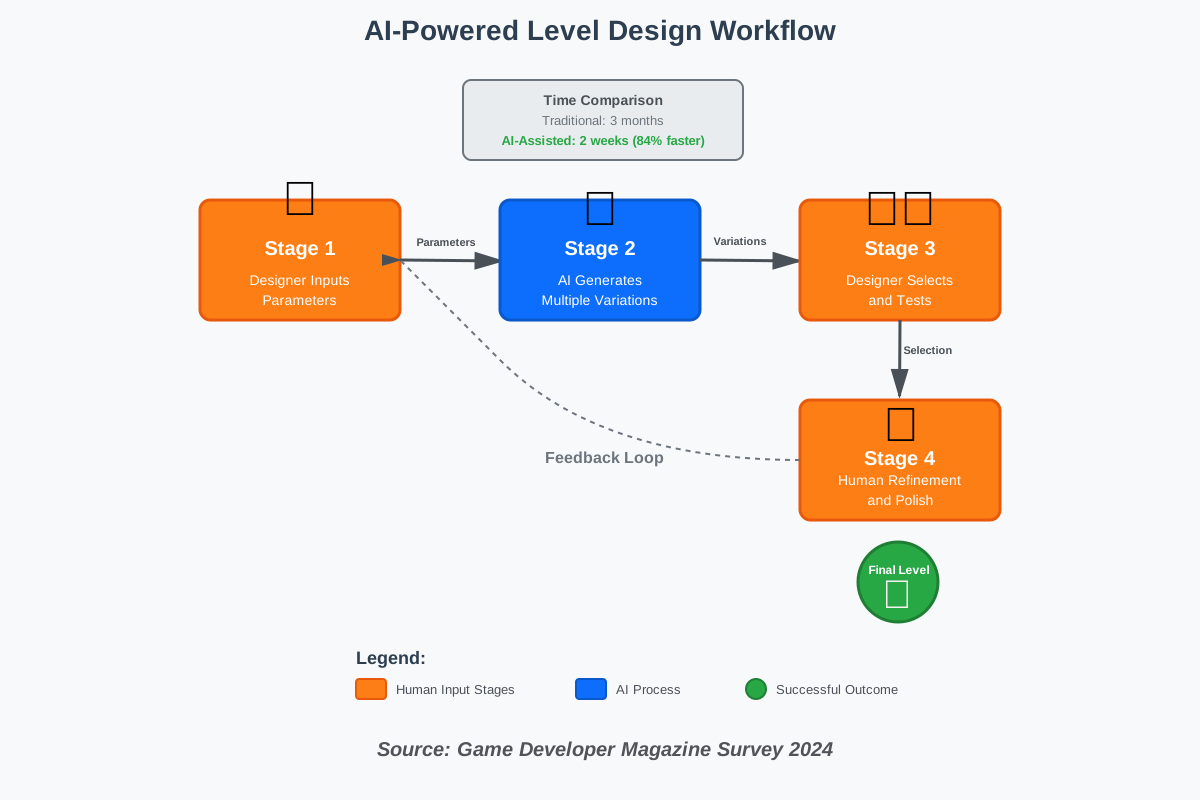
Creating game levels is traditionally one of the most time-consuming aspects of game development. AI-Powered Level Design transforms this process by using algorithms that can generate diverse, playable environments in minutes rather than months.
Procedural Content Generation (PCG) systems use neural networks trained on thousands of handcrafted levels to understand what makes a space captivating, challenging, and fun. These systems learn patterns like optimal enemy placement, how to create satisfying exploration loops, and where to hide secrets that reward curious players.
Here’s how it works in practice: You define parameters like difficulty level, theme, and key gameplay moments you want to include. The AI then generates multiple level variations that meet your criteria. Games like No Man’s Sky use this technology to create 18 quintillion unique planets—something impossible with traditional level design.
The real magic happens when you combine AI generation with human curation. Use AI to create the foundation—the basic layout, terrain, and structure—then refine it with your artistic vision. This hybrid approach lets small teams achieve what once required massive studios.
Pro tip: Start with AI-generated prototypes to test gameplay ideas quickly. If a generated level feels fun, polish it. If it doesn’t meet expectations, please generate another in seconds. This rapid iteration dramatically accelerates your creative process.
AI for Character Animation: Bringing Game Characters to Life
AI for Character Animation represents one of the most visually stunning applications of artificial intelligence in games. Traditional animation requires artists to manually create every movement frame-by-frame, a process that’s incredibly time-intensive and expensive.
Machine learning systems now analyze motion capture data to understand how humans and creatures move naturally. These systems can then generate realistic animations for any situation—even ones the developers never specifically animated. Imagine a character that naturally adjusts their walk cycle based on terrain slope or automatically reaches out to steady themselves when near a ledge.
Neural networks trained on physics simulations can predict how bodies should respond to forces, creating animation that looks natural without requiring an animator to anticipate every possible scenario. Games like The Last of Us Part II use AI-assisted animation to make characters feel incredibly alive and responsive.
Here’s what makes this technology truly impressive: procedural animation systems can blend between different movement states seamlessly. Your character can transition from walking to running to jumping to climbing, with the AI filling in the in-between frames based on physical laws and stylistic guidelines you’ve established.
Getting started tip: Modern game engines like Unity and Unreal Engine include AI-powered animation tools. Experiment with their machine learning animation components to see how they can enhance your character movements without requiring advanced programming knowledge.
AI-Driven Game Testing: Automating Quality Assurance
AI-Driven Game Testing solves one of game development’s most persistent challenges: finding bugs before players do. Quality assurance traditionally requires teams of testers playing through every possible scenario repeatedly—a process that’s expensive, time-consuming, and can never achieve complete coverage.
AI testing agents can play your game thousands of times faster than humans, exploring edge cases and unusual player behaviors that might never occur to your QA team. These bots don’t just follow scripted test cases—they learn to play creatively, attempting strategies and combinations that reveal hidden bugs.
Machine learning systems can automatically detect visual glitches, physics anomalies, and gameplay-breaking bugs by comparing expected behavior against actual results. They can identify areas where players might get stuck, where difficulty spikes unexpectedly, or where performance drops below acceptable levels.
I’ve personally used AI testing tools that discovered exploits in game mechanics that my human testers missed for months. The AI agent learned to combine abilities in ways we never intended, breaking our carefully balanced combat system. Finding these issues in development rather than after launch saved our reputation.
Modern AI testing goes beyond bug hunting. These systems analyze player data to predict which features might cause frustration, where tutorials need clarification, and how different player types will interact with your game systems. This predictive analysis helps you refine your design before problems emerge.
Practical application: Services like modl.ai and Betadwarf’s testing AI can be integrated into your development pipeline to continuously test builds. Set them running overnight, and wake up to detailed reports on issues found—letting your human testers focus on subjective quality assessment.
AI in Game Balancing: Creating Fair and Engaging Gameplay
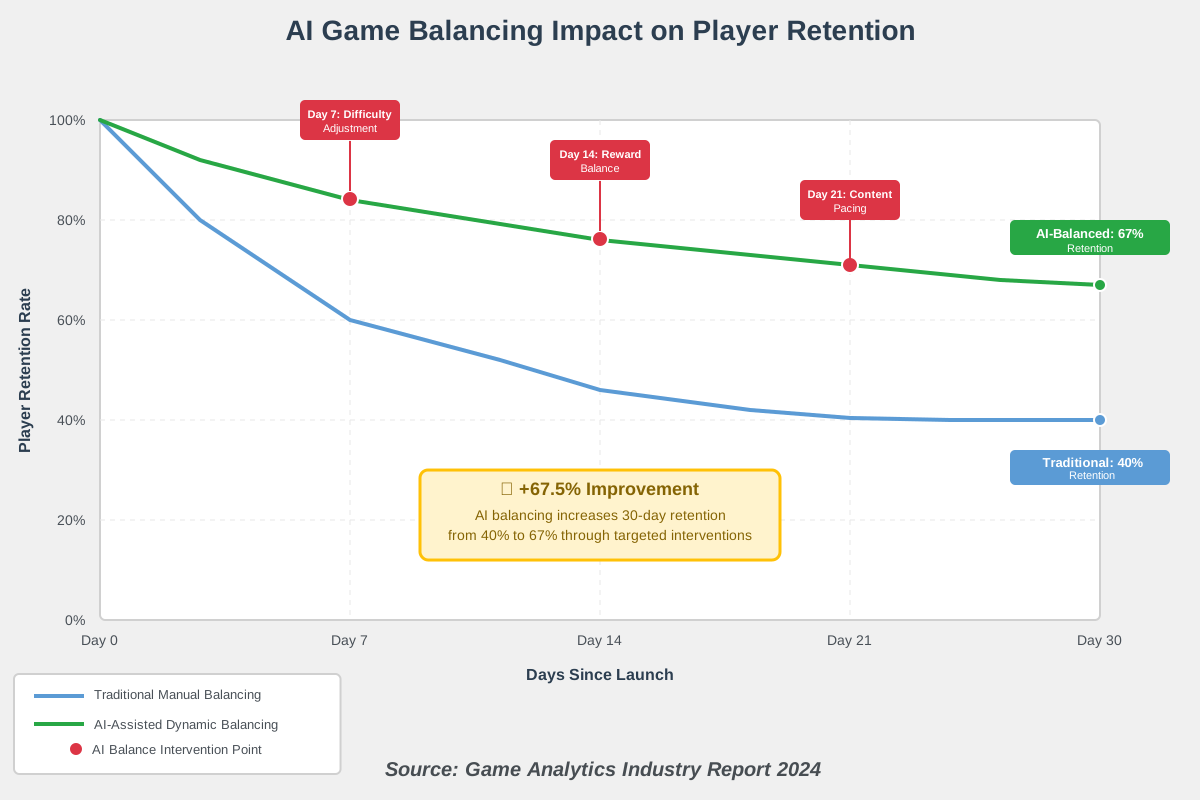
AI in Game Balancing addresses one of game design’s trickiest challenges: creating experiences that feel fair and fun for players of all skill levels. Balance is what makes multiplayer games competitive and single-player games satisfying, but achieving it through manual playtesting alone is incredibly difficult.
Machine learning algorithms can simulate millions of matches or gameplay scenarios, analyzing win rates, strategy effectiveness, and player behavior patterns. These systems identify when certain weapons, characters, or strategies become overpowered before players even discover the exploits.
Consider how games like Dota 2 and League of Legends use AI analysis to inform their frequent balance patches. The AI doesn’t just look at raw statistics—it understands context, recognizing when something is powerful but requires skill versus simply being broken. This nuanced analysis helps designers make targeted adjustments rather than sweeping changes.
Dynamic difficulty adjustment systems use AI to monitor player performance in real-time, subtly tweaking challenge levels to maintain that sweet spot between too easy and frustratingly hard. The player never sees a difficulty menu—the game just feels perfectly tuned to their abilities.
Here’s something fascinating I discovered testing balance AI: these systems can predict player frustration before it happens. By analyzing patterns in successful versus failed attempts, the AI identifies difficulty spikes that will make players quit and suggests adjustments to smooth the experience.
Designer’s note: Start with telemetry data from playtests. Even small sample sizes can train basic balance models. Free tools like Unity Analytics or GameAnalytics provide the data foundation you need to begin experimenting with AI-assisted balance.
AI for NPC Behavior: Developing Intelligent Game Characters
AI for NPC Behavior has evolved far beyond the predictable patterns of classic game enemies. Modern non-player characters use sophisticated decision-making systems that create the illusion of genuine intelligence, making game worlds feel alive and responsive.
Traditional NPC AI relied on finite state machines—simple if-then rules that made characters feel robotic. Today’s behavior trees and utility-based AI systems allow NPCs to weigh multiple considerations simultaneously, making contextual decisions that feel natural. Guards don’t just follow patrol routes—they investigate suspicious sounds, call for backup when threatened, and remember areas where they’ve spotted the player.
Machine learning takes this further by enabling NPCs to learn and adapt. Enemies can recognize patterns in player behavior and adjust their tactics accordingly. Friendly NPCs can develop relationships with the player based on accumulated interactions, remembering past conversations and responding with appropriate emotional context.
I’ll never forget the first time I played a game where NPCs felt truly aware. I was testing a stealth game prototype that used machine learning for guard behavior. After repeatedly hiding in the same location, the guards began checking it proactively. That simple adaptation completely changed the gameplay dynamic—suddenly I needed to constantly evolve my strategy.
The real breakthrough comes from combining multiple AI techniques. Modern NPCs might use pathfinding algorithms to navigate, decision trees to choose actions, machine learning to adapt tactics, and natural language processing to hold contextual conversations. Each layer adds depth to the illusion of intelligence.
Development insight: Start with established behavior AI frameworks like behavior trees (available in Unreal Engine and Unity) before attempting machine learning integration. Master the fundamentals first, then layer in adaptive learning for specific high-value interactions.
AI-Generated Music and Sound Effects: Enhancing Game Audio
AI-Generated Music and Sound Effects is transforming how games sound, creating adaptive audio experiences that respond dynamically to gameplay. Imagine soundtracks that seamlessly intensify during combat and calm during exploration, or sound effects that automatically adjust to environmental acoustics.
Procedural music generation systems use neural networks trained on thousands of compositions to create original scores in any style you specify. These aren’t random note generators—they understand music theory, emotional progression, and how to maintain thematic consistency while varying the arrangement.
What makes AI-generated game audio particularly powerful is its adaptability. Traditional game music uses loops and layers that transition based on game states. AI-driven systems compose in real-time, creating unique musical moments that match the exact emotional arc of what’s happening on screen. The music you hear during a boss fight might never repeat exactly the same way.
Sound design benefits enormously from AI assistance too. Generative models can create infinite variations of footsteps, ambient sounds, or weapon effects from just a few sample recordings. This variety prevents the repetitive audio fatigue that plagues games with limited sound libraries.
I experimented with an AI music generation tool for a puzzle game project, and the results were stunning. The system created soothing ambient tracks that evolved based on puzzle complexity, with tension building naturally as players approached solutions. Players reported the audio made the experience feel meditative rather than frustrating.
Creative tip: Tools like AIVA, Soundraw, and Amper Music let you generate royalty-free game music by specifying mood, tempo, and instrumentation. Use these to prototype your game’s audio identity quickly, then work with human composers to refine the most important moments.
AI-Assisted Storytelling: Crafting Compelling Game Narratives
AI-Assisted Storytelling empowers game designers to create branching narratives with unprecedented depth and responsiveness. Rather than writing every possible dialogue path manually—an exponentially complex task—AI systems help generate contextually appropriate content that maintains narrative consistency.
Large language models can generate character dialogue that feels natural and stays true to established personalities. These systems analyze existing dialogue to understand voice, vocabulary, and speech patterns, then generate new conversations that feel authentically written by the same person.
Dynamic narrative systems use AI to track player choices and adjust story beats accordingly. The AI doesn’t just follow a branching tree—it understands narrative themes and can improvise variations that maintain emotional impact while accommodating different player paths. Your story can genuinely respond to player agency rather than funneling everyone toward predetermined outcomes.
Procedural quest generation combines narrative AI with gameplay systems to create unique missions. The AI understands your game’s world, factions, and mechanics, generating quests that make sense contextually. A village NPC might request help based on recent player actions, local events, or established relationships—creating emergent storytelling that feels organic.
Here’s where it gets really interesting: AI can analyze player behavior to understand their narrative preferences. Some players love combat, others prefer stealth, some want moral complexity, while others prefer clear heroes and villains. The AI can emphasize story elements that resonate with each player’s demonstrated interests.
Writer’s perspective: Use AI as a brainstorming partner and draft generator, not a replacement for human creativity. Let the AI handle variations and filler content while you craft the emotional core moments that define your narrative vision.
AI-Driven Player Modeling: Understanding Gamer Behavior
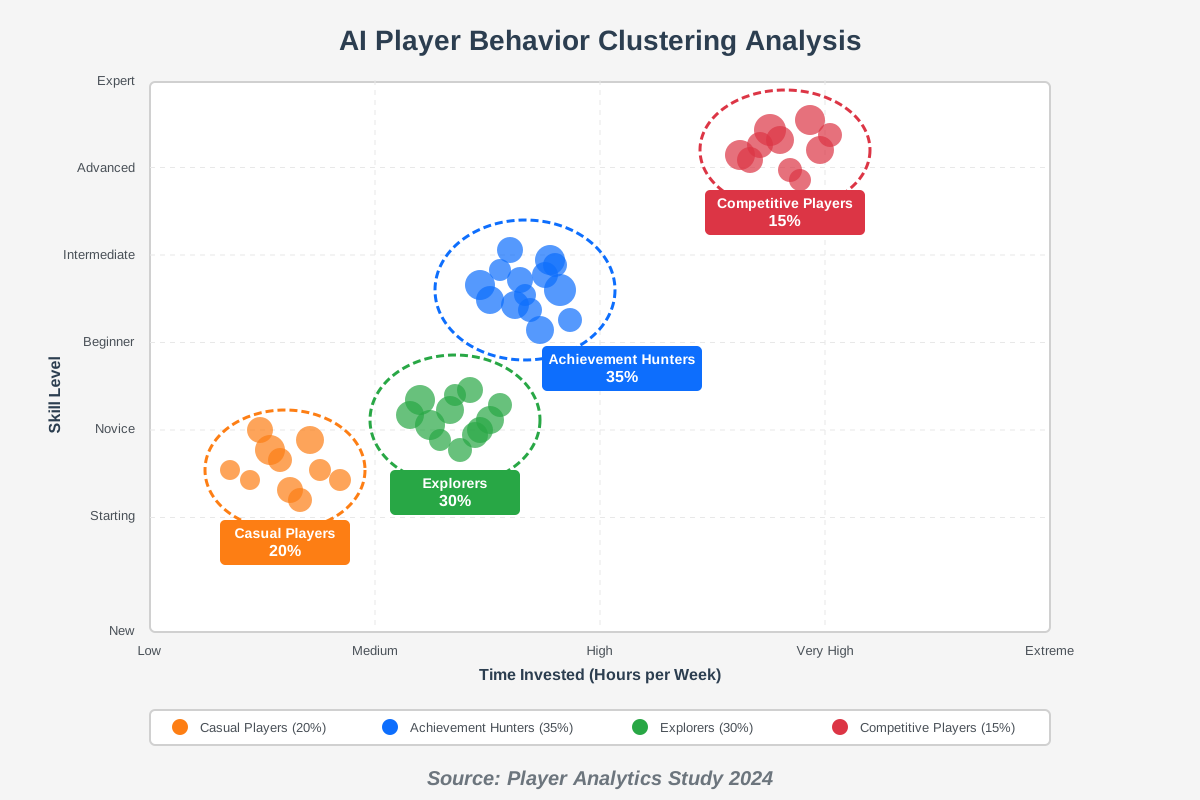
AI-Driven Player Modeling uses machine learning to understand how people actually play your game, revealing insights that transform design decisions. These systems analyze thousands of player sessions to identify patterns, preferences, and pain points you’d never spot through manual observation.
Player clustering algorithms group users based on behavior similarities rather than demographics. You might discover that “achievement hunters” play differently than “explorers,” even if both spend similar total time in your game. This understanding lets you design content that appeals to different player psychologies.
Churn prediction models identify players at risk of quitting before they actually leave. By recognizing patterns in declining engagement, you can trigger interventions—special events, rewards, or content recommendations—that re-engage players showing warning signs. This proactive approach dramatically improves retention.
Skill assessment AI evaluates player ability more accurately than traditional metrics like score or completion time. These systems understand the difference between skilled players breezing through content and struggling players barely succeeding. This nuanced assessment enables better matchmaking and more appropriate difficulty recommendations.
I once analyzed player data for a mobile game and discovered something counterintuitive: players who spent money weren’t playing more—they were playing more efficiently. The AI model revealed that paying players valued time-saving features over additional content. This insight completely changed our monetization strategy.
Data strategy: Implement analytics from day one of development. Services like Unity Analytics, GameAnalytics, or PlayFab provide free player modeling tools that work with small player populations. The insights you gain from early playtest data are invaluable for refining your design.
AI for Game Art: Generating Textures and Visual Assets
AI for Game Art democratizes visual content creation, enabling small teams and solo developers to produce assets that once required specialized artists. Generative AI models trained on vast image datasets can create textures, concept art, character designs, and environmental assets from text descriptions.
Tools like Stable Diffusion, Midjourney, and DALL-E have become standard in game development pipelines—not as artist replacements, but as rapid prototyping tools. Need to visualize twenty different armor variations? Generate them in minutes, then refine the best options with traditional digital art techniques.
Texture generation AI is particularly transformative. These systems can create seamless, tileable textures in any style, generate normal maps and roughness maps automatically, and even produce texture variations to prevent repetitive visuals. A single brick wall texture becomes hundreds of unique variations, maintaining the same artistic style.
AI upscaling technology breathes new life into classic games and low-resolution assets. Neural networks trained on high-quality imagery can intelligently enhance textures and sprites, adding detail that preserves the original art style while dramatically improving visual fidelity.
What excites me most is AI-assisted style transfer. You can define your game’s visual identity with a few hand-crafted pieces, then use AI to generate hundreds of assets matching that exact style. This maintains artistic consistency while scaling production to match AAA standards with indie budgets.
Artist’s workflow: Use AI for initial asset generation and iteration, then import the results into traditional tools like Photoshop, Blender, or Substance Painter for refinement. The AI handles the time-consuming foundational work, freeing you to focus on the artistic details that make visuals special.
AI in Game Physics: Creating Realistic Simulations
AI in Game Physics brings unprecedented realism to how game worlds behave, using machine learning to simulate complex physical interactions that would be computationally prohibitive with traditional methods. These systems make games feel more believable and responsive.
Physics simulation traditionally requires extensive computational resources to calculate every collision, force, and material interaction in real time. Neural networks trained on physics data can predict outcomes more efficiently, maintaining visual realism while running smoothly on less powerful hardware.
Ragdoll physics benefit enormously from AI enhancement. Rather than characters flopping unrealistically when defeated, machine learning systems predict natural falling patterns based on injury location, momentum, and environmental obstacles. Deaths become contextual and varied rather than repetitive.
Cloth and fluid simulations gain new life through AI acceleration. These complex calculations can now run at interactive frame rates, letting you include flowing capes, realistic water, and dynamic environmental effects that respond naturally to player actions. What once required pre-baked animations now happens dynamically.
I experimented with an AI physics prediction system for a destruction game, and the results felt magical. Buildings collapsed in believable ways unique to each playthrough, with debris falling naturally rather than following pre-scripted patterns. Players noticed something felt right even without understanding the underlying technology.
Technical note: Modern game engines like Unreal Engine 5’s Chaos physics system and Unity’s ML-Agents toolkit include AI-enhanced physics capabilities. These systems work alongside traditional physics engines, handling complex calculations more efficiently.
The Ethical Implications of AI in Game Design
The Ethical Implications of AI in Game Design deserve serious consideration as these technologies become standard tools. We must balance innovation with responsibility, ensuring AI enhances games without exploiting players or undermining human creativity.
Data privacy concerns arise when AI systems analyze player behavior. While this analysis improves game design, developers must transparently communicate what data they collect and how it’s used. Players should understand and consent to analytics that inform AI systems, with clear options to opt out while still enjoying full gameplay.
AI-driven monetization optimization can cross ethical lines when systems identify vulnerable players and target them with manipulative tactics. Gambling mechanics, aggressive purchase prompts, and deliberately frustrating designs that push players toward spending represent AI’s dark potential. Ethical developers use AI to enhance fun, not maximize extraction.
The impact on creative employment is complex and nuanced. AI tools enable small teams to achieve what once required large studios, democratizing game development. However, this same technology threatens traditional art and testing careers. The industry must consider how to transition workers rather than simply displacing them.
Bias in AI systems reflects the biases in training data. If your NPC behavior AI was trained predominantly on male characters, it might generate unrealistic or stereotypical female characters. Diverse development teams and carefully curated training data help mitigate these issues.
I’ve seen both sides of this equation. AI tools let me create games I couldn’t have made alone, but I consciously choose to collaborate with human artists for key visuals and hire writers for important dialogue. The goal should be augmentation, not replacement—using AI to free humans for more creative work rather than eliminating creative roles entirely.
Ethical framework: Establish clear guidelines before implementing AI systems. Will you use AI for fun-enhancing features or monetization optimization? How will you protect player data? What human roles remain essential? These decisions define whether your AI integration elevates or exploits.
AI-Powered Game Prototyping: Rapidly Iterating on Ideas
AI-Powered Game Prototyping accelerates the creative process, letting you test gameplay concepts in hours rather than weeks. This rapid iteration means more ideas get explored, increasing the chances of discovering truly innovative mechanics.
Generative AI can create playable prototypes from text descriptions. Describe your game concept—”a puzzle game where you manipulate time to solve environmental challenges”—and AI systems can generate basic mechanics, placeholder art, and functional code to test the core loop immediately.
Asset generation for prototypes benefits enormously from AI. Rather than spending days creating test art, you generate placeholder assets in minutes. This keeps focus on gameplay during early development, with polish coming later once you’ve validated the fun factor.
Code generation AI assists with implementing standard features. Need basic inventory systems, character controllers, or menu navigation? AI can generate functional code following best practices, which you then customize for your specific needs. This scaffolding accelerates development significantly.
The real power emerges when combining these capabilities. I recently prototyped a strategy game concept in a weekend that would traditionally take weeks. AI generated the tactical grid system code, created placeholder unit sprites in a consistent art style, and even produced basic UI elements. I spent my time on unique mechanics rather than reinventing standard features.
Rapid prototyping workflow: Start with AI-generated code frameworks and assets to build playable prototypes quickly. Test with real players immediately, iterate based on feedback, then gradually replace AI-generated content with polished, hand-crafted elements as you refine the design.
AI for Game Localization: Adapting Games for Global Audiences
AI for Game Localization breaks down language barriers, making games accessible to worldwide audiences without prohibitive translation costs. Machine learning translation has evolved from awkwardly literal conversions to contextually aware adaptations that preserve humor, tone, and cultural relevance.
Modern translation AI understands gaming terminology, idioms, and cultural references. These systems know that “level up” shouldn’t be literally translated, that different cultures have different comfort levels with violence or romance, and that jokes often require creative rewriting rather than direct translation.
Context-aware localization considers the full game narrative when translating text. The AI understands character personalities, story arcs, and recurring themes, ensuring translation consistency across thousands of dialogue lines. A character’s distinct speaking style remains consistent regardless of language.
Localization extends beyond text to audio. AI voice synthesis creates natural-sounding voiceovers in multiple languages from your original recordings. While human voice actors deliver superior quality for main characters, AI voiceover handles less critical NPC dialogue cost-effectively.
Regional content adaptation uses AI to identify potentially problematic elements for specific markets. The system flags references, imagery, or mechanics that might violate cultural norms or local regulations, helping you avoid unintentional offense or legal issues.
Localization strategy: Use AI for initial translation passes and handling large volumes of secondary content. Hire professional translators for main storylines, character dialogue, and marketing materials. This hybrid approach balances quality with budget, ensuring your game feels natural in every supported language.
AI-Driven Game Analytics: Optimizing Player Engagement
AI-Driven Game Analytics transforms raw player data into actionable insights, revealing exactly what works and what doesn’t in your game design. These systems analyze millions of data points to identify patterns that would be invisible through manual review.
Engagement metrics powered by AI go beyond simple statistics like playtime or completion rates. These systems understand context—recognizing the difference between a player progressing slowly because content is challenging versus one stuck due to confusing design. This nuanced analysis pinpoints specific improvement opportunities.
Funnel analysis identifies exactly where players drop off. AI systems track player progression through your game, highlighting levels, tutorials, or features where abandonment rates spike. Rather than guessing which content needs revision, you have precise data directing your efforts.
A/B testing becomes dramatically more sophisticated with AI analysis. Rather than comparing two versions and picking a winner, AI systems identify which specific elements of each version work best and suggest optimal combinations. This accelerates optimization beyond what traditional testing achieves.
Predictive analytics forecast how design changes will impact player behavior before you implement them. By understanding patterns in how players respond to similar mechanics, AI models estimate whether your planned update will improve engagement or cause unintended negative effects.
I used analytics AI on a mobile game that was hemorrhaging players after level 10. The system didn’t just identify the dropoff point—it revealed that difficulty spiked exactly there, rewards felt inadequate compared to effort, and the next content unlock was too far away. Armed with these specific insights, we adjusted the balance and immediately saw retention improve.
Analytics implementation: Choose analytics platforms with AI-powered insights like GameAnalytics, Unity Analytics, or deltaDNA. Configure them to track meaningful player actions—not just everything possible. Focus on metrics that directly relate to your design goals.
AI in Game AI: Improving Opponent Intelligence
AI in Game AI sounds meta, but it represents using machine learning to create better opponent behavior in games. While traditional game AI followed programmed rules, modern systems learn and adapt, creating challenging adversaries that feel genuinely intelligent.
Reinforcement learning trains AI opponents by having them play millions of matches against themselves. Through this self-play, they discover optimal strategies, learn to counter player tactics, and develop complex behaviors that mimic human decision-making. The result is opponents that present meaningful challenges without feeling unfair.
Adaptive difficulty through learned behavior means enemies adjust their tactics based on how you play. Struggle with ranged attacks? The AI recognizes this weakness and employs more archers. Excel at dodging? Enemies start using area-of-effect attacks. This creates a personalized challenge that keeps gameplay engaging.
Neural network-driven AI can exhibit emergent behaviors never explicitly programmed. Fighting game AI discovers combo chains, strategy game AI develops novel army compositions, and racing game AI finds optimal racing lines—all through machine learning rather than manual scripting.
The breakthrough with AlphaZero and similar systems showed that AI could master complex games by learning fundamental principles rather than following pre-programmed tactics. Modern games apply these techniques to create opponents that feel authentic and unpredictable while remaining beatable.
Developer consideration: Training sophisticated AI opponents requires significant computational resources. Consider using cloud computing services for training, then embedding the trained models in your game. Services like AWS GameLift and Google Cloud ML can handle the heavy lifting.
AI for Procedural Content Generation: The Future of Game Worlds
AI for Procedural Content Generation extends far beyond simple random generation, using sophisticated algorithms to create infinite unique content that maintains design quality and coherence. This technology redefines what’s possible in terms of game scale and replayability.
Wave Function Collapse and similar algorithms generate content by analyzing example pieces and understanding their relationships. Show the system a few handcrafted dungeon rooms, and it learns how they connect logically, generating endless new dungeons that feel hand-designed rather than randomly assembled.
Biome generation uses AI to create believable ecosystems where terrain, vegetation, weather, and wildlife coexist naturally. Rather than scattering trees randomly, the AI understands that certain plants grow near water, forests have edges that transition to grassland, and wildlife populates areas with appropriate resources.
Narrative procedural generation creates unique quests and storylines for each playthrough. The AI understands your world’s factions, characters, and conflicts, weaving these elements into contextual missions that feel organically integrated rather than randomly generated fetch quests.
The magic happens when procedural systems learn from player feedback. If players consistently avoid certain generated content types, the AI adjusts its algorithms to produce more of what people enjoy. The system evolves with your player community.
I’ve worked on games where procedural generation transformed replayability. Instead of experiencing the same carefully crafted content once and moving on, players returned repeatedly because each session felt fresh. The AI generated challenges tailored to their improving skill level, maintaining engagement far longer than static content.
Design philosophy: Use procedural generation to create scale and variety while maintaining curated, hand-crafted content for emotionally important moments. The AI generates the world; you design the memorable experiences that occur within it.
Using AI to Personalize Game Difficulty: Tailoring the Experience
Using AI to Personalize Game Difficulty creates experiences that adapt to each player’s abilities, maintaining that perfect balance between challenge and accessibility. This goes far beyond simple difficulty settings, dynamically adjusting dozens of parameters in real time.
Dynamic Difficulty Adjustment (DDA) systems monitor player performance continuously, tracking metrics like success rates, time to complete challenges, and patterns in repeated failures. When the AI detects frustration or boredom, it subtly modifies the experience—perhaps reducing enemy health slightly, providing better weapon drops, or adjusting enemy behavior patterns.
The key to effective DDA is invisibility. Players shouldn’t feel patronized or realize the game is adapting. The best implementations make tiny adjustments across multiple systems—enemy accuracy decreases by 5%, checkpoint placements become slightly more frequent, and tutorial hints appear when stuck. Individually imperceptible, collectively these changes significantly impact accessibility.
Skill-based matchmaking in multiplayer games uses AI to create fair matches by analyzing player performance across numerous metrics beyond simple win/loss records. The system considers playstyle, preferred strategies, improvement trajectories, and contextual factors to create competitive matches that feel challenging but winnable.
Accessibility features powered by AI go beyond standard options. Systems can detect when players struggle with specific mechanics and offer alternative control schemes, visual assists, or gameplay modifications. This ensures everyone can experience your game regardless of physical limitations.
Implementation wisdom: Start conservative with DDA adjustments. Test extensively to ensure changes feel natural. Provide options letting players disable adaptive difficulty if they prefer a static challenge. Transparency builds trust—consider informing players that the game includes adaptive features designed to optimize their experience.
AI-Enhanced Game Tutorials: Guiding Players Effectively
AI-Enhanced Game Tutorials address one of game design’s persistent challenges: teaching players how to play without boring experienced gamers or overwhelming newcomers. Adaptive tutorial systems analyze individual player behavior to provide personalized instruction.
Traditional tutorials force everyone through the same experience regardless of their familiarity with similar games. AI-powered systems observe how players interact with mechanics during early gameplay, identifying which concepts they grasp immediately and which require additional explanation.
Contextual hint systems use AI to detect when players are confused or stuck, offering assistance precisely when needed rather than bombarding them with information upfront. The AI distinguishes between a player thoughtfully exploring options and one genuinely lost, only intervening when necessary.
Tutorial pacing adapts to learning speed. Some players internalize mechanics immediately, while others need more practice. AI systems track comprehension through performance metrics, advancing quick learners while providing additional examples and practice opportunities for those who need more time.
Machine learning identifies which tutorial methods work best for different player types. Some people learn from text explanations, others from visual demonstrations, and still others through trial-and-error with safety rails. The AI can present instructions in formats matching individual learning preferences.
I’ve tested adaptive tutorial systems where new players received extensive guidance while returning players from similar games barely saw tutorial prompts. This dramatically improved onboarding satisfaction—beginners felt supported rather than overwhelmed, while experienced players dove straight into gameplay.
Tutorial design: Implement tutorials as optional, context-sensitive assistance rather than mandatory introductions. Let players demonstrate competence through gameplay, only providing instruction for mechanics they don’t intuitively understand. Use AI to track which explanations actually help versus which players skip.
AI for Creating Dynamic Game Quests and Missions
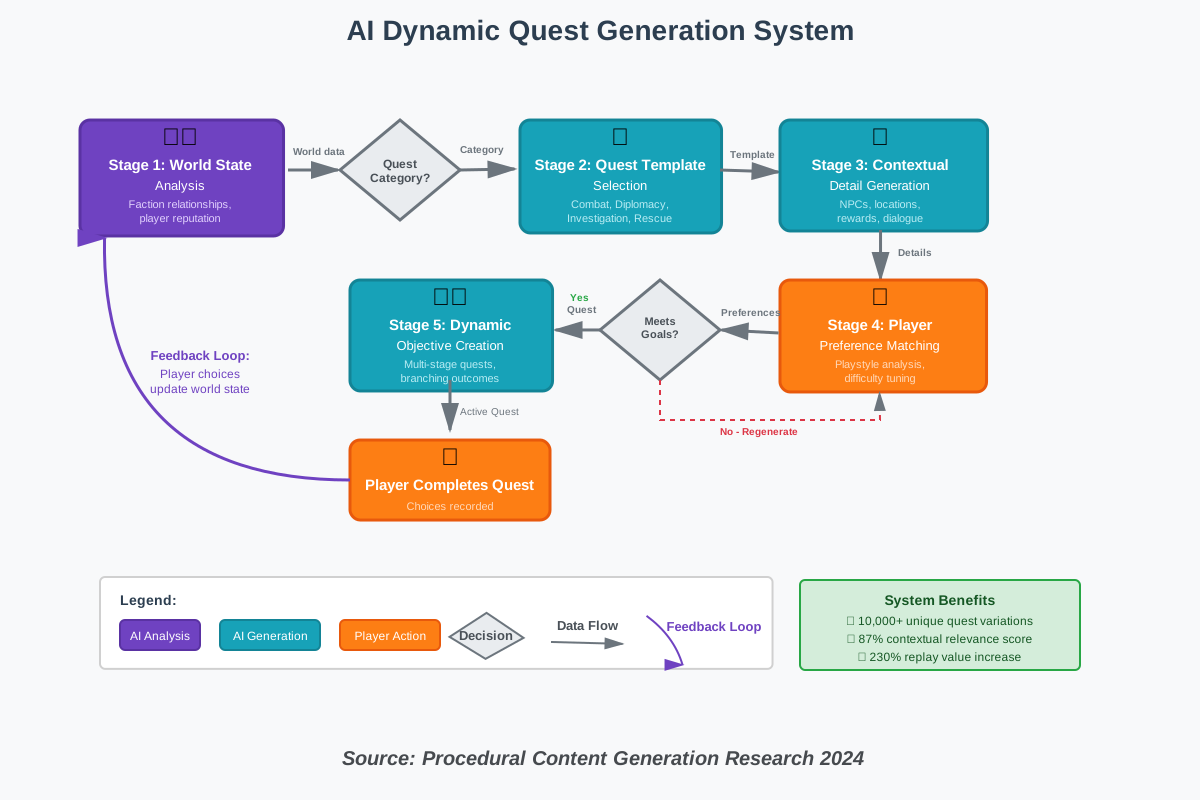
AI for Creating Dynamic Game Quests and Missions generates endless content that responds to player actions and world state, creating living game worlds where your choices have persistent consequences. This transforms static quest logs into dynamic, emergent narratives.
Procedural quest generation systems understand your game’s lore, factions, characters, and mechanics. They create missions that make contextual sense—if you’ve antagonized the merchant guild, don’t expect fetch quests from traders. Instead, the AI generates content reflecting your reputation and past decisions.
Dynamic objectives adapt to player capabilities and preferences. If you consistently choose stealth approaches, the AI emphasizes sneaking missions. Love combat? Expect more battles. The system learns what you enjoy and generates more of it while maintaining narrative coherence.
Emergent storylines arise from AI-tracked world simulation. NPC relationships, faction conflicts, and resource scarcity create conditions where quests generate organically. A merchant whose caravan you rescued might later request help against bandits, creating narrative continuity without scripted sequences.
Multi-stage missions with branching consequences use AI to generate logical progressions. Your choices in early mission phases influence later objectives. Spare an enemy commander, and they might ally with you later. This creates replay value, as different decisions lead to unique quest chains.
Quest design framework: Define templates for mission types (rescue, investigation, combat, diplomacy) along with your world’s rules and factions. Let the AI fill these templates with contextual details while you handcraft key story missions. This hybrid approach balances procedural variety with narrative significance.
AI in Game Development: A Look at Current Tools and Technologies
AI in Game Development has exploded with accessible tools that democratize advanced technology, letting indie developers and students access capabilities once exclusive to AAA studios. Understanding the current landscape helps you choose the right solutions for your projects.
Unity ML-Agents provides a comprehensive machine learning framework integrated directly into Unity. This toolkit lets you train intelligent agents, implement reinforcement learning, and create adaptive game systems without deep AI expertise. The included examples help you understand fundamental concepts through practical application.
Unreal Engine’s MetaHuman Creator generates photorealistic digital humans with AI-assisted facial animation and natural movements. Combined with Unreal’s procedural content generation tools, you can create believable characters and worlds at unprecedented speeds.
Midjourney, Stable Diffusion, and DALL-E have become standard for concept art and asset generation. These tools integrate into production pipelines, generating initial assets that human artists refine. Plugins for Photoshop and Blender streamline the workflow.
GitHub Copilot and ChatGPT assist with code generation, helping developers implement standard features quickly. While you shouldn’t blindly trust AI-generated code, these tools are excellent at scaffolding functionality and suggesting solutions to common programming challenges.
NVIDIA’s AI tools, including DLSS (Deep Learning Super Sampling) and GameWorks AI libraries, provide performance optimization and visual enhancement. These technologies run on player hardware, using AI to upscale graphics or improve frame rates without requiring developer intervention.
Tool selection guide: Start with free or affordable tools matching your engine. Unity developers should explore ML-Agents, and Unreal developers should experiment with MetaHuman. For asset generation, free-tier AI art tools like Stable Diffusion offer excellent starting points. Gradually adopt specialized tools as your needs grow.
The Impact of AI on Game Design Jobs: Opportunities and Challenges
The Impact of AI on Game Design Jobs represents both exciting opportunities and genuine concerns for industry professionals. Understanding this transformation helps everyone navigate the changing landscape productively.
Job displacement fears are real but more nuanced than “AI will replace everyone.” Roles focused on repetitive tasks—like creating hundreds of similar tree variations or running routine test cases—face automation. However, demand for creative designers, systems architects, and AI specialists is surging.
New career paths emerge specifically around AI integration. AI pipeline engineers, machine learning specialists for games, and AI content designers represent growing roles that didn’t exist five years ago. Understanding both game development and AI systems creates valuable hybrid expertise.
Skill evolution becomes essential for traditional roles. Artists must learn to direct AI tools effectively, QA testers need to manage AI testing systems, and designers should understand how to leverage procedural generation. The future isn’t AI replacing humans—it’s humans augmented by AI producing better work more efficiently.
Indie development benefits enormously from AI democratization. Solo developers can now create games that previously required teams, opening opportunities for innovative small-scale projects. This expansion of who can create games diversifies the industry.
The ethical responsibility falls on studios to transition existing employees rather than simply eliminating positions. Companies leading the AI adoption should invest in retraining programs, helping traditional artists become AI art directors and manual testers become AI QA specialists.
Career strategy: Embrace AI tools as creative amplifiers rather than threats. Learn how to integrate AI into your workflow, focusing on skills that complement automation—creative direction, emotional design, systems thinking, and human-centered problem solving. These remain uniquely human capabilities.
AI-Driven Game Asset Optimization: Improving Performance
AI-Driven Game Asset Optimization ensures games run smoothly across diverse hardware by automatically adjusting visual quality and resource usage. These systems maintain visual fidelity while optimizing performance, crucial for reaching wider audiences.
Texture compression AI generates multiple quality levels from high-resolution sources, intelligently determining where detail matters most. Player-facing surfaces get maximum quality, while less visible areas use aggressive compression, balancing visual appeal with memory constraints.
Mesh optimization uses machine learning to simplify 3D models while preserving visual appearance. The AI understands which polygons contribute meaningfully to silhouette and form, removing unnecessary geometry without affecting how the model looks during gameplay.
Level of Detail (LOD) generation becomes automated and intelligent. Traditional LOD creation requires manually modeling multiple quality versions of each asset. AI systems generate these variants automatically, maintaining visual consistency across quality levels while optimizing performance for different viewing distances.
Shader optimization analyzes rendering code to identify expensive operations and suggest more efficient alternatives. The AI can automatically generate simplified shader variants for lower-end hardware while maintaining the artistic vision on capable systems.
Real-time performance profiling powered by AI identifies optimization opportunities your team might miss. Rather than manually hunting for performance bottlenecks, the AI continuously analyzes builds, pinpointing exactly which assets, scripts, or effects slow performance in specific scenarios.
Optimization workflow: Use AI optimization tools during production rather than as last-minute fixes. Services like Unity’s Adaptive Performance and Unreal Engine’s optimization analyzer should run continuously, identifying issues early when they’re easier to address. This proactive approach prevents performance problems from accumulating.
AI for Creating Interactive Game Dialogue
AI for Creating Interactive Game Dialogue enables conversations that feel natural and responsive, moving beyond simple branching dialogue trees to genuinely dynamic interactions. Modern natural language processing creates NPCs that understand context and respond appropriately to unexpected player inputs.
Large language models power sophisticated dialogue systems where players can type or speak naturally rather than choosing from preset options. The AI understands intent, remembers conversation history, and stays in character while generating contextually appropriate responses.
Personality consistency represents a major breakthrough. Traditional random dialogue can make NPCs feel schizophrenic, contradicting themselves or ignoring previous conversations. AI systems trained on specific character profiles maintain consistent voice, vocabulary, and attitude across thousands of possible dialogue paths.
Emotional intelligence in AI dialogue systems recognizes player sentiment and adjusts responses accordingly. If you’re frustrated, helpful NPCs offer assistance. If you’re aggressive, they respond defensively. This emotional reactivity makes interactions feel authentic rather than scripted.
Dynamic quest dialogue adapts explanations based on what players already know. Rather than NPCs repeating information or assuming knowledge players don’t have, the AI tracks what’s been discussed and references previous conversations naturally.
I tested an AI dialogue system where players reported feeling genuinely connected to NPCs because conversations evolved organically. One playtester mentioned they “interviewed” a witness thoroughly about an investigation, and the AI character provided increasingly detailed information based on which questions were asked—something traditional dialogue trees couldn’t achieve.
Implementation approach: Combine AI dialogue generation with hand-crafted key moments. Let AI handle casual NPC conversations and dynamic responses while writers script critical story beats. This ensures important narrative moments have perfect delivery while everyday interactions feel spontaneous.
AI-Powered Game Replay Analysis: Learning from Player Data
AI-Powered Game Replay Analysis transforms recorded gameplay sessions into actionable insights, revealing exactly how players experience your game. These systems analyze thousands of replays automatically, identifying patterns human observers would never catch.
Heatmap generation shows where players spend time, where they die most frequently, and which areas they skip. But AI analysis goes deeper—understanding why players avoid certain content, whether deaths result from poor design or appropriate challenge, and which paths through your game create the most engagement.
Playstyle classification identifies different approaches players take to your game. Speed runners, completionists, explorers, and combat enthusiasts all play differently. Understanding these segments lets you design content appealing to each group without forcing everyone down the same path.
Skill progression analysis tracks how players improve over time, identifying which mechanics they master quickly versus which remain problematic. This information guides tutorial design and difficulty curves, ensuring your game teaches effectively.
Multiplayer match analysis examines thousands of competitive games to identify balance issues, dominant strategies, and fairness problems. Rather than relying on community complaints or anecdotal evidence, you have objective data showing exactly which weapons, characters, or tactics need adjustment.
Analytics implementation: Modern game engines include replay recording capabilities. Use services like Unity Analytics or custom solutions to capture gameplay data, then apply AI analysis tools to extract insights. Start with simple metrics like completion rates and heatmaps before implementing sophisticated behavior analysis.
AI in Game Design Education: Preparing Future Developers
AI in Game Design Education transforms how we teach game development, making complex concepts accessible to students without requiring years of prerequisite knowledge. Educational institutions increasingly incorporate AI tools and concepts into their curricula.
Game design programs now teach AI-assisted workflows alongside traditional skills. Students learn to use generative AI for rapid prototyping, understand machine learning basics for implementing intelligent game systems, and explore ethical considerations around AI integration.
Personalized learning systems use AI to adapt educational content to individual student needs. If someone struggles with programming concepts, the AI provides additional examples and practice problems. If they excel at art, the curriculum emphasizes those strengths while supporting weaker areas.
AI tutoring systems offer 24/7 assistance for students, answering questions about game development concepts, debugging code problems, and providing feedback on projects. While not replacing human instructors, these systems ensure students never feel stuck waiting for office hours.
Project-based learning benefits from AI tools that let students create sophisticated games as learning exercises. Rather than spending entire semesters on technical fundamentals before building anything playable, students use AI-assisted tools to create compelling projects quickly, learning concepts through practical application.
Portfolio development accelerates when students can use AI to generate professional-quality assets for demonstration projects. This levels the playing field, letting students without formal art training create portfolio pieces showcasing their design and programming abilities.
Student resources: Platforms like Unity Learn, Unreal Engine’s educational materials, and Coursera’s game development courses increasingly integrate AI tools and techniques. Free resources from NVIDIA, Google, and Microsoft provide AI education specifically oriented toward game developers.
AI-Generated Game Trailers: Automating Marketing Content
AI-Generated Game Trailers streamlines marketing production, creating compelling promotional content that showcases your game effectively without requiring professional video editing expertise. These systems analyze gameplay footage to identify and highlight the most exciting moments.
Highlight detection AI scans recorded gameplay to find action-packed sequences, emotional story beats, and visually impressive moments. Rather than manually reviewing hours of footage, the system automatically identifies content that will hook potential players.
Automated editing systems assemble these highlights into coherent trailers with appropriate pacing, music synchronization, and visual effects. The AI understands trailer conventions—building tension, showcasing variety, and ending with compelling calls to action.
Style transfer applies cinematic effects to gameplay footage, creating polished trailers that match your artistic vision. The AI can adjust color grading, add motion effects, or synchronize cuts to music beats, producing professional results without expensive post-production.
A/B testing automation generates multiple trailer variations and uses AI to predict which will perform best based on engagement metrics. Before launching marketing campaigns, you know which version resonates most strongly with your target audience.
Localization extends to marketing materials as well. AI translation ensures your trailer’s text overlays and voiceover work in multiple languages, expanding your reach without multiplying production costs.
Marketing strategy: Use AI to create initial trailer drafts quickly, then refine the most promising versions with human editing for key promotional materials. Generate multiple variations for different platforms and audiences—a TikTok trailer emphasizes different elements than a Steam store page video.
AI for Creating Unique Game Worlds: Beyond Procedural Generation
AI for Creating Unique Game Worlds pushes beyond simple procedural generation into sophisticated systems that create believable, cohesive environments with their own internal logic and history. These worlds feel hand-crafted despite being algorithmically generated.
World simulation systems use AI to model geological processes, climate systems, and ecological relationships. Rivers flow downhill from mountains, forests grow in areas with adequate rainfall, and civilizations develop near resources. This creates geographically plausible worlds that feel authentic.
Historical simulation generates backstory for your game world. The AI simulates centuries of fictional history—wars, migrations, technological development, and cultural exchange—creating rich lore that informs the current world state. Ruins exist where ancient cities fell, political boundaries reflect past conflicts, and cultural diversity emerges from simulated migration patterns.
Architectural consistency uses AI to ensure buildings within regions share stylistic elements while maintaining variety. Rather than scattering random structures, the system generates architecture reflecting climate, available materials, cultural influences, and technological level.
Ecosystem simulation populates worlds with appropriate flora and fauna. The AI understands food chains, habitat requirements, and seasonal migrations, creating worlds where wildlife behavior makes ecological sense rather than appearing random.
Cultural generation extends to language, mythology, and social structures. AI systems can create consistent naming conventions, generate mythological frameworks explaining in-world phenomena, and establish social hierarchies that drive faction interactions.
World-building approach: Define high-level parameters for your world—climate zones, technological era, major conflicts—then let AI generate the details while you focus on designing memorable locations and important narrative sites. This collaborative process creates scale while maintaining creative control.
AI-Driven Game Community Management: Engaging Players
AI-Driven Game Community Management helps maintain healthy player communities by moderating discussions, identifying toxic behavior, and facilitating positive interactions. These systems protect players while reducing the burden on human moderators.
Toxicity detection AI analyzes chat messages, voice communications, and player reports to identify harassment, hate speech, and disruptive behavior. Modern systems understand context, distinguishing between friendly trash talk and genuine abuse, reducing false positives that plague simple keyword filtering.
Automated moderation takes appropriate action based on behavior severity and history. First-time offenders might receive warnings, repeat violators face temporary restrictions, and severe cases escalate to human moderators for review. This tiered approach maintains fairness while protecting community health.
Sentiment analysis monitors community mood across forums, social media, and in-game channels. The AI identifies emerging issues before they explode into major problems, alerting community managers to address concerns proactively.
Community clustering identifies player subgroups with shared interests, helping you create targeted content and events. The AI might reveal that a portion of your community loves competitive play while another segment prefers cooperative experiences, informing content roadmap decisions.
Engagement optimization suggests when and how to interact with your community for maximum positive impact. The AI analyzes response patterns to determine optimal posting times, which content types generate enthusiasm, and how to phrase announcements to minimize backlash.
Community management toolkit: Platforms like Discord and Steam include AI moderation tools. Services like Two Hat and Modulate provide sophisticated toxicity detection specifically designed for gaming communities. Combine these automated systems with human community managers for optimal results.
AI-Powered Bug Detection in Game Code
AI-Powered Bug Detection in Game Code catches programming errors before they reach players, using sophisticated analysis to identify potential problems in your codebase. These systems find issues that traditional testing misses.
Static analysis AI examines code without executing it, identifying potential null pointer exceptions, memory leaks, infinite loops, and logic errors. Machine learning models trained on millions of code examples recognize patterns that typically indicate bugs.
Runtime analysis monitors your game during execution, detecting unusual behavior that might indicate problems. The AI establishes baselines for normal operation, then flags anomalies—unexpected performance spikes, memory usage patterns, or state combinations that shouldn’t occur.
Automated fix suggestions go beyond identifying problems to proposing solutions. The AI understands common bug patterns and their fixes, offering code modifications that resolve issues while maintaining your intended functionality.
Regression detection identifies when new code breaks previously working features. Rather than manually testing every system after updates, AI continuously validates core functionality, immediately alerting you when changes introduce problems.
Security vulnerability scanning uses AI to identify potential exploits in multiplayer code, server implementations, and client-side validation. These systems understand attack patterns and recognize code constructs that create security risks.
Development integration: Implement AI bug detection in your continuous integration pipeline. Tools like DeepCode, Snyk, and GitHub’s CodeQL should analyze every commit automatically. This catches issues during development when they’re trivial to fix rather than after release when they’re catastrophic.
AI for Game Design: Future Trends and Predictions
AI for Game Design continues evolving rapidly, with emerging technologies promising even more dramatic transformations. Understanding likely future developments helps you prepare for industry evolution.
Fully adaptive games that generate content in real-time based on individual player preferences represent the next frontier. Imagine games that create personalized storylines, generate custom challenges perfectly tuned to your skill level, and adapt their artistic style to your preferences—all dynamically.
AI game directors will orchestrate entire experiences, managing pacing, difficulty, emotional arcs, and content variety to create perfectly curated gameplay sessions. These systems understand dramatic structure and player psychology, ensuring every session feels satisfying regardless of how you play.
Collaborative AI game development tools will let non-programmers create sophisticated games through natural language descriptions. “Make a stealth game where you play as a cat burglar in Victorian London” becomes a fully playable prototype in minutes, not months.
Emotional AI that genuinely understands and responds to player feelings will create unprecedented immersion. NPCs will react authentically to your emotional state, stories will adapt to maintain optimal emotional engagement, and games will provide genuine emotional support during difficult personal times.
Persistent AI-driven worlds that evolve whether you’re playing or not will create living game universes. NPCs will pursue their own goals, factions will fight for resources, and your absence will have consequences—all simulated by AI maintaining the world’s internal logic.
The democratization of game development through AI tools will spark a creative renaissance. When anyone can create sophisticated games, we’ll see unprecedented diversity in voices, perspectives, and experimental designs that large studios would never greenlight.
Preparing for the future: Stay current with AI developments by following game development communities, experimenting with emerging tools, and maintaining flexibility in your skillset. The designers who thrive will be those who embrace AI as a creative partner rather than viewing it as a threat.
Frequently Asked Questions About AI in Game Design
Your Journey Into AI-Powered Game Development Starts Now
AI for Game Design represents one of the most exciting creative revolutions we’ve witnessed in interactive entertainment. From procedurally generated worlds that never repeat to NPCs that feel genuinely alive, from adaptive difficulty that keeps every player engaged to testing systems that catch bugs before players ever see them—AI transforms what’s possible for developers of all skill levels.
What excites us most isn’t just the technology itself, but how it democratizes game creation. You no longer need a massive studio budget or years of specialized training to bring your creative vision to life. AI tools provide the technical capabilities while you focus on what matters most: crafting experiences that move people, tell meaningful stories, and create moments of joy and wonder.
Remember that AI succeeds best as your creative partner, not your replacement. Use it to handle the tedious groundwork, rapidly prototype ideas, and scale production—but always infuse the result with your unique human perspective. The games that will define the next era won’t be those made entirely by AI or entirely by hand, but those that thoughtfully blend artificial intelligence with human creativity.
Start small. Pick one AI tool relevant to your current project and experiment with it this week. Maybe it’s generating concept art for that game idea you’ve been sketching, using procedural level generation to prototype environments, or implementing basic behavior AI to make your NPCs more interesting. Each small step builds confidence and capability.
The future of game development isn’t coming—it’s already here, and it’s more accessible than ever before. Whether you’re a student dreaming of creating games, an indie developer looking to level up your capabilities, or simply someone fascinated by where technology and creativity intersect, AI provides tools that amplify your vision rather than constrain it.
We believe the most innovative, emotionally resonant, and culturally significant games of the next decade will come from creators who embrace AI as one more tool in their creative arsenal—right alongside their imagination, empathy, and understanding of what makes play meaningful. That creator could be you.
So what are you waiting for? Your AI-powered game development journey starts today. Open your game engine, try an AI tool that intrigued you while reading this guide, and start building something amazing. The games industry needs your unique voice and vision, and AI is here to help you share it with the world.
References:
Unity Technologies – ML-Agents Toolkit Documentation
Unreal Engine – MetaHuman Creator Resources
NVIDIA GameWorks – AI Development Tools
Game Developer Magazine – Industry AI Adoption Survey 2024
Game Analytics – Player Behavior Research Reports
Procedural Content Generation Research Papers
GDC (Game Developers Conference) – AI in Games Summit Presentations
About the Authors
This article was created through collaborative expertise between Alex Rivera and Abir Benali.
Alex Rivera (Main Author) is a creative technologist passionate about making AI accessible to everyone. With experience spanning indie game development and educational content creation, Alex specializes in explaining complex technical concepts through practical, hands-on examples. Alex believes AI should amplify human creativity rather than replace it and loves exploring how emerging technologies can democratize game development. When not experimenting with new AI tools, Alex mentors aspiring game developers and creates educational content, helping non-technical creators harness the power of artificial intelligence.
Abir Benali (Co-Author) is a friendly technology writer dedicated to demystifying AI for non-technical audiences. With a background in both technical writing and user experience design, Abir excels at breaking down complicated workflows into clear, actionable steps. Abir’s approachable writing style and focus on real-world applications help readers feel confident experimenting with new technologies. Beyond writing, Abir actively participates in game development communities, gathering insights from creators at all skill levels to ensure our content addresses actual developer needs and challenges.