AI for Literature Reviews: Your Complete Safety Guide

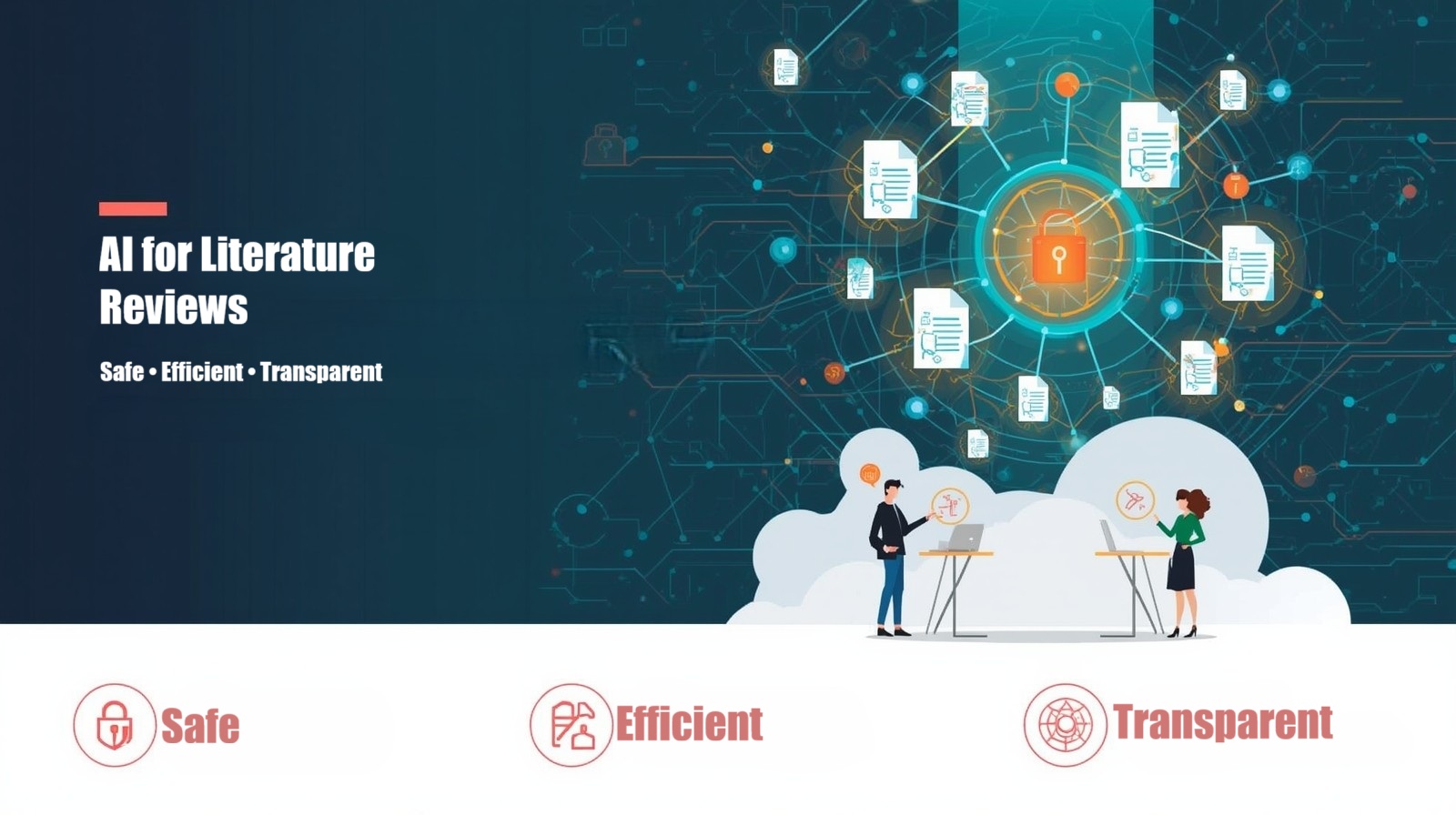
AI for Literature Reviews has fundamentally changed how we approach academic research, but understanding how to use these powerful tools safely is just as important as understanding their capabilities. I’ve spent years working with researchers who want to leverage AI’s efficiency while protecting their intellectual property, maintaining academic integrity, and ensuring their data remains secure. In this comprehensive guide, I’ll walk you through the leading platforms, their safety profiles, and practical strategies for conducting literature reviews that are both efficient and responsible.
The landscape of research technology has evolved dramatically in 2025. What once took weeks of manual searching through databases now happens in hours, with AI-powered literature review tools offering unprecedented capabilities. However, this convenience comes with important considerations about data privacy, citation accuracy, and the responsible use of artificial intelligence in academic work.
Understanding AI for Literature Reviews: The Safety-First Approach
When we talk about AI for literature reviews, we’re discussing tools that use machine learning algorithms to search, analyze, organize, and synthesize academic papers. These platforms connect to massive databases containing millions of scholarly articles, using sophisticated AI to identify patterns, extract insights, and help you navigate the complex web of academic literature.
But here’s what many researchers don’t realize: every time you upload a document, enter a search query, or interact with these tools, you’re creating data trails. Understanding how different platforms handle your research data, whether they retain your queries, and what happens to uploaded documents is fundamental to using these tools safely.
According to recent 2025 research from Stanford University, consumer privacy concerns about AI systems have reached critical levels, with studies showing that many AI developers collect and retain user data for model training purposes. This reality makes informed tool selection essential for academic researchers who often work with sensitive, unpublished research data.
The Top AI Literature Review Platforms: A Safety-Focused Comparison
Let me walk you through the most reliable platforms available in 2025, examining not just their features but also their approach to data security, transparency, and ethical AI use.
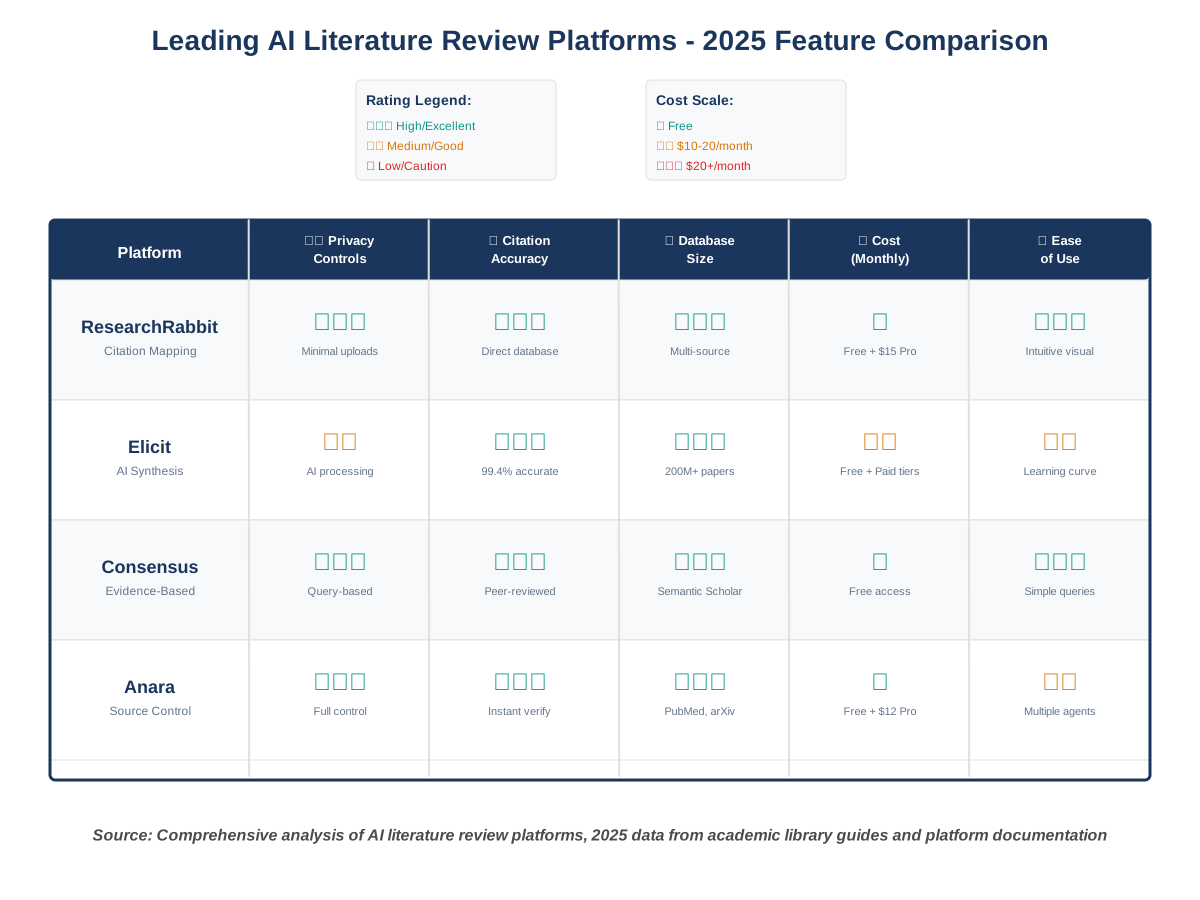
ResearchRabbit: Visual Discovery with Privacy Considerations
ResearchRabbit stands out as one of the most intuitive citation-based literature mapping tools available. Think of it as Spotify for research papers—you start with one or two “seed” papers, and the platform visualizes connections between related work, helping you discover relevant literature through citation networks.
How it works safely: ResearchRabbit connects to major academic databases, including Semantic Scholar, allowing you to explore research relationships without directly uploading your unpublished work. The platform offers both free and premium tiers as of 2025, with the free version maintaining core discovery functionality.
Privacy strengths:
- Operates primarily through database queries rather than requiring document uploads
- Offers Zotero integration for secure reference management
- Transparent about data sources and algorithms
- Free tier available, reducing pressure to share payment information
Safety considerations:
- Database updated through 2021 for some sources, requiring supplementary verification
- Creating collections stores research interests on their servers
- Premium tier (RR+) introduced in 2025 at $15/month with country-based pricing
Best for: Researchers who want to map research landscapes without uploading sensitive documents and those prioritizing visual exploration of citation networks.
Elicit: AI-Powered Synthesis with Question-Based Search
Elicit represents a different approach to AI for literature reviews—instead of starting with papers, you start with research questions. The platform uses advanced language models to search across its database of over 200 million academic papers, providing AI-generated summaries and data extraction capabilities.
How it maintains research integrity: Elicit emphasizes transparency by linking every AI-generated claim back to specific papers. This traceability is crucial for academic integrity, allowing you to verify sources and understand where synthesized information originates.
Privacy profile:
- Processes queries through AI models that may retain interaction data
- Offers data extraction from papers that could involve uploading PDFs
- Provides institutional plans with enhanced privacy controls
- Clear documentation about how AI processes research data
Critical safety features:
- Source highlighting shows exact passages supporting AI responses
- Systematic review automation maintains audit trails
- Multiple pricing tiers allow data control choices
- Integration with reference managers for secure storage
Best for: Researchers conducting systematic reviews who need automated data extraction while maintaining source verification, particularly in healthcare and social sciences.
Consensus: Evidence-Based Answers with Transparent Methodology
Consensus focuses specifically on finding scientific consensus by analyzing how research papers answer specific yes/no questions. The platform displays a “Consensus Meter” showing how many studies support or contradict a particular claim, making it particularly valuable for evidence-based research.
Safety-first features:
- Draws exclusively from peer-reviewed academic sources
- Provides clear methodology for how consensus is calculated
- Shows study quality indicators and sample sizes
- Transparent about AI confidence levels
Privacy considerations:
- Query-based system minimizes need for document uploads
- Connects to Semantic Scholar database
- Offers filtering by study type, population, and methodology
- Clear data retention policies
Data protection strengths:
- No requirement to upload unpublished research
- Citation tracking shows exact paper sources
- Methodology categorization for quality assessment
- Integration with standard reference formats
Best for: Researchers in medical sciences, psychology, and social sciences who need to quickly assess scientific consensus on specific questions while maintaining evidence transparency.
Anara: Comprehensive Research Assistant with Source Control
Anara positions itself as an end-to-end research platform with specialized AI agents for different tasks—from database searching (@SearchPapers) to synthesis (@Research) to systematic reviews (@CompleteForm). What distinguishes Anara is its emphasis on source traceability and user control.
Advanced security features:
- Source highlighting links claims to exact document passages
- Toggle between personal library, databases, and web sources
- Control exactly where AI draws information
- Verification built into every AI response
Privacy architecture:
- Free tier offers 10 basic + 4 pro messages daily
- Pro tier ($12/month) provides unlimited access with enhanced models
- File upload limits: 10 uploads/day free, unlimited for Pro
- Clear data handling policies for uploaded documents
What makes it safer:
- Instant verification eliminates citation hallucination risks
- Source control meets institutional requirements
- Collaborative workspaces with permission management
- Automated systematic reviews with audit trails
Best for: Research teams requiring institutional-grade security, systematic review compliance, and those working with sensitive or proprietary research data.
Understanding the Privacy Landscape of AI Research Tools
Let’s address what many researchers worry about but rarely discuss openly: what happens to your research data when you use these platforms? The reality is more nuanced than simply “safe” or “unsafe.”
Data Collection Practices You Need to Know
Recent 2025 studies reveal concerning patterns in how AI companies handle user data. According to Stanford research, six leading U.S. AI developers feed user inputs back into their models for training by default. This means your research queries, uploaded documents, and even notes could potentially become part of an AI’s training data unless you specifically opt out.
Here’s what this means for AI for literature reviews:
Query retention: Most platforms store your search queries to improve their algorithms. While this enhances service quality, it also means your research interests are recorded and potentially analyzed.
Document processing: When you upload PDFs for analysis, some platforms retain these documents temporarily, while others may keep them indefinitely. Understanding each platform’s document retention policy is critical when working with unpublished research.
Behavioral tracking: Like many online services, research platforms track how you use their features—which papers you save, how long you spend reading summaries, and which citation paths you follow.
The Academic Integrity Dimension
Beyond privacy, there’s academic integrity to consider. AI-powered literature review tools can generate summaries, extract data, and even suggest synthesis of findings. But who owns this synthesized knowledge? How do you properly attribute AI-assisted research?
Current 2025 academic guidelines suggest:
- Disclose AI use: Many institutions now require researchers to disclose which AI tools were used and for what purposes in their methodology sections.
- Verify all sources: Never cite a paper based solely on an AI summary without reading the original source. AI can misinterpret context or make connection errors.
- Maintain original thinking: Use AI to discover and organize—not to replace your critical analysis and synthesis.
- Track your process: Keep records of which tools you used, when, and how they influenced your research direction.
Comprehensive Safety Strategies for AI-Assisted Research
Now that we understand the landscape, let me share the protective strategies I recommend to researchers using these tools.
Strategy 1: Implement a Privacy-First Tool Selection Process
Don’t choose tools based solely on features. Evaluate their privacy policies first:
Questions to ask before adopting any platform:
- Where is user data stored? (Cloud location, data center security)
- Is my research data used for AI training?
- How long are documents and queries retained?
- Can I delete my data completely?
- Does the platform comply with GDPR, HIPAA, or other relevant regulations?
- What happens if there’s a data breach?
Red flags to watch for:
- Vague privacy policies using general language
- No clear data deletion procedures
- Automatic opt-in to data sharing
- Lack of encryption for stored documents
- No option to prevent data from training AI models
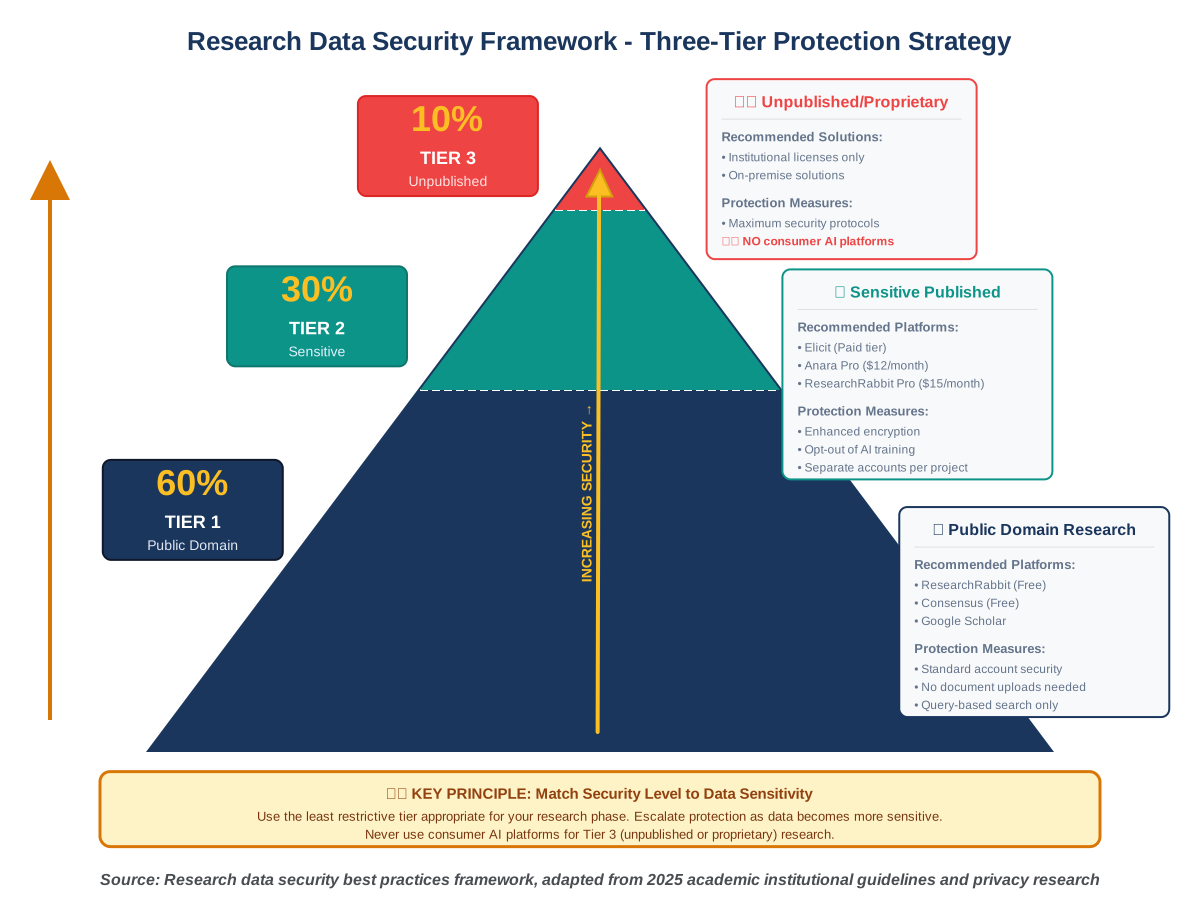
Strategy 2: Create Tiered Security Protocols
Not all research activities require the same level of security. I recommend a three-tier approach:
Tier 1 – Public Domain Research: For exploring published literature and general topic discovery, mainstream platforms like ResearchRabbit and Consensus work well. These activities involve publicly available information with minimal risk.
Tier 2 – Sensitive but Published Research: When working with published papers but in sensitive domains (medical research, corporate analysis), use platforms with stronger privacy controls. Consider paid tiers offering enhanced security, and avoid uploading any unpublished notes or preliminary findings.
Tier 3 – Unpublished or Proprietary Research: For truly sensitive work—unpublished findings, proprietary research, patent-related investigations—consider on-premise solutions or platforms specifically designed for institutional use with data residency controls. Never upload unpublished manuscripts or confidential documents to consumer-facing AI platforms.
Strategy 3: Protect Your Digital Research Footprint
Your research activities create patterns that reveal your work direction. Here’s how to minimize exposure:
Use institutional access: When available, access AI tools through your institution’s licensed accounts rather than personal accounts. Institutional licenses often include enhanced privacy protections.
Separate accounts: Maintain different accounts for different projects, especially if working across sensitive and public research domains.
Regular audits: Periodically review what data these platforms have collected about you. Many platforms now offer data export and deletion options—use them.
Secure supplementary tools: Your literature review doesn’t exist in isolation. Secure your reference managers (Zotero, Mendeley), note-taking apps, and backup systems with equal care.
Strategy 4: Master the Verification Process
AI for literature reviews accelerates discovery but requires rigorous verification. According to 2025 research benchmarking studies, AI literature tools can occasionally misattribute findings or miss important contextual nuances. Here’s my systematic verification approach:
First-level verification: Always check that cited papers actually exist and are correctly attributed. This sounds obvious, but AI hallucination—where systems generate plausible-sounding but false citations—remains a real concern in 2025.
Second-level verification: Read the actual source, at minimum the abstract and relevant sections the AI referenced. Don’t rely solely on AI-generated summaries for important claims.
Third-level verification: Cross-reference findings across multiple tools. If Consensus shows strong support for a claim but Elicit’s analysis suggests nuance, investigate further.
Citation chain verification: When AI tools suggest connections between papers, verify the citation path actually exists in the original documents.
Strategy 5: Maintain Ethical AI Use Standards
Responsible use of AI-powered literature review tools extends beyond privacy to ethical considerations:
Acknowledge AI assistance: Be transparent in your methodology about which tools you used. Current 2025 academic standards increasingly require this disclosure.
Avoid over-reliance: Use AI to augment, not replace, your critical thinking. The goal is efficiency, not automation of intellectual work.
Consider bias implications: AI systems trained on historical literature can perpetuate existing biases in academic publishing. Actively seek diverse sources and perspectives beyond AI recommendations.
Respect copyright: Just because an AI can extract and summarize content doesn’t mean you can use it without proper attribution or beyond fair use.
Protect research subjects: If your literature review involves human subjects data or sensitive populations, ensure AI tools don’t expose protected information through their processing.
Real-World Safety Implementation: A Workflow Example
Let me walk you through how I would approach a literature review on a moderately sensitive topic using a safety-first strategy:
Phase 1: Initial Discovery (Public Tier) I start with ResearchRabbit to map the research landscape using known key papers. Since I’m working with published literature, this poses minimal risk. I create a collection but avoid uploading any unpublished notes or preliminary theories.
Phase 2: Deeper Analysis (Controlled Environment) Moving to Elicit, I use its question-based search to find specific evidence. I’ve verified Elicit’s privacy policy and understand my queries are processed by AI. For this phase, I only ask questions about published findings—no queries revealing my novel hypotheses or unpublished results.
Phase 3: Systematic Extraction (Verification Focus) Using Anara’s source highlighting, I extract key data points. Before citing any finding, I verify it in the original source. I maintain a separate document tracking which insights came from AI analysis versus my own reading.
Phase 4: Synthesis (Human-Led) The actual synthesis and critical analysis happen offline in my secure note-taking system. AI tools helped me find and organize sources, but my intellectual contribution—the connections, critiques, and novel insights—remains my own work, documented in tools with strong encryption.
The Cost-Benefit Analysis: Is Paid Leave Worth It for Safety?
Let’s discuss the practical reality: enhanced privacy often costs money. Here’s how to think about the investment:
Free tiers typically work well for:
- Graduate students doing standard literature reviews
- Established researchers exploring new areas outside their expertise
- Public health research using published data
- Educational and teaching applications
Paid tiers make sense for:
- Researchers working with corporate or grant-funded projects requiring data security
- Teams needing collaboration features with access controls
- Systematic reviews requiring audit trails for publishing
- Sensitive domains (medical research, national security, proprietary technology)
Current 2025 pricing ranges from free to $15/month for individual researchers (ResearchRabbit RR+) to higher institutional tiers for platforms like Elicit and Anara. The key question isn’t just cost—it’s whether the privacy protections and features justify the expense for your specific needs.
Emerging Concerns in AI Research Tools: What to Watch in 2025
The landscape continues evolving rapidly. Here are critical developments I’m monitoring:
Data retention policies are changing: Several major AI companies adjusted their terms in late 2024 and early 2025, making user data opt-out for training rather than opt-in. Stay current with terms of service changes.
Quantum computing threats: As noted in 2025 security reports, the approaching quantum computing era threatens current encryption standards. Forward-thinking researchers should consider how long-term data storage (including research queries stored by AI platforms) might be vulnerable to future decryption.
Regulatory evolution: Privacy regulations like GDPR continue evolving to address AI specifically. U.S. federal privacy legislation for AI is under discussion as of 2025, potentially changing compliance requirements for research platforms.
AI model transparency: There’s growing pressure for AI companies to disclose what data their models were trained on. This matters for academic integrity—if an AI was trained on papers in your field, does that create citation obligations?
Building Your Secure AI Research Toolkit
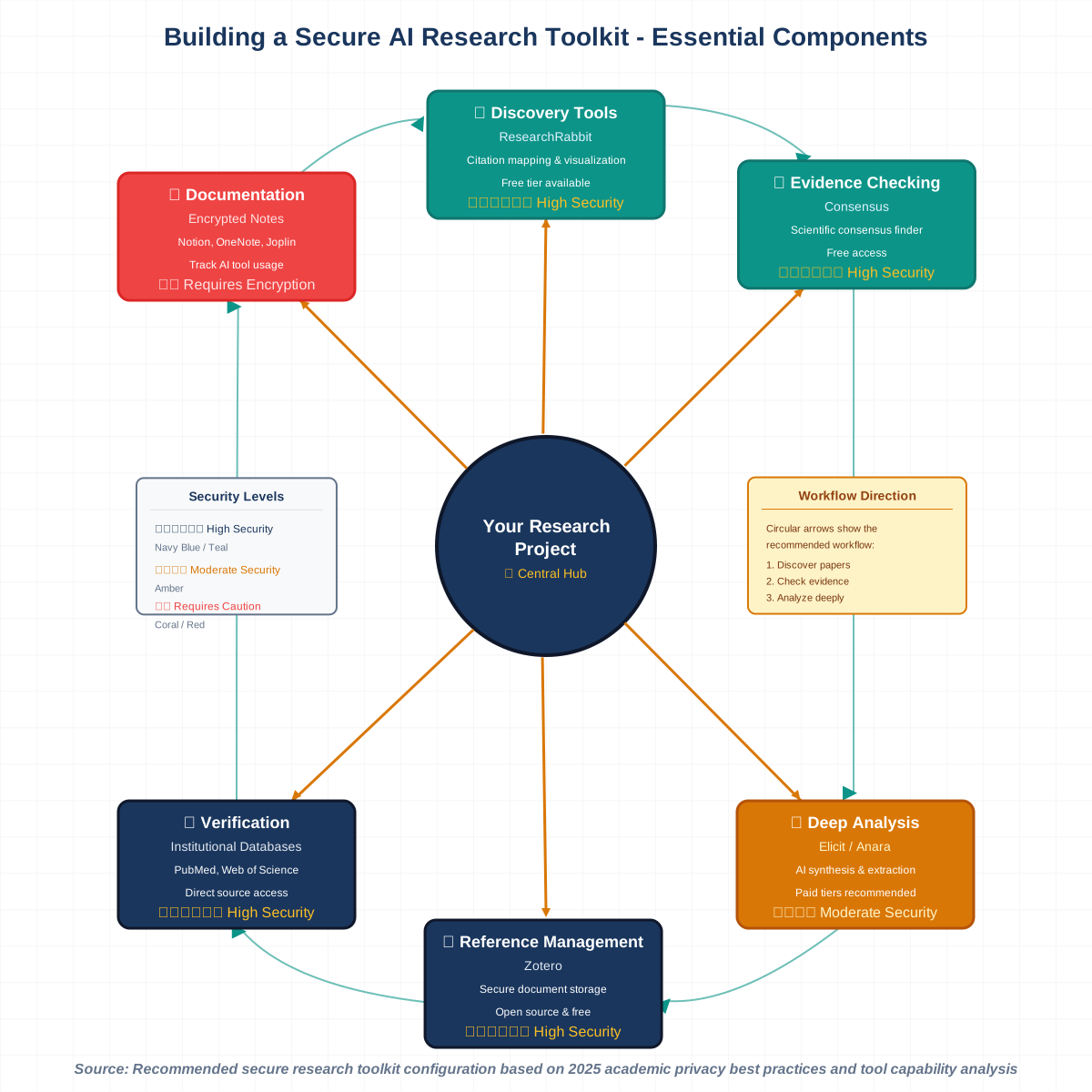
Based on everything we’ve covered, here’s my recommended approach to building a secure, efficient AI for a literature review toolkit:
Core foundation: Start with ResearchRabbit (free tier) for discovery and citation mapping. The visual approach helps you understand research landscapes without uploading sensitive documents.
Evidence synthesis: Add Consensus for quick consensus-checking on specific claims, particularly useful in evidence-based fields. The free tier handles most needs.
Deep analysis: For serious systematic reviews or institutional work, invest in Elicit or Anara’s paid tiers. The enhanced features and stronger privacy controls justify the cost for significant projects.
Reference management: Pair these with a secure reference manager (Zotero with encryption plugins or institutional Mendeley accounts) to store your actual document library.
Verification backup: Maintain direct access to institutional databases (PubMed, Web of Science, JSTOR) for verification. Never rely solely on AI intermediaries for critical citations.
Documentation system: Use an encrypted note-taking system (Notion with proper settings, OneNote with institutional accounts, or open-source alternatives like Joplin) to track your research process and AI tool usage.
Practical Tips for Different Research Scenarios
Let me provide specific guidance for common situations:
For Graduate Students on Limited Budgets
Priority: Maximize free tools while maintaining academic integrity. Use ResearchRabbit for discovery, Consensus for evidence checking, and institutional database access for verification. Document every AI interaction in your methodology notes. Consider forming tool-sharing groups with fellow students to collectively evaluate paid options before committing.
Safety focus: Even with free tools, read privacy policies carefully. Avoid uploading thesis drafts or unpublished data to any platform. Use institutional email addresses for accounts when possible, as they often provide additional protections.
For Medical and Healthcare Researchers
Priority: Data sensitivity requires premium tools with HIPAA-compliant options. Consider institutional Elicit or Anara accounts with data residency controls. Never input patient information, even de-identified data, into consumer AI platforms.
Safety focus: Implement strict protocols for what information can be queried. Create sanitized versions of research questions that don’t reveal patient details or proprietary clinical information. Maintain separate systems for AI-assisted discovery versus secure data analysis.
For Industry Researchers with Proprietary Concerns
Priority: On-premise or private cloud solutions when available. For standard AI tools, use only for published literature reviews, never for competitive intelligence or proprietary technology analysis.
Safety focus: Assume anything entered into consumer AI platforms could become part of training data. Work with IT departments to evaluate enterprise versions of research tools. Consider air-gapped systems for truly sensitive work.
For Social Science and Humanities Researchers
Priority: Balance qualitative analysis needs with data protection. AI tools excel at finding quantitative patterns but may miss cultural context important in humanities research.
Safety focus: Be particularly cautious with research involving vulnerable populations or sensitive social issues. AI summaries may oversimplify complex cultural or historical contexts. Maintain human expertise as the primary analytical lens.
Common Mistakes to Avoid When Using AI Research Tools
Through working with hundreds of researchers, I’ve seen these errors repeatedly:
Mistake 1: Trusting AI summaries without verification AI can misinterpret context, miss important nuances, or even hallucinate citations. Always verify important claims in original sources. A 2025 accuracy study found that even leading platforms occasionally misattribute findings when dealing with complex, multi-authored papers.
Mistake 2: Uploading sensitive documents to verify them Some platforms offer PDF upload for analysis. If those documents contain unpublished research, proprietary data, or sensitive information, uploading them shares that data with the platform. Use these features only with published papers.
Mistake 3: Ignoring terms of service changes AI companies regularly update their policies. Set calendar reminders to review privacy policies semi-annually for any tools you use regularly. Significant changes may require adjusting your workflow.
Mistake 4: Using institutional credentials for personal projects Mixing institutional and personal research creates data residency confusion and may violate institutional policies. Maintain separate accounts for different research domains.
Mistake 5: Skipping the data deletion step When you complete a project, delete collections, queries, and uploaded documents from AI platforms. Most platforms offer this option—use it to minimize your long-term data exposure.
Mistake 6: Over-relying on algorithmic recommendations AI tools optimize for patterns in existing literature, which can reinforce citation bias and miss emerging or controversial perspectives. Deliberately seek diverse sources beyond AI recommendations.
Mistake 7: Failing to document AI use Keep detailed records of which tools you used, when, and for what purposes. This documentation is increasingly required by publishers and funding agencies, and it’s much harder to reconstruct months later.
The Future of Safe AI-Assisted Research
Looking ahead, several developments will shape how we safely use AI for literature reviews:
Enhanced privacy controls: Expect more granular controls over data retention, with options for ephemeral sessions that don’t store queries or user behavior.
On-device AI: Some platforms are experimenting with local AI models that process research data entirely on your computer, never sending information to cloud servers.
Blockchain verification: Emerging systems use blockchain to create immutable records of which sources AI used, providing enhanced citation verification.
Federated learning: Research institutions are exploring federated AI systems where models improve from aggregate patterns without accessing individual researchers’ data.
Regulatory compliance features: Tools will increasingly offer built-in compliance features for GDPR, HIPAA, and emerging AI-specific regulations.
Frequently Asked Questions About AI Literature Review Safety
My Final Recommendations: Choosing the Right Platform
After evaluating these platforms through both a features lens and a safety lens, here are my specific recommendations:
For most academic researchers: Start with ResearchRabbit’s free tier for discovery paired with Consensus for evidence checking. This combination provides strong functionality without financial commitment while maintaining reasonable privacy protections. Upgrade to ResearchRabbit RR+ ($15/month) only if you need advanced search features.
For systematic reviews and meta-analyses: Invest in Elicit’s paid tier or Anara’s Pro plan ($12/month). The source verification features, automated data extraction, and audit trail capabilities justify the cost when producing high-stakes research outputs that will be published and cited.
For highly sensitive research: Use institutional licenses whenever possible, implement strict tiered security protocols, and consider on-premise or private cloud solutions for the most sensitive phases. Consumer AI platforms should only touch published, public-domain literature for these projects.
For teaching and student projects: Free tiers of multiple platforms work excellently for educational purposes. However, emphasize verification skills and privacy awareness from the start. Teaching students to evaluate AI tool safety is as important as teaching them to use the tools effectively.
For interdisciplinary research: Combine multiple tools to avoid algorithmic bias. What works in biomedicine may miss important social science connections. Use ResearchRabbit for citation mapping, Consensus for evidence synthesis, and traditional database searches for comprehensive coverage.
Taking Your First Safe Steps
If you’re new to AI for literature reviews, here’s how to start safely:
Week 1: Research privacy policies of 3-4 platforms before creating accounts. Document your findings and choose platforms aligned with your security needs.
Week 2: Create accounts using institutional email addresses when possible. Set up two-factor authentication immediately. Configure privacy settings to maximum protection.
Week 3: Practice with a low-stakes, fully published topic. Learn each tool’s interface and capabilities without risking sensitive data. Document which features you find most valuable.
Week 4: Develop your verification workflow. How will you check AI-generated findings? How will you track sources? What documentation will you maintain?
Ongoing: Stay current with platform updates, review privacy policies quarterly, and adjust your practices as your research evolves in sensitivity and scope.
Conclusion: Empowered and Protected Research
AI for literature reviews represents a genuine revolution in how we conduct academic research. The efficiency gains are real—what once took months can now happen in weeks, with comprehensive coverage that human researchers working alone could never achieve. But this power comes with responsibility.
By understanding how these tools handle your data, implementing appropriate security measures for your research context, maintaining rigorous verification standards, and staying informed about evolving privacy landscapes, you can harness AI’s benefits while protecting both your intellectual property and your research integrity.
The goal isn’t to avoid these tools—they’re too valuable for that. The goal is to use them wisely, with eyes open to both their capabilities and their limitations, their benefits and their risks. Start with the safety-first framework I’ve outlined here, adapt it to your specific needs, and stay curious about emerging protective technologies and best practices.
Your research matters. The knowledge you’re contributing to your field has value. Protect it appropriately while leveraging the best tools available. With the right approach, AI becomes what it should be: a powerful assistant to human intelligence, not a replacement for it, and certainly not a threat to the security of your scholarly work.
Remember: every great tool requires skill to use well. Approach AI-powered literature review platforms with both enthusiasm for their possibilities and respect for their implications. Document your practices, verify your sources, protect your data, and contribute to the growing body of knowledge about how to use these technologies responsibly in academic contexts.
The future of research is collaborative—humans and AI working together, each contributing their unique strengths. Make sure you’re positioned to thrive in that future while staying true to the ethical principles that make academic research trustworthy and valuable.
References:
Stanford University. (2025). Study exposes privacy risks of AI chatbot conversations. Stanford Report.
George Mason University Libraries. (2025). AI Tools for Literature Reviews. InfoGuides.
Texas A&M University Libraries. (2025). AI-Based Literature Review Tools. Research Guides.
University of Iowa, Office of Teaching, Learning, and Technology. (2025). AI-Assisted Literature Reviews.
ResearchRabbit. (2025). Platform documentation and privacy policy. Official website.
Elicit. (2025). AI for scientific research. Official platform documentation.
Anara. (2025). AI Tools for Literature Review: Complete Guide.
International AI Safety Report. (2025). Privacy Risks from General Purpose AI.
RAND Corporation. (2025). Artificial Intelligence Impacts on Privacy Law.
IAPP (International Association of Privacy Professionals). (2025). Consumer Perspectives of Privacy and Artificial Intelligence.
About the Author
Nadia Chen is an expert in AI ethics and digital safety, specializing in helping non-technical users navigate artificial intelligence tools responsibly. With a background in information security and academic research, Nadia focuses on practical strategies for protecting privacy while leveraging emerging technologies. She has consulted universities and research institutions on developing safe AI adoption policies and teaches workshops on responsible AI use in academic contexts. Nadia believes that understanding the safety implications of new technologies is just as important as understanding their capabilities, and she’s passionate about making complex privacy concepts accessible to everyday users. When she’s not analyzing AI safety frameworks, you’ll find her advocating for stronger transparency standards in tech and contributing to open-source privacy tools.