The Role of AI Governance Frameworks: A Comprehensive Guide

The Role of AI Governance Frameworks has become critical as artificial intelligence reshapes our world at unprecedented speed. I’ve spent years researching digital safety and AI ethics, and I can tell you that understanding these frameworks isn’t just for policymakers anymore—it’s essential knowledge for anyone developing, implementing, or being affected by AI systems. Whether you’re a business leader evaluating compliance requirements, a developer building AI solutions, or simply someone concerned about how AI impacts your privacy and rights, governance frameworks provide the guardrails that ensure AI serves humanity responsibly.
The landscape of AI governance can feel overwhelming. Multiple organizations worldwide have created their own frameworks, each with distinct approaches, requirements, and philosophies. But here’s the truth I’ve learned through extensive research and practical application: no single framework is perfect, and understanding the strengths and limitations of each helps you make informed decisions about which to follow, adopt, or advocate for.
Understanding AI Governance Frameworks
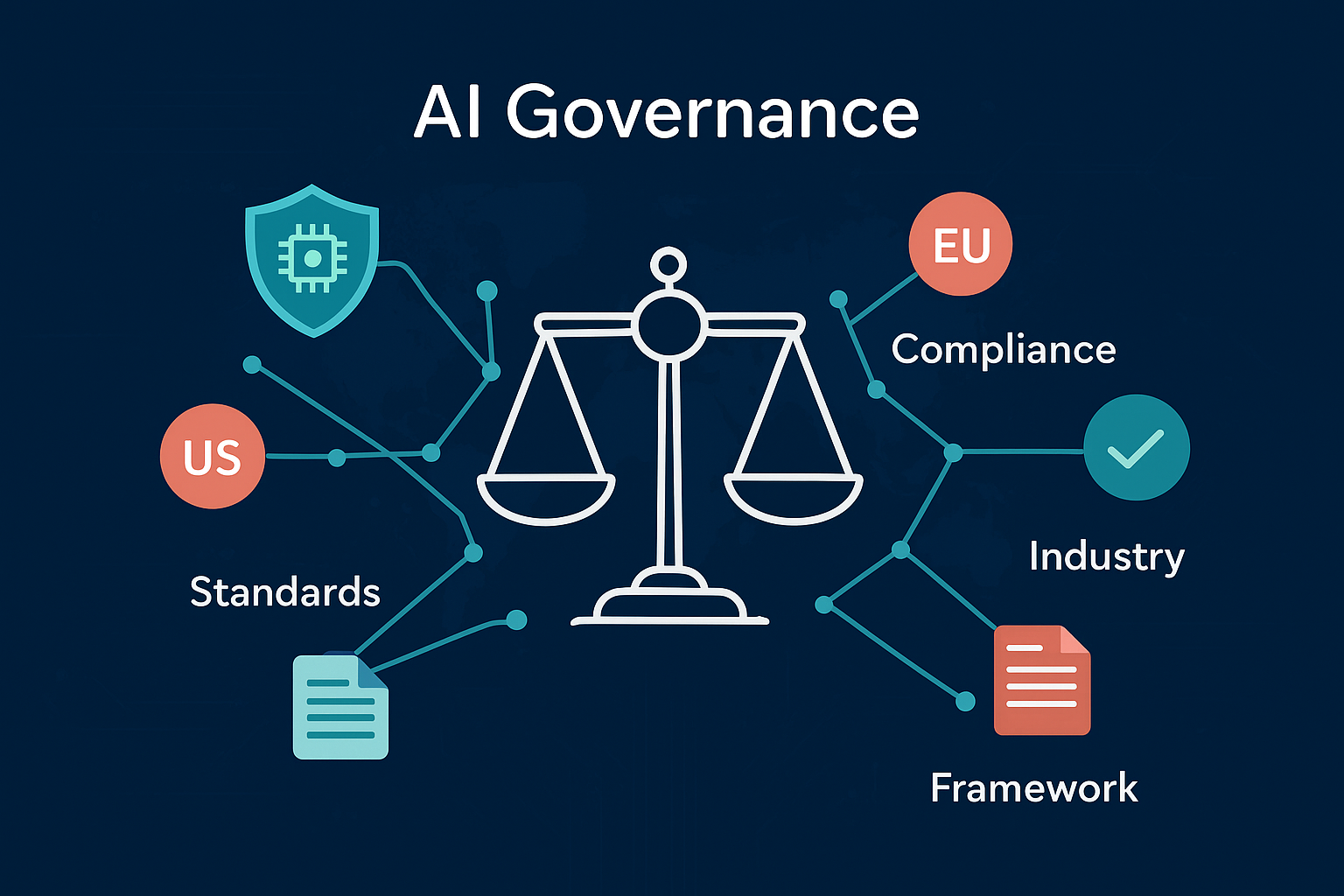
Before we compare specific frameworks, let me clarify what we’re actually talking about. AI governance frameworks are structured sets of principles, policies, and procedures designed to guide the responsible development, deployment, and use of artificial intelligence systems. Think of them as comprehensive rulebooks that address everything from data privacy and algorithmic transparency to accountability and human oversight.
These frameworks serve multiple purposes. They protect individuals from potential AI harms, provide organizations with clear compliance pathways, establish industry standards, and help governments regulate emerging technologies. Most importantly, they attempt to balance innovation with safety—encouraging AI advancement while preventing misuse.
What makes governance frameworks different from simple guidelines? Frameworks typically include enforcement mechanisms, assessment criteria, documentation requirements, and continuous monitoring provisions. They’re living documents that evolve as AI technology advances and new risks emerge.
The EU AI Act: Europe’s Risk-Based Approach
The European Union’s AI Act represents the world’s first comprehensive legal framework specifically for artificial intelligence. I find this framework particularly fascinating because it takes a risk-based classification system that categorizes AI applications according to their potential to cause harm.
How the EU AI Act Works
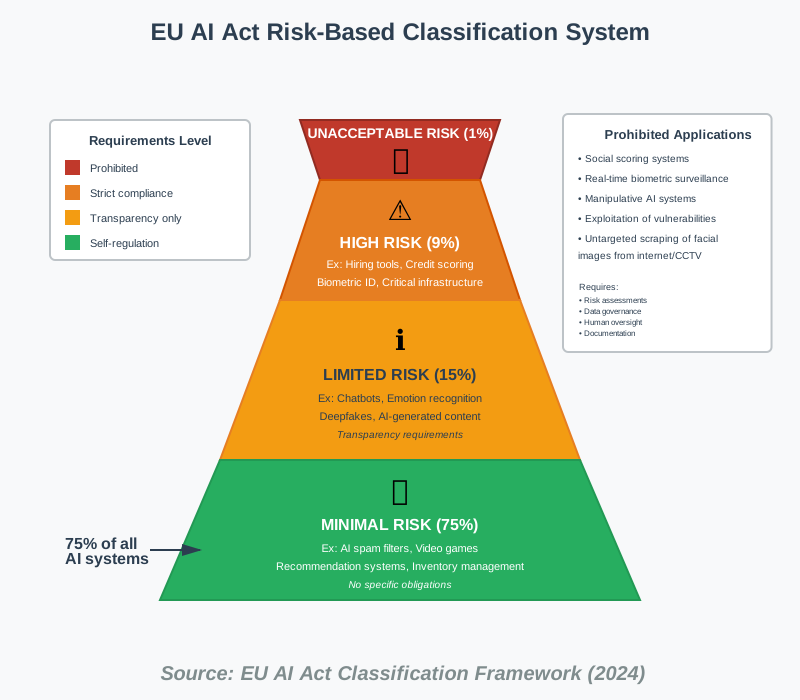
The framework divides AI systems into four risk categories: unacceptable risk (prohibited), high risk (heavily regulated), limited risk (transparency requirements), and minimal risk (largely unregulated). This tiered approach recognizes that not all AI applications pose equal dangers. For example, AI systems used in critical infrastructure, law enforcement, or employment decisions face strict requirements, while AI chatbots simply need to disclose they’re not human.
High-risk AI systems under this framework must meet rigorous requirements, including risk management procedures, data governance standards, technical documentation, transparency obligations, human oversight mechanisms, and accuracy benchmarks. Organizations deploying these systems face significant compliance burdens, but the framework provides clear guidance on exactly what’s required.
Strengths of the EU AI Act
The EU approach excels in several areas. Its risk-based methodology allows for proportionate regulation—you invest compliance resources where risks are highest. The framework emphasizes fundamental rights protection, incorporating privacy, non-discrimination, and human dignity as core principles. It also creates a single regulatory standard across all EU member states, reducing compliance complexity for organizations operating in multiple European countries.
I particularly appreciate how the Act mandates transparency and explainability. Users have the right to understand how AI systems make decisions affecting them, and this requirement pushes developers toward more interpretable AI architectures. The framework also establishes clear liability chains, specifying responsibilities for developers, deployers, and importers of AI systems.
Weaknesses and Challenges
However, the EU AI Act isn’t without limitations. The compliance burden for smaller organizations can be substantial. Startups and SMEs often lack the resources for extensive documentation, testing, and monitoring that high-risk classifications demand. This could inadvertently stifle innovation in Europe or push AI development to less regulated jurisdictions.
The framework also struggles with technological neutrality versus specificity. Some provisions are written broadly to remain relevant as AI evolves, but this creates interpretation challenges. What exactly constitutes “sufficient” transparency or “adequate” human oversight? These ambiguities require clarification through enforcement precedents, which take time to develop.
Another concern I’ve observed in practice: the framework’s enforcement mechanisms rely heavily on national authorities with varying expertise and resources. This could lead to inconsistent application across member states, undermining the Act’s goal of creating a unified regulatory landscape.
NIST AI Risk Management Framework: America’s Flexible Approach
The United States has taken a markedly different path through the NIST AI Risk Management Framework (AI RMF), developed by the National Institute of Standards and Technology. Unlike the EU’s legally binding regulation, NIST offers a voluntary, consensus-driven framework designed to be adaptable across sectors and organization sizes.
Core Components of NIST AI RMF
The NIST framework organizes AI risk management into four core functions: Govern, Map, Measure, and Manage. Each function contains categories and subcategories that break down risk management into actionable components. This structure mirrors NIST’s successful cybersecurity framework, which has achieved widespread voluntary adoption.
Governance establishes organizational structures and policies for AI risk management. Map identifies and categorizes AI risks in specific contexts. Measure assesses the severity and likelihood of identified risks. Manage and implement appropriate responses to minimize negative impacts while maximizing benefits.
What distinguishes this framework is its emphasis on context-specific risk assessment. Rather than predetermined risk categories, organizations evaluate risks based on their unique circumstances, use cases, and stakeholder impacts. This flexibility allows the framework to apply equally to a small healthcare startup or a major tech corporation.
Strengths of NIST’s Approach
The voluntary nature of NIST’s framework is both its greatest strength and a potential weakness. Organizations can adopt the framework at their own pace, tailoring implementation to their specific needs and resources. This reduces resistance and encourages broader participation than mandatory compliance might achieve.
The framework excels at practical implementation guidance. NIST provides detailed playbooks, measurement techniques, and assessment tools that help organizations translate abstract principles into concrete actions. I’ve found these resources invaluable when helping organizations begin their AI governance journey—they offer clear starting points without overwhelming technical requirements.
Cross-sector applicability is another major advantage. The framework works for healthcare, finance, manufacturing, education, and any other sector deploying AI. This universality comes from focusing on risk management principles rather than sector-specific rules, allowing each industry to adapt the framework to their particular regulatory environment and risk landscape.
Limitations of the Voluntary Model
The framework’s voluntary status means enforcement mechanisms are essentially nonexistent. Organizations can claim framework adoption without meaningful implementation, and there’s limited accountability for failures. This concerns me particularly in high-stakes domains where inadequate governance could cause serious harm.
Additionally, without legal requirements, adoption remains inconsistent. Some organizations embrace the framework enthusiastically, while others ignore it entirely. This creates an uneven playing field where responsible companies invest in governance while less scrupulous competitors cut corners, potentially gaining competitive advantages through negligence.
The framework also provides less specific guidance on contentious issues like algorithmic bias, data privacy, and accountability compared to prescriptive regulations. While flexibility has advantages, some organizations genuinely want clearer direction on complex ethical questions, and NIST’s broad principles may leave them uncertain about the “right” approach.
ISO/IEC AI Standards: The International Consensus
The International Organization for Standardization (ISO) and International Electrotechnical Commission (IEC) have developed a growing suite of AI standards that represent global technical consensus. These standards differ from both EU and US approaches by focusing on technical specifications, testing methodologies, and quality management rather than legal compliance or risk frameworks.
Key ISO/IEC AI Standards
ISO/IEC 42001 establishes requirements for AI management systems, providing a certifiable framework similar to ISO 9001 for quality management. This standard helps organizations implement systematic approaches to AI governance, covering everything from policy development to continuous improvement processes.
ISO/IEC 23894 addresses AI risk management principles, complementing NIST’s framework but with more technical specificity. ISO/IEC 24028 defines trustworthiness concepts for AI systems, establishing common terminology and assessment criteria. Additional standards cover areas like bias testing (ISO/IEC TR 24027), transparency documentation (ISO/IEC 23053), and robustness evaluation (ISO/IEC TR 24029).
What makes ISO/IEC standards unique is their development process. Hundreds of technical experts from dozens of countries collaborate to create consensus-based specifications. This ensures standards reflect global best practices rather than regional preferences or single-nation priorities.
Strengths of ISO/IEC Standards
International recognition is the ISO/IEC approach’s greatest strength. These standards facilitate cross-border trade and collaboration by providing common technical languages and assessment criteria. An organization certified to ISO/IEC 42001 demonstrates governance competence globally, not just in one jurisdiction.
The technical depth of ISO standards exceeds most regulatory frameworks. They provide detailed specifications for testing methodologies, documentation requirements, and quality assurance processes. Engineers and technical teams often find ISO standards more directly applicable to their work than higher-level governance principles.
Certification opportunities create market incentives for adoption. Organizations can differentiate themselves through ISO/IEC compliance certification, potentially winning contracts that require demonstrated AI governance capabilities. This voluntary market mechanism may prove more effective than regulation for driving widespread adoption in some sectors.
Challenges with ISO/IEC Standards
The primary limitation of ISO/IEC standards is their technical complexity and cost. Implementing these standards requires significant expertise, and certification processes can be expensive and time-consuming. Small organizations may find ISO compliance prohibitively resource-intensive, potentially creating governance disparities based on organizational size.
Standards also evolve slowly compared to AI technology. The multi-year development and revision cycles mean standards can lag behind cutting-edge AI capabilities. By the time a standard reaches publication, new AI techniques may have emerged that the standard doesn’t adequately address.
Furthermore, while ISO/IEC standards provide technical specifications, they offer limited guidance on broader ethical questions. How should we balance innovation with privacy? When is algorithmic decision-making appropriate? Standards typically avoid these philosophical debates, focusing instead on measurable technical requirements. Organizations need complementary frameworks to address these deeper governance questions.
Industry-Led Governance Initiatives
Beyond governmental and international bodies, major technology companies and industry consortia have developed their own AI governance frameworks. These initiatives include Google’s AI Principles, Microsoft’s Responsible AI Standard, IBM’s AI Ethics framework, and the Partnership on AI’s guidelines, among others.
The Industry Perspective
Industry frameworks typically emphasize principles-based governance. They articulate high-level values—fairness, accountability, transparency, safety—and provide internal processes for upholding these values during AI development and deployment. Many companies have established dedicated ethics teams, algorithmic impact assessments, and stakeholder review processes.
What distinguishes industry frameworks is their integration with product development cycles. Rather than treating governance as external compliance, these frameworks embed ethical considerations directly into design, testing, and deployment workflows. Engineers receive training on responsible AI practices, and product launches require ethics reviews alongside security and legal approvals.
Industry frameworks also tend to be more dynamic than formal regulations. Companies can update their principles and processes rapidly in response to new challenges, emerging technologies, or stakeholder feedback. This agility helps address novel risks that slower-moving regulatory processes might miss.
Strengths of Industry Self-Governance
The primary advantage of industry-led initiatives is their practical applicability. These frameworks emerge from organizations actually building AI systems, incorporating lessons learned from real development challenges. They understand technical constraints, business pressures, and operational realities in ways that regulators may not fully grasp.
Industry frameworks also enable innovation leadership. Companies that develop robust governance practices early can differentiate themselves in markets where consumers and enterprise customers increasingly demand responsible AI. This creates positive competitive dynamics where strong governance becomes a market advantage rather than merely a compliance burden.
Cross-industry collaboration through consortia like the Partnership on AI facilitates knowledge sharing and best practice development. Organizations learn from each other’s successes and failures, collectively advancing the state of AI governance practice faster than any single entity could achieve alone.
The Self-Governance Limitation
However, industry self-governance faces inherent credibility challenges. Can we trust companies to adequately police themselves, especially when ethical choices conflict with profit motives? History suggests self-regulation often fails without external accountability mechanisms. Principles remain abstract without enforcement, and competitive pressures can incentivize cutting corners on governance investments.
Another concern is the lack of standardization across industry frameworks. Each company defines principles differently, implements processes uniquely, and measures success through distinct metrics. This fragmentation makes it difficult to assess governance effectiveness or compare companies’ approaches, potentially enabling “ethics washing” where organizations tout commitment to responsible AI without substantive implementation.
Industry frameworks also typically lack legal force. Violations of internal principles rarely result in meaningful consequences beyond reputational harm. For individuals harmed by AI systems, industry commitments provide little recourse compared to legal protections under frameworks like the EU AI Act.
Emerging Regional Frameworks
While the EU and US dominate governance discussions, other regions are developing their own AI governance approaches that deserve attention. China’s AI governance model emphasizes state control and social stability. Canada has proposed transparency requirements for automated decision systems. Singapore’s Model AI Governance Framework promotes innovation-friendly regulation. Brazil, India, and other nations are also crafting frameworks reflecting their unique cultural, political, and economic contexts.
China’s Governance Model
China’s approach combines elements of multiple governance styles. The country has established ethical principles similar to Western frameworks, emphasizing safety, fairness, and transparency. However, implementation focuses heavily on state oversight, with requirements that AI systems promote socialist values and maintain social stability.
Chinese regulations address specific AI applications through targeted rules rather than comprehensive frameworks. Rules cover algorithmic recommendations, deepfake technology, facial recognition, and other specific capabilities. This application-specific approach allows rapid regulatory response to emerging concerns but creates a complex patchwork of requirements.
The Chinese model demonstrates how cultural and political values fundamentally shape governance priorities. While Western frameworks emphasize individual rights and limiting government power, China’s approach prioritizes collective harmony and state authority. Neither is inherently superior—they reflect different societal values and governance philosophies.
Singapore’s Innovation-Focused Framework
Singapore’s Model AI Governance Framework takes a deliberately light-touch approach designed to encourage AI adoption while maintaining ethical standards. The framework provides guidance rather than requirements, offering implementation tools and resources to help organizations self-assess governance maturity.
This approach reflects Singapore’s strategy of positioning itself as an AI innovation hub. By keeping regulatory burdens low while promoting voluntary best practices, Singapore attracts AI companies and talent. The framework’s practical orientation—including decision trees, impact assessments, and case studies—helps organizations implement governance without extensive legal interpretation.
Critics worry that Singapore’s voluntary model may prove insufficient for protecting individuals from AI harms. However, supporters argue the approach fosters a culture of responsible innovation more effectively than heavy-handed regulation, particularly in rapidly evolving technological domains.
Comparative Framework Analysis
After examining these various approaches, how do they compare? Each framework excels in certain dimensions while facing limitations in others. Understanding these trade-offs helps organizations choose which frameworks to follow and how to combine elements from multiple sources.
Compliance vs. Flexibility
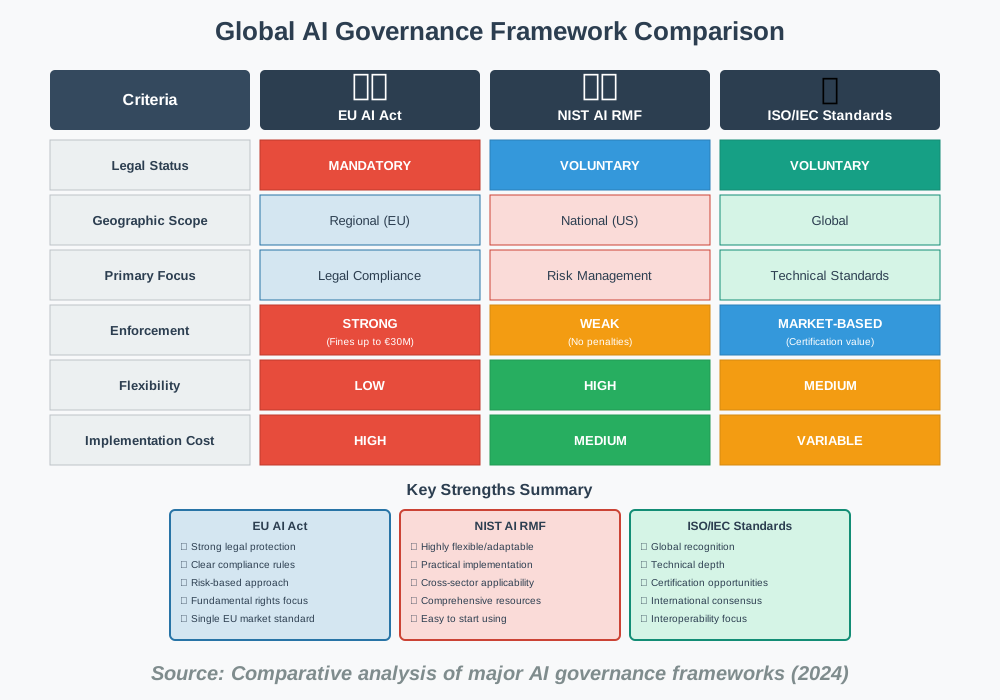
The EU AI Act prioritizes comprehensive compliance requirements, providing clear rules but limited flexibility. NIST’s framework emphasizes adaptability, allowing organizations to tailor implementation but providing less concrete guidance. ISO/IEC standards balance these extremes through certifiable technical requirements that organizations can implement in contextually appropriate ways.
For organizations operating in multiple jurisdictions, this creates challenges. You might need EU compliance for European operations while preferring NIST’s flexible approach for US activities. Successful governance often requires hybridizing frameworks, meeting mandatory requirements while incorporating voluntary best practices that exceed minimum standards.
Legal Force vs. Voluntary Adoption
Mandatory frameworks like the EU AI Act ensure baseline protections but may stifle innovation through compliance burdens. Voluntary frameworks encourage broader participation but lack enforcement mechanisms for bad actors. The optimal balance likely involves mandatory requirements for high-risk applications combined with voluntary standards that ambitious organizations can pursue for competitive advantage.
I’ve observed that voluntary frameworks work best when accompanied by market incentives, professional norms, or reputational pressures that make adoption attractive beyond pure altruism. Conversely, mandatory regulations succeed when compliance pathways are clear, resources are available to support implementation, and enforcement is consistent and fair.
Technical Depth vs. Accessibility
ISO/IEC standards provide the technical depth that engineers need for implementation but can overwhelm non-technical stakeholders. Principles-based frameworks, like many industry initiatives, offer accessibility but sometimes lack actionable specificity. Effective governance requires both—high-level principles that organizational leaders can champion and detailed technical guidance that developers can apply.
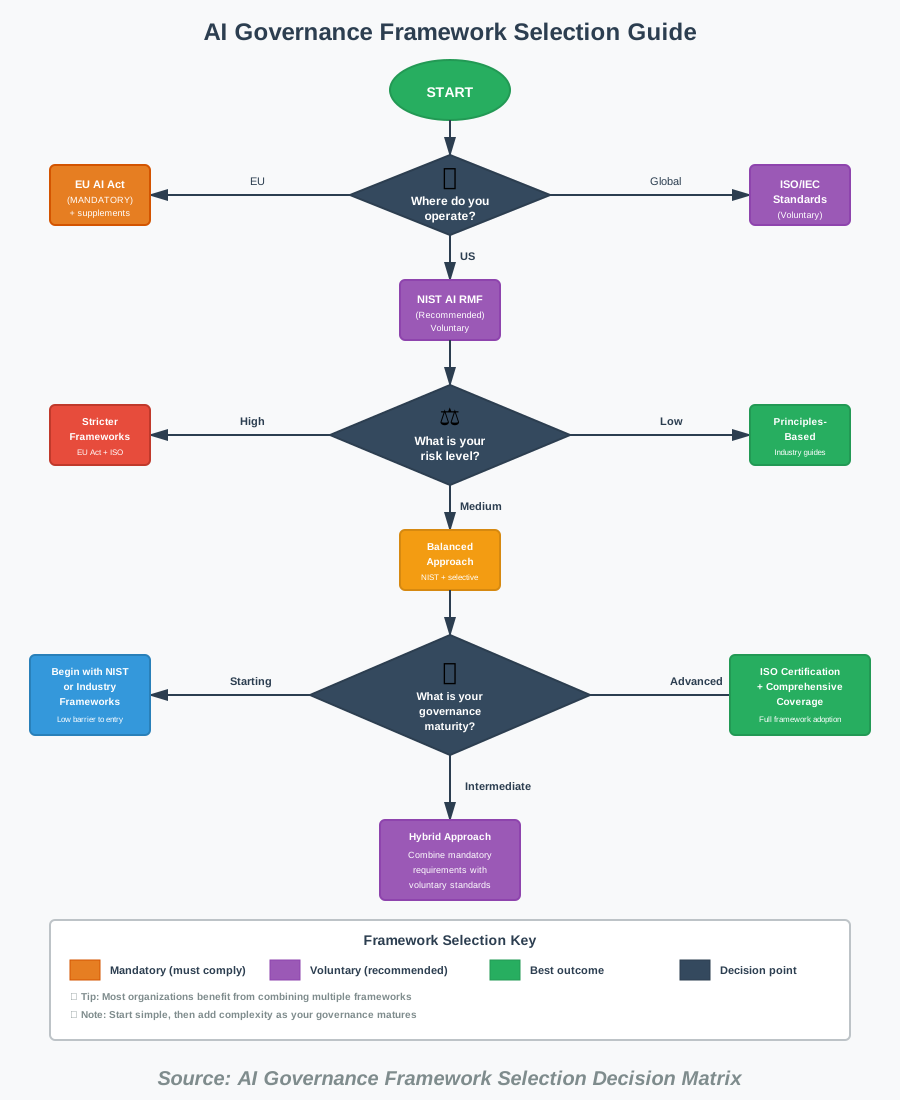
Organizations should consider their governance maturity when selecting frameworks. Early in your AI governance journey, accessible frameworks like NIST provide excellent starting points. As capabilities mature, incorporating technical standards like ISO/IEC adds rigor and credibility. Eventually, most sophisticated organizations blend multiple frameworks into customized governance programs.
Implementation Strategies for Different Organization Types
Governance frameworks don’t exist in abstract—organizations must implement them in real-world contexts with limited resources, competing priorities, and practical constraints. Implementation strategies should vary based on organization type, size, sector, and risk profile.
For Startups and Small Organizations
Small organizations face unique challenges implementing comprehensive governance. Resource constraints make extensive documentation and testing burdensome. However, establishing strong governance foundations early prevents costly retrofitting later and builds trust with investors, customers, and partners.
Start with lightweight frameworks like NIST’s AI RMF or industry principle-based approaches. These provide structure without overwhelming compliance requirements. Focus initially on high-impact, low-effort practices: documenting AI use cases and their purposes, establishing basic data quality processes, implementing simple bias testing, and creating incident response procedures.
As your organization grows, incrementally add governance layers. Move from informal processes to documented procedures, from ad-hoc assessments to systematic reviews, and from reactive problem-solving to proactive risk management. This staged approach makes governance sustainable rather than attempting comprehensive implementation from day one.
Consider leveraging open-source tools and frameworks that reduce implementation costs. Organizations like the Linux Foundation’s AI & Data Foundation provide free governance resources, templates, and assessment tools designed for smaller teams. Industry associations often offer guidance tailored to specific sectors, helping small organizations navigate relevant regulations and standards.
For Mid-Sized Companies
Mid-sized organizations often occupy a governance “middle ground”—too large for informal approaches but too small for dedicated governance departments. The key is strategic resource allocation, focusing governance investments where risks are highest and value clearest.
Conduct a governance maturity assessment using frameworks like NIST’s AI RMF or ISO/IEC standards as benchmarks. Identify gaps between current practices and framework expectations, then prioritize addressing gaps in high-risk AI applications while accepting lower governance maturity for minimal-risk use cases.
Hybrid framework adoption works well at this scale. Meet mandatory requirements like EU AI Act compliance where legally necessary, supplement with voluntary standards like NIST guidance for risk management processes, and incorporate industry best practices for specific technical challenges. This multi-framework approach provides comprehensive coverage without excessive duplication.
Invest in governance automation where possible. Tools for model monitoring, bias detection, documentation generation, and compliance tracking reduce the manual burden of framework implementation. While these tools require upfront investment, they scale more efficiently than purely manual processes as AI usage expands.
For Large Enterprises
Large organizations have resources for comprehensive governance but face coordination challenges across multiple business units, geographic regions, and regulatory jurisdictions. Governance programs must balance consistency with flexibility, ensuring baseline standards while allowing contextual adaptation.
Establish a centralized governance framework that harmonizes requirements from multiple sources—EU AI Act for European operations, sector-specific regulations for banking or healthcare, ISO/IEC standards for quality management, and internal corporate values. This master framework prevents conflicting requirements and creates a unified governance language across the organization.
Create centers of excellence or dedicated AI governance teams with clear mandates and executive support. These teams should include diverse expertise: legal for regulatory interpretation, technical specialists for implementation guidance, ethicists for values-based decision-making, and business representatives who understand operational realities.
Implement tiered governance processes where oversight intensity matches AI system risk and impact. Low-risk applications receive streamlined approval through automated checks and self-certification. Medium-risk systems undergo more thorough review by governance teams. High-risk applications require executive-level approval after comprehensive risk assessments and external audits.
For Government and Public Sector
Government organizations face unique governance requirements since AI systems they deploy can significantly impact civil rights, public services, and democratic processes. Public sector governance must emphasize transparency, accountability, and equity even more strongly than private sector frameworks.
Mandatory framework compliance is typically just the starting point for government AI governance. Public sector organizations should exceed minimum requirements, treating frameworks as floors rather than ceilings. The consequences of government AI failures—algorithmic discrimination in benefit programs, biased policing tools, or opaque administrative decisions—can undermine public trust in institutions.
Prioritize stakeholder engagement throughout AI system lifecycles. Public sector governance should include mechanisms for community input on AI deployment decisions, transparent disclosure of AI system usage, regular algorithmic impact assessments with public reporting, and accessible complaint and redress procedures for individuals affected by AI decisions.
Consider establishing algorithmic impact assessment requirements similar to environmental or privacy impact assessments. Before deploying AI systems that affect citizens, conduct thorough analyses of potential benefits, risks, discriminatory impacts, and alternatives. Make these assessments public to enable democratic accountability and informed debate about AI’s role in governance.
Practical Guidance for Framework Selection
Choosing the right governance framework—or combination of frameworks—requires careful consideration of your specific context. Let me walk you through a practical decision-making process based on years of research and implementation experience.
Step 1: Assess Your Regulatory Environment
Begin by identifying your legal obligations. Are you subject to the EU AI Act due to operations in Europe or offering AI systems to European customers? Do sector-specific regulations in healthcare, finance, or other industries impose AI governance requirements? Does your government mandate certain standards or frameworks?
Map these mandatory requirements first. You have no choice about compliance with legally required frameworks, so understanding these obligations establishes your governance baseline. Document which frameworks apply to which operations, products, or jurisdictions to avoid confusion about requirements.
Step 2: Evaluate Your Risk Profile
Conduct an honest assessment of the AI systems you’re developing or deploying. High-risk applications involving critical infrastructure, legal decisions, employment, education, law enforcement, or biometric identification demand robust governance regardless of legal requirements. Even if regulations don’t mandate strict controls, ethical responsibility requires careful oversight of systems with significant impact on individuals’ lives.
Consider both technical risks—model failures, data quality issues, cybersecurity vulnerabilities—and societal risks like discrimination, privacy violations, or manipulation. Different frameworks address these risk categories with varying emphasis. NIST excels at systematic risk identification and management. The EU AI Act provides clear requirements for high-risk systems. ISO/IEC standards offer technical specifications for robust testing.
Step 3: Consider Your Organization’s Maturity and Resources
Be realistic about implementation capacity. Adopting frameworks you can’t properly implement creates false assurance and potentially exposes you to greater risk than acknowledging limitations and working within them.
Organizations early in their AI governance journey benefit from accessible, principles-based frameworks that provide clear starting points without overwhelming technical requirements. NIST’s AI RMF or industry frameworks like Partnership on AI guidelines offer practical entry points. As governance capabilities mature, layer on more rigorous standards like ISO/IEC certifications or comprehensive EU AI Act compliance for high-risk systems.
Resource availability matters significantly. ISO certification requires investment in training, documentation, audits, and potentially external consultants. EU AI Act compliance for high-risk systems demands extensive testing, monitoring, and record-keeping. Ensure framework selection aligns with available budget and personnel.
Step 4: Align with Stakeholder Expectations
Different stakeholders value different governance approaches. Enterprise customers often require ISO certifications or specific compliance attestations. Investors increasingly evaluate AI governance maturity and may expect established frameworks. Civil society organizations and ethically minded consumers appreciate transparent governance and adherence to human rights-focused frameworks like the EU AI Act.
Understand what governance signals matter most to your key stakeholders, and prioritize frameworks that address their concerns. If you’re seeking EU market access, EU AI Act compliance obviously matters most. If you’re building a reputation in responsible AI circles, adopting multiple voluntary frameworks and pursuing certifications demonstrates commitment beyond minimum legal requirements.
Step 5: Plan for Framework Evolution
AI governance isn’t static. Regulations evolve, new frameworks emerge, technologies change, and your organization’s AI capabilities mature. Select frameworks with this evolution in mind, choosing approaches that can scale and adapt rather than requiring complete overhauls as circumstances change.
Modular frameworks like NIST’s AI RMF allow incremental adoption—you can implement core functions first and add sophistication over time. Standards-based approaches like ISO/IEC enable progressive certification, starting with foundational management systems and adding specialized standards as needed. Avoid all-or-nothing governance approaches that create barriers to improvement.
Common Implementation Challenges and Solutions
Even with careful framework selection, organizations encounter predictable challenges during implementation. Understanding these obstacles and proven solutions helps you navigate governance adoption more smoothly.
Challenge 1: Documentation Burden
Many frameworks require extensive documentation—AI system purposes, data sources, model architectures, testing results, monitoring procedures, and more. Organizations often underestimate the effort required to create and maintain this documentation, leading to incomplete records or documentation that becomes outdated.
Solution: Integrate documentation into development workflows rather than treating it as a separate compliance activity. Use automated tools to generate technical documentation from code, capture model training metadata, and track system changes. Establish templates that make documentation consistent and efficient. Most importantly, treat documentation as a technical necessity that improves system maintenance and troubleshooting, not merely a compliance burden.
Challenge 2: Cross-Functional Coordination
Effective AI governance requires collaboration between technical teams, legal departments, ethics specialists, business leaders, and often external stakeholders. These groups speak different languages, prioritize different concerns, and operate on different timelines, creating coordination challenges.
Solution: Establish governance forums that bring diverse perspectives together around specific AI initiatives. Create shared vocabulary and frameworks that enable productive dialogue across disciplines. Develop governance workflows with clear decision-making authority and escalation procedures. Invest in translator roles—people who understand both technical and non-technical aspects of AI governance and can facilitate communication.
Challenge 3: Keeping Pace with AI Evolution
AI technology evolves rapidly while governance frameworks change slowly. Organizations struggle to apply frameworks designed for previous AI capabilities to new techniques like large language models, multimodal systems, or agentic AI. Waiting for frameworks to catch up creates governance gaps, but improvising without guidance risks inconsistent approaches.
Solution: Focus on principles and risk-based reasoning rather than prescriptive rules. When frameworks don’t directly address new AI capabilities, apply their underlying principles to novel contexts. Document your reasoning and risk assessments even when specific framework guidance doesn’t exist. Engage with framework development processes to contribute practitioner perspectives that help frameworks evolve. Consider frameworks as guides, not straitjackets—adapt thoughtfully when necessary while documenting deviations and rationales.
Challenge 4: Measuring Governance Effectiveness
Organizations implement frameworks but struggle to determine if governance efforts actually improve AI safety, fairness, and trustworthiness. Without clear effectiveness metrics, governance can become performative—checking compliance boxes without meaningful impact.
Solution: Establish specific, measurable governance outcomes aligned with framework objectives. For fairness goals, track disparate impact metrics across demographic groups. For transparency, measure stakeholder comprehension of AI system disclosures. For safety, monitor incident rates and severity. Compare these metrics before and after governance interventions to assess effectiveness. Governance should make measurable differences in AI system behavior and impacts, not just create more paperwork.
Frequently Asked Questions
Final Recommendations: Choosing Your Governance Path
After examining multiple frameworks in depth, I want to leave you with clear, actionable recommendations for building effective AI governance in your organization.
Start with what’s mandatory, then build beyond minimums. Identify your legally required compliance obligations first—these are non-negotiable. For EU operations, that means the AI Act. For specific sectors, it means relevant industry regulations. Meet these requirements fully and documentably. Then consider governance as an opportunity for competitive differentiation rather than just a compliance burden.
Adopt a hybrid approach for comprehensive coverage. No single framework addresses every governance need perfectly. Combine legally mandated frameworks with voluntary standards that strengthen specific areas. For example, use the EU AI Act for risk classification and compliance requirements, supplement with NIST’s AI RMF for risk management processes, and incorporate ISO/IEC standards for technical testing specifications. This multi-framework strategy provides depth and breadth.
Prioritize implementation over perfect design. It’s tempting to spend months designing ideal governance systems before implementing anything. Resist this urge. Begin with basic practices immediately—document AI systems, assess risks, implement simple bias testing, and establish monitoring procedures. Learn from real implementation experience, then refine your approach. Imperfect governance that actually functions beats perfect frameworks that remain theoretical.
Invest in capability building, not just compliance checking. Effective governance requires organizational capability across multiple domains—technical expertise, ethical reasoning, legal interpretation, and stakeholder engagement. Don’t just hire consultants to handle governance; build internal competencies that become embedded in your culture. Training, cross-functional collaboration, and learning from governance challenges develop these capabilities better than external compliance audits alone.
Treat governance as a competitive advantage. The most forward-thinking organizations recognize that strong AI governance isn’t merely about avoiding harms or meeting regulations—it’s about building trustworthy products that customers prefer, attracting talent who wants to work responsibly, accessing markets with strict requirements, and avoiding costly incidents that damage reputation. Governance done well becomes a market differentiator.
Stay engaged with evolving frameworks. AI governance remains in early stages. Frameworks will evolve significantly over the coming years as technologies advance, deployment experiences accumulate, and societal understanding of AI risks matures. Participate in public comment processes, engage with standard-setting organizations, join industry working groups, and contribute to framework development. Your practical experience implementing governance offers valuable perspectives that shape better frameworks.
Remember the human purpose behind technical requirements. It’s easy to get lost in framework details—documentation requirements, testing specifications, and compliance checklists. Always return to governance’s fundamental purpose: ensuring AI systems serve human well-being, respect rights, operate safely, and contribute positively to society. When framework requirements seem burdensome or unclear, this purpose provides a north star for decision-making.
The landscape of AI governance frameworks will continue evolving, but the need for thoughtful, responsible AI development remains constant. Whether you’re just beginning your governance journey or refining mature practices, the frameworks we’ve examined provide valuable guidance for navigating AI’s opportunities and challenges responsibly.
I encourage you to view governance not as a restriction but as an enabler—the infrastructure that allows ambitious AI innovation to proceed safely and sustainably. The organizations that master governance early will be the ones that thrive as AI becomes increasingly central to our economy, society, and daily lives. Take that first step toward robust governance today, whatever that looks like for your specific context. Your future self—and the people affected by your AI systems—will thank you for the investment.
References:
European Commission. (2024). “Regulation (EU) 2024/1689 of the European Parliament and of the Council laying down harmonised rules on artificial intelligence (Artificial Intelligence Act).”
National Institute of Standards and Technology. (2023). “Artificial Intelligence Risk Management Framework (AI RMF 1.0).”
International Organization for Standardization. (2023). “ISO/IEC 42001:2023 Information technology — Artificial intelligence — Management system.”
Partnership on AI. (2024). “Guidelines for Responsible AI Development.”
European Union Agency for Cybersecurity. (2024). “AI Act Implementation Guidelines for Organizations.”
NIST. (2024). “AI RMF Playbook: Resources and Tools for Implementation.”
International Organization for Standardization. (2024). “ISO/IEC 23894:2024 Information technology — Artificial intelligence — Risk management.”
About the Author
Nadia Chen is an expert in AI ethics and digital safety with over a decade of experience helping organizations implement responsible AI practices. With a background in computer science and philosophy, she specializes in making complex AI governance frameworks accessible to non-technical audiences. Nadia has advised governments, Fortune 500 companies, and startups on AI risk management, regulatory compliance, and ethical AI development. Her work focuses on ensuring AI systems respect human rights, protect privacy, and serve society’s best interests. Through howAIdo.com, she empowers individuals and organizations to navigate AI’s challenges safely and confidently.