AI in Healthcare: Diagnostics with Machine Learning

AI in Healthcare: Diagnostics with Machine Learning is transforming how we detect and treat diseases, and I want to help you understand not just the technology but also how to engage with it safely and responsibly. As someone dedicated to AI ethics and digital safety, I’ve watched this field evolve with both excitement and careful consideration. Machine learning algorithms are detecting diseases earlier, analyzing medical images with remarkable precision, and helping doctors make better-informed decisions—but these powerful capabilities come with important responsibilities we all need to understand.
When I began researching AI diagnostic tools, I realized something crucial: this technology can save millions of lives, but only if we implement it thoughtfully, protect patient privacy rigorously, and ensure healthcare professionals maintain their essential role in patient care. Today, I’ll walk you through how machine learning is reshaping medical diagnostics, what safeguards matter most, and how you can advocate for responsible AI use in your healthcare journey.
What Is AI in Healthcare Diagnostics?
AI in healthcare refers to the use of artificial intelligence systems—particularly machine learning algorithms—to analyze medical data, identify patterns, and support clinical decision-making. Think of it as giving doctors a highly trained assistant that can process vast amounts of information simultaneously and learn from every case it encounters.
At its core, machine learning in diagnostics works by training algorithms on large datasets of medical images, patient records, and clinical outcomes. These systems learn to spot small signs of illness, like tiny calcium deposits that could indicate early breast cancer, specific patterns in brain scans that may point to brain disorders, or genetic markers that can predict how well a treatment will work.
As of mid-January 2025, Mayo Clinic Digital Pathology has used 20 million digital slide images connected to 10 million patient records that include treatments, medications, imaging, clinical notes, genomic data, and more, showing how much data these systems can handle.
Source: https://mayomagazine.mayoclinic.org/2025/04/ai-improves-patient-experience/
What makes this particularly powerful is the combination of speed and pattern recognition. However, here’s what matters most from a safety perspective: these AI systems don’t replace doctors—they augment human expertise. The best implementations keep healthcare professionals in control, using AI as a decision support tool rather than a decision-making authority.
How Machine Learning Transforms Medical Diagnostics
The Core Technology Behind AI Diagnostics
Machine learning diagnostic systems rely on several key technologies working together. Deep learning neural networks—inspired by how our brains process information—analyze medical images layer by layer, identifying progressively complex features. A neural network might first recognize edges and shapes, then tissue types, then specific anomalies.
Natural language processing helps these systems understand medical records, extracting relevant information from doctors’ notes, lab reports, and patient histories. Meanwhile, predictive analytics use historical patient data to forecast disease progression and treatment outcomes.
The U.S. Food and Drug Administration tracks over 950 AI-enabled medical devices authorized for clinical use as of 2024, with radiology accounting for the overwhelming majority of applications.
Real-World Applications Transforming Patient Care
Allow me to share specific examples where AI diagnostics are making genuine differences in patient outcomes while maintaining ethical standards.
Cancer Detection: AI systems have demonstrated remarkable capabilities in detecting cancer in medical images. A South Korean study revealed that an AI-based diagnosis achieved 90% sensitivity in detecting breast cancer with a mass, which is higher than the 78% sensitivity achieved by radiologists. AI also performed better at early breast cancer detection with 91% accuracy compared to radiologists at 74%.
Cardiovascular Disease Prediction: Mayo Clinic has developed AI algorithms that analyze electrocardiograms to detect heart conditions before symptoms appear. Their AI-ECG technology can identify patients with an elevated probability of atrial fibrillation even when the heart rhythm appears normal, allowing doctors to intervene before strokes occur.
Source: https://mcpress.mayoclinic.org/research-innovation/ai-big-data-and-future-healthcare/
Neurological Disorder Detection: In June 2025, Mayo Clinic researchers developed StateViewer, an artificial intelligence tool that helps clinicians identify nine types of dementia. The tool identified the dementia type in 88% of cases, according to research published in Neurology.
Digital Pathology: Mayo Clinic’s Atlas pathology foundation model, developed with Aignostics, is trained on a dataset of more than 1.2 million histopathology whole-slide images. Tasks that previously took four weeks can now be completed in one week.
The Accuracy Reality: Understanding AI Performance
People often ask me, “How accurate are these AI systems really?” It’s crucial to understand both capabilities and limitations.
A 2025 systematic review and meta-analysis published in npj Digital Medicine compared generative AI models to physicians across multiple specialties. The study found that while AI models demonstrated diagnostic capabilities, physicians still generally outperformed AI in most clinical scenarios. However, the study emphasized AI’s potential as a diagnostic aid rather than a replacement.
In a Stanford study published recently, ChatGPT-4 used alone achieved a median score of about 92 on diagnostic reasoning tasks. However, when physicians had access to ChatGPT as a diagnostic aid, their scores (median 76) were not significantly higher than physicians using only conventional resources (median 74). This counterintuitive finding suggests physicians need better training on how to effectively collaborate with AI tools.
Source: https://hai.stanford.edu/news/can-ai-improve-medical-diagnostic-accuracy
A 2025 systematic review in JMIR Medical Informatics analyzing 30 studies found that for large language models, the accuracy of primary diagnosis ranged from 25% to 97.8%, while triage accuracy ranged from 66.5% to 98%. The study concluded that while LLMs demonstrated diagnostic capabilities, “their accuracy still falls short of that of clinical professionals.”
This data tells an important story about responsible implementation: AI isn’t here to replace your doctor’s judgment. The technology excels at pattern recognition but struggles with rare diseases or conditions requiring understanding of complex social and environmental factors. This is why human oversight remains non-negotiable.
Privacy and Safety: What You Need to Know
As someone focused on digital safety, I want to address patient data privacy head-on. When your medical information feeds machine learning systems, where does that data go, and who controls it?
Your Data Rights in AI Healthcare
Data Protection Requirements: All AI diagnostic tools used in American healthcare must comply with HIPAA regulations, requiring robust de-identification before data is used for algorithm training. The FDA has established guidelines requiring diverse training datasets and regular bias audits for all approved diagnostic AI systems.
Consent and Transparency: You have the right to understand the use of AI in your diagnosis. Progressive healthcare systems now include AI disclosure in their consent forms. Always ask your healthcare provider, “Will AI be used in my diagnosis, and what are my options?”
Algorithm Bias: This factor is critical. A cross-sectional study of 903 FDA-approved AI devices found that at the time of regulatory approval, less than one-third of clinical evaluations provided sex-specific data, and only one-fourth addressed age-related subgroups.
This lack of demographic diversity in training data raises serious concerns about whether AI systems perform equally well across all populations.
Practical Steps to Protect Yourself
I recommend these specific actions when encountering AI in healthcare:
- Ask Direct Questions: “Is AI being used in my diagnosis? Has it received FDA approval?”
- Request Human Review: “Will a qualified healthcare professional review these AI findings before treatment decisions?”
- Understand Training Data: “What populations was this AI trained on? Does it perform equally well for someone with my characteristics?”
- Know Your Rights: Please take a moment to acquaint yourself with HIPAA protections and your local health data privacy laws.
- Document AI Usage: Keep records of when AI was used in your care for future reference.
Benefits and Real Impact
Beyond technical capabilities, machine learning is creating meaningful changes in healthcare delivery.
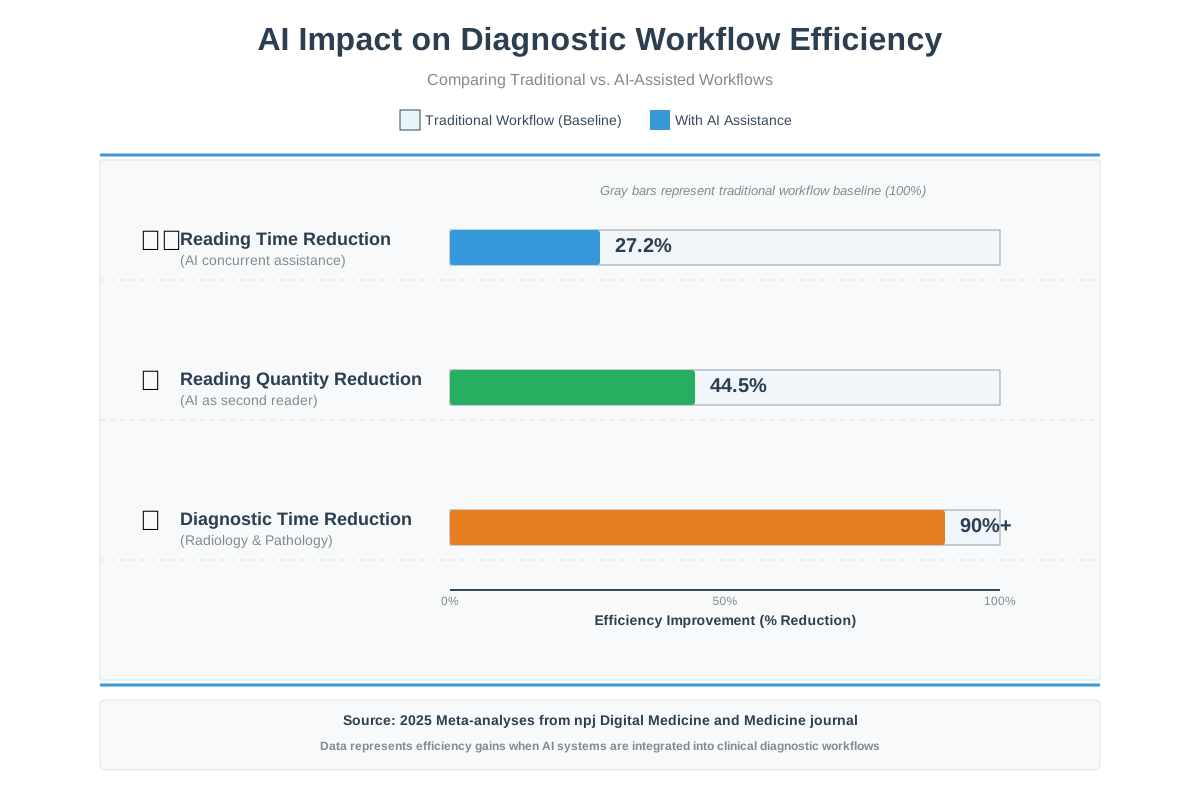
Reducing Diagnostic Time: According to a 2025 narrative review in Medicine, AI in radiology and pathology reduced diagnostic time by approximately 90% or more in certain applications.
Improving Workflow Efficiency: A 2025 meta-analysis in npj Digital Medicine found that AI concurrent assistance reduced reading time by 27.20% (95% confidence interval, 18.22%–36.18%). When AI served as a second reader, reading quantity decreased by 44.47%.
Expanding Access: AI diagnostic tools are bringing specialist-level capabilities to underserved areas. As of 2025, the technology processes vast amounts of healthcare data with unprecedented speed, with nearly 400 FDA-approved AI algorithms specifically for radiology.
Cost Implications: Industry analyses suggest AI in healthcare could generate significant cost savings through earlier disease detection and more efficient resource allocation, though exact figures vary by implementation.
Common Challenges and Limitations
Responsible AI advocacy means being honest about limitations. Here are challenges that concern me:
The Black Box Problem: Many deep learning systems operate as “black boxes”—they reach conclusions without explaining their reasoning in human-understandable terms. This creates accountability challenges when diagnoses are questioned.
Performance Variability: Real-world AI performance often differs from controlled studies. Systems may encounter data that differs from training sets, particularly affecting underrepresented populations.
Over-Reliance Risks: A Time magazine commentary (2025) noted that while over 1,000 AI tools are FDA-approved and used by a majority of physicians, AI “is not a substitute for doctors,” and over-reliance can “impair clinicians’ skills.”
Source: https://intuitionlabs.ai/articles/ai-medical-devices-regulation-2025
Regulatory Gaps: As of April 2025, the FDA’s published list of AI/ML-enabled devices undergoes irregular updates, with the most recent authorizations dating back to September 2024. This regulatory lag creates uncertainty.
Limited Clinical Validation: A 2025 JAMA Network Open study found that at FDA approval, clinical performance studies were reported for only approximately half of analyzed AI devices, while one-quarter explicitly stated no clinical studies had been conducted.
Source: https://jamanetwork.com/journals/jamanetworkopen/fullarticle/2833324
How to Advocate for Safe AI in Your Healthcare
You’re not powerless in this transformation. Here’s how to advocate for responsible AI in healthcare:
Questions to Ask Your Healthcare Provider
When you encounter AI in medical settings, ask:
- “What specific AI system is being used, and has it received FDA authorization?”
- “What is this AI’s accuracy rate for my specific condition?”
- “Will a qualified healthcare professional review the AI’s findings?”
- “How is my data protected, and will it be used to train future AI systems?”
- “What happens if the AI makes an error—who is responsible?”
Supporting Ethical AI Development
You can actively participate by:
- Joining patient advisory boards that guide AI implementation policies
- Supporting healthcare providers who prioritize transparency about AI use
- Advocating for stronger patient data protection laws
- Choosing providers who maintain human oversight of AI systems
Staying Informed
Machine learning in healthcare evolves rapidly. I recommend:
- Following FDA’s AI/ML Medical Device updates at fda.gov
- Joining patient advocacy groups focused on healthcare technology
- Reviewing your healthcare system’s AI policies
- Sharing your experiences with AI diagnostics to help others make informed decisions
The Future of AI Diagnostics
Looking ahead, I’m cautiously optimistic about several developments Mayo Clinic’s Center for Individualized Medicine projects that by 2030, genomes will be ubiquitous in practice with AI-powered clinical decision support, and cancer will be detected early while still curable.
Source: https://www.mayoclinicproceedings.org/article/S0025-6196(25)00417-3/fulltext
Multi-Modal AI Systems: Future diagnostic AI will simultaneously analyze medical images, genetic data, patient histories, and even biosensor data to detect diseases earlier and more accurately. Mayo Clinic announced in January 2025 collaborations with Microsoft Research and Cerebras Systems to develop foundation models that integrate multiple data types.
Improved Transparency: The FDA has indicated it will “explore methods to identify and tag medical devices that incorporate foundation models encompassing a wide range of AI systems, from large language models (LLMs) to multimodal architectures” to support transparency.
Enhanced Regulation: FDA released comprehensive draft guidance in 2024 on AI-enabled device software functions, providing a lifecycle management approach with a strong focus on transparency and mitigating biases.
Source: https://www.greenlight.guru/blog/fda-guidance-ai-enabled-devices
Frequently Asked Questions About AI in Healthcare Diagnostics
Taking Action: Your Next Steps
Now that you understand how AI in healthcare is transforming diagnostics, here’s how to engage safely and effectively:
Immediate Actions:
- During your next medical appointment, ask whether your healthcare provider uses AI diagnostic tools
- Review your healthcare provider’s privacy policy regarding medical data use
- Request information about which AI systems might be used in your care
Ongoing Engagement:
4. Follow FDA medical device updates to track new AI diagnostic approvals
5. Discuss AI diagnostics with your primary care physician—share concerns and preferences
6. Participate in patient surveys when your healthcare system implements new AI tools
Community Advocacy:
7. Support legislation strengthening patient data protection and requiring AI transparency
8. Share your experiences with AI diagnostics to help others make informed decisions
9. Encourage your healthcare provider to prioritize ethical AI implementation with human oversight
Conclusion: Embracing Progress with Wisdom
AI in Healthcare: Diagnostics with Machine Learning represents a fundamental shift in disease detection and prevention. The potential to save lives, reduce suffering, and improve diagnostic accuracy is real and measurable. We’re witnessing algorithms detect cancers earlier, predict heart problems before they become critical, and analyze vast amounts of medical data with unprecedented speed.
But as I’ve emphasized throughout, this power demands responsibility. We must demand transparency about when and how AI is used in our care. We must insist on human oversight that keeps doctors in control. We must advocate for privacy protections that prevent misuse of our health information. And we must ensure these tools serve everyone equally, not just privileged demographics.
The future of healthcare will be collaborative—combining machine learning’s pattern recognition with human judgment, empathy, and ethical reasoning. Our role as patients isn’t passive; we’re active participants in shaping how this technology develops.
You now have the knowledge to ask the right questions, advocate for safe implementation, and make informed decisions about AI’s role in your healthcare. Use that knowledge. Speak up. The transformation is happening—let’s ensure it happens responsibly, ethically, and for everyone’s benefit.
References:
– Mayo Clinic. (2025). “3 Ways Artificial Intelligence Improves the Patient Experience.” Mayo Magazine. https://mayomagazine.mayoclinic.org/2025/04/ai-improves-patient-experience/
– American Hospital Association. (2025). “Mayo Clinic: New AI Computing Platform Will Advance Precision Medicine.” https://www.aha.org/aha-center-health-innovation-market-scan/2025-08-12-mayo-clinic-new-ai-computing-platform-will-advance-precision-medicine
– Mayo Clinic News Network. (2025). “Mayo Clinic’s AI tool identifies 9 dementia types, including Alzheimer’s, with one scan.” https://newsnetwork.mayoclinic.org/discussion/mayo-clinics-ai-tool-identifies-9-dementia-types-including-alzheimers-with-one-scan/
– GlobalRPH. (2025). “Why Artificial Intelligence in Healthcare Is Rewriting Medical Diagnosis in 2025.” https://globalrph.com/2025/02/why-artificial-intelligence-in-healthcare-is-rewriting-medical-diagnosis-in-2025/
– Mayo Clinic Press. (2025). “AI, Big Data, and future healthcare.” https://mcpress.mayoclinic.org/research-innovation/ai-big-data-and-future-healthcare/
– Takita, H., et al. (2025). “A systematic review and meta-analysis of diagnostic performance comparisons between generative AI and physicians.” npj Digital Medicine, 8, 175. https://www.nature.com/articles/s41746-025-01543-z
– Stanford HAI. (2025). “Can AI Improve Medical Diagnostic Accuracy?” https://hai.stanford.edu/news/can-ai-improve-medical-diagnostic-accuracy
– JMIR Medical Informatics. (2025). “Comparing Diagnostic Accuracy of Clinical Professionals and Large Language Models: Systematic Review and Meta-Analysis.” https://medinform.jmir.org/2025/1/e64963
– Windecker, D., et al. (2025). “Generalizability of FDA-Approved AI-Enabled Medical Devices for Clinical Use.” JAMA Network Open. https://jamanetwork.com/journals/jamanetworkopen/fullarticle/2833324
– U.S. Food and Drug Administration. (2025). “AI-Enabled Medical Devices.” https://www.fda.gov/medical-devices/software-medical-device-samd/artificial-intelligence-enabled-medical-devices
– Singh, R., et al. (2025). “How AI is used in FDA-authorized medical devices: a taxonomy across 1,016 authorizations.” npj Digital Medicine, 8, 388. https://www.nature.com/articles/s41746-025-01800-1
– PMC (PubMed Central). (2025). “Impact of human and artificial intelligence collaboration on workload reduction in medical image interpretation.” npj Digital Medicine. https://www.nature.com/articles/s41746-024-01328-w
– PMC (PubMed Central). (2025). “Reducing the workload of medical diagnosis through artificial intelligence: A narrative review.” Medicine. https://pmc.ncbi.nlm.nih.gov/articles/PMC11813001/
– IntuitionLabs. (2025). “AI Medical Devices: 2025 Status, Regulation & Challenges.” https://intuitionlabs.ai/articles/ai-medical-devices-regulation-2025
– Mayo Clinic News Network. (2025). “Mayo Clinic accelerates personalized medicine through foundation models with Microsoft Research and Cerebras Systems.” https://newsnetwork.mayoclinic.org/discussion/mayo-clinic-accelerates-personalized-medicine-through-foundation-models-with-microsoft-research-and-cerebras-systems/
– Mayo Clinic Proceedings. (2025). “Individualized Medicine in the Era of Artificial Intelligence.” https://www.mayoclinicproceedings.org/article/S0025-6196(25)00417-3/fulltext
– AuntMinnie. (2025). “Radiology drives July FDA AI-enabled medical device update.” https://www.auntminnie.com/imaging-informatics/artificial-intelligence/article/15750598/radiology-drives-july-fda-aienabled-medical-device-update
Greenlight Guru. (2025). “FDA Guidance on AI-Enabled Devices.” https://www.greenlight.guru/blog/fda-guidance-ai-enabled-devices
About the Author
Nadia Chen is an expert in AI ethics and digital safety who helps non-technical users understand and safely navigate artificial intelligence technologies in healthcare. With extensive research experience in healthcare AI implementation, privacy protection, and responsible technology adoption, Nadia specializes in making complex AI concepts accessible while emphasizing ethical considerations and user safety. She advocates for transparent AI deployment that prioritizes patient rights, data protection, and human oversight in medical applications. Through her work at howAIdo.com, Nadia empowers readers to engage confidently with AI technologies while maintaining critical awareness of privacy, security, and ethical implications.