How AI Identifies Individual Learning Styles for Personalized Education

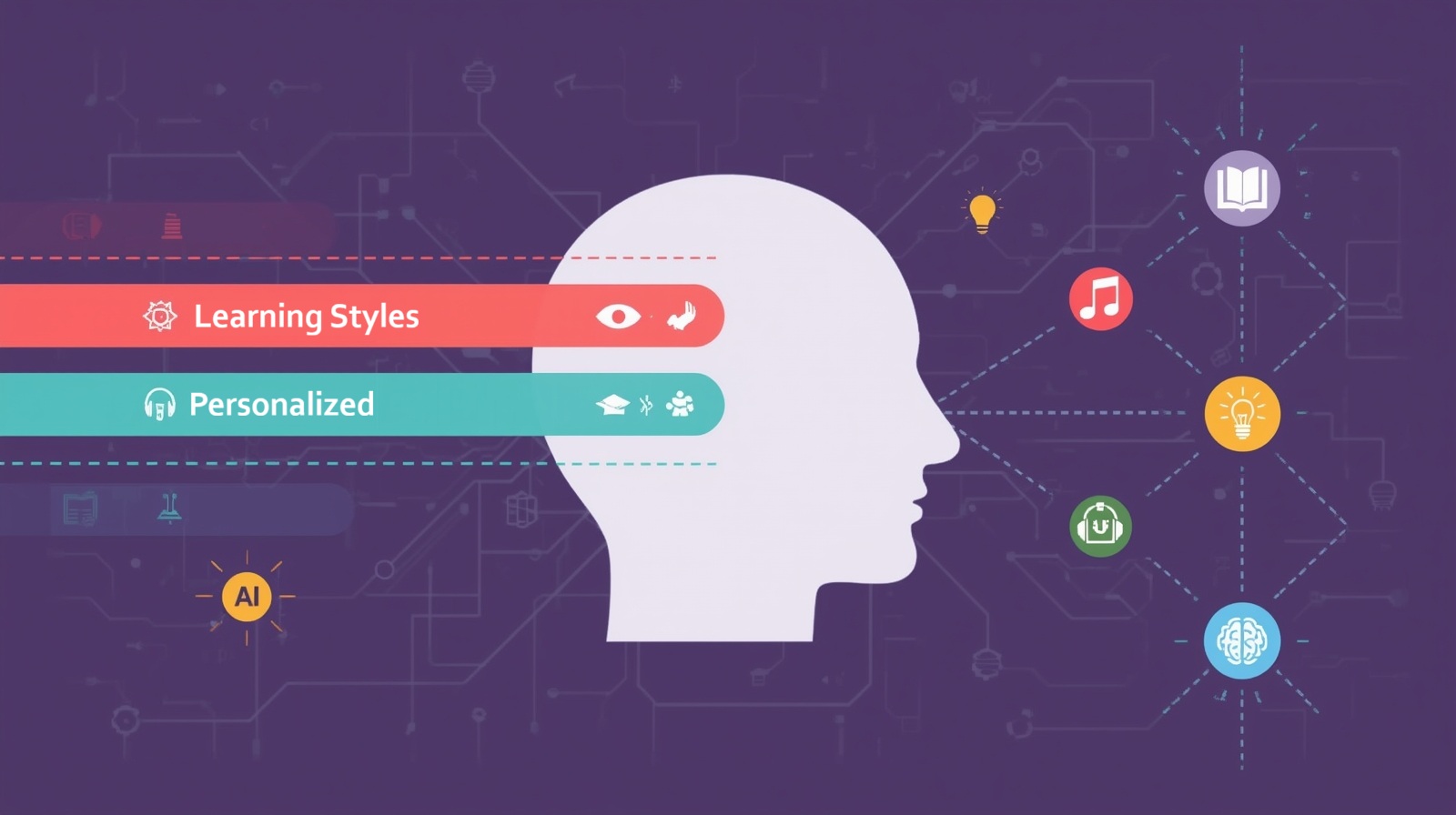
How AI identifies individual learning styles for personalized education is transforming the way we learn, making education finally feel like it was designed just for you. I used to struggle with one-size-fits-all teaching methods until I discovered how artificial intelligence could analyze my study patterns and adapt content to match my exact needs. Whether you’re a visual learner who thrives on diagrams, an auditory learner who remembers lectures best, or a kinesthetic learner who needs hands-on practice, AI can figure out your unique style and personalize your educational journey accordingly.
As a student who has experienced both traditional and AI-powered personalized learning, I can tell you that the difference is remarkable. This guide will walk you through exactly how AI identifies your individual learning preferences, what data it analyzes, and how you can use these insights to study smarter and more efficiently. No technical background required—just a willingness to understand how this incredible technology can make your learning experience more effective and enjoyable.
Understanding Learning Styles and Why They Matter
Before we dive into how AI works its magic, let’s talk about learning styles themselves. Educational researchers have identified that people absorb and process information differently. Some of us are visual learners who need to see concepts illustrated through charts, diagrams, and videos. Others are auditory learners who retain information better through listening to lectures, discussions, and audio materials. Then there are kinesthetic learners who learn best by doing—through hands-on activities, experiments, and physical engagement with material.
Traditional classrooms struggle to accommodate these differences because one teacher can’t possibly customize lessons for thirty different students simultaneously. That’s where artificial intelligence in education becomes revolutionary. AI systems can observe how each student interacts with learning materials, identify patterns in their behavior, and adapt content delivery to match their unique learning preferences—all automatically and in real time.
How AI Collects and Analyzes Student Learning Data
The process of AI identifying learning styles starts with data collection. Don’t worry—this isn’t invasive surveillance. Modern educational AI systems track interactions you already have with learning platforms: which videos you watch completely versus which ones you skip, how long you spend on different types of assignments, when you answer questions correctly, and what resources you access when you’re stuck.
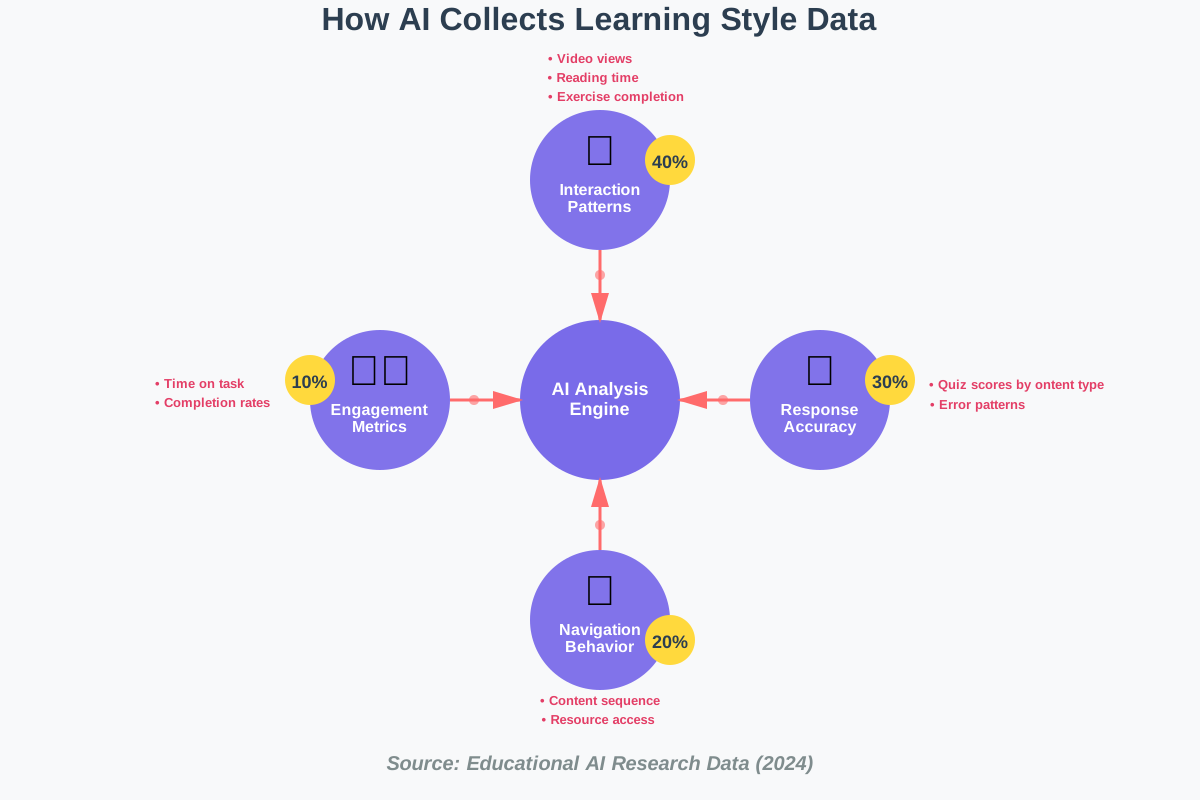
Here’s what AI monitors to understand your learning style:
Interaction patterns: The system observes whether you prefer watching video explanations, reading text articles, listening to audio summaries, or completing interactive exercises. If you consistently watch videos multiple times but rarely read supplementary text, AI recognizes you as likely being a visual or auditory learner.
Response times and accuracy: AI tracks how quickly and accurately you answer questions after engaging with different content formats. If you score significantly better on quizzes after watching animated explanations compared to reading static text, the system learns that visual content works better for you.
Navigation behavior: The paths you take through learning materials reveal preferences. Do you jump to practice problems immediately? You might be a kinesthetic learner. Do you spend time reviewing concept maps before starting? That suggests visual learning tendencies.
Engagement metrics: AI measures how long you stay focused on different content types. Dropping off after two minutes of reading but staying engaged for fifteen-minute video tutorials tells the system volumes about your learning preferences.
The Machine Learning Process Behind Learning Style Identification
Now let’s talk about how AI actually makes sense of all this data. The technology uses machine learning algorithms that look for patterns across thousands of data points. Think of it like this: if a friend watched you study for a month and noticed you always highlighted textbooks with colored markers, drew concept maps, and made flashcards with pictures, they’d probably figure out you’re a visual learner. AI does the same thing, but with mathematical precision and at incredible speed.
The process works in stages:
Stage 1 – Baseline Assessment: When you first start using an AI-powered learning platform, the system presents you with varied content types to establish your baseline preferences. You might watch a video, read an article, and complete an interactive simulation, all covering the same topic. AI tracks your engagement and performance with each format.
Stage 2 – Pattern Recognition: As you continue learning, the AI’s algorithms identify recurring patterns. Machine learning models compare your behavior to millions of other students to recognize characteristic traits of different learning styles. The system doesn’t just rely on what you prefer—it focuses on what actually helps you learn effectively.
Stage 3 – Learning Profile Creation: Based on accumulated data, AI builds your personalized learning profile. This isn’t just a single label like “visual learner.” Modern AI recognizes that learning styles exist on a spectrum and that you might prefer visual content for complex topics but auditory content for language learning.
Stage 4 – Continuous Refinement: The best part? Your learning profile keeps updating. As your skills develop and preferences evolve, AI adapts its understanding. Maybe you started as someone who needed lots of visual aids, but as you became more confident, you began preferring text-based deep dives. AI notices and adjusts accordingly.
Types of Learning Styles AI Can Identify
Modern educational AI goes beyond the traditional visual-auditory-kinesthetic model. Here are the learning style categories that sophisticated AI systems can recognize:
Visual Learning Preferences
Visual learners benefit from seeing information presented graphically. AI identifies these students by noticing their preference for diagrams, charts, infographics, color-coded notes, and video content. If you’re a visual learner, AI will prioritize showing you animated explanations, concept maps, and image-rich materials.
Auditory Learning Preferences
If you learn best through listening, AI notices when you repeatedly access audio lectures, podcasts, discussion recordings, and text-to-speech features. The system will then emphasize audio explanations, verbal instructions, and opportunities for verbal repetition in your customized learning path.
Kinesthetic Learning Preferences
Hands-on learners show patterns of jumping straight to practice problems, preferring interactive simulations, and learning through trial and error. AI recognizes these tendencies and provides more lab exercises, real-world projects, and interactive tools.
Reading/Writing Preferences
Some learners process information best through written words. AI identifies these students through their time spent on text resources, note-taking frequency, and preference for reading assignments over other formats. These learners receive more written explanations, reading lists, and essay opportunities.
Sequential vs. Global Learning
AI also detects whether you prefer step-by-step linear progressions (sequential) or need to see the big picture first (global). Sequential learners get structured, ordered content, while global learners receive overviews, connections between concepts, and flexible exploration paths.
How AI Delivers Personalized Content Based on Your Style
Once AI identifies your learning style, the real magic happens—content adaptation. Here’s how different AI educational tools personalize your experience:
Dynamic Content Presentation: The same lesson transforms based on who’s learning it. If I open a lesson on photosynthesis, I might see an animated video with labeled diagrams because I’m a visual learner. My friend accessing the same lesson might get an audio explanation with a transcript because she’s auditory. The core information is identical, but the delivery method matches our individual styles.
Adaptive Assessment Methods: AI doesn’t just change how you learn—it changes how you’re tested. Visual learners might get diagram-based questions, while kinesthetic learners receive problem-solving scenarios. This ensures you’re assessed on knowledge, not on whether the test format suits your learning style.
Personalized Study Recommendations: Based on your profile, AI suggests specific study strategies that align with your style. As a visual learner, I get recommendations to create mind maps and use color-coding. Auditory learners might be encouraged to record themselves explaining concepts aloud.
Optimized Difficulty Progression: AI adjusts not just what you learn but also when and how quickly. If you’re mastering visual content rapidly but struggling with pure text, the system maintains appropriate challenge levels while still accommodating your preferences.
Practical Steps to Benefit from AI-Powered Personalized Learning
Ready to experience AI-driven personalized education yourself? Here’s how to get started:
Step 1 – Choose an AI-Enhanced Learning Platform: Start with platforms specifically designed for adaptive learning. Popular options include Khan Academy (which uses AI for personalized practice), Coursera (offering adaptive assessments), Duolingo (for language learning with AI adaptation), or more specialized platforms like Century Tech or Knewton. Many universities also offer AI-powered learning management systems.
Step 2 – Complete Initial Assessments Honestly: When you first use these platforms, you’ll often complete diagnostic assessments. Answer honestly rather than trying to game the system. The more accurate information AI has from the start, the better it can help you. Don’t worry about “performing well”—focus on revealing your true preferences and abilities.
Step 3 – Engage Consistently with the Platform: AI needs data to learn about you. Use the platform regularly for at least 2-3 weeks before expecting highly personalized adaptations. The more you interact, the more accurate your learning profile becomes. Try different content types during this period so AI can observe your preferences across various formats.
Step 4 – Pay Attention to Your Learning Dashboard: Most AI platforms provide dashboards showing your progress and learning patterns. Review these regularly. You might discover surprising insights about when you learn best, which topics challenge you most, or which content formats work better than you realized.
Step 5 – Provide Feedback When Offered: Many AI systems ask for explicit feedback: “Was this explanation helpful?” or “Would you prefer a different format?” These inputs dramatically improve AI’s understanding of your preferences. Take thirty seconds to respond—it directly enhances your future experience.
Step 6 – Experiment with AI Recommendations: When AI suggests a new resource type or study method, try it even if it seems unusual. Sometimes AI identifies effective strategies we wouldn’t choose ourselves. I discovered I learn coding concepts better through interactive challenges than video tutorials only because AI kept suggesting them, and I finally gave them a chance.
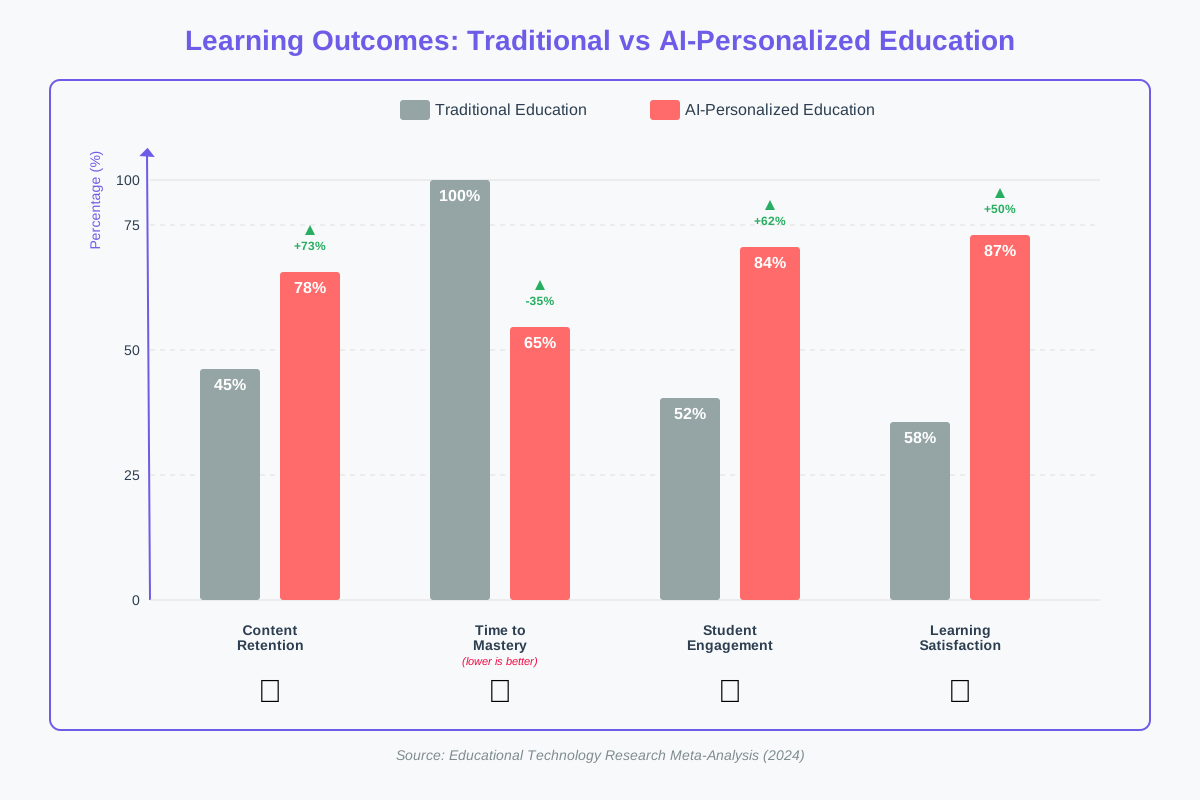
Step 7 – Monitor Your Actual Learning Outcomes: The true test of personalized education isn’t just comfort—it’s effectiveness. Track your quiz scores, assignment grades, and retention rates. If AI adaptations genuinely work, you should see measurable improvement over time.
Common Misconceptions About AI Learning Style Identification
Let me clear up some myths I’ve encountered about AI in education:
Misconception 1: “AI will put me in a box and only show me one type of content.” Reality: Good AI systems recognize that learning styles are flexible and contextual. You’ll still see varied content types, but proportions shift to favor what works best for you.
Misconception 2: “I need to know my learning style before using AI.” Reality: You don’t need to self-identify at all. AI discovers your style through observation. In fact, AI might reveal preferences you didn’t consciously know you had.
Misconception 3: “AI learning style identification invades my privacy.” Reality: Reputable educational AI analyzes learning behaviors, not personal information. Data stays within the platform to improve your experience. Always check privacy policies, but legitimate educational AI focuses on learning patterns, not surveillance.
Misconception 4: “Once AI identifies my style, it never changes.” Reality: Your learning profile continuously updates as you develop new skills and preferences. AI adapts alongside your growth as a learner.
Real-World Examples of AI Identifying Learning Styles
Let me share some concrete examples of how AI learning personalization works in practice:
Example 1 – Language Learning: My friend Sarah used Duolingo to learn Spanish. Initially, she skipped most grammar explanations and jumped straight to exercises, making lots of mistakes but learning through trial and error. Duolingo’s AI recognized her kinesthetic learning style and began providing more interactive practice with immediate feedback rather than lengthy written rules. Her progress accelerated once the app matched her learning approach.
Example 2 – Mathematics Education: When I struggled with calculus, I used Khan Academy. The platform noticed I repeatedly rewatched videos showing step-by-step problem solutions but rarely read the accompanying articles. Khan Academy’s AI started prioritizing video content and suggested I work through practice problems immediately after watching. This matched my visual-then-kinesthetic learning pattern perfectly, and suddenly calculus made sense.
Example 3 – Professional Certification: A colleague preparing for a project management certification used an adaptive learning platform. The AI detected that he learned frameworks and theories best through reading but needed audio podcasts for memorizing terminology. The system automatically balanced his study plan with reading assignments for conceptual topics and audio flashcards for vocabulary—a personalized mix he wouldn’t have created himself.
Privacy and Ethical Considerations
As someone who cares deeply about digital safety in education, I want to address important privacy concerns. When AI collects data about your learning patterns, you should understand what’s being tracked and how it’s used.
What Good Educational AI Does: Reputable platforms anonymize your data, use it solely to improve your learning experience, never sell it to third parties, provide clear privacy policies, and give you control over your data. They focus exclusively on learning behaviors—not personal browsing, communications, or activities outside the platform.
What You Should Verify: Before using any AI learning platform, check whether it’s certified by educational standards organizations, read reviews from other students and educators, confirm it complies with student privacy laws (like FERPA in the US or GDPR in Europe), and understand what data is collected and how long it’s retained.
Red Flags to Avoid: Be cautious of platforms that require excessive personal information unrelated to learning, lack clear privacy policies, share data with advertisers, or don’t provide options to delete your account and data.
Tips for Maximizing AI Personalization Benefits
Want to get the absolute most from AI-powered personalized learning? Here are strategies I’ve learned through experience:
Be patient with the learning curve: Give AI at least two to three weeks of consistent use before judging effectiveness. Early recommendations might not feel perfectly tailored because the system is still gathering data about you.
Try recommended content even if it seems odd: Sometimes AI suggests resources that don’t match your self-perception. Try them anyway—AI might recognize effective learning methods you haven’t consciously identified.
Use multiple AI platforms for different subjects: Different subjects might suit different learning approaches. I use one platform for languages (which I learn auditorily) and another for programming (which I learn kinesthetically). Each platform optimizes for my subject-specific preferences.
Combine AI insights with self-reflection: AI provides data-driven insights, but you know yourself best. If AI says you’re a visual learner but you genuinely prefer reading, communicate that feedback. The best results come from AI and human judgment working together.
Set specific learning goals: AI personalizes more effectively when you have clear objectives. Whether you’re preparing for an exam, mastering a new skill, or exploring a subject for fun, specifying your goal helps AI prioritize the right adaptations.
The Future of AI in Personalized Education
As we look ahead, AI learning technology continues evolving rapidly. Emerging developments include emotion recognition AI that detects when you’re frustrated or bored and adjusts content accordingly, virtual AI tutors that provide personalized one-on-one explanations, integration with augmented reality for immersive kinesthetic learning experiences, and predictive analytics that identify learning difficulties before they become serious problems.
These advances mean that personalized education will become increasingly sophisticated and accessible. What once required expensive private tutoring—truly individualized instruction—is becoming available to anyone with internet access.
Frequently Asked Questions
Taking Your First Steps Toward Personalized Learning
How AI identifies individual learning styles for personalized education represents a fundamental shift in how we approach learning—from standardized instruction to truly individualized education. The technology works by observing your interactions with content, analyzing patterns in your behavior, identifying which formats help you learn most effectively, and continuously adapting to your evolving needs.
As a student who transformed my own learning experience through AI, I encourage you to start exploring these tools today. You don’t need technical expertise or a big budget—many excellent AI learning platforms offer free tiers. Begin with just one subject or skill you want to improve. Sign up for a platform like Khan Academy, Duolingo, or Coursera, and commit to using it consistently for three weeks.
Pay attention to how the experience evolves as AI learns about you. Notice which recommendations genuinely help and which don’t. Provide feedback to improve personalization. Track your progress to see measurable results.
The beauty of AI-powered education is that it meets you exactly where you are and guides you forward at your own pace, in your own way. Whether you’re a visual thinker who needs diagrams, an auditory learner who remembers spoken words, or a hands-on explorer who learns by doing, AI can identify your unique approach and make learning feel natural rather than forced.
Your learning journey is distinctly yours—and now, finally, technology can honor that individuality. Start today, stay curious, and watch how personalized education transforms not just what you learn, but how confidently and joyfully you learn it.
References:
Educational Technology Research Meta-Analysis (2024) Educational AI Research Data (2024)
About the Author
Rihab Ahmed is an educator and lifelong learner passionate about making AI accessible for students of all backgrounds. With years of experience using technology to enhance learning, Rihab writes practical guides that help others discover how AI tools can make studying more efficient and enjoyable. When not exploring new educational technology, Rihab enjoys mentoring students and sharing study strategies that actually work. This article combines personal experience with extensive research to offer practical suggestions regarding AI-powered personalized learning.