
AI for Language Learning: Complete Guide to Smarter Study
Why AI is Revolutionizing How We Learn Languages
AI for Language Learning has fundamentally transformed how we approach mastering new languages, and I’ve witnessed this revolution firsthand both as an educator and as someone who uses these tools daily. Gone are the days when language learning meant sitting in a classroom with a one-size-fits-all textbook, struggling to keep pace with lessons that moved too quickly or too slowly for our individual needs. Today, artificial intelligence brings personalized instruction, immediate feedback, and immersive practice opportunities right to our fingertips—and the most remarkable part? These tools adapt to your unique learning style, pace, and goals.
When I first started exploring AI-powered language learning tools, I was skeptical. Could a machine really understand the nuances of human communication? Could it identify my specific weaknesses and help me overcome them? After years of research and hands-on experience, I can confidently say that AI has become an indispensable companion in the language learning journey—not replacing human teachers, but complementing them in ways that make fluency more accessible than ever before.
The beauty of AI in language education lies in its ability to provide what human instructors often struggle to deliver: unlimited patience, 24/7 availability, and instant, personalized feedback. Whether you’re a busy professional squeezing in Spanish lessons during your commute, a student preparing for French exams, or someone learning Arabic to connect with family heritage, AI tools can meet you exactly where you are. But with so many options available and important considerations about privacy and effective use, navigating this landscape requires understanding both the tremendous opportunities and the responsibilities that come with AI-assisted learning.
In this comprehensive guide, we’ll explore how AI is reshaping language acquisition from the ground up. We’ll examine practical tools, discuss safety considerations, and provide actionable strategies that anyone can implement—regardless of technical expertise. My goal is to empower you to use these technologies confidently, safely, and effectively, while maintaining the human connection that makes language learning truly meaningful.
Understanding AI for Language Learning: The Foundation
Before diving into specific applications, let’s establish what we mean when we talk about AI for language learning. At its core, AI for language learning refers to computer systems that use machine learning algorithms, natural language processing, and data analysis to help people acquire new languages more effectively. These systems learn from vast amounts of linguistic data and can recognize patterns, make predictions, and adapt their teaching methods based on your performance.
Think of AI as an incredibly observant study partner who remembers every mistake you’ve made, tracks every word you’ve learned, and adjusts future lessons accordingly. Unlike traditional language learning software that simply presents pre-programmed content, AI systems actively analyze how you interact with the material and continuously refine their approach to maximize your progress.
The technology behind these systems includes several key components: speech recognition that can evaluate your pronunciation with remarkable accuracy, natural language processing that understands context and meaning beyond literal translations, and adaptive algorithms that identify your strengths and weaknesses to create truly personalized learning paths. When these elements work together, they create learning experiences that feel remarkably intuitive and responsive to your individual needs.
What makes this particularly powerful for language learners is the combination of scale and personalization. AI can draw from millions of language examples to understand subtle grammatical patterns, idiomatic expressions, and cultural nuances—then apply that knowledge specifically to your learning journey. It’s like having access to a master linguist who has studied countless hours of native speech and can guide you through the exact challenges you’re facing right now.
AI-Powered Pronunciation: Mastering Language Sounds with AI
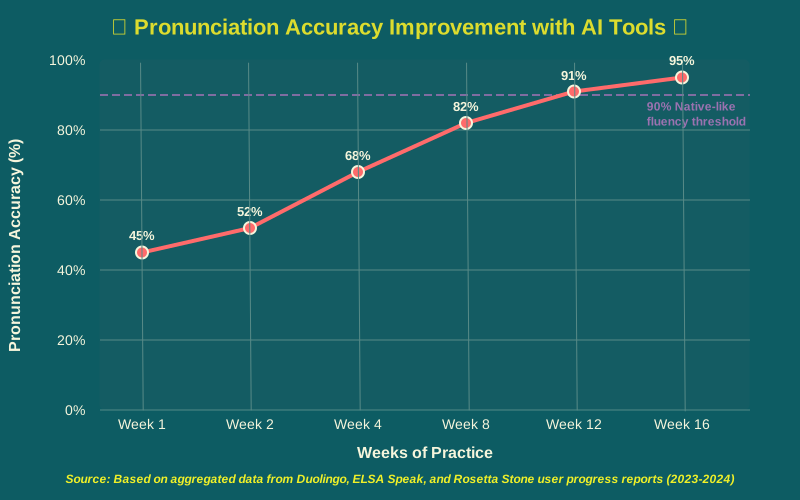
AI-Powered Pronunciation tools have revolutionized one of the most challenging aspects of language learning: getting the sounds right. I remember spending hours with language learning tapes, trying to mimic native speakers without any feedback about whether my attempts were accurate. Today’s AI pronunciation coaches use sophisticated speech recognition technology to analyze your spoken language in real-time, identifying specific areas where your pronunciation differs from native speakers.
These systems don’t just tell you to “try again”—they provide detailed feedback about tongue placement, mouth shape, and airflow patterns. For example, when learning Arabic, one of my students struggled with the emphatic consonants that don’t exist in English. An AI pronunciation tool was able to break down the exact differences in tongue position, providing visual feedback and targeted exercises that traditional methods couldn’t offer. Within weeks, her pronunciation improved dramatically.
The technology works by comparing the acoustic properties of your speech—frequency, duration, and intonation patterns—against models trained on native speakers. Advanced systems can even account for regional accents and dialects, helping you develop pronunciation that matches your target variety of the language. This level of precision simply wasn’t available to language learners a decade ago.
What I appreciate most about AI pronunciation tools is their patience and privacy. You can practice saying difficult words dozens of times without embarrassment, receiving consistent, constructive feedback each time. This safe practice environment helps learners overcome the anxiety that often prevents them from speaking in real conversations. The AI doesn’t judge, doesn’t get frustrated, and never makes you feel self-conscious about mistakes—it simply guides you toward improvement.
AI Grammar Checkers: Beyond the Basics for Language Learners
AI Grammar Checkers have evolved far beyond simple spell-check tools to become sophisticated learning assistants that understand context, style, and the specific challenges language learners face. These systems don’t just identify errors—they explain why something is wrong and how to fix it, turning every mistake into a learning opportunity.
When I review my students’ writing in French or Arabic, I often use AI grammar checkers as a second set of eyes. What impresses me most is how these tools can distinguish between errors that native speakers might make (like occasional punctuation mistakes) and systematic issues that reveal gaps in grammatical understanding. For instance, if a learner consistently confuses verb tenses, the AI recognizes this pattern and can provide targeted exercises to address that specific weakness.
Modern AI grammar checkers use natural language processing to understand not just whether a sentence is grammatically correct, but whether it sounds natural to native speakers. They can suggest more idiomatic expressions, point out awkward phrasings, and even help with stylistic choices appropriate to different contexts—formal versus informal, written versus spoken language. This contextual understanding represents a massive leap forward from traditional grammar-checking tools.
The educational value extends beyond error correction. Many AI grammar checkers now include learning modes that explain grammatical concepts in plain language, provide examples, and offer practice exercises. This transforms them from simple correction tools into comprehensive grammar tutors that adapt to your proficiency level and learning pace. For language learners, this means every writing assignment becomes an opportunity for improvement, with personalized guidance available instantly.
AI-Driven Vocabulary Building: Personalized Learning Paths
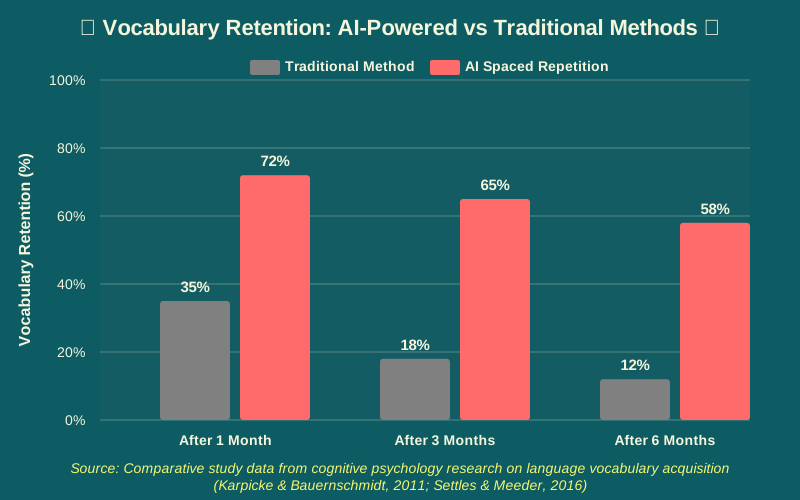
AI-Driven Vocabulary Building represents one of the most effective applications of artificial intelligence in language learning. These systems use spaced repetition algorithms combined with analysis of your usage patterns to ensure you learn and retain new words efficiently. Instead of memorizing long lists of vocabulary that you may never use, AI helps you focus on words that are most relevant to your goals and most likely to stick in your memory.
I’ve seen remarkable results when students use AI-powered vocabulary apps that adapt to their learning patterns. The system tracks which words you struggle with, which ones you’ve mastered, and when you’re most likely to forget specific terms. It then optimizes your review schedule, presenting words at precisely the moment when you’re about to forget them—strengthening your memory with minimal time investment. This scientifically backed approach is far more efficient than traditional vocabulary memorization methods.
What makes AI vocabulary building particularly powerful is its ability to present words in context. Rather than showing you isolated word-translation pairs, advanced systems provide example sentences, images, audio pronunciations, and real-world usage examples. The AI learns which types of context help you remember words best—some people are visual learners who benefit from images, others remember words better through example sentences or audio—and adjusts its presentation accordingly.
For specialized vocabulary needs, AI systems excel at creating personalized word lists. If you’re learning Spanish for business, the AI can prioritize professional terminology. If you’re preparing for travel, it focuses on practical phrases and common situations. If you’re a medical student learning Latin roots, it can connect new vocabulary to words you already know through shared etymology. This customization ensures that every minute spent learning vocabulary directly contributes to your specific goals.
AI Language Tutors: The Future of Personalized Language Instruction
AI Language Tutors represent perhaps the most ambitious application of artificial intelligence in language education—systems designed to replicate many functions of human tutors while being available 24/7 at a fraction of the cost. These sophisticated platforms combine multiple AI technologies to provide comprehensive language instruction that adapts to each learner’s unique needs, pace, and preferences.
What distinguishes AI language tutors from simpler apps is their ability to conduct conversations, assess understanding in real-time, and adjust teaching strategies based on your responses. When I use these systems, I’m consistently impressed by how naturally they can guide conversations, introduce new concepts at appropriate moments, and provide explanations that build on what I’ve already learned. They create a learning experience that feels remarkably personalized and responsive.
The best AI language tutors employ sophisticated dialogue systems that can engage in open-ended conversations about topics that interest you. Unlike scripted language learning programs, these systems can discuss current events, answer questions about grammar, help you practice for specific situations like job interviews, and even role-play social scenarios. This conversational flexibility makes practice sessions feel more like real communication and less like rote exercises.
From a safety and ethical perspective, it’s important to understand that AI tutors work best as supplements to human instruction rather than complete replacements. While they excel at providing practice opportunities, immediate feedback, and personalized pacing, they lack the cultural insights, emotional intelligence, and adaptive creativity that human teachers bring to language instruction. The most effective approach combines AI tutors for daily practice and skill reinforcement with human instructors who can provide cultural context, motivation, and the nuanced feedback that AI systems cannot yet replicate.
AI-Enhanced Language Immersion: Creating Virtual Language Environments
AI-Enhanced Language Immersion brings the benefits of living in a foreign country right to your home, creating virtual environments where you can practice the target language in realistic contexts. These systems use AI to generate immersive scenarios—ordering at a restaurant, navigating a city, having casual conversations—that adapt to your skill level and provide the repeated exposure crucial for language acquisition.
Traditional immersion requires travel, which isn’t accessible to everyone due to cost, time, or personal circumstances. AI-enhanced immersion democratizes this powerful learning method, allowing anyone with a smartphone or computer to experience authentic language use in context. I’ve seen students who never left their hometown develop conversational fluency through consistent use of AI immersion tools, something that would have been unimaginable just a few years ago.
These virtual environments leverage several AI technologies working together. Natural language processing enables realistic conversations with AI characters who respond naturally to your input. Computer vision and augmented reality can overlay language labels on real-world objects through your phone’s camera. Speech recognition lets you practice speaking in simulated real-world scenarios, from job interviews to casual social situations. The combination creates a rich, multi-sensory learning experience that engages multiple cognitive pathways.
What makes AI immersion particularly valuable is the safe space it provides for making mistakes. In real-world immersion, learners often feel anxious about errors, which can inhibit their willingness to practice. Virtual immersion removes this pressure—you can try the same conversation multiple times, experiment with different phrasings, and build confidence before facing similar situations with native speakers. This psychological safety accelerates learning by encouraging the experimentation essential for language development.
AI Translation Tools: Using AI to Bridge Language Gaps Effectively
AI Translation Tools have become remarkably sophisticated, moving far beyond word-for-word substitutions to provide contextually appropriate translations that capture nuance and cultural meaning. While I emphasize that translation tools should be learning aids rather than crutches, when used responsibly, they can significantly accelerate language acquisition by helping learners understand complex texts and verify their own translations.
Modern neural machine translation systems analyze entire sentences and even paragraphs to understand context before generating translations. This contextual understanding allows them to choose appropriate words based on register, formality, and intended meaning—crucial for languages where a single word might have dozens of translations depending on context. For language learners, this means you can engage with authentic materials like news articles, literature, or social media content that would otherwise be too advanced for your current level.
The key to using AI translation tools effectively for learning is what I call “active translation practice.” Instead of simply copying AI translations, use them as a checking tool after you’ve attempted the translation yourself. This approach helps you identify gaps in your understanding, learn new vocabulary and structures, and develop your translation skills rather than bypass them. When you notice differences between your translation and the AI’s suggestion, investigate why the differences exist—this analytical process deepens your understanding of both languages.
However, it’s crucial to understand the limitations and potential pitfalls. AI translation tools can make significant errors, especially with idiomatic expressions, cultural references, or specialized terminology. They may produce grammatically correct translations that sound unnatural to native speakers. For learners, this means developing critical judgment about when to trust AI translations and when to seek human verification. Never submit important work—academic assignments, professional documents, or formal correspondence—that relies solely on AI translation without having it reviewed by a proficient speaker.
AI for Language Learning: Overcoming Language Anxiety with AI
Overcoming Language Anxiety with AI represents one of the most profound benefits these technologies offer language learners. Language anxiety—the fear of making mistakes, being judged, or appearing foolish when speaking a new language—affects countless learners and can significantly impede progress. AI tools create a judgment-free practice environment where mistakes are simply data points for improvement rather than sources of embarrassment.
In my years of teaching, I’ve worked with many students whose anxiety prevented them from practicing speaking, even though speaking practice is essential for developing fluency. AI conversation partners have been transformative for these learners. They can practice pronunciation, try out new vocabulary, and experiment with sentence structures without the social pressure that comes with human interaction. This safe practice space helps build the confidence needed to eventually engage with native speakers.
The psychological impact goes beyond just providing a non-judgmental practice partner. AI systems can be programmed to offer encouragement, celebrate progress, and maintain consistent positive reinforcement—factors that research shows significantly reduce anxiety and improve learning outcomes. Unlike human conversation partners who might unconsciously show frustration or impatience, AI maintains unwavering patience and support, which is especially valuable during the frustrating plateaus that all language learners experience.
Additionally, AI tools allow for private practice at any time of day or night, which is particularly helpful for learners with anxiety about practicing in front of others. Whether you’re reviewing pronunciation at midnight or want to practice a difficult conversation before a real-world encounter, AI tools are available without requiring you to coordinate schedules or worry about imposing on others. This accessibility removes another barrier that anxiety-prone learners often face.
AI-Based Language Assessment: Measuring Progress and Identifying Weaknesses
AI-Based Language Assessment provides learners with objective, detailed insights into their language proficiency that would be difficult or expensive to obtain through traditional testing methods. These systems analyze your language use across multiple dimensions—vocabulary range, grammatical accuracy, pronunciation, fluency, and comprehension—to create comprehensive profiles of your abilities and identify specific areas that need attention.
What I find particularly valuable about AI assessment tools is their ability to track progress over time with remarkable granularity. Rather than waiting for periodic exams to evaluate your improvement, AI systems continuously monitor your performance, creating detailed learning analytics that show exactly how your skills are developing. This ongoing assessment helps maintain motivation by making progress visible and provides early warning when you’re developing bad habits or falling behind in specific skill areas.
Advanced assessment systems use adaptive testing that adjusts question difficulty based on your responses, providing more accurate proficiency measurements in less time than traditional fixed-format tests. This efficiency means you can get detailed feedback about your current level without spending hours on testing, leaving more time for actual learning. For learners preparing for standardized language exams, AI assessment tools can provide realistic practice and identify exactly which areas need additional study.
However, it’s important to approach AI assessments with appropriate perspective. While these systems excel at measuring objective language features like vocabulary knowledge and grammatical accuracy, they may struggle with more subjective aspects like cultural appropriateness, creative expression, or the subtle pragmatics of human communication. Use AI assessments as one data source among several, including self-reflection, feedback from human instructors, and real-world communication experiences. The combination provides a more complete picture of your language abilities than any single assessment method alone.
AI-Generated Language Content: Creating Customized Learning Materials
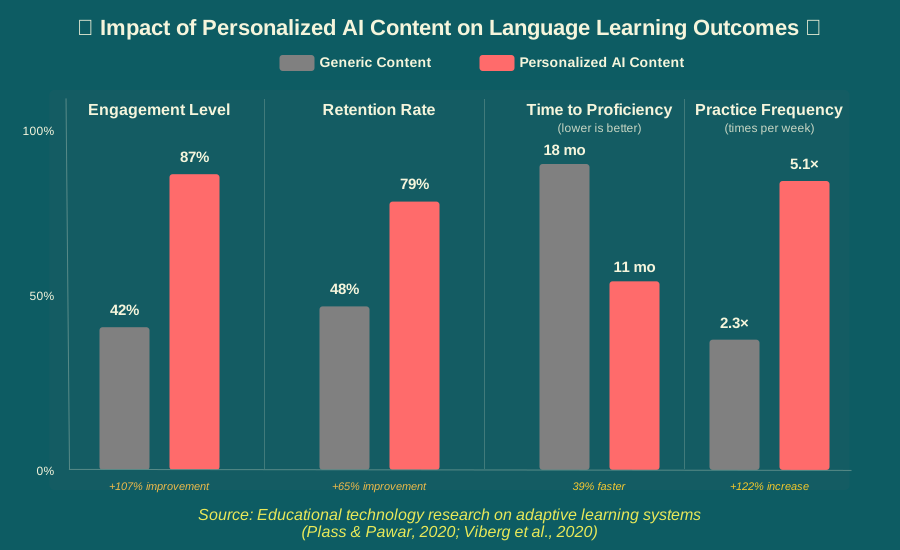
AI-Generated Language Content opens up exciting possibilities for creating personalized learning materials tailored to your specific interests, level, and goals. These systems can generate reading passages, listening exercises, conversation scenarios, and practice activities customized to your proficiency level and focused on topics that motivate you—whether that’s science fiction in Spanish, business correspondence in Mandarin, or cooking recipes in Italian.
The ability to generate customized content addresses a major limitation of traditional language learning materials, which must appeal to broad audiences and therefore often fail to engage individual learners’ specific interests. When I work with students, I’ve seen dramatic increases in engagement and retention when they’re learning language through content they actually care about. AI content generation makes it possible to create unlimited personalized materials without the enormous time and resource investment that would traditionally be required.
These systems work by analyzing your current language level, learning history, and stated interests, then generating appropriate content that introduces new vocabulary and structures at a manageable pace. Advanced systems can even adapt narrative complexity, adjust dialogue speed in audio materials, or modify text difficulty while keeping the core content engaging. This dynamic adaptation ensures you’re always working in what language acquisition researchers call the “zone of proximal development”—material that’s challenging enough to promote learning but not so difficult that it becomes frustrating.
From an ethical and safety perspective, we must approach AI-generated content thoughtfully. Always verify factual information, as AI systems can occasionally generate plausible-sounding but incorrect content. Be especially cautious with AI-generated content about sensitive cultural topics, as these systems may not fully understand cultural nuances or could perpetuate stereotypes present in their training data. When possible, supplement AI-generated materials with authentic content created by native speakers to ensure you’re developing genuine cultural understanding alongside language skills.
AI and Language Learning: The Ethical Considerations
The Ethical Considerations surrounding AI in language learning deserve serious attention as we integrate these powerful technologies into our educational practices. As someone deeply committed to both effective education and responsible technology use, I believe we must thoughtfully examine issues of data privacy, algorithmic bias, cultural representation, and the appropriate balance between AI assistance and human connection in language learning.
Data privacy stands as perhaps the most immediate concern for language learners using AI tools. These systems often collect extensive data about your learning patterns, mistakes, personal interests, and even voice recordings. While this data collection enables the personalization that makes AI tools effective, it also creates significant privacy risks. Before using any AI language learning tool, carefully review its privacy policy to understand what data is collected, how it’s used, who has access to it, and how long it’s retained. Opt for tools that practice data minimization (collecting only what’s necessary), provide transparency about data use, and give you control over your information.
Algorithmic bias represents another serious concern. AI systems are trained on existing language data, which may contain biases, stereotypes, and non-representative examples. For instance, if an AI system is trained primarily on formal written language from academic sources, it may struggle with informal spoken language or regional dialects. Systems trained predominantly on language from one demographic group may not adequately represent other speakers. As learners, we must recognize these limitations and actively seek out diverse language sources—including interactions with real native speakers from various backgrounds—to develop well-rounded language skills.
Cultural representation and sensitivity also demand careful consideration. Language is inseparable from culture, and AI systems may not adequately convey cultural nuances, may present oversimplified cultural stereotypes, or may be insensitive to cultural variations in language use. For example, an AI system teaching honorifics in Korean or Japanese must convey not just the linguistic forms but the complex social dynamics that govern their use. We must approach AI-generated cultural content with healthy skepticism and supplement it with authentic cultural materials and interactions with native speakers.
The question of academic integrity arises particularly around AI translation and writing assistance tools. While these tools can be valuable learning aids when used transparently as part of your learning process, using them to complete assignments without disclosure constitutes academic dishonesty. Educational institutions are still developing policies around AI use, and we as learners have a responsibility to use these tools ethically—to enhance our learning rather than to shortcut it. When in doubt about appropriate use, consult with your instructors and be transparent about what tools you’re using and how.
AI-Powered Chatbots: Conversational Practice for Language Learners
AI-Powered Chatbots have emerged as one of the most practical applications of AI for language learning, providing unlimited conversation practice that adapts to your level and interests. These sophisticated dialogue systems can engage in extended conversations on diverse topics, respond naturally to your input, and provide the repeated practice essential for developing conversational fluency.
What makes AI chatbots particularly valuable is their availability and flexibility. Real conversation partners have schedules, energy levels, and their own conversational preferences. AI chatbots are available whenever you want to practice, can discuss any topic you choose, and maintain consistent engagement regardless of how many times you want to practice the same type of conversation. This on-demand availability transforms how language learners can integrate speaking practice into their daily routines—a few minutes during your commute, during a lunch break, or before bed can become valuable practice opportunities.
The technology behind these chatbots has advanced dramatically in recent years. Modern systems use large language models that can maintain context across extended conversations, understand implicit meanings, adapt their vocabulary and grammar to match your level, and even detect when you seem confused and provide clarification. They can role-play specific scenarios—job interviews, medical appointments, shopping situations—providing targeted practice for real-world communication needs. The best systems also identify errors in your messages and can switch into teaching mode to explain mistakes and suggest corrections.
For learners concerned about privacy, understand that conversations with AI chatbots are typically logged and analyzed to improve the system and personalize your experience. While this data collection serves legitimate educational purposes, be mindful about sharing sensitive personal information in these practice conversations. Treat AI chatbot conversations as semi-public practice spaces rather than private journals. Focus your practice on the language patterns and conversational skills you’re trying to develop rather than discussing genuinely private matters.
AI for Language Learning: Personalized Feedback and Progress Tracking
Personalized Feedback and Progress Tracking represent core strengths of AI language learning systems, providing detailed, immediate insights into your performance that would be impossible for even the most attentive human teacher to deliver consistently. These systems analyze every interaction—each vocabulary review, pronunciation attempt, grammar exercise, or conversation practice—to build comprehensive pictures of your developing abilities and provide targeted guidance for improvement.
The immediacy of AI feedback fundamentally changes the learning experience. Rather than waiting days for a teacher to grade assignments, you receive instant corrections and explanations that help you understand mistakes while they’re still fresh in your mind. This rapid feedback loop accelerates learning by preventing incorrect patterns from becoming ingrained habits. When you mispronounce a word or make a grammatical error, the AI catches it immediately, explains the issue, and provides opportunities for immediate practice of the correct form.
Progress tracking capabilities extend far beyond simple scores or completion percentages. Advanced AI systems monitor dozens of performance indicators across multiple skill dimensions—pronunciation accuracy trends, vocabulary acquisition rates, grammatical accuracy by structure type, fluency metrics, comprehension levels for different content types—and synthesize this information into actionable insights. You might learn, for example, that you’ve mastered present tense verbs but struggle with subjunctive mood, or that your listening comprehension is strong for one-on-one conversations but weak for group discussions. This granular insight enables strategic focus on your genuine weak points.
The motivational impact of visible progress cannot be overstated. AI systems can present your advancement in compelling visual formats—skill progression charts, streak counters, achievement badges, proficiency level indicators—that make abstract language learning progress concrete and motivating. Research consistently shows that learners who receive regular, specific feedback about their progress maintain higher motivation and achieve better outcomes than those who lack this reinforcement. However, remember that numbers and charts only tell part of the story. Complement quantitative progress tracking with qualitative self-assessment of your real-world communication abilities.
AI and Language Learning: Gamification and Motivation
Gamification and Motivation strategies powered by AI have transformed language learning from a sometimes tedious obligation into an engaging, even addictive, daily habit for millions of learners worldwide. These systems apply game design principles—points, levels, achievements, competitions, and narratives—to language learning activities, tapping into the psychological mechanisms that make games compelling to create sustained engagement with learning.
The psychological science behind gamification is well-established. Humans respond powerfully to immediate rewards, progress indicators, and social competition. AI-enhanced gamification leverages these tendencies by providing constant positive reinforcement for learning activities, creating visible progression through skill trees or level systems, and enabling friendly competition with other learners through leaderboards and challenges. When these elements are well-designed, they create intrinsic motivation—you continue learning because the process itself feels rewarding, not just because you’re working toward an external goal.
What AI adds to traditional gamification is adaptive difficulty and personalized challenges. Static game systems can become too easy (boring) or too hard (frustrating) as your skills develop. AI-powered systems continuously adjust challenge levels to maintain optimal engagement—what psychologists call a “flow state” where tasks are challenging enough to require focus but achievable enough to remain satisfying. The system might increase vocabulary difficulty after you demonstrate mastery of current words or adjust conversation speed based on your comprehension level, ensuring you’re always working at the sweet spot for learning.
However, we must approach gamification thoughtfully. While these systems are highly effective at promoting consistent practice, we should remain mindful that the ultimate goal is language proficiency, not high scores or impressive streaks. Some learners find themselves so focused on maintaining streaks or competing on leaderboards that they prioritize quantity over quality, rushing through lessons without genuine engagement. Use gamification features as motivation tools while maintaining focus on meaningful learning—understanding concepts deeply, developing genuine communication skills, and building confidence using the language in real-world contexts.
AI-Driven Language Learning Apps: A Comparative Analysis
A Comparative Analysis of AI-driven language learning apps reveals a diverse ecosystem of tools, each with distinct strengths, limitations, and ideal use cases. Understanding these differences helps learners make informed choices about which tools best match their goals, learning styles, and circumstances. Let’s examine several leading platforms to understand what each offers and where they excel.
Duolingo has become perhaps the most recognizable language learning app globally, using AI extensively to adapt lesson difficulty, provide personalized feedback, and maintain engagement through gamification. Its strength lies in making daily practice habitual through clever motivation systems and bite-sized lessons that fit into busy schedules. The AI personalizes vocabulary review timing using spaced repetition algorithms and adjusts exercise difficulty based on your performance. However, Duolingo’s approach emphasizes translation exercises and may not provide sufficient conversation practice for developing strong speaking skills. It works best as a foundation-building tool for beginners or a supplementary practice resource for intermediate learners.
Babbel takes a more traditional pedagogical approach enhanced with AI personalization, focusing on practical conversation skills and real-life situations. Its AI system tracks your learning patterns and adjusts review schedules to optimize retention. Babbel’s strength lies in its professionally designed courses that follow clear progression paths and emphasize speaking from the beginning. The platform is particularly well-suited for adult learners who want structured learning with clear objectives, though it may feel less playful than game-focused alternatives.
Rosetta Stone pioneered immersive language learning software and now incorporates AI speech recognition technology for pronunciation practice. Its immersive approach teaches language through context and images rather than translations, mimicking how children acquire their first language. The AI-powered TruAccent speech recognition system provides detailed pronunciation feedback that many learners find highly effective. Rosetta Stone excels for learners who prefer immersive methods and want strong pronunciation skills, though its higher price point and less flexible structure may not suit everyone.
ELSA Speak specializes in AI-powered pronunciation training, using sophisticated speech recognition to provide detailed feedback on English pronunciation. The app identifies specific pronunciation challenges, provides targeted exercises, and tracks improvement over time. For English learners particularly concerned about pronunciation and accent reduction, ELSA represents one of the most effective specialized tools available. However, it focuses narrowly on pronunciation rather than comprehensive language skills.
Busuu combines social learning with AI-powered personalization, connecting learners with native speakers for feedback on writing and speaking exercises while using AI to create personalized study plans. This hybrid approach provides both the efficiency of AI and the authentic feedback that only humans can provide. Busuu works well for intermediate to advanced learners who want community connection alongside structured learning, though the social features require more time investment than fully automated tools.
AI for Language Learning: Adapting to Different Learning Styles
Adapting to Different Learning Styles represents one of AI’s most powerful capabilities in language education—the ability to deliver personalized learning experiences that match how each individual learns best. Educational research has long recognized that people have different preferences and strengths when acquiring new information: some learn best through visual materials, others through auditory input, some through kinesthetic practice, and many through combinations of multiple modalities.
Traditional classroom instruction must compromise, presenting material in ways that work reasonably well for most students but are rarely optimal for any individual. AI systems transcend this limitation by analyzing how you interact with different types of materials and adjusting presentation formats accordingly. If you consistently perform better with visual aids, the system emphasizes diagrams, images, and written text. If you excel with audio materials, it provides more listening exercises and spoken explanations. This adaptive capability ensures each learner receives instruction optimized for their natural strengths.
Beyond sensory modalities, people differ in their cognitive approaches to language learning. Some learners benefit from explicit grammar explanations and rule-learning (analytical learners), while others acquire language more naturally through exposure and pattern recognition (intuitive learners). Some need significant time to absorb concepts before production (reflective learners), while others learn best through immediate practice and experimentation (active learners). Advanced AI systems can identify these preferences through your behavior patterns and adjust their teaching approach accordingly.
The pacing dimension is equally important. Some learners need multiple exposures and extended practice before moving forward, while others quickly master concepts and need rapid progression to maintain engagement. Some benefit from intensive focused study on one skill area at a time, while others learn better through varied practice that integrates multiple skills. AI’s ability to dynamically adjust pacing and content mix based on your performance and engagement ensures you’re neither held back by material you’ve mastered nor rushed past concepts you haven’t fully grasped.
AI in Language Education: Transforming the Classroom Experience
Transforming the Classroom Experience through AI represents an exciting frontier where technology enhances rather than replaces human teaching, creating hybrid learning environments that leverage the strengths of both AI systems and skilled educators. This transformation extends far beyond simply using apps or software—it fundamentally reimagines how classroom time, teacher expertise, and technology can work together to maximize learning outcomes.
In AI-enhanced classrooms, teachers gain powerful tools for understanding each student’s progress, identifying struggling learners who need additional support, and tracking which concepts the class as a whole finds challenging. AI systems can analyze student performance data across numerous dimensions, alerting teachers to patterns that might otherwise go unnoticed until students are significantly behind. This early warning capability enables timely intervention, preventing minor challenges from becoming major obstacles to language acquisition.
The technology also transforms how classroom time is used. When AI systems handle routine practice activities, pronunciation drills, vocabulary review, and grammar exercises outside of class, valuable face-to-face time can be dedicated to activities where human interaction is essential: complex conversations, cultural discussions, creative projects, collaborative activities, and addressing individual questions that require nuanced explanations. This “flipped classroom” approach, enhanced by AI, maximizes the value of both independent practice time and group learning experiences.
Teachers using AI tools gain insights into effective teaching strategies through aggregated data about what approaches work best for different student populations. An AI system might reveal, for example, that students learning Spanish verbs show better retention when teaching follows a particular sequence, or that certain types of practice activities are more effective than others for developing listening comprehension. These insights, derived from analysis of thousands of learning interactions, can inform pedagogical decisions and continuously improve teaching effectiveness.
However, successful integration requires thoughtful implementation. Teachers need training not just in using AI tools but in interpreting AI-generated insights and integrating them into holistic teaching practices. Schools must address equity concerns, ensuring all students have access to necessary technology. Privacy protections must be robust, particularly when using systems that collect detailed student data. The most successful implementations view AI as one tool in a comprehensive educational approach rather than as a complete solution to language education challenges.
AI-Powered Language Learning for Professionals: Career Advancement
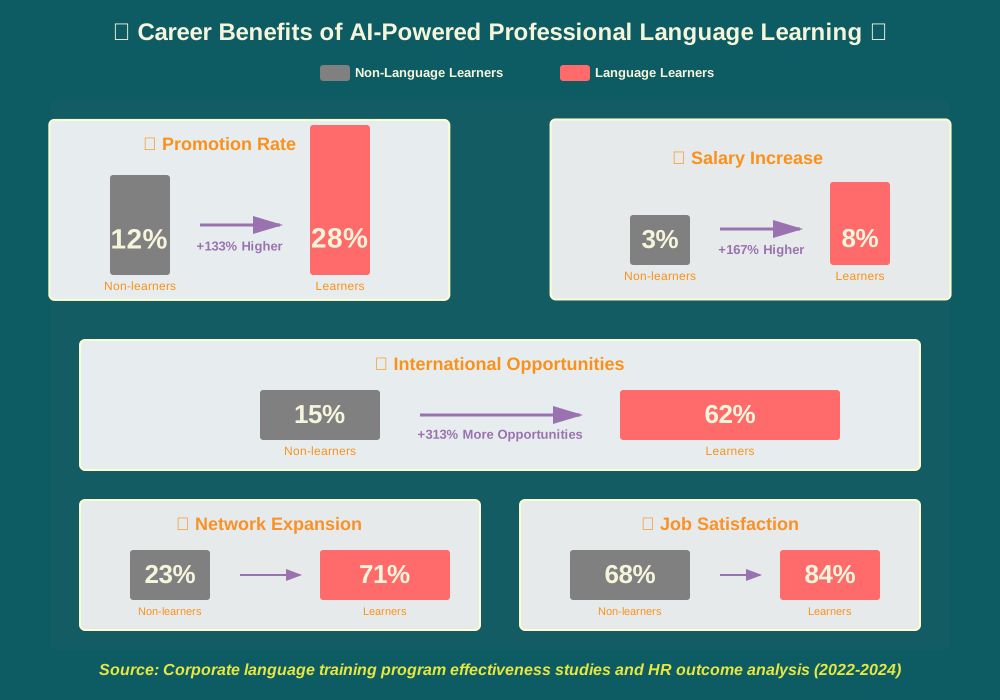
Career Advancement through AI-powered language learning has become increasingly important in our globalized economy, where language skills open doors to international opportunities, enhance professional credibility, and enable communication with diverse colleagues and clients. Professional language learners face unique challenges—limited time, specific vocabulary needs, high stakes for proficiency—that AI tools are particularly well-suited to address.
Business professionals benefit enormously from AI’s ability to provide focused, efficient learning experiences that fit into demanding schedules. Instead of spending hours in traditional classes, professionals can use AI-powered apps during commutes, lunch breaks, or travel time, accumulating practice in small increments that traditional instruction methods cannot accommodate. The AI ensures these fragmented study sessions remain effective through intelligent scheduling of reviews, progressive difficulty adjustment, and maintaining continuity across learning sessions separated by hours or days.
Specialized vocabulary acquisition represents a crucial area where AI excels for professionals. An engineer learning German needs technical terminology that differs dramatically from what a hospitality worker learning German requires. AI systems can create customized vocabulary lists, generate practice materials using industry-specific contexts, and prioritize terms most relevant to your specific professional role. Some advanced platforms can even analyze job descriptions or professional documents you provide to identify precisely which language skills you need for your career goals.
The assessment and certification dimensions are particularly important for professional learners. Many employers require demonstrated language proficiency, and AI-powered assessment tools provide objective measurement of your current level, help you prepare for standardized proficiency exams, and track your progress toward certification goals. Some platforms offer certificates recognized by employers, providing tangible credentials that validate your language skills in professional contexts.
Beyond individual skill development, AI enables unprecedented efficiency in workplace language training programs. Organizations can use AI platforms to deliver consistent training across geographically distributed teams, track employee progress toward proficiency goals, identify struggling learners who need additional support, and measure the return on investment in language training. This capability makes professional language development more accessible and accountable than ever before.
AI for Language Learning: Overcoming Plateaus and Maintaining Progress
Overcoming Plateaus and Maintaining Progress represents one of the most frustrating challenges language learners face—the experience of making rapid initial progress followed by periods where improvement seems to stall despite continued effort. AI tools offer sophisticated solutions for breaking through these plateaus by identifying subtle weaknesses, introducing varied practice formats, and maintaining motivation during challenging phases of language acquisition.
Language learning plateaus often occur because learners have mastered the most common, high-frequency language elements but struggle with less frequent structures, specialized vocabulary, or nuanced aspects of communication that require extensive exposure. AI systems excel at identifying these specific gaps. By analyzing your performance across thousands of interactions, the AI can pinpoint precisely which grammatical structures you consistently avoid, which vocabulary domains remain underdeveloped, or which aspects of pronunciation need targeted work. This diagnostic capability enables strategic intervention rather than continued unfocused practice.
The solution to plateaus often involves introducing greater variety and complexity into your learning activities. AI systems can automatically vary practice formats to prevent the staleness that contributes to plateaus—switching between different exercise types, introducing new content domains, adjusting difficulty in specific skill areas, or adding completely new challenge types. This algorithmic introduction of productive variety keeps learning fresh while ensuring you continue developing comprehensively rather than repeatedly practicing only what you’ve already mastered.
Maintaining motivation during plateaus requires sophisticated approaches that AI systems increasingly provide. By setting micro-goals focused on specific improvements, celebrating small victories, and providing comparative progress data that shows continued development even when overall proficiency seems static, these systems help learners maintain engagement during challenging periods. The key is shifting focus from absolute proficiency level (which may not change dramatically during a plateau) to measurable progress in specific sub-skills (which continues even when overall advancement slows).
From my experience, the most effective approach combines AI analytics with deliberate strategy changes. When AI tools indicate you’ve hit a plateau, actively introduce new learning modalities—if you’ve been focusing on reading, add more listening practice; if you’ve emphasized vocabulary, shift focus to grammatical accuracy; if you’ve practiced primarily alone, add conversation with native speakers. The AI provides the diagnostic insight; you provide the strategic response.
AI and Language Learning: The Role of Voice Recognition Technology
The Role of Voice Recognition Technology in AI-powered language learning cannot be overstated—it’s the breakthrough that transformed passive study into interactive conversation and made pronunciation feedback accessible to every learner regardless of location or budget. Modern voice recognition systems can analyze your spoken language with remarkable sophistication, providing feedback that rivals and in some ways surpasses what human teachers can offer.
The technology works by converting your speech into digital waveforms, analyzing these patterns across multiple dimensions—pitch, duration, intensity, and phonemic content—and comparing them against models of native speaker pronunciation. Advanced systems can identify specific articulation errors, detect prosodic issues (rhythm, stress, and intonation), and even recognize when you’re struggling with particular sound combinations. This multi-dimensional analysis enables precise feedback: instead of just hearing “that’s not quite right,” you learn exactly what physical adjustment to make to produce the correct sound.
What makes voice recognition particularly transformative is its availability. Historically, detailed pronunciation feedback required working one-on-one with trained instructors—expensive and often inaccessible. Voice recognition brings this capability to anyone with a smartphone, democratizing access to pronunciation instruction that was previously available only to privileged learners. Students in remote areas, people with limited budgets, and learners with scheduling constraints that prevent them from attending classes—all now have access to sophisticated pronunciation coaching.
The technology continues improving rapidly. Early systems struggled with accents, background noise, and individual voice characteristics. Modern implementations use neural networks trained on diverse speaker populations, enabling them to understand learners regardless of their native language background, accommodate various speech characteristics, and function effectively in realistic (sometimes noisy) environments. They’re also becoming better at understanding context, so they can distinguish between pronunciation errors and intentional variation for emphasis or expression.
However, users should understand the limitations. Voice recognition systems occasionally misinterpret speech, especially when learners make unusual errors or speak in very noisy environments. They may overemphasize perfect pronunciation in situations where native speakers would accept considerable variation. And they cannot fully replace the feedback that skilled human teachers provide about cultural appropriateness, communicative effectiveness, or the subtle pragmatics of language use. Use voice recognition as a powerful tool for developing clear, comprehensible pronunciation while remembering it’s one component of comprehensive language development.
AI-Based Language Learning for Children: Early Language Acquisition
Early Language Acquisition through AI-based tools represents both tremendous opportunity and important responsibility as we consider how young learners can benefit from these technologies while protecting their development, privacy, and healthy relationship with technology. Children’s language learning differs fundamentally from adult learning in ways that affect how AI tools should be designed and used for this population.
Children acquire languages through immersion, play, and social interaction more naturally than adults, who typically rely more heavily on conscious study and rule learning. Well-designed AI language learning tools for children leverage these natural tendencies through game-based learning, storytelling, interactive conversations with AI characters, and multi-sensory experiences that feel like play rather than study. The most effective systems use voice interaction, visual rewards, and narrative progression to create engaging experiences that develop language skills incidentally while children focus on having fun.
The safety and appropriateness considerations for children using AI learning tools are paramount. Parents and educators must carefully evaluate tools for age-appropriateness, ensuring content is suitable and that interactions are safe. Privacy protection is especially critical for children—tools should collect minimal data, store it securely, never share it for commercial purposes, and ideally allow parent oversight. The interface should be simple, intuitive, and designed for the child’s developmental level, with clear boundaries about appropriate use and easy access to adult support when needed.
Screen time balance remains an important consideration. While AI language learning tools can be highly effective, they should complement rather than replace human interaction, physical play, and other developmental activities essential for children’s healthy growth. Research suggests that young children (especially those under five) benefit most from language learning through direct interaction with caring adults, with technology serving as a supplement rather than the primary learning mode. As children grow older, AI tools can play increasingly significant roles while still maintaining balance with other activities.
The quality of AI language learning tools for children varies dramatically. Look for tools developed with input from child development experts, designed with age-appropriate pedagogical approaches, and focused on genuine language skill development rather than just entertainment. The best tools provide transparency to parents about learning objectives, enable parent monitoring of progress, and facilitate parent-child interaction around language learning rather than isolating children with technology.
AI for Language Learning: Identifying and Addressing Individual Weaknesses
Identifying and Addressing Individual Weaknesses efficiently and systematically represents perhaps AI’s greatest contribution to language learning. Every learner has unique strengths and weaknesses—particular sounds they struggle to pronounce, specific grammatical structures that confuse them, vocabulary domains where they’re less developed, or communication contexts where they feel less confident. Traditional instruction addresses common challenges but often misses individual learner needs. AI provides personalized diagnostic capability and targeted intervention at a scale impossible through human instruction alone.
The diagnostic process begins immediately when you start using AI language learning tools. Every interaction—vocabulary review, pronunciation practice, grammar exercise, conversation attempt—generates data about your performance. Over time, these data points accumulate into detailed profiles of your abilities across numerous specific skill dimensions. The AI identifies patterns invisible in individual interactions: perhaps you consistently confuse two similar grammatical structures, regularly mispronounce words containing specific sound combinations, or show vocabulary gaps in particular semantic domains.
What makes AI diagnostics particularly powerful is the granularity of analysis. Rather than general assessments like “needs to improve grammar,” AI systems can identify specific issues like “struggles with subjunctive mood in temporal clauses” or “confuses perfect and imperfect past tenses when describing completed actions.” This precision enables targeted intervention—you receive practice materials, explanations, and exercises focused exactly on your genuine weaknesses rather than spending time on concepts you’ve already mastered or working through generic materials that only partially address your needs.
The intervention itself adapts dynamically based on your progress. When you master a previously problematic structure, the system reduces practice frequency for that item and shifts attention to other areas. If you’re not improving on a particular skill despite practice, the AI can try different teaching approaches—switching from explicit rule explanation to pattern recognition through examples, varying practice formats, adjusting difficulty curves, or recommending human tutor support for concepts that require more sophisticated explanation than AI can provide.
From a learner agency perspective, AI weakness identification tools empower you to take control of your learning. Rather than wondering vaguely why you’re not progressing or which areas need attention, you receive concrete data about specific skills requiring work. This clarity enables strategic study planning, helps you communicate needs to human teachers when you have them, and provides motivation through visible progress as you systematically address identified weaknesses. The key is using this diagnostic information actively rather than passively following the AI’s recommendations—understand your weaknesses, develop learning strategies, and take ownership of your improvement.
AI and Language Learning: The Impact of Machine Learning on Education
The Impact of Machine Learning on Education extends far beyond language learning, but this domain provides particularly clear examples of how machine learning algorithms fundamentally transform educational possibilities. Machine learning—the AI subset focused on systems that improve through experience rather than following fixed programming—enables adaptive, personalized, and increasingly sophisticated educational technologies that would have been pure science fiction just decades ago.
The transformation begins with personalization at scale. Traditional education faces an inherent limitation: human teachers can adapt instruction for classes of 20-30 students but cannot provide truly individualized learning paths for each student across every skill dimension. Machine learning systems can maintain separate adaptive models for thousands or millions of learners simultaneously, each receiving instruction optimized for their current knowledge state, learning preferences, and goals. This personalization extends across numerous dimensions—difficulty level, content topics, practice scheduling, feedback detail, and motivational approaches—creating genuinely individualized learning experiences.
Predictive capabilities represent another revolutionary aspect. Machine learning systems can predict which learners are likely to struggle with specific concepts, estimate how long particular skills will take to master, forecast when learners are at risk of disengagement, and identify optimal moments for introducing new material. These predictions enable proactive intervention—addressing potential problems before they become significant obstacles, maintaining optimal challenge levels, and keeping learners engaged through carefully timed advancement. The predictive models improve continuously as more learners use the system, creating increasingly accurate forecasting.
The analytical insights machine learning provides transform educational research and practice. By analyzing millions of learning interactions, these systems identify patterns about effective teaching methods, discover which pedagogical approaches work best for different learner populations, reveal unexpected relationships between different skills, and continuously test variations to optimize learning outcomes. This data-driven approach to educational improvement operates at scales and speeds impossible through traditional educational research, accelerating the discovery of more effective teaching methods.
However, we must approach machine learning in education thoughtfully. These systems reflect the data they’re trained on, potentially perpetuating existing educational inequities or biases present in training data. They optimize for measurable outcomes, which may not capture all important educational goals—creative thinking, cultural sensitivity, love of learning—that are harder to quantify. Privacy implications require careful consideration, as effective machine learning often requires collecting extensive data about learners. The most responsible approach combines machine learning’s powerful capabilities with human judgment, ethical considerations, and commitment to equitable access.
AI-Driven Language Learning for Travel: Practical Communication Skills
Practical Communication Skills for travel represent a perfect application for AI-driven language learning tools—focused, achievable goals; clear use cases; time-constrained preparation; and forgiving contexts where perfect fluency isn’t required. Travelers learning just enough language for their destination benefit enormously from AI’s ability to provide targeted, efficient instruction focused on high-value communication skills most relevant to tourism contexts.
The preparation timeline for travel language learning differs from comprehensive language study. Instead of years working toward fluency, travelers typically have weeks or months to develop basic communication skills. AI systems excel at this focused, time-limited preparation through intelligent prioritization of essential vocabulary, phrases, and cultural knowledge. The algorithms identify high-frequency tourism language—greetings, navigation, food ordering, shopping, emergency communication—and structure learning to maximize practical competence in minimal time. This targeted approach helps travelers achieve functional communication ability far more quickly than comprehensive language programs could.
Scenario-based learning works particularly well for travel preparation, and AI enables sophisticated simulation of realistic travel situations. Learners can practice ordering at restaurants with virtual servers who respond naturally to their requests, navigate simulated transportation systems, handle hotel check-ins, ask for directions, or manage emergency situations through interactive role-play. The AI adjusts scenario complexity based on your proficiency and can replay situations with variations to develop flexible communication skills rather than memorized scripts. This practice builds both language skills and confidence for real-world encounters.
Mobile AI translation tools have become indispensable travel companions, providing real-time assistance when your language skills fall short. Modern apps can translate signs through your phone camera, facilitate real-time conversations through speech translation, and provide offline translation capabilities when internet access isn’t available. However, we must approach these tools as backups rather than primary communication methods—attempting communication in the local language, even imperfectly, shows respect for local culture and often leads to warmer interactions than simply relying on translation technology. Use AI translation as a safety net while developing and practicing your own language skills.
The cultural dimension of travel language learning deserves particular attention. Language and culture intertwine inseparably, and effective communication requires cultural awareness alongside linguistic competence. Quality AI travel language tools incorporate cultural notes about appropriate greetings, gesture meanings, social norms, topics to avoid, and regional customs. While AI-provided cultural information should be supplemented with human perspectives and authentic cultural materials, these features help travelers avoid unintentional rudeness and engage more respectfully with local communities.
AI for Language Learning: Adapting to Different Dialects and Accents
Adapting to Different Dialects and Accents presents both challenges and opportunities for AI-powered language learning systems. Languages vary tremendously across geographic regions, social contexts, and speaker populations—what’s considered standard in one location might sound unusual in another, and learners must decide which variety of a language to target and how to understand the diversity they’ll encounter in real-world communication.
Traditional language learning materials typically teach a standardized or prestige variety—Castilian Spanish from Spain, Parisian French, Modern Standard Arabic, or Beijing Mandarin—which may differ significantly from varieties learners actually encounter. AI systems increasingly offer exposure to multiple dialects and accents, helping learners develop receptive skills (understanding) across varieties while developing productive skills (speaking) in their target variety. This dialect awareness better prepares learners for real-world communication, where they’ll encounter diverse speakers.
The technological capability to work with multiple varieties has improved dramatically. Modern speech recognition systems trained on diverse speaker populations can understand various accents and dialects rather than accepting only standardized pronunciation. This inclusivity benefits learners whose native language influences their accent, as systems don’t penalize them for pronunciation characteristics that don’t impede comprehension. Advanced systems can even be configured to help learners develop specific target accents—British versus American English, European versus Latin American Spanish—providing feedback specific to that variety.
For learners uncertain which variety to learn, consider your goals and likely language use contexts. If you’re learning Spanish for business in Mexico, Latin American Spanish makes more practical sense than Castilian Spanish. If you’re studying Arabic for religious purposes, Modern Standard Arabic may be appropriate despite limited use in casual conversation. If you’re learning English for international communication, focusing on clarity and comprehensibility may matter more than perfectly matching any single native variety. AI tools can accommodate these different goals by providing practice materials in your target variety while maintaining exposure to others.
The cultural and political dimensions of language varieties require sensitivity. Varieties spoken by marginalized or colonized populations have often been stigmatized as “incorrect” or “uneducated,” when linguistically they’re simply different systems with their own internal consistency and rich expressive capabilities. When AI systems present multiple varieties, they should do so respectfully, avoiding value judgments about which varieties are “better” or “more proper.” As learners, we should approach language variation with curiosity and respect, recognizing that all varieties are valid forms of human communication worthy of serious study and appreciation.
AI and Language Learning: The Future of Language Acquisition
The Future of Language Acquisition with AI promises developments that will further transform how humans learn languages, though we must approach predictions modestly given how rapidly this field evolves. Based on current research directions and emerging capabilities, we can identify several trends likely to shape coming years while acknowledging that the most transformative innovations may be ones we haven’t yet imagined.
Increasingly sophisticated natural conversation capabilities will make AI language tutors more flexible and responsive. Current systems can engage in impressive conversations but still show limitations in maintaining extended dialogues, understanding subtle pragmatic nuances, or demonstrating true cultural knowledge. As language models continue improving, AI conversation partners will become increasingly indistinguishable from human speakers in many contexts, providing practice opportunities that more closely replicate real communication. This progression will particularly benefit learners without access to native speaker communities.
Multimodal learning integration—combining text, speech, images, video, gesture, and augmented reality—will create increasingly immersive and effective learning experiences. Imagine learning vocabulary by pointing your phone at objects and receiving immediate translation, pronunciation, cultural context, and usage examples, or practicing restaurant conversations in augmented reality where virtual characters appear in your actual environment. These multimodal experiences engage multiple cognitive pathways simultaneously, potentially accelerating acquisition and making learning more memorable.
Affective computing—AI systems that recognize and respond to emotional states—could address the psychological dimensions of language learning more effectively. Systems might detect frustration and adjust difficulty, recognize boredom and introduce variety, or identify anxiety and provide encouragement. By attending to learners’ emotional needs alongside cognitive ones, these systems could maintain motivation and create more positive learning experiences, particularly for learners who struggle with language anxiety.
Brain-computer interfaces remain speculative but represent intriguing possibilities for the distant future. If technology enables direct neural feedback about language processing, learners might receive immediate information about comprehension accuracy, monitor attention levels, or even accelerate aspects of language acquisition through targeted neural stimulation. While such capabilities remain largely theoretical and raise profound ethical questions, they illustrate the radical transformations that may eventually be possible.
However, certain elements of language learning will likely remain fundamentally human domains regardless of AI advancement. Cultural understanding, emotional connection, creative expression, and the social bonds that form through shared language experiences cannot be fully replicated by technology. The future of language learning likely involves increasingly sophisticated AI tools working alongside continued human connection, cultural exchange, and the irreplaceable experience of communicating mind-to-mind across linguistic boundaries. Technology amplifies and accelerates, but the essentially human project of learning to communicate across cultures will remain centered on human relationships and cultural engagement.
AI-Powered Language Learning: Blended Learning Strategies
Blended Learning Strategies that combine AI tools with human instruction, social interaction, and cultural immersion represent the most effective approach to language acquisition. Neither pure traditional instruction nor complete reliance on AI provides optimal outcomes—the most successful learners strategically integrate multiple resources, using each for what it does best while compensating for inherent limitations.
The strategic approach begins with understanding what different learning modalities offer. AI tools excel at providing unlimited practice opportunities, immediate feedback, personalized difficulty adjustment, systematic coverage of learning material, and flexible scheduling that fits your life. Human instruction offers cultural insights, motivation, explanation of complex concepts, authentic conversational practice, emotional support, and adaptive teaching that responds to subtle cues. Social interaction provides real-world communication practice, cultural learning, motivation through community, and the meaningful relationships that make language learning emotionally rewarding. Authentic materials—films, books, music, and news from the target language—provide cultural knowledge, current usage examples, and engaging content that maintains motivation.
An effective blended strategy might look like this: Daily AI tool use for vocabulary review, grammar practice, and pronunciation training—taking advantage of these systems’ immediate feedback and systematic coverage. Weekly conversation practice with language exchange partners or tutors—providing authentic communication practice and cultural learning that AI cannot replicate. Regular engagement with authentic materials—reading news articles, watching films, and listening to podcasts in the target language—developing real-world comprehension and cultural knowledge. Periodic assessment to identify weaknesses and adjust focus—using both AI analytics and human feedback to ensure balanced development across all skills.
The proportions depend on your goals, resources, and current proficiency. Beginners might rely more heavily on structured AI instruction to build foundational knowledge, gradually increasing human interaction and authentic materials as their skills develop. Advanced learners might use AI tools primarily for maintenance and targeted weakness remediation while focusing mainly on authentic materials and human interaction. Professional learners with limited time might maximize AI’s flexibility for daily practice while using human instruction for targeted skill development in their specialized domain.
The key is active management of your learning strategy rather than passive reliance on any single approach. Regularly assess whether your current mix of resources is moving you toward your goals efficiently. Remain flexible, adjusting your approach as your needs evolve. Treat AI tools as powerful assistants in your learning journey rather than as complete solutions, and maintain focus on the ultimate goal: developing genuine ability to communicate, understand, and connect across linguistic and cultural boundaries.
AI for Language Learning: Mastering Idioms and Cultural Nuances
Mastering Idioms and Cultural Nuances represents one of the most challenging aspects of language learning and an area where AI tools show both impressive capabilities and important limitations. Idiomatic expressions—phrases whose meanings cannot be understood from the literal meanings of individual words—pervade all languages and cause confusion for learners who might know every word in a phrase yet miss its actual meaning. Cultural nuances—the unwritten rules about what’s appropriate, polite, or expected in different contexts—can be even harder to grasp but are essential for genuine communicative competence.
AI systems have improved remarkably at handling idiomatic language. Modern natural language processing can recognize idiomatic expressions, provide correct translations that capture meaning rather than literal wording, and explain the cultural contexts where specific idioms are used. Some systems provide extensive databases of idiomatic expressions with usage examples, regional variations, and frequency information—helping learners prioritize which expressions to learn and understand how they function in actual communication.
However, idioms and cultural nuances present ongoing challenges for AI. These elements of language are deeply embedded in specific cultural contexts that AI systems may not fully understand. An idiom might be appropriate in casual conversation but not in formal writing, suitable for some age groups but not others, or carry cultural associations that affect how it’s perceived. AI systems trained primarily on written text may not accurately represent how idioms function in spoken language or they may miss regional and demographic variations in idiomatic usage.
The most effective approach combines AI resources with exposure to authentic language use and consultation with native speakers. Use AI tools to learn common idioms, understand their literal meanings and cultural origins, and practice recognition in context. But actively engage with authentic materials—films, conversations, social media—to observe how idioms are actually used by native speakers in various situations. When possible, discuss idiomatic expressions and cultural nuances with native speakers or experienced teachers who can explain subtle dimensions that AI descriptions might miss.
Cultural nuances extend beyond idioms to encompass communication styles, politeness conventions, appropriate topics and contexts, nonverbal communication, and countless other dimensions of social interaction. While AI systems increasingly incorporate cultural information, approach these materials as starting points rather than definitive guides. Culture is dynamic, varies across individuals and subgroups, and can only be truly learned through direct experience with people from the target culture. Use AI to develop cultural awareness and avoid major missteps, but remain humble and curious, recognizing that cultural learning is lifelong and requires direct engagement with actual cultural communities.
AI and Language Learning: The Role of Natural Language Processing (NLP)
The Role of Natural Language Processing (NLP) in AI-powered language learning provides the foundation for many of the most powerful features these systems offer. NLP—the branch of AI focused on enabling computers to understand, interpret, and generate human language—powers everything from translation to grammar checking, conversation systems to content generation. Understanding NLP’s capabilities and limitations helps learners use these tools effectively and set appropriate expectations.
At its core, NLP tackles the profound challenge of computational language understanding. Human language is remarkably complex—ambiguous, context-dependent, creative, culturally embedded, and constantly evolving. NLP systems must parse grammatical structures, resolve ambiguities, understand contextual meanings, recognize pragmatic implications, and generate appropriate linguistic outputs. Recent advances using neural networks and large language models have achieved remarkable success at these tasks, though significant challenges remain.
For language learners, NLP enables several transformative capabilities. Sophisticated translation that understands context and idiomatic meaning rather than just substituting words. Grammar checkers that recognize not just rule violations but also stylistic issues and non-standard constructions appropriate to different contexts. Conversation systems that can engage in extended, meaningful dialogues rather than just responding to predetermined prompts. Content generation systems that can create customized learning materials adapted to your level and interests. Assessment tools that can evaluate free-form writing and speaking rather than just multiple-choice questions.
The underlying technology continues evolving rapidly. Earlier NLP systems relied on hand-crafted rules and linguistic knowledge—effective but brittle and difficult to scale. Modern approaches use machine learning, where systems learn patterns from enormous quantities of text data rather than following explicit rules. Recent transformer-based models like BERT and GPT represent major architectural innovations that handle context more effectively than previous approaches. These technical advances translate directly into more capable, flexible, and natural language learning tools.
However, NLP systems have important limitations that learners should understand. They may generate grammatically correct but culturally inappropriate content, struggle with highly creative or non-standard language use, produce occasional errors despite high overall accuracy, and reflect biases present in their training data. For language learners, this means using NLP-powered tools as assistants and learning aids while maintaining critical judgment, verifying important information through multiple sources, and recognizing that these systems complement rather than replace human language expertise.
AI-Driven Language Learning: Creating a Global Community of Learners
Creating a Global Community of Learners represents one of the most exciting social dimensions of AI-powered language learning—the ability to connect millions of people worldwide who share the goal of language acquisition, enabling mutual support, practice partnerships, and cultural exchange at an unprecedented scale. AI facilitates these connections through intelligent matching, coordination, and community features that overcome traditional barriers of geography, scheduling, and finding compatible learning partners.
Traditional language learning often felt isolating—studying alone from textbooks, attending classes with the same small group, or struggling to find conversation partners who speak your target language. AI-powered platforms now connect learners globally, matching you with partners based on shared interests, compatible proficiency levels, complementary language goals, and compatible schedules. These connections enable language exchange partnerships where you practice your target language with someone who speaks it natively while helping them learn your native language—mutually beneficial arrangements that provide authentic conversation practice at no cost.
The community features extend beyond one-on-one partnerships to include group activities, social learning spaces, competitions, and shared challenges. You might join a study group focused on business Spanish, participate in pronunciation challenges with learners worldwide, engage in cultural discussions with native speakers, or contribute to collaborative learning resources. These social dimensions transform language learning from solitary work into a shared experience, providing motivation through community accountability, emotional support during challenging periods, and friendships that make the journey more meaningful.
AI plays crucial roles in facilitating these communities. Intelligent matching algorithms connect compatible partners based on comprehensive profiles—not just language pairs but also interests, learning goals, personality types, and communication preferences. Scheduling assistants coordinate meeting times across time zones. Translation features enable learners at different proficiency levels to communicate effectively while still practicing their target languages. Moderation systems help maintain safe, respectful community environments. Progress tracking and shared challenges create opportunities for friendly competition that motivates continued engagement.
From safety and ethical perspectives, we must approach online learning communities thoughtfully. Verify platform safety features—reporting mechanisms, moderation, and privacy protections—before engaging. Be cautious about sharing personal information with strangers online. For children using these platforms, parent oversight and involvement is essential. Choose communities with clear conduct policies and active moderation. When connecting with practice partners, begin with text communication before video calls, maintain appropriate boundaries, and trust your instincts about interactions that feel uncomfortable. The vast majority of language learning community members are genuine learners with positive intentions, but basic safety practices remain important.
Frequently Asked Questions About AI for Language Learning
Conclusion: Your Journey to Language Mastery with AI
As we’ve explored throughout this comprehensive guide, AI for language learning has fundamentally transformed the path to linguistic proficiency—making it more accessible, personalized, efficient, and engaging than ever before. From pronunciation feedback that rivals human coaches to conversation practice available 24/7, from adaptive vocabulary systems that optimize retention to immersive virtual environments that bring language contexts to life, artificial intelligence provides tools that previous generations of language learners could only dream about.
Yet technology remains a tool—powerful and transformative, but ultimately in service of the fundamentally human project of communicating across linguistic boundaries. The most successful language learners combine AI’s strengths with human connection, cultural engagement, and the irreplaceable experience of authentic communication. They use AI for what it does best—providing unlimited patient practice, immediate detailed feedback, systematic skill-building, and personalized adaptation—while maintaining focus on the ultimate goal: developing genuine ability to understand, express, and connect with people across cultures.
As both an educator and a lifelong language learner, I encourage you to approach AI language learning tools with informed enthusiasm—embracing their remarkable capabilities while understanding their limitations, using them strategically as part of comprehensive learning approaches, and maintaining the curiosity and cultural humility that make language learning rewarding beyond mere skill acquisition. Start where you are, use the tools available to you, practice consistently, make mistakes without embarrassment, engage with authentic language and real speakers, and trust that with patience and persistence, linguistic proficiency will develop.
Your journey to language mastery may look different from anyone else’s—shaped by your goals, circumstances, preferences, and the unique path you forge using AI tools alongside traditional resources, human relationships, and authentic cultural experiences. What remains constant is that every hour you invest in language learning—whether practicing pronunciation with an AI coach, conversing with a language exchange partner, or immersing yourself in authentic media—brings you closer to the profound reward of communicating fluently across linguistic and cultural boundaries. The tools have never been better, the resources never more accessible, and the community of fellow learners never more supportive. Your language learning adventure awaits—embrace it with confidence, curiosity, and the knowledge that you’re equipped with powerful AI tools to accelerate your progress toward fluency.
References:
1. Karpicke, J. D., & Bauernschmidt, A. (2011). Spaced retrieval: Absolute spacing enhances learning regardless of relative spacing. Journal of Experimental Psychology: Learning, Memory, and Cognition, 37(5), 1250-1257.
2. Settles, B., & Meeder, B. (2016). A trainable spaced repetition model for language learning. Proceedings of the 54th Annual Meeting of the Association for Computational Linguistics, 1848-1858.
2. Plass, J. L., & Pawar, S. (2020). Toward a taxonomy of adaptivity for learning. Journal of Research on Technology in Education, 52(3), 275-300.
4. Viberg, O., Hatakka, M., Bälter, O., & Mavroudi, A. (2020). The current landscape of learning analytics in higher education. Computers in Human Behavior, 89, 98-110.
About the Authors
This article was written as a collaborative effort between Nadia Chen and Rihab Ahmed, combining our expertise in AI ethics, digital safety, and educational technology to provide comprehensive guidance on using AI for language learning.
Main Author: Nadia Chen is an expert in AI ethics and digital safety with over a decade of experience helping people use technology responsibly and effectively. Her focus on privacy protection, data security, and ethical AI implementation ensures that learners can leverage powerful AI tools while maintaining safety and privacy. Nadia’s work bridges the technical and human dimensions of AI, making complex technologies accessible and trustworthy for everyday users.
Co-Author: Rihab Ahmed is an educator and lifelong learner who uses AI daily to support efficient study practices. Her student perspective brings practical insights about what works in real-world learning situations, while her teaching experience ensures that strategies remain accessible to learners at all levels. Rihab’s passion for making learning efficient and enjoyable drives her exploration of educational technology that genuinely helps people achieve their goals.
Together, we’ve combined our perspectives to create a guide that’s both technically informed and practically useful—helping you harness AI’s power for language learning while navigating the technology safely, ethically, and effectively. We hope this guide empowers your language learning journey and helps you achieve the linguistic proficiency and cultural connections you’re seeking.