
AI for Learning and Development: Your Complete Guide
AI for Learning and Development is revolutionizing how we acquire new skills, train employees, and bridge knowledge gaps in today’s fast-paced workplace. We’ve spent years exploring educational technology, and we can confidently say that artificial intelligence has fundamentally changed the learning landscape. Whether you’re a training manager looking to modernize your programs, an HR professional seeking better employee development tools, or simply someone curious about how technology is reshaping education, this guide will walk you through everything you need to know.
The beauty of AI for Learning and Development lies in its ability to create personalized experiences at scale. Gone are the days of one-size-fits-all training sessions where some employees feel bored while others struggle to keep up. AI analyzes individual learning patterns, adapts content delivery, and provides real-time feedback that helps everyone learn at their optimal pace. Throughout this article, we’ll show you exactly how to leverage these capabilities for your organization or personal growth.
Understanding AI in Modern Learning Environments
Before diving into specific applications, let’s establish what we mean when we talk about AI for Learning and Development. At its core, AI in this context refers to machine learning algorithms, natural language processing, and data analytics working together to create smarter, more responsive training systems. These technologies observe how learners interact with content, identify patterns in their behavior, and make intelligent decisions about what to present next.
We’ve noticed that many people initially worry about AI replacing human instructors or trainers. That’s not what’s happening. Instead, AI acts as a powerful assistant that handles repetitive tasks, personalizes content delivery, and provides insights that help human educators make better decisions. Think of it as having a tireless teaching assistant who remembers every student’s learning history, never gets frustrated, and can analyze performance data in seconds.
The transformation happens across several dimensions: content recommendation becomes smarter, assessments become more adaptive, feedback becomes more immediate, and learning paths become truly personalized. When implemented thoughtfully, AI for Learning and Development creates an ecosystem where technology and human expertise combine to produce exceptional outcomes.
The Ultimate Guide to AI-Powered Learning Platforms for Corporate Training
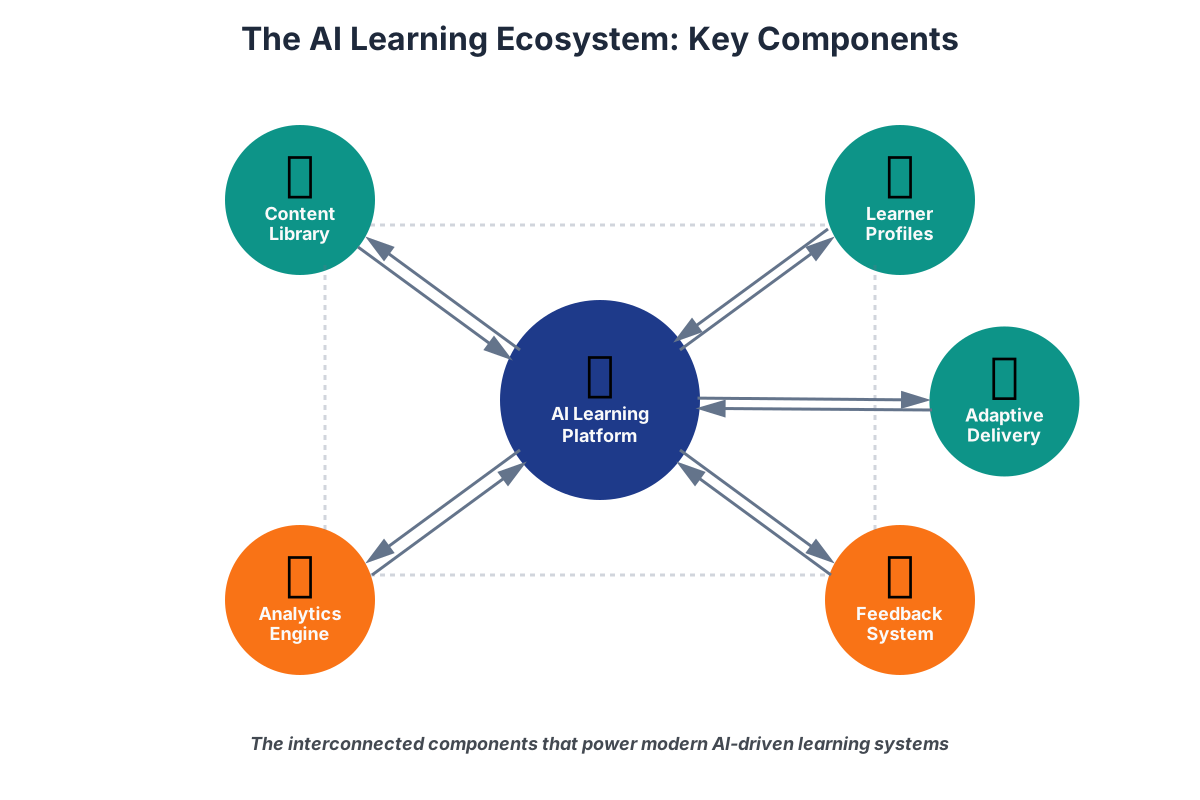
The Ultimate Guide to AI-Powered Learning Platforms for Corporate Training starts with understanding what makes these systems different from traditional Learning Management Systems. We’ve tested dozens of platforms, and the standout feature is always the same: intelligence. Modern AI-powered platforms don’t just host content; they actively participate in the learning process by making real-time decisions about what each learner needs.
When selecting an AI-powered learning platform for corporate training, look for these essential capabilities: adaptive content delivery that adjusts difficulty based on performance, intelligent recommendations that suggest relevant courses and resources, automated skills gap identification, progress tracking with predictive analytics, and integration capabilities with your existing HR systems. The best platforms combine all these features seamlessly.
Implementation requires a strategic approach. Start by auditing your current training content and identifying which materials would benefit most from AI enhancement. Typically, compliance training, onboarding programs, and skills development courses see the greatest improvements. Then, pilot the platform with a small group of employees to gather feedback before rolling it out organization-wide. We recommend allocating at least three months for this pilot phase to ensure you’ve addressed any technical or user experience issues.
Personalized Learning Paths: How AI is Revolutionizing Employee Development
Personalized Learning Paths: How AI is Revolutionizing Employee Development represents one of the most exciting applications of artificial intelligence in workplace learning. Traditional training programs forced everyone through the same sequence of modules, regardless of their existing knowledge, learning speed, or career goals. AI changes this completely by creating dynamic pathways that adapt to each individual.
Here’s how it works in practice. When an employee begins a training program, the AI system assesses their current knowledge level through diagnostic questions or by analyzing their role and previous learning history. Based on this assessment, the system constructs a customized learning journey that skips content they already know, focuses on areas needing improvement, and aligns with their career objectives. As they progress, the AI continuously refines the path based on their performance, engagement patterns, and feedback.
We’ve seen remarkable results from organizations implementing personalized learning paths. Training completion rates increase by 40-60% because employees find the content relevant and appropriately challenging. Time-to-competency drops significantly since learners aren’t wasting time on material they’ve already mastered. Perhaps most importantly, employee satisfaction with training programs improves dramatically when people feel the learning experience respects their time and individual needs.
Creating effective personalized learning paths requires high-quality content tagging and clear learning objectives. Each piece of content must be labeled with skill tags, difficulty levels, and prerequisites. The AI uses this metadata to construct coherent paths that build knowledge progressively. Don’t worry if your content library isn’t perfectly tagged initially; most AI systems can suggest tags based on content analysis, and you can refine them over time.
AI-Driven Skills Gap Analysis: Identifying and Addressing Workforce Deficiencies
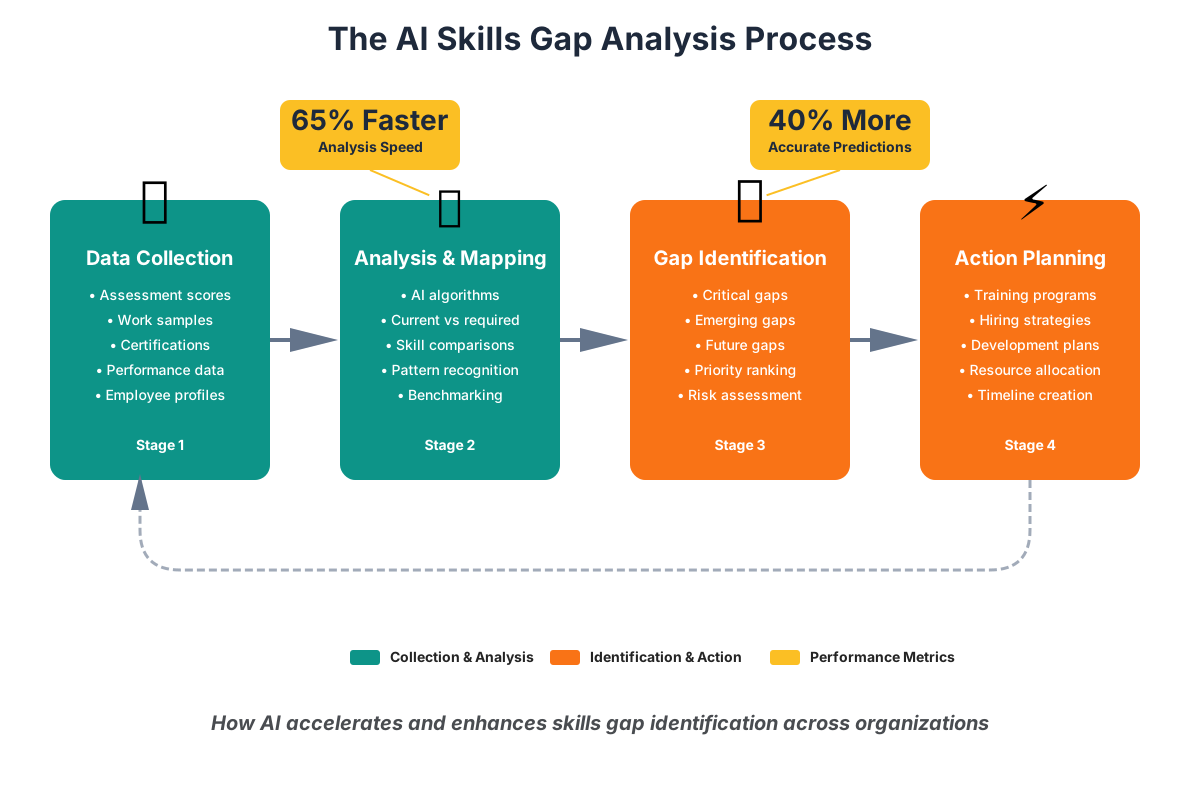
AI-Driven Skills Gap Analysis: Identifying and Addressing Workforce Deficiencies gives organizations unprecedented visibility into their talent capabilities. Rather than relying on annual performance reviews or manager assessments alone, AI continuously analyzes multiple data sources to create comprehensive skills profiles for each employee and identify gaps at both individual and organizational levels.
The analysis process aggregates data from various sources: completed training courses, assessment results, project work, peer feedback, and even LinkedIn profiles or professional certifications. AI algorithms then map these data points against role requirements, industry benchmarks, and strategic business objectives to identify misalignments. The system can predict which skills will become critical in the future based on industry trends and your company’s strategic direction.
What makes this particularly powerful is the scale and speed. A single L&D professional might take weeks to manually assess skills across a department. AI performs the same analysis across your entire organization in minutes, updating the results continuously as new data becomes available. This real-time visibility allows you to address skill gaps before they impact business performance.
When interpreting AI-driven skills gap analysis, focus on three categories: critical gaps that require immediate attention, emerging gaps that need proactive planning, and future gaps based on projected business needs. Prioritize closing critical gaps first, typically through intensive training programs or strategic hiring. For emerging and future gaps, develop long-term learning pathways that prepare employees gradually.
The Role of AI in Adaptive Learning: Tailoring Content to Individual Needs
The Role of AI in Adaptive Learning: Tailoring Content to Individual Needs goes beyond simple personalization to create truly responsive learning experiences. While personalized learning paths determine which content to present, adaptive learning adjusts how that content is delivered based on real-time learner performance and engagement signals.
Adaptive learning systems monitor dozens of factors as learners interact with content: how long they spend on each section, which questions they answer correctly, where they rewatch videos, when they take breaks, and how their performance changes over time. The AI interprets these signals to understand whether the learner is struggling, bored, or progressing well, then adjusts accordingly.
The adjustments happen in several ways. If a learner consistently answers questions correctly, the system increases difficulty to maintain engagement and accelerate progress. When someone struggles with a concept, the system might present the same information using a different format (switching from text to video, for example), offer additional practice exercises, or provide supplementary resources. The goal is to keep each learner in their optimal challenge zone, where material is neither too easy nor too difficult.
Implementing adaptive learning effectively requires thinking carefully about how you structure content. Break materials into small, modular chunks that can be rearranged flexibly. Create multiple explanations or presentations of the same concept using different approaches (visual, textual, example-based, and theoretical). Design assessment questions at various difficulty levels. The more flexibility you build into your content architecture, the more effectively AI can adapt the learning experience.
AI-Powered Content Curation: Finding the Best Learning Resources for Your Team
AI-Powered Content Curation: Finding the Best Learning Resources for Your Team solves one of the biggest challenges in modern L&D: information overload. With thousands of online courses, articles, videos, and tutorials available on any topic, how do you identify which resources will actually help your team develop specific skills? AI content curation systems act as intelligent filters and recommenders, surfacing the most relevant, high-quality resources for each learner’s needs.
These systems work by analyzing content from multiple sources (your internal learning library, third-party course platforms, open educational resources, and industry publications) and evaluating it against several criteria: relevance to specific skills or topics, quality indicators like ratings and reviews, appropriate difficulty level, content freshness, and alignment with learning objectives. The AI also considers each learner’s history, preferences, and current development goals when making recommendations.
We’ve found that effective content curation significantly reduces the time learners spend searching for resources and increases the likelihood they’ll engage with recommended materials. Instead of browsing through dozens of courses hoping to find the right one, employees receive targeted suggestions that match their exact needs. This efficiency gain alone can improve productivity by several hours per month per employee.
To maximize the value of AI-powered content curation, encourage learners to rate and review the resources they use. This feedback helps the AI refine its recommendations over time. Also, regularly audit the recommended content to ensure it aligns with your organization’s quality standards and values. While AI excels at pattern matching and relevance scoring, human judgment remains essential for evaluating whether content reflects your company culture and learning philosophy.
AI Chatbots as Learning Assistants: Providing On-Demand Support and Guidance
AI Chatbots as Learning Assistants: Providing On-Demand Support and Guidance brings immediate, personalized help to learners whenever they need it. Rather than waiting for instructor office hours or searching through FAQ documents, employees can ask questions conversationally and receive instant answers tailored to their specific situation and learning context.
Modern learning chatbots do much more than answer factual questions. They can explain complex concepts in multiple ways until the learner understands, provide step-by-step guidance through difficult procedures, suggest relevant resources based on the conversation, quiz learners to check comprehension, and even offer motivational support when someone feels frustrated or discouraged. The best chatbots integrate directly into your learning platform so they have full context about what the learner is studying and where they might be struggling.
From our experience implementing learning chatbots, success depends heavily on proper training and integration. The chatbot needs access to comprehensive information about your training content, common learner questions, and subject matter expertise. Most effective implementations involve subject matter experts spending time teaching the chatbot about nuances and edge cases. This upfront investment pays off through reduced support tickets and improved learner satisfaction.
When introducing a learning chatbot to your organization, set appropriate expectations. Make clear that the chatbot excels at answering specific questions and providing guidance but won’t replace human instructors for complex discussions or personal mentorship. Position it as a first line of support that’s always available, with clear pathways to escalate to human experts when needed. Monitor chatbot conversations regularly to identify topics where it struggles and refine its knowledge base accordingly.
AI for Microlearning: Delivering Bite-Sized Learning Experiences for Busy Professionals
AI for Microlearning: Delivering Bite-Sized Learning Experiences for Busy Professionals recognizes that modern workers rarely have hours to dedicate to training. AI optimizes microlearning by determining the most impactful content to deliver, the ideal timing for delivery, and the most effective format for each individual learner.
Microlearning breaks down complex topics into focused, 3-10 minute modules that address a single learning objective. AI enhances this approach by analyzing when each employee has learning opportunities (perhaps during their commute, between meetings, or during traditionally low-productivity times) and pushing relevant microlearning content at those moments. The system learns each person’s patterns and preferences, delivering content when they’re most likely to engage with it.
The content itself also benefits from AI optimization. Rather than simply dividing longer courses into smaller chunks, AI identifies the core concepts that must be learned first and builds micro-modules that create a logical progression. It tests different formats (short video, interactive quiz, infographic, scenario-based challenge) to determine which ones each learner prefers and retains information from best.
Creating an effective AI-powered microlearning program starts with content atomization. Review your existing training materials and identify discrete concepts or skills that can stand alone. Develop each as a complete micro-module with a clear objective, focused content, and a quick knowledge check. Tag these modules extensively so the AI can understand their relationships and sequence them appropriately. Over time, the system will optimize both the content selection and delivery timing based on learner engagement and performance data.
Gamification and AI: Enhancing Engagement and Motivation in Learning Programs
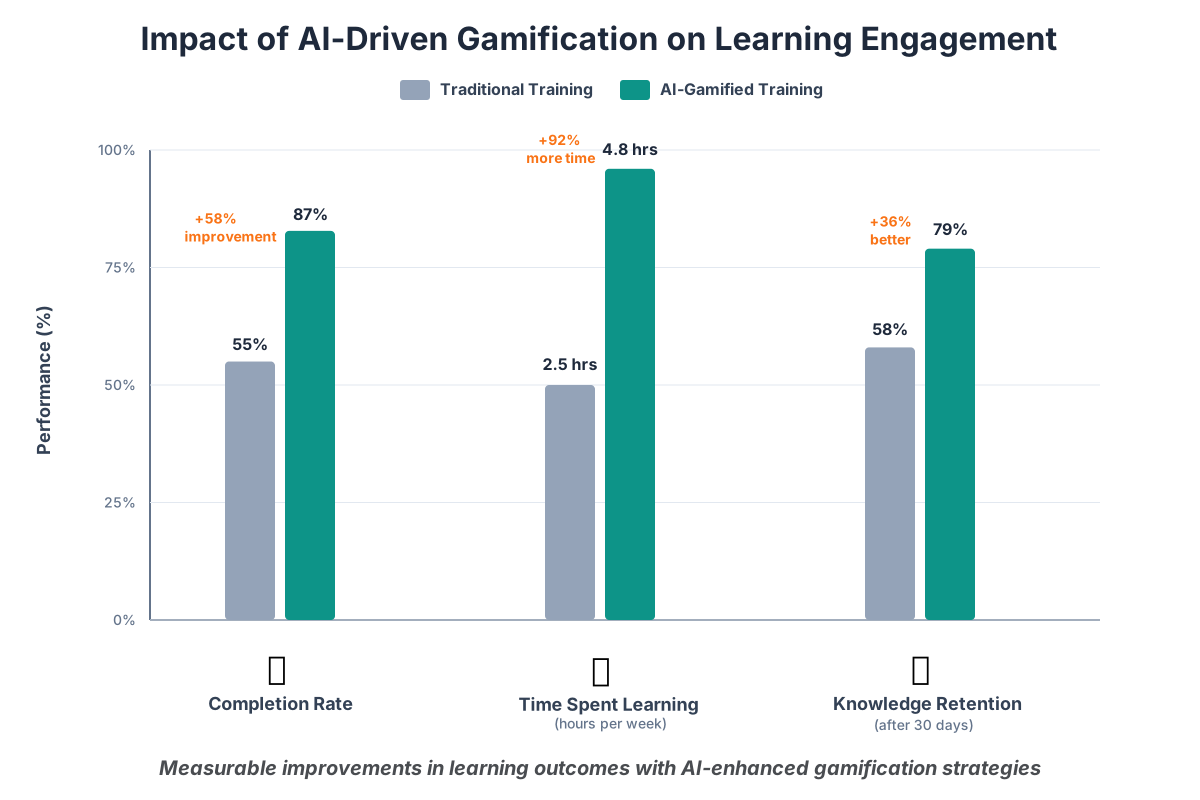
Gamification and AI: Enhancing Engagement and Motivation in Learning Programs combines game mechanics with intelligent personalization to make learning genuinely enjoyable. While basic gamification adds points, badges, and leaderboards to learning activities, AI-enhanced gamification adapts game elements to each learner’s motivational drivers and competitive preferences.
AI analyzes how different learners respond to various game mechanics. Some people thrive on competition and leaderboards, pushing themselves to reach the top rankings. Others prefer personal achievement tracking that shows their individual progress without comparing to peers. Still others respond best to narrative-driven experiences where they unlock story elements by completing learning objectives. AI identifies these preferences through learner behavior and adjusts the gamification strategy accordingly.
The system also manages challenge levels in gaming elements to maintain engagement. If leaderboards become dominated by a few high performers, AI might create tier-based competitions where learners compete within skill-level groups. When someone loses motivation, the system might introduce a time-limited challenge or unlock a special reward to re-engage them. This dynamic adjustment keeps the gaming elements fresh and motivating rather than becoming stale or discouraging.
Implementing AI-driven gamification requires balancing fun with learning objectives. Start by identifying which aspects of your training program suffer from low engagement and consider how game mechanics might help. Design game elements that reinforce desired learning behaviors, like rewarding deep engagement with challenging content rather than just speed of completion. Test different approaches with various learner segments and let the AI optimize based on actual engagement and learning outcomes data.
AI-Driven Performance Feedback: Providing Actionable Insights for Employee Growth
AI-Driven Performance Feedback: Providing Actionable Insights for Employee Growth transforms how organizations monitor and support employee development. Traditional performance reviews happen quarterly or annually, creating long gaps where struggling employees receive no guidance and high performers lack recognition. AI enables continuous feedback loops that identify issues immediately and celebrate achievements in real-time.
AI analyzes multiple performance signals simultaneously: learning assessment results, on-the-job application of new skills, project outcomes, peer feedback, and even communication patterns in collaborative tools. By synthesizing these diverse data sources, AI creates a comprehensive picture of how each employee is progressing in their development journey. The system identifies trends that humans might miss, like subtle declines in performance that precede burnout or emerging strengths that suggest someone is ready for new challenges.
The feedback itself becomes more specific and actionable. Rather than generic comments like “needs improvement in communication,” AI-driven systems might note “demonstrates strong written communication in reports but struggles with clarity in verbal presentations to large groups; consider practicing with smaller teams first.” This specificity helps employees understand exactly what to work on and how to improve.
For managers, AI-driven performance feedback serves as an early warning system and coaching guide. The system alerts managers when an employee’s learning progress stalls, when someone consistently excels in specific areas, or when performance patterns suggest they’re ready for advancement. Managers receive recommended talking points and development suggestions based on each employee’s specific situation, making coaching conversations more productive.
The Ethics of AI in Learning and Development: Ensuring Fairness and Transparency
The Ethics of AI in Learning and Development: Ensuring Fairness and Transparency addresses critical concerns that organizations must consider when implementing AI learning systems. While these technologies offer tremendous benefits, they also raise important questions about data privacy, algorithmic bias, autonomy, and the appropriate role of AI in human development.
Data privacy stands as a primary concern. AI learning systems collect extensive information about how employees learn, where they struggle, how long they spend on tasks, and their overall performance trajectory. Organizations must establish clear policies about what data is collected, how it’s used, who has access, and how long it’s retained. We recommend implementing data minimization principles, collecting only information necessary for improving learning outcomes, and providing employees transparency about their data.
Algorithmic bias represents another significant challenge. If AI systems are trained on historical data that reflects past inequities, they may perpetuate or amplify those biases in their recommendations and assessments. For example, if career advancement historically favored certain demographic groups, an AI trained on that data might unfairly recommend different development paths to different employees. Mitigating this requires diverse training data, regular bias audits, and human oversight of AI recommendations.
Transparency and explainability matter enormously in learning contexts. Employees deserve to understand why an AI system recommends certain courses, how their performance is being assessed, and what factors influence their personalized learning paths. Black-box AI systems that make opaque decisions create anxiety and undermine trust. Look for AI learning platforms that provide clear explanations for their recommendations and allow learners to understand how the system works.
Establish governance frameworks before implementing AI in learning and development. Create committees that include L&D professionals, IT security, legal counsel, and employee representatives to review AI systems, audit for bias, and ensure ethical usage. Develop clear escalation procedures for when employees feel an AI system has treated them unfairly. Most importantly, position AI as a tool that augments human judgment rather than replacing it, maintaining human decision-makers in critical choices affecting careers and development.
AI and the Future of Learning Design: Transforming the Role of Instructional Designers
AI and the Future of Learning Design: Transforming the Role of Instructional Designers explores how artificial intelligence is reshaping this profession in exciting ways. Rather than making instructional designers obsolete, AI elevates their work by handling routine tasks and providing data-driven insights that inform better design decisions.
Instructional designers increasingly act as AI curators and strategists. They define learning objectives, establish pedagogical frameworks, and determine which AI capabilities to leverage for different learning outcomes. Their expertise in learning theory becomes even more valuable as they guide AI systems toward pedagogically sound approaches rather than simply optimizing for engagement metrics that might not reflect deep learning.
AI handles many time-consuming aspects of course development. It can generate draft content based on source materials, create assessment questions aligned with learning objectives, suggest multimedia elements that enhance understanding, and even prototype different course structures for A/B testing. This automation frees designers to focus on creative problem-solving, complex learning challenges, and the human elements of education that technology cannot replicate.
The skill set for instructional designers evolves in this AI-enhanced environment. Beyond traditional instructional design expertise, designers need basic data literacy to interpret AI analytics, understanding of AI capabilities and limitations, familiarity with prompt engineering to guide generative AI tools, and strategic thinking about which tasks to automate versus which require human judgment. We encourage current instructional designers to develop these complementary skills through courses, experimentation, and peer learning.
Measuring the ROI of AI in Learning and Development: Demonstrating the Value of Investment
Measuring the ROI of AI in Learning and Development: Demonstrating the Value of Investment helps organizations justify their AI implementation costs and optimize their approach. While AI learning systems require significant investment, the returns typically far exceed costs when measured comprehensively.
Calculate ROI across multiple dimensions. Direct cost savings come from reduced training time (employees reach competency faster), decreased need for in-person instruction, lower content development costs through AI assistance, and reduced administrative overhead. We’ve seen organizations cut training time by 30-50% while improving outcomes, translating to substantial productivity gains.
Measure performance improvements systematically. Compare pre- and post-implementation metrics for training completion rates, assessment scores, skill acquisition speed, on-the-job performance improvements, and employee satisfaction with learning programs. Track how quickly new hires reach full productivity and how effectively employees apply new skills in their work. These metrics demonstrate the qualitative improvements that AI enables.
Consider long-term strategic benefits that are harder to quantify but extremely valuable: improved employee retention through better development opportunities, enhanced organizational agility as workforce skills adapt quickly to changing needs, a stronger competitive position through faster innovation, and increased employee engagement from more relevant, personalized learning experiences.
Create a measurement framework before implementing AI systems. Establish baseline metrics for key performance indicators, define what success looks like at various time points (30 days, 90 days, and one year), and build dashboards that track progress continuously. Share these metrics with stakeholders regularly to build support and identify opportunities for optimization.
AI-Enhanced Simulations and Virtual Reality for Immersive Learning Experiences
AI-Enhanced Simulations and Virtual Reality for Immersive Learning Experiences creates safe environments where employees can practice complex skills without real-world consequences. AI makes these simulations more realistic, responsive, and pedagogically effective by adapting scenarios to learner behavior and providing intelligent feedback.
In AI-enhanced simulations, virtual scenarios respond dynamically to learner decisions. Rather than following predetermined scripts, virtual customers, patients, or colleagues react naturally based on how the learner interacts with them. The AI generates realistic dialogue, adjusts emotional responses, and creates increasingly complex situations as the learner’s skills improve. This responsiveness makes practice feel authentic and prepares employees for the unpredictability of real situations.
The AI also serves as an intelligent coach within simulations. It monitors learner actions, identifies suboptimal decisions in real-time, and provides just-in-time guidance that helps without over-scaffolding. After simulation sessions, the AI generates detailed debriefs that highlight specific moments where the learner excelled or could improve, explaining the rationale behind recommended alternatives. This feedback accelerates skill development dramatically compared to unguided practice.
Implementing simulation-based learning requires significant upfront investment in scenario design and technology infrastructure, but the payoff is substantial for skills that are expensive or dangerous to practice in reality. Sales negotiations, medical procedures, crisis management, equipment operation, and leadership conversations all benefit enormously from simulation-based practice. Start with high-impact scenarios where traditional training is most challenging or costly, then expand based on results.
Using AI to Automate Repetitive L&D Tasks: Freeing Up Time for Strategic Initiatives
Using AI to Automate Repetitive L&D Tasks: Freeing Up Time for Strategic Initiatives recognizes that L&D professionals spend enormous time on administrative work rather than strategic program design. AI automation handles many of these routine tasks, allowing learning teams to focus on higher-value activities.
Common automation opportunities include enrollment management (automatically enrolling employees in required courses based on role changes or compliance deadlines), assessment grading (particularly for objective questions and even some written responses using natural language processing), learning path assignment (matching employees to appropriate development programs based on their profiles), reminder and communication sending (nudging learners about upcoming deadlines or recommended courses), and reporting (generating regular analytics reports for stakeholders).
We’ve implemented AI automation for numerous organizations and consistently see L&D teams reclaim 20-40% of their time. They redirect this time toward strategic initiatives like designing innovative learning experiences, partnering with business units to identify emerging skill needs, mentoring managers on effective coaching practices, and building stronger learning cultures.
Start automation gradually by identifying your most time-consuming repetitive tasks and selecting one or two to automate first. Document your current manual process carefully, then work with your AI platform provider or IT team to build automated workflows. Test extensively before fully deploying to ensure automation handles edge cases appropriately. Monitor automated processes regularly initially, gradually reducing oversight as you build confidence in their reliability.
AI-Powered Language Learning: Personalized and Effective Language Training for Global Teams
AI-Powered Language Learning: Personalized and Effective Language Training for Global Teams addresses the growing need for multilingual capabilities in global organizations. AI language learning systems provide personalized instruction, conversational practice, and cultural context at a fraction of the cost of traditional language instruction.
These systems assess each learner’s current proficiency level, identify specific areas needing improvement (perhaps grammar is strong but pronunciation needs work), and create customized learning paths that emphasize professional vocabulary relevant to the learner’s role. The AI adjusts difficulty dynamically, ensuring learners are always appropriately challenged without becoming frustrated or bored.
Conversational practice represents one of the most powerful AI applications in language learning. AI-powered chatbots engage learners in realistic conversations, correcting errors gently, suggesting better phrasing, and introducing new vocabulary contextually. Unlike human conversation partners, AI is endlessly patient, available 24/7, and willing to repeat explanations as many times as needed. This removes the anxiety many people feel when practicing a new language with native speakers.
Cultural context integration helps learners understand not just how to say something but when and why particular phrases are appropriate. AI systems can explain cultural nuances, regional variations in language use, and professional communication norms that vary across cultures. This comprehensive approach produces learners who can communicate effectively and appropriately in global business contexts.
The Impact of AI on Compliance Training: Ensuring Regulatory Adherence and Reducing Risk
The Impact of AI on Compliance Training: Ensuring Regulatory Adherence and Reducing Risk makes this often-dreaded training category more effective and less burdensome. AI personalizes compliance training to each employee’s specific role and risk exposure, tracks comprehension more accurately, and provides audit trails that satisfy regulatory requirements.
Traditional compliance training often takes a one-size-fits-all approach, requiring all employees to complete the same extensive training regardless of relevance to their role. AI enables risk-based training assignment, ensuring employees receive training on regulations and policies actually applicable to their work. A finance employee might receive detailed anti-money laundering training, while a marketing employee focuses on advertising compliance and data privacy. This targeted approach improves engagement and retention while reducing wasted time.
AI assessment tools detect potential gaps in understanding that might indicate compliance risk. Rather than relying solely on test scores, AI analyzes response patterns, confidence levels, and the types of errors learners make to identify concerning knowledge gaps. The system can flag employees who might need additional training or closer monitoring, allowing organizations to proactively address compliance risks before they result in violations.
The tracking and documentation capabilities satisfy auditor requirements while reducing administrative burden. AI systems automatically generate detailed records showing who completed which training when, their performance on assessments, and any remedial training provided. These audit trails are comprehensive, searchable, and readily available for regulatory reviews, significantly reducing the time L&D teams spend preparing for audits.
AI for Leadership Development: Cultivating the Next Generation of Leaders
AI for Leadership Development: Cultivating the Next Generation of Leaders tackles one of the most challenging aspects of talent development. Leadership skills are complex, nuanced, and traditionally difficult to teach through standard training methods. AI enhances leadership development through personalized skill assessment, adaptive coaching scenarios, and continuous feedback on leadership behaviors.
AI identifies leadership potential by analyzing patterns in employee behavior and performance that correlate with successful leadership. The system might recognize that an employee consistently demonstrates strategic thinking in project proposals, facilitates effective team collaboration, or shows resilience in handling setbacks. These signals help organizations identify high-potential employees earlier and more objectively than traditional nomination processes.
The development itself becomes more targeted and effective. AI-powered simulations allow emerging leaders to practice difficult conversations like delivering constructive feedback, managing conflict, or communicating strategic changes. The AI generates realistic scenarios tailored to each learner’s specific development needs, whether that’s delegating effectively, building team trust, or making strategic decisions with incomplete information. Virtual characters respond realistically to the leader’s approach, and the AI provides detailed feedback on leadership presence, communication effectiveness, and decision-making quality.
Ongoing development support continues beyond formal programs. AI monitors how leaders apply new skills in their work (through communication analysis, 360-degree feedback integration, and team performance metrics) and provides continuous micro-coaching. A leader might receive a gentle reminder about active listening before a team meeting or encouragement about their improving strategic communication after a successful presentation.
AI in Onboarding: Creating Engaging and Effective New Hire Experiences
AI in Onboarding: Creating Engaging and Effective New Hire Experiences transforms the critical first weeks and months of employment. Effective onboarding dramatically improves retention, time-to-productivity, and employee engagement, yet many organizations still rely on generic orientation programs. AI personalizes and optimizes this experience for each new hire.
AI-powered onboarding systems create customized learning paths based on the new hire’s role, experience level, and background. Someone with 15 years of industry experience skips basic concepts and focuses on company-specific processes and culture, while a recent graduate receives more foundational training. The system considers the new hire’s learning preferences, scheduling the most engaging format and timing for each topic.
Virtual buddies powered by AI provide continuous support throughout onboarding. New hires can ask questions anytime about company policies, where to find resources, or how to complete common tasks without feeling they’re bothering busy colleagues. The AI tracks which questions each new hire asks to identify confusing aspects of your onboarding program that need clarification for future employees.
Progress monitoring helps managers and HR ensure smooth integration. AI tracks onboarding completion, identifies new hires who seem to be struggling, and suggests interventions when someone falls behind or shows low engagement. Managers receive regular updates about their new team members’ progress and recommended topics to discuss in check-in meetings. This proactive support dramatically reduces the likelihood that new hires will quietly struggle and eventually leave.
The Future of AI-Based Mentoring: Connecting Employees with the Right Mentors
The Future of AI-Based Mentoring: Connecting Employees with the Right Mentors addresses the challenge of creating meaningful mentorship relationships at scale. While most organizations recognize mentorship’s value, matching mentors and mentees effectively has traditionally been difficult. AI analyzes multiple factors to create compatible pairings and supports the mentoring relationship throughout its duration.
Matching algorithms consider far more than just job titles or departments. AI analyzes career aspirations, skill development goals, communication styles, values alignment, availability, and even personality factors that influence relationship compatibility. The system might recognize that a mentee seeking to develop strategic thinking skills would pair well with a mentor known for asking thought-provoking questions, while someone building technical expertise needs a mentor who enjoys detailed problem-solving discussions.
AI also supports the ongoing mentoring relationship by suggesting discussion topics, providing conversation starters based on current challenges either person is facing, recommending resources relevant to the mentee’s development goals, and gently nudging when relationships seem to be stalling. This support structure helps mentoring partnerships stay productive even when both participants have demanding schedules.
Virtual mentorship supplements human mentoring by providing on-demand guidance when human mentors aren’t available. AI mentorship systems draw on extensive knowledge bases of business situations, career advice, and development strategies to provide thoughtful responses to mentee questions. While not replacing human wisdom and connection, virtual mentoring ensures employees have support whenever they need it.
AI-Driven Learning Analytics: Using Data to Improve Training Effectiveness
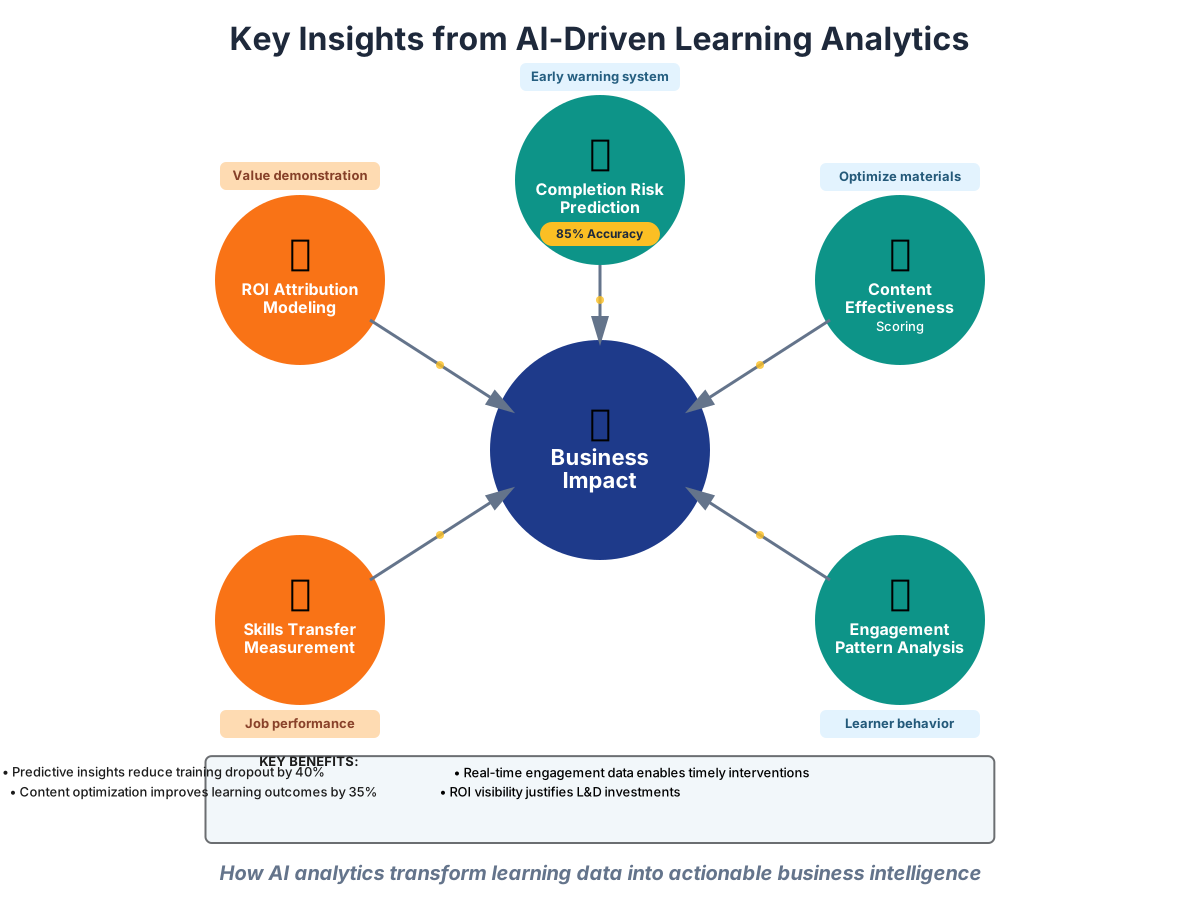
AI-Driven Learning Analytics: Using Data to Improve Training Effectiveness transforms intuition-based program improvement into data-driven optimization. AI analyzes vast amounts of learning data to identify patterns, predict outcomes, and recommend improvements that human analysts might miss.
Predictive analytics identify which learners are at risk of not completing training or failing to master critical skills. The AI spots early warning signs like declining engagement, struggling with prerequisite concepts, or patterns of superficial interaction with content. This foresight allows timely intervention before learners fall too far behind or become discouraged enough to quit.
Content effectiveness analysis reveals which learning materials actually drive skill development and which waste time. AI compares learner performance on assessments to their interaction with different content pieces, identifying high-impact resources and less effective ones. The system might discover that a particular video explanation leads to significantly better understanding than the text alternative or that certain practice exercises correlate strongly with long-term retention. These insights guide content optimization efforts toward maximum impact.
Learning transfer measurement tracks whether training actually improves job performance. AI correlates training completion and assessment scores with on-the-job performance metrics, identifying which programs drive real behavior change and which fail to transfer to work contexts. This analysis helps organizations focus investment on programs with demonstrated impact and redesign or eliminate ineffective training.
AI-Powered Accessibility in Learning: Ensuring Inclusivity for All Learners
AI-Powered Accessibility in Learning: Ensuring Inclusivity for All Learners ensures training programs work effectively for employees with diverse abilities and needs. AI dramatically improves accessibility by automatically adapting content format, providing assistive features, and personalizing the learning experience for learners with disabilities.
Automatic content transformation makes materials accessible without requiring separate versions. AI can convert text to speech with natural-sounding voices for learners with visual impairments, generate accurate captions for video content to support deaf or hard-of-hearing learners, provide text transcripts for audio materials, and even adjust reading level while preserving key information for learners with cognitive disabilities. These transformations happen automatically, ensuring accessible content is always available.
Adaptive interface customization allows learners to modify their experience based on their needs. AI remembers individual preferences like text size, color contrast, audio playback speed, and interface simplification. The system might detect when a learner seems to be struggling with the interface and proactively suggest accessibility adjustments that might help.
Language support extends beyond translation to ensure truly inclusive learning. AI can simplify complex language while maintaining meaning, explain idioms or cultural references that non-native speakers might miss, and provide contextual definitions for technical terms. This support helps ensure that language barriers don’t prevent effective learning.
Building accessibility into AI learning systems from the beginning is far more effective and less expensive than retrofitting it later. When evaluating AI learning platforms, prioritize those with strong built-in accessibility features that meet WCAG (Web Content Accessibility Guidelines) standards. Test your learning programs with actual users who have diverse abilities to identify barriers that automated testing might miss.
AI and the Gig Economy: Training and Upskilling Contract Workers
AI and the Gig Economy: Training and Upskilling Contract Workers addresses the unique challenges of developing talent in an increasingly flexible workforce. As organizations rely more on contractors, freelancers, and gig workers, they need training approaches that work for temporary team members who may not have access to traditional corporate learning programs.
AI enables rapid onboarding for gig workers by identifying the minimum essential knowledge needed for their specific role and delivering it efficiently. Rather than requiring contractors to complete weeks of comprehensive training, AI creates focused learning paths covering only what they’ll actually need for their assignment. This respects their time while ensuring they can contribute effectively.
Just-in-time skill delivery provides training exactly when contract workers need it for specific tasks. The AI might detect when a freelancer is assigned to a project requiring a skill they haven’t demonstrated recently and automatically recommend a quick refresher course. This approach minimizes time spent on training while ensuring competency.
Portable skill credentials allow gig workers to demonstrate their capabilities across different organizations. AI-powered assessment systems can issue verifiable skill badges or certificates that workers can share with multiple clients. This creates incentives for continuous learning, as workers can invest in skill development knowing they can leverage it across multiple engagements rather than just for a single employer.
AI-Driven Content Generation for L&D: Creating Engaging Learning Materials Faster
AI-Driven Content Generation for L&D: Creating Engaging Learning Materials Faster accelerates course development dramatically while maintaining quality. Generative AI tools can draft course outlines, create assessment questions, write explanatory text, generate scenarios and examples, and even produce multimedia content based on learning objectives and source materials.
The content generation process typically begins with instructional designers providing AI with learning objectives, target audience information, and source materials like subject matter expert interviews, technical documentation, or existing presentations. The AI analyzes these inputs and generates draft content that designers then review, refine, and enhance with their expertise. This collaboration allows designers to produce content in a fraction of the time manual creation requires.
Quality control remains critical when using AI content generation. All AI-generated content should be reviewed by subject matter experts for accuracy, instructional designers for pedagogical soundness, and ideally pilot tested with learners to ensure effectiveness. AI occasionally produces plausible-sounding but incorrect information, so verification is essential, especially for technical or compliance training where accuracy is crucial.
Beyond creating net-new content, AI assists with content maintenance and updating. When source materials change, AI can identify which course sections need revision and generate updated drafts. This makes keeping training current far less burdensome, encouraging organizations to maintain fresh, accurate learning materials rather than letting content become outdated.
AI for Evaluating Training Programs: Measuring Impact and Identifying Areas for Improvement
AI for Evaluating Training Programs: Measuring Impact and Identifying Areas for Improvement provides rigorous, continuous program assessment beyond traditional Kirkpatrick model evaluations. AI analyzes learning data at scale to determine which programs achieve their objectives and which need redesign.
Multi-level impact analysis correlates training participation with business outcomes. Rather than relying solely on learner satisfaction surveys and knowledge assessments, AI tracks whether trained employees actually perform better on the job, achieve business objectives more consistently, receive better performance reviews, or contribute more to team success. The system controls for confounding variables to isolate the training’s actual impact.
Comparative effectiveness studies identify which program variations work best. When organizations offer multiple approaches to developing the same skills (perhaps instructor-led training versus self-paced online courses versus blended learning), AI determines which approaches produce the best outcomes for different learner segments. These insights guide resource allocation toward the most effective training methods.
Root cause analysis for program failures goes beyond identifying underperforming training to understand why it’s not working. AI might discover that low completion rates stem from poor prerequisite alignment rather than content quality or that knowledge isn’t transferring to work because employees lack opportunities to practice new skills on the job. These diagnostic insights point toward specific improvements rather than generic recommendations.
The Convergence of AI and Neuroscience in Learning: Optimizing Training for Brain-Based Learning
The Convergence of AI and Neuroscience in Learning: Optimizing Training for Brain-Based Learning represents the cutting edge of learning science. By incorporating neuroscience insights into AI learning systems, we can design training that aligns with how brains actually process, store, and retrieve information.
Spaced repetition optimization uses AI to schedule review sessions at precisely the moments when memory consolidation occurs most effectively. Rather than arbitrary review schedules, the system calculates the optimal timing for each learner and each concept based on their individual forgetting curves. This scientifically grounded approach dramatically improves long-term retention with minimal additional time investment.
Cognitive load management ensures learners never feel overwhelmed by too much information at once while still maintaining appropriate challenge levels. AI monitors real-time signals that suggest cognitive overload (like increasing time per question or declining accuracy) and adjusts content presentation accordingly. The system might break complex explanations into smaller chunks, provide additional processing time, or offer supplementary support when cognitive load is high.
Emotion and engagement monitoring through AI analysis of interaction patterns helps identify when learners are frustrated, bored, or optimally engaged. While this doesn’t require invasive biometric monitoring, AI can infer emotional states from behavior patterns like how forcefully someone clicks, how much they multitask, or whether they’re rushing through content. The system then adapts to address emotional barriers to learning.
AI-Powered Knowledge Management: Capturing and Sharing Expertise Across the Organization
AI-Powered Knowledge Management: Capturing and Sharing Expertise Across the Organization solves the persistent problem of expertise siloed in individuals’ heads. As experienced employees retire or change roles, AI helps capture their knowledge and make it accessible to others, preserving organizational expertise.
Automated knowledge extraction analyzes documents, recorded meetings, emails, and other artifacts to identify valuable insights and best practices. Rather than requiring experts to write everything down manually, AI surfaces the most useful information from their existing work. The system organizes this knowledge, tags it appropriately, and makes it searchable for others who need similar information.
Expert identification and connection help employees quickly find internal subject matter experts. When someone faces a challenge, AI can identify colleagues who have successfully handled similar situations and facilitate connections. The system considers not just job titles but actual demonstrated expertise based on project history, documents authored, and problems solved.
Just-in-time knowledge delivery provides information exactly when needed. Rather than expecting employees to remember to search knowledge bases proactively, AI detects what someone is working on and proactively suggests relevant internal expertise, documents, or lessons learned from similar situations. This contextual delivery dramatically increases knowledge utilization.
AI and the Skills of the Future: Preparing Employees for Emerging Technologies
AI and the Skills of the Future: Preparing Employees for Emerging Technologies helps organizations stay ahead of rapid technological change. AI analyzes industry trends, job market data, and your company’s strategic direction to predict which skills will become critical, then designs learning pathways to develop those capabilities before they’re urgently needed.
Trend analysis scans technical publications, job postings, conference proceedings, and industry reports to identify emerging skill requirements. The AI might detect growing demand for quantum computing expertise, increasing emphasis on sustainability skills, or rising importance of specific regulatory knowledge. These signals trigger proactive learning program development rather than reactive scrambling when skill gaps become critical.
Skills adjacency mapping helps employees transition into emerging roles by identifying connections between their current capabilities and future skill requirements. Someone with traditional data analysis skills might discover they’re well-positioned to learn machine learning, requiring less training than someone starting from scratch. AI creates efficient transition pathways by leveraging existing knowledge foundations.
Future-focused learning pathways balance immediate job requirements with longer-term skill development. Rather than purely reactive training that only addresses current gaps, AI incorporates forward-looking elements that prepare employees for upcoming changes. This proactive approach reduces the disruptive impact of technological shifts and helps employees feel confident rather than threatened by change.
AI-Driven Career Pathing: Helping Employees Plan Their Professional Development
AI-Driven Career Pathing: Helping Employees Plan Their Professional Development provides personalized career guidance at scale. Traditional career development conversations happen infrequently with managers who may lack comprehensive knowledge of all possible paths within the organization. AI supplements these conversations with data-driven insights and personalized recommendations.
The system analyzes employee skills, interests, performance history, and aspirations, then maps potential career trajectories within the organization. Rather than showing just the obvious next step, AI reveals multiple possible paths, including lateral moves that could accelerate long-term growth, non-traditional routes that leverage unique combinations of skills, and opportunities in emerging areas of the business.
Skills gap identification for career goals shows employees exactly what capabilities they need to develop to reach their target roles. The AI compares their current profile to successful employees in desired positions, identifies specific gaps, and recommends learning resources to close them. This transparency empowers employees to take ownership of their development rather than waiting passively for advancement opportunities.
Dynamic path adjustment keeps career plans current as both the employee and organization evolve. When someone masters new skills or discovers new interests, AI updates their recommended paths. When new roles emerge or organizational needs shift, the system incorporates these changes into career guidance. This responsiveness ensures career planning remains relevant and actionable.
AI in Sales Training: Improving Performance and Driving Revenue Growth
AI in Sales Training: Improving Performance and Driving Revenue Growth applies artificial intelligence to one of the most measurable training applications. Sales skills directly impact revenue, making it easy to quantify training ROI and continuously optimize approaches based on performance data.
Conversation intelligence analyzes actual sales calls and meetings to identify what top performers do differently. AI processes thousands of sales interactions to discover patterns in language, questioning techniques, objection handling, and closing strategies that correlate with successful outcomes. These insights inform training content that teaches proven approaches rather than generic sales theory.
Personalized coaching scenarios adapt to each salesperson’s specific development needs. If someone excels at building rapport but struggles with negotiation, their practice scenarios emphasize negotiation situations. The AI generates realistic customer responses based on real interaction patterns, creating authentic practice opportunities. After each session, detailed feedback highlights specific moments where the salesperson could have been more effective and explains why alternative approaches would work better.
Performance prediction identifies which salespeople might need additional support before their numbers decline significantly. AI analyzes leading indicators like activity levels, pipeline quality, and customer engagement patterns to flag potential performance issues early. Managers receive alerts with specific coaching recommendations, allowing timely interventions that prevent quota misses.
AI for Customer Service Training: Enhancing Empathy and Problem-Solving Skills
AI for Customer Service Training: Enhancing Empathy and Problem-Solving Skills addresses the unique challenges of preparing service representatives to handle diverse customer situations with patience and effectiveness. Customer service requires both technical product knowledge and sophisticated interpersonal skills, making it an ideal application for AI-enhanced training.
Simulated customer interactions allow representatives to practice handling difficult situations safely. AI-powered virtual customers exhibit realistic emotions and reactions, becoming frustrated when handled poorly or appreciative when served well. These simulations include the full range of service scenarios, from routine questions to angry complaints to complex problem-solving situations. Representatives build confidence and competence through repeated practice without risking real customer relationships.
Empathy coaching provides specific feedback on the emotional aspects of service interactions. AI analyzes language patterns, response timing, and problem-resolution approaches to assess empathy demonstration. Rather than abstract advice about being more empathetic, the system provides concrete guidance, like suggesting more acknowledgment of customer frustration, recommending different phrasing that sounds more understanding, or highlighting missed opportunities to build positive rapport.
Real-time support during actual customer interactions helps representatives handle situations beyond their experience level. The AI listens to customer service calls or monitors chat conversations and can suggest relevant knowledge base articles, recommend effective response strategies, or even alert supervisors when intervention might be needed. This safety net allows less experienced representatives to handle more complex situations successfully.
Frequently Asked Questions About AI for Learning and Development
Taking Your First Steps with AI for Learning and Development
Now that we’ve explored the comprehensive landscape of AI for Learning and Development, you might feel both excited about the possibilities and uncertain about where to begin. That’s completely normal. We’ve guided dozens of organizations through this transformation, and success always comes from starting small, learning quickly, and scaling what works.
Begin by identifying your most pressing learning challenge. Perhaps new hire onboarding takes too long, compliance training sees low completion rates, or employees struggle to find relevant development resources. Choose one specific problem where AI could make a meaningful difference, rather than attempting a comprehensive transformation immediately. This focused approach allows you to learn the technology, demonstrate value to stakeholders, and build organizational confidence before expanding.
Research AI learning platforms that address your specific use case. Request demonstrations, ask detailed questions about the AI capabilities, and insist on pilot programs before committing to enterprise-wide implementation. The best vendors will welcome this cautious approach and provide support throughout your pilot. Pay attention not just to features but to usability, integration capabilities, vendor stability, and quality of customer support.
Build a cross-functional team to guide implementation. Include L&D professionals who understand learning science, IT staff who can handle technical integration, HR partners who understand organizational dynamics, business leaders who can articulate strategic priorities, and critically, end users who will provide honest feedback about what works. This diverse team ensures you consider multiple perspectives and build solutions that actually serve your employees’ needs.
Start measuring impact from day one. Establish baseline metrics before implementation so you can demonstrate improvement. Track both leading indicators (engagement, completion rates) and lagging indicators (skill acquisition, performance improvement). Share results regularly with stakeholders, celebrating successes and being transparent about challenges. This communication builds organizational support for continued investment and expansion.
Remember that AI is a tool, not a magic solution. The most successful implementations combine AI’s analytical power and scalability with human expertise in learning design, coaching, and relationship building. Your L&D team’s role evolves but remains essential. Focus AI on tasks where it excels (personalization at scale, data analysis, routine automation) while emphasizing human contributions where they’re irreplaceable (empathetic coaching, complex problem-solving, creative learning design, strategic thinking).
The transformation to AI-enhanced learning happens gradually through consistent effort and continuous improvement. Each small success builds momentum and organizational capability. Within a year or two, you’ll look back amazed at how far your learning programs have evolved and how much more effectively you’re developing your workforce. The future of AI for Learning and Development isn’t some distant possibility; it’s unfolding right now, and you have the opportunity to be part of shaping it for your organization.
We encourage you to take that first step today. Whether it’s researching platforms, scheduling a demonstration, or simply sharing this article with colleagues to start a conversation, every journey toward AI-enhanced learning begins with deciding to move forward. Your employees deserve the best development experiences possible, and AI provides powerful new tools to deliver them. The question isn’t whether to embrace AI in learning and development but how quickly you can start realizing the benefits for your organization and your people.
References:
Association for Talent Development (ATD) – Research on AI in workplace learning
Brandon Hall Group – Studies on learning technology effectiveness and ROI
LinkedIn Learning – Annual Workplace Learning Report and industry trend data
Gartner Research – Analysis of AI learning platforms and market trends
Harvard Business Review – Articles on AI implementation and organizational learning
MIT Sloan Management Review – Research on AI transformation and workforce development
Journal of Applied Psychology – Studies on learning effectiveness and retention
International Society for Technology in Education (ISTE) – Guidelines for AI in education
About the Authors
This article was written through a collaboration between Abir Benali and James Carter, combining their complementary expertise in AI learning technologies and productivity optimization.
Abir Benali (Main Author) is a friendly technology writer who specializes in making AI tools accessible to non-technical users. With years of experience explaining complex technologies in clear, actionable language, Abir focuses on practical implementation strategies that help organizations and individuals leverage AI effectively. Her approach emphasizes real-world applicability, avoiding technical jargon while maintaining accuracy and depth. Abir believes that AI should empower everyone, regardless of their technical background, and works to demystify these powerful tools through step-by-step guidance and relatable examples.
James Carter (Co-Author) is a productivity coach who helps professionals use AI to save time and boost efficiency in their work. James brings a practical, results-oriented perspective to AI implementation, focusing on how these technologies can streamline workflows and improve outcomes. His expertise in time management and process optimization complements Abir’s technical communication skills, ensuring that the strategies presented in this article are not just theoretically sound but practically achievable. James emphasizes that AI should simplify work rather than complicate it, and his contributions ensure this article provides actionable insights for busy professionals.
Together, we’ve combined our knowledge of AI technologies, learning science, practical implementation, and clear communication to create this comprehensive guide to AI for Learning and Development. We hope it helps you navigate this exciting transformation in workplace learning and empowers you to leverage AI effectively for your organization’s development needs.