
AI-Supported Mental Wellness: Complete Guide
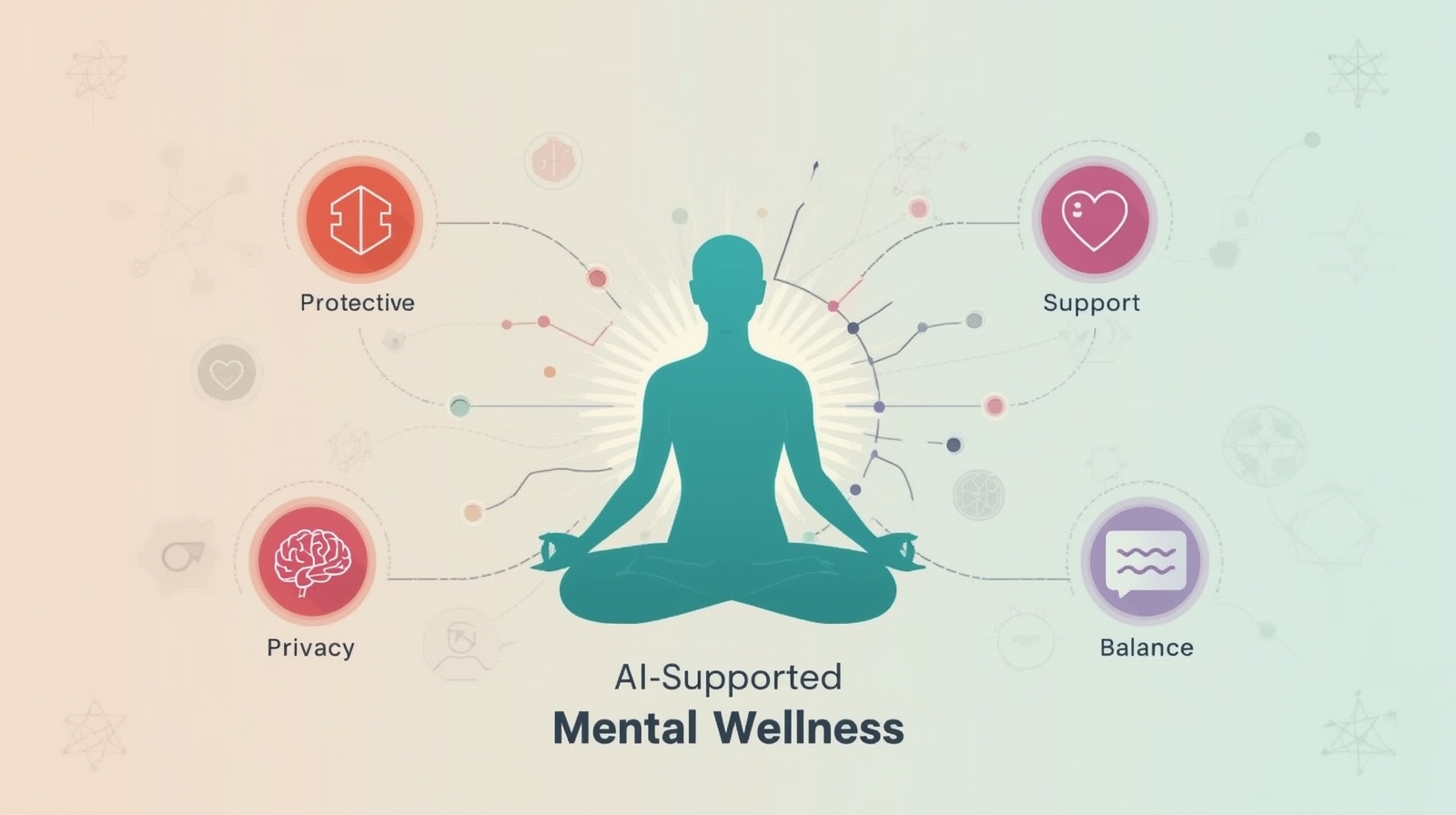
AI-Supported Mental Wellness is changing how we approach emotional health and psychological care. As someone who deeply values both the potential of technology and the importance of safety in digital spaces, we’ve seen firsthand how these tools can make mental healthcare more accessible—but only when used thoughtfully. In this comprehensive guide, we’ll walk you through everything you need to know about using AI for mental wellness, from understanding the basics to navigating ethical considerations and finding the right tools for your needs.
Whether you’re a student managing stress, someone seeking affordable mental health support, or simply curious about how technology can support your emotional well-being, this guide will help you understand the landscape of AI-Supported Mental Wellness and use these tools safely and effectively.
AI-Supported Mental Wellness: A Comprehensive Introduction
For a comprehensive overview of all AI mental wellness applications, see our complete guide about AI-Supported Mental Wellness to learn more about the use of artificial intelligence technologies to provide mental health support, track emotional patterns, and offer personalized coping strategies. These systems use machine learning algorithms to understand your emotional state, provide resources, and even predict potential mental health challenges before they escalate.
Think of it as having a supportive companion available 24/7—one that learns your patterns, remembers your preferences, and offers guidance based on evidence-based therapeutic approaches. However, it’s crucial to understand that the purpose of these tools is to supplement, not to replace, professional mental healthcare.
AI Chatbots for Mental Health: Are They Effective?
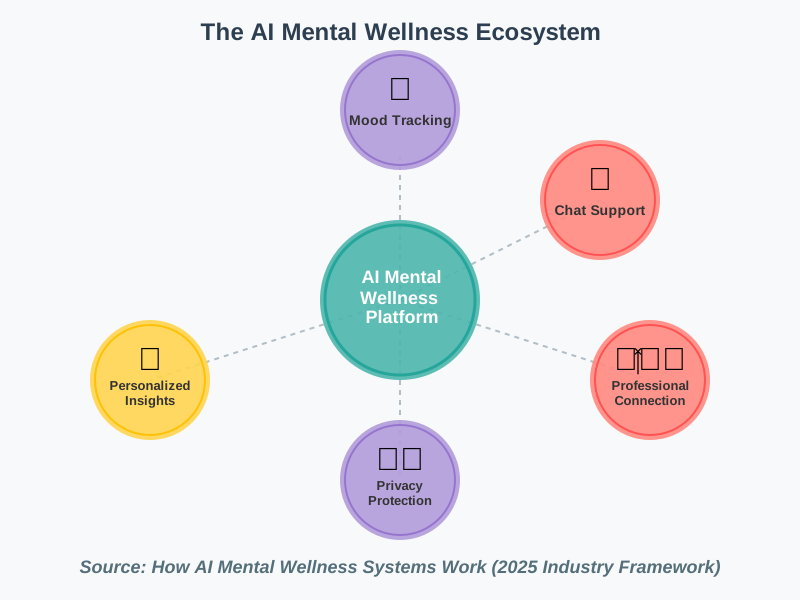
AI Chatbots for Mental Health have become increasingly sophisticated, offering conversational support that can help you work through difficult emotions. These chatbots use natural language processing to understand your concerns and provide evidence-based responses.
Research from the latest 2025 assessments shows these tools can be effective for mild to moderate symptoms, especially when professional care isn’t immediately accessible. However, we want to emphasize that they work best as a supplement to—not a replacement for—human therapists. The key is knowing when to use them and when to seek professional help.
AI-Driven Therapy: How Algorithms Are Changing Mental Healthcare
AI-Driven Therapy platforms are transforming access to mental healthcare by offering structured therapeutic interventions at scale. These systems can guide you through exercises, track your progress, and adapt treatment plans based on your responses.
What makes such technologies particularly valuable is accessibility. For students on limited budgets or individuals in areas with few mental health providers, these tools open doors that might otherwise remain closed. We’ve seen how democratizing mental healthcare can be life-changing, but it’s vital to have realistic expectations about what algorithms can do.
The Ethics of AI in Mental Wellness: Privacy and Bias Concerns
Here’s where we need to have an honest conversation about The Ethics of AI in Mental Wellness. As someone deeply committed to digital safety, we cannot stress enough how important it is to understand the privacy implications of sharing your mental health data with AI systems.
Before using any AI mental wellness tool, ask yourself: Where is my data stored? Who has access to it? How is it being used? Is it truly confidential? Some platforms may use your data to train algorithms or share information with third parties. Always read privacy policies carefully and choose platforms that prioritize end-to-end encryption and clear data protection policies.
Additionally, we must acknowledge that AI systems can perpetuate bias. If certain demographic groups’ data primarily trained an algorithm, it might not function as effectively for others. This is why it’s crucial to use tools developed with diverse populations in mind and to remain aware of potential limitations.
AI for Anxiety: Apps and Tools for Managing Anxiety Symptoms
When it comes to AI for Anxiety, we’ve found several tools that can genuinely help manage symptoms. These apps typically offer guided breathing exercises, cognitive restructuring techniques, and real-time support during anxious moments.
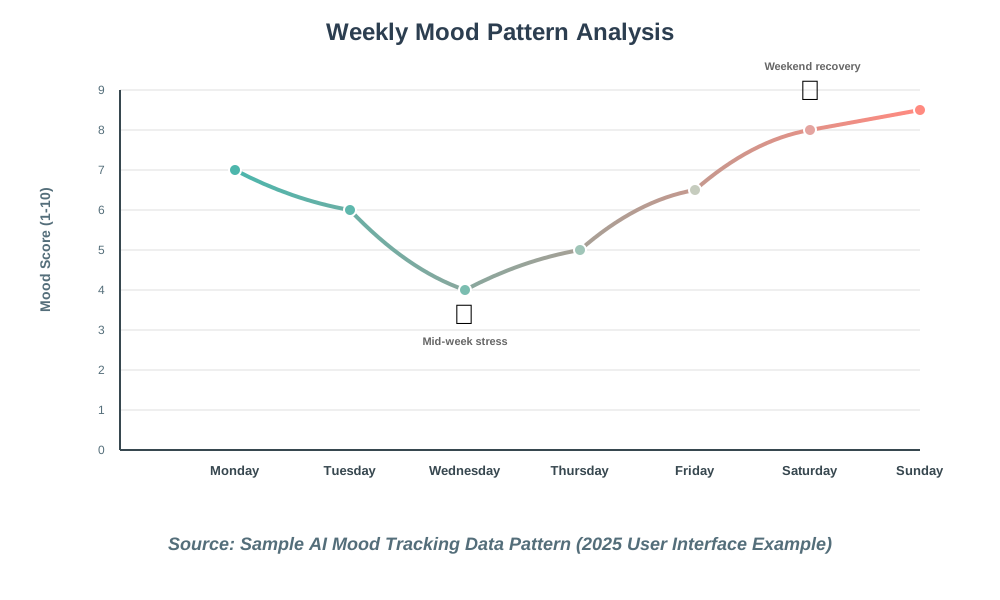
The best anxiety-focused AI tools help you identify triggers by tracking patterns over time. They might notice that your anxiety spikes on Sunday evenings or after certain social situations, then offer tailored coping strategies. This personalized approach can be incredibly powerful for understanding and managing your anxiety.
AI and Depression: Early Detection and Personalized Treatment
AI and Depression tools focus on early detection by analyzing patterns in your behavior, speech, or mood entries. Some systems can identify warning signs of depressive episodes before you might consciously recognize them yourself.
This early warning system can be valuable, but we want to emphasize: if you’re experiencing symptoms of depression, please reach out to a mental health professional. AI tools can support your journey, but they shouldn’t be your only resource. The combination of AI monitoring and professional care often yields the best outcomes.
AI-Powered Mood Tracking: Understanding Your Emotional Patterns
AI-Powered Mood Tracking helps you become more emotionally aware by recording and analyzing your feelings over time. Unlike simple mood journals, these tools use AI to identify patterns you might miss—connections between your mood and factors like sleep, exercise, social interactions, or weather.
We recommend starting with basic daily check-ins: How are you feeling? What happened today? Over weeks and months, the AI will reveal patterns that can guide your self-care decisions. This data-driven self-awareness is one of the most practical applications of AI in mental wellness.
AI-Supported Mental Wellness for Students: Reducing Stress and Improving Focus
As educators who work with students daily, we understand the unique pressures you face. AI-Supported Mental Wellness for Students addresses academic stress, exam anxiety, time management, and social pressures that are specific to student life.
These tools can help you break down overwhelming projects into manageable steps, remind you to take study breaks, and offer quick stress-relief exercises between classes. We’ve seen students use AI study companions to maintain better work-life balance and develop healthier academic habits. The key is finding tools that integrate naturally into your routine without adding more stress.
AI in Meditation and Mindfulness: Enhancing Your Practice
AI in Meditation and Mindfulness personalizes ancient practices for modern life. These apps adapt meditation length, style, and focus based on your experience level, available time, and current emotional state.
Some AI meditation tools analyze your heart rate or breathing patterns to provide real-time guidance, while others create personalized soundscapes that evolve with your practice. The technology removes barriers to starting meditation—no need to find the “perfect” approach; the AI adapts to you.
The Future of AI-Supported Mental Wellness: Emerging Technologies
The Future of AI-Supported Mental Wellness looks incredibly promising. We’re seeing developments in emotion recognition technology, virtual reality therapy environments, and predictive models that can identify mental health risks with increasing accuracy.
However, as we move forward, we must ensure these technologies are developed ethically, with diverse input and robust privacy protections. The future should be one where technology enhances human connection in mental healthcare, not replaces it. We’re optimistic but cautiously so—always prioritizing safety and effectiveness over innovation for its own sake.
AI-Driven Cognitive Behavioral Therapy (CBT): A New Approach
AI-Driven Cognitive Behavioral Therapy brings one of the most evidence-based therapeutic approaches to digital platforms. These programs guide you through CBT exercises, helping you identify negative thought patterns and replace them with healthier alternatives.
The structured nature of CBT makes it particularly well-suited for AI delivery. You can work through modules at your own pace, practice techniques between sessions with human therapists, or use AI-CBT as a standalone resource. The key is consistency—these tools work best when you engage with them regularly.
AI for PTSD: Tools and Techniques for Trauma Recovery
When addressing AI for PTSD, we must be especially careful. Trauma recovery is complex and deeply personal. While AI tools can support PTSD treatment through guided exposure therapy, relaxation techniques, and symptom tracking, they should always be used under professional guidance.
While some platforms facilitate anonymous peer support groups with AI moderators, others offer resources for crisis intervention. See a trauma-specialized therapist who can assist you in safely incorporating AI tools into your healing process if you are struggling with PTSD.
AI-Supported Mental Wellness: Benefits for Seniors
AI-Supported Mental Wellness offers unique advantages for older adults, including companionship to combat loneliness, cognitive exercises to maintain mental sharpness, and simple interfaces designed for those less comfortable with technology.
Voice-activated AI assistants can be particularly helpful, offering conversation and support without requiring complex technical skills. These tools can also monitor for signs of cognitive decline and alert family members or healthcare providers if concerning patterns emerge. The goal is supporting independence while ensuring safety.
AI and Substance Abuse: Prevention and Recovery Support
AI and Substance Abuse tools provide continuous support during the challenging journey of recovery. These apps can identify high-risk situations, provide immediate coping strategies when cravings hit, and connect you with support networks 24/7.
Some platforms use predictive algorithms to anticipate relapse risks based on your patterns and environmental factors, then intervene with support before a crisis occurs. While these tools are valuable, recovery typically requires professional treatment and community support—AI should complement, not substitute, comprehensive care.
AI-Powered Mental Health Assessments: Accuracy and Reliability
AI-Powered Mental Health Assessments can screen for various conditions through questionnaires, voice analysis, or behavioral patterns. However, we need to talk about their limitations. These assessments are screening tools, not diagnostic tools.
A positive screening should prompt you to seek professional evaluation, not self-diagnose. The accuracy varies significantly between platforms, and factors like cultural background, language, and personal communication style can affect results. Use these assessments as a starting point for conversation with healthcare providers, not as definitive answers.
AI for Sleep: Improving Sleep Quality with Technology
AI for Sleep applications analyzes your sleep patterns, identifies disruptions, and offers personalized recommendations for better rest. Since sleep and mental health are deeply interconnected, improving sleep often improves overall well-being.
These tools might suggest optimal bedtimes based on your schedule, create custom soundscapes for falling asleep, or identify factors disrupting your rest (like screen time or evening caffeine). We’ve found that combining AI sleep tracking with excellent sleep hygiene practices produces the best results.
AI-Supported Mental Wellness in the Workplace: Reducing Burnout
AI-Supported Mental Wellness in the Workplace helps organizations support employee well-being while respecting privacy. These platforms can provide stress management resources, detect early signs of burnout, and offer confidential support.
From an employee perspective, workplace mental wellness AI can help you set boundaries, manage workload stress, and access support without stigma. However, we recommend carefully reviewing how your employer implements these tools and what data they can access. Your mental health information should remain private.
AI and Teletherapy: Expanding Access to Mental Healthcare
AI and Teletherapy combine the benefits of technology with human expertise. AI can handle scheduling, symptom tracking between sessions, and providing supplemental exercises, while licensed therapists provide the irreplaceable human connection and professional expertise.
This hybrid model makes therapy more accessible and affordable. You might have weekly video sessions with a therapist while using AI tools for daily check-ins and practice exercises. This continuous care model can be more effective than traditional once-weekly sessions alone.
AI-Driven Personalized Mental Health Plans: Tailoring Treatment to Your Needs
AI-Driven Personalized Mental Health Plans analyze your specific situation—symptoms, lifestyle, preferences, and goals—to create customized treatment approaches. Rather than one-size-fits-all solutions, these systems adapt to what works for you.
The AI learns from your feedback: if meditation doesn’t help your anxiety but exercise does, it adjusts recommendations accordingly. This personalization makes interventions more effective and helps you stay engaged with your mental health practices.
The Cost-Effectiveness of AI-Supported Mental Wellness Solutions
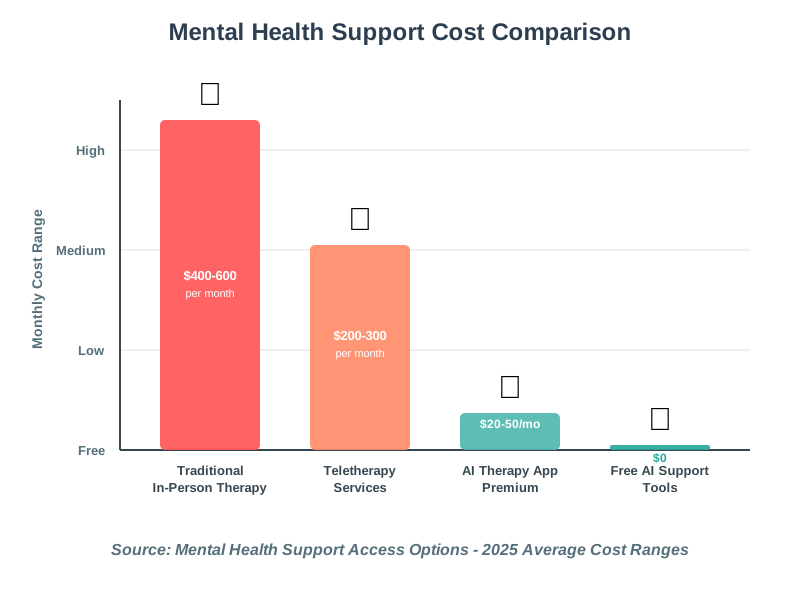
Let’s talk about the practical side: The Cost-Effectiveness of AI-Supported Mental Wellness Solutions. Many AI mental health tools are free or cost significantly less than traditional therapy, making mental healthcare more accessible to people on limited budgets.
For students, low-income individuals, or those without insurance, these tools can be lifelines. However, “affordable” doesn’t mean “inferior.” Much evidence-based intervention translates well to digital formats. The key is choosing reputable platforms with proven effectiveness rather than the cheapest option available.
AI for Autism Spectrum Disorder: Support and Intervention
AI for Autism Spectrum Disorder provides specialized support for individuals on the spectrum, including social skills practice, sensory regulation tools, and communication assistance. These platforms can be customized to individual needs and preferences.
Some tools use visual schedules, while others offer social scenario practice in low-pressure virtual environments. The consistency and patience of AI systems can be particularly helpful for individuals who benefit from routine and predictable interactions. However, these tools should complement professional support and family involvement, not replace them.
AI-Supported Mental Wellness: Addressing Stigma and Improving Access
One of the most powerful aspects of AI-Supported Mental Wellness is how it reduces stigma. Many people hesitate to seek mental health support due to shame, fear of judgment, or cultural barriers. AI provides a private, judgment-free space to begin addressing mental health concerns.
The anonymity of AI interactions can be a first step toward eventually seeking human support. We’ve seen how starting with AI tools helps people normalize mental health care and build confidence in discussing their needs. This destigmatization is crucial for improving overall mental health outcomes in our communities.
AI and Art Therapy: Enhancing Creativity and Emotional Expression
AI and Art Therapy combines creative expression with emotional support. These platforms might guide you through drawing exercises, suggest art projects based on your mood, or help you reflect on the emotions expressed in your artwork.
For those who struggle to verbalize feelings, art can be a powerful alternative expression method. AI can facilitate this process without requiring artistic skill—the focus is on expression, not technical ability. This approach can be particularly valuable for students and young people who find traditional talk therapy challenging.
AI-Powered Crisis Intervention: Immediate Support in Times of Need
AI-Powered Crisis Intervention provides immediate support when you’re in distress, offering coping techniques, safety planning, and connections to human crisis counselors when needed. These systems are available 24/7, which can be literally life-saving.
However, we must be clear: if you’re experiencing a mental health crisis, suicidal thoughts, or thoughts of harming yourself or others, please call emergency services or a crisis hotline immediately. AI tools can provide support, but they cannot replace emergency intervention. Your safety is paramount.
AI for Bipolar Disorder: Managing Mood Swings and Improving Stability
AI for Bipolar Disorder helps track mood fluctuations, identify early warning signs of manic or depressive episodes, and maintain medication schedules. The pattern recognition capabilities of AI are particularly valuable for bipolar disorder, where early intervention can prevent full-blown episodes.
These tools can alert you when patterns suggest an episode might be beginning, allowing you to take preventive action like contacting your psychiatrist or adjusting your routine. This proactive approach, combined with professional care and medication management, supports long-term stability.
AI-Supported Mental Wellness for Veterans: Addressing Unique Challenges
AI-Supported Mental Wellness for Veterans recognizes the unique mental health challenges faced by military service members, including PTSD, transition stress, and combat-related trauma. These specialized platforms understand military culture and provide peer support networks.
Some programs offer anonymous support groups where veterans can connect without revealing their identity, reducing barriers to seeking help. The availability of 24/7 support is particularly valuable for veterans who may experience symptoms at any time and struggle to access traditional services.
AI and Music Therapy: Personalized Soundscapes for Mental Health
AI and Music Therapy creates customized playlists and soundscapes designed to influence your mood and support emotional regulation. The AI learns your musical preferences and which types of music help you relax, focus, or energize.
Some platforms combine music with guided exercises, using rhythm and sound to facilitate breathing practices or meditation. We’ve found that integrating music into mental wellness routines makes self-care feel less like work and more like a natural part of your day.
AI-Driven Support Groups: Connecting Individuals with Shared Experiences
AI-Driven Support Groups use algorithms to connect you with others facing similar challenges, moderate group discussions, and provide resources relevant to the group’s needs. These platforms offer the benefits of peer support with the convenience of online access.
AI moderators can identify when conversations become unhealthy or when an individual needs professional intervention. This combination of peer connection and safety oversight creates supportive communities that genuinely help people feel less alone in their struggles.
AI for Children’s Mental Health: Early Intervention and Support
When it comes to AI for Children’s Mental Health, we advocate for particularly careful implementation. Children’s developing brains and emotional systems require age-appropriate interventions and robust safety measures.
The best children’s mental health AI is designed with child development experts, includes parental oversight features, and focuses on building emotional literacy and coping skills. These tools can help children identify and express feelings but should always be part of a broader support system including parents, educators, and mental health professionals when needed.
AI-Supported Mental Wellness: Integrating with Traditional Healthcare
The future of mental healthcare lies in AI-Supported Mental Wellness working seamlessly with traditional approaches. The ideal model combines AI’s accessibility and continuous monitoring with human therapists’ empathy, judgment, and expertise.
Many modern healthcare systems now use AI tools in treatment plans. This lets therapists focus on more difficult therapeutic work while technology takes care of routine monitoring. This integration benefits everyone: patients receive more comprehensive care, therapists can serve more people effectively, and healthcare systems become more efficient.
Frequently Asked Questions About AI-Supported Mental Wellness
Taking Your First Steps with AI-Supported Mental Wellness
With your understanding of the AI-Supported Mental Wellness landscape, how might you begin your journey? We recommend beginning small. Choose one area where you’d like support—maybe mood tracking, meditation, or anxiety management—and find a reputable app focused on that need.
Start with free versions to see if the approach works for you before investing in premium features. Give yourself at least two weeks of consistent use before judging effectiveness; many benefits emerge over time as the AI learns your patterns and you build new habits.
Remember that seeking support for your mental health, whether through AI or traditional means, is a sign of strength and self-awareness. You deserve to feel well, and these tools exist to help you on that journey. However, if you’re struggling significantly, please don’t rely solely on AI—reach out to mental health professionals who can provide the comprehensive care you deserve.
We believe technology should enhance human well-being, not replace human connection. AI-Supported Mental Wellness tools are most powerful when they complement your existing support systems, encourage healthy habits, and make professional care more accessible. Use them wisely, protect your privacy, and trust yourself when you need more than an app can provide.
Your mental wellness journey is uniquely yours. AI tools can be valuable companions along the way, offering support, insights, and resources when you need them. But you—your resilience, your choices, your commitment to your well-being—are always at the center of your healing and growth.
References:
Clinical Effectiveness Studies
- Heinz, M. V., Inzana, M. N., Daros, A. R., Rudnick, M. M., McHugh, R. K., Bjorkquist, O. A., … & Jacobson, N. C. (2025). Randomized trial of a generative AI chatbot for mental health treatment. NEJM AI. https://ai.nejm.org/doi/full/10.1056/AIoa2400802
- First RCT demonstrating 51% reduction in depression symptoms and 31% reduction in anxiety symptoms with AI chatbot therapy
- Dartmouth College. (2025, March 27). First therapy chatbot trial yields mental health benefits. Dartmouth News. https://home.dartmouth.edu/news/2025/03/first-therapy-chatbot-trial-yields-mental-health-benefits
- Feng, Y., Hang, Y., Wu, W., Song, X., Xiao, X., Dong, F., & Qiao, Z. (2025). Effectiveness of AI-driven conversational agents in improving mental health among young people: Systematic review and meta-analysis. Journal of Medical Internet Research, 27, e69639. https://www.jmir.org/2025/1/e69639
- Feng, X., Tian, L., Ho, G. W. K., Yorke, J., & Hui, V. (2025). The effectiveness of AI chatbots in alleviating mental distress and promoting health behaviors among adolescents and young adults: Systematic review and meta-analysis. Journal of Medical Internet Research, 27, e79850. https://www.jmir.org/2025/1/e79850
- Tong, A. C. Y., Wong, K. T. Y., Chung, W. W. T., & Mak, W. W. S. (2025). Effectiveness of topic-based chatbots on mental health self-care and mental well-being: Randomized controlled trial. Journal of Medical Internet Research, 27, e70436. https://www.jmir.org/2025/1/e70436
Ethics and Privacy
- Iftikhar, Z., et al. (2025). AI chatbots systematically violate mental health ethics standards. Presented at the AAAI/ACM Conference on Artificial Intelligence, Ethics, and Society. Brown University News. https://www.brown.edu/news/2025-10-21/ai-mental-health-ethics
- Identified 15 ethical risks in AI mental health chatbots across five categories
- Rahsepar Meadi, M., Sillekens, T., Metselaar, S., van Balkom, A., Bernstein, J., & van der Pijl, M. (2025). Exploring the ethical challenges of conversational AI in mental health care: Scoping review. JMIR Mental Health, 12, e60432. https://mental.jmir.org/2025/1/e60432
- Found privacy and confidentiality concerns in 61.4% of reviewed studies; safety and harm in 51.5%
- Zhu, H., Ma, Y., Li, Y., & Zhang, D. (2025). E-mental health in the age of AI: Data safety, privacy regulations, and recommendations. Reviews in the Neurosciences. https://pmc.ncbi.nlm.nih.gov/articles/PMC12231431/
- Shumate, J. N., Rozenblit, E., Flathers, M., Larrauri, C. A., Hau, C., Xia, W., Torous, E. N., & Torous, J. (2025). Governing AI in mental health: 50-state legislative review. JMIR Mental Health, 12, e80739. https://mental.jmir.org/2025/1/e80739
- UK Parliament POST. (2025). AI and mental healthcare: Ethical concerns and regulatory considerations. Parliamentary Office of Science and Technology. https://post.parliament.uk/research-briefings/post-pn-0738/
Technology and Implementation
- Torous, J., et al. (2025). Charting the evolution of artificial intelligence mental health chatbots from rule-based systems to large language models: A systematic review. World Psychiatry, 24(2). https://pmc.ncbi.nlm.nih.gov/articles/PMC12434366/
Found only 47% of AI mental health studies focused on clinical efficacy testing
- Torous, J., Linardon, J., & Goldberg, S. B. (2025). The evolving field of digital mental health: Current evidence and implementation issues for smartphone apps, generative artificial intelligence, and virtual reality. World Psychiatry, 24(2), 156-174. https://pmc.ncbi.nlm.nih.gov/articles/PMC12079407/
- Pichowicz, W., Kotas, M., & Piotrowski, P. (2025). Performance of mental health chatbot agents in detecting and managing suicidal ideation. Scientific Reports, 15, 31652. https://www.nature.com/articles/s41598-025-17242-4
- American Psychological Association. (2025, November). Artificial intelligence and wellness apps alone cannot solve the mental health crisis. APA Press Release. https://www.apa.org/news/press/releases/2025/11/ai-wellness-apps-mental-health
- STAT News. (2025, December 1). First-generation mental health apps look to add next-gen AI chatbots. https://www.statnews.com/2025/12/01/ai-chatbot-headspace-talkspace-lyra-sondermind-digital-mental-health/
Healthcare Professional Support
- Baek, G., Cha, C., & Han, J. H. (2025). AI chatbots for psychological health for health professionals: Scoping review. JMIR Human Factors, 12, e67682. https://humanfactors.jmir.org/2025/1/e67682
Regulatory and Policy Frameworks
- Inkster, B., et al. (2025). Ethical decision-making for AI in mental health: The Integrated Ethical Approach for Computational Psychiatry (IEACP) framework. Psychological Medicine, 55, e213. https://pmc.ncbi.nlm.nih.gov/articles/PMC12315656/
- Regulating AI in mental health: Ethics of care perspective. (2025). PMC. https://pmc.ncbi.nlm.nih.gov/articles/PMC11450345/
Systematic Reviews and Meta-Analyses
Chatbot-delivered interventions for improving mental health among young people: A systematic review and meta-analysis. (2025). Worldviews on Evidence-Based Nursing. https://pmc.ncbi.nlm.nih.gov/articles/PMC12261465/
Ni, Y., et al. (2025). A scoping review of AI-driven digital interventions in mental health care: Mapping applications across screening, support, monitoring, prevention, and clinical education. Healthcare, 13(10), 1205. https://pmc.ncbi.nlm.nih.gov/articles/PMC12110772/
About the Authors
This article was written as a collaboration between Nadia Chen and Rihab Ahmed for howAIdo.com.
Nadia Chen (Main Author) is an expert in AI ethics and digital safety who helps non-technical users navigate AI tools responsibly. With a background in technology ethics and data privacy, Nadia focuses on empowering people to use AI safely while protecting their personal information and understanding potential risks.
Rihab Ahmed (Co-Author) is an educator and lifelong learner who uses AI to study smarter and support student well-being. As both a teacher and student of technology, Rihab brings practical insights into how AI can make learning and personal growth more accessible and effective for everyone.
Together, we combine expertise in ethical AI use and educational support to help you navigate AI-Supported Mental Wellness tools safely and effectively.