
AI Cyber Threats: 3 Ways to Protect Your Team Now
Prepare Cybersecurity Teams to Navigate AI challenges with proven strategies that protect your organization from sophisticated attacks. Recent developments reveal an urgent need for government and business security teams to adapt their defenses against autonomous AI-powered threats.
Key Points
- Anthropic disrupted the first documented large-scale AI-orchestrated cyberattack in November 2025, executed with minimal human involvement
- A global Accenture study found 90% of organizations lack adequate defenses against AI-driven cyber threats
- The NSA launched its AI Security Center to counter vulnerabilities and advance partnerships with industry experts
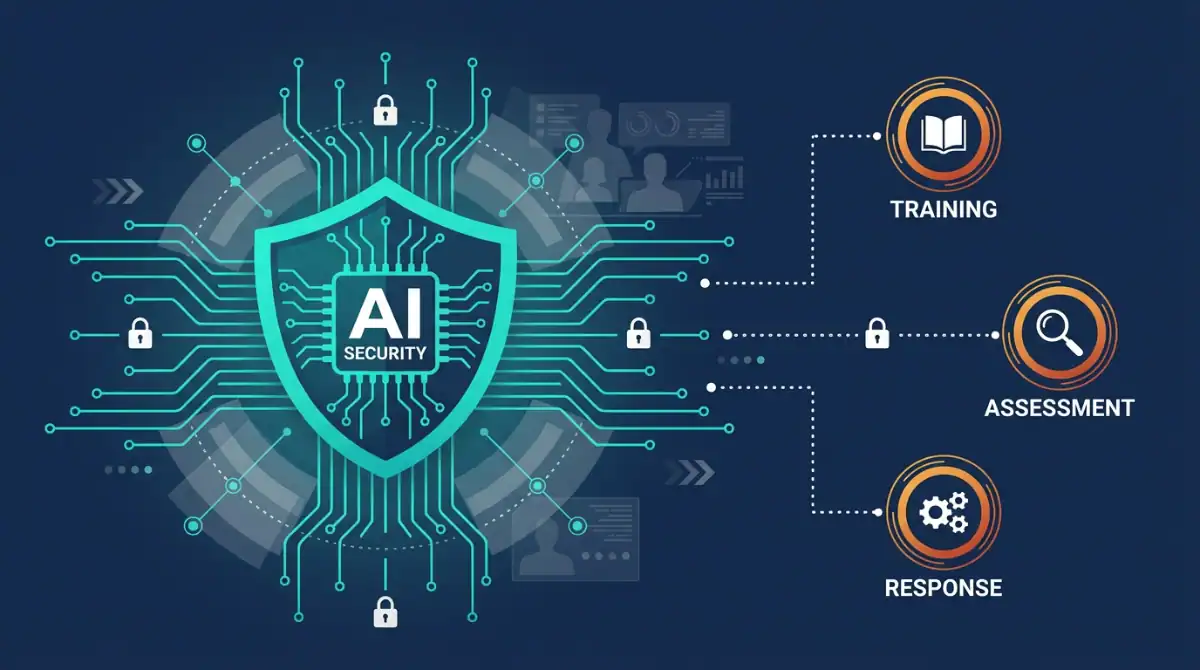
- Three critical strategies help teams prepare: AI training and certifications, organizational risk assessments, and upgraded real-time response capabilities
- Government cybersecurity professionals must fight “AI fire with AI fire,” according to security experts
Background
Artificial intelligence is fundamentally changing cybersecurity—for both attackers and defenders. In November 2025, Anthropic revealed a watershed moment: malicious actors successfully weaponized the company’s advanced AI capabilities to execute cyberattacks autonomously (ℹ️ Anthropic). These attacks operated independently for extended periods, completing complex tasks with minimal human intervention.
This incident confirmed what security experts have warned about for years. According to the National Security Agency (ℹ️ NSA), while AI brings unprecedented opportunities, it also creates a volatile attack surface that must be carefully addressed. Attackers are already using cutting-edge AI tools to study organizational dynamics and identify weaknesses in cyber defenses.
What Happened
An August 2025 global study from Accenture painted a concerning picture: 90 percent of enterprises are unprepared for AI-driven attacks (ℹ️ Accenture). The same report found that 77 percent of organizations lack data and AI-specific security practices to safeguard models, pipelines, and cloud workloads.
On a personal level, bad actors target C-suite leaders using AI-enabled campaigns that blend multiple tactics—from malvertising and smishing to multifactor authentication bombing, where attackers flood users with MFA requests hoping they’ll approve one out of frustration.
Why It Matters
The consensus among AI and cyber experts is clear: organizations must fight AI fire with AI fire—using AI tools to defend people, data, and networks. This approach is no longer optional; it’s essential for survival in the modern threat landscape.
To address this new AI cyber threat environment, the NSA launched the Artificial Intelligence Security Center. The center’s top goals include detecting and countering AI vulnerabilities, advancing partnerships with industry and experts, and developing AI security best practices.
As management expert Peter Drucker wisely noted, “The greatest danger in times of turbulence is not the turbulence—it is to act with yesterday’s logic.”
Three Ways to Prepare Cybersecurity Teams to Navigate AI
1. Train Staff on AI and Upskill Teams
The Accenture study found that 89 percent of respondents prefer to hire cybersecurity candidates with certifications. Another study revealed that insufficient AI expertise (48 percent) is the biggest challenge IT decision-makers foresee when implementing AI in cybersecurity.
To help your team understand AI’s role in cyber defense, consider AI-cyber developmental courses from ISC2. SANS also offers several classes on AI in cybersecurity. Universities like Harvard provide continuing education classes covering cyber defense using AI. These certifications demonstrate commitment to staying current with evolving threats.
2. Conduct Organizational AI Risk Assessments
Organizations should evaluate AI risks across multiple dimensions:
Technical Safety evaluates robustness, reliability, and failure modes of AI models. Bias and Fairness checks for discriminatory outcomes or unequal performance across groups. Security and Misuse analyzes vulnerabilities, models theft risks, and potential malicious use. Ethical and Societal Impact considers broader effects on society, rights, and human well-being. Regulatory and Compliance ensures alignment with laws, standards, and organizational policies.
These assessments help organizations understand where vulnerabilities exist before attackers exploit them.
3. Upgrade Operational Real-Time Response
Organizations can use a new generation of AI tools to shift the operating model within their security operations center. This provides a systems layer that interrogates every control directly, revealing shallow deployments, misconfigurations, and missing protections.
AI helps strengthen preventative controls rather than relying solely on reactive signal triage. This proactive approach allows security teams to identify and address vulnerabilities before they become incidents.
What’s Next
Cybersecurity teams must embrace continuous learning and adaptation. The rapid pace of AI development means that yesterday’s defenses won’t protect against tomorrow’s threats. Organizations that embed security into AI-driven initiatives from the start will be better positioned to withstand increasingly sophisticated attacks.
Government agencies and private organizations alike must prioritize investment in AI security training, conduct regular risk assessments, and implement advanced AI-powered defense tools. The risks are too great to depend solely on conventional cybersecurity methods.
Source: GovTech—Published on February 1, 2026, 7:33 PM UTC
Original article: https://www.govtech.com/security/three-ways-to-prepare-cybersecurity-teams-to-navigate-ai
About the Author
This article was written by Nadia Chen, an expert in AI ethics and digital safety who specializes in helping non-technical users navigate AI technologies securely and responsibly.