
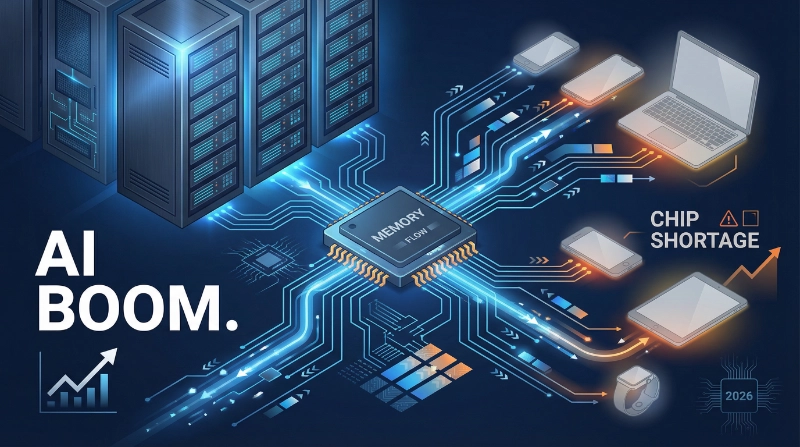
AI Infrastructure Boom Triggers Massive Tech Shortage
Key Points
- Memory chip prices are surging 50-60% in early 2026 as AI infrastructure consumes global supply
- Smartphone and PC prices expected to rise 6-40% this year
- Major manufacturers, including Samsung, Dell, and Micron report sold-out capacity through 2026
- Consumer electronics, from appliances to gaming devices face significant price increases
- Relief unlikely until 2027 when new manufacturing capacity comes online
Background
The AI boom is creating an unprecedented crisis in the global semiconductor supply chain. As tech giants race to build massive data centers for artificial intelligence applications, they’re consuming memory chips at rates that are starving consumer electronics manufacturers of critical components.
The three largest memory manufacturers—Samsung Electronics, SK Hynix, and Micron Technology—have redirected their limited production capacity toward high-bandwidth memory (HBM) chips needed for AI accelerators, leaving conventional consumer products scrambling for supply (ℹ️ Reuters).
What Happened
The shortage intensified dramatically in early 2026 as AI companies, including OpenAI, Google, Microsoft, and Meta, placed massive orders for memory components. According to Micron’s Chief Business Officer Sumit Sadana, the company is “sold out for 2026.” (ℹ️ CNBC)
Memory chip prices are now skyrocketing. TrendForce forecasts conventional DRAM contract prices will surge 55% to 60% in the first quarter of 2026, following a 45% to 50% increase in Q4 2025. This surge represents what analyst Tom Hsu called an “unprecedented” rate of price escalation (ℹ️ TrendForce).
The impact is already hitting consumers. Tobey Gonnerman, president of semiconductor distributor Fusion Worldwide, warned that “consumers can expect to pay significantly higher prices for laptops, mobile phones, wearables, and gaming devices very soon.” (ℹ️ Popular Mechanics)
Dell COO Jeff Clarke described the situation on a November 2025 earnings call as “unprecedented,” noting that “it’s not unique to DRAM. It’s NAND. It consists of hard drives and leading-edge nodes across the semiconductor network. Clarke, who has been at Dell since 1987, emphasized the historic nature of the shortage (ℹ️ Popular Mechanics).
Why It Matters
This shortage is fundamentally different from previous chip crises. Unlike the pandemic-related disruptions of 2020-2023, this shortage stems from a structural reallocation of manufacturing capacity toward high-margin AI products—a shift that could persist for years.
The International Data Corporation (IDC) projects smartphone shipments could decline at least 2% in 2026, while PC shipments could shrink by up to 9% in pessimistic scenarios. Average selling prices for smartphones are expected to rise 6.9%, with some projections reaching as high as 30-40% (ℹ️ IDC).
The shortage extends far beyond computers and phones. Samsung Co-CEO TM Roh, who oversees the company’s mobile phone, TV, and home appliances divisions, gave a stark warning: “As this situation is unprecedented, no company is immune to its impact.” He confirmed the crisis affects not just smartphones but also TVs and home appliances. (ℹ️ Reuters)
What’s Next
Major manufacturers are taking aggressive steps to secure supply. TrendForce reports that industry leaders Dell and Lenovo have already implemented price increases of 15-20% in late 2025 and early 2026 (ℹ️ TrendForce).
SK Hynix announced plans to invest $13 billion in a new advanced packaging plant for AI memory, with construction beginning in April 2026. However, new production capacity won’t arrive until 2027 at the earliest, meaning the shortage will persist throughout 2026 (ℹ️ Dataconomy).
The clear message for consumers planning tech purchases is to purchase essential devices as soon as possible. As prices rise and supply tightens, finding specific models will become increasingly difficult. Budget-conscious buyers should expect to see spec downgrades—such as smartphones reverting to 4GB RAM in base models—as manufacturers attempt to manage costs (ℹ️ TrendForce).
The AI boom that promised to revolutionize technology is now fundamentally reshaping consumer electronics economics—and your wallet will feel the impact.
About the Author
James Carter is a productivity coach and technology journalist who helps readers navigate the rapidly evolving AI landscape. With over a decade of experience covering enterprise technology and consumer electronics, James specializes in translating complex technical trends into actionable insights for everyday users. His work focuses on helping people make smarter technology decisions that save time and money.