

AI for Personal Finance: Your Complete Guide to Smart Money Tools

Why AI for Personal Finance Changes Everything
AI for Personal Finance isn’t just another tech buzzword—it’s genuinely transforming how everyday people manage their money. I’ve watched friends who once dreaded checking their bank accounts become genuinely excited about their financial progress, all thanks to intelligent tools that do the heavy lifting for them.
Here’s what makes these tools revolutionary: they learn from your spending patterns, predict your financial needs before you realize them yourself, and provide personalized advice without the hefty price tag of a traditional financial advisor. Whether you’re drowning in receipts, confused about investing, or simply want to save more without thinking about it, there’s an AI-powered financial tool ready to help.
The beauty of modern personal finance AI platforms is their accessibility. You don’t need a finance degree or technical expertise. These tools speak your language, connect to your existing accounts, and start working immediately. They’re like having a patient, knowledgeable friend who never gets tired of helping you make smarter money decisions.
In this guide, I’ll walk you through the top AI tools for money management that are actually worth your time. Each one solves specific financial challenges, and I’ll show you exactly how to integrate them into your daily routine without disrupting your life.
Why These AI Finance Tools Are Essential Right Now
The traditional approach to personal finance—spreadsheets, manual tracking, and guesswork—simply can’t keep pace with modern financial complexity. Between multiple income streams, subscription services that multiply like rabbits, and investment options that would confuse even seasoned professionals, managing money manually has become nearly impossible.
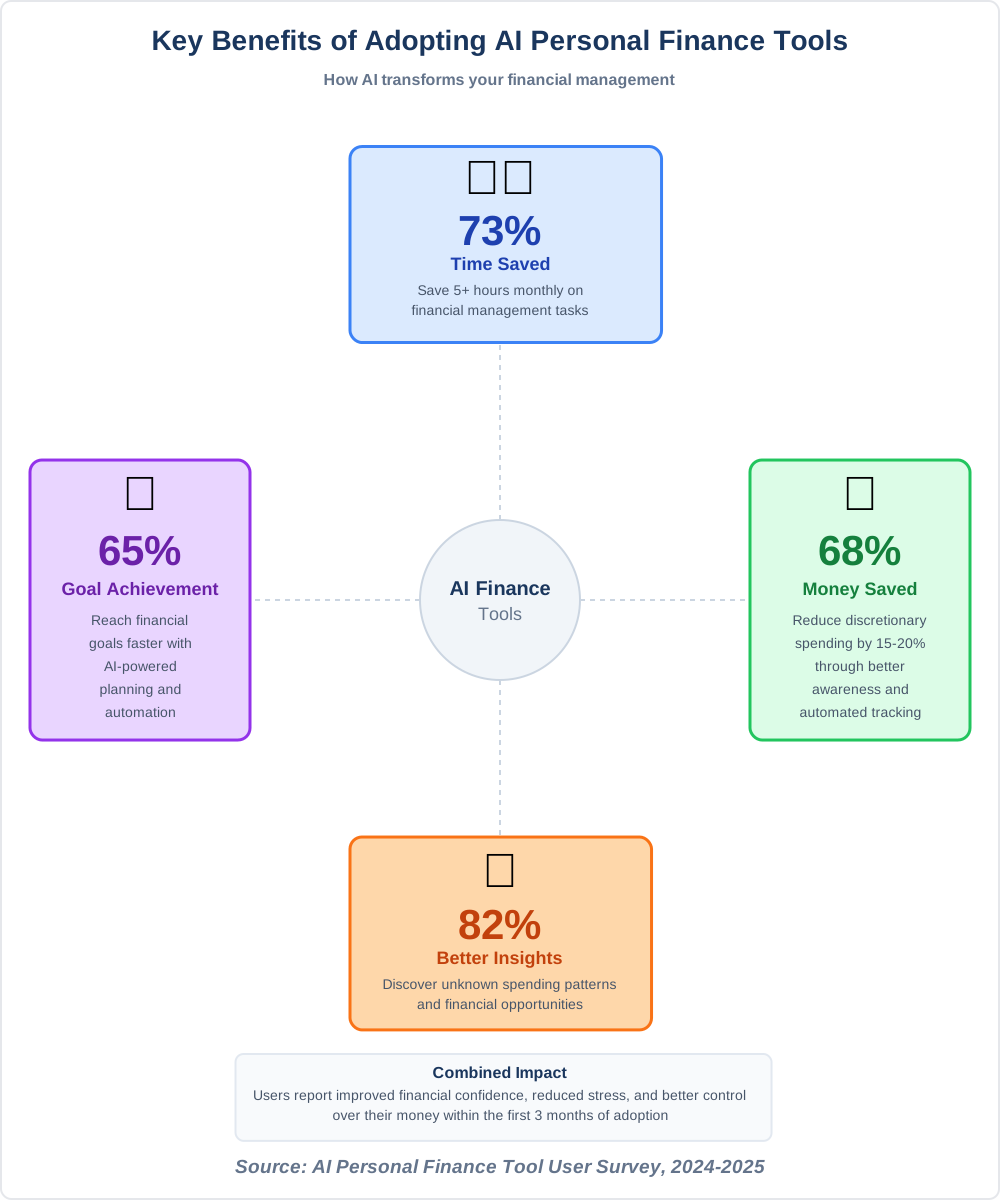
Artificial intelligence for budgeting changes this equation completely. These platforms connect directly to your financial accounts, automatically categorize transactions, identify spending patterns you’d never spot yourself, and alert you to potential problems before they become disasters. They work 24/7, never forget to track an expense, and continuously improve their understanding of your unique financial situation.
What excites me most is the democratization happening here. Tools that were once exclusive to wealthy individuals with personal financial advisors are now available to everyone. A college student can access sophisticated investment AI platforms for free. A small business owner can get tax optimization advice without hiring an accountant. A family can coordinate their entire financial life through one simple app.
The time savings alone justify exploring these tools. Instead of spending hours each month reconciling accounts and updating budgets, you’ll spend minutes reviewing insights and making informed decisions. That’s time you can redirect toward earning more, learning new skills, or simply enjoying life without financial stress looming over you.
Top AI Tools for Personal Finance Management
1. Mint: Your All-in-One Budget Commander
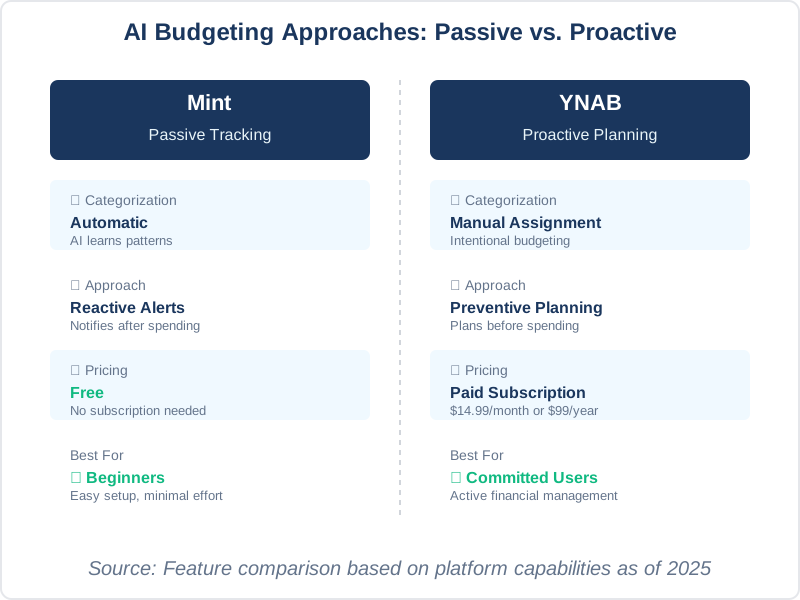
Mint stands as the veteran of AI budgeting applications, and for good reason. This free platform connects to virtually every financial account you have—checking, savings, credit cards, loans, investments—and presents everything in one clean dashboard.
What makes Mint exceptional is its automatic categorization intelligence. The AI learns your spending patterns within weeks and accurately categorizes transactions without your intervention. It knows that charge from “Joe’s Coffee” goes under “Dining Out” and that monthly Netflix payment belongs in “Entertainment.”
Practical use case: Imagine you’re trying to cut discretionary spending. Mint’s AI analyzes your transactions and sends you a notification: “You’ve spent 40% more on dining out this month compared to your average.” That real-time awareness prevents budget overruns before they happen.
Beginner tips: Start by connecting just one or two accounts initially. Let Mint’s AI categorize transactions for a week, then review and correct any miscategorizations. The system learns from your corrections, becoming increasingly accurate. Set up custom budget alerts for categories you want to control—the app will notify you when you’re approaching limits.
The bill tracking feature deserves special mention. Mint predicts upcoming bills based on historical patterns and reminds you before due dates. I’ve personally avoided late fees countless times thanks to these intelligent reminders.
2. YNAB (You Need A Budget): The Proactive Planning Powerhouse
YNAB takes a fundamentally different approach than passive tracking tools. Its AI-enhanced budgeting methodology forces you to assign every dollar a job before you spend it, creating intentional spending habits that transform financial behaviors.
The platform’s AI assists by learning your income patterns, predicting irregular expenses, and suggesting budget adjustments based on your historical data. It’s particularly brilliant at handling variable income—freelancers and gig workers find this feature invaluable.
Practical use case: You’re a freelancer with inconsistent monthly income. YNAB’s AI tracks your earning patterns over time and suggests how much to budget each month based on your average income rather than your best month. This prevents the feast-or-famine cycle that destroys many freelancers’ finances.
Beginner tips: YNAB requires a mindset shift, so embrace the learning curve. Complete their free workshops—they’re genuinely helpful, not sales pitches. Start by budgeting just one week ahead rather than the entire month. As you become comfortable with the “give every dollar a job” philosophy, extend your planning horizon. The mobile app is outstanding for on-the-go budget checks before purchases.
The reconciliation feature catches bank errors and forgotten transactions that could otherwise throw your budget into chaos. I catch at least one bank mistake per year using this tool.
3. Personal Capital: Investment Intelligence at Your Fingertips
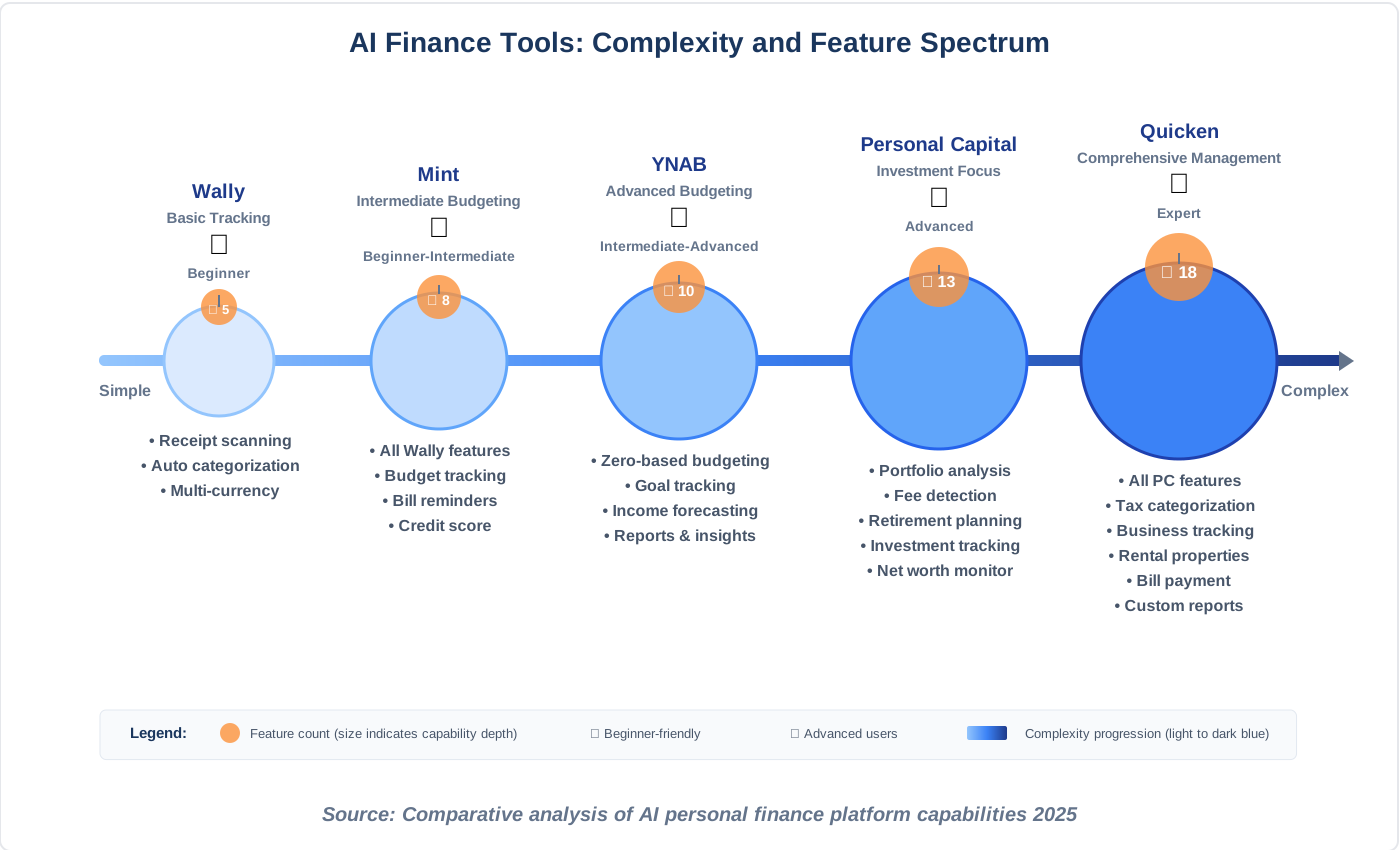
Personal Capital excels where others merely dabble—sophisticated investment tracking powered by AI. While it offers basic budgeting features, its true power lies in portfolio analysis, retirement planning, and investment fee detection.
The platform’s Investment Checkup tool uses AI to analyze your entire investment portfolio across all accounts, identifying problematic allocations, excessive fees, and tax inefficiencies. It’s like having a financial advisor constantly monitoring your investments.
Practical use case: You have retirement accounts scattered across three former employers plus your current 401(k). Personal Capital aggregates everything, shows your actual asset allocation across all accounts, and identifies that you’re paying 1.2% in hidden fees annually—costing you potentially hundreds of thousands over your career. The AI then suggests specific lower-cost alternatives.
Beginner tips: Don’t let the investment focus intimidate you. Start by simply connecting all your investment and retirement accounts to see your complete financial picture in one place. The dashboard alone provides valuable insights. Use the Retirement Planner tool even if retirement seems distant—seeing projected outcomes motivates better current decisions. Ignore the constant prompts to speak with their human advisors unless you genuinely want that service.
The fee analyzer is particularly eye-opening. Most people have no idea they’re paying 1-2% annually in investment fees, which seems small but compounds into enormous losses over decades.
4. Wally: AI-Powered Expense Tracking Simplified
Wally targets people who want powerful expense tracking without budgeting complexity. Its AI receipt scanning technology and automatic categorization make it effortless to track every dollar without manual data entry.
The app’s AI recognizes receipt photos, extracts relevant information, and categorizes expenses automatically. Over time, it learns your habits and provides spending insights you’d never calculate manually.
Practical use case: You’re traveling for work and need to track expenses for reimbursement. Instead of saving paper receipts and manually logging everything, you snap photos with Wally. The AI extracts amounts, vendors, categories, and dates automatically. At the trip’s end, you have a complete expense report ready to submit.
Beginner tips: Make receipt scanning a habit immediately after purchases—don’t let them pile up. The AI works best when you consistently photograph receipts, as it learns your spending patterns over time. Use the location-based reminders feature to prompt expense logging when you leave stores. Connect your bank accounts for automatic transaction imports, then use receipt photos to add details and context the bank data lacks.
The multi-currency support is exceptional for international travelers. Wally automatically converts and tracks expenses in your home currency while maintaining original transaction details.
5. Quicken: Comprehensive Financial Command Center
Quicken represents the comprehensive solution for people managing complex financial lives—multiple properties, investments, small businesses, and detailed tax planning. Its AI-enhanced financial planning tools provide depth that simpler apps can’t match.
The platform’s AI assists with tax categorization, investment performance tracking, rental property management, and even small business expense separation. It’s particularly powerful for people who need detailed reports for accountants or tax preparation.
Practical use case: You own a rental property and run a side business while managing personal finances. Quicken’s AI automatically categorizes transactions across all three areas, tracks rental income and expenses separately, monitors business deductions, and generates reports your accountant actually wants. At tax time, you hand over organized data instead of shoeboxes full of receipts.
Beginner tips: Quicken has a steeper learning curve than simpler tools, so invest time in the initial setup. Use their account setup wizard rather than trying to configure everything manually. Start with just personal finance features, then gradually add investment tracking and business features as you become comfortable. The mobile app handles basic transaction entry, but use the desktop version for serious financial analysis and planning.
The bill payment and tracking features deserve exploration. Quicken can actually pay bills directly through the platform, eliminating the need to visit multiple bank and service provider websites.
6. Betterment: AI-Driven Investment Management
Betterment pioneered the robo-advisor revolution, bringing sophisticated investment management to people who can’t afford traditional financial advisors. Its AI handles everything from portfolio construction to tax-loss harvesting automatically.
The platform’s AI continuously monitors your portfolio, automatically rebalancing to maintain target allocations and harvesting tax losses to reduce your tax burden. You simply set goals, deposit money, and let the AI manage the complex investment decisions.
Practical use case: You’re 30 years old with $5,000 to invest for retirement and no investment knowledge. Betterment’s AI asks a few questions about your goals and risk tolerance, then constructs a diversified portfolio of low-cost ETFs. It automatically rebalances as markets fluctuate and reinvests dividends, all while you focus on your career and life. Over decades, this hands-off approach typically outperforms DIY investing attempts.
Beginner tips: Start small if you’re nervous about automated investing—even $100 lets you experience the platform without significant risk. Use the goal-setting features to separate money for different purposes (retirement, house down payment, emergency fund). The tax-loss harvesting feature is valuable, but don’t obsess over it initially—focus on consistent contributions. Consider the premium tier only after your portfolio exceeds $50,000, as the human advisor access becomes more valuable at that scale.
The automatic rebalancing prevents emotional investing decisions. When markets crash and panic sets in, Betterment’s AI continues executing your strategy without fear-driven mistakes.
7. Cleo: Your Sassy AI Financial Coach
Cleo takes a completely different approach to AI financial assistance, positioning itself as a conversational chatbot that roasts your spending habits while helping you save. It’s financial management meets entertainment, particularly appealing to younger users.
The AI analyzes your transactions and communicates insights through personality-driven messages. It might text you, “You’ve spent $200 on coffee this month—that’s enough to buy a plane ticket somewhere actually exciting.” The snark motivates behavioral change in ways dry analytics never could.
Practical use case: You chronically overspend without understanding where money goes. Cleo’s AI sends daily spending summaries via text, alerts you when subscriptions charge your account, and even hides money in a “savings pocket” before you can spend it. The conversational interface feels like texting a financially savvy friend rather than checking a boring app.
Beginner tips: Choose your AI personality carefully—Cleo offers different tones, from encouraging to brutally honest. Connect your primary checking account where most spending occurs. Engage with Cleo daily through simple texts like “How much can I spend today?” The more you interact, the better it understands your habits. Use the automatic savings features that round up purchases and transfer spare change to savings.
The subscription tracker is surprisingly powerful. Cleo identifies all recurring charges and asks if you still want them—I’ve personally canceled $50 monthly in forgotten subscriptions after Cleo highlighted them.
8. PocketGuard: Simplified Cash Flow Mastery
PocketGuard answers one crucial question: “How much can I spend today?” Its AI-powered cash flow analysis cuts through complex finances to provide a simple daily spending figure that prevents overspending.
The platform’s AI considers your income, bills, savings goals, and existing spending to calculate your “In My Pocket” amount—money genuinely available for discretionary spending without jeopardizing financial obligations.
Practical use case: Payday arrives and you immediately want to celebrate with purchases, but you’re unsure what’s actually safe to spend. PocketGuard’s AI has already accounted for upcoming bills, automatic savings transfers, and typical monthly expenses, showing you exactly how much discretionary money remains. This prevents the common pattern of overspending early in the pay period and struggling later.
Beginner tips: Trust the “In My Pocket” calculation even when it seems conservative—the AI is protecting future commitments. Use the built-in bill negotiation feature to lower recurring expenses like cable and insurance. Set up automatic savings goals for specific purchases; watching progress toward goals motivates spending discipline. Review the spending insights weekly to identify categories where you consistently overspend.
The subscription management feature automatically identifies recurring charges and calculates annual costs—seeing that $10 monthly subscription as $120 annually often triggers cancellations.
9. Monarch Money: The Collaborative Finance Platform
Monarch Money targets couples and families who need coordinated financial management. Its AI-powered collaborative features allow multiple users to access the same financial data while maintaining individual privacy where desired.
The platform’s AI provides household-level insights while respecting individual autonomy. It can show combined net worth while keeping specific account details private, or share everything for complete transparency—you control the privacy settings.
Practical use case: You and your partner combine finances but maintain some separate accounts. Monarch’s AI tracks joint expenses, individual spending, and overall household financial health simultaneously. When planning large purchases, both partners can see the real-time impact on shared goals without accessing each other’s private accounts.
Beginner tips: Have an honest conversation with your partner about financial transparency before setup. Monarch offers flexibility, but you need to agree on what to share. Use the custom category feature to track household expenses separately from personal spending. The goal-tracking visualization is excellent for motivating couples toward shared objectives like home down payments or vacation funds. Schedule monthly “Monarch meetings” to review financial progress together—consistent communication prevents money conflicts.
The net worth tracking across all accounts provides powerful motivation. Watching your combined net worth grow creates a team mentality around financial goals.
10. Tiller Money: Spreadsheet Power Meets AI Automation
Tiller Money bridges the gap between AI automation and spreadsheet flexibility. It automatically imports your financial transactions into Google Sheets or Microsoft Excel, where you can build custom trackers while AI handles data collection.
The platform’s AI continuously updates your spreadsheet with new transactions, categorizes them intelligently, and even offers pre-built templates for common financial tracking needs. You get automation’s convenience with spreadsheets’ unlimited customization.
Practical use case: You’re a spreadsheet enthusiast who loves custom formulas and visualizations but hates manual data entry. Tiller’s AI populates your spreadsheet automatically each day while you maintain complete control over analysis, categories, and reporting. You can build precisely the financial dashboard you envision without sacrificing automation benefits.
Beginner tips: Start with Tiller’s Foundation Template rather than building from scratch—it provides a solid structure you can customize gradually. Learn basic spreadsheet formulas to unlock Tiller’s full potential; even simple IF and SUMIF statements dramatically expand capabilities. Use the community templates for inspiration; other users have solved problems you haven’t encountered yet. The annual subscription makes more financial sense than monthly if you commit to using it.
The transaction history preservation is invaluable. Unlike many apps that limit historical data, Tiller maintains your complete financial history in your own spreadsheet, accessible forever without subscription concerns.
Frequently Asked Questions About AI for Personal Finance
Making Your Choice: Which AI Finance Tool Is Right for You?
Selecting the right AI-powered money management tool depends on your specific financial situation and goals. Let me break down the decision-making process to help you choose wisely.
If you’re just starting your financial journey and need basic budgeting without complexity, Mint offers the most accessible entry point. It’s free, connects to all your accounts, and provides automatic tracking without requiring behavioral changes. The learning curve is minimal, making it perfect for building financial awareness.
For people ready to transform their financial habits through intentional budgeting, YNAB delivers unmatched results. The subscription cost pays for itself through the spending discipline it creates. Expect to invest more time initially, but you’ll develop financial skills that serve you forever.
Investors frustrated by scattered accounts and hidden fees should prioritize Personal Capital. The investment analysis tools alone justify the free account, and the retirement planning features provide clarity about long-term financial security. If you have over $100,000 invested, the insights become invaluable.
Simple expense tracking without budgeting pressure fits Wally perfectly. The receipt scanning eliminates manual entry hassles, and the clean interface never feels overwhelming. International travelers particularly benefit from its multi-currency capabilities.
Complex financial lives involving businesses, rental properties, or detailed tax planning require Quicken’s comprehensive approach. Yes, it’s pricier and complex, but the depth of features and reporting capabilities justifies the investment for sophisticated financial management needs.
Hands-off investing for long-term wealth building points toward Betterment or similar robo-advisors. The automated investment management removes emotional decision-making from the equation. Simply set your goals, contribute consistently, and let the AI handle portfolio management.
Younger users seeking motivation through personality-driven insights should explore Cleo. The conversational interface and witty commentary make financial management feel less like a chore and more like interacting with a financially savvy friend.
Cash flow confusion demands PocketGuard’s “In My Pocket” feature. When you constantly wonder if you can afford purchases without derailing financial obligations, this tool provides instant clarity and confidence.
Couples and families benefit from Monarch Money’s collaborative features. The ability to share selected financial information while maintaining privacy where desired prevents common relationship money conflicts.
Spreadsheet enthusiasts wanting automation without sacrificing customization should choose Tiller Money. You get the best of both worlds—automatic data collection with unlimited analytical possibilities.
Taking Action: Your Next Steps Toward Financial Control
The hardest step in financial transformation is simply starting. Analysis paralysis prevents more financial progress than any other factor. Here’s your action plan to begin using AI for personal finance effectively today.
First, choose one tool from this guide based on your primary financial challenge. Don’t try implementing multiple platforms simultaneously—that guarantees overwhelm and abandonment. Master one tool thoroughly before adding others.
Second, block 30 minutes on your calendar this week for initial setup. Connect your primary checking account and let the AI import one month of transaction history. Don’t worry about perfection—you’ll refine categorizations and settings as you learn the platform.
Third, commit to checking your chosen tool three times during the first week. Brief five-minute sessions familiarize you with the interface and build the habit of regular engagement. The AI learns faster when you interact consistently.
Fourth, identify one specific financial goal you want to achieve in the next 90 days. Maybe it’s reducing dining out expenses by $200 monthly, building a $1,000 emergency fund, or finally understanding where your money actually goes. Focus your tool usage on this specific objective rather than trying to optimize everything simultaneously.
Fifth, schedule a monthly “financial review” appointment with yourself. Thirty minutes reviewing your tool’s insights, celebrating progress, and adjusting strategies keeps momentum strong. Treat this appointment as seriously as any professional meeting—your financial future deserves dedicated attention.
The AI personal finance revolution has made sophisticated money management accessible to everyone. These tools don’t require finance degrees, technical expertise, or hours of daily management. They simply need your willingness to start using them.
Your financial transformation begins the moment you connect your first account and let AI start working for you. The question isn’t whether these tools can improve your financial life—they absolutely can. The only question is whether you’ll take action today or continue managing money the hard way.
Choose your tool, complete the setup, and start experiencing the relief that comes from truly understanding and controlling your finances. Your future self will thank you for the decision you make today.
References:
Mint by Intuit – Official Platform Documentation and User Guides
YNAB (You Need A Budget) – Methodology and Educational Resources
Personal Capital – Investment Analysis and Retirement Planning Tools
Wally – Expense Tracking Technology and Features
Quicken – Comprehensive Financial Management Documentation
Betterment – Robo-Advisor Platform and Investment Strategies
Cleo AI – Conversational Financial Assistant Technology
PocketGuard – Cash Flow Management Features
Monarch Money – Collaborative Finance Platform Documentation
Tiller Money – Spreadsheet Automation and Template Resources
About the Author
James Carter is a productivity coach dedicated to helping people leverage AI for time savings and financial efficiency. With over a decade of experience simplifying complex processes, James specializes in making technology accessible to everyday users. His practical, no-nonsense approach focuses on actionable strategies that integrate seamlessly into daily routines, empowering people to achieve more without technical expertise. Through his work, James has helped thousands of individuals reclaim their time and take control of their financial futures using intelligent automation.