Personalized Learning Paths: AI-Powered Training

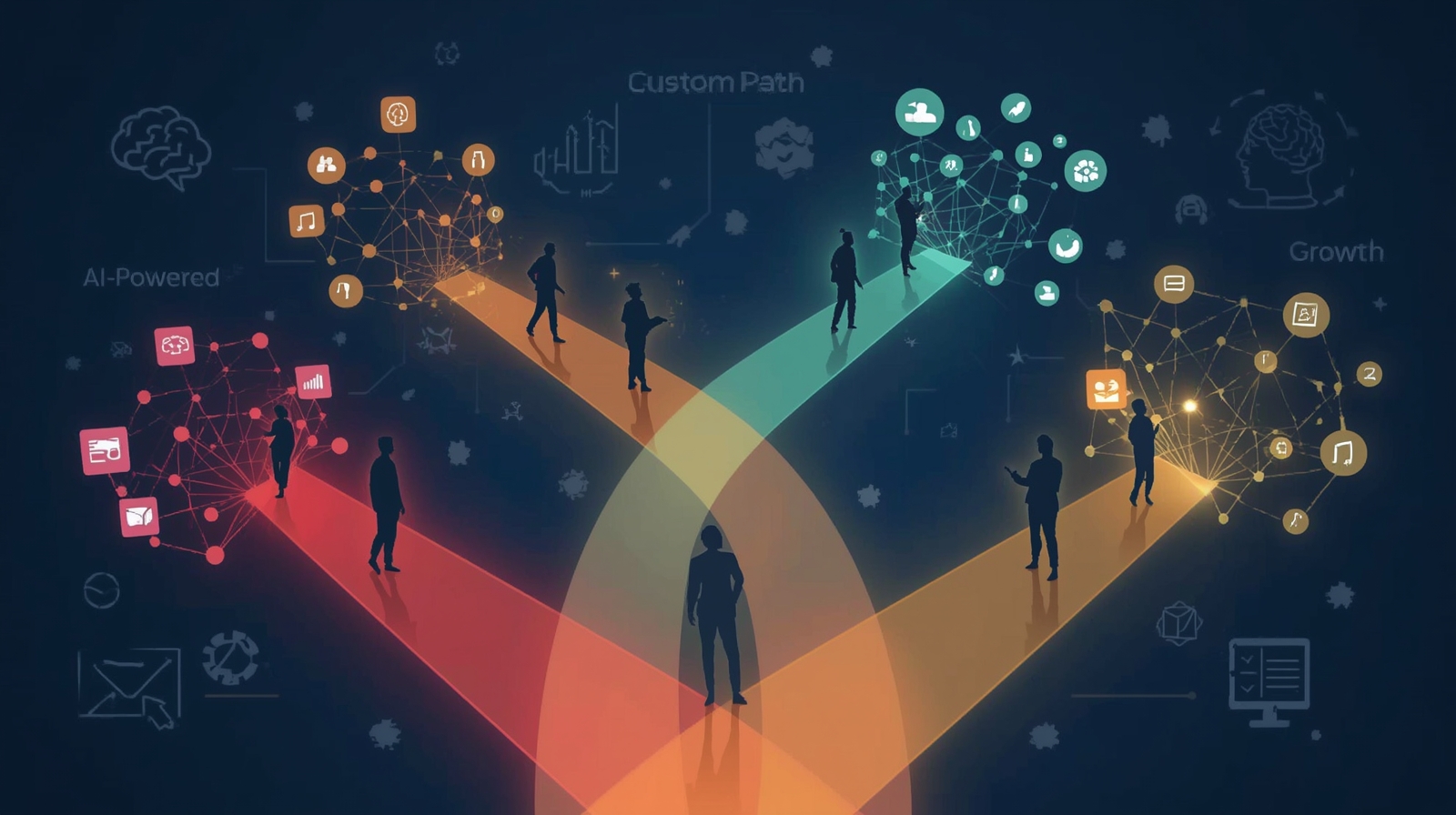
Personalized learning paths are transforming how companies develop their workforce. I’ve watched this shift happen over the past few years, and honestly, it’s remarkable. Gone are the days of boring, sleepy, one-size-fits-all training. Today’s AI-powered learning systems are different—they actually pay attention to who you are, what you know, and how you learn best.
Think about it like this: when you open Netflix, it doesn’t show you the same homepage as everyone else. It learns what you like and suggests shows you’ll probably enjoy. AI-driven employee training works the same way, except instead of binge-watching your favorite series, you’re developing skills that advance your career.
What Are Personalized Learning Paths?
A personalized learning path is essentially a customized educational journey designed specifically for you. Instead of following a one-size-fits-all curriculum, the system analyzes your current skills, your role requirements, your career goals, and even how you prefer to learn—then creates a unique training program just for you.
Here’s what makes them special: these paths aren’t static. They adapt as you progress. If you’re struggling with a concept, the system notices and provides additional resources or approaches the topic differently. It jumps ahead to keep you interested if you’re skimming through content you already understand.
I remember talking to a friend who works in tech support. His company implemented an AI learning platform, and within the first week, it identified that he already knew the basics but needed help with advanced troubleshooting. Instead of wasting his time on beginner content, the system fast-tracked him to intermediate and advanced modules. He completed his training in half the time and felt actually excited about learning for the first time in years.
How AI Creates Customized Learning Experiences
The magic behind personalized learning paths comes from sophisticated AI algorithms that work quietly in the background. Let me break down how this actually works in simple terms.
Initial Assessment and Skill Mapping
When you first start, the AI system conducts what’s called a skills assessment. This isn’t your typical multiple-choice test. Modern systems use various methods:
- Adaptive questioning that adjusts difficulty based on your answers
- Work history analysis examining your previous roles and projects
- Performance data from your current job tasks
- Self-assessment surveys about your confidence levels
- Learning style diagnostics to understand if you’re visual, auditory, or kinesthetic
The AI compiles all this information to create your baseline profile. Think of it as a detailed map showing where you are right now in your professional development journey.
Continuous Learning Analytics
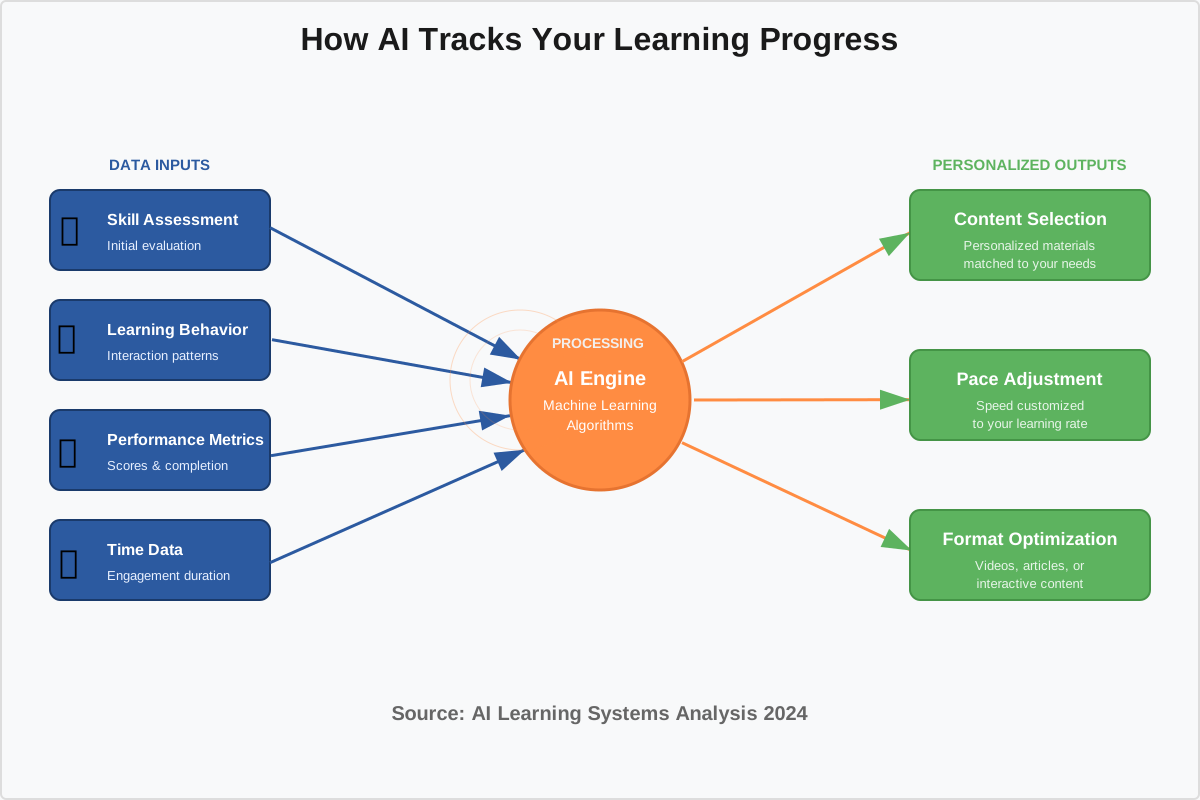
Here’s where it gets really interesting. As you move through your learning path, the AI constantly monitors dozens of data points:
- How long you spend on each module
- Which concepts you revisit multiple times
- Your quiz and assessment scores
- When you’re most engaged (morning person vs. night owl)
- Which formats you prefer (videos, articles, interactive simulations)
- Where you struggle or excel
This machine learning in education approach means the system gets smarter about you with every interaction. It’s like having a personal tutor who never forgets what works for you and what doesn’t.
Dynamic Content Curation
Based on all this data, the AI selects content from a vast library of learning materials. It’s not random—every piece is chosen because the algorithm predicts it will resonate with you specifically.
For example, if you’re a visual learner who prefers quick, actionable content, the system might prioritize infographics and short video tutorials. If you’re someone who likes to dig deep into theory, it might serve up detailed articles and case studies. The AI is constantly asking itself, “What’s the most effective way to help this specific person learn this specific skill right now?”
Adaptive Pacing and Pathways
One of my favorite aspects of AI-powered training is how it handles pacing. Traditional training forces everyone to move at the same speed, which frustrates quick learners and overwhelms slower ones.
AI systems solve this by adjusting in real time. If you’re mastering concepts quickly, the pace accelerates. If you need more time with certain topics, the system adds supplementary materials and slows down without making you feel behind. There’s no judgment, just adaptation.
The path itself can also change. Say you were heading toward one skill certification, but the AI notices you’re showing exceptional aptitude in a related area. It might suggest an alternative or complementary path that could be even more valuable for your career development.
Real-World Examples of Personalized Learning in Action
Allow me to share some concrete examples of how companies are using personalized learning paths today.
Technology Company: Skill-Based Career Progression
A major software company implemented an AI learning platform for their 50,000+ employees. The system analyzed each developer’s code commits, project contributions, and peer reviews to identify skill gaps and strengths.
What happened? Developers received personalized recommendations for courses, mentorship opportunities, and projects that aligned with their growth areas. One junior developer who excelled at user interface design but struggled with backend systems received a customized path that gradually built his backend skills while letting him shine in UI work. Within 18 months, he’d become a full-stack developer and received a promotion.
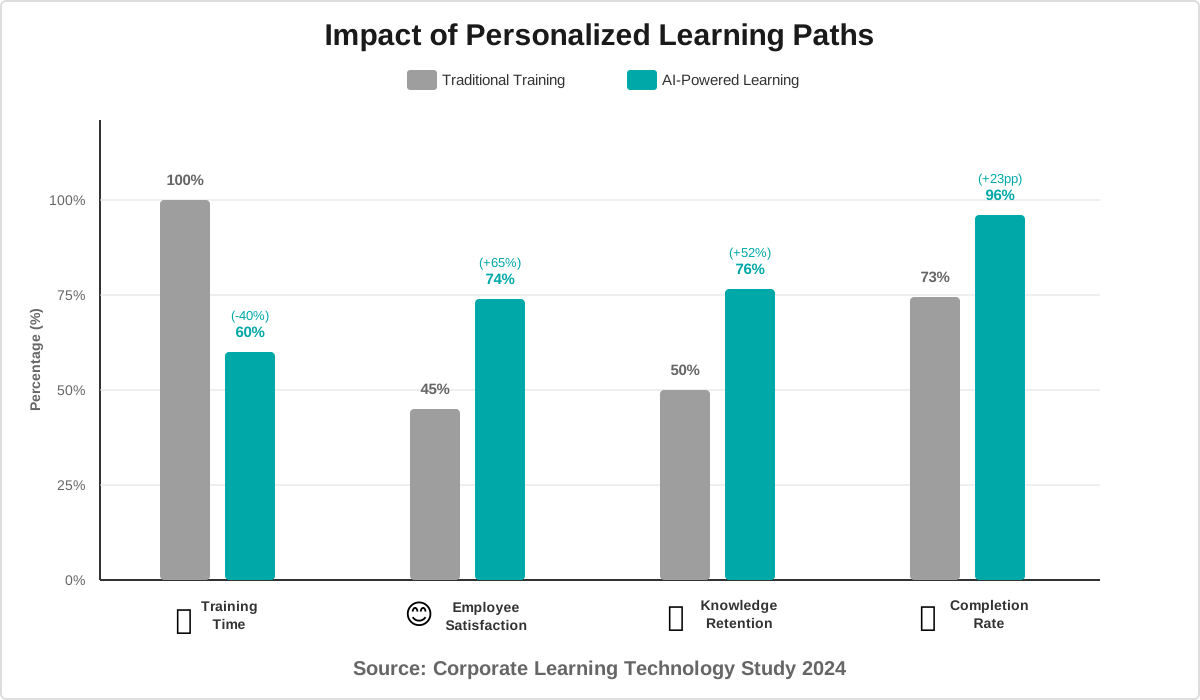
The company reported a 40% reduction in training time and a 65% increase in employee satisfaction with professional development programs.
Healthcare: Compliance and Clinical Skills
A hospital network needed to train nurses on new medical equipment and updated protocols. Traditional training would have required pulling nurses off shifts for daylong sessions.
Instead, they deployed an adaptive learning system that delivered bite-sized training modules tailored to each nurse’s shift schedule and current competency level. Experienced nurses who’d used similar equipment before got condensed refreshers, while newer nurses received more comprehensive instruction.
The AI tracked not just quiz scores but also simulated patient scenarios to ensure true competency. Training completion rates jumped from 73% to 96%, and knowledge retention (measured six months later) improved by 52%.
Retail Chain: Customer Service Excellence
A national retail chain wanted to improve customer service across 800 stores. They implemented personalized learning for 15,000 employees, focusing on communication skills, product knowledge, and conflict resolution.
The AI system identified that employees in high-traffic urban stores needed different skills than those in smaller suburban locations. Urban store employees received more training on managing stress and handling diverse customer needs quickly, while suburban store staff got more in-depth product education for longer customer interactions.
Customer satisfaction scores increased by 28% in six months, and employee turnover decreased by 19% as workers felt more confident and valued.
Key Benefits of AI-Powered Personalized Learning
Let me walk you through why personalized learning paths are becoming the standard for employee development.
Increased Engagement and Motivation
When training feels relevant to your actual job and career goals, you’re naturally more motivated to complete it. The AI ensures you’re not wasting time on content you already know or struggling alone with concepts that are too advanced.
I’ve heard countless stories from employees who previously dreaded mandatory training but now actually look forward to their learning sessions. That shift in attitude matters—engaged learners absorb information better and apply it more effectively.
Improved Learning Outcomes
Customized training programs simply work better. When content matches your learning style, moves at your pace, and connects to your specific needs, you retain more information. Studies show that personalized learning can improve knowledge retention by 25-60% compared to traditional methods.
The AI also identifies and addresses knowledge gaps before they become problems. If you’re consistently missing questions about a particular concept, the system reinforces that area rather than letting you move on with incomplete understanding.
Time and Cost Efficiency
From a business perspective, personalized learning is incredibly efficient. Companies save money by not training employees on skills they already have or will never use in their roles. Employees save time by focusing only on relevant content.
One manufacturing company I researched reduced their onboarding training from three weeks to ten days using personalized paths, saving hundreds of thousands of dollars annually while improving new hire performance.
Better Skill-to-Role Alignment
The AI can align learning directly with current and future role requirements. If you’re being considered for a leadership position, the system can automatically introduce management and strategy content to prepare you. This workforce development approach ensures employees are always developing skills that benefit both them and the organization.
Continuous, Not Event-Based
Traditional training is often a one-time event—you attend a session, maybe retain some information, and then forget most of it within weeks. AI learning platforms shift to continuous, micro-learning approaches where you regularly engage with small pieces of content that reinforce and build upon previous knowledge.
This spacing effect (learning over time rather than all at once) is proven to enhance long-term retention dramatically.
How to Implement Personalized Learning Paths in Your Organization
Ready to bring this technology to your workplace? Here’s a practical guide based on what I’ve learned from companies that have successfully made the transition.
Step 1: Assess Your Current Training Landscape
Before jumping into AI, understand what you’re working with now. Document your existing training programs, identify gaps, and gather feedback from employees about what’s working and what isn’t. This baseline helps you measure success later and ensures the AI system addresses real needs.
Ask yourself:
- What skills do we need to develop?
- Where are our biggest training challenges?
- How do employees currently prefer to learn?
- What’s our budget for new technology?
Step 2: Choose the Right AI Learning Platform
Not all platforms are created equal. Look for systems that offer:
- Robust assessment tools to accurately gauge skill levels
- Content libraries in your industry or the ability to integrate your existing materials
- Analytics dashboards so you can track progress and ROI
- Mobile accessibility for learning on-the-go
- Integration capabilities with your existing HR systems
Popular platforms include Degreed, EdCast, Cornerstone OnDemand, and LinkedIn Learning’s AI-powered recommendations, though new options emerge constantly. Request demos and pilot programs before committing.
Step 3: Start with a Pilot Program
Don’t try to roll out personalized learning to your entire organization overnight. Select a department or team to pilot the program. This allows you to work out technical issues, gather feedback, and build internal champions who can advocate for broader adoption.
Choose a pilot group that’s representative of your workforce and has expressed interest in better training. Their enthusiasm will help overcome inevitable initial hurdles.
Step 4: Integrate Quality Content
The AI is only as good as the content it has to work with. You’ll need a diverse library of learning materials in various formats: videos, articles, interactive simulations, podcasts, assessments, and more.
You can license content from providers, create custom materials, or combine both approaches. Make sure content is current, accurate, and aligned with your company’s goals and values.
Step 5: Communicate and Train
Employees need to understand what’s changing and why. Explain the benefits clearly—personalized paths save them time, help them grow faster, and connect learning to their career goals. Address concerns about AI monitoring their progress by emphasizing that the goal is support, not surveillance.
Provide simple tutorials on how to use the new system. The technology should feel intuitive, not intimidating.
Step 6: Monitor, Measure, and Adjust
Track key metrics like:
- Course completion rates
- Time to competency
- Employee satisfaction scores
- Knowledge retention (through follow-up assessments)
- Business impact (improved performance, reduced errors, faster onboarding)
Use this data to refine your approach. Maybe certain content isn’t resonating, or the AI’s recommendations need adjustment. Continuous improvement is essential.
Common Challenges and How to Overcome Them
Let me be honest—implementing personalized learning paths isn’t always smooth sailing. Here are the challenges I’ve seen companies face and how to handle them.
Resistance to Change
People get comfortable with familiar systems, even ineffective ones. Some employees worry that AI will judge them or that personalized paths mean more work disguised as development.
Solution: Focus on early wins. Share success stories from pilot programs. Emphasize that personalized learning often means less time spent on training overall because it’s more efficient. Make participation feel like an opportunity, not an obligation.
Data Privacy Concerns
Employees may worry about how their learning data will be used. Will it affect promotion decisions? Could it be used against them?
Solution: Be transparent about data usage and privacy policies. Clarify that the AI is a learning tool, not a performance surveillance system. Consider separating learning analytics from formal performance reviews initially to build trust.
Content Quality and Relevance
If the AI is serving up outdated or irrelevant content, the whole system falls apart. Maintaining a current, high-quality content library requires ongoing investment.
Solution: Assign a dedicated team to curate and update content regularly. Encourage employees to flag outdated materials. Use AI analytics to identify which content is most effective and invest more in creating similar resources.
Technology Integration Issues
Getting the AI learning platform to work smoothly with existing systems (HR software, LMS, and communication tools) can be technically challenging.
Solution: Prioritize platforms with strong API support and integration documentation. Work closely with your IT team during implementation. Budget time and resources for integration—it usually takes longer than expected.
Measuring ROI
Leadership wants to see clear returns on investment, but connecting learning to business outcomes isn’t always straightforward.
Solution: Establish clear metrics before implementation. Track both direct indicators (completion rates, test scores) and business impacts (productivity gains, turnover reduction, error rates). Document case studies showing specific examples of improved performance.
The Future of Personalized Learning
Looking ahead, AI-driven employee training is only going to get more sophisticated. Here’s what’s coming:
Virtual reality integration: Imagine practicing complex procedures in immersive VR environments tailored to your skill level. This is already happening in fields like surgery, manufacturing, and customer service.
Emotional intelligence AI: Future systems will detect when you’re frustrated, confused, or disengaged and adjust accordingly. If your attention is wandering, the system might switch to a more interactive format or suggest taking a break.
Predictive career pathing: AI will anticipate future skill needs based on industry trends and recommend learning paths that prepare you for roles that don’t even exist yet.
Peer learning networks: Algorithms will connect you with colleagues who have complementary skills or are learning similar concepts, facilitating mentorship and collaborative learning.
Real-time performance support: Rather than just training before you need a skill, AI will provide just-in-time learning exactly when you encounter a challenge at work.
The goal isn’t to replace human teachers, mentors, and trainers—it’s to augment them. AI handles the personalization and logistics while humans provide context, inspiration, and the irreplaceable value of authentic connection.
Frequently Asked Questions
Taking the First Step Toward Personalized Learning
If you’re reading this as an employee, I encourage you to ask your HR department or learning and development team about personalized learning options. Even if your company hasn’t implemented AI-powered systems yet, your inquiry might spark important conversations about modernizing training.
For business leaders and HR professionals, the case for personalized learning paths is compelling. The technology has matured beyond early experiments into proven, scalable solutions. Companies that embrace this shift gain competitive advantages in talent development, employee satisfaction, and ultimately, business performance.
Start small if you need to. Pilot a program with one team. Test different platforms. Gather feedback. Learn what works in your unique organizational culture. The investment in time and resources pays dividends in a workforce that’s more skilled, engaged, and prepared for future challenges.
The future of work demands continuous learning and adaptation. Personalized learning paths powered by AI make that continuous growth not just possible but genuinely enjoyable. When learning feels like it’s designed for you—because it literally is—you’re more likely to stick with it, apply what you learn, and advance your career.
The technology is here. The results are proven. The only question is when will you start your personalized learning journey?
References:
Corporate Learning Technology Study 2024, Learning & Development Industry Research
AI Learning Systems Analysis 2024, Educational Technology Insights
Workforce Development Research, Society for Human Resource Management (SHRM)
Adaptive Learning Systems White Paper, MIT Technology Review
Employee Training Effectiveness Study, Association for Talent Development (ATD)
About the Author
Abir Benali is a technology writer specializing in making AI accessible to everyone. With a background in instructional design and a passion for demystifying complex technologies, I help readers understand how AI tools can improve their work and daily lives. My writing focuses on practical, step-by-step guidance that anyone can follow, regardless of technical background. When I’m not writing about AI, I’m experimenting with new productivity tools and sharing what I learn with readers who want to work smarter, not harder. I believe technology should empower people, not intimidate them, and that’s the principle behind everything I write.