
AI Risk Assessment and Mitigation: Your Complete Guide
Taking Control of AI Safety
AI Risk Assessment and Mitigation isn’t just corporate jargon—it’s your roadmap to using artificial intelligence safely, responsibly, and effectively. Whether you’re a small business owner implementing your first chatbot or a concerned professional wondering how AI might affect your industry, understanding how to identify and manage AI risks is essential in our increasingly automated world.
We’re Nadia Chen and James Carter, and we’ve spent years helping people navigate AI’s complex landscape from both an ethical safety perspective and a practical productivity angle. Together, we’ve seen firsthand how proper risk assessment transforms AI from a source of anxiety into a powerful, trustworthy tool. This guide combines our expertise to give you actionable strategies that protect your interests while unlocking AI’s potential.
The reality? Every AI system carries some level of risk—from data privacy concerns to algorithmic bias, from security vulnerabilities to unintended consequences. But here’s the empowering truth: these risks are manageable when you know what to look for and how to respond. Think of AI Risk Assessment and Mitigation as your safety net and growth accelerator rolled into one. It’s about making informed decisions, not avoiding innovation.
Throughout this comprehensive guide, we’ll walk you through everything you need to know. We’ll demystify complex frameworks, provide step-by-step assessment processes, and share practical mitigation strategies that work in real-world scenarios. You don’t need a technical background—just a commitment to using AI responsibly and a willingness to learn. Let’s transform uncertainty into confidence, one risk assessment at a time.
Understanding AI Risk Assessment: A Comprehensive Guide
Understanding AI Risk Assessment: A Comprehensive Guide starts with a simple premise: before you can protect against AI risks, you must first identify them. Risk assessment is the systematic process of evaluating potential harms, their likelihood, and their impact. In the AI context, this means examining everything from how algorithms make decisions to how your data is stored and processed.
Think of AI risk assessment like checking your car before a road trip. You wouldn’t just hope the brakes work—you’d verify they do. Similarly, AI Risk Assessment involves proactively examining AI systems for potential issues before they cause harm. This includes technical risks (like system failures or security breaches), ethical risks (like bias or discrimination), and operational risks (like over-reliance on automated decisions).
The assessment process typically follows a structured approach: identify assets and stakeholders, map potential risks, evaluate their severity and likelihood, prioritize based on impact, and document everything systematically. We’ve found that organizations and individuals who treat risk assessment as an ongoing conversation rather than a one-time checklist achieve significantly better outcomes.
The Different Types of AI Risks: A Detailed Breakdown
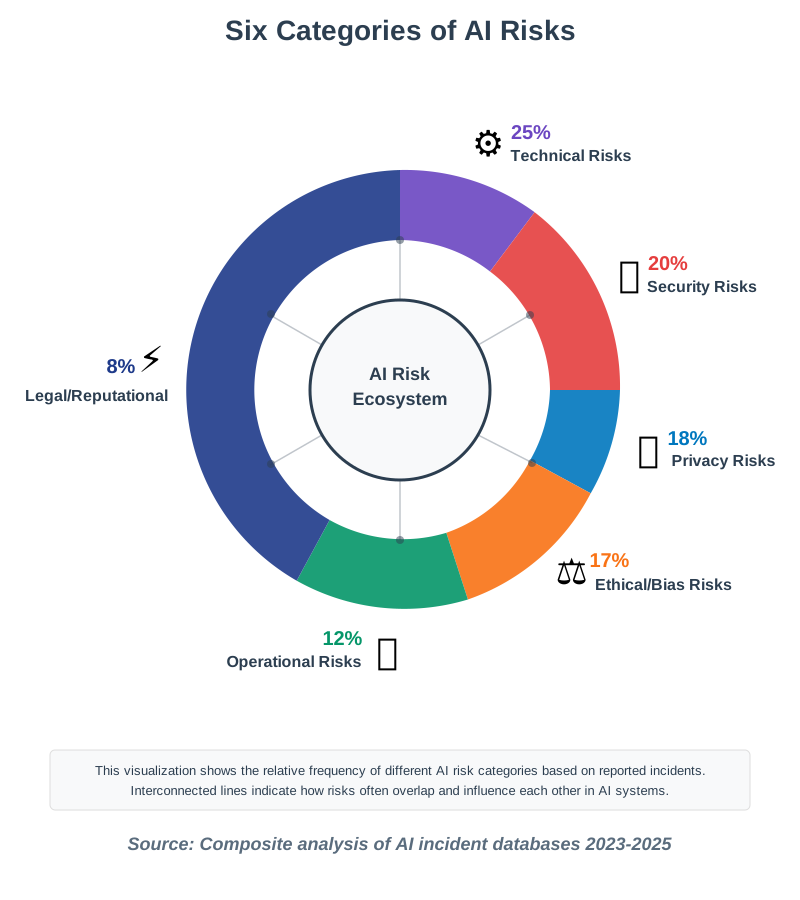
The Different Types of AI Risks: A Detailed Breakdown reveals the multifaceted nature of AI challenges. Understanding these categories helps you develop comprehensive protection strategies rather than addressing risks in isolation.
Technical Risks encompass system failures, algorithmic errors, and performance degradation. These are the “what if the AI stops working correctly” scenarios—like a recommendation engine suggesting inappropriate content or a predictive model producing wildly inaccurate forecasts. Technical risks also include integration issues when AI systems interact poorly with existing infrastructure.
Security Risks involve vulnerabilities to cyberattacks, data breaches, and adversarial manipulation. Hackers might poison training data, exploit model weaknesses, or steal sensitive information processed by AI systems. We’ve seen cases where subtle changes to input data caused AI systems to make catastrophic errors—a technique called adversarial attacks.
Privacy Risks center on data protection failures, unauthorized information disclosure, and consent violations. AI systems often require vast amounts of data, raising questions about who has access, how long data is retained, and whether individuals truly understand what they’ve agreed to. The risk intensifies with systems that infer sensitive information from seemingly innocuous data.
Ethical and Bias Risks represent perhaps the most insidious category. These include discriminatory outcomes, fairness violations, and perpetuation of societal inequalities. An AI trained on historical hiring data might learn to discriminate against certain demographics. A loan approval system might systematically disadvantage specific communities. These risks require constant vigilance because they’re often invisible in system performance metrics.
Operational Risks relate to over-reliance on AI, skill degradation among human workers, and decision-making opacity. When organizations become too dependent on AI recommendations, they risk losing critical thinking capabilities and struggle when systems fail. There’s also the risk of the “black box” problem—when even experts can’t explain why an AI made a particular decision.
Reputational and Legal Risks involve regulatory non-compliance, liability issues, and public relations disasters. As AI regulations evolve globally, organizations face increasing legal exposure. One high-profile AI failure can devastate brand reputation and customer trust—recovery from which takes years.
AI Risk Assessment Frameworks: A Comparative Analysis
AI Risk Assessment Frameworks: A Comparative Analysis helps you choose the right systematic approach for your situation. Multiple frameworks exist, each with distinct strengths and ideal use cases.
The NIST AI Risk Management Framework provides a comprehensive, government-backed approach emphasizing governance, mapping, measuring, and managing risks. It’s particularly valuable for organizations requiring regulatory compliance or seeking a structured, auditable process. We recommend this framework for enterprises, government contractors, and heavily regulated industries. Its strength lies in thoroughness; its challenge is complexity for smaller operations.
ISO/IEC 42001 offers an international standard for AI management systems, focusing on continuous improvement and stakeholder trust. This framework integrates well with existing ISO quality management systems, making it ideal for organizations already using ISO standards. It emphasizes documentation and process consistency—crucial for demonstrating due diligence.
The OECD AI Principles framework takes a values-based approach, centering on human rights, transparency, and accountability. Less prescriptive than NIST, it’s excellent for organizations prioritizing ethical considerations and stakeholder engagement. We’ve seen this work beautifully for nonprofits, educational institutions, and socially conscious businesses.
Microsoft’s Responsible AI Standard and Google’s AI Principles represent industry-specific frameworks developed by tech giants. These offer practical, battle-tested approaches with extensive tooling support. They’re particularly useful for software development teams and technology companies building AI products.
For small businesses and individuals, we often recommend starting with a simplified hybrid approach: use NIST for structure, OECD for ethical guidance, and industry frameworks for specific technical tools. The key is choosing a framework you’ll actually use consistently rather than the most comprehensive one you’ll abandon halfway through.
How to Conduct an AI Risk Assessment: A Step-by-Step Approach
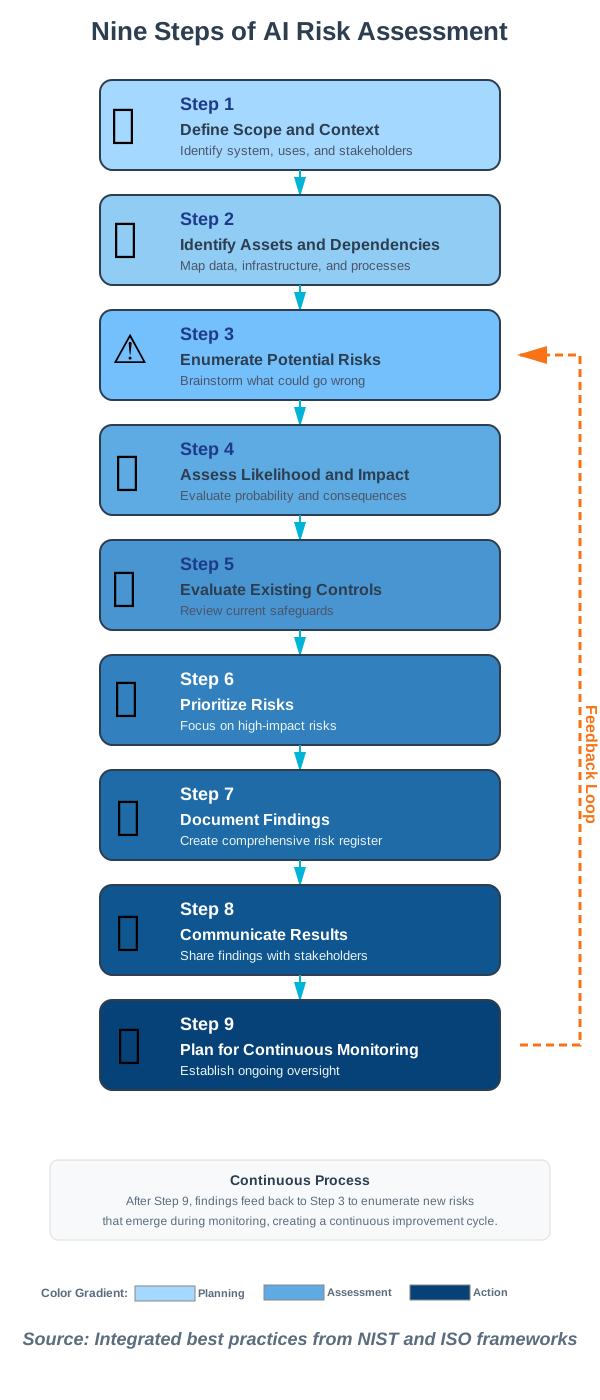
How to Conduct an AI Risk Assessment: A Step-by-Step Approach breaks down the process into manageable, actionable stages. This methodology works whether you’re evaluating a chatbot for customer service or a complex machine learning system for financial forecasting.
Step 1: Define Scope and Context Start by clearly identifying what you’re assessing. Which AI system or application? What are its intended uses? Who are the stakeholders—users, employees, customers, or third parties? Document the system’s purpose, data sources, decision-making authority, and operational context. Be specific: “chatbot for customer support handling billing inquiries” is better than “AI assistant.”
Step 2: Identify Assets and Dependencies Map everything the AI system touches: data (types, sources, sensitivity), infrastructure (servers, networks, third-party services), people (operators, affected individuals), and processes (workflows, decision chains). Understanding dependencies reveals vulnerability points. For instance, if your AI relies on a third-party API, that API’s downtime becomes your risk.
Step 3: Enumerate Potential Risks Use our risk categories (technical, security, privacy, ethical, operational, legal) as a checklist. For each category, ask, “What could go wrong?” Involve diverse perspectives—technical staff see different risks than end users. Consider both direct risks (system failure) and indirect risks (reputation damage from poor customer experience). Don’t self-censor during brainstorming; you’ll prioritize later.
Step 4: Assess Likelihood and Impact For each identified risk, evaluate two dimensions: How likely is this to occur? (Rate as low, medium, or high, or use numerical scales) and What would be the impact if it occurred? (Consider financial, operational, reputational, and human costs). Create a simple risk matrix plotting likelihood against impact to visualize priorities.
Step 5: Evaluate Existing Controls What safeguards already exist? Security protocols, data governance policies, human oversight mechanisms, and testing procedures? Assess how effective these controls are. A firewall is only valuable if it’s properly configured and maintained. This step often reveals gaps where you thought you had protection.
Step 6: Prioritize Risks Focus resources on high-likelihood, high-impact risks first. The risk matrix from Step 4 guides prioritization. However, don’t ignore low-probability, catastrophic-impact risks—these require contingency planning even if unlikely. Balance addressing immediate vulnerabilities with long-term systemic issues.
Step 7: Document Findings Create a comprehensive risk register documenting each identified risk, its assessment, existing controls, and recommended actions. This becomes your roadmap for mitigation and your evidence of due diligence. We recommend using spreadsheets or specialized risk management software to maintain organized records.
Step 8: Communicate Results Share findings with stakeholders in language they understand. Executives need business impact summaries; technical teams need implementation details; users need transparency about how risks affect them. Effective communication builds trust and ensures necessary resources for mitigation.
Step 9: Plan for Continuous Monitoring Risk assessment isn’t one-and-done. Establish processes for ongoing monitoring, periodic reassessment, and incident response. Technology evolves, new threats emerge, and systems change—your risk assessment must evolve too. Schedule quarterly reviews at minimum, with immediate reassessment after significant system changes.
Identifying AI Bias: Methods and Techniques for Risk Assessment
Identifying AI Bias: Methods and Techniques for Risk Assessment addresses one of AI’s most persistent and harmful challenges. Bias in AI systems doesn’t emerge from malice—it creeps in through training data, algorithm design, and deployment contexts. Detecting it requires vigilance and specific methodologies.
Start with data auditing: examine training datasets for representation gaps, historical prejudices, and sampling biases. If your facial recognition system is trained predominantly on light-skinned faces, it will perform poorly on darker skin tones—this isn’t hypothetical; it’s happened repeatedly. Look for demographic imbalances in your data. Are certain groups underrepresented? Does historical data reflect past discrimination?
Employ disparate impact testing: compare AI system outcomes across different demographic groups. If a hiring algorithm rejects qualified candidates from protected groups at higher rates than equally qualified majority candidates, that’s disparate impact—potentially illegal and definitely problematic. Calculate selection rates, approval rates, or error rates by group and look for statistically significant differences.
Use fairness metrics: multiple mathematical definitions of fairness exist, including demographic parity (equal positive prediction rates across groups), equalized odds (equal true positive and false positive rates), and individual fairness (similar individuals receive similar predictions). No single metric captures all fairness concerns, so we recommend evaluating multiple metrics and understanding trade-offs between them.
Conduct adversarial testing: deliberately probe for bias by testing edge cases and underrepresented scenarios. What happens when you test the system with names associated with different ethnicities? How does it respond to gender-neutral versus gendered language? This proactive testing reveals hidden biases before they harm real people.
Implement human audits and diverse review panels: technical testing alone misses contextual biases. Assemble diverse teams to review AI outputs and flag concerning patterns. People with lived experience of discrimination often spot subtle biases that homogeneous teams overlook. This isn’t about political correctness—it’s about building systems that work fairly for everyone.
Utilize explainability tools: techniques like LIME (Local Interpretable Model-agnostic Explanations) and SHAP (SHapley Additive exPlanations) reveal which features most influence AI decisions. If an AI relies heavily on proxies for protected characteristics (like ZIP codes correlating with race), that’s a red flag requiring investigation.
AI Security Risk Assessment: Protecting Against Cyberattacks
AI Security Risk Assessment: Protecting Against Cyberattacks requires understanding both traditional cybersecurity principles and AI-specific vulnerabilities. AI systems present unique attack surfaces that conventional security approaches might miss.
Model poisoning attacks occur when adversaries corrupt training data to manipulate AI behavior. Imagine a spam filter trained on messages that include carefully crafted emails designed to make legitimate communications look like spam. The solution involves data provenance tracking, anomaly detection in training data, and robust validation processes. Always verify data sources and monitor for suspicious patterns in training datasets.
Adversarial examples exploit AI systems through subtly modified inputs that cause misclassification. A stop sign with carefully placed stickers might be classified as a speed limit sign by an autonomous vehicle’s vision system. Defend against this through adversarial training (training on known adversarial examples), input validation, and ensemble methods using multiple models that are unlikely to share the same vulnerabilities.
Model inversion and extraction attacks steal proprietary models or infer sensitive training data. Attackers query a model repeatedly to reconstruct its decision boundaries or extract training examples. Mitigation strategies include rate limiting API access, adding noise to outputs, using differential privacy techniques, and monitoring for suspicious query patterns.
Prompt injection attacks target language models by manipulating inputs to override safety guidelines or extract confidential information. For instance, clever prompt engineering might trick a chatbot into revealing private data or behaving maliciously. Protect against this through input sanitization, output filtering, and strict separation between system instructions and user inputs.
Traditional security measures remain essential: encryption for data in transit and at rest, access controls limiting who can interact with AI systems, network segmentation isolating AI infrastructure, and regular security audits. However, apply these with AI-specific considerations. For example, encrypted machine learning techniques allow computation on encrypted data, protecting privacy even during processing.
Establish security monitoring specific to AI systems: track model performance for unexpected changes (which might indicate an attack), log all access attempts and queries, monitor computational resources for unauthorized usage, and maintain version control for models and training data. Anomalies in any of these areas warrant immediate investigation.
AI Privacy Risk Assessment: Ensuring Data Protection
AI Privacy Risk Assessment: Ensuring Data Protection centers on the fundamental principle that AI benefits shouldn’t come at the cost of personal privacy. Given AI’s data-hungry nature, privacy risks require special attention.
Begin with data minimization: collect only the data actually necessary for your AI’s purpose. More data doesn’t always improve results and exponentially increases privacy risks. Ask: “Do we really need this information?” If you can achieve 95% accuracy with basic demographics instead of 97% accuracy with sensitive health data, the 2% improvement rarely justifies the privacy risk.
Implement purpose limitation: use data only for explicitly stated purposes to which users consented. An AI trained on customer service interactions shouldn’t later analyze those conversations for marketing insights without additional consent. Clear purpose statements build trust and ensure legal compliance.
Practice data anonymization and pseudonymization: remove or encrypt personally identifiable information whenever possible. Techniques include removing direct identifiers (names, addresses), aggregating data to group levels, adding noise to datasets, and using differential privacy methods that guarantee individual records can’t be reconstructed. However, be aware that “anonymous” data can sometimes be re-identified through sophisticated analysis—true anonymization is harder than it appears.
Establish consent management systems: ensure individuals understand what data you collect, how AI uses it, who accesses it, and how long you retain it. Consent should be informed (clear language, not legal jargon), specific (separate consent for separate purposes), and revocable. GDPR and similar regulations make this legally mandatory in many jurisdictions, but it’s good practice everywhere.
Conduct privacy impact assessments (PIAs): systematically evaluate how AI systems affect individual privacy. Identify what personal data the system processes, potential privacy risks, measures to address those risks, and mechanisms for individual rights (access, correction, deletion). PIAs should be living documents, updated as systems evolve.
Implement data retention policies: don’t keep personal data indefinitely. Define retention periods based on legitimate business needs and legal requirements, then automatically delete data when those periods expire. If you don’t have the data, it can’t leak or be misused.
Consider privacy-enhancing technologies (PETs): federated learning trains models across distributed datasets without centralizing data, homomorphic encryption enables computation on encrypted data, secure multi-party computation allows collaborative analysis without revealing individual inputs, and synthetic data generation creates realistic training data without using real personal information.
The Role of AI Ethics in Risk Assessment and Mitigation
The Role of AI Ethics in Risk Assessment and Mitigation reminds us that technical solutions alone are insufficient—we must also consider values, fairness, and societal impact. Ethics isn’t a luxury or afterthought; it’s fundamental to sustainable AI deployment.
Ethical risk assessment asks questions metrics can’t answer: Is this AI application respectful of human dignity? Does it preserve autonomy or manipulate behavior? Does it promote fairness or exacerbate inequality? These questions require philosophical reflection, not just technical analysis.
Transparency stands as a cornerstone ethical principle. Users deserve to know when they’re interacting with AI, how decisions affecting them are made, and what recourse they have for errors. Opacity breeds mistrust and prevents accountability. We advocate for clear disclosure of AI use, accessible explanations of system logic, and transparent reporting of system limitations and known biases.
Accountability ensures someone takes responsibility for AI outcomes. Complex systems involve multiple parties—developers, deployers, operators, and vendors. Establishing clear accountability chains prevents the “responsible AI” problem where everyone points fingers when things go wrong. Document who owns each aspect of the AI lifecycle and establish escalation procedures for ethical concerns.
Human oversight maintains meaningful human control over significant decisions. AI should augment human judgment, not replace it entirely. For high-stakes decisions—loan approvals, medical diagnoses, criminal sentencing—humans must remain in the loop with authority to override AI recommendations. This isn’t about distrusting AI; it’s about recognizing that human judgment incorporates context and values that algorithms may miss.
Stakeholder engagement brings affected communities into AI development and deployment conversations. Those impacted by AI systems should have a voice in shaping them. This participatory approach reveals risks that development teams might overlook and builds systems that genuinely serve community needs rather than imposing solutions.
Value alignment ensures AI systems reflect the values of the communities they serve. Different cultures and contexts prioritize different values. An AI system optimized purely for efficiency might sacrifice privacy, accessibility, or fairness. Explicit discussion of values during design helps create systems that balance competing concerns appropriately.
AI Risk Mitigation Strategies: A Practical Guide
AI Risk Mitigation Strategies: A Practical Guide translates assessment findings into concrete actions. Identifying risks means nothing without effective mitigation—this is where we protect people and organizations from AI’s potential harms.
Risk Avoidance: Sometimes the best mitigation is not deploying the AI system at all. If risks outweigh benefits, or if you cannot adequately mitigate serious risks, abstaining is responsible. For instance, facial recognition in schools might offer marginal security benefits but create significant privacy and surveillance risks that outweigh those benefits.
Risk Reduction: Most mitigation involves reducing the likelihood or impact of identified risks. Technical measures include robust testing (adversarial testing, stress testing, and edge case analysis), model validation (comparing outputs against known ground truth), input validation and sanitization, output filtering, and defense-in-depth security architecture. Organizational measures include training operators on system limitations, establishing clear protocols for handling AI errors, and creating escalation paths for concerning outputs.
Risk Transfer: Shift risk through contracts, insurance, or shared responsibility models. When using third-party AI services, negotiate contracts that clarify liability. AI-specific insurance products are emerging to cover certain risks. However, you can’t transfer away all responsibility—ultimate accountability often remains with the deployer.
Risk Acceptance: For low-impact risks or residual risks after mitigation, conscious acceptance may be appropriate. Document accepted risks, rationale for acceptance, and thresholds that would trigger reconsideration. This isn’t recklessness; it’s acknowledging that perfect safety is impossible and resources are finite.
Implement defense in depth: layer multiple mitigation strategies so failure of one control doesn’t cause total failure. Combine technical safeguards with organizational policies, human oversight with automated monitoring, and prevention with detection and response capabilities.
Establish kill switches and manual overrides: ensure you can quickly disable or override AI systems if they malfunction. Automation is valuable, but emergency stops are essential. We’ve seen too many situations where problematic AI systems continued operating because no one knew how to turn them off.
Create feedback loops: make it easy for users and operators to report problems, then act on that feedback. Systems that learn from real-world experience become safer over time. Encourage reporting without blame—you want to know about near misses and minor issues before they become major incidents.
Monitoring and Evaluating AI Risks: A Continuous Improvement Approach
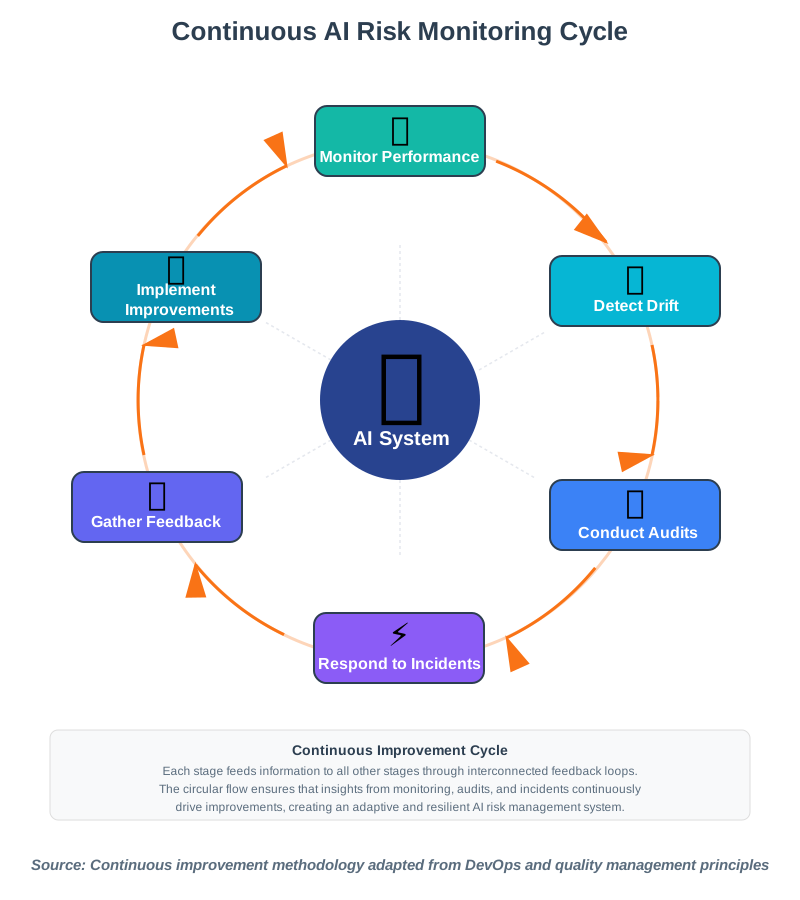
Monitoring and Evaluating AI Risks: A Continuous Improvement Approach emphasizes that risk management never ends. AI systems operate in dynamic environments where new risks emerge constantly.
Establish performance monitoring: track key metrics continuously—accuracy, latency, error rates, bias indicators, and resource utilization. Set thresholds that trigger alerts when metrics deviate from expected ranges. Degrading performance often signals underlying problems before they cause visible harm.
Implement drift detection: AI performance degrades as real-world data distributions shift from training data distributions (concept drift) or as the meaning of concepts changes (semantic drift). Monitor for statistical changes in input data and output distributions. When drift is detected, retrain models with current data or recalibrate decision thresholds.
Conduct regular audits: schedule periodic comprehensive reviews of AI systems beyond routine monitoring. Quarterly or annual audits provide opportunities to reassess risks, evaluate mitigation effectiveness, and identify emerging concerns. External audits by independent parties add credibility and fresh perspectives.
Create incident response plans: when things go wrong, rapid effective response minimizes damage. Document procedures for incident detection, escalation, investigation, mitigation, and post-incident review. Practice these procedures through tabletop exercises so teams know what to do under pressure.
Establish feedback channels: create multiple pathways for stakeholders to raise concerns—user reporting mechanisms, employee whistleblower protection, stakeholder advisory boards, and public transparency reports. Make it safe and easy to surface problems.
Use A/B testing and gradual rollouts: when updating AI systems, deploy changes incrementally to subsets of users first. Monitor closely for unexpected impacts before full deployment. This limits the blast radius if updates introduce new problems.
Maintain version control and reproducibility: keep detailed records of model versions, training data versions, configuration settings, and deployment contexts. If problems emerge, you need the ability to roll back to previous versions and understand what changed between versions.
Track emerging threats and best practices: AI security and safety evolve rapidly. Stay informed about new attack vectors, regulatory changes, and improved mitigation techniques through industry groups, research publications, and community forums.
AI Risk Assessment Tools: A Comparison of Software and Platforms
AI Risk Assessment Tools: A Comparison of Software and Platforms helps you select technological aids for your risk management program. The right tools streamline assessment, improve consistency, and provide audit trails.
IBM Watson OpenScale offers comprehensive AI governance capabilities, including bias detection, explainability features, and automated monitoring. It excels at tracking models in production and providing drift alerts. Best suited for enterprises with IBM ecosystem investments, though it can work with various model types. The learning curve is steep, but the functionality is robust. Pricing typically involves enterprise licensing.
Microsoft Azure Machine Learning includes responsible AI features like model interpretability, fairness assessment, and error analysis tools. It integrates seamlessly with Microsoft’s cloud environment and development tools. Particularly strong for organizations already using Azure. The fairness dashboard provides intuitive visualizations of bias metrics across demographic groups.
Google Cloud AI Platform provides model monitoring, explainability AI, and a What-If tool for exploring model behavior. Strong integration with Google Cloud services and TensorFlow. The What-If tool particularly shines for understanding how different inputs affect model predictions—invaluable for bias detection.
Fiddler AI specializes in AI observability and explainability, offering monitoring, debugging, and bias detection across the entire model lifecycle. Model-agnostic and supports multiple deployment environments. Particularly valuable for organizations with diverse AI portfolios. Users praise its intuitive interface and actionable insights.
Arthur AI focuses on model monitoring and performance management with strong bias detection capabilities. Emphasizes production monitoring over development-phase assessment. Good choice for organizations primarily concerned with deployed model behavior rather than development governance.
Weights & Biases provides experiment tracking, model visualization, and team collaboration features. While not solely focused on risk assessment, its comprehensive tracking capabilities support reproducibility and auditing requirements. Popular in research and data science teams.
Open-source options include Fairlearn (Microsoft’s toolkit for fairness assessment), AI Fairness 360 (IBM’s bias detection and mitigation toolkit), and What-If Tool (Google’s model understanding framework). These require more technical expertise but offer flexibility and transparency without licensing costs.
For small businesses and individual practitioners, we recommend starting with free tiers of cloud platforms or open-source tools. As needs grow, consider specialized platforms. Choose based on your existing tech stack, team expertise, and specific risk concerns rather than feature count alone.
The Future of AI Risk Assessment: Trends and Predictions
The Future of AI Risk Assessment: Trends and Predictions looks ahead at how risk assessment will evolve as AI technology advances. Understanding these trends helps you prepare for tomorrow’s challenges.
Automated risk assessment will become standard, with AI systems assessing risks in other AI systems. Meta-AI for safety might sound recursive, but it’s already emerging. Systems will continuously monitor for drift, bias, and anomalies with minimal human intervention. However, human oversight will remain critical for contextual judgment and ethical considerations.
Regulatory standardization is accelerating. The EU AI Act, the US AI Bill of Rights, and various national frameworks are converging toward common principles. Within five years, expect internationally harmonized AI risk assessment standards similar to financial regulatory frameworks. Organizations must prepare for mandatory risk assessments, regular audits, and public disclosure requirements.
Real-time risk scoring will enable dynamic risk management. Instead of periodic assessments, systems will continuously calculate risk scores that adjust as conditions change. Think credit scores for AI systems—instant feedback on system safety and trustworthiness. This enables proactive intervention before problems escalate.
Explainable AI advances will make black-box systems more transparent. New techniques will provide clearer explanations of AI reasoning accessible to non-technical stakeholders. This reduces opacity risks and facilitates better risk assessment. Expect regulatory pressure to accelerate explainability research.
Privacy-preserving AI techniques will mature. Federated learning, differential privacy, and homomorphic encryption will shift from research curiosities to production standards. These technologies enable AI benefits while minimizing privacy risks—the holy grail of responsible AI deployment.
Industry-specific frameworks will proliferate. Healthcare, finance, transportation, and education will develop specialized risk assessment methodologies addressing their unique challenges. Generic frameworks will remain foundations, but sector-specific guidance will become essential.
Participatory risk assessment involving affected communities will become expected practice. Stakeholder engagement will evolve from nice-to-have to mandatory for high-impact AI systems. This democratization of AI governance reflects growing recognition that technical experts alone cannot identify all risks.
AI insurance markets will mature. Specialized insurance products covering AI-specific risks will become common, providing risk transfer options and incentivizing safety through premium structures. Actuarial science will adapt to AI’s unique risk profiles.
Supply chain risk assessment will gain prominence as organizations recognize interdependencies. Your AI might be safe, but what about the third-party models, datasets, and infrastructure it depends on? Comprehensive risk assessment will extend to entire AI supply chains.
AI Risk Assessment in Healthcare: Specific Challenges and Solutions
AI Risk Assessment in Healthcare: Specific Challenges and Solutions addresses the unique requirements of applying AI in medical contexts where errors can literally cost lives.
Healthcare AI faces safety-critical decision-making where mistakes have severe consequences. A misdiagnosis or incorrect treatment recommendation could be fatal. This demands exceptionally high accuracy standards, rigorous validation processes, and mandatory human oversight for clinical decisions. Risk assessments must incorporate clinical validation protocols and regulatory requirements like FDA approval processes.
Health data privacy requires special protection under HIPAA (US), GDPR (EU), and similar regulations. Medical records contain uniquely sensitive information whose disclosure could cause severe harm. Implement de-identification procedures beyond general privacy practices, use secure enclaves for data processing, and maintain strict access controls. Risk assessments must document compliance with health-specific privacy regulations.
Medical bias risks perpetuating healthcare disparities. If training data underrepresents certain demographics or reflects historical treatment inequalities, AI might provide worse care for already underserved populations. Conduct fairness testing across racial, ethnic, socioeconomic, and gender groups. Include diverse patient advocates in system design and validation.
Clinical workflow integration presents operational risks. AI that disrupts clinical workflows or creates excessive false alarms gets ignored, defeating its purpose. Assess how AI fits into existing processes, involves clinicians early in development, and monitors alert fatigue. The best algorithm fails if clinicians won’t use it.
Regulatory compliance in healthcare is rigorous. Medical devices (including AI-based ones) require regulatory approval demonstrating safety and efficacy. Risk assessment must align with the FDA’s framework for AI/ML-based medical devices, addressing continuous learning, bias monitoring, and clinical validation. Documentation requirements exceed those in other domains.
Solutions include prospective clinical trials validating AI performance before deployment, continuous monitoring of clinical outcomes, human-in-the-loop systems requiring physician review of AI recommendations, and gradual deployment strategies starting with low-risk applications before advancing to critical care.
AI Risk Assessment in Finance: Compliance and Security Considerations
AI Risk Assessment in Finance: Compliance and Security Considerations explores challenges in an industry where money is at stake and regulations are strict.
Regulatory compliance dominates financial AI risk assessment. Basel III, MiFID II, Dodd-Frank, and emerging AI-specific regulations create complex compliance requirements. Financial institutions must demonstrate risk models are sound, decisions are explainable, and appropriate governance exists. Risk assessments must map AI systems to regulatory obligations and document compliance measures.
Algorithmic trading risks include market manipulation, flash crashes, and systemic risk. High-frequency trading AI makes decisions faster than human oversight. Risk mitigation requires circuit breakers limiting trading velocity, kill switches for emergency stops, and sandbox testing before live deployment. Regulatory reporting of algorithmic trading strategies is mandatory in many jurisdictions.
Credit decision fairness is legally mandated. Laws prohibit discrimination in lending based on protected characteristics. However, even neutral algorithms can exhibit discriminatory patterns if trained on biased historical data. Implement disparate impact testing, maintain model interpretability for adverse action explanations, and conduct regular fairness audits. Risk assessments must document fair lending compliance.
Fraud detection balance involves trade-offs between security and customer experience. Overly aggressive fraud detection creates false positives that frustrate legitimate customers; too lenient allows fraud. Continuously tune decision thresholds, implement multiple verification factors, and monitor false positive rates across demographic groups to prevent discrimination.
Model risk management in finance has established frameworks predating general AI risk assessment. OCC guidance on model risk management provides structure: models require independent validation, ongoing monitoring, and comprehensive documentation. These principles apply equally to traditional statistical models and modern AI.
Financial data security is critical. Financial institutions face constant cyberattacks, and AI systems processing transaction data are prime targets. Implement defense-in-depth security, encrypt sensitive data, monitor for unusual access patterns, and conduct regular penetration testing. Security risk assessment must consider AI-specific attack vectors like adversarial examples against fraud detection systems.
Solutions include regulatory technology (RegTech) automating compliance monitoring, explainable AI techniques enabling adverse action explanations, robust validation frameworks for financial models, and collaboration with regulators on emerging AI governance approaches.
AI Risk Assessment in Autonomous Vehicles: Safety and Reliability
AI Risk Assessment in Autonomous Vehicles: Safety and Reliability addresses life-or-death scenarios where AI controls vehicles carrying human passengers.
Safety-critical reliability is paramount. Autonomous vehicle AI must perform with far greater reliability than human drivers to gain public acceptance. This requires redundant systems, fail-safe mechanisms, and extensive testing. Risk assessment must quantify failure rates and demonstrate statistically significant safety improvements over human driving.
Edge case handling challenges autonomous vehicles. Humans navigate unusual scenarios through common sense and creativity. AI must handle construction zones, emergency vehicle lights, hand signals from police, and countless other rare situations. Risk assessment involves adversarial testing, scenario simulation, and real-world testing across diverse conditions. Document known limitations and establish protocols for situations beyond system capability.
Sensor fusion reliability creates dependencies on multiple sensor types (cameras, LIDAR, radar). Each sensor has unique failure modes—cameras struggle in darkness, LIDAR in heavy rain, and radar in cluttered environments. Risk mitigation requires redundant sensors, cross-validation between sensor types, and degraded operation modes when sensors fail. Assess what happens when individual sensors malfunction.
Security against hacking is existential. Compromised vehicle control systems could cause crashes or enable terrorist attacks. Implement defense-in-depth, isolate critical systems from entertainment/communication systems, use secure boot, and monitor for tampering. Risk assessment must consider both remote and physical attack vectors.
Ethical decision-making in unavoidable accident scenarios raises thorny questions. Should the vehicle prioritize passenger safety over pedestrians? How should it weigh certainty of minor harm against probability of severe harm? There’s no perfect answer, but transparency about implemented ethics is essential. Risk assessment must document ethical frameworks and their implications.
Regulatory compliance varies by jurisdiction, and frameworks are still developing. Some regions require human drivers able to take control; others allow fully autonomous operation. Track evolving regulations, participate in standard-setting processes, and maintain flexibility to adapt to new requirements.
Solutions include extensive simulation testing (billions of simulated miles), real-world pilot programs in controlled environments, incremental capability rollout starting with limited scenarios, mandatory reporting of accidents and disengagements, and transparent communication with regulators and the public about capabilities and limitations.
Building an AI Risk Register: A Template and Best Practices
Building an AI Risk Register: A Template and Best Practices provides practical guidance for documenting identified risks systematically.
An effective risk register includes these essential components:
Risk Identification: Unique identifier (sequential numbering), risk name (concise title), risk category (technical, security, privacy, ethical, operational, legal), risk description (detailed explanation), and identification date.
Risk Analysis: Likelihood rating (low/medium/high or numerical probability), impact rating (severity of consequences), risk score (combined likelihood and impact), affected stakeholders (who experiences the risk), and asset dependencies (what systems or data are involved).
Existing Controls: Current mitigation measures, control effectiveness assessment, control ownership (who implements and maintains), and control review date (when last validated).
Risk Treatment: Mitigation strategy (avoid, reduce, transfer, accept), action items (specific steps to mitigate), responsible party (who will take action), target completion date, estimated cost, and priority level.
Monitoring: Review frequency, key risk indicators (metrics tracking risk level), last review date, next review date, and status (open, in progress, mitigated, or closed).
Documentation: Links to related documents (policies, assessments, incident reports), stakeholder communications, regulatory mapping (which regulations apply), and audit trail (history of changes).
Best practices for maintaining risk registers:
Make it a living document: Update continuously as new risks emerge, existing risks change, and mitigation measures are implemented. Static registers become obsolete quickly.
Ensure accessibility: Store in a centralized location accessible to all stakeholders who need it. Consider using collaborative tools that support comments and version control.
Balance detail with usability: Too little detail lacks value; too much detail becomes overwhelming. Find the sweet spot where information is comprehensive yet scannable.
Link to broader governance: Connect the risk register to the overall risk management framework, incident response procedures, and compliance documentation. Isolated registers miss the bigger picture.
Regular review and audit: Schedule periodic comprehensive reviews beyond routine updates. Annual audits validate that the register remains accurate and complete.
Visualize priorities: Use dashboards or heat maps showing high-priority risks at a glance. Visual representations facilitate executive briefings and resource allocation decisions.
Template customization: Adapt templates to your specific needs. Healthcare organizations need different fields than e-commerce companies. Generic templates provide starting points, not final products.
AI Risk Assessment and Mitigation for Small Businesses: A Practical Guide
AI Risk Assessment and Mitigation for Small Businesses:
A Practical Guide recognizes that small organizations need streamlined approaches matching their resources and capabilities.
Small businesses face unique challenges: limited budgets, small teams wearing multiple hats, and less formal processes. However, they still need effective risk management, especially as AI adoption grows among small enterprises.
Start simple: Don’t try implementing enterprise-level risk frameworks. Begin with a basic spreadsheet listing AI systems you use, primary risks for each, and simple mitigation measures. As you gain experience, increase sophistication.
Focus on high-impact risks: With limited resources, concentrate on risks that could seriously harm your business—data breaches exposing customer information, discrimination lawsuits from biased AI, or significant financial losses. Deprioritize theoretical or low-impact risks.
Leverage vendor assessments: When using third-party AI services (which most small businesses do), review vendor risk assessments and certifications. Good vendors provide security documentation, privacy policies, and compliance certifications. If vendors can’t provide these, consider alternatives.
Build risk awareness into culture: In small organizations, culture is powerful. Make risk awareness part of how you operate rather than creating separate formal processes. Discuss risks in team meetings, encourage employees to raise concerns, and celebrate spotting potential problems early.
Use free resources: Many organizations offer free risk assessment templates, checklists, and guidance: NIST resources, industry association materials, and open-source tools. Don’t reinvent the wheel—adapt what exists.
Join peer networks: Industry associations, chambers of commerce, and professional groups often share risk management practices. Learn from others’ experiences. What risks did similar businesses encounter? What mitigation worked?
Get appropriate insurance: Cyber insurance and errors & omissions insurance can transfer some AI risks. While insurance doesn’t prevent problems, it provides financial protection. Discuss AI-specific coverage with insurance agents.
Partner with experts selectively: You don’t need full-time risk officers, but consider consulting relationships for periodic risk reviews or specific expertise (cybersecurity assessments, legal compliance reviews). Fractional experts provide professional guidance affordably.
Document key decisions: Even without formal risk registers, document why you chose particular AI systems, what alternatives you considered, and what risks you identified. This creates accountability and helps onboard new team members.
Scale as you grow: Start with basic risk practices and increase sophistication as your organization grows and AI usage expands. Don’t let perfect be the enemy of good—simple risk management beats none.
The Legal Landscape of AI Risk Assessment: Regulations and Compliance
The Legal Landscape of AI Risk Assessment: Regulations and Compliance navigates the complex and rapidly evolving regulatory environment surrounding AI.
The EU AI Act represents the most comprehensive AI regulation globally. It classifies AI systems by risk level: unacceptable risk (banned), high risk (strict requirements), limited risk (transparency obligations), and minimal risk (no specific requirements). High-risk systems require conformity assessments, risk management systems, data governance, transparency, human oversight, accuracy, and robustness. Organizations deploying AI in the EU must understand classification criteria and compliance requirements.
GDPR affects AI systems processing personal data of EU residents. Requirements include lawful basis for processing, data minimization, purpose limitation, accuracy, storage limitation, integrity and confidentiality, and accountability. Automated decision-making with legal or significant effects requires specific safeguards. AI risk assessments must address GDPR compliance, particularly data protection impact assessments for high-risk processing.
US regulatory landscape is fragmented with sector-specific regulations rather than comprehensive AI legislation. The AI Bill of Rights provides principles without enforcement mechanisms. The EEOC enforces anti-discrimination in employment, which applies to AI hiring tools. FTC regulates unfair and deceptive practices, including AI-based ones. The FDA regulates AI medical devices. State-level regulations are emerging, with California’s CCPA providing privacy protections. Organizations must navigate overlapping jurisdictions.
China’s AI regulations emphasize government control, data localization, and algorithm registration. Deep synthesis regulations govern generative AI. Organizations operating in China face unique compliance requirements, balancing innovation with state control.
Industry-specific regulations create additional requirements: financial services face Basel, MiFID, and Dodd-Frank; healthcare faces HIPAA, FDA; insurance faces state insurance regulations. Map AI systems to applicable sector regulations.
Liability frameworks remain unsettled. Who’s responsible when AI causes harm—developer, deployer, operator, or user? Existing product liability and professional liability laws may apply, but AI’s characteristics (opacity, autonomy, and continuous learning) challenge traditional frameworks. Document liability allocation in contracts and maintain appropriate insurance.
Intellectual property considerations affect AI development. Training on copyrighted data raises legal questions. AI-generated content’s copyright status is unclear. Patent eligibility for AI inventions varies by jurisdiction. Risk assessment should consider IP exposure.
Emerging requirements to watch include mandatory registration of high-risk AI systems, external auditing requirements, public transparency reports, algorithmic impact assessments, and the right to an explanation for automated decisions.
Compliance strategies: establish governance committees overseeing AI legal compliance, conduct regular legal audits of AI systems, maintain relationships with legal counsel specializing in technology law, participate in industry associations tracking regulatory developments, and implement compliance by design, incorporating legal requirements into AI development processes.
The Impact of AI on Job Displacement: A Risk Assessment Perspective
The Impact of AI on Job Displacement: A Risk Assessment Perspective addresses one of society’s most significant AI concerns—how automation affects employment and livelihoods.
Economic disruption risk is real but nuanced. While AI eliminates some jobs, it also creates new ones and transforms many others. Risk assessment must consider which roles face displacement, timelines for change, and mitigation strategies. Our analysis suggests jobs involving routine cognitive tasks face the highest risk, while roles requiring creativity, emotional intelligence, or complex problem-solving in novel situations face lower risk.
Workforce transition challenges represent operational risks. Employees losing jobs to automation need retraining and support. Organizations face knowledge loss, morale issues, and potential legal challenges. Risk mitigation includes early communication about AI deployment plans, retraining programs preparing employees for changing roles, gradual automation allowing workforce adjustment, and support for displaced workers (outplacement services, severance packages).
Skill gap risks emerge as AI changes required competencies. Today’s workforce may lack skills for tomorrow’s AI-augmented roles. Organizations risk talent shortages even while displacing workers. Mitigation involves identifying future skill needs, developing training programs, partnering with educational institutions, and hiring strategies recognizing transferable skills.
Social and reputational risks arise from irresponsible automation. Organizations perceived as prioritizing efficiency over employee welfare face public backlash, difficulty recruiting talent, and community opposition. Transparent communication about automation plans, demonstrable commitment to workforce development, and socially responsible transition practices mitigate reputational damage.
Inequality amplification represents an ethical risk. If AI benefits primarily accrue to capital owners while workers bear displacement costs, economic inequality increases. While individual organizations can’t solve societal inequality, responsible practices include sharing productivity gains with workers, investing in community workforce development, and supporting policy discussions about AI’s economic impacts.
Legal and regulatory risks include wrongful termination claims, discrimination if automation disproportionately affects protected groups, and compliance with the WARN Act (US) or equivalent consultation requirements. Risk assessment must consider employment law implications of workforce changes.
Mitigation strategies: AI augmentation over replacement where possible (using AI to enhance human capabilities rather than eliminate jobs), transition management programs supporting affected employees, skills development initiatives preparing the workforce for evolving roles, transparent communication providing advance notice and rationale for changes, and measurement and monitoring tracking automation’s workforce impacts.
Positive framing without minimizing concerns: AI creates opportunities—new job categories, higher-value work freed from routine tasks, and productivity gains enabling business growth. However, transition periods are genuinely difficult for affected individuals. Responsible risk management acknowledges both opportunity and challenge, working to maximize benefits while minimizing harm.
AI Risk Communication: Effectively Communicating Risk to Stakeholders
AI Risk Communication: Effectively Communicating Risk to Stakeholders addresses the crucial challenge of explaining complex AI risks to diverse audiences in ways that inform without causing unnecessary fear or complacency.
Audience segmentation is essential. Executives need business impact summaries; technical teams need implementation details; end users need understandable explanations of how AI affects them; and regulators need compliance documentation. Tailor language, detail level, and focus to each audience. What resonates with data scientists confuses business leaders and vice versa.
Avoid technical jargon: Terms like “adversarial perturbation” or “model overfitting” mean nothing to non-technical audiences. Instead, use analogies and plain language: “techniques that trick AI into making mistakes” or “when the AI memorizes training examples instead of learning general patterns.” Our experience shows clarity beats precision in stakeholder communication.
Quantify when possible: “There’s a privacy risk” is vague. “We estimate a 2% chance of data breach within the next year” provides actionable information. However, acknowledge uncertainty honestly—AI risk quantification is imperfect. Better to present ranges and confidence levels than false precision.
Visualize risks: Heat maps, risk matrices, and dashboards make information scannable. Humans process visual information faster than text. Color-code priorities (red for high risk, yellow for medium, and green for low). Show trends over time to demonstrate whether risk is increasing or decreasing.
Context matters: Compare AI risks to familiar risks. If the risk from an AI system is lower than driving to work, say so. If it’s higher than air travel, say that. Contextual comparison helps stakeholders assess whether they should be concerned.
Transparency builds trust: Honest communication about limitations, known risks, and areas of uncertainty establishes credibility. Hiding problems breeds distrust. When issues emerge (and they will), stakeholders who’ve received honest communication respond more constructively than those blindsided.
Action-oriented communication: Don’t just describe problems; explain what’s being done. “We identified bias risk in hiring AI. We’re implementing fairness testing, adjusting decision thresholds, and adding human review for borderline cases” is complete communication. Problems plus solutions demonstrate responsible management.
Regular updates: Periodic risk reports keep stakeholders informed. Quarterly risk briefings for leadership, monthly operational updates for technical teams, and immediate communication for significant incidents create communication rhythms. Don’t wait for problems to start communicating.
Two-way communication: Create channels for stakeholders to raise concerns, ask questions, and provide feedback. Town halls, suggestion boxes, dedicated email addresses, and advisory committees enable bottom-up risk identification. Our best risk insights often come from frontline users who notice patterns experts miss.
Avoid fear and hype: Balance is crucial. Neither downplay risks (“nothing to worry about”) nor catastrophize (“AI apocalypse”). Neither panic nor complacency serves stakeholders well. Honest assessment of both risks and risk management measures strikes an appropriate balance.
AI Model Validation: A Key Component of Risk Assessment
AI Model Validation: A Key Component of Risk Assessment ensures AI systems actually perform as intended before deployment and throughout their operational lives.
Validation objectives: Confirm model accuracy on representative data, verify performance across all relevant demographic groups, test robustness to input variations, ensure predictions generalize to new data, and validate that model behavior aligns with business objectives. Validation answers: “Does this model actually work the way we need it to?”
Hold-out testing: Never validate on training data—models naturally perform well on data they’ve seen. Set aside 20-30% of data as a hold-out set never used during training. Measure performance on this held-out data to estimate real-world performance. This basic practice catches overfitting, where models memorize training data without learning generalizable patterns.
Cross-validation: For smaller datasets, k-fold cross-validation provides robust performance estimates. Split data into k subsets, train on k-1 subsets, test on the remaining subset, repeat k times, and average results. This maximizes data usage while maintaining separation between training and testing.
Out-of-sample validation: Test on data from different time periods, locations, or populations than training data. If your model trained on 2023 data performs poorly on 2024 data, it won’t work in production. True validation requires testing on genuinely unseen data reflecting deployment conditions.
Fairness validation: Test model performance across demographic groups. If accuracy differs significantly between groups, the model exhibits bias requiring correction. Validate that decision thresholds and error rates are equitable. Fairness testing catches problems that overall accuracy metrics miss.
Robustness testing: Verify model performance under varied conditions—noisy data, missing values, edge cases, and adversarial examples. Introduce small perturbations to inputs and observe output stability. Robust models maintain reasonable performance despite imperfect inputs.
Business logic validation: Ensure model outputs align with domain knowledge. Subject matter experts should review samples of model predictions and flag implausible or nonsensical outputs. Statistical accuracy means nothing if business logic is violated.
Calibration assessment: For probabilistic models, validate that predicted probabilities match actual frequencies. If a model says events have 70% probability, those events should occur approximately 70% of the time. Miscalibrated models produce misleading confidence estimates.
Performance monitoring: Validation doesn’t end at deployment. Continuously monitor performance metrics in production. Real-world data often differs from training and validation data, causing performance degradation. Periodic revalidation detects drift requiring model updates.
Documentation standards: Document validation methodology, datasets used, performance metrics, testing procedures, identified limitations, and recommended monitoring approaches. Comprehensive validation documentation demonstrates due diligence and facilitates regulatory compliance, audits, and knowledge transfer.
Independent validation by parties not involved in model development adds credibility. Internal validation is valuable, but external reviewers bring fresh perspectives and catch problems development teams miss.
AI Explainability and Interpretability: Reducing Risk Through Transparency
AI Explainability and Interpretability: Reducing Risk Transparency addresses the critical challenge of understanding how AI systems reach decisions—essential for trust, debugging, and accountability.
Explainability versus interpretability: Interpretability means understanding model internals—how features and parameters combine to produce outputs. Simple models (linear regression, decision trees) are inherently interpretable. Explainability means understanding specific predictions—why this particular input produced this particular output. Complex models (deep neural networks) may be explainable through post-hoc techniques even if not inherently interpretable.
Why transparency matters: It enables debugging (understanding why models fail helps fix them), builds trust (stakeholders more readily accept AI they understand), facilitates accountability (determining responsibility for wrong decisions), satisfies regulations (many laws require explanation of automated decisions), and identifies bias (unexplained models hide discriminatory patterns).
Local explainability techniques: LIME (Local Interpretable Model-agnostic Explanations) approximates complex model behavior locally with simple interpretable models. SHAP (SHapley Additive exPlanations) assigns contribution values to each feature for individual predictions using game theory. These techniques answer, “For this specific case, which features most influenced the prediction?”
Global explainability techniques: Feature importance analysis identifies which features generally matter most. Partial dependence plots show relationships between features and predictions. These techniques answer: “Overall, how does this model work?”
Inherently interpretable models: Linear models, decision trees, and rule-based systems offer transparency by design. When stakes are high and accuracy requirements moderate, prefer simple interpretable models over complex black boxes. The best model is one stakeholders trust and use, not necessarily the most accurate one.
Trade-offs: Generally, more complex models achieve higher accuracy but lower interpretability. This creates tension—do you prioritize accuracy or transparency? In high-stakes domains (healthcare, criminal justice, lending), we advocate for interpretability even if accuracy decreases slightly. In low-stakes domains (music recommendations), accuracy may outweigh explainability.
Explanation interfaces: Technical explanations confuse non-technical users. Design explanation interfaces appropriate for audiences—visualizations showing influential factors, natural language explanations avoiding jargon, and counterfactual explanations showing how different inputs would change outputs (“If income was $10K higher, loan approval probability increases 15%”).
Validation of explanations: Ensure explanations are faithful to model behavior, not just plausible stories. Some explanation techniques produce explanations that sound reasonable but don’t accurately reflect model behavior. Validate through testing whether explanations match reality.
Limitations of explainability: Not all AI is fully explainable with current techniques. Large language models particularly challenge explanation—understanding why they generated specific text remains difficult. Acknowledge explanation limitations honestly. Partial transparency beats opacity but doesn’t mean complete understanding.
Strategies for improving transparency: Choose interpretable architectures when possible, implement multiple explanation techniques for comprehensive understanding, validate explanations rigorously, design user-friendly explanation interfaces, and acknowledge limitations honestly. Transparency enables effective risk management—you can’t manage what you don’t understand.
AI Risk Assessment Certification: Validating Your Expertise
AI Risk Assessment Certification: Validating Your Expertise explores professional credentials demonstrating AI risk management competency.
Professional certifications provide structured learning paths, industry recognition, and career advancement opportunities. Multiple organizations offer AI risk and governance certifications:
ISACA’s Certified in Risk and Information Systems Control (CRISC) covers information systems risk, though not AI-specific. Adding AI specialization to CRISC provides a robust foundation. Many risk management principles translate from traditional IT to AI.
ISC2’s Certified Information Systems Security Professional (CISSP) includes security risk management applicable to AI systems. Supplementing CISSP with AI-specific training creates a strong security-focused profile.
AI Governance Professional certifications are emerging from organizations like the AI Governance Institute and similar bodies. These focus specifically on AI risk assessment, ethics, and governance frameworks. Look for programs covering risk frameworks (NIST, ISO), technical risk assessment, regulatory compliance, and practical risk management.
University certificates from institutions like MIT, Stanford, and Berkeley offer rigorous academic approaches to AI ethics and governance. These provide theoretical foundations and research insights complementing practical certifications.
Vendor certifications from Microsoft, Google, and IBM demonstrate platform-specific responsible AI capabilities. While narrower than general certifications, they’re valuable if you primarily work within specific ecosystems.
What certifications demonstrate: They signal commitment to professional development, provide a structured knowledge base, create peer networking opportunities, and offer credentials for resume differentiation. However, certifications alone don’t make experts—practical experience matters equally.
Choosing certifications: Consider your career goals (governance vs. technical roles), industry (healthcare, finance, etc.), existing credentials (building on CRISC or CISSP), time investment, and cost. Some certifications require extensive study and significant fees; others are more accessible.
Maintaining certifications: Most require continuing education. Stay current through conferences, workshops, publications, and practical application. Risk management evolves rapidly—yesterday’s certification without ongoing learning becomes obsolete.
Beyond certification: Join professional associations like Partnership on AI, IEEE, or ACM for community engagement and knowledge sharing. Participate in working groups developing standards and best practices. Contribute to open-source AI safety tools. Real expertise comes from continuous learning and application, not just credentials.
Case Studies: Successful AI Risk Assessment and Mitigation Strategies
Case Studies: Successful AI Risk Assessment and Mitigation Strategies provides real-world examples demonstrating effective risk management in practice.
Case Study 1:
Healthcare Diagnostics Bias Mitigation A medical imaging AI trained primarily on data from academic medical centers exhibited lower performance diagnosing conditions in community hospital settings. Risk assessment identified geographic and demographic bias in training data. Mitigation included diversifying training datasets with community hospital data, implementing stratified validation across facility types, adding clinical workflow adjustments allowing radiologists to flag problematic cases, and establishing monitoring systems that track performance based on patient demographics and facility. Results: Performance gaps decreased significantly, diagnostic equity improved, and clinician trust increased through transparent performance reporting.
Case Study 2:
Financial Services Fair Lending A bank’s credit scoring AI exhibited disparate impact on minority applicants despite using no explicitly protected attributes. Risk assessment using disparate impact analysis revealed proxy features (ZIP codes, certain transaction patterns) correlating with race. Mitigation strategies included implementing fairness-aware machine learning techniques constraining disparate impact during training, adding human review requirements for borderline decisions, transparent disclosure to applicants of decision factors and appeal processes, and quarterly fairness audits with public reporting. Results: Disparate impact was reduced to legally acceptable levels, approval rates for qualified minority applicants increased, regulatory compliance improved, and the bank avoided discrimination lawsuits.
Case Study 3:
Autonomous Vehicle Safety An autonomous vehicle company identified edge case handling as a critical risk after test incidents. Their comprehensive risk assessment mapped thousands of unusual scenarios vehicles might encounter. Mitigation included massive simulation testing environments generating edge cases systematically, augmented real-world testing in controlled environments, conservative operation profiles limiting autonomous mode to well-understood conditions, mandatory disengagement reporting and analysis, and transparent communication with regulators and the public about capabilities and limitations. Results: Safety incident rates decreased dramatically, regulatory approvals progressed, and public confidence increased through transparency.
Case Study 4:
Recruitment AI Transparency A company using AI for resume screening faced candidate complaints about opaque decision-making. Risk assessment identified reputational and legal risks from lack of transparency. Mitigation included implementing explainability tools showing which resume features influenced screening decisions, providing candidates with feedback explaining screening outcomes, creating appeal processes for disputed decisions, regular bias audits ensuring equitable screening across demographics, and transparent communication about AI’s role (augmenting rather than replacing human judgment). Results: Candidate satisfaction improved, discrimination complaints ceased, and quality of hires was maintained while reducing screening time.
These cases demonstrate common success patterns: proactive risk identification before major incidents, comprehensive mitigation combining technical and organizational measures, stakeholder engagement and transparent communication, ongoing monitoring and iteration, and balanced approaches prioritizing both innovation and responsibility.
The Role of Governance in AI Risk Assessment and Mitigation
The Role of Governance in AI Risk Assessment and Mitigation establishes organizational structures and processes ensuring sustained risk management.
Governance structures provide accountability, decision-making authority, and resource allocation. Effective AI governance typically includes:
AI Ethics Committee with diverse membership representing technical, legal, ethical, and business perspectives. This committee reviews high-risk AI projects, approves deployment of significant systems, establishes ethical guidelines, and resolves disputed cases. We recommend including external members for independent perspective.
Risk Management Function dedicated to AI specifically or integrating AI into existing enterprise risk management. This function conducts risk assessments, maintains risk registers, monitors mitigation effectiveness, and reports to leadership.
Data Governance ensuring data quality, privacy protection, ethical collection and use, and appropriate access controls. Poor data governance undermines AI risk management since AI quality depends on data quality.
Model Review Board examining models before deployment. Similar to institutional review boards in research, model review boards evaluate technical performance, fairness, safety, business alignment, and compliance. No model enters production without board approval.
Governance processes operationalize oversight:
Pre-deployment Review: Every AI system undergoes a standardized review covering risk assessment, bias testing, security evaluation, privacy impact assessment, regulatory compliance verification, and business case validation. Document and archive reviews.
Ongoing Monitoring: Continuous oversight post-deployment includes performance tracking, drift detection, incident response, and periodic reassessment. Governance defines monitoring requirements and escalation procedures.
Policy Development: Establish policies governing AI development and deployment—acceptable use policies, data handling requirements, fairness standards, explainability requirements, and human oversight protocols. Policies create consistency across the organization.
Training and Culture: Governance without culture is theater. Invest in training programs building AI literacy across the organization, risk awareness among AI practitioners, and ethical sensitivity among decision-makers. Culture eats policy for breakfast—sustainable risk management requires cultural commitment.
Stakeholder Engagement: Governance processes should incorporate stakeholder input—user feedback mechanisms, community advisory boards, and employee concerns channels. Top-down governance alone misses risks visible to those affected by AI.
Documentation and Audit Trails: Maintain comprehensive records demonstrating governance effectiveness—meeting minutes, decision rationales, risk assessment reports, and monitoring results. Auditors and regulators will request this documentation.
Executive Accountability: Ultimate accountability for AI risks rests with senior leadership. Board oversight of AI risks ensures appropriate prioritization and resource allocation. Risk management requires executive sponsorship to succeed.
AI Risk Assessment and the Supply Chain: Managing Third-Party Risks
AI Risk Assessment and the Supply Chain: Managing Third-Party Risks addresses the reality that most organizations rely on external AI services, creating interdependent risk exposure.
Third-party AI risks include security vulnerabilities in vendor systems, privacy breaches affecting your customers’ data processed by vendors, bias in third-party models you deploy, vendor business continuity failures, regulatory non-compliance by vendors affecting your compliance, and intellectual property disputes over AI outputs.
Vendor due diligence before adoption:
Request security assessments and certifications (SOC 2, ISO 27001). Reputable vendors provide documentation. Absence of certifications is a red flag.
Review privacy policies and data handling practices. Where is data stored? Who has access? How long is it retained? Is it used for vendor model training? Ensure alignment with your privacy commitments.
Assess AI-specific risks: Does the vendor test for bias? Can they explain model decisions? What happens when AI fails? How do they handle adversarial attacks? Vendors should articulate their AI risk management practices.
Evaluate business continuity: What happens if the vendor goes out of business or discontinues service? Do you have data portability? Can you transition to alternatives? Avoid vendor lock-in that creates operational risks.
Check regulatory compliance: Does the vendor comply with relevant regulations (GDPR, HIPAA, etc.)? Can they support your compliance obligations? Request compliance documentation.
Contractual protections:
Include liability clauses allocating responsibility for AI-related harms. While you can’t transfer all liability, contracts should clarify vendor obligations.
Require security and privacy commitments specifying technical and organizational measures vendors must maintain.
Establish performance guarantees with clear metrics, SLAs, and remedies for underperformance.
Ensure audit rights allowing you to review vendor practices or engage third-party auditors.
Define data ownership and usage rights clearly. Your data remains yours; vendors shouldn’t use it beyond providing services without consent.
Include termination and transition clauses enabling exit with reasonable notice and data portability.
Ongoing vendor management:
Monitor vendor performance against contractual commitments and risk indicators.
Conduct periodic reviews reassessing vendor risk profile as their services and your usage evolve.
Maintain alternative vendors for critical services when feasible. Diversification reduces single-point-of-failure risk.
Participate in vendor governance when vendors offer customer advisory boards or feedback mechanisms.
Supply chain mapping: Document all third-party AI dependencies—not just direct vendors but their dependencies too. A vendor’s subcontractor vulnerability becomes your vulnerability. Understand the complete dependency chain.
Concentration risk: Assess whether multiple AI systems depend on a single vendor. Vendor failure would impact multiple business functions—concentration risk requiring mitigation through diversification or enhanced business continuity planning.
Quantifying AI Risk: Using Metrics and Key Performance Indicators (KPIs)
Quantifying AI Risk: Using Metrics and Key Performance Indicators (KPIs) transforms qualitative risk assessments into measurable, trackable, and actionable metrics.
Why quantification matters: Metrics enable objective comparison of risks, tracking changes over time, setting acceptable thresholds, demonstrating compliance, and informed resource allocation. “High risk” means different things to different people; “15% probability of data breach within 12 months” is specific.
Technical performance metrics:
- Accuracy: Overall correct prediction rate
- Precision and Recall: Trade-offs between false positives and false negatives
- F1 Score: Balanced measure combining precision and recall
- Area Under ROC Curve (AUC): Overall discriminative ability
- Calibration Error: How well predicted probabilities match actual frequencies
Fairness metrics:
- Demographic Parity: Equal positive prediction rates across groups
- Equalized Odds: Equal true positive and false positive rates across groups
- Disparate Impact Ratio: Ratio of selection rates between groups (legal standard: >0.8 acceptable)
- Individual Fairness Distance: Similarity of predictions for similar individuals
Security metrics:
- Adversarial Robustness: Performance under adversarial attacks
- Data Breach Probability: Estimated likelihood and impact of breaches
- Mean Time to Detect (MTTD): How quickly threats are identified
- Mean Time to Respond (MTTR): How quickly threats are mitigated
Privacy metrics:
- Differential Privacy Budget: Quantified privacy loss
- Re-identification Risk: Probability of de-anonymizing individuals
- Data Minimization Ratio: Data collected vs. data needed
Operational metrics:
- Model Drift Rate: Speed of performance degradation
- System Availability: Uptime percentage
- Alert False Positive Rate: Monitoring system noise
- Human Override Rate: How often humans correct AI decisions
Business impact metrics:
- Risk-Adjusted ROI: Return on investment accounting for risk
- Cost of Risk Events: Financial impact of incidents
- Reputation Score: Brand perception metrics
- Customer Trust Index: User confidence measures
Creating KPI dashboards: Visualize key metrics in accessible dashboards for different audiences. Executives need high-level summaries; technical teams need detailed metrics. Use color coding (green/yellow/red) for quick status assessment. Track trends over time, not just current values—direction matters as much as magnitude.
Setting thresholds: Define acceptable ranges for each KPI. What accuracy is sufficient? What disparate impact ratio is tolerable? What availability is required? Thresholds guide operational decisions and trigger escalation when exceeded.
Limitations of quantification: Not everything quantifiable is important; not everything important is quantifiable. Metrics complement, not replace, qualitative judgment. Beware of Goodhart’s Law—when metrics become targets, they cease being good measures. Over-optimization for metrics can create new problems.
Balance quantitative metrics with qualitative assessments, human judgment, and stakeholder input. Numbers inform decisions but shouldn’t make decisions.
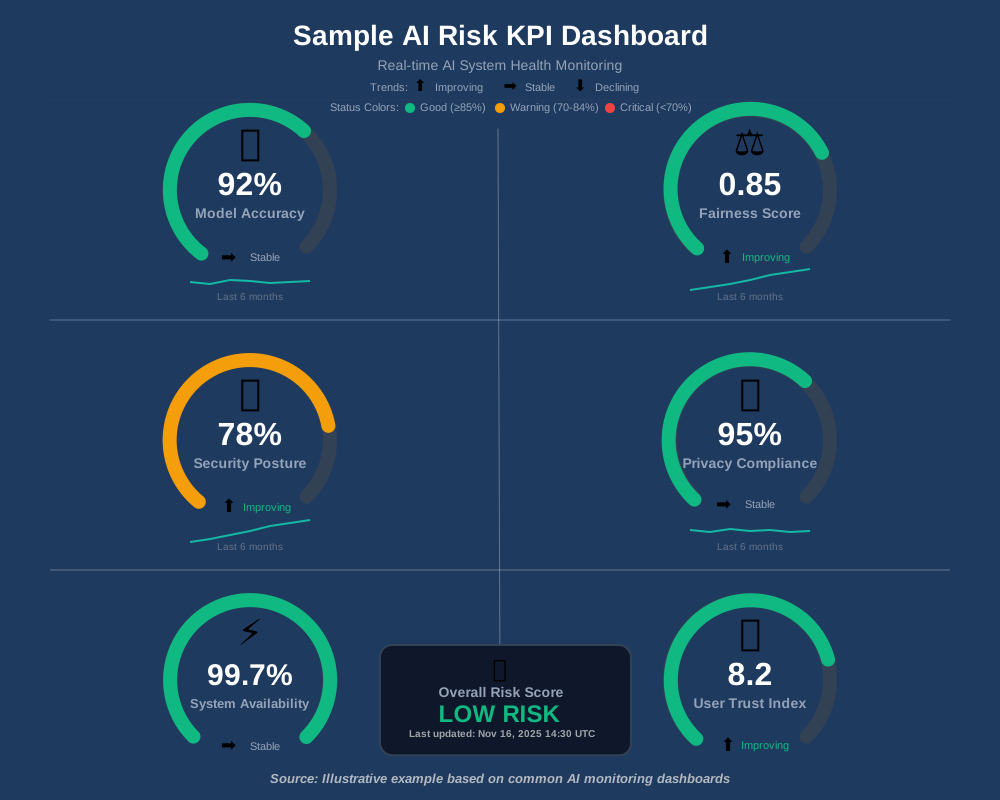
AI Risk Assessment for Generative AI: Unique Challenges and Considerations
AI Risk Assessment for Generative AI: Unique Challenges and Considerations addresses the distinct risks posed by systems that create content—text, images, code, audio, and video.
Misinformation and disinformation risks: Generative AI can produce convincing but false content at scale. Risk assessment must consider the potential for creating fake news, deepfakes, impersonation, and coordinated manipulation campaigns. Mitigation includes watermarking AI-generated content, implementing content verification systems, educating users about generative AI capabilities, and monitoring for misuse patterns.
Copyright and intellectual property risks: Training on copyrighted content and generating derivative works create legal uncertainties. Models might reproduce training data verbatim. Risk assessment requires understanding training data provenance, implementing output filtering to prevent exact reproduction, establishing usage guidelines clarifying IP ownership, and monitoring legal developments in this evolving area.
Harmful content generation: Generative AI can produce toxic, biased, violent, sexual, or otherwise harmful content. Even with safety training, adversaries find ways to circumvent safeguards. Mitigation includes content filtering on inputs and outputs, adversarial red teaming to identify bypass techniques, continuous monitoring of generated content, and rapid response capabilities for emerging abuse patterns.
Hallucination and factual accuracy: Language models generate plausible-sounding but factually incorrect information. For applications where accuracy matters (medical advice, legal guidance, technical documentation), hallucinations create significant risk. Mitigation includes implementing fact-checking systems, clearly labeling AI-generated content, providing source attribution when possible, and maintaining human review for high-stakes content.
Dual-use concerns: Generative AI assists both beneficial and harmful tasks—writing essays or phishing emails, generating art or deepfakes, and creating advantageous code or malware. Risk assessment must consider misuse potential. Mitigation includes usage monitoring, blocking harmful use cases, implementing authentication for sensitive capabilities, and collaborating with security researchers.
Prompt injection vulnerabilities: Users can manipulate generative AI through clever prompts to override safety guardrails, extract confidential information, or generate prohibited content. This attack vector is uniquely challenging because distinguishing legitimate from malicious prompts is difficult. Mitigation includes input sanitization, output filtering, separating system instructions from user inputs, and continuous red teaming.
Personalization and manipulation risks: Generative AI can create highly personalized content optimized to influence individuals. This creates risks of manipulation, addiction, and loss of autonomy. Assessment must consider persuasive content’s ethical implications. Mitigation includes transparency about personalization, user controls over AI interaction, and limits on manipulative optimization.
Scale and distribution risks: Generative AI democratizes content creation, enabling both beneficial access and harmful activity at an unprecedented scale. One person with generative AI can produce content previously requiring teams. Risk assessment must consider scale effects. Mitigation includes rate limiting, usage monitoring, and community guidelines.
Model release decisions: Publishing powerful generative models enables beneficial uses but also misuse. Risk assessment informs release decisions—open-source release, API-only access, or restricted availability. Staged release (limited access initially, broader release after monitoring) balances access and safety.
Generative AI risks evolve rapidly as capabilities advance and novel misuse patterns emerge. Continuous monitoring and adaptive risk management are essential.
Integrating AI Risk Assessment into Existing Risk Management Frameworks
Integrating AI Risk Assessment into Existing Risk Management Frameworks avoids reinventing the wheel by building on established organizational risk practices.
Most organizations already have enterprise risk management (ERM) frameworks covering financial, operational, strategic, and compliance risks. Rather than creating separate AI risk management parallel to existing practices, integrate AI risks into established frameworks.
Mapping AI risks to existing categories: AI technical risks fall under operational risk; AI security risks under cybersecurity; AI privacy risks under data protection; AI compliance risks under regulatory compliance; and AI reputational risks under brand management. Map AI-specific risks to existing risk categories in your risk taxonomy.
Leveraging existing processes: Use established risk assessment schedules (quarterly reviews, annual assessments) to evaluate AI risks alongside other risks. Incorporate AI into existing risk registers rather than maintaining separate AI risk registers. Present AI risks to existing risk committees rather than creating new governance bodies unless AI exposure justifies dedicated oversight.
Adapting existing controls: Many traditional risk controls apply to AI with modifications. Access controls, data encryption, audit trails, incident response procedures, and compliance monitoring—all translate to AI contexts. Enhance existing controls with AI-specific considerations rather than building from scratch.
Unified reporting: Integrate AI risk metrics into enterprise risk dashboards. Executives shouldn’t need separate reports for AI risks and other risks—a unified view enables better resource allocation and prioritization. Show AI risks alongside other enterprise risks using consistent methodologies and metrics.
Cross-functional collaboration: AI risk management requires expertise spanning technology, legal, compliance, security, and business units. Existing cross-functional risk committees provide natural forums for AI risk discussion. Add AI expertise to existing teams rather than creating isolated AI teams.
Challenges of integration: AI risks have unique characteristics—opacity, autonomy, and continuous learning—that challenge traditional frameworks. Static annual risk assessments may be insufficient for rapidly evolving AI systems. Balance integration benefits with recognition that AI needs specialized attention in some areas.
Hybrid approach: Maintain specialized AI risk assessment capabilities (technical testing, bias evaluation, and explainability analysis) while integrating results into enterprise risk management. Think of it as specialized expertise feeding into unified risk governance.
Standards alignment: Align AI risk frameworks with broader organizational quality management systems if you use ISO standards, safety management systems if in high-hazard industries, or information security management if ISO 27001 certified. Building on existing certifications streamlines compliance and audit.
Documentation and training: Update enterprise risk policies to explicitly address AI. Train risk management personnel on AI-specific considerations. Ensure AI practitioners understand enterprise risk management requirements. Bridge knowledge gaps through cross-training.
Integration succeeds when it simplifies rather than complicates risk management, leverages rather than duplicates existing resources, and maintains specialized AI expertise while benefiting from enterprise-wide risk governance.
AI Risk Assessment and the GDPR: Ensuring Compliance
AI Risk Assessment and the GDPR: Ensuring Compliance provides guidance for organizations processing personal data of EU residents through AI systems.
GDPR principles applied to AI:
Lawfulness, fairness, and transparency: AI processing requires a legal basis (consent, contract, legitimate interest, legal obligation, vital interests, or public task). Fairness means no discriminatory impact. Transparency requires clear communication about automated processing.
Purpose limitation: AI may only process data for specified, explicit, legitimate purposes. Training an AI for customer service doesn’t permit using that data for marketing without an additional legal basis. Purpose creep is a GDPR violation.
Data minimization: Collect only data necessary for AI’s purpose. Even if more data might slightly improve accuracy, excess collection violates GDPR. Assess: “Is each data point truly necessary?”
Accuracy: AI training data and outputs must be accurate. Inaccurate data produces biased AI and harms individuals. Implement data quality controls and enable individuals to correct errors.
Storage limitation: Don’t retain personal data longer than necessary. Define retention periods for training data, model inputs, and outputs. Implement automated deletion.
Integrity and confidentiality: Protect personal data from unauthorized access, loss, or alteration through appropriate security measures. AI-specific risks (adversarial attacks, model inversion) require enhanced protections.
Accountability: Demonstrate GDPR compliance through documentation, policies, and technical measures. Burden of proof rests on data controllers.
Automated decision-making rights: Article 22 gives individuals the right not to be subject to decisions based solely on automated processing with legal or significant effects unless exceptions apply. If exceptions don’t apply, meaningful human involvement is required. For AI used in hiring, credit, healthcare, etc., ensure human review processes.
Data protection impact assessments (DPIAs): GDPR requires DPIAs for high-risk processing, including automated decision-making with significant effects. AI systems often trigger DPIA requirements. A DPIA must describe processing, assess necessity and proportionality, identify risks to individuals’ rights and freedoms, and document mitigation measures.
Right to explanation: While GDPR doesn’t explicitly create a “right to explanation,” transparency obligations and automated decision-making provisions require illustrating the logic, significance, and consequences of automated processing. Implement explainability measures enabling meaningful explanations.
Data subject rights: Individuals have rights to access (see what personal data AI processes), rectification (correct inaccurate data), erasure (delete data in certain circumstances), restriction (limit processing), portability (receive data in machine-readable format), and objection (opt out of certain processing). AI systems must support these rights technically—not trivial for trained models.
Right to be forgotten in AI: When individuals exercise erasure rights, how do you remove their data from trained models? Model retraining is expensive. Solutions include training without sensitive data when possible, using federated learning to avoid centralizing data, implementing machine unlearning techniques (experimental), and assessing whether erasure requests require model retraining based on risk.
International data transfers: AI training often involves international data flows. GDPR restricts transfers to countries without adequate data protection. Use standard contractual clauses, binding corporate rules, or approved transfer mechanisms. Ensure cloud vendors and model training platforms comply with transfer requirements.
Vendor compliance: Third-party AI services are typically data processors under GDPR. Data processing agreements (DPAs) must specify processing purposes, duration, data types, security measures, and subprocessor arrangements. Verify vendor GDPR compliance before adoption.
Breach notification: GDPR requires notifying authorities within 72 hours of becoming aware of personal data breaches. AI-specific breaches (model inversion attacks exposing training data and discriminatory output harming individuals) may trigger notification requirements. Establish incident response procedures.
Compliance strategies: conduct DPIAs for AI systems processing personal data, implement privacy by design and default, maintain records of processing activities, designate a Data Protection Officer if required, train staff on GDPR requirements, establish processes supporting data subject rights, and regularly audit AI systems for GDPR compliance.
Frequently Asked Questions About AI Risk Assessment and Mitigation
Conclusion: Your Path Forward in AI Risk Management
AI Risk Assessment and Mitigation isn’t just about avoiding problems—it’s about building trust, enabling innovation, and creating AI systems that genuinely serve humanity. Throughout this guide, we’ve walked you through frameworks, methodologies, tools, and strategies that transform AI from a source of anxiety into a trusted technology.
The journey toward responsible AI starts with awareness. By reading this guide, you’ve taken the crucial first step of understanding risks before they materialize. But awareness alone isn’t enough—action matters. Start small if necessary: assess one AI system thoroughly rather than superficially evaluating many. Choose a simple framework and apply it consistently. Document your findings and share them with stakeholders. Build momentum through early successes.
Remember that perfection isn’t the goal—continuous improvement is. Every organization faces AI risks; what distinguishes responsible actors is systematic effort to identify and mitigate those risks. You won’t catch every problem, but consistent application of risk management principles dramatically reduces harm while enabling beneficial AI deployment.
We encourage you to view AI risk assessment not as a bureaucratic burden but as a competitive advantage. Organizations that master risk management deploy AI more confidently, faster, and with better outcomes. Trust from customers, employees, and regulators flows to those who demonstrate responsible practices. The time invested in risk assessment pays dividends through avoided incidents, improved performance, and sustainable innovation.
As you move forward, stay curious and humble. AI technology evolves rapidly, bringing both new capabilities and new risks. Yesterday’s best practices may be inadequate tomorrow. Engage with the AI safety community, participate in industry forums, contribute to open-source tools, and learn from others’ experiences. We’re all navigating this transition together.
Most importantly, never lose sight of why risk management matters: to protect people. Behind every biased metric is someone who might face discrimination. Behind every privacy violation is someone whose trust was betrayed. Behind every security failure is someone who suffers consequences. AI Risk Assessment and Mitigation ultimately serve human dignity, fairness, and flourishing. Keep that purpose central, and the technical details fall into place.
You’re now equipped with comprehensive knowledge spanning risk types, assessment methodologies, mitigation strategies, governance structures, and specialized considerations across industries. You understand both the “what” and the “how” of AI risk management. The next step is yours: apply this knowledge in your context, adapt it to your needs, and contribute to the collective effort of making AI safe and beneficial.
Thank you for investing time in understanding AI risk assessment. We believe in your capacity to use AI responsibly and to help others do the same. The future of AI depends on practitioners like you who care enough to do the hard work of risk management. Together, we can build AI systems worthy of public trust.
Now go forth and make AI safer, one risk assessment at a time.
References:
National Institute of Standards and Technology (NIST). (2023). AI Risk Management Framework. https://www.nist.gov/itl/ai-risk-management-framework
International Organization for Standardization. (2023). ISO/IEC 42001: Artificial Intelligence Management System. https://www.iso.org
European Commission. (2024). EU Artificial Intelligence Act. https://digital-strategy.ec.europa.eu
Organisation for Economic Co-operation and Development. (2019). OECD AI Principles. https://www.oecd.org
Partnership on AI. (2024). AI Incident Database. https://incidentdatabase.ai
IEEE Standards Association. (2024). IEEE 7000 Series on AI Ethics. https://standards.ieee.org
U.S. Food and Drug Administration. (2024). Artificial Intelligence and Machine Learning in Software as a Medical Device. https://www.fda.gov
Financial Conduct Authority. (2024). Guidance on AI and Machine Learning in Financial Services. https://www.fca.org.uk
GDPR.EU. (2024). Complete Guide to GDPR Compliance. https://gdpr.eu
About the Authors
This article was written as a collaboration between Nadia Chen and James Carter for howAIdo.com.
Main Author: Nadia Chen is an expert in AI ethics and digital safety with over a decade of experience helping organizations deploy AI responsibly. She specializes in risk assessment frameworks, privacy protection, and ethical AI governance. Nadia believes that safe AI isn’t just possible—it’s essential for technology to serve humanity’s best interests. Her mission is making AI safety accessible to everyone, not just experts.
Co-Author: James Carter is a productivity coach who helps individuals and organizations leverage AI to save time and boost efficiency without sacrificing safety. With extensive experience in operational risk management and business process optimization, James brings practical perspectives on integrating risk assessment into daily workflows. He’s passionate about demonstrating that responsible AI practices enhance rather than hinder productivity.
Together, Nadia and James combine ethical rigor with practical implementation, creating comprehensive guidance that’s both principled and actionable. Our collaboration reflects our shared belief that AI’s greatest potential emerges when safety and innovation work in harmony.