The Role of AI in Sentiment Analysis for Customer Feedback

Understanding Customer Emotions Has Never Been Easier
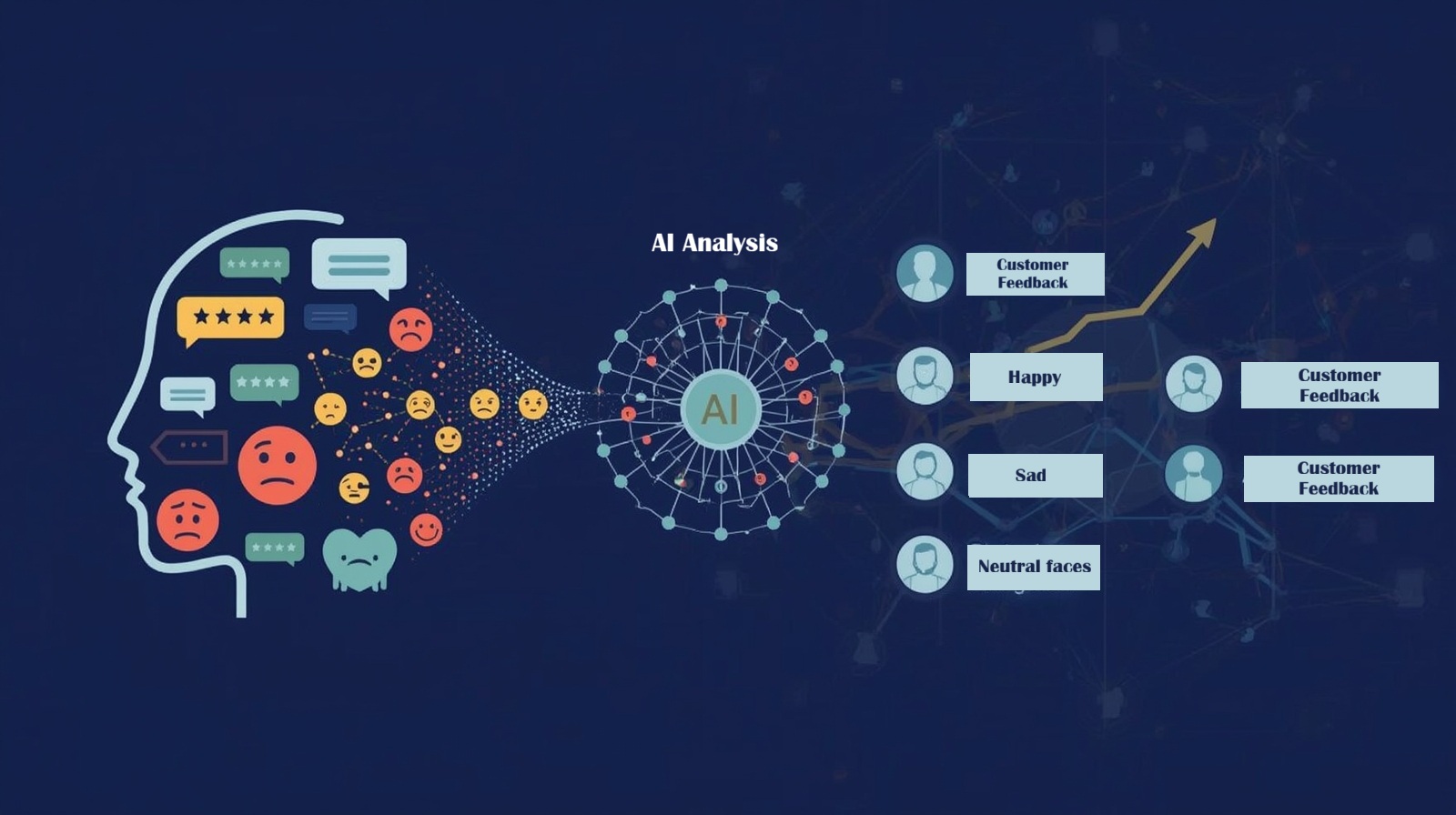
The Role of AI in Sentiment Analysis for Customer Feedback is transforming how businesses listen to their customers. Every day, millions of people share opinions online—through reviews, social media posts, survey responses, and support tickets. But here’s the challenge: how can companies possibly read and understand all that feedback? That’s where artificial intelligence steps in to help.
I’ve spent years helping non-technical people understand AI tools, and sentiment analysis is one of the most practical applications I’ve encountered. Think of it as having a tireless assistant who can read thousands of customer comments, understand whether people are happy, frustrated, or neutral, and then organize everything so you can actually do something about it.
In this guide, I’ll walk you through exactly how AI-powered sentiment analysis works, why it matters for your business, and most importantly—how you can start using it yourself, even if you’ve never worked with AI before. You don’t need a technical background; you just need curiosity and a desire to truly understand what your customers are telling you.
What Is Sentiment Analysis, and Why Should You Care?
Sentiment analysis is the process of using AI to automatically detect emotions and opinions in text. Instead of manually reading every customer review or social media mention, AI algorithms can scan thousands of messages in seconds and tell you, “These customers are happy,” “These people are frustrated about shipping delays,” or “This group loves your new feature but finds it confusing.”
The beauty of this technology lies in its ability to spot patterns humans might miss. When you’re drowning in feedback from multiple channels—reviews, social media, surveys, email responses, and chat transcripts—it becomes impossible to see the bigger picture. AI excels at connecting dots across vast amounts of data.
Why does this matter? Because understanding customer emotions helps you:
- Identify problems before they escalate into major issues
- Discover which products or features customers genuinely love
- Respond faster to negative feedback
- Make data-driven decisions about improvements
- Allocate resources to areas that truly matter to customers
Many businesses lose customers simply because they didn’t realize people were unhappy. Sentiment analysis ensures you’re always listening.
How AI Actually Reads and Understands Customer Emotions
You might wonder: how can a machine understand something as human as emotion? The answer lies in sophisticated machine learning algorithms trained on millions of text examples.
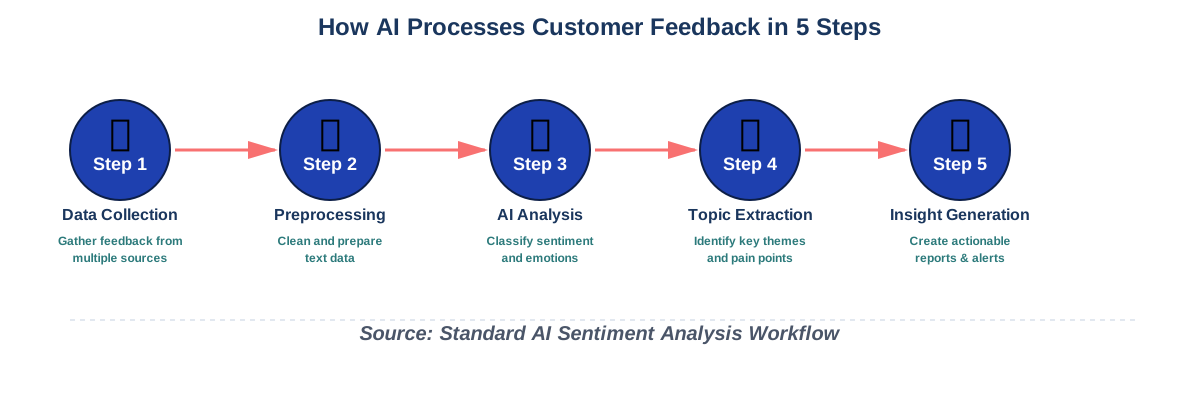
Here’s how the process works in practical terms:
Step 1: Data Collection
AI systems gather customer feedback from everywhere it exists—review platforms like Google and Yelp, social media channels including Twitter and Facebook, survey responses, support tickets, and even voice-of-customer programs. The AI doesn’t care about format; it can process structured data (like star ratings) and unstructured text (like open-ended comments).
Step 2: Text Preprocessing
Before analysis begins, AI cleans the data. It removes irrelevant information, corrects common misspellings, and breaks text into manageable pieces. This step is crucial because real customer feedback is messy—filled with slang, emojis, abbreviations, and typos.
Step 3: Sentiment Classification
This phase is where the magic happens. Natural language processing (NLP) algorithms analyze each piece of text and assign it a sentiment score. Basic systems use three categories: positive, negative, or neutral. More advanced tools detect specific emotions like joy, anger, frustration, or disappointment.
The AI examines multiple factors: individual word meanings, sentence structure, context, and even sarcasm (yes, modern AI can often detect sarcasm!). For example, “This product is surprisingly good” registers as positive, while “This product is good… if you enjoy frustration” would be flagged as negative despite containing the word “good.”
Step 4: Topic and Aspect Extraction
Beyond just emotions, sophisticated sentiment analysis identifies what customers feel strongly about. If fifty people mention “slow shipping” negatively, the AI flags shipping as a pain point. If hundreds praise your “customer service team,” that becomes a recognized strength.
Step 5: Insight Generation
Finally, AI organizes findings into actionable reports. You might see: “Customer satisfaction dropped 15% this month, primarily due to complaints about the new checkout process” or “Positive sentiment around Product X increased 30% after the recent update.”
Real-World Applications: Where Sentiment Analysis Makes a Difference
Let me share some concrete examples of how businesses use AI in sentiment analysis to improve customer experiences.
E-commerce and Retail: Online retailers analyze product reviews to identify quality issues before they damage reputations. If sentiment suddenly turns negative for a specific item, inventory teams can investigate whether a bad batch was shipped. Smart retailers also use sentiment trends to inform purchasing decisions—stocking more of what customers love and phasing out what they don’t.
Hospitality and Travel: Hotels and airlines monitor review sites and social media continuously. When a guest posts a negative experience on Twitter, sentiment analysis tools alert the social media team within minutes, enabling immediate response and service recovery. This proactive approach often transforms upset customers into brand advocates.
Software and Technology: Tech companies analyze app store reviews and support tickets to prioritize feature development. If users consistently express frustration about a specific workflow, that becomes a development priority. Conversely, features generating positive sentiment receive investment for further enhancement.
Financial Services: Banks use sentiment analysis to monitor customer satisfaction across branches and services. If sentiment scores drop in a particular region, management can investigate local issues—perhaps a staff training need or operational problem—before customer churn increases.
Healthcare: Medical facilities analyze patient feedback surveys and online reviews to improve care quality. Sentiment analysis helps identify which aspects of the patient experience need attention: wait times, staff communication, facility cleanliness, or treatment explanations.
Step-by-Step: Getting Started with Sentiment Analysis Tools
Ready to try sentiment analysis yourself? Here’s a beginner-friendly approach:
Step 1: Define What You Want to Learn
Before choosing tools, clarify your goals. Do you want to monitor brand reputation? Improve a specific product? Understand why customers leave? Clear objectives help you focus on relevant feedback sources and metrics.
Step 2: Identify Your Feedback Sources
List everywhere customers share opinions: Google reviews, social media platforms, survey responses, support tickets, and email feedback. You don’t need to analyze everything at once—start with your highest-volume or most important channel.
Step 3: Choose a Sentiment Analysis Tool
Several user-friendly platforms exist for non-technical users:
- MonkeyLearn offers customizable sentiment models with a visual interface
- Brandwatch specializes in social media monitoring
- Qualtrics integrates sentiment analysis with survey tools
- Lexalytics provides enterprise-grade analysis with straightforward dashboards
- Google Cloud Natural Language API works well for developers but requires some technical setup
Most platforms offer free trials—test a few to find what feels intuitive for you.
Step 4: Connect Your Data
Upload existing feedback or connect your data sources. Many tools integrate directly with review platforms, social media channels, and survey software. This automation means new feedback gets analyzed immediately without manual work.
Step 5: Review Initial Results
Run your first analysis and examine the sentiment breakdown. Most tools show percentages: X% positive, Y% negative, Z% neutral. But dig deeper—look at which topics drive negative sentiment and which create positive reactions.
Step 6: Validate and Refine
Check whether the AI’s sentiment classifications match your reading of the feedback. Early on, you might find misclassifications—perhaps your industry uses unique terminology the AI doesn’t understand yet. Many tools allow training to improve accuracy over time.
Step 7: Set Up Alerts and Reports
Configure notifications for significant sentiment changes or spikes in negative feedback. Schedule regular reports so stakeholders receive insights automatically. This ensures sentiment analysis becomes an ongoing practice, not a one-time project.
Step 8: Take Action Based on Insights
This is the most important step! Use your findings to make concrete improvements. Share insights with relevant teams: product development, customer service, and marketing. Track whether your changes improve sentiment scores over time.
Common Mistakes to Avoid When Using Sentiment Analysis
Through helping countless people implement these tools, I’ve noticed several recurring pitfalls:
Trusting AI Blindly Without Human Review
While modern sentiment analysis is impressively accurate, it’s not perfect. Always spot-check results, especially when making major decisions. AI might misinterpret sarcasm, industry jargon, or cultural references.
Analyzing Only One Channel
Customers who tweet complaints might differ from those who write formal emails or leave Google reviews. Each channel attracts different customer segments with varying communication styles. Comprehensive understanding requires analyzing multiple sources.
Focusing Only on Negative Feedback
Yes, addressing problems matters, but don’t ignore what’s working well. Positive sentiment reveals your strengths—capabilities to maintain, promote, and potentially expand.
Forgetting Context and Trends
A single week of negative sentiment might reflect a temporary shipping delay, not a fundamental problem. Always examine trends over time and investigate context before reacting.
Treating All Feedback Equally
Not all customer opinions carry equal weight. Feedback from long-term customers might deserve more attention than first-time visitors. Context about customer lifetime value, purchase frequency, or segment should inform how you prioritize actions.
Frequently Asked Questions About AI Sentiment Analysis
The Future of Customer Feedback Analysis
As AI technology evolves, sentiment analysis continues becoming more sophisticated and accessible. Emerging capabilities include better understanding of context and nuance, emotion detection beyond simple positive/negative classifications, predictive sentiment forecasting based on trends, and multimodal analysis combining text, voice, and visual data.
The businesses thriving today are those actively listening to customers through every available channel. AI-powered sentiment analysis transforms this listening from an overwhelming task into a manageable, insightful practice.
Your Next Steps: Start Listening Better Today
You don’t need to be a data scientist or AI expert to benefit from sentiment analysis. The tools exist, they’re increasingly affordable, and the competitive advantages are significant. Companies that truly understand customer emotions can respond faster, improve more effectively, and build stronger relationships.
Here’s my advice: Start small. Pick one feedback source—maybe your Google reviews or a recent customer survey. Try a free sentiment analysis tool and see what patterns emerge. You might be surprised by what you discover.
Remember, technology should serve your goal of understanding and helping customers better. Sentiment analysis isn’t about replacing human empathy; it’s about extending your ability to hear what customers are telling you, even when they’re speaking in thousands of voices across dozens of platforms.
The most successful businesses I’ve worked with treat sentiment analysis as an ongoing conversation with their customers. They listen, learn, adjust, and listen again. That continuous cycle of improvement is what builds lasting customer loyalty.
Are you ready to truly understand what your customers are telling you? The tools are ready when you are.
References:
Schema.org. (2025). Review Schema Markup Documentation
Google Cloud. (2025). Natural Language AI Documentation
Anthropic. (2025). Claude AI Capabilities Overview
About the Author
Abir Benali is a friendly technology writer specializing in making AI accessible to everyone. With years of experience helping non-technical users understand and implement AI tools, Abir focuses on clear, actionable guidance that empowers readers to leverage technology effectively in their businesses. Through hands-on tutorials and beginner-friendly explanations, Abir has helped thousands of people discover practical AI applications that solve real-world challenges. When not writing about AI, Abir enjoys exploring how emerging technologies can democratize business capabilities for companies of all sizes.