
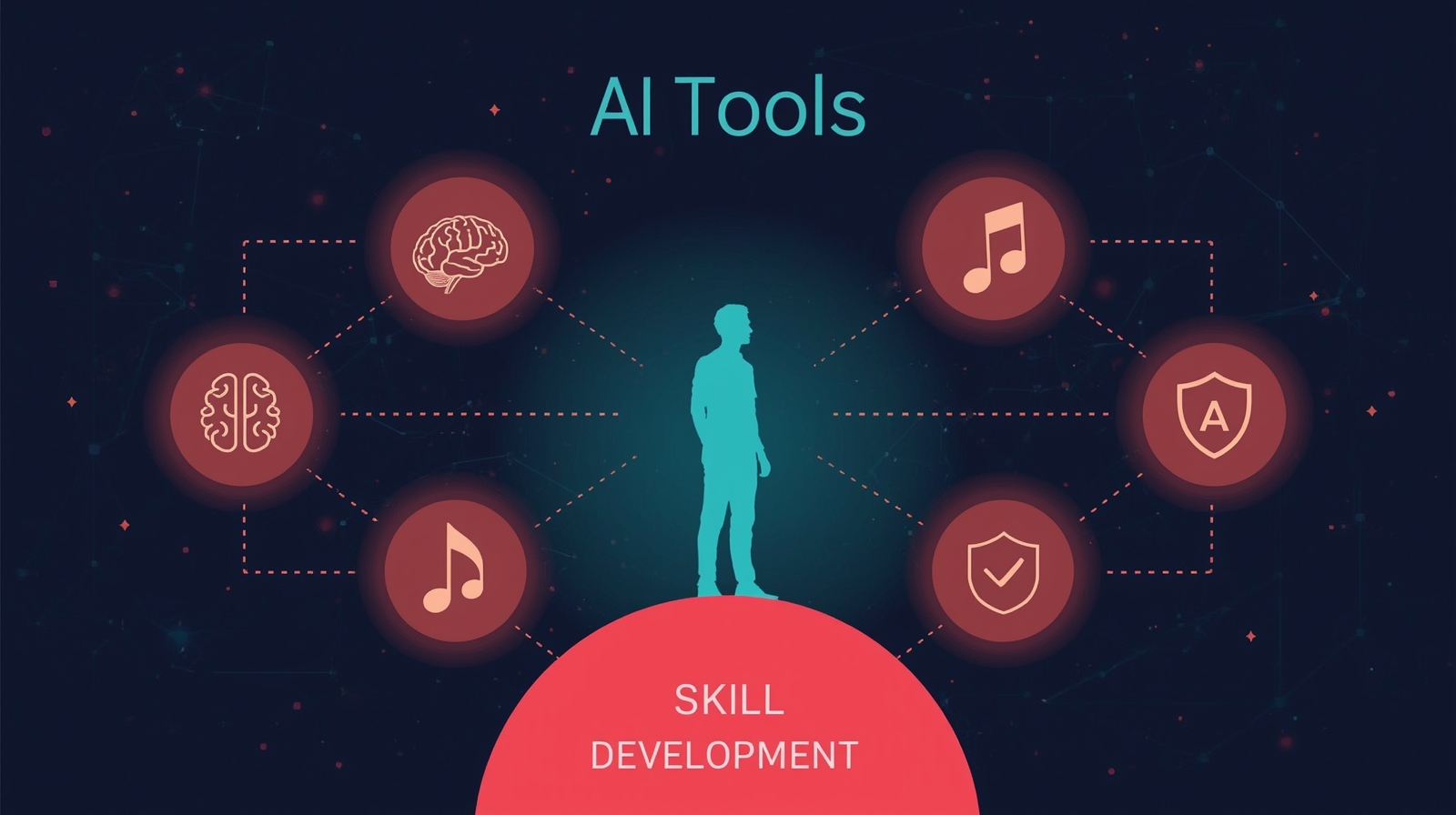
AI Tools for Skill Development: Your Smart Path to Growth
AI Tools for Skill Development have revolutionized how we learn, grow, and adapt in today’s fast-paced world. As someone who values both technological advancement and responsible use, I’ve witnessed countless learners transform their capabilities using intelligent platforms that adapt to their unique needs. Whether you’re a student preparing for exams, a professional pivoting careers, or simply someone curious about mastering new abilities, understanding how to leverage these tools safely and effectively can unlock opportunities you never imagined possible.
The landscape of learning has shifted dramatically. Traditional methods still hold value, but AI-powered platforms now offer personalized guidance, instant feedback, and adaptive pathways that were once available only through expensive private tutors or intensive courses. However, with this power comes responsibility. Throughout this guide, we’ll explore not just what these tools can do, but how to use them ethically, protect your privacy, and build genuine skills rather than becoming dependent on artificial assistance.
AI Tools for Skill Development: A Comprehensive Overview
When we talk about AI Tools for Skill Development, we’re referring to intelligent software applications that use machine learning, natural language processing, and data analytics to help you acquire or enhance specific abilities. These aren’t just static tutorial videos or rigid courseware—they’re dynamic systems that observe your learning patterns, identify your strengths and weaknesses, and adjust their teaching approach accordingly.
Think of these tools as intelligent study partners rather than replacements for your own thinking. Platforms like Duolingo use spaced repetition algorithms to optimize language retention, while GitHub Copilot assists developers by suggesting code completions based on context. Grammarly analyzes your writing patterns to help you communicate more clearly, and platforms like DataCamp create personalized coding challenges that match your current skill level.
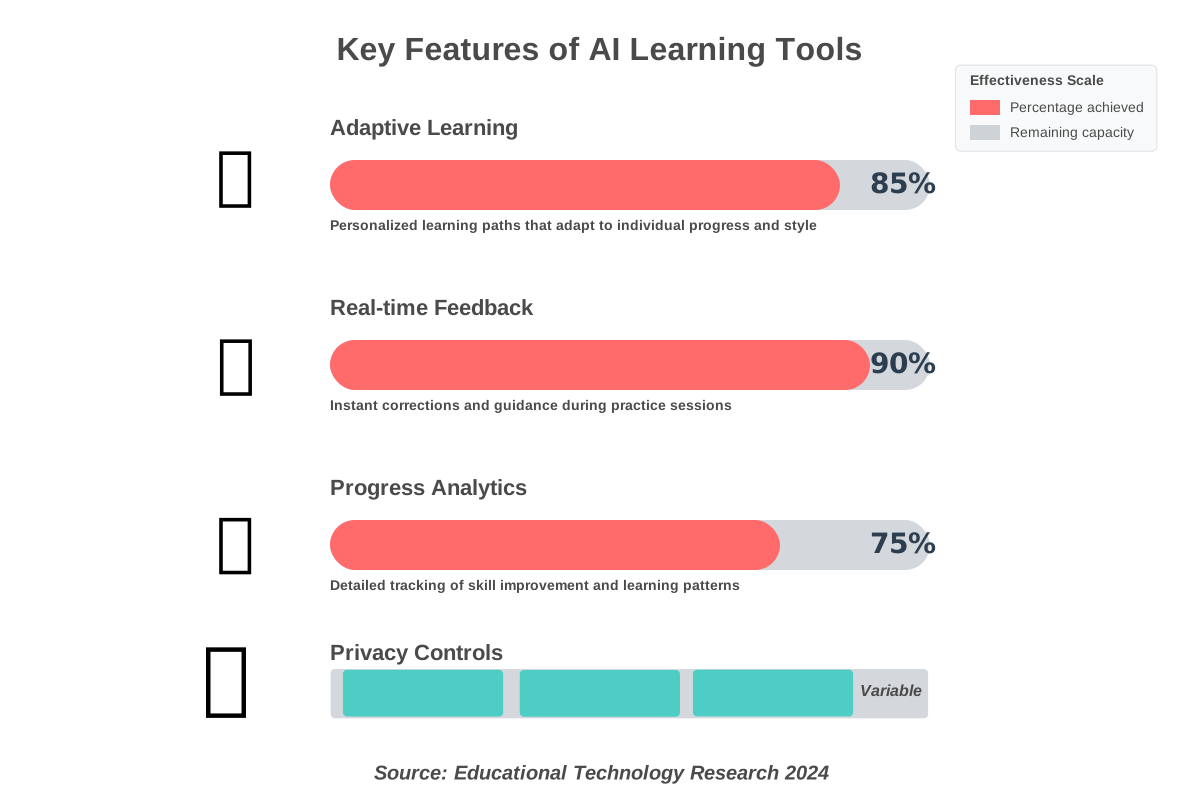
What makes these tools particularly powerful is their ability to provide immediate, constructive feedback. When you practice speaking a new language with an AI tutor, it can instantly correct your pronunciation. When you’re learning to code, AI can spot logical errors in real-time and suggest improvements. This immediate feedback loop accelerates learning far beyond what traditional delayed assessment can achieve.
However, a word of caution: these tools work best as supplements to genuine practice and understanding. We’ve all heard stories of students who relied too heavily on AI to write essays, only to realize they hadn’t actually learned critical thinking skills. The key is using AI to enhance your learning process, not replace it. Always ask yourself, “Am I using this tool to understand better, or am I using it to avoid the work of understanding?”
Boosting Your Coding Skills with AI: Best Tools & Practices
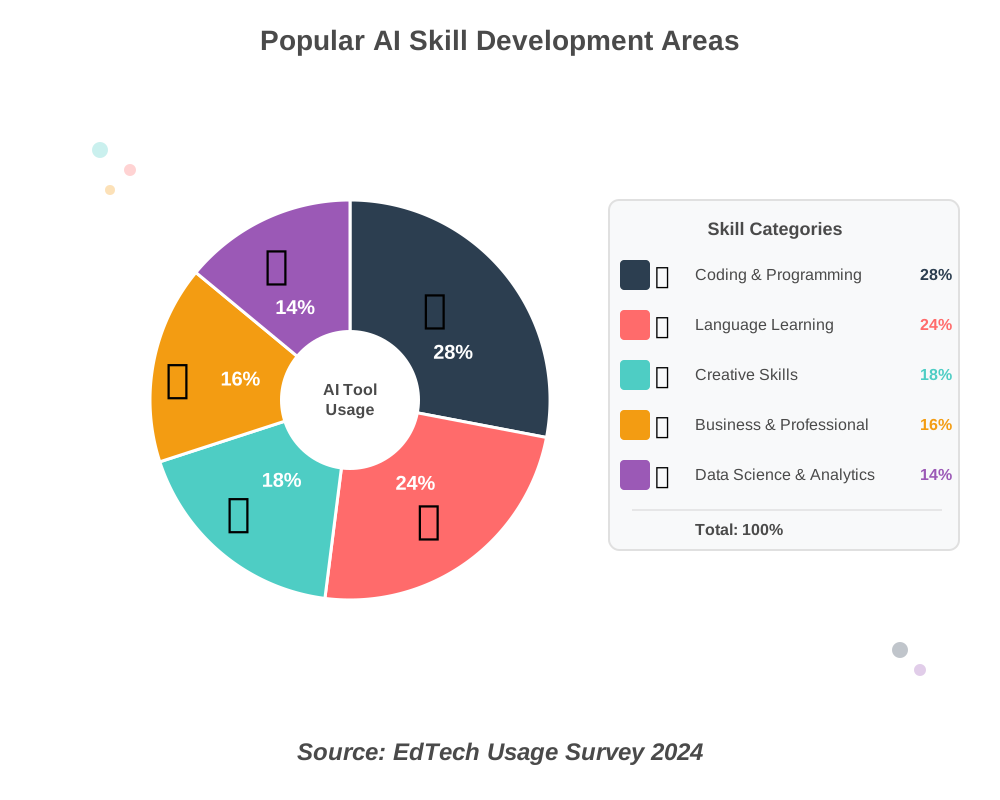
Boosting Your Coding Skills with AI has become one of the most popular applications of artificial intelligence in education. As someone who helps people navigate technology safely, I encourage aspiring developers to approach these tools with both enthusiasm and critical thinking.
GitHub Copilot, Tabnine, and Replit’s AI assistant have transformed how beginners learn programming. These tools don’t just autocomplete your code—they provide contextual suggestions that help you understand programming patterns and best practices. When you’re stuck on a problem, they can suggest multiple approaches, showing you different ways experienced developers might tackle the same challenge.
Here’s how to use coding AI tools responsibly: First, always read and understand the code suggestions before accepting them. Blindly accepting AI-generated code is like copying homework without learning the concepts. Second, use these tools to learn patterns, not to avoid thinking. When Copilot suggests a solution, take time to understand why it works. Comment on the code in your own words. Break it down. Third, practice coding without AI regularly to ensure you’re building genuine problem-solving skills.
One effective practice is the “AI-assisted learning cycle”: Start by attempting to solve a coding challenge independently. When you get stuck, use AI to see possible approaches. Study those suggestions carefully, then close the AI tool and implement the solution yourself from memory. This reinforces learning while still benefiting from AI guidance.
Common mistakes to avoid: Don’t use AI to complete entire projects without understanding the underlying logic. Don’t skip error messages—they’re teaching you debugging skills. Don’t become dependent on AI for basic syntax; that foundational knowledge needs to be internalized. Remember, in technical interviews or real-world debugging scenarios, you won’t always have AI assistance available.
AI for Language Learning: Mastering New Languages Faster
AI for Language Learning represents perhaps the most successful application of artificial intelligence in skill development. The combination of speech recognition, natural language processing, and adaptive algorithms has created language learning experiences that rival human tutors in some aspects.
Platforms like Duolingo, Babbel, and Rosetta Stone use AI to personalize your learning journey. They analyze which grammar concepts you struggle with, which vocabulary you forget most quickly, and what time of day you’re most receptive to learning. Based on this data, they adjust lesson difficulty, introduce spaced repetition at optimal intervals, and even modify the pace of instruction.
What’s particularly exciting about AI language tools is their conversation simulation capability. Apps like Elsa Speak and Speechling use AI to evaluate your pronunciation with remarkable accuracy, providing feedback that would have required a native speaker just a few years ago. You can practice speaking without the anxiety of judgment, making mistakes freely until you build confidence.
However, here’s the crucial caveat: AI language tools excel at structured practice but cannot fully replace human cultural context and conversational nuance. We recommend using AI for daily practice and vocabulary building while supplementing with language exchange partners or tutors for cultural understanding and authentic conversation practice. Language is deeply human; AI helps you build the mechanics, but real communication comes from human connection.
Privacy tip: Many language apps request microphone access to evaluate pronunciation. Review your privacy settings carefully. Ensure you understand what audio data is stored, how long it’s retained, and whether it’s used to train AI models. Reputable platforms should provide clear privacy policies and options to delete your voice data.
Enhancing Creativity with AI: Tools for Artists and Designers
Enhancing Creativity with AI might seem contradictory—isn’t creativity inherently human? Yet we’ve discovered that AI tools can serve as powerful creative catalysts when used thoughtfully. The key is viewing AI as a collaborative partner that expands your creative possibilities rather than a replacement for human imagination.
Tools like Midjourney, Adobe Firefly, and Canva’s AI features allow artists and designers to experiment with concepts rapidly. You can generate dozens of variations on a visual theme, explore color palettes you might never have considered, or use AI to handle technical aspects while you focus on creative direction. For writers, tools like Sudowrite and Claude can help overcome creative blocks by suggesting unexpected plot directions or alternative phrasing.
The ethical considerations here are particularly important. When using generative AI for creative work, transparency matters. If you’re using AI-generated elements in professional work, disclose this appropriately. Understand that AI models are trained on existing creative works, raising questions about artistic attribution and originality that our society is still grappling with.
Our approach to creative AI should be intentional: Use it for brainstorming and exploration, not as a shortcut to finished work. Let AI help you past creative blocks, but ensure your unique voice and vision remain central. The most successful creative professionals we’ve observed use AI to enhance their productivity—generating rough drafts, exploring variations, handling repetitive tasks—while reserving the core creative decisions for themselves.
A practical exercise: Next time you face creative block, ask an AI tool for ten wildly different approaches to your problem. Don’t use any of them directly. Instead, let them spark your own unique ideas. This leverages AI’s pattern-recognition abilities while keeping your creativity in the driver’s seat.
AI-Powered Tools for Improving Your Writing Skills
AI-Powered Tools for Improving Your Writing Skills have evolved far beyond simple spell-checkers. Modern writing assistants understand context, tone, and audience, providing feedback that helps you develop as a communicator rather than just correcting surface-level errors.
Grammarly, ProWritingAid, and Hemingway Editor analyze your writing for clarity, conciseness, and engagement. They identify passive voice, suggest stronger word choices, and flag sentences that might confuse readers. More advanced features can even adapt suggestions based on your writing goals—academic papers require different language than blog posts or business emails.
What makes these tools valuable for skill development is their explanatory feedback. Rather than just fixing errors, they explain why a change improves your writing. Over time, you internalize these lessons. You start catching your own overuse of adverbs or recognizing when you’ve buried your main point in unnecessary clauses.
However, a critical warning: don’t let AI homogenize your writing voice. These tools often suggest “correct” or “clear” alternatives that may be technically better but strip away your unique style. Your quirks, your rhythm, and your particular way of expressing ideas—these are what make your writing yours. Use AI to eliminate genuine weaknesses, but resist the urge to accept every suggestion that makes your writing more “proper.”
Best practice for writing skill development: Draft without AI assistance first. Let your ideas flow naturally. Then use AI tools for revision, but approach their suggestions critically. Ask yourself, “Does this change preserve my intended meaning and voice?” If not, keep your original. The goal is to become a better writer, not to produce AI-optimized text.
AI Tools for Skill Development in Data Science
AI Tools for Skill Development in Data Science offer fascinating irony—using AI to learn how to build AI. Yet this circular relationship has produced some of the most effective learning platforms available for aspiring data scientists.
Platforms like DataCamp, Coursera with AI-enhanced features, and Kaggle’s competition environment use intelligent systems to guide learners through complex statistical concepts and machine learning techniques. These tools can automatically grade your code, provide hints when you’re stuck, and suggest relevant learning resources based on your current knowledge gaps.
What distinguishes data science AI tools is their ability to create realistic, progressively challenging datasets for practice. Traditional courses often use the same cleaned, simplified datasets that don’t reflect real-world messiness. AI can generate varied datasets with realistic complications—missing values, outliers, and class imbalances—that prepare you for actual data science work.
The learning path typically follows this pattern: Start with guided tutorials where AI provides step-by-step assistance. Progress to partially supervised challenges where AI offers hints but not complete solutions. Finally, tackle realistic problems where AI only evaluates your final results. This scaffolded approach builds confidence while developing genuine problem-solving abilities.
Safety considerations for aspiring data scientists: As you learn to build AI systems, you’re also learning to create tools that impact people’s lives. We encourage you to simultaneously study AI ethics and responsible data handling. Understand concepts like algorithmic bias, data privacy, and model transparency from the beginning. The technical skills are only half the equation; responsible practice is equally crucial.
Personalized Learning Paths with AI: A Tailored Approach to Skill Development
Personalized Learning Paths with AI represent one of the most transformative applications of artificial intelligence in education. Unlike traditional one-size-fits-all courses, AI-powered platforms create unique learning journeys adapted to your background, goals, learning style, and progress rate.
When you begin using platforms like Coursera, Khan Academy, or LinkedIn Learning with AI features enabled, they assess your starting knowledge level through diagnostic assessments. As you progress, they continuously monitor which concepts you grasp quickly and which require additional practice. If you consistently struggle with a particular topic, the AI might introduce it from a different angle, provide supplementary resources, or break it into smaller components.
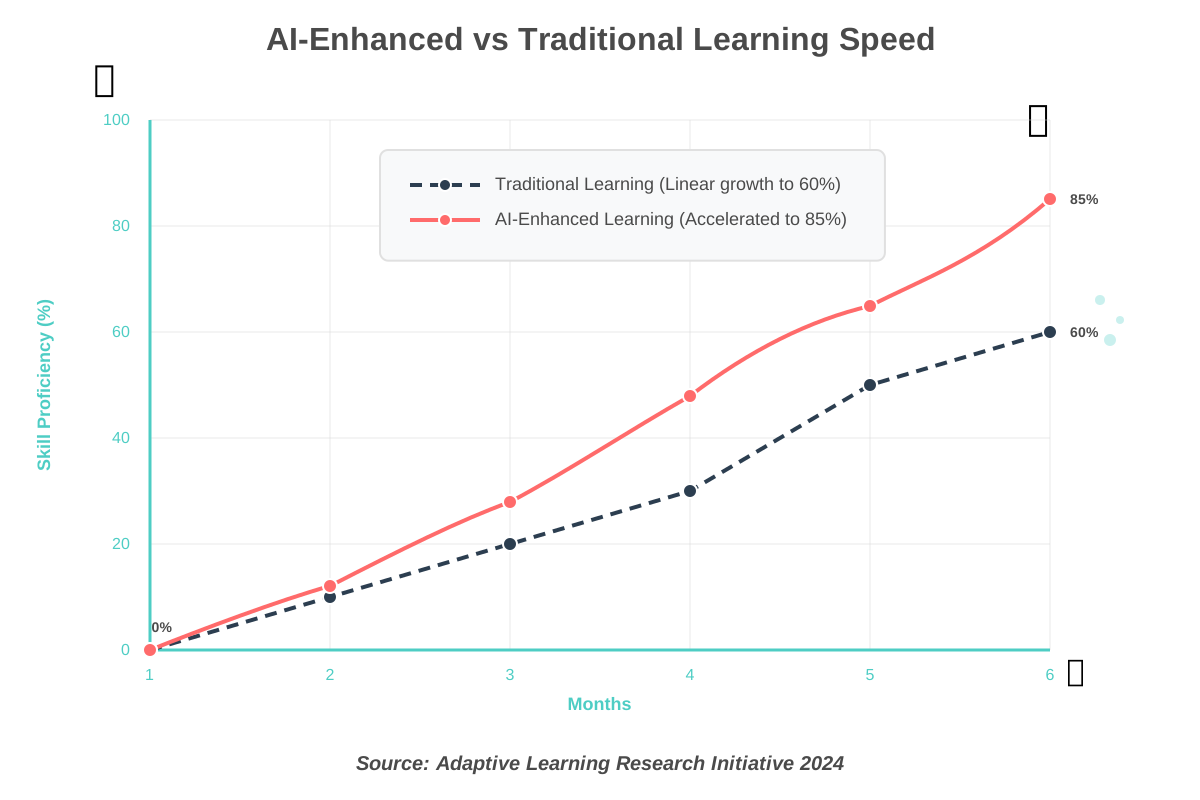
What makes this personalization powerful is its dynamic nature. Traditional courses force everyone through the same sequence at the same pace. If you already understand a concept, you waste time. If you need extra practice, the course moves on anyway. AI learning paths adjust in real-time, accelerating through your strengths and providing additional support for your challenges.
From a practical standpoint, this means you can often achieve learning goals 30-50% faster than with traditional methods, according to adaptive learning research. However—and this is important—faster doesn’t always mean better. Some concepts require time for mental integration. Don’t let AI push you forward so quickly that you miss building deep understanding.
Privacy consideration: Personalized learning requires collecting data about your performance, struggles, and patterns. Reputable platforms should clearly explain what data they collect and how they use it and provide options to control or delete your learning data. Before starting an AI-powered course, review these privacy settings. Your learning data is valuable information about your knowledge gaps and cognitive patterns—treat it with appropriate care.
The Role of AI in Gamified Skill Development
The Role of AI in Gamified Skill Development combines two powerful motivational forces: game mechanics and intelligent adaptation. When done thoughtfully, this combination can make skill-building engaging without sacrificing educational value.
Duolingo pioneered this approach in language learning with streaks, experience points, and competitive leaderboards. But AI takes gamification much further. Intelligent systems can adjust challenge difficulty to keep you in the “flow state”—that sweet spot where tasks are neither too easy (boring) nor too hard (frustrating). When you’re succeeding consistently, AI increases difficulty. When you’re struggling, it provides easier challenges to rebuild confidence.
Codecademy and Grasshopper use similar approaches for coding education, turning programming exercises into progressive challenges with immediate feedback and celebration of achievements. These reward systems activate the same psychological mechanisms that make games engaging but directed toward genuine skill acquisition.
The concern we must address: gamification can sometimes prioritize engagement over learning. Earning badges feels rewarding, but are you actually building transferable skills? Our recommendation is to regularly assess whether you’re learning or just playing. Can you apply these skills outside the gamified environment? Try explaining concepts without the app. Attempt projects without the structured challenges. If you’re genuinely learning, you should be able to transfer those skills to real-world applications.
Healthy gamification enhances motivation for genuine skill-building. Unhealthy gamification becomes addictive engagement without substance. The difference lies in whether the game mechanics serve the learning or replace it.
AI-Driven Feedback and Assessment for Skill Improvement
AI-Driven Feedback and Assessment for Skill Improvement solves one of traditional education’s biggest bottlenecks: delayed, limited feedback. In conventional learning, you might wait days or weeks for graded assignments. With AI, feedback is often instantaneous and comprehensive.
When you submit code to an AI-powered platform, it doesn’t just tell you whether it works—it can explain why your solution is inefficient, suggest optimizations, and show you how experienced developers would approach the problem. When you practice speaking a foreign language, AI can evaluate your pronunciation, grammar, and fluency simultaneously, providing targeted feedback on each aspect.
What makes AI feedback particularly valuable is its patience and consistency. AI never gets tired of reviewing your tenth attempt at the same concept. It doesn’t judge you for making the same mistake repeatedly. This creates a psychologically safe learning environment where you can make mistakes freely—and mistakes are where the deepest learning happens.
However, AI feedback has limitations you should understand. It excels at evaluating objective criteria—is this code efficient? Is this pronunciation accurate? But it struggles with subjective assessment—is this essay compelling? Does this design evoke the intended emotion? For skills involving creativity, persuasion, or emotional intelligence, you need human feedback to complement AI assessment.
Best practice: Use AI for frequent, low-stakes practice and immediate correction. Seek human feedback for higher-stakes work and subjective evaluation. This combination provides the practice volume you need with the nuanced assessment that only humans can offer.
Future-Proofing Your Career: Essential Skills to Learn with AI Assistance
Future-Proofing Your Career might seem like an overwhelming challenge in an era of rapid technological change, but AI tools can help you identify and develop the skills that will remain valuable as automation advances.
The consensus among workforce analysts is that uniquely human skills—critical thinking, creativity, emotional intelligence, and complex problem-solving—will become increasingly valuable. Simultaneously, technical literacy and the ability to work alongside AI systems will be essential across most professions. AI learning tools can help you develop both categories.
For technical skills, platforms like Coursera, edX, and Udacity offer AI-enhanced courses in data literacy, basic programming, digital marketing, and other in-demand competencies. These aren’t just for tech professionals—understanding data analysis helps teachers personalize instruction, enables healthcare workers to interpret patient trends, and allows marketers to optimize campaigns.
For human-centric skills, AI tools are emerging that provide practice in areas previously thought untrainable through technology. Virtual reality simulations with AI characters let you practice difficult conversations, negotiation, and conflict resolution. AI writing assistants can help you develop clearer communication by highlighting ambiguous phrasing. Public speaking apps with AI evaluation can help you refine presentation skills.
Our advice for career development: Don’t just learn what’s currently in demand—develop meta-skills that enable continuous learning. Use AI tools to practice learning itself: how to break down complex topics, how to seek feedback effectively, and how to transfer knowledge between domains. These learning-to-learn abilities will serve you regardless of how your industry evolves.
Think of AI as your personal career development assistant, but remember that you’re the CEO of your own career. AI can suggest skills to develop and provide practice opportunities, but you must make strategic decisions about where to invest your limited time and energy.
AI Tools for Skill Development in Project Management
AI Tools for Skill Development in Project Management help aspiring project managers develop the organizational, leadership, and analytical skills essential to this role. While project management software has existed for decades, AI-enhanced learning platforms now provide realistic simulations and adaptive coaching.
Platforms like Monday.com and Asana have incorporated AI features that help you understand project management principles through actual practice. They can suggest task prioritization, flag potential bottlenecks before they become critical, and provide insights into team productivity patterns. For learners, these features serve as a real-time mentor, explaining not just what to do but why certain approaches work better.
Simulation-based learning tools create realistic project scenarios with AI-controlled team members, stakeholders, and complications. You make decisions, the AI generates realistic consequences, and you learn from outcomes without risking real project failures. This safe practice environment accelerates skill development dramatically.
Key project management skills enhanced by AI include risk assessment (AI can identify patterns across thousands of past projects to highlight common pitfalls), resource allocation (algorithms can suggest optimal team assignments based on skills and workload), and stakeholder communication (AI can help you craft clear status updates tailored to different audience needs).
Critical consideration: Project management is fundamentally about leading people, not just managing tasks. While AI can teach you frameworks, methodologies, and analytical techniques, the human elements—building trust, resolving conflicts, and motivating teams—require practice with actual people. Use AI to develop your technical project management foundation, but seek opportunities to lead real teams, even in small ways, to develop the human skills that distinguish great project managers.
Ethical Considerations When Using AI Tools for Skill Development
Ethical Considerations When Using AI Tools for Skill Development deserve careful attention, especially as these tools become more powerful and ubiquitous. As someone committed to responsible technology use, I believe we must engage with these ethical dimensions thoughtfully.
First, there’s the question of authenticity. When you use AI to develop skills, are the abilities genuinely yours? If you’ve relied heavily on Copilot to write code, can you code independently? This isn’t about rigid purity—using tools is fine—but about honest self-assessment. The ethical standard should be: if the AI disappeared tomorrow, could you still perform at a reasonable level?
Second, consider data privacy and consent. Many AI learning tools collect detailed information about your knowledge gaps, learning patterns, and intellectual development. This data is valuable and sensitive. We have a right to understand what’s collected, how it’s used, who has access, and how long it’s retained. Ethical use means choosing platforms with transparent privacy practices and exercising your rights to control your data.
Third, there’s the issue of algorithmic bias. AI learning tools trained on historical data can perpetuate existing biases. For example, AI writing tools might suggest stereotypical career paths based on gender, or coding tools might favor certain programming styles that reflect their predominantly Western developer training data. As learners, we should approach AI suggestions critically, questioning whether recommendations reflect genuine best practices or encoded biases.
Fourth, consider academic integrity. Using AI to complete assignments meant to assess your learning is fundamentally dishonest. However, using AI as a study aid or to practice skills is different. The distinction lies in whether you’re using AI to demonstrate skills you don’t have or to develop skills genuinely. When in doubt about academic contexts, ask instructors explicitly about acceptable AI use.
Our ethical framework should be: Use AI tools to enhance your genuine capabilities, not to fake competencies you haven’t developed. Protect your privacy and data. Question algorithmic suggestions critically. Be transparent about AI use when appropriate. These principles ensure that AI serves your authentic development rather than compromising it.
AI-Powered Mentorship: Getting Personalized Guidance for Skill Development
AI-Powered Mentorship represents an exciting frontier where artificial intelligence attempts to provide guidance traditionally offered by human mentors. While AI cannot fully replace human mentorship’s emotional support and lived wisdom, it can democratize access to certain types of guidance.
Platforms like CareerVillage and LinkedIn’s AI coach use language models to answer career development questions, suggest learning paths, and provide feedback on professional materials like resumes and portfolios. They can offer perspectives drawn from thousands of career trajectories, highlighting skills that proved valuable for people in similar situations.
What AI mentorship excels at: answering specific questions without judgment, providing multiple perspectives on challenges, suggesting resources you might not have discovered, and offering consistent encouragement. AI mentors never get tired, never judge you for asking “basic” questions, and can provide guidance at 2 AM when human mentors are sleeping.
What AI mentorship cannot replace: authentic life wisdom, emotional support during difficult times, the powerful impact of a mentor’s belief in your potential, and introductions to professional networks. Human mentors provide accountability, share hard-earned insights that aren’t documented anywhere, and adapt their guidance to subtle emotional cues that AI misses.
Our recommended approach: Use AI mentorship for tactical guidance—”How should I structure my learning plan?” or “What skills do data analysts need?” —while seeking human mentors for strategic career decisions and personal development. The ideal might be a combination where AI handles routine guidance, freeing up human mentors to focus on high-value, deeply personalized advice.
Important caveat: Some commercial “AI mentorship” platforms are essentially sophisticated chatbots with limited capabilities. Evaluate these critically. Good AI mentorship should provide specific, contextual advice, not generic platitudes. It should adapt to your situation, not offer one-size-fits-all responses.
AI Tools for Skill Development in Public Speaking
AI Tools for Skill Development in Public Speaking help address one of humanity’s most common fears through practice environments that feel safer than speaking before live audiences. These tools use speech recognition, sentiment analysis, and even facial expression analysis to provide comprehensive feedback.
Apps like Yoodli, Orai, and VirtualSpeech allow you to practice presentations while AI evaluates multiple dimensions: vocal clarity, pace, filler word usage, tone variation, body language, and engagement level. You can practice the same speech repeatedly, receiving specific feedback each time, without exhausting patient friends or family.
The immediate feedback is transformative. After each practice session, you see concrete data: “You used ‘um’ 23 times, down from 31 in your last practice.” “Your pace averaged 145 words per minute, slightly fast for this audience.” “You maintained eye contact 72% of the time.” This objective feedback helps you improve systematically rather than relying on vague impressions.
Some advanced platforms use virtual reality to simulate realistic speaking environments—conference rooms, auditoriums, and even hostile audiences. You can practice handling interruptions, questions, and technical difficulties in scenarios that feel genuinely pressure-filled. This exposure therapy approach helps desensitize the anxiety that undermines many speakers.
However, here’s the limitation: AI evaluates mechanical aspects of delivery effectively but struggles with the intangible qualities that make speakers truly compelling—authenticity, passion, connection with audience, and appropriate humor. These emerge from practice with real humans who provide emotional feedback that AI cannot capture.
Best practice: Use AI for frequent mechanical practice—refining delivery, eliminating filler words, and improving pacing. Then practice with small, supportive human audiences to develop the authentic connection that transforms good delivery into powerful communication. The combination builds both technical proficiency and genuine presence.
Maximizing Your Learning Potential: Combining AI Tools with Traditional Methods
Maximizing Your Learning Potential requires thoughtfully integrating AI tools with proven traditional methods rather than adopting one approach exclusively. The most effective learners we observe use AI to enhance, not replace, time-tested learning strategies.
Start with the fundamentals: deliberate practice, spaced repetition, active recall, and elaborative rehearsal. These principles, validated by decades of cognitive science research, remain essential. AI tools can make these techniques more efficient—spaced repetition algorithms optimize review timing, AI quizzes provide active recall practice, and adaptive systems identify what needs elaboration—but the underlying principles still matter most.
Consider a blended approach for different learning phases. When first encountering new material, use AI-powered tutorials for initial exposure and basic comprehension. These can adapt to your background knowledge and explain concepts multiple ways until they click. For deeper understanding, engage with traditional resources—books, lectures, and discussions with knowledgeable humans. These often provide context, nuance, and connections that AI explanations miss.
For practice and skill refinement, AI tools shine by providing unlimited, patient repetition with immediate feedback. But for application and synthesis—using skills in novel contexts, combining ideas from different domains—you need unstructured challenges that AI practice environments might not fully capture.
The learning cycle we recommend: AI-assisted introduction to new concepts → Traditional study for deep understanding → AI-powered deliberate practice → Real-world application → Human feedback and mentoring → AI-assisted refinement. This cycle leverages each approach’s strengths while compensating for weaknesses.
Remember that learning is social. Study groups, discussions with peers, and teaching concepts to others—these traditional social learning methods create understanding that solitary AI practice cannot fully achieve. Use AI to prepare for these social learning experiences and to reinforce afterward, but don’t let it replace human intellectual exchange.
AI Tools for Skill Development in Music Production
AI Tools for Skill Development in Music Production have democratized an art form that once required expensive equipment and years of technical training to even begin practicing. Modern AI platforms allow beginners to start creating music while learning production techniques simultaneously.
Tools like AIVA, Amper Music, and Soundtrap with AI features help you understand music theory, arrangement, mixing, and mastering through hands-on creation. AI can suggest chord progressions that complement your melody, recommend instrumentation that fits your genre, and even master your tracks to professional standards while explaining the processing applied.
What makes these tools valuable for learning is their ability to handle technical complexity while you focus on creative development. As a beginner, you might not yet understand compression, EQ, or reverb, but AI can apply these appropriately while gradually teaching you what each effect does and when to use it. You’re making music from day one while building technical knowledge progressively.
The instant experimentation cycle accelerates learning dramatically. Wonder what your track sounds like with strings instead of synthesizers? Change it in seconds. Curious how a different arrangement affects emotional impact? Try it immediately. This rapid iteration teaches you to hear music production possibilities that might take years to develop through slower traditional methods.
Critical awareness: AI music tools can make production technically competent quickly, but music’s emotional impact comes from human intention and aesthetic choices. Use AI to understand the technical craft—what makes mixes sound clean, how frequencies interact, why certain arrangements work—but reserve the creative vision for yourself. The goal is to become a musician who uses AI tools efficiently, not to let AI make your musical decisions.
Also consider the ongoing debates about AI in creative fields. Many musicians are concerned about AI models trained on copyrighted music without permission. Be thoughtful about how you use AI-generated elements in your work, and support artists and platforms that respect creative rights.
The Impact of AI on Skill Development in Education
The Impact of AI on Skill Development in Education extends beyond individual learners to transform how educational institutions approach teaching and skill-building. As educators ourselves have witnessed, AI is reshaping classroom dynamics, assessment methods, and learning accessibility.
Adaptive learning platforms like DreamBox, Carnegie Learning, and Squirrel AI are being integrated into schools worldwide. These systems provide teachers with detailed analytics about each student’s progress, enabling targeted interventions for struggling learners and enrichment for advanced students. The teacher’s role evolves from information delivery to facilitation and mentoring—higher-value interactions that human educators handle far better than AI.
AI tools also address educational equity concerns by providing personalized attention that overcrowded classrooms cannot offer every student. A child in an under-resourced school can access high-quality, adaptive instruction through AI platforms. However, we must acknowledge the digital divide—students without reliable internet access or devices are excluded from these benefits, potentially widening educational gaps.
For educators developing their own skills, AI tools provide professional development opportunities. They can practice classroom management through simulations, receive feedback on lesson plans, and access best practices from thousands of teaching scenarios. This supports continuous improvement in teaching quality.
The concerns about AI in education are legitimate: over-reliance on technology could atrophy critical thinking, automated grading might miss creative insights, and surveillance-like monitoring of student data raises privacy issues. Educational AI deployment must be thoughtful, keeping human judgment central while using technology to enhance rather than replace educator expertise.
Our perspective: AI should amplify teachers’ capabilities and expand educational access, not automate away the human relationships that make learning transformative. The best educational AI serves teachers and students as a tool, not as a replacement for human instruction and mentorship.
AI Tools for Skill Development in Sales and Marketing
AI Tools for Skill Development in Sales and Marketing help professionals master the complex blend of analytical, creative, and interpersonal skills these fields require. Modern platforms use AI to simulate customer interactions, analyze campaign performance, and provide coaching on persuasion techniques.
For sales skill development, tools like Gong and Chorus analyze real sales calls to identify successful patterns. They can show you which questions top performers ask, how they handle objections, and when they discuss pricing. You can practice pitch delivery with AI analyzing your tone, pace, and persuasiveness. Role-play simulations with AI prospects let you refine your approach without risking real deals.
Marketing skill development benefits from AI’s ability to process vast amounts of campaign data and identify patterns. Platforms teach you to interpret analytics, optimize content, and target audiences effectively by showing cause-and-effect relationships across thousands of campaigns. You learn not just tactics but strategic thinking—how to connect marketing activities to business outcomes.
The AI-enhanced learning approach for these skills typically combines knowledge modules about principles with simulation-based practice. You might learn about customer psychology, then immediately apply it in simulated sales conversations with AI feedback. This tight integration of theory and practice accelerates skill development significantly.
However, remember that sales and marketing fundamentally involve human persuasion and relationship-building. AI can teach you frameworks and help you practice technique, but genuine success requires emotional intelligence, creativity, and authentic connection. Use AI to build your foundational skills efficiently, but develop the human elements through actual customer interactions, mentorship from successful practitioners, and continuous real-world practice.
Ethical consideration: AI sales and marketing tools can be powerful for manipulation if misused. We encourage learning persuasion skills with a foundation in ethics—helping customers make good decisions, not tricking them into poor ones. True sales and marketing excellence comes from creating genuine value, and AI tools should enhance your ability to identify and communicate that value, not to manipulate.
Overcoming Learning Challenges with AI: Personalized Support and Strategies
Overcoming Learning Challenges with AI offers hope for learners who struggle with traditional educational approaches. AI’s adaptability can provide support tailored to specific learning differences, disabilities, or obstacles that standard instruction doesn’t address.
For learners with dyslexia, AI tools can adjust text presentation—changing fonts, spacing, and background colors to reduce reading difficulty. Text-to-speech features allow learning through listening rather than struggling with written materials. For those with ADHD, AI can break lessons into shorter segments with built-in breaks, provide more frequent feedback to maintain attention, and adjust pacing based on engagement levels.
Students with anxiety about classroom participation benefit from AI’s non-judgmental practice environments. You can ask “stupid questions” without embarrassment, make mistakes repeatedly without shame, and practice at your own pace without feeling like you’re holding others back. This psychological safety often allows anxious learners to progress faster than in traditional settings where fear of judgment inhibits participation.
Language barriers are addressed through AI translation and explanation tools that can present concepts in your native language while helping you learn subject matter in a second language. Cultural differences in learning styles can be accommodated as AI adapts to whether you prefer direct instruction, exploratory learning, visual explanation, or hands-on practice.
Important consideration: While AI can accommodate many learning differences, it shouldn’t replace professional assessment and support for learning disabilities. If you or your child consistently struggles despite using adaptive AI tools, seek evaluation from educational specialists. AI can provide accommodation but not diagnosis or comprehensive intervention for serious learning challenges.
Our recommendation: View AI as one tool in your learning toolkit, particularly valuable for its accommodation capabilities. Combine it with other supports—tutoring, study groups, modified assignments, and professional therapy when needed. The goal is to build genuine capabilities despite challenges, not to permanently rely on technological accommodation for skills you could develop with appropriate support.
AI Tools for Skill Development in Financial Literacy
AI Tools for Skill Development in Financial Literacy address one of modern society’s most critical knowledge gaps. Many people reach adulthood without understanding budgeting, investing, debt management, or retirement planning. AI-powered platforms are making financial education more accessible and personalized.
Apps like Mint, YNAB (You Need A Budget), and Cleo use AI to teach budgeting by analyzing your spending patterns and suggesting improvements. Rather than abstract financial concepts, you learn with your actual money, seeing cause-and-effect relationships between decisions and outcomes. The AI might notice you spend significantly on subscriptions you rarely use, teaching you to evaluate recurring expenses critically.
Investment education platforms like Betterment and Wealthfront with educational features use AI to explain portfolio allocation, risk management, and long-term planning using your personal financial situation as the teaching case. This contextualized learning makes concepts like diversification and compound interest concrete rather than theoretical.
Simulation tools allow you to practice financial decision-making with virtual money. You can experiment with different investment strategies, see how debt payoff methods compare, or explore the impact of major purchases on long-term goals—all without real financial risk. This safe practice environment builds confidence and understanding before making actual financial decisions.
Critical warning: Be extremely cautious about data security when using financial AI tools. You’re often providing access to highly sensitive information—income, spending habits, account balances, and financial goals. Only use established, reputable platforms with strong security measures and clear privacy policies. Be skeptical of free tools that might monetize your financial data. The value of financial education shouldn’t come at the cost of privacy risk or data exploitation.
Also recognize that AI financial tools can provide education and suggestions but should not replace professional financial advice for complex situations. For significant decisions—tax strategy, estate planning, major investments—consult qualified human financial advisors who can understand nuance and context that AI might miss.
AI Tools for Skill Development: Comparing Free vs. Paid Options
AI Tools for Skill Development: Comparing Free vs. Paid Options helps you make informed decisions about where to invest your limited resources. Both categories offer value, but understanding the tradeoffs helps you choose appropriately for your situation and goals.
Free AI learning tools often provide excellent foundational education. Duolingo offers comprehensive language courses, Khan Academy with AI features delivers quality academic instruction, and many coding platforms like freeCodeCamp provide substantial content without charge. These free options are often funded by advertising, premium upgrades, or philanthropic support.
The advantages of free tools: accessibility regardless of financial situation, low-risk experimentation to discover interests, and often community-driven content that’s regularly updated. Many people develop significant skills using exclusively free resources, proving that budget limitations don’t prevent learning.
Limitations of free tools typically include limited advanced content, advertising interruptions, fewer personalization features, restricted practice opportunities, and sometimes data monetization concerns. Free platforms may also provide less responsive customer support and fewer integration options with other learning tools.
Paid AI learning platforms like Coursera Plus, LinkedIn Learning, or specialized tools like Grammarly Premium offer advantages: comprehensive advanced content, ad-free learning experience, sophisticated personalization, unlimited practice, and usually better privacy protections. Premium tools often provide certificates, detailed analytics, and priority support.
Our decision framework: Start with free options to explore interests and build foundational skills. This lets you discover what you’re genuinely motivated to learn before investing money. Upgrade to paid tools when you’re committed to a skill and need advanced features, when free tool limitations genuinely impede your progress, or when professional certificates would benefit your career.
Consider hybrid approaches: use free tools for some skills while paying for others where you need advanced capabilities. Many platforms offer free trials of premium features—use these strategically to evaluate whether upgrades justify the cost for your specific learning goals.
Privacy consideration: Free tools more frequently monetize user data. Review privacy policies carefully. Sometimes paying for a service means you’re the customer rather than the product, resulting in better privacy protection.
The Future of Work: How AI is Reshaping Skill Requirements
The Future of Work looks dramatically different than past decades, with AI not just changing what skills we need but fundamentally altering the relationship between humans and technology in professional contexts. Understanding these shifts helps you develop skills that remain valuable as automation advances.
Routine cognitive work—data entry, basic analysis, standard document creation—is increasingly automated. Skills that involve judgment, creativity, complex communication, and emotional intelligence become proportionally more valuable. However, there’s a critical addition: the ability to work effectively with AI tools is becoming essential across virtually all professions.
The emerging skill profile for future-ready professionals includes technical literacy sufficient to understand and direct AI tools in your field, critical thinking to evaluate AI outputs rather than accepting them uncritically, creativity to solve problems AI cannot handle, adaptability to learn continuously as tools evolve, and ethical reasoning to use powerful AI capabilities responsibly.
Industry-specific transformations are already visible. Healthcare workers need to interpret AI diagnostic suggestions while maintaining patient relationship skills. Lawyers use AI for document review but must provide strategic counsel. Teachers leverage AI for administrative tasks while focusing on mentoring and inspiration. The pattern is consistent: AI handles routine technical aspects, and humans focus on judgment and connection.
We’re also seeing the emergence of entirely new roles: AI trainers who teach systems new capabilities, AI ethicists who ensure responsible deployment, and AI-human collaboration specialists who optimize how people and systems work together. These weren’t job categories a decade ago; now they’re growing rapidly.
For skill development strategy, this means: Don’t just learn your current job’s technical requirements—develop meta-skills that transfer across roles. Build technical literacy even in non-technical fields. Cultivate uniquely human capabilities—creativity, empathy, complex communication, and ethical reasoning—that AI struggles with. Most importantly, practice learning itself; your ability to acquire new skills quickly may be more valuable than any specific skill set.
The future of work isn’t humans versus AI—it’s humans augmented by AI, working symbiotically. Prepare by developing skills that let you direct, evaluate, and complement AI capabilities rather than compete with them.
AI Tools for Skill Development in Negotiation
AI Tools for Skill Development in Negotiation help you master one of life’s most valuable skills through realistic practice scenarios and sophisticated analysis of negotiation dynamics. These tools use natural language processing to simulate negotiation conversations and provide strategic feedback.
Platforms like Pactum and negotiation simulation features in professional development tools allow you to practice salary negotiations, business deals, conflict resolution, and other negotiation scenarios. The AI opponent adapts its strategy based on your approach, creating realistic back-and-forth exchanges that build your skills progressively.
What makes AI negotiation practice valuable is the immediate feedback on both strategy and tactics. After each negotiation, you see an analysis of where you left value on the table, when you revealed information too early, how your framing influenced the counterparty, and what alternative approaches might have yielded better outcomes. This detailed feedback accelerates learning far beyond what most people receive in actual negotiations.
The AI can simulate different counterparty styles—aggressive, passive, analytical, emotional—helping you develop flexibility in approach. You practice reading situations, adjusting tactics, and managing the tension between being cooperative and assertive. These are skills traditionally developed through years of experience, but AI practice can compress that timeline significantly.
However, negotiation is deeply interpersonal, with nonverbal cues, relationship dynamics, and emotional undercurrents that AI simulation cannot fully capture. Our recommendation: Use AI for frequent tactical practice—refining your questioning techniques, improving your anchoring and framing, and practicing BATNA development. But also seek real-world negotiation opportunities and feedback from experienced negotiators who can address the subtle human elements.
Ethical consideration: Negotiation skills can be used constructively (finding mutually beneficial agreements) or manipulatively (extracting maximum advantage regardless of fairness). As you develop these capabilities, commit to ethical negotiation that seeks win-win outcomes when possible and maintains integrity even in competitive scenarios.
Using AI to Identify Your Skill Gaps and Development Opportunities
Using AI to Identify Your Skill Gaps and Development Opportunities transforms career planning from guesswork to data-driven strategy. AI tools can analyze your current capabilities, compare them to successful professionals in your field, and identify specific areas for development.
LinkedIn and similar professional platforms use AI to analyze your profile, work history, and industry trends to suggest skills worth developing. They can show you which capabilities are increasingly mentioned in job postings for roles you’re pursuing, which skills correlate with higher compensation, and what learning paths others followed to reach similar goals.
Assessment platforms like Pluralsight and Pymetrics use AI-driven skill evaluations that pinpoint specific knowledge gaps. Rather than the vague “you need to improve your coding,” they might identify “your algorithm optimization skills are at a beginner level while your syntax knowledge is intermediate.” This specificity helps you focus learning efforts where they’ll have the most impact.
Career pathing AI tools can analyze thousands of career transitions to show you common skill development sequences. If you want to move from marketing coordinator to marketing director, AI can show you the typical skill progression—perhaps digital analytics, then team leadership, then strategic planning—helping you sequence your learning logically.
The self-assessment capability AI provides is particularly valuable for hidden strengths and weaknesses. We often overestimate skills we use frequently and underestimate ones we haven’t practiced recently. AI assessment provides objective measurement that reveals blind spots and unexpected strengths you might leverage.
Practical application: Conduct an AI-assisted skill audit quarterly. Use tools to assess your current capabilities, identify industry trends, and spot emerging requirements in your field. Create a prioritized learning plan focusing on skills that (1) fill critical gaps for your current role, (2) position you for desired advancement, or (3) protect against automation risk. This systematic approach ensures continuous relevant development rather than reactive or scattered learning.
AI Tools for Skill Development in Data Visualization
AI Tools for Skill Development in Data Visualization teaches you to communicate insights clearly through visual presentation—a critical skill as data-driven decision-making becomes universal across professions. AI-enhanced platforms make this technical skill accessible even to those without design backgrounds.
Tools like Tableau with AI features, Power BI’s smart narratives, and Flourish help you learn visualization by doing. You upload data, and the AI suggests appropriate chart types, identifies interesting patterns worth visualizing, and even recommends color schemes that maintain readability. As you work, you’re learning principles: which visualizations suit different data types, how color affects interpretation, and why certain layouts communicate more clearly.
The instant experimentation AI enables is pedagogically powerful. Wonder whether a bar chart or line graph better shows your data’s story? See both instantly. Curious how different color palettes affect emotional impact? Try dozens in minutes. This rapid iteration builds intuition about effective visual communication far faster than traditional trial-and-error learning.
Advanced AI visualization tools can also critique your work, identifying common mistakes like misleading axis scales, inappropriate chart types, cluttered layouts that obscure insights, or color choices that fail accessibility standards. This feedback helps you develop professional-grade visualization skills systematically.
The goal isn’t to become dependent on AI suggestions but to internalize principles through practice. Over time, you’ll develop intuition about which visualizations work for different audiences and purposes. AI serves as a knowledgeable colleague offering suggestions, but you develop the judgment to make final decisions.
Important consideration: Data visualization powerfully shapes interpretation. A poorly designed or misleading visualization can distort understanding as effectively as false data. As you develop these skills, commit to honest, accurate representation. Use AI to create clear, truthful visualizations, not to manipulate perception through visual tricks.
Building a Personalized Learning Ecosystem with AI Tools
Building a Personalized Learning Ecosystem with AI Tools means creating an integrated system where different AI platforms work together to support your comprehensive development. Rather than using isolated tools, you orchestrate them into a coherent learning environment.
Your ecosystem might include a language learning app for daily practice, a coding platform for technical skills, a writing assistant for communication development, a project management tool for organizational abilities, and an AI mentor for career guidance. The key is selecting tools that complement each other and align with your goals rather than collecting every available platform.
Start by auditing your skill development goals and current gaps. Which three to five skill areas will most impact your personal or professional objectives? Find the best AI tool for each, prioritizing quality over quantity. Too many tools create overwhelm; focused selection enables consistent practice.
Integration matters. Look for tools that share progress data or at least allow you to track everything in a central dashboard. Many platforms now offer API connections or work together through services like Zapier. This integration prevents the fragmented learning experience where you lose track of progress across multiple disconnected platforms.
Create rhythms and routines that incorporate your learning ecosystem into daily life. Perhaps language practice during your morning commute, coding challenges during lunch, and writing practice in the evening. AI tools work best with consistent use; sporadic engagement reduces their adaptive effectiveness.
Periodically review and refresh your ecosystem. As you achieve goals, replace tools with ones for new skills. As platforms evolve, evaluate whether better options have emerged. Your learning ecosystem should be dynamic, adapting as your needs and the technology landscape change.
Privacy and security consideration: More tools mean more data sharing. Review each platform’s privacy policy. Understand what data each collects and whether they share information with third parties. Use reputable, established platforms rather than unproven tools when dealing with sensitive information about your capabilities and development goals.
AI Tools for Skill Development in Cybersecurity
AI Tools for Skill Development in Cybersecurity address the critical shortage of security professionals by making this complex field more accessible to learners. These platforms use AI to create realistic training environments and provide guidance through challenging technical concepts.
Platforms like TryHackMe, Hack The Box, and Cybrary use AI to generate progressively challenging cybersecurity scenarios. You might practice penetration testing against AI-configured vulnerable systems, analyze AI-generated network traffic for intrusion attempts, or respond to simulated security incidents. The AI adjusts difficulty based on your performance, ensuring you’re always appropriately challenged.
What makes AI particularly valuable for cybersecurity education is the safe practice environment. You can attempt to exploit vulnerabilities, practice incident response, and test defensive strategies without risking actual systems or data. The AI creates realistic consequences for poor security practices, teaching you through experience rather than just theory.
AI tutoring systems can explain complex concepts like cryptography, network protocols, and attack vectors in multiple ways until they click. When you struggle with public key infrastructure, the AI might explain it first through mathematical foundations, then through analogy, then through visual representation, adapting to what helps you understand.
The field’s rapid evolution makes AI-assisted learning especially valuable—AI platforms can update to include new attack vectors, defense techniques, and security tools as they emerge, keeping your education current in ways traditional courses cannot match.
Critical warning: As you develop cybersecurity skills, you’re learning capabilities that could potentially be misused. We cannot overemphasize the importance of ethical education alongside technical skills. Use your knowledge exclusively for authorized defensive purposes, legitimate penetration testing, or personal system protection. Unauthorized access to systems, even for “educational” purposes, is illegal and harmful.
Cybersecurity platforms typically require agreement to responsible use policies—take these seriously. The goal is to develop defensive capabilities that protect organizations and individuals, not to enable malicious activity.
Measuring the Effectiveness of AI Tools for Skill Development
Measuring the Effectiveness of AI Tools for Skill Development helps you make data-driven decisions about which platforms deserve your time and attention. Not all AI learning tools deliver equal value, and some work better for certain learning styles or skill types than others.
Start with clear, measurable goals. Rather than the vague “improve my coding,” specify “complete three Python projects independently” or “contribute to an open-source repository.” This clarity lets you assess whether AI tools are actually helping you achieve objectives or just creating the feeling of productivity without substance.
Track both input metrics (time spent, lessons completed, practice sessions) and outcome metrics (projects finished, skills applied in real work, assessments passed). The ratio reveals efficiency—are you spending 10 hours in AI platforms to achieve results that demonstrate 2 hours of genuine capability, or are you efficiently converting learning time to practical ability?
Test your skills outside the AI environment regularly. If you’ve been using AI to learn Spanish, try having a conversation with a native speaker without AI assistance. If you’ve used AI coding tools extensively, complete a programming challenge without them. This real-world testing reveals whether you’ve developed transferable skills or merely learned to use specific AI tools effectively.
Consider retention over time. Many AI platforms are optimized for short-term engagement rather than long-term retention. You might complete a module and feel you’ve learned, but check back a month later—did the knowledge stick? Platforms with spaced repetition and regular review typically produce better retention than those focused solely on new content consumption.
Compare AI-enhanced learning against your baseline or traditional methods. If possible, learn one skill primarily through AI tools and a similar skill through conventional methods, then compare your progress rate and retention. This personal experimentation reveals which approach suits you better.
Qualitative assessment matters too. Do you feel genuinely confident applying skills learned through AI tools? Are you able to explain concepts to others? Can you troubleshoot problems independently? These subjective measures of understanding are as important as quantitative metrics.
AI Tools for Skill Development in Leadership
AI Tools for Skill Development in Leadership help you master the uniquely human capabilities that effective leadership requires. While leadership is deeply interpersonal, AI can provide practice environments and feedback that accelerate the development of key leadership skills.
Simulation platforms create realistic scenarios where you must make decisions with incomplete information, manage team conflicts, communicate vision, and delegate effectively. AI team members respond realistically to your leadership style—becoming more or less motivated, productive, and loyal based on your decisions. This consequence-based learning helps you understand leadership impact without risking actual team morale or organizational outcomes.
AI communication coaches analyze your written and verbal leadership communication, identifying when you’re unclear, when you fail to inspire, or when your messaging doesn’t align with your stated values. This feedback helps you develop a more effective leadership voice—the way you communicate that influences and motivates others.
Decision-making tools use AI to help you practice strategic thinking. They present complex scenarios with multiple stakeholders, competing priorities, and long-term implications. As you make decisions, the AI shows potential outcomes, helping you develop judgment about managing tradeoffs and thinking systemically.
However, leadership is perhaps the most deeply human of all professional skills. Emotional intelligence, ethical judgment, authentic inspiration, and building genuine trust—these cannot be fully learned from AI. Our strong recommendation: Use AI for tactical skill practice (giving feedback, running meetings, strategic decision frameworks) while seeking real leadership opportunities and human mentorship for the deeper wisdom that distinguishes truly effective leaders.
Seek progressive leadership challenges in actual settings: lead a small project team, coordinate a volunteer effort, and mentor a junior colleague. These real-world experiences, combined with reflection and human mentorship, develop leadership capabilities that simulation cannot fully provide.
The best leadership development combines AI for frequent tactical practice and objective feedback, human mentorship for wisdom and guidance, real-world opportunities to lead and learn from outcomes, and personal reflection to integrate experiences into developing leadership philosophy.
Staying Ahead of the Curve: Continuous Learning with AI Tools
Staying Ahead of the Curve requires treating learning not as a phase but as a permanent lifestyle. In an era of rapid technological change, the half-life of skills is shrinking—what you learned five years ago may be less relevant today. AI tools make continuous learning more manageable by reducing friction and personalizing your development path.
Establish learning routines rather than depending on motivation. Just as you might exercise regularly regardless of mood, build consistent learning habits. Many AI platforms support this through streaks, daily challenges, or scheduled reminders that create commitment devices to maintain consistency.
Microlearning—consuming small chunks of content regularly—works particularly well with AI tools. Instead of committing to hour-long learning sessions that you might skip when busy, engage with 10 to 15 minute AI-enhanced lessons during commutes, breaks, or downtime. Consistency beats intensity for long-term skill development.
Stay current with industry developments by following AI-curated learning feeds. Platforms can aggregate relevant content based on your field, interests, and career goals, filtering the overwhelming information flow down to what genuinely matters for your development. This helps you stay informed without drowning in content.
Make learning social when possible. Join online communities, study groups, or accountability partners also using AI learning tools. The combination of AI-personalized learning and social support creates powerful motivation and deeper understanding through discussion and shared challenge.
Our final recommendations for continuous learning:
- Schedule protected learning time weekly—treat it as seriously as work commitments
- Rotate between skill maintenance (keeping current abilities sharp) and new skill acquisition
- Apply learned skills immediately in real contexts to reinforce and reveal gaps
- Review and adjust your learning strategy quarterly—what’s working, and what needs change?
- Balance AI tools with human learning experiences—courses, workshops, mentorship
- Remember that learning is inherently uncomfortable; AI can make it more efficient but not effortless
- Celebrate progress and apply skills in meaningful ways to maintain motivation
The future belongs to continuous learners—those who maintain curiosity, adapt to change, and consistently develop new capabilities. AI tools remove many historical barriers to learning, making continuous development more accessible than ever. The question isn’t whether you can keep learning throughout your career—it’s whether you choose to commit to doing so.
Frequently Asked Questions About AI Tools for Skill Development
Conclusion: Your Journey to Empowered Learning
As we’ve explored throughout this comprehensive guide, AI Tools for Skill Development offer unprecedented opportunities to learn, grow, and adapt in our rapidly changing world. These intelligent platforms democratize access to personalized education, provide patient practice environments, and offer feedback that accelerates skill acquisition in ways traditional methods cannot match.
Yet technology, no matter how sophisticated, remains just a tool. The real power lies in your commitment, curiosity, and willingness to engage consistently with learning. AI can personalize your path, provide immediate feedback, and adapt to your needs—but it cannot supply the motivation, persistence, and application that transforms information into genuine capability.
We encourage you to approach these tools with both enthusiasm and critical thinking. Embrace the possibilities AI creates while remaining grounded in ethical use, privacy protection, and authentic skill development. Let AI handle routine aspects of learning while you focus on deep understanding, creative application, and human connection that makes knowledge meaningful.
Start small and specific. Choose one or two skills meaningful to your personal or professional goals. Select quality AI tools that align with those objectives. Build consistent learning routines. Apply skills in real contexts. Seek human feedback and mentorship alongside AI guidance. Gradually expand your learning ecosystem as initial skills develop.
Remember that learning is inherently human. AI enhances the process and makes it more efficient and accessible but cannot replace the curiosity, struggle, breakthrough moments, and satisfaction of mastering something new. You’re not becoming more like AI; you’re using it to be more capable, knowledgeable, and able to contribute to your work and community.
The future of learning is neither purely human nor purely technological—it’s collaborative, combining human wisdom with artificial intelligence in service of genuine human flourishing. Your journey with AI learning tools is ultimately a journey of human growth, empowered by technology but driven by your own aspirations and determination.
Take that first step today. Choose a skill, select a tool, and begin. Your future self—more capable, confident, and continuously learning—is waiting to meet you.
References:
Educational Technology Research Initiative. (2024).
Adaptive Learning Effectiveness Study.
EdTech Industry Research. (2024).
AI-Powered Learning Tool Adoption Survey. Anthropic. (2024).
Responsible AI Use Guidelines for Learners.
About the Authors
This article was written as a collaboration between Nadia Chen and Rihab Ahmed, bringing together perspectives on ethical AI use and practical learning strategies.
Nadia Chen (Main Author) is an expert in AI ethics and digital safety, dedicated to helping non-technical users navigate artificial intelligence responsibly. With a background in technology policy and user protection, Nadia specializes in making AI accessible while ensuring users understand privacy implications, security considerations, and ethical dimensions of their technological choices. Her approach emphasizes informed consent, responsible use, and empowering users to make conscious decisions about AI in their lives.
Rihab Ahmed (Co-Author) is an educator and lifelong learner who uses AI to study smarter and help others do the same. As both a student and teacher, Rihab brings practical insights into how AI tools can enhance learning effectiveness without replacing the critical thinking and genuine understanding that education should foster. Her student perspective ensures recommendations remain grounded in real learning experiences rather than theoretical possibilities, making complex concepts accessible to learners at any stage of their educational journey.
Together, Nadia and Rihab combine ethical expertise with practical learning experience to guide readers toward effective, responsible, and empowered use of AI for skill development.