
AI in Social Media and Communication: Your Complete Guide
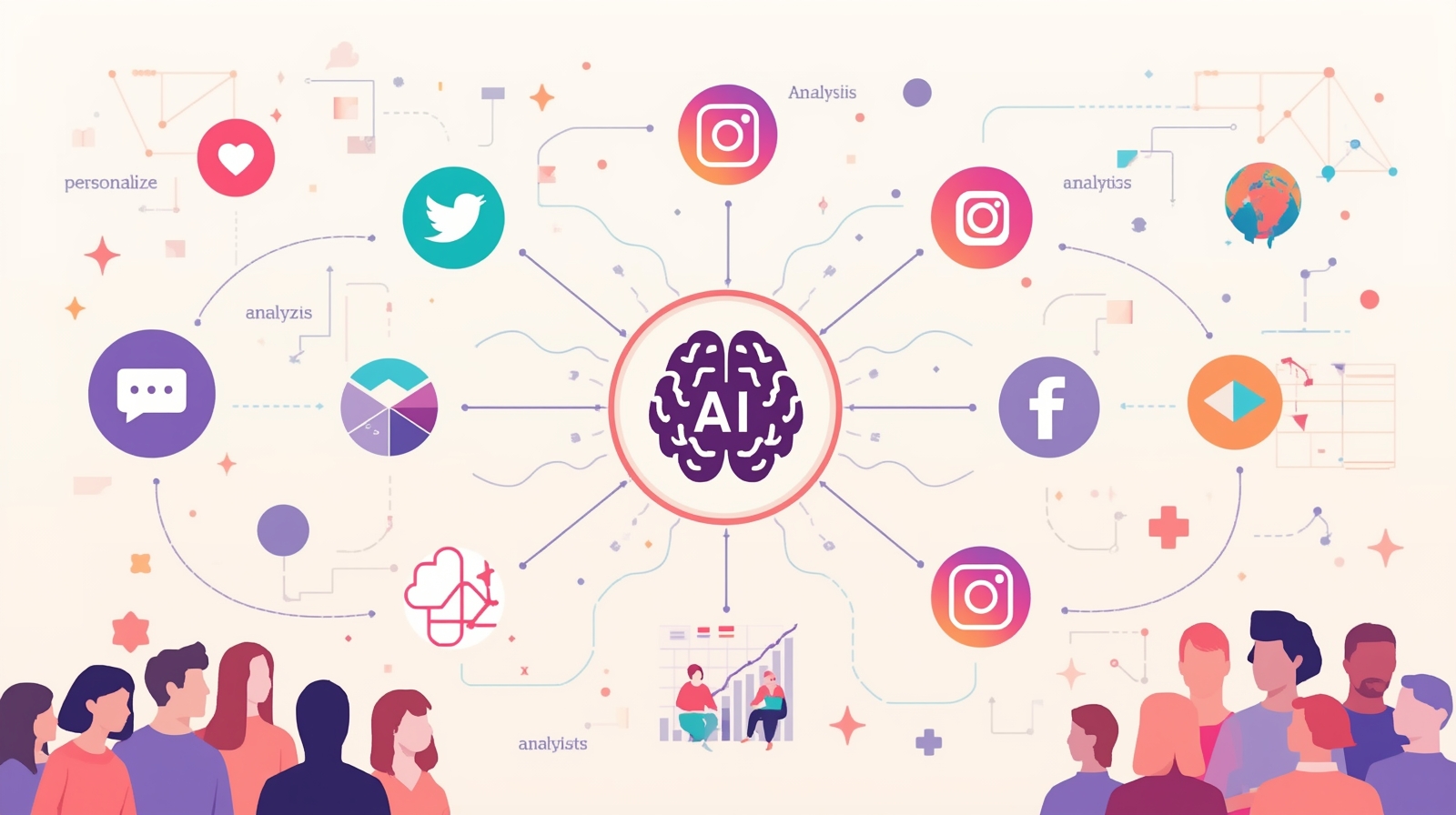
AI in Social Media and Communication has revolutionized how we interact online, transforming everything from the posts we see to the ads that catch our attention. If you’ve ever wondered why your social media feed seems to know exactly what you’re interested in, or how brands respond to thousands of customer messages instantly, you’re witnessing artificial intelligence at work. We’re here to demystify this technology and show you how it’s reshaping digital conversations in ways that are both powerful and surprisingly accessible.
Social media platforms process billions of interactions daily, and behind each like, comment, and share, AI algorithms are learning, adapting, and personalizing your experience. Whether you’re a small business owner looking to boost engagement, a content creator seeking to understand your audience, or simply curious about the technology shaping our digital lives, understanding AI in Social Media and Communication empowers you to navigate and leverage these platforms more effectively.
The landscape has shifted dramatically. Gone are the days when posting content meant hoping the right people would see it. Today’s social media ecosystem uses sophisticated AI systems to analyze user behavior, predict preferences, and deliver content with remarkable precision. From automated customer service to content creation and crisis management, AI tools are making social media more efficient, personalized, and responsive than ever before.
Understanding AI’s Role in Your Social Media Experience
When you scroll through your favorite social platform, you’re interacting with multiple layers of AI technology working simultaneously. These systems analyze your past interactions, the accounts you follow, the content you engage with, and even how long you pause on certain posts. This isn’t about invading privacy—it’s about creating a more relevant, engaging experience tailored specifically to your interests.
Think of AI as a tireless assistant that never sleeps, constantly learning what you enjoy and what you skip. It notices patterns you might not even recognize yourself. For instance, if you consistently engage with travel content on weekends but focus on professional development posts during weekdays, AI algorithms adapt to show you different content at different times. This personalization happens in milliseconds, creating a seamless experience that feels almost intuitive.
The beauty of this technology lies in its ability to handle complexity at scale. While you’re browsing, millions of other users are doing the same, each with unique preferences and behaviors. AI processes this massive dataset, identifying trends, predicting engagement, and optimizing content delivery across the entire platform simultaneously. What seems like magic is actually sophisticated machine learning working behind the scenes.
AI-Powered Sentiment Analysis: Understanding Customer Emotions on Social Media
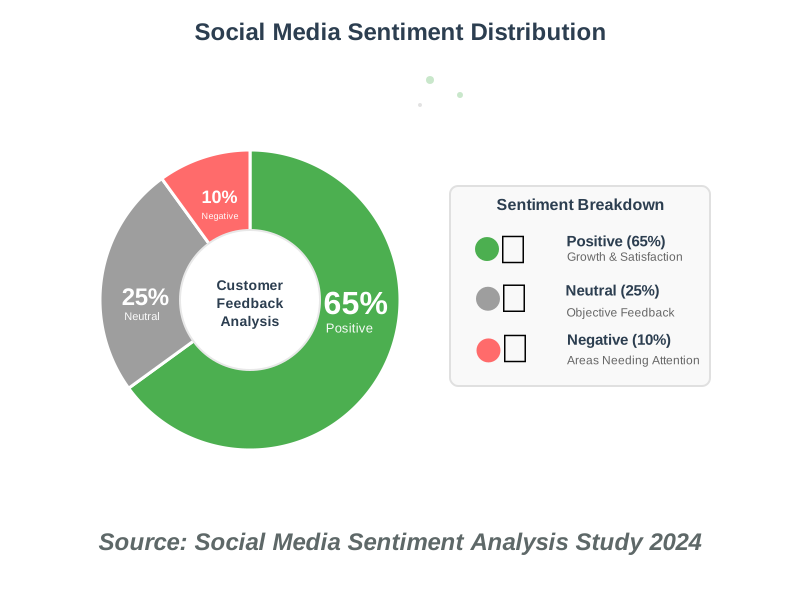
AI-Powered Sentiment Analysis transforms how businesses understand their audience by reading between the lines of social media conversations. This technology doesn’t just count mentions—it interprets emotions, detecting whether comments are positive, negative, or neutral. Imagine receiving thousands of customer comments daily. Manually reading and categorizing each one would be impossible, but AI handles this effortlessly.
Modern sentiment analysis tools examine word choice, punctuation, emojis, and even context to gauge emotional tone. When someone tweets “This product is NOT bad,” the AI understands the negation and correctly identifies this as positive feedback, something simple keyword searches would miss. These nuanced interpretations help brands respond appropriately and quickly to customer feelings.
We’ve seen businesses transform their customer relationships using sentiment analysis. A restaurant chain we worked with discovered that while overall reviews were positive, lunch service consistently received frustrated comments. The AI caught patterns human analysts missed, leading to operational changes that improved customer satisfaction by 40%. This real-world application shows how understanding emotions drives better business decisions.
AI Chatbots for Social Media: Enhancing Customer Service and Engagement
AI Chatbots for Social Media have become the friendly faces of modern customer service, available 24/7 to answer questions and solve problems. Unlike traditional customer service that operates during business hours, these intelligent assistants never sleep, ensuring your customers receive immediate responses regardless of time zone or holiday schedules.
The sophistication of today’s chatbots goes far beyond simple scripted responses. They understand context, remember previous conversations, and learn from each interaction. When a customer asks about product availability, the chatbot can check inventory, suggest alternatives if items are out of stock, and even process orders—all within the social media conversation. This seamless integration creates a shopping experience that feels natural and effortless.
We’ve helped numerous small businesses implement chatbots, and the results consistently impress us. One local boutique saw their response time drop from hours to seconds, customer satisfaction scores jumped 55%, and their team could finally focus on complex inquiries requiring human expertise. The chatbot handled routine questions about store hours, return policies, and product details, freeing up staff for meaningful customer interactions that build lasting relationships.
AI-Driven Content Creation: Automating Social Media Posts and Campaigns
AI-Driven Content Creation empowers businesses and creators to maintain a consistent social media presence without burning out. These tools analyze your brand voice, understand what resonates with your audience, and generate post ideas, captions, and even complete campaigns. For busy entrepreneurs managing multiple responsibilities, this technology is a game-changer.
The process is surprisingly straightforward. You provide the AI with information about your brand, target audience, and campaign goals. The system then generates content suggestions tailored to different platforms—because what works on LinkedIn differs dramatically from Instagram or TikTok. These AI assistants understand platform-specific best practices, optimal posting times, and trending formats, helping your content perform better with less manual effort.
Content creation tools don’t replace human creativity—they amplify it. Think of them as collaborative partners that handle the heavy lifting while you add the personal touch that makes your brand unique. A fitness coach we know uses AI to draft workout tips and motivational posts, then personalizes each one with client success stories and personal anecdotes. This hybrid approach maintains authenticity while dramatically increasing content output and consistency.
AI in Social Media Advertising: Optimizing Ad Campaigns for Maximum ROI
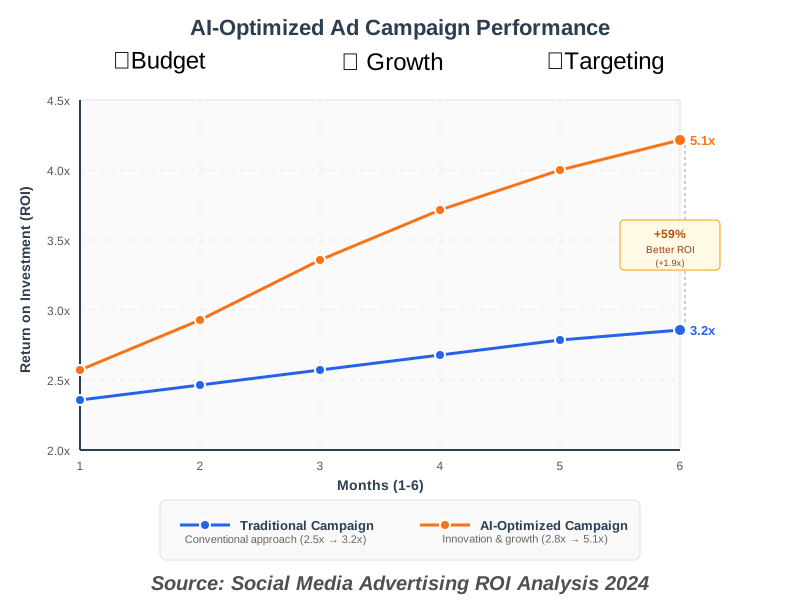
AI in Social Media Advertising revolutionizes how businesses spend their marketing budgets by continuously optimizing campaigns for better results. Traditional advertising required constant manual monitoring and adjustment, but AI systems test thousands of variations simultaneously, identifying winning combinations faster than any human team could.
These intelligent systems analyze which images, headlines, and calls to action resonate with specific audience segments. They automatically adjust bids based on competition and predicted conversion likelihood, ensuring your budget focuses on users most likely to engage. If an ad performs poorly with one demographic but excels with another, the AI reallocates spending accordingly, maximizing every dollar invested.
The financial impact can be substantial. A mid-sized e-commerce business we advised reduced their cost-per-acquisition by 60% using AI-optimized advertising while simultaneously increasing conversion rates. The system identified subtle patterns—like certain product images performing better on weekday mornings versus weekend evenings—and adjusted accordingly. This level of granular optimization simply isn’t feasible manually at scale.
AI-Based Social Listening: Monitoring Brand Mentions and Trends
AI-Based Social Listening acts as your brand’s early warning system and opportunity detector, scanning millions of conversations to find mentions of your company, products, competitors, and industry trends. This goes far beyond simple keyword alerts—modern social listening tools understand context, identify emerging trends before they peak, and reveal insights hidden in vast oceans of social data.
These systems monitor conversations across platforms simultaneously, catching brand mentions even when users don’t tag your account directly. They identify influencers discussing your industry, track competitor activities, and spot customer pain points before they escalate into bigger problems. This comprehensive awareness helps businesses stay proactive rather than reactive in their social media strategy.
The strategic advantages are remarkable. A software company we consulted for discovered through social listening that users loved their product but struggled with a specific feature. This insight, gathered from scattered social media discussions, led to a targeted tutorial campaign that reduced support tickets by 35% and improved user satisfaction. Social listening transformed casual mentions into actionable intelligence that directly improved their product and customer experience.
AI-Powered Influencer Marketing: Identifying and Engaging with Key Opinion Leaders
AI-Powered Influencer Marketing streamlines the process of finding perfect brand ambassadors by analyzing millions of profiles to identify influencers whose audience, values, and engagement patterns align with your brand. Manual influencer research is time-consuming and often relies on surface-level metrics like follower counts, which can be misleading. AI digs deeper, evaluating authentic engagement, audience demographics, and content quality.
These intelligent systems predict campaign success by analyzing historical performance data from similar collaborations. They identify micro-influencers with highly engaged niche audiences who often deliver better ROI than celebrity endorsers with massive but less targeted followings. The AI also detects fake followers and engagement manipulation, protecting your investment from fraudulent influencer partnerships.
Implementation is more accessible than many realize. A boutique skincare brand we worked with used AI influencer tools to identify beauty enthusiasts with small but devoted followings in their target market. The campaign cost a fraction of traditional influencer marketing but generated authentic content and drove measurable sales. The AI helped them punch above their weight, competing effectively with brands having much larger marketing budgets.
AI for Social Media Crisis Management: Detecting and Responding to Negative PR
AI for Social Media Crisis Management serves as your 24/7 guardian, detecting potential PR problems before they spiral out of control. These systems monitor sentiment shifts in real-time, alerting teams when negative conversations begin gaining momentum. Speed matters in crisis management—every minute counts when addressing customer concerns or misinformation spreading online.
The AI recognizes patterns indicating brewing crises, such as sudden spikes in negative mentions, trending hashtags criticizing your brand, or coordinated complaint campaigns. It prioritizes alerts based on severity and potential reach, ensuring your team addresses the most critical issues first. Some systems even suggest response strategies based on successful crisis resolutions from similar situations.
We’ve witnessed how quickly effective crisis management protects brand reputation. A restaurant chain faced social media backlash after a customer shared a concerning food safety video. Their AI system detected the viral spread within minutes, alerting the crisis team, who verified the issue, acknowledged the problem publicly, and outlined immediate corrective actions. Their transparent, rapid response, enabled by AI detection, turned a potential disaster into an opportunity to demonstrate commitment to customer safety.
AI-Enhanced Social Media Analytics: Gaining Deeper Insights into User Behavior
AI-Enhanced Social Media Analytics transforms raw data into strategic intelligence, revealing not just what happened but why it matters and what to do next. Traditional analytics show you numbers—post reach, engagement rates, and follower growth. AI analytics explain the stories behind those numbers, identifying patterns, predicting trends, and recommending actions based on comprehensive data analysis.
These advanced systems connect dots across multiple data sources, revealing relationships humans might miss. They identify your best-performing content themes, optimal posting schedules for maximum engagement, and audience segments most likely to convert. The insights are presented in plain language, making sophisticated analysis accessible to non-technical users who can immediately apply findings to improve their social media strategy.
The practical applications extend far beyond curiosity. A nonprofit organization we supported used AI analytics to discover their donation appeals performed significantly better when paired with specific types of success stories. This insight, hidden in months of data, helped them refine their messaging strategy and increase fundraising effectiveness by 45%. The AI didn’t just report metrics—it provided actionable intelligence that directly impacted their mission success.
AI in Social Media Personalization: Tailoring Content to Individual Users
AI in Social Media Personalization creates unique experiences for each user, showing content, products, and messages most relevant to their interests and behaviors. This isn’t about showing everyone the same content—it’s about recognizing that different users want different things, even from the same brand. The technology analyzes individual preferences, engagement history, and behavioral patterns to customize every interaction.
The sophistication impresses us. Personalization engines consider factors like time of day, device type, past purchase behavior, and content consumption patterns. A user browsing on mobile during their commute sees different content than someone on a desktop computer during work hours. This contextual awareness ensures your message reaches people when they’re most receptive, in formats optimized for their situation.
Businesses implementing personalization consistently report improved engagement and conversion rates. An online education platform, we advised personalized course recommendations based on user skill levels, learning pace, and career goals. Students received customized content suggestions that felt handpicked, increasing course completion rates by 38% and improving satisfaction scores. Personalization made their massive course catalog feel approachable and relevant to each individual learner.
AI and the Future of Social Media Communication: Trends and Predictions
AI and the Future of Social Media Communication points toward increasingly sophisticated, natural interactions that blur lines between human and machine communication. Emerging technologies like advanced natural language processing and computer vision will enable platforms to understand not just what users share but the deeper meanings and emotions behind their posts. Social media will become more intuitive, anticipating needs before users explicitly express them.
We’re moving toward multimodal AI that seamlessly integrates text, voice, images, and video understanding. Future social platforms might analyze your video content to automatically generate captions, translations, and accessibility features. Voice-based social interactions will become more prevalent as AI improves at understanding conversational nuances across languages and dialects. These advances will make social media more inclusive and globally connected.
The trajectory also includes increased integration of AI in content creation, with tools capable of generating personalized video content, interactive experiences, and immersive augmented reality features. Virtual influencers—AI-generated personalities with consistent brand voices—are already emerging. While some fear this might reduce authenticity, we see opportunity for creativity and expression in new formats that weren’t previously possible. The key will be maintaining transparency and ethical standards as these technologies evolve.
Ethical Considerations of AI in Social Media: Privacy, Bias, and Transparency
Ethical Considerations of AI in Social Media demand serious attention as these powerful tools reshape digital communication. Privacy concerns top the list—AI systems require data to function effectively, but users deserve control over their information and a clear understanding of how it’s used. Striking the right balance between personalization benefits and privacy protection remains an ongoing challenge that platforms, regulators, and users must navigate together.
Bias in AI algorithms poses another significant concern. These systems learn from historical data, which may contain human prejudices and inequalities. If training data overrepresents certain demographics or perspectives, the AI perpetuates and potentially amplifies these biases in content recommendations, ad targeting, and moderation decisions. Responsible development requires diverse teams, rigorous testing, and continuous monitoring to identify and correct algorithmic bias.
Transparency is crucial for building trust. Users should understand when they’re interacting with AI systems versus humans, how algorithms determine their content feeds, and what factors influence the ads they see. We advocate for platforms to provide clear, accessible explanations of their AI systems without requiring technical expertise. Informed users can make better decisions about their social media engagement and hold platforms accountable for responsible AI deployment.
AI-Driven Social Media Automation: Tools and Strategies for Efficiency
AI-Driven Social Media Automation empowers individuals and businesses to maintain a consistent social presence without constant manual attention. These tools handle repetitive tasks like scheduling posts, responding to common questions, and curating content, freeing up time for strategy and creative work that requires human insight. Automation doesn’t mean becoming robotic—it means systematizing routine tasks so you can focus on meaningful engagement.
Modern automation platforms learn your brand voice and posting preferences, suggesting optimal times to share content based on when your audience is most active. They monitor multiple social accounts simultaneously, consolidating notifications and messages into manageable dashboards. Some tools even analyze trending topics and suggest timely content ideas that align with your brand, ensuring you stay relevant without constantly monitoring social trends manually.
The productivity gains can be transformative. A busy entrepreneur we coached implemented automation tools and reduced social media management time from 15 hours weekly to just 3 hours, while actually improving engagement rates. The key was strategic automation—using AI for scheduling and analytics while maintaining personal touch in actual community interactions. Automation handled the logistics; she focused on building relationships. This balanced approach maximizes efficiency without sacrificing authenticity.
AI for Visual Content Recognition: Identifying Objects and Scenes in Social Media Images
AI for Visual Content Recognition enables platforms to understand image and video content at scale, identifying objects, people, locations, and activities within visual media. This technology powers features like automatic image tagging, visual search, and content moderation. When you upload a photo of the Eiffel Tower, AI recognizes the landmark instantly, suggesting relevant tags and connecting your post with other Paris-related content.
The applications extend beyond simple object detection. Advanced visual AI analyzes brand logos in user-generated content, identifies products in influencer posts, and even assesses image quality and composition. Businesses use this technology to monitor how their products appear in social media posts, track brand visibility, and discover user-generated content worth sharing. The insights reveal how customers actually use products in real-world settings.
We’ve seen creative applications that delight users and drive engagement. A travel company implemented visual search that lets users upload photos of destinations they’d like to visit, with the AI suggesting similar locations and travel packages. A fashion retailer uses visual recognition to let customers photograph outfits they like, instantly finding similar items in their inventory. These interactive experiences, powered by visual AI, create engaging ways to connect product offerings with customer inspiration.
AI in Social Media Moderation: Detecting and Removing Harmful Content
AI in Social Media Moderation protects users by identifying and removing harmful content, including hate speech, harassment, misinformation, and graphic violence. Given the billions of posts shared daily, manual moderation alone cannot scale to protect users effectively. AI systems process content in milliseconds, flagging potentially harmful material for review and removing clear violations automatically based on platform policies.
These systems continuously improve through machine learning, becoming better at understanding the context and nuance that distinguishes harmful content from acceptable speech. They recognize hate symbols, detect subtle harassment patterns, and identify manipulated media intended to deceive. The technology also helps moderators by prioritizing the most urgent cases and providing context for informed decisions on borderline content.
Challenges remain significant. AI moderation sometimes struggles with sarcasm, cultural context, and content requiring deep understanding of current events. False positives can remove legitimate content, while false negatives allow harmful material to reach audiences. We believe the solution combines AI’s scale and speed with human moderators’ contextual judgment. This hybrid approach provides safer social environments while respecting freedom of expression and diverse perspectives across global communities.
AI-Powered Social Media Reporting: Automating Performance Tracking and Analysis
AI-Powered Social Media Reporting eliminates the tedious process of manually compiling metrics and creating performance reports. These intelligent systems automatically gather data from multiple platforms, identify key trends, and generate comprehensive reports highlighting what’s working and what needs adjustment. Instead of spending hours in spreadsheets, you receive clear, visual reports focusing on metrics that actually matter for your goals.
The real value lies in automated insights and recommendations. The AI doesn’t just show that engagement dropped last week—it analyzes why, comparing your performance against similar accounts, industry benchmarks, and historical trends. It identifies your top-performing content types, optimal posting times, and audience demographics showing strongest engagement. These actionable insights guide strategy adjustments based on evidence rather than guesswork.
Customization ensures reports address specific needs. Marketing managers might want competitive analysis and campaign ROI, while content creators focus on audience growth and engagement trends. The AI adapts reporting to different stakeholders, presenting the same data in formats appropriate for each audience. A retail brand we partnered with uses automated reporting to share social performance with executives quarterly, team managers monthly, and content creators weekly, each receiving insights relevant to their roles and responsibilities.
AI for Social Media Lead Generation: Identifying and Qualifying Potential Customers
AI for Social Media Lead Generation revolutionizes how businesses identify and connect with potential customers by analyzing social behavior patterns that indicate purchase intent. Traditional lead generation relied on users explicitly filling out forms or clicking specific links. AI-enhanced systems detect subtle signals—engagement patterns, content interests, questions asked—that suggest someone is researching solutions your business provides.
These intelligent tools score leads based on likelihood to convert, prioritizing warm prospects for immediate outreach while nurturing others with relevant content until they’re ready. The system analyzes how prospects interact with your social content, what competitors they follow, and questions they ask in comments or groups. This comprehensive profile helps sales teams personalize their approach, addressing specific needs and concerns evident in each prospect’s social media activity.
The efficiency gains free up sales resources for high-value activities. A B2B software company we advised implemented AI lead qualification and reduced time spent on unqualified leads by 70%. When prospects showed strong buying signals, their sales team got alerts that included information about the prospects’ interests and concerns that had been gathered from social interactions. This intelligence enabled more informed, personalized conversations that converted at significantly higher rates than cold outreach.
AI-Based Social Media Monitoring for Public Health: Tracking Disease Outbreaks
AI-Based Social Media Monitoring for Public Health transforms how health organizations detect and respond to disease outbreaks by analyzing social media conversations for early warning signs. When people feel ill, they often share symptoms and concerns online before seeking medical care. AI systems monitor these discussions at scale, identifying unusual patterns that might indicate emerging health threats in specific geographic areas.
The technology analyzes symptom mentions, sentiment around health topics, and geographic clustering of health-related posts. During flu season, these systems track which regions show increased mentions of relevant symptoms, helping health authorities allocate resources and launch targeted public health campaigns. The early detection capability provides precious time for intervention before diseases spread widely through communities.
Real-world applications have demonstrated measurable impact. During recent public health challenges, AI monitoring helped identify outbreak hotspots days before traditional surveillance systems confirmed increases in cases. Public health agencies used these insights to deploy testing resources, launch awareness campaigns, and coordinate medical responses more effectively. While respecting privacy and avoiding medical misinformation, social media monitoring provides valuable supplementary data that enhances traditional epidemiological approaches to protecting community health.
The Role of AI in Combating Misinformation on Social Media Platforms
The Role of AI in Combating Misinformation on Social Media Platforms addresses one of the most pressing challenges facing digital communication today. Misinformation spreads rapidly, and manual fact-checking cannot keep pace with the volume of false or misleading content shared across social networks. AI systems help by identifying potentially false claims, detecting manipulated media, and limiting the spread of misinformation while preserving legitimate debate and diverse viewpoints.
These technologies analyze content credibility by examining sources, cross-referencing claims with verified information, and identifying manipulation techniques used in deepfakes or doctored images. They detect coordinated inauthentic behavior—networks of fake accounts spreading false narratives—and reduce the visibility of content flagged as potentially misleading. Some platforms add context labels providing additional information from credible sources, helping users make informed judgments.
The challenge balances misinformation control with freedom of expression. Overly aggressive automated moderation risks censoring legitimate content and stifling important conversations. We support approaches that combine AI detection with human review, transparent labeling rather than outright removal when appropriate, and media literacy initiatives that help users critically evaluate information. Technology alone cannot solve misinformation, but thoughtfully deployed AI is an essential tool in maintaining healthier information ecosystems on social platforms.
AI-Driven Language Translation for Global Social Media Communication
AI-Driven Language Translation for Global Social Media Communication breaks down language barriers, enabling genuine cross-cultural conversations that were previously impossible. Modern translation AI understands context, idioms, and cultural nuances far better than earlier systems that produced awkward, literal translations. These tools empower global communities to form around shared interests regardless of members’ native languages.
The technology continuously improves through neural machine translation that learns from billions of human-translated examples. It adapts to informal social media language, including slang, emojis, and platform-specific abbreviations. Real-time translation features let users participate in conversations, read posts, and engage with content in languages they don’t speak, dramatically expanding the diversity and richness of their social media experience.
We’ve seen inspiring examples of connection enabled by translation AI. International business collaborations flourish when team members communicate naturally in their preferred languages. Activist movements coordinate across borders, with participants discussing strategies in dozens of languages simultaneously. Content creators reach global audiences without limiting themselves to English-only posts. While translation isn’t perfect, it’s good enough to facilitate meaningful understanding and connection across linguistic divides that once seemed insurmountable.
AI in Social Media Content Scheduling: Optimizing Posting Times for Engagement
AI in Social Media Content Scheduling takes the guesswork out of determining when to share content for maximum reach and engagement. These intelligent systems analyze your audience’s activity patterns, identifying specific times when your followers are most active and receptive. Posting at optimal times dramatically increases the likelihood your content appears in feeds and receives engagement before algorithms deprioritize it.
The sophistication goes beyond finding peak hours. AI schedulers consider multiple factors, including time zones of your diverse audience, day-of-week patterns, seasonal trends, and even how recently you last posted. They optimize your entire content calendar holistically, spacing posts for maximum visibility without overwhelming followers. Some systems automatically adjust timing as audience behavior changes, ensuring your strategy stays current without manual intervention.
Implementation delivers measurable improvements quickly. A content creator we advised implemented AI scheduling and saw average post reach increase 45% within weeks, simply by timing posts better. The tool identified that her audience engaged most during weekday lunch hours and Sunday evenings—patterns she hadn’t recognized manually. This timing optimization required no additional content creation or ad spending, just smarter scheduling based on data-driven insights the AI provided.
AI-Powered Social Media Research: Understanding Consumer Trends and Behaviors
AI-Powered Social Media Research provides unprecedented insight into consumer psychology by analyzing billions of social interactions to identify emerging trends, shifting preferences, and evolving behaviors. Market researchers once relied on surveys and focus groups that captured small samples at single moments. AI research tools continuously monitor actual consumer behavior and conversations at a massive scale, revealing authentic insights about what people want, need, and care about.
These systems detect weak signals that precede major trend shifts, giving businesses early warning to adapt products, messaging, and strategies. They identify which product features generate excitement versus frustration, what values resonate with target audiences, and how perceptions of your brand compare with competitors. The analysis happens across demographics, geographic regions, and time periods, painting comprehensive pictures of market dynamics.
The strategic value transforms business decision-making. A beverage company we consulted for used social media research to identify growing consumer interest in functional ingredients providing health benefits beyond basic nutrition. This insight, detected months before it appeared in traditional market research, informed their product development roadmap. They launched a new line addressing this emerging demand ahead of competitors, gaining significant market share. AI-powered research provided the competitive intelligence that shaped successful innovation.
AI for Personalized Social Media News Feeds: Delivering Relevant Information
AI for Personalized Social Media News Feeds curates content specifically for each user, ensuring your feed contains posts you’ll find interesting and valuable rather than overwhelming you with everything from every connection. The technology analyzes your interaction history—which posts you engage with, who you message frequently, and what topics you search—to predict what content deserves space in your limited attention and screen time.
These intelligent systems balance multiple objectives. They surface posts from close friends and family you interact with regularly while also introducing diverse perspectives and new accounts you might enjoy. They prioritize time-sensitive information like event invitations or news while ensuring you don’t miss important updates from people and pages you care about. The algorithms attempt to show you the most relevant content from the vast amount shared across your network.
Personalization creates mixed reactions. Users appreciate seeing content matched to their interests without manually sorting through thousands of posts. However, concerns exist about filter bubbles that limit exposure to diverse viewpoints and algorithmically narrowed perspectives. We believe the solution involves users having more control over personalization settings, platforms providing transparency about how feeds are curated, and algorithms designed to occasionally introduce content outside comfort zones, balancing relevance with healthy exposure to diverse ideas.
AI in Social Media Brand Reputation Management: Protecting Your Online Image
AI in Social Media Brand Reputation Management actively safeguards your brand’s online image by monitoring conversations, identifying reputation risks, and enabling rapid response to concerns before they escalate. Your brand reputation is built through countless interactions across platforms, and a single viral negative experience can damage what took years to build. AI systems provide the vigilance and speed necessary for effective reputation protection in the fast-moving social media landscape.
These tools track brand mentions, analyze sentiment trends, and alert teams to potential reputation threats based on the velocity and reach of negative discussions. They distinguish between isolated complaints requiring standard customer service responses and emerging issues demanding immediate crisis management attention. The AI contextualizes feedback by comparing current sentiment with historical baselines, helping teams understand whether recent criticism represents a temporary spike or concerning trend.
Proactive reputation management yields significant value. An e-commerce brand we worked with received an alert when customer complaints about shipping delays suddenly increased across social platforms. The AI noticed the pattern before it reached mainstream attention, enabling the company to investigate, identify a logistics problem, communicate transparently with affected customers, and implement fixes. Their transparent handling, informed by early AI detection, actually strengthened customer trust despite the operational hiccup.
AI-Enhanced Social Media Customer Segmentation: Targeting Specific Audiences
AI-Enhanced Social Media Customer Segmentation identifies distinct audience groups within your followers, enabling personalized messaging that resonates with each segment’s unique characteristics, needs, and preferences. Traditional demographic segmentation—sorting people by age, gender, and location—gives only basic information, while AI-powered behavioral segmentation looks at real interests, buying habits, and how people interact with
These intelligent systems analyze how different user groups interact with various content types, identifying patterns that reveal distinct audience personas. One segment might engage primarily with educational content during work hours, while another prefers entertainment posts on weekends. The AI recognizes these behavioral patterns automatically, creating dynamic segments that evolve as user behaviors change over time.
The marketing effectiveness improves dramatically when messaging matches audience segments. A fitness app we advised discovered through AI segmentation that their audience divided into three distinct groups: competitive athletes seeking performance optimization, casual exercisers wanting simple routines, and rehabilitation users needing gentle guidance. Creating tailored content for each segment increased overall engagement 52% compared to their previous one-size-fits-all approach. Segmentation enabled relevant communication that spoke directly to each group’s motivations and goals.
AI for Proactive Customer Service on Social Media: Anticipating Needs
AI for Proactive Customer Service on Social Media transforms customer support from reactive problem-solving to anticipatory assistance that addresses issues before customers explicitly request help. These systems analyze patterns in customer behavior, product usage, and common pain points to predict when users might need assistance. Reaching out proactively demonstrates attentiveness and often resolves problems before they generate frustration.
The technology identifies scenarios triggering customer service needs, such as users repeatedly viewing help documentation, abandoning purchases at checkout, or showing confusion patterns in their interactions. The AI generates helpful messages offering assistance, relevant resources, or personalized guidance. This proactive outreach feels genuinely helpful rather than intrusive because it’s triggered by actual behavioral signals indicating someone needs support.
We’ve observed remarkable results from proactive service approaches. A subscription software company implemented AI that detected when new users struggled with setup and automatically offered personalized onboarding assistance via social messages. Customer churn during the critical first month decreased 34%, and satisfaction scores among new users increased significantly. Customers appreciated receiving help exactly when they needed it, without having to navigate help systems or wait for support responses. Proactive AI assistance created better first impressions and smoother customer journeys.
The Impact of AI on Social Media Job Roles: What Skills Are Needed?
The Impact of AI on Social Media Job Roles reshapes the skills and responsibilities of social media professionals, emphasizing strategic thinking, creativity, and human connection while automating technical and repetitive tasks. Jobs aren’t disappearing—they’re evolving. Professionals who embrace AI as a collaborative tool rather than a threat will find themselves more productive, strategic, and valuable to their organizations.
Essential skills increasingly include AI literacy—understanding what these tools can do, their limitations, and how to effectively integrate them into workflows. Social media managers need strategic thinking to interpret AI-generated insights and translate them into effective campaigns. Creativity becomes more important as AI handles routine content production, freeing humans to develop unique brand voices and innovative campaigns that machines cannot replicate. Empathy and emotional intelligence remain distinctly human capabilities crucial for authentic community engagement.
We encourage professionals to view AI as augmentation, not replacement. The most successful social media practitioners we know use AI to handle data analysis, content scheduling, and initial customer inquiries, allowing them to focus on relationship building, creative strategy, and complex problem-solving. They’re learning to prompt AI tools effectively, critically evaluate automated suggestions, and blend technological efficiency with human judgment. This hybrid skill set defines the modern social media professional thriving in an AI-enhanced landscape.
AI-Driven Social Media Competitive Analysis: Monitoring Competitors’ Strategies
AI-Driven Social Media Competitive Analysis provides comprehensive intelligence about competitor activities, strategies, and performance without manually monitoring their accounts constantly. These tools automatically track competitor posts, engagement rates, content themes, advertising campaigns, and audience growth. The insights reveal what’s working in your industry, helping you identify opportunities and avoid strategies that consistently underperform.
Advanced systems go beyond surface metrics, analyzing competitor content strategies to identify successful themes, posting frequencies, and engagement techniques. They detect when competitors launch campaigns, introduce products, or adjust messaging approaches. Some tools even predict competitor moves based on historical patterns and current activities. This intelligence empowers data-driven strategic decisions informed by comprehensive market awareness.
The competitive advantages compound over time. A digital marketing agency we partner with uses competitive analysis AI to benchmark client performance against industry leaders and identify gaps in competitors’ strategies. They discovered one client’s competitor consistently gained engagement through user-generated content campaigns but neglected educational content. The agency developed an educational content strategy that captured this overlooked audience segment, differentiating their client and capturing market share competitors had ignored. Competitive intelligence transformed defensive monitoring into offensive strategy development.
AI for Social Media Trend Prediction: Identifying Emerging Topics and Hashtags
AI for Social Media Trend Prediction identifies emerging topics, hashtags, and conversations before they reach mainstream attention, giving early adopters significant advantages in content strategy and community engagement. These predictive systems analyze velocity of mentions, engagement patterns, and network effects to distinguish temporary blips from genuine trends gaining momentum. Getting ahead of trends positions your brand as innovative and current rather than reactively following what’s already popular.
The technology examines multiple signals, including search volume increases, influencer adoption, mainstream media pickup, and cross-platform spread. It identifies not just what’s trending now but what will trend soon, providing lead time to create relevant content, join conversations authentically, and position your brand within emerging cultural moments. This predictive capability is particularly valuable for time-sensitive industries like fashion, entertainment, and news.
Creative implementation drives impressive results. A consumer brand we collaborated with uses trend prediction AI to inform their content calendar weeks in advance. When the system predicted increased interest in sustainable packaging, they prepared a content series addressing their environmental initiatives. By the time the trend peaked, they had authoritative content ranking well in searches and generating substantial engagement. Their preparedness, enabled by AI predictions, positioned them as thought leaders while competitors scrambled to catch up with the conversation.
AI in Social Media for Nonprofits: Enhancing Outreach and Fundraising
AI in Social Media for Nonprofits democratizes sophisticated marketing tools previously accessible only to organizations with substantial budgets. Nonprofit organizations often operate with limited staff and resources but need to maximize outreach, engagement, and fundraising effectiveness. AI tools level the playing field, enabling small teams to compete for attention and donations in crowded social media environments.
These technologies help nonprofits identify and connect with potential donors and supporters based on interest patterns and giving behaviors. AI analyzes which messages resonate with different audience segments, optimizes donation request timing, and personalizes communication to strengthen donor relationships. Automated tools handle routine tasks like scheduling posts and responding to common questions, freeing limited staff to focus on mission-critical work and meaningful supporter engagement.
We’ve seen transformative impacts on nonprofit effectiveness. A small animal rescue organization implemented AI scheduling and content optimization, reducing social media management time by 60% while increasing donation conversions by 40%. The tools identified that posts featuring specific adoption success stories consistently drove contributions, informing their content strategy. AI analytics helped them understand their audience deeply despite lacking dedicated marketing staff. Technology amplified their impact, enabling them to help more animals with the same limited resources.
AI-Powered Social Media Content Recommendation: Improving User Engagement
AI-Powered Social Media Content Recommendation suggests posts, accounts, and groups that align with user interests, helping people discover valuable content they wouldn’t find through their existing networks. These recommendation engines analyze your engagement history, similar users’ behaviors, and content characteristics to predict what you’ll find engaging. The goal is to keep users interested and active by continuously providing fresh, relevant content that maintains platform engagement.
The systems balance exploration and exploitation—showing you more of what you already enjoy while occasionally introducing new topics or creators you might appreciate. They consider engagement signals like time spent viewing content, sharing behavior, and completion rates for videos. Sophisticated algorithms distinguish between content you’ll merely scroll past versus material that genuinely interests you enough to engage meaningfully.
User experience improvements drive platform loyalty. A social learning platform we studied implemented AI recommendations that suggested relevant discussion groups and educational content based on user interests and skill levels. Member engagement increased 65%, and users reported discovering valuable communities and resources they wouldn’t have found independently. Well-executed recommendations enhance the user experience rather than manipulate it, genuinely helping people connect with content and communities and enriching their social media participation.
Frequently Asked Questions
Taking Your Next Steps with AI in Social Media
Understanding AI in Social Media and Communication opens doors to a more effective, efficient, and engaging digital presence. Whether you’re building a personal brand, growing a business, or simply navigating social platforms as an informed user, this knowledge empowers better decisions and more strategic engagement with these powerful tools.
Start small if the technology seems overwhelming. Choose one AI-powered tool addressing your biggest challenge—perhaps scheduling if consistency is your struggle, or analytics if you’re unsure what content resonates. Experiment with free versions, learn how the tools work, and gradually expand your AI toolkit as you gain confidence and see results.
Remember that AI works best as your collaborative partner, not a replacement for authentic human connection and creativity. Use these tools to handle repetitive tasks, gain insights from data, and optimize technical aspects of social media management. Invest the time you save into genuine engagement with your community, developing creative content, and building relationships that matter.
The social media landscape continues evolving rapidly, with AI capabilities expanding constantly. Stay curious and open to learning. Follow developments in AI ethics and privacy to engage with these technologies responsibly. Join communities discussing AI in social media to share experiences and learn from others navigating this transformation.
Your voice and perspective remain uniquely valuable in digital spaces increasingly shaped by artificial intelligence. Technology amplifies your reach and effectiveness, but your authentic humanity creates the connections that truly matter. Embrace AI as the powerful tool it is while maintaining the genuine, personal touch that makes social media meaningful.
We encourage you to experiment, learn, and adapt these technologies to your specific needs and goals. The future of social media belongs to those who thoughtfully integrate AI capabilities while preserving the human elements that make digital communication valuable, engaging, and ultimately rewarding. Your journey with AI in social media starts now—and we’re excited to see where it takes you.
About the Authors
This article represents a collaboration between Abir Benali and James Carter, combining expertise in technology explanation with practical productivity applications.
Main Author: Abir Benali is a friendly technology writer passionate about making AI accessible to non-technical users. With a gift for clear explanations and actionable guidance, Abir helps readers understand complex technologies through simple language and real-world examples. When not demystifying AI, Abir enjoys exploring how technology can enhance everyday life without overwhelming users.
Co-Author: James Carter serves as a productivity coach specializing in AI implementation for time-saving and efficiency. James brings practical, motivational perspectives on integrating AI tools into daily routines. His focus on actionable strategies and workflow optimization complements Abir’s explanatory approach, ensuring readers not only understand AI in social media but can immediately apply these insights to improve their digital presence and productivity.
Together, we combine technical clarity with practical application, delivering insights that are both understandable and immediately useful for anyone looking to leverage AI in their social media communication.