
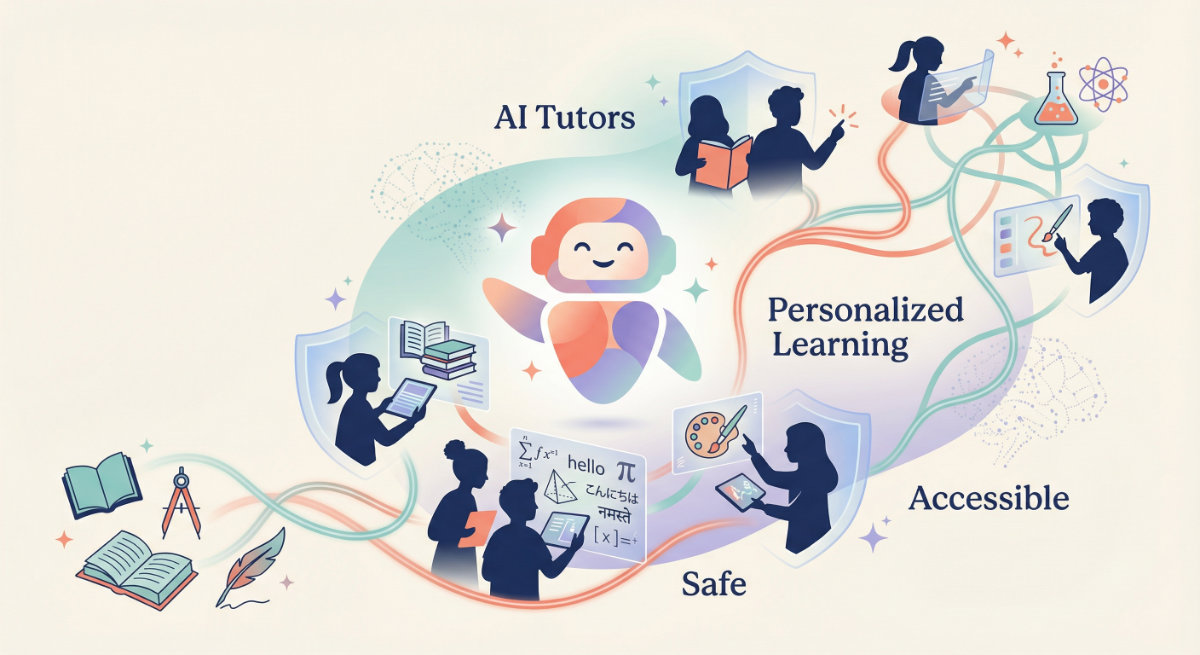
AI Tutors: Safe Personalized Learning Guide
Imagine having a patient teacher available 24/7, one who never gets tired of explaining concepts, adapts instantly to your learning style, and celebrates every small victory with you. This isn’t science fiction—AI Tutors and Virtual Mentors are transforming how we learn, offering personalized guidance that was once available only to those who could afford private tutors. As someone deeply invested in both education and digital safety, I’ve watched this technology evolve from simple question-answering bots to sophisticated learning companions that genuinely understand where students struggle and how to help them succeed.
Whether you’re a parent exploring learning support for your child, a student seeking extra help, or a lifelong learner pursuing new skills, understanding how to use these tools safely and effectively is crucial. In this comprehensive guide, we’ll explore everything you need to know about AI-powered education—from choosing the right platform to protecting your privacy while unlocking the full potential of personalized learning.
The Rise of AI Tutors: Revolutionizing Personalized Learning
The Rise of AI Tutors represents one of the most significant shifts in education since the printing press. Unlike traditional one-size-fits-all instruction, AI tutors analyze how you learn, identify your unique strengths and challenges, and adjust their teaching approach in real time.
What makes this revolutionary? Traditional classroom settings, while valuable, can’t always provide individual attention when you’re stuck on a concept. An AI tutor fills this gap by offering immediate, personalized support whenever you need it. The technology uses machine learning algorithms to understand your progress patterns, predict where you might struggle next, and proactively offer resources before frustration sets in.
However, here’s what matters most from a safety perspective: not all AI tutors are created equal. Some platforms prioritize data collection over education, while others genuinely focus on learning outcomes while respecting privacy. Before adopting any AI learning tool, verify that the platform clearly explains what data it collects, how it’s used, and whether it’s ever shared with third parties.
AI Virtual Mentors: Guiding Students Towards Academic Success
AI Virtual Mentors go beyond subject-specific tutoring to provide holistic guidance throughout your educational journey. Think of them as digital advisors who help with study strategies, time management, goal setting, and even emotional support during challenging academic periods.
What distinguishes a mentor from a tutor? While tutors focus on specific subjects, virtual mentors take a broader view of your educational experience. They might notice you’re consistently studying late at night and suggest better time management strategies or recognize patterns of procrastination and offer accountability systems.
The most effective AI virtual mentors operate with transparency about their limitations. They should clearly communicate that while they can provide guidance and support, they’re not replacing human counselors, therapists, or advisors for serious concerns. A responsible AI mentor knows when to recommend speaking with a human professional—especially for mental health issues, serious academic struggles, or personal crises.
Choosing the Right AI Tutor: Key Features and Considerations
Choosing the Right AI Tutor requires careful evaluation beyond flashy marketing promises. Here’s what to prioritize for safe, effective learning:
Privacy protections should be your first consideration. Look for platforms that are COPPA-compliant (Children’s Online Privacy Protection Act) if you’re under 13, or FERPA-compliant for educational records. The platform should explicitly state they won’t sell your data to advertisers or use your learning information for purposes beyond improving your education.
Transparency in AI decision-making matters significantly. Quality platforms provide an explanation of their AI’s recommendation process, enabling you to comprehend the rationale behind the suggested content or approaches. This transparency helps you stay in control of your learning journey rather than blindly following algorithmic suggestions.
Adaptive learning capabilities ensure the AI actually personalizes instruction rather than just presenting prerecorded content. The system should demonstrate that it’s learning from your responses and adjusting difficulty, pacing, and teaching methods accordingly.
Human oversight and support should always be available. Even the best AI makes mistakes. Reliable platforms provide ways to flag errors, access human tutors when needed, and get support from actual educators who can address complex learning challenges.
Content quality verification is essential. Research who creates the educational content—are they qualified educators? Is the material reviewed by subject matter experts? Has it been tested with real students?
AI Tutors vs. Human Tutors: A Comparative Analysis
AI Tutors vs. Human Tutors isn’t about choosing one over the other—it’s about understanding what each offers and when to use which approach.
AI tutors excel at immediate availability, infinite patience, consistent delivery, data-driven progress tracking, and affordability. They’re ideal for practice, repetition, concept reinforcement, and self-paced learning. When you need to solve twenty algebra problems at midnight before an exam, an AI tutor is invaluable.
Human tutors excel at thoroughly comprehending complex emotions, adapting to unexpected questions, building genuine relationships, recognizing nonverbal cues, and providing mentorship that extends beyond academics. They’re essential for motivational challenges, complex problem-solving requiring creative thinking, and situations where emotional intelligence matters.
The safety consideration here is crucial: AI should supplement, not replace, human connection in education. Students who rely exclusively on AI tutors may miss developing important social skills, receiving emotional support during struggles, or benefiting from the wisdom that comes from human experience.
The most effective approach combines both: use AI tutors for consistent practice and immediate help, while maintaining regular contact with human educators who can address the bigger picture of your learning journey and personal growth.
The Ethics of AI Tutoring: Addressing Bias and Privacy Concerns
The Ethics of AI Tutoring demands our constant attention because the stakes are so high—we’re talking about shaping young minds and educational futures.
Algorithmic bias is a real concern in AI education. If an AI tutor was trained primarily on data from one demographic group, it might not effectively teach students from different backgrounds. It could make assumptions about learning styles, use cultural references that alienate some students, or even unconsciously perpetuate stereotypes. Responsible platforms actively test for and address these biases, involve diverse teams in development, and openly acknowledge limitations.
Privacy concerns extend beyond basic data protection. Consider that AI tutors collect incredibly detailed information about your learning patterns, struggles, strengths, and even how you think through problems. This data could theoretically be used to profile students in ways that affect future opportunities—college admissions, job applications, or insurance rates.
Questions you should ask any AI tutoring platform:
- Who owns the data generated during my learning sessions?
- How long is my data retained, and can I request deletion?
- Is my data anonymized if used for research or system improvement?
- Who has access to my detailed performance analytics?
- How do you prevent data breaches and unauthorized access?
Informed consent matters, especially for younger students who may not fully understand what they’re agreeing to. Parents and educators should review privacy policies together with students, explaining what data collection means and why it matters.
The ethical use of AI in education requires ongoing vigilance from all stakeholders—developers, educators, parents, and students themselves. We must continually question whether these systems are serving students’ best interests or other agendas.
AI Tutors for STEM Subjects: Enhancing Math and Science Education
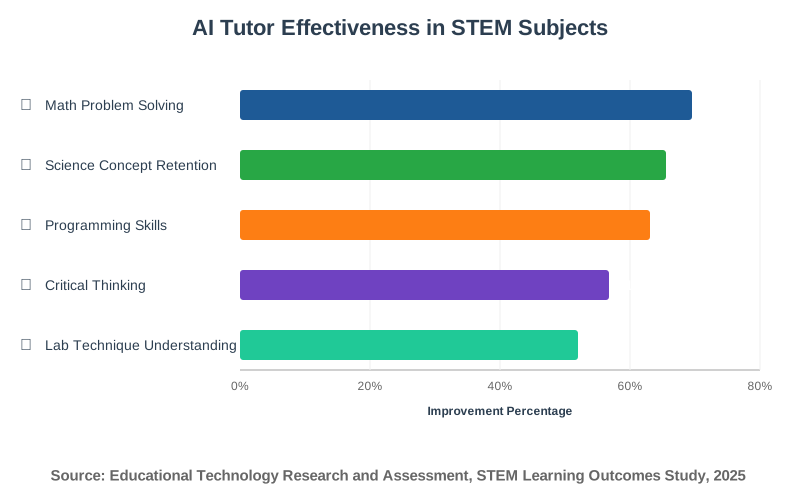
AI Tutors for STEM Subjects have shown particularly strong results because mathematics and sciences involve structured problem-solving that AI handles exceptionally well.
In mathematics, AI tutors can break down complex problems into manageable steps, identify exactly where your understanding breaks down, and provide targeted practice on specific concepts. For instance, if you consistently struggle with fraction division but excel at multiplication, the AI notices this pattern and creates custom practice sets focusing on your weak area while maintaining confidence through occasional easier problems.
For science education, AI tutors excel at creating interactive simulations that would be impossible or dangerous in physical classrooms. Want to see how different variables affect chemical reactions without handling hazardous materials? AI-powered simulations make this possible while tracking your understanding of underlying principles.
Safety considerations for STEM AI tutors include:
Verify that scientific information is current and accurate. Science evolves, and outdated AI models might teach deprecated concepts or theories. Reputable platforms regularly update their content databases with current scientific consensus.
Be cautious of AI tutors that only teach procedural knowledge without conceptual understanding. A good STEM tutor helps you understand why mathematical or scientific principles work, not just memorize steps to solve problems.
Watch for over-reliance on AI-generated solutions. The temptation to simply ask the AI for answers without working through problems yourself undermines actual learning. Effective AI tutors deliberately structure interactions to promote genuine problem-solving skills rather than passive answer-receiving.
AI Virtual Mentors in Career Development: Preparing Students for the Future of Work
AI Virtual Mentors in Career Development serve as guides, helping you navigate increasingly complex career landscapes where traditional paths no longer apply.
These AI mentors analyze labor market trends, identify emerging skills in demand, and help you map learning pathways aligned with your interests and future opportunities. They can simulate informational interviews, provide feedback on resumes and portfolios, and even help you practice for job interviews in safe, low-pressure environments.
However, approach career guidance from AI with healthy skepticism. The job market changes rapidly, and AI predictions about future careers should be one input among many—not your sole source of guidance. Human mentors, career counselors, and professionals in your field of interest provide irreplaceable insights about workplace culture, industry nuances, and career trajectories that AI cannot fully capture.
Privacy protection becomes especially critical in career mentoring scenarios. Be cautious about what personal information you share with AI career mentors, as this data—your aspirations, skills assessment, and career goals—is highly sensitive. Some platforms might share aggregated career interest data with recruiters or educational institutions, so understand exactly how your information will be used.
AI Tutors for Language Learning: Mastering New Languages with AI
AI Tutors for Language Learning offer remarkable advantages for acquiring new languages, particularly in providing unlimited conversation practice without judgment.
Modern language AI tutors can engage in contextual conversations, correct pronunciation in real-time, explain grammar rules when you make mistakes, and adapt vocabulary complexity to your level. They’re available for practice whenever you want—crucial for language acquisition, which requires consistent, repeated exposure.
The technology excels at providing immediate feedback. When learning a language, receiving instant correction helps cement proper grammar and pronunciation patterns before errors become habitual. Human tutors can’t always provide this level of immediate, detailed feedback for every sentence you produce.
Safety and ethical considerations for language learning AI:
Be aware that AI language tutors may teach formal or standardized versions of languages that don’t reflect how native speakers actually communicate. They might miss cultural nuances, idioms, or regional variations. Supplement AI learning with exposure to native speakers and authentic cultural content.
Watch for cultural sensitivity issues. Some AI tutors trained primarily on written text might not adequately address cultural context, potentially leading to technically correct but culturally inappropriate language use.
Verify pronunciation accuracy. Not all AI voice recognition systems are equally sophisticated. Some might accept incorrect pronunciations or miss subtle distinctions crucial in certain languages. Cross-reference with native speakers or multiple platforms.
The Future of AI Tutors: Emerging Trends and Innovations
The Future of AI Tutors promises exciting developments while raising important questions about the role of technology in education.
Emerging innovations include multimodal learning that combines visual, auditory, and kinesthetic elements; emotion recognition that detects frustration or confusion and adapts accordingly; virtual reality integration that creates immersive learning environments; and collaborative AI that facilitates group learning experiences.
Some platforms are developing AI tutors with long-term memory that follow students across years, building comprehensive understanding of their learning journey and providing continuity even as they change schools or courses. Others are exploring AI that teaches not just academic subjects but also emotional intelligence, ethical reasoning, and other soft skills traditionally considered uniquely human domains.
Critical questions we must address as this technology advances:
How do we ensure equitable access as AI tutoring becomes more sophisticated and potentially expensive? How do we prevent a widening educational gap between those who can afford cutting-edge AI tools and those who cannot?
What happens to student privacy as AI systems collect increasingly detailed psychological and behavioral data? Who regulates these systems, and what standards govern their use?
How do we maintain the human elements of education—inspiration, role modeling, social connection—as AI becomes more prevalent? What’s the right balance between AI efficiency and human mentorship?
As users of these technologies, staying informed about developments and advocating for responsible, ethical implementation is crucial. The future of AI in education isn’t predetermined—it’s shaped by choices we make today about values, priorities, and acceptable uses of technology.
AI-Powered Study Tools: Complementing AI Tutors for Optimal Learning
AI-Powered Study Tools extend beyond tutoring to include flashcard systems, note-taking assistants, scheduling optimizers, and focus-enhancement applications that work alongside tutors to support your complete learning ecosystem.
Spaced repetition systems use AI to determine optimal review timing for information retention. Note-taking tools can organize, summarize, and create study guides from your class notes. Time management AI helps you balance study commitments with other responsibilities, creating realistic schedules based on your actual working patterns rather than idealized plans.
When combining multiple AI study tools, be mindful of data proliferation. Each tool you use potentially collects information about your learning habits, schedule, and performance. Consider whether you need separate tools or whether a comprehensive platform might offer better privacy protection by centralizing data under one provider with clear policies.
Best practices for using AI study tools safely:
Use tools from reputable educational providers rather than general-purpose apps that might have different data handling standards. Educational technology companies typically face more regulatory scrutiny regarding student data protection.
Regularly review your tool collection and remove those you’re not actively using. Each additional platform represents another potential privacy vulnerability.
Be skeptical of “AI-powered” claims that seem like marketing rather than substance. Not every study app labeled as AI actually uses sophisticated machine learning—some just apply basic algorithms to existing study techniques.
AI Tutors for Students with Learning Disabilities: Personalized Support
AI Tutors for Students with Learning Disabilities offer groundbreaking potential for providing customized accommodations that would be difficult to implement consistently in traditional settings.
For students with dyslexia, AI can adjust text presentation—font type, spacing, and color contrast—to maximize readability. It can offer text-to-speech functionality and allow verbal rather than written responses. For students with ADHD, AI tutors can break lessons into shorter segments, provide more frequent breaks, and offer varied activity types to maintain engagement.
Students with dyscalculia benefit from AI that can represent mathematical concepts multiple ways—visual, verbal, and tactile—and patiently repeat explanations without any frustration. Those with anxiety disorders appreciate that AI doesn’t judge, create social pressure, or rush them through material.
Critical considerations for accessibility-focused AI:
These tools should never replace legally required accommodations or formal support services. AI tutors supplement but don’t substitute for individualized education programs (IEPs), 504 plans, or support from special education professionals.
Privacy concerns are heightened when AI systems collect data about disabilities and accommodations. This information is highly sensitive and could be misused if improperly protected or shared. Verify that platforms comply with disability privacy laws and have strong data protection measures.
Be aware that AI designed for neurotypical students and later adapted for disabilities may not be as effective as AI specifically designed with diverse learners in mind from the start. Seek platforms developed in collaboration with disability experts and disabled students themselves.
Integrating AI Tutors into the Classroom: Best Practices for Educators
Integrating AI Tutors into the Classroom requires thoughtful implementation that enhances rather than replaces teacher-student relationships.
Effective educators use AI tutors as personalized practice partners that extend their reach, allowing them to focus on higher-order teaching activities—facilitating discussions, inspiring curiosity, and providing mentorship—while AI handles repetitive practice and immediate feedback.
The best classroom integration makes AI tutoring transparent. Students understand when they’re working with AI, what the AI can and cannot do, and how their data from AI interactions is used. Teachers regularly discuss AI’s role as one tool among many in the learning toolkit.
Best practices for educators:
Establish clear guidelines for appropriate AI tutor use. When should students use AI independently versus working with peers or seeking teacher help? Creating these boundaries helps students develop judgment about tool selection.
Regularly review AI recommendations and outputs with students. Sometimes AI makes mistakes or offers suboptimal explanations. Teaching students to critically evaluate AI responses develops important digital literacy skills.
Protect student privacy by vetting AI platforms thoroughly before implementation. Understand exactly what data is collected, how it’s stored, whether it’s shared, and how long it’s retained. Involve parents in these decisions when possible.
Balance AI efficiency with human connection. Schedule regular check-ins where students discuss their AI tutoring experience, challenges they’re facing, and progress they’re making. AI data can inform these conversations but shouldn’t replace them.
AI Virtual Mentors for Entrepreneurs: Guiding the Next Generation of Innovators
AI Virtual Mentors for Entrepreneurs provide accessible guidance for aspiring business creators who might not have access to traditional mentorship networks.
These AI mentors help with business planning, market research, pitch preparation, and strategic decision-making. They can simulate investor conversations, provide feedback on business models, and suggest resources for specific entrepreneurial challenges. For young or underrepresented entrepreneurs lacking established networks, this democratized access to business guidance is valuable.
However, entrepreneurship inherently involves human relationships, trust-building, and nuanced judgment that AI cannot fully replicate. Use AI mentors as starting points for research and preparation, but seek human advisors, join entrepreneur communities, and build real relationships with people in your industry.
Safety considerations for entrepreneurial AI mentoring:
Be cautious about sharing proprietary business ideas or sensitive competitive information with AI platforms. Some systems might use your inputs to train future models, potentially exposing your ideas. Read the terms of service carefully regarding intellectual property.
Recognize that AI business advice may be generic or outdated. Markets change rapidly, and unless the AI has access to real-time data and industry-specific knowledge, its recommendations might not reflect current realities.
Don’t let AI mentors replace due diligence. If an AI suggests a strategy or partnership, independently verify the advice through multiple sources before making significant business decisions.
Overcoming Challenges with AI Tutors: Addressing Limitations and Misconceptions
Overcoming Challenges with AI Tutors requires honest assessment of where these systems excel and where they fall short.
Common limitations include difficulty with truly open-ended creative tasks, inability to understand deep emotional or motivational issues affecting learning, occasional factual errors or outdated information, and challenges with subjects requiring nuanced cultural or ethical reasoning.
AI tutors might excel at teaching grammar rules but struggle with helping you develop your unique writing voice. They can explain historical events but might miss important contextual nuances or differing interpretations. They provide math practice but don’t inspire mathematical curiosity the way a passionate teacher might.
Addressing misconceptions:
Misconception: AI tutors will replace teachers. Reality: AI handles specific instructional tasks, freeing teachers to focus on mentorship, inspiration, and complex facilitation that requires human judgment and empathy.
Misconception: AI tutors work equally well for everyone. Reality: Learning styles, cultural backgrounds, and individual needs vary significantly. What works for one student may not work for another. AI tutoring requires trial and adjustment.
Misconception: AI tutors are always objective and unbiased. Reality: AI systems inherit biases from their training data and designers. They require ongoing monitoring and adjustment to minimize bias.
Misconception: More AI tutoring time equals better results. Reality: Quality matters more than quantity. Effective learning requires varied approaches—independent work, peer collaboration, hands-on activities, and rest. AI is one component of a healthy learning ecosystem.
AI Tutors and Test Preparation: Improving Scores on Standardized Exams
AI Tutors and Test Preparation leverage machine learning to identify your specific weaknesses and create targeted practice that maximizes score improvements.
For standardized tests like the SAT, ACT, GRE, or subject-specific exams, AI tutoring platforms analyze your practice test performance, identify question types you consistently miss, and generate customized practice sets focusing on those areas. They track progress over time and adjust difficulty to keep you challenged without becoming overwhelmed.
Some platforms create adaptive practice tests that mirror the actual exam format while continuously calibrating to your skill level. This targeted approach is often more efficient than traditional study methods that give equal time to concepts you’ve already mastered.
Safety and ethical considerations:
Understand the difference between learning and test-taking strategy. Some AI test prep focuses heavily on tricks and shortcuts rather than genuine understanding. While this might boost scores temporarily, it may not serve long-term educational goals.
Be aware of data privacy in test prep platforms. Your performance data reveals detailed information about your knowledge, skills, and even how you think. Verify that this information won’t be shared with colleges, employers, or other third parties without your explicit consent.
Watch for predatory pricing in test prep AI. Some platforms use aggressive marketing tactics or create anxiety about test performance to justify high costs. Compare options carefully, and remember that effectiveness doesn’t always correlate with price.
Balance AI test prep with stress management and overall well-being. The pressure to improve scores can lead to overuse of AI tutors and unhealthy study habits. Maintain perspective about the role of standardized tests in your overall educational journey.
The Cost of AI Tutoring: Affordability and Accessibility
The Cost of AI Tutoring varies dramatically—from completely free platforms to premium services costing hundreds of dollars monthly—raising important questions about educational equity.
Free AI tutors often exist because they’re supported by advertising, data collection for research, or organizations committed to educational access. They may have limitations compared to paid services but can still provide valuable learning support. Examples include Khan Academy’s AI tutor offerings and various university-developed educational AI tools.
Paid platforms typically offer more sophisticated AI, broader subject coverage, better privacy protections, and additional features like progress tracking for parents or integration with school systems. Prices range from affordable subscription models comparable to streaming services to premium one-on-one AI tutoring that approaches traditional tutoring costs.
Considerations beyond price:
The most expensive option isn’t necessarily the most effective for your specific needs. A free platform that aligns well with your learning style might outperform a costly one that doesn’t.
Hidden costs sometimes exist—platforms might be free for basic features but charge for necessary components like practice tests, detailed analytics, or certificate programs.
Some schools, libraries, and community organizations provide free access to premium AI tutoring platforms. Research what’s available in your community before purchasing individual subscriptions.
Advocating for access:
If cost barriers prevent you from accessing helpful AI tutoring tools, contact the platform directly—many companies have scholarship programs or reduced-price access for students demonstrating financial need. Some will provide free access simply because you asked and explained your situation.
Lobby your school district to negotiate bulk licensing for AI tutoring platforms, which can provide access at significantly reduced per-student costs. Organized advocacy by parents and students can influence these decisions.
AI Virtual Mentors in Creative Fields: Fostering Artistic Talent
AI Virtual Mentors in Creative Fields present unique opportunities and challenges because creativity involves subjective judgment, cultural context, and personal expression that AI handles differently than factual subjects.
For writing, AI mentors can provide feedback on grammar, structure, and clarity while suggesting stylistic improvements. In visual arts, they can teach technical skills, art history, and compositional principles. For music, AI can assist with theory, composition techniques, and practice strategies.
However, the heart of creative work—developing your unique voice, making bold artistic choices, and understanding what makes art meaningful—requires human guidance. AI can teach techniques but shouldn’t dictate artistic direction.
Using AI mentors for creativity safely:
Maintain ownership of your creative vision. Use AI suggestions as input, not commands. If AI feedback makes your work feel less authentically yours, that’s a sign to rely more on your instincts.
Be aware that AI creative feedback reflects patterns in its training data, which may perpetuate conventional approaches rather than encourage innovation. Groundbreaking creative work often breaks established patterns—something AI systems designed to recognize patterns may discourage.
Protect your intellectual property. Some AI platforms’ terms of service grant them rights to creative work you produce using their tools. Read agreements carefully before sharing original creative work with AI platforms.
Seek human feedback alongside AI input. Other artists, teachers, and audiences provide perspectives on emotional resonance, cultural meaning, and innovative potential that AI cannot assess.
AI Tutors for Adult Learners: Lifelong Learning and Skill Development
AI Tutors for Adult Learners address unique challenges facing people returning to education or acquiring new skills while managing work, family, and other responsibilities.
Adult learners often need flexible scheduling, self-paced progression, and learning that immediately applies to practical situations. AI tutors accommodate these needs by being available anytime, allowing you to pause and resume at will, and often providing real-world application examples.
For career transitions, AI tutors help adults efficiently acquire new skills without necessarily pursuing formal degrees. Whether learning coding, data analysis, digital marketing, or other in-demand skills, AI platforms can accelerate learning through personalized pathways.
Considerations specific to adult learners:
Be skeptical of AI tutors making dramatic claims about rapid skill acquisition. Genuine expertise requires time and practice regardless of technology used. Platforms promising “master programming in 30 days” or similar shortcuts likely oversimplify the learning required.
Balance self-directed AI learning with professional credentials when appropriate. Some industries require specific certifications or degrees that self-taught skills, even with AI support, don’t replace.
Address the learning anxiety that some adults feel when returning to education. While AI’s non-judgmental nature helps, you might benefit from combining AI tutoring with peer support groups or communities of adult learners facing similar challenges.
Verify that skills taught by AI tutors remain current with industry standards. Technology fields especially change rapidly, and AI systems may teach outdated methods unless regularly updated.
Measuring the Effectiveness of AI Tutors: Tracking Progress and Outcomes
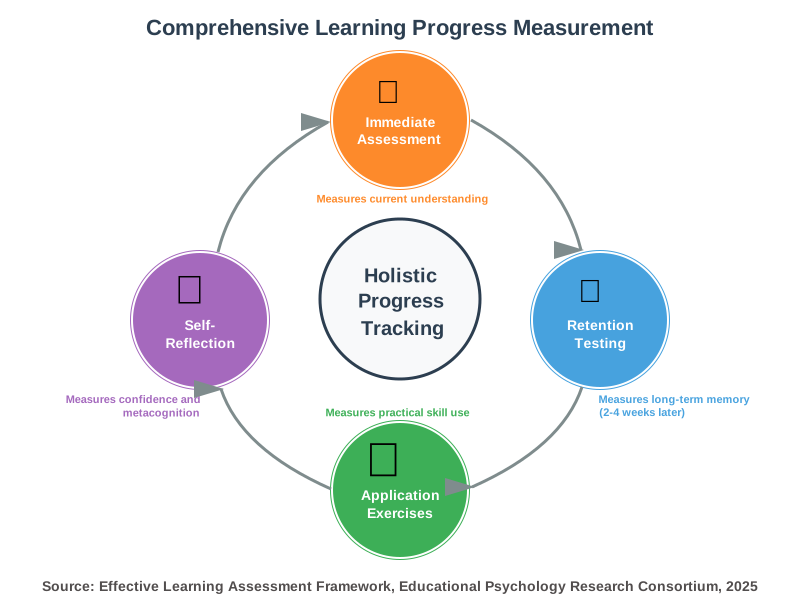
Measuring the Effectiveness of AI Tutors requires looking beyond simple metrics like time spent or lessons completed to assess genuine learning outcomes.
Effective AI platforms provide multiple measurement layers: mastery of specific concepts, improvement on practice assessments, long-term retention checks, and application of knowledge to new situations. They should track not just what you’ve completed but what you’ve actually learned and retained.
However, be critical of metrics that AI tutors emphasize. Some platforms highlight engagement statistics—time spent, lessons completed, streaks maintained—that measure activity rather than learning. You can spend hours with an AI tutor without actually improving if the activities aren’t effectively structured.
What meaningful progress tracking includes:
Spaced repetition assessments that test whether you retained information days or weeks later, not just immediately after learning.
Application exercises requiring you to use knowledge in new contexts rather than simply repeating demonstrated examples.
Comparative analysis showing your performance against learning objectives and personal baselines, not just against other students (which can be discouraging and uninformative).
Regular opportunities for self-assessment where you evaluate your confidence and understanding rather than only accepting AI judgments.
Privacy in progress tracking:
Detailed performance data is valuable for personalization but also highly sensitive. Who can access your progress reports? Are they shared with parents, teachers, or institutions without your permission? Can you control what information is visible to others?
Understand whether your data contributes to broader research studies. While this can advance educational science, you should know about it and have the option to opt out.
AI-Driven Personalized Learning Paths: Tailoring Education to Individual Needs
AI-Driven Personalized Learning Paths represent one of the most powerful applications of AI in education—creating custom educational journeys that adapt to each learner’s pace, style, and goals.
Unlike traditional curricula that move everyone through the same sequence at the same pace, AI-powered personalized paths analyze your performance, identify knowledge gaps, recognize learning preferences, and construct optimal sequences for your specific situation. If you grasp concepts quickly, the AI accelerates you forward. If you need more time, it provides additional practice without making you feel left behind.
These systems can even discover learning patterns you weren’t aware of—perhaps you learn mathematical concepts better in the afternoon, or you retain information more effectively when visual aids precede verbal explanations. The AI adapts to these patterns automatically.
Safety and effectiveness considerations:
Question whether the AI’s chosen path actually serves your goals or reflects algorithmic optimization that may not align with your needs. Sometimes the “most efficient” learning path isn’t the most meaningful or enjoyable one.
Be aware of filter bubbles in education. If AI only presents content similar to what you’ve previously engaged with, you might miss opportunities to explore new interests or discover unexpected strengths.
Maintain some control over your learning journey rather than passively following AI recommendations. The best personalized learning happens when you actively collaborate with the AI, making decisions about pacing and direction rather than simply consuming prescribed content.
Verify that personalization includes appropriate challenge. AI systems sometimes optimize for engagement by keeping content comfortable rather than appropriately challenging. Growth requires struggling productively with difficult material.
AI Tutors for Homeschooling: Enhancing the Homeschooling Experience
AI Tutors for Homeschooling provide valuable support for families taking educational responsibility, offering resources that can supplement parent teaching and fill knowledge gaps.
Homeschooling parents often excel in some subjects while feeling less confident in others. AI tutors can provide expert instruction in challenging areas while parents focus on subjects where they’re strong or on higher-level mentoring and character development.
For homeschooled students, AI tutors offer peer-like interaction without the social pressure of traditional classrooms, allowing them to ask questions freely and work at their own pace. They also provide structure and accountability that some students need between parent check-ins.
Considerations for homeschooling families:
Don’t let AI tutors isolate students further. Homeschooling already requires intentional socialization efforts. Combine AI learning with group classes, co-ops, and other opportunities for peer interaction and collaborative learning.
Maintain oversight of AI-provided content. Homeschooling families often choose this path to control educational content and values. Review the AI curriculum to ensure it aligns with your educational philosophy and doesn’t introduce content that conflicts with your family’s values.
Balance independence with guidance. AI tutors enable more independent student work, but younger learners especially still need regular parent involvement to stay motivated and address confusion the AI might not recognize.
Consider whether AI tutors meet legal homeschooling requirements in your jurisdiction. Some regions require specific curricula, teacher qualifications, or assessment methods that AI platforms may or may not satisfy.
AI Virtual Mentors for Underrepresented Groups: Promoting Equity and Inclusion
AI Virtual Mentors for Underrepresented Groups offer the potential to address educational disparities by providing high-quality learning support regardless of student background, location, or resources.
Students from underrepresented groups often face barriers accessing traditional tutoring and mentoring—financial constraints, geographic isolation, lack of representation in STEM fields, or implicit bias in human interactions. AI mentors, theoretically, could provide judgment-free support that levels these playing fields.
Some platforms specifically design AI mentors with diverse perspectives, ensuring representation in examples used, cultural contexts referenced, and career paths suggested. They actively work to counter rather than perpetuate educational inequities.
Critical realities about AI and equity:
Access to technology itself is unequal. The digital divide means that students who would benefit most from AI tutoring may lack reliable internet, appropriate devices, or the digital literacy to use these tools effectively. AI education can’t solve equity issues if access is unequal.
AI systems trained primarily on data from privileged populations may not serve underrepresented groups well. If training data lacks diversity, the AI might not recognize different dialects, cultural references, or learning approaches common in various communities.
Algorithmic bias can perpetuate discrimination. Studies have shown that some AI systems rate identical work differently based on perceived demographic characteristics of the student. This isn’t intentional but emerges from biased training data.
What truly promotes equity:
Platforms designed with underrepresented communities from the start, not retrofitted afterward. This means including diverse voices in development, testing extensively with target populations, and genuinely understanding barriers faced.
Free or subsidized access programs that reduce financial barriers. Several AI tutoring companies offer need-based scholarships or partner with schools serving underresourced communities.
Cultural competency in AI responses. The best AI mentors recognize and respect diverse backgrounds, adapting examples and references to be culturally relevant rather than assuming all students share the same experiences.
The Role of AI in Developing Critical Thinking Skills
The Role of AI in Developing Critical Thinking Skills is complex—AI can both support and potentially hinder the development of this crucial ability depending on how it’s used.
At its best, AI promotes critical thinking by asking probing questions rather than providing direct answers, challenging assumptions, presenting alternative perspectives, and requiring students to justify their reasoning. Socratic-method AI tutors that guide students to discover answers through questioning can effectively develop analytical skills.
However, AI can also undermine critical thinking when it makes learning too easy. If students simply accept AI-generated answers without understanding underlying logic, or if they never struggle through productive confusion because AI intervenes immediately, they miss opportunities to develop problem-solving resilience.
Using AI to strengthen rather than weaken critical thinking:
Choose AI tutors that emphasize questioning over answering. The best critical thinking development happens when you’re pushed to think through problems rather than shown solutions.
Deliberately practice skepticism toward AI responses. Make a habit of asking, “How do I know this is correct?” and “What other interpretations exist?” This metacognitive practice strengthens critical thinking.
Use AI as a sparring partner for developing arguments. Present positions to AI and ask it to challenge them from different perspectives. This helps you anticipate counterarguments and refine reasoning.
Balance AI assistance with unguided problem-solving time. Schedule regular periods where you tackle challenges without any AI help, forcing yourself to think through problems independently.
AI Tutors and Student Motivation: Keeping Students Engaged and Inspired
AI Tutors and Student Motivation involves sophisticated psychological principles that the best AI platforms understand and leverage, while others fail to address adequately.
Effective motivational design in AI tutors includes immediate positive feedback for effort and progress, appropriate challenge levels that create flow states, personalization that makes learning feel relevant, and gamification elements that make practice enjoyable without becoming gimmicky.
AI can recognize motivation patterns—when you typically lose focus, what types of content re-engage you, how much challenge you tolerate before becoming frustrated—and adjust experiences accordingly. This responsive design helps maintain the delicate balance between too easy (boring) and too hard (discouraging).
Motivation concerns with AI tutors:
Extrinsic rewards like points, badges, and streaks can undermine intrinsic motivation to learn. While these elements initially engage students, research shows they can actually reduce long-term interest in learning for its own sake. The best AI tutors use external motivators sparingly and focus on helping students find inherent satisfaction in mastery and discovery.
Comparison features that rank you against other students often decrease motivation for those not at the top. Even for high performers, competition can create anxiety that interferes with learning. Look for platforms that emphasize personal growth over comparative rankings.
AI cannot replicate the inspirational power of passionate human teachers who share their love of subjects and believe in students’ potential. While AI can maintain engagement with clever design, it doesn’t inspire the same way humans do.
Fostering genuine, lasting motivation:
Set personal goals beyond what the AI tracks. Define what learning success means to you rather than only following AI-defined achievements.
Reflect regularly on why you’re learning. Reconnect with your own reasons for studying rather than only responding to AI prompts and rewards.
Celebrate understanding over completion. When you genuinely grasp a concept, acknowledge that satisfaction rather than only focusing on finished lessons or earned points.
AI-Powered Feedback Systems: Improving Learning Outcomes with Real-Time Analysis
AI-Powered Feedback Systems provide detailed, immediate responses to student work that would be impractical for human teachers to deliver at scale.
These systems can analyze written essays for grammar, structure, argument strength, and citation quality within seconds. They evaluate mathematical problem-solving processes, identifying exactly where logic breaks down. They assess code for efficiency, readability, and bugs. This immediate feedback allows students to revise and improve work while it’s still fresh in their minds rather than waiting days for teacher responses.
The best AI feedback systems explain not just what’s wrong but why it matters and how to improve. They provide examples, offer multiple solution strategies, and adapt explanation styles based on what helps you understand.
Limitations and concerns:
AI feedback on creative or subjective work should be taken as one perspective, not a definitive judgment. For essays on complex topics, literary analysis, philosophical arguments, or creative writing, AI can identify technical issues but may miss nuance, originality, or compelling unconventional approaches.
Over-reliance on AI feedback can make students dependent on external validation rather than developing self-assessment skills. Learning to evaluate your own work critically is crucial for long-term growth.
Some AI feedback systems penalize unusual but correct approaches because they don’t match patterns in training data. This can discourage innovative thinking if students only do what gets positive AI responses.
Using AI feedback effectively:
Treat AI feedback as a first draft review, not a final judgment. Get AI responses quickly for technical issues, then seek human feedback on higher-level questions about meaning, impact, or creativity.
Practice self-assessment before checking AI feedback. Develop your ability to identify strengths and weaknesses in your work rather than always immediately turning to AI evaluation.
Question feedback that seems incorrect or doesn’t make sense. AI makes mistakes. Learning to identify when AI is wrong develops important critical thinking skills.
AI Virtual Mentors and Emotional Intelligence: Developing Social-Emotional Skills
AI Virtual Mentors and Emotional Intelligence represents one of the newest and most controversial applications of AI in education—using technology to support the development of fundamentally human skills.
Some AI mentors now include social-emotional learning components that teach self-awareness, emotional regulation, empathy, and relationship skills. They might guide students through conflict resolution scenarios, help identify and name emotions, or practice perspective-taking exercises.
For students struggling with emotional challenges, AI offers a judgment-free space to explore feelings and practice social skills without embarrassment. Some young people find it easier to discuss difficult emotions with AI before sharing with humans.
Significant concerns and limitations:
AI does not experience emotions and cannot truly understand human emotional experiences. Its responses, however sophisticated, simulate empathy rather than express genuine feeling. This distinction matters enormously when developing emotional intelligence.
Relying on AI for emotional support can delay getting necessary human help. Mental health challenges, trauma, and serious social difficulties—these require trained human professionals, not AI substitutes.
Privacy concerns intensify when sharing emotional information. Data about your feelings, relationships, and psychological struggles is extremely sensitive. Some AI platforms might use this information in ways that could harm you if disclosed or used improperly.
Appropriate uses for social-emotional AI:
Practice scenarios for low-stakes social situations where making mistakes with AI feels safer than with peers. For example, practicing job interview conversations or difficult discussions.
Learning vocabulary and concepts related to emotions and social dynamics in a private environment before applying them in real relationships.
Supplementing human support from counselors, parents, or therapists—not replacing it. AI can reinforce concepts and provide practice between human sessions.
Never substitute AI emotional support for professional mental health care if you’re experiencing depression, anxiety, trauma, or other serious psychological challenges.
AI Tutors for Collaborative Learning: Fostering Teamwork and Communication
AI Tutors for Collaborative Learning facilitate group projects and peer learning in ways that help students develop teamwork and communication skills alongside academic content.
AI can manage group dynamics by assigning roles, ensuring balanced participation, tracking individual contributions, and identifying when groups struggle. It can provide prompts that stimulate discussion, suggest compromise solutions during disagreements, and help groups stay focused on tasks.
For online or hybrid learning environments where coordinating group work is challenging, AI tools handle logistics—scheduling meetings, organizing shared documents, reminding teammates of deadlines—so students can focus on actual collaboration rather than administrative coordination.
Considerations for collaborative AI:
Technology should enhance human interaction, not replace it. The goal is facilitating better teamwork, not allowing students to avoid actually working together. If AI makes collaboration so efficient that students barely interact, educational value diminishes.
Privacy concerns arise when AI monitors group discussions. What data is collected about group dynamics, individual contributions, and interpersonal interactions? How is this information stored and potentially used?
Be cautious of AI systems that enforce rigid collaboration structures. Real teamwork involves flexibility, negotiation, and adapting to situations—skills that overly prescriptive AI might prevent students from developing.
Best practices:
Use AI to remove barriers to collaboration (logistics, scheduling, and organization) while keeping human interaction central. Let technology handle coordination so people can focus on meaningful work together.
Reflect as a group on AI-provided feedback about collaboration patterns. Use AI insights as conversation starters about improving teamwork rather than accepting them as definitive assessments.
Balance AI-facilitated collaborative learning with unstructured group work where students must figure out their own processes without technological scaffolding.
The Impact of AI Tutors on Teacher Workload: Automating Administrative Tasks
The Impact of AI Tutors on Teacher Workload has the potential to transform teaching by automating time-consuming administrative tasks, freeing educators to focus on work that requires human expertise.
AI can grade objective assessments, provide initial feedback on assignments, track student progress, identify struggling students needing intervention, generate practice problems, and create differentiated materials—tasks that consume enormous teacher time but don’t require human judgment.
When implemented thoughtfully, AI tutors extend teacher effectiveness rather than replace teachers. Educators can work with more students, provide more personalized attention, and focus on inspiring, mentoring, and addressing complex learning challenges—work that AI cannot do.
Concerns about AI and teaching:
Some educational institutions might use AI as justification for increasing class sizes or reducing teacher positions, arguing that AI makes each teacher more efficient. This misses the irreplaceable value of human teacher-student relationships.
Teachers need training to use AI tools effectively and interpret AI-generated data about student learning. Without proper professional development, AI systems might be implemented poorly, wasting resources and potentially harming education.
Data privacy concerns multiply when AI systems collect detailed information about students across entire schools or districts. Educators must understand what data is collected, how it’s protected, and their responsibilities in safeguarding student information.
Supporting effective integration:
Teachers should have significant input in selecting AI tools rather than having systems imposed by administrators unfamiliar with classroom realities.
Professional development should focus not just on technical skills but on pedagogical approaches that leverage AI effectively while maintaining teacher-student relationships.
Advocate for AI systems that genuinely reduce teacher workload rather than creating new administrative burdens through complicated interfaces or excessive data that teachers must review.
AI Virtual Mentors and Goal Setting: Helping Students Achieve Their Aspirations
AI Virtual Mentors and Goal Setting leverage technology to help students define objectives, create action plans, track progress, and maintain accountability—crucial skills for academic success and beyond.
AI mentors can help break overwhelming long-term goals into manageable steps, suggest realistic timelines based on your current commitments, and send reminders to keep you on track. They identify obstacles before they derail progress and celebrate milestones to maintain motivation.
For students who struggle with executive function skills—planning, organization, and time management—this AI support can be transformative, providing external structure until internal self-regulation develops.
Using goal-setting AI responsibly:
Remember that AI suggests paths based on algorithms and data patterns, not deep understanding of your unique context, values, and circumstances. Use AI recommendations as starting points for your own thinking, not as directives to follow unquestioningly.
Be cautious of AI that sets unrealistic expectations or pushes you toward goals that don’t align with your actual interests. Some systems might optimize for metrics like test scores or college admissions at the expense of your well-being or genuine passions.
Protect your privacy regarding aspirations and goals. Information about your ambitions, insecurities, and personal objectives is sensitive. Understand how AI platforms use this data and whether it could be shared.
Effective goal-setting practices with AI:
Combine AI structure with human mentorship. Use AI for organization and accountability while discussing your deeper goals and values with trusted adults who know you personally.
Regularly evaluate whether your goals still reflect what you truly want. AI helps maintain momentum toward existing goals but doesn’t help you reconsider whether those goals remain meaningful.
Balance ambition with self-compassion. AI systems often emphasize achievement and progress, but learning involves setbacks and failures. Make sure your relationship with goal-setting AI includes permission to struggle and adjust expectations.
AI Tutors and the Future of Education: A Transformative Partnership
AI Tutors and the Future of Education represents not the end of traditional learning but an evolution toward more personalized, accessible, and effective education that combines technological capability with irreplaceable human elements.
The most promising vision involves AI handling what it does best—providing unlimited practice, immediate feedback, personalization at scale, and data analysis—while humans focus on what they do best—inspiring curiosity, providing emotional support, teaching ethics and values, facilitating social learning, and helping students find meaning and purpose.
This partnership requires vigilance about preserving what matters most in education while embracing genuine improvements that AI enables. We must resist both uncritical enthusiasm that ignores risks and reflexive technophobia that rejects valuable tools.
Key priorities for the future:
Universal access must be central. If AI tutoring remains available only to wealthy students, it will worsen rather than reduce educational inequities. Advocacy for public funding, nonprofit development, and universal design is crucial.
Privacy protection must evolve alongside technology. Current regulations weren’t designed for AI systems collecting detailed learning data. Students, parents, and educators should demand stronger protections and greater transparency.
Human connection must remain primary. No matter how sophisticated AI becomes, education is fundamentally about human growth, relationships, and community. Technology serves these goals; it doesn’t replace them.
Ethical development requires ongoing attention. We need diverse voices involved in creating AI educational tools, regular audits for bias, and accountability systems ensuring these technologies serve student welfare above profit.
Critical digital literacy becomes essential. Students must learn to use AI tools thoughtfully, question algorithmic recommendations, protect their privacy, and understand both the capabilities and limitations of AI systems.
The future of education isn’t predetermined. It’s shaped by choices we make today about values, priorities, and acceptable uses of technology. By engaging thoughtfully with AI tutors while maintaining focus on human flourishing, we can create educational experiences that genuinely serve all learners.
Frequently Asked Questions About AI Tutors and Virtual Mentors
Conclusion: Embracing AI Education with Eyes Wide Open
AI Tutors and Virtual Mentors represent powerful tools for democratizing education, personalizing learning, and supporting students in ways previously impossible. They offer genuine benefits—unlimited patience, adaptive instruction, accessibility, and immediate feedback—that can transform educational experiences, especially for those who’ve struggled in traditional settings or lack access to quality tutoring.
Yet these technologies also present real risks—privacy vulnerabilities, potential for bias, over-reliance on technology at the expense of human connection, and possible widening of educational inequities if access remains unequal. Our responsibility as users is to engage with AI education thoughtfully, maintaining a critical perspective while embracing genuine benefits.
The principles we’ve explored throughout this guide—protecting your privacy, verifying information quality, balancing AI with human mentorship, maintaining agency over your learning journey, and using technology to enhance rather than replace human elements of education—apply regardless of which specific platforms you choose or how AI education evolves.
Remember that you control how AI fits into your learning life. These tools serve you; you don’t serve them. Use what helps, skip what doesn’t, stay curious but skeptical, and never let technology distance you from the fundamentally human experience of growing, learning, and becoming who you’re meant to be.
Start your AI tutoring journey by identifying one specific learning goal—maybe mastering a challenging math concept, improving writing skills, or learning a new language. Research platforms carefully, prioritizing privacy and effectiveness over flashy features. Begin with free trials to find what genuinely helps you learn. Most importantly, maintain the perspective that AI tutors are tools supporting your education, not replacements for your own curiosity, effort, and human connections that make learning meaningful.
The future of education is being written now, and you have a voice in how that story unfolds. Use these tools wisely, advocate for equitable access and strong protections, and remember that the goal of all education—whether human or AI-powered—is helping you develop knowledge, skills, and wisdom to live a fulfilling life and contribute positively to the world.
References
Peer-Reviewed Academic Research:
- Nature – npj Science of Learning (2025)
- Title: “A systematic review of AI-driven intelligent tutoring systems (ITS) in K-12 education”
- Published: May 14, 2025
- URL: https://www.nature.com/articles/s41539-025-00320-7
- Key Finding: 28 studies with 4,597 students found generally positive effects of ITS on learning, though benefits were mitigated compared to non-intelligent systems
- Nature – Scientific Reports (2025)
- Title: “AI tutoring outperforms in-class active learning: an RCT introducing a novel research-based design in an authentic educational setting”
- Published: June 3, 2025
- URL: https://www.nature.com/articles/s41598-025-97652-6
- Key Finding: Students learned significantly more in less time using AI tutors compared to in-class active learning
- arXiv Comprehensive Review (2025)
- Title: “A Comprehensive Review of AI-based Intelligent Tutoring Systems: Applications and Challenges”
- Published: July 25, 2025
- URL: https://arxiv.org/html/2507.18882v1
- Scope: Systematic literature review analyzing studies from 2010-2025
- Journal of Computer Assisted Learning – Wiley (2025)
- Title: “Exploring Artificial Intelligence Integration and Student‐AI Interaction in K‐12 Education: A Scoping Review”
- Published: October 20, 2025
- URL: https://onlinelibrary.wiley.com/doi/10.1111/jcal.70144
- Key Finding: 70 empirical studies identified on student-AI interaction in K-12 education (2014-2023)
- MDPI Education Sciences (2025)
- Title: “The Impact of Artificial Intelligence (AI) on Students’ Academic Development”
- Published: March 11, 2025
- URL: https://www.mdpi.com/2227-7102/15/3/343
- Study conducted at National University of Science and Technology POLITEHNICA Bucharest with 85 students
Privacy and Ethics Sources:
- Axios Education Report (2025)
- Title: “How students’ privacy could be a casualty of schools’ rush to AI”
- Published: August 15, 2025
- URL: https://www.axios.com/2025/08/14/ai-education-privacy
- Key Issue: FERPA (Family Educational Rights and Privacy Act) from 1974 has not been updated and has never been enforced
- arXiv Privacy Analysis (2025)
- Title: “Analyzing Security and Privacy Challenges in Generative AI Usage Guidelines for Higher Education”
- Published: June 25, 2025
- URL: https://arxiv.org/html/2506.20463v1
- Chalkbeat Investigation (2024)
- Title: “AI presents explosive risks to student data privacy”
- Published: December 13, 2024
- URL: https://www.chalkbeat.org/2024/12/13/ai-tools-used-by-teachers-can-put-student-privacy-and-data-at-risk/
- K-12 Dive (2024)
- Title: “How schools can vet AI tools to protect student data”
- Published: May 9, 2024
- URL: https://www.k12dive.com/news/AI-vetting-ed-tech-schools-checklist/715623/
- Notes: Over 128 state student privacy laws that schools must navigate
Educational Institution Resources:
- MIT Sloan Teaching & Learning Technologies
- Title: “Navigating Data Privacy”
- URL: https://mitsloanedtech.mit.edu/ai/policy/navigating-data-privacy/
- Guidance on using AI tools while protecting privacy in educational settings
- James Madison University – AI and Ethics Guide
- URL: https://guides.lib.jmu.edu/AI-in-education/ethics
- Comprehensive overview of ethical considerations in AI education
- Park University Blog (2025)
- Title: “AI in Education: The Rise of Intelligent Tutoring Systems”
- Published: February 14, 2025
- URL: https://www.park.edu/blog/ai-in-education-the-rise-of-intelligent-tutoring-systems/
About the Authors
This article was written as a collaboration between Nadia Chen and Rihab Ahmed for howAIdo.com.
Main Author: Nadia Chen is an expert in AI ethics and digital safety who helps non-technical users navigate technology responsibly. With extensive experience in educational technology policy and digital rights, Nadia focuses on making AI accessible while protecting user privacy and promoting ethical development practices.
Co-Author: Rihab Ahmed is an educator and lifelong learner who uses AI tools to make education more accessible and effective. As both a teacher and student, Rihab brings practical insights about how AI impacts real learning experiences and helps readers understand these technologies from a learner’s perspective.
Together, we’re committed to helping you use AI tutoring tools safely, effectively, and ethically—empowering your educational journey while protecting your privacy and fostering genuine learning that goes beyond test scores to develop wisdom, curiosity, and human flourishing.