AI-Based Cognitive Training vs Traditional Methods

AI-Based Cognitive Training vs. Traditional Methods represents one of the most important decisions you’ll make when seeking to enhance your mental capabilities, protect your cognitive health, or support recovery from neurological challenges. As someone deeply invested in helping people use technology safely and effectively, I’ve spent years examining both approaches—not just their promises, but their real-world impact on brain health, privacy, and long-term outcomes.
The landscape of cognitive enhancement has transformed dramatically. Where we once relied solely on crossword puzzles, memory games, and face-to-face therapy sessions, we now have access to sophisticated AI-powered brain training platforms that adapt in real-time to our performance, track microscopic improvements, and promise personalized pathways to better cognitive function. But does newer always mean better? And more importantly, what are the safety and privacy implications of entrusting our brain data to artificial intelligence systems?
This comprehensive analysis will help you understand both approaches in practical terms, evaluate their strengths and limitations honestly, and make an informed choice that aligns with your goals, values, and comfort level with technology. Whether you’re a student looking to sharpen focus, an older adult working to maintain mental agility, someone recovering from a brain injury, or simply curious about optimizing your cognitive performance, understanding these options is crucial.
Understanding the Fundamentals: What We’re Actually Comparing
Before diving into comparisons, let’s establish clear definitions. Traditional cognitive training methods encompass time-tested approaches that have existed for decades or even centuries. These include physical puzzles like jigsaws and Rubik’s cubes, paper-based exercises such as crosswords and Sudoku, board games like chess and Scrabble, structured therapy sessions with occupational or speech therapists, memory techniques taught by human instructors, and physical activities known to benefit brain health like learning musical instruments or new languages.
On the other hand, AI-based cognitive training refers to digital platforms that use artificial intelligence algorithms to deliver, adapt, and optimize brain training exercises. These systems analyze your performance in real-time, adjust difficulty dynamically, identify your cognitive strengths and weaknesses through pattern recognition, deliver personalized training protocols, and collect extensive data about your cognitive patterns over time.
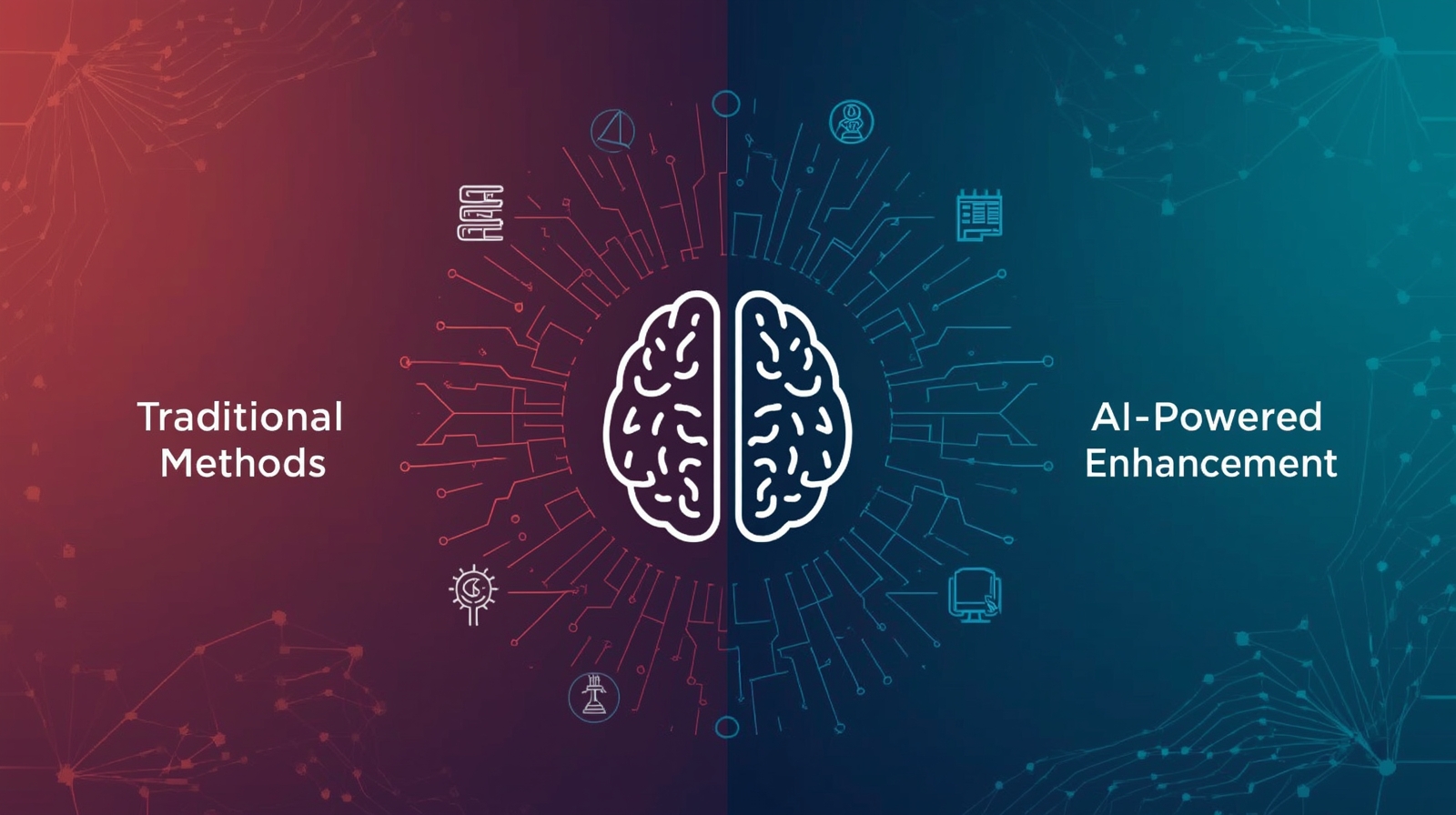
The fundamental difference isn’t just analog versus digital—it’s about the level of personalization, data collection, and adaptive response each method offers. Traditional methods provide consistent challenges with human-guided adjustments, while AI systems promise hyper-personalized experiences that evolve with every interaction.
The AI-Based Cognitive Training Approach: Promises and Realities
How AI Cognitive Training Actually Works
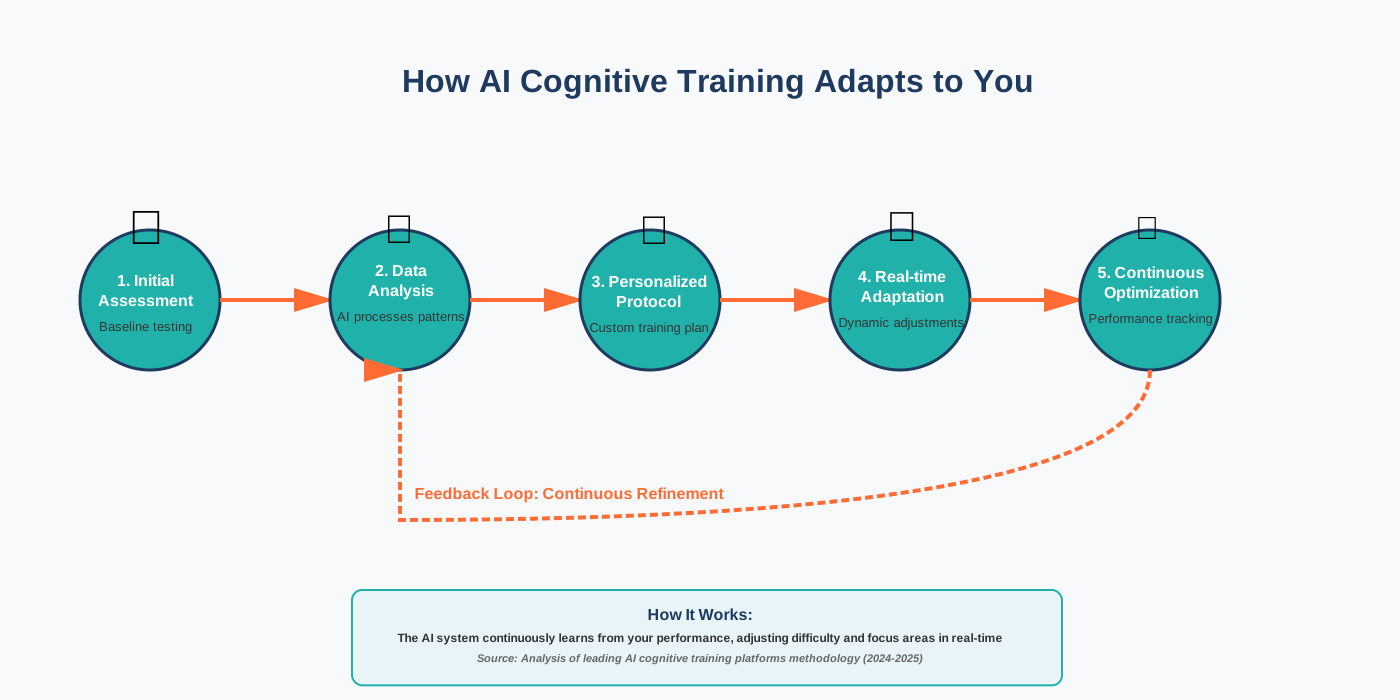
Modern AI cognitive training platforms operate through sophisticated machine learning algorithms that do far more than simply present brain games. When you interact with these systems, they’re simultaneously testing you, learning from you, and adjusting to you.
The typical process begins with baseline assessments that measure multiple cognitive domains: processing speed, working memory, attention span, executive function, and more. These aren’t simple tests—they’re carefully designed tasks that generate quantifiable data points about how your brain processes information. The AI analyzes patterns in your responses, including not just accuracy but also reaction times, consistency, fatigue indicators, and learning curves.
Based on this analysis, the AI creates a personalized training protocol. Unlike a static workbook or game, these protocols shift constantly. If you’re struggling with visual-spatial tasks but excelling at verbal memory, the system will automatically adjust the balance of exercises, difficulty levels, and training duration. Some platforms use reinforcement learning, essentially training their algorithms to find the most effective approach for improving your specific cognitive profile.
Advantages of AI-Based Approaches
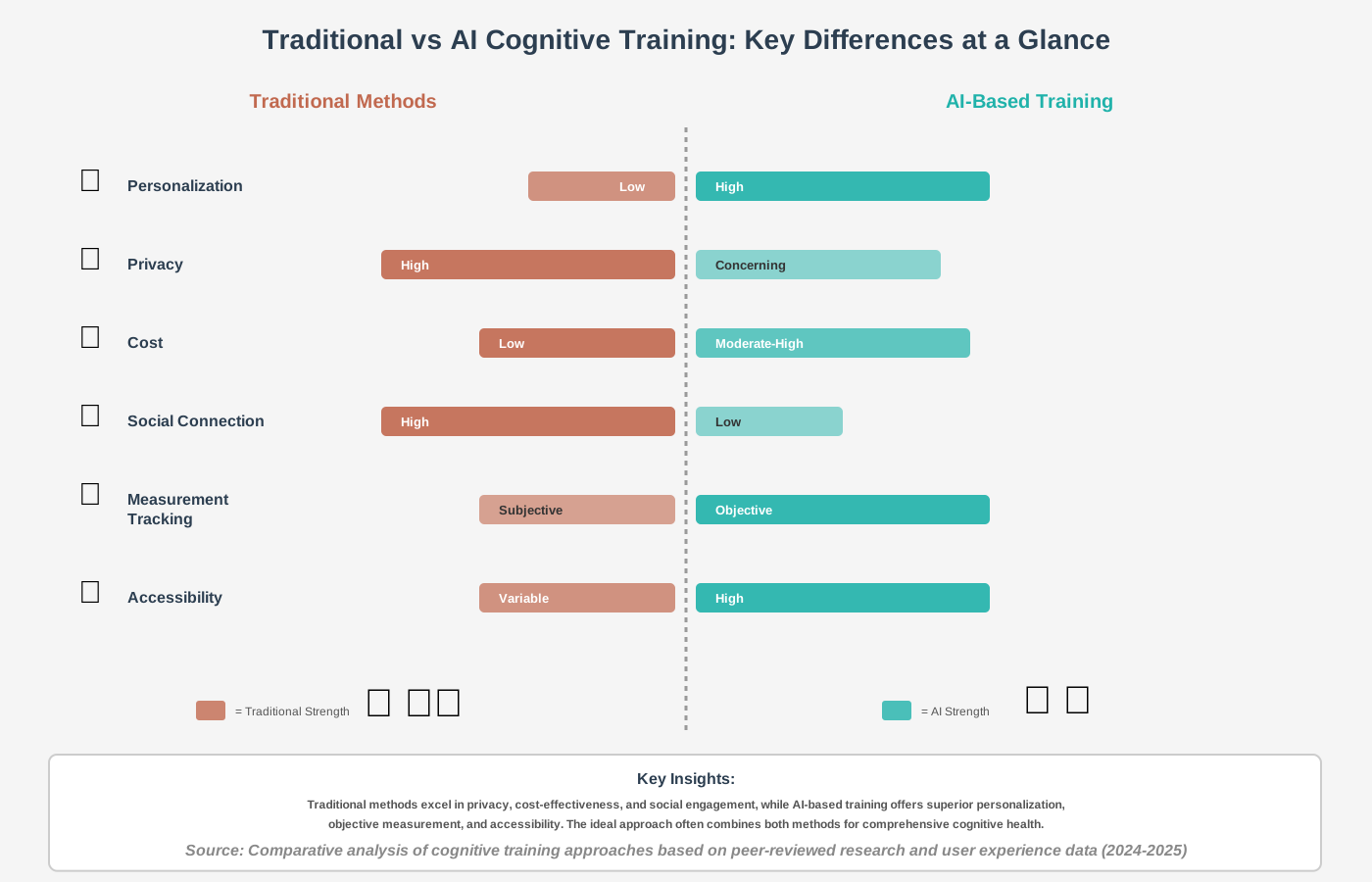
The strengths of AI-powered brain training are substantial and worth serious consideration. Personalization stands at the forefront—these systems can deliver training experiences tailored to your exact cognitive profile in ways that traditional methods simply cannot match. A crossword puzzle is the same for everyone; an AI training session is unique to you.
Objective measurement and tracking provide another significant advantage. AI systems generate detailed metrics about your cognitive performance over time, identifying subtle improvements or declines that you might not notice subjectively. You receive concrete data: your processing speed improved by twelve percent over three months, your working memory capacity expanded, or your attention span became more consistent. This quantification helps you understand whether the training is actually working.
Convenience and accessibility transform who can access cognitive training. You don’t need to travel to a therapist’s office, schedule appointments weeks in advance, or coordinate with another person’s availability. The training is available whenever you have fifteen minutes and a smartphone. For people with mobility limitations, social anxiety, or demanding schedules, this accessibility is genuinely life-changing.
The adaptive difficulty ensures you’re always working at the edge of your capability—neither bored by exercises that are too easy nor frustrated by impossible challenges. This “sweet spot” is where learning happens most effectively, and AI excels at finding and maintaining it.
Engagement through gamification and immediate feedback keeps many users motivated. Points, levels, streaks, and visual progress indicators tap into psychological principles that make training feel less like work and more like play. The immediate feedback loop—knowing instantly whether you answered correctly—reinforces learning more effectively than delayed feedback.
Disadvantages and Concerns with AI Cognitive Training
However, my expertise in AI ethics compels me to address the significant concerns that many people overlook when dazzled by technological promises. Privacy and data security sit at the top of my worry list. When you use AI cognitive training platforms, you’re not just playing games—you’re generating intimate data about how your brain works. This includes your cognitive weaknesses, performance patterns, potentially health-related information, and behavioral data that could be used to profile you.
Most users never read the privacy policies of these platforms, which often grant companies broad rights to use, analyze, and even share your cognitive data. Some platforms sell anonymized data to researchers or third parties. Others use it to train their algorithms, meaning your brain patterns become part of their intellectual property. While companies promise security, data breaches happen regularly, and cognitive data could be particularly valuable to malicious actors or discriminatory entities like employers or insurers.
The lack of standardization and regulation in this industry is alarming. Unlike pharmaceuticals or medical devices, brain training apps face minimal oversight. Anyone can create an AI cognitive training app, make bold claims about its effectiveness, and sell it to consumers without rigorous proof. The scientific evidence supporting many platforms remains limited, preliminary, or funded by the companies themselves.
Over-reliance on technology presents another concern. When you outsource your cognitive development entirely to an AI system, you may miss developing metacognitive skills—the ability to understand and regulate your own thinking. Traditional methods often require you to reflect on strategies, recognize your own patterns, and consciously adjust your approach. This self-awareness is itself a valuable cognitive skill that passive AI training may not cultivate.
Cost represents a practical barrier. Quality AI cognitive training platforms typically require subscriptions ranging from ten to thirty dollars monthly, or hundreds annually. Over years of use, this accumulates significantly, whereas a book of crosswords costs a few dollars and lasts indefinitely.
Technical issues and accessibility barriers affect some users. Not everyone has reliable internet, modern devices, or comfort with technology. Older adults—a primary audience for cognitive training—may struggle with interfaces designed for digital natives. The learning curve for the technology itself can be frustrating and counterproductive.
Perhaps most concerning is the potential for cognitive profiling and manipulation. AI systems that know exactly how your brain responds to different stimuli could, in theory, be used to manipulate your behavior, target advertising with unprecedented precision, or make decisions about your capabilities based on proprietary algorithms you cannot examine or challenge.
Traditional Cognitive Training Methods: Time-Tested Approaches
The Scope of Traditional Methods
Traditional cognitive training encompasses a surprisingly rich array of approaches, many refined over decades or centuries of human experience. These methods don’t just exercise your brain—they often provide additional social, creative, or physical benefits that AI platforms cannot replicate.
Paper-based puzzles and games remain foundational. Crossword puzzles build vocabulary and verbal reasoning while providing a satisfying, tangible completion experience. Sudoku develops logical thinking and pattern recognition. Word searches enhance visual scanning and attention to detail. These require no batteries, survive indefinitely, and can be done anywhere.
Board games and card games add crucial social dimensions. Chess develops strategic thinking and planning ahead. Scrabble combines vocabulary, spatial reasoning, and competitive motivation. Bridge exercises memory and probability calculation while fostering social connections. The face-to-face interaction inherent in these games provides cognitive stimulation through social engagement itself—reading facial expressions, managing turn-taking, and engaging in friendly competition.
Physical skill learning represents a powerful traditional approach. Learning to play a musical instrument engages multiple brain regions simultaneously: motor control, auditory processing, reading notation, emotional expression, and temporal sequencing. Studies consistently show that musicians have enhanced cognitive abilities across multiple domains. Similarly, learning new languages activates extensive neural networks and may delay cognitive decline.
Professional therapy approaches—occupational therapy, speech therapy, and cognitive rehabilitation—provide structured, evidence-based interventions delivered by trained humans who can observe, encourage, and adapt in ways algorithms cannot. These practitioners address not just cognitive symptoms but also the emotional, motivational, and contextual factors that influence cognitive health.
Physical exercise deserves mention because the evidence linking physical activity to cognitive health is overwhelming. Aerobic exercise increases blood flow to the brain, promotes neuroplasticity, reduces inflammation, and even stimulates the growth of new neurons. Walking, dancing, swimming, or any sustained physical activity is arguably one of the most effective cognitive interventions available.
Advantages of Traditional Methods
The benefits of traditional cognitive training methods extend beyond simple brain exercise. Human connection and social engagement emerge as primary strengths. When you play bridge with friends, join a book club, or work with a therapist, you’re not isolated with a screen—you’re building relationships, communicating, reading social cues, and experiencing the cognitive benefits of social connection. Research increasingly shows that social isolation accelerates cognitive decline, making the social aspects of traditional methods valuable beyond their direct cognitive effects.
Privacy and autonomy are inherent advantages. When you solve a crossword puzzle, no company is tracking your performance, building a profile of your cognitive patterns, or storing data about your weaknesses. Your cognitive development remains your own business. For people concerned about digital privacy—and everyone should be—this is liberating.
The evidence base supporting many traditional methods is more robust than for AI platforms. Decades of research document the cognitive benefits of activities like learning musical instruments, speaking multiple languages, or engaging in strategic games. While individual studies might show mixed results, the overall pattern strongly supports these activities’ value.
Cost-effectiveness is undeniable. A pack of playing cards costs a few dollars and provides endless cognitive stimulation through hundreds of possible games. A library card is free and grants access to countless books, magazines, and educational resources. Community centers often offer free or low-cost classes in painting, languages, or other cognitive-stimulating activities. The financial accessibility of traditional methods means they’re available to everyone regardless of economic status.
Holistic benefits distinguish many traditional approaches. Learning to paint exercises visual-spatial skills while providing creative expression and stress relief. Gardening combines planning, problem-solving, and physical activity with time in nature. Cooking involves sequential processing, measurement, timing, and sensory engagement. These activities enhance your life in multiple ways simultaneously rather than isolating cognitive training as a separate task.
Skill transferability matters more than many realize. The strategic thinking you develop playing chess applies to real-life planning and decision-making. The patience and problem-solving you cultivate completing puzzles transfers to tackling complex life challenges. Traditional methods often teach generalizable skills rather than narrow, task-specific improvements.
Disadvantages and Limitations of Traditional Methods
However, honest assessment requires acknowledging limitations. Lack of personalization is significant—a crossword puzzle designed for average difficulty may be too easy for some and frustratingly challenging for others. Traditional methods rarely adapt to your specific cognitive profile or current capability level.
Progress tracking is subjective and imprecise. You might feel like you’re getting better at Sudoku, but you lack objective data about whether your processing speed, accuracy, or problem-solving efficiency is actually improving. This ambiguity makes it harder to know if your training efforts are effective or if you should adjust your approach.
Consistency and motivation pose challenges for many people. Without the gamification, reminders, and engagement tactics of AI platforms, maintaining a regular traditional training routine requires substantial self-discipline. It’s easy to let your chess practice or language learning slide when life gets busy, and there’s no algorithm nudging you back.
Accessibility barriers exist for certain traditional methods. Professional therapy requires scheduling, transportation, and often significant expense. Some activities, like learning instruments, require equipment and instruction. Not everyone has access to social groups or community resources where they live.
The lack of immediate feedback can slow learning. When you make a strategic error in chess, you might not realize it until many moves later, if at all. This delayed or absent feedback is less effective for learning than the immediate correction AI systems provide.
Limited scope for certain needs presents another constraint. Traditional methods may not adequately address specific cognitive deficits following brain injury or in neurodegenerative conditions. Someone recovering from a stroke might need precisely calibrated exercises targeting specific neural pathways—something a crossword puzzle cannot provide.
Real-World Applications: When to Choose Each Approach
Best Use Cases for AI-Based Cognitive Training
AI cognitive training platforms shine in specific scenarios where their unique capabilities provide clear advantages. Post-injury cognitive rehabilitation represents a strong use case, particularly during the intensive early recovery phase. After traumatic brain injury or stroke, patients often need thousands of repetitions of precisely calibrated exercises targeting specific cognitive functions. AI systems can deliver this high-volume, adaptive training more consistently and affordably than human-only therapy, though ideally as a supplement to rather than replacement for professional rehabilitation.
Individuals with busy, irregular schedules benefit tremendously from AI platforms’ flexibility. If you’re a shift worker, frequent traveler, or parent with unpredictable availability, being able to do cognitive training at two in the morning or during a lunch break—whenever you have spare minutes—is genuinely valuable. The consistency that comes from this convenience may outweigh other considerations.
People highly motivated by data and quantification often prefer AI approaches. If you’re someone who tracks fitness metrics, logs food intake, or otherwise engages with self-quantification, seeing objective cognitive performance data can be deeply satisfying and motivating. The graphs, statistics, and progress reports provide tangible evidence of improvement that fuels continued engagement.
Early-stage cognitive decline monitoring may be enhanced by AI systems’ ability to detect subtle changes before they’re subjectively noticeable. If you have a family history of dementia or are concerned about age-related cognitive changes, regular AI assessments might identify early warning signs sooner than you’d notice through daily life activities alone. However, this should never replace professional medical evaluation.
Specific skill development—like improving processing speed for gaming or enhancing working memory for professional tasks—sometimes benefits from AI’s targeted, intensive training protocols. If you have a well-defined cognitive goal and want focused intervention, AI platforms can deliver that specificity.
Best Use Cases for Traditional Methods
Traditional cognitive training methods excel in contexts where their unique strengths align with user needs and values. Maintaining long-term cognitive health through the lifespan is perhaps the ideal application. The sustainability of traditional methods—both financially and motivationally—makes them superior for the decades-long commitment cognitive health requires. You can play bridge, solve puzzles, and learn new skills throughout your life without ongoing expenses or concerns about platforms shutting down.
Social connection seekers should strongly favor traditional approaches. If you’re experiencing loneliness, seeking community, or recognizing the importance of social engagement for both cognitive and emotional health, choosing activities like group classes, game clubs, or collaborative learning provides dual benefits. The cognitive stimulation comes packaged with human connection.
Privacy-conscious individuals or those with justified concerns about data collection find traditional methods more aligned with their values. If you’re uncomfortable with companies possessing detailed data about your cognitive functioning, or if you work in sensitive fields where cognitive data could be exploited, traditional methods let you train your brain while maintaining complete privacy.
Budget-limited situations demand traditional approaches. If spending ten to thirty dollars monthly on cognitive training simply isn’t feasible, or if you prefer spending money on other priorities, traditional methods deliver cognitive benefits without ongoing expense. This is particularly important for older adults on fixed incomes—precisely the demographic who could most benefit from cognitive training.
Holistic wellness and lifestyle integration favor traditional methods. If you value activities that enrich your life in multiple ways simultaneously—providing not just cognitive benefits but also creativity, physical health, social connection, or personal meaning—traditional approaches naturally deliver this multifaceted enhancement.
The Hybrid Approach: Combining Both Methods
Increasingly, the most sophisticated approach is recognizing that these aren’t mutually exclusive choices. A hybrid model that thoughtfully combines AI and traditional methods may offer the best of both worlds while mitigating weaknesses.
For example, you might use an AI platform for targeted working memory training three times weekly—taking advantage of its personalization and measurement capabilities—while also maintaining a weekly bridge game with friends, a daily crossword habit, and ongoing guitar practice. The AI provides intensive, focused cognitive exercise; the traditional activities provide sustainability, social connection, and holistic benefits.
This combination approach also provides natural cross-validation. If your AI training shows improvement but you’re not noticing enhanced cognitive performance in real-life activities like your bridge games or language learning, that discrepancy suggests the AI training may be producing narrow, non-transferable improvements. Conversely, if you feel sharper in daily life and your AI metrics confirm this, you have confidence the benefits are genuine.
The hybrid approach also manages risk. By not relying entirely on AI platforms, you maintain traditional skills and activities that can continue regardless of technological changes, company business decisions, or personal circumstances affecting your access to technology.
Safety Considerations and Best Practices
Protecting Yourself with AI Platforms
If you choose to use AI cognitive training, implementing strong safety practices is essential. Start by thoroughly researching platforms before committing. Look for transparency about their algorithms, evidence base, and data practices. Favor platforms affiliated with reputable institutions, supported by peer-reviewed research, and clear about their limitations.
Read privacy policies carefully—yes, the whole boring document. Specifically, look for what data is collected beyond just your answers, how long data is retained, whether data is sold or shared with third parties, what happens to your data if you delete your account, and whether you can request a complete copy of your data. Choose platforms with strong privacy commitments and preferably those that allow you to opt out of data sharing for research or commercial purposes.
Use dedicated devices or accounts if possible. Consider creating a separate email address for cognitive training apps, using privacy-focused browsers, and avoiding linking these accounts to your main social media or email accounts. This compartmentalization limits how much of your broader personal data gets associated with your cognitive profile.
Be skeptical of extreme claims. If a platform promises to prevent Alzheimer’s, dramatically increase your IQ, or cure cognitive deficits, view it with suspicion. Legitimate platforms make modest, evidence-backed claims about their benefits. Overpromising usually indicates either naivety or dishonesty.
Monitor for negative effects. Some people experience increased anxiety, obsessive behavior, or reduced life satisfaction from cognitive training apps, particularly when gamification triggers compulsive usage patterns. If you notice you’re feeling worse despite “improving” metrics, step back and reassess whether this tool serves your well-being.
Complement AI training with professional guidance when possible. If you’re using cognitive training for medical reasons—recovery from injury, managing ADHD, addressing age-related decline—work with qualified healthcare providers who can interpret your AI training data in context and provide comprehensive care.
Maximizing Benefits with Traditional Methods
Traditional cognitive training also benefits from intentional best practices. Maintain consistency through scheduling and habit formation. Cognitive benefits accumulate through regular practice, not sporadic intense sessions. Even fifteen minutes daily is more effective than two-hour sessions once weekly. Build cognitive activities into your routine: morning crossword with coffee, weekly game night, and language practice during your commute.
Ensure adequate challenge without overwhelming frustration. Traditional methods won’t adapt automatically, so you must consciously seek appropriate difficulty. If puzzles become too easy, find harder ones. If a language course isn’t challenging anymore, move to more advanced material. Stay in that productive discomfort zone where you’re learning without constant frustration.
Prioritize variety across cognitive domains. Different activities exercise different cognitive functions—memory, processing speed, executive function, spatial reasoning, and language skills. A balanced cognitive training routine includes diversity. Don’t just do crosswords; also play strategy games, learn skills, and engage in activities requiring different thinking modes.
Build social elements into your traditional training whenever possible. Join clubs, classes, or groups centered around cognitive activities. The social interaction enhances both enjoyment and cognitive benefit while combating isolation.
Track your progress subjectively. Since traditional methods don’t provide objective metrics, maintain a simple log or journal noting what you did, how it felt, and whether you notice changes in daily cognitive function. This self-monitoring helps maintain motivation and identifies what works for you.
Common Questions About Cognitive Training Approaches
Making Your Decision: A Framework for Choosing
Selecting between AI-based cognitive training and traditional methods isn’t about finding the objectively “best” option—it’s about finding what works best for your specific situation, values, and goals. Here’s a practical framework to guide your decision.
Start by clarifying your primary goals. Are you seeking to maintain cognitive health throughout aging? Recover from neurological injury? Enhance performance for specific professional demands? Enjoy mentally stimulating hobbies? Your goal shapes which approach makes the most sense. General health maintenance and enjoyment favor traditional methods; specific remediation or performance enhancement might favor AI.
Assess your privacy comfort level honestly. On a scale from “I don’t care who has my data” to “I’m deeply uncomfortable with digital tracking,” where do you fall? There’s no wrong answer, but the question matters. If data privacy is a high priority for you, that immediately narrows your options or at least requires very careful platform selection.
Consider your budget realistically, not just for one month but for the years ahead. Cognitive training is a long-term commitment. Can you sustain monthly subscription costs indefinitely? Would that money be better spent on other aspects of cognitive health, like a gym membership, therapy, or hobby equipment?
Evaluate your social needs and circumstances. Are you isolated and seeking connection? Do you already have rich social networks? Would traditional methods’ social components be valuable to you, or do you prefer the privacy of solo AI training?
Think about your relationship with technology and data. Do you enjoy tracking metrics and seeing progress visualized? Does gamification motivate you or feel manipulative? Do you naturally engage with digital tools, or do they frustrate you?
Consider combining approaches. Perhaps AI training for specific targeted practice plus traditional activities for sustainability, social connection, and holistic benefits gives you the best of both worlds.
Most importantly, commit to whatever approach you choose. The cognitive benefits come from sustained engagement over time. The perfect approach you don’t maintain is far inferior to a good-enough approach you practice consistently for years.
The Verdict: What the Evidence Actually Tells Us
After years examining research, evaluating platforms, and considering both the promises and the pitfalls, here’s what I believe the evidence genuinely supports about AI-based cognitive training versus traditional methods.
Both approaches can improve cognitive performance on trained tasks—this is well-established. Whether you practice with an AI app or traditional puzzles, you’ll get better at the activities you practice. The contentious question is whether these improvements transfer to untrained tasks and real-world cognitive function. Here the evidence is mixed and more modest than either AI companies or traditional training advocates often claim.
AI platforms demonstrate clear advantages in personalization, measurement, convenience, and adaptive difficulty. These aren’t trivial—for specific use cases and certain individuals, they’re genuinely valuable. However, the concerns about privacy, cost, evidence quality, and potential over-reliance are legitimate and shouldn’t be dismissed as technophobia.
Traditional methods offer proven long-term sustainability, holistic benefits, social connection, complete privacy, and financial accessibility. Their lack of personalization and objective measurement is a real limitation, but for many people these drawbacks are outweighed by the methods’ other strengths.
The honest answer is that we don’t have definitive evidence proving either approach is categorically superior. What we do know is that cognitively engaging activities throughout life, regular physical exercise, strong social connections, quality sleep, stress management, and cardiovascular health collectively contribute to cognitive resilience and may delay cognitive decline. How you achieve cognitive engagement—whether through AI apps, traditional games, learning new skills, or any combination—matters less than that you do achieve it consistently.
My recommendation as someone committed to both technological empowerment and ethical responsibility: Start with traditional methods as your foundation. They’re sustainable, affordable, proven, and risk-free. Incorporate physical exercise and social connection—these may be more important than any specific cognitive training. If you want to supplement with AI platforms, choose carefully, protect your privacy, stay skeptical of claims, and view them as one tool among many rather than a complete solution.
If you’re recovering from injury, have specific deficits to address, or have access to high-quality AI platforms with strong privacy practices and good evidence bases, they may provide valuable targeted intervention alongside traditional approaches and professional care. But never let AI cognitive training replace the fundamentals: move your body, connect with people, challenge your mind in diverse ways, and maintain the lifestyle factors that support brain health.
The goal isn’t to find the perfect cognitive training approach—it’s to build a sustainable, enjoyable, brain-healthy lifestyle you can maintain for decades. Sometimes the less technologically sophisticated option is actually the wiser choice.
References:
– Ball, K., et al. (2002). Effects of cognitive training interventions with older adults: A randomized controlled trial. Journal of the American Medical Association, 288(18), 2271-2281.
– Simons, D. J., et al. (2016). Do “brain-training” programs work? Psychological Science in the Public Interest, 17(3), 103-186.
– Lampit, A., et al. (2014). Computerized cognitive training in cognitively healthy older adults: A systematic review and meta-analysis. PLoS Medicine, 11(11), e1001756.
– Rebok, G. W., et al. (2014). Ten-year effects of the ACTIVE cognitive training trial on cognition and everyday functioning in older adults. Journal of the American Geriatrics Society, 62(1), 16-24.
– Ngandu, T., et al. (2015). A 2-year multidomain intervention of diet, exercise, cognitive training, and vascular risk monitoring versus control to prevent cognitive decline in at-risk elderly people (FINGER): A randomized controlled trial. The Lancet, 385(9984), 2255-2263.
About the Author
Nadia Chen is a recognized expert in AI ethics and digital safety, dedicated to helping people use artificial intelligence responsibly and effectively. With a background spanning technology policy, data privacy advocacy, and consumer education, Nadia specializes in making complex AI systems understandable and accessible to non-technical users while emphasizing safety, privacy protection, and informed decision-making.
Through her work with howAIdo.com, Nadia provides clear, evidence-based guidance on navigating the rapidly evolving AI landscape. Her approach combines technical understanding with genuine concern for users’ well-being, privacy rights, and long-term interests. Whether writing about cognitive training platforms, AI-powered productivity tools, or emerging technologies, Nadia’s goal remains constant: empowering people to make informed choices about when, how, and whether to integrate AI into their lives.
When she’s not researching AI systems or writing educational content, Nadia practices what she preaches about brain health—maintaining a balance of traditional cognitive activities, including chess, language learning, and playing violin, alongside careful, privacy-conscious use of selected AI tools. She believes strongly that technology should serve human flourishing, not the other way around.