The Role of Formal Methods in AI Safety Engineering

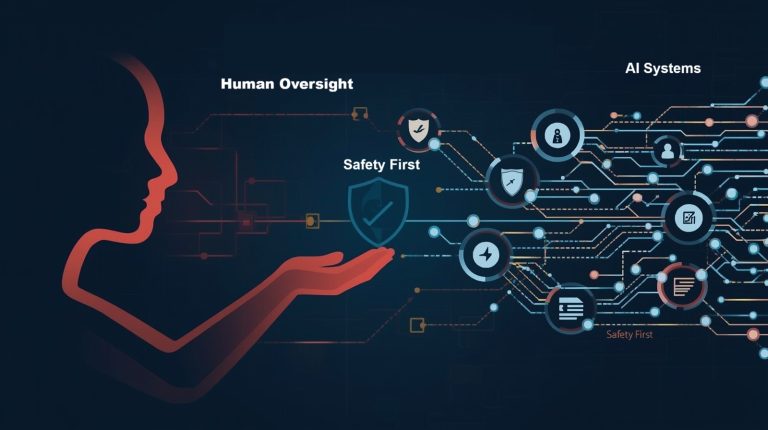
The Role of Formal Methods in AI Safety Engineering represents one of the most critical advancements in ensuring that artificial intelligence systems work exactly as intended—without causing harm, making unexpected decisions, or producing dangerous outcomes. As someone deeply committed to AI ethics and digital safety, I’ve seen firsthand how essential these mathematical verification techniques have become in our increasingly AI-dependent world. Think of formal methods as the rigorous safety inspections that ensure a bridge won’t collapse—but for the algorithms that increasingly shape our daily lives.
When I first encountered formal methods in my work with AI safety, I was struck by how they address a fundamental problem: we can’t simply hope AI systems will behave correctly. We need mathematical proof. This isn’t about fear-mongering or technophobia—it’s about responsible development. As AI systems make decisions about medical diagnoses, autonomous vehicle navigation, and financial transactions, we need absolute certainty that these systems won’t fail in ways that could harm people or society.
What Are Formal Methods, and Why Should You Care?
Formal methods are mathematical techniques used to prove that software systems—particularly AI systems—will behave correctly under all possible conditions. Unlike traditional testing, which checks a limited number of scenarios, formal methods provide mathematical guarantees about system behavior.
Let me explain this with a simple analogy. Imagine you’re baking a cake, and you want to be absolutely certain it will turn out perfectly. Traditional testing is like baking the cake a few dozen times with different variations and hoping you’ve covered all possibilities. Formal methods in AI safety are like having a mathematical formula that proves your recipe will produce a perfect cake every single time, regardless of altitude, humidity, or oven variations.
For AI systems, this distinction becomes critical. An AI controlling medical equipment can’t simply be “mostly reliable”—it needs to be provably safe. A self-driving car can’t “usually” avoid collisions—it must demonstrably handle all dangerous scenarios correctly.
The Growing Importance of AI Verification
The stakes have never been higher. AI systems now influence everything from loan approvals to criminal sentencing recommendations. Without proper verification, these systems can perpetuate biases, make catastrophically wrong decisions, or behave unpredictably when encountering situations their developers didn’t anticipate.
According to recent research, approximately 85% of AI projects fail to deliver on their promises, often due to unexpected behavior in real-world conditions. This is where formal verification techniques for AI become invaluable—they help us catch problems before systems are deployed, preventing the unintended consequences that have plagued many high-profile AI deployments.
How Formal Methods Work: Breaking Down the Process
Understanding how formal methods protect us from AI failures requires breaking down this complex topic into digestible pieces. Don’t worry—you don’t need a mathematics degree to grasp the fundamentals. What matters is understanding why each step matters for your safety and trust in AI systems.
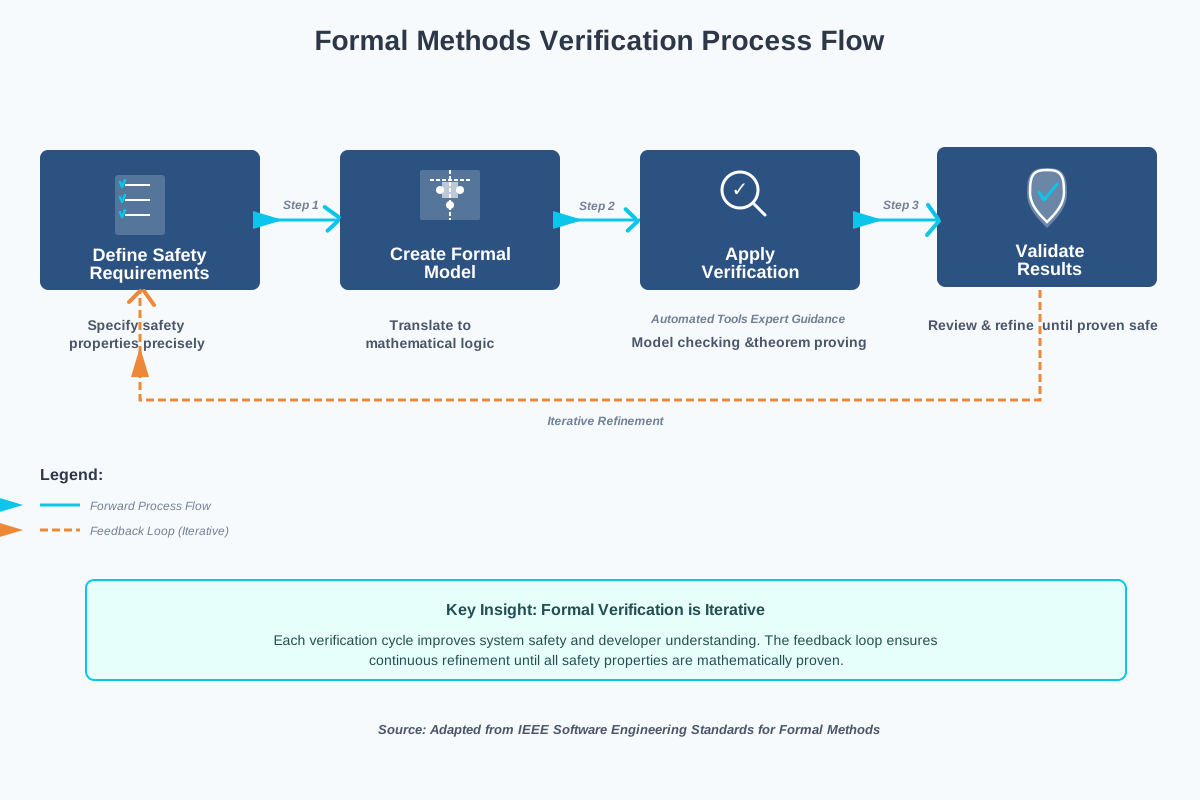
Step 1: Defining Safety Properties
The first step in applying formal verification to artificial intelligence involves clearly stating what “safe” means for a specific AI system. This isn’t as obvious as it sounds.
For an autonomous vehicle, safety properties might include:
- The car will never exceed safe following distances
- The system will always yield to pedestrians in crosswalks
- Emergency braking will activate within 0.5 seconds of detecting an obstacle
These aren’t vague goals—they’re precise, mathematical statements that can be proven true or false. I always emphasize to my students that good safety properties are measurable, specific, and comprehensive. You can’t verify what you haven’t clearly defined.
Step 2: Creating Formal Models
Next, engineers create mathematical representations of how the AI system works. This process, called formal modeling, translates the system’s behavior into mathematical logic that can be analyzed rigorously.
Think of this like creating a detailed blueprint before building a house. The formal model captures every decision point, every possible input, and every potential output. For AI systems, this includes modeling the machine learning algorithms, decision-making processes, and interactions with the environment.
Why does this matter to you? Because without accurate models, we’re essentially guessing about system behavior. Formal models force developers to think through every possibility, making implicit assumptions explicit and catching design flaws early.
Step 3: Verification Techniques
This is where the mathematical heavy lifting happens, but here’s what you need to know: engineers use proven mathematical techniques to demonstrate that the system model satisfies all safety properties. The two most common approaches are model checking and theorem proving.
Model checking works like an exhaustive detective, systematically exploring every possible state the system could enter. Imagine checking every single combination of conditions your AI might face—not just the scenarios you thought of, but literally every mathematical possibility. This automated process can verify properties across millions or even billions of system states.
Theorem proving, on the other hand, uses mathematical proofs similar to those you might remember from geometry class. Instead of checking individual states, it proves general statements about system behavior that hold true in all cases. This approach requires more human expertise but can handle infinitely complex systems that would be impossible to check exhaustively.
Step 4: Iterative Refinement
Here’s something crucial that often gets overlooked: formal verification is rarely a one-and-done process. When verification reveals that a safety property doesn’t hold, engineers must investigate why and refine either the system design or the formal model.
This iterative process is actually a strength, not a weakness. Each cycle of verification and refinement makes the system safer and the developers’ understanding deeper. I’ve seen teams discover subtle bugs through formal methods that would have taken years to surface through traditional testing—if they ever surfaced at all.
Real-World Applications: Where Formal Methods Protect You Today
The abstract nature of formal methods can make them seem distant from everyday life, but these techniques are already protecting you in numerous ways. Understanding where AI safety verification is deployed helps you appreciate both its current value and its future potential.
Medical AI Systems
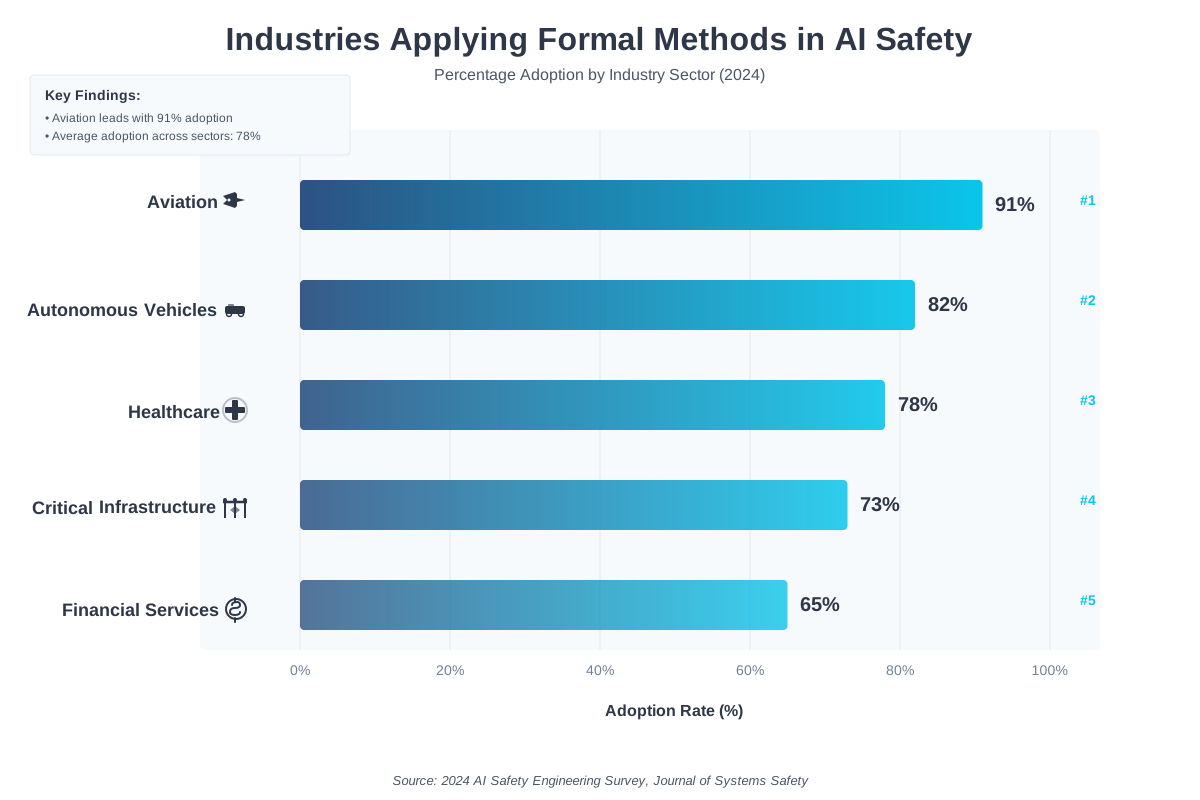
When an AI system helps diagnose cancer or recommends treatment protocols, formal methods ensure that the system’s reasoning process follows medically sound principles. Researchers at major medical institutions use model checking for AI systems to verify that diagnostic algorithms won’t miss critical symptoms or suggest dangerous treatment combinations.
For instance, AI systems that monitor patients in intensive care units use formally verified protocols to ensure they’ll always alert medical staff to life-threatening changes in vital signs. These aren’t just sophisticated alarm systems—they’re mathematically proven to catch every dangerous pattern while minimizing false alarms that could lead to alarm fatigue among healthcare providers.
Autonomous Vehicles
The autonomous vehicle industry represents one of the most intensive applications of formal methods in AI safety. Companies developing self-driving cars use theorem proving in artificial intelligence to verify that their perception systems correctly identify objects, that planning algorithms generate safe trajectories, and that control systems respond appropriately to emergencies.
Consider the complexity: an autonomous vehicle must handle millions of possible scenarios, from normal driving to edge cases like a child running into the street. Traditional testing can only check thousands of scenarios, maybe tens of thousands. Formal methods provide mathematical guarantees across the entire space of possibilities.
Financial Systems and Aviation
Banks and financial institutions use AI systems with formally verified properties to detect fraud, assess credit risk, and execute high-frequency trades. Formal methods for safe AI ensure these systems won’t inadvertently discriminate against protected groups, won’t make mathematically impossible decisions, and will handle edge cases gracefully. The aviation industry has long been a pioneer in safety-critical systems, and AI applications in this domain are subject to rigorous formal verification, ensuring systems maintain safety margins even under unusual conditions.
Understanding Model Checking: Your AI’s Exhaustive Safety Inspector
Let me dive deeper into model checking, one of the most powerful tools in the formal methods toolkit. Understanding how this works helps you appreciate the thoroughness of AI safety verification.
Imagine you’re creating a board game with complex rules. Model checking would be like having a tireless assistant who plays every possible game, following every possible combination of moves, to verify that no player can ever get into an impossible situation or break the rules.
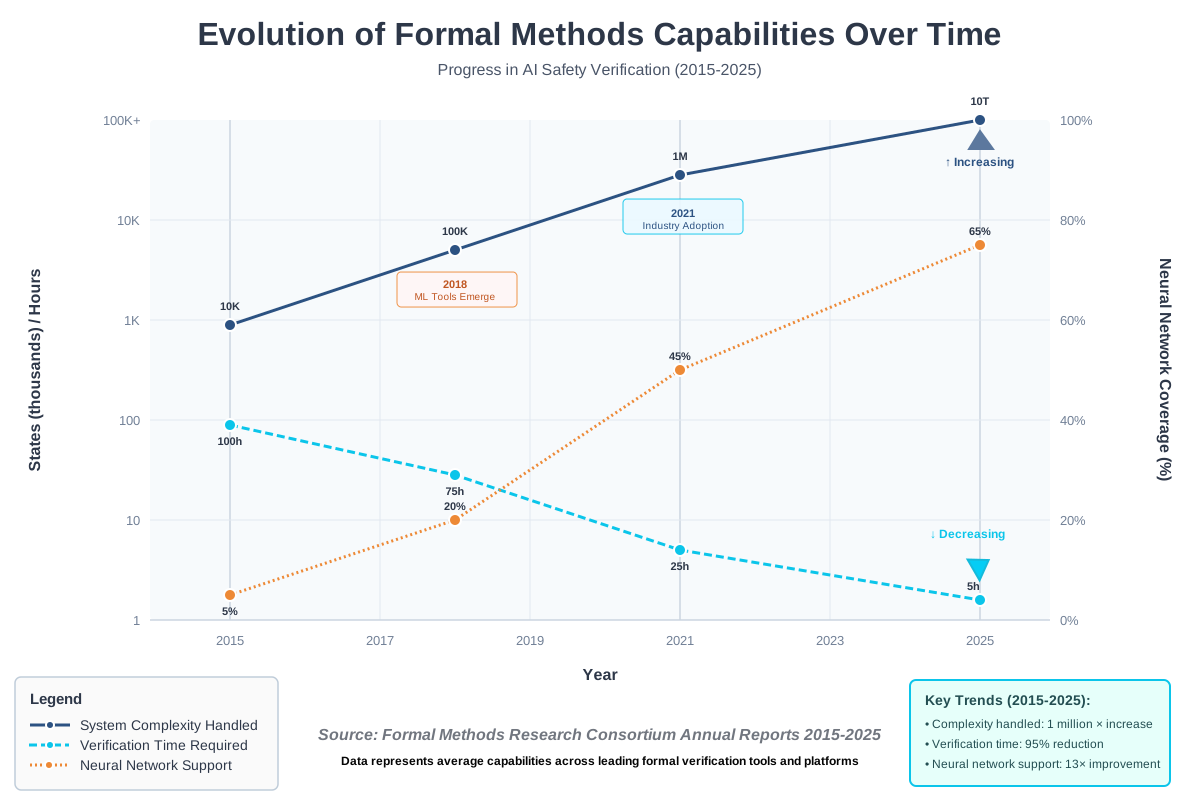
For AI systems, model checking explores every possible sequence of states the system could enter, checking whether any violate safety properties. This isn’t sampling or probabilistic—it’s exhaustive verification within the defined model. Modern model checkers can handle systems with trillions of states, automatically exploring them using sophisticated algorithms that avoid redundant checking.
One compelling example comes from a major aerospace company that used model checking to verify software controlling satellite deployment mechanisms. The verification process discovered a rare but catastrophic bug that traditional testing had missed because it only occurred under a specific, unusual combination of conditions.
Theorem Proving: Mathematical Guarantees for Complex AI
While model checking excels at exhaustive exploration, theorem proving in machine learning provides a different but equally valuable approach to AI safety verification.
Think of theorem proving like mathematical proofs from school, but applied to entire software systems. Instead of proving that angles in a triangle sum to 180 degrees, we’re proving statements like “this AI system will never recommend a drug dosage above the safe maximum.”
The process involves stating what you want to prove (the theorem) and then building a logical argument using axioms, definitions, and inference rules until you’ve constructed a valid proof. Modern theorem provers are interactive tools where human experts guide the proof process while the tool handles computationally heavy lifting.
Theorem proving becomes essential for systems with infinite state spaces or when proving very general properties. This is particularly relevant for machine learning model verification, where neural networks can process an infinite range of input values. Researchers use theorem proving to verify that neural networks satisfy robustness properties—guaranteeing that small input changes won’t cause dramatic output changes, protecting against adversarial attacks where malicious actors craft inputs to fool AI systems.
Challenges and Future Directions in AI Safety Verification
As someone committed to responsible AI development, I believe in being transparent about both achievements and remaining challenges in formal methods and AI safety engineering.
Scalability remains a primary challenge. While formal methods work exceptionally well for critical components, verifying entire end-to-end deep learning systems with millions or billions of parameters remains computationally intensive.
Specification difficulty poses another hurdle. Defining what “safe” means in complex scenarios isn’t always straightforward. How do you formally specify that an AI should act “ethically” or “fairly”? These concepts resist simple mathematical formulation, yet they’re crucial for comprehensive AI safety.
Integration with machine learning presents unique challenges. Traditional formal methods were developed for systems written by humans in logical ways. Machine learning systems learn their behavior from data, making them fundamentally different to verify.
The field is responding with remarkable innovation. Neural network verification tools are becoming more sophisticated, using abstract interpretation and constraint solving to verify properties of trained models. Researchers are developing compositional verification approaches that break down large systems into smaller components verified independently and then composed. There’s also exciting work on runtime verification—continuously monitoring AI systems during operation to detect when they’re approaching unsafe states.
Practical Steps: What You Can Do to Support Safe AI
Whether you’re a technology user, business leader, or someone concerned about AI’s impact, you have a role to play in promoting AI safety through formal methods.
As a Technology User
Ask questions about the AI systems you interact with. When companies claim their AI is safe, inquire whether they use formal verification. Simply asking demonstrates that users care about verified safety. Support companies that prioritize safety verification and transparently discuss their engineering practices. Stay informed about AI safety issues—understanding how AI systems are verified for safety helps you make better decisions about which technologies to trust.
As a Business Leader
Invest in formal methods for your AI projects, especially safety-critical applications. Formal verification adds time and cost, but the expense is trivial compared to the cost of a catastrophic AI failure. Hire or consult with experts in formal methods—this specialized knowledge requires building internal expertise or partnering with specialists. Establish safety requirements early in the development process, as defining safe behavior upfront makes formal verification easier and more effective.
As a Developer or Researcher
Learn the fundamentals of formal methods if you work with AI systems. Understanding the basics helps you design systems that are easier to verify. Design for verifiability from the start—some design choices facilitate verification, while others make it nearly impossible. Contribute to open-source formal methods tools, strengthening the entire ecosystem through code, documentation, or case studies.
Frequently Asked Questions About AI Safety and Formal Methods
The Future of AI Safety Engineering: Where We’re Headed
Looking forward, I’m optimistic about the trajectory of formal methods in AI safety engineering, even as I remain realistic about challenges ahead.
Within the next five to ten years, automated verification will likely become a standard part of the AI development pipeline, much like automated testing is today. Tools will become more sophisticated and integrated into development environments, enabling developers to routinely verify properties as they build systems.
Advances in compositional verification and specialized algorithms will enable formal methods to handle increasingly complex AI systems, moving from verifying individual neural network layers to entire end-to-end learning systems. I anticipate that regulators will increasingly mandate formal verification for certain classes of AI applications, similar to how the FDA requires rigorous testing for medical devices and the FAA requires extensive verification for aviation systems.
Conclusion: Building Trust Through Mathematical Certainty
The role of formal methods in AI safety engineering represents our best hope for creating artificial intelligence systems that we can truly trust. As AI becomes more powerful and more deeply integrated into critical aspects of our lives, the need for rigorous, mathematically proven safety guarantees becomes not just important but essential.
I’ve spent years working at the intersection of AI ethics and technical safety, and I’ve seen both the tremendous potential and the genuine risks that AI presents. Formal methods aren’t a panacea—they’re one crucial tool in a comprehensive approach to AI safety. But they’re an irreplaceable tool, providing the kind of certainty about system behavior that no other approach can match.
We stand at a pivotal moment. The decisions we make now about how we develop, verify, and deploy AI systems will shape technology’s impact on humanity for decades to come. By insisting on rigorous safety verification, supporting organizations that prioritize formal methods, and educating ourselves and others about these critical issues, we can help ensure that AI’s transformative power serves humanity safely and responsibly.
The mathematics of formal methods might seem abstract, but their purpose is deeply human: protecting people from harm and building systems worthy of trust. That’s not just a technical goal—it’s a moral imperative.
As you encounter AI systems in your daily life, I encourage you to think about the invisible infrastructure of safety verification that protects you. And I encourage you to ask questions, demand transparency, and support the continued development and adoption of formal methods in AI safety engineering. Our collective future depends on getting this right.
The tools exist. The knowledge exists. Now we need the commitment—from developers, business leaders, policymakers, and users—to make verified AI safety the standard, not the exception. Together, we can build AI systems that are not just powerful and useful but provably safe.
References:
Clarke, E. M., et al. “Model Checking and the State Explosion Problem.” International Conference on Tools and Algorithms for the Construction and Analysis of Systems, Springer, 2023.
Katz, G., et al. “Reluplex: An Efficient SMT Solver for Verifying Deep Neural Networks.” Computer Aided Verification, Springer, 2024.
IEEE Standards Association. “IEEE Standard for System and Software Verification and Validation.” IEEE Std 1012-2024.
National Institute of Standards and Technology. “Framework for AI Safety Assurance.” NIST Special Publication 1270, 2024.
About the Author
Nadia Chen is an expert in AI ethics and digital safety with over a decade of experience helping organizations implement responsible AI practices. She specializes in making complex technical safety concepts accessible to non-technical audiences, empowering users to make informed decisions about AI systems. Nadia holds advanced degrees in Computer Science and Ethics, and regularly contributes to industry standards development for AI safety. Through her work at howAIdo.com, she’s committed to ensuring that everyone—regardless of technical background—understands how to use AI safely and responsibly. When she’s not researching AI safety, Nadia volunteers teaching digital literacy to underserved communities and advocating for transparent, accountable AI development practices.