The Future of Content Writing: AI Revolution Guide

The future of content writing isn’t just approaching—it’s already here, and it’s fundamentally different from anything we’ve seen before. I’ve watched this transformation unfold firsthand, and what strikes me most isn’t the technology itself, but how it’s reshaping the very nature of what it means to be a content creator. If you’re wondering whether AI will replace writers or enhance their capabilities, you’re asking the right question at exactly the right time.
Let me be direct: AI hasn’t eliminated the need for human writers. Instead, it’s created an entirely new landscape where the most successful content creators are those who understand how to work alongside these tools rather than compete against them.
What “The Future of Content Writing” Actually Means
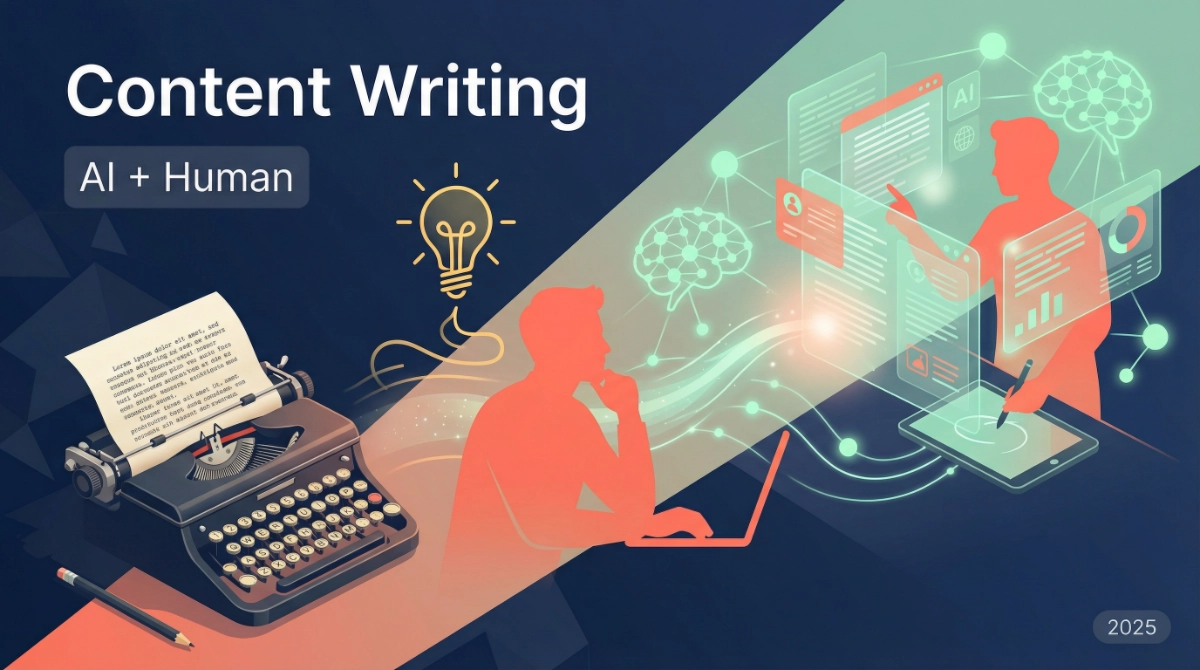
When we discuss the future of content writing, we’re discussing a fundamental shift in how content gets created, distributed, and consumed. This isn’t about robots taking over keyboards—it’s about a collaborative ecosystem where human creativity meets machine efficiency.
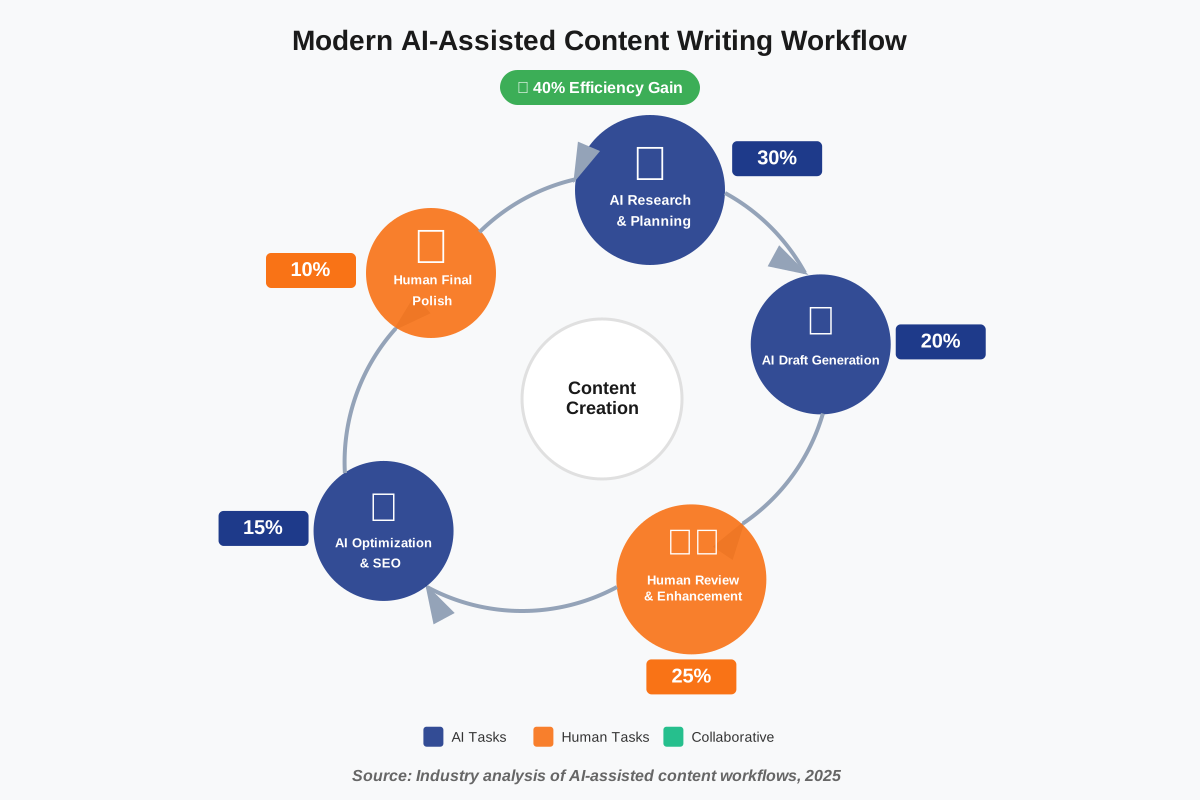
Consider this scenario: AI manages the complex tasks of research, initial drafting, and optimization, allowing human writers to concentrate on their core skills of incorporating personality, ensuring accuracy, and crafting messages that truly resonate with readers. I’ve tested dozens of AI writing tools over the past two years, and the pattern is clear: the technology excels at structure and speed but struggles with nuance and authenticity.
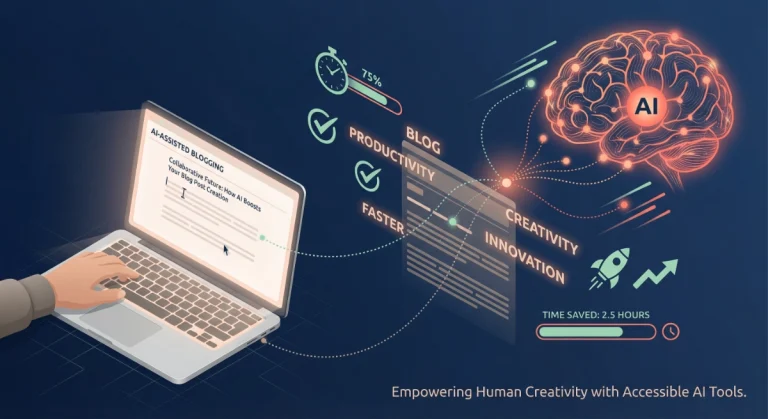
The shift is already visible in how content creation workflows operate today. A project that once took five hours might now take two, not because quality decreased, but because time-consuming tasks like outline generation, keyword research, and first-draft creation happen almost instantly.
How AI is Transforming Content Writing Right Now
Let me walk you through the specific ways AI writing tools are changing our daily work, based on real-world application rather than theoretical possibilities.
Speed Without Sacrificing Quality
The most immediate change is velocity. AI can generate a 1,500-word article draft in minutes. But here’s what matters more: it provides a solid foundation that human writers can refine, fact-check, and enhance with genuine insights. I recently used an AI tool to draft an article about sustainable architecture, and while the initial output needed significant editing, it saved me hours of research time by organizing relevant concepts and creating a logical structure.
Research That Goes Deeper
AI-powered research capabilities have evolved dramatically. These tools can analyze thousands of sources simultaneously, identify trending topics, spot content gaps in your niche, and suggest relevant statistics—though always verify these facts yourself before publishing. The research phase, which once consumed 30-40% of my writing time, now takes maybe 15%.
Personalization at Scale
Here’s where things get genuinely exciting: AI enables content personalization that was previously impossible at scale. Machine learning algorithms can analyze audience behavior patterns, suggest topic variations for different segments, adapt tone and complexity levels automatically, and predict which headlines will perform best with specific demographics.
A marketing team I consulted recently used AI to create 50 variations of the same core blog post, each customized for different audience segments. This level of personalization would have required an entire team of writers just a few years ago.
SEO Optimization Built Into the Process
SEO and AI have become inseparable. Modern AI tools can identify target keywords with precision, suggest semantic variations for natural integration, analyze competitor content strategies, and optimize search intent in real-time. What used to require manual keyword research tools and hours of optimization now happens as part of the writing process itself.
The Real Challenges Writers Face Today
Let’s address the uncomfortable truths about AI in content creation. This technology brings genuine challenges that we can’t ignore.
The Authenticity Problem
AI-generated content often lacks the authentic voice that makes writing memorable. I can spot AI-written content within a few paragraphs—it tends toward generic statements, overuses transitional phrases, and lacks the imperfect human touches that make writing relatable. The challenge for modern writers is maintaining authenticity while leveraging AI’s efficiency.
Quality Control Becomes Critical
With AI making content creation faster and cheaper, the internet is flooding with mediocre content. Standing out requires higher quality standards, not lower ones. Content quality has become the primary differentiator in a world where anyone can generate thousands of words in minutes.
The Skills Gap is Widening
Finding a balance between technological proficiency and traditional writing expertise is crucial Writers who refuse to learn AI tools are falling behind, while those who embrace them without developing critical editing skills produce subpar work. The sweet spot requires both technological proficiency and traditional writing expertise. This combination creates a new skills requirement: you need to be part writer, part AI prompt engineer, part editor, and part strategist.
Ethical Considerations Multiply
AI ethics in writing encompasses several concerns: proper disclosure when AI assists with content, avoiding plagiarism in AI-trained models, maintaining factual accuracy when AI generates information, and respecting copyright in AI-generated images and text. These aren’t theoretical issues—they’re daily decisions content creators must navigate.
Opportunities the AI Revolution Creates
Now for the exciting part: the opportunities emerging from this transformation far outweigh the challenges if you approach them strategically.
Specialization Becomes Valuable
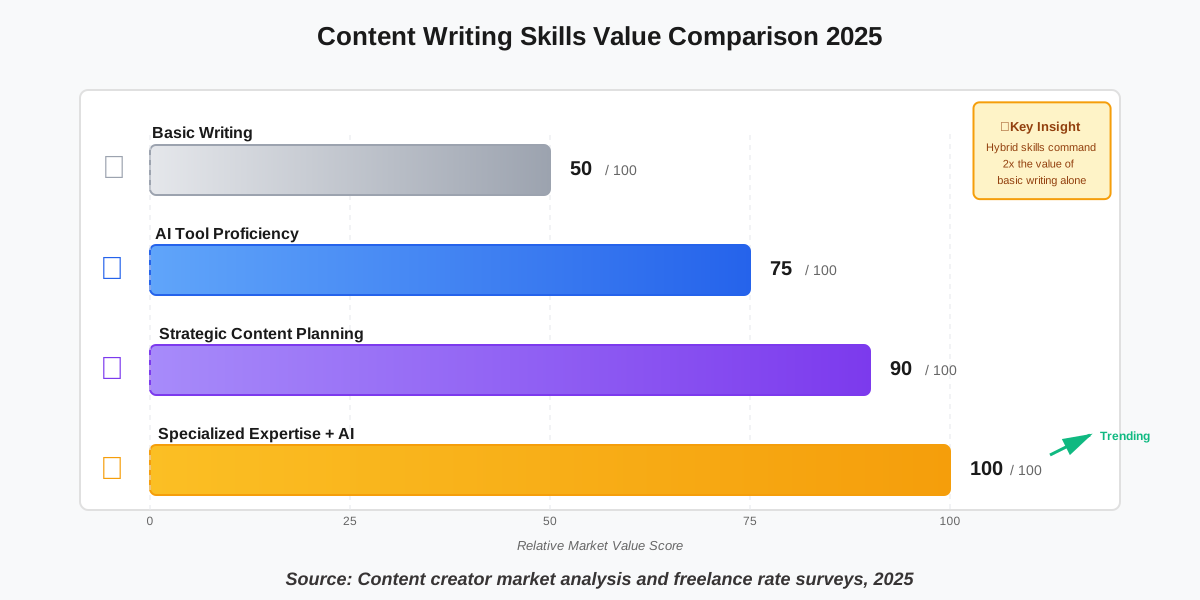
As AI handles general content, human writers can specialize in areas requiring deep expertise. Technical writing, industry-specific content, thought leadership pieces, and narrative storytelling are all areas where human insight remains irreplaceable. I’ve seen freelance rates for specialized content double in the past year as demand increases for expertise AI can’t replicate.
The Strategic Content Creator Emerges
Content strategy matters more than ever. Writers who understand audience psychology, brand positioning, content distribution, and performance analytics command premium rates because they offer value beyond word production. You’re no longer just a writer—you’re a content strategist who uses AI as one tool among many.
New Roles Are Emerging
The AI revolution is creating entirely new positions: AI content editors who specialize in refining AI output, prompt engineers who craft effective AI instructions, content quality analysts who ensure AI-assisted content meets standards, and hybrid creators who combine AI tools with traditional skills. These roles didn’t exist two years ago, and they’re already commanding competitive salaries.
Multilingual Content Becomes Accessible
AI translation and localization tools make it feasible for individual creators to produce content in multiple languages. I recently helped a small business expand from English-only content to five languages using AI translation with human review—a project that would have been financially impossible without AI assistance.
Real-World Examples of AI-Enhanced Content Writing
Let me share some concrete examples of how AI content tools are being applied successfully right now.
E-commerce Product Descriptions at Scale
A mid-sized online retailer I worked with implemented AI to generate initial product descriptions for their 10,000-item catalog. Human writers then edited these for brand consistency and added unique selling points. The result? They completed a project in three months that would have taken two years manually, while maintaining quality standards that actually increased conversion rates.
Personalized Email Campaigns
An email marketing agency uses AI to create base templates that adapt to subscriber behavior, purchase history, and engagement patterns. Human marketers then refine the messaging and add creative elements. Their click-through rates improved by 34% compared to their previous manual approach.
Content Repurposing Efficiency
I recently used AI to transform a 3,000-word blog post into a video script, social media posts, an infographic outline, and an email newsletter—tasks that previously took a full day now took about 90 minutes. The AI handled format conversion and initial adaptation, while I focused on ensuring each piece maintained its impact in its specific medium.
Multi-Format Content Creation
A B2B company now uses AI to generate quarterly reports in multiple formats simultaneously: executive summaries, detailed analyses, presentation slides, and social media snippets. Human editors review and refine each format, but the initial generation saves their team approximately 40 hours per quarter.
How to Adapt Your Writing Skills for the AI Era
Here’s my practical advice for thriving in the future of content writing, based on what’s actually working for successful writers today.
Master AI Tools Without Becoming Dependent
Start by experimenting with different AI writing assistants—try ChatGPT, Claude, Jasper, or Copy.ai to understand their strengths and limitations. Use AI for research and initial drafts, but always add your unique perspective and voice. Learn prompt engineering to improve AI outputs, and develop a keen eye for editing AI-generated content.
The key is viewing AI as a collaborator, not a replacement. I use AI to overcome blank page syndrome and speed through research, but the final article always reflects my judgment, experience, and style.
Develop Irreplaceable Human Skills
Focus on areas where humans excel: critical thinking and analysis that goes beyond surface-level connections, emotional intelligence in understanding audience needs, creative problem-solving that AI can’t replicate, and subject matter expertise in specific niches. These skills become more valuable as AI handles routine content tasks.
Build a Hybrid Workflow
Create a personal process that combines AI efficiency with human quality. My workflow looks like this: I use AI for initial research and topic exploration, generate a structured outline with AI assistance, write the first draft myself while referencing AI research, use AI tools for SEO optimization and readability checks, and personally edit for voice, accuracy, and authenticity. This hybrid approach typically reduces my total writing time by 35-40% while actually improving final quality.
Stay Current With AI Developments
The AI landscape evolves rapidly. Subscribe to AI newsletters, join writer communities discussing AI tools, test new features as they release, and attend webinars on AI in content creation. What works today might be obsolete in six months, so continuous learning isn’t optional—it’s essential for staying competitive.
Focus on Strategy Over Production
Shift your value proposition from “I can write fast” to “I understand what content your audience needs and how to create it effectively.” Content marketing success increasingly depends on strategic thinking: understanding user search intent, identifying content gaps in your niche, developing content that supports business objectives, and measuring performance to improve future content. These strategic skills pay better and are far less vulnerable to AI automation.
Common Mistakes to Avoid With AI Writing Tools
Let me help you sidestep the pitfalls I’ve observed (and occasionally experienced myself) in AI-assisted content creation.
Trusting AI Output Without Verification
Never publish AI-generated content without thorough fact-checking. I’ve caught AI tools confidently stating incorrect statistics, misattributing quotes, and making logical leaps that don’t hold up under scrutiny. Always verify claims, check sources, and ensure accuracy before publishing anything.
Losing Your Unique Voice
The biggest mistake I see is writers who let AI homogenize their voice. If your content sounds like everyone else’s AI-generated content, you’ve lost your competitive advantage. Your voice—your unique perspective, style, and personality—is what makes your content valuable. Preserve it.
Ignoring AI’s Limitations
AI tools struggle with current events beyond their training data, nuanced cultural or social topics requiring sensitivity, original research or primary sources, and complex argumentation requiring sophisticated reasoning. Knowing these limitations helps you use AI appropriately rather than setting yourself up for embarrassing mistakes.
Over-Relying on AI for Creative Decisions
Use AI to support your creative process, not replace it. The technology can suggest topics and generate variations, but your judgment about what resonates with your audience should drive creative decisions. I’ve seen writers produce mediocre content because they accepted AI’s first suggestion rather than pushing for something genuinely original.
Neglecting Disclosure and Ethics
Be transparent when AI significantly contributes to your content, especially in journalistic or academic contexts. Understand the copyright implications of AI-generated content, and respect intellectual property in AI training data. These ethical considerations protect both you and your reputation.
What Skills Will Matter Most in 2025 and beyond?
Looking ahead, certain capabilities will separate successful content creators from those struggling to remain relevant.
Prompt Engineering Mastery
Understanding how to communicate effectively with AI tools becomes a core skill. This means crafting clear, specific instructions that generate useful outputs, understanding how different AI models respond to various prompts, iterating on prompts to refine results, and recognizing when AI misunderstands your intent.
Advanced Editing and Refinement
Your ability to take rough AI output and transform it into polished, engaging content will determine your value. This requires a strong grasp of grammar and style, an eye for logical flow and argumentation, skill in adding personality and voice, and judgment about what works for specific audiences.
Strategic Content Planning
Content strategy skills become paramount: audience analysis and segmentation, competitive content research, topic gap identification, and content performance analytics. Writers who can plan and strategize will manage teams of AI-assisted creators rather than competing with basic content production.
Specialized Domain Knowledge
Deep expertise in specific fields—whether technical industries, creative disciplines, or niche markets—becomes incredibly valuable. AI can research general topics, but it can’t replicate years of hands-on experience in a field. Position yourself as an expert in something specific rather than a generalist.
Ethical AI Literacy
Understanding the ethical implications of AI in content creation will be crucial: recognizing bias in AI outputs, ensuring fair use of AI tools, maintaining transparency with audiences, and protecting privacy and data security. Writers with strong ethical frameworks will build trust in an era of AI-generated misinformation.
Frequently Asked Questions About AI and Content Writing
Your Next Steps: Thriving in the AI-Powered Content Future
The future of content writing isn’t something distant—it’s happening right now, and you get to decide whether you’ll be a passive observer or an active participant in shaping it.
Here’s my actionable advice for moving forward: Start this week by experimenting with one AI writing tool. Choose a low-stakes project where you can learn without pressure. Generate a draft, then rewrite it completely in your voice. Notice what the AI does well and where it falls short.
Build your AI literacy gradually. You don’t need to master everything immediately, but commit to learning one new AI technique or tool each month. Join communities where writers discuss AI tools and share experiences—you’ll learn faster from others’ successes and mistakes.
Most importantly, invest in the skills that AI can’t replicate. Deepen your expertise in a specific subject area, develop your strategic thinking about content and audiences, refine your unique voice until it’s unmistakable, and cultivate your ability to connect authentically with readers.
The content creators who thrive in this new era won’t be those with the most AI tools or the fastest production speeds. They’ll be the ones who use technology wisely while bringing irreplaceable human qualities—insight, empathy, creativity, and expertise—to everything they create.
This transformation might feel overwhelming, but I promise you: there has never been a better time to be a content creator who thinks strategically, writes authentically, and adapts courageously. The tools at our disposal would have seemed like science fiction just five years ago. The question isn’t whether AI will change content writing—it already has. The question is how you’ll use these changes to create content that matters more, reaches further, and stands out in a crowded digital landscape.
The future is collaborative, not competitive. It’s human creativity enhanced by machine efficiency, not replaced by it. And that future? It’s already here, waiting for you to step into it.
Resources:
Market Growth & Industry Reports:
- Grand View Research – AI-Powered Content Creation Market Report (2025)
- URL: https://www.grandviewresearch.com/industry-analysis/ai-powered-content-creation-market-report
- Key Data: Global market valued at $2.15 billion in 2024 and is projected to reach $10.59 billion by 2033 (CAGR 19.4%)
- Authority: Major market research firm
- The Business Research Company – AI-Powered Content Creation Global Market Report (2025)
- URL: https://www.thebusinessresearchcompany.com/report/ai-powered-content-creation-global-market-report
- Key Data: The market is expected to reach $7.22 billion by 2029, at a 19.8% CAGR.
- Authority: Established business research organization
- Next Move Strategy Consulting – AI-Powered Content Creation Market Analysis (2025)
- URL: https://www.nextmsc.com/report/ai-powered-content-creation-market-ic3798
- Key Data: Market valued at $2.98 billion in 2024, projected to reach $8.31 billion by 2030 (CAGR 18.65%)
- Authority: Strategic market research firm
Content Creator Adoption Statistics:
- Siege Media + Wynter – Content Marketing Survey (2025)
- URL: https://www.siegemedia.com/strategy/ai-writing-statistics
- Key Data: 71.7% of content marketers use AI for outlining, 68% for ideation, 57.4% for drafting; 83.2% adoption rate in 2024 (up from 64.7% in 2023)
- Authority: Content marketing agency with industry research partnership
- Social Media Examiner – 2025 AI Marketing Industry Report
- Referenced at: https://www.allaboutai.com/resources/ai-statistics/ai-writing/
- Key Data: 60% of marketers use AI tools daily (up from 37% in 2024)
- Authority: Leading social media marketing resource
Freelancer Rates & Market Value:
- YunoJuno – 2025 Freelancer Rates Report
- URL: https://www.yunojuno.com/blogs/ai-skills-drive-shift-in-contingent-workforce-market-as-average-day-rates-rise
- Key Data: Based on 261,000+ freelance contracts; 3% year-over-year increase in rates to £390/day average; AI and ML skills among top-paid specializations
- Authority: Major UK freelance marketplace with comprehensive contract data
- Upwork – Freelancer Earnings Report (2025)
- URL: https://www.upwork.com/resources/how-much-do-freelancers-make
- Key Data: U.S. freelancers earn an average of $99,000/year; AI, programming, and data analysis specialists command higher rates
- Authority: Leading global freelance platform
Workforce Impact Studies:
- U.S. Department of Labor Report (2025) – Referenced in:
- https://www.yomu.ai/resources/the-rise-of-ai-essay-writers-in-2025-stats-growth-and-whats-next
- Key Data: Approximately 135,000 entry-level content writing positions eliminated/transformed, while 89,000 new “AI content strategy” roles emerged
- Authority: Government labor statistics
Content Generation Statistics:
- Graphite Analysis (May 2025)
- Referenced at: https://asquaresolution.com/blog/ai-generated-content-surpasses-human-writing-online/
- Key Data: AI-generated content now accounts for 52% of all online text
- Authority: Content analysis firm
About the Author
Abir Benali is a technology writer specializing in making AI tools accessible to non-technical users. With a background in content strategy and digital communication, Abir has spent the past three years helping writers, marketers, and content creators navigate the rapidly evolving landscape of AI-assisted content creation. Through hands-on testing of dozens of AI writing tools and countless conversations with content professionals adapting to this new era, Abir brings practical insights grounded in real-world application rather than theoretical speculation. When not writing about AI, Abir enjoys exploring how emerging technologies can democratize creative work and empower individual creators to compete in spaces previously dominated by large teams.