How to Analyze Competitors & Identify Market Gaps Using AI

How to Analyze Competitors & Identify Market Gaps Using AI starts with understanding that you don’t need to be a data scientist or marketing expert to uncover what your competitors are doing—and more importantly, what they’re missing. With AI tools becoming more accessible every day, anyone can now conduct professional-level competitive analysis that used to require expensive agencies or specialized software. This guide will walk you through a practical, beginner-friendly framework to study your competitors, identify untapped opportunities, and build a clear 90-day action plan that positions you ahead of the competition.
Why AI-Powered Competitor Analysis Matters for Your Success
Traditional competitor analysis meant spending hours manually browsing websites, taking screenshots, and creating complicated spreadsheets. You’d track pricing, read through blog posts, analyze social media profiles, and try to piece together a coherent strategy. The process was time-consuming and often incomplete, and by the time you finished, the market had already shifted.
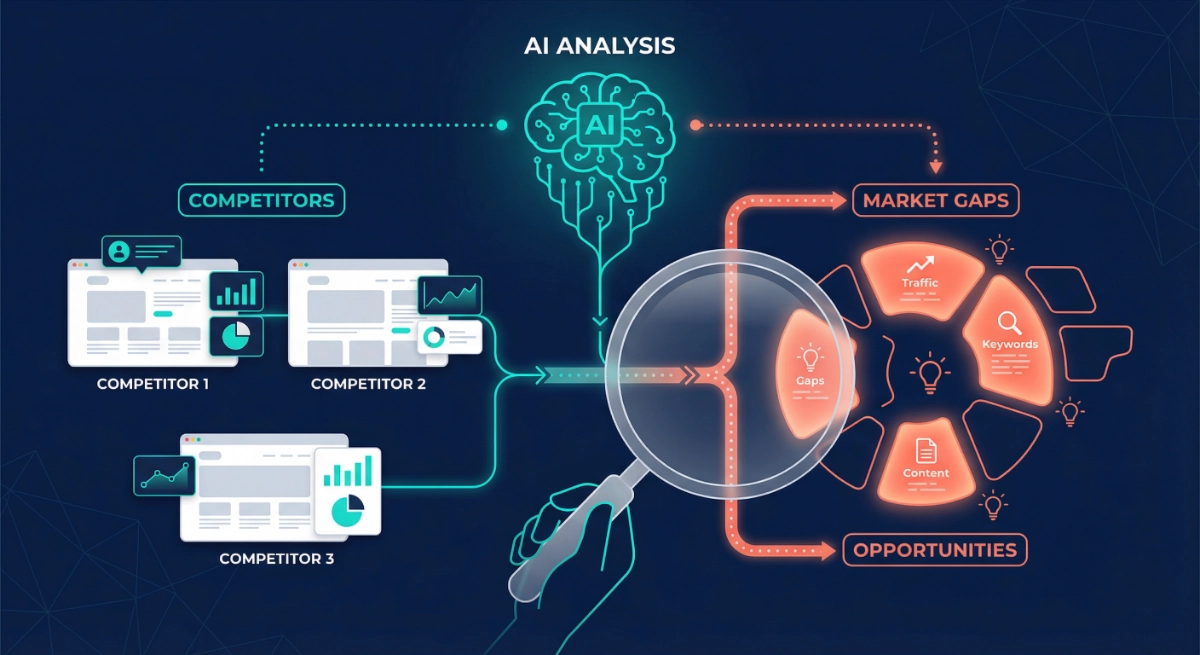
AI changes everything. Modern AI tools can scan hundreds of competitor websites in minutes, identify patterns humans might miss, analyze thousands of customer reviews to extract sentiment, and even predict emerging trends before they become obvious. You’re not replacing human insight—you’re amplifying it with machine intelligence that works 24/7.
The real power comes from identifying market gaps—those sweet spots where customer needs exist but competitors aren’t adequately addressing them. These gaps represent your golden opportunities. Maybe your competitors are all focused on enterprise clients while neglecting small businesses. Perhaps they’re ignoring a specific content format their audience craves. Or they might be present on the wrong social media channels entirely.
Step 1: Define Your Competitive Landscape and Goals
Before diving into AI tools, you need clarity on who you’re actually competing against and what you want to learn. This foundational step prevents you from drowning in data and keeps your analysis focused on actionable insights.
Start by identifying three-to-five direct competitors. These are businesses targeting the same audience with similar solutions. Don’t just pick the biggest names in your industry—choose competitors who are actually competing for your specific customers. For example, if you’re a freelance graphic designer specializing in sustainable brands, your competitors aren’t all graphic designers—they’re other designers who specifically work with eco-conscious companies.
Set clear analysis objectives. What do you need to know? Common goals include:
- Understanding which content topics drive the most engagement for competitors
- Identifying which marketing channels deliver the best results
- Discovering pricing strategies and positioning approaches
- Finding gaps in customer service or product features
- Spotting emerging trends in customer language and pain points
Write down 3-5 specific questions you want answered. This focus will guide every subsequent step and help you filter through the noise AI tools will inevitably produce.
Step 2: Gather Competitor Intelligence Using AI-Powered Tools
Now comes the exciting part—letting AI do the heavy lifting. You’ll use different tools for different aspects of competitor research, and the key is knowing which tool serves which purpose.
For website and SEO analysis, tools like ChatGPT with web browsing, Claude with web search, or specialized platforms like Perplexity AI can quickly analyze competitor websites. Ask specific questions like, “What are the main content categories on [competitor-website.com]?” or “What topics does [competitor] cover most frequently in their blog?” These AI assistants can browse multiple pages simultaneously and summarize patterns you’d need hours to identify manually.
For content gap analysis, you can feed AI tools your competitor’s website content and ask, “What topics are missing from this content strategy?” or “Based on these blog posts, what customer questions seem unanswered?” The AI will identify themes, spot inconsistencies, and highlight areas where competitors may be falling short.
For social media insights, describe your competitor’s recent posts to an AI assistant and ask for pattern analysis. “Here are the last 20 posts from [competitor]—what content types get the most engagement? What topics do they avoid? What’s their posting frequency?” You’re not manually counting likes; you’re having AI spot the strategic patterns.
For customer sentiment analysis, collect reviews from platforms like Google, Trustpilot, or industry-specific sites. Copy 10-20 reviews into an AI tool and ask, “What are the main complaints? What do customers love? What features do they wish existed?” AI can process sentiment at scale and categorize feedback far faster than manual reading.
Here’s a practical workflow: Spend 2–3 hours collecting raw data (competitor URLs, social media posts, reviews), then spend the next hour feeding this data to AI tools with specific questions. The AI does the analysis work while you focus on interpreting the insights.
To make this process even smoother and ensure you don’t miss critical analysis steps, grab our Market Analysis & Competition Checklist—it walks you through exactly what data to collect and which questions to ask at each stage.
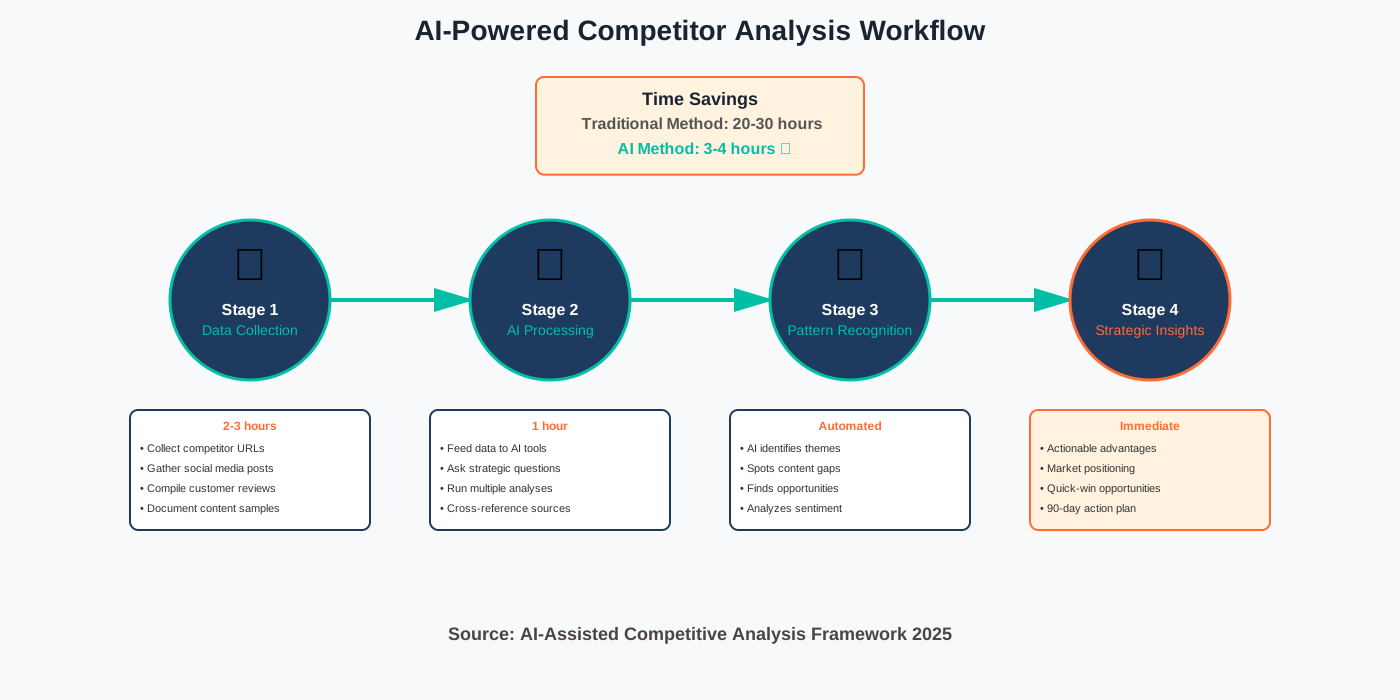
Step 3: Identify Market Gaps Through Strategic Questioning
Raw data means nothing without interpretation. This step transforms competitor intelligence into actionable opportunities by asking the right strategic questions—and AI excels at helping you explore multiple angles simultaneously.
Content gaps represent low-hanging fruit. Take all the content topics you’ve discovered from competitors and ask an AI tool, “If I’m targeting [your specific audience], what topics are these competitors not covering?” Then go deeper: “What questions might [audience] have about [your industry] that none of these competitors answer?” AI can cross-reference topics, identify missing angles, and even suggest content formats competitors aren’t using.
Feature gaps reveal product opportunities. If you’ve collected customer reviews and complaints, ask AI, “Based on these reviews, what features do customers want that competitors don’t provide?” Or, “What pain points keep appearing that no competitor solves well?” Sometimes the gap isn’t a missing feature—it’s poor implementation of an existing one.
Audience gaps show underserved segments. This is where AI analysis becomes powerful. Ask: “Based on competitors’ content and messaging, what customer segments are they ignoring?” You might discover that all your competitors target enterprise clients with complex solutions while small businesses desperately need simpler alternatives. Or everyone’s speaking to young professionals while experienced practitioners feel overlooked.
Channel gaps expose untapped platforms. If all your competitors focus heavily on LinkedIn but barely touch Instagram Reels or YouTube Shorts, that’s a strategic opportunity. Ask AI: “Based on where [audience] spends time and where competitors are active, what platforms represent untapped opportunities?”
Positioning gaps reveal messaging opportunities. Sometimes competitors all sound the same. Feed their website copy to an AI tool and ask, “What positioning angles are missing? What tone of voice isn’t being used? What values aren’t being emphasized?” If everyone positions themselves as “innovative” and “cutting-edge,” there might be power in positioning yourself as “reliable” and “straightforward.”
Create a simple gap analysis document. On the left side, list what competitors are doing. On the right side, list what they’re not doing or doing poorly. Your opportunities live in that right column.
Step 4: Prioritize Opportunities Using the Impact-Effort Matrix
You’ve identified multiple market gaps—now you need to decide which ones to pursue first. Not all opportunities are created equal, and chasing everything simultaneously guarantees you’ll accomplish nothing. The impact-effort matrix helps you make smart strategic choices.
Here’s how to use AI for prioritization: Create a list of all the gaps you’ve identified. For each one, ask an AI tool to help estimate: “On a scale of 1-10, how much effort would it take to capitalize on [specific gap], considering my current resources?” Then ask, “On a scale of 1-10, what’s the potential impact if I succeed with [specific gap]?”
High-impact, low-effort opportunities become your immediate priorities. These are your “quick wins”—gaps you can address relatively easily that will deliver significant competitive advantages. For example, if you discover competitors rarely respond to social media comments and your audience values engagement, implementing a responsive community strategy is relatively simple but highly impactful.
High-impact, high-effort opportunities become your long-term strategic projects. These might require significant investment or time but offer substantial rewards. Building a comprehensive video library when competitors only have text content falls into this category—it’s labor-intensive but could dramatically differentiate you.
Low-impact, low-effort opportunities are “fill-in” projects. These make sense when you have spare capacity but shouldn’t distract from higher priorities. Adding an FAQ section to your website because competitors lack one might fit here—easy to do, marginally helpful, but not game-changing.
Low-impact, high-effort opportunities should typically be avoided unless there’s strategic reasoning that isn’t immediately obvious. If something requires massive resources for minimal return, your time is better spent elsewhere.
Ask AI to create this matrix for you: “Based on these gaps I’ve identified, create an impact-effort matrix and explain your reasoning for each placement.” The AI won’t make the final decision—you will—but it can offer perspectives you might miss.
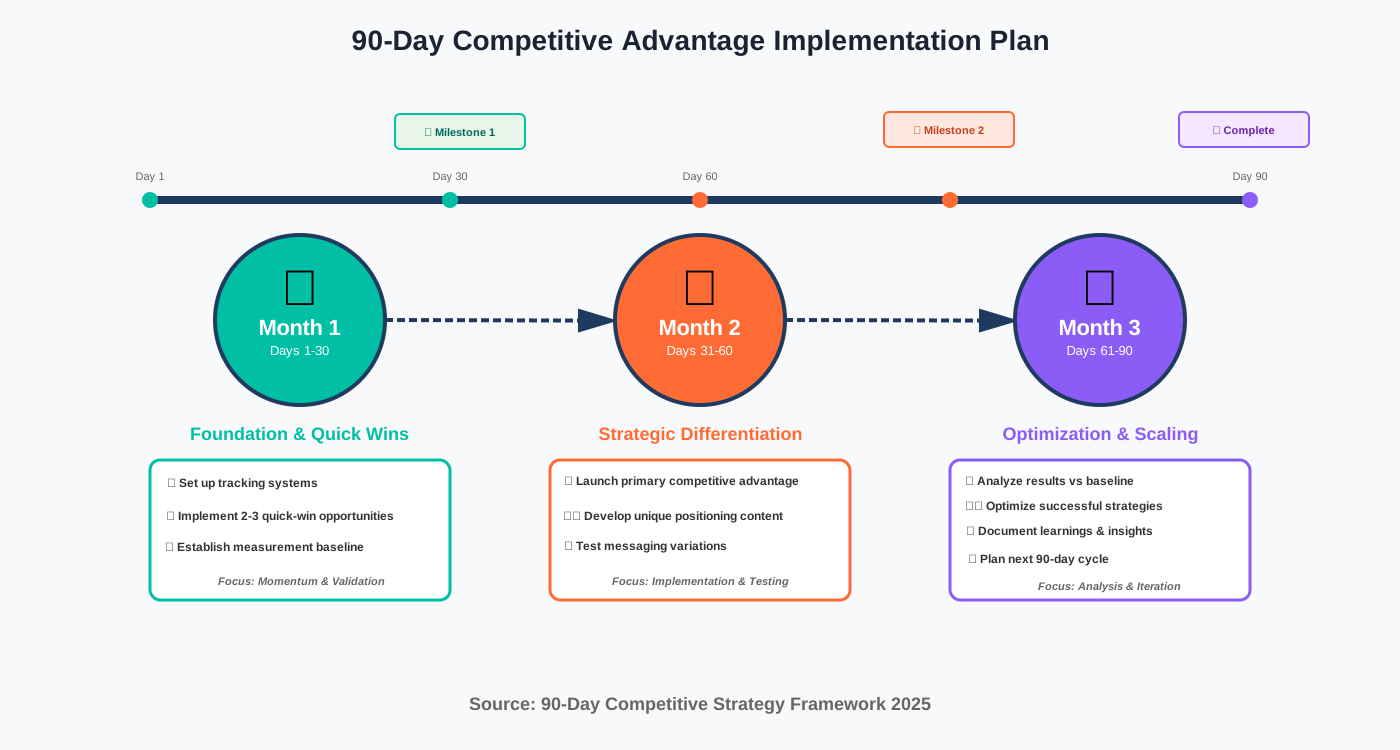
Step 5: Build Your 90-Day Competitive Advantage Plan
Strategic insights without implementation mean nothing. This step transforms your gap analysis into a concrete 90-day action plan with clear milestones and accountability.
Month 1: Foundation and Quick Wins
Your first 30 days should focus on establishing measurement systems and implementing 2-3 quick wins from your high-impact, low-effort category. This creates momentum and validates your analysis.
Set up tracking for key competitive metrics. Ask AI: “Based on my competitive analysis goals, what specific metrics should I track weekly?” Common metrics include website traffic growth, content engagement rates, social media follower growth, and conversion improvements. Use free tools like Google Analytics, social media insights, and manual tracking sheets.
Implement your first quick-win opportunities. If you discovered competitors neglect email marketing, launch a simple weekly newsletter. If they’re absent from a specific social platform, establish your presence there. Don’t aim for perfection—aim for consistent presence and experimentation.
Month 2: Strategic Differentiation
Weeks 5-8 are about doubling down on what’s working and implementing your primary differentiation strategy—the unique positioning that separates you from competitors.
Develop the content or features that address your highest-priority gap. If competitors lack beginner-friendly educational content and your analysis revealed audience demand for this, create your first comprehensive guide. If they offer complicated pricing models, launch a transparent, simple alternative.
Test different messaging angles. Create 3-4 variations of how you communicate your unique value and test them across different channels. Ask AI: “Based on these competitor positioning statements [paste examples], help me craft 3 alternative approaches that emphasize [your differentiation].”
Month 3: Optimization and Scaling
The final 30 days focus on analyzing what worked, optimizing your approach, and planning your next 90-day cycle.
Review your competitive metrics against your month -one baseline. What improved? What didn’t? Ask AI to help analyze: “Here are my metrics from month 1 and month 3—what patterns do you see? What should I prioritize next?”
Document your learnings. What assumptions about market gaps proved accurate? Which opportunities were harder to capitalize on than expected? This intelligence informs your next analysis cycle.
For detailed implementation templates and proven strategies that have worked for hundreds of businesses, check out our 100+ AI Marketing Prompts—you’ll get ready-to-use prompts for competitive analysis, content creation, and strategic planning that you can implement immediately.
Advanced Techniques: Using AI for Continuous Competitive Monitoring
Once you’ve completed your initial 90-day cycle, competitive analysis shouldn’t stop—it becomes an ongoing intelligence system. AI makes continuous monitoring effortless without consuming your time.
Set up AI-powered alerts. Many AI tools now offer monitoring capabilities. You can create custom GPTs or use automation platforms that alert you when competitors publish new content, launch products, or change their positioning. Instead of manually checking competitor websites weekly, AI notifies you of significant changes.
Automate sentiment analysis. Create a monthly routine where you collect new customer reviews for your competitors and feed them to AI for sentiment tracking. Ask: “How has sentiment changed compared to last month? Are new pain points emerging?” This early-warning system helps you spot shifting customer needs before competitors do.
Conduct quarterly deep-dive reviews. Every 90 days, repeat your comprehensive competitor analysis with fresh AI queries. Markets evolve, new competitors emerge, and customer preferences shift. Ask: “What’s changed in the competitive landscape since my last analysis? What new gaps have opened?” This process ensures your strategy stays current.
Create competitor content summaries. Use AI to generate monthly summaries of competitor content: “Summarize the key themes from [competitor’s] last 10 blog posts. What topics are they emphasizing? What’s their strategic focus?” These summaries help you spot trends and adjust your own content strategy accordingly.
Common Mistakes to Avoid in AI Competitor Analysis
Even with powerful AI tools, beginners often make predictable mistakes that undermine their competitive analysis. Here’s what to watch for:
Analysis paralysis kills momentum. AI can generate endless insights, and it’s tempting to keep analyzing rather than implementing. Set a hard deadline for your analysis phase—typically 1-2 weeks maximum—then commit to action. Perfect information doesn’t exist; good-enough information paired with fast execution beats perfect analysis with slow implementation.
Copying competitors instead of finding gaps. The point isn’t to replicate what competitors do—it’s to identify what they don’t do. If AI reveals that all your competitors have podcasts, launching another podcast probably won’t differentiate you. Instead, ask, “What format are they not using? What topics are they avoiding?”
Ignoring small competitors. Many people only analyze major players in their industry, missing the agile smaller competitors who often innovate first. That scrappy competitor with 1/10th your traffic might be testing strategies that could disrupt the market. Include 1-2 smaller competitors in your analysis specifically to spot emerging trends.
Trusting AI blindly. AI tools are powerful but not infallible. They can misinterpret context, miss nuance, or occasionally hallucinate information. Always verify key insights—if AI claims a competitor ranks for specific keywords, manually check. If it identifies a gap, validate that it’s real by talking to actual customers.
Focusing only on direct competitors. Sometimes your biggest threats come from adjacent industries. If you’re a meal delivery service, your competitors aren’t just other meal kits—they’re restaurants with delivery apps, grocery stores with pickup, and even time-saving appliances. Expand your competitive view to include alternative solutions customers might choose.
Neglecting your strengths. Competitive analysis should inform strategy, not dictate it. Just because competitors ignore TikTok doesn’t mean you should be there if your team lacks video skills. Play to your strengths while addressing market gaps—the intersection of these two factors creates your sustainable competitive advantage.
Practical Example: How Sarah Used AI to Uncover a Market Gap
Let me share a real implementation example. Sarah runs a freelance writing business focusing on SaaS companies. She felt stuck competing on price against larger agencies and international freelancers. She needed differentiation but didn’t know where to look.
Her analysis process took four days. She identified five direct competitors—three agencies and two successful freelancers. Using ChatGPT with web browsing, she analyzed their websites, blog content, case studies, and client testimonials. She fed the AI questions like, “What writing services do these competitors emphasize? What industries do they focus on? What’s their pricing model?”
The AI revealed a clear gap. While all competitors offered “SaaS writing,” none specifically addressed early-stage startups that needed founding story content and pre-launch messaging. Everyone targeted established SaaS companies with existing audiences. Sarah asked AI, “What challenges do pre-launch SaaS startups face with content?” and “What writing services would help founders gain early traction?”
She repositioned entirely around this gap. Within 30 days, Sarah revamped her website to specifically target pre-launch SaaS founders, created a free guide on “Crafting Your Founding Story,” and offered packages designed for pre-revenue companies. She used AI to generate outreach templates personalized for this exact audience.
The results were dramatic. In 90 days, she closed four retainer clients specifically from this repositioned messaging—companies she would never have reached with generic “SaaS writing services” positioning. Her average project value increased because she solved a specific, urgent problem rather than competing in a crowded, generic market.
Sarah’s approach demonstrates the power of focused gap analysis: identify a specific underserved segment, position yourself as the solution, and execute consistently for 90 days.
Measuring Success: Key Performance Indicators for Competitive Positioning
You can’t improve what you don’t measure. Establishing clear KPIs helps you determine whether your gap-focused strategy is working or needs adjustment.
Competitive visibility metrics show whether you’re increasing market presence. Track your ranking compared to competitors for target keywords, your share of voice on social media platforms, and mentions or backlinks relative to competitors. Ask AI monthly: “Help me calculate my share of voice based on these social media metrics [provide data].”
Differentiation metrics reveal whether your unique positioning resonates. Monitor which marketing messages drive the highest conversion rates, track customer feedback mentioning your unique features, and measure time-to-close for leads who discovered you through differentiated positioning. If customers aren’t mentioning your unique value in testimonials, your differentiation isn’t landing.
Market gap validation metrics confirm you identified real opportunities. The most important metric is revenue or conversions from gap-focused initiatives. If you targeted an underserved audience segment, what percentage of new business comes from that segment? If you created content competitors ignored, does it drive traffic and engagement?
Efficiency metrics demonstrate AI’s impact on your process. Compare time spent on competitor analysis before and after implementing AI tools. Track the ratio of insights generated to hours invested. Calculate cost savings from using AI versus manual analysis or hiring agencies.
Set a monthly review meeting with yourself—yes, actually schedule it—to assess these metrics. Ask AI to help: “Based on these KPIs from the past 30 days, what’s working? What needs adjustment? What should I prioritize next month?”
Frequently Asked Questions
Taking Action: Your Next Steps
You now have a complete framework for analyzing competitors and identifying market gaps using AI—from initial research through 90-day implementation. The difference between this knowledge and actual competitive advantage comes down to one thing: execution.
Here’s your immediate action plan. This week, identify your 3-5 primary competitors and write down three specific questions you want AI to help you answer about them. Next week, spend 3-4 hours collecting raw data and feeding it to AI tools with those precise questions. The week after that, identify your top two market gaps using the impact-effort matrix and implement your first quick-win opportunity.
Remember that competitive analysis isn’t a one-time project—it’s an ongoing intelligence system. Markets shift, customer needs evolve, and new competitors emerge continuously. By making AI-assisted competitor analysis a quarterly habit, you’ll consistently spot opportunities before they become obvious to everyone else.
The businesses that thrive aren’t necessarily those with the best products or biggest budgets—they’re the ones who understand their competitive landscape deeply and move decisively on identified opportunities. You now have the tools and framework to become one of those businesses.
Don’t let analysis paralysis stop you. Start small, test your assumptions, and adjust based on real-world feedback. The market gaps you uncover through thoughtful AI analysis could become your most sustainable competitive advantages.
To make sure you’re covering every essential element of competitive analysis without missing critical steps, download our Market Analysis & Competition Checklist. It includes all the specific questions to ask, data points to collect, and strategic decisions to make—ensuring your competitive intelligence translates directly into actionable advantage.
And when you’re ready to accelerate your implementation with proven prompts and ready-to-use templates, grab our 100+ AI Marketing Prompts. You’ll get battle-tested prompts for competitive analysis, content creation, customer research, and strategic planning—all designed specifically for solo entrepreneurs and small teams who need results fast.
Your competitive advantage is waiting to be discovered. The only question is, will you be the one who finds it first?
About the Authors
This article was written as a collaboration between Alex Rivera and Abir Benali for howAIdo.com.
Alex Rivera is a creative technologist who helps non-technical users unlock the power of AI tools for business growth. With a background in design thinking and digital strategy, Alex specializes in making complex AI concepts accessible through practical, step-by-step frameworks. Alex believes AI should feel like a creative partner, not a complicated tool, and focuses on helping people experiment confidently with emerging technologies.
Abir Benali is a friendly technology writer dedicated to explaining AI tools to everyday users in clear, jargon-free language. Abir’s mission is making AI practical and approachable for small business owners, freelancers, and anyone who wants to work smarter without becoming a tech expert. Through detailed guides and actionable tutorials, Abir helps readers implement AI solutions that deliver real results in their daily work.
Together, we combine creative strategy with practical implementation to help you leverage AI for competitive advantage—no technical degree required.