How to Build Case Studies & Referral Campaigns Using AI

How to Build Case Studies & Referral Campaigns Using AI starts with a simple truth: your customers’ success stories are your most powerful marketing asset. Yet gathering testimonials, crafting compelling case studies, and designing referral programs often feels overwhelming—especially when you’re juggling a dozen other tasks. That’s where AI becomes your creative partner, transforming what used to take weeks into something you can accomplish in hours.
We’ve spent countless hours experimenting with AI tools to build case studies and referral campaigns, and we’re excited to share exactly how you can do the same. Whether you’re a solo entrepreneur, small business owner, or part of a growing team, this guide will walk you through every step with practical examples and creative tips that actually work.
Why Use AI for Case Studies and Referral Programs?
Before we dive into the how-to, let’s talk about why this matters. Traditional case study creation involves interviewing clients, transcribing conversations, writing compelling narratives, designing layouts, and then—if you’re tackling referrals—building entire campaign structures with emails, landing pages, and reward systems. It’s exhausting.
AI changes this equation completely. Instead of spending 10–15 hours on a single case study, you can draft compelling stories in less than an hour. AI-powered tools help you:
- Extract key insights from customer interviews automatically
- Transform raw feedback into polished narratives
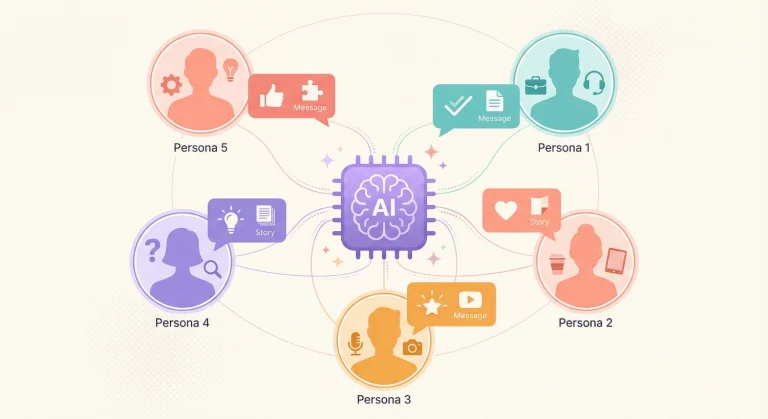
- Generate multiple versions tailored to different audiences
- Create referral campaign frameworks with personalized messaging
- Design email sequences that feel human, not robotic
But here’s what makes this approach truly powerful: AI doesn’t replace your creativity—it amplifies it. You bring the human insight, authentic customer relationships, and strategic thinking. AI handles the repetitive drafting, formatting, and iteration.
Understanding the Building Blocks
What Makes a Great Case Study?
A compelling case study tells a transformation story. It needs:
- The Challenge: What problem did your customer face?
- The Solution: How did your product/service help?
- The Results: What measurable outcomes did they achieve?
- The Proof: Specific quotes, metrics, or evidence
What Makes Referral Campaigns Work?
An effective referral campaign creates a win-win scenario. Essential elements include:
- Clear value proposition for the referrer
- Simple sharing mechanism
- Attractive incentives for both parties
- Automated tracking and reward delivery
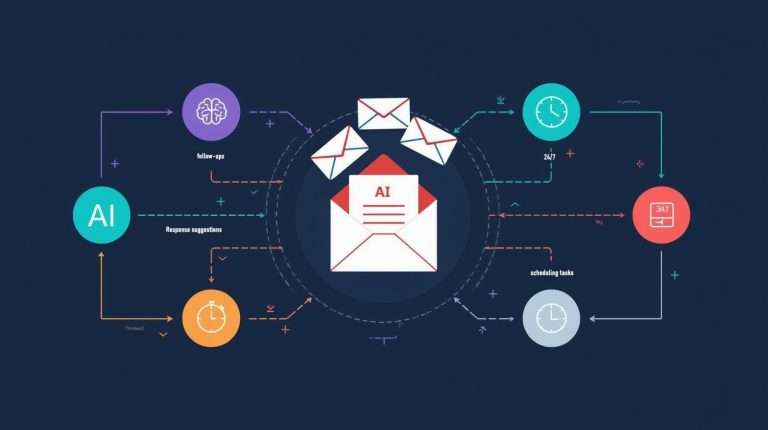
- Follow-up sequences that nurture new leads
Now let’s build both, step by step.
Step 1: Gather Your Raw Material
Before AI can work its magic, you need ingredients. For case studies, this means collecting customer stories, feedback, and results. For referral campaigns, you’ll need to understand what motivates your customers to share.
Collecting Case Study Material
Start by reaching out to satisfied customers. Here’s a simple email template you can customize:
Hi [Name], we'd love to feature your success story!
Would you be open to a 15-minute conversation about your experience?
We'll handle all the writing—we just need your insights.
During the conversation (which you should record with permission), ask:
- What challenge were you facing before working with us?
- What made you choose our solution?
- What specific results have you seen?
- What would you tell someone considering our product/service?
Don’t worry about perfect answers—AI will help polish everything later.
Gathering Referral Campaign Insights
For referral programs, you need to understand your customer motivations. Use AI to analyze:
- Previous customer feedback and reviews
- Support ticket themes showing what customers love
- Social media mentions and comments
- Survey responses about product value
We’ll show you exactly how to do this next.
Step 2: Use AI to Extract Key Themes and Quotes
This is where things get exciting. Once you have raw transcripts or feedback, AI can identify the most compelling elements.
AI Prompt for Case Study Analysis
Copy this prompt into ChatGPT, Claude, or your preferred AI tool:
I have a customer interview transcript about their experience with [your product/service]. Please analyze it and extract:

1. The main problem/challenge they faced (in their own words)
2. The 3 most compelling quotes about their results
3. Specific metrics or outcomes mentioned
4. The emotional transformation (frustration → relief, confusion → confidence, etc.)
5. Any unexpected benefits they mentioned

Transcript:
[Paste your interview transcript here]
The AI will organize everything beautifully, highlighting the strongest elements for your case study.
AI Prompt for Referral Campaign Research
For building referral programs, use this prompt:
Based on these customer reviews and feedback, identify:

1. What do customers love most about our product/service?
2. What language do they use when recommending us?
3. What problems do they say we solve?
4. What would motivate them to refer friends? (Look for clues about values, incentives, or social proof)

Customer Feedback:
[Paste reviews, testimonials, or survey responses]
This gives you the foundation for messaging that resonates.
Step 3: Draft Your Case Study Using AI
Now comes the creative part—turning raw insights into a compelling story.
Creating the Case Study Narrative
Use this detailed prompt to generate your first draft:
Write a customer case study for [company name] featuring [customer name/company]. Use this structure:

**Title**: Create an engaging title featuring the main result (e.g., "How [Customer] Increased Sales by 40% in 3 Months")

**Introduction**:
- Brief company background
- The core challenge they faced

**The Challenge Section**:
- Detailed problem description
- Impact on their business
- What they tried before
Include this quote: [paste key quote about the problem]

**The Solution Section**:
- How they discovered us
- Implementation process
- Key features they used

**The Results Section**:
- Specific metrics and outcomes
- Timeline of improvements
Include these quotes: [paste results quotes]

**Conclusion**:
- Current status
- Future plans with our product
- Call-to-action for readers

**Tone**: Professional yet approachable, focusing on authentic transformation
**Length**: 800-1200 words

Raw Material:
[Paste your extracted themes and quotes from Step 2]
The AI will generate a complete draft. You’ll likely need to refine it, but you’re starting from 80% complete rather than a blank page.
Customizing for Different Audiences
Here’s a powerful tip: create multiple versions of each case study for different segments. Use this prompt:
Take this case study and create 3 versions optimized for:

1. Enterprise decision-makers (focus on ROI, efficiency, risk reduction)
2. Small business owners (focus on ease of use, time savings, affordability)
3. Technical users (focus on features, integrations, capabilities)

Adjust tone, emphasis, and highlighted benefits accordingly while keeping the core story.

Original Case Study:
[Paste your draft]
This guide is especially valuable if you’re tracking where you got the best results from your social proof campaigns and want to reach a wider audience next time.
To make implementation even easier, we’ve created a comprehensive resource that walks you through every detail. Refer to our Social Proof & Case Study Creation Checklist that helps you organize customer stories, extract powerful quotes, and structure case studies that actually convert. It’s designed specifically to work alongside AI tools, ensuring you never miss a critical element.
Step 4: Design Your Referral Campaign Framework
With your case studies building credibility, it’s time to create the referral engine that turns delighted customers into brand advocates.
Creating the Referral Incentive Structure
First, decide what you’ll offer. AI can help you brainstorm and test different approaches:
I want to create a referral program for [your business type]. Suggest 5 creative referral incentive structures that would motivate customers to share, considering:

- Our product costs [price range]
- Our customers are typically [demographic/psychographic]
- Our brand values [list your values]

For each option, explain:
1. The incentive for the referrer
2. The incentive for the new customer
3. Why this structure would work
4. Potential implementation challenges
The AI will generate options like:
- Two-way discounts (both parties get 20% off)
- Tiered rewards (refer 1 = $10 credit, refer 5 = $75 credit)
- Exclusive access (referrers get early access to new features)
- Donation matching (we’ll donate $X to their chosen charity)
- VIP status (unlock premium features after 3 referrals)
Choose what aligns with your brand and test it.
Building the Referral Email Sequence
This is where AI truly shines. Instead of struggling with writer’s block, you can generate an entire email campaign in minutes:
Create a 5-email referral campaign sequence for our customers. Include:

Email 1 (Launch): Introduce the referral program, explain benefits, include clear CTA
Email 2 (Day 3): Share a success story from another customer who referred friends
Email 3 (Day 7): Reminder with tips for who might benefit from our service
Email 4 (Day 14): Highlight the rewards they can earn, create urgency
Email 5 (Day 21): Final reminder with alternative sharing methods (social media, direct message, etc.)

**Program Details**:
- Referrer gets: [your incentive]
- New customer gets: [their incentive]
- Unique sharing link provided
- Rewards automatically applied

**Our brand voice**: [describe your tone - friendly, professional, playful, etc.]
**Target audience**: [describe your customers]

For each email:
- Write a compelling subject line
- Keep body under 150 words
- Include specific CTAs
- Add personalization tags where appropriate ([FirstName], [ReferralLink], etc.)
You’ll receive a complete sequence ready to customize and deploy.
Creating Referral Landing Page Copy
Your referral campaign needs a dedicated page where customers can learn about the program and share easily:
Write copy for a referral program landing page with these sections:

**Hero Section**:
- Headline (benefit-focused, 8-10 words)
- Subheadline (explains the program simply)
- CTA button text

**How It Works** (3 simple steps):
- Step 1: Get your unique link
- Step 2: Share with friends
- Step 3: Earn rewards

**Rewards Section**:
- What referrer gets
- What new customer gets
- Any bonus tiers or special offers

**Social Proof Section**:
- 2-3 testimonials about our product (use our case study quotes)

**FAQ Section**:
- Answer 5 common questions about the program

**Final CTA Section**:
- Motivational message
- Button text

**Brand tone**: [your voice]
**Program details**: [paste your incentive structure]

Keep each section concise and action-oriented.
Step 5: Generate Personalized Outreach Messages
Here’s a creative approach many people miss: using AI to draft personalized referral requests to your best customers.
The Personal Touch Strategy
Rather than blast everyone with the same message, identify your top 10-20 customers and send personalized invitations:
I want to send a personal referral request to [Customer Name], who is [brief description of their relationship with us].

Write a warm, personal message that:
- References their specific experience or success with our product
- Explains why their opinion matters to people in their network
- Introduces our referral program naturally (not pushy)
- Makes it easy to say yes or pass without awkwardness

**Their story**: [brief summary from your case study work]
**Program benefits**: [your incentives]
**Our relationship**: [how long they've been a customer, any special interactions]

Tone: Genuine appreciation, not salesy
Length: 100-150 words
This approach typically yields 3–5 times more participation than generic announcements.
Step 6: Create Win-Back Campaigns for Lost Customers
Here’s something powerful: AI can help you build case studies that specifically target customers who left or went quiet.
Crafting Win-Back Messages
Use this prompt to create compelling re-engagement campaigns:
Create a 3-email win-back campaign for customers who haven't used our service in [timeframe]. Use our case study about [similar customer] who came back and saw [results].

Email 1 (Day 1): "We've Made Changes"
- Acknowledge their absence warmly
- Highlight major improvements since they left
- Share one compelling case study result
- Soft CTA to explore what's new

Email 2 (Day 5): "Here's What You're Missing"
- Feature 2-3 new features or benefits
- Include a quote from case study customer
- Offer to help them get restarted
- Limited-time incentive if appropriate

Email 3 (Day 10): "Last Chance"
- Sincere message about wanting them back
- Final compelling reason to return
- Easy reactivation process
- Or option to stay on a minimal plan

**Context**:
- Why they might have left: [your hypothesis]
- What's improved: [list changes]
- Case study to feature: [summary]

**Tone**: Friendly but respectful of their decision, no guilt trips
Using Case Studies as Social Proof in Win-Back
This is a strategic tip: when reaching out to churned customers, featuring case studies from similar companies or individuals creates powerful FOMO (fear of missing out). The AI can help you match the story to the right person:
I have 5 case studies about customers who achieved [results]. Help me match each story to segments of my churned customer list.

**Case Studies**:
1. [Company A - 30% time savings]
2. [Company B - 2x revenue growth]
3. [Company C - simplified workflow]
4. [Company D - team collaboration improvements]
5. [Company E - cost reduction]

**Churned Customer Segments**:
- Small businesses (left due to complexity)
- Growing companies (left due to feature limitations)
- Price-sensitive customers (left due to cost)
- Infrequent users (left due to lack of engagement)

Recommend which case study to feature in win-back emails for each segment and explain why.
If you want to take your AI marketing to the next level, we’ve compiled 100+ battle-tested prompts specifically for situations like this. Our AI Marketing Prompts Collection includes ready-to-use templates for case studies, referral campaigns, win-back sequences, and dozens of other marketing scenarios. These aren’t generic prompts—they’re prompts we’ve refined through real campaigns that drove measurable results.
Step 7: Automate Follow-Up and Tracking
Once your referral campaigns are live, AI can help you monitor performance and optimize.
Creating Tracking Prompts
Use AI to generate tracking templates:
Create a simple tracking spreadsheet structure for monitoring our referral campaign performance. Include:

**Metrics to Track**:
- Number of referral links generated
- Clicks per link
- Conversions from referrals
- Rewards earned by referrers
- Average customer value from referrals
- Campaign email open/click rates

**Structure**:
- Weekly view
- Monthly summary
- Individual referrer performance
- Comparison to direct signups

Also suggest 3 key indicators that would signal we need to adjust our approach.
AI-Powered Performance Analysis
Every two weeks, use this prompt to analyze your results:
Based on this referral campaign data, provide insights and recommendations:

**Performance Data**:
[Paste your tracking metrics]

**Questions to Answer**:
1. Which incentive tier is driving the most referrals?
2. Are there patterns in when people share (day of week, time after purchase, etc.)?
3. What's our cost per referral-acquired customer vs. other channels?
4. Should we adjust our incentives? If so, how?
5. Which email in the sequence has the highest engagement?
6. Any red flags or unexpected patterns?

Provide actionable recommendations, not just observations.
Common Mistakes to Avoid (We’ve Made Them All)
Let’s be honest—we’ve stumbled through plenty of these mistakes ourselves. Here’s what to watch out for:
In Case Study Creation:
- Using AI-generated quotes directly: Never let AI invent customer quotes. Always pull from real interviews.
AI is for organizing and polishing, not fabricating. - Forgetting permission: Always get written approval before publishing a case study.
Send the draft to your customer for review. - Overloading with jargon: AI sometimes loves fancy words.
Read everything aloud—if it doesn’t sound like a real person talking, simplify it. - Skipping metrics: Vague results like “improved efficiency” aren’t convincing.
Push for specific numbers: “reduced processing time by 3 hours per week.” - Making it all about you: The best case studies focus on the customer’s journey, not your product features.
AI can help you reframe self-promotional drafts.
In Referral Campaigns:
- Complex incentive structures: If customers can’t explain your referral program in one sentence, it’s too complicated.
Keep it simple. - Weak calls to action: “Share with friends” is boring. Try “Know someone drowning in [problem]?
Send them this” (AI can generate dozens of CTA variations). - No follow-up: One announcement isn’t enough.
Build a referral campaign sequence that reminds people at natural moments. - Ignoring mobile experience: Most sharing happens on phones.
Test your referral links and pages on mobile devices. - Forgetting to say thank you: Acknowledge every referral, even if it doesn’t convert.
Simple appreciation messages build loyalty.
Tools That Make This Easier
While you can use any AI writing assistant, here are tools specifically helpful for case studies and referral campaigns:
For Case Study Creation:
- ChatGPT or Claude: Best for drafting narratives and analyzing transcripts
- Otter.ai: Automatically transcribes customer interviews
- Canva: Use AI-powered design templates for visual case studies
- Grammarly: Polish your final drafts for clarity and tone
For Referral Campaigns:
- ReferralCandy or Viral Loops: Dedicated referral software with tracking
- Mailchimp or ConvertKit: Email automation for sequences
- Typeform: Create referral program signup forms
- Zapier: Connect your referral platform to your CRM automatically
The key is choosing tools that integrate well together. Don’t overcomplicate—start with AI for writing and a simple spreadsheet for tracking, and expand as you grow.
Advanced Tips for Maximum Impact
Once you’ve mastered the basics, try these creative strategies:
Micro-Case Studies for Social Media
Not every story needs to be a 1,000-word case study.
Use AI to create bite-sized versions:
Turn this full case study into:
1. A LinkedIn post (150 words, one powerful metric highlighted)
2. A Twitter thread (5 tweets showing the transformation)
3. An Instagram caption (100 words, emotional hook)

Full Case Study:
[Paste your content]
Referral Campaign Variations
Test different campaign types:
- Time-limited blitz: “Refer anyone this week, double rewards”
- Milestone celebrations: “We hit 1,000 customers! Extra rewards for the next 50 referrals”
- Partner collaborations: Team up with complementary businesses for cross-referrals
Ask AI to generate campaign concepts:
Suggest 3 creative referral campaign concepts for [your business] that go beyond standard "refer a friend" programs. Include:
- Campaign theme/hook
- Incentive structure
- Marketing message
- Why it would stand out
Video Case Studies Using AI Scripts
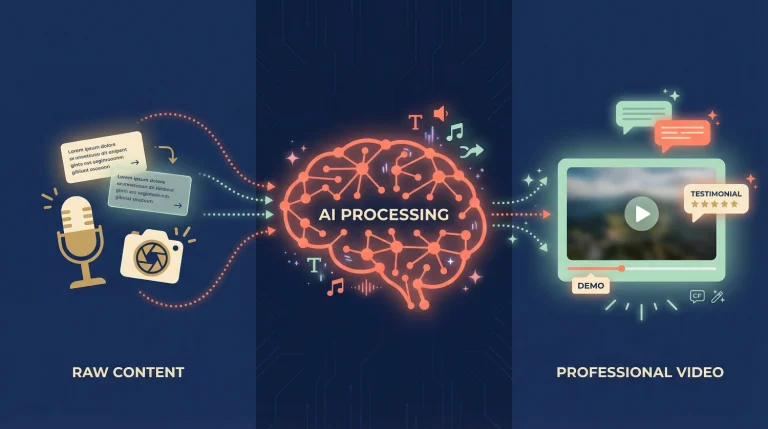
Here’s something powerful: transform your written case studies into video scripts:
Convert this case study into a 90-second video script following this structure:

0-10 seconds: Hook (the problem in dramatic terms)
10-30 seconds: Meet the customer and their challenge
30-60 seconds: The solution and implementation
60-80 seconds: Results with specific metrics
80-90 seconds: Call-to-action

Include:
- Suggested visuals for each segment
- On-screen text callouts for key metrics
- Natural, conversational narration (not marketing-speak)

Case Study:
[Paste your content]
Then record it yourself, hire a freelancer on Fiverr, or use AI video tools like Synthesia.
Frequently Asked Questions
Your Next Steps: From Reading to Results
Now you have everything you need to build case studies and referral campaigns using AI. But here’s what we’ve learned from our experience: reading about these strategies feels inspiring, but actually implementing them is where the magic happens.
Start small. This week, reach out to just one delighted customer for a 15-minute interview. Use the AI prompts we shared to transform that conversation into your first case study. Don’t aim for perfection—aim for done. Your first case study might feel awkward or incomplete, and that’s completely normal. We’ve created dozens of these, and our first attempts were rough too. But each one gets easier and better.
Once you have that first story polished and published, turn your attention to your referral campaign. Use the AI prompts to draft your email sequence this weekend. Test it with 10-20 of your most engaged customers before rolling it out broadly. Watch what works, adjust what doesn’t, and iterate quickly.
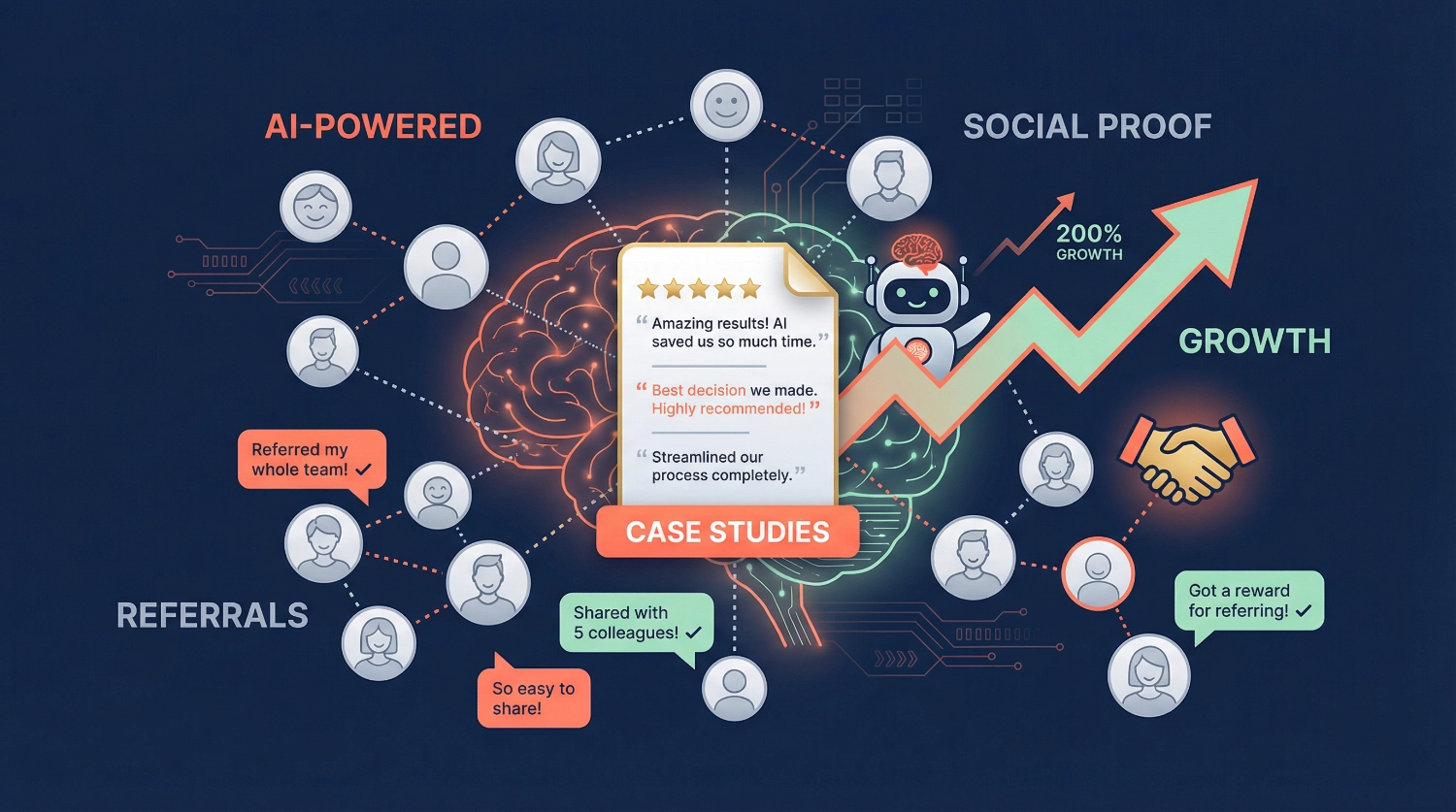
The beautiful thing about combining AI with case studies and referrals is that it creates a growth flywheel: great customer stories attract new customers, happy new customers generate more stories and make referrals, and those referrals bring in even more ideal customers. You’re not just creating marketing content—you’re building a sustainable growth engine powered by authentic success stories.
Remember our Social Proof & Case Study Creation Checklist? Download it now and keep it open as you implement these strategies. It’ll save you from missing crucial details and help you stay organized as you build your library of case studies.
And if you want to go beyond what we’ve covered here, grab our 100+ AI Marketing Prompts. You’ll get proven prompts for every stage of case study creation, referral campaign optimization, win-back sequences, and dozens of other marketing challenges. These are the exact prompts we use in our own work—tested, refined, and ready to copy and paste.
The future of marketing isn’t about choosing between human creativity and AI efficiency. It’s about combining both to create something neither could achieve alone. Your customers have incredible stories to tell. AI helps you tell those stories beautifully, consistently, and at scale. Now go build something amazing.
About the Authors
This article was written as a collaboration between Alex Rivera and Abir Benali for howAIdo.com.
Alex Rivera (Main Author) is a creative technologist who believes AI should feel like a creative partner, not a complicated tool. Through step-by-step tutorials and hands-on experimentation, Alex helps non-technical users discover how AI can amplify their creativity. With a background in content creation and digital marketing, Alex specializes in making complex AI concepts accessible and actionable for everyday entrepreneurs.
Abir Benali (Co-Author) is a friendly technology writer who translates tech complexity into clarity for non-technical readers. With years of experience simplifying AI tools and digital strategies, Abir focuses on providing clear, concise instructions that anyone can follow—no matter their technical background. Abir’s approach emphasizes practical application and real-world results over theoretical concepts.
Together, we combine creative innovation with practical clarity to help you leverage AI for business growth.