How to Create Viral-Ready Short-Form Video Scripts Using AI

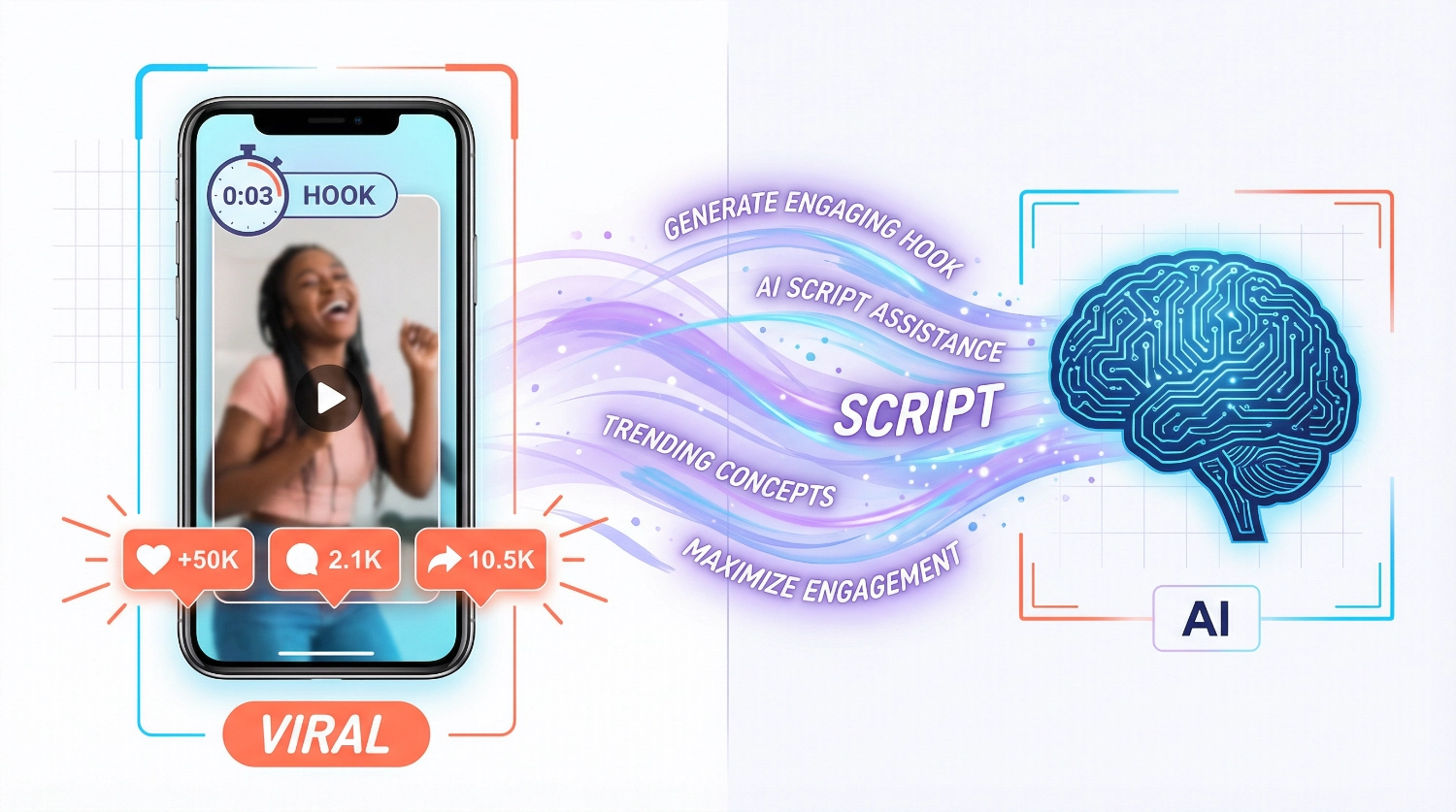
How to Create Viral-Ready Short-Form Video Scripts Using AI starts with understanding one truth: the first three seconds determine everything. We’ve spent countless hours analyzing what makes videos stop the scroll, and the answer isn’t luck—it’s a repeatable system that anyone can master using AI tools. Whether you’re creating content for TikTok, Instagram Reels, or YouTube Shorts, the scripting process can transform from overwhelming to energizing when you let artificial intelligence handle the heavy lifting while you focus on the creative spark.
Short-form video isn’t just trending—it’s dominating how people consume content online. The challenge? Creating scripts that hook viewers instantly, maintain engagement through every second, and inspire action before the scroll continues. That’s where AI-powered scripting becomes your creative partner, helping you structure compelling narratives, craft irresistible hooks, and format your vision with professional elements like timestamps and camera directions.
According to Marketing LTB’s “Short Form Video Statistics 2025” analysis (2025), 71% of viewers decide within the first few seconds whether a video is worth continuing. That split-second decision makes or breaks your content’s potential to go viral. We’ve discovered that the magic formula isn’t about expensive equipment or professional editing—it’s about strategic scripting powered by AI that understands what makes audiences hit pause on their endless scroll.
Think of AI as your creative collaborator, not a replacement for your unique voice. We’re going to walk you through a step-by-step system that transforms blank-page anxiety into confident content creation, using tools that handle the technical heavy lifting while you focus on infusing personality and purpose into every frame.
Why Short-Form Video Scripts Need a Different Approach
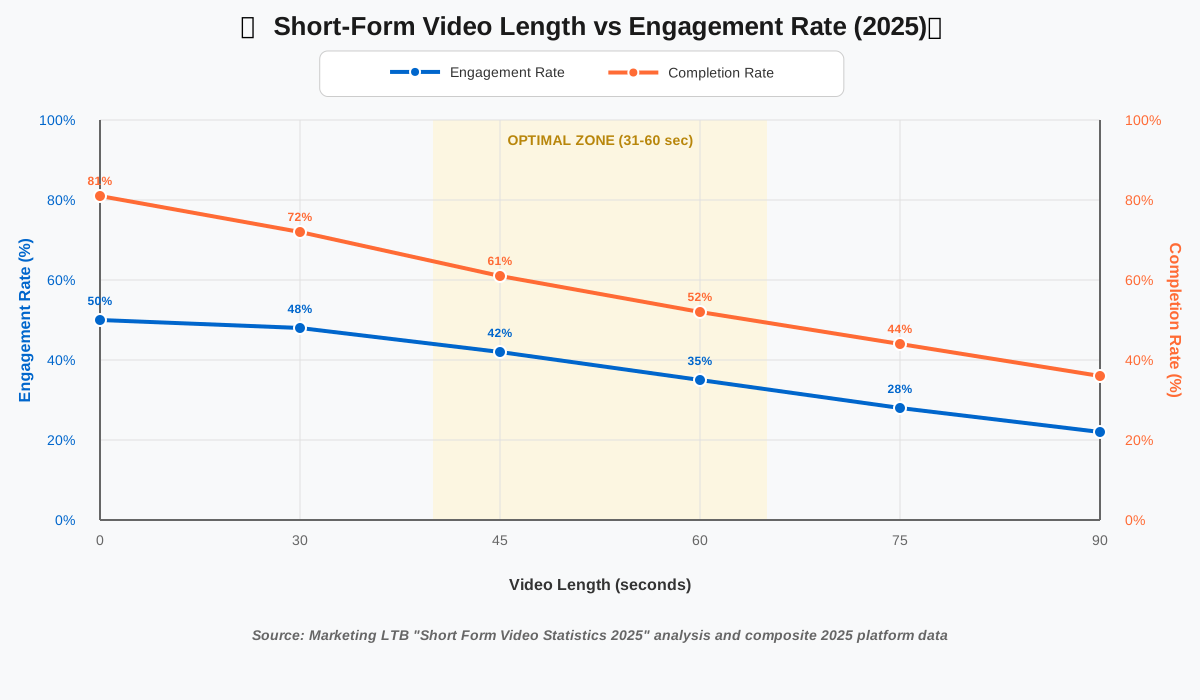
Short-form video scripts aren’t just miniature versions of longer content—they’re an entirely different art form. According to Firework’s 2025 research, videos under 1 minute average a 50% engagement rate, dramatically outperforming static formats. But here’s what most creators miss: those 30-60 seconds require more strategic planning than a 10-minute video because every single second must earn its place.
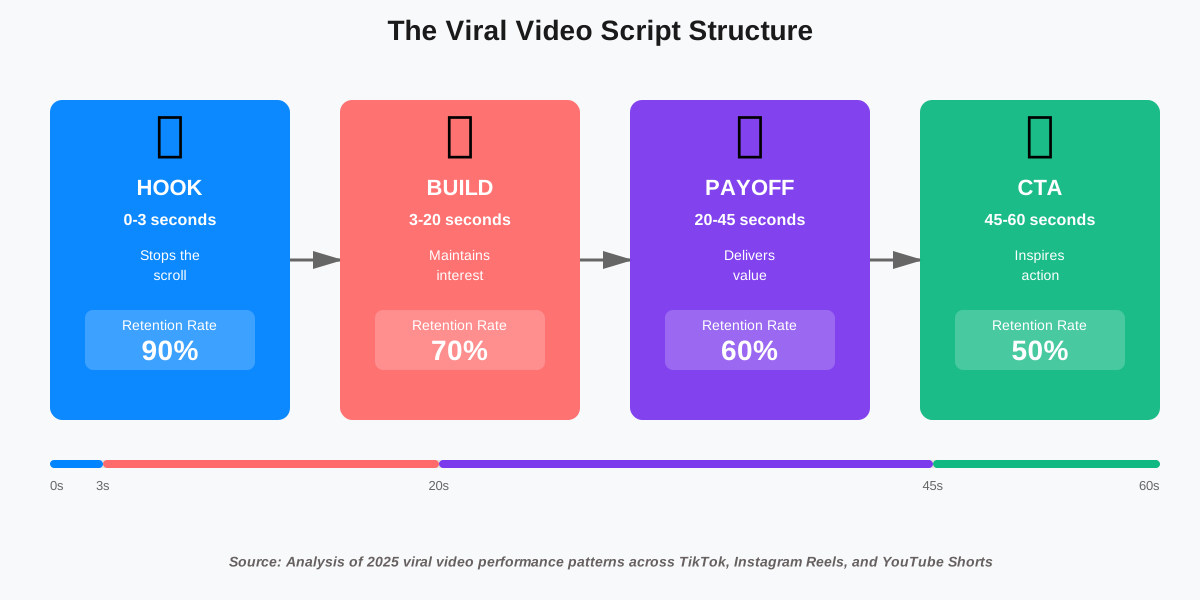
Traditional video scripts follow a leisurely narrative arc. Short-form scripts demand immediate impact, constant momentum, and zero filler. You’re essentially creating a micro-story that must hook within three seconds, build intrigue through the middle, and deliver a satisfying payoff that inspires action—all before your viewer’s thumb moves to scroll.
This is where AI-powered tools become game-changers. They’ve analyzed millions of viral videos, identified patterns in successful hooks, and can suggest structures that maximize retention. But—and this is crucial—they work best when you understand the framework they’re operating within.
Step 1: Define Your Video’s Single Core Message
Before touching any AI script generator, get crystal clear on one thing: what’s the single takeaway you want burned into your viewer’s brain? This isn’t about cramming multiple ideas into 60 seconds—it’s about laser-focusing on one concept so compelling that people can’t help but remember it.
We recommend the “Dinner Table Test”: if someone couldn’t pull out their phone and show a friend what they just learned from your video using only words, is your message clear enough? If it takes more than one sentence to explain, you’re trying to do too much.
Write down your core message in 10 words or less. For example: “AI tools generate video scripts in under 60 seconds” or “Three psychological triggers make people stop scrolling.” This becomes your north star—everything in your script must support, prove, or illustrate this single idea.
AI tools like ChatGPT, Claude, or specialized script generators work exponentially better when you feed them focused inputs. Instead of saying “make me a video about marketing,” try “create a 45-second script proving that visual hooks outperform text hooks by 40%.” The specificity gives AI the constraints it needs to deliver genuinely useful outputs.
Step 2: Research Your Hook Using AI and Analytics
Your hook—those critical first three seconds—deserves its own research phase. According to Hook Studio’s 2025 analysis, the decision to keep watching happens in under three seconds, and slow beginnings are the number one reason videos fail to gain traction.
Start by using AI to analyze what’s working in your niche. Tools like VEED.IO’s AI Script Generator and InVideo AI can scan trending content and suggest hook patterns. But here’s where human judgment becomes essential: AI can tell you what’s popular, but only you know what aligns with your authentic voice.
We’ve found success using this prompt structure with AI tools:
Analyze the top 10 performing [your niche] videos from the past month.
What hook patterns appear most frequently?
Suggest five hook variations for a video about [your topic] that feel authentic rather than clickbait.
The magic happens when you combine AI suggestions with platform-specific data. YouTube Shorts creators should know that, according to AWISEE’s July 2025 research, shorts that include trending audio within the first 5 seconds see a 21% boost in reach.
This actionable insight—which AI can help you implement—transforms generic hooks into platform-optimized attention magnets.
Here are proven hook frameworks that work across platforms in 2025:
- Pattern Interrupts: Start with unexpected visuals or sounds that jolt the brain out of scroll mode
- Bold Claims: “Nobody talks about this…” or “This changed everything…”
- Visual Curiosity: Show the end result first, then rewind to explain how
- Direct Value Propositions: “Learn [specific skill] in 30 seconds”
- Problem Agitation: Call out a pain point your audience feels deeply
If you’re looking for a structured approach to hook creation, our Short-Form Video Scripting Checklist breaks down the exact elements high-performing hooks contain. It’s designed to help you audit your first three seconds before you hit record, ensuring you’re not wasting creative energy on scripts that won’t stop the scroll.
Step 3: Use AI to Generate Your Initial Script Draft
Now comes the fun part—letting AI do the heavy lifting on your first draft. But approach this strategically. Think of AI as your brainstorming partner who’s consumed millions of viral videos and can suggest structures but who needs your guidance to avoid generic outputs.
We recommend trying multiple AI script generators to see which matches your workflow. Pictory.ai excels at visual scene suggestions, Kapwing’s AI Video Generator creates multimedia-rich scripts with built-in voice and visual recommendations, while PlayPlay’s AI Video Assistant adapts well to different content types from marketing to training videos.
Here’s our proven prompt template that works across most AI platforms:
Create a [duration] second video script for [platform] about [specific topic].
The target audience is [describe audience].
The hook must grab attention in 3 seconds by [hook strategy].
The middle section should [specific goal].
End with a clear call-to-action to [desired action].
Tone should be [tone adjective] and [tone adjective].
Include suggestions for on-screen text overlays and camera angles.
For example:
Create a 45-second video script for Instagram Reels about using AI for email marketing.
The target audience is small business owners who feel overwhelmed by technology.
The hook must grab attention in 3 seconds by showing a before/after result.
The middle section should break down three simple steps.
End with a clear call-to-action to try the free tool.
Tone should be encouraging and accessible.
Include suggestions for on-screen text overlays and camera angles.
The more specific your input, the more useful your output. AI script generators respond brilliantly to constraints—give them the framework, and they’ll fill it with creative possibilities you can then refine.
Most advanced AI tools now include timestamp suggestions automatically. These become your filming blueprint, showing exactly when to switch scenes, when to add text overlays, and where your energy should peak. According to Visla’s 2025 platform data, their AI analyzes keywords and tone to suggest stock footage and background music that aligns perfectly with your script’s mood.
Step 4: Layer in Camera Directions and Visual Cues
A script isn’t truly viral-ready until it includes visual choreography. This is where many creators stumble—they write powerful words but forget that short-form video is a visual-first medium. According to Drive Editor’s November 2025 analysis, 85% of users watch videos without sound, making visual storytelling and text overlays absolutely essential.
Transform your text-only script into a production blueprint by adding:
Camera Angles:
Specify when to use close-ups (for emotional connection), wide shots (for context), or dramatic angles (for impact). Your AI-generated script might say “explain the benefit,” but you should annotate it with “[CLOSE-UP: direct eye contact, lean slightly forward].”
On-Screen Text Overlays:
Every key point should appear as text. Not subtitles that mirror your words—strategic text that emphasizes, contradicts, or adds context. When you say, “This is the secret,” the text might read “→ 87% of creators miss this” with an arrow pointing to a specific visual element.
Scene Transitions:
Mark exactly when you’ll cut. The general rule: cut every 2-3 seconds in the first 15 seconds to maintain momentum, then you can extend to 4-5 second shots once you’ve hooked attention.
Visual Props or B-Roll Indicators:
Note where you’ll need supporting visuals. Your script might read “[Show example of bad email] → [Transition to AI-improved version].”
Many AI tools now offer scene-by-scene breakdowns automatically. Canva’s HeyGen integration generates talking avatar videos with scene suggestions built in. Teleprompter.com’s AI Script Generator creates content optimized for smooth delivery with natural pause points and emphasis markers—essentially giving you director’s notes within your script.
We’ve discovered that the best camera direction overlays feel like a conversation with your director of photography. Instead of clinical notes like “CU Subject,” write instructions like “Zoom in slowly while revealing the twist—audience should feel they’re discovering it with you.”
Step 5: Optimize for Silent Viewing and Accessibility
Remember that statistic about 85% of viewers watching without sound? Your script must work as a silent film. This doesn’t mean adding subtitles—it means fundamentally structuring your visual story so someone could understand your entire message with the sound completely off.
Test this yourself: watch your favorite viral videos on mute. You’ll notice they use exaggerated expressions, bold text that delivers key information independently of narration, visual metaphors that communicate instantly, and strategic use of emoji or icon overlays that replace spoken concepts.
Work with your AI script generator to create a two-track script:
- Vocal Track: What you’ll actually say
- Visual Track: What viewers see if they can’t hear you
For example:
Vocal: “The biggest mistake people make is…”
Visual: Large text overlay: “MISTAKE #1” + facial expression of concern + hand gesture pointing down
AI tools like Kapwing and BIGVU now include automatic caption generation but go beyond basic subtitles. Use their features to create dynamic text that:
- Pops in with the rhythm of your speaking
- Changes size for emphasis
- Uses different colors to distinguish between types of information
- Includes emoji or icon reinforcement
According to Zelios Agency’s June 2025 data compilation, short-form videos with silent-friendly formats see 40% higher completion rates. That’s not just accessibility—that’s smart strategy that expands your potential audience.
Step 6: Add Timestamps and Pacing Markers
Professional video scripts include precise timing annotations that turn your creative vision into an executable production plan. This is where AI becomes genuinely transformative—instead of manually calculating how long each segment should run, you can have tools auto-generate timing that aligns with platform best practices.
Your timestamp structure should look like this:
[0:00-0:03] HOOK
- Visual: Pattern interrupt with unexpected camera angle
- Text overlay: Bold claim or question
- Energy: Maximum

[0:03-0:08] PROBLEM SETUP
- Visual: Relatable pain point scenario
- Text overlay: "Sound familiar?"
- Energy: Empathetic, slower pace

[0:08-0:25] SOLUTION/VALUE
- Visual: Step-by-step demonstration
- Text overlay: Numbered steps or key benefits
- Energy: Building excitement

[0:25-0:35] SOCIAL PROOF/RESULT
- Visual: Before/after or testimonial
- Text overlay: Specific metrics or outcomes
- Energy: Peak momentum

[0:35-0:45] CALL TO ACTION
- Visual: Direct camera address
- Text overlay: Clear next step
- Energy: Decisive, confident
Tools like VidIQ’s AI Script Generator automatically structure scripts with these timing breakdowns, thinking like a creator who understands YouTube’s storytelling patterns. Similarly, Pictory’s ReelFast technology enables transformation from script to timed video in minutes instead of hours by pre-calculating optimal scene lengths.
We’ve learned that the best pacing markers include energy indicators. Your script should explicitly note when to ramp up enthusiasm, when to pause for emphasis, and when to deliver information with calm authority. This transforms a flat script into a performance guide.
Looking to master this entire system with ready-made templates? Our 100+ AI Marketing Prompts ebook includes proven script structures for every major platform, complete with timing breakdowns and psychological trigger points. It’s particularly valuable if you’re creating multiple videos per week and need consistent frameworks that actually drive results.
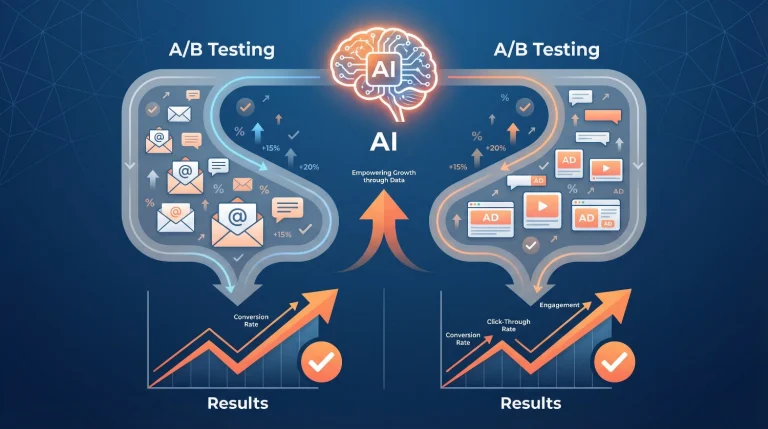
Step 7: Test Multiple Variations with AI Assistance
Here’s a truth we’ve learned through creating hundreds of viral-ready scripts: your first draft is never your best draft, and sometimes your tenth draft isn’t either. The creators winning in 2025 are those who embrace rapid iteration, testing multiple script variations to discover what resonates.
AI makes variation testing ridiculously easy. Once you have your core script, use AI to generate alternative approaches:
Take this script and create three variations:
Version A with a question-based hook,
Version B with a bold statement hook,
Version C with a visual surprise hook.

Keep the core message identical but change the emotional approach.
Or try:
Rewrite this script for three different audience segments:
Version A for complete beginners,
Version B for intermediate users,
Version C for advanced practitioners.

Adjust terminology and pacing appropriately.
According to Hook Studio’s November 2025 analysis, successful creators test 3–5 versions of their videos with different opening hooks and let algorithm performance reveal which resonates most. AI accelerates this process from days to hours.
We particularly love using AI for what we call “style swaps”—taking the same factual content and asking AI to rewrite it in dramatically different tones. Your educational content might perform better as comedy. Your inspirational message might land harder as tough love. You won’t know until you test, and AI removes the friction from creating those variations.
Most video script generators now include A/B testing suggestions built into their workflow. Teleprompter.com’s generator offers audience targeting that tailors scripts to specific demographic segments, while VidIQ’s tool refines content based on proven YouTube storytelling patterns specific to your niche.
Step 8: Refine for Your Authentic Voice
This step is critical and entirely human. AI can structure, suggest, and optimize, but it can’t be you. The scripts that truly go viral aren’t the most perfectly optimized—they’re the ones where authentic personality shines through algorithmic best practices.
Read your AI-generated script aloud. Does it sound like something you’d actually say to a friend? If not, it needs a humanity injection. Replace formal phrases with how you naturally talk. Add your signature expressions, quirks, or observations that make you uniquely you.
We’ve noticed that the most successful creators use AI as a structural foundation but rewrite about 30-40% of the content to match their voices. They keep the timing, the hook structure, and the psychological triggers—but swap out generic phrasing for personal stories, specific examples from their experience, or cultural references their audience shares.
Pay special attention to your call to action. AI tends to suggest generic CTAs like “Follow for more” or “Like if you agree.” Punch these up with specificity: “Save this so you don’t lose it when you need it tomorrow” or “Tell me in the comments which step you’re trying first.”
Think of AI as your collaborator who brings the science while you bring the soul. The combination creates content that’s both algorithmically optimized and genuinely compelling.
Step 9: Format for Cross-Platform Distribution
One brilliant aspect of AI-generated scripts is their adaptability. Once you’ve created a strong core script, you can rapidly modify it for different platforms without starting from scratch.
According to AWISEE’s July 2025 data, repurposing content across platforms drives 46% more reach, but blind copy-pasting kills performance. Each platform has unique characteristics:
TikTok: Trend-driven, audio-centric, and embraces chaos and personality. Your script should reference trending sounds and feel spontaneous even if carefully planned.
Instagram Reels: More polished aesthetic, lifestyle-focused, values visual beauty. Your script should incorporate aspirational elements and clean visual composition.
YouTube Shorts: Discovery-focused, education-friendly, and longer optimal length (50-60 seconds according to INFLOW Network’s 2023 data). Your script can include a more detailed explanation.
Use AI to adapt your master script:
Take this 45-second script and optimize it for TikTok by adding a reference to trending audio and making the tone more casual and conversational.
Then create a YouTube Shorts version that extends to 55 seconds with additional educational detail.
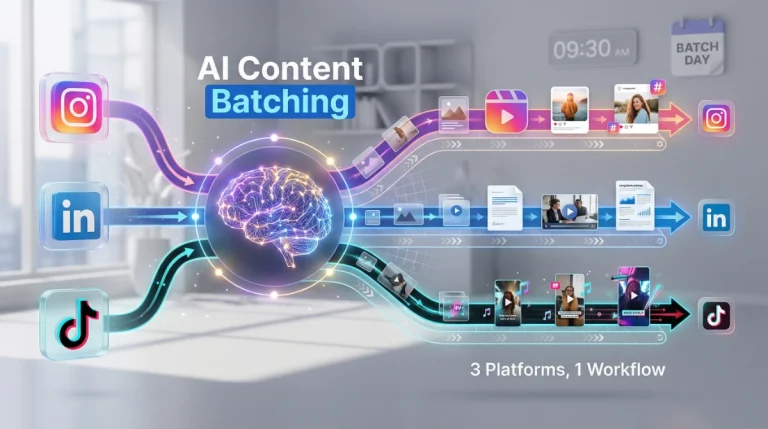
Tools like InVideo AI and Kapwing excel at this cross-platform optimization, suggesting specific adjustments for each destination. They understand that the same message needs different packaging depending on where it’s being consumed.
Step 10: Incorporate Feedback Loops and Iteration
The final step isn’t really final—it’s the beginning of your optimization cycle. Viral content creation is a continuous learning process where each video’s performance teaches you something about your audience.
Use platform analytics to identify patterns:
- Which hooks are getting the highest 3-second retention?
- Where do viewers typically drop off in your videos?
- Which topics or formats generate the most shares?
- What calls to action actually drive clicks?
Feed this data back into your AI script generation process. Most advanced tools now allow you to train them on your specific performance history. Tell your AI: “My last video with [specific hook type] got 70% higher retention than my average. Generate five new scripts using similar psychological triggers but different topics.”
According to Vidico’s August 2025 statistics compilation, viewers retain 95% of a message conveyed through video, meaning your script refinements compound over time as your audience absorbs and remembers your improving content style.
We recommend keeping a “swipe file” of your best-performing scripts. When you create something that crushes, analyze it ruthlessly: What made the hook irresistible? How did the pacing maintain momentum? Why did that specific CTA work? Then use AI to identify the patterns and replicate them intentionally rather than accidentally.
Common Mistakes to Avoid When Using AI for Script Writing
Even with powerful AI tools at your disposal, certain pitfalls can sabotage your scripts before they reach viewers. We’ve seen these errors repeatedly—and made plenty ourselves—so let’s save you the frustration.
Over-Reliance on AI Without Editing: The biggest mistake is treating AI output as finished work. AI generates foundations, not masterpieces. Always plan to spend at least as much time refining as generating.
Ignoring Platform-Specific Optimization: A script that works brilliantly on YouTube Shorts might bomb on TikTok. Use AI to create platform-specific variations rather than identical copies.
Front-Loading Too Much Context: New creators often waste the first 10 seconds explaining who they are or what the video is about. According to On Digitals’ 2025 analysis, keeping hooks tight within 3 seconds is generally better than stretching to 5 seconds for unnecessary context.
Weak or Generic Hooks: AI sometimes defaults to overused phrases like “In today’s video…” or “Let’s talk about…” These are scroll death sentences. Push AI to give you bolder, more specific hooks.
Neglecting the Silent Viewer Test: If your script doesn’t work on mute, it won’t work for most viewers. Test every script with sound off before finalizing.
Forgetting the Payoff Promise: Your hook creates an expectation. If you hook with “The secret they don’t want you to know…” but never deliver a genuine insight, viewers feel manipulated and won’t return.
Overcomplicating the Message: According to Wistia’s 2024 data, videos under one minute see 50% average engagement, while longer videos drop to 17%. If your script can’t deliver value in under 60 seconds, split it into multiple videos.
Advanced Techniques: Psychological Triggers in Script Structure
Once you’ve mastered the basics, you can elevate your AI-generated scripts by explicitly incorporating psychological triggers that make content feel irresistible. Modern AI tools can weave these in when you request them specifically.
The Curiosity Gap: Create a knowledge gap between what viewers know and what they want to know. Your hook might reveal that something they believed is wrong without immediately explaining why. Example: “Everything you know about viral videos is backwards—here’s the truth.”
Social Proof Integration: According to Passive Secrets’ September 2025 compilation, 79% of consumers say user-generated content influences their purchase decisions. Weave statistics, testimonials, or “everyone’s doing this” language into your scripts to leverage crowd psychology.
The Zeigarnik Effect: People remember incomplete tasks better than completed ones. End your videos with an open loop: “This is part one—tomorrow I’m revealing the tool I use that costs nothing.” This dramatically increases follower conversion, as viewers don’t want to miss the conclusion.
Pattern Disruption: Our brains automate familiar patterns to save energy, which means they ignore predictable content. Disrupt expectations with surprising facts, contrasting visuals, or tonal shifts. AI can suggest these disruptions when you prompt, “Add three unexpected moments that break the viewer’s predicted pattern.”
The Aha Moment Structure: Every excellent script builds toward an insight that makes viewers say, “Aha! That makes sense now.” Position this revelation around the 70% mark of your video—late enough that they’ve invested attention, early enough that they have time to process it before your CTA.
Ask your AI script generator to structure your content around these triggers explicitly:
Create a script using the curiosity gap technique where the hook reveals a common misconception, the middle builds tension around the implications, and the payoff delivers the correct understanding with a specific example.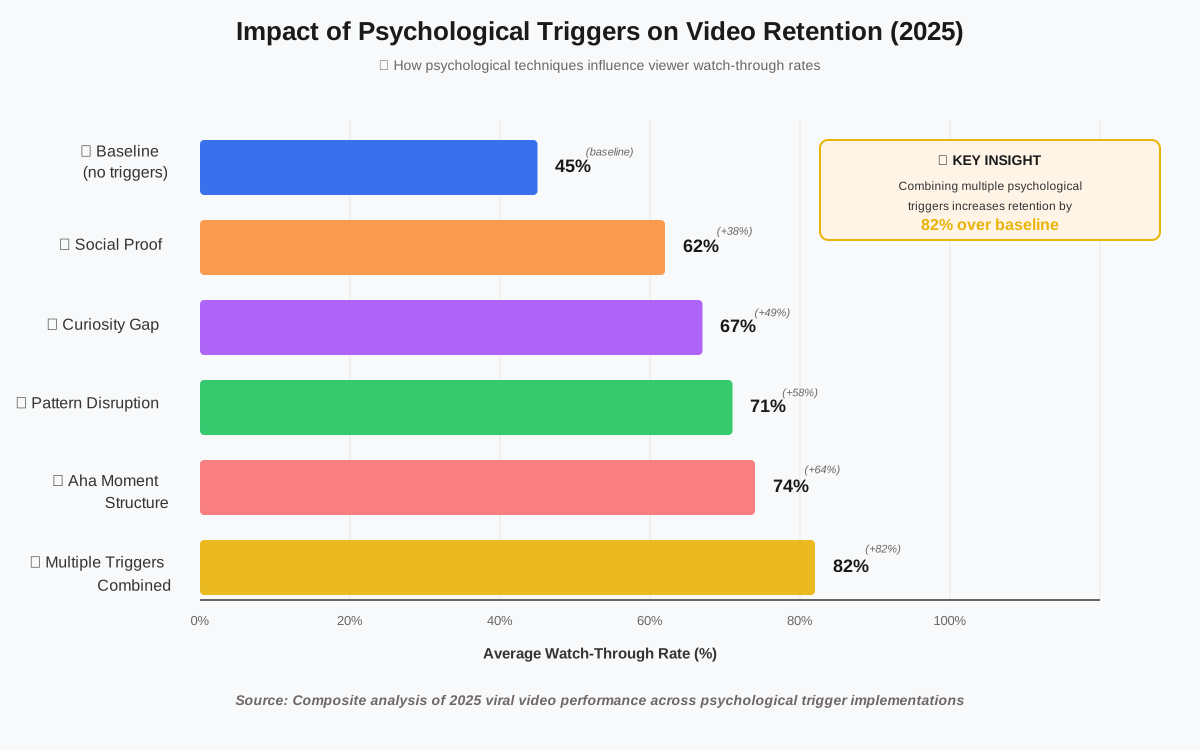
Frequently Asked Questions
Your Next Steps: From Script to Screen
You now have the complete framework for creating viral-ready short-form video scripts using AI. The difference between knowing this system and profiting from it comes down to action—specifically, intentional practice that builds your scripting muscle memory.
We recommend starting with a 30-day challenge: Create one script per day using AI assistance. For the first 10 days, focus exclusively on mastering hooks—generate 5 variations per day and analyze which psychological triggers resonate with your test audience. Days 11-20, practice the full script structure while experimenting with different AI tools to find your preferred workflow. Days 21-30, refine your authentic voice by comparing AI outputs to your improvised recordings.
According to Demand Sage’s November 2025 analysis, 66% of consumers report short-form videos as the most engaging content type, meaning your investment in script mastery directly translates to audience growth. The creators dominating platforms in 2025 didn’t get there through luck—they got there through systematic improvement of the most critical element: their scripts.
Don’t let perfectionism paralyze you. Your first 20 scripts will probably feel awkward. That’s not just normal—it’s necessary. Each one teaches you something about timing, hooks, visual storytelling, and your unique voice. The fastest path to genuinely viral scripts runs straight through embracing imperfect early attempts.
Before you start creating, grab our Short-Form Video Scripting Checklist. It’s specifically designed to audit each element of your script before filming, ensuring you’ve optimized for the first 3 seconds, silent viewing, pacing, psychological triggers, and platform-specific requirements. Think of it as your quality control system—the difference between hoping a script works and knowing it will.
For creators ready to scale beyond individual scripts, our 100+ AI Marketing Prompts collection includes battle-tested templates for every major content type. You’ll get exact prompts that generate high-performing scripts for tutorials, product demos, storytelling, educational content, entertainment, and more. It eliminates the guessing game of “what should I ask AI?” and replaces it with proven frameworks used by successful creators and agencies.
Remember: the goal isn’t to create perfect scripts. The goal is to create consistently compelling scripts that stop the scroll, deliver value, and inspire action. AI handles the optimization science; you bring the creative soul. That combination is unstoppable.
Now stop reading and start creating. Your first viral script is waiting on the other side of that AI conversation you’re about to start. Trust the process, embrace experimentation, and watch what happens when systematic strategy meets authentic creativity.
About the Authors
This article was created through a collaboration between Alex Rivera (Main Author) and Abir Benali (Co-Author).
Alex Rivera is a creative technologist passionate about making AI accessible for everyday creators. With a background in content strategy and emerging tech, Alex specializes in transforming complex AI tools into practical, confidence-building systems that help non-technical users generate professional content. Alex believes AI should feel like a creative playground, not an intimidating algorithm, and writes with the goal of inspiring experimentation and authentic self-expression through technology.
Abir Benali is a friendly technology writer dedicated to explaining AI tools in clear, jargon-free language. Abir focuses on step-by-step guidance that makes advanced techniques feel achievable for beginners, with a particular emphasis on actionable tips that readers can implement immediately. Combining technical understanding with an approachable communication style, Abir helps demystify artificial intelligence for users who want practical results without a computer science degree.
Together, we bring both creative inspiration and practical clarity to help you master AI-powered video scripting with confidence and authenticity.