How to Promote & Measure Lead Magnet Performance

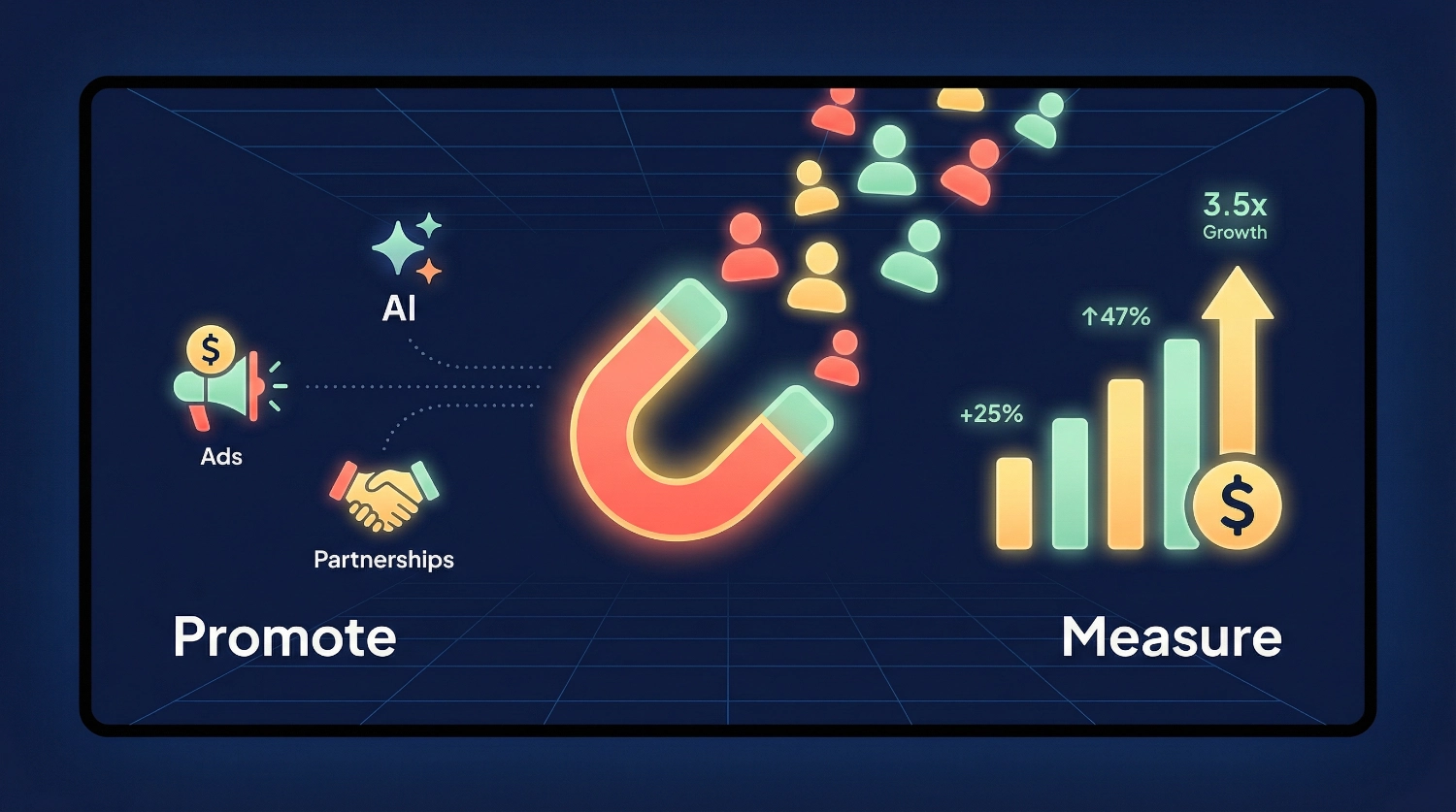
How to Promote & Measure Lead Magnet Performance starts with understanding a simple truth: creating a brilliant lead magnet is only half the battle. We’ve learned through countless campaigns that even the most valuable resources sit idle without strategic promotion and precise measurement. Whether you’re a solo entrepreneur, content creator, or small business owner, this guide will walk you through proven methods to amplify your lead magnet reach and track what actually drives conversions.
The real game-changer? AI tools have democratized what used to require expensive marketing teams and complex analytics platforms. You can now promote intelligently, measure accurately, and optimize continuously—all without a technical background or massive budget.
Why Lead Magnet Promotion and Measurement Matter
Think of your lead magnet as a store in a vast digital mall. Without signage, foot traffic, or a way to count visitors, you’re essentially invisible. We’ve seen entrepreneurs pour weeks into crafting perfect ebooks, checklists, or templates, only to wonder why their email list barely grows.
The answer is simple: promotion gets your offer in front of the right people, while measurement tells you which efforts actually work. Together, they create a feedback loop that transforms your lead generation from guesswork into a predictable system.
Here’s what proper promotion and measurement unlock:
- Targeted visibility that reaches people actively searching for solutions
- Clear ROI data showing which channels deserve more investment
- Continuous optimization based on real user behavior
- Scalable growth without proportionally increasing your workload
Understanding the Promotion-Measurement Framework
Before diving into tactics, let’s establish the foundation. Lead magnet promotion encompasses every method you use to get your offer visible—paid advertising, organic content, partnerships, and strategic placement. Performance measurement tracks how each promotional channel converts visitors into subscribers and, ultimately, customers.
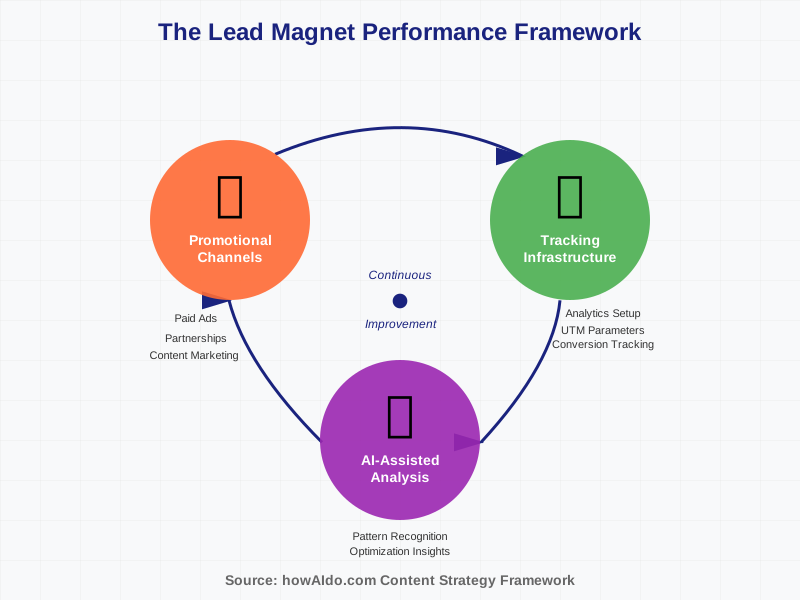
We approach this through three interconnected pillars:
Pillar 1: Promotional Channels—Where you broadcast your offer
Pillar 2: Tracking Infrastructure—How you capture and attribute data
Pillar 3: AI-Assisted Analysis—What patterns emerge and what actions to take
The beauty of modern AI tools is they help you execute all three simultaneously, even if you’re starting from scratch.
Step 1: Set Up Your Tracking Foundation
You can’t improve what you don’t measure. Before spending a dollar on promotion, establish your tracking infrastructure. This isn’t complicated—we’re talking about three essential components that work together seamlessly.
Create Unique Landing Pages
Design a dedicated landing page for your lead magnet with a clear conversion goal.
Unlike your homepage or blog, this page has one job: converting visitors into subscribers.
We recommend using AI-powered landing page builders that optimize layout and copy automatically.
Your landing page needs:
- A compelling headline featuring your lead magnet’s core benefit
- Clear value proposition (what they get and why it matters)
- Simple opt-in form (name and email minimum)
- Trust signals (subscriber count, testimonials, or guarantees)
- Thank-you page with immediate delivery
Implement UTM Parameters
UTM parameters are tiny code snippets added to your URLs that tell analytics tools where traffic originated.
They’re your secret weapon for attribution. Every promotional link—whether in an ad, email, or social post—should include UTM tags.
Basic structure:
https://yoursite.com/lead-magnet?utm_source=facebook&utm_medium=paid-ad&utm_campaign=summer-launchAI tools like ChatGPT can generate these instantly. Simply describe your campaign, and it creates properly formatted UTM links you can track.
Connect Analytics Tools
At minimum, install Google Analytics 4 (free) on your landing page. For deeper insights, consider AI-enhanced platforms that interpret data automatically and suggest optimizations.
We use tools that connect your analytics to natural language interfaces—ask “Which channel brought the most subscribers last week?” and get instant answers.
The setup takes about 30 minutes total. Once configured, you’ll never promote blindly again.
Step 2: Launch Paid Advertising Strategically
Paid ads accelerate visibility when executed correctly. The key is starting small, testing rigorously, and scaling what converts. We’ve found that AI dramatically shortens the learning curve by automating audience targeting and ad creative optimization.
Platform Selection
Choose platforms where your ideal subscribers spend time:
- Google Ads: Best for capturing intent-driven searches like “free marketing checklist” or “email templates for coaches”
- Facebook/Instagram Ads: Excellent for interest-based targeting (entrepreneurs, small business owners, specific industries).
- LinkedIn Ads: Premium audience for B2B lead magnets, higher cost, but better-qualified leads
- TikTok/Pinterest: Growing platforms for visual lead magnets and younger demographics
Don’t spread thin. Master one platform before adding others.
AI-Powered Ad Creation
Modern AI tools transform ad creation from art to science. Here’s our process:
- Generate ad copy variations: Feed your lead magnet benefits into ChatGPT or Claude, requesting 10 different headline and description combinations optimized for your platform
- Create visual assets: Use AI image generators (Midjourney, DALL-E) to produce eye-catching graphics that highlight your offer
- Write landing page variations: Test different value propositions and layouts using AI copywriting tools
Example prompt we use: “Create 5 Facebook ad headlines for a free lead generation checklist targeting solo entrepreneurs. Focus on time-saving benefits and include emotional triggers. Keep under 40 characters.”
Budgeting and Bidding
Start with a daily budget of $10-20 per platform. Run ads for at least 7 days before evaluating performance—shorter periods don’t provide statistical significance. Use automated bidding strategies initially (platform algorithms are remarkably effective), then switch to manual once you understand your cost-per-lead benchmark.
Track these metrics:
- Click-through rate (CTR): Percentage of people who click your ad
- Cost per click (CPC): What you pay for each click
- Landing page conversion rate: Visitors who subscribe
- Cost per lead (CPL): Total ad spend divided by new subscribers
We’ve found that acceptable CPL varies dramatically by industry, but $2-8 per lead is common for B2C offers, while B2B can range from $15 to $50.
If you’re feeling overwhelmed by the setup process, our Lead Magnet Quality & Delivery Checklist walks through the technical setup step-by-step, ensuring your tracking and delivery systems work flawlessly before you spend on promotion.
Step 3: Build Strategic Partnerships
Partnerships offer promotion without direct advertising costs. You’re essentially borrowing someone else’s audience in exchange for value. The best partnerships feel natural—complementary businesses serving similar audiences with different solutions.
Identify Potential Partners
Look for non-competing businesses targeting your ideal subscriber. We use AI research assistants to scan social media, podcasts, newsletters, and industry directories for partnership candidates.
Ideal partners have:
- Engaged audiences (high interaction rates, not just large follower counts)
- Aligned values and quality standards
- Complementary offerings (you solve different problems for the same people)
- Open to collaboration (check their website for partnership inquiries)
Structure Win-Win Arrangements
Successful partnerships provide clear value to both sides.
Common structures include:
- Newsletter swaps: Feature each other’s lead magnets to respective lists
- Content collaborations: Co-create resources that promote both lead magnets
- Affiliate arrangements: Pay commission for leads generated through their promotion
- Bundle offers: Package complementary lead magnets together
- Guest appearances: Podcast interviews, webinars, or social media takeovers
We’ve had tremendous success with simple email swaps. Partner agrees to send their list a brief endorsement of your lead magnet, and you do the same for theirs. No money changes hands, but both gain access to pre-qualified audiences.
Leverage AI for Partnership Outreach
Crafting personalized outreach messages is time-intensive. AI speeds this dramatically while maintaining authenticity.
Our approach:
- Research potential partners using AI web search tools
- Generate personalized pitch emails highlighting specific mutual benefits
- Create ready-to-use promotional content they can share (social posts, email templates)
- Track responses and follow-ups automatically
Example AI prompt:
Based on this podcast host's recent episodes about [topic], write a collaboration pitch offering our [lead magnet].
Highlight how it complements their episode on [specific episode].
Keep it under 200 words and include a clear call-to-action.
The result feels personal because it is—AI just handles the research and structure while you add the human touch.
Step 4: Create an Upgrade Path Strategy
Your lead magnet isn’t just a list-building tool—it’s the first step in a customer journey. Smart marketers use lead magnets to identify which subscribers are most likely to buy, then present relevant offers immediately.
Immediate Upsells
On your thank-you page (right after someone downloads your lead magnet), offer a low-friction upgrade.
This could be:
- Expanded version with bonus content ($7-27)
- Related template or tool bundle ($17-47)
- Mini-course or training ($27-97)
- Consultation or strategy session (higher price point)
The psychology is powerful: they’ve just committed to solving their problem by downloading your free resource. They’re in a decision-making mindset and receptive to deeper solutions.
We’ve seen conversion rates of 2-8% on thank-you page offers—seemingly small, but meaningful when you’re generating hundreds of leads monthly.
Email Sequence Integration
Your welcome sequence (emails sent immediately after subscription) should strategically introduce paid offers. Structure it like this:
- Email 1: Deliver lead magnet + set expectations for future value
- Email 2: Quick win or implementation tip (pure value, no pitch)
- Email 3: Case study showing results achieved with your methods
- Email 4: Soft introduction to your paid offering with special subscriber discount
- Email 5: Last chance for introductory pricing, emphasizing scarcity or bonuses
Use AI to write these sequences in minutes. Provide the tool with your lead magnet topic, paid product details, and target customer profile, and it generates a complete email series you can customize.
Segmentation Based on Engagement
Not all subscribers engage equally. Track who opens emails, clicks links, or spends time on your content, then tailor upgrade offers accordingly.
AI-powered email platforms automatically segment subscribers by behavior and trigger different upgrade sequences.
Highly engaged subscribers see more frequent offers, while cold subscribers receive re-engagement campaigns before sales pitches.
This is where AI analytics shine—identifying patterns invisible to manual analysis and suggesting the exact moment to present an offer based on individual behavior.
Step 5: Track and Analyze Performance Metrics
Measurement transforms gut feelings into data-driven decisions. But raw numbers mean nothing without context and action. This is where AI becomes indispensable—it interprets complex data and suggests specific optimizations.
Essential Metrics to Track
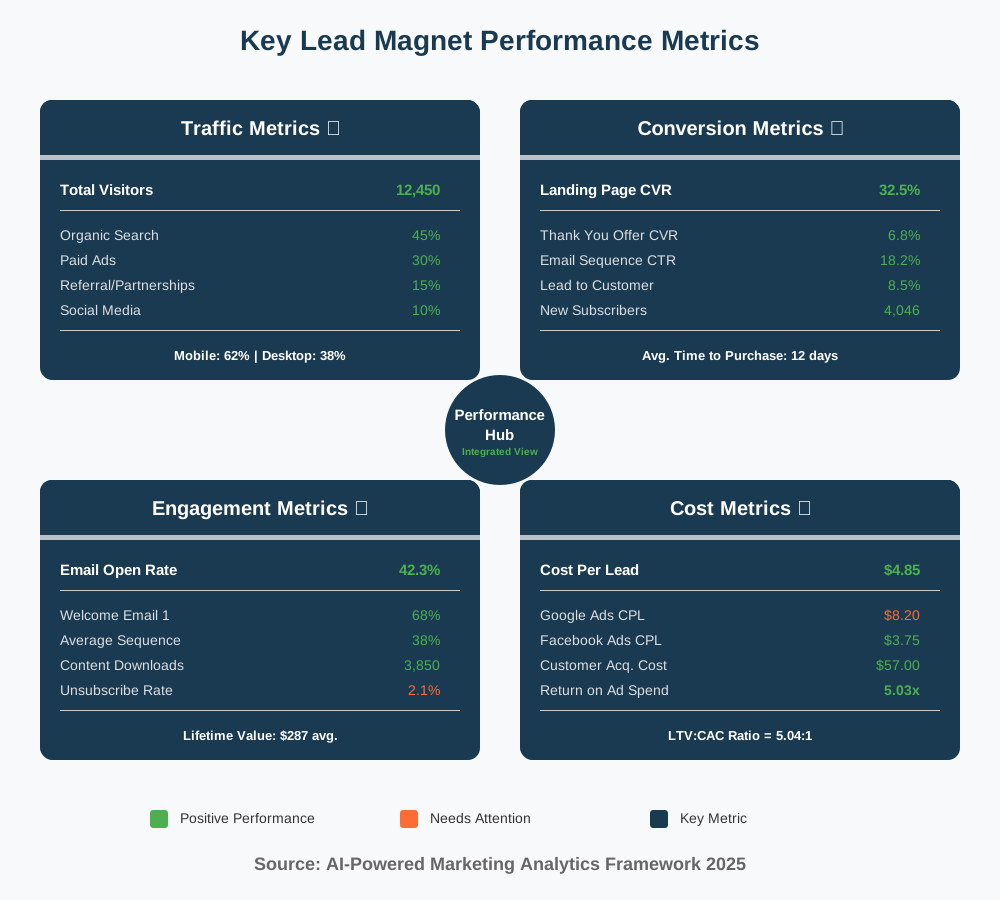
Focus on these performance indicators:
Traffic Metrics
- Total visitors to lead magnet landing page
- Traffic sources (organic, paid, referral, social)
- Geographic and demographic data
- Device types (mobile vs. desktop)
Conversion Metrics
- Landing page conversion rate (visitors to subscribers)
- Thank-you page offer conversion rate
- Email sequence click-through rates
- Ultimate conversion to paid customer
Engagement Metrics
- Email open rates by sequence position
- Time between subscription and first purchase
- Lifetime value of subscribers from different channels
- Unsubscribe rates by source
Cost Metrics
- Cost per lead by channel
- Customer acquisition cost (total marketing spend ÷ new customers)
- Return on ad spend (revenue ÷ ad cost)
- Lifetime value to acquisition cost ratio
The goal isn’t drowning in data—it’s identifying which numbers actually drive growth.
Using AI for Analytics Interpretation
Here’s where things get exciting. Modern AI platforms connect to your analytics and answer questions in plain English. No spreadsheets, no complex dashboards—just conversational insights.
We use tools that let us ask:
- “Which traffic source has the lowest cost per lead this month?”
- “Show me conversion rate trends for Facebook ads over the past quarter”
- “What percentage of subscribers from LinkedIn convert to customers?”
- “Predict next month’s lead volume based on current trends”
The AI processes thousands of data points instantly and highlights anomalies, opportunities, and concerns. It’s like having a data analyst on call 24/7.
Implement A/B Testing Systematically
Never stop testing. Small improvements compound over time into massive results.
AI tools make testing effortless:
Headlines: Test 3-5 variations simultaneously to find what resonates
Images: Compare different visuals (people, products, graphics)
Form fields: Test long forms vs. short (name + email only)
Call-to-action buttons: “Download Now” vs. “Get Your Free Guide” vs. “Send Me the Checklist”
Page layouts: Above-the-fold forms vs. scrolling content first
Run tests for at least 100 conversions per variation to reach statistical significance.
AI testing platforms calculate this automatically and declare winners with confidence scores.
One headline change we tested increased conversions by 43%. That single test, which took 20 minutes to set up, now generates dozens of extra leads monthly.
Step 6: Optimize Based on Data Insights
Analytics without action is just interesting trivia.
The real power comes from systematic optimization—taking what you learn and improving continuously.
Channel Attribution and Reallocation
Track which promotional channels deliver the best return on investment. If Facebook ads generate leads at $3 each while Google Ads cost $12, you’d naturally shift budget toward Facebook, right?
But it’s rarely that simple. Consider these factors:
- Lead quality: Cheaper leads might convert to customers at lower rates
- Volume potential: Can your top channel scale, or will costs rise?
- Diversification: Relying on one channel creates vulnerability to platform changes
- Intent differences: Paid search captures active buyers; social ads build awareness
AI helps model these trade-offs. Feed it your complete funnel data—from ad click to customer purchase—and it suggests optimal budget allocation across channels.
We’ve doubled our lead generation ROI simply by reallocating spend based on AI-recommended attribution models.
Content Optimization
Analyze which lead magnet topics or formats drive the highest engagement. If your “email template pack” converts 3x better than your “strategy guide,” create more template-based offers.
Use AI content analysis tools to identify patterns in your best-performing materials:
- Tone and reading level
- Length and structure
- Emotional triggers present
- Keywords and phrases that resonate
Then apply these insights to future lead magnets, landing pages, and promotional content.
Funnel Refinement
Map the complete journey from first touch to customer. Where do people drop off?
AI funnel analysis tools visualize this beautifully and suggest specific fixes.
Common drop-off points we see:
- Landing page loads too slowly (technical fix needed)
- Form asks for too much information (reduce fields)
- Thank-you page offer isn’t relevant (better product matching)
- Email sequence feels too salesy too fast (add more value content)
Fix one bottleneck at a time, measure impact, then move to the next. Compound improvements create dramatic results.
For entrepreneurs ready to implement everything we’ve discussed, we’ve compiled 100+ AI Marketing Prompts that cover lead magnet promotion, analytics interpretation, content creation, and funnel optimization. These ready-to-use templates eliminate guesswork and help you execute strategies faster.
Advanced AI Applications for Lead Magnet Promotion
Once you’ve mastered the basics, AI unlocks sophisticated capabilities that used to require enterprise-level resources.
Predictive Lead Scoring
AI analyzes subscriber behavior to predict who’s most likely to become a customer. It considers factors like:
- Email engagement patterns
- Website visit frequency and duration
- Content download history
- Social media interactions
- Demographic and firmographic data
High-scoring leads receive personalized upgrade offers immediately. Low-scoring leads stay in nurture sequences until behavior indicates readiness.
This automation saves countless hours while increasing conversion rates.
We’ve seen a 2-3x improvement in email-to-sale conversion using AI lead scoring.
Dynamic Content Personalization
Show different landing page content based on traffic source, geographic location, or previous site behavior. Someone arriving from a LinkedIn ad about productivity sees productivity-focused messaging, while a Facebook visitor interested in creativity sees creative benefits highlighted.
AI platforms handle this automatically, testing variations and selecting winners without manual intervention.
Chatbot Lead Qualification
Deploy AI chatbots on your landing page to answer questions, overcome objections, and qualify intent before the subscription.
The bot can:
- Explain exactly what the lead magnet contains
- Address common concerns (“Is this really free?” “Will you spam me?”)
- Suggest alternative resources if the lead magnet isn’t a fit
- Collect additional qualification data conversationally
We’ve found that chatbot-qualified leads convert to customers at 2x the rate of standard form submissions.
Common Mistakes to Avoid
We’ve made every mistake possible so you don’t have to. Here are the pitfalls that sabotage lead magnet performance:
Tracking Too Many Metrics
Focus beats comprehensiveness. Start with 5-7 core metrics. Once you understand those deeply, expand gradually. Drowning in data creates paralysis, not insight.
Promoting Before Optimizing
We see entrepreneurs launch ads to landing pages with 15% conversion rates. Spend time improving that by 30–40% before scaling paid traffic. Even a 10% conversion improvement doubles your ROI.
Ignoring Mobile Experience
Over 60% of lead magnet traffic comes from mobile devices. If your landing page isn’t mobile-optimized, you’re literally throwing away half your potential subscribers.
Setting and Forgetting
Lead magnet promotion requires active management. Review metrics weekly, test monthly, and adjust quarterly. Successful campaigns evolve continuously.
Comparing Apples to Oranges
Not all subscribers are equal. A subscriber from an engaged partner email list is worth more than a cold Facebook ad click. Track cohort performance separately and set different expectations.
Neglecting the Thank-You Page
This is free real estate for upgrades, social sharing, or partnership promotions. Sending subscribers directly to their inbox wastes a high-intent moment.
Over-Relying on One Channel
Platform algorithm changes can destroy single-channel strategies overnight. Diversify across paid, organic, and partnership channels for stability.
Frequently Asked Questions
Your Next Steps: From Strategy to Action
You now have the complete framework for promoting and measuring lead magnet performance using AI. The difference between this knowledge and actual results comes down to implementation.
Here’s what we recommend doing this week:
Day 1-2: Set up tracking infrastructure (UTM parameters, analytics, dedicated landing page)
Day 3-4: Launch your first paid campaign or partnership outreach with a small test budget
Day 5-6: Configure AI analytics tools and establish baseline metrics
Day 7: Review initial data, identify the highest-priority optimization, and implement it
Remember, perfection is the enemy of progress. Launch with “good enough” and improve based on real data rather than waiting for the perfect setup that never arrives.
The lead magnet game has fundamentally changed. What used to require marketing teams, expensive tools, and months of learning can now be executed by solo creators in weeks. AI doesn’t just automate tasks—it democratizes expertise, putting sophisticated promotion and analytics capabilities in everyone’s hands.
Your lead magnet has value. It solves real problems for real people. Our job is simply making sure those people find it, understand why they need it, and take action. With the strategies and tools outlined here, you’re equipped to do exactly that.
Start small, measure everything, and scale what works. The most successful lead magnet campaigns we’ve seen didn’t start with massive budgets or perfect strategies—they started with someone willing to test, learn, and improve continuously.
Now it’s your turn. What’s the first promotional channel you’ll test this week?
About the Authors
This article was written as a collaboration between Alex Rivera and Abir Benali for howAIdo.com.
Alex Rivera (Main Author) is a creative technologist passionate about making AI accessible to non-technical users. With a background in content strategy and digital marketing, Alex helps entrepreneurs and creators leverage AI tools to build their businesses without requiring coding skills or technical expertise. Alex believes AI should feel like a creative partner, not an intimidating technology.
Abir Benali (Co-Author) is a friendly technology writer specializing in breaking down complex AI concepts for everyday users. Abir’s practical, jargon-free approach has helped thousands of beginners implement AI solutions in their businesses and creative projects. Abir focuses on actionable instructions that anyone can follow, regardless of their technical background.
Together, we combine creative experimentation with clear, step-by-step guidance to help you use AI confidently and effectively.