
The Long-Term Impacts of AI: Navigating Tomorrow’s Transformation
The Long-Term Impacts of AI are unfolding before us in ways we’re only beginning to comprehend. As an AI ethics expert and someone who works closely with everyday users navigating this technology, I’ve witnessed both the profound promise and pressing concerns that artificial intelligence brings to our collective future. This isn’t just about smarter algorithms or faster computers—we’re talking about fundamental shifts in how we work, learn, stay healthy, and interact with the world around us.
When we consider where AI will take us over the next decades, we need to look beyond the hype and examine the real, tangible changes already taking shape. From the hospital room to the classroom, from factory floors to financial markets, artificial intelligence is quietly rewriting the rules of modern life. But here’s what matters most: understanding these changes now gives us the power to shape them responsibly, ensuring AI serves humanity rather than the other way around.
Think of this guide as your roadmap through tomorrow’s AI landscape. We’ll explore the economic transformations ahead, the ethical questions we must answer, and the opportunities we can seize if we approach this technology thoughtfully. Whether you’re worried about job security, curious about AI’s role in healthcare, or wondering how to prepare for an AI-driven future, this article breaks down the complex realities into clear, actionable insights.
AI’s Long-Term Impact on Employment: Job Creation vs. Job Displacement
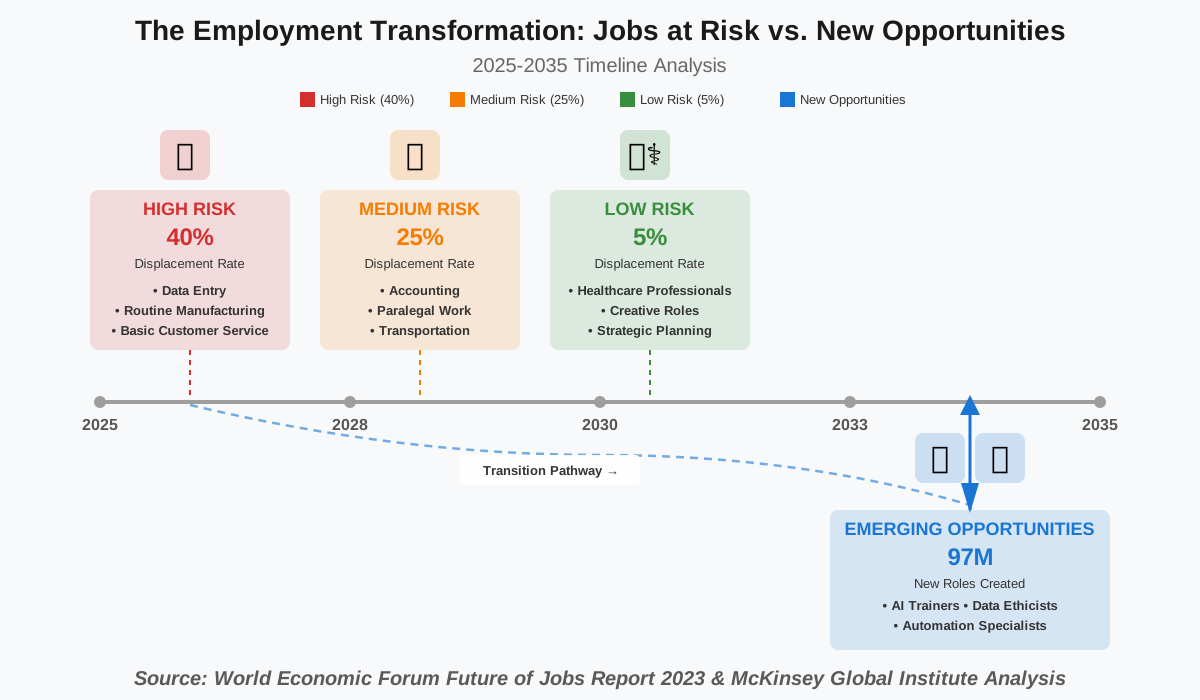
AI’s Long-Term Impact on Employment presents perhaps the most immediate concern for workers worldwide. The truth is nuanced—yes, automation will displace certain jobs, but it’s simultaneously creating entirely new categories of work we haven’t even imagined yet.
Current research suggests that by 2030, automation could displace between 400 million and 800 million jobs globally, but here’s the critical detail: AI is also projected to create 97 million new roles. The real challenge isn’t whether jobs will exist—it’s whether workers can transition to them. Routine, repetitive tasks in manufacturing, data entry, and basic customer service face the highest risk. However, jobs requiring emotional intelligence, creative problem-solving, and complex decision-making remain distinctly human domains.
What’s emerging is a hybrid workforce where humans and AI collaborate. Radiologists now work alongside AI diagnostic tools that spot patterns they might miss. Marketing professionals use AI to analyze consumer behavior, freeing them to focus on creative strategy. The jobs disappearing tend to be those with predictable patterns, while those being created demand adaptability and continuous learning.
My advice? Start building skills that complement AI rather than compete with it. Focus on developing critical thinking, emotional intelligence, creativity, and the ability to work effectively with AI tools. The workers who thrive won’t be those fighting automation but those learning to leverage it.
The Long-Term Societal Impact of AI: Ethical Considerations and Challenges
The Long-Term Societal Impact of AI extends far beyond economics into the fundamental values that shape our communities. We’re facing questions our grandparents never imagined: Who’s accountable when AI makes harmful decisions? How do we prevent algorithmic bias from perpetuating discrimination? What happens to human agency in an AI-optimized world?
These aren’t abstract philosophical debates—they’re playing out right now. Facial recognition systems show higher error rates for people of color. Hiring algorithms have been found to discriminate against women. Credit scoring models disadvantage entire communities based on historical biases embedded in training data. The challenge is that AI systems learn from our past, including our prejudices, and can amplify them at scale.
Privacy represents another critical concern. As AI systems become more sophisticated, they require enormous amounts of personal data to function effectively. We’re trading convenience for information about our habits, preferences, relationships, and behaviors. The long-term societal question becomes: What kind of surveillance society are we building, and who controls it?
Then there’s the issue of algorithmic transparency. Many AI systems operate as “black boxes”—even their creators can’t fully explain how they reach certain decisions. When these systems determine who gets loans, medical treatment, or parole, the lack of explainability raises serious justice concerns.
What gives me hope is the growing recognition of these challenges. Organizations worldwide are developing AI ethics frameworks, governments are beginning to regulate algorithmic accountability, and technologists are creating tools for detecting and mitigating bias. The path forward requires ongoing vigilance, diverse voices in AI development, and regulatory frameworks that protect individual rights without stifling innovation.
Long-Term Economic Impacts of AI: Productivity, Growth, and Inequality
Long-Term Economic Impacts of AI promise unprecedented productivity gains alongside risks of deepening inequality. AI could contribute up to $15.7 trillion to the global economy by 2030, but the benefits may not be distributed evenly across societies, sectors, or income levels.
On the productivity side, the numbers are staggering. AI systems can analyze vast datasets instantaneously, optimize complex logistics networks, predict maintenance needs before breakdowns occur, and automate countless time-consuming tasks. Companies implementing AI see productivity improvements ranging from 20% to 40% in specific operations. This efficiency translates to economic growth—more output from fewer inputs.
However, the wealth generated by AI productivity tends to concentrate among those who own the technology and possess the skills to leverage it. We’re already seeing a growing gap between AI-adopting companies and those lagging behind, between workers with technical skills and those without, and between nations investing heavily in AI infrastructure and those falling behind. This creates a winner-take-most dynamic that could exacerbate existing inequalities.
The solution isn’t rejecting AI advancement but ensuring its benefits reach broadly. This requires proactive policies: investing in education and retraining programs, creating social safety nets for workers in transition, implementing progressive taxation on automation gains, and ensuring small businesses and developing nations have access to AI tools. Economic growth means little if it leaves most people behind.
The Long-Term Impact of AI on Healthcare: Diagnosis, Treatment, and Accessibility
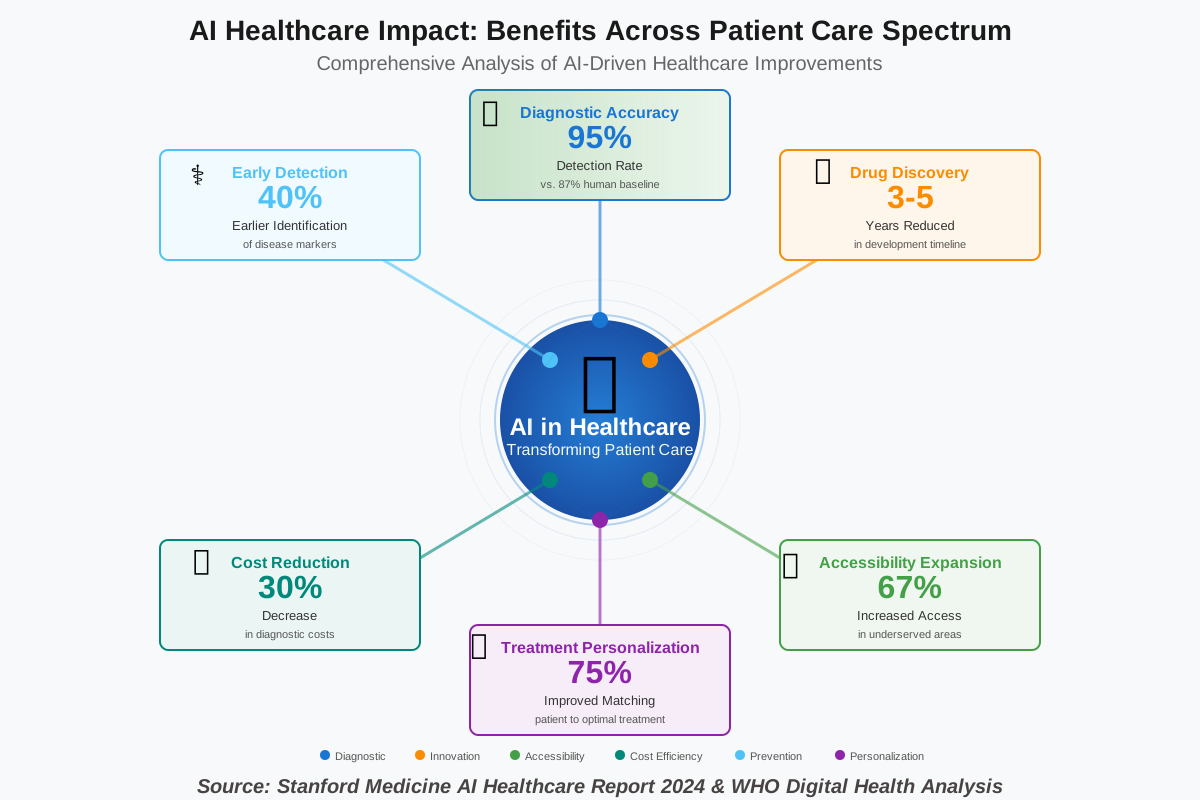
The Long-Term Impact of AI on Healthcare could be transformational in ways that save lives and reduce suffering on a massive scale. AI diagnostic tools now match or exceed human doctors in detecting certain cancers, eye diseases, and cardiac conditions. AI drug discovery platforms are compressing decades of research into months, potentially bringing treatments for rare diseases that pharmaceutical companies previously ignored.
Consider the accessibility implications. In rural areas lacking specialists, AI diagnostic tools can provide expert-level screening. In developing nations with doctor shortages, AI health assistants can offer basic medical guidance. For elderly patients managing multiple conditions, AI monitoring systems can detect problems early and alert caregivers.
But we must approach healthcare AI carefully. Medical algorithms trained on data from predominantly white, male patients may misdiagnose conditions in women and minorities. Privacy concerns intensify when dealing with sensitive health information. And there’s the human element—medicine isn’t just diagnosis but comfort, empathy, and the therapeutic relationship between patient and provider.
The ideal future isn’t replacing doctors with algorithms but augmenting human medical expertise with AI capabilities. Doctors freed from routine diagnostic tasks can spend more time with patients. AI tools can catch the rare conditions humans might miss, while humans provide the judgment, empathy, and ethical reasoning that algorithms lack. This partnership approach maximizes benefits while minimizing risks.
AI’s Long-Term Impact on Education: Personalized Learning and the Future of Teaching
AI’s Long-Term Impact on Education promises to address one of teaching’s oldest challenges: how to meet individual student needs in a classroom of diverse learners. Adaptive learning platforms now adjust content difficulty in real time based on student performance. AI tutoring systems provide unlimited patience and personalized explanations. Language learning apps use speech recognition to perfect pronunciation.
The transformation goes deeper than digital worksheets. AI can identify learning gaps before students fall behind, predict which concepts a student will struggle with based on their learning patterns, and suggest customized study strategies. For students with learning disabilities, AI tools provide accommodations automatically—converting text to speech, simplifying complex passages, or breaking tasks into manageable steps.
Teachers benefit too. AI grading assistants handle routine assessment, freeing educators to focus on mentorship and complex instruction. Analytics platforms help teachers identify which students need extra attention and which concepts require re-teaching. Lesson planning tools suggest activities aligned to learning objectives and student interests.
However, education is fundamentally about human development, not just information transfer. The best outcomes come when AI handles routine tasks while teachers focus on critical thinking, creativity, character development, and the social-emotional aspects of learning. We must guard against reducing education to optimized test performance while neglecting the broader purpose of developing well-rounded humans.
The digital divide represents another concern. Students in well-funded schools access sophisticated AI learning tools, while those in under-resourced communities fall further behind. Ensuring educational AI benefits all students requires intentional investment in equitable access.
The Long-Term Impact of AI on Transportation: Autonomous Vehicles and Smart Cities
The Long-Term Impact of AI on Transportation extends from self-driving cars to reimagined urban infrastructure. Autonomous vehicles promise to reduce the 1.35 million annual traffic deaths globally—94% of crashes involve human error. Beyond safety, AI-optimized traffic management could cut commute times by 40%, reduce fuel consumption by 30%, and free up countless hours currently spent behind the wheel.
Smart cities leveraging AI can coordinate traffic signals in real-time, adjusting to current conditions rather than following fixed patterns. Public transit systems can dynamically route buses based on demand. Parking systems can guide drivers to open spots, eliminating the circling that accounts for 30% of urban traffic. Delivery networks can optimize routes considering traffic, weather, and package priority.
The implications ripple outward. When vehicles drive themselves, car ownership may decline as ride-sharing becomes more convenient and affordable. Parking lots—which occupy up to 30% of urban land—could transform into green spaces or housing. Cities could be redesigned around people rather than cars.
Yet significant challenges remain. Autonomous vehicles still struggle in adverse weather, construction zones, and complex urban environments. The technology raises liability questions: who’s responsible when a self-driving car causes an accident? Job displacement affects millions of professional drivers. And there’s the unsettling question of how AI should make ethical decisions in unavoidable crash scenarios.
The transition will be gradual rather than sudden. Mixed traffic with both human and AI drivers creates complexity. Infrastructure must adapt with new road markings, sensors, and communication systems. Regulatory frameworks need development. But the trajectory is clear—AI will fundamentally reshape how we move through our world.
AI’s Long-Term Impact on Cybersecurity: Threats and Defenses
AI’s Long-Term Impact on Cybersecurity creates an escalating arms race between attackers and defenders. AI-powered threat detection systems can identify anomalies and potential breaches faster than any human analyst, processing millions of events per second to spot suspicious patterns. AI security tools adapt to new attack vectors automatically, providing dynamic defense against evolving threats.
But here’s the sobering reality: cybercriminals use the same technology. AI-generated phishing emails are becoming indistinguishable from legitimate messages. AI-powered malware can adapt its behavior to evade detection. Deepfake technology enables sophisticated social engineering attacks. Automated systems can probe networks for vulnerabilities far faster than humans, launching coordinated attacks at machine speed.
The long-term trajectory suggests increasingly sophisticated attacks met by increasingly sophisticated defenses. AI security systems will become essential infrastructure—no human team can match the speed and scale needed to defend modern networks. Organizations that lag in adopting AI security tools will become easy targets.
What concerns me most is the democratization of advanced cyberattack capabilities. Tools that once required expert hackers are becoming point-and-click accessible, lowering the barrier for cybercrime. This expands the threat landscape dramatically.
Protection requires a multi-layered approach. Organizations need AI-powered security tools but also robust cybersecurity hygiene, regular training, and incident response plans. Individuals should use strong authentication, remain skeptical of suspicious communications, and keep systems updated. The AI era makes vigilance more important than ever.
The Long-Term Impact of AI on Art and Creativity: Collaboration vs. Replacement
The Long-Term Impact of AI on Art and Creativity sparks passionate debate. AI can now generate images, write music, compose poetry, and create video content. Some see this as democratizing creativity—anyone can bring their vision to life regardless of technical skill. Others fear AI will devalue human artistry and eliminate creative careers.
The truth, as always, is nuanced. AI art tools don’t create from nothing—they remix and recombine patterns learned from vast databases of human-created work. They excel at certain tasks: generating variations on themes, producing placeholder content, and exploring design possibilities quickly. They struggle with genuine originality, emotional depth, cultural context, and intentional meaning.
What’s emerging is a new creative partnership. Designers use AI to rapidly prototype ideas, then refine the results with human judgment. Musicians employ AI to suggest chord progressions or generate background tracks while maintaining creative control over the composition. Writers use AI to overcome writer’s block or draft initial outlines, then apply their craft to the final work.
The key distinction is between creation and expression. AI can generate content, but art is about communicating human experience, emotion, and perspective. An AI can produce a technically proficient painting, but it doesn’t understand beauty, suffering, joy, or the human condition it depicts. That understanding—that consciousness—remains uniquely human.
Creative professionals who adapt will thrive by leveraging AI as a tool while emphasizing the irreplaceable human elements: conceptual thinking, emotional resonance, cultural commentary, and authentic personal expression. The artists who struggle will be those fighting the technology rather than learning to work with it.
AI’s Long-Term Impact on Environmental Sustainability: Solutions and Risks
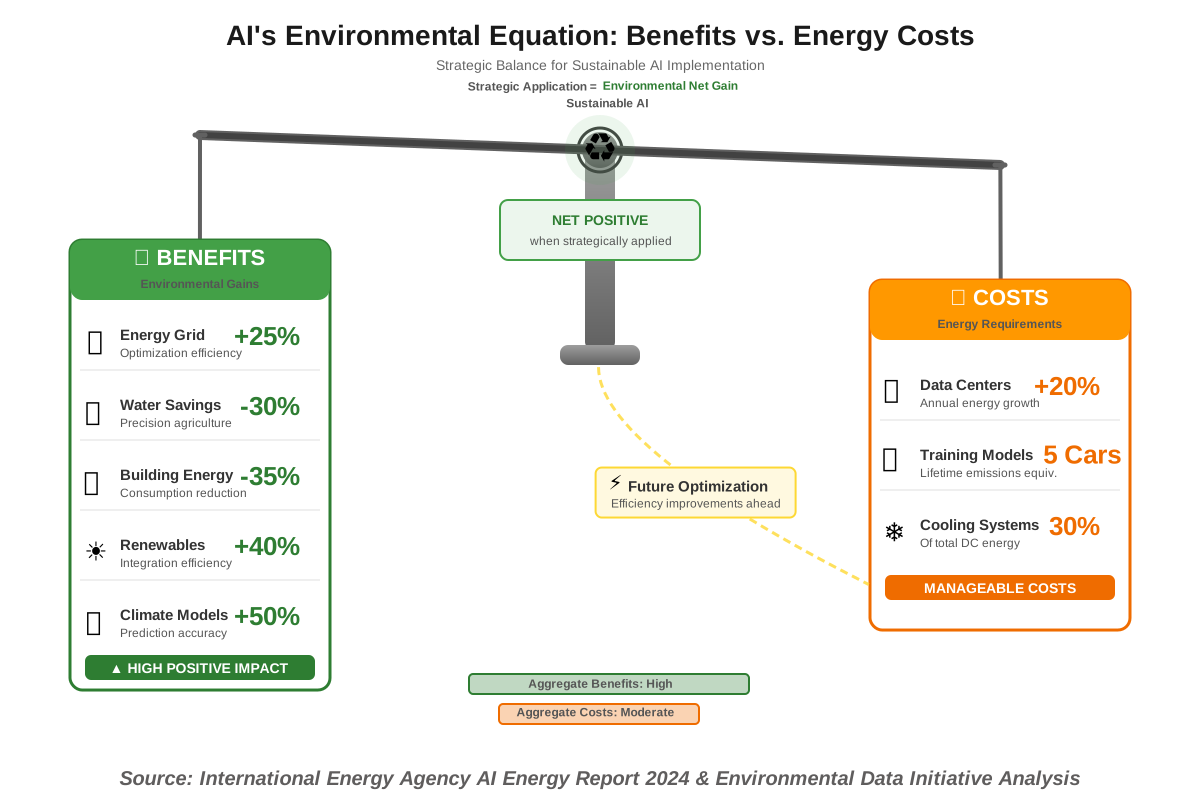
AI’s Long-Term Impact on Environmental Sustainability presents both powerful solutions and concerning risks. On the positive side, AI optimizes energy grids to reduce waste, predicts equipment failures to prevent environmental damage, monitors deforestation and illegal fishing in real-time, models climate scenarios to inform policy, and accelerates materials science research for cleaner technologies.
Consider precision agriculture: AI-powered systems reduce water usage by 30%, minimize fertilizer runoff that pollutes waterways, and increase crop yields while using fewer resources. AI-optimized building systems cut energy consumption by 20-40%. Smart grid management integrates renewable energy more efficiently, addressing intermittency challenges.
Climate modeling represents another breakthrough. AI processes massive datasets from satellites, sensors, and historical records to improve prediction accuracy and identify intervention opportunities. AI-designed materials promise better batteries, more efficient solar panels, and carbon-capture technologies.
However, AI itself carries an environmental cost. Training large AI models can consume energy equivalent to the lifetime emissions of five cars. Data centers running AI systems require enormous electricity and cooling. As AI deployment expands, its energy footprint grows.
The solution isn’t rejecting AI but using it strategically for high-impact applications while developing more efficient algorithms and cleaner energy sources for AI infrastructure. We must ensure AI’s environmental benefits significantly outweigh its costs. This requires intentional choices about where and how we deploy AI, prioritizing applications that address our most pressing environmental challenges.
The Long-Term Impact of AI on Governance and Policy: Regulation and Oversight
The Long-Term Impact of AI on Governance and Policy forces governments to address questions they’re unprepared for. How do you regulate technology that evolves faster than legislative processes? Who’s accountable when autonomous systems make harmful decisions? How do you balance innovation with public safety?
Governments worldwide are attempting various approaches. The European Union’s AI Act categorizes AI systems by risk level, imposing strict requirements on high-risk applications. China emphasizes state control over AI development and deployment. The United States favors sector-specific regulation rather than comprehensive frameworks. Each approach carries trade-offs between safety, innovation, and individual rights.
AI also transforms governance itself. Predictive analytics can help allocate public services more efficiently, identify fraud in government programs, and forecast infrastructure needs. AI-powered systems can make administrative processes faster and more consistent. Estonia’s e-governance system, heavily reliant on AI, handles everything from taxes to voting digitally.
However, algorithmic governance raises concerns about transparency and accountability. When AI systems determine welfare eligibility, criminal sentencing, or resource allocation, citizens deserve to understand and challenge these decisions. The “black box” problem becomes particularly troublesome in governance contexts.
International cooperation represents another challenge. AI development has geopolitical implications—leading nations gain economic and military advantages. This creates pressure to advance quickly, potentially at the expense of safety. Global frameworks for AI governance could mitigate risks but require unprecedented international cooperation.
Effective AI regulation requires policymakers who understand the technology, industry participation in standard-setting, strong enforcement mechanisms, and adaptive frameworks that evolve with the technology. We need governance structures that protect the public while enabling beneficial innovation.
AI’s Long-Term Impact on International Relations: Geopolitics and Security
AI’s Long-Term Impact on International Relations is becoming a defining factor in global power dynamics. Nations view AI superiority as essential to economic competitiveness and military capability. The competition for AI dominance influences trade policy, investment strategies, talent recruitment, and security alliances.
The United States and China currently lead AI development, but the European Union, United Kingdom, Canada, and others invest heavily to remain competitive. This creates a multipolar AI landscape with different regulatory philosophies and strategic priorities. Nations form AI partnerships and alliances, resembling Cold War-era bloc dynamics.
Military applications raise particular concerns. AI-enabled weapons systems, autonomous drones, cyber warfare capabilities, and surveillance technologies are advancing rapidly. The prospect of AI-controlled weapons making life-or-death decisions without human oversight troubles ethicists and military strategists alike. International efforts to establish norms for military AI remain nascent and contentious.
AI also amplifies information warfare capabilities. Sophisticated disinformation campaigns using AI-generated content can influence elections, destabilize societies, and manipulate public opinion at scale. Detecting and countering AI-powered propaganda requires technological solutions but also media literacy and critical thinking skills among citizens.
Economic interdependence complicates matters. Nations compete in AI but also rely on international cooperation—shared research, global supply chains for AI hardware, and collaborative approaches to AI safety. Finding balance between competition and cooperation represents a key diplomatic challenge.
The long-term outcome depends on whether nations view AI primarily through a competitive or cooperative lens. Treating AI as a zero-sum competition risks an unstable arms race. Recognizing shared interests in AI safety, beneficial applications, and risk mitigation could foster cooperation that benefits humanity broadly.
The Long-Term Impact of AI on Scientific Discovery: Research and Innovation
The Long-Term Impact of AI on Scientific Discovery is accelerating the pace of innovation across disciplines. AI analyzes massive datasets to identify patterns humans would never spot, generates hypotheses for testing, simulates complex systems, and automates routine research tasks. This amplifies human scientific capability dramatically.
Consider protein folding—understanding how proteins fold into three-dimensional structures is crucial for biology and medicine. The problem took decades to make modest progress. DeepMind’s AlphaFold solved it in months using AI, predicting structures for virtually all known proteins. This breakthrough accelerates drug development, disease understanding, and biological research.
AI assists in materials science by predicting properties of potential compounds before expensive synthesis. In astronomy, AI processes telescope data to identify exoplanets, classify galaxies, and detect cosmic phenomena. Climate scientists use AI to model complex Earth systems. Particle physicists employ AI to analyze collision data from accelerators.
The impact extends to how research is conducted. AI literature review tools help scientists stay current with exponentially growing research. AI-powered lab equipment automates experiments. Simulation and modeling capabilities test hypotheses virtually before physical experimentation.
However, AI introduces challenges too. When AI suggests hypotheses or identifies patterns, scientists must understand the reasoning to validate findings. The “black box” problem persists—if AI discovers something but can’t explain how, can we trust it? There’s also concern that AI might identify correlations without causation, leading research down unproductive paths.
The future of science likely involves human-AI collaboration, where AI handles data-intensive pattern recognition and simulation while humans provide theoretical frameworks, experimental design, interpretation, and the creative intuition that drives breakthrough thinking. This partnership could compress centuries of potential discoveries into decades.
AI’s Long-Term Impact on Agriculture: Automation and Food Security
AI’s Long-Term Impact on Agriculture addresses one of humanity’s most fundamental challenges: feeding a growing global population sustainably. Precision agriculture powered by AI optimizes every aspect of farming—when to plant, where to apply fertilizer, how much water each section of field needs, and when to harvest for maximum yield.
Drones and satellites equipped with AI analyze crop health across vast acreages, identifying disease or pest problems before they spread. AI-powered robots handle delicate tasks like fruit picking that previously required human labor. Automated systems monitor livestock health, detecting illness early and optimizing feeding schedules.
The efficiency gains are substantial. AI reduces water usage by 30-50% through precise irrigation. Chemical inputs drop 20-40% by targeting applications exactly where needed. Crop yields increase 10-30% through optimal timing and resource allocation. These improvements make agriculture more sustainable and productive simultaneously.
Vertical farms—indoor facilities using AI to control growing conditions—produce crops year-round with 95% less water and 99% less land than traditional farming. AI manages the complex interplay of light, temperature, humidity, and nutrients. While energy-intensive, these systems could provide fresh produce in urban areas and climates unsuitable for conventional agriculture.
Food security in developing nations could benefit enormously. AI advisory systems on smartphones provide smallholder farmers with expert guidance on crop management, pest control, and market prices. Weather prediction helps farmers make better planting decisions. Early warning systems for drought or disease could prevent food crises.
Challenges include the cost of AI agricultural technology, which favors large operations over small farms, potentially accelerating farm consolidation. Data privacy concerns arise when agricultural AI systems collect detailed information about farming operations. And there’s the perennial question of rural job displacement as automation increases.
The Long-Term Impact of AI on Customer Service: Automation and Personalization
The Long-Term Impact of AI on Customer Service is already visible in chatbots, virtual assistants, and automated support systems. AI-powered customer service operates 24/7, handles multiple inquiries simultaneously, accesses complete customer histories instantly, and resolves routine issues without human intervention. Response times drop from hours to seconds.
Modern AI assistants understand natural language, detect customer emotion through text analysis, and escalate complex issues to human agents appropriately. They learn from each interaction, continuously improving responses. Personalization engines anticipate customer needs based on behavior patterns, proactively offering relevant solutions.
For businesses, the economics are compelling. AI customer service costs a fraction of human representatives while handling greater volume. Companies redirect human agents to complex problems requiring judgment, empathy, and creative problem-solving. Customer satisfaction often improves for routine inquiries that AI handles efficiently.
Yet significant limitations remain. AI struggles with genuinely novel problems, complex situations requiring judgment, and customers needing emotional support. The frustration of being stuck in AI loops trying to reach a human representative is a common complaint. Many customers still prefer human interaction for important issues.
The best approach combines AI efficiency for routine matters with human support for complex or sensitive issues. AI handles 80% of inquiries that are straightforward, freeing human agents to focus on the 20% that require expertise and empathy. This hybrid model delivers efficiency while maintaining service quality.
The impact on customer service employment mirrors broader patterns—routine positions decline while roles requiring problem-solving, relationship management, and specialized knowledge remain valuable. Training customer service workers to collaborate effectively with AI becomes essential.
AI’s Long-Term Impact on Manufacturing: Automation and Efficiency
AI’s Long-Term Impact on Manufacturing is creating the “smart factory” where AI systems orchestrate production with minimal human intervention. AI optimizes supply chains, predicts equipment maintenance needs, ensures quality control, and adapts production in real-time to changing conditions. The result is unprecedented efficiency and flexibility.
Predictive maintenance alone generates substantial value. AI analyzes sensor data to identify subtle patterns indicating impending equipment failure, scheduling maintenance before breakdowns occur. This prevents costly downtime and extends equipment life. Manufacturers report maintenance cost reductions of 30% and downtime reductions of 50%.
Quality control becomes more consistent and comprehensive. AI vision systems inspect products at speeds and accuracy levels beyond human capability, identifying microscopic defects. Machine learning algorithms detect quality issues earlier in production, reducing waste. Some manufacturers achieve defect rates below one per million units.
Production optimization reaches new levels. AI adjusts manufacturing parameters in real-time based on material variations, environmental conditions, and demand forecasts. Generative design AI creates components optimized for specific constraints—stronger, lighter, or more efficient than human designers would conceive. Digital twins—AI-powered simulations of physical systems—allow manufacturers to test changes virtually before implementation.
The workforce impact is significant but nuanced. Routine assembly positions decline as robots handle repetitive tasks. However, jobs in AI system management, robot maintenance, data analysis, and process optimization grow. Successful manufacturers retrain existing workers rather than wholesale replacement.
The divide between AI-adopting manufacturers and those lagging behind widens dramatically. Companies leveraging AI achieve productivity gains of 20-40%, creating competitive advantages that others struggle to match. This accelerates industry consolidation while creating pressure on all manufacturers to adopt AI or risk obsolescence.
The Long-Term Impact of AI on Finance: Trading, Risk Management, and Fraud Detection
The Long-Term Impact of AI on Finance touches everything from how stocks trade to how individuals access credit. AI-powered trading algorithms execute billions of transactions daily, operating at speeds measured in microseconds. AI analyzes market data, news, social media sentiment, and countless other factors to inform trading decisions that humans couldn’t process quickly enough.
Risk management benefits enormously from AI’s pattern recognition capabilities. Financial institutions use AI to assess credit risk more accurately, detect fraudulent transactions in real-time, model market scenarios, and ensure regulatory compliance. AI analyzes factors human underwriters might overlook, potentially making credit more accessible while reducing default rates.
Fraud detection represents one of AI’s clearest successes in finance. Traditional rule-based systems generate excessive false positives, flagging legitimate transactions as suspicious. AI learns normal behavior patterns for each customer, identifying genuinely anomalous activity with far greater accuracy. This protects consumers while reducing friction in legitimate transactions.
Personal finance is being transformed. AI-powered advisors provide investment guidance at costs far below human financial advisors, making wealth management accessible to people with modest assets. Budgeting apps use AI to analyze spending patterns and provide personalized savings recommendations. AI-driven lending platforms assess creditworthiness using alternative data, helping people without traditional credit histories.
However, finance AI raises concerns. Algorithmic trading can amplify market volatility, contributing to flash crashes. AI credit models trained on historical data may perpetuate discriminatory lending patterns. The complexity and speed of AI systems make financial markets harder to regulate and create systemic risks that regulators struggle to understand.
The opacity of AI decision-making conflicts with financial regulations requiring explainable credit decisions. When AI denies a loan, the applicant deserves to know why—but complex AI models make providing clear explanations difficult. Balancing AI’s capabilities with transparency and fairness requirements remains an ongoing challenge.
AI’s Long-Term Impact on Entertainment: Content Creation and Consumption
AI’s Long-Term Impact on Entertainment is reshaping how content is created, distributed, and consumed. Streaming services use AI recommendation algorithms to personalize viewing suggestions, keeping audiences engaged. Game developers employ AI to create responsive non-player characters and procedurally generate vast game worlds. Music streaming platforms curate personalized playlists, understanding individual tastes.
Content creation itself is being transformed. AI assists in scriptwriting by analyzing successful stories and suggesting plot elements. Video editing AI automatically cuts footage, matches music, and creates transitions. Visual effects that once required months of manual work now generate in days. AI voice synthesis creates dialogue in any language, expanding content accessibility globally.
The film and television industry uses AI to predict audience preferences, informing production decisions. Studios analyze scripts with AI to forecast box office performance. Marketing campaigns leverage AI to target audiences precisely. Even casting decisions increasingly rely on AI analysis of actor popularity and audience demographics.
Gaming benefits substantially. AI creates more believable and challenging opponents, adapts game difficulty to player skill, and generates unique content, ensuring no two playthroughs are identical. AI-driven narrative games respond to player choices in sophisticated ways, creating personalized story experiences.
Music production sees similar innovations. AI composition tools help musicians overcome creative blocks, generate backing tracks, or explore new styles. Mastering software uses AI to optimize audio quality. AI even creates entire songs—though quality and originality remain debatable.
The concern, of course, is whether AI-generated content lacks the soul and authenticity of human-created art. There’s also the question of copyright—who owns AI-generated content? How do we credit contributions when AI assists in creation? These questions lack clear answers yet.
What seems likely is a spectrum of content—fully AI-generated material for low-stakes entertainment, AI-assisted human creation for most commercial content, and purely human-created work valued for its authenticity and artistic vision. The entertainment that endures will likely be that which uses AI as a tool while retaining genuine human creativity and emotional resonance.
The Long-Term Impact of AI on Legal Systems: Automation and Justice
The Long-Term Impact of AI on Legal Systems promises greater efficiency while raising profound questions about algorithmic justice. AI legal research tools instantly find relevant cases, statutes, and precedents, work that once took junior attorneys days. Contract analysis AI reviews agreements for risks and anomalies. Document discovery in litigation—sorting through millions of documents—becomes manageable with AI that identifies relevant materials accurately.
Predictive justice tools analyze case outcomes, helping attorneys assess settlement versus trial decisions. Some systems even predict judge behavior based on past rulings. This information helps litigants make better-informed strategic choices.
However, AI in criminal justice raises serious concerns. Risk assessment algorithms used in bail and sentencing decisions have shown bias against minorities. When these tools influence who remains incarcerated and who goes free, the stakes couldn’t be higher. The use of facial recognition in policing—with higher error rates for people of color—exemplifies how AI can perpetuate injustice while appearing objective.
The fundamental question is whether algorithmic decision-making belongs in justice systems at all. Justice requires not just consistency but contextual understanding, mercy, and recognition of individual circumstances. Can an algorithm truly deliver justice, or merely a mechanical application of patterns?
Legal professionals must also consider AI’s role in access to justice. AI-powered legal assistants could help people who can’t afford attorneys navigate legal systems, file documents correctly, and understand their rights. This could democratize legal services significantly.
The path forward requires careful guardrails. AI legal tools should assist human judgment rather than replace it. Algorithmic decision-making in high-stakes contexts demands transparency, regular audits for bias, and clear accountability. We must ensure AI improves justice rather than creating a two-tiered system where those who can afford human lawyers receive better outcomes.
AI’s Long-Term Impact on Retail: Personalization and Supply Chain Management
AI’s Long-Term Impact on Retail transforms both customer-facing experiences and backend operations. Personalization engines analyze browsing and purchase history to recommend products with uncanny accuracy. Dynamic pricing algorithms adjust costs based on demand, inventory, and competitor pricing in real time. Virtual try-on tools use AI to show how clothes, furniture, or makeup would look on customers.
Behind the scenes, supply chain optimization driven by AI revolutionizes retail operations. Demand forecasting AI predicts product needs with far greater accuracy than traditional methods, reducing overstock and stockouts. Automated warehouses use AI-powered robots to fulfill orders rapidly. Route optimization ensures efficient delivery while minimizing costs and environmental impact.
Inventory management becomes predictive rather than reactive. AI analyzes weather, local events, social media trends, and countless other factors to anticipate demand. Retailers maintain optimal stock levels, reducing waste while ensuring availability. This is particularly valuable for perishable goods, where overordering means spoilage.
Cashierless stores using AI-powered computer vision eliminate checkout lines entirely. Customers simply take items and leave while AI tracks purchases and charges accounts automatically. While raising privacy concerns, this technology significantly improves customer experience.
Small retailers gain access to capabilities previously exclusive to large chains. Cloud-based AI retail tools provide inventory management, customer analytics, and personalized marketing at accessible price points. This levels the playing field somewhat, though large retailers still benefit from greater data and resources.
The challenge involves balancing personalization with privacy. Retailers collect extensive data about shopping behaviors, preferences, and habits. While this enables better service, it also creates surveillance concerns and risks if data is mishandled. Consumers increasingly demand control over their data even while enjoying personalized experiences.
Employment in retail shifts from cashiers and stock clerks toward roles in customer service, AI system management, and analytics. The in-store experience becomes more consultative as routine tasks automate, potentially improving job satisfaction for remaining retail workers while reducing total employment.
The Long-Term Impact of AI on Space Exploration: Robotics and Data Analysis
The Long-Term Impact of AI on Space Exploration enables missions impossible with human capabilities alone. AI-powered rovers like Perseverance navigate Martian terrain autonomously, analyzing rock samples and identifying promising targets for detailed study. AI systems on spacecraft make real-time decisions without waiting for instructions from Earth—critical when communication delays last minutes or hours.
The volume of data from space missions overwhelms human analysis capabilities. AI processes telescope imagery to identify exoplanets, classify galaxies, and detect cosmic phenomena. The Event Horizon Telescope’s black hole image relied on AI algorithms to synthesize data from telescopes worldwide. AI helps scientists sift through massive datasets to find the rare, significant events.
Satellite management and collision avoidance increasingly depend on AI. With thousands of satellites and debris pieces in orbit, tracking and preventing collisions requires processing capabilities beyond human operators. AI continuously monitors space traffic, predicts potential collisions, and coordinates avoidance maneuvers.
Future deep space missions will rely even more heavily on AI. Long-duration missions to Mars or beyond require autonomous systems capable of responding to emergencies without human intervention. Habitat systems, life support, navigation, and scientific operations will need AI management as communication delays make Earth-based control impractical.
AI also accelerates space research on Earth. Simulations of planetary formation, stellar evolution, and cosmological phenomena run on AI-enhanced supercomputers, processing in days what once took months. Machine learning helps design more efficient spacecraft, optimize fuel usage, and plan mission trajectories.
The limitations involve the need for reliable AI in harsh space environments with radiation, extreme temperatures, and no possibility of repairs. AI systems must be extraordinarily robust and verifiable. The consequences of AI failure in space can mean mission loss or even crew danger.
AI’s Long-Term Impact on Accessibility for People with Disabilities
AI’s Long-Term Impact on Accessibility for People with Disabilities offers transformational possibilities for independence and inclusion. Real-time speech-to-text services powered by AI enable people who are deaf or hard of hearing to participate fully in conversations and meetings. AI-generated captions and audio descriptions make visual content accessible to blind users.
Computer vision AI acts as eyes for visually impaired individuals, describing surroundings, reading signs, recognizing faces, and identifying obstacles. Smartphone apps using AI provide guidance for navigation, both indoors and outdoors, offering unprecedented mobility independence.
For people with mobility impairments, AI-powered prosthetics and exoskeletons respond to neural signals or remaining muscle control, restoring functionality. Voice control systems enabled by natural language AI allow environmental control—adjusting lighting, temperature, and entertainment systems—without physical manipulation.
Communication aids using predictive text and AI-generated speech help people with speech impairments communicate more easily and naturally. AI analyzes partial words or patterns to suggest complete thoughts, accelerating communication dramatically.
Cognitive accessibility benefits too. AI personal assistants can provide medication reminders, schedule management, and step-by-step guidance through complex tasks. For people with autism, AI tools help interpret social cues and facilitate communication.
The workplace becomes more accessible. AI transcription services level the playing field in meetings. Screen reader improvements using AI make digital interfaces more navigable. Automated accommodation systems can adjust workplace elements based on individual needs without requiring constant manual adjustment.
However, accessibility technology remains unequally distributed. High costs limit access for many who could benefit. AI systems trained primarily on able-bodied users may perform poorly for people with disabilities. Ensuring accessibility for AI to serve all who need it requires intentional design, diverse training data, and affordable distribution models.
The Long-Term Impact of AI on Mental Health: Diagnosis and Treatment
The Long-Term Impact of AI on Mental Health addresses a critical healthcare gap. Mental health services are scarce in many areas, wait times are long, and stigma prevents many from seeking help. AI mental health chatbots provide 24/7 support, helping people manage symptoms, practice coping strategies, and access resources. While not replacing therapists, these tools offer crucial support between sessions or for those unable to access traditional care.
Early detection represents one of AI’s most promising mental health applications. AI analyzes speech patterns, social media activity, smartphone usage, and other digital markers to identify signs of depression, anxiety, or crisis before serious escalation. This could enable early intervention when treatment is most effective.
Personalized treatment benefits from AI’s pattern recognition capabilities. By analyzing which interventions work for patients with similar characteristics and symptoms, AI can suggest personalized treatment approaches. This helps clinicians navigate the current trial-and-error process of finding effective medications and therapies.
Therapy delivery itself is evolving. Virtual reality therapy powered by AI helps people confront phobias, practice social skills, or process trauma in controlled environments. AI-enhanced cognitive behavioral therapy programs guide users through evidence-based exercises with personalization based on progress and response.
Diagnostic support tools help clinicians identify mental health conditions more accurately. AI analyzes patient reports, behavior patterns, and clinical assessments to suggest possible diagnoses, helping catch conditions that might otherwise be missed or misidentified.
Critical concerns exist around mental health AI. Chatbots cannot handle crisis situations safely—mishandling suicidal thoughts could have tragic consequences. Privacy is paramount with sensitive mental health data. AI lacks the empathy, human connection, and therapeutic relationship essential to mental healthcare. AI recommendations could reinforce biases in mental health treatment.
The role of AI in mental health should be supplementary—expanding access, supporting clinicians, and providing tools for self-management—while recognizing that genuine therapeutic relationships require human connection. Technology should augment human care, not replace it.
AI’s Long-Term Impact on Language Translation: Breaking Down Communication Barriers
AI’s Long-Term Impact on Language Translation is breaking down communication barriers that have separated humans throughout history. Modern AI translation achieves near-human quality for many language pairs, enabling real-time conversation across languages. Business deals, diplomatic negotiations, and personal relationships once impossible due to language differences now become feasible.
The improvement in translation quality is dramatic. Early machine translation produced awkward, often incomprehensible results. Current AI systems understand context, idioms, cultural references, and nuance, producing translations that often sound natural. They continue improving as they process more multilingual data.
Real-time translation devices allow travelers to navigate foreign countries confidently. Translation apps instantly convert text from signs, menus, and documents. Video calls feature live translation, enabling face-to-face conversation despite language differences. Educational content becomes globally accessible as AI instantly translates lectures and materials.
Less common languages benefit particularly from AI translation. Previously, translation services focused on major languages due to the cost and availability of human translators. AI enables translation for minority languages, preserving linguistic diversity and giving speakers access to global information and services.
However, subtleties remain challenging. Humor, poetry, legal language, and technical terminology still often require human translators. Cultural context that isn’t explicit in text may be missed. Translation between very dissimilar languages (like English and Mandarin) remains harder than between related languages.
There’s also concern about language evolution and preservation. If everyone relies on AI translation, will fewer people learn second languages? Does something essential get lost when communication always passes through algorithmic interpretation? Can AI capture the beauty and richness of human languages?
Despite these questions, the trajectory is clear. AI translation is making multilingual communication accessible to everyone with a smartphone. This could foster global understanding, enable international collaboration, and give billions of people access to information previously locked behind language barriers.
The Long-Term Impact of AI on Urban Planning: Smart Cities and Sustainable Development
The Long-Term Impact of AI on Urban Planning reimagines how cities function and develop. Smart city initiatives use AI to optimize traffic flow, reduce energy consumption, manage waste collection, monitor air quality, and coordinate public services. The result is more livable, efficient, and sustainable urban environments.
Urban planners leverage AI to model development scenarios before construction begins. Simulations predict how new buildings, roads, or public transit affect traffic patterns, housing costs, energy demand, and community character. This allows data-driven decisions rather than relying primarily on intuition and limited analysis.
AI analyzes vast amounts of urban data—traffic sensors, energy meters, social media, demographic information, and economic indicators—to identify problems and opportunities. Patterns invisible to human planners emerge, enabling targeted interventions. For example, AI might identify underutilized spaces suitable for affordable housing or pinpoint areas needing better public transit.
Infrastructure maintenance becomes predictive. AI monitoring systems detect deteriorating roads, bridges, and utilities before failures occur. This prevents costly emergencies while optimizing maintenance budgets. Water systems use AI to detect leaks quickly, reducing waste in a world of increasing water scarcity.
Citizen engagement improves through AI-powered platforms that analyze feedback, identify common concerns, and help planners understand community needs. Participatory planning becomes more effective as AI helps synthesize input from thousands of residents.
Environmental sustainability advances significantly. AI optimizes building energy usage, coordinates renewable energy integration, manages stormwater to prevent flooding, and routes traffic to reduce emissions. Cities using AI comprehensively can reduce energy consumption by 30% and carbon emissions even further.
Concerns include surveillance and privacy as sensors and cameras collect extensive data about urban activities. There’s also the question of who controls smart city systems and whose interests they serve. Ensuring AI-powered urban planning benefits all residents, not just wealthy neighborhoods, requires intentional equity considerations.
AI’s Long-Term Impact on Disaster Response: Prediction and Mitigation
AI’s Long-Term Impact on Disaster Response provides critical capabilities for saving lives and reducing damage. AI analyzes seismic data, weather patterns, satellite imagery, and historical information to predict disasters with increasing accuracy and lead time. Early warning systems powered by AI provide precious extra hours or days for evacuation and preparation.
During disasters, AI processes information from multiple sources—social media posts, emergency calls, sensor networks, news reports—to create comprehensive situational awareness. This helps emergency managers understand rapidly evolving situations and allocate resources effectively. AI identifies areas needing immediate attention and predicts how situations will develop.
Search and rescue operations benefit from AI-powered drones and robots that can access dangerous areas humans cannot safely enter. Computer vision AI analyzes imagery to locate survivors in collapsed buildings or disaster zones. These technologies accelerate rescue efforts during the critical hours when survival chances are highest.
Resource allocation becomes more efficient. AI predicts where supplies, personnel, and equipment will be needed, helping prevent both shortages and waste. Logistics optimization ensures aid reaches affected populations quickly. AI even helps coordinate among multiple responding organizations, reducing confusion and duplication.
Recovery planning leverages AI analysis of damage assessments, insurance claims, and infrastructure status to prioritize rebuilding efforts. Simulations help communities build back more resiliently, learning from the disaster to reduce future vulnerability.
Climate adaptation increasingly depends on AI. As extreme weather events become more frequent and severe, AI helps communities prepare, respond, and adapt. Predictive models inform infrastructure investment, land use planning, and emergency preparedness.
Challenges include data quality and availability—disaster prediction requires vast amounts of accurate data. False alarms from AI systems can erode public trust and waste resources. Access to AI disaster technology varies globally, with vulnerable populations in developing nations often lacking these capabilities despite facing greater disaster risks.
The Long-Term Impact of AI on Scientific Research Funding: Allocation and Evaluation
The Long-Term Impact of AI on Scientific Research Funding is transforming how research proposals are evaluated and funding decisions are made. AI systems analyze research proposals against databases of previous work, identifying novelty, feasibility, and potential impact. This helps funding agencies process enormous numbers of applications more efficiently and consistently.
Citation analysis powered by AI tracks research impact beyond simple publication counts. AI identifies influential work, emerging research areas, and collaborative networks. This provides richer information about scientific contributions when making funding decisions. Early-career researchers whose work is genuinely innovative but not yet widely cited may benefit from more nuanced evaluation.
AI also helps identify biases in funding decisions. Analysis of past awards can reveal systemic patterns favoring certain institutions, demographic groups, or research areas. Making these patterns visible enables corrective action toward more equitable funding distribution.
Research matching systems use AI to connect investigators with relevant funding opportunities, collaborators, and resources. This accelerates research progress by facilitating connections that might not occur otherwise. Smaller institutions and isolated researchers gain better access to opportunities.
Portfolio analysis helps funding agencies balance their investments across basic research, applied work, high-risk projects, and incremental advances. AI models predict which combinations of funding decisions maximize scientific progress, societal benefit, and risk management.
However, AI evaluation raises concerns. Truly innovative research often breaks from established patterns—exactly the kind of work AI systems trained on past successes might rate poorly. There’s a risk of AI reinforcing conventional thinking rather than supporting the creative leaps that drive breakthrough discoveries.
Peer review remains essential despite AI assistance. Human judgment about significance, creativity, and scientific merit cannot be replaced by pattern recognition. The ideal approach uses AI to handle routine evaluation tasks while preserving human expertise for the crucial decisions about research direction and resource allocation.
AI’s Long-Term Impact on Human Relationships: Connection and Isolation
AI’s Long-Term Impact on Human Relationships presents a profound paradox—technology that connects us globally while potentially isolating us locally. AI-powered social media algorithms optimize for engagement, often amplifying divisive content and creating echo chambers. The very systems designed to bring people together can drive us apart by reinforcing biases and reducing exposure to diverse perspectives.
Dating and relationship formation increasingly rely on AI matching algorithms. These systems analyze compatibility factors, conversational patterns, and behavioral data to suggest potential partners. For some, this efficiently connects compatible individuals who might never otherwise meet. For others, it reduces human relationships to optimizable variables, potentially missing the serendipity and mystery essential to attraction.
AI companions and chatbots provide emotional support, conversation, and even companionship. For isolated elderly individuals, people with social anxiety, or those in difficult circumstances, these tools offer genuine value. However, there’s concern about people substituting AI relationships for human connection, particularly as the technology becomes more sophisticated and emotionally engaging.
Communication itself changes. AI-powered translation enables connections across language barriers. Video filters and augmented reality allow people to present enhanced or altered versions of themselves. AI writing assistants help craft messages. While these tools facilitate communication, they also introduce new forms of artifice and distance.
Work relationships evolve as remote collaboration becomes more AI-mediated. Virtual meeting assistants, automated scheduling, and AI-generated summaries—these tools make distributed teams function better but may reduce the informal interactions that build workplace relationships and culture.
Family connections see mixed effects. Video calls with AI-enhanced quality and features keep far-flung families connected. AI photo organization helps preserve and share memories. However, device addiction—driven partly by AI algorithms designed to maximize screen time—reduces face-to-face interaction even among people in the same room.
The path forward requires intentionality. We must use AI tools in ways that genuinely strengthen human bonds rather than substituting for them. Technology should facilitate but not replace the face-to-face connection, vulnerability, and shared experience that create meaningful relationships. This means conscious choices about how and when we use AI-mediated communication.
The Long-Term Impact of AI on Personal Data Privacy: Security and Control
The Long-Term Impact of AI on Personal Data Privacy raises some of technology’s most urgent questions. AI systems require vast amounts of data to function effectively, creating enormous databases about individual behaviors, preferences, relationships, health, finances, and activities. The privacy implications are staggering and often poorly understood by users who casually share data for convenience.
AI makes surveillance dramatically more capable. Facial recognition tracks people through public spaces. Behavioral analytics predict individual actions and preferences. Pattern analysis can infer sensitive information never explicitly shared—AI can deduce sexual orientation, political beliefs, health conditions, and financial status from seemingly innocuous data like shopping patterns or social media likes.
Data breaches become catastrophic when AI analyzes stolen information. What used to be just names and addresses are now detailed profiles that show private information about people’s lives. Criminals use AI to exploit this data through targeted scams, identity theft, and sophisticated social engineering.
The notion of anonymity increasingly becomes fiction. Even when data is stripped of identifying information, AI can often re-identify individuals by cross-referencing multiple datasets. Location data alone can uniquely identify most people based on their daily movement patterns.
Consent mechanisms are failing. Privacy policies run to thousands of words that few read. Users lack meaningful choice—declining data collection often means losing access to essential services. The complexity of how AI processes and shares data makes informed consent nearly impossible.
Regulation attempts to address these concerns through laws like GDPR in Europe and CCPA in California, granting individuals rights to access, correct, and delete their data. However, enforcement is challenging, and many jurisdictions lack strong privacy protections.
Technical solutions offer some protection. Privacy-preserving AI techniques allow certain computations on encrypted data. Federated learning trains AI models without centralizing data. Differential privacy adds noise to datasets to prevent individual identification. However, these approaches often sacrifice accuracy or capability.
Individuals must become more data-conscious. Use privacy-focused alternatives when available. Limit data sharing to necessary contexts. Understand that “free” services extract value through data collection. Support privacy regulations. Most importantly, recognize that data privacy isn’t merely about hiding wrongdoing—it’s about maintaining human dignity and autonomy in an age of unprecedented surveillance.
AI’s Long-Term Impact on the Nature of Work: Skills and Adaptability
AI’s Long-Term Impact on the Nature of Work extends beyond which jobs exist to how we fundamentally conceptualize employment, skills, and career paths. The half-life of skills is shrinking rapidly—knowledge that once remained relevant for decades now becomes outdated in years. The career path where you learn a trade and practice it for life is disappearing.
Adaptability becomes the most critical skill. Workers who continuously learn, adjust to new tools, and reinvent their roles will thrive. Those expecting stable, unchanging employment face disruption. This places enormous pressure on individuals while raising questions about who bears the cost of constant retraining.
Work becomes increasingly project-based and fluid. Traditional employment gives way to freelancing, gig work, and portfolio careers where individuals combine multiple income streams. AI platforms facilitate this by matching workers to projects, managing contracts, and handling administrative tasks. This offers flexibility but often sacrifices the security and benefits of traditional employment.
The skills AI cannot easily replicate gain value. Creativity, emotional intelligence, ethical judgment, strategic thinking, and complex communication—these distinctly human skills earn high pay. Meanwhile, routine cognitive work joins routine physical labor in facing automation pressure.
Collaboration with AI becomes a baseline expectation across professions. Lawyers work with legal research AI. Designers use generative design tools. Doctors consult diagnostic AI. Writers employ AI assistants. The question isn’t whether you’ll use AI in your work but how effectively you’ll leverage it.
Work-life boundaries blur as AI enables constant connectivity and productivity. This creates flexibility but also the expectation of perpetual availability. Setting boundaries becomes crucial for maintaining well-being in an always-on work culture.
The societal implications are profound. If AI dramatically increases productivity but concentrates wealth among a minority, how do we ensure broad prosperity? If lifelong learning becomes mandatory for employability, how do we make education accessible? If traditional employment becomes scarce, do we need new social contracts like universal basic income?
These questions lack clear answers but demand urgent attention. The future of work will be shaped by the choices we make now about education systems, social safety nets, regulation, and corporate responsibility. Ensuring AI’s workplace transformation benefits workers broadly rather than just employers and shareholders requires intentional policy and collective action.
The Long-Term Impact of AI on Aging Populations: Healthcare and Social Support
The Long-Term Impact of AI on Aging Populations addresses one of the 21st century’s defining demographic challenges. Developed nations face rapidly aging populations with insufficient caregivers. AI offers potential solutions while raising important questions about dignity, autonomy, and the nature of care.
AI-powered monitoring systems help elderly individuals maintain independence longer. Fall detection alerts caregivers immediately. Medication management systems ensure proper dosing. Smart home systems adapt environments to changing needs—raising lighting, simplifying controls, and providing reminders. These technologies allow aging in place rather than institutional care.
Social isolation, a serious health risk for elderly people, can be partially addressed by AI companions. While not replacing human connection, conversational AI provides interaction, cognitive stimulation, and emotional support. For those with limited family contact or mobility challenges preventing socialization, this technology offers genuine value.
Cognitive health benefits from AI-powered brain training, memory aids, and early dementia detection. AI analyzes speech patterns, behavior changes, and cognitive test results to identify decline earlier than traditional methods. This enables earlier intervention when treatments are most effective.
Healthcare delivery becomes more accessible. Telemedicine powered by AI enables remote consultations, reducing the burden of travel for people with mobility limitations. AI analysis of wearable sensor data provides continuous health monitoring, catching problems before they become emergencies.
Robotic assistance with physical tasks—from lifting to household chores—helps address caregiver shortages while enabling independence. Japan, facing particularly acute aging demographics, leads in developing care robots that assist with daily activities.
However, important concerns exist. Can AI-provided care substitute for human touch and connection? Does technology-mediated care diminish dignity? Who ensures AI systems respect elderly users’ autonomy and privacy? How do we protect vulnerable populations from technology designed to manipulate or exploit?
The financial implications are significant. Care robots and AI systems require investment, potentially creating inequality where wealthy elderly receive high-tech assistance while others lack basic care. Conversely, if AI successfully reduces care costs, it could make quality care more accessible broadly.
The ideal approach likely combines AI capabilities with human care in a hybrid model. Technology handles monitoring, routine tasks, and information management while human caregivers focus on emotional support, companionship, and judgment-requiring care. This maximizes both efficiency and the human connection essential to dignified aging.
Frequently Asked Questions About AI’s Long-Term Impacts
Will AI take my job? AI will transform most jobs rather than simply eliminating them. Focus on developing skills that complement AI—creativity, emotional intelligence, complex problem-solving, and ethical judgment. The workers most at risk are those performing routine, predictable tasks. Continuously learning and adapting becomes essential regardless of your field.
How can I prepare for an AI-driven future? Start building AI literacy now—understand what AI can and cannot do. Develop technical skills appropriate to your field, but prioritize uniquely human capabilities like critical thinking and emotional intelligence. Stay flexible and embrace lifelong learning. Follow AI developments in your industry and experiment with AI tools relevant to your work.
Is AI really as dangerous as some experts claim? AI presents real risks—algorithmic bias, privacy erosion, job displacement, and concentration of power. However, these are risks we can manage through thoughtful regulation, ethical development practices, and informed civic engagement. The danger lies not in AI itself but in how we choose to develop and deploy it. Staying informed and participating in discussions about AI governance helps ensure beneficial outcomes.
How will AI affect developing nations? AI’s impact on developing nations will be mixed. Benefits include improved healthcare access, educational tools, agricultural optimization, and economic opportunities. Risks include job displacement without adequate social safety nets, digital colonialism where benefits flow to developed nations, and lack of input into AI systems affecting them. Ensuring equitable AI development requires intentional effort and international cooperation.
Can AI be truly creative, or will it just copy human creativity? Current AI generates content by recognizing and recombining patterns from training data—it doesn’t create from genuine inspiration or lived experience. AI can produce novel combinations and assist creative work, but the intentionality, meaning, and emotional depth of human creativity remain distinct. AI becomes a powerful tool for creative professionals rather than a replacement.
What happens if AI becomes more intelligent than humans? This hypothetical scenario, called artificial general intelligence or superintelligence, remains speculative and potentially distant. If it occurs, the implications would be profound and unpredictable. Current AI research emphasizes safety measures, value alignment, and control mechanisms. The key is ensuring any advanced AI remains beneficial and aligned with human values—why AI safety research deserves substantial attention now.
How do we ensure AI benefits everyone, not just the wealthy? Ensuring broadly shared AI benefits requires policy intervention. This includes investing in education and retraining, creating social safety nets for displaced workers, regulating algorithmic accountability, requiring transparency in AI systems affecting important decisions, supporting open-source AI tools, and ensuring internet access and digital literacy programs reach underserved populations. Market forces alone will not distribute AI benefits equitably.
Will AI make us more or less human? This depends entirely on how we choose to use it. AI can free us from drudgery to focus on meaningful work, creativity, and connection—making us more human. Or we might use it to optimize ourselves into narrow efficiency, losing what makes life rich—making us less human. The technology itself is neutral; our values and choices determine the outcome.
Conclusion: Navigating Tomorrow Together
The Long-Term Impacts of AI will be determined not by the technology itself but by the choices we make today. We stand at a pivotal moment where AI’s trajectory remains malleable—our decisions about development, deployment, regulation, and values will shape whether AI becomes a force for broad human flourishing or concentrated power and inequality.
The future I envision leverages AI’s capabilities while preserving what makes us human. AI handles routine cognitive tasks, freeing humans for creative, meaningful work. It augments our capabilities without replacing our judgment. It serves as a tool we control rather than a force controlling us. Achieving this future requires vigilance, participation, and wisdom.
Start by educating yourself about AI’s capabilities and limitations. Experiment with AI tools in your field—understanding through use prevents both naive enthusiasm and uninformed fear. Participate in discussions about AI governance in your workplace, community, and political sphere. Your voice matters in shaping AI policy.
Develop the skills that will remain valuable: creativity, critical thinking, emotional intelligence, ethical reasoning, and adaptability. These distinctly human capabilities will be in high demand regardless of how AI evolves. Invest in continuous learning—the days of learning once and applying throughout a career are ending.
Support responsible AI development. Choose companies and services that prioritize transparency, fairness, and user control. Advocate for regulation that protects individuals while enabling innovation. Push for education systems that prepare people for an AI-augmented world.
Most importantly, remember that technology serves humanity, not the reverse. We can harness AI’s power while preserving human dignity, autonomy, and connection. The long-term impacts of AI will be what we make them—and that future begins with the choices we make today.
The transformation ahead will challenge us, but humanity has navigated major technological transitions before. With thoughtful preparation, ethical commitment, and collective action, we can ensure AI’s long-term impacts benefit everyone. The future is ours to shape. Let’s build it wisely.
References:
World Economic Forum – Future of Jobs Report 2023
McKinsey Global Institute – AI and Employment Analysis
Stanford Medicine – AI Healthcare Report 2024
World Health Organization – Digital Health Analysis
International Energy Agency – AI Energy Report 2024
Environmental Data Initiative – AI Sustainability Studies
About the Authors
This article was written through a collaboration between Nadia Chen and James Carter.
Nadia Chen (Main Author) is an AI ethics and digital safety expert dedicated to helping non-technical users navigate AI technology responsibly. With a focus on privacy protection, ethical AI use, and best practices, Nadia makes complex AI concepts accessible while emphasizing safe and responsible implementation. Her work bridges the gap between cutting-edge technology and everyday users who want to harness AI’s benefits while protecting their interests.
James Carter (Co-Author) is a productivity coach specializing in helping professionals leverage AI to save time and boost efficiency. With practical experience in AI implementation across industries, James focuses on actionable strategies that make AI accessible to everyone, regardless of technical background. His approach emphasizes real-world application and sustainable productivity improvements through thoughtful AI integration.
Together, we bring both the ethical framework and practical implementation perspective necessary to understand AI’s long-term impacts and navigate them successfully.