
Marketing Mastery Using AI: Complete Strategy Guide
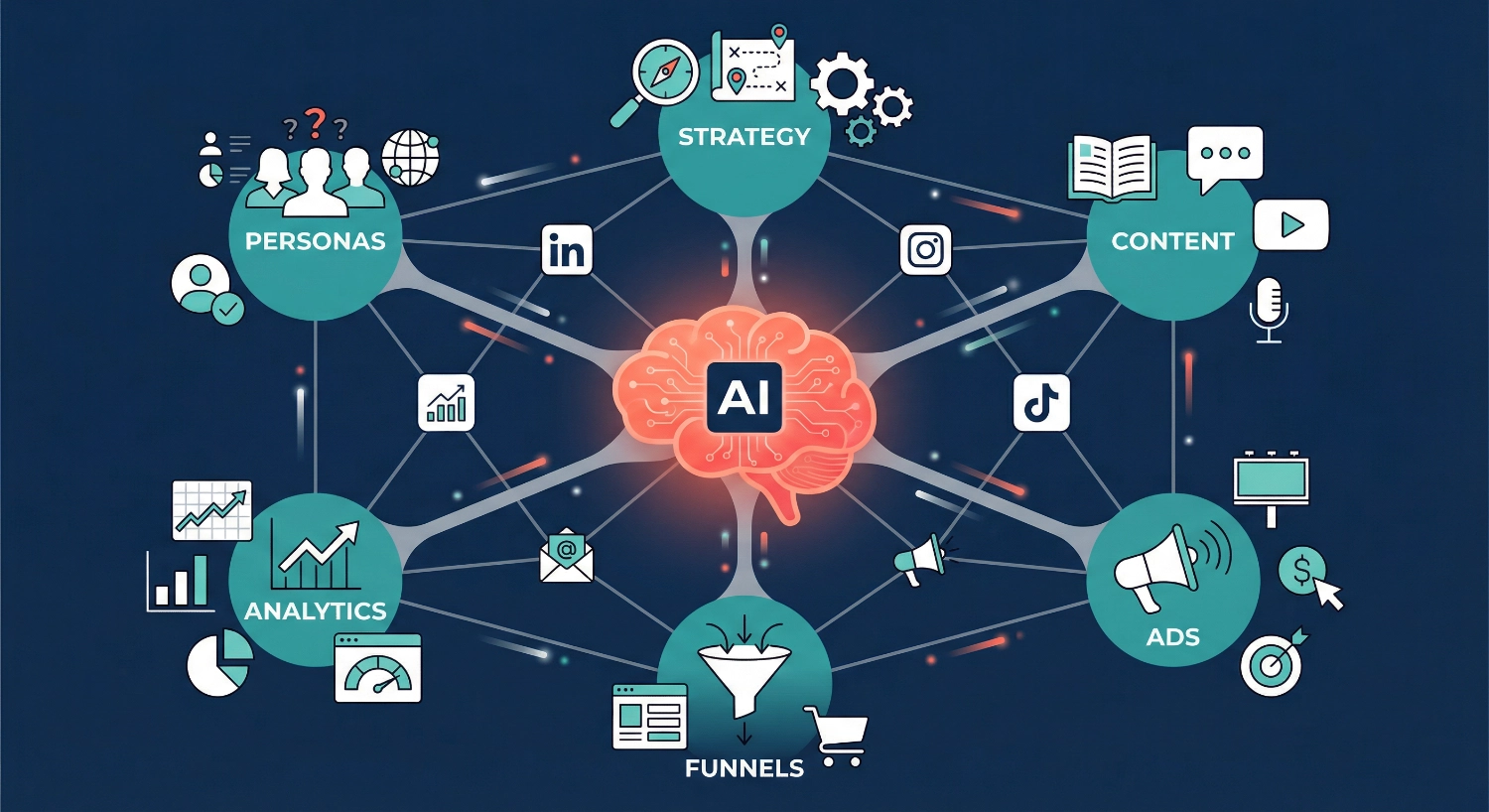
Marketing Mastery Using AI isn’t just about adopting new tools—it’s about fundamentally transforming how you plan, execute, and optimize your entire marketing operation. In 2025, the AI marketing landscape has reached $47.32 billion and continues expanding at a remarkable pace, with 88% of marketers now integrating AI into their daily workflows. This comprehensive guide walks you through every stage of building an AI-powered marketing system, from defining your core strategy to tracking long-term customer value.
Whether you’re a small business owner looking to compete with larger brands or a marketing professional aiming to multiply your impact, this step-by-step framework will help you leverage AI to work smarter, faster, and with measurably better results.
Why AI Changes Everything for Marketers
Before diving into specific strategies, allow me to share why this matters now. According to CoSchedule’s State of AI in Marketing Report (2025), 84% of marketers report that AI improved the speed of delivering high-quality content, and 25.6% say AI-generated content actually outperforms manually created content. 🛈 Source
When you combine these with the fact that 83.82% of marketing professionals report increased productivity since adopting AI, the business case becomes clear: Marketing Mastery Using AI translates directly to competitive advantage, faster campaign launches, and improved ROI.
How to Define Clear Marketing Objectives & Market Position Using AI
Your marketing objectives form the foundation of every campaign you’ll run. AI helps you define and refine these objectives by analyzing market data, competitor movements, and customer behavior patterns at scale.
Step 1: Start by using AI tools like ChatGPT or Claude to conduct a SWOT analysis. Input your current business situation, target market, and known competitors. Ask the AI to identify potential opportunities and threats you might have overlooked.
Step 2: Use AI-powered market intelligence platforms like Crayon or Kompyte to monitor how competitors position themselves. These tools automatically track competitor messaging, pricing changes, and marketing campaigns.
Step 3: Define SMART objectives (Specific, Measurable, Achievable, Relevant, and Time-bound) using AI as a strategic partner. For example, instead of “increase brand awareness,” refine it to “achieve 25% growth in qualified leads from organic social media within Q2 2025.”
Step 4: Validate your objectives against market realities. Use Google Trends combined with AI analysis tools to verify that your target keywords and topics are gaining (not losing) search volume.
Common mistake to avoid: Don’t let AI write your objectives for you without your strategic input. AI should enhance your thinking, not replace it.
How to Map the Customer Journey from Awareness to Loyalty Using AI
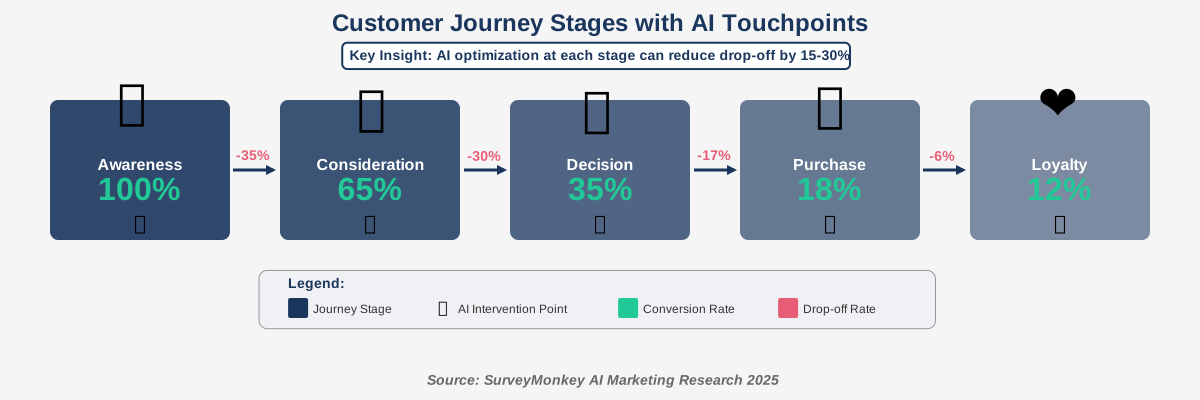
Understanding how customers move from first contact to repeat purchase is essential for effective marketing. AI excels at identifying patterns across thousands of customer interactions that would take humans months to spot.
Step 1: Use AI analytics platforms like Amplitude or Mixpanel to automatically track customer touchpoints across your website, email, and social channels.
Step 2: Deploy AI journey mapping tools that visualize the complete customer path. Tools like Salesforce Einstein or HubSpot’s AI features can show you exactly where customers drop off and where they convert.
Step 3: Create journey stage definitions. Typically, these include Awareness (first touchpoint), Consideration (researching solutions), Decision (comparing options), Purchase (becoming a customer), and Loyalty (repeat purchases and referrals).
Step 4: Use AI to identify micro-moments within each stage. For example, AI might reveal that customers who watch product demo videos are 40% more likely to purchase within 48 hours.
Step 5: Build automated response systems for each journey stage using tools like ActiveCampaign or Klaviyo, which use AI to send the right message at the right time.
Pro tip:
Explore the complete guide for mapping every customer touchpoint from awareness to loyalty using AI.
How to Analyze Competitors & Identify Market Gaps Using AI
Competitive analysis used to require hours of manual research. AI now automates this process and uncovers insights you might have missed.
Step 1: Set up AI-powered competitive monitoring using tools like Semrush, Ahrefs, or SpyFu. These platforms automatically track your competitors’ keywords, backlinks, content strategies, and ad campaigns.
Step 2: Use ChatGPT or Claude to analyze competitor websites. Copy their homepage text and ask the AI, “What pain points does this company address? What’s their unique value proposition? What marketing angles are they using?”
Step 3: Identify content gaps by having AI compare your content library against competitors. Tools like MarketMuse or Clearscope use AI to show you exactly which topics your competitors cover that you don’t.
Step 4: Analyze competitor ad strategies using Facebook Ad Library or Google Ads Transparency Center combined with AI analysis. Copy their ad text into an AI tool and ask, “What psychological triggers does this ad use? How could we differentiate our message?”
Step 5: Monitor competitor social media using tools like Brandwatch or Sprout Social, which use AI to track engagement patterns, posting frequency, and content performance.
According to Ahrefs’ 2025 AI Marketing Statistics, 87% of marketers now use AI to help create content, enabling companies to publish 42% more content monthly compared to those not using AI. 🛈 Source
Pro tip:
Explore the complete guide for analyzing competitors and uncovering profitable market gaps using AI.
How to Structure Brand-Customized AI Prompts Using AI
Generic AI prompts produce generic results. Learning to craft brand-specific prompts is where Marketing Mastery Using AI truly begins.
Step 1: Create a brand voice document that includes your tone (professional, casual, friendly, or authoritative), key phrases you always use, phrases you never use, and 3-5 examples of your best writing.
Step 2: Use the “context + instruction + output format” framework. For example: “You’re a friendly marketing expert at [Company Name], which helps [target audience] solve [problem]. Write a 200-word Instagram caption about [topic] in our conversational, helpful tone. Include one question and one call to action.”
Step 3: Add specific constraints to avoid generic output. Include phrases like “Don’t use these overused words: revolutionize, game-changer, cutting-edge, and leverage. Instead, use concrete, specific language.”
Step 4: Feed the AI examples of your best content before asking for new content. This “primes” the AI to match your style more closely.
Step 5: Save your best-performing prompts in a swipe file. Tools like PromptBase or Notion databases work well for organizing reusable prompts.
Pro tip:
Explore the complete guide for structuring brand-specific prompts that maintain your unique voice.
How to Create Prompt Variations & Prompt Chaining
Single prompts have limits. Mastering variations and chains multiplies your AI capabilities.
Prompt variations mean creating multiple versions of the same request to get diverse outputs. For example, if you need five email subject lines, run the same prompt three times with slight variations to get 15 options total.
Prompt chaining means breaking complex tasks into sequential steps where each AI output feeds into the next prompt. Here’s how:
Step 1: Start with a research prompt: “Analyze the top 10 ranking blog posts for ‘content marketing strategy’ and identify common themes.”
Step 2: Use that output in your next prompt: “Based on these themes [paste AI response], create an outline for a blog post that covers these topics but adds unique insights about AI integration.”
Step 3: Feed the outline into a third prompt: “Using this outline [paste outline], write the introduction section in a conversational, expert tone that hooks readers immediately.”
Step 4: Continue the chain for each section, maintaining consistency by referencing previous outputs.
Step 5: Finally, ask AI to review the complete piece: “Review this article for flow, clarity, and whether it delivers on the promise made in the introduction.”
This chaining approach yields superior results compared to requesting AI to “write a complete blog post” in a single session.
How to Select AI Tools & Organize Prompt Libraries Using AI
With hundreds of AI marketing tools available, choosing the right stack and organizing your resources efficiently makes all the difference.
Step 1: Identify your core needs across these categories: content creation (ChatGPT, Claude, Jasper), design (Midjourney, DALL-E, Canva AI), video (Synthesia, Runway), analytics (ChatGPT for data analysis, Obviously AI), and email (Phrasee, Copy.ai).
Step 2: Test tools systematically. Assign each tool the same task (like “write five subject lines for a product launch email”) and compare quality, speed, and ease of use.
Step 3: Build a centralized prompt library using Notion, Airtable, or a simple Google Doc. Organize by category: social media prompts, email prompts, blog prompts, and ad copy prompts.
Step 4: Tag each prompt with performance data. Note which prompts consistently produce usable content versus those that need heavy editing.
Step 5: Create templates that combine your best brand voice guidance with task-specific instructions. This lets team members maintain consistency even when they’re not AI experts.
Research from the CoSchedule 2025 report shows that 84% of marketers report AI improved the speed of delivering high-quality content, making tool selection and organization critical to sustaining this competitive advantage. 🛈 Source
Pro tip:
Explore the complete guide for selecting the right AI tools and organizing your prompt library.
How to Build Research-Based Audience Personas Using AI
AI transforms persona development from guesswork into data-driven intelligence. Here’s how to build personas that actually drive results.
Step 1: Gather existing customer data from your CRM, Google Analytics, social media insights, and customer support tickets. Export this into spreadsheets for AI analysis.
Step 2: Use AI to analyze patterns. Upload your customer data to ChatGPT (if using ChatGPT Plus with data analysis enabled) or Claude and ask, “Identify common characteristics, pain points, and behaviors across these customers.”
Step 3: Create three-to-five distinct personas based on AI insights. Each should include demographic information, goals, challenges, preferred communication channels, buying triggers, and typical objections.
Step 4: Use AI to generate persona narratives. Ask: “Write a day-in-the-life story for [persona name] that shows when and why they’d need our product.”
Step 5: Validate AI-generated personas against real customer interviews. AI finds patterns, but human conversations reveal the emotional context behind them.
Pro tip:
Explore the complete guide for building data-driven audience personas using AI analysis.
How to Craft Persona-Specific Messaging & Stories Using AI
Once you have solid personas, AI helps you tailor messaging that resonates with each audience segment.
Step 1: Create messaging frameworks for each persona that address their specific pain points. AI can help: “Based on this persona [paste persona details], write three headlines that would grab their attention on LinkedIn.”
Step 2: Develop persona-specific story angles. For example, if targeting busy executives, focus stories on efficiency and ROI. If targeting creative professionals, emphasize innovation and possibilities.
Step 3: Use AI to adapt existing content for different personas. Take your best-performing blog post and ask AI to rewrite the introduction for each persona, adjusting language, examples, and emphasis.
Step 4: Test messaging variations using AI-powered A/B testing tools. Platforms like Optimizely or VWO can help you determine which persona-specific messages actually convert better.
Step 5: Build a messaging library organized by persona and channel. This ensures consistency when multiple team members create content for the same audience.
Pro tip:
Explore the complete guide for crafting personalized messaging for each audience persona using AI.
How to Identify Influencers & Anti-Personas Using AI
Understanding who to target—and who to avoid—maximizes marketing efficiency.
Step 1: Use AI social listening tools like Brandwatch or Sprinklr to identify conversations around your industry keywords. These tools automatically surface the most influential voices in those discussions.
Step 2: Analyze influencer authenticity using AI. Tools like HypeAuditor or Modash use AI to detect fake followers and engagement, helping you avoid wasting resources on inflated accounts.
Step 3: Identify anti-personas (people who match your demographic but will never buy). Use AI to analyze churned customers or refund requests: “What common characteristics do these former customers share?”
Step 4: Create exclusion lists for paid advertising based on anti-persona characteristics. This prevents ad spend from being wasted on audiences unlikely to convert.
Step 5: Monitor influencer performance using AI analytics. Track which influencer partnerships actually drive conversions versus just vanity metrics like likes and shares.
How to Write High-Converting Platform Ad Copy Using AI
Different platforms require different copywriting approaches. AI helps you optimize for each platform’s unique characteristics.
Step 1: Study top-performing ads in the Facebook Ad Library or Google Ads Transparency Center. Feed examples into AI and ask, “What patterns make these ads effective?”
Step 2: Use platform-specific prompts. For Facebook: “Write conversational, story-driven ad copy.” For LinkedIn: “Write professional, value-focused copy citing specific business outcomes.” For Google: “Write benefit-driven copy that answers search intent within character limits.”
Step 3: Generate multiple variations quickly. Ask AI for 10 different headline options and 5 body copy variations, then mix and match the best performers.
Step 4: Optimize for mobile viewing. Have AI rewrite longer copy for thumb-stopping mobile readers: “Shorten this to 2-3 sentences maximum while keeping the core benefit clear.”
Step 5: Test continuously using AI analytics. Platforms like Madgicx or Revealbot use AI to automatically optimize ad performance and pause underperformers.
According to SEO.com’s 2025 AI Marketing Statistics report, 81% of marketers report AI helps boost brand awareness and sales through better-performing ads. 🛈 Source
Pro tip:
Explore the complete guide for writing platform-specific ad copy that converts using AI.
How to Incorporate Social Proof & Urgency in Ads Using AI
Social proof and urgency are psychological triggers that AI helps you implement authentically and effectively.
Step 1: Use AI to analyze your customer reviews and testimonials. Ask: “Extract the 10 most compelling customer quotes from these reviews that showcase specific transformations.”
Step 2: Create urgency frameworks that feel authentic, not manipulative. AI can help: “Write five urgency-based headlines for a limited-time offer that focus on value, not pressure.”
Step 3: Implement AI-powered social proof tools like Proof or Fomo that automatically display real-time purchase notifications on your website.
Step 4: Generate case study snippets using AI. Take longer customer stories and ask AI to create “micro-case studies”—single-paragraph transformations perfect for ads and social posts.
Step 5: A/B test different social proof formats. Test customer numbers (“Join 50,000+ marketers”), transformations (“Increased leads by 300%”), or authority citations (“As featured in [publication]”).
Pro tip:
Explore the complete guide for incorporating social proof and urgency in your ads using AI.
How to Batch Instagram, LinkedIn, TikTok Content Using AI
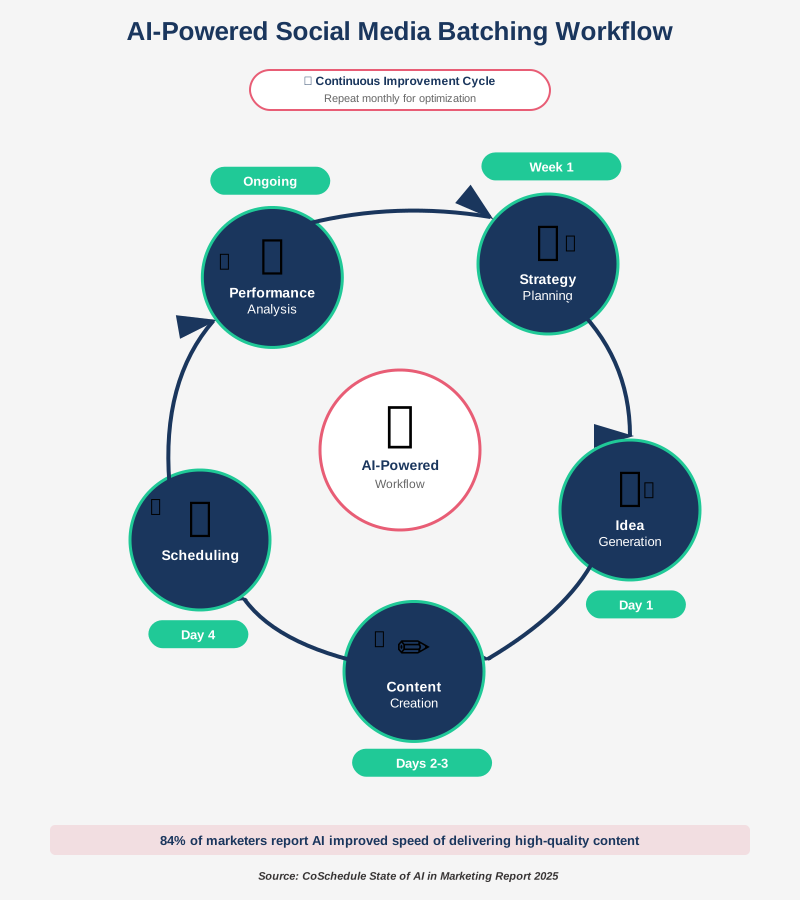
Batching content saves massive time while maintaining consistency across platforms. AI makes this process seamless.
Step 1: Create content pillars—3-5 recurring themes that align with your marketing objectives. For example: “tips and tutorials,” “industry news analysis,” “customer success stories,” “behind-the-scenes,” and “thought leadership.”
Step 2: Generate a month of content ideas at once using AI. Prompt: “Create 30 post ideas across these 5 content pillars for a [industry] company targeting [audience].”
Step 3: Adapt content for each platform using AI. Take one core idea and prompt:
“Adapt this message for:
(1) Instagram caption with hashtags,
(2) LinkedIn post with professional tone,
(3) TikTok script with trending sounds.”
Step 4: Schedule using AI-powered tools like Buffer, Hootsuite, or Later that suggest optimal posting times based on your audience’s engagement patterns.
Step 5: Create visual assets in batches using AI design tools like Canva’s Magic Design or Adobe Firefly. Generate multiple variations from a single template quickly.
Pro tip:
Explore the complete guide for batching social media content across all platforms using AI.
How to Create Engagement Schedules & Response Templates Using AI
Consistent engagement builds community and trust. AI helps you maintain this consistency without burning out.
Step 1: Create response categories for common interactions: questions about your product, complaints, compliments, industry questions, and collaboration requests.
Step 2: Use AI to generate response templates for each category. Prompt: “Write 5 friendly, helpful response templates for someone asking about pricing on Instagram. Each should be unique but maintain our brand voice.”
Step 3: Build an AI-powered chatbot for initial responses using tools like ManyChat or MobileMonkey. These can handle FAQ answers 24/7 while escalating complex questions to humans.
Step 4: Set up engagement schedules using AI recommendations. Tools like Sprout Social’s AI features suggest optimal times to respond based on when your audience is most active.
Step 5: Monitor sentiment using AI. Platforms like Hootsuite Insights or Brand24 automatically flag potentially negative conversations requiring immediate human attention.
Pro tip:
Explore the complete guide for creating engagement schedules and response templates using AI.
How to Build Welcome & Educational Email Sequences Using AI
Email sequences nurture relationships automatically. AI helps you create sequences that feel personal, not robotic.
Step 1: Map out your sequence structure. Typical welcome sequences include immediate welcome + first value delivery (Day 0), deeper education on the main pain point (Day 2), case study or social proof (Day 4), product/service introduction (Day 6), and special offer or next step (Day 8).
Step 2: Write sequence emails using AI, but add personal touches. Start with AI-generated drafts, then inject specific stories, examples, and personality that AI can’t replicate.
Step 3: Use AI to personalize beyond just first names. Tools like ActiveCampaign or HubSpot can dynamically insert content based on user behavior, interest tags, or demographic data.
Step 4: Optimize send times using AI. Platforms like Seventh Sense or Mailchimp’s Send Time Optimization use AI to predict when each individual subscriber is most likely to open emails.
Step 5: A/B test continuously. Test subject lines, preview text, email length, CTA placement, and imagery using AI-powered testing tools that automatically select winners.
According to the 2025 HubSpot State of Marketing Report, 95% of marketers who use generative AI for email creation rate it as “effective,” with 54% rating it as “very effective.” 🛈 Source
Pro tip:
Explore the complete guide for building automated email sequences that nurture subscribers using AI.
How to Optimize Emails for Opens & Clicks Using AI
Email optimization is an ongoing process. AI spots patterns humans miss and suggests improvements.
Step 1: Use AI subject line analyzers like SubjectLine.com or Phrasee to score your subject lines before sending. These tools predict open rates based on millions of data points.
Step 2: Optimize preview text using AI. The first 40-140 characters that appear below the subject line should complement it, not repeat it. Ask AI: “Write preview text that builds curiosity from this subject line: [your subject line].”
Step 3: Analyze the email copy structure using AI reading level tools. Most marketing emails perform best at a 6th-8th grade reading level—simple, clear, and scannable.
Step 4: Improve click-through rates with AI-powered CTA testing. Tools like Optimizely or VWO can test button text, color, size, and placement to find what your audience responds to.
Step 5: Clean your list using AI validation tools. Services like NeverBounce or ZeroBounce use AI to identify inactive emails, reducing bounce rates and improving deliverability.
Pro tip:
Explore the complete guide for optimizing email subject lines, content, and CTAs using AI.
How to Create Viral-Ready Short-Form Video Scripts Using AI
Short-form video dominates attention in 2025. AI helps you create scripts optimized for virality.
Step 1: Study viral video patterns in your niche. Watch the top 50 videos in your category on TikTok or Instagram Reels and note common elements: hooks, pacing, structure, and calls-to-action.
Step 2: Use AI to generate hook options. Prompt: “Write 10 attention-grabbing first lines for a video about [topic] that stop viewers from scrolling in the first 3 seconds.”
Step 3: Structure scripts using AI’s understanding of narrative flow. Good video scripts follow the Hook (seconds 0-3), Problem/Question (seconds 3-8), Value/Solution (seconds 8-25), and Call-to-Action (seconds 25-30).
Step 4: Add AI-generated trending audio suggestions. Tools like Minvo or OpusClip can identify trending sounds relevant to your content.
Step 5: Generate captions automatically using AI transcription tools like Descript or CapCut. Accurate captions dramatically increase watch time and accessibility.
How to Produce Testimonial & Demo Videos Using AI
Video testimonials and demos build trust faster than text alone. AI dramatically simplifies production.
Step 1: Use AI video platforms like Synthesia or HeyGen to create spokesperson videos without filming. These tools use AI avatars that can deliver scripts in multiple languages.
Step 2: Extract video testimonials from text reviews using AI. Take written reviews and use AI to create compelling video scripts: “Transform this customer review into a 60-second video testimonial script with emotional storytelling.”
Step 3: Create demo videos using AI screen recording combined with AI voiceover. Tools like Loom with AI-generated scripts and voices make this fast and affordable.
Step 4: Generate multiple video variations using AI editing tools like Descript’s “Overdub” feature, which lets you edit videos by editing the transcript.
Step 5: Add AI-powered subtitles and graphics using tools like Kapwing or VEED.io that automatically place text, animations, and transitions to increase engagement.
Pro tip:
Explore the complete guide for producing testimonial and demo videos without filming using AI.
How to Plan Conversion-Focused Video Schedules Using AI
Consistency matters in video marketing. AI helps you plan and maintain schedules that drive conversions.
Step 1: Use AI analytics to identify your audience’s video consumption patterns. YouTube Studio and TikTok Analytics use AI to show when your specific audience is most active.
Step 2: Create content calendars using AI planning tools. Prompt: “Create a 90-day video posting schedule with 3 videos per week, alternating between educational content, customer stories, and product demos.”
Step 3: Plan video funnels—series designed to move viewers from awareness to conversion. AI can help structure these: “Design a 5-video series that takes viewers from learning about [problem] to understanding our solution and taking action.”
Step 4: Implement AI-powered video SEO. Tools like TubeBuddy or vidIQ use AI to suggest optimal titles, descriptions, tags, and thumbnails for better discoverability.
Step 5: Track video performance using AI dashboards. Platforms like Wistia or Vidyard use AI to identify which video segments drive the most engagement and conversions.
Pro tip:
Explore the complete guide for planning video content schedules that drive conversions using AI.
How to Design Lead Magnets & Opt-In Pages Using AI
Lead magnets grow your email list. AI helps you create magnets that actually convert.
Step 1: Identify high-value topics using AI analysis of your content performance. Ask: “Which blog posts or videos have the highest engagement? What could we expand into a downloadable resource?”
Step 2: Generate lead magnet ideas using AI. Prompt: “Create 10 lead magnet ideas for [target audience] struggling with [specific problem]. Ideas should be actionable and achievable within 30 minutes of download.”
Step 3: Create lead magnet content using AI. Tools like ChatGPT or Claude can draft checklists, templates, workbooks, or mini-guides quickly. Always add your unique insights and examples.
Step 4: Design opt-in pages using AI-powered platforms like Unbounce or Instapage that automatically optimize layouts based on conversion data.
Step 5: Write compelling headlines using AI. Test variations like “Download this free guide to [achieve desired outcome]” versus “Get instant access to [specific tool] used by [number] successful [target audience].”
Pro tip:
Explore the complete guide for designing high-converting lead magnets and opt-in pages using AI.
How to Promote & Measure Lead Magnet Performance
Creating a lead magnet is just the start. Promotion and measurement determine its success.
Step 1: Promote across multiple channels using AI-generated content variations. Create social posts, email announcements, blog CTAs, and paid ads—all tailored to each platform’s best practices.
Step 2: Use AI chatbots to offer lead magnets conversationally. Tools like Drift or Intercom can detect visitor intent and offer relevant lead magnets at the right moment.
Step 3: Implement AI-powered landing page testing. Platforms like Google Optimize or Optimizely automatically test headlines, images, and CTA buttons to maximize conversions.
Step 4: Track conversion path data using AI analytics. Tools like Google Analytics 4 with AI insights show exactly how visitors discovered and downloaded your lead magnet.
Step 5: Calculate lead magnet ROI using AI dashboards. Measure: download rate, email engagement from new subscribers, conversion to paid customers, and lifetime value of leads from each magnet.
Pro tip:
Explore the complete guide for promoting lead magnets and measuring their performance using AI.
How to Set Up Email & Ad A/B Testing Systems Using AI
A/B testing removes guesswork. AI makes testing faster and more reliable.
Step 1: Define testable elements for emails: subject lines, preview text, from name, email length, imagery, CTA text, CTA color, and sending time.
Step 2: Use AI testing platforms that automatically allocate traffic and declare winners. Tools like Optimizely, VWO, or Convert use AI to determine statistical significance faster than manual calculation.
Step 3: Test ads systematically using platform-native AI tools. Facebook’s Advantage+ and Google’s Performance Max campaigns use AI to test combinations automatically.
Step 4: Implement multivariate testing for complex campaigns. AI can handle testing multiple variables simultaneously—something nearly impossible to do manually with statistical rigor.
Step 5: Document all tests using AI-powered dashboards. Platforms like Mixpanel or Amplitude automatically track test results over time, revealing patterns across campaigns.
Pro tip:
Explore the complete guide for setting up systematic A/B testing for emails and ads using AI.
How to Document Statistical Significance & Learnings Using AI
Data without documentation is wasted effort. AI helps you capture and apply your learning systematically.
Step 1: Use AI to calculate statistical significance automatically. Tools like AB Test Calculator or Optimizely’s built-in calculators tell you when you have enough data to trust results.
Step 2: Create a testing knowledge base using AI-assisted documentation. After each test, prompt: “Summarize these A/B test results, including hypothesis, results, statistical significance, and recommended actions.”
Step 3: Identify patterns across tests using AI analysis. Feed multiple test results into AI and ask, “What patterns emerge across these tests? Are there common elements that consistently improve performance?”
Step 4: Generate test reports automatically using AI. Tools like Data Studio combined with AI writing can create weekly or monthly reports showing test results and their business impact.
Step 5: Build prediction models using AI. Machine learning platforms can analyze historical test data to predict which future tests are most likely to succeed.
How to Create Post-Purchase Onboarding & Loyalty Programs Using AI
The sale is just the beginning. AI-powered onboarding and loyalty dramatically increase customer lifetime value.
Step 1: Design onboarding sequences that reduce churn. Map critical first actions users must take within their first week. Use AI to identify patterns in successful versus churned users.
Step 2: Create personalized onboarding using AI. Platforms like Userpilot or Appcues use AI to show different onboarding flows based on user role, industry, or stated goals.
Step 3: Implement AI-powered customer health scoring. Tools like Gainsight or ChurnZero automatically identify at-risk customers before they leave.
Step 4: Design loyalty programs using AI recommendations. Analyze purchase patterns to determine optimal reward thresholds, point values, and redemption options.
Step 5: Personalize loyalty communications using AI. Send targeted offers based on purchase history, engagement level, and predicted next purchase timing.
Pro tip:
Explore the complete guide for creating onboarding sequences and loyalty programs using AI.
How to Build Case Studies & Referral Campaigns Using AI
Happy customers become your best marketers. AI scales this word-of-mouth effect.
Step 1: Identify case study candidates using AI analysis of customer data. Look for customers with strong results, enthusiastic feedback, and recognizable company names or compelling stories.
Step 2: Use AI to draft case studies efficiently. Prompt: “Based on this customer interview transcript [paste transcript], write a compelling case study following the Challenge-Solution-Results framework.”
Step 3: Create multiple formats from one case study using AI. Transform the full case study into a one-page PDF, social media graphics, short video scripts, and email snippets.
Step 4: Build referral systems using AI platforms like ReferralCandy or GrowSurf that automatically track, reward, and optimize referral performance.
Step 5: Identify referral opportunities using AI predictive analytics. Tools can score which customers are most likely to refer based on engagement patterns and satisfaction metrics.
Pro tip:
Explore the complete guide for building compelling case studies and referral campaigns using AI.
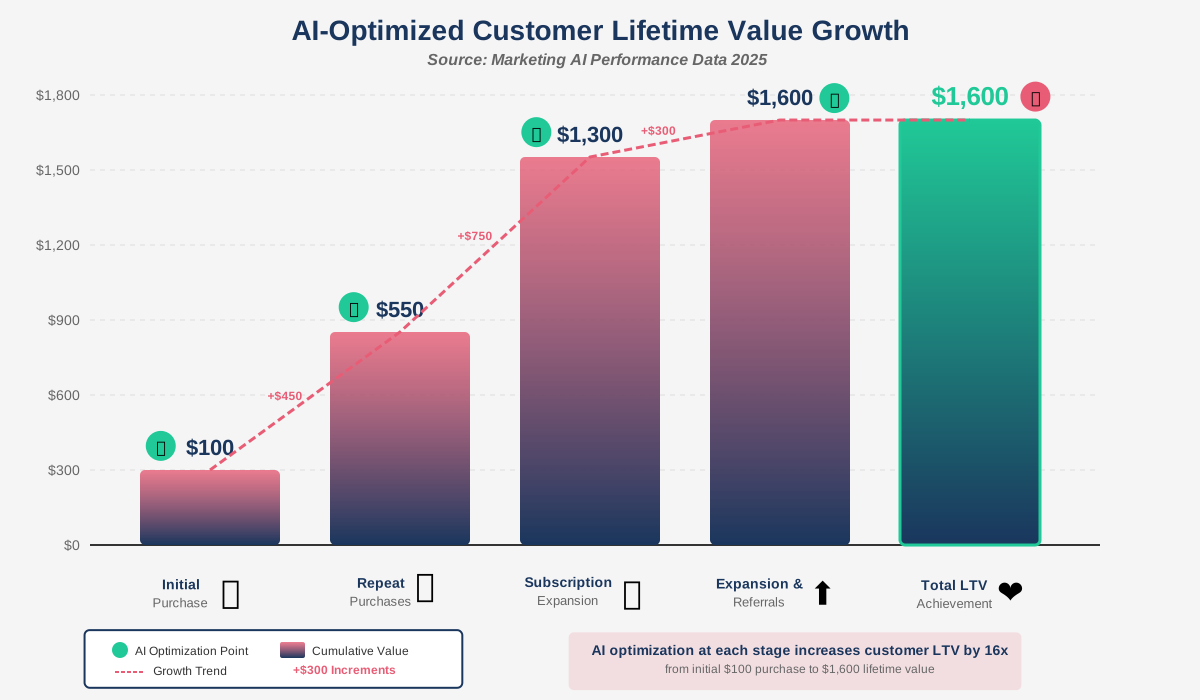
How to Track Churn Prevention & LTV Metrics Using AI
Understanding why customers leave and their lifetime value guides every marketing decision.
Step 1: Implement AI-powered churn prediction models. Tools like ProfitWell or Baremetrics use machine learning to identify customers likely to cancel before they do.
Step 2: Calculate customer lifetime value (LTV) using AI analytics. These tools factor in purchase frequency, average order value, retention rate, and predicted future behavior.
Step 3: Segment customers by LTV using AI. Create campaigns specifically for high-LTV customers versus those needing activation.
Step 4: Build win-back campaigns using AI. Automatically trigger personalized offers when AI detects declining engagement or cancellation risk.
Step 5: Create AI dashboards that track key retention metrics: churn rate, retention rate by cohort, time to value, expansion revenue, and net revenue retention.
According to McKinsey’s State of AI 2025 report, organizations using AI for customer journey optimization and retention see revenue increases, with marketing and sales being among the functions most commonly reporting AI-driven EBIT impact. 🛈 Source
Common Mistakes to Avoid When Implementing AI in Marketing
Even with powerful AI tools, certain mistakes can undermine your efforts:
Mistake 1: Letting AI run without human oversight. AI can generate content quickly, but it doesn’t understand brand nuance, company-specific details, or current events. Always review and edit AI outputs.
Mistake 2: Ignoring data quality. AI is only as effective as the data it learns from. If your customer data is incomplete or inaccurate, AI recommendations will be flawed. Clean your data first.
Mistake 3: Over-relying on AI for creativity. AI excels at patterns but struggles with true innovation. Use AI for efficiency and analysis, but inject your unique human insights for differentiation.
Mistake 4: Skipping testing. Just because AI suggests something doesn’t mean it will work for your specific audience. Test everything, especially AI-generated content variations.
Mistake 5: Neglecting training. According to Salesforce’s 2025 research, 70% of marketers report their employer does not provide generative AI training. 🛈 Source
Without proper training, team members can’t leverage AI tools effectively.
Frequently Asked Questions About Marketing Mastery Using AI
Your Next Steps Toward Marketing Mastery Using AI
You now have a complete framework for transforming your marketing through AI. The path forward is clear: start with one area where you’ll see immediate impact, master it, then expand to the next.
If you’re just beginning, I recommend starting with AI-powered content creation and prompt engineering. These skills provide immediate time savings and improved output quality. Once comfortable, layer in audience persona development and journey mapping. From there, expand into automation, testing, and optimization.
Remember, the marketers winning in 2025 aren’t those with the most AI tools—they’re those who strategically combine AI efficiency with human creativity and judgment. AI handles the repetitive, data-heavy work so you can focus on strategy, storytelling, and building genuine connections with your audience.
The AI marketing landscape will continue evolving rapidly, but the fundamentals remain constant: understand your audience deeply, deliver genuine value, and continuously test and optimize. AI simply makes executing these fundamentals faster, more accurately, and at a greater scale than ever before possible.
Start small, test frequently, document your learning, and scale what works. Marketing Mastery Using AI isn’t about adopting every new tool—it’s about strategically deploying AI where it multiplies your impact and frees you to do the creative, strategic work that only humans can deliver.
Now it’s your turn. Choose one section from this guide, implement it this week, and experience firsthand how AI transforms your marketing results.
References
- SurveyMonkey. (2025). “AI In Marketing Statistics: How Marketers Use AI In 2025.” https://www.surveymonkey.com/mp/ai-marketing-statistics/
- CoSchedule. (2025). “State Of AI In Marketing Report 2025 | AI Marketing Statistics.” https://coschedule.com/ai-marketing-statistics
- SEO.com. (2025). “50+ AI Marketing Statistics in 2025: AI Marketing Trends & Insights.” https://www.seo.com/ai/marketing-statistics/
- Ahrefs. (2025). “53 AI Marketing Statistics for 2025.” https://ahrefs.com/blog/ai-marketing-statistics/
- McKinsey & Company. (2025). “The state of AI in 2025: Agents, innovation, and transformation.” https://www.mckinsey.com/capabilities/quantumblack/our-insights/the-state-of-ai
- HubSpot. (2025). “2025 Marketing Statistics, Trends & Data.” https://www.hubspot.com/marketing-statistics
- Digital Marketing Institute. (2025). “10 Eye Opening AI Marketing Stats to Take Into 2026.” https://digitalmarketinginstitute.com/blog/10-eye-opening-ai-marketing-stats-in-2025

About the Author
Abir Benali is a technology writer specializing in making AI tools accessible to non-technical professionals. With a background in digital marketing and content strategy, Abir helps thousands of marketers, small business owners, and entrepreneurs understand how to leverage artificial intelligence practically and ethically. Abir believes that AI should empower people, not intimidate them—and writes with the goal of making every reader feel confident they can master these tools regardless of their technical background. When not writing guides about AI, Abir consults with businesses on implementing AI-powered marketing systems that deliver measurable ROI.