The Science Behind AI-Based Cognitive Training

The Science Behind AI-Based Cognitive Training represents a fascinating intersection where neuroscience meets machine learning. As educators and advocates for responsible AI use, we’ve witnessed firsthand how these technologies can transform the way people learn and grow—when understood properly. Whether you’re a student looking to study smarter or someone curious about brain training, understanding the mechanisms behind these tools empowers you to use them safely and effectively.
The question we hear most often is, “How can a computer program actually improve your brain?” The answer lies in a powerful combination of brain plasticity, adaptive algorithms, and data-driven personalization. Let’s explore the science that makes AI-powered cognitive training more than just digital games.
Understanding Brain Plasticity: Your Brain’s Superpower
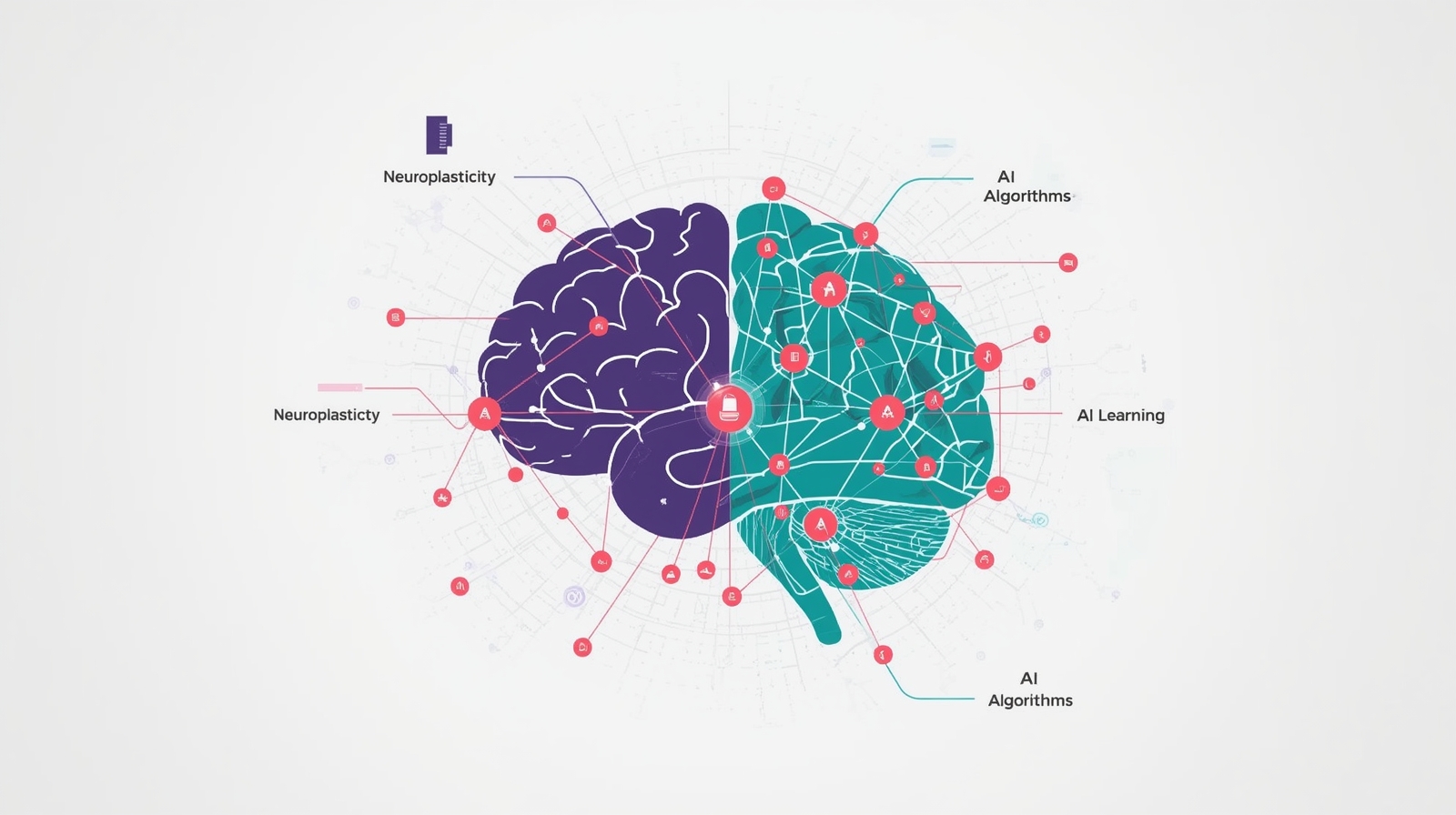
At the heart of cognitive training lies a remarkable biological principle called neuroplasticity—your brain’s ability to rewire itself throughout your lifetime. Imagine your brain as a forest, where frequently traveled paths become well-worn trails, while unused routes gradually fade away. Every time you learn something new, solve a problem, or practice a skill, you’re literally reshaping the neural connections in your brain.
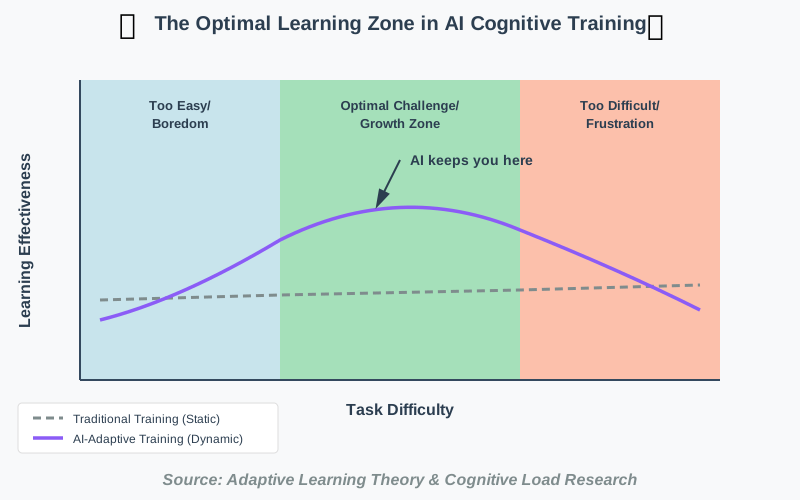
Traditional cognitive training has leveraged this principle for decades through puzzles, memory exercises, and focused practice. What makes AI-based cognitive training revolutionary is how it optimizes this process. Instead of following a one-size-fits-all approach, AI systems monitor your performance in real-time and adjust the difficulty, timing, and type of exercises to keep your brain in what researchers call the “sweet spot” of learning—challenging enough to stimulate growth but not so difficult that you become frustrated.
We’ve seen students use these tools to improve focus during exam preparation, and when used responsibly with proper breaks and realistic expectations, the results can be encouraging. The key is understanding that you’re not “upgrading” your brain like computer hardware—you’re training it like a muscle through consistent, targeted practice.
How AI Algorithms Create Your Personalized Training Path
Now let’s demystify the computational magic happening behind the scenes. AI algorithms in cognitive training platforms use three primary techniques to personalize your experience:
Step 1: Baseline Assessment and Pattern Recognition
When you first start using an AI-powered cognitive training program, it begins by establishing your baseline across multiple cognitive domains—memory, attention, processing speed, problem-solving, and flexibility. But unlike a simple quiz, the AI is watching how you solve problems, not just whether you get them right.
Machine learning models analyze patterns in your responses: Do you rush through easier problems but slow down dramatically on harder ones? Do you make more mistakes when tasks involve spatial reasoning versus verbal memory? These patterns create a detailed cognitive profile that goes far beyond a simple score.
Step 2: Adaptive Difficulty Adjustment
This is where the real intelligence comes in. Using reinforcement learning algorithms (similar to how AI learns to play chess), the system continuously adjusts exercises based on your performance. If you’re succeeding consistently, it gradually increases complexity. Are you having difficulty with a specific type of challenge? The AI introduces foundational exercises to build those specific skills.
The algorithms typically use a modified version of Item Response Theory (IRT), borrowed from educational testing, combined with real-time performance metrics. Think of it as having a personal trainer who watches every rep and adjusts your workout mid-session.
Step 3: Temporal Optimization and Spacing
Perhaps the most sophisticated aspect involves when you practice. Research on memory consolidation shows that spacing your practice sessions and reviewing material at optimal intervals dramatically improves retention. AI systems use spaced repetition algorithms that predict the exact moment you’re about to forget something—then present a review just in time.
This computational approach to timing mimics how our brains naturally strengthen memories during sleep and downtime. The AI isn’t just teaching you; it’s working with your brain’s natural rhythms.
The Privacy-Conscious Approach to Cognitive Data
As someone focused on digital safety, I—Nadia—must address an important consideration:
cognitive training data is deeply personal. Your performance patterns reveal information about how you think, learn, and solve problems.
Before using any AI cognitive training platform, verify:
- Where your data is stored and who has access
- Whether your performance data is sold to third parties
- If you can export or delete your data
- How the platform protects sensitive cognitive health information
Reputable platforms should be transparent about these practices. If a service seems evasive about data handling, that’s a red flag. Your cognitive journey is yours—the tools should empower you, not exploit you.
Step-by-Step: How an AI Training Session Actually Works
Let me walk you through what happens during a typical session, from both the user perspective and the computational background:
Step 1: Session Initiation You log in, and the AI reviews your historical data, noting factors like time since last session, recent performance trends, and which cognitive domains need attention.
Step 2: Warm-Up Exercises The system presents easier tasks to assess your current state. Tired? Stressed? The AI detects your mood through response times and accuracy, adjusting the session accordingly.
Step 3: Progressive Challenge As you warm up, exercises become more complex. The algorithm continuously calculates your “zone of proximal development”—the space where learning happens most effectively.
Step 4: Targeted Weakness Training If the AI identifies areas where you’re struggling, it introduces remedial exercises that build foundational skills. These might feel simpler, but they’re strategically chosen.
Step 5: Cool-Down and Consolidation Sessions typically end with slightly easier tasks, helping cement new neural pathways while leaving you with a sense of accomplishment rather than exhaustion.
Step 6: Progress Analysis Post-session, the AI updates your cognitive model, adjusts future session plans, and schedules optimal review times for the skills you practiced.
Real-World Applications: From Classrooms to Clinical Settings
We’ve seen these principles applied across diverse contexts. In educational settings, students use AI cognitive training to strengthen working memory before exams or improve focus for studying. The personalized approach means a student struggling with math anxiety receives different exercises than one working on reading comprehension.
Clinical applications show promise too. Researchers are exploring AI-based training for age-related cognitive decline, traumatic brain injury rehabilitation, and attention disorders. The key advantage is consistency and precise measurement—the AI can detect subtle improvements that might escape human observation.
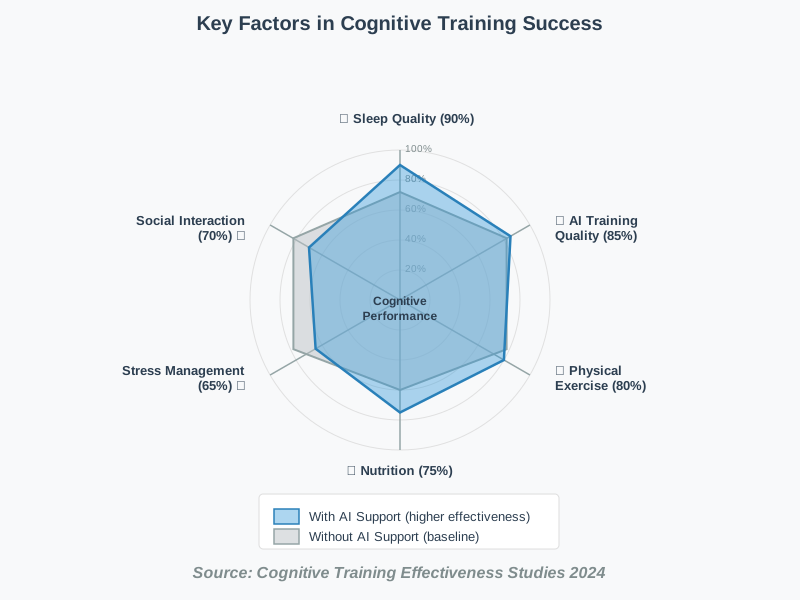
However, it’s crucial to maintain realistic expectations. These tools support cognitive development; they don’t replace good sleep, proper nutrition, physical exercise, or human interaction—all critical for brain health.
Common Questions About AI Cognitive Training
Your Next Steps: Starting Your Cognitive Training Journey Safely
Understanding the science behind AI-based cognitive training gives you power—the power to choose tools wisely, use them effectively, and set realistic expectations. Here’s our advice for getting started:
First, research platforms thoroughly. Look for those backed by peer-reviewed research, transparent about their methodology, and clear about data practices. Free trials let you test whether the interface and approach work for your learning style.
Second, commit to consistency over intensity. Short, regular sessions work better than occasional long ones. The AI needs data to personalize your experience, and your brain needs regular practice for neuroplasticity to work its magic.
Third, track holistic wellness alongside your training. Sleep, exercise, nutrition, and stress management all impact cognitive performance. The most sophisticated AI can’t overcome chronic sleep deprivation or high stress.
Finally, approach this as a learning journey, not a quick fix. We’ve seen students and lifelong learners achieve remarkable improvements when they understand the science, respect their limits, and maintain realistic expectations. Your brain is incredibly capable of growth—AI just helps you train it more efficiently.
Remember, you’re not turning yourself into a superhuman. You’re simply learning to use the amazing tool you already have—your brain—more effectively. And that’s a truly empowering realization.
References:
– Neuroplasticity principles: Doidge, N. (2007). The Brain That Changes Itself
– Adaptive learning theory: VanLehn, K. (2011). “The Relative Effectiveness of Human Tutoring, Intelligent Tutoring Systems, and Other Tutoring Systems,” Educational Psychologist
– Spaced repetition research: Cepeda, N. J., et al. (2006). “Distributed Practice in Verbal Recall Tasks,” Psychological Bulletin
– Cognitive training effectiveness: Simons, D. J., et al. (2016). “Do ‘Brain-Training’ Programs Work?” Psychological Science in the Public Interest
About the Authors
This article was written through the collaboration of Nadia Chen (Main Author) and Rihab Ahmed (Co-Author).
Nadia Chen is an expert in AI ethics and digital safety, dedicated to helping non-technical users navigate AI tools responsibly. With a background in privacy advocacy and technology education, Nadia focuses on making AI accessible while protecting users’ rights and data. She believes that understanding how technology works is the first step toward using it safely.
Rihab Ahmed is an educator and lifelong learner passionate about using AI to study smarter. Drawing from personal experience as both a student and teaching assistant, Rihab specializes in making complex concepts clear and actionable for learners at any stage. She’s committed to showing that anyone can harness AI for educational growth, regardless of technical background.
Together, we bring perspectives from both digital safety and practical learning to help you understand and use AI cognitive training responsibly and effectively.