Understanding AI Risk Assessment: A Comprehensive Guide

Understanding AI Risk Assessment isn’t just for tech experts anymore. As someone who’s spent years helping everyday people navigate AI safely, I’ve seen firsthand how important it is for all of us to grasp these concepts. Whether you’re a small business owner considering an AI chatbot, a parent worried about AI in your child’s school, or simply someone curious about the technology shaping our world, knowing how to evaluate AI risks protects you, your family, and your community.
Think of AI risk assessment as a safety inspection for technology. Just as you’d check a car’s brakes before buying it or read reviews before trying a new restaurant, assessing AI risks means looking carefully at what could go wrong before relying on these powerful tools. The good news? You don’t need a computer science degree to do these tasks effectively.
What Is AI Risk Assessment, and Why Should You Care?
AI risk assessment is the process of identifying, analyzing, and evaluating potential problems that could arise from using artificial intelligence systems. It’s about asking the right questions: Could this AI make unfair decisions? Might it expose my private information? Will it actually do what it promises?
I remember when a friend excitedly told me about an AI app that claimed to diagnose health conditions from photos. She was ready to trust it completely until we walked through a simple risk assessment together. We discovered the app had no medical certification, unclear data practices, and vague accuracy claims. That ten-minute conversation potentially saved her from making dangerous health decisions based on unreliable technology.
This is why understanding AI risk assessment matters in your daily life. These systems are increasingly making decisions about loans, job applications, healthcare, education, and more. When we don’t assess risks properly, we might face discrimination, privacy violations, financial losses, or worse.
The Core Components of AI Risk Assessment
Identifying Potential Risks
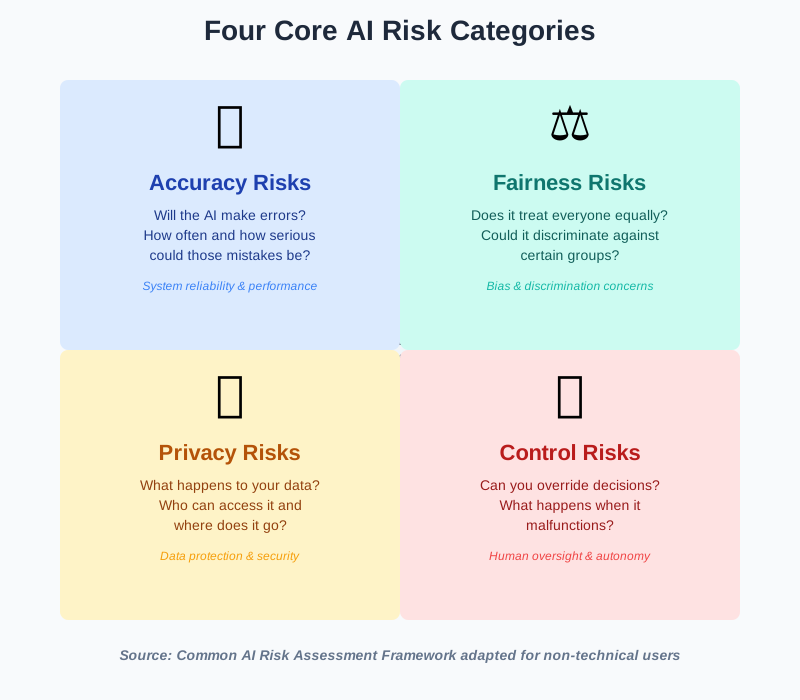
The first step involves recognizing what could actually go wrong. AI systems can fail in surprisingly human ways—and some uniquely digital ones too. Common risk categories include:
Accuracy risks: Will the AI make mistakes? How often, and how serious could those errors be? An AI that occasionally miscategorizes your vacation photos is annoying. One that misidentifies people in security footage could ruin lives.
Bias and fairness risks: Does the AI treat everyone equally? I’ve seen AI hiring tools that favored male candidates, loan systems that discriminated against certain neighborhoods, and healthcare algorithms that provided worse care recommendations for specific racial groups. These aren’t just technical glitches—they’re serious ethical failures that replicate and amplify existing inequalities.
Privacy and security risks: What happens to your data? Where does it go? Who can access it? An AI assistant might seem helpful until you realize it’s recording your conversations and sharing them with third parties. Always ask: What information am I giving away, and what are the consequences if it leaks?
Autonomy and control risks: Can you override the AI’s decisions? What happens when it malfunctions? Systems that make irreversible decisions without human oversight pose particularly high risks.
Analyzing Impact and Likelihood
Once you’ve identified potential risks, assess how likely they are to happen and how severe the consequences would be. This doesn’t require complex mathematics. Instead, ask yourself practical questions:
- How often might this problem occur? Rare, occasional, or frequent?
- How many people could be affected? Just you, your family, your workplace, or broader communities?
- How serious are the consequences? Minor inconvenience, significant disruption, or life-altering harm?
A high-likelihood, high-impact risk demands immediate attention. Low-likelihood, low-impact risks might be acceptable trade-offs for useful functionality. The tricky ones are high-impact but low-likelihood risks—these require careful thought about whether you’re willing to accept that possibility.
Evaluating Existing Safeguards
What protections are already in place? Responsible AI developers implement safety measures like human oversight, bias testing, data encryption, and transparent decision-making. Your job is to verify these actually exist and work effectively.
Look for concrete evidence: third-party audits, clear privacy policies (in plain language, not legal jargon), user controls that actually function, and responsive support when problems arise. Vague promises about “state-of-the-art security” or “industry-leading fairness” mean nothing without verification.
Step-by-Step: How to Conduct Your Own AI Risk Assessment
Step 1: Understand What the AI Actually Does
Before you can assess risks, you need clarity on the AI’s purpose and function. Read the documentation. Try it yourself in low-stakes situations. Ask specific questions: What decisions does this AI make? What data does it use? How does it generate its outputs?
Many AI systems are marketed with impressive buzzwords but vague explanations. Don’t be satisfied with “uses advanced machine learning algorithms.” Push for clearer answers: Does it analyze my purchase history to recommend products? Does it scan resumes for specific keywords? This clarity is essential for identifying relevant risks.
Step 2: Identify Your Specific Concerns
What matters most in your situation? A parent evaluating an educational AI might prioritize different risks than a business owner implementing customer service automation. Consider:
- What sensitive information might be involved?
- Who will be affected by this AI’s decisions?
- What’s at stake if something goes wrong?
- Do I have alternatives if this AI fails?
Write these concerns down. They’ll guide your entire assessment process.
Step 3: Research the AI Provider
Who created this AI? What’s their track record? Have they faced controversies, lawsuits, or security breaches? This context matters enormously.
Check independent sources—not just the company’s marketing materials. Look for news articles, user reviews, expert analyses, and any documented incidents. A provider’s history often predicts their future reliability and trustworthiness.
Step 4: Examine Privacy and Data Practices
This step is critical. Read the privacy policy carefully, looking specifically for:
- What data is collected (be suspicious if they claim to collect “minimal” data without specifics)
- How data is stored and protected
- Who has access to your data (including third-party partners)
- How long data is retained
- Your rights to access, correct, or delete your data
- What happens if the company is sold or goes out of business
If the privacy policy is incomprehensible or unavailable, that’s a red flag. Trustworthy providers make this information clear and accessible.
Step 5: Test for Bias and Fairness
If possible, test the AI with diverse inputs to see if it responds fairly. Try different names, ages, genders, or other demographic factors. Do you notice patterns suggesting bias?
You can also research whether the provider has published bias testing results or had independent audits. Transparency here indicates responsible development practices.
Step 6: Assess Transparency and Explainability
Can the AI explain its decisions? When it recommends something or makes a determination, can you understand why? Transparency in AI builds trust and helps you verify accuracy.
Beware of completely opaque “black box” systems, especially for important decisions. If an AI denies your loan application or rejects your job candidacy, you deserve to know why.
Step 7: Evaluate Human Oversight
Is there a human in the loop? Can you appeal decisions, report problems, or request manual review? The best AI systems maintain human oversight for critical decisions.
Find out who you can contact when things go wrong, and whether those contacts are responsive and helpful. Test their support before you rely heavily on the system.
Step 8: Consider Long-Term Implications
Think beyond immediate risks. How might this AI evolve? What happens if you become dependent on it? Could it lock you into a particular ecosystem? What if the provider changes their terms, raises prices, or discontinues service?
I’ve seen too many people invest heavily in AI tools only to face disruption when providers made unexpected changes. Always have an exit strategy.
Step 9: Document Your Assessment
Write down your findings. Note identified risks, their severity, existing safeguards, and remaining concerns. This documentation helps you make informed decisions and provides a reference if problems arise later.
It also helps others. Sharing responsible AI assessments in your community or workplace contributes to collective safety and knowledge.
Step 10: Make an Informed Decision
Based on your assessment, decide whether to proceed, look for alternatives, or request changes from the provider. No AI system is risk-free, but you should feel confident that risks are appropriate for the benefits and that adequate protections exist.
If something feels wrong, trust that instinct. You don’t need technical expertise to recognize when transparency is lacking, when promises seem too good to be true, or when your concerns aren’t being addressed seriously.
Who Should Be Involved in AI Risk Assessment?
AI risk assessment shouldn’t happen in isolation. Different perspectives catch different problems. Ideally, your assessment process involves:
End users: The people actually using the AI daily often spot practical problems that others miss. Their experiences with the system’s quirks, failures, and impacts are invaluable.
Domain experts: For specialized applications (medical AI, financial AI, educational AI), you need expertise in that specific field to identify relevant risks and appropriate standards.
Ethics specialists: People trained in identifying bias, fairness issues, and broader societal implications help ensure AI serves everyone equitably.
Security professionals: Technical experts who understand data protection, cybersecurity, and system vulnerabilities provide crucial insights about privacy and security risks.
Affected communities: If an AI system will impact specific communities, those communities must have a voice in assessing its risks. They understand their own needs and vulnerabilities better than anyone else.
Even for personal AI use, consider discussing your assessment with trusted friends, family members, or colleagues. Fresh perspectives often reveal blind spots.
Common Mistakes to Avoid
Throughout my work helping people assess AI safely, I’ve noticed recurring mistakes that undermine otherwise solid assessments:
Trusting marketing claims without verification: Companies naturally emphasize benefits and downplay risks. Always seek independent confirmation of impressive-sounding claims.
Focusing only on technical risks while ignoring social impacts: An AI might work perfectly from a technical standpoint while still causing discrimination, job displacement, or other social harms.
Accepting complexity as an excuse for opacity: Just because AI is complicated doesn’t mean providers can’t explain it clearly. Demand transparency appropriate for your needs.
Assuming “AI” automatically means “better”: Sometimes traditional methods work better, with fewer risks. Don’t adopt AI just because it’s trendy.
Conducting one-time assessments: AI systems change through updates, new training data, and evolving use cases. Regular reassessment is essential.
Ignoring your own discomfort: If something about an AI system bothers you, even if you can’t articulate exactly why, that’s worth investigating. Your intuition often detects problems before your conscious mind identifies them.
FAQ: Understanding AI Risk Assessment
Moving Forward: Your Role in Responsible AI
Understanding AI risk assessment empowers you to be an active participant in the AI revolution rather than a passive subject. Every assessment you conduct, every question you ask, every problematic system you identify and avoid—these actions collectively shape how AI develops and deploys in our society.
Start small. Pick one AI tool you currently use and walk through these assessment steps. You’ll quickly develop confidence and intuition for spotting risks. Share what you learn with friends, colleagues, and family. The more people conducting thoughtful AI assessments, the safer our technological ecosystem becomes.
Remember that responsible AI use isn’t about being fearful or rejecting innovation. It’s about being thoughtful, informed, and intentional. You deserve AI systems that respect your privacy, treat you fairly, and serve your genuine interests. By conducting proper risk assessments, you help ensure that’s exactly what you get.
The technology is powerful, but you’re not powerless. Your choices, your questions, and your standards matter profoundly. Trust yourself to make good decisions about AI—you’re more capable than you might think.
About the Author
Nadia Chen is an expert in AI ethics and digital safety who helps non-technical users navigate artificial intelligence responsibly. With a background in technology policy and digital rights advocacy, Nadia translates complex AI concepts into practical guidance that anyone can follow. She believes everyone deserves to use AI safely and that understanding technology shouldn’t require technical expertise. Through clear explanations and step-by-step instructions, Nadia empowers people to make informed decisions about the AI systems shaping their lives.